What are you looking for?
About Us Contact Us Careers Get a Free Quote (800) 486-0943
Pick a service
✅ Got Your Own System?
🎬 Home TheatreQuote 🎶 AV SoundQuote 🔑 Access ControlQuote
Now pick your area
Pick your area
Long Island
Hudson Valley
Services available
Pricing & Tools
Pick a service for pricing
🚪 Intercom Pricing 🔔 Buzzer Repair Pricing
Calculators
📹 Camera System Calculator 🚨 Alarm Calculator ⚡ Cabling Quote Builder ✅ Got Your Own System?
Select your area
Home › Fiber Optic Installation NYC › Manhattan › Harlem
Licensed Low-Voltage Contractor · 110th to 155th Street · Rowhouses, Churches & 125th Street

Fiber Optic
Installation in
Harlem

Rowhouse to Rowhouse · Church to Community House · Cellar Walls, Roofs & Alleys · Landmarks-Ready Paperwork

Harlem networks rarely live in one building. A congregation has its sanctuary, a community house and a rowhouse office; a school or clinic may spread across three knocked-through brownstones; a family owns the house next door; an arts group keeps its old home after moving into a new one on 125th Street. We install private fiber that joins those buildings — through shared cellar walls, across roofs and rear alleys, around the Landmarks rules — and test every strand so the block works as one network.

Reviewed and updated October 17, 2026 · Written by Anwar Timothy, NYS licence #12000287431

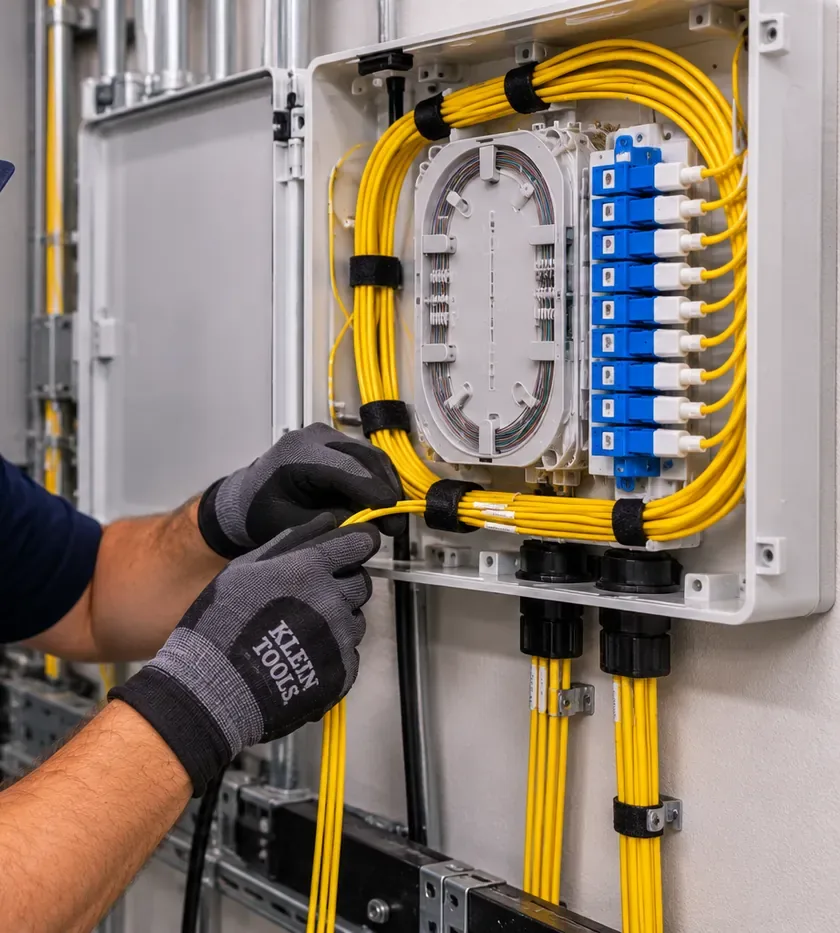
Gloved hands dressing yellow fiber pigtails in a wall-mounted enclosure with blue SC adapters, fiber optic installation for Harlem, Manhattan
A wall-mounted enclosure with a splice tray, a column of blue SC adapters and yellow pigtails being strapped into place.
Harlem Fiber Quote
Which buildings, touching or not, and who owns them — expect a call from our crew today

✅
Request Sent!
A Harlem fiber tech will call you back the same business day.
25+
Years Experience
✓
Same-Day Estimates
100%
Licensed & Insured
4.7★
201 Google Reviews

To price a Harlem link we need three things: the addresses involved, whether the buildings touch or are separated by a yard, alley, lot or street, and who owns each one. Ring the Manhattan line on (929) 560-0737 or send the short form; the person who calls back is a licensed installer who has stood in Harlem cellars, not a dispatcher reading a script.

  • Route chosen building by building: cellar walls, roofs, alleys or carrier conduit
  • Owner consents and Landmarks scope written for you to sign or file
  • NYS licence #12000287431 · Harlem crews sent from our Bronx office on East Fordham Road
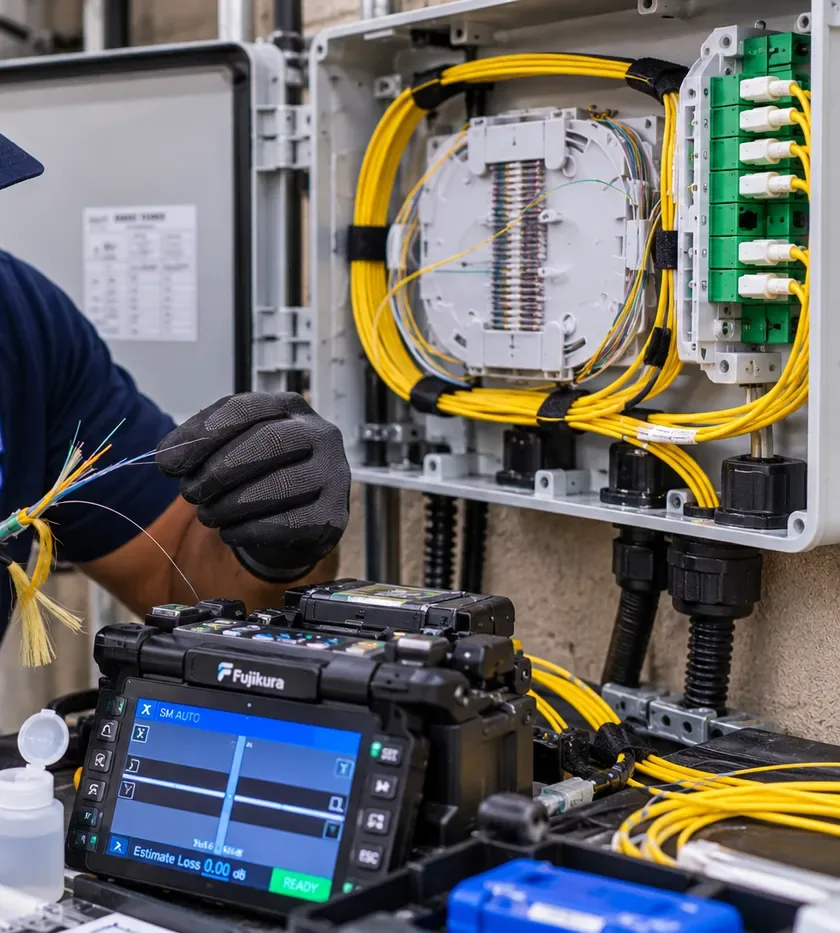
Fusion splicer on a bench in front of an open fiber splice enclosure with green and yellow pigtails, Harlem, Manhattan fiber work
Splicer on the bench, enclosure open behind it: the two ends of a link meet in boxes like this one.
The Neighborhood

Why Harlem Properties Need Fiber Optic Installation That Crosses the Lot Line

Harlem was built as rows, and it is still owned and used in clusters. Much of its housing went up in the decades after rapid transit reached upper Manhattan around 1880: masonry rowhouses built as single-family homes, many later turned into rooming houses and small apartment buildings, with five- and six-storey walk-ups on the avenues and corners. The Landmarks Preservation Commission's 2015 extension of the Mount Morris Park Historic District alone added 276 buildings, more than 250 of them row houses. Strivers' Row on West 138th and 139th Streets was built as a single development in 1891–93. These are buildings that touch each other on both sides, share walls, back onto common yards and alleys, and were never given a riser, a telecom room or a duct between them.

The people who run Harlem's buildings tend to hold more than one. Churches have long been some of the neighbourhood's biggest property owners: Abyssinian Baptist Church formed the Abyssinian Development Corporation in 1989 to rebuild Harlem "brick by brick, block by block," and a 2002 City Limits investigation found Convent Avenue Baptist Church holding about six properties, some on landmarked blocks. Schools, clinics, social-service agencies and arts groups meet the same situation whenever they grow into a neighbouring building instead of moving. Owner-occupiers are a minority — Central Harlem's homeownership rate was 15.3 percent in 2024, according to NYU's Furman Center — and when one of them buys the house beside their own, they ask us the same question.

That is what makes fiber work in Harlem different from a tower job downtown. The question is rarely how to climb forty floors; it is how to get from one building to the one beside it, or behind it, or across the yard, without breaking a fire separation, a roof membrane, a Landmarks rule or a neighbour's patience. The usual answer involves a cellar wall, a roof, an alley or a short run of carrier conduit — and a strand map that says plainly which building each strand belongs to.

The street is changing too. The 2008 rezoning of 125th Street aimed at more than a million square feet of new office space and set height limits on the corridor for the first time; East Harlem was rezoned in 2017; Columbia's 17-acre Manhattanville campus completed its first phase in 2022; and the Second Avenue Subway is now being dug toward a new station at 125th Street. New buildings with modern telecom rooms are landing next to rowhouses that have none, and owners on both sides of that line want their networks to reach each other. This page is about doing that properly.

Harlem facts that shape fiber work

  • 276 buildings: the 2015 extension of the Mount Morris Park Historic District, designated by the Landmarks Preservation Commission on September 22, 2015 — more than 250 row houses and about 12 apartment buildings, the oldest a trio of c. 1870 Second Empire houses on West 123rd Street.
  • 1891–93: construction of the St. Nicholas Historic District — Strivers' Row — designated in 1967, where back-to-back houses share gated rear alleys.
  • 1 million+ sq ft of office: what the City expected from the 125th Street rezoning approved on April 30, 2008, along with more than 7,000 jobs and the corridor's first height limits.
  • 17 acres: Columbia University's Manhattanville campus between 125th and 133rd Streets, served by a 75,000-square-foot central energy plant, with Kravis Hall and Geffen Hall (492,000 sq ft together) completing its first phase in February 2022.
  • Fall 2032: the State's target for Phase 2 of the Second Avenue Subway, with new stations at 106, 116 and 125 Streets and a $6.968 billion budget; excavation of the 125 Street entrance shaft has begun.
  • 13.6 percent: share of Central Harlem's rental homes that are public housing, according to the Furman Center's 2025 data — 7,766 apartments in developments such as St. Nicholas Houses.

Residents describe the provider side of this on Reddit. In r/Harlem, one poster wrote that "supposedly, fiber isn't available at my house"; another answered a Spectrum-or-Verizon question with "Not every block/building has Verizon but if you can get it, do," adding that the provider reached their building only about four years earlier. In Harlem, which provider can serve you is decided building by building — which is one more reason owners want their own fiber between the buildings they control, so a good connection in one can serve all of them.

Owners who link their buildings with fiber usually move door entry onto it next. Our Harlem smart lock team and intercom installers in Manhattan can use the same strands, so one survey covers the whole block.

Repair Capture

Link Between Your Harlem Buildings Gone Dark?

When one building on a linked block loses its network and the others are fine, the fault is usually at a crossing point: a cable disturbed by a plumber in a shared cellar, a roof run lifted by a roofer, an enclosure knocked in a boiler room, or a patch cord unplugged during a clean-up. Those are repairs, not projects. We aim to send a tech the same day, and most single-point faults are found and fixed in one to two hours once we are on site. Call (929) 560-0737 and say "fiber repair"; if copper cabling is part of the problem, our Manhattan network cable repair crew handles that side.

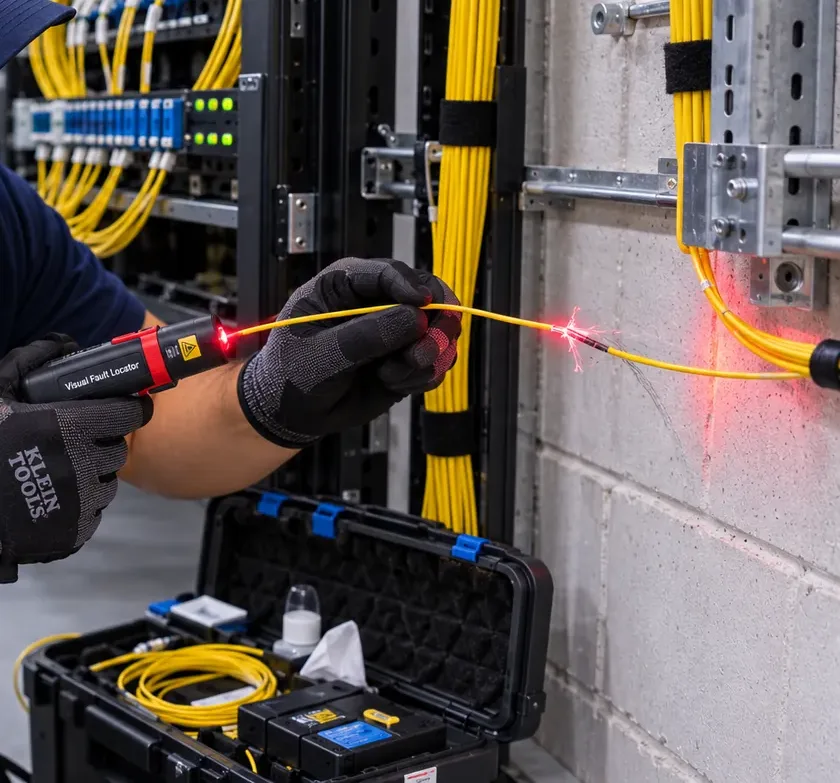
Visual fault locator shining red light into a yellow fiber cord beside a block wall, fiber repair in Harlem, Manhattan
Red laser light leaking from a yellow cord beside a block wall: the quickest way to see which jumper is damaged.
What We Install

Fiber Optic Installation Services in Harlem

The services below are arranged around the crossings a Harlem job makes. A carrier brings its service to one building. Everything that carries it onward — to the next house, the community house, the school annex or the rear building — is private cable owned by the property owner, and that is what we build.

Party-Wall Cellar Links

Single-mode cable cored through the shared cellar wall between two attached buildings, sleeved, firestopped on both faces and spliced into an enclosure in each cellar — the shortest protected path on most Harlem blocks.

Roof-Line Routes

Runs that go up in one house, along the shared roof line in UV-rated innerduct supported clear of the membrane, and down in the next, kept away from hatches, bulkheads and every path to a fire escape.

Yard and Alley Conduit

Buried or wall-mounted conduit across rear yards and gated service alleys, with each owner's signature on the route and Landmarks approval in hand where the alley sits in a historic district.

Rowhouse Risers

Vertical paths in brownstones and walk-ups that never had one: closet stacks, disused dumbwaiter shafts, verified sealed flues, with horizontal runs laid along the joist bays to keep ceilings intact.

Church and Sanctuary Networks

Fiber from the office or media room to balcony camera positions, the organ loft, the fellowship hall and the community house, routed around the worship space and scheduled around the calendar.

Old-to-New Building Ties

Links between a rowhouse or walk-up and a new building on the same block, landing in the new building's telecom room with the owner's or managing agent's approval and labelled on both sides.

125th Street Mixed-Use Floors

Backbones from a cellar entrance to offices, studios and clinics above ground-floor stores on the corridor, built with the store's hours and the building's contractor rules in mind.

Splicing, Re-Termination and Repair

Fusion-spliced pigtails, finishing cable left coiled by an earlier contractor, and mid-span repairs on links cut by renovation, roofing or plumbing work.

Testing and the Block Record

A per-strand loss figure, a reflectometer trace with each wall and roof crossing marked, a photo of each end face, and one sheet that draws the whole block.

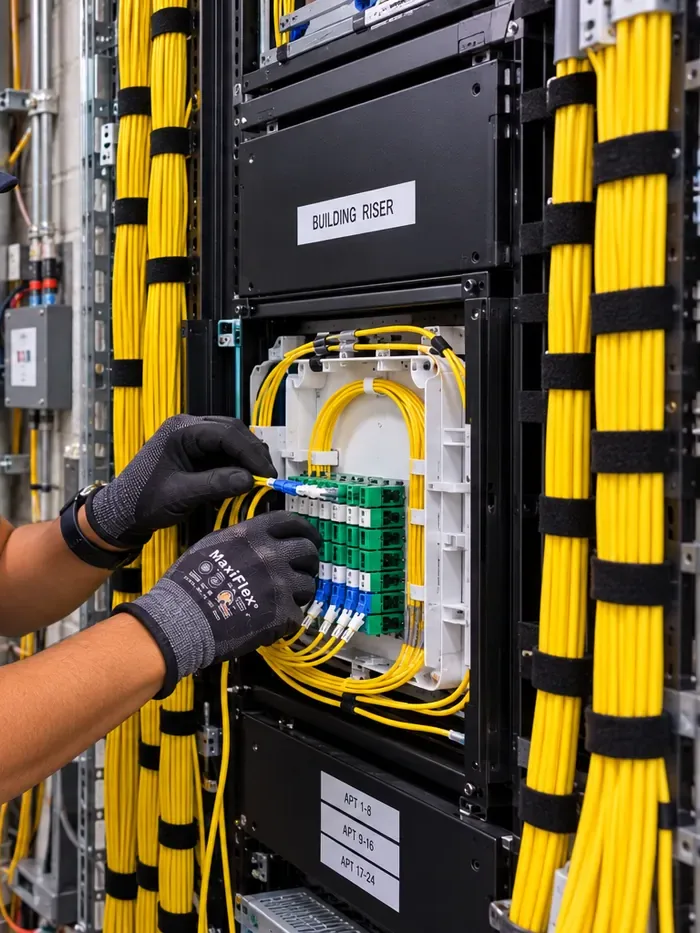
Hands working in a white splice enclosure under a Building Riser sign with bundles of yellow fiber cable on both sides, Harlem, Manhattan
A riser panel with its splice tray open and bundled yellow cable dressed down both sides of the frame.
Building Specialists

Fiber Optic Installation for Harlem's Architecture

Harlem's building stock was put up quickly, in rows, by developers who reused the same architects block after block. That repetition is useful: once one house in a row has been opened, the next one usually holds few surprises.

Brownstone and Brick Rowhouses

Three to five storeys over a cellar, joists spanning party wall to party wall, chimney breasts on the party walls and a stoop or areaway at the front. Vertical routes go in closets or sealed flues; horizontal runs follow the joist bays.

Second Empire and Queen Anne Houses

The oldest survivors, such as the c. 1870 mansard-roofed houses on West 123rd Street, with low top floors under the mansard where cable has to pass behind knee walls rather than through finished attic rooms.

Walk-Up Tenements and Small Apartment Buildings

Five and six storeys on the avenues and corners, with stair halls, air shafts and sometimes an old dumbwaiter. Fiber climbs in a closet stack or a shaft, never on the fire escape, and lands in a locked enclosure in the cellar.

Churches and Community Houses

Masonry sanctuaries with balconies, towers and deep roof spaces, often paired with a parish house or rowhouse office next door. Long internal distances, few closets, and a calendar that comes first.

Mid-Century Towers and Institutions

Concrete buildings such as the nineteen-storey Adam Clayton Powell Jr. State Office Building of 1973, the hospital campus on Lenox Avenue and public-housing towers, where risers exist but are controlled by the owner or agency.

New Mixed-Use and Cultural Buildings

Recent 125th Street and Manhattanville buildings with purpose-built telecom rooms, carriers already in the building and managing agents with written contractor rules — the easy end of a link that starts in an old rowhouse.

Methods and materials by building type

BuildingWhere the fiber usually goesWhat we use and why
RowhouseCellar ceiling along joist bays, a closet stack to the top floor, branches along each floor's baysSmall-diameter single-mode or bend-insensitive cable in innerduct; wall-mount enclosure in the cellar; holes through the middle of joists only
Attached pair or rowThrough the shared cellar wall, or up and across the roof lineCore drill with dust extraction, sleeve, listed firestop on both faces; UV-rated innerduct and non-penetrating supports on roofs
Walk-upCloset or shaft riser, cellar enclosure, stair-hall runs in surface raceway where there is no ceiling voidRiser-rated cable (OFNR); raceway painted to match; nothing on the fire escape or across egress
ChurchTower or vestry stair, roof space over the aisles, down inside casework to camera and audio positionsArmoured or plenum-rated cable where it shares space with mechanical equipment; media converters at the far end
Yard or alley crossingShallow conduit across the yard or along the alley wall between buildingsIndoor/outdoor loose-tube single-mode in conduit; pull boxes at changes of direction; owners' signatures and LPC permit where required
New buildingInto the telecom room through the entrance the building providesLabelled enclosure inside the room, strand map handed to the building's manager as well as to you
Commercial Fiber Optic

Business Fiber Optic Installation in Harlem

Harlem's commercial streets are short on glass towers and long on mixed buildings: shops below, offices, studios and clinics above, institutions on the corners. These are the corridors where most of our business work lands.

125th Street, River to River

Harlem's main commercial street, from the Apollo and the State Office Building at Adam Clayton Powell Jr. Boulevard to the new cultural buildings that have opened along the street since 2024. Mixed-use floors, ground-floor retail and the businesses moving into new towers.

Frederick Douglass Boulevard

Restaurants, bars and new mid-rise apartment buildings with ground-floor commercial units, where a back-of-house office, card terminals and cameras need a reliable link from the building's telecom room.

Malcolm X and Adam Clayton Powell Jr. Boulevards

Churches, clinics and professional offices in converted rowhouses and older apartment buildings, often sharing a block with the institution that owns them.

East 116th Street and El Barrio

One of East Harlem's main shopping streets and the avenues around it, rezoned in 2017 with new height limits on Park, Second and Third Avenues, where older walk-ups sit beside new mixed-income buildings.

Manhattanville and West 125th Street

The blocks around Broadway and 12th Avenue below and beside Columbia's campus, where former industrial buildings now hold offices, labs, restaurants and event spaces.

Lenox Avenue Near Harlem Hospital

The blocks around the hospital campus, where medical and social-service offices in older buildings need private links between their own rooms and buildings.

Compliance callouts for commercial fiber in Harlem

  • Landmarks. Inside the Mount Morris Park and St. Nicholas districts and Harlem's other designated historic districts, any new exterior work needs an LPC permit, including work at the rear or on the roof that cannot be seen from the street. Interior work needs one only when it also needs a DOB permit or affects the exterior.
  • Fire separation. Every hole through a party wall, cellar ceiling or floor is sleeved and sealed with a listed firestop system and photographed before it is covered.
  • Egress. Nothing is fixed to fire escapes, across stair landings or over hatches and bulkhead doors.
  • Cable ratings. Riser-rated cable between floors, plenum-rated cable in air-handling spaces, and outdoor-rated cable in conduit for yards and roofs.
  • Owner consent. Written consent from each owner whose property the route touches, and from the board, managing agent or trustees where they control the building.
  • Street and public land. We do not open sidewalks, streets or City-owned lots; crossings of public land use carrier conduit or a permit the owner obtains.

This is how we work, not legal advice. Where a building's own rules or a permit say something stricter, those rules win.

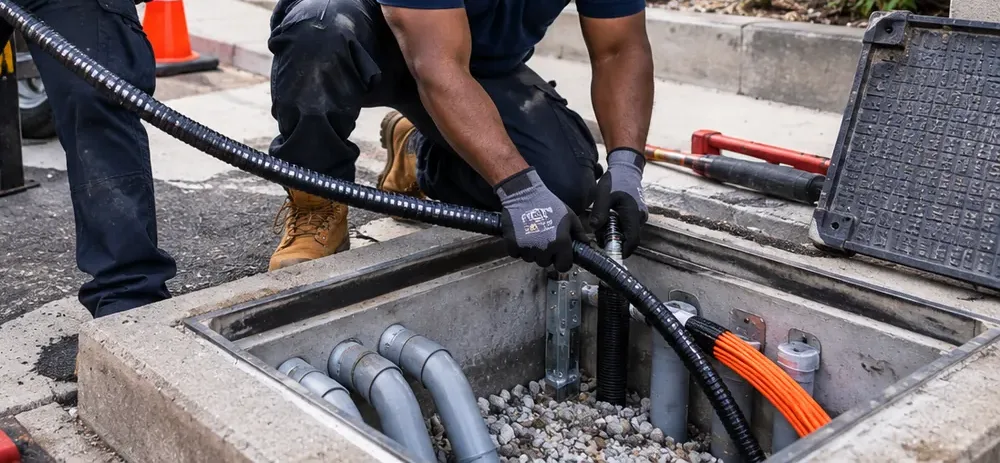
Black cable being fed into an open concrete handhole with grey conduits and an orange duct, outside-plant fiber pull for Harlem, Manhattan
Cable going down into a concrete handhole where grey conduits and an orange duct leave the pit.
The Block Plan

Five Ways Fiber Gets From One Harlem Building to the Next

Every Harlem link we quote starts as a choice between five routes. Which one wins depends on whether the buildings touch, who owns what lies between them, whether the block is in a historic district and how much each owner is willing to have opened. We price the realistic options side by side so the decision is made on paper before anything is drilled.

RouteWhen it worksWhat has to be agreedWatch for
Through the shared cellar wallAttached buildings with cellars at about the same levelBoth owners (one if you own both); tenants told about drillingBowed or damp walls, beam pockets, old gas or water lines on the wall
Across the roof lineAttached buildings of similar height with access hatchesBoth owners; roofer's detail for any penetration; LPC permit in a historic districtMembrane damage, hatches and fire-escape paths, parapets of different heights
Rear yard or alleyBuildings back to back, or side by side with a shared laneEvery owner along the route; any alley association; LPC permit in a districtGardens and trees, drainage, gates, the alley's own ownership history
Carrier circuit between addressesBuildings across a street or an avenue apartA carrier willing to provide it, and its monthly chargeLead time and the recurring cost, which never ends
Wireless bridgeBuildings with clear line of sight roof to roofRoof access on both; LPC permit for equipment in a districtTrees in leaf, new construction blocking the path, weather

The first three are owned routes: once built, they cost nothing a month and belong to the owners they cross. The carrier option is how a link gets under a Manhattan street, where the underground conduit system is a franchise — the Empire City Subway licence with the City dates back to 1891 — and a building owner cannot simply trench across. The wireless option is listed because it is real and sometimes right, but on a Harlem block of trees, parapets and new towers going up, line of sight that exists this year may not exist next.

Most clusters end up mixed. Two attached houses on one side of a street are joined through the cellar; the church across the avenue reaches them by a carrier circuit; the community house behind the church is joined across the yard. The strand map shows all of it on one page, with each building named the way the people who use it name it — "parish house," "the annex," "number 14" — rather than by a code nobody remembers.

What the block drawing records

  • Every building in the cluster, its owner, and which floor or room holds its enclosure
  • Each crossing: wall, roof, yard or alley, with the photo of the sealed opening on both sides
  • Strand assignments per building, including the spares and where a future branch would leave the route
  • Loss and OTDR results per strand, with the distance to each crossing marked on the trace
  • The signed consents and, where needed, the LPC permit number
Your Questions Answered

Fiber Optic Installation in Harlem: Questions Answered

The questions below come up on Harlem walkthroughs because of the way the neighbourhood is built and owned. Each is answered here once; the shorter FAQ further down covers scheduling, paperwork and coverage.

Buildings that touch: walls, roofs, alleys and joists

We own both of two attached Harlem rowhouses — can a hole go through the party wall between their cellars, and how is it closed up?

Usually yes, and it is often the shortest and best-protected route there is. A party wall is a shared structural and fire-separating wall, so the opening is kept small, made with a core drill rather than a hammer, placed away from beam pockets and chimney breasts, and sleeved so the cable never rubs on raw brick or stone. Once the cable is through, both faces are sealed with a listed firestop system sized to the sleeve, and we photograph each side before the cellar is cleaned up.

Owning both houses settles the consent question but not the paperwork: if the two buildings carry separate tax lots, the strand map and the closeout file record the crossing on both, so a future buyer of either house knows the cable is there. If one cellar is a rental unit or a legal apartment, the tenant is told when the drilling happens and the dust is extracted at the bit.

Where the party wall is visibly bowed, damp or recently repointed, we choose another way through — up and over at roof level, or along the front cellar wall to a different crossing point — rather than make a new hole in a wall that is already asking for attention.

Can fiber cross from one rowhouse roof to the next instead of going through the cellars?

It can, and on a row of houses that share one roof line it is sometimes the only route that does not involve opening finished rooms. The cable comes up through an existing roof penetration, a bulkhead or a new sleeved opening, runs in UV-rated innerduct supported clear of the roofing membrane, and goes down again in the next house the same way. Nothing is fixed through the membrane without the roofer's detail, because a leak over a parlour ceiling costs far more than the fiber.

Two conditions matter in Harlem. Inside a historic district, rooftop work counts as exterior work and needs a Landmarks Preservation Commission permit even where nobody can see it from the street. And the roof route has to leave the hatch, the bulkhead door and any path to the fire escape completely clear; a cable across a means of escape is never acceptable, however neatly it is clipped down.

Strivers' Row houses back onto shared gated alleys — can fiber run along the alley to link houses on the same row?

The alleys behind West 138th and 139th Streets are one of the things that make the St. Nicholas Historic District unusual: the houses were built in 1891–93 back to back with gated service lanes between them, and some gates still carry the old "Walk Your Horses" sign. Physically, a buried or wall-mounted conduit along an alley can link houses on the same row with very little disruption inside them.

Legally it is two questions. First, who owns the strip of alley the conduit would occupy and who must sign — each owner whose land it crosses, and any association that manages the lane. Second, Landmarks: the alleys sit inside a designated district, so anything new on the exterior or the site needs an LPC permit. We draw the route, gather the owners' signatures with you and give you the scope and photos for the application; the work starts once the permit is in hand.

Why does the direction of the floor joists matter when routing fiber across a Harlem rowhouse?

In a typical brownstone or brick rowhouse the floor joists span from one party wall to the other, so the bays between them run side to side across the house. A cable that needs to travel side to side can slide along a joist bay from one access point to the next with almost no damage to the ceilings below. A cable that needs to travel front to back has to cross every joist in its path, which means drilling each one or opening the ceiling.

That is why our first look in a rowhouse is at the joists from the cellar, where they are usually exposed, and why the riser position is chosen so that the horizontal runs on each floor follow the bays. It is also why we will not notch the top or bottom edge of an old joist to save time: holes go through the middle third of the depth, kept small, and only where the plan cannot avoid them.

Landmark districts, facades and old house fittings

Is a Landmarks Preservation Commission permit needed for fiber that stays entirely inside a historic-district house?

Often not, but not never. The Commission's own guidance says interior work needs an LPC permit when it needs a Department of Buildings permit, when it affects the exterior — the way vents and louvres do — or when it touches a designated interior landmark. A fiber run that stays inside the walls and ceilings of an ordinary house, enters through an existing opening and changes nothing outside generally falls outside those three cases.

Where people get caught is the entrance. A new carrier sleeve through a front areaway wall, conduit on a rear facade or a box on the roof is exterior work, and the Commission is explicit that this includes parts of the building that cannot be seen from the street. If the provider's drop has to come in a new way, plan for a staff-level permit; LPC says about 95 percent of its approvals are issued at staff level without a public hearing.

Can cable be fixed to the fire escape on the front or back of a Harlem walk-up?

We do not attach cable to fire escapes, and we advise owners to refuse anyone who wants to. A fire escape is part of the building's means of egress: anything that snags a foot or a hose, blocks a drop ladder or rusts into the ironwork becomes a problem the owner has to answer for at the next facade inspection or after a fire.

Where a walk-up genuinely has no interior path between floors, the alternatives are an exterior conduit placed away from the fire escape and window openings, a route up a disused dumbwaiter or service shaft inside the building, or a vertical run in a closet stack. Each one is drawn and priced on the proposal so the owner can compare them before anything is drilled.

Can a disused fireplace flue carry fiber between the floors of a brownstone?

Sometimes, after checks. Many Harlem brownstones still have three or four flues in each chimney breast, and a flue that has been permanently sealed at the hearth and capped at the top can make a clean vertical path. We confirm with the owner, and where possible with a chimney sweep's inspection, that the flue is not connected to the boiler, a working fireplace or a neighbour's appliance, because sharing a live flue is never acceptable.

If the flue passes that test, the cable goes in innerduct, the openings at each floor are kept small and sealed again so the chimney breast still separates the rooms, and the strand map records which flue was used. If there is any doubt about which flue serves what, we use a closet stack instead; a few more holes in the plaster are a better trade than a doubt about combustion gases.

Churches, cultural organisations and owners with several buildings

How do you get fiber to camera positions in a church sanctuary or balcony for livestreaming without cable across the nave?

The route almost always goes around the worship space rather than through it: up the tower stair or a vestry stair to the balcony level, along the roof space or above the side-aisle ceilings, and down to the camera positions inside existing columns, pew-end boxes or the organ loft casework, with the agreement of whoever cares for the building. In older sanctuaries the roof trusses and the space above the aisles are usually accessible from a hatch, which is where most of the length runs.

Fiber helps here because the camera positions can be a long way from the office or media room where the stream is produced, and because a single small cable can carry several camera feeds once media converters or a switch sit at the balcony end. Work is scheduled around services, funerals and weddings, and any opening near decorative plaster or stained glass is agreed with the trustees before the drill comes out.

Our arts organisation is moving into a new building on the same street but keeping the old one — should the two be linked by fiber or run as separate networks?

Harlem has seen several of these moves recently — the Studio Museum opened its new seven-storey building at 144 West 125th Street in November 2025, the National Black Theatre's home is inside a 21-storey building on 125th Street, and the Apollo now programmes stages in the restored Victoria Theater a short walk from the original house. The question each organisation faces is the same: one network or two.

Link them when staff, box office, archives or production systems in both buildings need the same files and servers, and when the buildings are close enough that a short owned link is cheaper over time than paying for two business circuits and a VPN between them. Keep them separate when the old building will be leased or sold within a few years, because a cable crossing into a property you no longer control becomes a negotiation. In both cases we put the decision on paper with the price of each option, so the board decides with numbers rather than preferences.

Neighbouring owners on our block want to share one internet connection over fiber we would install between the houses — is that allowed?

Physically it is simple; contractually it usually is not. Most residential and small-business internet plans forbid sharing or reselling the service to other premises, so wiring four houses onto one subscription can breach the agreement and leave the account holder answerable for everyone else's traffic. Ask the provider in writing before spending money on the cable.

Where neighbours want a shared network for something other than internet — a camera system watching the shared alley, a block association office or a community-network node — fiber between the houses works well, provided each owner signs for the part that crosses their property and the closeout file shows whose equipment is whose. Community networks are already present in Harlem; one Reddit user described picking up an NYC Mesh signal in a Harlem building, and those projects publish their own requirements for building hosts.

Streets, lots and the 125th Street construction

Should a fiber project on or near East 125th Street wait until the Second Avenue Subway construction is finished?

Probably not, given the timeline. The State announced in September 2026 that the final Phase 2 contract is being procured, with the full extension to a new 125 Street station not expected to be complete until the fall of 2032, and the tunnelling contract alone running to 2029. A building that postpones its network for six years waits a long time for a project it does not control.

What makes sense is to plan around the work. Keep the inside-the-building fiber you own independent of where the carrier enters, so that if a provider has to move or replace its street connection during the construction your own backbone does not need to change. Keep spare strands in the link, record a baseline test on day one so any later damage can be shown, and talk to your providers early about whether a second entrance from a different street is possible. Inside the building, nothing about the subway work stops a backbone being built today.

A community garden on a City-owned lot sits between two of our buildings — can fiber cross it?

Not without the City's written permission, and that is rarely the fastest route. In 2013 the Housing Preservation and Development department counted 69 of Manhattan's 77 remaining City-owned vacant lots in Harlem, many of them later licensed as gardens through the Parks Department's GreenThumb programme, and gardeners told reporters their agreements were temporary. A conduit under that soil needs the agency that controls the lot to agree, and the garden group to be consulted.

In practice we look for another way first: through a shared cellar wall on the far side of the lot, along a rear alley, across the roofs of attached buildings, or by asking a carrier to provide a circuit between the two addresses through its own street conduit. If the garden really is the only path, we draw the route and you approach the agency with it; we do not dig on public land without the permit in hand.
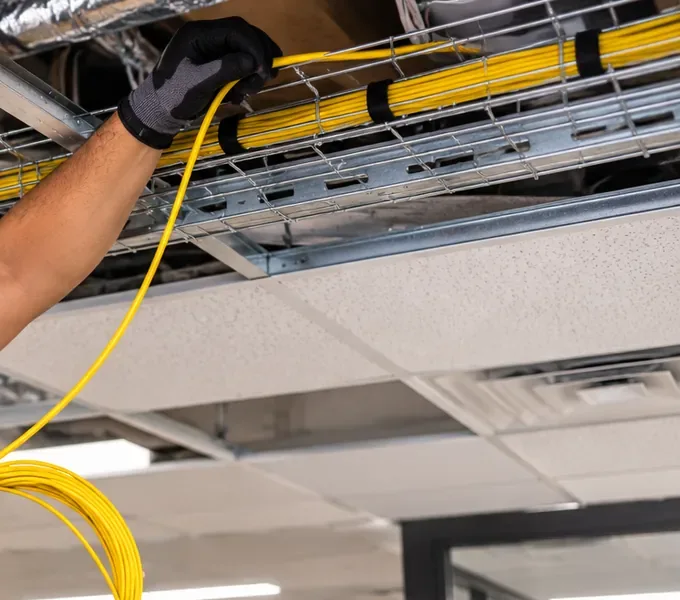
Gloved hand lifting a yellow fiber cable into a wire basket tray above an open ceiling grid, Harlem, Manhattan fiber routing
A coil of yellow cable paid up into wire basket tray, where it rides clear of the ceiling tiles.
Equipment

Types of Fiber Optic Cabling We Install

A Harlem link spends part of its life indoors, part in a cellar that may be damp, and sometimes part on a roof or in a yard. The cable and hardware are chosen for the worst stretch of the route, not the best.

Indoor/Outdoor Single-Mode

OS2 glass with a jacket that is legal both inside and outdoors, so a single length can go from a cellar, through yard or roof conduit, and into the next house with no joint in between.

Bend-Insensitive Single-Mode

For the tight corners of rowhouse closets, stair halls and chimney breasts, where a standard fiber would lose light at every turn.

Riser-Rated (OFNR) Cable

For vertical runs between floors of walk-ups and rowhouses, inside closet stacks, shafts and verified flues.

Plenum-Rated (OFNP) Cable

Where a run passes through an air-handling space, such as a ceiling used as a return in a church hall or an office conversion.

Armoured Fiber

In boiler rooms, cellars shared with other trades and church roof spaces where rodents, tools or falling materials are a real risk.

Innerduct and Conduit

UV-rated innerduct on roofs, PVC or rigid conduit across yards and alleys, and sleeves through every wall the cable crosses.

Wall-Mount Splice Enclosures

Small lockable boxes that fit a rowhouse cellar or a closet where there will never be a rack, with room for spare strands.

LC and SC Connectivity

LC for switches and modern optics, SC where an existing panel or provider equipment uses it, chosen per building rather than per job.

Media Converters and Small Switches

At the far end of a link to a balcony, an annex or a rear building, so fiber can feed copper devices such as cameras and access points.

Single-mode or multimode between two Harlem buildings?

For anything that leaves one building and enters another, we install single-mode. Its reach is measured in kilometres, so a link between houses on the same block, or several blocks apart, is never close to its limit, and it accepts whatever optics the next decade brings. Multimode still has a place for short runs inside one building — from a cellar enclosure to a rack in the same room, for example — where the owner's existing equipment already uses it. Mixing the two on one link does not work, so the strand map states which type every strand is.

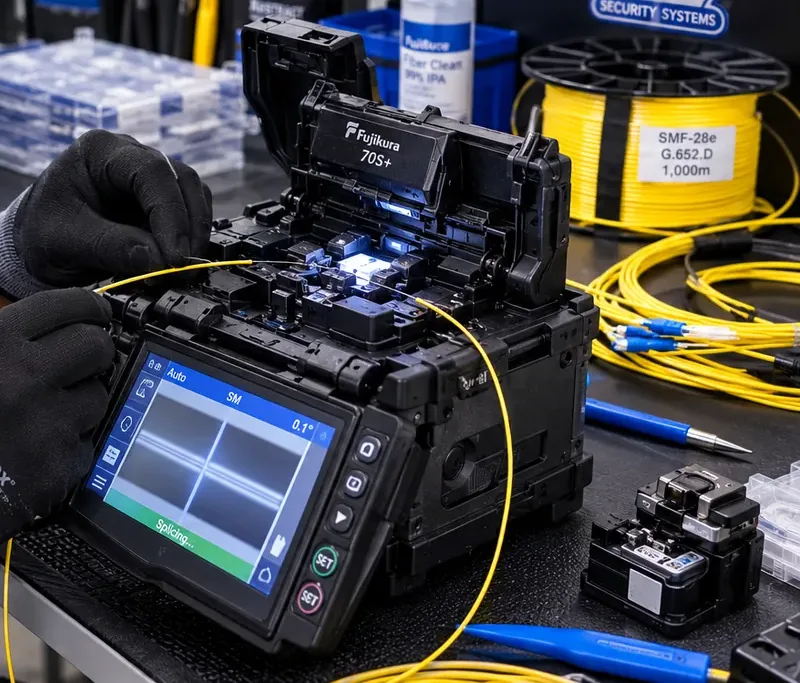
Fusion splicer screen showing two aligned fibers with a reel of single-mode fiber on the bench, Harlem, Manhattan splicing
The splicer's screen shows both fiber ends lined up; a reel of single-mode fiber sits behind it.
AI Overview Reality Check

What AI Gets Wrong About Fiber Optic Installation in Harlem

Search for fiber installation costs and you get confident summaries built from national cost guides. Some of those numbers are fine for what they describe. Few of them describe a link between two Harlem buildings. Here is what they claim and what we find on the block.

"Fiber costs one to six dollars a foot to install"

Cost guides, including New York ones, quote indoor fiber pulls at roughly $1 to $6 a foot in ordinary conditions and more through finished walls or crowded risers. As a description of cable laid in open ceilings, that may be fair.

A Harlem link is not priced by the foot because the footage is the cheap part. The cost sits in the crossings: a cored and firestopped party wall, a roof penetration done to the roofer's detail, a conduit across a yard that has to be dug by hand around a tree, an enclosure and splices in each building, and the tests.

Two houses forty feet apart can cost more to join than an office run three times as long, and our proposal shows why line by line, using only our published Manhattan prices.

"Underground fiber runs about $18 a foot"

This figure comes from outside-plant construction: a Fiber Broadband Association median for underground builds, quoted by installers alongside an aerial median of about $8 a foot. It is a number for carriers building along roads.

On a Harlem block, private underground work is measured in yards, not miles — a rear-yard conduit between two houses, or a run along an alley wall. Nobody prices that per foot, because the trenching itself is small and the restoration of a garden, a paved yard or an alley surface is most of the effort.

And under the street itself, the per-foot number is beside the point: a building owner does not trench a Manhattan street. Links across a street go through a carrier's conduit as a leased circuit.

"Fiber internet is available to about a third of New York City"

Availability sites publish city-wide percentages — BroadbandNow puts fiber at 37.4 percent availability across New York City — and summaries repeat them as though they described your address.

In Harlem, availability is decided building by building. On Reddit, one resident said fiber "isn't available at my house"; another noted that not every block or building has Verizon. A church's community house or a rear building with one office may never be wired by a provider on its own.

The figure that matters is whether one building in your group has good service. If it does, the others can often reach it over fiber you own, subject to the provider's terms.

"A fusion splice costs $50 to $150"

That range appears in New York cost guides and is not unreasonable as an hourly-based average. It tells you little about a link that needs a handful of splices in a cellar enclosure at each end.

We price terminations as a fixed line — $44 per termination on our Manhattan list, including the fusion-spliced pigtail or mechanical connector — so the number of splices on a block link is simply counted and multiplied.

There is no "minimum splicing charge" hidden behind the per-splice figure, and the travel and setup that per-splice quotes often load separately are already in the line.

"Fiber installation takes a few hours"

Provider support pages say a home fiber installation takes four to six hours. That is the time to connect one apartment to a provider's existing building wiring.

Joining two or three Harlem buildings has a longer front end: the walkthrough, owners' signatures, a board or trustees' approval, and in a historic district a Landmarks permit. The physical work is often two to five days; the paperwork before it can take weeks.

We start the paperwork the day the proposal is accepted and tell you honestly which part of the calendar is ours and which belongs to someone else.

"Testing and documentation add about five percent"

Some guides treat testing as a small percentage add-on that can be trimmed. On a link that crosses three properties, the test record is what protects every owner later.

An OTDR trace shows the distance to every splice and crossing. When a plumber disturbs the cable in a shared cellar two years from now, the trace taken today shows exactly where the change is and proves it was not there when we left.

We price OTDR at $50 per strand and recommend it on every strand of a building-to-building link. Light-source and power-meter loss results come with every job.

"Spectrum offers fiber service to 58.1% of East Harlem homes"

Provider-comparison sites quote neighbourhood shares like this one for East Harlem, and AI summaries pass them on as a reason not to worry about cabling.

A neighbourhood share says nothing about the cable between your own buildings. Providers serve addresses; they do not join a rectory to a sanctuary or a clinic's two brownstones, whatever their coverage map shows.

Use the provider figures to choose a service for the hub building. Use a private link to carry that service to the rest of the block.

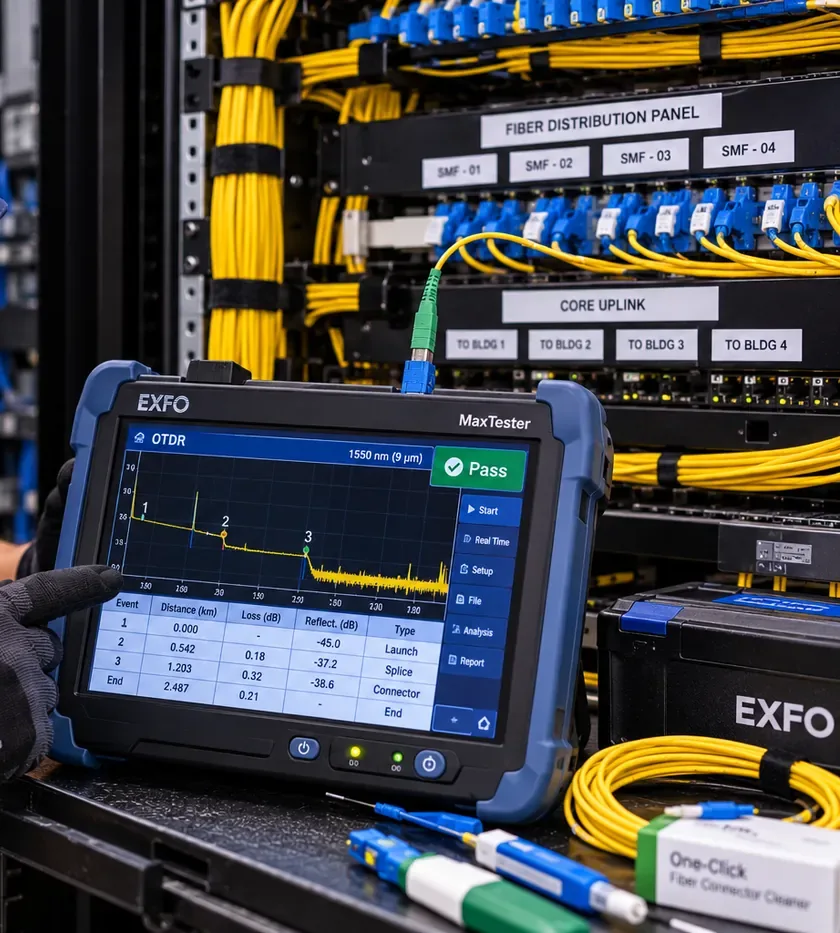
OTDR showing a trace and pass result in front of a fiber distribution panel with ports labelled to building numbers, Harlem, Manhattan testing
An OTDR trace with an event table, and behind it panel ports labelled by building rather than by floor.

Tell Us Which Buildings, and We'll Find the Way Between Them

Addresses, who owns each one, whether they touch and whether the block is in a historic district. We will come back with the routes that work, what each costs and whose signature each one needs.

Get In Touch

Request a Free Quote

Which buildings, who owns them and what the link must carry between them. Someone from our Harlem crew replies before close of business, or you can ring (929) 560-0737 now.

✅

Request Received

Thanks — a member of our Harlem crew will ring you back today with questions about the buildings. Urgent? Ring (929) 560-0737.

How It Works

Our Installation Process

Eight stages. On a Harlem block the first three — finding the route, pricing it and collecting the signatures — usually take longer than the cable work, so they begin as soon as you accept the proposal.

1. Block walk, cellar first

We start below ground in every building on the list, then check rear yards, alleys and roofs, because the route between buildings is usually decided by what the cellars and roofs allow, not by the street.

2. Route sketch and line-item proposal

A drawing of the block showing each building, each wall or yard the cable crosses and where each enclosure sits, with every termination, test and crossing priced from the published Manhattan lines.

3. Owner, board and Landmarks paperwork

Written consent from every owner whose property the cable touches, a scope letter for the board, managing agent or congregation, and, inside a historic district, the description and photos the owner files with the Landmarks Preservation Commission.

4. Openings and sleeves

Core holes through cellar walls and floors made with a scanner check first and dust extraction running, sleeved, and closed with a listed firestop system on both sides once the cable is through.

5. Pull and protect

Indoor/outdoor single-mode cable pulled within its tension and bend limits, carried in innerduct across yards, alleys or roofs and fixed so that no stretch hangs from its own weight.

6. Splice in each building

In every building's wall box the working strands are fused to pigtails and the unused ones coiled and tagged with that building's everyday name; each connector is looked at under a scope before it goes into an adapter.

7. Test every strand

Loss measured on every strand with a light source and power meter, and an OTDR trace that shows where each wall crossing and splice sits along the link.

8. Hand over the block record

Block drawing, strand map, test results and photos of every sealed opening, given to the owner, and with the owner's agreement to the super, the board or the IT person who looks after the network.

Coverage Area

Fiber Optic Installation Near Harlem's Landmarks

Harlem's landmarks are mostly places people use every day. We work in the rowhouses, walk-ups, churches and offices around all of them.

The Apollo Theater and the Victoria

The Apollo on West 125th Street, and the restored Victoria Theater nearby, whose 2024 redevelopment combined a 211-room hotel, nearly 200 homes and two Apollo stages in 27,000 square feet of cultural space.

Adam Clayton Powell Jr. State Office Building

The nineteen-storey State office tower at 163 West 125th Street, completed in 1973, anchoring the corner of 125th Street and Adam Clayton Powell Jr. Boulevard.

Studio Museum in Harlem

The museum's first purpose-built home at 144 West 125th Street: seven floors and 82,000 square feet, opened to the public on November 15, 2025.

Mount Morris Park Historic District

Rowhouses and apartment buildings around Marcus Garvey Park, designated in 1971 and extended by six blocks and 276 buildings in 2015.

Strivers' Row

The St. Nicholas Historic District on West 138th and 139th Streets, designed by James Brown Lord, Bruce Price with Clarence S. Luce, and Stanford White of McKim, Mead & White, with its gated rear alleys.

Harlem Hospital

The hospital campus on Lenox Avenue, whose six-storey, 195,000-square-foot Mural Pavilion puts its restored 1930s murals on permanent display, echoed in a block-long glass facade.

Columbia's Manhattanville Campus

Seventeen acres between 125th and 133rd Streets along Broadway, including the Greene Science Center, the Lenfest Center for the Arts and the Business School's two buildings.

St. Nicholas Houses

The public-housing development between Frederick Douglass and Adam Clayton Powell Jr. Boulevards from 127th to 131st Streets, one of three Harlem sites added to the City's Big Apple Connect free-internet programme in 2023.

We also serve the neighbourhoods around Harlem: Morningside Heights, Washington Heights and Inwood through our Manhattan fiber optic installation service, and Mott Haven and the South Bronx across the Harlem River from the same Fordham Road office.

Pricing

Fiber Optic Installation Cost in Harlem

No uptown premium, no separate church rate. Harlem jobs use exactly the lines printed on our Manhattan fiber page — the borough list at its 1.25× area rate — and a block link is simply those lines counted up after we have walked the buildings.

ItemPrice (Manhattan list)How it applies on a Harlem block
Fiber termination on an existing cable$44 per terminationCounted once per strand end in every building's enclosure; any connector style, spliced pigtail or mechanical
OTDR test$50 per strandOne reflectometer trace per strand, so each party wall, roof run and enclosure appears as a measured event
Multimode fiber drop$453 per dropShort run inside one building, terminated and tested
Single-mode fiber drop$517 per dropShort run, terminated and tested — for example through a shared cellar wall into the house next door
12-strand OM4 floor-to-floor backbone$5,625 – $8,750Inside a single walk-up or school building, bottom floor to top; spliced in an enclosure at each end and sealed at every slab
24-strand OS2 single-mode backbone (long or multi-floor route)$10,000 – $18,750+Longer links joining several buildings, with OTDR on every strand
Second telecom room with fiber linkfrom $3,000A proper equipment room built out in a second building and tied back by fiber
Service and callback rate$195/hr, 3-hr minimum ($585)Repairs, troubleshooting and return visits — not the initial install

What moves a Harlem fiber quote

  • Number of crossings. Each wall, roof or yard the cable crosses adds labour, sleeves and firestop, and usually an enclosure.
  • Number of buildings. Every building on the link has its own enclosure and terminations.
  • Vertical work in old houses. A rowhouse with no closet stack or usable shaft takes longer to climb than one with a clear path.
  • Restoration. Making good a paved yard, an alley surface or a plaster ceiling is part of the job and is priced, not assumed.
  • Testing depth. OTDR on every strand of a multi-owner link costs more than loss testing alone and is worth it.

Worked examples from the published lines

Two everyday Harlem jobs, priced only from the table. Joining a church office to a camera position in its balcony with one single-mode drop costs $517. Waking up an old six-strand link between two houses that a previous contractor installed but never finished — six strands terminated at both ends and each one traced — is 12 × $44 = $528 plus 6 × $50 = $300, or $828 in total. Landmarks filing fees, if any, are the owner's and are not part of our price.

Who can join your buildings, compared

OptionWhat it buildsStrength in HarlemLimit in Harlem
Your internet providerService to each building it chooses to wireOwns the street conduit and the connection to its networkDoes not build private links between your buildings; may not serve all of them
General handyman or electricianCable pulled as part of other workAlready on site during a renovationRarely splices or tests fiber; no OTDR record for the owners
Licensed low-voltage contractorThe owned link from building to buildingSees every cellar on the block, drafts the owners' consents, and owns the splicer and test gearDoes not open streets; works with carriers when a street has to be crossed

Where ADT, Ring and SimpliSafe fit. They sell alarm and camera packages and do not install fiber between buildings. If your aim is cameras across a block, the fiber link is the part they will not build; once it exists, any camera system — theirs or one we install — can use it.

Shop Our Systems

Fiber Optic Installation Packages & Pricing

Sample bundles for the three requests that reach us most often from Harlem owners, added up line by line from the table above. A real quote replaces these with your own crossings and strand counts.

Starter — Wake Up an Old Link

$552

Four strands of a link that already runs between two of your buildings, terminated at both ends and traced: 8 terminations at $44 ($352) and 4 OTDR traces at $50 ($200). For the cable an earlier contractor pulled and never finished.

Standard — Next Door, Through the Cellar Wall

$1,234

Two single-mode drops through the shared cellar wall into the attached building ($1,034) with OTDR on four strands ($200), so the house next door shares the good connection and the record proves the link.

Premium — One Network for the Cluster

$11,034 – $19,784+

A 24-strand OS2 backbone joining several buildings with OTDR on every strand ($10,000–$18,750+), plus two single-mode drops ($1,034) to a balcony, an annex or a rear building at the far end.

Bring Your Own Equipment — Labour Only

A grant, a donor or a volunteer IT manager sometimes buys the cable and boxes before we are called. Then you are paying only for people and instruments — the pull, the splices and the tests — at $195 an hour with a three-hour minimum ($585). Equipment you supply is covered by its manufacturer rather than by us, and we check every reel before it goes into the first cellar, so a damaged spool is found before it is inside a wall.

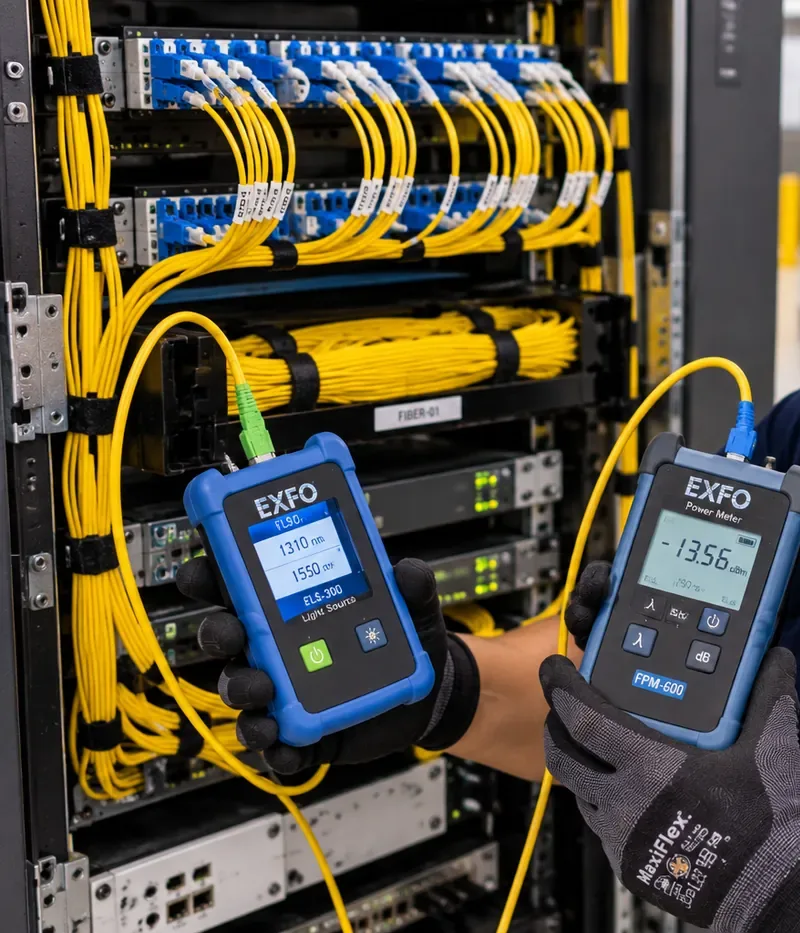
Handheld light source and optical power meter connected to yellow jumpers at a rack, Harlem, Manhattan loss testing
A light source on one end and a power meter on the other: the loss reading every strand is billed against.

Want the Route Drawn Before You Ask the Neighbours?

The walkthrough is free. You get a block drawing, the realistic routes with a price for each, and a list of the signatures and permits each one needs — the paperwork you need to approach the other owners.

Across Harlem

How Fiber Jobs Differ From One Part of Harlem to Another

Harlem covers roughly 110th Street to 155th Street and splits into three community districts: Central Harlem (Community District 10), West Harlem with Manhattanville, Hamilton Heights and Sugar Hill (District 9), and East Harlem (District 11). The fiber job changes with the district.

Central Harlem's rowhouse blocks

The side streets between Fifth Avenue and St. Nicholas Avenue are where party-wall and roof-line links are most common. Many were converted from single-family houses into rooming houses and small apartment buildings, so the cellar may hold several generations of wiring. Our first job is often identifying which of it is live and which can be left alone.

Mount Morris Park and Marcus Garvey Park

The historic district around the park, extended westward in 2015, holds some of Harlem's oldest houses, including the c. 1870 mansard-roofed trio on West 123rd Street. Rear-yard and roof work here always needs a Landmarks permit, so we plan most of the route inside the houses and keep the exterior to a minimum.

Strivers' Row and the St. Nicholas district

West 138th and 139th Streets are unusual because of the gated alleys behind the houses. Where owners on a row agree, an alley route can link houses without opening a single finished room, subject to the alley's ownership and an LPC permit.

The 125th Street corridor

Mixed-use buildings with stores below, new cultural and residential towers, and the State Office Building. Work here is about extending carrier service from a cellar entrance to upper floors, and about tying older buildings on the corridor into the telecom rooms of new ones.

East Harlem and El Barrio

Walk-ups and tenements along the avenues, public-housing developments such as Jefferson Houses on East 115th Street, and new mixed-income buildings planned under the 2017 rezoning. The Second Avenue Subway works add a long construction period on Second Avenue and East 125th Street, which may affect where and when providers can bring service in.

Manhattanville

The blocks west of Broadway around 125th Street, where former factories and garages sit beside Columbia's new campus. Concrete floors, high ceilings and industrial cellars make vertical work easier than in rowhouses; the questions are about which building owns which wall.

Hamilton Heights and Sugar Hill

Larger rowhouses and apartment buildings north of 135th Street, with parts of the area inside designated historic districts — the LPC map settles it block by block. Deep cellars under long houses make the cellar-wall route the first one we test here.

Construction Watch

What the Second Avenue Subway Works Mean for East Harlem Fiber

Phase 2 of the Second Avenue Subway will carry the Q line about a mile and a half north from 96th Street, with new stations at 106th and 116th Streets and a terminal at 125th Street that connects to the Lexington Avenue line, plus an entrance at Park Avenue for transfers to Metro-North's Harlem–125th Street station. The MTA awarded a $1.97 billion tunnelling contract in August 2025; in September 2026 the State began procuring the final contract for station fit-out, with the whole extension due in the fall of 2032.

For owners along Second Avenue and East 125th Street, that means years of utility relocation, excavation and staging in the street outside. Utility work at the 106th Street station site was already about 60 percent complete in September 2026, and excavation of the 125th Street entrance shaft had begun. If provider cables are among the utilities relocated near your building, its connection could be rerouted, interrupted or replaced while the work goes on; your provider is the one to ask.

We cannot tell you when your provider's street cable will move — only the provider and the MTA's contractors know. What we can do is make sure your own fiber inside and between your buildings does not depend on the answer. In practice that means three things:

  • Keep the private link independent of the entrance. Land the provider in an enclosure or rack, and start your own fiber from there, so a new entrance means a new short jumper, not a new backbone.
  • Record a baseline now. Loss and OTDR results taken before heavy work starts outside give you evidence if anything changes later.
  • Ask about a second way in. Where a building has a side-street frontage, ask your provider whether service can enter from there; if it can, leave a sleeve ready for it.

Other East Harlem sites are being redeveloped at the same time: the City's development corporation has asked for proposals for about 140 homes on the "B-East" site on Second Avenue between East 125th and 126th Streets. New buildings like that will have proper telecom rooms, and neighbouring owners may want to link into them later. Leaving spare strands in your own link keeps that option open.

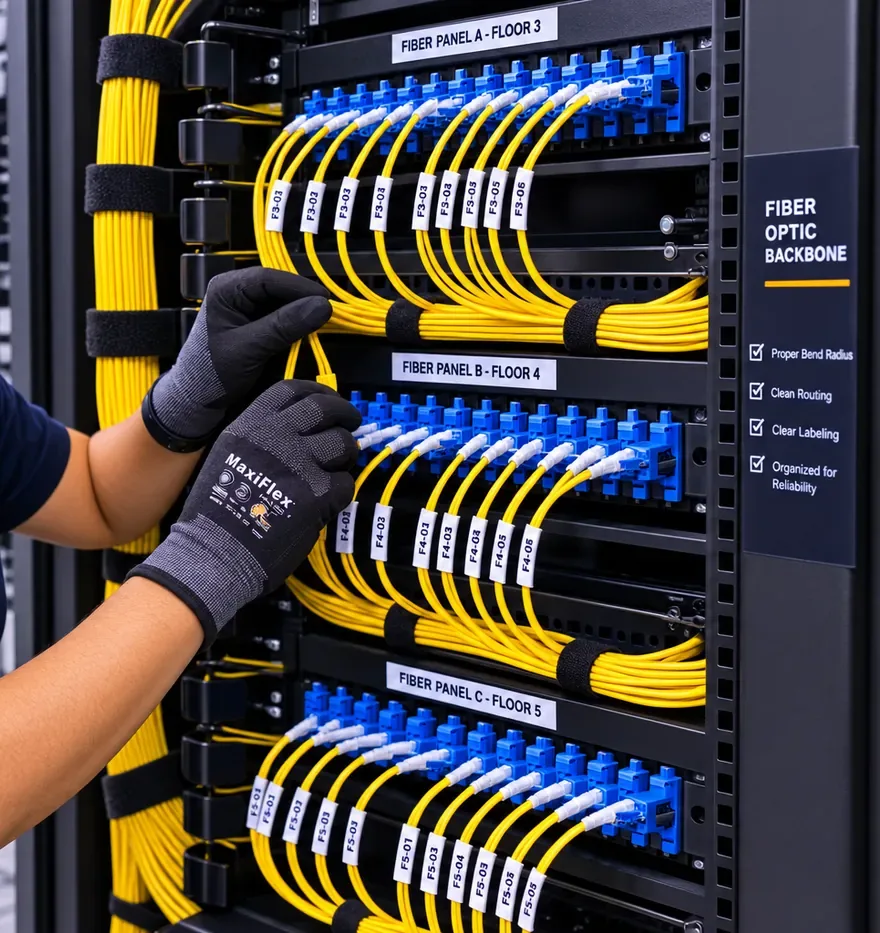
Gloved hands patching blue LC connectors in labelled fiber backbone panels with yellow jumpers, Harlem, Manhattan
Backbone panels with a printed label on every row, so each strand can be traced to the room it serves.
Before the Walkthrough

Six Things to Gather Before We Walk Your Block

Have these to hand if you can; the visit can be booked without any of them, but each one saves a phone call afterwards.

  1. A list of the buildings and their owners. Deed names matter, because consent comes from the owner of record, not from whoever runs the building day to day.
  2. Keys to every cellar, roof hatch and alley gate. Most routes are decided below ground and on the roof, and a locked hatch can mean a second visit.
  3. Whether the block is in a historic district. If you are not sure, the Landmarks Preservation Commission's map will tell you; it decides how much of the route can be outside.
  4. Which building has the best internet today. That building usually becomes the hub, and the others link back to it.
  5. Your calendar. Services, school terms, clinic hours, performances and tenant move-ins all shape when noisy work can happen.
  6. Any old cable you know about. An earlier fiber run, even an unfinished one, may save a new pull — our Starter package exists for exactly that.

If one of the owners has not agreed yet, book the walkthrough anyway. The drawing and the route options are often what persuades a neighbour, a board or a vestry to say yes.

Complete Services

Every Fiber Optic Installation Service in Harlem

Once two Harlem buildings share glass, owners tend to want more riding on it. These Manhattan services are the ones that most often join the proposal.

Structured Cabling Installation Manhattan

The copper inside each building — offices, classrooms, a media room — that hangs off the enclosure the fiber reaches.

Network Installation Manhattan

Configuring the routers, switches and access points so the parish house and the main building behave like rooms of one office.

Cat6 Installation in Manhattan

Where a rowhouse room needs a wired jack, Category 6 finishes the last few metres after the glass stops.

Commercial Security Cameras Manhattan

Cameras on shared yards, alleys and entrances, recorded in one place over the new link.

Access Control Installation Manhattan

Door readers for the community house, the office and the side entrance, managed from one building.

Intercom Installation Manhattan

Entry panels for walk-ups and rowhouse apartments, carried on spare strands where the buildings are linked.

Low-Voltage Installation Manhattan

Sound, displays and other low-voltage systems for halls, sanctuaries and galleries.

Cat6 Repair in Manhattan

Fixing the old copper that will still feed some rooms after the fiber goes in.

Structured Cabling Pricing Manhattan

The full Manhattan price list our fiber lines come from, with copper drops and room build-outs.

Field Notes

Field Notes From Harlem Cellars

How our crews approach a Harlem block on the first visit — a routine we follow on every cluster job, not the story of a single project

The first walk of a Harlem block happens underground. Our installers go down into each cellar in turn and look at the walls they share: what is mounted on them, whether they are dry, where the beams bear and where the old gas and water lines run. Two cellars that sit at the same level with a clean stretch of wall between them usually decide the route on the spot.

Then they go up. A roof hatch tells you whether the roof line is usable, and the view from the roof tells you about the yards, the alley and the trees. Notes go on a sketch of the block with each building drawn in, because the people who will approve the job need to see the whole cluster on one sheet.

Last, they ask the person showing them around what each building is called by the people who use it. Those names go on the labels. A strand marked "parish house" is easier for the next volunteer or super to find than one marked with a number nobody remembers.

Tablet showing a clean fiber end face and a pass result in front of a rack of yellow and blue fiber cords, Harlem, Manhattan
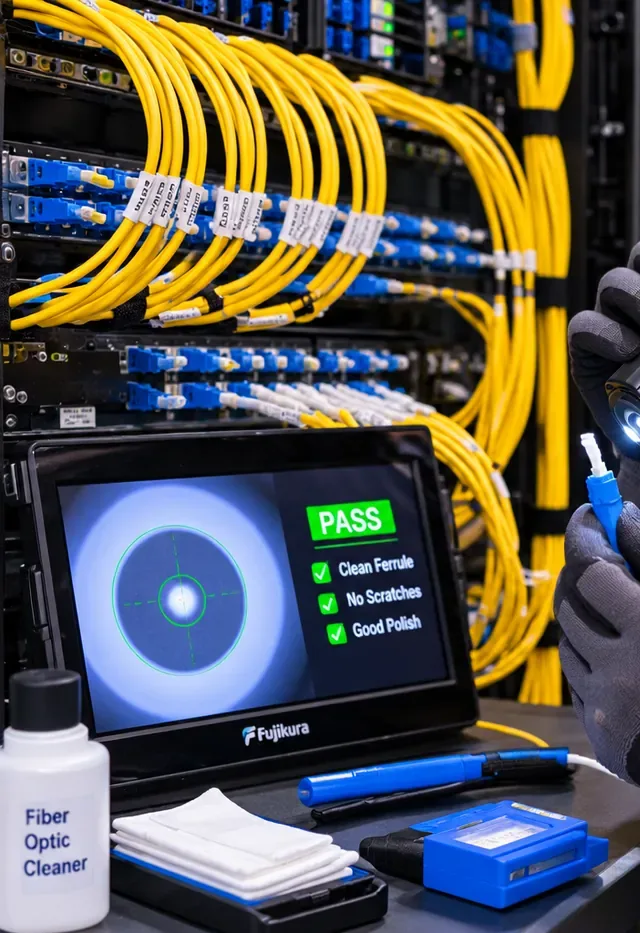
An end-face image with a pass result, beside a bottle of fiber cleaner and lint-free wipes.
Full Service List

Every Fiber Optic Service We Handle in Harlem, Manhattan

Manhattan fiber work is mostly high-rise offices, co-ops and condos, retail floors and building risers from FiDi to Harlem.

Fiber Optic Installation and Cable Pulling in Harlem, Manhattan

Every job starts with the route. Our fiber optic installation services in Harlem, Manhattan cover the whole path between two points: fiber optic cable installation inside the building, fiber optic cable routing through ceilings, shafts and walls, and fiber optic cable pulling in tray, J-hooks or innerduct so the glass never sits loose on ceiling tiles. In Manhattan that means riser work, after-hours pulls in occupied buildings and pathways that the building engineer has to approve.

For runs between buildings, out to a gate or into the street, we handle underground fiber optic installation and armored fiber optic cable installation, along with fiber optic conduit installation where a new pathway is needed. Inside, we take on fiber optic riser installation for stacked buildings, apartment building fiber optic installation that feeds every floor from one riser panel, and multi-floor fiber optic installation for offices that need each floor tied back to one room.

Commercial, Data Center and Warehouse Fiber

Commercial fiber optic installation is most of what we do in Harlem, Manhattan. That includes data center fiber optic installation with labeled panels and overhead tray, warehouse fiber optic installation from a lift to reach the far racks, docks and cameras, and fiber optic backbone installation that links the main room to every closet. Office floors, server rooms and retail stores in Manhattan need fiber backbones between floors and back to the main telecom room.

When an older building outgrows its copper or its first fiber run, a commercial building fiber backbone upgrade gives it room to grow. The same visit can cover fiber optic network upgrades, fiber optic network switch installation and SFP transceiver installation, so the new glass is lit end to end on the day we finish.

Fusion Splicing, Termination and Panels

Our fiber optic splicing services are done with a fusion splicer, not mechanical shortcuts. Fiber optic fusion splicing starts with careful fiber optic cable stripping and fiber optic cable cleaving, because a clean cleave is what gets each splice down to hundredths of a dB. Splices are laid into the trays as part of fiber optic splice tray installation. Manhattan telecom rooms are tight, so panels, trays and patch cords are planned to fit the space and the building's rules.

Fiber optic termination happens wherever the run ends: fiber optic patch panel installation and fiber distribution panel installation in the rack, fiber optic rack installation where there is no rack yet, fiber optic termination box installation or fiber optic distribution box installation in closets and on walls, fiber optic wall outlet installation at the desk, LC fiber connector installation, and fiber optic patch cord installation to the switch.

Fiber Optic Testing and Certification

Nothing gets signed off until it is tested. Fiber optic testing and certification on Harlem, Manhattan jobs includes fiber optic OTDR testing, which shows every splice and connector along the run, plus fiber optic signal loss testing with optical power meter testing and fiber optic light source testing on each strand. Manhattan building management and IT teams often require certification reports before a tenant's link is accepted.

Fiber optic cable testing and fiber optic signal testing are also how we prove a repair worked. You get the results for your records, and fiber optic network certification reports are available when a landlord, carrier or IT team asks for them.

Fiber Optic Repair and Troubleshooting in Harlem, Manhattan

When a link goes dark, fiber optic troubleshooting comes first. Fiber optic break detection uses the OTDR to measure the distance to the fault, and fiber optic visual fault locator testing lights a cracked or over-bent strand red so it can be found by eye. Fiber optic connector inspection and fiber optic connector cleaning come next, because a dirty end face causes more outages than any cut. Construction on other floors, crowded risers and shared closets are the usual causes of Manhattan fiber problems.

From there, fiber optic repair is matched to the damage: broken fiber optic cable repair with a fusion splice, fiber optic cable repair at a connector, or full fiber optic cable replacement when a section is crushed or chewed. Fiber optic network repair and fiber optic network restoration bring the cameras, doors and offices on that link back online.

Cable Management, Labeling and Maintenance

Clean racks are easier to fix. Fiber optic rack cleanup and fiber optic cable management keep bend radius safe and jumpers off the floor, and fiber optic cable labeling at both ends tells the next tech exactly what goes where. Neat, labeled panels matter in Manhattan risers where several carriers and tenants share the same space.

Fiber optic maintenance visits re-inspect connectors, re-test key links and keep the fiber optic infrastructure installation in good shape as the building changes. As a licensed low-voltage fiber optic installation contractor serving Harlem, Manhattan, we handle the full job, from the first pull to the final test.

FAQ

Harlem Fiber Optic Installation FAQ

Do you cover East Harlem, Manhattanville, Hamilton Heights and Sugar Hill as well as Central Harlem?
+

Yes. We take fiber work from 96th Street in East Harlem and 110th Street on the west side up to 155th Street, including El Barrio, the Manhattanville blocks around 125th Street and Broadway, Hamilton Heights, Sugar Hill and the Mount Morris Park and Strivers' Row districts. Harlem jobs are dispatched from our Bronx office on East Fordham Road and quoted on our published Manhattan list.

Can installation in a church building be scheduled around services, funerals and weddings?
+

Yes. We ask for the calendar at the walkthrough and build the schedule around it: noisy coring on weekday mornings, no work in the sanctuary while it is in use, and the space left clean and the seating back in place at the end of each day. If a funeral is booked at short notice, we move that day's work to another building or another day.

Can volunteers from our congregation or block association help pull the cable to keep the cost down?
+

Volunteers are very welcome to clear rooms, move furniture and open the building for us, which genuinely saves time. The cable work itself — drilling, pulling, splicing and firestopping — is done by our insured crew only, because a pull done wrong cracks glass that will not show a fault until the test, and because our insurance and licence cover our people, not helpers.

If we sell one of the linked buildings, does the buyer have to let our cable keep crossing into the others?
+

Not unless something in writing says so. A link that crosses from a building you keep into one you sell relies on the new owner's goodwill unless the right to keep it there is recorded, for example as an easement or a licence in the sale contract. Raise it with your lawyer before the sale; if no agreement is possible, we can cut the link back to a clean termination on your side and re-route the remaining buildings.

Do you take work inside Columbia University's Manhattanville buildings?
+

Only where the university or a tenant there engages us under its own facilities rules, because campus buildings are run to the institution's standards and contractor lists. Most of our Manhattanville work is for the neighbouring businesses, offices and residential buildings around the campus along 125th Street, Broadway and 12th Avenue.

Will you prepare the work description and photos our Landmarks Preservation Commission application needs?
+

Yes. For work in a historic district we give the owner a written scope, a marked-up photo of each exterior location, the size and colour of any conduit or box, and the product data, ready to upload with the application on the Commission's Portico system. The owner, or the owner's architect or expediter, files it; we start the exterior part once the permit is issued.

How far apart can two of our Harlem buildings be for a single fiber link?
+

Distance is almost never the limit. Single-mode fiber carries ordinary network optics several kilometres, so two buildings anywhere on the same block, or several blocks apart, are well within reach. What limits a Harlem link is the route — whose cellars, roofs, yards or street conduit the cable can use — and that is what the walkthrough is for.

Our roof is still under the roofer's warranty — will a fiber crossing on the roof affect it?
+

It can, which is why we ask about the warranty before planning a roof route. Many roofing warranties require the original roofer to make, or at least approve, any new penetration. Where that applies we either have the roofer form the penetration and flash it, or use a route that rests on the roof without piercing the membrane. Bring the warranty papers to the walkthrough if you have them.

All Areas Served

Fiber Optic Installation Across Manhattan, New York City and Beyond

Harlem is one corner of a bigger service. Riser approvals, office conversions and flood-proofing below Canal Street are covered on our fiber optic installation Manhattan page; for carriers, ownership and testing citywide, the New York City fiber optic installation hub. The same crews and price lists serve every area listed here.

Rather have cameras or an alarm than glass? Our Abstract Enterprises Security Systems home page lists every service, and the story of the team and licence behind AESS is one click further.

Sources

Sources Behind the Harlem Facts on This Page

Every local figure on this page comes from a public source checked in October 2026. Where a source is old, we say so.

Zoning, planning and transit

Landmarks and buildings

Owners, housing and internet access

Cost claims and forums quoted

One Harlem Building Online and the Other Not?

When the house next door, the annex or the community house loses the connection it shares with the main building, call (929) 560-0737. We aim to be on site the same day; a disturbed cable at a crossing, a knocked enclosure or an unplugged jumper is usually found and fixed within one to two hours, and the repaired strand is re-tested and added to your block record before we leave.

Fiber Optic Installation Harlem — Building to Building, Tested, Documented

Abstract Enterprises Security Systems · 460 E Fordham Rd, Bronx, NY 10458 · Manhattan line (929) 560-0737 · WhatsApp (718) 679-0359 via wa.me

NYS Low-Voltage Licence #12000287431 · 100% Licensed & Insured · Same-Day Estimates · Rated 4.7★ from 201 Google Reviews

Full terms — including 50% deposit, one-year parts-only warranty on AESS-supplied products, and the late-fee schedule — are set out in the service agreement. See our warranty page.

Last reviewed October 17, 2026. Version history: first release of the Harlem page within the Manhattan section of our fiber service.