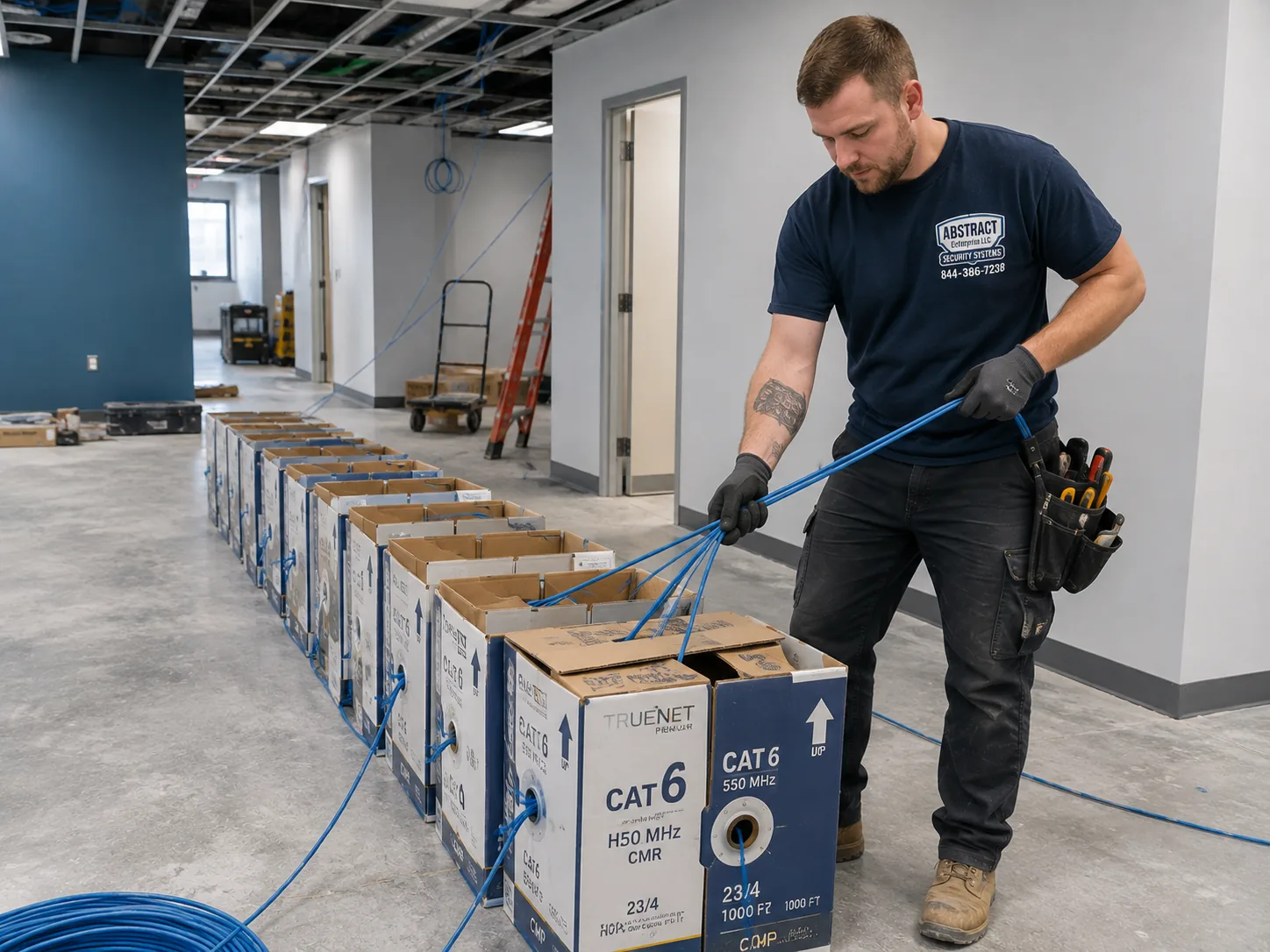
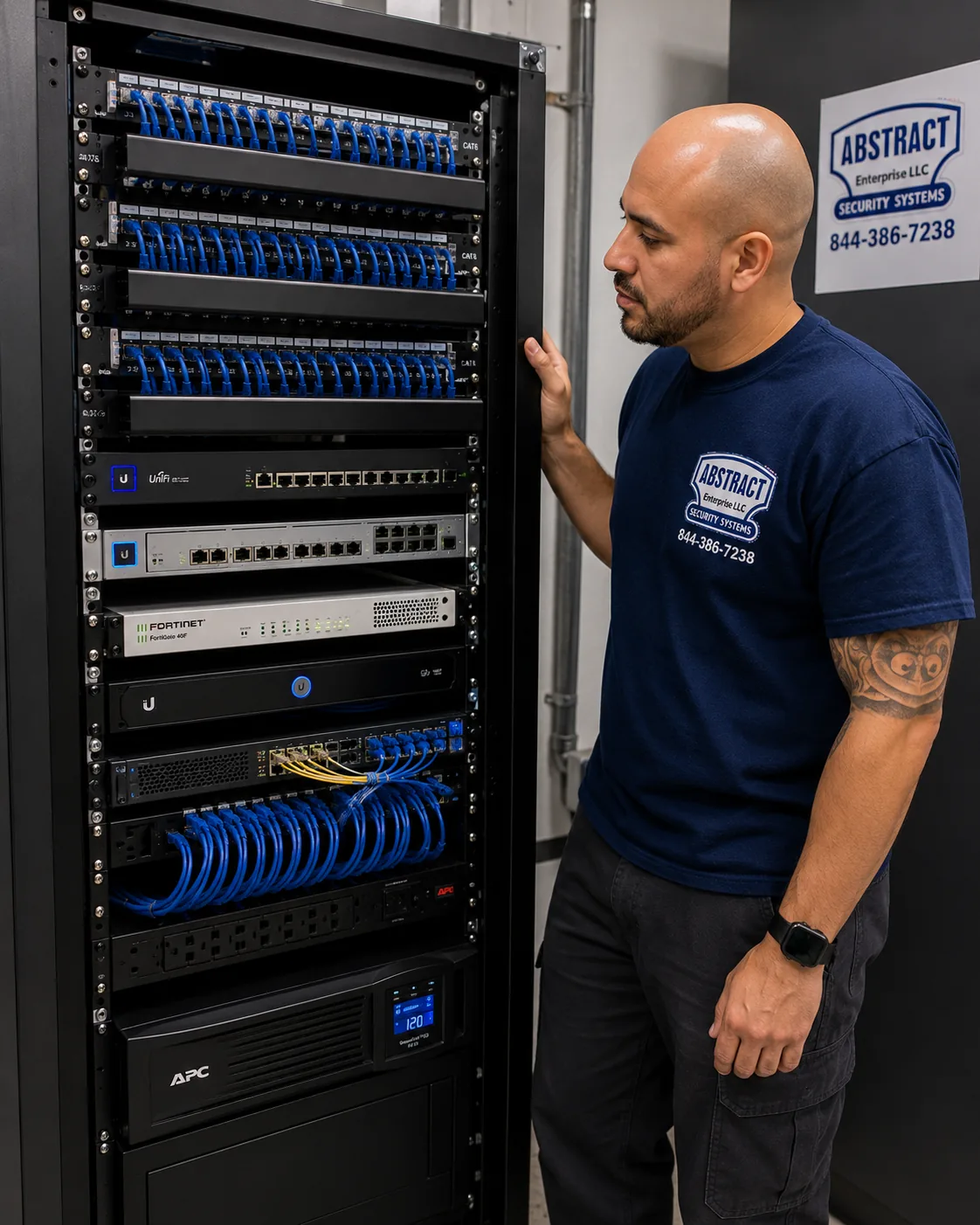
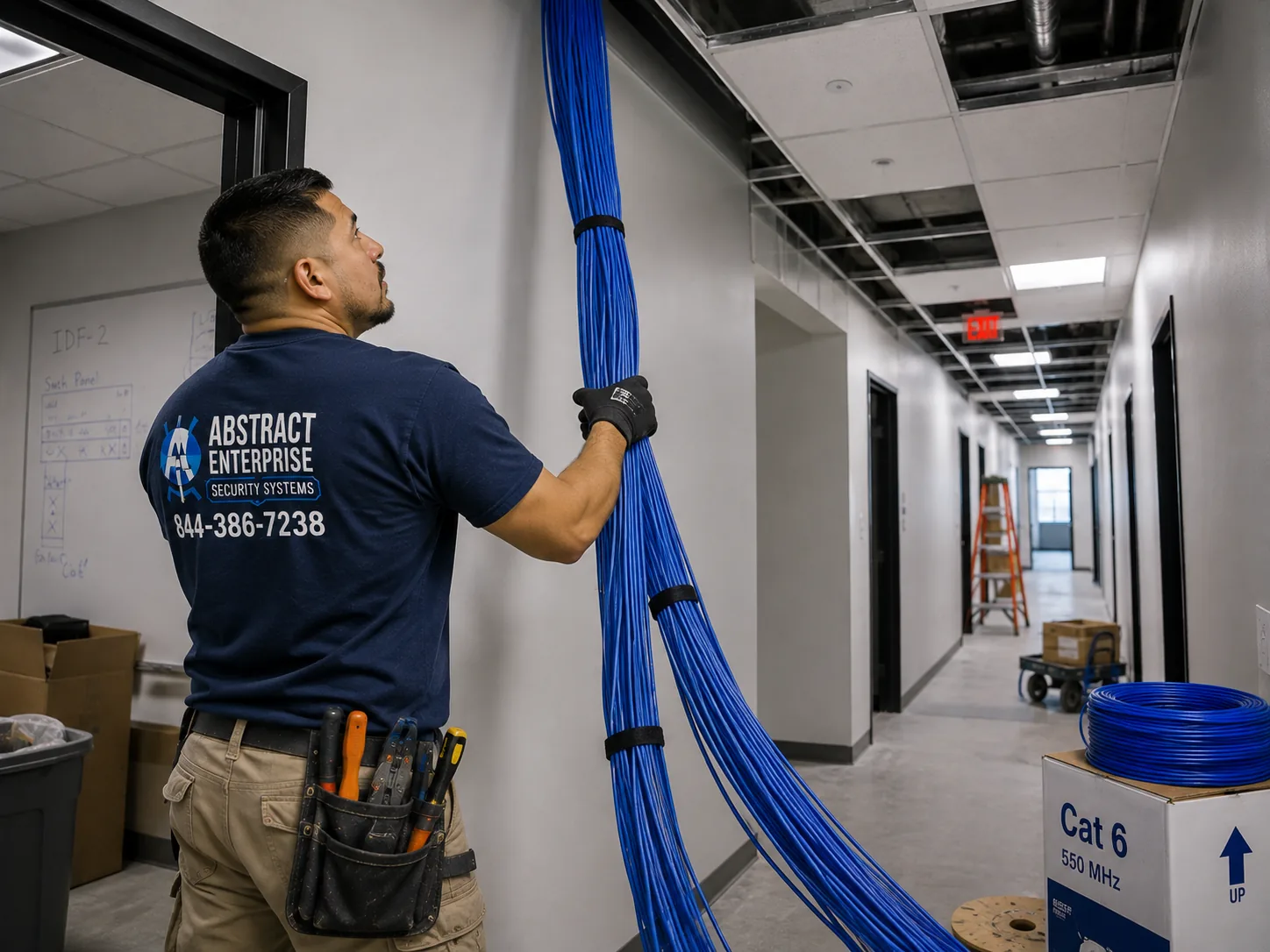
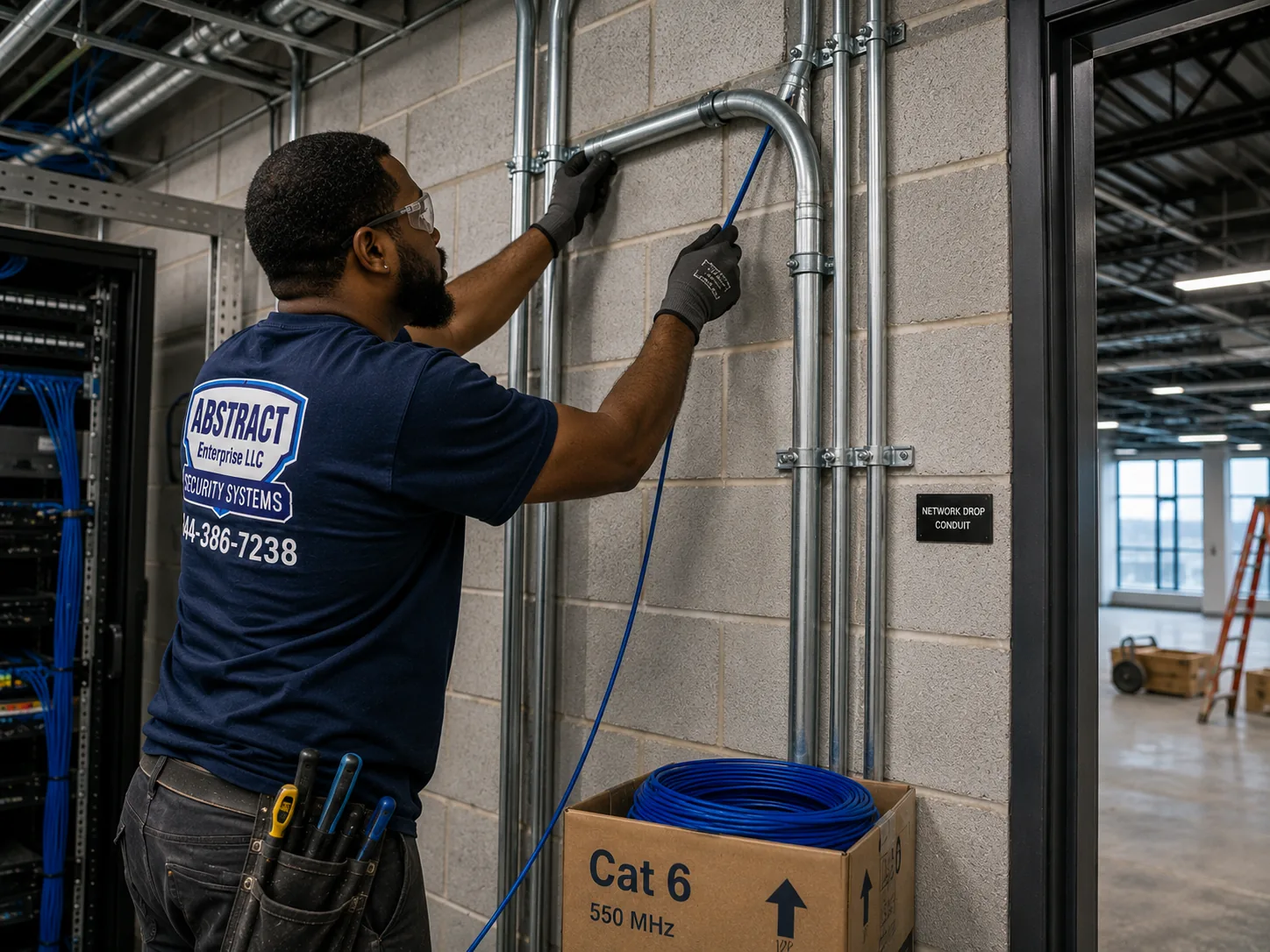
Fiber Audits & Strand Maps · Campus Re-Partitioning · Re-Termination & Fusion Splicing · OTDR Testing · Road & Pole Crossings
Most of Rockland's big commercial properties were built for a single owner during the county's rapid growth of the 1960s and 1970s, and many of them are now being divided, sold or turned into something else. A research campus in Pearl River is leased to many companies, an office tower complex has proposed apartments in one of its two buildings, a regional mall changed hands at auction this year. The fiber inside those properties was laid out for one owner and one purpose. We find it, test it, split it cleanly between the new owners and tenants, add what is missing and hand each party a record of exactly which strands are theirs.
Reviewed and updated October 17, 2026 · Written by Anwar Timothy, NYS licence #12000287431

Just bought, leased or split a Rockland property and nobody can say what the fiber does? Call our Rockland line, (845) 640-3835, or use the 60-second form with the address and a photo of the telecom room. The person who answers is an installer, not a call centre.
Rockland grew up fast and grew up big, and the buildings from that growth are now being taken apart and handed on. The county had about 89,000 residents in 1950 and nearly 230,000 by 1970, according to the census figures collected on its Wikipedia entry. Blue Hill Plaza, the pair of Skidmore, Owings & Merrill office buildings on Veterans Memorial Drive in Pearl River, was completed in 1972, right at the end of that surge. Around it the county filled in with the pharmaceutical research complex on North Middletown Road, the enclosed mall in Nanuet that later became the Shops at Nanuet, and the industrial and flex parks along Route 303 through Orangeburg, Blauvelt and Tappan. Each was planned, wired and run by one organisation. Their telephone rooms, conduits and later their fiber were laid out for that single owner’s needs.
Half a century later the single owners are leaving, shrinking or selling. Pfizer, which inherited the Pearl River research campus when it acquired Wyeth, sold about 200 acres and some two million square feet of it to Industrial Realty Group in 2015; the Journal News counted about 38 buildings in the sale. The site now operates as Hudson Valley iCampus, which its owner is developing as a mixed-use, multi-tenant campus, while Pfizer keeps and runs its own section on the south side. Blue Hill Plaza, which once held about 40 percent of the county’s office leasing market, put forward a proposal in 2025 to turn the eight-storey 2 Blue Hill Plaza into 341 apartments, according to the Rockland County Business Journal. The Palisades Center in West Nyack went for $175 million at a foreclosure auction in February 2026. Nanuet’s mall reopened as the Shops at Nanuet in 2013, and its newer owners plan to add apartments. Every one of these changes moves a property line, a lease line or a use line straight through a network that was designed without one.
That is the fiber problem particular to this county. In much of the upper Hudson Valley the hard part of joining two buildings is distance and lightning; Rockland, in Earth Networks’ 2020 lightning report for New York State, logged 64,575 pulses and 28 thunder days, the fewest of the six valley counties. Here the hard part is inheritance. A new tenant on a former single-owner campus finds a backbone whose strands run through rooms it cannot enter. A buyer receives a building whose fiber nobody has labelled since the 1990s. A landlord converting half a complex to housing discovers that the office floors’ only fiber path runs through what will become a residential basement. None of these is solved by pulling more cable alone. They are solved by finding out exactly what exists, deciding who owns which strands, and rebuilding only what has to change.
Carrier service does not make this go away. Verizon Fios and Optimum both sell fiber service here, and residents on the r/Rockland forum describe the choice as “very town-dependent”. Cable franchises are still agreed village by village; in August 2026 Cablevision of Rockland/Ramapo filed to renew its franchise with the Village of Chestnut Ridge. But a carrier brings its glass to one demarcation point on one building. From that point to every other building, floor and tenant on the property, the fiber is the owner’s, and on a property that has just changed hands that private fiber is very often the part nobody understands.
The result is a county where a large share of our fiber work starts with a question rather than a cable: what is already here? Sometimes the answer is a well-built single-mode backbone that only needs relabelling and a locked enclosure for each new owner. Sometimes it is orange-jacketed multimode from another era that will not carry the new tenant’s network. Either way, the plan is written after the test, not before it.
Most Rockland owners who untangle a shared backbone also re-home the security systems that rode on it. Cameras and door controllers often sit on strands the previous owner never documented. Our Rockland commercial camera installers and Rockland access control team plan from the same strand map, so nothing goes dark when the strands move.

A tenant fit-out crew cut a backbone above a ceiling, a landscaper’s auger found the conduit between two buildings, or a link has simply gone dark and nobody knows where it runs. That is repair work, and we schedule it that way: same-day dispatch where the calendar allows, and most single-point faults on reachable fiber — a broken connector, a crushed patch cord, a damaged pigtail or a wet splice enclosure — are found and fixed in one to two hours on site, with the strand measured again before we leave. Ring (845) 640-3835 and say it’s a fiber repair. Copper and mixed faults go to our network cable repair service in Rockland County.
Rockland jobs tend to begin with fiber someone else put in, so our service list starts with finding and fixing what exists, then moves to building what doesn’t. Each item can be bought on its own or as part of one project.
We open every enclosure and panel on the property, identify the glass by its jacket print and core size, test each strand and draw what we find: where each cable starts and ends, what it carries, and what condition it is in. The output is a drawing and a strand table you can hand to a buyer, tenant or IT firm.
When a campus built for one owner becomes several, we assign strands to each party, move each owner’s strands into its own locked panel or enclosure, and rebuild the pathways that cross another owner’s space so nobody depends on a room they cannot enter.
Old connectors with chipped or dirty end faces, splice trays with broken fibers and pigtails damaged during past moves. We fusion-splice new factory pigtails onto good cable rather than replacing glass that still tests well.
Single-mode fiber between buildings on office parks, school sites, congregational properties and industrial parks, in new conduit or in duct we have proved clear, with enclosures inside each building’s main room.
Where offices become apartments in part of a complex, we re-route the remaining commercial fiber so it no longer passes through the residential building, and leave the new residential side a clean entry point for its own providers.
Links that have to cross a county road, ride Orange & Rockland poles or continue into Bergen County. We prepare the drawings and paperwork each authority asks for and build to its conditions.
Fios, Optimum or a business carrier lands its fiber in one building; we carry it to the tenant suites, the second building or the new owner’s equipment room on owner fiber, labelled so the carrier’s technician can find the hand-off point.
Power-meter loss tests on every strand, OTDR traces on backbones and spliced runs, and a written condition report for buyers, lenders, landlords or incoming tenants who need to know what they are taking on.
Strands set aside for security cameras, card readers, intercoms and building controls, kept separate from tenant networks, so a lease change in one building never takes down the gate or the parking-lot cameras.
The defining Rockland fiber job is not a new installation. It is the careful division of an existing one. A campus or complex designed by one organisation usually has a single main equipment room, a few intermediate rooms in other buildings, and backbone cables running between them in a star or a ring. When that property is sold in pieces, leased to many tenants or partly converted, the star no longer matches who owns what. The old main room may now belong to a party that has no reason to keep the lights on for everyone else.
The work follows a fixed order. First comes an inventory: every room, enclosure, panel and cable on the property is identified, photographed and labelled with a temporary tag. Second comes testing, because nobody should make ownership decisions about strands that may be broken. Third comes the ownership map, agreed by the landlord, the owners and the tenants, assigning each strand, each room and each pathway to someone. Fourth comes the rebuild, which is usually smaller than people fear: a new enclosure here, a short bypass cable there, a few strands re-spliced so a tenant’s path no longer passes through another party’s locked room. Last comes the record, separate for each owner, so the next sale or lease does not start from zero again.
Four things. The fiber type must suit the network the new owner will run; single-mode from any decade is generally fine, while early multimode may not be. The strands must test within a sensible loss budget end to end. The cable must run through space the new owner can legally and physically reach for maintenance. And the strands must not be needed by anyone else. When all four are true, reuse is cheaper and faster than new cable, and we will say so.
Each owner ends up with its own entry or a documented right to share one, its own lockable panel at each end of each strand it uses, a drawing that shows only what it owns plus the shared pieces, and test results taken after the split. Shared pieces — a common duct bank, a shared entrance room, a riser in a building with two owners — are listed by name so that whoever writes the next easement or lease can refer to them precisely.
It varies, and it matters because whoever commissions the work owns the drawings. On a campus sold in pieces it is often the buyer, who needs certainty before moving in. On a multi-tenant site it is usually the landlord, who wants one record for every tenant and fewer carriers cutting through ceilings. On a partial conversion it is the developer, who needs the commercial side out of the way before demolition. We work for any of them, and where several parties share the cost, each receives the records for its own part.
An audit is priced by strand and by connector, not by guesswork: $52 per strand for an OTDR trace and $46 per re-terminated end at the Rockland rate. Re-terminating and certifying a dozen backbone strands with two dozen ends comes to $1,728, against $5,850 to $9,100 for a new 12-strand multimode backbone between rooms or $10,400 to $19,500 and up for new 24-strand single-mode between buildings. The audit tells you which of those columns you are actually in.

Rockland’s commercial building stock is young by Hudson Valley standards and was mostly built in a few big waves, which is why so much of it has the same kind of network history. These are the types we work in most.
Blue Hill Plaza’s 21-storey tower and eight-storey companion are the county’s best-known example: a self-contained office park with its own telephone equipment rooms and, as described, its own utility substation. Buildings like this have real risers and real entrance rooms, and the question is who controls them after a sale or conversion.
Dozens of laboratory, production, office and support buildings on one site, linked over decades by duct banks and tunnels. Clean areas, controlled access and process equipment limit where cable may go and when anyone may work.
Enclosed malls and their successors along Route 59, with a landlord’s back-of-house corridors, long service passages and dozens of tenants each wanting its own carrier. Ownership changes here move the landlord’s systems while the shops stay open.
Single-storey steel and block buildings off Route 303 and in the Bradley Hill Road area, each split into units for distributors, contractors and light manufacturers. Units are re-let often, and the fiber between the park office and each unit is either an asset or a mystery.
Nyack and Piermont storefronts and upper floors, some from the nineteenth century — Nyack’s Vanilla Factory dates to 1839 — with shallow cellars near the Hudson. Sandy left Piermont’s business district dark and its basements pumped out, which is why network gear here belongs above the ground floor where possible.
Montefiore Nyack Hospital’s ongoing transformation programme includes a new reception centre with integrated emergency communication systems; Rockland Community College sits on 175 acres in Suffern. Campuses like these add buildings in phases, and each phase has to join an existing backbone without disturbing it.
Office towers. We confirm which riser sleeves and closets belong to the base building and which were tenant improvements, because a conversion or partial sale usually turns that informal distinction into a legal one. New fiber in shared vertical space is riser-rated (OFNR) at minimum, and plenum-rated (OFNP) wherever it crosses an air-handling ceiling, and every penetration we open is firestopped before we leave the floor.
Research campuses. Before any cable moves we get the site’s permit-to-work rules, the list of rooms where tools may not enter, and the change-control window for live services. Routes favour existing tunnels and duct banks owned by the landlord, documented as shared assets, over new paths through a single tenant’s building.
Retail centres. The landlord’s systems — cameras, parking, building management, common-area Wi-Fi — get their own strands and their own enclosures, separate from any panel a tenant might reach. Tenant service is brought to a defined hand-off point in each unit so carriers stop running their own cable through common corridors.
Flex and industrial units. We favour a small fiber enclosure or panel at each unit fed from the park’s main room, so a departing tenant takes only its own switch and leaves the strands for the next. Exposed cable at dock height goes in conduit or armored jacket where forklifts work.
River-village buildings. Equipment goes on the highest practical floor, and cable that must pass a cellar is kept in sealed conduit, routed high on the wall. Brick party walls are cored carefully and sleeved, and upper-floor routes often follow old chimneys, stair walls and closets rather than open walls.
Healthcare and campus phases. New buildings get diverse paths back to the core where the owner’s standard asks for them, and we coordinate the outage-free cutover of any service that moves with the facility’s IT and clinical engineering staff.

Rockland’s commercial life runs along a handful of corridors, and nearly every one of them has recently seen big properties sold, re-planned or re-let. Here is where our commercial fiber work concentrates and why.
Hudson Valley iCampus at 401 North Middletown Road, the research site Pfizer took over with Wyeth, now a multi-tenant campus beside Pfizer’s own retained section, and Blue Hill Plaza off Veterans Memorial Drive near Lake Tappan. Both are large, privately networked properties being re-divided among many occupants.
The county’s retail spine. The Palisades Center in West Nyack, the Nanuet Town Centre on the site of the old enclosed mall, and strip centres east and west — including the Monsey Center at Saddle River Road, sold for about $10 million in 2026. Landlord systems, tenant carriers and parking-lot cameras all need clear strand ownership.
Industrial and flex space close to the New Jersey line. Bradley Corporate Park on Bradley Hill Road in Blauvelt — 16 buildings on 180 acres — was bought in 2019 by owners who planned to upgrade its infrastructure, and a 54-acre site at 108 Route 303 in Tappan sold in 2026 with plans for a 337,000-square-foot facility.
The old state hospital grounds around Old Orangeburg Road, parts of which are now owned by the Town of Orangetown. In 2017 the town considered selling 60 acres of it to a data-centre developer. Old institutional campuses like this hide decades of buried duct and abandoned cable that must be traced before anything new goes in.
Small professional offices, medical practices, restaurants and shops in older mixed-use buildings, plus Montefiore Nyack Hospital and its surrounding medical offices. Jobs here are small in footage and large in care: masonry, tight streets, upper floors and flood-aware placement.
Professional buildings, municipal neighbours and schools around the county seat in New City, and Suffern’s village centre near Rockland Community College. Multi-building owners here, from practices to congregations, often join neighbouring properties with private fiber.

Rockland is compact, densely built and has the New Jersey line along its southern edge, so links between an owner’s sites leave private land more often here than in the open counties to the north. Three authorities come up again and again.
O&R, the electric utility for Rockland, publishes its process for attaching to its poles. Its page lists exactly the kind of work we do — a new communications line between buildings, security cameras, or new fiber optics — and asks for a Joint Use Facilities request, license agreements for the appropriate state, a pole attachment survey sheet, insurance certificates, tagging samples and fees. The published fees include a one-time $350 agreement processing fee, a survey and engineering charge of $8.40 per pole for the pre-walk and $6.30 for the post-walk, make-ready labour at $163.82 an hour overhead or $154.11 underground when a pole has to be rearranged to make room, and an attachment rental rate of $26.55 in New York and $12.96 in New Jersey. Those are the utility’s charges, separate from ours, and we include them as a line in any aerial proposal.
Rockland poles already carry a great deal more than power and telephone. O&R notes that eruv attachments on its poles and those of its New Jersey affiliate, Rockland Electric, were installed under the same practice it applies to security cameras, holiday lighting and private communication lines. In practice that means a busy pole may need make-ready work before a new attachment fits, and the survey is where that shows up.
Crossing a county road with conduit needs a road work permit from the county highway department; town and village streets go through the town or village. The practical choices are a directional bore under the road, which leaves the surface alone, or an open cut restored to the authority’s detail. Bores cost more to mobilise and less to restore. The county also publishes an annual paving programme, and a crossing timed before a road is milled and resurfaced is easier on everyone than one cut into new asphalt.
State routes are a third case. Route 59, Route 303 and Route 9W are numbered state highways, and work within a state right-of-way falls under the New York State Department of Transportation’s highway work permit process, which the department says applies to developers, utility companies, municipalities, residents and anyone else working within the right-of-way. A crossing of a state route usually takes longer to permit than a county road, so where an owner has a choice of routes, the one that avoids the state highway is often the faster build even if it is a little longer.
Pearl River’s Blue Hill Plaza sits against the Bergen County line and even takes its power from a substation in Montvale, New Jersey; Blauvelt’s industrial parks are a few miles north of it. For an owner with one site on each side of the line, a private fiber across the state line is ordinary engineering but double paperwork: O&R asks for a license agreement for each state, road permits come from different authorities on each side, and the documentation should show exactly where the line was crossed. We prepare the route so each side’s file is complete on its own.

These are the questions Rockland owners, landlords and tenants actually bring us, grouped by the situation that prompts them. Each answer is the short version of what we would say on the walkthrough.
Right now, you depend on that company’s goodwill, and that is the situation to fix. On a former single-owner research campus the backbone usually fans out from one main equipment room to smaller rooms in each building, and after the campus is let to many occupants that main room can end up inside someone else’s secured space. The landlord normally still controls it, so the first step is a written access arrangement with the landlord covering escorted entry, notice periods and who may touch which panels. The second is to make sure your strands land in their own locked panel in that room, so a visit never involves another tenant’s equipment. Where the room is in a laboratory or controlled area with long access lead times, the lasting answer is a short new path from your building to the landlord’s entrance room or to the carrier’s hand-off, so routine work never needs the other company’s door opened at all.
Map first, then re-route. Office complexes from the 1970s often feed one building’s telecom room through the other’s cellar or connecting concourse, and the proposal at Blue Hill Plaza to turn the smaller building into apartments is exactly the kind of change that exposes those paths. We identify every cable that passes through the building being converted, decide which can be cut back and which must be replaced by a new route that stays on the commercial side, and give the residential developer a clean, documented entry point so its providers do not have to share a room with the office tenants. Timing matters: the bypass should be built and tested before demolition begins in the converting building, not after a contractor finds live cable in a wall.
We start at the ends we can see. Every enclosure and panel is opened, photographed and tagged, and the jacket print on each cable tells us its type, strand count and often its manufacturer and year. A visual fault locator shows which port lights up at the far end, a light source and power meter give each strand’s loss, and an OTDR trace on the longer runs shows distance to every splice, connector and break. Where a cable disappears into a wall or duct, the OTDR’s distance readings plus a walk of the likely route usually tell us where it goes. The result is a drawing and a strand table with a pass, marginal or fail beside every strand. Typical campus surveys take a day or two on site; pricing is per strand and per connector, listed further down this page.
This is common when a company sells most of a site and keeps a section for itself, as Pfizer did in Pearl River. Both parties usually share a backbone for months or years after the sale. The safe way out is to agree a strand plan in writing, then move one party at a time onto its own strands during a scheduled window: we prepare and test the new path while the old one is still live, the IT teams on both sides confirm the cutover plan, the move happens, and only after both sides confirm service do we disconnect the old cross-connections. Each owner ends with panels it can lock and a record that shows the other party’s strands as not its own. Nobody loses service, and nobody keeps access to the other’s equipment.
A road work permit and a choice of method. The Rockland County Highway Department requires a permit for installing any utility within a county road right-of-way and has a utility permit category for private applicants; the application is reviewed by a licensed engineer before the Superintendent of Highways signs off. Town and village roads go through the municipality instead. Most crossings are done by directional bore, which leaves the pavement intact, with conduit coming up in a pull box on each side. Where a pole line already runs along the road, an aerial crossing on Orange & Rockland poles is the alternative, with the utility’s survey and make-ready process in place of a road permit. We price both and recommend one.
Yes, if a route exists that you can secure on both sides. Over a short distance, aerial fiber on utility poles is often the practical path, and Orange & Rockland, which also serves the New Jersey side through Rockland Electric, publishes separate license agreements and attachment rates for each state. Underground, each side’s road authority issues its own permit. Over longer distances, or where poles are crowded, a carrier’s dark fiber or a point-to-point circuit is often cheaper than building your own. We look at all three, and if private fiber wins, we build it with the paperwork for each state complete on its own.
Not as a cable you pull yourself. A private owner can’t simply attach a line to a state river crossing, and building one under the river is not a realistic project for a single business. The workable answer is a carrier circuit or leased dark fiber between the two sides, with your own fiber on each bank carrying that service from the carrier’s hand-off to wherever your network lives. Our part is to make the private ends clean and documented, so that if the carrier changes, only the middle changes. Our Westchester fiber crews handle the east-bank end under the same proposal.
The glass itself does not wear out from sitting idle. What fails in empty buildings is everything around it: connectors left uncapped collect dust, enclosures get knocked during clean-outs, rodents chew jackets in quiet ceilings, renovation crews cut cable they assume is dead, and roof or cellar leaks reach splice trays. So the answer comes from testing, not age. Typically, a good part of the backbone tests well after its connectors are cleaned or replaced, and a few strands or runs need repair. Equipment that will go back into service should go above any space that has ever taken water; after Sandy, Rockland’s river villages learned that the cellar is the wrong home for a network.
Probably not for long. An orange jacket on older multimode usually means 62.5-micron OM1 fiber, the common type of its era. Industry references put OM1’s reach for 10-gigabit Ethernet at only about 33 metres, so between buildings or up a tall riser it is effectively limited to gigabit speeds. It still works for those slower links, and some tenants only need that. If the new network needs 10 gigabits or more between rooms, the honest choice is new single-mode or OM4 fiber in the existing pathway, often pulled through the same conduit after the old cable comes out. We tell you which strands fall into which group before you buy anything.
Leave the landlord’s infrastructure and remove the tenant’s equipment. In practice that means a small fiber enclosure or patch panel in each unit, fed from the park’s main room, tested, labelled and capped, with the outgoing tenant’s switches and patch cords gone. That turns fiber into a leasing feature instead of a liability, and it keeps carriers from pulling their own cable through your ceilings every time a unit is re-let. It also lets the next tenant choose any carrier without waiting for construction. If the outgoing tenant installed fiber at its own cost, check the lease: many say tenant-installed cabling stays with the building unless removal is required.
Give the landlord’s systems their own path and their own strands. On many older plazas the camera recorder, lighting controls or common-area Wi-Fi were patched through whatever cable was handy, sometimes a tenant’s switch or a strand that passes through a tenant’s back room. That works until the tenant leaves, renovates or locks the room. We trace which strands the landlord systems use, run a short dedicated cable from the plaza’s utility room to each camera location or pole along a route that stays in common areas, and land it in an enclosure only the landlord can open. Plazas along Route 59 have been changing hands — the Monsey Center and a Spring Valley strip centre both sold in 2026 — and a buyer will ask who controls the cameras. It is worth being able to answer “we do”, with a drawing to prove it.
A written one, signed by every owner whose land the cable crosses. If one organisation owns all the lots, the route is simply private fiber across its own land. If the lots belong to different people or entities, an easement or license for the cable, signed by each owner, protects everyone when a property is later sold. The engineering is short and simple: buried conduit between buildings, or aerial cable on your own poles where the ground is crowded. The paperwork is what makes the link last, and we can give your attorney the exact route and dimensions to describe.
Usually nothing visible, if somebody has a record of it. Sales like the Palisades Center auction transfer the landlord’s systems and rooms to the new owner, but tenant carrier circuits stay under the tenant’s contract. The risk sits in the landlord’s back-of-house rooms where carrier fiber lands and in any landlord-owned strands that carry your service to your unit. Ask your carrier where your circuit enters the building and which room it passes through, and ask the landlord for a contact who controls that room after closing. If nobody can answer, a short audit before the sale closes is far cheaper than an outage discovered by your cash registers.

Because so many Rockland jobs connect to fiber that already exists, our kit has to match old glass as well as install new. These are the categories we specify most.
The default for new backbones and links between buildings: long reach, any future speed, and compatible with almost any carrier hand-off. Indoor/outdoor jackets for routes that pass through a cellar or a duct between buildings.
For short, high-speed runs inside one building where the owner’s equipment already uses multimode optics. We match it to existing OM3 or OM4 plant rather than mixing in older types.
The heart of a campus split: each owner’s strands end in an enclosure only that owner can open. Rack-mount panels for equipment rooms, wall-mount boxes for tenant units and shared corridors.
Factory-polished pigtails fusion-spliced onto existing cable, which restores tired connectors without replacing the run. Each tray is labelled with the strands it carries and who owns them.
Innerduct subdivides an old campus duct so a new owner’s cable has its own lane. Outdoors, conduit with pull boxes and pull strings keeps future cables cheap to add.
For dock areas, cellars and long-vacant ceilings where cable is exposed to forklifts, crushing or rodents. Any metallic armor is bonded only where the design calls for it.
Self-supporting or lashed cable for utility-pole routes, with the clamps, drip loops, risers and tags the pole owner specifies.
SFP modules and converters matched to each strand’s fiber type and wavelength, which is the most common thing to get wrong when old multimode meets a new switch.
Connector inspection scopes, visual fault locators, light sources and power meters, and an OTDR for distance-to-event traces. The results go into the handover file in their original format.
| What the test shows | Usual decision | Typical Rockland cost driver |
|---|---|---|
| Single-mode, low loss, dirty or damaged connectors | Reuse the cable; clean or re-terminate the ends | $46 per re-terminated end, plus testing |
| Single-mode, one bad splice or a break at a known distance | Repair at the fault; re-test end to end | Hourly repair time; splice enclosure if the break is mid-span |
| OM1 62.5-micron multimode, network needs 10 Gb/s | Replace with OS2 or OM4 in the same pathway | New cable priced as a backbone or per drop |
| Good cable running through another owner’s space | Reassign strands in writing, or build a bypass | Short new cable and enclosures at each end |
| Cable of unknown route that fails testing | Abandon in place, label as dead, build new | New link at the Rockland rate |

Search summaries and cost guides answer fiber questions with national averages and assumptions about new construction. Here is how seven common claims hold up against inherited, divided and redeveloped Rockland property.
One comparison site says Optimum offers fiber service to 91.5 percent of Rockland County homes, and Verizon Fios is widely sold as well. Residents on the county’s Reddit forum still argue about which is better town by town, and one poster in Nanuet called the cable service there “a disaster” for its slow upload. None of that touches the question a business owner faces.
Carrier fiber ends at a demarcation point, usually one box in one room of one building. On a campus, a plaza or a converted complex, everything beyond that box is private: the strands to the second building, the tenant suites, the security room and the guard booth. That private fiber is what changes hands when a property is sold and what breaks when a tenant fit-out cuts a ceiling.
So the useful question is not whether fiber reaches the street, but who owns the glass between the carrier’s box and your equipment, and whether anyone has tested it lately. In Rockland, after a decade of campus sales and conversions, the honest answer is often “nobody knows”.
The durability claim is half true. A well-installed fiber in a protected pathway can stay optically sound for a very long time. But the type of glass matters as much as its condition, and older multimode, usually OM1 with its orange jacket, is listed by industry references as reaching only about 33 metres at 10 gigabits per second.
Rockland’s large campuses and office buildings were wired across several decades, so it is common to find modern single-mode, older OM1 and something in between in the same room. A strand that is perfectly healthy may still be the wrong kind of strand for the network the new tenant plans to run.
The right sequence is identification, then testing, then a decision for each cable. Treating every old strand as reusable leads to links that work at a gigabit on installation day and fail the first time someone installs faster optics.
Cost guides often quote aerial construction below underground; one industry figure puts the aerial median at about $8.00 a foot, against $18.00 for underground. Another guide notes, correctly, that aerial routes “need attachment rights”.
In Rockland those rights come from Orange & Rockland, and the utility publishes its own charges: a $350 agreement processing fee, per-pole survey fees before and after the work, make-ready labour at $163.82 an hour if a pole has to be rearranged, and an attachment rental of $26.55 per attachment in New York. On a crowded pole line, make-ready can outweigh the cable itself.
Aerial can still be the right answer for a short link along an existing pole line, and sometimes the only practical one. But it is never just the cable price, and the utility’s timetable becomes part of yours.
That range, published by a New York cabling firm for indoor pulls, describes cable going into a building with open ceilings and a clear path. It says nothing about the work that dominates a Rockland job: finding what already exists, testing it, splitting it between owners and documenting it.
An audit of a twelve-strand backbone with two dozen re-terminated ends costs $1,728 at our Rockland rate and involves almost no new cable at all. A bypass around a building being converted may be a few hundred feet of cable and a great deal of careful cutover planning.
Per-foot numbers are a reasonable sanity check on a brand-new run. For inherited plant, ask instead for per-strand testing, per-connector termination and a clear line for any new path.
Published contractor advice puts small fiber projects at a day or two of work. For one fresh link inside one building, that estimate is reasonable, because it assumes nothing exists yet.
On a property that has just been divided, the calendar is set by people rather than cable: two owners’ IT teams agreeing a cutover window, a landlord approving access to a shared room, a county road permit or a pole survey. The physical work of a campus split may be a few days; the coordination around it is often several weeks.
Plan for that from the start. The test and inventory can happen immediately, and they make every later conversation faster because everyone is looking at the same drawing.
Point-to-point wireless is a real tool and we sometimes recommend it as a temporary link or a backup. But on a Rockland campus or office park the buildings are often close together, the trees and other buildings are in the way, and the owners already have duct or poles between them.
Where duct exists, fiber pulled through it is usually cheaper over its life than radios that need line of sight, power at both ends and periodic replacement. Where a new owner cannot use the old duct, a short new conduit is still often the better long-term answer.
We will price both when the choice is close. The deciding factors are usually the path, the bandwidth the far building really needs and how long the owner plans to hold the property.
Carriers install their own drop to their own demarcation point, and in a multi-tenant property they may run cable to an individual tenant under that tenant’s order. They do not design, own or maintain the landlord’s backbone, and they do not divide a campus between owners.
When property changes hands, carriers also tend to leave behind cable that served former tenants, still in the ceilings and riser, labelled with circuit numbers nobody recognises. That is part of what an audit finds and documents.
Use the carrier for the service and use your own fiber, properly documented, for everything after the hand-off. It is the only arrangement that lets you change carriers, tenants or owners without starting the wiring again.
Send the address and a few photos of the telecom rooms. We will tell you what an audit involves, how long it takes and what it costs at the Rockland rate.
Tell us the property, how many buildings or units it has, and what you know about the fiber already there. A licensed installer replies the same business day — or call the Rockland line, (845) 640-3835.
An installer will phone you within the business day. For anything urgent, the Rockland line is (845) 640-3835.
On a Rockland property the process starts with what is already in the ground and the ceilings. These seven steps are the same ones listed in our HowTo record for this page.
We tour every telecom room, entrance room and building on the property with you, photograph each panel and enclosure, count strands, note fiber types and jacket print, and ask who owns, leases or shares each room.
Connectors are inspected and cleaned, every reachable strand is light-tested, and backbone runs get an OTDR trace so breaks, bad splices and tight bends show up by distance before anyone decides to reuse or replace.
Owners, landlord and tenants agree which strands, rooms and pathways belong to whom. The proposal prices each line at the Rockland rate so every party can see its own share.
Certificates of insurance, building access, any Rockland County Highway Department road-work permit for a county right-of-way, Orange & Rockland pole agreements where the route is aerial, and an 811 locate before any digging.
Conduit, innerduct and enclosures are installed, cable is pulled by its strength members within its bend radius, and each owner's strands land in its own lockable enclosure or panel.
Reused strands are re-terminated or spliced to new pigtails, new strands are fusion-spliced, and everything is tested again end to end so old and new are measured on the same day with the same reference.
Live services move to the new strands during an agreed window, both ends of every strand are labelled, and each owner receives its own drawing, strand table and test results.

Six places that show the kind of property we work around in Rockland. Naming them describes the area; it is not a claim that we have worked for their owners.
About 2 million square feet of laboratory, manufacturing and office buildings on roughly 200 acres at 401 North Middletown Road, being developed as a multi-tenant campus beside Pfizer’s retained section.
A 21-storey tower and an eight-storey building completed in 1972 on 90 acres off Veterans Memorial Drive, with a 2025 proposal to convert the smaller building to 341 apartments.
A 2.3-million-square-foot mall sold at a $175 million foreclosure auction in February 2026, now held by Black Diamond funds with Spinoso Real Estate Group operating it.
Bradley Corporate Park’s 16 buildings and 1.2 million square feet of industrial space on 180 acres, close to the Palisades Parkway, the Thruway and Route 303.
The river-town hospital on North Midland Avenue in Nyack, midway through a multi-phase transformation that includes a new reception centre with integrated emergency communication systems.
The SUNY community college’s 175-acre main campus on College Road, near the Ramapo end of Route 59 and the New Jersey line.
We also cover New City, Congers, Valley Cottage, Nanuet, Spring Valley, Monsey, Airmont, Chestnut Ridge, Pomona, Haverstraw, West Haverstraw, Stony Point, Tappan, Sparkill, Palisades, Nyack, Upper Nyack, South Nyack, Piermont, Sloatsburg and Hillburn. Across the river and up the valley, see our Hudson Valley fiber optic installation hub.

Rockland prices are our published base prices multiplied by the county’s area rate of 1.30, rounded to the dollar. The same rate applies in every town and village in the county. Nothing on this page is a special offer or an estimate made up for the page.
| Item | Rockland price | Notes |
|---|---|---|
| Fiber termination on existing cable | $46 per connector | Splice-on pigtail or connector, inspected and loss-tested |
| OTDR test | $52 per strand | Trace saved in the handover file |
| Multimode fiber drop | $455 per drop | Inside one building, terminated both ends |
| Single-mode fiber drop | $520 per drop | Inside one building, terminated both ends |
| 12-strand OM4 backbone between rooms | $5,850–$9,100 | Depends on distance, pathway and enclosures |
| 24-strand OS2 building-to-building link | $10,400–$19,500+ | Conduit, bore or aerial work priced in the range or above it |
| Second telecom room with fiber link | from $3,120 | Common when a split campus needs a new entrance room |
| Service call or callback | $195 per hour, 3-hour minimum ($585) | Tracing, troubleshooting and repairs; not charged on installs |
Third-party charges are listed separately in any proposal that needs them: Orange & Rockland’s pole attachment and make-ready fees, county or municipal permit fees, and any carrier construction charges. We do not mark them up.
Two examples show how the lines combine. A tenant on a split campus that needs its own path around a neighbour’s equipment room typically buys a short 12-strand OM4 backbone ($5,850 to $9,100) plus testing of the inherited strands it will keep. A plaza owner pre-wiring eight storefronts from a utility room usually buys eight single-mode drops at $520 each, $4,160 in all, with the main-room panel and any conduit priced on the same proposal. Neither example includes carrier charges, which each tenant pays to its own carrier.
The biggest price drivers in Rockland are not distance. They are how much of the existing plant tests well enough to keep, whether a new owner needs its own path around someone else’s space, and whether the route leaves the property. That is why the first line of most Rockland proposals is an audit.
Three starting points for Rockland work, each built only from the unit prices above.
Twelve backbone strands OTDR-tested and twenty-four ends re-terminated and certified, with a strand table and drawing. The right first step on most campuses, plazas and newly bought buildings.
A 12-strand OM4 backbone between two equipment rooms in one building or a connected complex, with enclosures, termination and testing. Typical for a tenant that needs its own path around another party’s space.
A 24-strand OS2 link between two buildings, in new or proven conduit, spliced into enclosures at both ends and fully tested. Road crossings, pole routes and bores price at or above the top of the range.
If you or your IT company already bought the cable, enclosures or optics, we can install and test them at labour-only rates instead of the supplied-material prices. We check that the parts match the fiber already on site and the network you plan to run before anything is pulled, and we tell you in writing if they don’t. Material you supply is covered by its manufacturer’s warranty, not ours; our workmanship terms apply to the installation.

Buying, leasing or dividing a Rockland property? An audit priced per strand tells you what you are taking on.
These are the conditions that turn up most often when a Rockland property’s fiber is opened after a sale, a long vacancy or years of tenant turnover, and the usual fix for each.
Where the copper side of the same building needs the same treatment, our Rockland structured cabling crews can take it on in the same visit.
Rockland is small enough to cross in half an hour, but its five towns have very different property mixes, and that changes what a typical fiber job looks like in each. Population figures are from the 2020 census as listed for the county.
| Town | 2020 population | Property mix we see most | Typical fiber question |
|---|---|---|---|
| Ramapo | 148,919 | Suffern village centre, Monsey and Spring Valley retail, schools and congregational buildings on adjoining lots, the community college | Joining neighbouring buildings across lot lines; plaza pre-wiring along Route 59 |
| Clarkstown | 86,855 | The county seat at New City, Nanuet and West Nyack retail, office buildings and medical practices, Congers and Valley Cottage | Mall and plaza ownership changes; professional buildings adding a second floor or wing |
| Orangetown | 48,655 | Pearl River research and office campuses, Route 303 industry in Orangeburg, Blauvelt and Tappan, the river villages of Nyack, South Nyack, Grand View and Piermont | Campus splits, partial conversions, links over the New Jersey line, flood-aware placement by the river |
| Haverstraw | 39,087 | The villages of Haverstraw and West Haverstraw, riverfront property and smaller commercial buildings | Older buildings with mixed copper and fiber; equipment moved up out of damp cellars |
| Stony Point | 14,655 | Smaller commercial strips, municipal and service buildings, riverfront property that took Sandy’s surge | Short links between a main building and a garage, yard or second structure |
The most populous town and the most subdivided, with more incorporated villages than any other: Suffern, Hillburn, Sloatsburg, Airmont, Chestnut Ridge, Montebello, New Hempstead, New Square, Kaser, Wesley Hills and part of Spring Valley and Pomona. Village boundaries matter for fiber because street work, cable franchises and some permits are handled village by village. Many organisations here occupy several neighbouring houses or buildings rather than one large one, so short, well-documented links across lot lines are the characteristic job.
Home to the county seat at New City and to the county’s best-known shopping destinations at West Nyack and Nanuet. Retail centres here are large, privately networked and changing ownership, and the back-of-house fiber that serves landlord systems is often older than the shops in front of it. Professional and medical buildings around New City add wings and floors over time, each needing a clean extension of an existing backbone.
The town where Rockland’s inheritance problem is most concentrated. Pearl River holds both Hudson Valley iCampus and Blue Hill Plaza; Orangeburg holds the former state hospital lands and Route 303 industry; Blauvelt and Tappan hold industrial parks near the New Jersey line; and the river villages hold the oldest commercial buildings in the county. A single week of Orangetown work can include a laboratory building, a flex unit and a nineteenth-century storefront.
The northern river towns are smaller and older in their commercial core. Jobs here are more often a single business or municipal owner joining two or three structures, or bringing an older building’s cabling up to date. Riverfront property in both towns saw Sandy’s storm surge in 2012, including the evacuation of a riverside trailer park in Stony Point, so equipment height and sealed conduit entries get attention on every job near the water.
Fiber rarely appears in a property condition report, yet on a divided campus or a multi-tenant plaza it can decide whether a new occupant can open on time. Before closing a purchase or signing a lease on a Rockland commercial property, it is worth getting written answers to these questions. Most can be answered by the seller or landlord; the rest by a short audit.
Our pre-purchase inspection answers the technical questions on that list in writing, priced per strand and per connector at the Rockland rate. The legal ones belong to your attorney, but we give them the facts they need: which rooms, which pathways, which strands, measured and photographed.
| Piece of the network | Usually the responsibility of | What to confirm in writing |
|---|---|---|
| Carrier drop and demarcation equipment | The carrier, under the service contract | Which room it sits in and who can let the carrier in |
| Entrance room and shared duct banks | The landlord or the owner of that building | Access rights for every other owner and tenant that depends on them |
| Campus backbone between buildings | Landlord, or split by strand between owners | The strand table and who maintains shared cable |
| Fiber inside a tenant’s space | Whoever paid for it, unless the lease says otherwise | Whether it stays with the building at lease end |
| Building-system strands (cameras, doors, alarms) | The building owner | That they are separated from tenant equipment |
Rockland’s largest current redevelopments add housing to properties that were built purely for business, and the fiber decisions have to be made in a particular order or they get made by a demolition crew. This is the sequence we recommend to owners and developers when part of a complex changes use while the rest stays open.
On a mall or plaza that is adding apartments, the same order applies with one difference: shops stay open throughout, so cutovers of landlord systems such as parking cameras, common-area Wi-Fi and building management are planned for early morning before opening, and tenant circuits are not touched at all unless the tenant’s carrier is present.
None of this is expensive compared with the construction around it. What is expensive is the alternative: an office floor that loses its only fiber path on the day a residential contractor opens a wall, or a new apartment building whose providers have nowhere to land because the old telecom room now belongs to someone else. A morning spent on an audit before the drawings are fixed is the cheapest protection against both, and it gives the developer, the remaining owners and the future residents’ providers one shared map to work from.
Once each owner’s strands are sorted out, the equipment and wiring hanging off them is handled by these related Rockland teams.
Copper outlets, panels and access-point drops inside each building the fiber reaches.
Tested Cat6 runs from the fiber-fed switch to desks, cameras and wireless points.
Switches, firewalls and wireless set up for each new owner once the strands are split.
Fault-finding on copper and mixed links that a fit-out or a dig has damaged.
Data, security, intercom and audio wiring under one licensed scope.
The county cabling configurator for drops, upgrades and certification.
Parking-lot, loading-dock and lobby cameras recorded over the landlord’s own strands.
Card and keypad entry for entrance rooms and shared spaces each owner must control.
Video intercoms at gates and lobbies, networked across the campus fiber.
On inherited property the paperwork is often as useful as the site visit. Nothing below is required, and we can start with nothing, but each item shortens the survey.
For a strip plaza or a single building, a few photos of the telecom room, the back of each unit and the utility entrance are usually enough to give you a budget range by phone. For a campus, we will want to walk it, and the documents above make that walk a morning rather than a week.
Three habits our installers keep when they open a Rockland telecom room after a sale or split — standing practice, not a story about any one client
The first rule is that nothing gets unplugged on the first visit. On a property that has just been sold or split, the room in front of you may be carrying services for people who are not in the room: a retained owner’s laboratory, a tenant’s point-of-sale, a parking-lot camera system the landlord forgot about. So the first visit is photographs, tags and tests on dark strands only.
The second rule is to read the cable before reading the drawing. Drawings left behind by a previous owner are a starting point, but the print on the jacket, the colour of the boots and the date code on a splice tray tell you what was actually installed and when. Where the two disagree, the cable wins and the drawing gets corrected.
The third is to write down who said what. When a facilities manager says a strand is spare, that goes in the notes with a name and a date before anyone re-uses it. On divided properties, most outages we hear about began with an assumption about a strand that turned out to belong to someone else.
All of it. That means the five towns of Clarkstown, Orangetown, Ramapo, Haverstraw and Stony Point and every village inside them, from Suffern, Hillburn and Sloatsburg in the west to Nyack, Piermont and Grand View-on-Hudson on the river, and the hamlets in between such as Monsey, Nanuet, Pearl River and Blauvelt. Every one is priced at the same published Rockland rate.
Yes, with the seller's permission to enter the telecom rooms. We inspect and clean the connectors, light-test every strand we can reach and shoot an OTDR trace on the backbone runs, then give you a short written condition report: what exists, what passed, what failed and what it would cost at the Rockland rate to put right.
Yes. Some owners only need to know what they have. We trace and test the existing strands, label both ends of every cable and panel position, and hand over a drawing and a strand table. If nothing needs fixing, nothing else is sold to you.
Our New York State low-voltage licence number, 12000287431, and a certificate of insurance naming the owner and the manager as the building requires. Rockland County separately licenses home improvement contractors under Chapter 286 and master electricians under Chapter 250; before quoting we tell you in writing whether either applies to the scope.
Yes, on the site's terms. Controlled rooms come with gowning, escort, tool and cleaning rules, and some areas allow work only during set windows. We plan routes that stay in corridors and service spaces where possible, follow the facility's permit-to-work process and leave every penetration sealed.
Testing is $52 per strand for an OTDR trace at the Rockland rate, and re-terminating a bad end is $46 per connector. A typical small campus survey of twelve backbone strands with two dozen ends re-terminated comes to $1,728. Time spent tracing unlabelled cable with nothing installed is billed at $195 an hour with a three-hour minimum.
We ask about loading zones, meters and any village permit for a work vehicle before the day, keep reels and tools to what fits in one van, and schedule cable deliveries for early morning. On narrow streets with storefronts open, noisy drilling waits until the shop owner agrees on a time.
That is the owners' agreement to make, but we make it easy. Our proposal breaks the work into lines that each owner can take: the shared backbone, each owner's own strands and enclosures, and each building's entry. Owners can then split the shared line by strand count, floor area or any formula they choose.
We supply route sketches, conduit schedules and pull-box locations that your engineer or architect can put on the stamped site plan. We don't stamp drawings ourselves. Getting the conduit onto the plan early means it is built with the parking lot rather than cut into it later.
Yes. A short outdoor-rated cable from the nearest building with service, protected along a fence or in temporary conduit, can carry the trailer's internet, cameras and phones. We plan it so the same strands can be re-pulled into the permanent conduit when the new building is ready.
Yes, and on large Rockland campuses that is usually the sensible order. The first phase separates and documents the building that is changing hands now; later phases follow as each lease or sale happens. Spare strands and pull strings left in the first phase keep the later ones cheap.
Yes. Tell us before the testing day and we schedule the light-source, power-meter and OTDR work so your consultant can watch, check the reference settings and receive the raw result files as well as the summary report.
Rockland is one of six county pages under our Hudson Valley fiber optic installation hub. The same crews, splicers and test sets work across all of them, and the city and Long Island pages below cover the rest of our area.
Hudson Valley fiber optic installation · Westchester County fiber · Orange County fiber
NYC fiber optic installation · Manhattan fiber · Brooklyn fiber · Queens · the Bronx · Staten Island
Long Island fiber optic installation · Nassau County · Suffolk County
Cameras, alarms, intercoms and the rest of our catalogue are listed on the Abstract Enterprises Security Systems home page; the people and licence behind the work are on our about page.
If a contractor’s ceiling work has isolated a building, a tidy-up in a shared room has knocked out a plaza’s cameras, or a tenant lost service in a cutover, ring (845) 640-3835. Same-day dispatch when the schedule allows; a typical connector, patch-cord or enclosure fault takes one to two hours on site, and the repaired strand is measured again before we go.
Abstract Enterprises Security Systems · 460 E Fordham Rd, Bronx, NY 10458 · Rockland line (845) 640-3835 · WhatsApp (718) 679-0359 via wa.me
NYS Low-Voltage Licence #12000287431 · 100% Licensed & Insured · Same-Day Estimates · Rated 4.7★ from 201 Google Reviews
Full terms — including 50% deposit, one-year parts-only warranty on AESS-supplied products, and the late-fee schedule — are set out in the service agreement. See our warranty page.
Page reviewed and updated October 17, 2026. Changelog: first publication of the Rockland County fiber optic installation page.