Ethernet · Cat6 · Data Jacks · Plaza & Strip Retail · Certified Testing
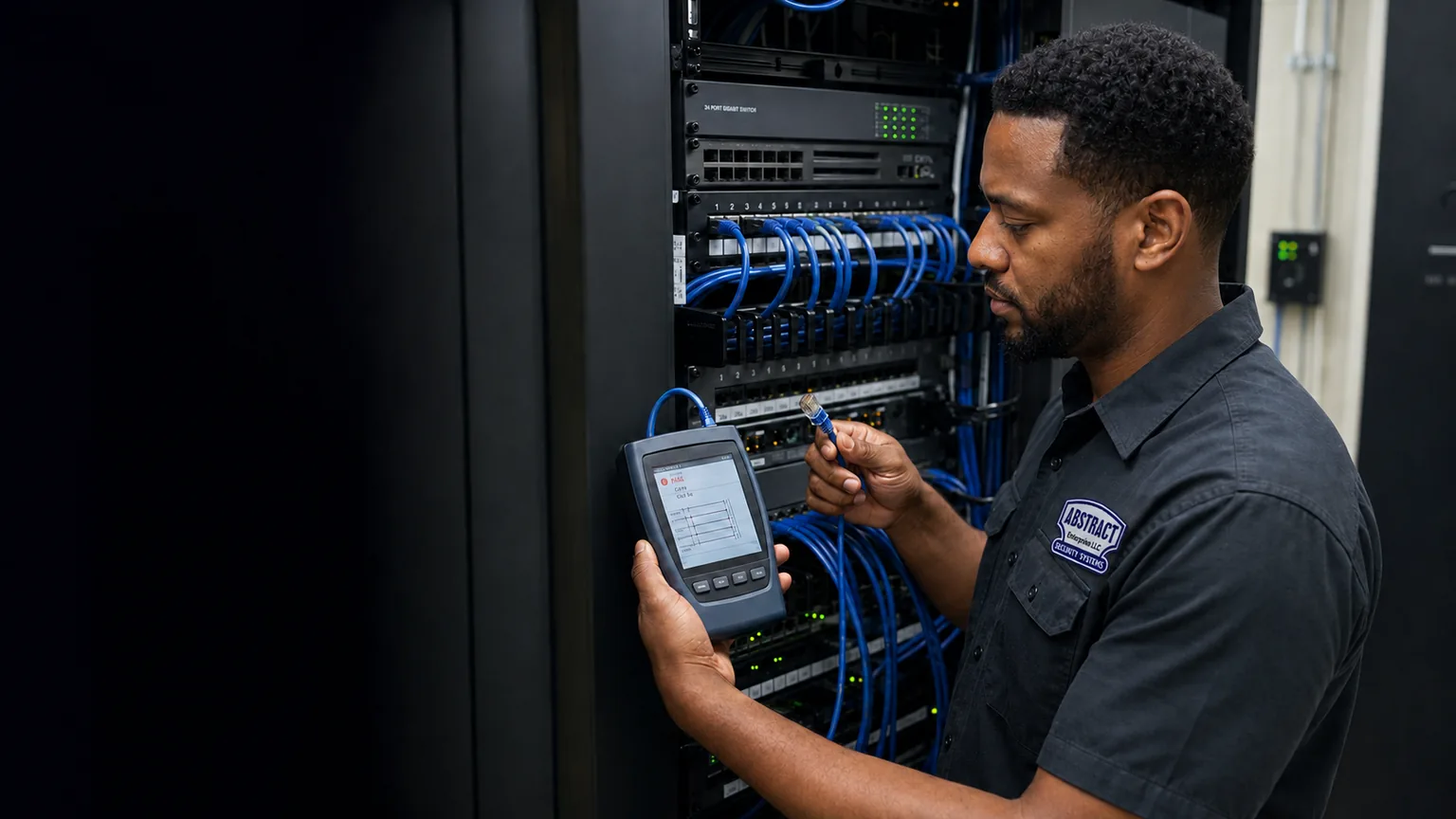
Fault location, retermination, network jack and patch panel repair, PoE troubleshooting and certified cable testing across Rockland County. Licensed NYS low-voltage contractor. Every repaired run tested, and your cable identified where it crosses somebody else's ceiling.
Ethernet, Cat6 and Data Jack Repair Across Rockland County
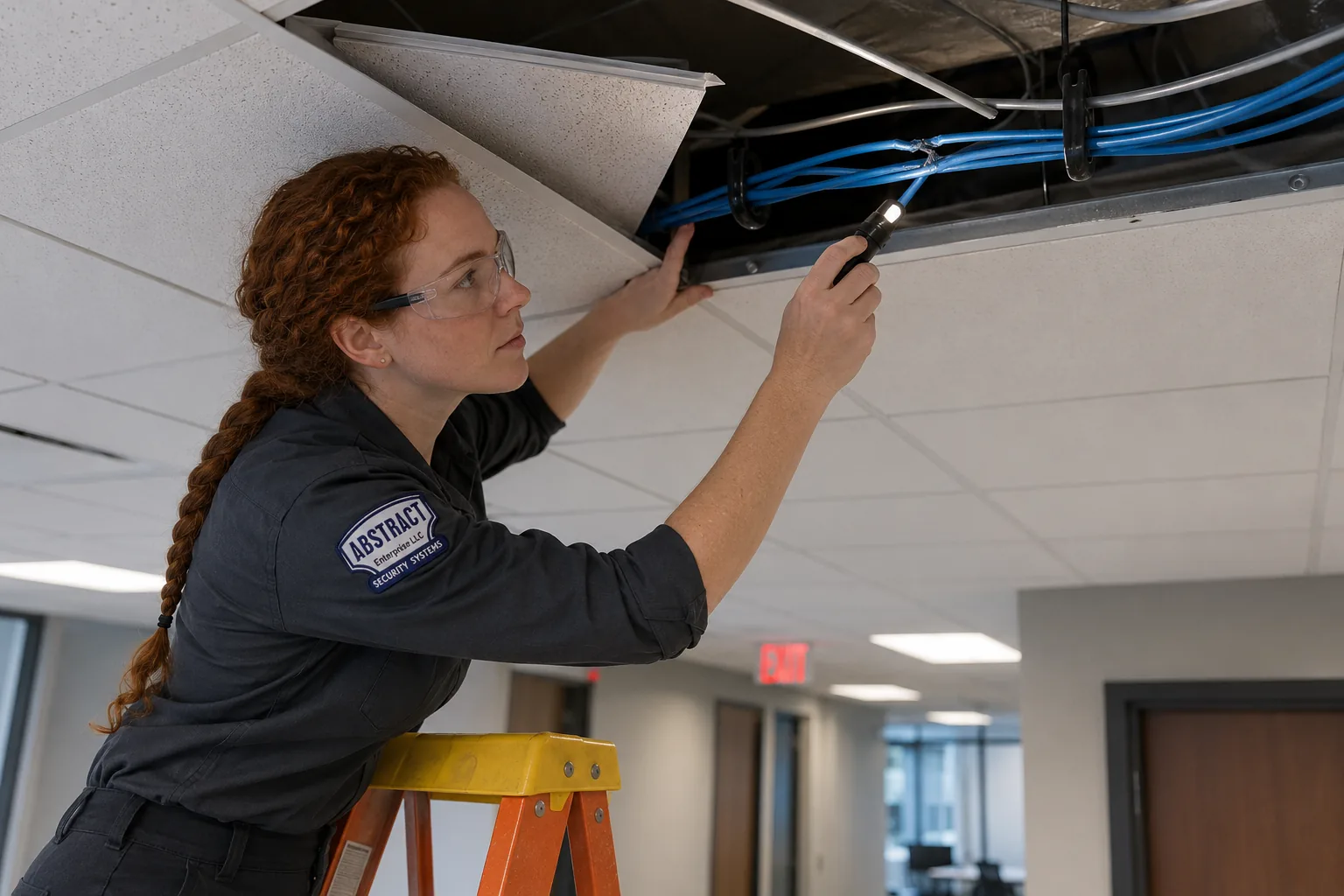
In most Rockland commercial buildings the wall between you and your neighbour does not reach the roof, and your cable lives in the space above it. Strip plazas and single-storey multi-tenant retail are the county's dominant commercial form, and their demising walls typically stop at the ceiling grid. Above that line the plenum is continuous from one end of the building to the other, which means your runs cross above the units either side of you and theirs cross above yours. Abstract Enterprises Security Systems repairs Ethernet, Cat6 and data cabling across Rockland.
Everything follows from that. When the salon two doors down has a fit-out, somebody is in the ceiling above cable that is not theirs. When a landlord replaces lighting across a plaza, the contractor works over every unit. When your point-of-sale link dies on a Saturday with nothing changed on your side, the cause is frequently something that happened in a neighbouring ceiling on Thursday, and nobody thinks to mention it because nobody knew the cable was there.
Repair is charged at our specialty service rate of $195/hr with a three-hour minimum ($585). The diagnostic kit is on the van from the first visit — distance-to-fault, tone and probe, wiremap and performance testing — and where a run crosses another tenancy we identify and label it, because in this building type that is what prevents the same damage next year.
Network Down in Rockland?
Same-day and next-morning coverage across the county. For retail and food service we work before opening or after close so a repair does not cost you a trading day.
✔ NYS Lic. #12000287431✔ Certified wiremap & performance testing on every repair✔ 4.7★ from 201 reviews
Local Conditions
Why Plaza and Strip Retail Breaks Cable
The continuous ceiling is the governing fact and almost nobody who works in these buildings knows about it. A demising wall built to the underside of the grid separates two businesses at eye level and separates nothing at all above it. Cable pulled from a landlord's utility room to the far end of a plaza passes over every unit in between, unsupported in places, resting on the grid in others, and completely invisible from either side of the wall. It is not a code failure — it is simply how these buildings are built — but it changes who can damage your infrastructure.
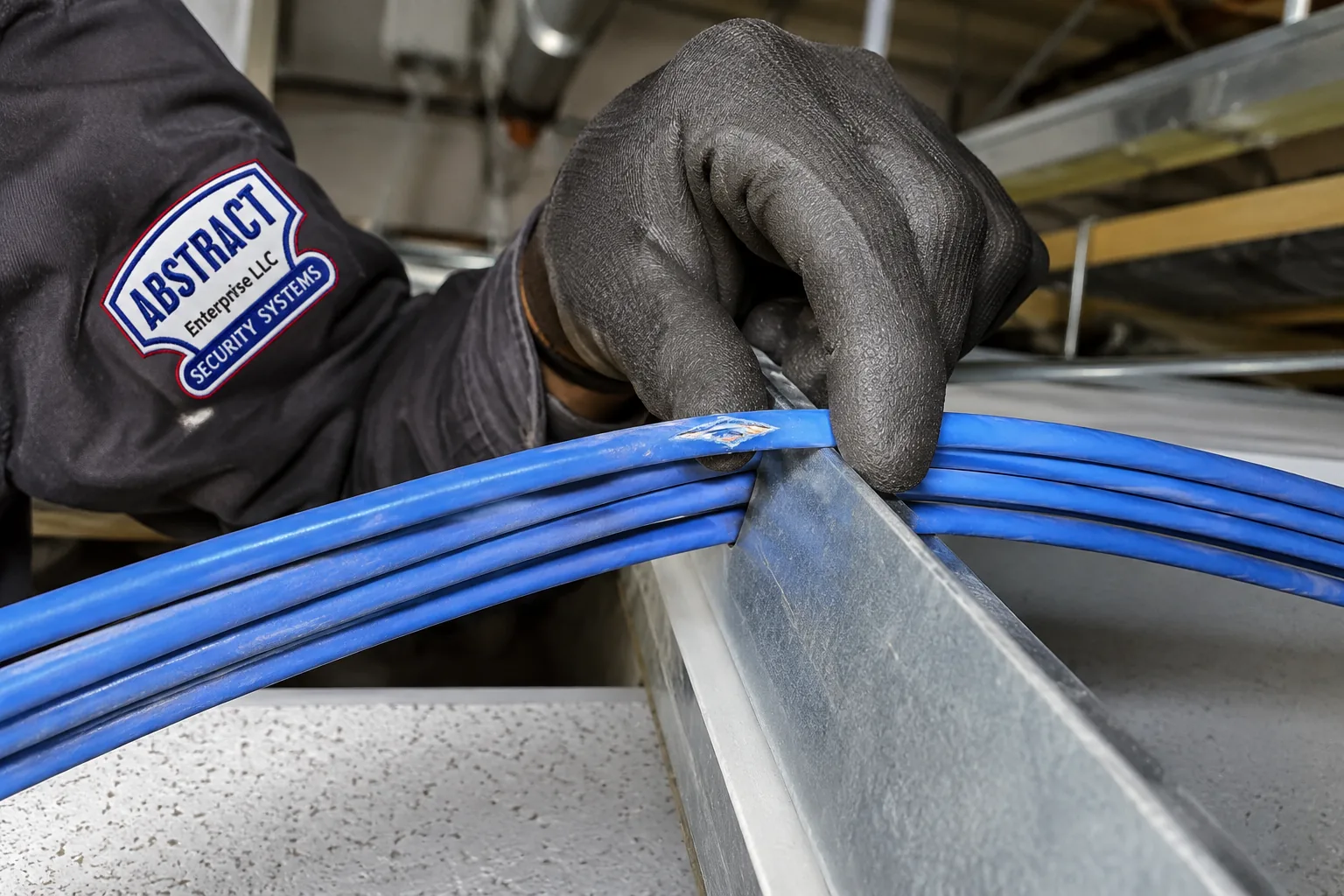
Second, the fit-out cycle. Retail turns over constantly along Route 59, Middletown Road, Main Street Nanuet and the village corridors, and every changeover means somebody in a ceiling with a drill and a deadline. They are working above their own unit and they are frequently sitting on top of three other tenancies' cable. Screws through bundles, runs cut during demolition and cable moved out of the way of new ductwork account for a large share of the sudden multi-drop failures we attend in this county.
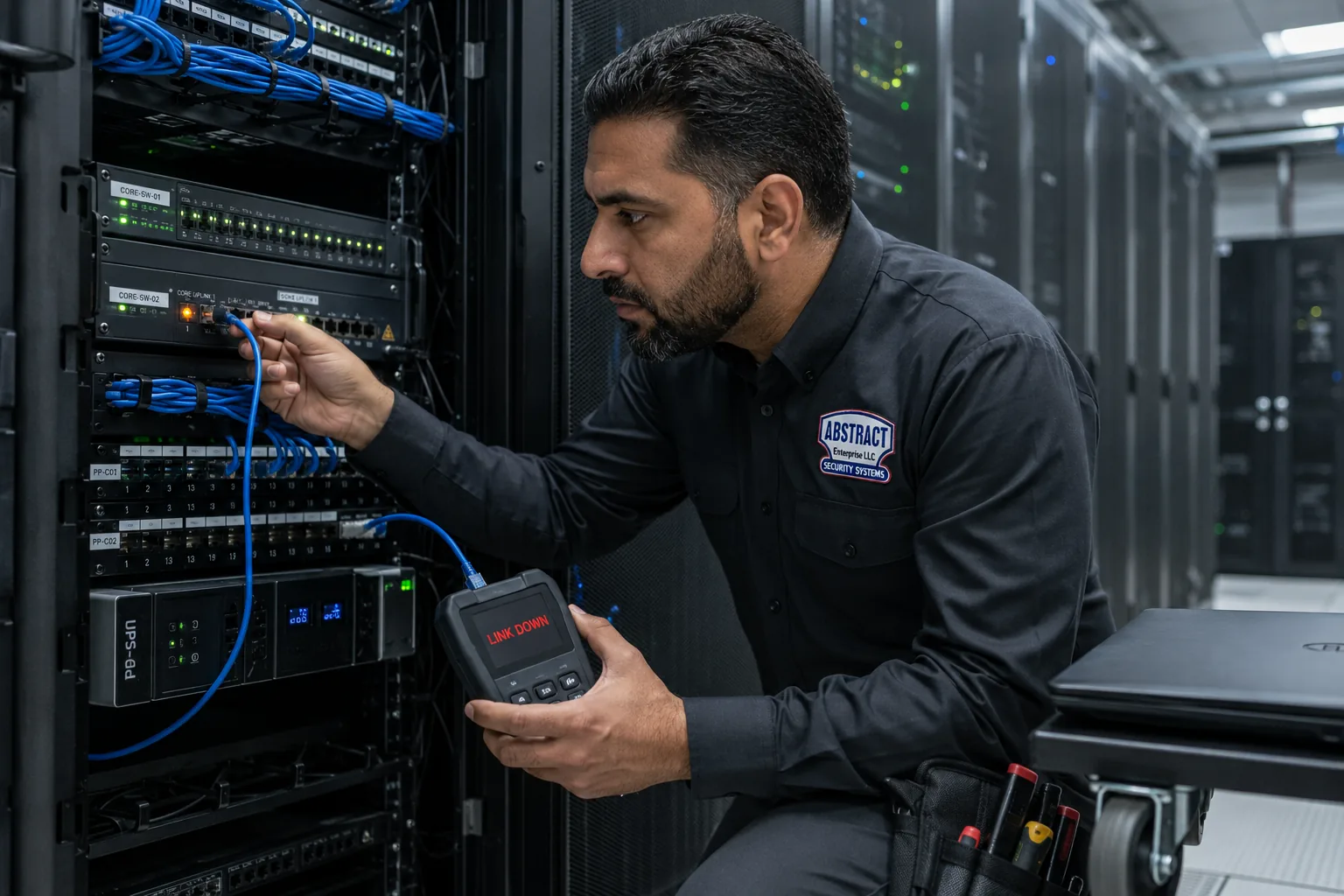
Third, the landlord's utility room. In a plaza the telecom and electrical space is usually a single room the landlord controls, holding the carrier demarcation, the panel and whatever every tenant has ever installed. Nothing is labelled, several businesses' live services sit side by side, and access runs through somebody else's key. Toning before touching is not caution here; it is the only way to avoid taking a neighbour offline.
Fourth, the county's other building types. Pearl River and Orangeburg hold low-rise corporate and laboratory-legacy campus space with proper floor rooms and real infrastructure. Nyack, Piermont and Haverstraw have nineteenth-century riverfront village buildings with masonry walls, no cavity and cellar panels. Suffern and the Route 59 west end mix both. A contractor who only knows plazas will be wrong in Nyack, and one who only knows offices will be wrong in a strip.
Fifth, trading hours. A very large share of Rockland commercial tenancy is retail, food service and personal services, where the workable repair window is before opening or after close. That is a planning constraint rather than a technical one, and it decides whether a visit is one trip or two.
What We Repair
What a Rockland Cable Repair Call Covers
We repair the physical layer, find your run where it crosses other tenancies, and label it so it is not damaged again.
Cross-Tenancy Run Identification
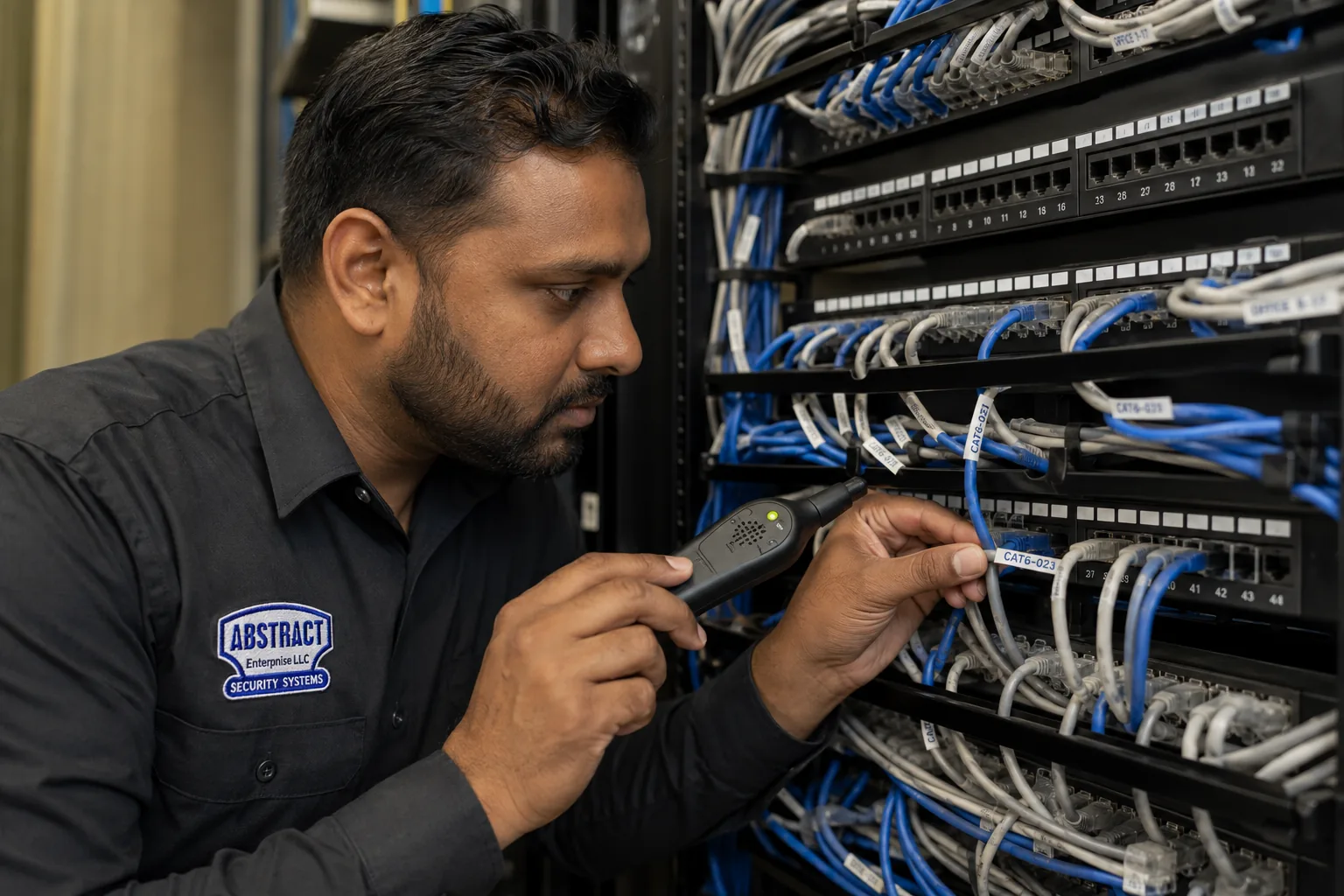
Tracing your cable where it passes above neighbouring units in a continuous plenum, then marking it at intervals so the next contractor in that ceiling can see it is not theirs.
Landlord Utility Room Tracing
Toning your runs inside a shared room holding several businesses' live services, before anything is touched or unplugged.
Fit-Out Damage Repair
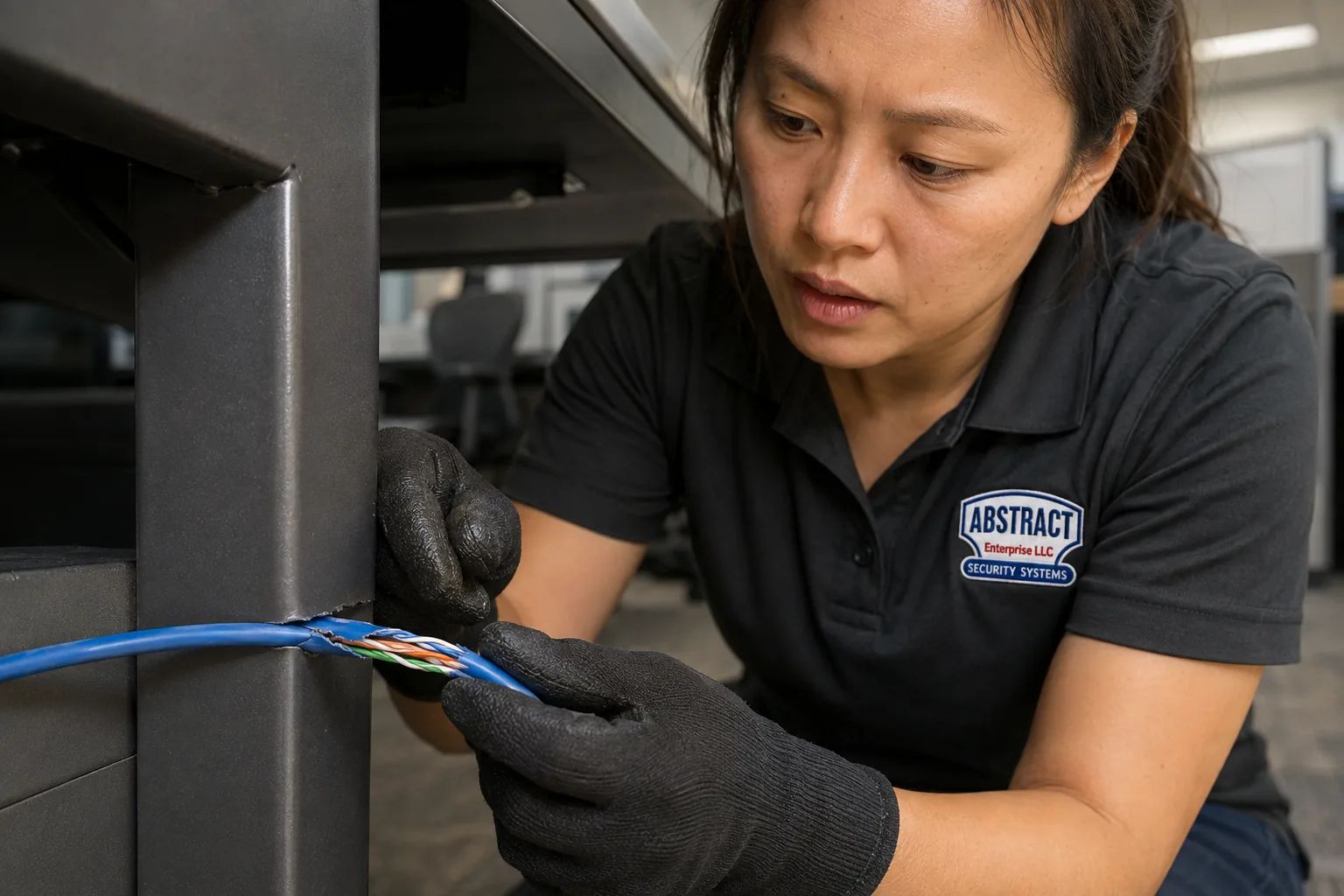
Screws through bundles, runs cut during a neighbour's demolition, and cable displaced by new ductwork or lighting. Located, repaired and documented.
Ethernet Cable Repair
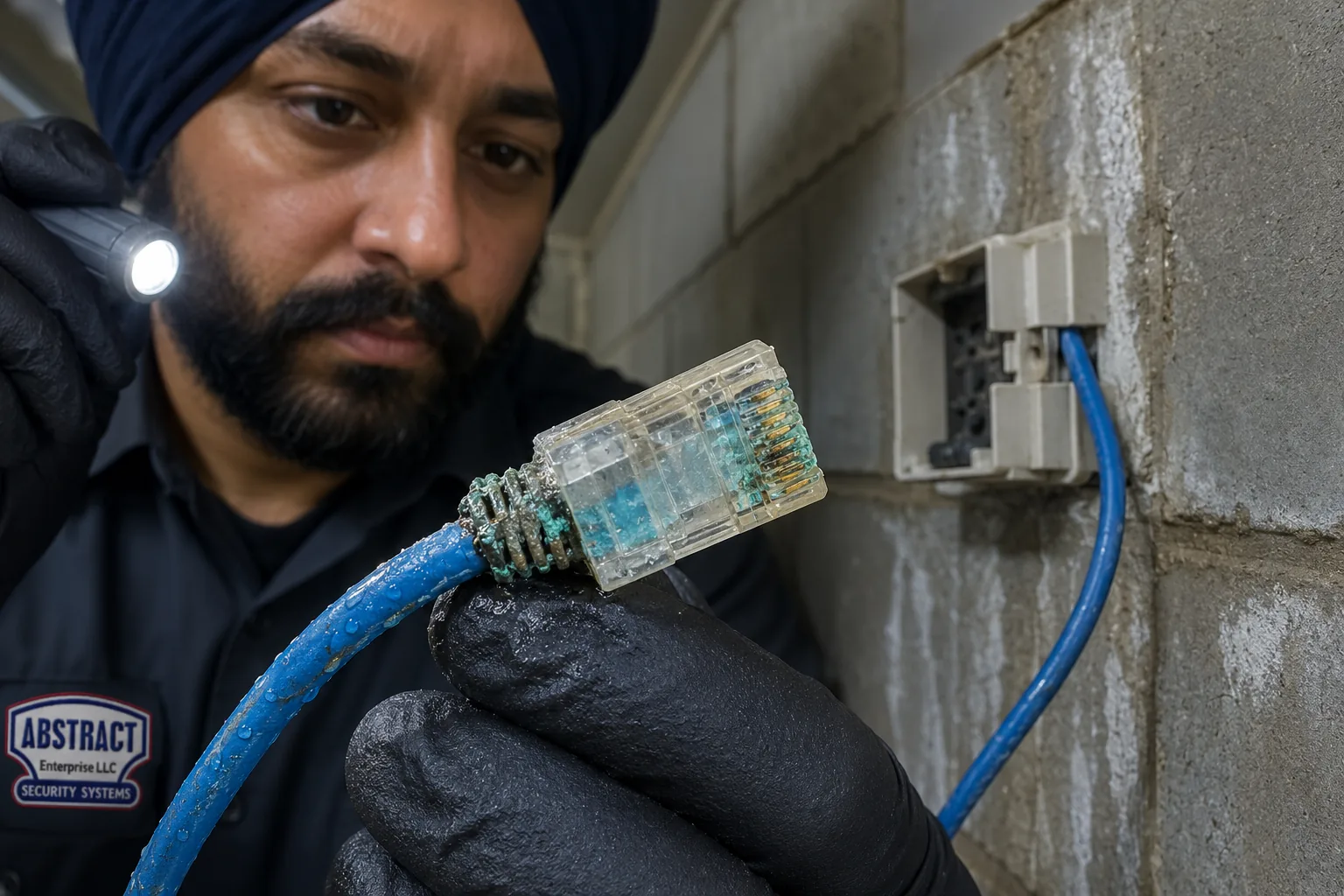
Severed, crushed, pinched or damp-damaged runs brought back with a junction rated for the category, then proved on a tester.
Cat6 and Cat6A Retermination
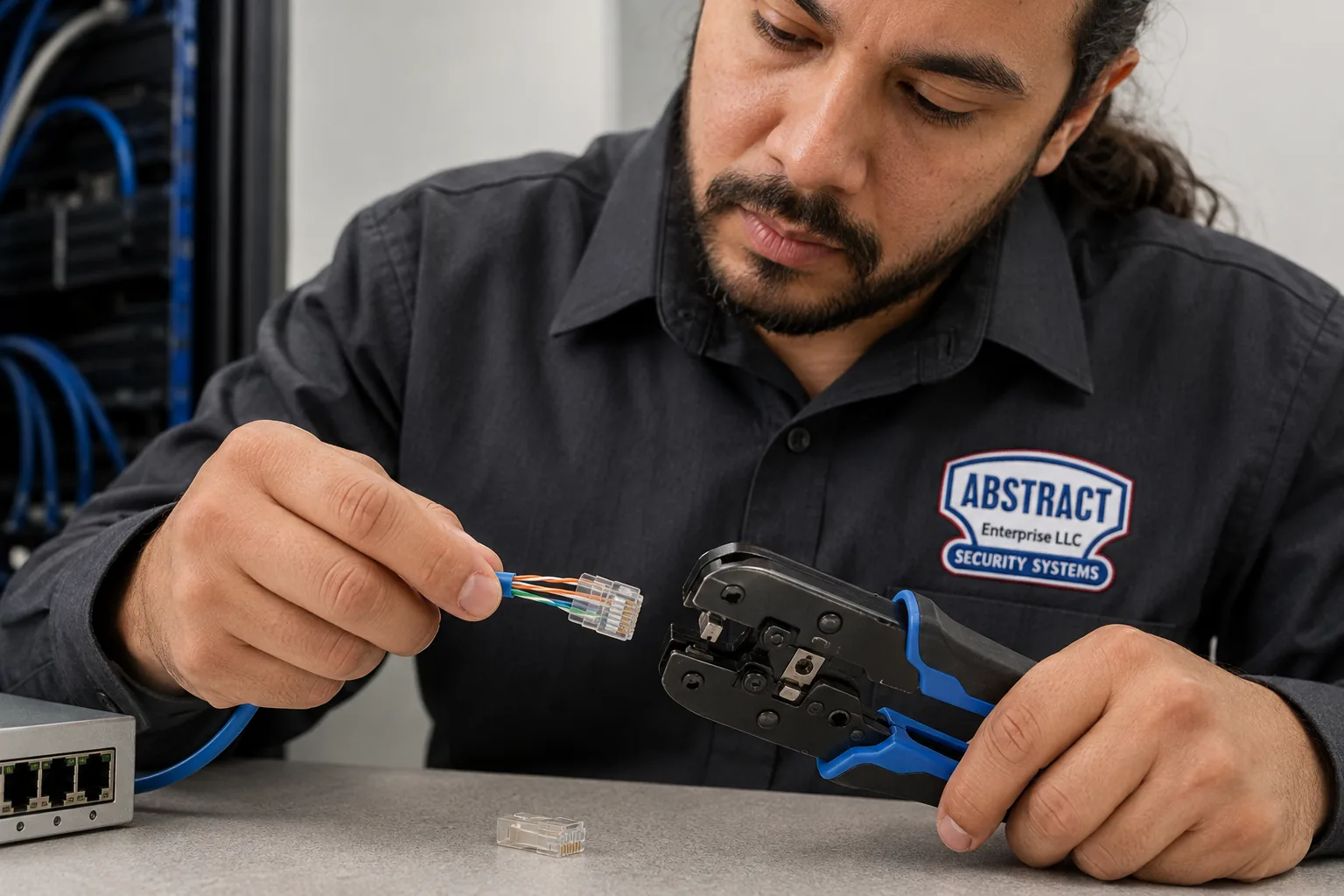
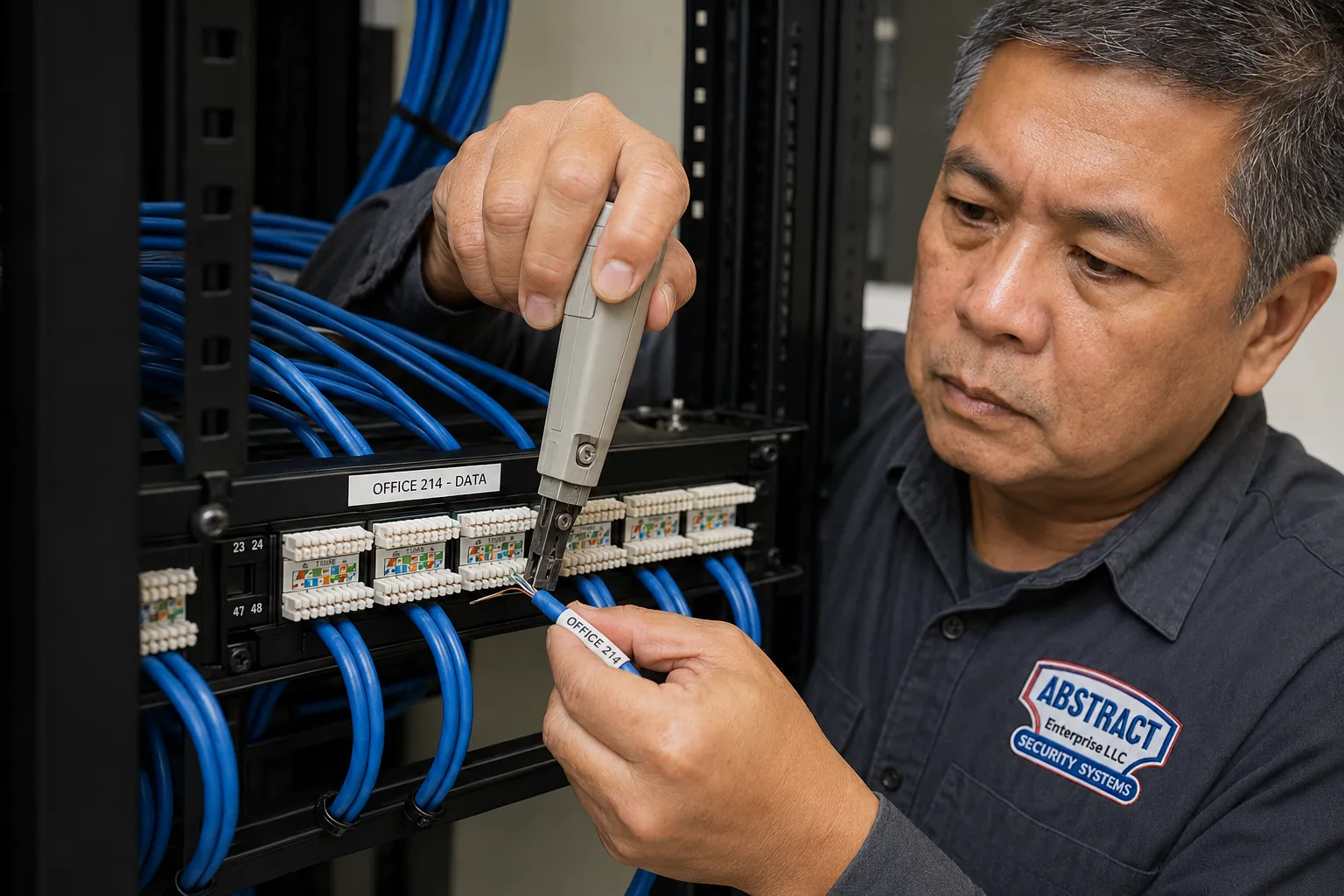
Fresh terminations at outlet and panel to T568B, twist maintained to the contact block, so the finished link certifies rather than merely lighting up.
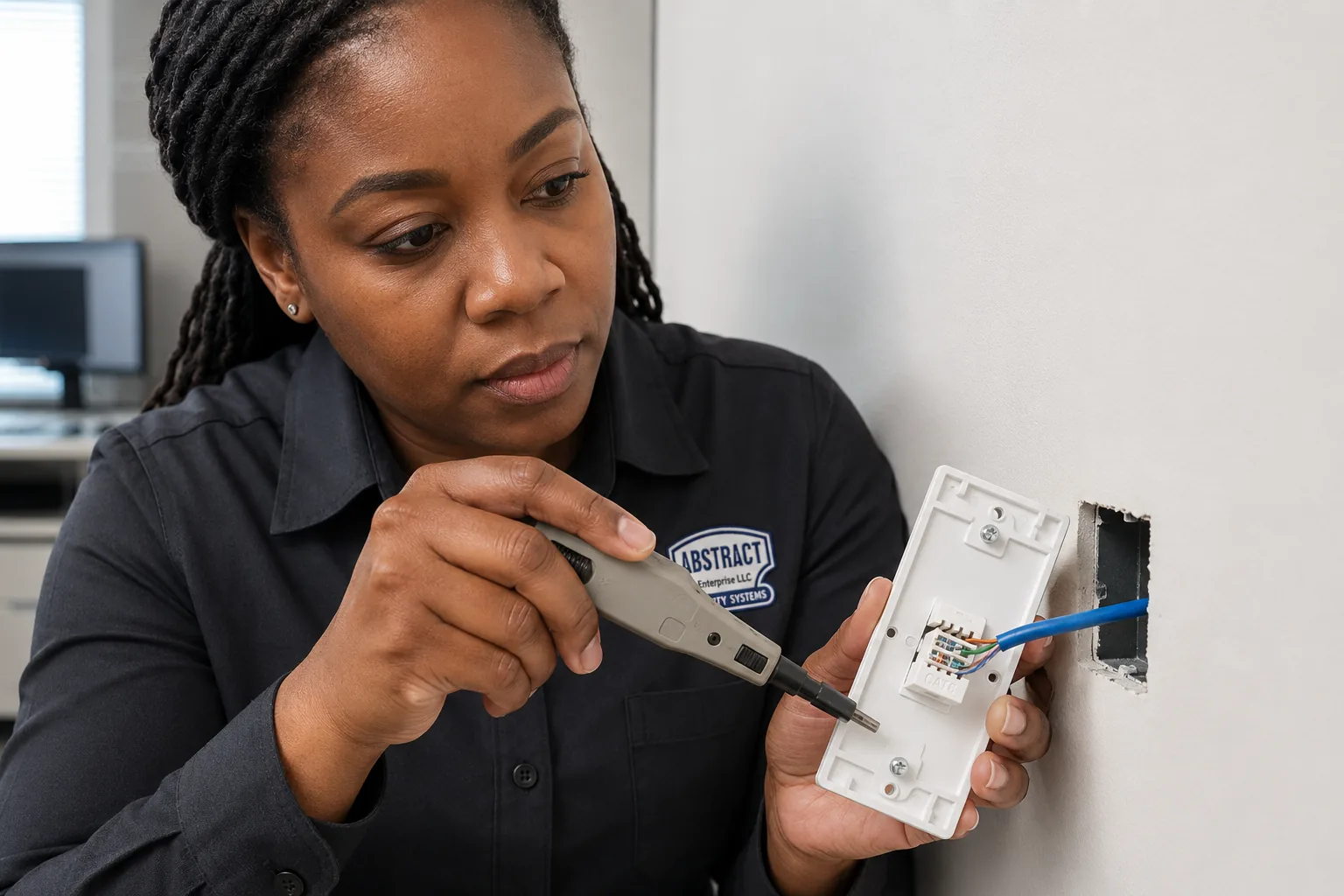
Network Jack and Panel Repair
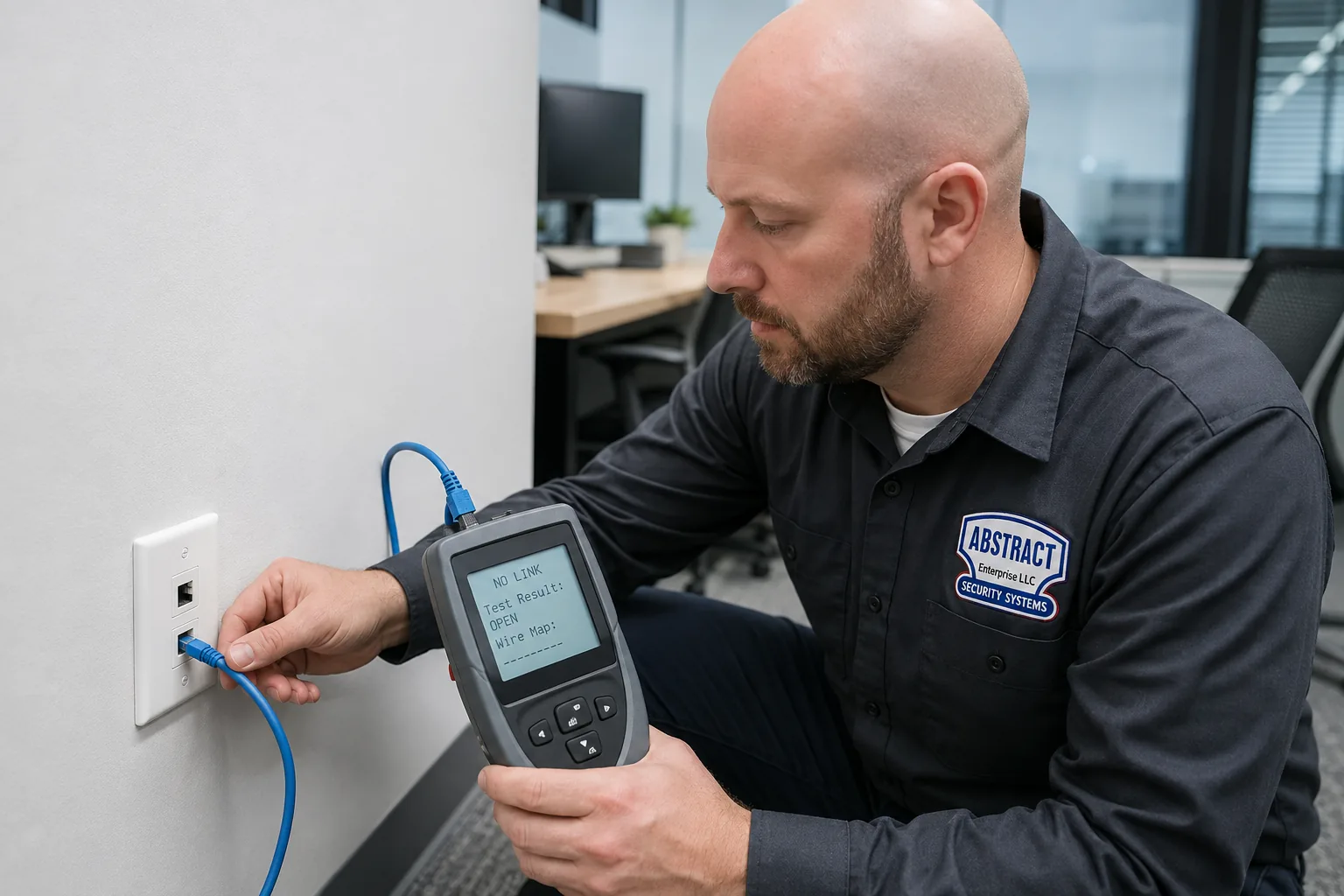
Dead outlets, keystones seated but never punched through, and panel positions terminated to the opposite standard by a previous tenant's contractor.
POS and Counter Drop Repair
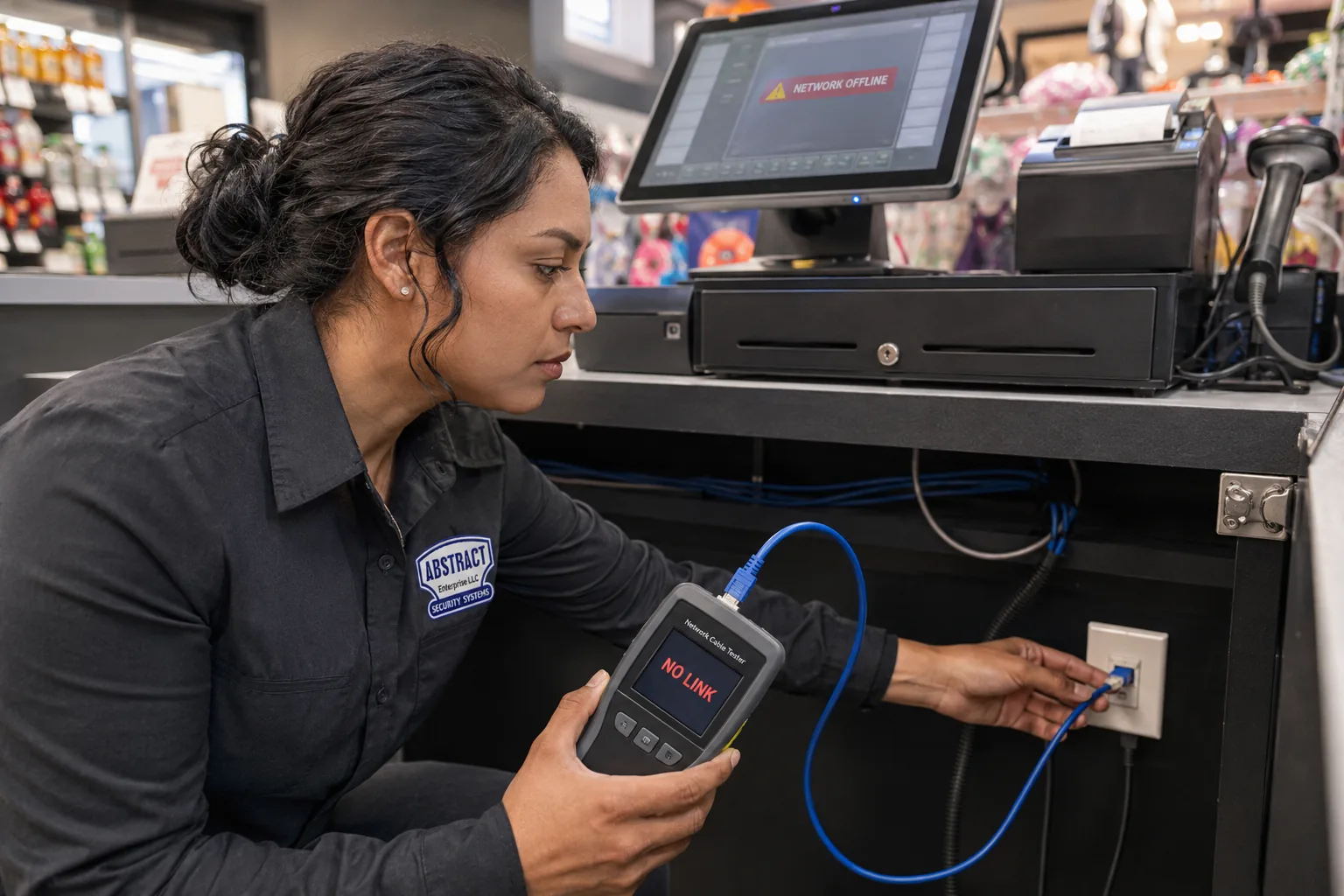
Register and card-terminal runs failing at peak, with the route from the counter back to the utility room checked end to end.
Certified Testing
Every repaired run measured for wiremap, length and performance, with the report saved and the remaining margin stated.
PoE Circuit Troubleshooting
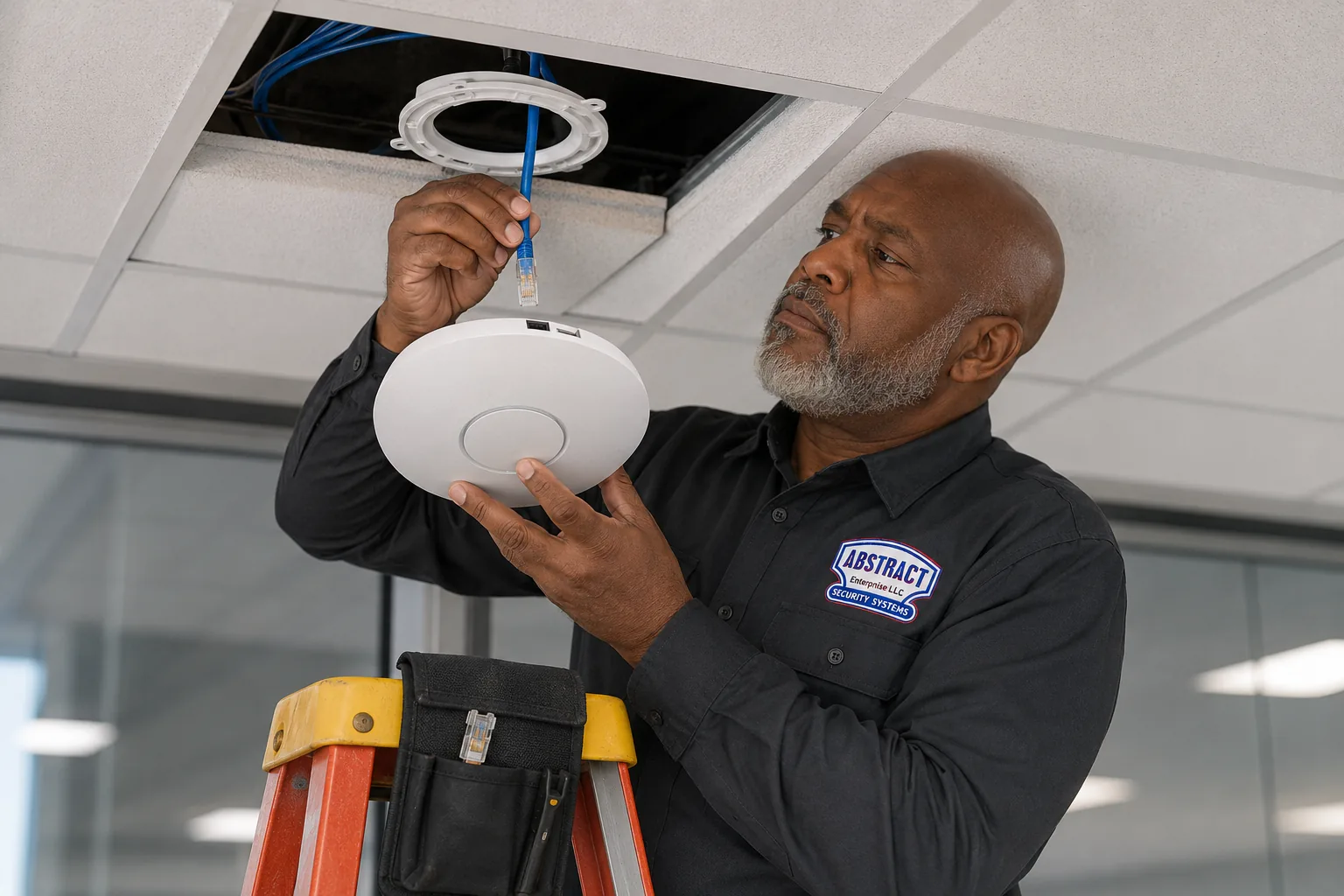
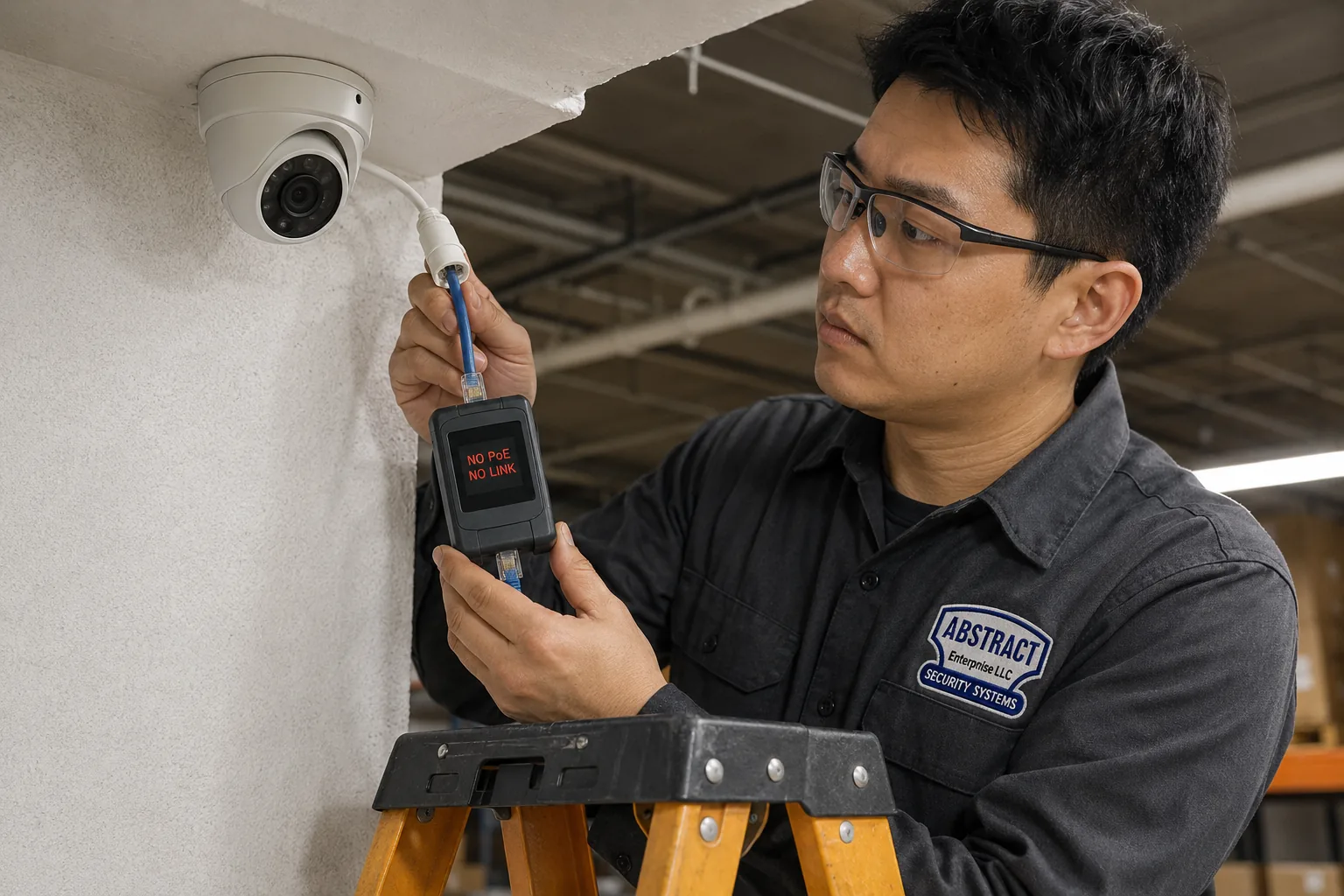
Cameras, readers and access points that power up and cycle. Metered at the device while it is actually drawing.
Commonly paired: in a plaza your camera and reader runs share the same continuous ceiling as the data, and the same neighbouring fit-out damages both. Testing them while the tiles are already out costs a fraction of a second visit — see camera repair and access control.
Plain English
Terms That Come Up on a Rockland Job
The first two on this list explain most of what goes wrong in a strip plaza.
Term
What It Means in a Rockland Plaza or Village Building
Demising wall
The partition between two tenancies. In most plaza construction it stops at the ceiling grid rather than continuing to the roof deck.
Continuous plenum
The uninterrupted ceiling void running above several units because the demising walls stop short. It is why your cable can be damaged by work in a shop you have never entered.
Landlord utility room
The shared space holding the carrier demarcation, panels and every tenant's equipment. Access is through the landlord and the contents belong to several businesses.
Demarc
Where the carrier hands over. Beyond that point the infrastructure is the landlord's or the tenant's, and that is the boundary our work starts at.
Plenum (CMP)
The jacket rating fire code requires where a ceiling void moves return air, which in this building type is most of them.
Split pair
Every wire lands but two are paired wrongly. The link sits at 100 Mbps and refuses gigabit, so it is reported as slowness.
Certification
A recorded measurement against the category standard with the remaining margin noted, saved and printable.
Insertion loss
How much signal the run loses end to end. Warmer air makes it worse, which is why an unconditioned plaza ceiling in August is where marginal links go wrong.
Both-end labelling
Marking a run at the outlet and at the utility room. In a shared ceiling it is what stops the next contractor treating your cable as scrap.
Firestop
The rated seal where cable passes through a rated wall or floor. Frequently opened during fit-outs and rarely restored.
Equipment
Hardware and Test Equipment on a Rockland Repair
We work with what the unit already has and replace with commercial-grade components matched to the existing link — Belden, CommScope, Panduit, Leviton, Hubbell, Ortronics, ICC, Berk-Tek and Superior Essex, with plenum-rated cable wherever the ceiling void carries return air. Grade matching is not a preference: drop a Cat5e outlet onto a Cat6 link and the entire link performs as Cat5e regardless of what runs above the ceiling.
Where the active equipment is Cisco, Meraki, Aruba, UniFi, Netgear, TP-Link, Luxul or Araknis, our job is the cable fault sitting beneath it — and likewise beneath powered cameras, radios, handsets, card terminals and readers. We do not configure any of it: no switch administration, no segmentation, no controllers, no firewall rules. The link is certified and the results go to whoever runs the network.
In this county the tone set earns its place first. Identifying which of the cables crossing a plaza ceiling is yours, before a tile comes out or a cord is unplugged in the landlord's room, is the difference between a contained repair and an afternoon spent apologising to a neighbour.
Need Repair in Rockland County Today?
Same-day and next-morning coverage county-wide, with before-opening and after-close windows for retail and food service at no premium on the labour rate.
In a building where several businesses share one ceiling, the marking is not paperwork — it is protection.
Tracing comes first because it has to. Tone the run from your outlet through to wherever it terminates, follow it across whatever it crosses, confirm it, then work on it. In the landlord's room the same rule applies with more force, because the cords either side of yours belong to businesses that are trading right now.
Then the physical correction and the measurement, with the remaining margin reported rather than filed. And then the part specific to this county: marking the run at intervals where it crosses other tenancies, so the next contractor working above a neighbour's unit can see at a glance that the bundle over their head is not abandoned and not theirs. That takes very little time while somebody is already in the ceiling and it is the only thing that reduces the odds of the same damage next year.
Full Scope
Full Scope of a Rockland Network Cable Repair
Diagnostics
Tone-and-probe tracing across a continuous plaza ceiling
Identification of your runs in a shared landlord utility room
Fault location by measured distance on broken or shorted runs
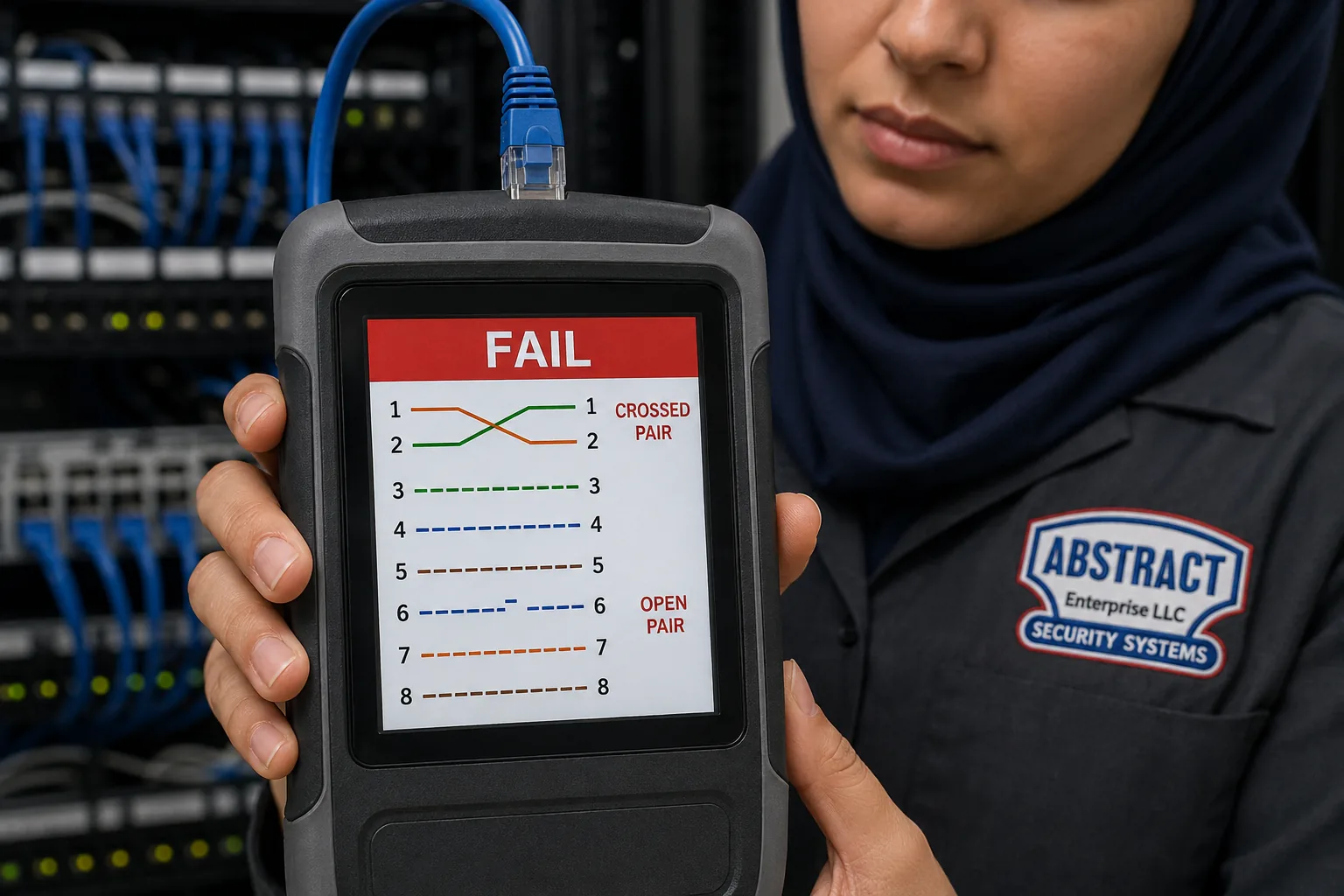
Wiremap faults: opens, shorts, reversals, split and crossed pairs
Measured length against the 90 m and 100 m limits
Insertion loss and crosstalk with remaining margin reported
PoE measurement at the device under genuine draw
Switch-port versus cable-fault isolation
Physical Repair
Keystone and patch panel retermination
Junction repair of the correct grade on damaged runs
Full run replacement where certification fails
Re-route where a run sits unsupported on a ceiling grid
Counter and register drop repair
Firestop restoration at penetrated rated assemblies
Plenum-rated replacement where the void carries return air
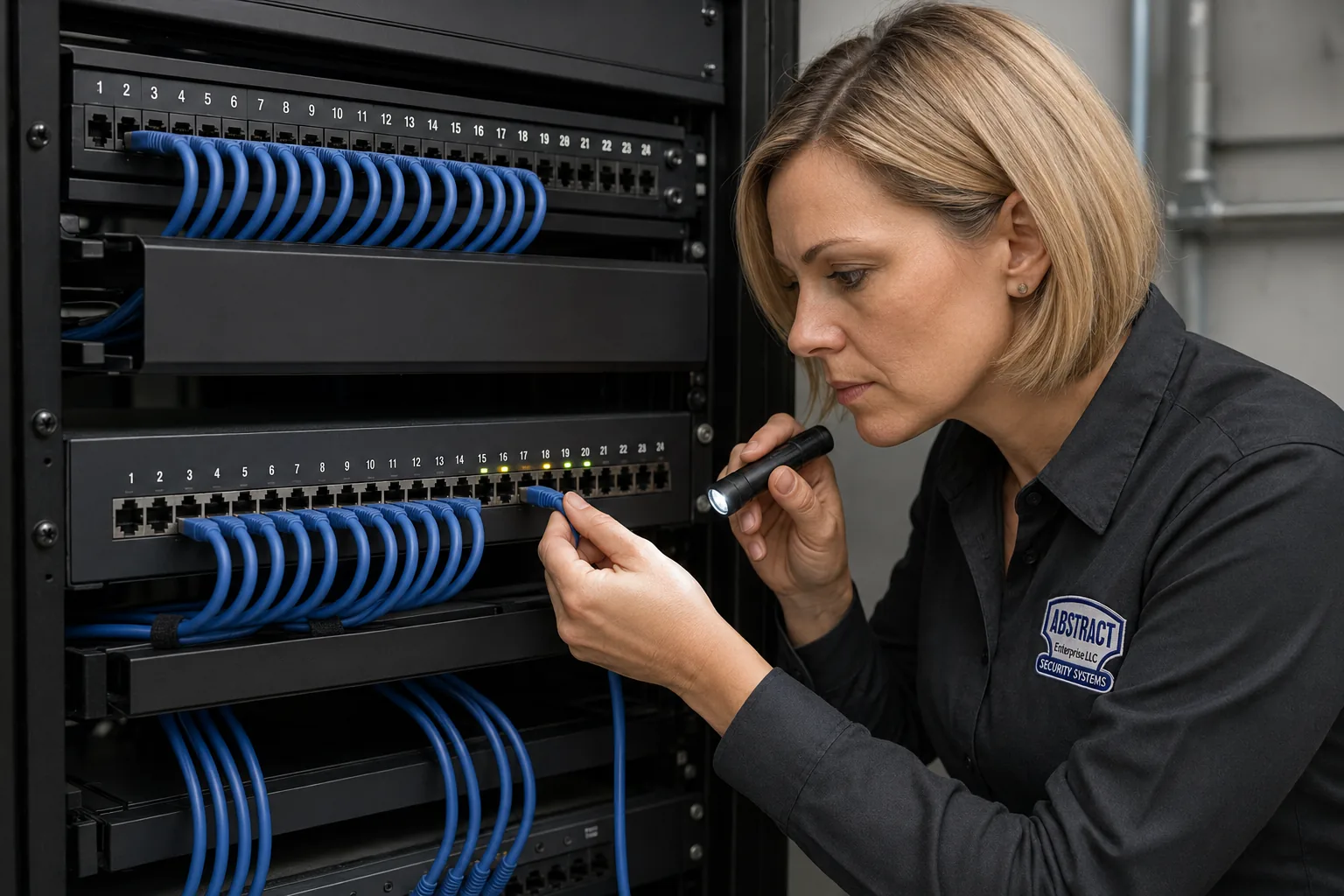
Rack and panel re-dress, cable management, patch cord replacement
Documentation
Saved test results per repaired run, with remaining margin
Marking at intervals where a run crosses other tenancies
Both-end labelling and a legend for the utility room
Photo record of fit-out damage before repair
Written findings for a landlord, tenant or insurer
Site Logistics
Before-opening and after-close windows at no labour premium
Coordination with the landlord or managing agent for utility room access
Certificate of insurance where the plaza requires it
Working around neighbouring tenants' trading hours
Dust control in occupied retail space
Coordination with your existing IT provider
Coverage Detail
Where We Work Across Rockland County
The Route 59 corridor carries most of the county's commercial activity and most of our plaza work. It runs from Suffern and Airmont in the west through Monsey and Spring Valley, past Nanuet and the Palisades Center area in West Nyack, and on toward Nyack. Strip plazas, single-storey multi-tenant retail, service commercial and food businesses line it end to end, with Middletown Road, College Road and the Nanuet village blocks feeding into it.
The southern towns hold a different building type. Pearl River and Orangeburg contain low-rise corporate and former laboratory campus space with proper telecom rooms, along with Blue Hill and the office parks around them. Tappan, Sparkill, Palisades and Piermont sit along the river with smaller professional and hospitality tenancies in older buildings.
The river villages and the north are older and denser. Nyack's Main Street and Broadway hold nineteenth-century commercial buildings converted to restaurants, offices, studios and retail — masonry, no cavity, cellar panels and improvised routes. Haverstraw and Stony Point continue north along the river, while New City, Bardonia, Congers, Valley Cottage and Pomona form the county's central residential and small-commercial band. Suffern anchors the western end near the Ramapo line.
Who We Serve
Rockland Industries We Repair Cabling For
Plaza and Strip Retail
Route 59, Middletown Road, Nanuet, Spring Valley. Register lanes failing at peak and cable damaged by a neighbour's fit-out.
Restaurants and Food Service
Kitchen terminals in heat and grease, counter card readers, and repair windows outside service hours.
Personal Services and Salons
High-turnover plaza tenancies where a fit-out next door is a routine risk to the unit beside it.
Medical and Dental Practices
New City, Nanuet, Pearl River, Suffern. Imaging and practice systems with no tolerance for a marginal link.
Corporate and Campus Offices
Pearl River, Orangeburg, Blue Hill. Low-rise office and former laboratory space with proper telecom rooms.
Village Commercial and Hospitality
Nyack, Piermont, Haverstraw, Suffern. Masonry riverfront buildings with cellar panels and no equipment room.
Schools and Institutions
District and community buildings with layered infrastructure and break-window scheduling.
Warehouse and Light Industrial
The county's smaller distribution and trade premises, with dock and yard drops.
Property Management
Plaza and multi-building owners needing one labelling standard and consistent records across tenancies.
Drawn from recurring themes in retail, trade, IT and Rockland local discussion threads, grouped by the six question types that come up most.
Cost Questions
1. What does a repair cost here?
The rate is $195 hourly with three hours minimum, putting the first block at $585. That covers tracing the run, finding the fault, fixing it, certifying it and marking it. New cable, where it comes to that, is priced from $175 for a commercial Cat6 drop.
2. Why does tracing take so long in a plaza?
Because the ceiling above your unit is continuous with the ceilings either side, and there may be four businesses' cable up there with nothing marked. Identifying yours is the only safe way to proceed, and it is also the part with lasting value, since a marked run is far less likely to be cut next time.
3. Can you come before we open?
Yes, and for retail and food service we prefer it. The rate is unchanged; working outside trading hours simply means the repair does not cost you a day.
Quality and Trust Questions
4. Our neighbour's contractor probably cut our cable. Can you prove it?
We can document it. Where the damage is, what caused it, which unit's ceiling it sits above and what the test says, with photographs before the repair. Whether that becomes a conversation with the landlord, the neighbour or an insurer is your call, but the evidence is straightforward to produce while we are up there.
5. Do I need a licensed contractor?
Anything beyond changing a cord, yes. Cabling is low-voltage work with real obligations on jacket rating and firestopping, and most plaza landlords want a licence number and a certificate before granting utility room access. Ours is NYS Low-Voltage #12000287431.
6. The landlord controls the utility room. Is that a problem?
It is normal here and we plan for it. Tell us the plaza and the landlord or managing agent when you book and we will arrange access rather than turning up and finding a locked door.
DIY and Pro Questions
7. Can I follow my own cable across the ceiling?
You can look, and it is worth doing — but do not assume. Several businesses' runs are up there and they are indistinguishable by eye. What genuinely helps is labelling your own outlets at the counter end, which speeds the tracing considerably when we arrive.
8. We bought a tester at the trade counter. Does it help?
It confirms the wires reach the right pins and stops there. No distance, no signal loss, no margin. On a run that crosses two other units and has been disturbed twice, those are the numbers that matter.
9. Can I unplug things in the landlord's room to find my line?
Please do not. The cords either side of yours belong to businesses trading right now, and unplugging to see what goes dark is how a small problem becomes an incident involving three tenants and a landlord.
Technical Questions
10. Our card terminal fails on Saturdays and nothing else does. Why?
Two candidates and a tester separates them quickly. Either the run itself is marginal and peak use exposes it, or the terminal is sharing a link with something that saturates when you are busy. Where the run crosses a neighbouring ceiling, a third possibility is recent damage that has left it working but weakened.
11. Several drops died at once and we changed nothing. What happened?
Ask what work has been done in the plaza recently. In a continuous ceiling a fit-out two units away routinely takes out a bundle belonging to somebody else, and it presents exactly this way: multiple drops, no local cause, nobody informed.
12. One outlet holds 100 Mbps while the others reach 1000. What is that?
A pair is broken or crossed. The older standard only ever needed two pairs so the port comes up cheerfully, while gigabit needs all four and either never negotiates or falls straight back.
Landlord and Tenant Questions
13. Whose cable is it once it leaves my unit?
Usually yours if it serves only you, even where it crosses a neighbour's ceiling to reach the utility room — but plaza leases vary and many are silent on the point. We document what is physically there, which is what the parties actually negotiate from.
Complaint Questions
14. This has happened twice now after work next door. Is there anything we can do?
Yes, and it is cheap. Mark the run at intervals where it crosses other tenancies. A bundle with your business name on a tag every few metres reads as live and owned rather than as abandoned scrap, and that alone changes what the next contractor does when it is in their way.
Answer The Public
Answer The Public: Rockland Network Cable Questions
Who repairs network cable in Rockland County?
Licensed low-voltage contractors. An electrician installs pathway and anything energised but generally hands terminations on; an IT company runs the network above the cable and seldom owns a certifier. A dead register drop in a Nanuet plaza is cabling work.
What causes cabling to fail in Rockland buildings?
Damage from neighbouring fit-outs in a continuous plaza ceiling, terminations executed without twist discipline, runs resting unsupported on a ceiling grid, moisture in cellar panels in the river villages, and legacy Cat5e carrying loads it was never certified for.
When does a run need replacing instead of repairing?
When it will not certify after both terminations are redone, when the measured distance exceeds spec, when it has been damaged in several places — common where a run crosses multiple tenancies — or where a past component has already derated it.
Where do faults sit in a plaza unit?
At terminations first, then wherever the run crosses above a neighbouring tenancy, then in the landlord's utility room where several businesses' cords sit together unlabelled.
How quickly can a Rockland repair be scheduled?
Same day or next morning across the county, with before-opening and after-close windows for retail and food service at no premium.
Reality Check
AI Overview Reality Check: What Search Results Miss About Rockland Cabling
Search for network cable repair in Rockland County and you get a national cost average, lead-generation directories, and advice written for a business that controls its own ceiling. In the county's dominant building type, nobody does.
1. Nothing Online Tells You the Wall Stops at the Ceiling
Published cabling guidance assumes your space is your space. In strip and plaza retail the demising wall between tenancies typically ends at the ceiling grid, leaving one continuous void running the length of the building.
That single construction detail explains a large share of the faults we attend here. Your cable crosses above units you have never entered, and contractors working for those tenants are above your cable with drills and deadlines and no idea it is there.
It also explains the pattern that confuses people most: several drops failing at once, on a normal day, with nothing changed on your side. The cause is usually a fit-out two doors down that finished on Thursday.
2. The Landlord's Utility Room Appears in No Troubleshooting Guide
In a plaza, the carrier demarcation, the panels and every tenant's terminating equipment usually live in one room the landlord controls, unlabelled and shared.
That makes identification a safety step rather than a convenience. Unplugging a cord to see what goes dark is a real technique some people use, and in a shared room it takes a neighbour's payment terminal offline.
It also means access is arranged rather than assumed. Anyone quoting this work without asking who holds the key has not scoped the visit.
3. Cost Averages Assume Nobody Else Can Damage Your Infrastructure
Aggregated cost pages blend residential and light-commercial jobs and price a fault as though the cable were undisturbed since installation.
In this building type a run may have been crossed, moved, tied up and drilled past by four different contractors working for four different businesses. Tracing that is real labour, and a quote that ignores it gets revised on site.
The same pages merge fresh installation with repair. An install can be priced from a drawing; a repair cannot, because the fault has to be found first — which is why repair carries an hourly rate with a floor.
4. Marking Cable Is Treated as Housekeeping and Works as Insurance
Generic advice mentions labelling as good practice for the owner's convenience. In a shared ceiling it does something more useful: it tells a stranger the bundle is live and belongs to somebody.
Unmarked cable above a unit reads as abandoned to a contractor who needs the space for ductwork, and abandoned cable gets cut. A tag every few metres with a business name on it changes that calculation entirely.
It costs almost nothing while somebody is already in the ceiling, and it is the single most effective thing a Rockland tenant can do to reduce repeat damage.
5. The County Is Three Building Types and Search Treats It as One
Route 59 plazas, Pearl River and Orangeburg campus offices, and the masonry village buildings of Nyack, Piermont and Haverstraw are three different jobs with different failure modes and different correct answers.
A contractor who only knows plazas will be wrong in a Nyack cellar, and one who only knows offices will misread a continuous ceiling entirely. They sit fifteen minutes apart.
When briefing anyone, describe the building rather than the county: is there a demising wall that stops at the grid, is there a proper telecom room, and who controls the key.
6. Lead Directories Sell Your Number Rather Than Checking Anyone's Kit
Angi, HomeAdvisor, Thumbtack and their equivalents resell one enquiry to several firms, and whoever replies first is usually paying most per lead. Ratings sit on accounts covering many unrelated trades.
For cabling the grouping is the specific failure. Physical cable work is filed with router setup and wireless help, so a job needing a certifier, a tone set and a punch tool can be answered by somebody carrying none of them.
Three questions clear it up: what certifier is on the van, will I get a saved result per run, and what is your New York State low-voltage licence number.
7. Trading Hours Are a Design Constraint and Get No Mention
National guidance assumes a technician can work during the day in a space nobody is using. A large share of Rockland commercial tenancy is retail, food service and personal services.
The workable window is before opening or after close, and in a plaza it also has to avoid disturbing neighbours who are trading. That is a scheduling discipline rather than a premium, and it should be arranged at booking.
It is also why a single well-scoped visit matters more here than in an office market: a second trip is a second early morning for somebody.
Find Your Cable Before Somebody Else Does.
Certified testing on every repair. Licensed NYS low-voltage contractor. 4.7★ from 201 reviews.
No cost, two minutes, and it resolves a fair share of calls before they become calls.
Move to a different switch port
Yes
The quickest way to take the switch out of the picture.
Test the device on a known-good outlet
Yes
If the same machine works at another point, the fault is the original outlet or its run.
Ask what work has been done in the plaza recently
Yes
Free and frequently decisive. Several drops failing at once usually traces to a neighbour's fit-out.
Re-punch a keystone jack
Borderline
Feasible with the right tool. Whether it certifies depends on how much twist survives to the contact, and neat is not the same as compliant.
Follow and identify your own run across the ceiling
No
Several businesses' cable is up there and it is indistinguishable by eye. Guessing wrong means cutting somebody else's.
Unplug cords in the landlord's utility room
No
Those belong to businesses trading right now. This is the most common damage we are called in to undo.
Diagnose a run that only fails at peak
No
That is a margin measurement, and a pin checker cannot produce one.
Anything in a plenum ceiling
No
Jacket rating and firestop obligations make it licensed work.
A quarter hour, nothing owed: the four rows above marked yes. The question about recent work in the plaza is the one that solves the most calls, and it costs nothing but asking a neighbour.
Alternatives
How a Licensed Cabling Contractor Compares Here
vs. Your IT Provider
Capable above the cable and usually honest that copper is not their trade. The physical work gets subcontracted, so the van that arrives is a third party on somebody else's diary — awkward when your only window is six in the morning.
vs. Lead-Generation Platforms
Your enquiry is resold to several bidders and the fastest reply reflects advertising spend rather than fit. Cable work is listed beside computer support, and a saved per-run test result is not part of what those listings promise.
vs. Your Carrier's Technician
Their duty ends at the demarcation point and they will say so accurately. A clean circuit there with your outlets still dead puts the problem inside the building, past what they cover.
vs. The Plaza's Handyman or the Landlord's Maintenance
Useful for cords, faceplates and getting the utility room open, and often the fastest hands on site. It goes wrong in the ceiling, where telling one tenant's cable from another needs a tone set rather than a guess.
vs. A General Electrician
Exactly the right trade for conduit, coring and anything energised. Terminating data is a separate craft with far tighter tolerances, which is why most electricians pass that part along.
Warning Signs
Five Signs the Cable Is the Problem in a Rockland Unit
Several drops failed at once and you changed nothing. Almost always work done in a neighbouring unit's ceiling, which is continuous with yours.
A single outlet is dead while the rest are fine. Anything shared fails in clusters. One dead point means that run or one of its two ends.
The card terminal fails only when you are busy. A marginal run exposed by peak use, or a link shared with something that saturates.
A single outlet negotiates 100 Mbps while the ones beside it reach 1000. One pair is down or cross-connected. Nothing else produces that split, and spotting it needs no tools.
Trouble started after the landlord did work across the plaza. Lighting, ductwork and roof work all put contractors above every unit in the building.
Community
Community Chatter: Recurring Themes From Public Forums
Paraphrased themes from public homeowner, small-business and IT discussion threads — not customer reviews of AESS.
Retail tenants in strip plazas repeatedly describe multiple drops failing on a normal day, later traced to a fit-out in a unit they had never been inside.
Threads about shared utility rooms consistently warn against unplugging cords to identify a line, usually written by somebody who found out the expensive way.
Discussions among small retailers frequently note that labelling cable was the recommendation that actually reduced repeat problems, more than any repair did.
Owner forums regularly express surprise at how little of a cabling bill is materials. It is a fair reflection: locating the fault is the work.
Help-desk procedures written independently by different organisations open with the same first three moves, which usually means the sequence has been proven against real faults.
Field Video
Watch: Field Diagnostics on a Rockland County Repair Call
Short-form field clips from our channel: youtube.com/@openeye0007 Embed slot reserved — drop the Short iframe here once the clip ID is set.
FAQ
Network Cable Repair Rockland County — Twelve Frequently Asked Questions
What does network cable repair cost in Rockland County?
+
Our specialty service rate is $195 an hour against a three-hour minimum, so $585 buys the opening block: tracing the run, locating the fault, repairing it, certifying it and marking it. New cable, where it is needed, starts at $175 for a commercial Cat6 drop. Before-opening and after-close work carries no premium.
Several of our drops died at once and we changed nothing. What happened?
+
Ask what work has been done elsewhere in the plaza. The demising walls between units usually stop at the ceiling grid, so the void above is continuous and your cable crosses other tenancies. A fit-out two doors away routinely takes out a bundle belonging to somebody else.
Is our cable really running above our neighbour's shop?
+
In most plaza and strip construction, yes — at least part of it. The run from your outlets back to the landlord's utility room takes the shortest path through a continuous ceiling, and that path frequently passes over one or more other units.
Can you prove a neighbour's contractor damaged our cable?
+
We can document it: where the damage is, what caused it, whose ceiling it sits above, photographs before the repair and the test result after. What you do with that is your decision, but producing it while we are already up there costs nothing extra.
Why do you mark the cable as well as repair it?
+
Because unmarked cable in a shared ceiling reads as abandoned to the next contractor who needs the space. A tag with your business name every few metres tells them it is live and owned, and it is the most effective thing available for reducing repeat damage.
Can a damaged run be joined, or does it have to come out?
+
Where the harm is confined to one place you can get at, a correctly made junction of matching grade and a certifier to prove it will do. New cable is the answer when it still fails with both ends redone, when the distance already breaks spec, or when several points along it are damaged — which is common on a run crossing multiple units.
An outlet is completely dead. Where do you look first?
+
In order of likelihood: the cord and its latch, a position in the utility room that was never terminated or was done to the opposite standard, an outlet with conductors seated but never driven into the contacts, then damage out along the run.
Our card terminal only fails when we are busy. Is that the cable?
+
Possibly. Either the run is marginal and peak use exposes it, or the terminal shares a link with something that saturates. Where the run crosses a neighbouring ceiling, recent damage that left it working but weakened is a third candidate. A measurement separates them.
The landlord controls the utility room. Does that slow things down?
+
Only if it is discovered at the door. Tell us the plaza and who holds the key when you book and access is arranged in advance, which is why we ask at that point rather than on arrival.
Do you provide certified test reports?
+
Yes. Every repaired run is measured and you receive the saved result including distance and remaining margin, with both-end labelling and a legend for the utility room where that is in scope.
How is the completed work warranted?
+
AESS-supplied products carry a twelve-month parts warranty under the service agreement. Modifying or tampering with the installed work without prior written approval voids it.
Do you cover the rest of the Hudson Valley?
+
Yes — all six counties through the Hudson Valley hub, plus the five boroughs through the NYC hub.
Service Areas
Rockland County Coverage
The whole county, from Suffern to Stony Point.
Route 59 Corridor
Suffern, Airmont, Monsey, Spring Valley, Nanuet, West Nyack, Middletown Road, College Road.
Southern Towns
Pearl River, Orangeburg, Blue Hill, Tappan, Sparkill, Palisades, Piermont.
River Villages
Nyack, South Nyack, Upper Nyack, Haverstraw, West Haverstraw, Stony Point.
Central Band
New City, Bardonia, Congers, Valley Cottage, Pomona, Garnerville, Thiells.
Hudson Valley Hub
The regional hub above this page, covering all six counties.
Applied only where ceiling space is used for return air
After-hours or weekend window
Premium applies
For buildings restricting low-voltage work to off-hours
Published starting rates for Rockland County. Final pricing follows from access, route, jacket rating and testing scope, and goes in writing before work starts. Before-opening and after-close scheduling carries no labour premium. Full terms — including 50% deposit, one-year parts-only warranty on AESS-supplied products, and the late-fee schedule — are set out in the service agreement. See structured cabling pricing for new-installation drop rates and Cat6 installation Rockland County for per-drop grade comparisons.
The defining Rockland fault. Demising walls stop at the grid, the void above is continuous, and a contractor working for the unit two doors down is standing over your bundle with a drill.
Unmarked Cable Read as Abandoned
In a shared ceiling, cable with nothing on it looks like scrap. Contractors needing the space cut it, and the tenant discovers this on a Monday morning.
Shared Landlord Utility Rooms
One room, several businesses' live services, nothing labelled and a key held by somebody else. Identification precedes any work, always.
Runs Resting on the Ceiling Grid
Cable laid across tiles rather than carried on supports. It moves whenever anybody works up there and it fails where it bears on an edge.
Cellar Panels in the River Villages
Nyack, Piermont, Haverstraw. Below-grade terminating space in nineteenth-century buildings, taking humidity and corroding contacts slowly.
Peak-Load Failures on Marginal Runs
A register or card terminal that only misbehaves when the unit is busy. The run has been weakened rather than broken, frequently by earlier work overhead.
Cross-sell note: camera, reader and intercom runs share the same continuous ceiling and the same fit-out risk as your data cable. When one bundle has been damaged, testing the camera drops and access control runs alongside it costs a fraction of a separate visit.
From the Field
Field Notes
First question in a plaza is never what is broken. It is what has been going on in the building — a fit-out, a lighting replacement, roof work. In a continuous ceiling that answer locates the fault faster than any amount of testing.
Tone before touching, and tone again in the landlord's room. Several businesses are terminated in there, none of it is marked, and the cords either side of yours belong to people who are open right now.
Photograph fit-out damage before repairing it. Tenants rarely ask for it at the time and frequently want it a fortnight later when the conversation with the landlord starts.
Tag the run where it crosses other units. It takes minutes while somebody is already in the ceiling and it is the only thing we do that measurably reduces the chance of being called back to the same bundle.
Get In Touch
Request a Free Quote
Fill out the form below and we'll get back to you within the hour. Or call us directly at (845) 640-3835.
✅
We Got Your Request!
We'll call you back within the hour. If it's urgent, call us now at (845) 640-3835.
Emergency
Need Repair in Rockland County Right Now?
Network out, register offline, card terminal dead, camera feeds lost. Same-day and next-morning across the county, with before-opening and after-close windows for retail and food service.
Last reviewed: August 25, 2026 · Next scheduled review: November 2026 Changelog: Aug 2026 — page published. The continuous plaza ceiling above demising walls established as the primary Rockland thesis; cross-tenancy run identification and marking added to scope and pricing; shared landlord utility room tracing documented; fit-out damage evidence added to deliverables; pricing aligned to the $195/hr specialty rate with a three-hour minimum; direct Hudson Valley line (845) 640-3835 used throughout.
Network Cable Repair Rockland County — Licensed, Traced, Documented
NYS Low-Voltage Lic. #12000287431 · 4.7★ from 201 reviews · Serving New York City, Long Island and the Hudson Valley.