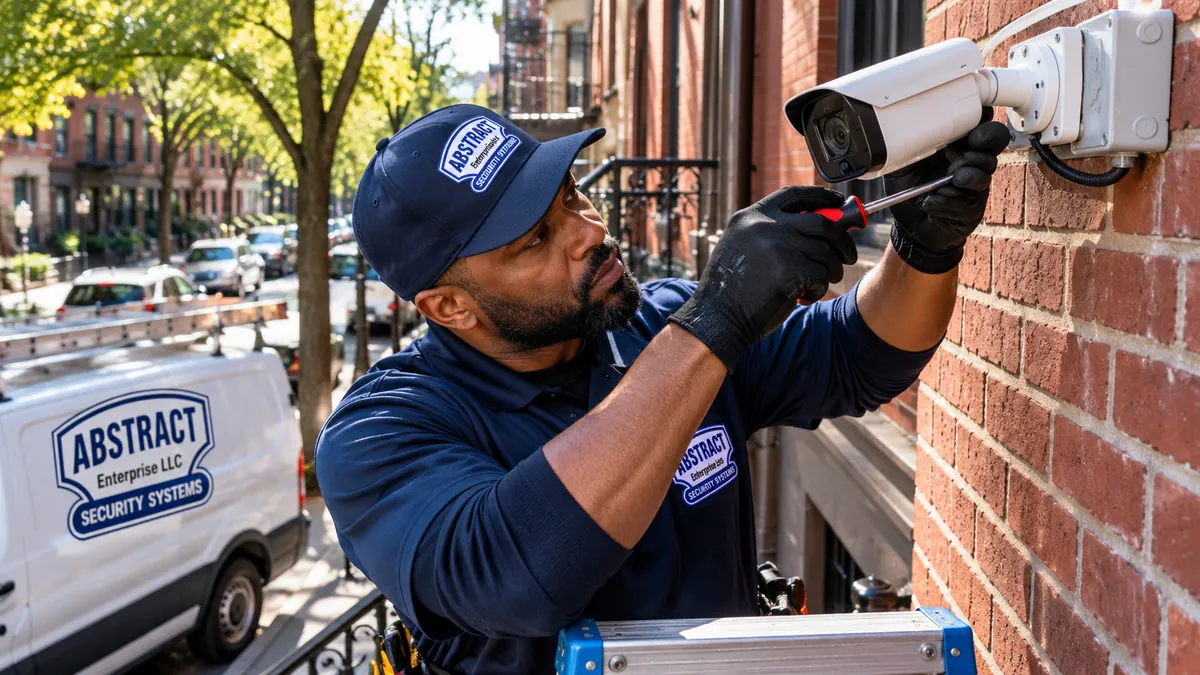
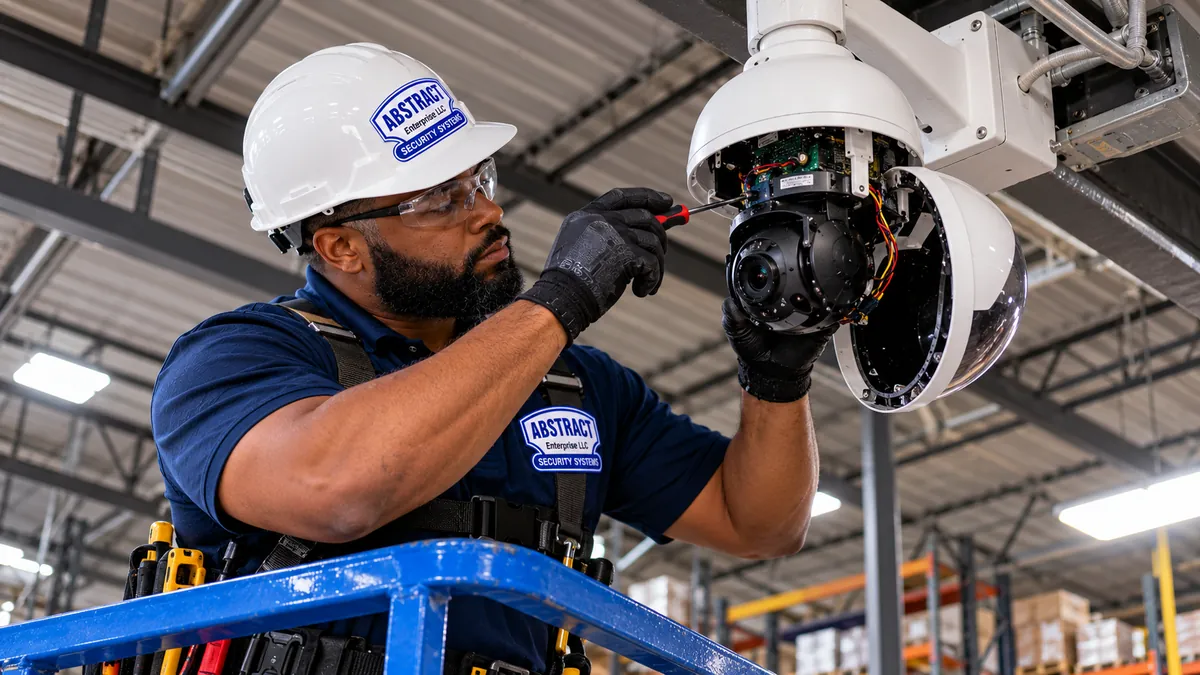
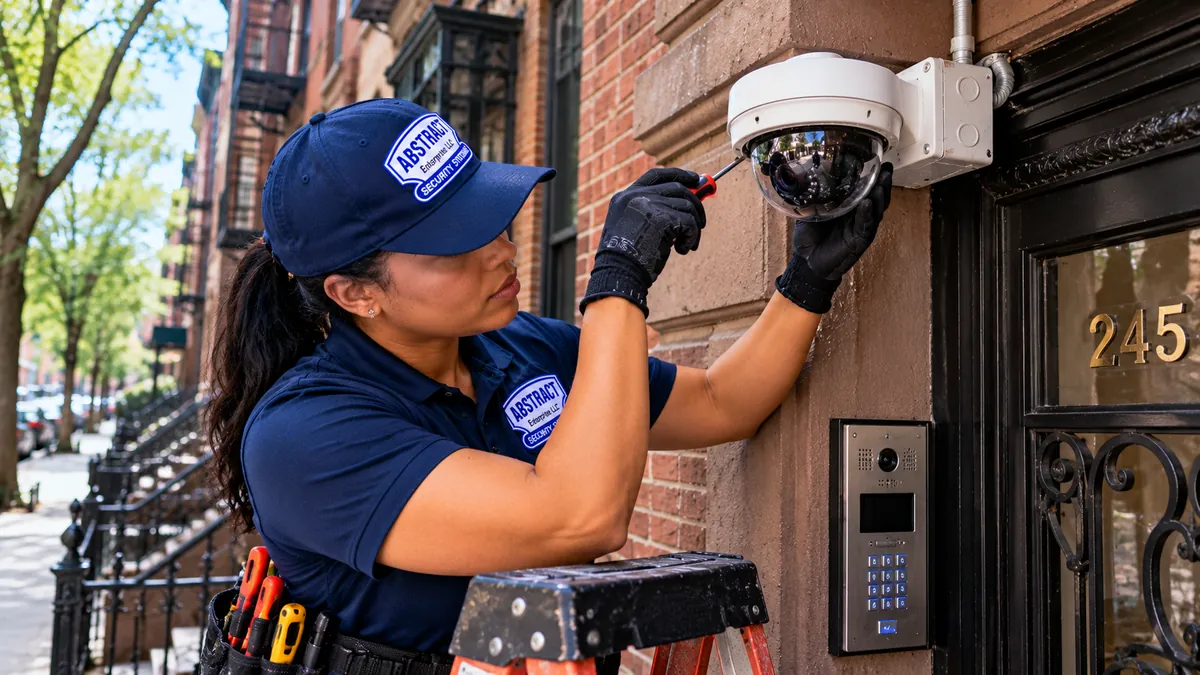
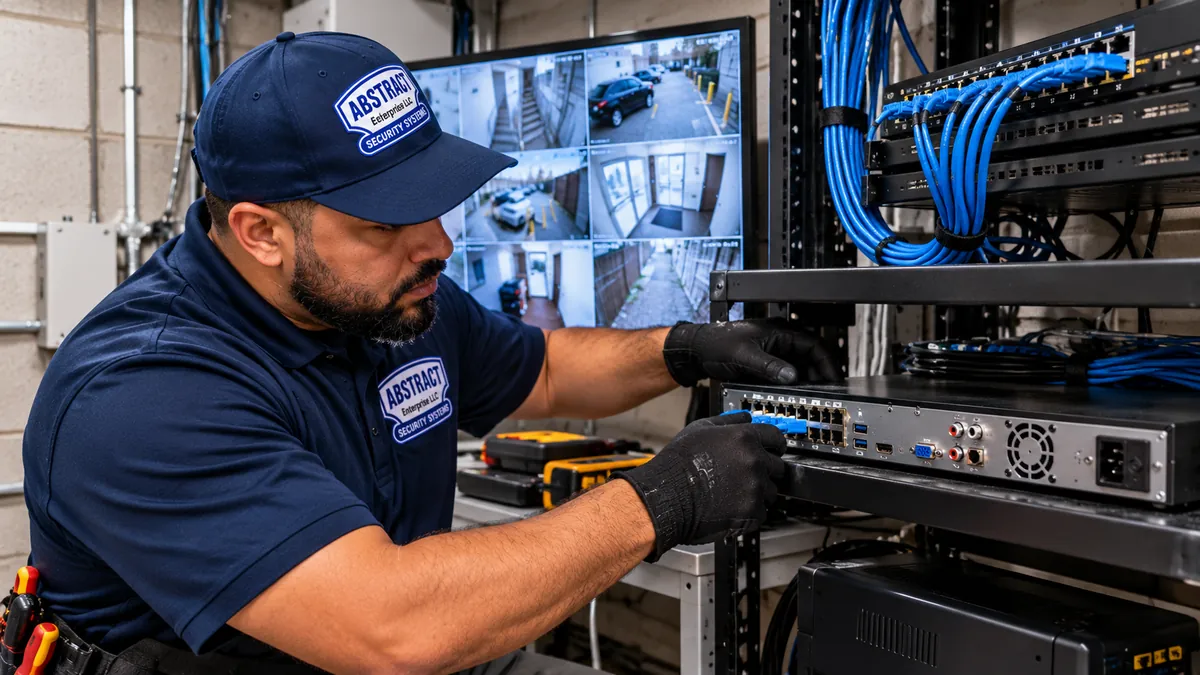
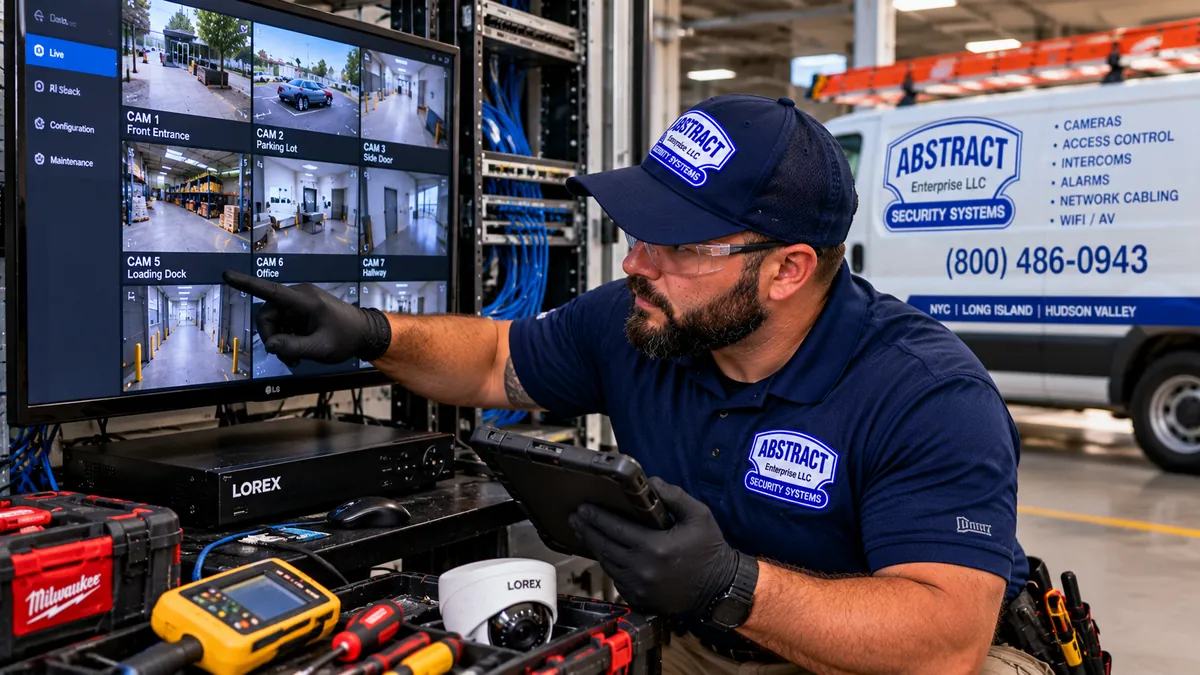
Same-day camera, DVR, NVR, and wiring repair across the Bronx — Tudor and Art Deco co-ops in Riverdale, Fieldston, Spuyten Duyvil, and Hudson Hill; Grand Concourse Historic District pre-war; Co-op City multi-tower campus; coastal single-family and condo in Throgs Neck, Country Club, City Island, Edgewater Park, and Silver Beach; multi-family pre-war walk-ups in Fordham, Tremont, Belmont, University Heights, Highbridge, and Concourse; mid-Bronx residential in Castle Hill, Parkchester, Soundview, and Bronx River; North Bronx single-family in Wakefield, Williamsbridge, Baychester, and Eastchester; Mott Haven, Port Morris, and Hunts Point Cooperative Market industrial; and commercial along Fordham Road, Arthur Avenue Belmont (the Real Little Italy), the Grand Concourse, the Hub, Bay Plaza, Bruckner Boulevard, Westchester Avenue, and East 187th Street. Hikvision, Dahua, Lorex, Speco, Uniview, Amcrest, and most analog and IP commercial brands. Most repairs land between $150 and $1,500. Bronx is our home base — our office is at 460 E Fordham Rd in the Fordham section. Fastest dispatch of any service area we cover. Firm written quote on-site after a 30-minute diagnostic — no surprises, no monthly fees, no contracts.
The Bronx is the only NYC borough on the U.S. mainland and the city’s northernmost — 1.4 million residents across 30+ distinct neighborhoods, with the widest range of building types in NYC. Tudor and Art Deco co-ops in Riverdale, Fieldston (NYS Historic District), Spuyten Duyvil, Hudson Hill, and North Riverdale. UNESCO-recognized Grand Concourse Art Deco pre-war buildings stretching from East 161st Street to Mosholu Parkway. The 35-tower Co-op City campus, the largest cooperative housing development in the United States, run by Riverbay Corporation. Coastal single-family and waterfront condo in Throgs Neck, Country Club, City Island, Edgewater Park, Silver Beach, Locust Point, and Soundview. Pre-war 5–6 story walk-up multi-family in Fordham, Tremont, Belmont, University Heights, Highbridge, Mount Hope, Morris Heights, and Concourse. The Hunts Point Cooperative Market — one of the largest food markets in the world — plus Mott Haven and Port Morris industrial. Mid-Bronx residential mix in Castle Hill, Parkchester, Soundview, Clason Point, and Harding Park. North Bronx single-family in Wakefield, Williamsbridge, Olinville, Edenwald, and Baychester. Bay Plaza shopping center, Yankee Stadium, the Bronx Zoo, the New York Botanical Gardens — major venue-adjacent commercial. And commercial corridors that change language every block: Spanish dominant in the South Bronx, Albanian and Italian on Arthur Avenue Belmont, Bengali in Parkchester and Morris Park, Vietnamese and Cambodian in Bronxdale. Pre-war wiring. Coastal salt-air. Co-op board paperwork. Each fails differently — and we know it because the Bronx is our home base.
Grand Concourse Historic District (1920s–1930s Art Deco), Riverdale and Fieldston Tudor co-ops, Fordham, Tremont, Belmont, University Heights, Highbridge, Mount Hope, Morris Heights, Concourse pre-war walk-ups. Plaster-and-lath walls, undersized risers, original conduit. Cable failures behind plaster need route-planning. About 35% of Bronx repair scope is pre-war.
Throgs Neck, Country Club, Edgewater Park, Silver Beach, Locust Point, City Island, Soundview, Clason Point, Harding Park, Hunts Point waterfront, parts of Pelham Bay. Outdoor BNC and RJ45 connectors fail in 18–36 months without dielectric grease. Aluminum camera bodies pit. We re-grease coastal blocks on a 12–18 month cycle.
The 35-tower, 43,000-resident Co-op City campus on the eastern Bronx is run by Riverbay Corporation — the largest cooperative housing development in the United States. Common-area camera repair requires Riverbay-approved scope, COI naming Riverbay, and follows the Riverbay master vendor coordination process. Same-day for emergency-grade fixes; new exterior work requires board approval.
Fieldston Historic District (NYS Historic Register), Riverdale Historic District, plus pre-war Tudor co-op buildings in Spuyten Duyvil, Hudson Hill, North Riverdale. Exterior facade work needs landmark or co-op board coordination. Fieldston is privately maintained streets — some additional access requirements apply. Stock board package ready to email same-day.
Hunts Point Cooperative Market is one of the largest food markets in the world — nightly cargo operations, freight elevators, refrigerated warehouses, food-handling-compliant placement. Plus Mott Haven, Port Morris, Bruckner industrial corridor. Repair scheduling around overnight cargo cycles. Heavy commercial loss-prevention scope.
Our home base office is at 460 E Fordham Rd — the Fordham section of the Bronx, between Webster Avenue and Third Avenue. Same neighborhood as the borough we serve. No travel markup. Fastest dispatch of any service area we cover — most Bronx calls reach a tech in 10–30 minutes from morning truck-out.
Four questions. We call back within the hour with a likely cause and a price range — before anyone comes to your building.
Most Bronx camera failures fall into eight buckets — black screen fix, app offline repair, recording fix, blurry image, IR night vision, wiring damage, password lockout, and multiple-camera-at-once failures. Security camera system not working repair work walks each one in order. We see all of them every week. The point of this section is so you can describe the symptom over the phone and get a real price range before we dispatch.
Power problem, cable problem, or video-input mismatch on the recorder or monitor. The fastest diagnostic is to swap the cable with a known-good lead and try a different DVR/NVR port. Roughly 60% of black-screen calls in the Bronx are a failed BNC connector or a dead PoE port — not a dead camera. On coastal blocks (Throgs Neck, Country Club, City Island, Edgewater Park, Silver Beach, Soundview) the rate climbs to 75% because of salt-air corrosion. In pre-war Grand Concourse and Riverdale Tudor co-op buildings, the failure rate of original-installation CCA cable in the basement riser adds to that.
Hik-Connect, DMSS, Lorex Cirrus, Reolink, Amcrest View — all of them break the same four ways: firmware update broke the pairing, DDNS or P2P registration lost after a router reboot, port forwarding got reset on a new router, or the app updated and dropped support for older firmware. Most app-only repairs are done in under an hour.
Usually a failed or near-failed hard drive (DVR drives are written 24/7 and burn out around year 3–5). Other causes: motion-detection schedules without per-channel motion configured, the M&A setting that needs both motion AND an external alarm, a full drive that hasn't rolled over, or a firmware bug after auto-update. Diagnostic 15–30 minutes.
Either the IR LEDs are blown (a common 5–7 year failure on Hikvision and Dahua bullet cams), the night-vision day-night sensor is stuck in day mode, or — most commonly in brownstone vestibules — IR is bouncing off a tile wall, glass door, or marble lobby floor and washing the image. Fix may be camera replacement, a sensor reset, or a swap to color night vision.
For PoE cameras: dead PoE port, failed PoE switch, or wattage mismatch (some 4K IR cameras pull more than the switch port can supply at night). For WiFi cameras: 5GHz vs 2.4GHz mismatch, a router that auto-rebooted at 4 AM, or a weak signal that drops between concrete floors. We test PoE wattage with a meter on every offline call.
Outdoor Cat5e/Cat6 and RG59 coax fail from winter freeze-thaw, summer roof work, rodent damage in basement riser closets, or the original installer's choice of CCA (copper-clad aluminum) cable. We splice, re-pull, or run fresh cable through existing conduit. If we find CCA, we recommend swapping to solid-copper Cat6.
For Hikvision: SADP tool with a recovery file generated from the device serial number — manufacturer emails the file within an hour during business days. For Dahua: ConfigTool with a similar serial-based reset. On-site reset takes 30–60 minutes including reconfiguring the camera back to your network. We do not bypass passwords on cameras you cannot prove ownership of.
Almost always a power-supply or PoE-switch problem upstream of the cameras themselves — not eight cameras dying simultaneously. Other causes: an IP-address conflict after a router replaced itself, a botched firmware update that propagated to identical cameras, or someone in the building plugged a non-PoE device into the PoE switch and tripped a port-protection cutoff.
Most NYC camera-repair customers also pair with our intercom service or access control on the same site visit. One COI, one invoice, one crew.
If you have read three CCTV Reddit threads, you have seen 40 acronyms. Here are the ones that actually matter when we are diagnosing your Bronx camera system.
Bayonet Neill-Concelman — the round screw-on connector at each end of a coaxial RG59 cable. Loose, corroded, or water-damaged BNC connectors are the #1 cause of analog camera failure in the Bronx — and on coastal blocks (Throgs Neck, Country Club, City Island, Edgewater Park, Silver Beach) salt-air corrosion accelerates the loosening dramatically.
Coaxial cable types used for analog and HD-over-coax cameras. RG59 for shorter runs (under 750 ft), RG6 for longer or higher-bandwidth runs. Replaced by Cat5e/Cat6 in modern IP installs.
Power over Ethernet — runs camera power and data over a single Cat5e or Cat6 cable. PoE delivers up to 15W, PoE+ delivers up to 30W. 4K IR cameras at night often need PoE+ or they brown out.
Network Video Recorder (for IP cameras over Ethernet) and Digital Video Recorder (for analog cameras over coax). A hybrid recorder handles both. Most Bronx pre-war retrofits use a hybrid so you keep working coax runs in the basement riser — avoiding plaster repair on the upper floors and Co-op City Riverbay scope expansion.
A camera with its own IP address that streams video over the network — usually over PoE Cat6. Higher resolution, better app integration, and easier remote viewing than analog. The current commercial standard.
HD video over old coaxial cable runs without ripping out walls. Lets you upgrade analog cameras to 1080p or 4K without re-pulling cable. Big win for Bronx pre-war retrofits — avoids plaster repair, Riverdale Tudor co-op riser disruption, and Co-op City Riverbay scope expansion for new cable runs.
Open Network Video Interface Forum — the standard that lets a Hikvision NVR talk to a Dahua or Uniview camera. When this breaks, mixed-brand systems stop recording even though each camera works fine on its own.
Peer-to-Peer (camera-to-app direct connection through the manufacturer cloud) and Dynamic DNS (a domain that follows your changing home IP). Both are ways to reach your cameras from outside your network. Both fail after router reboots.
SADP (Hikvision) and ConfigTool (Dahua) are the manufacturer utilities for finding cameras on a local network, resetting passwords, updating firmware, and pushing IP changes. We use both daily.
Manufacturer names for color night vision — uses a wide-aperture lens and a sensitive sensor instead of IR LEDs. The right pick for Bronx pre-war vestibules where IR washes out on tile floors, glass storm doors, and marble lobby steps — the dominant night-vision repair fix in Riverdale, Fieldston, Spuyten Duyvil, and Grand Concourse Art Deco buildings.
Copper-Clad Aluminum — cheap cable that looks like Cat6 but is mostly aluminum. Fails fast in cold weather and high-PoE-load runs. We swap CCA to solid-copper on every Bronx repair where we find it — pre-war walk-ups and coastal-block installations (Throgs Neck, City Island, Edgewater Park) see CCA failures faster than the rest of the city.
Certificate of Insurance — required by Class A buildings, most co-op boards, and most managing agents before any work in a riser, ceiling, or common area. We carry the package and email same-day.
We carry parts and firmware tools for the major manufacturers and most of the consumer kits sold at Costco, Sam's Club, and Home Depot. If we cannot source parts for your specific model, we tell you up front and give you the option of replacement instead of repair.
We do not service Ring, Nest, or Arlo — these are sealed consumer products with no field-serviceable parts. If your Ring or Nest stopped working, the right call is to file a warranty replacement with the manufacturer or upgrade to a commercial-grade system.
Different camera form factors fail in different ways. Here is what we see most often by camera type, with the typical repair window and the parts we keep on the truck.
Network IP camera repair is our most-common call type. We handle PoE camera repair, ONVIF re-pairing, IP-address conflict resolution, firmware recovery, and password reset for any IP camera on the major commercial platforms. Most Bronx IP camera repairs run $250–$600 same-day.
PoE camera repair covers PoE switch port test and replacement, PoE+ wattage upgrades when the camera browns out at night, individual PoE injector swaps, and weatherproof outdoor PoE connector rebuilds. PoE camera repair in the Bronx averages 1–2 hours on-site (longer in pre-war walk-ups with awkward original-conduit access).
Wired CCTV repair and security camera wiring repair includes RG59 coax termination, BNC connector repair, Cat6 camera wiring repair, Ethernet cable camera repair, and full re-pulls through plaster, conduit, or riser closets. Wired systems are more reliable than wireless in Bronx pre-war walk-ups with thick plaster and original conduit, in Co-op City Riverbay-managed buildings, and on coastal salt-air-exposed properties (Throgs Neck, City Island) where consumer WiFi cameras don't hold up.
Wireless camera repair covers WiFi signal diagnostics, 5GHz vs 2.4GHz mismatch, router firmware compatibility, signal extender placement, and conversion to hardwired PoE when WiFi is too unreliable in dense Bronx neighborhoods (Fordham, Tremont, Belmont, Mott Haven) where WiFi saturation is heavy.
Dome camera repair includes bubble cover replacement (often scratched, painted over by a super, or hazed from UV), IR-cut filter swap, lens recalibration, and full housing re-seal when the weatherproof gasket has failed. Dome cameras typically last 8–12 years indoors, 4–7 years outdoors on Bronx coastal blocks (Throgs Neck, City Island — salt-air dominates), 6–9 years inland (freeze-thaw on Grand Concourse parapet mounts and pre-war facades).
Bullet camera repair covers IR LED replacement (the most common 5–7 year failure), mounting bracket repair after wind or impact damage, internal condensation removal, and full body replacement when the housing seal has failed. Outdoor Bronx bullet cameras need re-weatherproofing every 18 months on coastal blocks (Throgs Neck through City Island), every 3 years inland.
PTZ camera repair handles the most complex failures — pan/tilt motor seizure, slip-ring electrical contact failure, preset memory loss, joystick controller pairing, and Hikvision/Dahua PTZ-specific firmware bricking. PTZ repair in the Bronx is typically $450–$1,200 because of the part complexity. Common in commercial parking lots, Hunts Point Cooperative Market warehouse perimeters, Bay Plaza shopping center, Yankee Stadium-area commercial, and large Riverdale single-family backyard coverage.
Indoor camera repair technician work covers lens cleaning and replacement, IR LED swap on indoor IR cameras, mount and bracket repair, audio disable for common-area cameras (Federal Wiretap Act compliance), and full body replacement. Indoor camera repair in Bronx homes and offices averages $200–$450.
Outdoor camera repair is the highest-volume Bronx repair category — pre-war walk-up facades, Grand Concourse Art Deco parapet mounts, coastal salt-air-exposed exterior mounts, and rooftop access cameras all see significant weather wear. Coastal blocks (Throgs Neck through City Island) see the worst rates. Outdoor security camera repair service includes weatherproof seal rebuild, outdoor BNC and RJ45 reterminate with dielectric grease, salt-air corrosion remediation, and IR LED replacement on outdoor bullet and turret cameras.
DVR repair (Digital Video Recorder for analog cameras over coax) covers hard-drive replacement, firmware recovery, channel reassignment, BNC input port repair, and full recorder replacement. DVR not working repair in the Bronx averages $300–$700 including the hard drive and labor. Most pre-war walk-up and Arthur Avenue commercial systems still run analog DVRs.
NVR repair (Network Video Recorder for IP cameras over Ethernet) covers PoE port test and repair, hard-drive replacement, firmware recovery, ONVIF re-pairing for mixed-brand systems, and full recorder swap. NVR not recording fix in the Bronx averages $400–$900 depending on the model and brand. Hunts Point Cooperative Market tenants and Bay Plaza commercial often run higher-end Bosch, Axis, or Avigilon NVRs.
Camera power supply repair covers single-camera 12V/24V wall-adapter replacement, multi-channel power supply swap when 8 or 16 cameras die simultaneously, PoE injector replacement, and fuse replacement on multi-channel supplies. Power supply repair is typically $150–$400.
Each manufacturer has its own failure modes, recovery procedures, and parts availability. Here is what we see and what we charge for the brands Bronx customers actually own.
Hikvision is the most common brand we repair in the Bronx. Standard Hikvision camera repair calls: SADP password recovery (manufacturer recovery file, 30–60 min), firmware brick recovery (TFTP boot sequence), IR LED replacement on aging bullet cams, ColorVu and AcuSense reconfiguration after auto-update, and Hik-Connect P2P repair after router changes. Hikvision repair in the Bronx averages $250–$650 same-day.
Dahua is the second most common. Standard Dahua camera repair: ConfigTool password recovery, DMSS app pairing repair, EZ-IP and TiOC reconfiguration, Dahua firmware downgrade when an update broke a feature, and Dahua-specific ONVIF re-pairing for mixed-brand systems. Dahua repair in the Bronx averages $250–$650 same-day.
Lorex camera repair covers Lorex Cirrus app pairing repair, Lorex DVR hard-drive replacement (Lorex DVRs are aggressive about beeping when a drive fails), HD-over-coax channel migration, and Lorex Smart Detection sensitivity recalibration. Lorex repair averages $250–$550 in the Bronx — Lorex is heavy in Riverdale, Throgs Neck, Country Club, and Pelham Bay single-family residential because of strong Costco distribution.
Swann camera repair handles older Swann DVR systems (many sold at Costco and Sam's Club 8–10 years ago), Swann SwannView and HomeSafe app repair, and Swann analog-to-IP migration when the original kit is past EOL. Some older Swann kits have parts-availability issues — we tell you up front before quoting.
Speco is a commercial-grade brand common in Bronx retail, restaurants, and hospitality — Fordham Road, Arthur Avenue Belmont, the Hub, Bay Plaza, the Grand Concourse retail, Bruckner Boulevard, and Westchester Avenue commercial. Speco camera repair covers Speco DVR/NVR firmware update and recovery, Speco-branded app reconfiguration, and component replacement. Speco parts ordering is reliable through their dealer channel.
Uniview camera repair covers UNV NVR firmware recovery, EZStation app pairing, and ONVIF integration with non-Uniview cameras. Uniview is a growing brand across Bronx retail and small commercial with good parts availability and reliable hardware — popular along Fordham Road and the Hub — most UNV repair calls are configuration, not hardware failure.
Amcrest camera repair covers Amcrest View app pairing, Amcrest hybrid DVR reconfiguration, and integration with non-Amcrest cameras over ONVIF. Amcrest shares hardware lineage with Dahua so most Dahua-style repair procedures apply.
Q-See is largely end-of-life — the original company shut down years ago and parts are getting scarce. Q-See camera repair is feasible for short-term fixes but most Bronx Q-See systems we see are 8–12 years old (installed 2010–2014 in pre-war walk-ups and small commercial) and we recommend planned replacement rather than chasing repairs that will recur.
Night Owl camera repair covers Night Owl DVR/NVR replacement (most Night Owl kits are sold at Costco), Night Owl Connect app reconfiguration, and analog-to-IP migration when the original kit is showing age. Many Night Owl repair calls in the Bronx turn into full-system upgrade conversations because the original kit's value has decayed and the pre-war or co-op wiring deserves a better camera.
Reolink camera repair handles Reolink WiFi camera reconfiguration, Reolink PoE camera and Reolink Argus battery camera repair, Reolink NVR setup, and Reolink app pairing. Reolink is a popular DIY brand across Bronx single-family homes and small businesses — we often migrate Reolink customers to commercial-grade PoE systems when reliability becomes a priority, especially in Throgs Neck, City Island, and Edgewater Park where consumer cameras don't survive coastal salt-air.
Annke camera repair covers Annke 4K kit reconfiguration, Annke Vision app pairing, and Annke-to-Hikvision firmware compatibility issues (Annke uses Hikvision-derived hardware on many models). Annke repair in the Bronx averages $250–$500.
Wyze cameras are sealed consumer products — the Wyze Cam V3, Wyze Cam Pan, Wyze Outdoor, and Wyze Doorbell are not field-serviceable. Wyze camera repair, where it exists, is limited to mount/bracket replacement and SD card swap. For broken Wyze cameras the right path is warranty replacement or upgrade to a commercial system.
Zosi is a budget consumer brand (also sold under Zosi.com). Zosi camera repair is limited because the cost of the repair often exceeds the cost of a new kit. Most Zosi repair calls in the Bronx turn into upgrade conversations to commercial-grade Hikvision, Dahua, or Lorex — the consumer-grade hardware rarely survives more than 2–3 years in Bronx coastal blocks (Throgs Neck, City Island) or in pre-war walk-up outdoor mounting.
Ring camera repair, Nest camera repair, and Arlo camera repair are all warranty-only paths — these are sealed consumer products with no field-serviceable parts. Ring Doorbell, Ring Stick Up Cam, Ring Spotlight, Ring Floodlight, Nest Cam Outdoor, Nest Cam Indoor, Nest Doorbell, Arlo Pro, Arlo Ultra, Arlo Essential — all replaced under manufacturer warranty when they fail. We help Bronx customers transition off these consumer platforms when reliability becomes a priority — pre-war exterior mounts, Co-op City Riverbay-coordinated systems, and coastal salt-air blocks need more durable hardware than Ring/Nest provide.
A camera repair is rarely just the camera. The point of failure is usually upstream — at the recorder, the switch, the wiring, or the network. We diagnose the full chain on every call.
Lens replacement, IR LED swap, IR-cut filter (day/night sensor) replacement, weatherproofing rebuild, mounting bracket repair, full body replacement when board damage is past economic repair.
Hard-drive diagnostic and replacement (2TB to 14TB), motherboard repair on commercial recorders, firmware downgrade and recovery on bricked units, channel reassignment, schedule reconfiguration, complete hybrid replacement.
BNC reterminate, RJ45 re-crimp, splice damaged sections, full re-pull through existing conduit, swap CCA to solid-copper Cat6, weatherproof outdoor connections with dielectric grease and self-fusing tape.
PoE switch test and replacement, PoE+ upgrade where wattage is insufficient, individual PoE injector swap, 12V/24V power-supply replacement, fuse replacement on multi-channel power supplies.
IP-address conflict resolution, ONVIF re-pairing for mixed-brand systems, port forwarding repair after router changes, DDNS reconfiguration, VLAN setup for camera isolation.
Hik-Connect, DMSS, Lorex Cirrus, Reolink, Amcrest View, EZView pairing reset, P2P registration repair, phone-app reinstall and re-add, push notification troubleshooting.
Firmware update for compatibility, firmware downgrade when an auto-update broke a feature, brick recovery (Hikvision and Dahua have specific recovery sequences), password reset via SADP or ConfigTool with manufacturer recovery file.
Outdoor camera reseal, condensation removal, lens cleaning and de-fogging, replace cameras with cracked housings, address salt-air corrosion on coastal blocks, repair freeze-cracked outdoor wiring.
Scheduled clean & check — lens cleaning, connector inspection (with dielectric grease refresh on coastal blocks Throgs Neck through City Island), hard-drive health test, firmware audit, port test on PoE switch, motion-detection sensitivity recalibration, footage retention verification. $250–$800 typical Bronx annual visit.
Most NYC camera repairs are scheduled alongside intercom service, door buzzer repair, or access control. Combining services saves $200–$400 in labor — same crew, same site visit, one COI, one invoice.
We dispatch from our home base at 460 E Fordham Rd — the heart of the Fordham section of the Bronx, between Webster Avenue and Third Avenue. Same-day service from Riverdale to City Island, from Mott Haven to Wakefield, when called before noon. The Bronx is our fastest service area: most calls reach a tech in 10–30 minutes from morning truck-out. No travel markup. The Bronx is the borough we live and work in.
Every Bronx property has its own physics. Riverdale Tudor co-ops with plaster walls and Fieldston Historic District landmark coordination. Grand Concourse Art Deco pre-war buildings with original 1920s conduit. Co-op City’s 35-tower Riverbay-managed campus. Coastal single-family in Throgs Neck and City Island with salt-air corrosion. Walk-up multi-family in Fordham and Tremont with shared infrastructure. Hunts Point Cooperative Market with overnight cargo cycles. Each fails differently — we design the repair around all of them, from our home base on Fordham Road.
Riverdale, Fieldston (NYS Historic), Spuyten Duyvil, Hudson Hill, North Riverdale, Kingsbridge Heights, Van Cortlandt Village pre-war Tudor co-ops. Plus Grand Concourse Historic District Art Deco buildings (1920s–1930s, UNESCO-recognized). Plaster-and-lath walls, undersized risers, original conduit. Board approval required for exterior or common-area work. We have a stock board package ready to email same-day.
Co-op City (35-tower, 43,000-resident Riverbay Corporation campus — the largest cooperative housing development in the United States). Plus Parkchester (1940s landmark middle-income complex). Common-area camera repair requires Riverbay-approved scope, COI naming Riverbay or the cooperative, and follows the master vendor coordination process. Same-day for emergency-grade fixes.
Throgs Neck, Country Club, Edgewater Park, Silver Beach, Locust Point, Indian Village, Schuylerville, Westchester Square, City Island, Soundview, Clason Point, Harding Park. Long Island Sound + East River salt-air. Outdoor BNC and RJ45 connectors fail in 18–36 months without dielectric grease. Marine-grade weatherproofing on every outdoor connector. 12–18 month re-grease cycle.
Loss prevention, register-area facial-recognition placement, license-plate capture at delivery doors, after-hours service so you stay open. Same-day for downtime emergencies.
Kitchen, dining, bar, register, walk-in cooler, back-alley delivery. NYC Health Department-compliant placement. Bronx restaurant scene from Arthur Avenue Belmont to Fordham Road to Throgs Neck to City Island to Mott Haven. Repair on closed days where possible.
Fordham, Tremont, Belmont, University Heights, Highbridge, Concourse, Mount Hope, Morris Heights, Morrisania, Crotona, East Tremont, Mount Eden, Claremont. Pre-war 5–6 story walk-up multi-family. Lobby, mailroom, hallway, stairwell, rooftop. Property-management-coordinated scheduling. Common-area camera systems with super access. Spanish-language coordination common.
Hunts Point Cooperative Market — one of the largest food markets in the world. Plus Mott Haven, Port Morris, Bruckner industrial corridor, the Hub (149th & 3rd Avenue) commercial. Refrigerated warehouses, freight elevators, food-handling-compliant placement. Repair scheduling around overnight cargo cycles. Heavy commercial loss-prevention and surveillance scope.
HIPAA-compliant placement (no patient-room or treatment-area coverage), waiting room, hallway, pharmacy, billing, reception. Quiet repair scheduling between appointments.
Fordham Road (the Bronx’s main shopping district), Arthur Avenue Belmont (the Real Little Italy), the Hub (149th and 3rd), the Grand Concourse retail, Bay Plaza shopping center, Bruckner Boulevard, Westchester Avenue, Tremont Avenue, East 187th Street, White Plains Road. Plus Yankee Stadium-area, Bronx Zoo-adjacent, NY Botanical Gardens-adjacent commercial. Multilingual standard — Spanish, Albanian, Italian, Bengali.
Sourced from Reddit, IPCamTalk, CCTVForum, Bronx neighborhood Facebook groups (Riverdale, Co-op City, Throgs Neck, Belmont, Pelham Bay), and our own service-call intake notes from Mott Haven to Wakefield. These are the questions Bronx camera owners ask but rarely get a straight answer to.
Almost always a hard-drive failure warning. Hikvision and Dahua DVRs both beep when the SMART status of the internal drive flags a fault. Check the recorder's main menu under Storage or HDD Info — if the status says "warning" or "error," the drive needs replacement. We swap drives on-site for $200–$450 depending on capacity. If the beeping is intermittent and SMART looks fine, it may be a fan or a stuck buzzer — we silence it and check the alarm log.
You can almost always replace one camera. The only exception is when the failed camera is on a system so old that the manufacturer no longer makes a compatible replacement (most pre-2014 Hikvision and Dahua kits). In that case we use a same-resolution generic replacement that ONVIF-pairs to your existing recorder — works fine, looks identical to the user. Single-camera replacement on a working system in the Bronx: $250–$600 including the new camera and labor. Pre-war walk-up buildings in Fordham, Tremont, and Belmont with awkward access (cable pull through plaster, original conduit) can add $100–$200. Riverdale Tudor co-op work that requires board approval can add $200–$400 in scheduling time. Co-op City Riverbay-coordinated scope can add $200–$400 for the master vendor process.
If all your cameras went down at once, it is upstream of the cameras themselves. Check three things in order: (1) is the PoE switch powered and showing link lights, (2) did the recorder reboot or show a "no signal" pattern, (3) did your router get replaced or rebooted overnight. About 70% of Bronx "all cameras offline" calls are a tripped power supply on the PoE switch — often after a Nor'easter or storm surge (Throgs Neck, Country Club, City Island), a basement flood from heavy rain in low-lying Bronx blocks, or a circuit overload in an old pre-war walk-up. Usually a $50 part and a 30-minute service call.
Yes, and the most common cause is motion-detection-only recording with the motion sensitivity set too low. Other causes: M&A schedule (motion AND alarm) on a system without an alarm input, channel-by-channel record settings that got reset, a hard drive that's full and not configured to roll over, or a firmware bug. We pull the event log on-site, identify the cause, and reconfigure to 24/7 recording with motion-event flags so you stop missing events.
IR washout. The camera's IR LEDs are bouncing off something close — a glass storm door, a tile vestibule floor, a marble lobby step, a garage door, or a chain-link fence. Bronx pre-war Tudor co-op vestibules in Riverdale, Fieldston, and Spuyten Duyvil are the worst offenders for vestibule IR-bounce, and Throgs Neck, Country Club, and Edgewater Park single-family driveway cameras are the worst for driveway IR-bounce. The fix is either a camera with adjustable IR intensity, an external IR illuminator mounted away from the camera, or a swap to color night vision (no IR at all). Consultation and replacement: $350–$700.
Yes — the weatherproof seal failed. Common after 4–6 Bronx winters on bullet cameras and dome cameras with weak gaskets, especially on coastal blocks (Throgs Neck, Country Club, City Island, Edgewater Park, Silver Beach) where salt air accelerates seal degradation, and on south-facing roof and parapet mounts in pre-war Grand Concourse buildings that catch direct sun and freeze cycles. Sometimes you can dry it out by pulling the camera and leaving it in a warm dry room with the rear cover off for 48 hours, but the seal is already compromised so it will fog again on the next humid day. Replacement is the right call: $250–$500 for a same-spec swap.
Camera works locally but not remotely is almost always a P2P registration problem. Hik-Connect needs a working internet connection from the camera or NVR to Hikvision's cloud servers. Common breaks: your router was replaced and didn't keep the same outbound rules, the camera's gateway IP no longer matches your router's IP, or Hikvision's P2P servers were temporarily down (check downdetector.com). Re-pairing fixes 90% of these in under 30 minutes.
Sometimes yes, more often no. If the dome bubble or front lens cover is painted, we can replace just the cover ($30–$80 part + labor). If the IR LEDs are painted, those are inside the housing and can't be repaired without a body swap. We see this most often in the Bronx after Riverdale Tudor co-op hallway repaints, Grand Concourse Art Deco building lobby renovations, walk-up multi-family hallway repaints in Fordham and Tremont, and Co-op City corridor refresh work. Worth a 15-minute on-site look before deciding.
Yes. If your existing analog cameras work, we keep them and swap the recorder for a modern hybrid that handles both analog (over your existing coax) and IP (over Cat6 you can add later). This is the cheapest path to a usable modern system. Hybrid recorder swap: $700–$1,200 installed including reconfiguring the channels and migrating any saved footage. Bronx retrofit-friendly because it lets you keep working analog cameras over old coax (common in pre-2014 walk-up multi-family and pre-war co-op installations) while adding new 4K IP cameras over fresh Cat6. Avoids re-pulling cable through plaster in Riverdale Tudor co-ops and through Grand Concourse Art Deco building risers.
30-minute on-site security camera diagnostics and surveillance system troubleshooting, full system test (power, cable, network, recorder, app), written quote for the actual repair, and the $250 is applied to the repair if you proceed. If the repair is over the phone (rare but possible — some app fixes), no service call charge. If we determine the system is past economic repair, we tell you and provide a no-pressure replacement quote.
Either someone is brute-forcing your camera from the internet (port-forwarded systems get hit constantly) or your camera is exposing port 80 to the internet by default. The fix is to change the default port, disable Hik-Connect or DDNS if you don't use it, set up VPN-only remote access, and enable lockout protection in the camera's security settings. We harden remote access on every repair call by default.
Yes, as long as you actually own the equipment. If you signed a lease with ADT, Vivint, or a monitoring contract that "includes" the cameras, those are not yours and we can't service them. If you bought the cameras outright and just want to switch service providers, we take over and document everything for you. Most "ADT camera" customers are surprised to learn they don't own the hardware.
Only if the timestamp is correct and the recording is set to 24/7 (not motion-only). NYPD precincts that handle Bronx calls (the 40th through 52nd, including the 40, 41, 42, 43, 44, 45, 46, 47, 48, 49, 50, 52, plus PSA 7 and 8 for NYCHA) and detectives need clean footage with accurate time stamps for evidence. We verify time settings on every repair, set NTP sync to a public time server, and configure 24/7 recording with motion event flags so you have continuous footage and quick search to motion events. We also explain how to export clips in a format detectives can open.
Indoor commercial cameras: 8–12 years. Outdoor commercial cameras in the Bronx: 4–7 years on coastal blocks (salt-air dominates), 6–9 years inland (winter freeze-thaw on parapet mounts, sun on south-facing rooftops, HVAC condensation drip). Hard drives in DVRs: 3–5 years (Bronx commercial systems on Fordham Road, Arthur Avenue, and at the Hunts Point Cooperative Market run 24/7 so drives wear faster). PoE switches: 6–10 years. Power supplies: 5–8 years. Security camera upgrade and repair are different conversations. If you have a system over 10 years old that's still working, that's a great run — but plan for replacement, not endless repair, because parts get harder to source after the manufacturer EOLs the model.
Sourced from Google's "People also ask," autocomplete, Bing related searches, and Answer The Public for the camera repair vertical in New York.
Three signs: it shows offline in the app or recorder for more than 24 hours, the live feed is black or scrambled with the LED still on, or the recorded footage stops mid-event. If the camera was working yesterday and isn't today, something specific changed — usually power, cable, or network. We diagnose on-site in 30 minutes.
Indoor: 8–12 years. Outdoor on Bronx coastal blocks (Throgs Neck, City Island, Edgewater Park): 4–7 years (salt-air dominates). Outdoor inland Bronx: 6–9 years. The first thing to fail is usually the IR-cut filter (day/night sensor), then the IR LEDs themselves, then the weatherproof seal. The camera body and image sensor usually outlast everything else.
Most can. Lens replacement, IR LED swap, cable splice, BNC reterminate, weatherproof reseal, and PoE-port repair are all routine. The exceptions are sealed consumer cameras (Ring, Nest, Arlo) and any commercial camera where the main board itself failed — those are usually replaced.
Most Bronx repairs land between $150 and $1,500. Connector reterminate or PoE port swap: $150–$350. Single camera replacement: $250–$600. DVR/NVR replacement: $700–$1,500. Full rewire or pre-war walk-up overhaul: starts at $1,500. No travel markup — the Bronx is our home base, dispatched from 460 E Fordham Rd. Free phone diagnosis, firm quote on-site. NYC sales tax 8.875%.
In order: dead PoE port (test by swapping cable), failed power supply, lost IP (router DHCP conflict), Hik-Connect P2P registration broken (router rebooted), or firmware glitch (very common after auto-update). The camera itself is rarely the actual problem — it's almost always upstream.
Dahua's DMSS app loses connection for the same reasons Hik-Connect does — P2P registration breaks after router or modem changes. Re-add the camera in DMSS, verify the camera's gateway matches your router IP, and check that the camera is reachable from a laptop on the same network first. If it's reachable locally but not in DMSS, it's a P2P or firewall issue.
Yes. Password reset on the camera does not affect the recorder. The footage stays on the DVR/NVR hard drive. After reset, we re-add the camera to the recorder and the recordings continue without interruption. If you also forgot the recorder password, that's a separate reset — same process, manufacturer recovery file.
Usually a cable problem (BNC loose, RJ45 unplugged, or cable severed somewhere along the run) or a video-input mismatch on the recorder. Less commonly, the camera lost power or the camera body itself failed. We test power, cable, and recorder port in that order — usually identify the cause in 5 minutes.
Either the IR LEDs are blown, the IR-cut filter is stuck in day mode, or — by far the most common in Bronx pre-war Tudor co-op vestibules and coastal driveways — the IR is bouncing off a hard surface within the camera's field of view (vestibule wall, glass door, marble floor, metal mailboxes). The fix is positional, optical, or a swap to color night vision.
Yes if the weatherproof seal is compromised. Look for fogging inside the lens, water droplets visible through the dome, or sudden image-quality degradation after a heavy rain. The seal cannot be reliably re-glued in the field — replacement is the correct call.
Download from the manufacturer's official site (not a third-party). Verify the firmware matches your exact camera model and platform — there are multiple platforms behind the same model number. Update via the manufacturer's tool (SADP for Hikvision, ConfigTool for Dahua) over a wired connection. Never update over WiFi. If the update fails, do not power-cycle — call us, that's a brick recovery situation.
A recorder that handles both analog (over coax) and IP (over Ethernet) cameras at the same time. The right pick for Bronx walk-up multi-family retrofits and Riverdale Tudor co-op retrofits where you want to keep working analog cameras over old coax runs (common in 1980s–2010s installations) and add new 4K IP cameras over new Cat6. Saves the cost of re-pulling cable through pre-war plaster or co-op risers — which can be the most expensive line item on the job.
Search "security camera repair cost" and Google's AI Overview gives you national averages built from generic homeowner-blog data. The numbers are not wrong — they're just not what the Bronx actually looks like. The Bronx has more pre-war walk-up multi-family than any other NYC borough, the Grand Concourse Historic District (1920s–1930s Art Deco), the largest cooperative housing development in the United States (Co-op City), substantial Long Island Sound coastline (Throgs Neck through City Island), the Hunts Point Cooperative Market (one of the largest food markets in the world), and Yankee Stadium / Bronx Zoo / NYBG venue-adjacent commercial. Here's the gap.
That's a national average for suburban single-family homes with one or two consumer-grade cameras (Ring, Nest, Wyze) where the "repair" is often a battery swap or a mount adjustment. Bronx repair calls are different: most are commercial-grade Hikvision, Dahua, Lorex, or Speco systems running 4–16 cameras (4–8 on a Riverdale single-family or pre-war co-op, 8–16 on a Co-op City building or pre-war walk-up, 12–32 on a Fordham Road or Arthur Avenue commercial business) through a PoE switch and an NVR.
The actual Bronx repair distribution: about 35% of calls are $150–$350 (connector or PoE port issues), 40% are $350–$700 (single camera or hard drive replacement), 20% are $700–$1,500 (DVR/NVR replacement, walk-up partial rewire, or coastal storm-surge rebuild), and 5% are over $1,500 (full system overhaul, Riverdale or Co-op City board-approved scope, or Hunts Point commercial buildouts). The $100 number rarely shows up because there's a real on-site diagnostic and a licensed technician dispatch behind every call.
What this means for you: ignore the $100 estimate. Budget $250–$700 for a typical Bronx single-camera or single-recorder repair. We always give a firm written quote on-site before any work begins, so you know exactly what you're committing to.
This is the AI's universal first answer for every camera problem. It works for consumer-grade WiFi cameras in suburban homes where the WiFi reaches everywhere — pointless in a pre-war Bronx walk-up basement camera with three plaster walls between it and the router, or in a Co-op City building where 2.4GHz can't penetrate Riverbay-managed common areas reliably, and the camera's only job is to talk to a phone app. In NYC commercial-grade systems, it's almost never the right fix — and often it makes things worse.
Resetting a Hikvision or Dahua camera that's been integrated into a multi-channel NVR will wipe its IP address, its ONVIF pairing, and its motion-detection schedule. After reset, the camera comes up on the factory default IP (usually 192.168.1.108), which conflicts with your existing system, and the recorder no longer recognizes it. We get these calls weekly from Bronx homeowners and walk-up multi-family landlords who tried the AI's advice — the recovery is often more expensive than the original repair would have been.
What this means for you: do not factory-reset commercial-grade cameras unless you know what you're doing. Power-cycle is fine. Reboot the recorder is fine. Reset is a one-way trip without the manufacturer recovery tool.
The AI's second universal answer. Helpful if you have a WiFi camera, useless if you have a PoE camera (most Bronx commercial, pre-war walk-up, and Co-op City outdoor systems). PoE cameras don't use WiFi at all — they get both power and data over a Cat5e or Cat6 cable from the recorder or a PoE switch. Telling someone with a PoE Hikvision system to "check WiFi signal" is like telling someone with a wired phone to check their cell reception.
For PoE systems, the right diagnostic is to test the PoE port itself with a meter, swap the cable with a known-good lead, try the camera on a different port, and check the recorder's network status page. WiFi has nothing to do with it. For the smaller subset of NYC customers running WiFi cameras, signal strength does matter — but the typical fix is moving the router, not the camera, because thick NYC walls block 2.4GHz and most cameras don't support 5GHz at all.
What this means for you: tell us up front whether your cameras are PoE (Ethernet cable to the camera) or WiFi (no Ethernet to the camera). The diagnostic and the fix are completely different.
Yes — sometimes. No — sometimes. Firmware updates fix specific bugs and add specific features, but they also introduce new bugs at roughly the same rate, and they can permanently brick a camera if the update fails partway through. We see one or two "I tried to update the firmware and now the camera is bricked" calls per month. Recovery is possible on Hikvision and Dahua but takes a TFTP server, the right firmware file, and a careful boot sequence.
The right rule: update firmware only when the update fixes a specific symptom you're experiencing. If the camera works, leave it. If you must update, do it over a wired connection (never WiFi), use the manufacturer's official tool (SADP or ConfigTool), and have someone else physically present in case the camera goes down and needs to be reseated.
What this means for you: don't update firmware preemptively because the AI told you to. Call us first if you're seeing a specific app or recording bug — we'll tell you whether a firmware update is the right answer or whether something else is going on.
Often correct, but the AI doesn't tell you that Bronx pre-war buildings are difficult to re-cable. In a Grand Concourse Art Deco building the cable runs through original 1920s conduit and plaster walls, requiring board approval. In a Riverdale Tudor co-op the cable runs through pre-war risers behind plaster. In Co-op City the cable runs through Riverbay-managed common areas requiring master vendor coordination. Plan for that scheduling complexity, not just the labor cost.
The first move on a damaged cable is to inspect the connector and the first 6 feet of cable from the camera. About 60% of "cable failure" calls in the Bronx are actually a damaged BNC or RJ45 connector at the camera end, not a damaged cable run. On coastal blocks (Throgs Neck, Country Club, City Island, Edgewater Park, Silver Beach) the rate climbs to 75–80% because of salt-air corrosion. We can re-terminate, re-grease, and re-weatherproof in 30 minutes without re-pulling.
What this means for you: don't assume re-cabling is required. The diagnostic tells us whether you need a $150 reterminate or a $1,500 cable pull. We give you both options when both apply.
Useful for cameras with their own wall-wart power supply. Not useful for PoE cameras, which get power from the recorder or a PoE switch over the same Ethernet cable that carries video. Bronx commercial systems are almost all PoE, so the AI's "try a different adapter" advice doesn't apply — there's no adapter to try. The right diagnostic is at the PoE switch or NVR power port, not at the camera end.
For non-PoE cameras with a 12V or 24V wall adapter, the AI's advice is right: a $15 replacement adapter often fixes the problem. The catch is that Bronx commercial systems use multi-channel power supplies that share one large transformer across 8 or 16 cameras — if that transformer fails (often after a Nor'easter, coastal storm surge in Throgs Neck or City Island, or basement flooding in low-lying South Bronx blocks), all cameras on it die simultaneously. We carry replacement multi-channel power supplies on the truck.
What this means for you: if all your cameras went out at once, the cause is upstream — the shared power supply or the PoE switch — not each individual camera. A "new adapter" mentality won't fix a shared-power failure.
The AI assumes your camera is under warranty and the manufacturer is reachable. In practice, most Bronx repair calls are on systems 3–8 years old, well past warranty. Even within warranty, manufacturers generally only replace defective hardware — they don't pay for the labor to remove the failed camera, install the replacement, and re-pair it to your system. So a "warranty replacement" still requires a service call.
For Hikvision and Dahua cameras under warranty, we coordinate the warranty claim, ship the failed unit back, and install the replacement in one visit. For Lorex, Swann, Amcrest, and the Costco/B&H Hikvision packages common in Bronx residential, where the warranty is a hassle to claim, we usually recommend buying a same-spec replacement directly because the time saved is worth the small cost difference. We tell you which path is right when we diagnose.
What this means for you: warranty is rarely the fastest path. Same-day Bronx dispatch almost always beats waiting 2–3 weeks for a warranty replacement to ship.
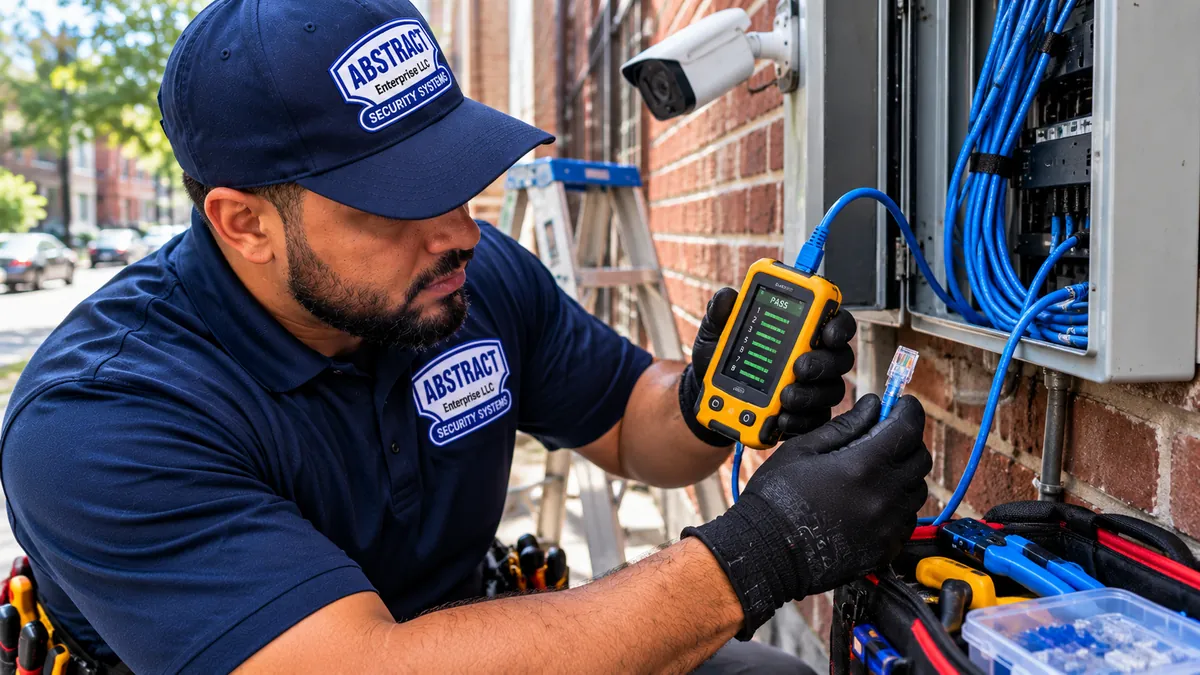
These are the exact phrases Bronx camera owners type into Google when something stops working. The answers below are how we actually approach each on a service call.
Three-step diagnostic. First, power-cycle the recorder for 60 seconds and check if the camera comes back. Second, swap the cable at the camera end with a known-good lead and try a different recorder port — this isolates camera vs. cable vs. recorder. Third, if the camera still does not respond, the failure is either the camera body itself or the upstream power/PoE — call us and describe the symptom over the phone, we usually identify the cause in 5 minutes free of charge.
Sudden failure across one camera is usually a connector or PoE port issue (60% of Bronx sudden-failure calls; 75–80% on coastal blocks Throgs Neck through City Island because of salt-air corrosion). Building-wide power events cause the rest. Sudden failure across all cameras at once is upstream — failed PoE switch, tripped power-supply breaker, or a router replacement that wiped the recorder's network settings. The pattern of which cameras failed tells us the root cause faster than any other clue.
For PoE cameras: dead PoE port, failed PoE switch, or wattage mismatch. For WiFi cameras: 5GHz vs 2.4GHz mismatch, weak signal between concrete floors, or router auto-rebooted. For app-only "offline" status (camera works locally but app says offline): P2P registration broke after router change, port forwarding got reset, or camera firmware needs an update. Camera offline troubleshooting averages 30–60 minutes on-site.
Check the recorder hard-drive status first (most common cause: drive failed at year 3–5). Then check the recording schedule for each channel — schedules get reset after firmware updates. Then check for M&A (motion AND alarm) settings that prevent recording when there is no alarm input wired. Then check that the drive is not full and configured to overwrite. CCTV troubleshooting service runs $250 for the diagnostic, applied to the actual fix.
"No signal" on the recorder usually means a cable problem (BNC loose, RJ45 unplugged, or cable severed) or a video-input mismatch. The fastest fix is to swap the cable with a known-good lead. If that fixes it, the original cable failed somewhere along the run. If the camera still shows "no signal" with a known-good cable, the camera body itself is dead and needs replacement. Fix security camera no signal calls in NYC average $200–$500 depending on which side of the chain failed.
If the camera is a sealed consumer model (Ring, Nest, Arlo, Wyze), you can not fix it — file a warranty replacement or buy new. If the camera is commercial-grade (Hikvision, Dahua, Lorex, Speco, Uniview, Amcrest, Swann), the failure is almost always repairable: connector, cable, PoE port, power supply, or single-camera body replacement. Security camera troubleshooting service starts with three pieces of information. Tell us the brand, the symptom, and what changed recently — we will quote the repair before anyone comes to your building.
Most Bronx CCTV repairs land between $150 and $1,500. The $250 service call is applied to the actual repair if you proceed. Connector reterminate or PoE port swap: $150–$350. Single camera replacement with reconfiguration: $300–$700. DVR/NVR replacement with hard drive: $700–$1,500. Annual maintenance contract — camera system maintenance, CCTV maintenance service, and video monitoring system repair on a scheduled cadence: $250–$400. Affordable security camera repair is a real thing — we tell you when a $250 fix is enough and when it is not.
For When NYC customers want to hire a security camera repair technician or find the best security camera repair company, the searches that lead them to us are often "security camera repair near me" — and our 360+ Google reviews show why. NYC homeowners and businesses Googling "security camera repair near me," "CCTV camera repair near me," "home security camera repair near me," or "video camera repair near me" — Abstract Enterprises Security Systems is licensed (NYS #12000287431), insured, and dispatches same-day from our Brooklyn office at 1282 Troy Ave and our Bronx office at 460 E Fordham Rd. We also cover Long Island (Nassau and Suffolk) and the Hudson Valley (Westchester, Rockland, Orange, Putnam, Dutchess, Ulster) on next-day service. Call (800) 486-0943.
Bronx retail storefronts on Fordham Road and Arthur Avenue and the Hub, restaurants, warehouses at Hunts Point Cooperative Market and Mott Haven, medical practices, multi-family residential buildings all have specific compliance requirements that most consumer-camera companies cannot meet. We carry Class A COI, coordinate with property managers and supers, and provide board-ready scope documentation for co-ops. Commercial security camera repair across all NYC building types.
Call (800) 486-0943 before noon for the highest chance of a same-day window. Morning calls are almost always covered the same afternoon. We also offer emergency security camera repair and 24 hour security camera repair coordination for retail loss-prevention emergencies and after-hours commercial calls. Book CCTV repair service online via our free quote form or by phone — both are answered live during business hours.
Security camera blurry image repair starts with the right diagnosis. Blurry image is one of three things: dirty lens (clean with microfiber, no Windex), failed focus mechanism (replacement only — focus on commercial cameras is factory-set), or condensation inside the housing (weatherproof seal failed, replacement is the right call). Security camera blurry image fix runs $80 for a clean and check, $250–$500 for a camera replacement with re-weatherproofing.
Three causes in order: IR LEDs are blown (5–7 year failure on bullet cams), IR-cut filter (day/night sensor) is stuck in day mode, or — most commonly in NYC brownstone vestibules — IR is bouncing off a hard surface and washing out the image. Fix is replacement, sensor reset, or swap to color night vision (no IR at all). Night vision not working camera repair is typically $250–$650.
Check sensitivity settings first (factory default is often too low), check that motion detection is enabled per channel on the recorder (this gets reset after firmware updates), and check that the motion zones are not set to ignore the area where you actually want detection. Motion detection not working camera repair is usually a configuration fix at the $250 service call price — no parts.
CCTV camera not turning on means the camera is not getting power. For PoE cameras, the PoE port or PoE switch failed. For 12V/24V cameras with a wall adapter, the adapter failed. For cameras on a multi-channel power supply, the shared transformer failed (kills all cameras at once). For battery cameras (Ring, Wyze), the battery is dead or the charging contact is corroded. Power diagnosis is 15 minutes on-site.
Free phone diagnosis. Most camera issues identified in 5 minutes. Same-day Bronx dispatch from our home base at 460 E Fordham Rd.
Half of Bronx camera issues can be fixed with a 5-minute reboot. The other half make things worse if you try. Here's an honest breakdown.
About 70% of cameras we're dispatched to fix are actually working — the failure is upstream at the recorder, the switch, or the wiring. The camera itself is far more reliable than the chain it depends on.
The Bronx precincts (40th–52nd) and PSA 7 + 8 detective squads need accurate timestamps, 1080p+ resolution, and continuous recording for evidence. Pre-war walk-up door cameras with low res or motion-only recording rarely produce useful clips. We verify all three on every repair.
CCA (copper-clad aluminum) cable looks identical to real Cat6 but fails in Bronx cold and salt air. About 30% of "old wiring" repairs in pre-war walk-ups are actually CCA failure on systems less than 5 years old — and on coastal blocks (Throgs Neck, City Island, Edgewater Park) the rate is even higher. We swap to solid-copper on every repair.
4K cameras need 4× the bandwidth and 4× the storage of 1080p. In an 8-camera Riverdale co-op system or 16-camera Fordham Road commercial system that's a real cost. For most Bronx residential and small commercial use cases, 4MP at the right placement beats 4K at the wrong placement.
DVR hard drives are written 24/7. They burn out around year 3–5. Schedule a check at year 3, replace at year 5. Surveillance-rated drives (WD Purple, Seagate SkyHawk) last twice as long as desktop drives.
These are sealed consumer products. When they break, the manufacturer replaces them under warranty (if you're lucky) or you buy a new one. We don't service them — and any company that says they do is reselling you a new unit.
From our 360+ Google reviews and direct customer feedback. These are Bronx-specific repair scenarios — actual neighborhoods, actual building types, actual fixes. The Bronx is our home base — most of our crew lives here, and we know every block from Mott Haven to Wakefield, from Riverdale to City Island.
"My Hikvision NVR in our Riverdale Tudor co-op was beeping all night and the recordings stopped four days ago. Anwar arrived within 25 minutes from the Fordham Road office, swapped the failed hard drive, restored my settings, and verified the recording schedule. Less than two hours start to finish. No upsell, no pressure. Cleanest pre-war basement work I've seen in 30 years living in this co-op."
— Margaret S., Riverdale Tudor co-op owner"We had ten cameras at our restaurant on Arthur Avenue in Belmont and three of them went dark after a January cold snap. The previous installer wanted us to replace the whole system for $4,900. Abstract came out, found a tripped PoE port, two corroded outdoor connectors on the rear delivery alley, and a failed power supply. Fixed everything for $580. The other seven cameras have been running since 2019 with zero issues. Italian-language coordination with our owner too."
— Marco L., Arthur Avenue Belmont restaurant owner"I manage three buildings on the Grand Concourse — 1920s Art Deco, all in the Historic District. We had a different security company and they took 4–6 days to respond to anything, plus they never knew the buildings were landmarked. Switched to Abstract last year. Same-day every time, and they handle the Historic District coordination paperwork for us. The supers and managing agents know them by name now."
— Patricia K., Grand Concourse managing agent"My Co-op City apartment had four Dahua cameras the previous owner installed — password unknown, Riverbay required approved scope before any work, all four offline. Abstract emailed the scope and COI to the Riverbay management office, got approval in 48 hours, was on-site that morning, reset every password using the manufacturer recovery files, reconfigured them to my new network, and integrated everything with my app. $475 total. Took about 90 minutes on-site."
— David Z., Co-op City Section 5 owner"My driveway camera in Throgs Neck had IR washout — the night image was just a white blur from the IR bouncing off the garage door and our white SUV. Three other companies told me I needed a $1,100 system upgrade. Abstract swapped to a color night vision camera for $440 and added a marine-grade weatherproofing job for the salt-air. Problem solved. Driveway footage is now usable for the Throgs Neck Watch group."
— Anthony G., Throgs Neck single-family"Our warehouse at the Hunts Point Cooperative Market had eight cameras across the loading docks and refrigerated storage — all dark after the weekend power event. Abstract was on-site by 6 AM Monday morning before the cargo cycle peaked. Fried PoE switch, surge-damaged 12V supply, two corroded outdoor BNC connectors on the receiving dock. Fixed everything by 10 AM. $1,180 total. They worked around our overnight cargo schedule. Hunts Point management has been recommending them ever since."
— Alex H., Hunts Point Cooperative Market tenantMost Bronx camera repairs run $150–$1,500. A simple BNC reterminate or PoE switch swap is often $150–$350. A failed camera body that needs replacing plus labor runs $300–$700. A DVR or NVR replacement with hard drive and reconfiguration runs $700–$1,500. No travel markup for the Bronx — our home base is at 460 E Fordham Rd. NYC sales tax 8.875%. Firm written quote on-site after a 30-minute diagnostic.
Yes — same-day Bronx camera repair is available across Riverdale, Fieldston, Spuyten Duyvil, Hudson Hill, Kingsbridge, Norwood, Bedford Park, Fordham, Belmont, Tremont, University Heights, Highbridge, Concourse, Mott Haven, Port Morris, Hunts Point, Melrose, Morrisania, Crotona, Soundview, Castle Hill, Parkchester, Pelham Bay, Throgs Neck, Country Club, City Island, Co-op City, Edgewater Park, Silver Beach, Locust Point, Wakefield, Williamsbridge, Baychester, Edenwald, Allerton, Bronxwood, Eastchester, Pelham Gardens, Pelham Parkway, Morris Park, Van Nest, and every other Bronx neighborhood when called before noon. The Bronx is our home base at 460 E Fordham Rd — the fastest service area we cover.
Top Bronx failure modes, in order: a damaged BNC or RJ45 connector at the camera or DVR end, salt-air corrosion on coastal blocks (Throgs Neck, Country Club, City Island, Edgewater Park, Silver Beach, Soundview), a bad PoE switch port or PoE injector (often after Nor'easter surge), a failed power supply or splitter, a damaged Cat5e or Cat6 run in a pre-war Grand Concourse riser or Riverdale Tudor co-op basement, IR-bounce washout on pre-war vestibule cameras, a failed hard drive in the DVR or NVR, an IP address conflict, outdated firmware, and Co-op City Riverbay-coordinated common-area scope.
Hikvision, Dahua, Lorex, Swann, Speco, Uniview, Amcrest, Q-See, Reolink, Annke, Night Owl, Zmodo, Foscam, Provision, Bosch, Axis, and most analog and IP commercial brands. We also fix off-brand kits sold by Costco, Sam's Club, and Home Depot. We do not service Ring, Nest, or Arlo — those are sealed consumer products without field-serviceable parts.
Usually yes. DVR drives are written 24/7 and burn out around year 3–5. Other causes are misconfigured motion-detection schedules, a full drive that hasn't rolled over, channel-by-channel record settings that got reset, or a firmware bug after auto-update. Diagnosis takes 15–30 minutes on-site.
Yes. Damaged outdoor Cat5e/Cat6 and RG59 coax are some of the most common Bronx repair calls — especially after winter freeze-thaw cycles, coastal salt-air corrosion (Throgs Neck through City Island), Nor'easter storm surge, summer roof work on pre-war walk-ups, and rodent damage in pre-war basement riser closets. We splice, re-pull, or run fresh cable. If we find CCA (copper-clad aluminum), we swap to solid-copper Cat6 because CCA fails fast in Bronx coastal salt and pre-war PoE-load conditions.
App issues are usually one of four things: a firmware update broke the app pairing, the camera lost its DDNS or P2P registration after a router reboot, the camera's port forwarding got reset on a new router, or the app itself updated and dropped support for older camera firmware. Most NYC repair calls of this type are done in under an hour.
Depends on age and condition. If the analog system is under 8 years old and has working RG59 cabling, repair is the right call. If the system is over 10 years old with multiple failed cameras, replacement is more cost-effective. Many Bronx pre-war buildings do a hybrid — keep working analog cameras over old coax (avoiding plaster work and board approval for new runs) and swap the DVR for a 4K hybrid recorder. This is the most common Bronx pre-war retrofit path.
Yes. For Hikvision we use the SADP tool with a password recovery file generated from the device serial number. For Dahua we use ConfigTool with a similar serial-based reset. On-site reset takes about 30–60 minutes including reconfiguring the camera back to your network. We do not bypass passwords on cameras you cannot prove ownership of.
Yes. Same-day repair across Fordham Road (the Bronx's main shopping corridor), Arthur Avenue Belmont (the Real Little Italy), the Hub (149th and 3rd Avenue), the Grand Concourse retail strip, Bay Plaza (the largest shopping center in NYC), Bruckner Boulevard, Westchester Avenue, Tremont Avenue, East 187th Street, White Plains Road, Bronxdale Avenue, Castle Hill Avenue, and Soundview Avenue. Industrial repair in Mott Haven, Port Morris, Hunts Point Cooperative Market, and the Bruckner industrial corridor. Multilingual customer service standard — Spanish, Albanian, Italian, Bengali.
Yes. NYS Low-Voltage Electrical Contractor License #12000287431. General liability and workers comp insurance carried at all times. We provide certificates of insurance on request before the job. The technician dispatched to your property is the licensed installer, not a sub.
Yes — annual clean & check service starting at $250 for single-family and pre-war co-op residential, $400 for commercial systems, and $500–$800 for multi-property and Riverbay-coordinated accounts. Coastal blocks (Throgs Neck, City Island, Edgewater Park) include 12-month dielectric grease refresh on every outdoor connector. Includes lens cleaning, connector inspection, hard-drive health test, firmware audit, PoE port test, and motion-detection recalibration. Same crew every visit — most of them live in the Bronx so they know your block.
Same-day Bronx dispatch. Free phone diagnosis. $250 service call applied to the repair.
Same-day across the Bronx when called before noon. Riverdale and Fieldston Tudor co-op work that requires board approval may schedule for next-day. Co-op City Riverbay-coordinated common-area work runs same-day for emergency-grade fixes; non-emergency scope follows the Riverbay master vendor process. Coastal repair (Throgs Neck, City Island, Edgewater Park) is routinely same-day. The Bronx is our home base — fastest dispatch citywide.
If you Google "camera repair near me" in the Bronx you'll find ADT, Vivint, Stanley Security, and a handful of national chains. Here's how the local-independent experience actually differs — especially on Riverdale Tudor co-op wiring, Grand Concourse Art Deco pre-war work, Co-op City Riverbay coordination, and Throgs Neck coastal salt-air repair where Bronx-specific knowledge matters.
| Feature | Abstract Enterprises | ADT / Vivint | National Chains |
|---|---|---|---|
| Same-day Bronx dispatch | ✓ Yes | ✗ 5–7 day | ✗ 3–5 day |
| You own the equipment | ✓ Yes | ✗ Leased | Sometimes |
| No monthly fees | ✓ Yes | ✗ $50–$80/mo | ✗ Often required |
| Licensed NYS installer on-site | ✓ Always | Subcontractor | Subcontractor |
| Repair brands they didn't install | ✓ Any brand | ✗ ADT only | Limited |
| COI for Co-op City Riverbay & pre-war co-ops | ✓ Same-day | Slow | Slow |
| Honest "this is past repair" advice | ✓ Always | ✗ Always upsell | Sometimes |
| Free phone diagnosis | ✓ Yes | ✗ Service call required | ✗ Service call required |
| Service call: $250 applied to repair | ✓ Yes | ✗ Separate charge | Varies |
| Same crew on follow-ups | ✓ Always | ✗ Different tech | ✗ Different tech |
Most Bronx camera repairs land between $150 and $1,500. No travel markup — the Bronx is our home base, dispatched from 460 E Fordham Rd at the standard NYC base rate. Firm written quote on-site after a 30-minute diagnostic. The $250 service call is applied to the actual repair if you proceed. Riverdale, Fieldston, and Co-op City Riverbay-coordinated work may add 5–10 business days for non-emergency scope; emergency repair to existing approved hardware is same-day.
All Bronx prices include licensed labor, materials, and 1-year parts-only warranty on anything we replace. No travel markup — the Bronx is our home base at 460 E Fordham Rd. No monthly fees. No subscription required. NYC sales tax 8.875%. View full camera pricing →
We are licensed for the full low-voltage stack across the Bronx. Bundle your camera repair with intercom, alarm, cabling, or access control on the same site visit and save $200–$400 in labor.
Cameras fail differently in the Bronx than in the rest of NYC — the borough has more pre-war walk-up multi-family than any other, the UNESCO-recognized Grand Concourse Historic District, the largest cooperative housing development in the United States (Co-op City), substantial Long Island Sound coastline (Throgs Neck through City Island), the Hunts Point Cooperative Market, and Yankee Stadium / Bronx Zoo / NYBG venue-adjacent commercial. Here are the top Bronx repair drivers we see every week, ordered by frequency.
Grand Concourse Historic District (1920s–1930s Art Deco), Riverdale and Fieldston Tudor co-ops, Fordham, Tremont, Belmont, University Heights, Highbridge, Mount Hope, Concourse, Morris Heights pre-war walk-ups. Plaster-and-lath walls, undersized risers, original conduit. Cable failures behind plaster need route-planning. About 35% of Bronx repair scope is pre-war.
Throgs Neck, Country Club, Edgewater Park, Silver Beach, Locust Point, Indian Village, Schuylerville, Westchester Square, City Island, Soundview, Clason Point, Harding Park, Hunts Point waterfront. Long Island Sound + East River salt-air. Outdoor BNC and RJ45 connectors fail in 18–36 months. Aluminum bodies pit. 12–18 month dielectric grease cycle standard.
Co-op City — the largest cooperative housing development in the United States. 35 buildings, 43,000 residents, run by Riverbay Corporation. Common-area camera repair requires Riverbay-approved scope, COI naming Riverbay, and follows the master vendor coordination process. Same-day for emergency-grade fixes; new exterior work requires Riverbay board approval.
Fieldston Historic District (NYS Historic Register), Riverdale Historic District, plus pre-war Tudor co-op buildings in Spuyten Duyvil, Hudson Hill, North Riverdale. Fieldston is privately maintained streets. Exterior facade work needs landmark or co-op board coordination. Stock board package ready to email same-day.
Hunts Point Cooperative Market — one of the largest food markets in the world. Plus Mott Haven, Port Morris, Bruckner industrial corridor, the Hub. Refrigerated warehouses, freight elevators, food-handling-compliant placement. Repair scheduling around overnight cargo cycles — we work the market's schedule.
Yankee Stadium (River Avenue, 161st Street), Bronx Zoo (Pelham Parkway, Bronx Park East), New York Botanical Gardens (Mosholu Parkway, Bedford Park Boulevard) commercial-adjacent venues, hotels, restaurants, and retail. Game-day and event-day scheduling for emergency repair. Heavy commercial COI workflow.
Spanish dominant in the South Bronx (Mott Haven, Hunts Point, Melrose, Morrisania, Tremont, Highbridge). Albanian and Italian on Arthur Avenue Belmont (the Real Little Italy). Bengali in Parkchester and Morris Park. Vietnamese and Cambodian in Bronxdale. We coordinate property-manager and tenant communication in the language the building runs in.
Pre-2014 Hikvision, Dahua, Q-See, Swann kits in pre-war walk-ups, Riverdale co-ops, and Co-op City — manufacturer no longer makes compatible parts. Repair gets more expensive than replacement. Many Bronx systems were installed during the 2010–2014 surveillance-camera price drop and are now reaching end-of-life simultaneously.
Cameras and door buzzers fail in similar ways across Bronx pre-war walk-ups, Riverdale Tudor co-ops, and Co-op City buildings. We service both on the same call — one trip, one invoice. Door buzzer repair Bronx →
Bronx camera repair — we are the answer. Same-day dispatch when called before noon, emergency security camera repair coordination for after-hours retail, restaurant, and warehouse loss-prevention calls along Fordham Road, Arthur Avenue, the Hub, and Bay Plaza; 24 hour security camera repair scheduling for managed-property and Riverbay-coordinated accounts. Most Bronx camera repairs fixed in 1–2 hours on-site. $250 service call applied to the repair. The Bronx is our home base — fastest dispatch citywide.
📞 Call (800) 486-0943Monday: Riverdale Tudor co-op on Henry Hudson Parkway, six-camera Hikvision system covering lobby, garage entry, perimeter, and rear courtyard. Two cameras dark for over a week. 12 minutes from the Fordham Road office. Found a failed PoE injector and a corroded RJ45 connector in the basement riser closet. Replaced the injector, re-terminated the RJ45 with marine-grade weatherproofing. $545 total. Co-op super has been emailing us referrals to two sister buildings on Independence Avenue.
Tuesday: Co-op City Section 5 building on Bartow Avenue, ten-camera lobby and corridor system, four cameras dark. Riverbay scope already approved from a previous engagement. 18 minutes from the Fordham Road office via the Bruckner. Fried PoE switch (root cause: power supply that browned out during a Sunday night surge), surge-damaged 12V supply for the older analog cameras still on the system. Coordinated with Riverbay maintenance, fixed by 2 PM. $1,080 total. Riverbay management is now recommending us to other buildings.
Wednesday: Throgs Neck single-family on Ellsworth Avenue, eight-camera system covering driveway, garage, backyard, side yard, front porch. Three cameras offline since the weekend Nor'easter. 15 minutes from the Fordham Road office via the Bruckner. Salt-air corrosion plus storm-surge water intrusion on three exterior BNC connectors. Replaced one camera body that had pitted aluminum, re-terminated all four exterior connectors with dielectric grease, added a UPS at the rack. $980 total. Set up a 12-month coastal maintenance plan.
Thursday: Pre-war walk-up on the Grand Concourse near East Tremont, eight-camera lobby and stairwell system, four cameras dark. Grand Concourse Historic District (1920s Art Deco). 8 minutes from the Fordham Road office. Cable failure in the original 1928 conduit between the basement and the second-floor stairwell. Re-pulled fresh Cat6 alongside the original run (didn't disturb the historic conduit), terminated all four cameras, restored the recording schedule. $920 total. Spanish-language coordination with the building super.
Friday: Arthur Avenue Belmont restaurant, ten-camera commercial system covering the dining room, kitchen, bar, walk-in cooler, register, and back-alley delivery. All offline after the weekend power event. 6 minutes from the Fordham Road office. Fried PoE switch, surge-damaged 12V supply, two corroded outdoor BNC connectors on the rear delivery alley. Italian-language coordination with the owner. Fixed by noon. $1,150 total. Arthur Avenue is now a regular weekly route.
Most ADT camera systems in the Bronx are leased — you don't own the hardware. If your ADT camera fails, you have to call ADT for warranty replacement, and they're slow (5–7 day average response in NYC). If you own ADT cameras outright (some older installations are owned, not leased), we can service them like any other commercial camera. The catch is that ADT often uses re-branded Honeywell or Pelco hardware, and parts are harder to source. We tell you up front whether the repair is realistic.
Ring Doorbell, Ring Stick Up Cam, Ring Spotlight Cam, Ring Floodlight Cam — all sealed consumer products. We do not service them. When they break the right path is to file a warranty replacement with Ring (1-year warranty, sometimes extends with Ring Protect Plus), or buy a new one. If you want a serviceable system, the upgrade path is to a commercial PoE camera with a recorder — about $850–$1,500 for a 4-camera system installed.
SimpliSafe SimpliCam and Outdoor Camera are also sealed consumer products with no field-serviceable parts. Same as Ring — warranty replacement through SimpliSafe or buy new. The bigger SimpliSafe issue in the Bronx is that the WiFi-only architecture struggles in pre-war walk-ups with thick plaster walls and original conduit, and in Co-op City buildings where 2.4GHz signal can't reach reliably between Riverbay-coordinated common areas and unit interiors. On coastal blocks (Throgs Neck, City Island, Edgewater Park), salt-air degrades the consumer-grade enclosures faster than the manufacturer warranty covers.
Nest Cam Outdoor, Nest Cam Indoor, Nest Doorbell — Google has discontinued and re-launched the line several times, and parts/firmware support is unpredictable. We do not service them. Many Bronx customers with Nest systems are migrating to Hikvision or Dahua — long-term support is more reliable, and Bronx pre-war exterior, coastal, and Co-op City installations need more durable hardware than Nest provides.
Vivint is leased (like ADT) and locked into a monthly contract. We cannot service Vivint hardware while it is under contract. If you've ended your Vivint contract and own the hardware, the cameras typically need to be re-flashed to non-Vivint firmware to work with any other recorder, which is sometimes possible and sometimes not.
If your Ring/Nest/Arlo/SimpliSafe system has been failing repeatedly, the right move in most Bronx properties is to upgrade to a commercial-grade PoE system. You own the hardware, no monthly fees, no app deprecation, and the system lasts 8–12 years inland (vs 2–4 years for consumer cameras), and 6–9 years on Throgs Neck or City Island coastal blocks (vs 1–3 years for consumer cameras in salt air). We do this conversion regularly. Get a free upgrade quote →
Free phone diagnosis. Same-day Bronx dispatch from our home base at 460 E Fordham Rd when called before noon. $250 service call applied to the actual repair. Licensed, insured, no monthly fees. Riverdale co-op board package and Co-op City Riverbay COI emailed same-day.