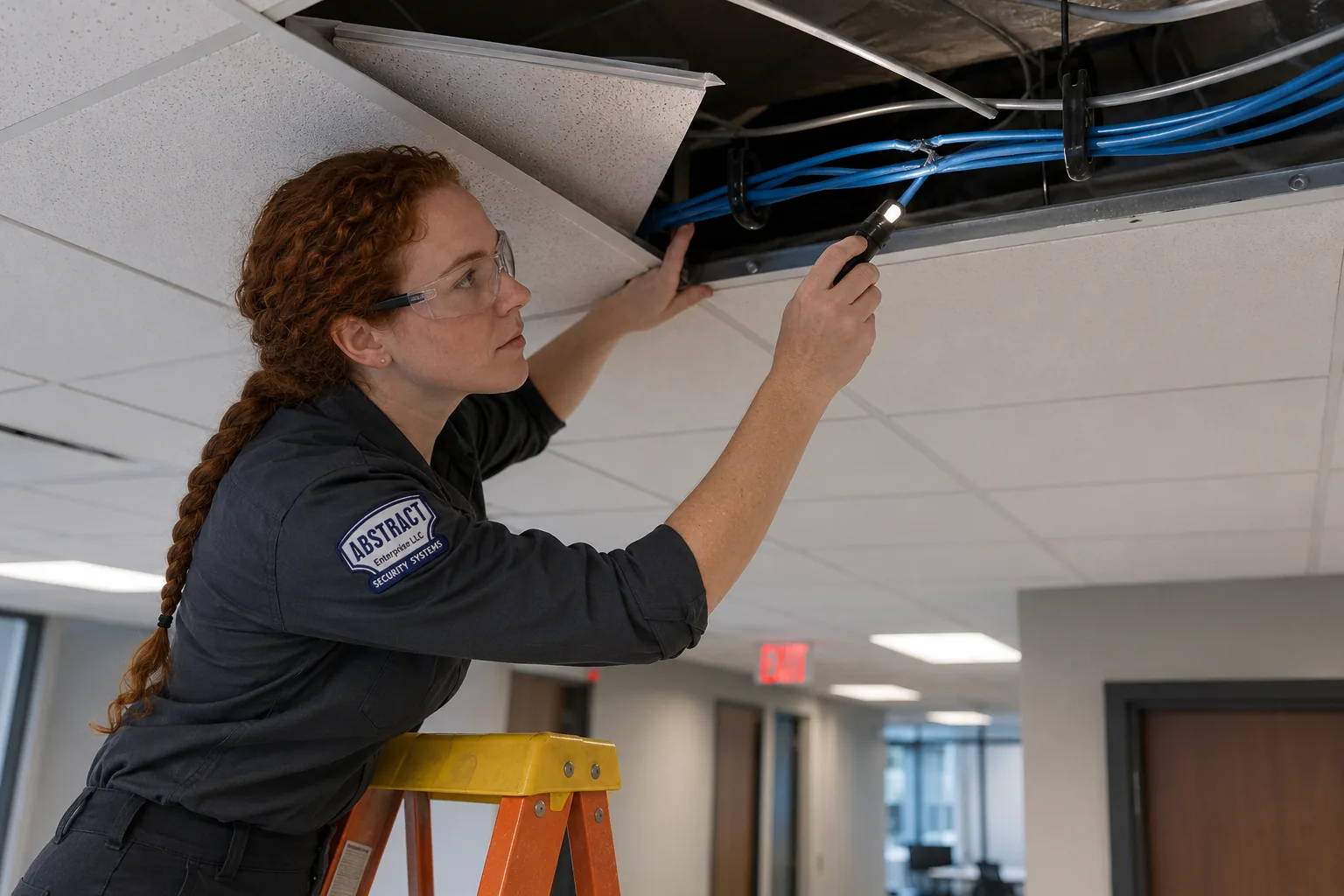
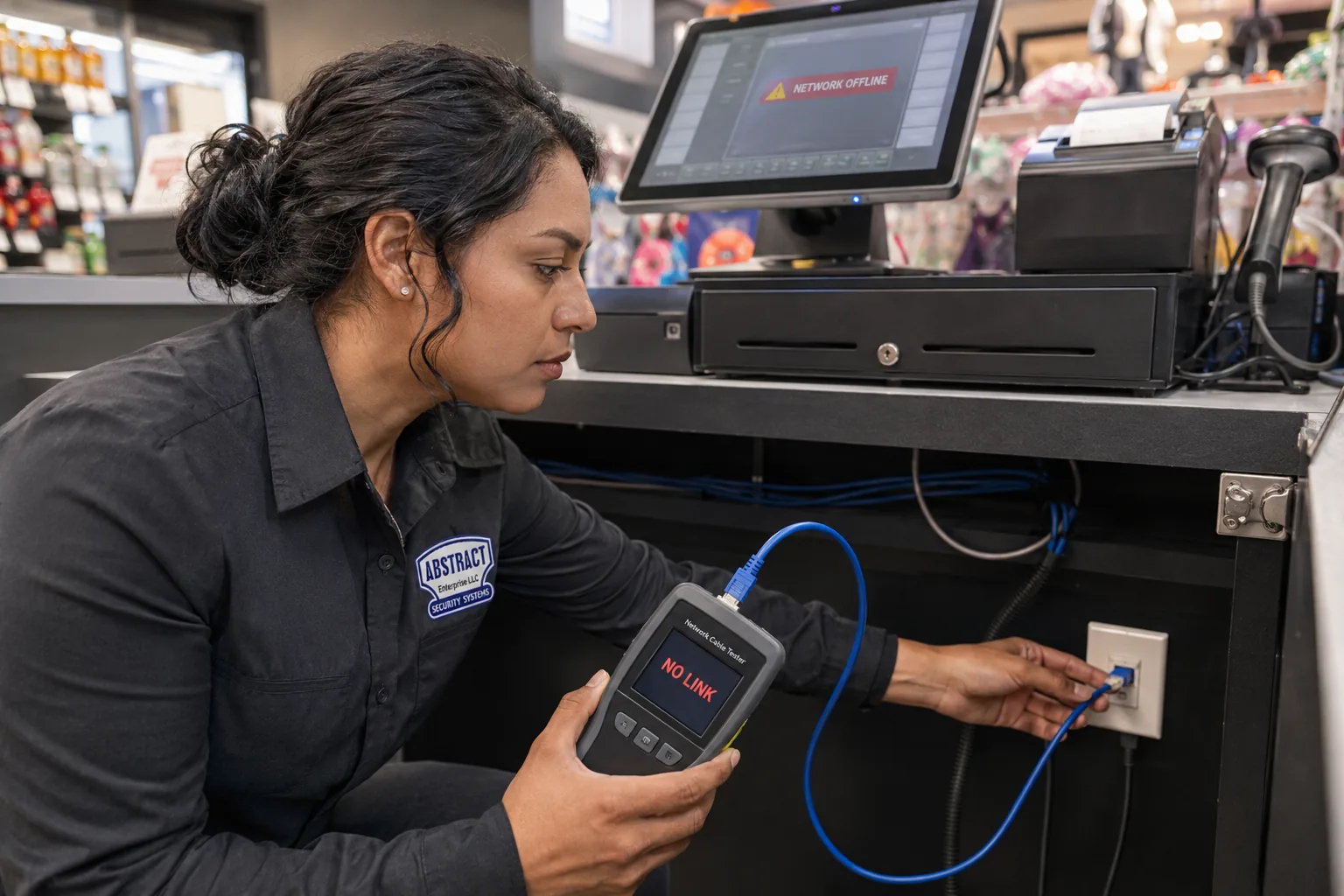
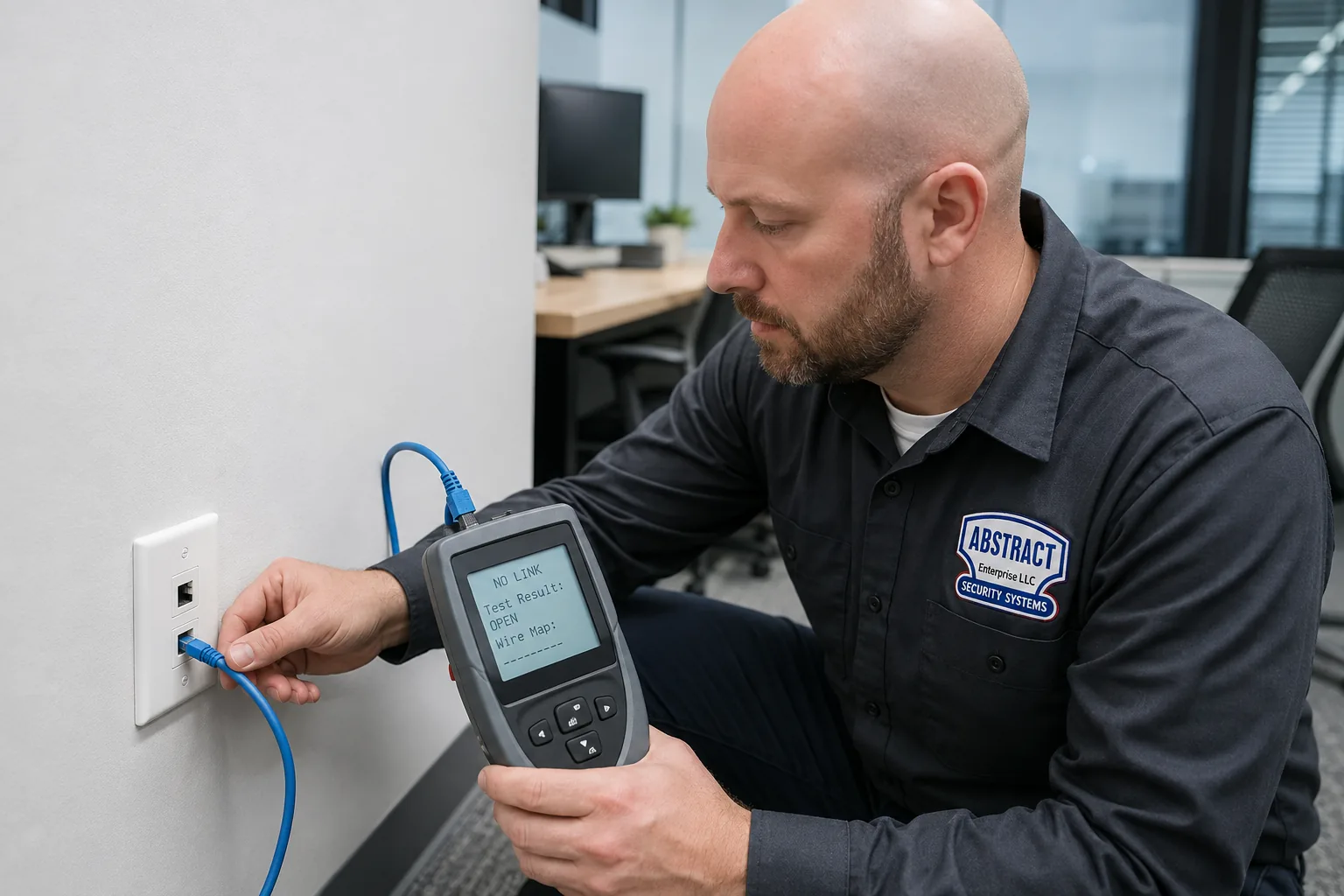
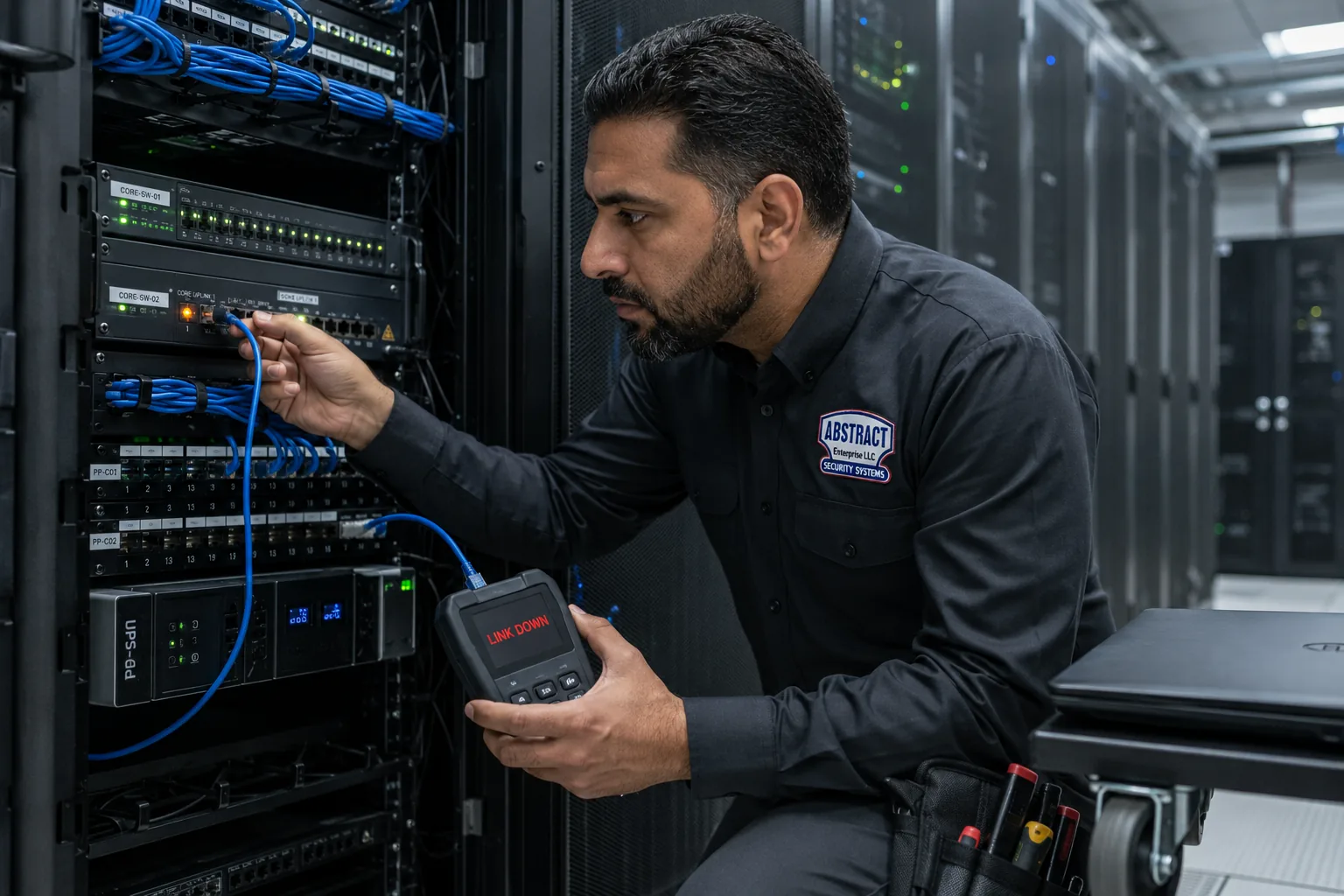
Backbone and inter-building link diagnosis, fault location, retermination, network jack and patch panel repair, PoE troubleshooting and certified testing across Westchester, Rockland, Orange, Putnam, Dutchess and Ulster. Licensed NYS low-voltage contractor.
Ethernet, Cat6 and Data Cabling Repair Across Six Counties
Network cable repair in the Hudson Valley is usually a campus problem, not a room problem. The region's commercial inventory is built around properties with more than one structure — a main building and an annex, a school with four wings, a municipal complex with a garage and a water plant, a converted mill with three floors and a separate warehouse. That means the cabling runs between telecom closets as often as it runs to desks, and the failure modes follow. Abstract Enterprises Security Systems repairs Ethernet, Cat6 and data cabling across Westchester, Rockland, Orange, Putnam, Dutchess and Ulster counties.
The calls reflect it. A Westchester office park loses the link to Building B after a storm. A Poughkeepsie school district finds one wing offline every time the temperature drops. An Orange County warehouse built in the last three years has drops that were never certified at handover and are now failing under the load of a new WMS deployment. A Kingston mill conversion has cable stapled to timber joists in an unheated stairwell. None of those are solved by swapping a jack.
Repair is billed at our specialty service rate of $195/hr with a three-hour minimum ($585), with diagnostic equipment on the first visit — measured length, distance-to-fault, tracing, wiremap and performance testing. Across six counties with long drive times, a visit that locates and proves the fault the first time is worth considerably more than one that produces a quote for a second trip.
Link Down Between Buildings or Across a Wing?
Same-day and next-morning coverage across Westchester, Rockland and Putnam; scheduled windows for Orange, Dutchess and Ulster. Backbone and inter-building failures are prioritised.
✔ NYS Lic. #12000287431✔ Certified wiremap & performance testing on every repair✔ 4.7★ from 201 reviews
Local Conditions
Why Hudson Valley Cabling Fails on Its Own Terms
The defining condition here is that a single site frequently has more than one building, and copper between buildings behaves nothing like copper inside one. Two structures on separate electrical services do not share a ground reference. A conductive Ethernet run between them becomes a path for the difference — and during a storm, a nearby strike, or even a heavy switching event on the utility side, that path carries energy straight into switch ports at both ends. The correct answer between buildings is fibre, or copper with properly bonded, listed surge protection at each entry. What we find instead, constantly, is a bare Cat5e run pushed through a conduit between an office and a garage in 2009 and never touched since.
The second condition is thermal range. This region genuinely swings, and a great deal of Valley cabling passes through space that is not conditioned: barn and mill roof cavities, unheated stairwells, garages, attic runs in converted houses used as professional offices, and crawl spaces under additions. Insertion loss tracks temperature, and a channel that certifies comfortably in October can drift out of spec on a January morning or an August afternoon. Faults that appear seasonally — and get quietly explained away when they disappear — are one of the most common presentations we see north of Westchester.
Third, the building stock is genuinely old in a way suburban office parks are not. Newburgh, Beacon, Poughkeepsie, Kingston and the Rockland river villages are full of nineteenth-century masonry converted to commercial use. Wall cavities are unreliable or absent, joists are timber, and pathways were improvised by whoever needed a run at the time. Cable stapled through a joist bay, run alongside line voltage, or draped over a steam pipe is not a hypothetical here; it is Tuesday.
Fourth, the region is in the middle of a construction cycle that changes the profile of the work. Warehouse and distribution development along the I-84 and Route 17 corridors in Orange County, and continued institutional and residential build across the lower Valley, means a growing share of our repair calls involve buildings under five years old where the cabling was installed by a low-bid subcontractor and never certified at handover. New does not mean tested. Several of the worst channels we have measured were installed recently.
Fifth, jurisdiction. Six counties means many separate code-enforcement offices, and permitting practice, inspection expectations and documentation requirements for low-voltage work are not uniform across them. We verify requirements with the authority having jurisdiction for the specific municipality before scoping work that touches rated assemblies or requires a permit, rather than assuming what applied in the last town applies in this one.
What We Repair
What a Hudson Valley Cable Repair Call Covers
We repair the physical layer and prove it with measurement — inside a building, between buildings, and across a campus.
Inter-Building Link Diagnosis
Failed or repeatedly failing links between structures. We identify whether the run is unprotected copper, assess bonding and entry protection, and specify a fibre or protected-copper correction rather than replacing the same run again.
Campus Closet-to-Closet Troubleshooting
Faults on backbone runs between an MDF and floor or building IDFs, where a single bad link takes an entire wing offline and looks like a switch failure.
Ethernet and Cat6 Cable Repair
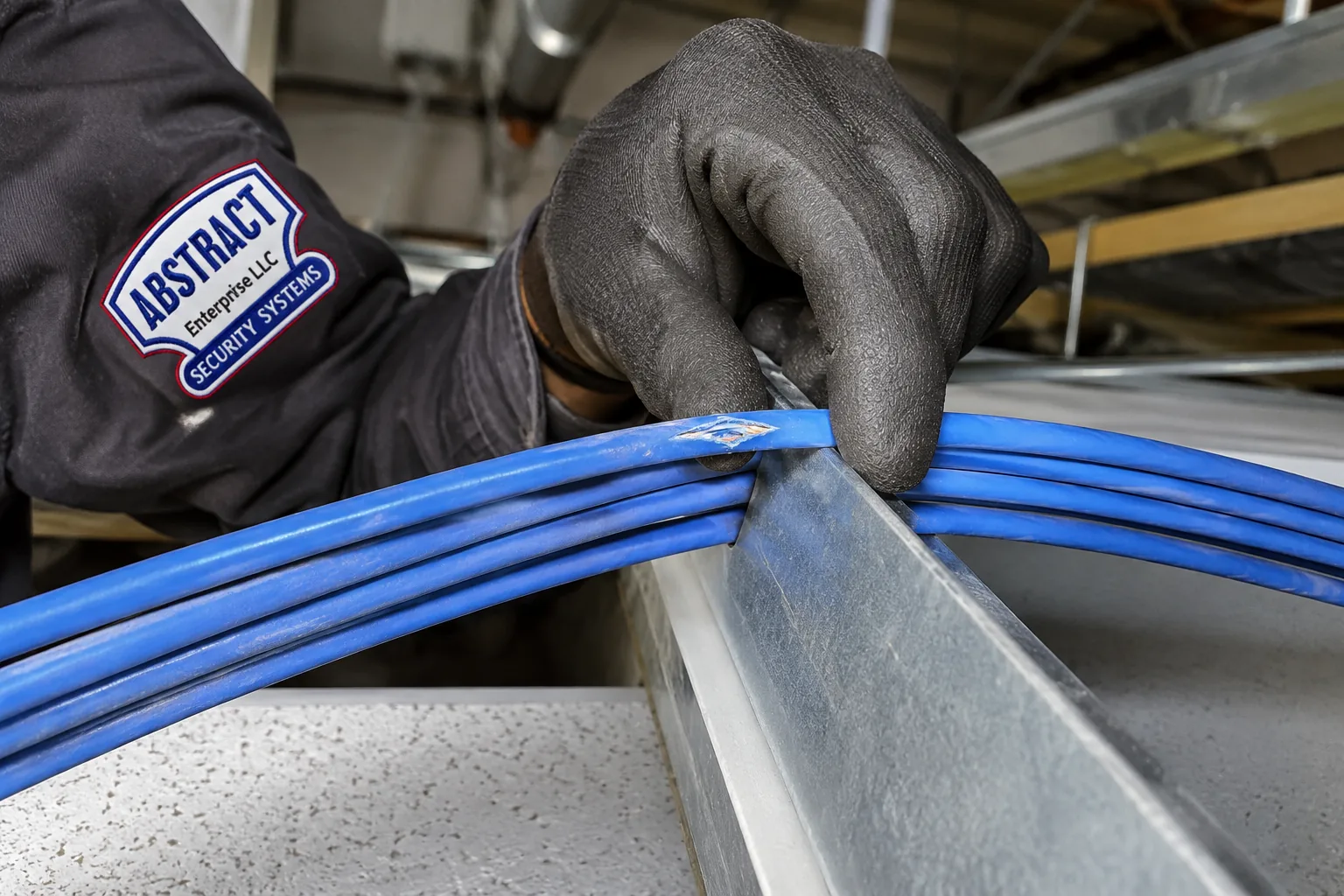
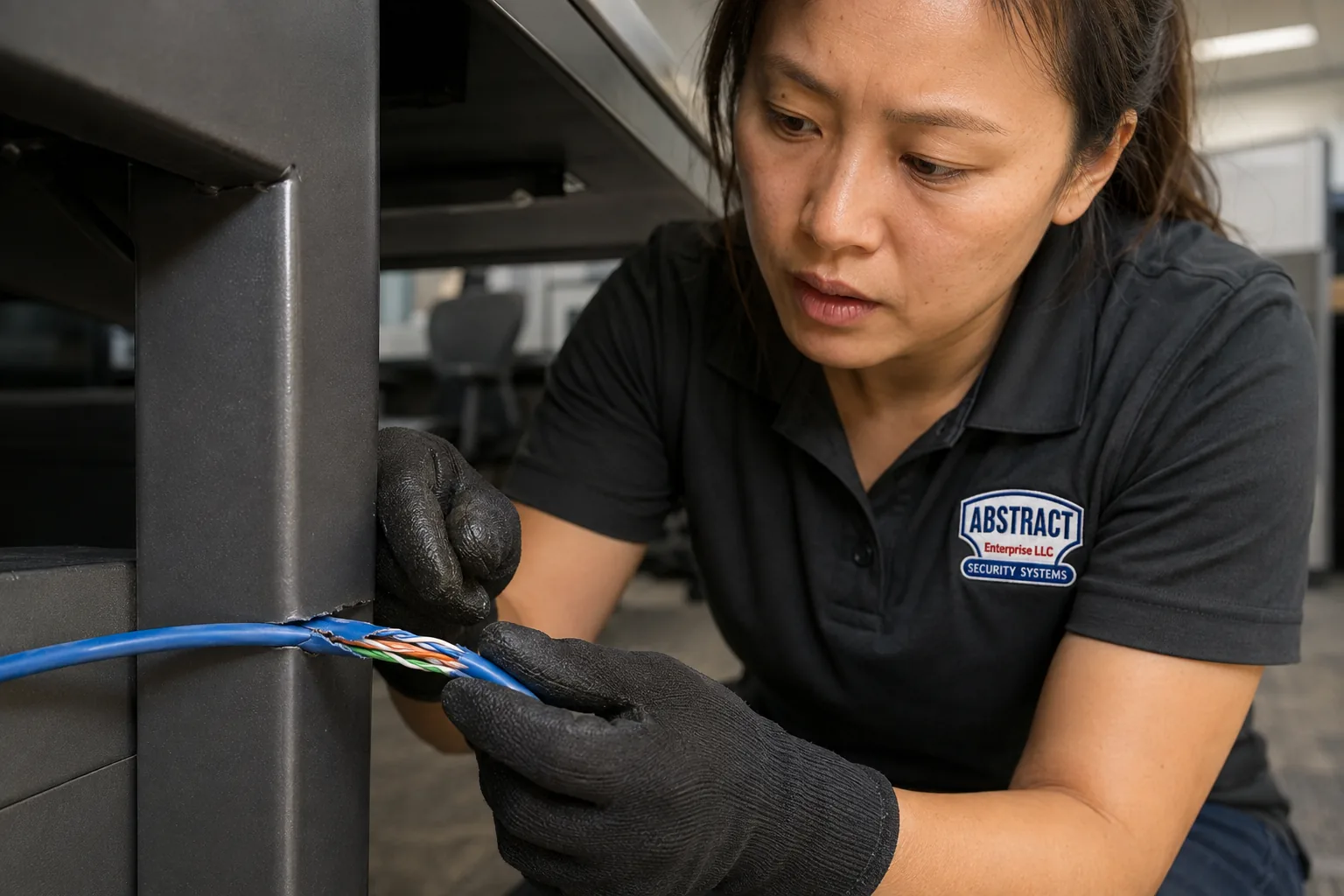
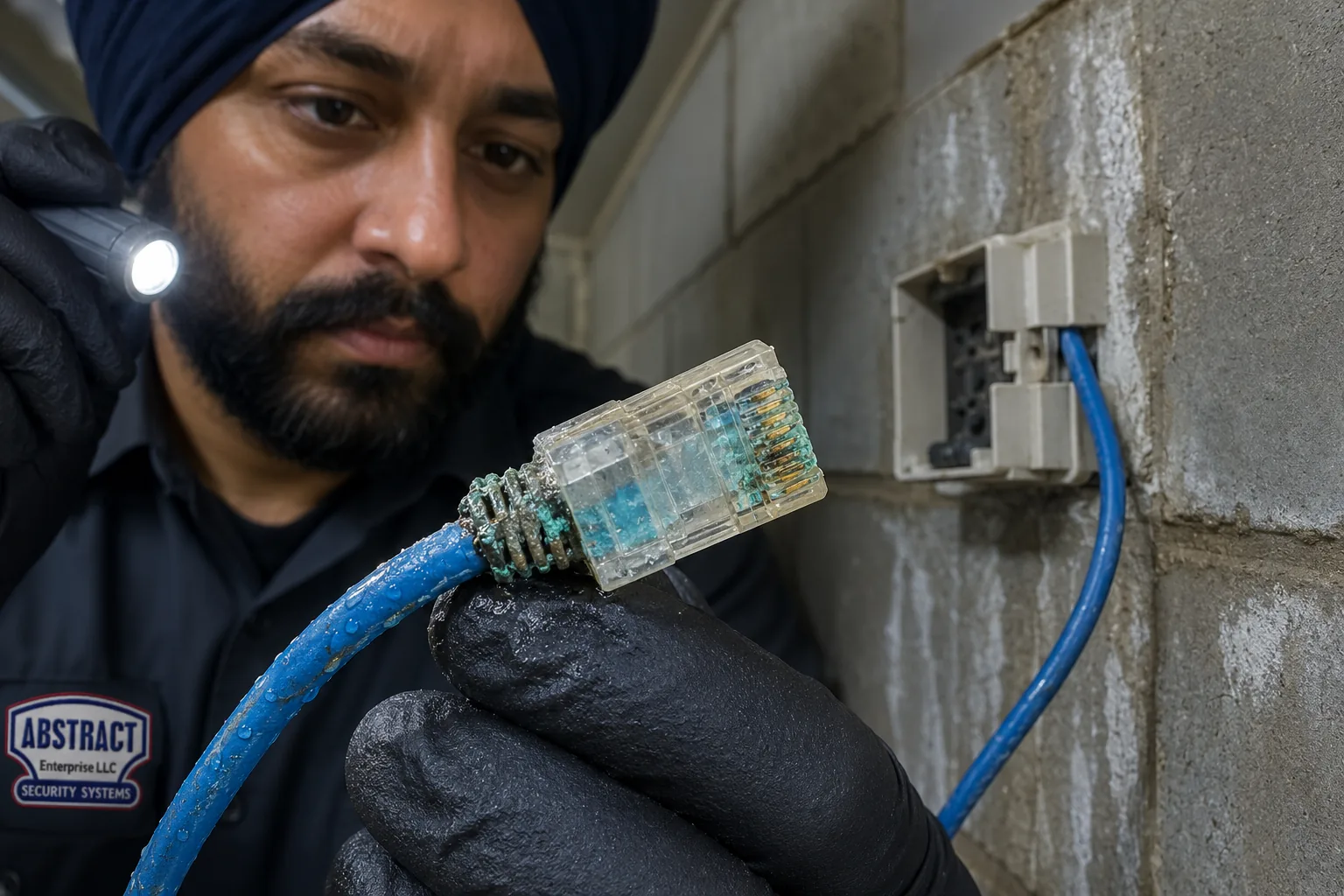
Cut, crushed, chafed, rodent-damaged or moisture-affected runs restored with a category-appropriate junction, or replaced when the run fails certification.
Seasonal and Intermittent Fault Isolation
Links that misbehave in cold snaps or heat waves. Measured margin identifies channels running with nothing in reserve before the next temperature swing takes them out.
Network Jack and Patch Panel Repair
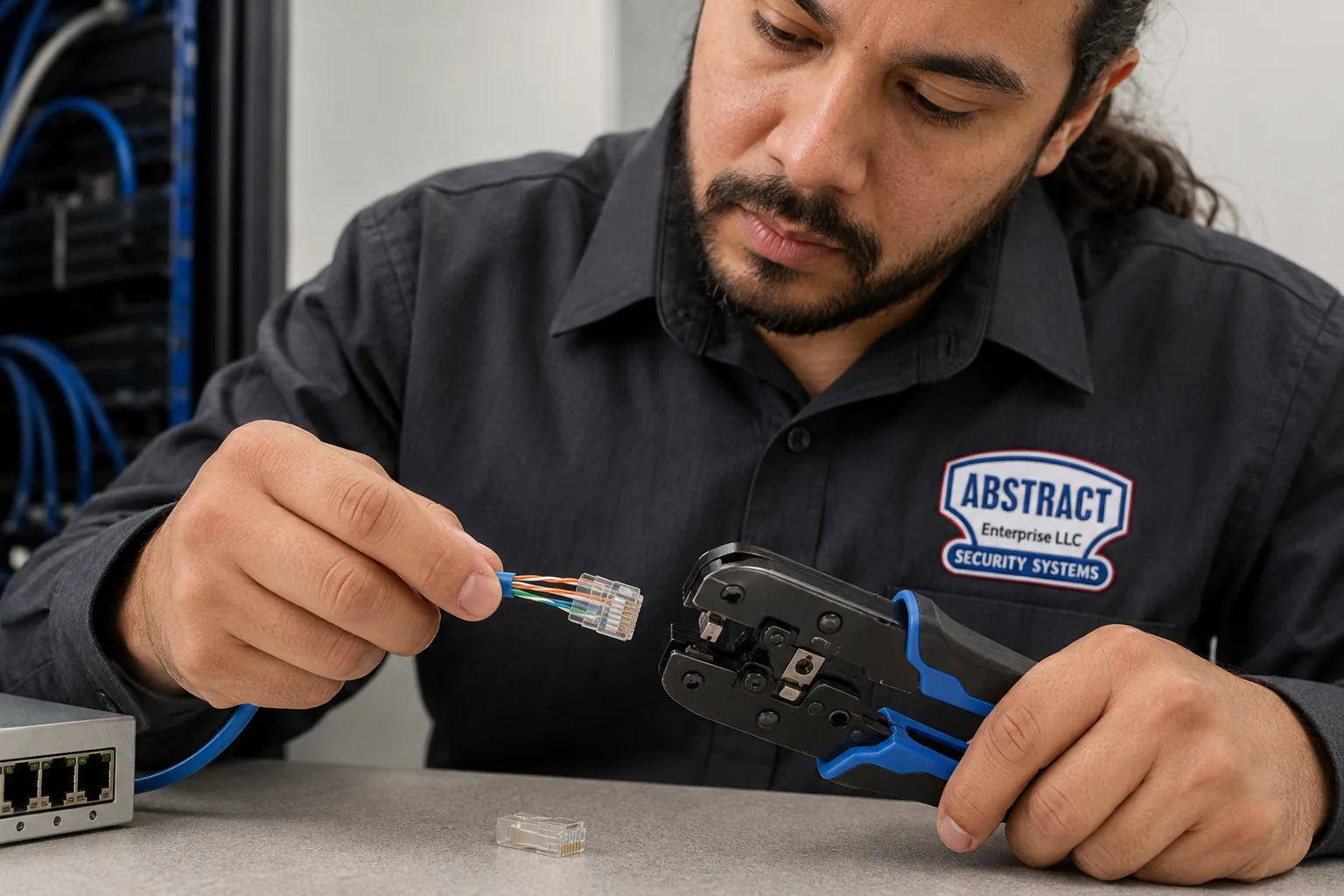
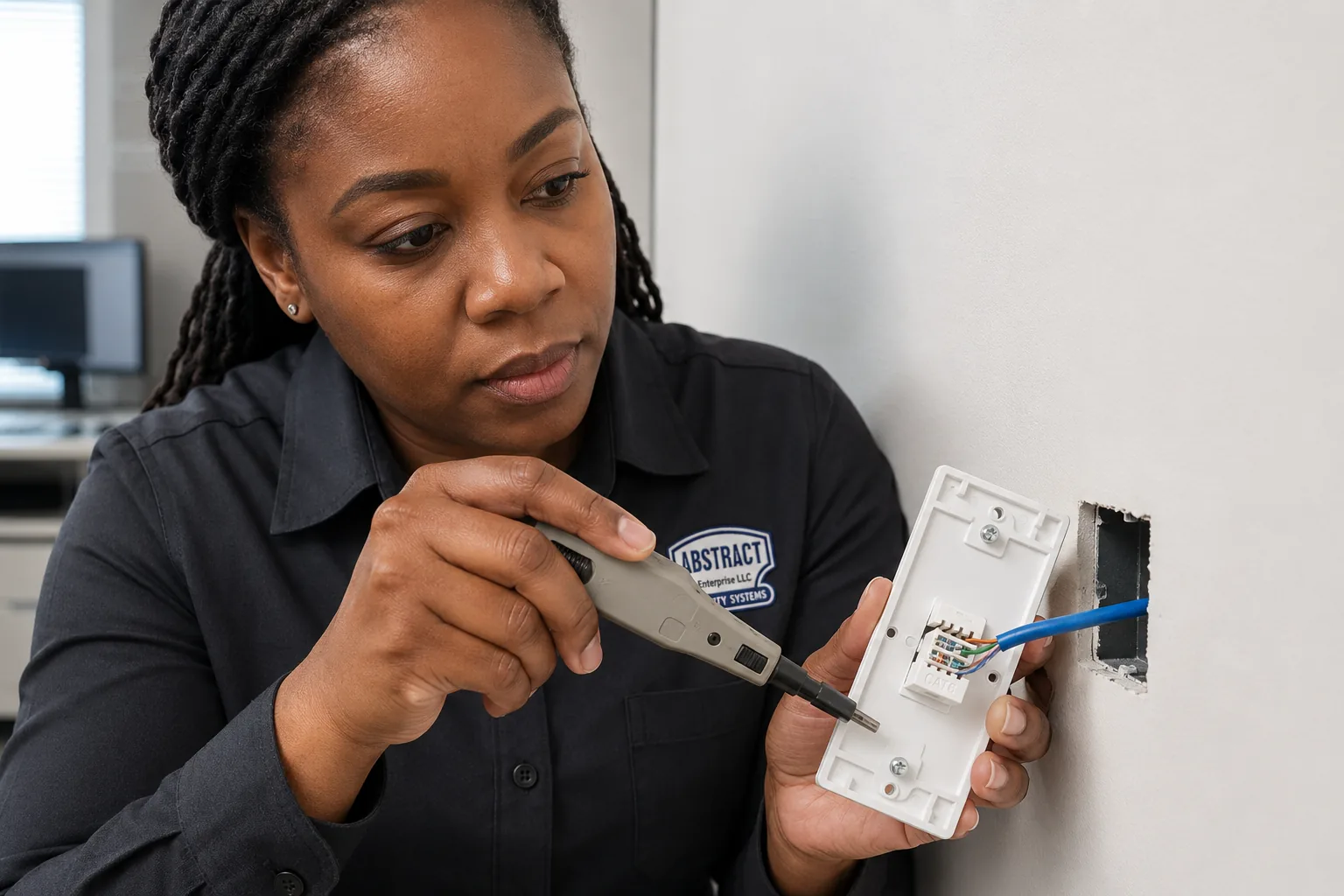
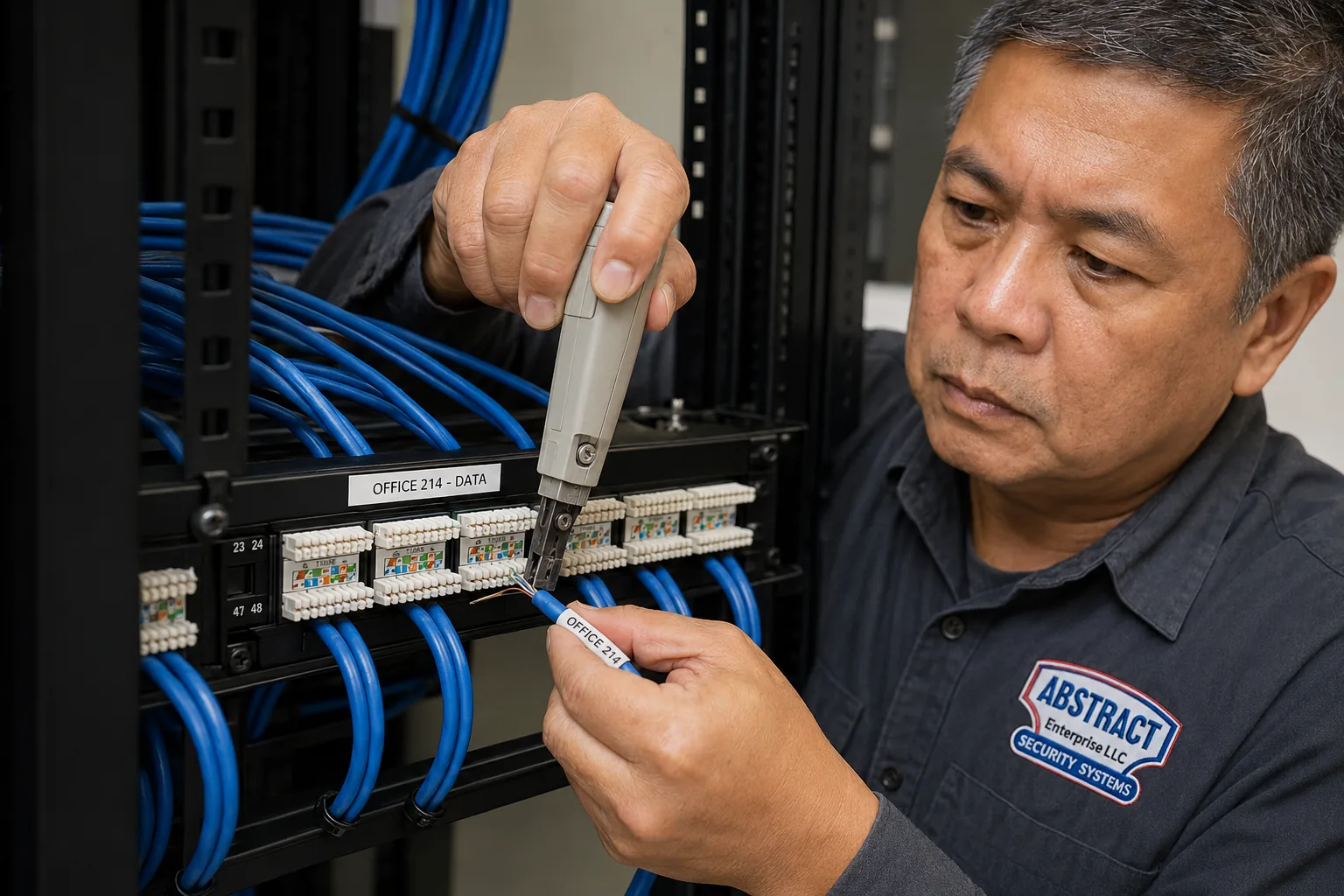
Dead outlets, unpunched or mis-standard panel ports, damaged keystones, and terminations executed without untwist discipline.
New-Build Certification Audits
Testing recently installed cabling that was never certified at handover — common on Orange County warehouse and lower-Valley institutional projects.
Rodent and Pathway Damage Repair
Chewed jackets in mill cavities, barns, crawl spaces and unheated attics, plus cable damaged where it crosses sharp structural edges.
Certified Testing and Documentation
Wiremap, length and performance verification with saved reports, both-end labelling and a closet legend.
PoE Circuit Troubleshooting
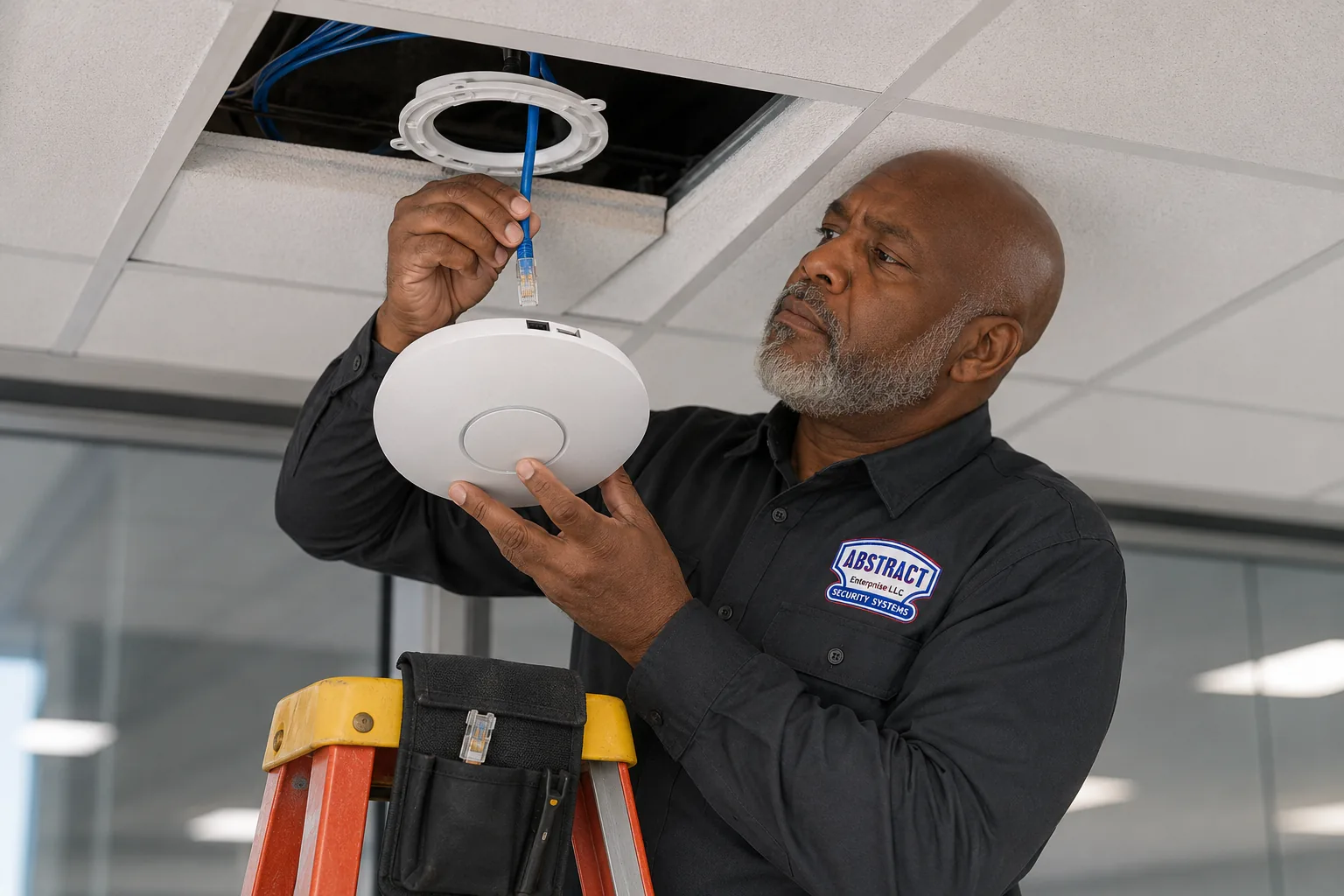
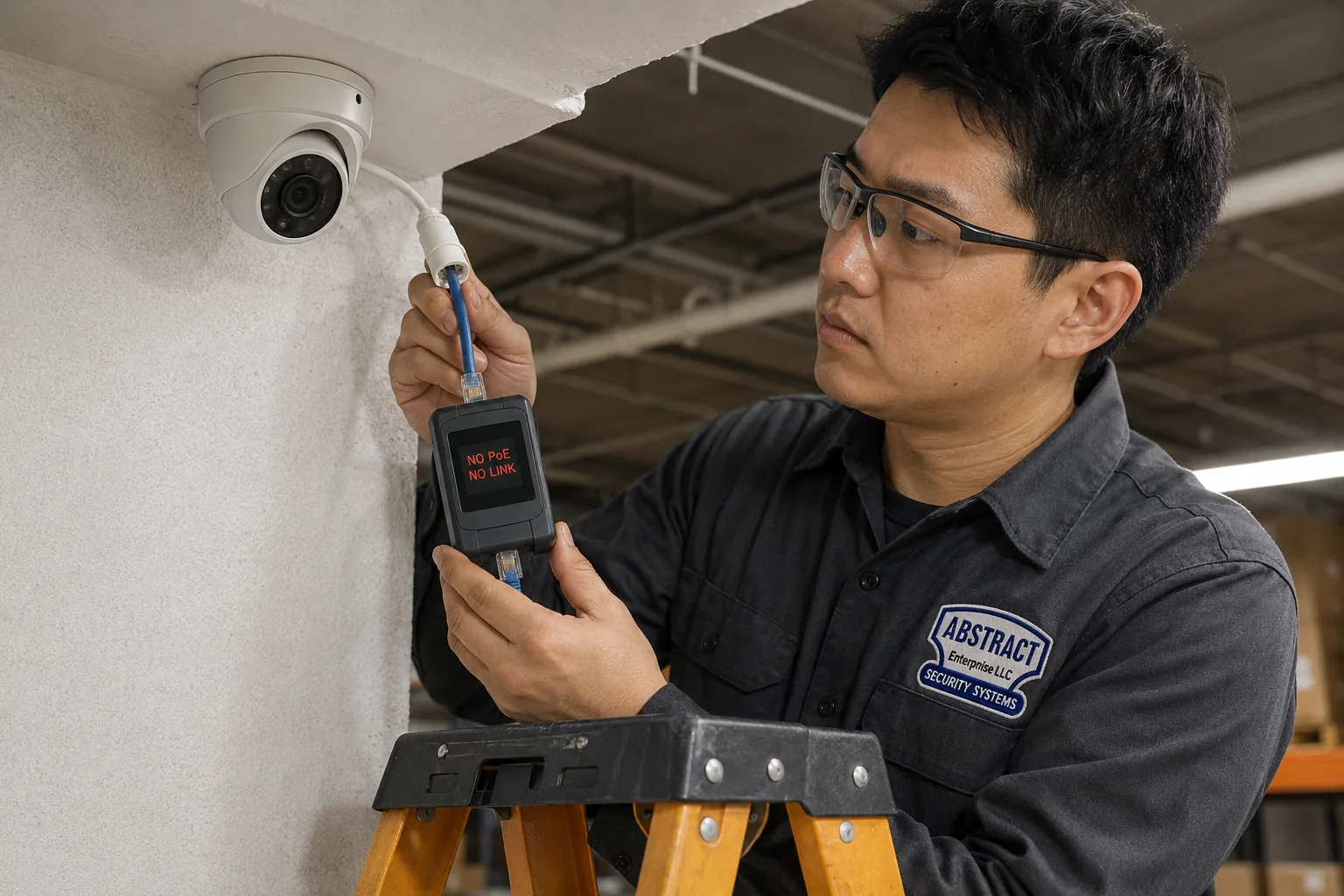
Cameras, access points and readers that boot and reset. Load testing at the endpoint separates cable-side voltage drop from switch power budget.
Commonly paired: Valley campuses run cameras, readers and access points off the same backbone that carries data. When a closet-to-closet link fails, the security systems on that leg fail with it — see camera repair and access control.
Plain English
Terms That Matter on a Multi-Building Site
Campus cabling has its own vocabulary, and misreading it is how sites end up replacing the same failed link three times.
Term
What It Means on a Multi-Building Site
MDF and IDF
Main distribution frame — the site's primary telecom room — and the intermediate frames it feeds in other floors or buildings. Backbone runs connect them.
Backbone
The link between closets rather than between closet and desk. One backbone fault takes out every drop downstream of it, which is why it presents as a wing or building outage.
Ground potential difference
The voltage that exists between two separately grounded structures. It is the reason unprotected copper between buildings fails, and it is a wiring-design problem rather than a cable-quality problem.
Fibre backbone
Glass carries no current, so it is immune to ground potential difference and is the correct medium for inter-building links in almost every case.
Bonding and entrance protection
Where copper between buildings is unavoidable, listed protection at each entry point, properly bonded, is required. Its absence is the single most common finding on repeat inter-building failures.
Permanent link
The fixed cable from panel port to outlet, excluding patch cords, limited to 90 m so the full channel stays inside 100 m.
Insertion loss
Signal lost along the run. It rises with temperature, which is why Valley channels with thin margin fail seasonally.
Split pair
Continuity passes but the pairing is wrong. The link negotiates fine at 100 Mbps and collapses at gigabit, which is why it reads as a speed problem rather than a wiring problem.
Certification
Testing against category spec with saved, printable results including margin. Distinct from a continuity check, which proves very little.
Plenum (CMP) versus riser (CMR)
Fire rating of the jacket. Plenum is required where ceiling space handles return air; riser is for vertical shafts between floors.
Equipment
Cable, Hardware and Test Equipment on a Valley Repair
We repair what is in the building and replace with commercial-grade components matched to the existing channel. Passive hardware typically means Belden, CommScope, Panduit, Leviton, Hubbell, Ortronics, ICC, Berk-Tek and Superior Essex. Where an inter-building or riser backbone needs correcting we work in multimode and singlemode fibre with appropriate connectors and enclosures. Category matching is non-negotiable on the copper side: a Cat5e keystone in a Cat6 channel derates the whole channel, and mixed-category channels are extremely common in buildings that have been added to over decades.
On the active side we isolate cable-side faults feeding Cisco, Meraki, Aruba, Ubiquiti UniFi, Netgear, TP-Link, Luxul and Araknis equipment, and PoE endpoints including IP cameras, wireless access points, VoIP handsets, door controllers and badge readers. Our scope stops at the physical layer — we do not administer switches, VLANs, wireless controllers or firewalls. We certify the channel and give the results to whoever runs the network, which is frequently a district IT department or a county technology office rather than a private vendor.
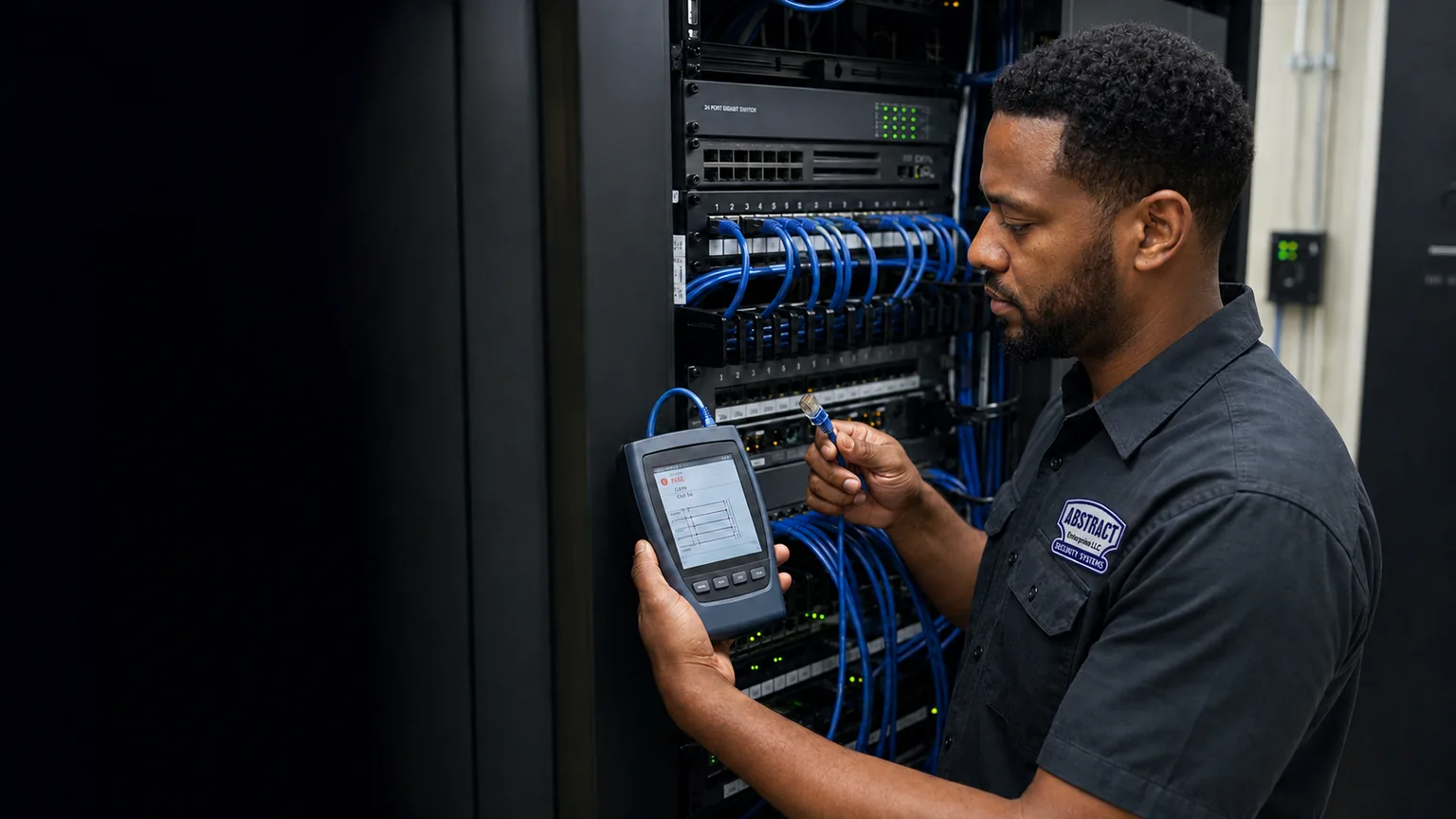
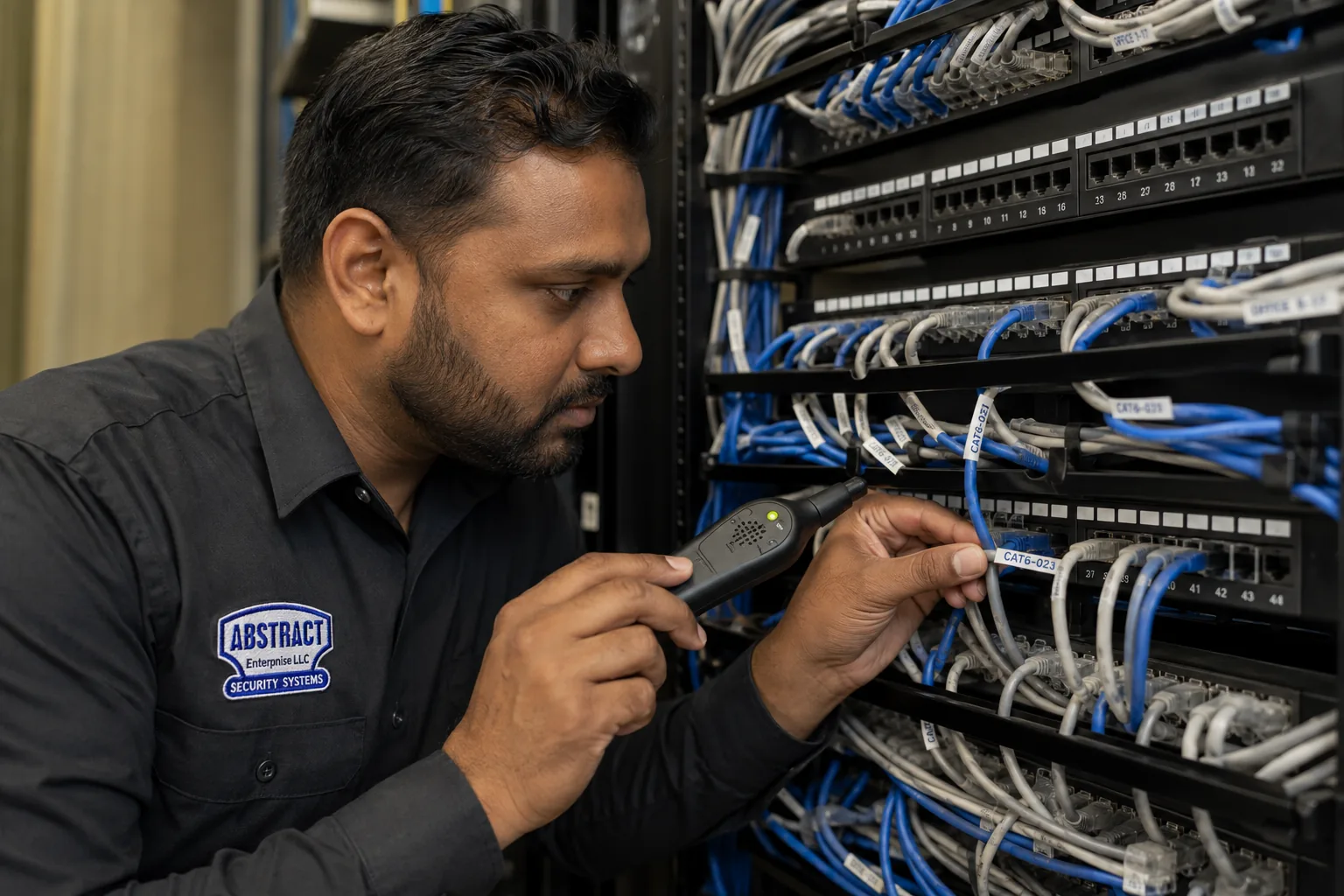
Diagnostics decide whether a visit produces an answer or an opinion. Certification testers with saved reports, tone generators and probes for tracing through improvised pathways, and PoE load verification at the endpoint travel on every repair call. On a multi-building site with no documentation, tracing is often the majority of the first hour.
Need Repair in the Hudson Valley Today?
Same-day and next-morning coverage across Westchester, Rockland and Putnam; scheduled windows for Orange, Dutchess and Ulster. Backbone and inter-building failures are prioritised because they take whole wings offline.
Locate, Correct, Certify — and on a Campus, Correct the Design Too
Most repair work is three steps. On multi-building Valley sites there is a fourth, and skipping it is why the same link fails every storm season.
Step one is locating the fault precisely rather than approximately — which element of the channel, at what distance, on which pair. Step two is the physical correction: retermination, jack or panel replacement, junction repair, or replacement of the run. Step three is certification, with the margin figure reported to you rather than filed away, because a channel that passes narrowly is a scheduled future outage.
Step four applies whenever the failed run leaves the building. Restoring an unprotected copper link between two structures returns the site to the exact condition that destroyed it. The correction is to change the medium to fibre, or to install listed, properly bonded protection at both entry points. That recommendation costs nothing to make on the first visit and saves the third and fourth repair calls. Where a customer needs the link restored immediately, we say plainly which of those we have done and what remains outstanding.
Full Scope
Full Scope of a Hudson Valley Network Cable Repair
Diagnostics
Backbone and closet-to-closet link isolation
Inter-building run assessment: medium, entry, bonding and protection
Measured length against the 90 m and 100 m limits
Distance-to-fault location on broken or shorted runs
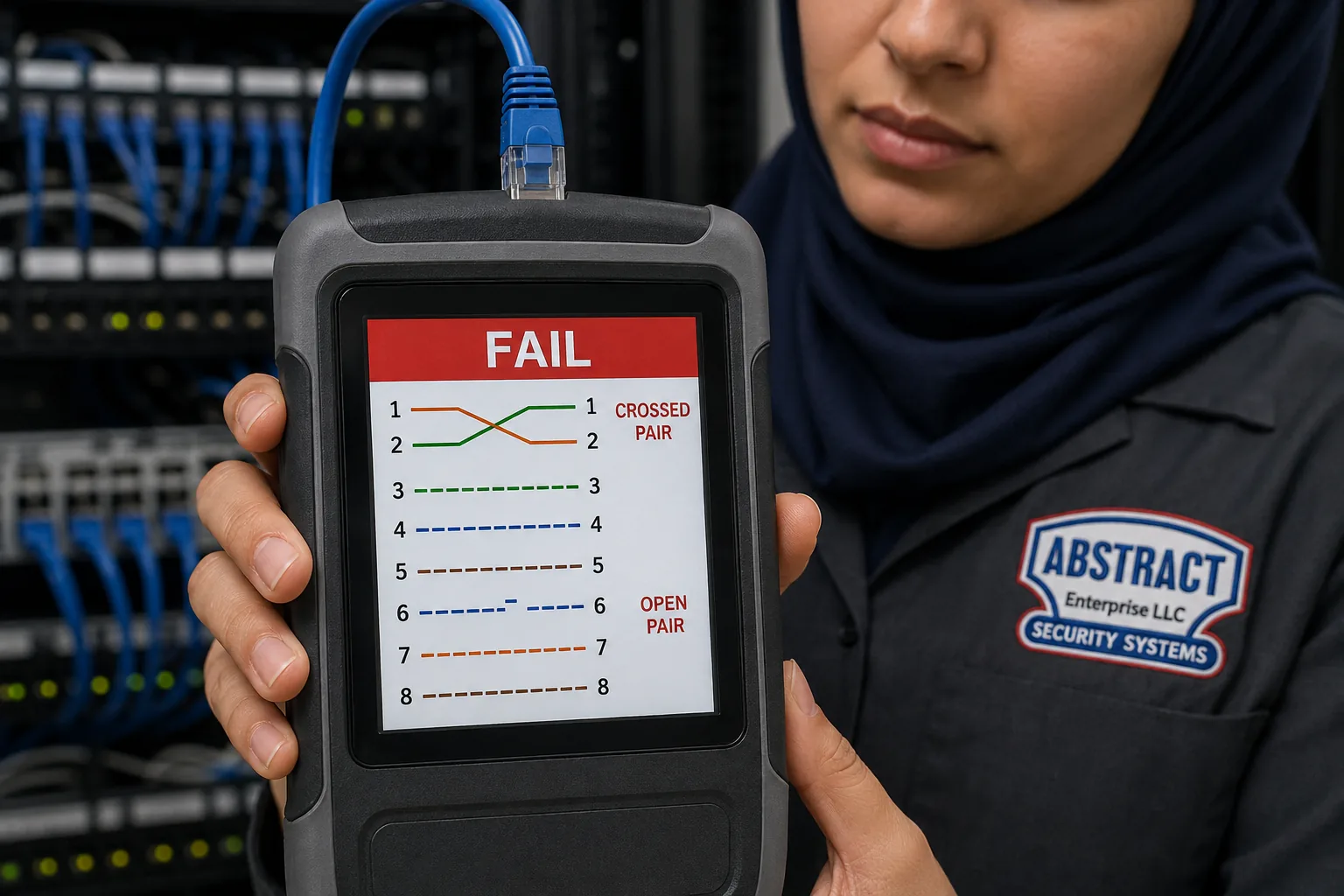
Wiremap faults: opens, shorts, reversals, split and crossed pairs
Insertion loss and crosstalk testing with margin reporting
PoE voltage and load verification at the endpoint
Tracing through undocumented and improvised pathways
Physical Repair
Keystone and patch panel retermination
Category-appropriate junction repair on damaged runs
Full run replacement where certification fails
Fibre backbone correction for inter-building links
Pathway correction where cable crosses sharp edges or heat sources
Rodent-damage repair and pathway hardening
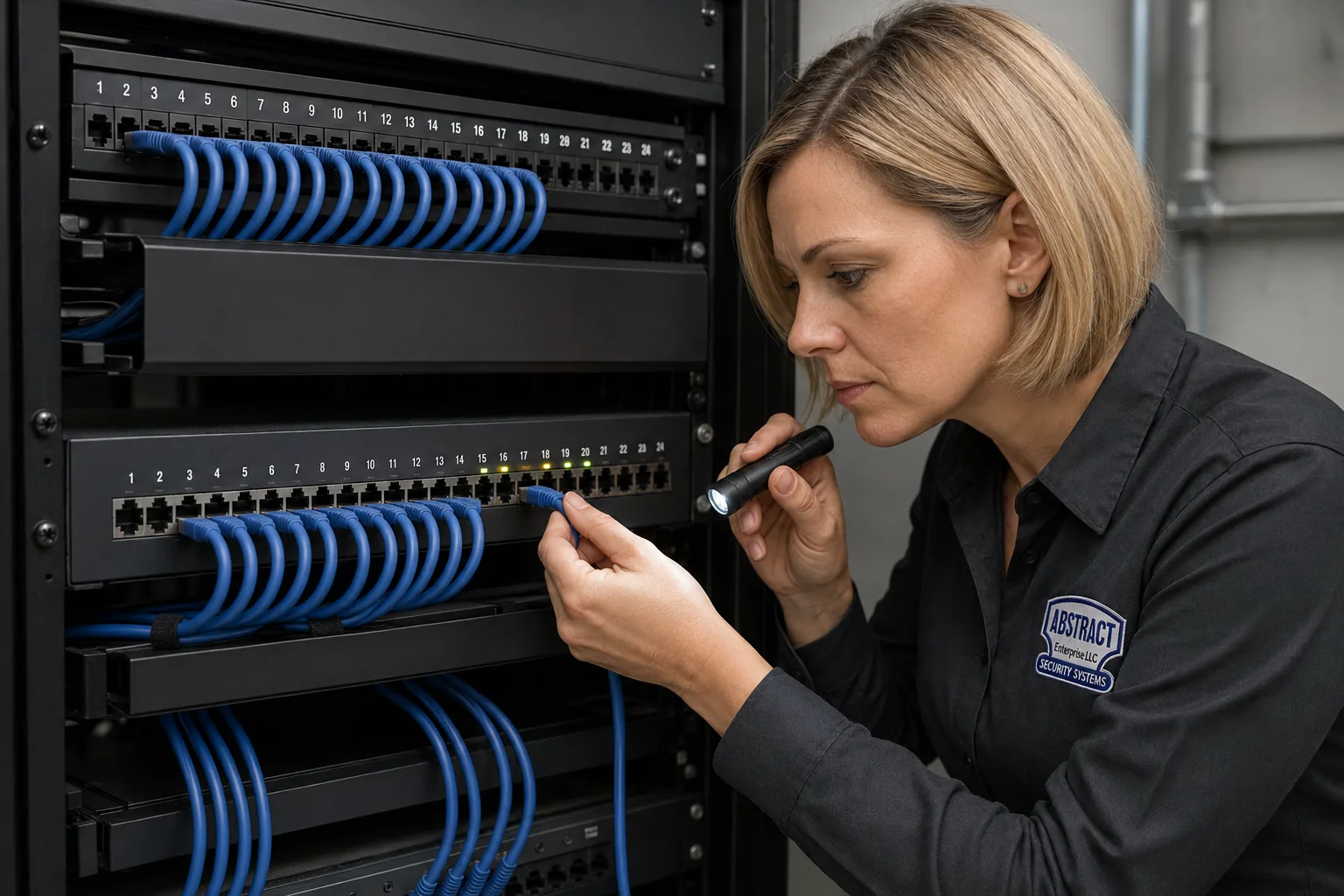
Rack re-dress, cable management and patch cord replacement
Firestop restoration at penetrated rated assemblies
Documentation
Saved test results per repaired drop, with margin
Backbone and building-to-building link map
Both-end durable labelling and closet legend
Photo record of concealed repairs before close-up
Written findings suitable for a district, municipality or board
Site Logistics
Certificate of insurance to owner, district or managing agent
Requirements verified with the local authority having jurisdiction before scoping permitted work
Break, evening and weekend windows for schools and municipal buildings
Multi-issue scoping on Orange, Dutchess and Ulster visits to reduce return trips
Coordination with district IT and county technology staff
Coverage Detail
Where We Work Across the Six Counties
Westchester and Rockland carry the densest commercial footprint. White Plains anchors the county with office towers along Westchester Avenue and the Bloomingdale Road corridor plus the hospital and medical office cluster; add Yonkers along Central Park Avenue and the waterfront, New Rochelle, Mount Vernon, Elmsford and Tarrytown along the Route 119 and Saw Mill corridors, Harrison and Rye Brook's corporate campuses, Mount Kisco and Katonah to the north, and Peekskill on the river. Across the Tappan Zee, Rockland runs through Nanuet and Spring Valley along Route 59, Pearl River and Orangeburg's office and pharmaceutical inventory, New City, Suffern, Nyack and Haverstraw.
Orange, Putnam, Dutchess and Ulster shift the profile toward campuses, institutions and new industrial. Orange County covers Newburgh and the I-84 interchange, Middletown, Goshen, Monroe, Chester, Montgomery and the warehouse and distribution corridor that has reshaped the county's building stock. Putnam runs through Carmel, Brewster, Mahopac and Cold Spring. Dutchess spans Poughkeepsie, Fishkill, Wappingers Falls, Beacon, Hyde Park, Rhinebeck, Red Hook and Millerton. Ulster covers Kingston's uptown and Midtown districts, New Paltz, Saugerties, Highland, Ellenville and Woodstock.
Property type predicts the fault better than county lines. A White Plains tower behaves like a city building with a floor closet and accessible ceiling. A district campus in Dutchess or Ulster is a backbone problem with wings and outbuildings. An Orange County distribution facility is a new-build certification question and a long-run question at the same time. A Beacon or Kingston mill conversion is a pathway problem in a structure that was never designed for any of this.
Who We Serve
Hudson Valley Property Types We Repair Cabling For
School Districts and Campuses
Wing outages traced to a single backbone run, classroom drops, corridor access point uplinks, and repair windows that realistically fall in breaks and summer.
Municipal and County Facilities
Town and village halls, courts, libraries, police and highway garages — typically multi-building sites with layered cabling history and documentation expectations.
Office Parks and Corporate Campuses
White Plains, Tarrytown, Harrison, Pearl River and Orangeburg inventory where inter-building links and floor IDFs carry the risk.
Warehouse and Distribution
The Orange County growth corridor: long runs, scanner and access point drops, and new cabling that was never certified at handover.
Medical Practices and Clinics
Imaging and practice management systems across Westchester, Rockland and the Poughkeepsie and Kingston corridors, with low tolerance for a marginal channel.
Seasonal properties with outbuildings, event spaces and long runs to structures that stand empty part of the year.
Houses of Worship and Nonprofits
Multi-building sites, volunteer-era wiring, and budgets that make repair-versus-replace clarity genuinely important.
Property Management Portfolios
Multiple buildings across counties needing one labelling standard, consistent test documentation and predictable response.
Real Questions
Fourteen Questions Hudson Valley Sites Actually Ask
Drawn from recurring themes in small-business, IT, district technology and Hudson Valley local discussion threads, grouped by the six question types that come up most.
Cost Questions
1. What does a network cable repair cost up here?
$195 an hour against a three-hour minimum, which puts the first block at $585. That block covers locating the fault, correcting it, certification testing and documentation — not a diagnostic visit followed by a separate repair visit. Where a run needs replacing rather than repairing, new commercial Cat6 drops start at $175 per drop.
2. Why does the failed link between our two buildings cost more to fix properly?
Because restoring the same unprotected copper run puts you back exactly where you started. A correct fix changes the medium to fibre or adds listed, bonded protection at both entry points. It costs more than re-terminating a jack and it is the difference between one repair and a repair every storm season. We will quote both and tell you plainly which one we recommend.
3. Does a call in Ulster cost more than one in Westchester?
The rate is the same. What differs is scoping. For Orange, Dutchess and Ulster we recommend bundling the reported fault with adjacent-drop testing and closet documentation in one visit, because splitting it across trips means paying travel twice.
Quality and Trust Questions
4. How do I show our board or district that the work was done correctly?
With certification reports. Each repaired drop gets a saved result showing pass or fail, measured length and margin, tied to a labelled drop identifier. That is an artifact a board, a district business office or an auditor can hold, and it is materially different from an invoice that says the problem was fixed.
5. Do we need a licensed contractor for data cabling?
Yes for anything meaningful. Data cabling is low-voltage work with real code obligations around plenum-rated material and firestopping at rated penetrations, and public and institutional sites usually require licensure and insurance as a condition of access. We hold NYS Low-Voltage Contractor License #12000287431. Permit and inspection requirements vary by municipality across the six counties, and we confirm them with the local authority having jurisdiction rather than assuming.
6. Our building is new. Why is the cabling already failing?
New is not the same as certified. On fast-moving projects the cabling subcontract is frequently the lowest bid and handover testing is skipped or waived. We regularly measure recently installed channels that pass with almost no margin, or fail outright, in buildings under five years old. If your project closed without test reports, you do not know what you received.
DIY and Pro Questions
7. Can we run a spare Ethernet cable out to the garage ourselves?
Please do not run bare copper between structures. Separate buildings sit on separate grounds, and a conductive run between them carries the difference — which reaches switch ports at both ends during a storm. Use fibre, or copper with listed protection properly bonded at each entry. This is the most consequential DIY mistake on Valley properties and it destroys equipment, not just cable.
8. Is a consumer cable tester useful at all?
For pin order, yes. For anything else, no. It cannot measure length, insertion loss, crosstalk or return loss, and those are the failures behind gigabit and seasonal problems. A run that a cheap tester calls perfect can be sitting one cold morning away from an outage.
9. Can we splice a chewed cable in the crawl space?
A category-appropriate junction in an accessible location is a legitimate repair, and we do it regularly. Wire nuts and electrical tape are not. Whatever the method, the run has to be tested afterwards, and the pathway should be hardened or rerouted — otherwise the same rodent takes the same route next winter.
Technical Questions
10. Why does one wing of the building go offline and come back?
That pattern almost always points at the backbone run feeding that wing's closet rather than at anything in the wing itself. A single marginal link between the MDF and that IDF takes every drop downstream with it, and it is routinely misdiagnosed as a switch or a power problem because an entire area fails at once.
11. Our problems started when the weather turned. Is that real?
Entirely real. Insertion loss rises with temperature, and Valley cabling passes through a lot of unconditioned space. A channel with thin margin can certify in mild weather and fall out of spec in a cold snap or a heat wave. Measured margin, not a pass or fail, is what tells you which drops are seasonally at risk.
12. A PoE camera on a long outbuilding run reboots constantly. Cable?
Usually. When illuminators or heaters engage the device draws more current, voltage sags below its operating threshold, and it resets. Testing under load at the endpoint separates cable-side voltage drop from a switch power-budget limit or a failing device.
Landlord and Tenant Questions
13. We lease a suite in a converted mill and nothing is documented. Where do we start?
Start by auditing the closet instead of budgeting a rewire. Tone each port through to its outlet, sort live runs from abandoned ones, label both ends, and test only what you intend to keep. In converted buildings this routinely recovers more usable drops than owners expect and produces a short, specific list of what genuinely needs replacing.
Complaint Questions
14. This link between our buildings has been repaired twice and failed twice. What are we doing wrong?
Almost certainly nothing except paying for the same repair. If the run is unprotected copper between separately grounded structures, each repair restores the fault condition along with the link. Until the medium changes to fibre or listed bonded protection is installed at both entries, the next storm season produces the third failure.
Answer The Public
Answer The Public: Hudson Valley Network Cable Questions
Who repairs network cable in the Hudson Valley?
Licensed low-voltage contractors and structured cabling firms. Electricians handle pathway and line voltage and usually subcontract data terminations. Managed IT providers and district technology staff own the network above the cable but rarely carry certification testers. For a physical-layer or backbone fault across the six counties, the low-voltage trade is the right call.
What causes cabling to fail in Valley buildings?
Unprotected copper between separately grounded structures, terminations executed without untwist discipline, thermal drift on channels with thin margin, improvised pathways in converted and historic structures, rodent damage in unconditioned cavities, and recently installed cabling that was never certified at handover.
When does a Valley run need replacing instead of repairing?
When it fails certification after terminations are corrected, when measured length puts the channel out of spec, when there are multiple damage points, or when the run leaves the building as unprotected copper — in which case the medium itself should change rather than the cable.
Where do faults sit on a multi-building site?
Backbone links between closets carry the highest consequence; terminations carry the highest frequency. After that: building entry points, pathway transitions through unconditioned space, and crowded closets where cable is bent past its minimum radius.
How quickly can a Hudson Valley repair be scheduled?
Same-day and next-morning coverage is typical across Westchester, Rockland and Putnam. Orange, Dutchess and Ulster are scheduled into planned windows, and those visits are best scoped to cover documentation and adjacent drops in the same trip. Backbone failures are prioritised because of their blast radius.
Reality Check
AI Overview Reality Check: What Search Results Miss About Valley Cabling
Search for network cable repair in the Hudson Valley and you get a national cost average, lead-generation directories, and troubleshooting advice written for a single-building office with a single ground. Here is where that guidance stops being useful.
1. Nothing in the Search Results Warns You About Copper Between Buildings
This is the most consequential omission for Valley properties. General cabling content is written for one building on one electrical service, where every device shares a ground reference and a run between rooms is unremarkable.
Two structures do not share that reference. The potential difference between them appears across any conductive path connecting them, and during storm activity it arrives at switch ports on both ends. Sites lose switches, not just links — and because the cable itself often survives, the diagnosis lands on the equipment and the cycle repeats.
The correction is well established and almost never mentioned in consumer-facing results: use fibre between structures, or use copper only with listed protection properly bonded at each entry point. Any contractor who quotes a straight copper re-pull between two buildings without raising this is not solving your problem.
2. Cost Averages Blend Residential Work Into a Commercial Question
Aggregated cost pages publish national figures assembled from an enormous mix of jobs. Those numbers describe an average of something, but not an average of certified repair work on a district campus, a municipal complex or a distribution facility.
They also collapse installation and repair into one figure. Installation has known scope before dispatch; repair does not, because the fault has to be found before it can be priced. Presenting both as one number is how an honest hourly rate reads as expensive against an anchor that excluded the diagnostic work.
And they exclude deliverables. Certification reports, labelling and a closet legend are the difference between a repair you can evidence to a board and a repair you have to take on faith.
3. Seasonal Faults Get Explained Away Instead of Measured
Because most published troubleshooting content assumes conditioned space, temperature almost never appears as a candidate cause. In this region a great deal of cable passes through roof cavities, unheated stairwells, garages and crawl spaces.
A channel with minimal margin certifies fine in mild weather and drifts out of spec when it gets cold or hot. The fault appears, persists for a week, then vanishes — which is exactly the profile that gets attributed to a software update, a load spike or an ISP issue and then forgotten.
The diagnostic is margin, not pass or fail. A test report that shows which drops passed narrowly tells you which ones will fail next season, and that list is usually much shorter than the rewire somebody was about to propose.
4. Lead Directories Sell Your Contact Details Rather Than Vetting Capability
Angi, HomeAdvisor, Thumbtack and similar platforms sell each request to multiple contractors; the fastest response generally belongs to whoever paid most for the lead. Ratings sit on profiles that may span several trades and technicians.
For cabling the category mixing is the specific failure. Router setup, Wi-Fi troubleshooting and physical cable repair share one heading, so a computer technician can legitimately answer a call that needs a certification tester, a toner and a punch-down tool.
Three questions filter it in one call: do you own a certification tester, will I get saved results per drop, and can you produce a certificate of insurance for our district or managing agent.
5. “New Building” Is Treated as a Reason Not to Suspect the Cabling
Search results consistently frame cabling faults as an ageing-infrastructure story. In the Orange County growth corridor and across recent lower-Valley institutional construction, some of the worst channels we measure are in buildings under five years old.
The mechanism is straightforward: cabling is often the lowest-bid subcontract on a fast schedule, and handover certification is skipped, waived or quietly never delivered. Nobody notices until a system that actually stresses the network gets deployed.
If your project closed without test reports, you do not know what was installed. An audit of a sample of drops answers that question quickly and often shifts the conversation to the general contractor rather than to a repair budget.
6. Historic and Converted Buildings Break the Standard Advice
Guidance written for drywall and stud cavities assumes you can fish a replacement run. Mill conversions in Beacon, Newburgh, Poughkeepsie and Kingston, and nineteenth-century masonry across the river villages, frequently offer no cavity at all.
In those structures the correct repair is often a junction restoration in an accessible location, or a surface raceway along a new route, rather than opening masonry and plaster to reproduce the original path. The cabling is rarely the expensive part; the restoration is.
The same buildings also produce pathway faults that generic advice never mentions: cable stapled through joists, run against steam pipes, or draped across sharp structural steel. Fixing the run without fixing the pathway guarantees a repeat.
7. Documentation Is Optional Online and Mandatory for Everyone Who Signs Off Here
A large share of Valley work is institutional — districts, municipalities, counties, nonprofits and boards. Those buyers require records as a matter of process, not preference.
A certification report converts an assurance into an artifact: dated, tied to a drop identifier, with measured length and margin. When a fault recurs it shows whether the channel was marginal at handoff. When responsibility is disputed it is evidence.
It also survives staff turnover. Districts change technology directors, municipalities change vendors, buildings change tenants. A labelled closet and saved reports are what prevent the next technician from repeating a tracing exercise the site already paid for.
Backbone Down? Get It Located and Proven.
Certified testing on every repair. Licensed NYS low-voltage contractor. 4.7★ from 201 reviews.
Costs nothing and resolves a real share of intermittent links. Broken locking tabs let plugs creep.
Move to a different switch port
Yes
Rules out a failed or disabled interface immediately.
Test the device on a known-good outlet
Yes
Separates endpoint, jack and cable with no tools at all.
Note whether the fault tracks the weather
Yes
Free and genuinely diagnostic. Seasonal patterns point at thin channel margin.
Re-punch a keystone jack
Borderline
Doable with the right tool, but untwist discipline decides whether the channel still meets category spec. A neat re-punch can still fail certification.
Run copper between two buildings
No
Separate grounds make this an equipment-destroying design fault, not a workmanship question. Fibre or listed bonded protection only.
Trace a backbone run across a campus
No
Needs toning and distance measurement. On an undocumented site, guessing costs more hours than measuring.
Diagnose gigabit-only or seasonal failures
No
Requires performance testing with margin reporting. Invisible to consumer testers.
Anything in a plenum ceiling or rated assembly
No
Material rating and firestop obligations make it licensed work, and requirements differ by municipality.
The honest rule: the four rows marked yes take about fifteen minutes and cost nothing. If the fault survives them — or if the run leaves the building — the next step is measurement, not another part.
Alternatives
Licensed Cabling Contractor vs. the Alternatives
vs. District or In-House Technology Staff
Excellent on the network and on triage, and usually the first to identify that a whole wing rather than a room is affected. Where it stops is fault location and certification, because the test equipment is difficult to justify against occasional use. The efficient division is that they own the network and we own the copper.
vs. Managed IT Providers
Strong above the physical layer and generally candid about it. Most subcontract cabling, so the technician on site is not the firm you vetted and the response window belongs to a third party — which matters when a backbone failure has an entire building offline.
vs. Lead-Generation Platforms
Your request is sold to several bidders at once, and the categories mix computer support with cabling. Certification reports, insurance certificates acceptable to a district, and awareness of inter-building grounding are not standard there.
vs. Your ISP or Carrier Technician
Responsible to the demarcation point and correct to say so. If the circuit tests clean at the demarc and drops across the site are still failing, the fault is in your infrastructure and outside their scope.
vs. A General Electrician
Indispensable for conduit, pathway, bonding and line voltage — and on inter-building protection work the two trades genuinely need each other. Data terminations are a separate discipline with tighter tolerances, and most electricians sensibly subcontract them. We coordinate rather than compete.
Warning Signs
Five Signs the Cable Is the Problem on a Valley Site
An entire wing or building drops while the rest of the site stays up. That is a backbone signature. One marginal link between closets takes everything downstream with it, and it is routinely misread as a switch failure.
The link between two buildings fails during or after storms. Unprotected copper between separately grounded structures. The cable is a symptom; the design is the fault.
Problems appear with cold snaps or heat waves and clear afterwards. Thermal drift on a channel with almost no margin left. Measure margin rather than waiting for the next swing.
A drop trains at 100 Mbps while its neighbours reach 1000. Damaged or split pair. The most diagnostic symptom available without any equipment.
A building under five years old has drops nobody can produce test results for. Handover certification was likely skipped. What is failing now was probably marginal on day one.
Community
Community Chatter: Recurring Themes From Public Forums
Paraphrased themes from public homeowner, small-business and IT discussion threads — not customer reviews of AESS.
Threads about outbuildings, barns, garages and detached workshops repeatedly end at the same conclusion: the copper run between structures was the reason equipment kept dying, and switching to fibre ended a multi-year problem.
District and institutional IT discussions frequently describe a whole-wing outage chased for days at the switch before anyone tested the backbone run feeding that wing's closet.
Small-business threads consistently show surprise that labour rather than material drives cabling cost. On repair work that is accurate — the copper is a rounding error against diagnostic time.
Enterprise troubleshooting guidance specifically flags intermittent connectivity in older buildings with legacy cabling as a wiring-quality issue rather than a configuration issue, which matches what we find in converted and historic Valley structures.
Threads from newly built commercial space regularly describe drops that never worked correctly from occupancy, with no handover test reports available when anyone finally asks for them.
Field Video
Watch: Field Diagnostics on a the Hudson Valley Repair Call
Short-form field clips from our channel: youtube.com/@openeye0007 Embed slot reserved — drop the Short iframe here once the clip ID is set.
FAQ
Network Cable Repair Hudson Valley — Twelve Frequently Asked Questions
What does network cable repair cost in the Hudson Valley?
+
Our specialty service rate is $195 an hour against a three-hour minimum, putting the first block at $585 and covering fault location, the physical correction, certification testing and documentation. Where a run must be replaced rather than repaired, new commercial Cat6 drops start at $175 per drop.
Can a damaged Ethernet cable be repaired, or does it need replacing?
+
It can be repaired when the damage is localised and accessible, using a category-appropriate junction verified by testing. Replacement is correct when the run fails certification after terminations are corrected, when measured length puts the channel out of spec, when there are multiple damage points, or when the run leaves the building as unprotected copper.
The link between our two buildings keeps failing. Why?
+
Almost certainly because it is copper between separately grounded structures. The potential difference between the two grounds travels the conductive path and reaches switch ports at both ends during storm activity. The correction is fibre, or copper with listed protection properly bonded at each entry point.
One whole wing goes offline. Is that a cabling fault?
+
Frequently, yes. A wing-wide outage points at the backbone run feeding that wing's closet rather than at anything inside the wing. Testing that single link resolves in an hour what can otherwise consume days of switch-level investigation.
Why do our network problems track the seasons?
+
Insertion loss rises with temperature, and a lot of Valley cabling passes through unconditioned space. A channel with thin margin certifies in mild weather and drifts out of spec in a cold snap or a heat wave. Measured margin identifies which drops are at risk before the next swing.
A PoE camera on an outbuilding run keeps rebooting. Cable or camera?
+
Usually cable, especially on long runs or Cat5e carrying higher PoE classes. Current draw rises when illuminators or heaters engage, voltage sags below the operating threshold, and the device resets. Load testing at the endpoint separates this from a switch power-budget limit.
Our building is new. Could the cabling really be the problem?
+
Yes. New is not certified. Cabling is often the lowest-bid subcontract on a fast schedule and handover testing is regularly skipped or waived. If your project closed without test reports, an audit of a sample of drops will tell you what you actually received.
Do you provide certified test reports?
+
Yes. Every repaired drop is tested and you receive saved results including measured length and margin, both-end labelling, and where the scope includes the closet, a port map legend suitable for a board, district or municipality.
How fast can you reach Orange, Dutchess or Ulster?
+
Westchester, Rockland and Putnam typically get same-day or next-morning coverage. Orange, Dutchess and Ulster are scheduled into planned windows, and we recommend scoping those visits to cover adjacent drops and documentation in one trip. Backbone failures are prioritised.
Do permit requirements differ across the six counties?
+
They can. Permitting practice, inspection expectations and documentation requirements for low-voltage work are set locally, so we confirm them with the authority having jurisdiction for the specific municipality before scoping work that touches rated assemblies or requires a permit.
Is there a warranty on the repair?
+
AESS-supplied products carry a one-year parts-only warranty under our service agreement. Tampering with or modifying installed work without prior written authorisation voids coverage.
Do you work outside the Hudson Valley?
+
Yes. All five boroughs through our NYC hub, and Nassau and Suffolk through our Long Island hub.
Service Areas
Hudson Valley Coverage
Six counties, each with its own page for scheduling and local detail.
Westchester County
White Plains, Yonkers, New Rochelle, Mount Vernon, Elmsford, Tarrytown, Harrison, Rye Brook, Mount Kisco, Peekskill.
For schools, municipal buildings and occupied medical space
Published starting rates for the six Hudson Valley counties. Final pricing depends on access, pathway, medium, material rating and testing scope, and is confirmed in writing before work begins. Permit and inspection requirements vary by municipality and are verified with the authority having jurisdiction where applicable. Full terms — including 50% deposit, one-year parts-only warranty on AESS-supplied products, and the late-fee schedule — are set out in the service agreement. See structured cabling pricing for new-installation drop rates.
Cabling Problems Specific to Hudson Valley Properties
Unprotected Copper Between Structures
The highest-consequence fault in the region. Separate buildings, separate grounds, one conductive path between them — and switch ports at both ends absorbing the difference every storm season. Fibre or listed bonded protection is the only durable answer.
Backbone Faults Presenting as Building Outages
A single marginal link between the main closet and a wing IDF takes every drop behind it offline at once, which reliably sends people to the switch instead of the cable.
Thermal Drift Through Unconditioned Space
Roof cavities, unheated stairwells, garages and crawl spaces put channels through a wide temperature range. Thin margin plus a cold snap equals a seasonal outage that disappears before anyone measures it.
Improvised Pathways in Converted Buildings
Mill and masonry conversions in Beacon, Newburgh, Poughkeepsie and Kingston carry cable stapled through joists, run against heat sources, or draped over structural steel. Repairing the run without correcting the pathway guarantees a repeat.
Uncertified New Construction
The Orange County distribution corridor and recent institutional builds have produced a steady stream of buildings whose cabling was never tested at handover. What fails at year three was frequently marginal at occupancy.
Rodent Damage in Rural and Semi-Rural Buildings
Chewed jackets in barns, attics, crawl spaces and outbuilding runs. The damage is localised and repairable, but the pathway needs hardening or the same route is used again next winter.
Cross-sell note: campuses run cameras, readers and access points off the same backbone as data. When a closet-to-closet link is repaired, testing the camera drops and intercom runs on that leg while the closet is open avoids a second mobilisation across county lines.
From the Field
Field Notes
On any multi-building site the first question is whether the failed run leaves the building, because that single fact changes the entire diagnosis. If it does, we look at the entry points and the bonding before we look at the cable, and we say so before quoting a re-pull.
For a wing outage, test the backbone link feeding that wing's closet first. It is a fifteen-minute check that either eliminates the highest-consequence possibility or finds the fault immediately, and it is frequently the last thing anyone tries.
Behind the plate the findings repeat: excessive untwist, conductors seated but not driven through the contacts, one end punched to a different standard than the other, and cable kinked behind a jack that was forced into a shallow box. All four survive a continuity beep.
In converted buildings, follow the heat and the structure. Cable against a steam line, over a sharp steel edge, or stapled through a joist will fail at that point and nowhere else. And on anything that fails seasonally, ask for the margin figure rather than the pass or fail — the margin is the part that predicts next winter.
Get In Touch
Request a Free Quote
Fill out the form below and we'll get back to you within the hour. Or call us directly at (800) 486-0943.
✅
We Got Your Request!
We'll call you back within the hour. If it's urgent, call us now at (800) 486-0943.
Emergency
Need Repair in the Hudson Valley Right Now?
Backbone down, wing offline, inter-building link failed, drops dead after a storm. Same-day and next-morning coverage in Westchester, Rockland and Putnam; scheduled windows in Orange, Dutchess and Ulster.
Last reviewed: August 25, 2026 · Next scheduled review: November 2026 Changelog: Aug 2026 — page published. Inter-building grounding and fibre correction established as the primary Hudson Valley thesis; thermal-drift and seasonal-fault section added; new-build certification audit added to scope and pricing; municipal AHJ variation noted; pricing aligned to the $195/hr specialty rate with a three-hour minimum.
Network Cable Repair Hudson Valley — Licensed, Measured, Documented
NYS Low-Voltage Lic. #12000287431 · 4.7★ from 201 reviews · Serving New York City, Long Island and the Hudson Valley.