NFPA 72 Commercial · Sealed Drawings · FDNY TM-1 · Acceptance Testing
Fire alarm installation in NYC starts with sealed engineering drawings and ends with an FDNY Letter of Approval. Abstract Enterprises Security Systems helps building owners, managing agents, tenants and general contractors across Manhattan, Brooklyn, Queens, the Bronx and Staten Island move a commercial fire alarm through every step: the design professional, the FDNY plan examination, installation to the approved plans, central station monitoring and the witnessed acceptance test.
Updated November 2026 by Abstract Enterprises Security Systems, NYS license #12000287431 · Sources: FDNY Tips for Fire Alarm Systems; FDNY Fire Alarm Company Certificate FAQ; FDNY document requirements by application type; Mayor's Management Report FY2025 (Fire Department); NYC Building Code Section 907 and Appendix Q

Owner-operated since 2002 · Thousands of jobs completed · Booked within 2 hours
Quick answer: fire alarm installation in NYC is a filed, inspected project, not a same-week purchase. A New York State Professional Engineer or Registered Architect designs and seals the drawings, the FDNY reviews them on a TM-1 plan examination, a licensed installer builds the system to the approved plans, and the FDNY Fire Alarm Inspection Unit witnesses the acceptance test before the building receives its Letter of Approval. The FDNY says the whole path averages about 20 to 24 weeks from plan submission to approval. Every building is quoted in writing after a site survey, because the design, the device count and the filing depend on that building alone.
A commercial fire alarm system is the network of detectors, manual stations, control equipment and alarms that notices a fire early, tells everyone inside to leave, and tells the fire department where to go. In New York City that sentence carries more weight than almost anywhere else in the country, because so many people work, shop, sleep and study in buildings stacked on top of one another. When people ask what is a commercial fire alarm system, the short answer is this: it is the one building system that has to keep working on the worst day the building will ever have, even when the power has failed and the people on the fire floor cannot see the exit.
The numbers explain why the city takes it seriously. The Mayor's Management Report for fiscal year 2025 counted 20,180 structural fires in residential buildings and 4,887 structural fires in non-residential buildings across the five boroughs, along with 76 civilian fire deaths. In the same year FDNY civilian fire prevention staff carried out 205,294 inspections. Those inspectors are the people who walk into your lobby, ask for the fire alarm records and look at the panel. A building that cannot show a working, approved system gets a violation, and a building with a trouble light that nobody has answered gets one sooner.
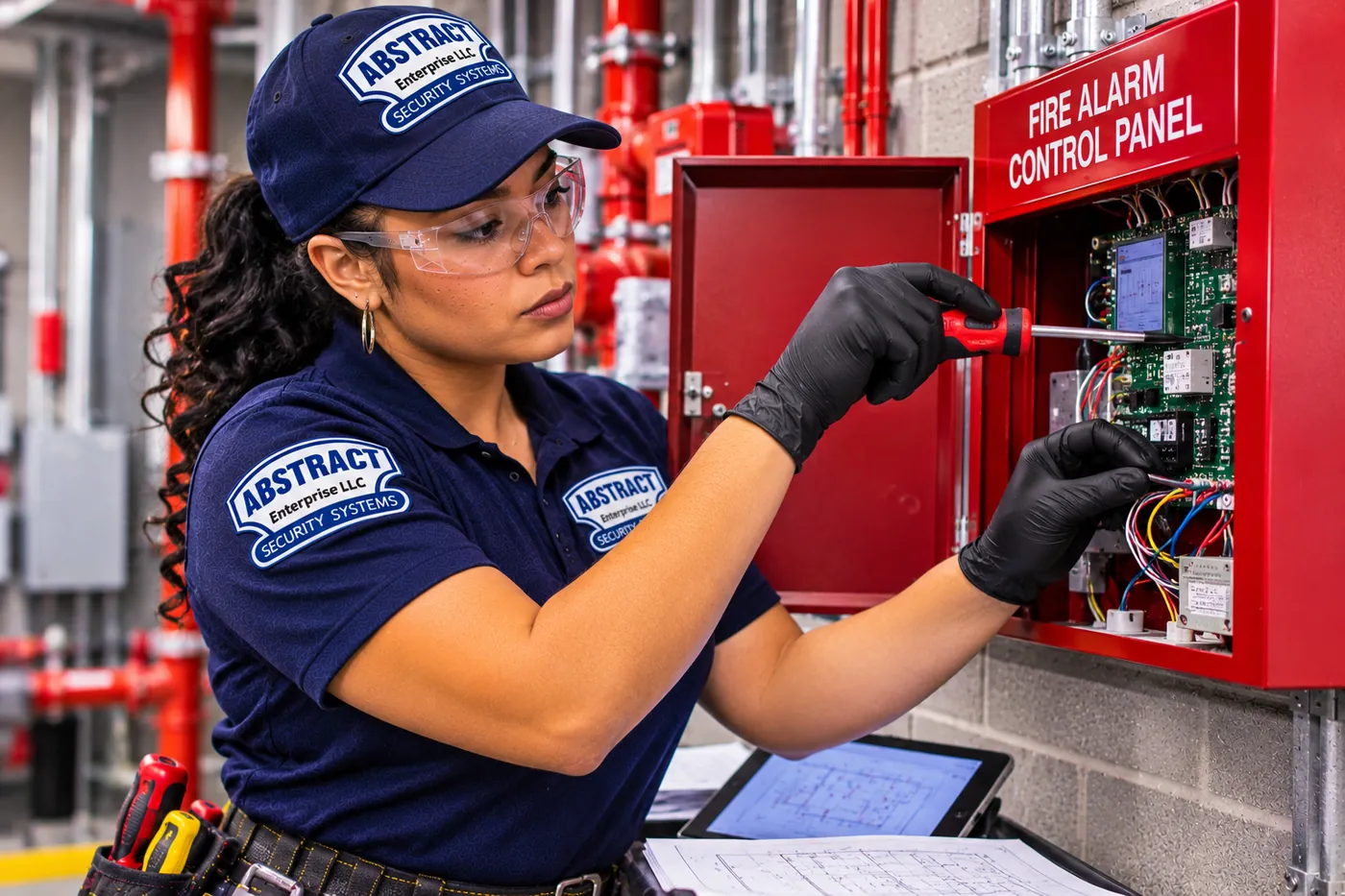
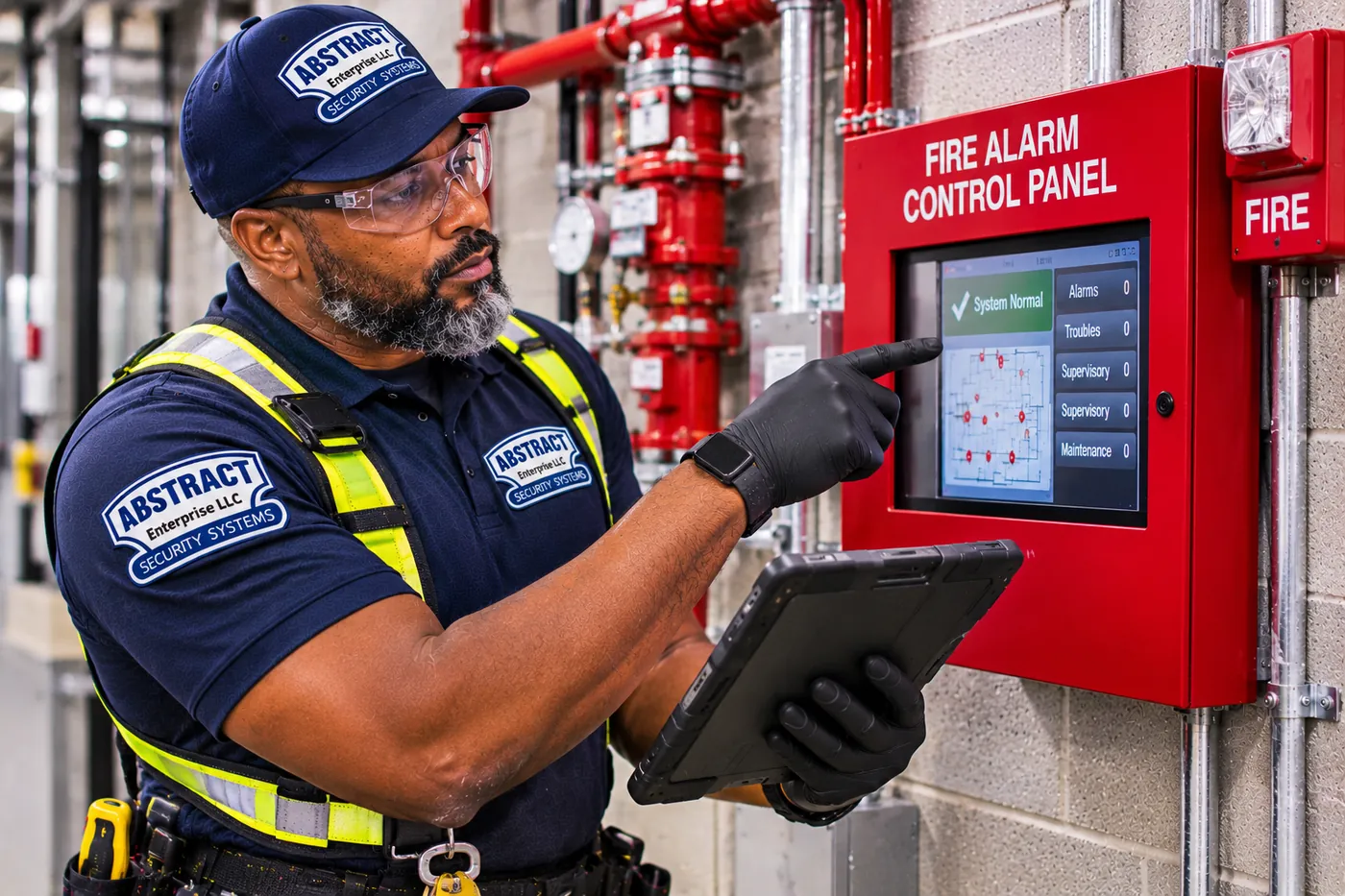
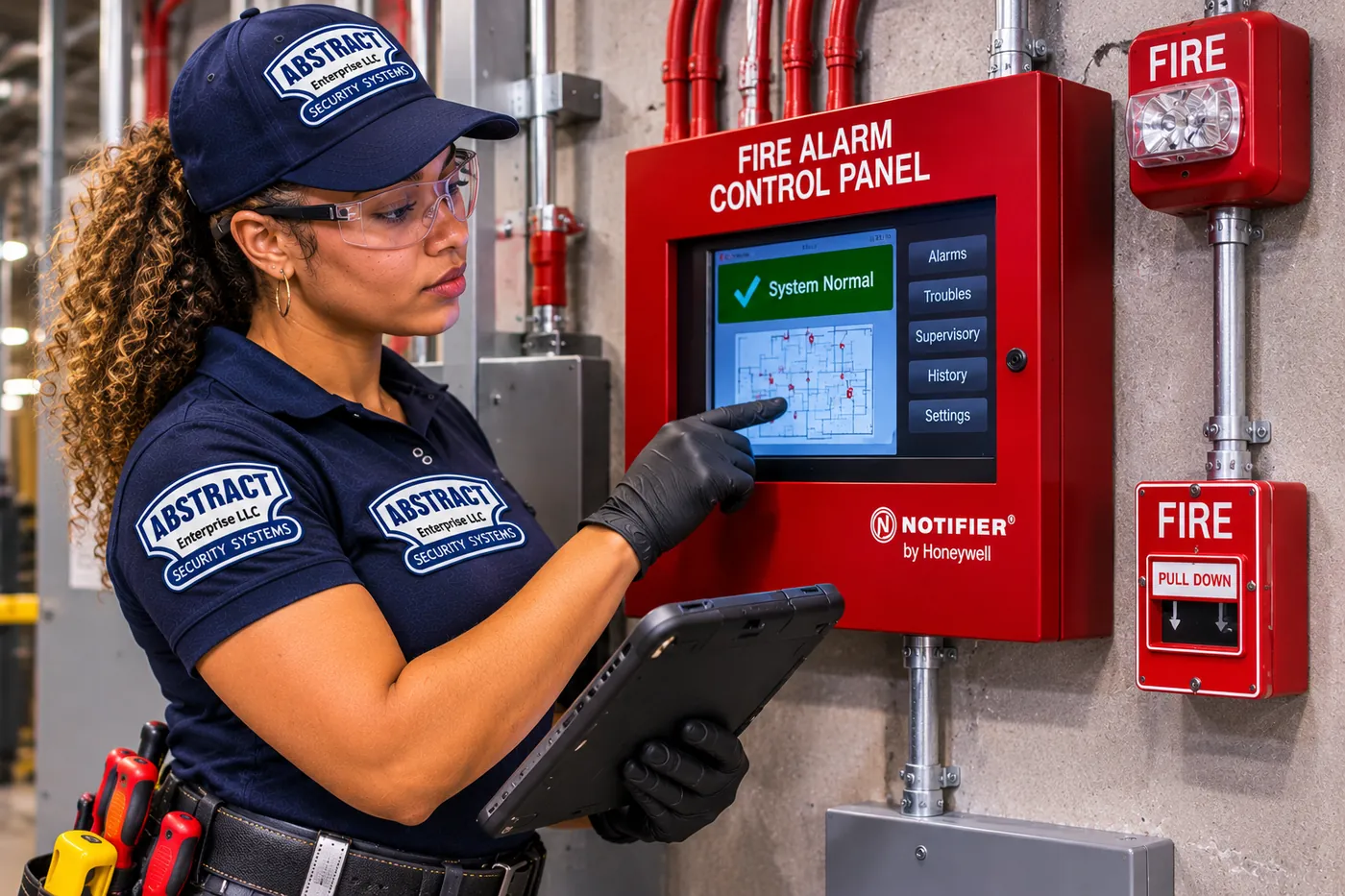
So how does a commercial fire alarm system work in a city building? Smoke detectors, heat detectors, duct detectors, sprinkler waterflow switches and pull stations are the initiating devices. They report to the fire alarm control panel, often called the FACP. The panel decides what each signal means, sounds the horns, strobes or voice speakers on the right floors, recalls the elevators, shuts down the air handlers that would spread smoke, releases the doors held open on magnets, and sends the alarm to an FDNY-approved central station. Each of those actions is written into an input and output matrix on the engineer's drawings, and each one is tested in front of the FDNY before the system is accepted.
That is why we start every New York City fire alarm installation conversation with paperwork rather than with devices. The FDNY's own guidance says the plans must be prepared and filed by a New York State registered design professional, meaning a licensed Professional Engineer or Registered Architect, and that the installer must be a New York City licensed electrician or a fire alarm vendor holding an FDNY-issued Fire Alarm Company Certificate. Skipping either step does not save time. It produces a system the FDNY will not accept, and an owner who pays to open walls twice.
| Fact | Why it matters for your building | Source |
|---|---|---|
| About 20 to 24 weeks from plan submission to final inspection and approval | Fire alarm work has to be in the construction schedule from the first week, not added after the walls close. | FDNY, Tips for Fire Alarm Systems |
| Initial FDNY plan review can take up to 8 weeks | Drawings that are complete on the first submission save the most time. | FDNY, Tips for Fire Alarm Systems |
| 4,887 non-residential structural fires in FY2025 | Offices, stores, restaurants and warehouses burn every week somewhere in the city. | Mayor's Management Report FY2025, FDNY chapter |
| 205,294 inspections by civilian fire prevention staff in FY2025 | An FDNY inspector checking your panel and records is a normal event, not a rare one. | Mayor's Management Report FY2025 |
| 21,966 malicious false alarms in FY2025 | Pull stations in public areas get abused; device placement and covers are part of good design. | Mayor's Management Report FY2025 |
| The installing company needs FDNY company certification, with an S-97 principal holding NICET Level II or higher or a NYC master or special electrician license | Ask any fire alarm contractor for the company approval letter before you sign. | FDNY Fire Alarm Company Certificate FAQ |
Sources: FDNY Tips for Fire Alarm Systems; Mayor's Management Report FY2025, Fire Department; FDNY Fire Alarm Company Certificate FAQ.

If the panel in your lobby or basement is beeping, showing a yellow trouble light, or reporting a supervisory signal, the building already has a fire alarm repair problem, and it is one the FDNY treats as a maintenance failure if it is left alone. Write down exactly what the display says, take a photo of it, and call (800) 486-0943. We book the visit within 2 hours of your call. For urgent fire alarm repair the first question is always who services the system now: in New York City the work has to be done by an FDNY-certified fire alarm company, so if your building already has a company of record we tell you that plainly and help you reach them.
We do not advertise 24 hour fire alarm repair, and we do not promise same day fire alarm repair on every call, because the honest answer depends on the part, the panel brand and who holds the account. What we do promise is a fast, clear plan: what the trouble condition means, whether the system is still able to report a fire, and what the building must do in the meantime. If a fire alarm system down repair means the system cannot protect the building, the FDNY Fire Code expects the owner to notify the fire department and, where required, keep a fire watch until it is restored. That rule matters more than any service promise, and we explain it before anything else.
Commercial fire alarm emergency repair calls we hear about most often: a fire alarm panel failure repair after a power surge, a fire alarm communication failure repair when a phone line or cellular communicator drops out, a fire alarm ground fault repair after water gets into a conduit, and a fire alarm battery trouble repair when the standby batteries age out. After hours fire alarm service and emergency fire alarm service are booked through the same number, and the same rule applies: the panel tells us where to start, and the approved drawings tell us what correct looks like.
Abstract Enterprises Security Systems is a licensed low-voltage contractor working across Manhattan, Brooklyn, Queens, the Bronx and Staten Island. These are the fire alarm installation services we are asked for in New York City buildings, always inside the framework of sealed drawings, FDNY approval and a certified installer of record.
Complete fire alarm system installation for a building that has never had one or has outgrown a local system: panel, power, initiating devices, notification appliances, monitoring and the paperwork chain to the FDNY.
Addressable fire alarm panel installation, conventional fire alarm panel installation, fire alarm power supply installation and fire alarm NAC power supply installation for buildings that need more notification circuits.
Fire detection and alarm installation for offices, retail, restaurants and warehouses: commercial smoke detector installation, photoelectric smoke detector installation, commercial heat detector installation and duct smoke detector installation.
Fire alarm horn installation, fire alarm strobe installation, fire alarm horn strobe installation, fire alarm speaker strobe installation and ADA strobe coverage designed to the candela ratings on the drawings.
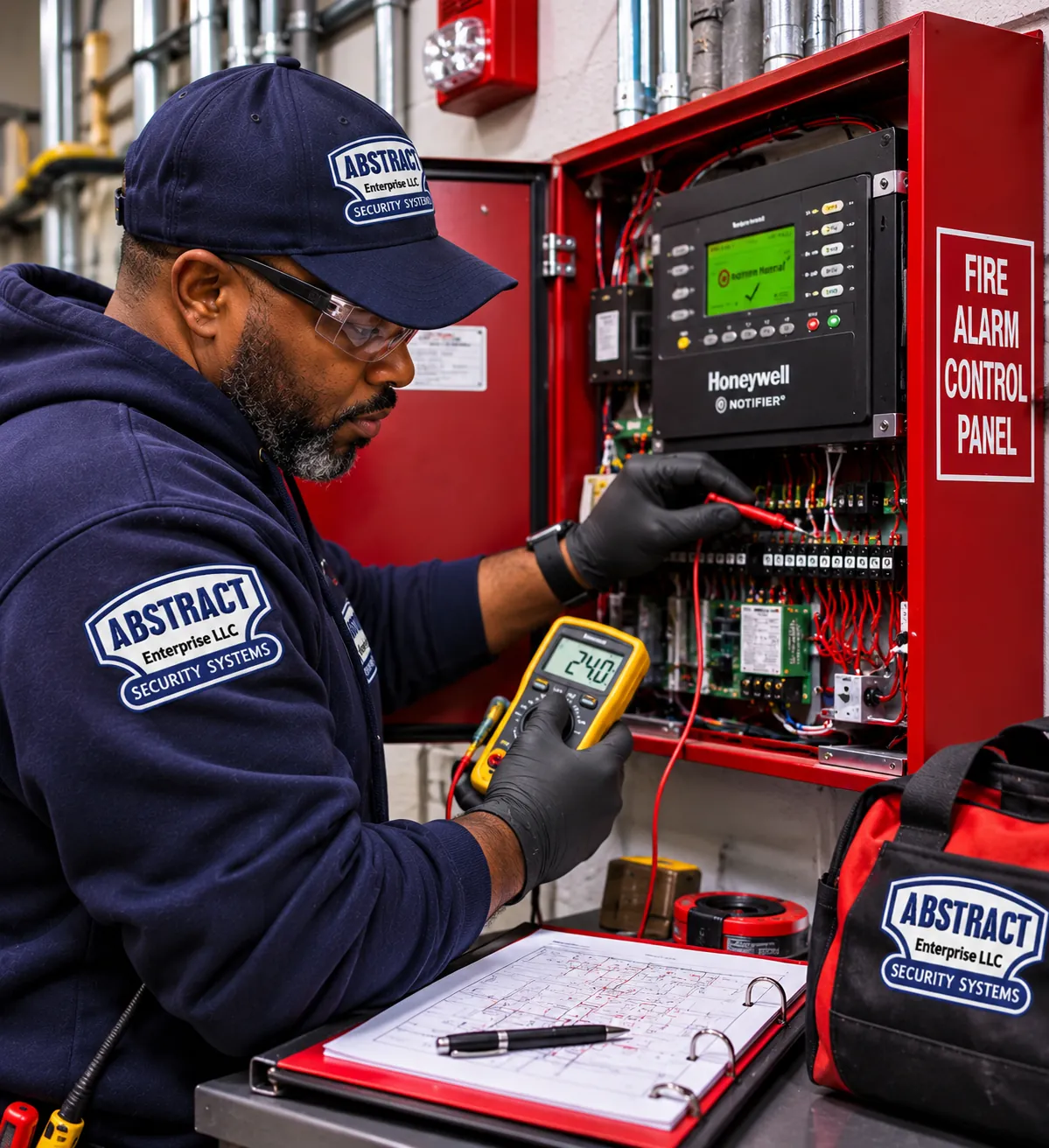
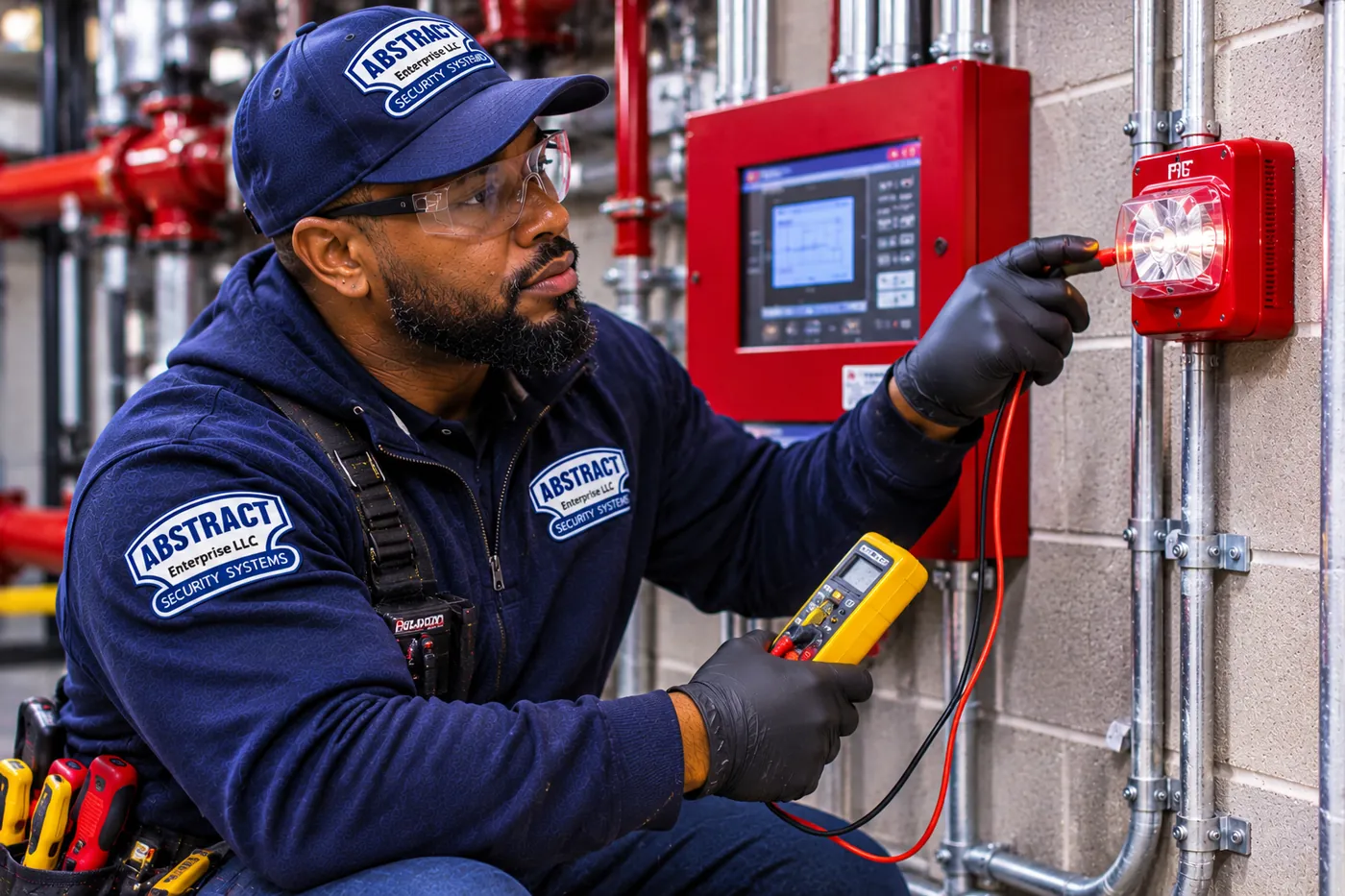
Fire alarm troubleshooting, fire alarm fault diagnosis and fire alarm system diagnostics for trouble lights, ground faults, open circuits, short circuits and devices that drop off the loop.
Fire alarm system upgrade, fire alarm panel replacement, obsolete fire alarm panel replacement and conventional to addressable fire alarm conversion, filed with the FDNY as a modification to the existing approval.
Fire alarm inspection, fire alarm system testing, fire alarm device testing, fire alarm sensitivity testing and fire alarm battery load testing, with written records kept on the premises.
Tenant improvement fire alarm installation and tenant fit out fire alarm installation that ties a new office or store floor into the base building system without breaking its approval.
Fire alarm communicator installation and fire alarm central station communicator installation so the panel reports to an FDNY-approved central station, which the FDNY requires to be active before the acceptance inspection.
Fire alarm sprinkler monitoring installation: sprinkler waterflow switch monitoring and sprinkler tamper switch monitoring wired to monitor modules and tested by flowing water.
Fire alarm elevator recall integration, fire alarm HVAC shutdown integration, fire alarm door release integration and fire alarm access control interface, each one listed on the input and output matrix.
Fire alarm shop drawings, fire alarm as built drawings and fire alarm inspection documentation that match what is actually on the walls, so the next inspector and the next contractor are not guessing.
The FDNY rules are the same in every borough, and so is the TM-1 plan examination. What changes from borough to borough is the building stock, and the building stock decides most of the work. A fire alarm installation contractor who has only worked in new glass towers will be surprised by a Bronx prewar elevator building, and one who has only worked in walk-up storefronts will be surprised by a Midtown office floor tied into a voice evacuation system. This is how we think about the five boroughs before we set foot in a building.
Most of the commercial fire alarm installation we are asked about in Manhattan is not a whole building. It is a floor, or part of a floor, inside a tower that already has a base building fire alarm with a fire command station in the lobby. In Midtown, the Financial District and around Hudson Yards, an office tenant's contractor adds smoke detectors, speaker strobes and monitor modules to the base building loop. The FDNY guidance says a filing for additions or modifications must include the Letter of Approval for the existing system and for the base building system the new devices connect to. That single requirement shapes the whole job: the building's fire alarm vendor of record, the managing agent and the tenant's engineer all have to be in the same conversation before anything is ordered. Our page for fire alarm installation in Manhattan goes into that borough in more depth.
Brooklyn has a little of everything. Downtown Brooklyn and the area along Flatbush Avenue Extension have added a large number of new residential and office high rises, where a mixed use building fire alarm installation has to keep the residential and commercial portions organized on the drawings. In Williamsburg, Greenpoint, Bushwick and Sunset Park, former factory and warehouse buildings have been converted to offices, studios, schools and event spaces, and an industrial building fire alarm installation in those lofts means long cable runs across heavy timber or concrete, high ceilings and big open fire areas. On the commercial avenues, a restaurant or retail store fire alarm installation often sits on the ground floor of an apartment building. See our fire alarm installation Brooklyn page for the borough detail.
Queens mixes some of the newest apartment towers in the city, in Long Island City and along the waterfront, with older industrial and storage buildings in places like Maspeth, College Point and the blocks around the airports. A warehouse fire alarm installation there can involve beam smoke detection or air sampling under high roofs, while a multifamily building fire alarm installation in a new Long Island City tower involves an R-2 system that the FDNY expects to be filed separately from the other occupancy groups in the building. Queens building owners who need fire alarm system repair Queens service, or a new system, can start on our Queens fire alarm page.
The Bronx has a high share of large elevator apartment buildings, along with major hospital and university campuses and the distribution businesses of Hunts Point. That means a lot of apartment building fire alarm installation, nursing home fire alarm installation, school fire alarm installation and hospital fire alarm installation work, and a lot of older systems that are due for replacement. A commercial fire alarm contractor Bronx owners hire has to be comfortable working in occupied buildings, floor by floor, with residents at home and the system kept in service. Our Bronx fire alarm installation page covers that borough.
On Staten Island the commercial fire alarm work we hear about most is in shopping centers, medical office buildings, assisted living and newer two- to four-story commercial buildings along the main corridors such as Hylan Boulevard and Richmond Avenue. A shopping center fire alarm installation there usually involves several tenants sharing one panel, and a medical office fire alarm installation often includes additions to an existing system when a practice expands. Building owners looking for fire alarm contractors Staten Island can start with our Staten Island fire alarm page.

When does a building need a fire alarm system in New York City? The answer comes from the occupancy classification in Section 907 of the NYC Building Code, read by the design professional for your specific building. Summaries of BC 907.2 published by NY Engineers give the general picture: assembly spaces with an occupant load of 300 or more, business occupancies with 500 or more occupants or more than 100 above or below the exit discharge level, all educational and institutional occupancies, mercantile fire areas over 12,000 square feet, and apartment buildings with units three or more stories above the lowest exit level or 16 or more dwelling units, plus special cases such as high rises, atriums and underground buildings. Those thresholds are a starting point. The engineer's reading of the code for your building is the answer.
Here is how the work differs by building type, and what we watch for in each.
Office building fire alarm installation in NYC is mostly floor work inside an existing tower system: detectors, speaker strobes, duct detectors on new air handlers and monitor modules, tied into the base building panel and voice system.
Retail store fire alarm installation often means a storefront pull station, horn strobes in the sales floor and stock room, and coordination with a landlord's shared panel in a shopping center.
Restaurant fire alarm installation in NYC links the kitchen hood suppression system to the fire alarm, uses heat detection where cooking makes smoke detectors impractical, and must shut down gas and fans as the drawings require.
Warehouse fire alarm installation and manufacturing facility fire alarm installation involve high ceilings, long runs, beam or aspirating detection and sprinkler monitoring across large fire areas.
Hotel fire alarm installation covers guest rooms, corridors, back-of-house and assembly spaces, with voice evacuation in larger buildings and strobe coverage for accessible rooms.
School fire alarm installation applies to every educational occupancy, with manual and automatic detection, notification throughout, and work scheduled around the school calendar.
Hospital fire alarm installation and medical office fire alarm installation demand phased work that never leaves patients unprotected, plus tight coordination with facility engineers and accreditation schedules.
Nursing home fire alarm installation and assisted living fire alarm installation protect residents who may not be able to leave on their own, so detection, door release and staff notification are planned together.
Apartment building fire alarm installation, multifamily building fire alarm installation and condominium building fire alarm installation cover common areas, mechanical rooms and building-wide notification as the code requires for that building.
High rise fire alarm installation in New York City includes a fire command station, voice communication, elevator recall, smoke control interfaces and floor-by-floor alarm sequencing.
Parking garage fire alarm installation and storage facility fire alarm installation use detectors suited to exhaust, dust and temperature swings, and often CO detection tied to ventilation fans.
Data center fire detection installation relies on very early warning, often air sampling smoke detection, coordinated with a clean agent suppression system interface and power shutdown sequences.
Office work in Manhattan and Downtown Brooklyn is the most common commercial building fire alarm installation in the city, and it is the one where ownership of the system matters most. The tenant pays for the devices on its floor, but the landlord owns the system, the base building fire alarm company maintains it, and the FDNY approval belongs to the building. The tenant's engineer designs the floor, the filing references the base building Letter of Approval, and the work has to be programmed into a panel that the tenant does not control. We start these jobs by asking the managing agent for the building's fire alarm rules, the vendor of record and the hours when devices can be disabled for testing, because those three answers decide the schedule.
Commercial kitchen fire detection installation is not about putting smoke detectors over the range. Kitchens get heat detectors where they are needed, fire alarm kitchen hood suppression monitoring so the panel knows when the wet chemical system has discharged, and the shutdowns the engineer specifies for fuel and exhaust. In a restaurant on the ground floor of an apartment building, the restaurant's devices may report to the building's panel or to a separate panel, and that decision is part of the design, not a choice we make on site.
Industrial fire alarm systems in New York City have to see smoke under high ceilings and through dust. Projected beam smoke detector installation works well across long open bays. Aspirating smoke detection installation, sometimes called an air sampling smoke detection system and sold under names such as VESDA, draws air through a pipe network to a sensitive detector, which helps in cold storage, high-bay racking and areas where a technician cannot easily reach a ceiling device for testing. Industrial fire detection system installation also means sprinkler monitoring across many risers, and an industrial fire alarm contractor who plans the testing access on day one. The FDNY reported 277 lithium-ion battery fires in 2024, and storage and repair businesses that handle e-bike and scooter batteries are a reminder that detection in back rooms and storage areas is not optional.
In healthcare and residential care, a fire alarm cannot simply shut off for a day while work is done. Detection, smoke door release, staff notification and the central station connection all have to stay in service, or the building has to run a fire watch while they are out. We phase this work room by room and floor by floor and agree the impairment plan with the facility before the first device is touched.
Larger apartment buildings in New York City often have a building fire alarm system covering corridors, stairs, mechanical rooms and the compactor and laundry rooms, separate from the smoke and carbon monoxide alarms inside each apartment. Our commercial work stops at that building system. Property management fire alarm services for these buildings are usually about keeping an existing system clear of trouble conditions, answering FDNY inspection deficiencies and planning the replacement of a panel that the manufacturer no longer supports.

Business fire alarm installation in New York City follows one path, whichever borough the building is in. It helps to see the whole path before the first phone call, because the order of the steps is where most delays come from. Who installs commercial fire alarm systems is only one part of it: an engineer, the FDNY and the building owner each have a turn, and none of them can be skipped.
The FDNY's guidance begins by telling owners to confirm with the Department of Buildings whether a fire alarm system is required, and to have the design professional determine the type of system under the NYC Building Code. A licensed Professional Engineer or Registered Architect then designs the system and seals the drawings. Commercial fire alarm system design is real engineering: occupancy, fire areas, device spacing, notification audibility and visibility, circuit classes and survivability, standby power calculations and the input and output matrix that ties the fire alarm to elevators, fans, doors and sprinklers. The FDNY tip sheet lists those items among the things the drawings must show, along with a legend, a riser diagram whose device counts match the floor plans, and floor numbers that match the Certificate of Occupancy.
The installer has to be a New York City licensed electrician or a fire alarm vendor holding an FDNY Fire Alarm Company Certificate. According to the FDNY's company certification FAQ, any company that installs, inspects, tests or services any component of a fire alarm system, other than only smoke detectors, must apply for that certification, at least one principal of the company must hold an S-97 Certificate of Fitness, and the S-97 requires NICET Level II or higher or a New York City master or special electrician license. Company certification is valid for one year, the S-97 for three. Abstract Enterprises Security Systems is a New York State licensed low-voltage contractor, and on New York City fire alarm projects the FDNY-certified company and licensed electrician of record are named on the filing; we tell owners exactly who that is on their job and how to confirm it before work starts.
The design professional files the TM-1 application with the certified fire alarm plans through FDNY Business, along with a Certificate of Occupancy or approved Schedule A, or a Letter of No Objection from the Department of Buildings when neither exists. The FDNY says initial plan review can take up to 8 weeks, and that a resubmission within six months of an objection avoids a new filing fee. Fire alarm permit requirements for the electrical work run through the Department of Buildings as well, and the two filings have to agree. This is where the question does my building need a fire alarm permit gets its real answer: in New York City the fire alarm installation permit is not one document but a filed and approved design, an electrical work authorization and an FDNY inspection.
Installation starts only after plan approval. Fire alarm rough in, fire alarm conduit installation, fire alarm cable pulling, fire alarm device termination and fire alarm device programming all follow the approved drawings. If something on site does not match the drawings, the change goes back to the engineer, and if it changes the approved design it may need an amendment, rather than a quiet fix in the field.
Before the FDNY will schedule the acceptance test, the system must be 100 percent installed, the panel must be permanently mounted and free of alarm, supervisory and trouble conditions, primary and secondary power must be permanent, elevator recall and fan shutdowns must work, the sprinklers must be operational, and the central station monitoring connection must be active with a signed monitoring agreement and TB-60. The owner's team submits the B-45 inspection request. On the day, the FDNY expects a certified technician holding an S-97 or S-98, enough staff to test, radios, a plumber or knowledgeable staff to flow water for the waterflow switches, an elevator mechanic, a ladder, canned smoke, access to every room and the documents: the A-433, the TM-1, the monitoring contract, the as-built diagram and the approved plans. What happens during fire alarm acceptance testing is simple to describe and hard to fake: the inspector picks devices, the team activates them, and the panel, the notification appliances, the elevators, the fans and the central station all have to do exactly what the matrix says.
When the system passes, the building receives its Letter of Approval. That letter is what the next tenant's engineer will ask for, what the next FDNY inspector will look for, and what the next fire alarm system expansion contractor will need to file a modification. Keep it with the as-built drawings and the inspection records on the premises. The FDNY's own figure for the full path, from plan submission to final inspection and approval, is about 20 to 24 weeks, which is the most honest answer to how long does fire alarm installation take in New York City.

Our crews have a habit on every New York City fire alarm call: before anyone opens a panel or climbs a ladder, someone asks the building for its fire alarm Letter of Approval and the last as-built riser. It sounds like paperwork getting in the way of the job. It is the job. The letter tells us which system the FDNY approved, the riser tells us how many devices should be on each circuit, and the gap between those documents and what is on the walls tells us more than the trouble light does.
The second habit is to write down the panel's history log before touching anything. A ground fault that comes and goes with the weather, a smoke detector that reports dirty every winter, a communicator that drops at the same hour every night: the panel remembers what the building forgot. We photograph the display, export or copy the log, and only then start testing. On a tenant floor we also ask who the base building vendor is, because their programming is part of what we are working inside. Those three habits, the letter, the riser and the log, are why our first visit usually ends with a written finding instead of a guess.
Not if the corrected drawings go back quickly. The FDNY says resubmitting within six months of the objection date avoids a new filing fee. Read the objection with the engineer, fix every item at once rather than one at a time, and resubmit inside that window.
Yes, but you need a substitute document first. The FDNY asks for a Certificate of Occupancy or an approved Schedule A, and when neither exists, a Letter of No Objection from the Department of Buildings. Many older New York City buildings fall into this group, so the engineer should request the letter early.
The engineer or architect. The FDNY requires plans prepared and filed by a New York State registered design professional with a digital seal and signature. The installer produces shop drawings and as-builts from those plans, and the licensed electrical contractor signs and seals the A-433 used at inspection.
The panel and the paperwork. The panel must be free of alarm, supervisory and trouble conditions, and the team must have the approved plans, TM-1, A-433, monitoring contract and as-built diagram ready. If either is missing, the test usually does not go forward that day.
Ask for the company's FDNY approval letter and the name and certificate number of its S-97 principal, then confirm the company appears on the FDNY's list of approved fire alarm companies. The FDNY removes companies whose insurance lapses or whose yearly renewal is missed, so check the date as well.
The FDNY tip sheet names a New York City licensed electrician or a fire alarm vendor holding the FDNY Fire Alarm Company Certificate as the installer. Separately, any company that inspects, tests or services the system needs company certification. On most projects both roles appear on the paperwork.
The landlord decides who works on the building's system, and many towers require their vendor of record to do or supervise all programming. Ask the managing agent for the building's rules before the engineer designs the floor, so the tenant's bid includes the vendor's programming and testing time.
Moving air blows smoke away from the detector. The FDNY's defect list calls for smoke detectors at least 36 inches from supply diffusers or return openings and out of direct airflow. Fixing it means moving devices, which is why the reflected ceiling plan and the fire alarm plan should be checked against each other before rough-in.
Very likely. The FDNY's guidance says fans over 2,000 cfm must shut down on any automatic alarm activation, so the engineer adds a duct detector and a control module to the matrix. It is one of the ten defects the FDNY sees most often.
Sometimes, but the FDNY asks for R-2 residential occupancy systems to be filed separately from the other occupancy groups. Whether the building ends up with one panel or two is a design decision for the engineer, and it should be settled on the drawings before equipment is ordered.
The week the lease is signed. With the FDNY citing about 20 to 24 weeks from submission to approval, a fire alarm that starts after the build-out is underway is the item most likely to hold up the opening. Get the engineer surveying the space at the same time as the architect.
The inspection is scheduled with the FDNY and the occupants have to be told, because devices are activated and alarms sound. In occupied office and apartment buildings we post notices and coordinate with the managing agent so the test does not surprise anyone.
Read and photograph the display, silence only as the building's procedures allow, call the fire alarm company of record, and if the system cannot report a fire, notify the fire department and start the fire watch the building's procedures require. Never disconnect the batteries or the power to stop the beeping.
Fire alarm equipment installation in New York City always follows the engineer's equipment list, which in turn follows the code and the listing of each device. These are the families of equipment that appear on most commercial drawings.
Each device has its own address on a signaling line circuit, so the panel reports exactly which detector or module is in alarm or trouble. Addressable fire alarm system installation is the norm for new commercial work in the city.
Devices are wired in zones, and the panel reports the zone rather than the device. Conventional fire alarm system installation still fits some small buildings and some existing systems being extended.
An intelligent fire detection system uses detectors that process their own readings and report drift, so the panel can flag a dirty detector before it causes an unwanted alarm.
Fire alarm initiating device installation covers smoke, heat and duct detectors, manual pull stations, and fire alarm monitor module installation for waterflow, tamper and suppression contacts.
Fire alarm control module installation and fire alarm relay module installation let the panel drive elevator recall, fan shutdown, door holders and dampers, as the matrix requires.
Fire alarm voice evacuation installation and fire alarm emergency voice communication for high rises, hotels and large assembly spaces, plus fire alarm mass notification integration where the owner needs it.
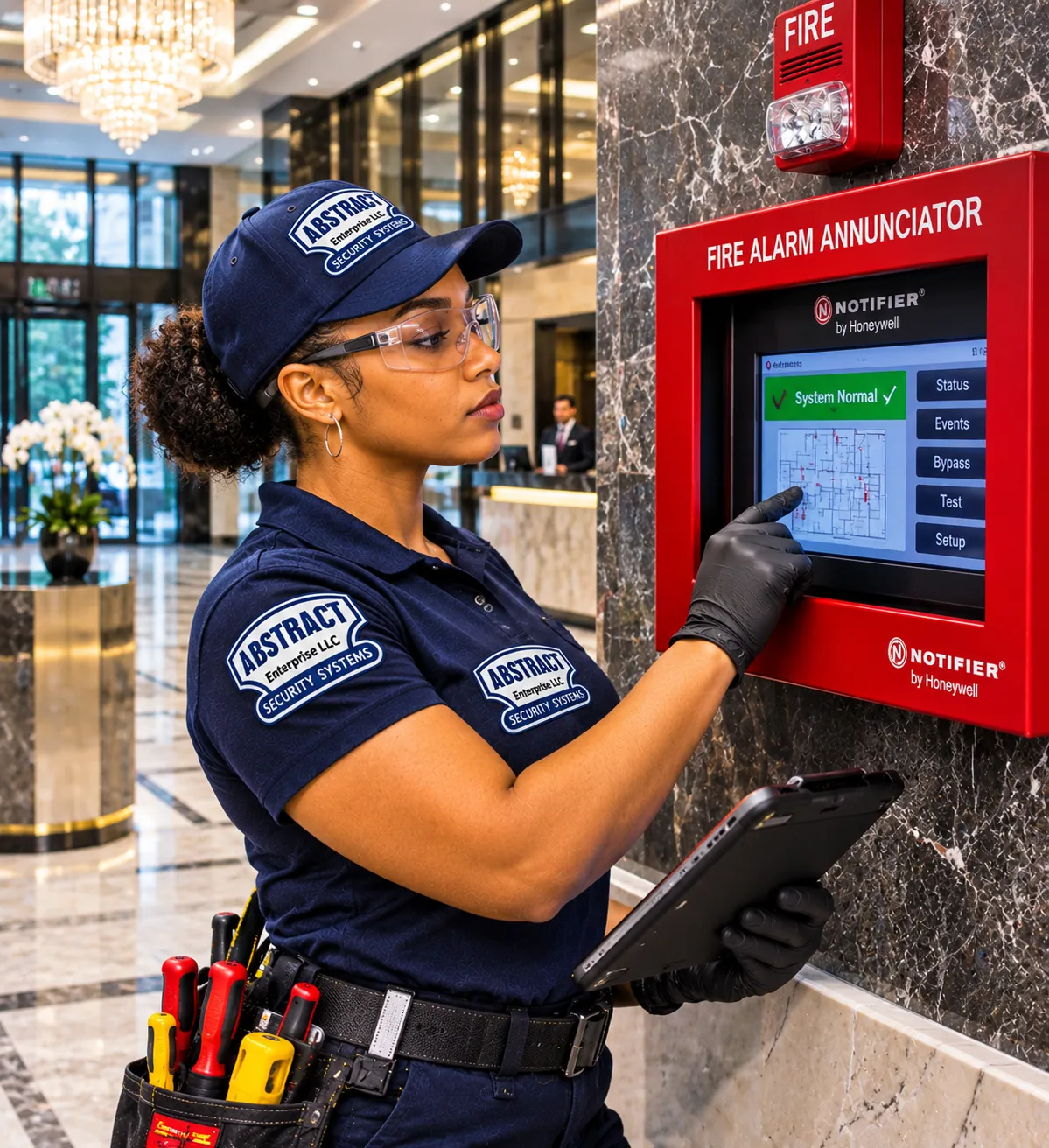
Fire alarm annunciator installation and remote annunciator installation put a readable display at the lobby or fire command station where responding firefighters enter.
Fire alarm battery backup installation and standby calculations that keep the system running on secondary power for the period the code requires.
Fire alarm monitoring system installation with a communicator reporting to an FDNY-approved central station, active before the FDNY acceptance inspection.
What is an addressable fire alarm system, compared with a conventional one? Owners ask this more than any other equipment question, usually because a contractor has recommended a conversion. What is a conventional fire alarm system, in plain terms, is a set of zones: if any device in Zone 4 trips, the panel says Zone 4. What is the difference between addressable and conventional fire alarms in practice is speed of finding the problem, and in a building with hundreds of devices across many floors that difference matters every time there is an alarm or a fault.
| Question | Addressable | Conventional |
|---|---|---|
| What the panel reports | The exact device and its programmed location | The zone the device is wired to |
| Wiring | Signaling line circuits that carry many devices; fire alarm SLC troubleshooting and fire alarm device addressing are part of service | Fire alarm zone wiring, one initiating circuit per zone, with end-of-line resistors |
| Finding a fault | Panel names the device with the open, short or ground | Technician isolates the zone and works device by device |
| Fit for New York City buildings | Most new commercial and high rise systems; required features like voice and complex matrices are easier | Small buildings, some existing systems, limited expansions |
| Changing the system later | Fire alarm system configuration is reprogrammed and filed as a modification | Adding zones often means new circuits and new panel capacity |
Conventional to addressable fire alarm conversion is one of the most common upgrade filings in older New York City buildings, and it is still a filing: the engineer designs the new system, the FDNY reviews it, and the building keeps the old system in service until the new one is accepted, or runs a fire watch for any gap.
Building owners often ask whether they should call a national alarm brand, the manufacturer's own service arm, or a local company. The question to ask is not about size. It is whether the company that touches your system holds the FDNY company certification, has an S-97 principal, can get parts and programming software for your panel, and will put a named technician on your building. Honeywell fire alarm installation and Honeywell fire alarm service cover Honeywell's commercial lines, including NOTIFIER fire alarm installation, NOTIFIER fire alarm repair, Fire Lite fire alarm installation, Fire Lite fire alarm repair, Silent Knight fire alarm installation and Silent Knight fire alarm service. Edwards fire alarm installation, Edwards fire alarm repair and EST fire alarm service cover the Edwards family. Siemens fire alarm installation and Siemens fire alarm service, Simplex fire alarm service, Bosch fire alarm installation, Potter fire alarm installation, Potter fire alarm service and Kidde commercial fire alarm installation round out the panels we see most in the city. Some of these manufacturers sell only through authorized dealers or keep their programming tools restricted, so commercial fire alarm manufacturer service sometimes has to come from an authorized distributor. We tell you at the survey which situation your panel is in.

Panels. FACP installation, FACP repair and FACP replacement are the center of most jobs. Commercial fire alarm panel installation includes fire alarm panel wiring, fire alarm control panel programming and the battery calculation; fire alarm control panel troubleshooting, fire alarm control panel repair and fire alarm control panel replacement follow when an older unit fails. Commercial fire alarm system installation in the city is almost always addressable fire alarm installation, while conventional fire alarm installation, conventional fire alarm repair and conventional fire alarm replacement still apply to smaller existing systems. Intelligent fire alarm installation adds detectors that report their own condition.
Detectors. Addressable smoke detector installation, addressable fire alarm device installation and fire detection device installation cover new points; commercial smoke detector testing, commercial smoke detector repair and commercial smoke detector replacement keep them working. Heat detection uses fixed temperature heat detector installation or rate of rise heat detector installation depending on the room, and heat detector replacement when a unit is damaged. Warehouse smoke detection installation may be beam or aspirating: VESDA installation and VESDA service are a common example of the second. Commercial fire detection systems and business fire detection systems are designed around the hazard, not the catalog.
Manual stations and notification. Fire alarm pull station installation, manual fire alarm pull station installation, fire alarm pull station replacement and fire alarm pull station repair sit at exits. Fire alarm speaker installation applies where the building has voice evacuation.
Service. Commercial fire alarm troubleshooting, addressable fire alarm troubleshooting and addressable fire alarm system repair use the panel's device-level reporting to find faults fast. Commercial fire alarm wiring is checked for opens, shorts and grounds. Commercial fire alarm upgrades and commercial fire alarm replacement are filed as modifications. Commercial fire alarm inspection and commercial fire alarm testing follow NFPA 72 as modified by New York City, and commercial fire alarm commissioning closes every new job. NFPA 72 fire alarm installation is the standard behind all of it. A fire alarm inspection company, fire alarm inspection contractor or fire alarm testing contractor working in the five boroughs needs FDNY company certification, and so do commercial fire alarm installers and every fire alarm system contractor on a filed job. Among fire alarm installation contractors for commercial buildings, ask who will be the emergency fire alarm technician on your account: emergency fire alarm repair, emergency fire alarm troubleshooting, fire alarm trouble emergency service and fire alarm system emergency service are only as good as the company's knowledge of your panel. Industrial fire alarm installation follows the same rules on a larger scale.
A fire alarm system installation cost question gets the same answer as every other cost question on this page: it is quoted per building, in writing, after a survey.
Search assistants and AI summaries give quick answers about fire alarms, and most of them are written for a generic American suburb. Here are seven claims we see repeated, and how they hold up in a New York City commercial building.
This one is half right in New York City, which makes it risky. The FDNY does name a New York City licensed electrician as one of the two kinds of installer, alongside a fire alarm vendor holding an FDNY Fire Alarm Company Certificate. But an electrician's license alone does not cover the whole life of the system.
The FDNY's company certification FAQ says any company that installs, inspects, tests or services any component of a fire alarm system, beyond only smoke detectors, must apply for company certification, and at least one principal must hold the S-97. So the company that will come back for testing and trouble calls needs that certification, whatever license the installing electrician holds.
In practice, a building should ask two questions before signing: who is the licensed electrician on the work authorization, and who is the FDNY-certified fire alarm company that will test and service the system. If nobody can answer the second question, the building will discover the gap at its first inspection.
Hanging devices and pulling cable on a small floor might take days. Getting a commercial system approved in New York City does not. The FDNY's own figure is about 20 to 24 weeks from plan submission to final inspection and approval, with initial plan review alone taking up to 8 weeks.
AI answers that quote a few days are describing the labor, not the project. The drawings have to be designed and sealed, filed on the TM-1, reviewed, corrected if there is an objection, installed, connected to a central station, pre-tested and then witnessed by the FDNY Fire Alarm Inspection Unit.
For a store opening or an office move, this is the difference between a planned opening date and a missed one. Treat the fire alarm as a long-lead item from the first week of the project.
Online calculators and AI summaries like to give a number per square foot. For a New York City commercial building that number is not useful, because it leaves out the part of the job that comes first: engineer-designed, sealed drawings, which on their own can run into the thousands before a single device is bought.
The real drivers are the occupancy, the number of floors and fire areas, the existing system and its Letter of Approval, the interfaces to elevators, fans and doors, the voice or horn notification required, the access to ceilings and risers, and whether the building is occupied during the work.
That is why we quote in writing per building after a site survey, and why a responsible fire alarm installation quote separates design, filing, installation and acceptance testing so the owner can see what each stage covers.
Wireless fire alarm devices exist and are listed for some commercial uses, and they can help in places where opening a ceiling is hard. They do not remove the filing, the engineer, the FDNY review or the acceptance test.
They also do not remove all wiring. The panel still needs primary and secondary power, notification appliances often still need circuits, and the interfaces to elevators, fans and sprinklers are still wired connections. The FDNY expects every device to appear on the approved plans whatever technology connects it.
Wireless is a design choice the engineer may make for a specific building. It is not a shortcut around the New York City process.
Single-station smoke alarms are a residential product. A commercial fire alarm system has to detect, notify everyone in the building, transmit to a central station and operate building functions, and in New York City it has to be designed to the occupancy rules in Building Code Section 907.
A business that puts battery smoke alarms in its office when the code requires a fire alarm system has not met the requirement, and an FDNY inspector will say so. The test is not whether there is something on the ceiling that beeps, it is whether the building has an approved system.
If you are not sure whether your occupancy needs a system, the FDNY's advice is to confirm with the Department of Buildings and have a design professional determine the system type.
An annual inspection is a minimum, not a maintenance program. NFPA 72, as modified for New York City, sets different frequencies for different devices and functions, and many items are tested more often than once a year.
Between inspections, the panel itself is the best maintenance tool. A trouble light that stays on for weeks, detectors that report dirty, a communicator that drops at night: each of those is maintenance that cannot wait for the annual visit. Commercial fire alarm maintenance means acting on what the panel is telling you.
Records matter too. Inspection reports belong on the premises, where an FDNY inspector can see them, along with the Letter of Approval and the as-built drawings.
The FDNY requires the central station to be an approved one. For a new system, the filing includes a central station monitoring agreement and a TB-60 application, and the connection must be active before the acceptance inspection is scheduled.
Changing central stations is not a phone call either. The FDNY's document requirements list a central station changeover as its own request, with a recommended lead time of 10 to 20 business days, and a 2012 FDNY bulletin says the Fire Alarm Inspection Unit investigates cancellations and may issue a violation order that must be remedied within 30 days.
So when a monitoring contract ends, plan the replacement and the paperwork before the old service stops, not after.
Tell us the address, the use of the building and what is there now. We book a survey within 2 hours of your request and tell you what the engineer, the FDNY and the installer will each need.
Send the address and borough, the type of building, what fire alarm panel is there now and, if you have them, the FDNY Letter of Approval and the latest inspection report. Photos of the panel display help us understand a trouble condition before we arrive. Prefer to talk? Call (800) 486-0943.
This is how a fire alarm installation consultation turns into an accepted system. The order is fixed, because the FDNY's process is fixed.
Fire alarm system testing and commissioning is the step owners most often underestimate. A pre-test that finds nothing wrong is the goal, because every problem found in front of the FDNY means another inspection date.

Most of the calls we get in New York City are not new systems. They are existing systems that have stopped behaving, failed an inspection, or reached the end of their life. This section covers that work briefly; our New York fire alarm upgrades page covers existing buildings in more depth.
Why is my fire alarm panel showing trouble is the question owners ask us most. A fire alarm panel trouble light means the panel has found a problem with itself or its wiring that could stop it from reporting a fire. It is not an alarm, but it is not harmless either. The usual causes are a fire alarm open circuit repair after a wire breaks or a device is removed, a short on a circuit, a ground fault, a device that has failed or gone dirty, a loss of AC power, aging standby batteries, or a fire alarm system not communicating with the central station. A fire alarm system trouble condition that clears and returns is often worse than one that stays, because fire alarm intermittent trouble usually points to moisture, a loose termination or a damaged cable that only fails some of the time.
Fire alarm circuit troubleshooting starts at the panel's event history, then moves to the circuit the panel names. Smoke detector circuit troubleshooting on a conventional zone means isolating sections of the zone; fire alarm SLC troubleshooting and fire alarm signaling line circuit repair on an addressable system means reading device counts, polling errors and the device that dropped off. Fire alarm notification circuit repair follows the same logic for horns and strobes. Fire alarm short circuit troubleshooting and fire alarm ground fault troubleshooting use meters and careful isolation rather than guesswork.
What causes a fire alarm ground fault? In New York City buildings the answer is usually water: a leaking roof drain over a conduit, condensation in a basement, or a device box in an exterior wall. Other causes are cable insulation damaged during other trades' work and conductors pinched under a cover plate. Fire alarm communication failure emergency repair is a different problem with the same urgency: if the panel cannot reach the central station, nobody outside the building will know about an alarm. Fire alarm false alarm troubleshooting looks for dirty or misplaced detectors, construction dust, steam from showers or kitchens, and air currents that push smoke detectors past their limits. An ECB decision summarized by The Habitat Group in 2012 upheld a $2,500 penalty against an owner after two unnecessary alarms, one caused by construction, which shows the city treats repeated unwanted alarms as a maintenance failure.
Other trouble calls we see: fire alarm supervisory trouble from a closed sprinkler valve or a tamper switch, fire alarm device fault repair on a detector that no longer answers the panel, fire alarm wiring repair where a renovation cut a circuit, fire alarm panel beeping repair when a trouble has been silenced but not fixed, fire alarm trouble signal repair after a power outage, and fire alarm system malfunction repair when the panel itself fails. Fire alarm power supply repair and fire alarm battery replacement are routine parts of that list. Who repairs fire alarm control panels in New York City is an FDNY-certified company with access to the parts and software for that brand; the fire alarm repair company, fire alarm repair contractor and fire alarm service technician you hire should be able to show that.
Can an existing fire alarm system be upgraded? Usually yes, and in New York City it is filed with the FDNY as a modification to the approved system. Fire alarm control panel upgrade, fire alarm panel upgrade and addressable fire alarm system upgrade jobs replace the brain of the system while keeping good cable where the engineer allows it. Outdated fire alarm system replacement, legacy fire alarm system upgrade and fire alarm system lifecycle replacement are what owners face when a manufacturer stops making parts for an older panel. Fire alarm system modernization, fire alarm system retrofit, commercial fire alarm system retrofit, fire alarm system renovation, fire alarm system reconfiguration, fire alarm system conversion and commercial fire alarm modernization are the different names we hear for the same idea: bringing a working but aging system up to current code and current equipment without leaving the building unprotected. Existing fire alarm system expansion and fire alarm system modification cover new floors, new tenants and new rooms added to a system that stays in place, and fire alarm device replacement covers like-for-like swaps of detectors and appliances. A fire alarm system code upgrade or fire alarm code compliance upgrades may be triggered by a renovation; the engineer determines what the code requires once the scope is known.
How often should fire alarms be inspected, and how often should commercial fire alarms be tested? In New York City the frequencies come from NFPA 72 as modified by the city, and they vary by device and function, so the building's fire alarm testing company should give the owner a written schedule rather than a single annual date. A fire alarm annual inspection, fire alarm periodic inspection and fire alarm functional testing are parts of that schedule. Fire alarm preventative maintenance between visits, a written fire alarm service contract and a fire alarm maintenance company that keeps the records on site are what keep a building out of trouble at an FDNY inspection. Fire alarm inspection deficiencies get a written list; fire alarm deficiency correction and fire alarm inspection repair close them. Who can correct fire alarm inspection deficiencies in New York City is, again, an FDNY-certified fire alarm company, and fire alarm system violation correction and fire alarm code violation repair should end with documents the building can show the FDNY.

We serve the whole city, but these districts show the range of commercial fire alarm work in New York City, and the kinds of buildings each one is known for.
Towers along Park, Madison, Lexington and Sixth Avenues with base building voice systems and fire command stations, where most work is tenant floors tied into an existing approval.
Some of the newest office and residential high rises in the city, where fit-outs add devices to modern addressable systems with large smoke control matrices.
Office and new residential towers around MetroTech Center, which also houses the FDNY headquarters at 9 MetroTech Center, where the Fire Alarm Inspection Unit receives approved plans.
A fast-growing mix of new apartment towers, offices, studios and older industrial buildings, with both new high rise work and warehouse detection.
Food distribution, warehousing and industrial buildings where high ceilings, cold rooms and large fire areas call for beam or aspirating detection and sprinkler monitoring.
Shopping centers and retail strips where several tenants share a fire alarm system, and medical offices nearby add devices as practices grow.
We also serve every borough by its own page: fire alarm installation Manhattan, Brooklyn, Queens, the Bronx and Staten Island. Each borough page carries its own direct line and local detail; this citywide page uses our toll-free number.

How much does commercial fire alarm installation cost in New York City? Honestly, nobody can tell you responsibly before the building has been surveyed and the drawings exist, and that is why we do not publish prices for fire alarm work. Fire alarm installation cost in the city is set by four stages, in this order, and each stage is quoted in writing for your building.
Every commercial fire alarm starts with drawings designed and sealed by a New York State PE or Registered Architect. The engineer's fee is separate from the installation and, on its own, can run into the thousands. It depends on the size of the building, the occupancy, whether a base building system exists, and how complex the interfaces are. Fire alarm construction drawings that are complete on the first submission are the best money spent on the project.
The TM-1 filing carries FDNY fees set by the city, and the electrical work authorization runs through the Department of Buildings. Government fees are what they are; the FDNY publishes them. For example, the FDNY's own FAQ lists a $105 application fee for a company seeking fire alarm company certification, and its FA-27 instructions list a $105 fee for a Notice of Defect document submission. Our proposal shows which filings your project needs so the owner can budget for them.
The installation price follows the approved device list: the fire alarm control panel, power supplies and batteries, initiating devices, notification appliances, modules, cable, conduit and labor. Access drives labor more than anything else: high ceilings, occupied floors, after-hours work rules in office towers, landmark finishes and long riser runs all change the number. A fire alarm panel installation cost or fire alarm system replacement cost is only meaningful once those conditions are known.
The last stage is pre-testing, the FDNY acceptance inspection and any retest. It includes the people the FDNY expects on site, such as a plumber to flow water and an elevator mechanic for recall, and the central station connection that has to be active before the inspection is scheduled.
The same logic applies to other cost questions owners ask. A fire alarm system upgrade cost, fire alarm panel replacement cost or answer to how much does fire alarm panel replacement cost depends on whether the existing cable and devices can stay and what the FDNY filing for the modification requires. Fire alarm inspection cost and fire alarm testing cost depend on device count, the number of interfaces and how often your building's schedule calls for testing. Fire alarm repair cost and fire alarm service call cost depend on what the panel is reporting and what parts the fault needs. A fire alarm maintenance contract cost depends on the building's testing schedule and size. In every case we give a written fire alarm installation estimate, fire alarm system installation estimate or fire alarm contractor estimate after we have seen the building, and for public or larger private work we can respond to a fire alarm installation bid package. Fire alarm installation pricing is always per building, and so is every commercial fire alarm quote we send. The Brooklyn and Bronx offices handle quotes for the whole city.
Full terms โ including 50% deposit, one-year parts-only warranty on Abstract Enterprises Security Systems-supplied products, and the late-fee schedule โ are set out in the service agreement.
How do I find a licensed fire alarm contractor in New York City is a fair question, because "fire alarm installation near me" searches return national brands, electricians, expediters and directories in the same list. Whether you searched for fire alarm installers near me, fire alarm contractors near me or fire alarm companies near me, the same checks sort the list.
Fire alarm contractor licensing in New York City is layered: a state low-voltage license like ours (NYS license #12000287431), a New York City electrical license for the installing electrician, and FDNY company certification with an S-97 principal for the fire alarm company. A professional fire alarm installation, a licensed fire alarm installer and a commercial fire alarm installation company in the city should be able to explain which of those they hold and which partners on the job hold the rest. That transparency is the best sign of an experienced fire alarm contractor. The best commercial fire alarm installer for your building is the one who explains the whole path before the contract, not after the first objection.

In a New York City commercial building the fire alarm is the conductor of an orchestra. When it goes into alarm it tells other systems what to do, and every one of those instructions has to be on the engineer's input and output matrix and proven at the acceptance test. Fire alarm system integration is where projects run late, because it needs other trades on site at the same time.
Fire alarm elevator recall integration sends the cars to the designated level when an elevator lobby, hoistway or machine room detector activates, or on sprinkler waterflow where the design calls for it. The FDNY lists elevator recall among its most common defects and expects an elevator mechanic at the inspection. The elevator fire alarm interface is the point where our wiring ends and the elevator contractor's controller begins.
Fire alarm HVAC shutdown integration stops the fans that would spread smoke. Duct smoke detector installation, duct smoke detector testing and duct smoke detector replacement keep those shutdowns honest, and fire alarm duct detector integration ties them back to the panel. In high rises and atriums, fire alarm smoke control interface work tells the smoke control system which zone is in alarm so it can pressurize stairs or exhaust smoke as designed.
Fire alarm magnetic door holder release lets smoke doors close on alarm, and fire alarm door release integration unlocks doors on the egress path where the code requires it. Fire alarm access control interface work makes sure locked doors in an office or lab release the way the drawings say they should, without giving away more access than the code requires.
Sprinkler waterflow switch monitoring reports an alarm when water flows, and sprinkler tamper switch monitoring reports a supervisory signal when a valve is closed. Fire alarm suppression system interface work covers clean agent systems in data rooms and fire alarm kitchen hood suppression monitoring in restaurants. At the FDNY test, someone has to flow water and someone has to show each supervisory signal arriving at the panel and the central station.
Where strobes can be seen from one another, they have to flash together, which is what fire alarm synchronization module installation provides. Fire alarm notification appliance installation, fire alarm notification appliance replacement, fire alarm horn strobe replacement, fire alarm horn strobe repair and fire alarm ADA strobe installation all have to respect those sync rules and the candela ratings shown on the drawings.

New construction fire alarm installation in New York City follows the same filing path, compressed into a construction schedule. The commercial construction fire alarm contractor joins the project when the engineer's design is under way, prepares fire alarm shop drawings from the sealed design, and coordinates the rough-in with the electrician, the sprinkler fitter, the mechanical contractor and the elevator company. Fire alarm cable installation and fire alarm conduit work happen before ceilings close; devices go in after finishes; programming and pre-testing come last. Our NY fire alarm new construction page walks through the drawing-to-acceptance sequence for builders and tenants in detail.
For tenant fit-outs, the work is smaller but the coordination is harder, because the base building system belongs to the landlord and stays in service. Fire alarm system design requirements for a tenant floor include the base building's capacity for new devices, its voice and notification zoning, and the programming changes the vendor of record will have to make. Fire alarm system approval for that floor references the existing base building Letter of Approval. Fire alarm inspection preparation for the floor starts with the panel clear of troubles on the day of the test, because a trouble anywhere in the building can stop a floor test.
Fire alarm system inspection requirements and fire alarm code compliance in New York City come down to one principle: what is on the walls has to match what the FDNY approved, and the documents have to prove it. A fire alarm compliance contractor earns its fee by keeping those two things in step from rough-in to the Letter of Approval.
Fire alarm installation Manhattan: office floors, hotels and towers inside base building systems.
Brooklyn commercial fire alarm work: mixed-use corners, lofts and new apartment towers.
Queens fire alarm installation and repair: Long Island City towers and industrial blocks.
Bronx fire alarm contractor services: multifamily, healthcare and campuses.
Staten Island fire alarm installation: retail centers, medical offices and assisted living.
Upgrades, repair and violations in New York: older panels and inspection deficiencies.
New construction and fit-outs in NY: drawings, rough-in, commissioning and acceptance.
Request a written quote after a survey of your building, booked within 2 hours.
We are a New York State licensed low-voltage contractor, NYS license #12000287431. On New York City fire alarm projects, the FDNY-certified fire alarm company and the licensed electrician of record are named on the filing, and we tell you exactly who they are on your job before any work begins, so you can verify the FDNY approval letter yourself.
Use this citywide page or call the toll-free line. The FDNY process is the same in all five boroughs, so one survey and one proposal can cover buildings in Manhattan and Brooklyn, or Queens and the Bronx, with each building filed separately.
No. The FDNY's guidance says to install only after plan approval. Preparatory work that the engineer and the electrician agree does not depend on the fire alarm design can sometimes proceed, but devices and panels should not go in until the plans are approved.
The FDNY lists the Fire Alarm Inspection Unit at 9 MetroTech Center in Downtown Brooklyn, where approved plans are brought on Tuesdays and Thursdays from 9 am to noon. Inspections themselves take place at your building.
Not always. The engineer decides whether the restaurant's devices and hood suppression monitoring report to the building's panel or to a separate one, based on the occupancies and the existing approval. The decision belongs on the drawings before work starts.
Keep them on the premises for as long as the system is in service, along with the Letter of Approval and the as-built drawings, and follow any retention period your FDNY-certified company and the Fire Code set. Inspectors ask for them, and the next contractor will need them.
The panel stops reporting alarms to anyone outside the building. A 2012 FDNY bulletin says the Fire Alarm Inspection Unit investigates cancellations and may issue a violation order to be remedied within 30 days, so arrange the new FDNY-approved central station before the old contract ends.
No. This page and our fire alarm work cover commercial, mixed-use and multifamily buildings where the code requires a fire alarm system under NFPA 72. Smoke and carbon monoxide alarms inside private homes are a different product and a different set of rules.
Yes. We survey each building, because each one has its own approval and conditions, and then send the managing agent a written proposal per building, organized in one package so the portfolio can be compared and scheduled together.
The address and occupancy, the Letter of Approval for the existing system if there is one, the last as-built riser and inspection report, photos of the panel display, and the name of the current fire alarm company and central station. Missing documents are fine; we note what needs to be requested.
Yes. The FDNY tip sheet lists landmark certification among the documents required where it applies, along with DEP asbestos forms. In landmark interiors the device locations and cable routes are planned with the architect to protect historic finishes.
We book the survey or service visit within 2 hours of your request. The visit date depends on the building's access rules and the scope, and we confirm it in writing when we book.
Fire Alarm Installation Manhattan ยท Fire Alarm Installation Brooklyn ยท Fire Alarm Installation Queens ยท Fire Alarm Installation Bronx ยท Fire Alarm Installation Staten Island ยท Fire Alarm Installation Long Island ยท Fire Alarm Installation Nassau County ยท Fire Alarm Installation Suffolk County ยท Fire Alarm Installation Hudson Valley ยท Fire Alarm Installation Westchester County ยท Fire Alarm Installation Rockland County ยท Fire Alarm Installation Orange County ยท Fire Alarm Installation Putnam County ยท Fire Alarm Installation Dutchess County ยท Fire Alarm Installation Ulster County ยท Fire Alarm Upgrades & Repair New York ยท Fire Alarm New Construction NY ยท Abstract Enterprises Security Systems home
Neighborhood pages: Allerton ยท Bath Beach ยท Bathgate ยท Bay Ridge ยท Bedford Park ยท Bedford-Stuyvesant ยท Bensonhurst ยท Bergen Beach ยท Beverley Square ยท Boerum Hill ยท Borough Park ยท Brighton Beach ยท Bronx River ยท Bronxwood ยท Brooklyn Chinatown ยท Brooklyn Heights ยท Brooklyn Navy Yard ยท Brownsville ยท Bushwick ยท Cadman Plaza ยท Canarsie ยท Carroll Gardens ยท Castle Hill ยท City Line ยท Claremont ยท Clason Point ยท Clinton Hill ยท Co-op City ยท Cobble Hill ยท Columbia Street Waterfront ยท Concourse ยท Coney Island ยท Country Club ยท Crotona Park East ยท Crown Heights ยท Cypress Hills ยท Ditmas Park ยท Downtown Brooklyn ยท Dumbo ยท Dyker Heights ยท East Flatbush ยท East New York ยท East Tremont ยท East Williamsburg ยท Eastchester ยท Edenwald ยท Fieldston ยท Flatbush ยท Flatlands ยท Fort Greene ยท Fort Hamilton ยท Foxhurst ยท Fulton Ferry ยท Gerritsen Beach ยท Gowanus ยท Gravesend ยท Greenpoint ยท Greenwood Heights ยท Highbridge ยท Hunts Point ยท Jerome Park ยท Kensington ยท Kingsbridge ยท Kingsbridge Heights ยท Laconia ยท Longwood ยท Mapleton ยท Midwood ยท Morris Heights ยท Morris Park ยท Morrisania ยท Mount Eden ยท Mount Hope ยท New Lots ยท New Utrecht ยท Norwood ยท Ocean Hill ยท Olinville ยท Park Slope ยท Parkchester ยท Pelham Parkway ยท Port Morris ยท Prospect Heights