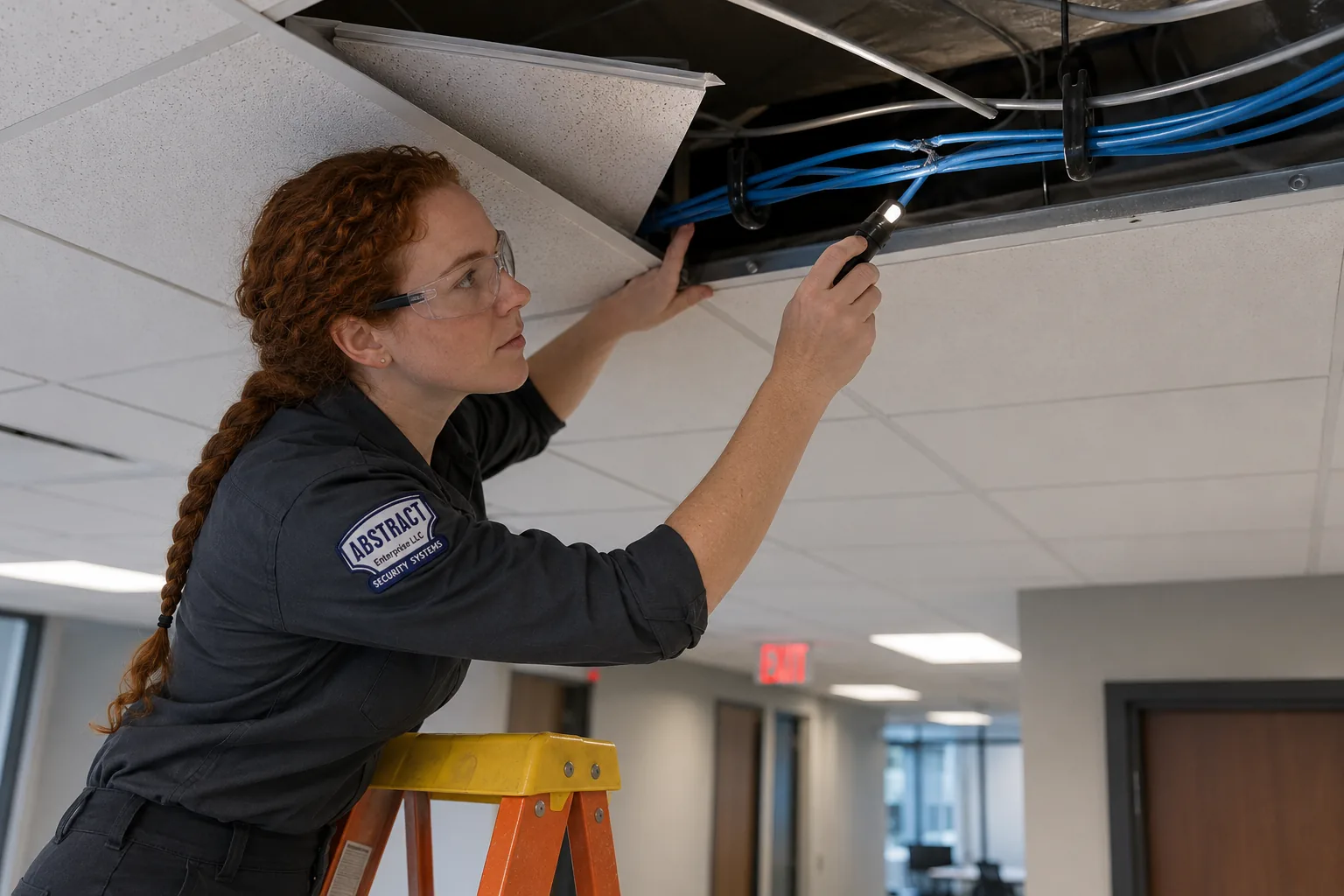
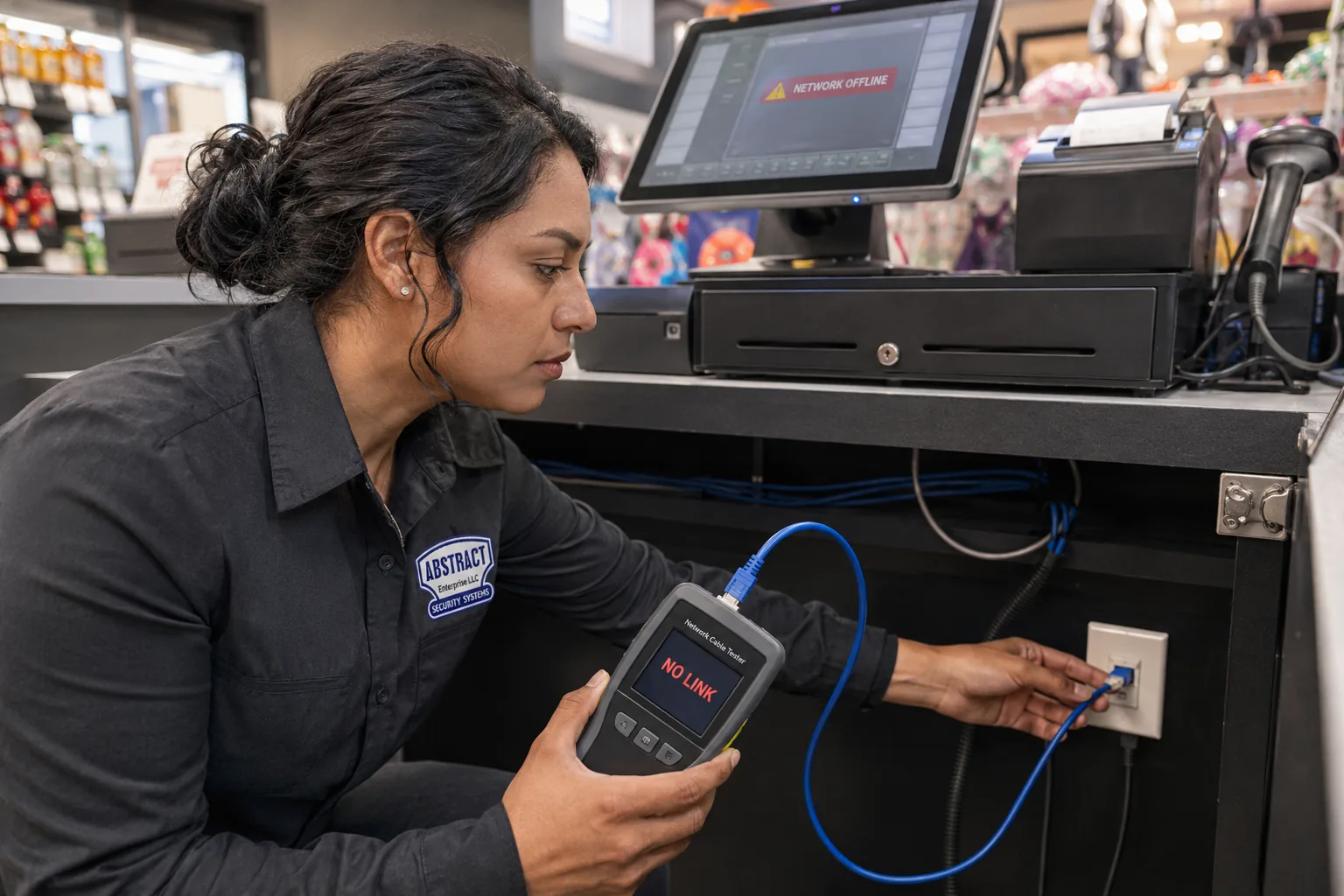
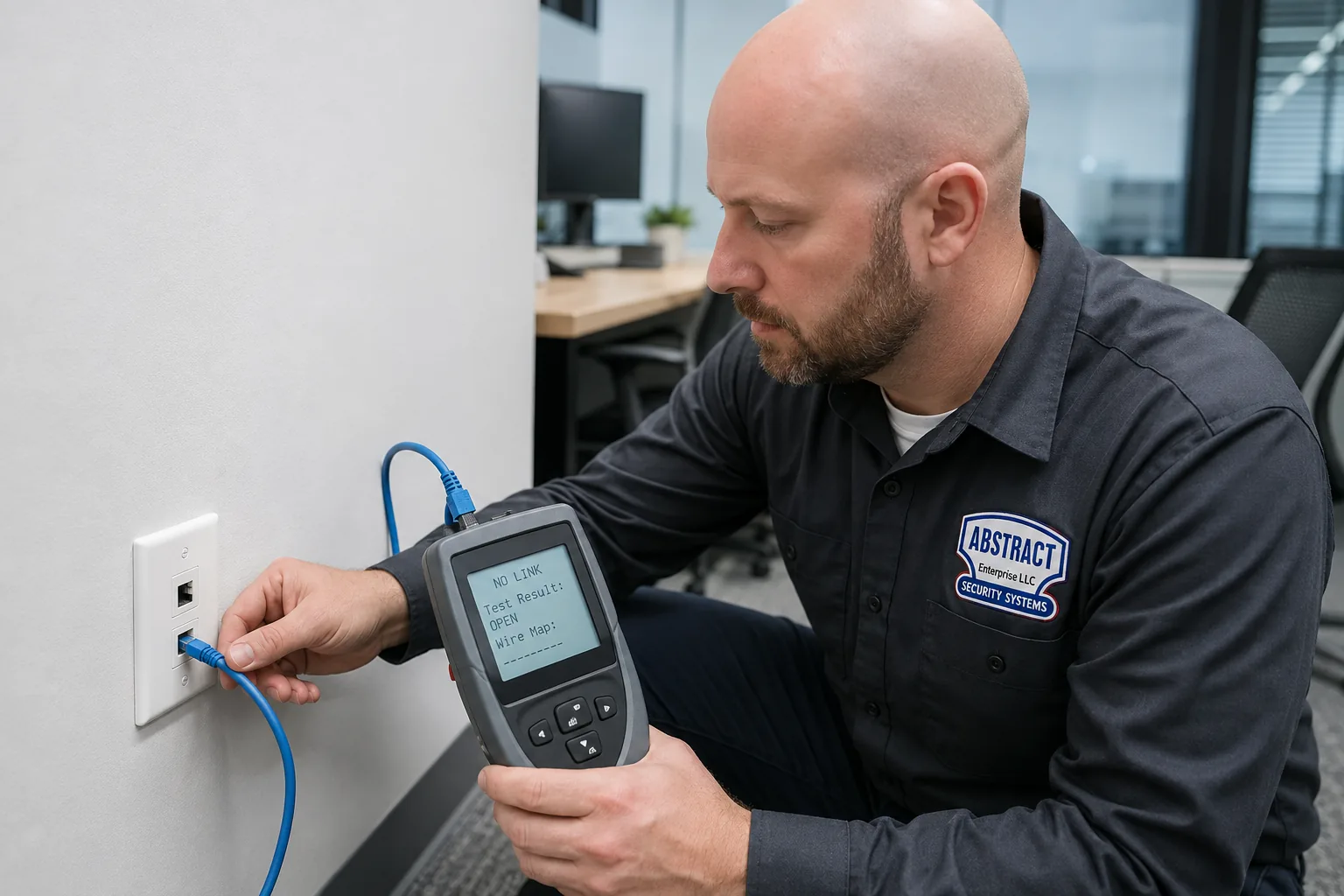
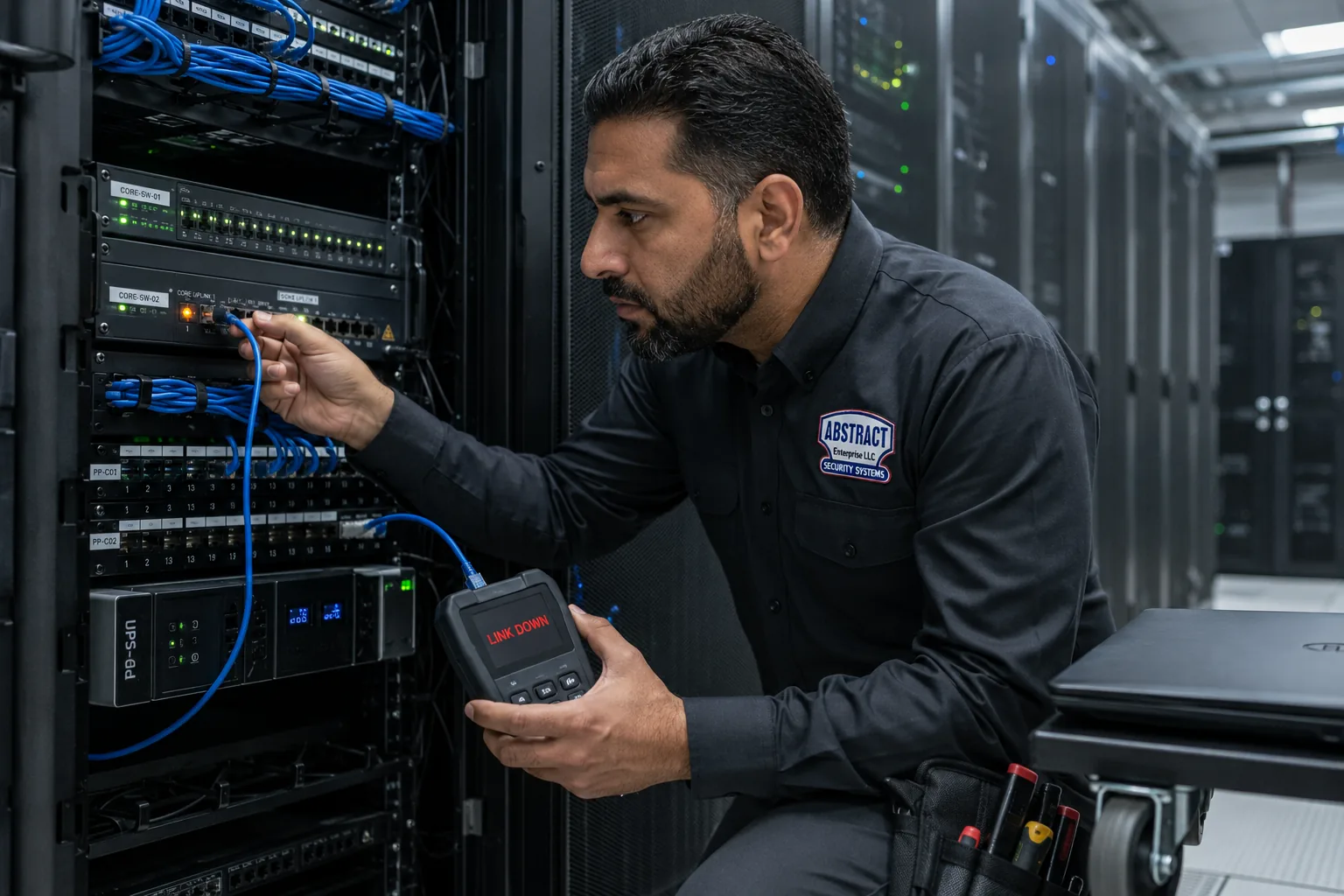
Fault location, retermination, network jack and panel repair, PoE troubleshooting and certified cable testing across Putnam County. Licensed NYS low-voltage contractor. We separate a supply problem from a cable problem with a measurement rather than a guess.
Ethernet, Cat6 and Data Cable Repair Across Putnam County
The most common diagnostic question in Putnam County is whether you are looking at a cable fault or a power event, and telling them apart saves a great deal of money. This is a small, hilly, heavily wooded county fed largely by overhead distribution, and interruptions, brownouts and momentary sags are ordinary. Equipment reboots, links come back in the wrong order, devices sit in odd states, and the reported symptom looks exactly like a failing cable. Abstract Enterprises Security Systems repairs Ethernet, Cat6 and data cabling across Putnam, from Cold Spring to Brewster.
The confusion runs both ways, which is what makes it expensive. Sites replace switches after a storm when the copper was damaged. Other sites re-pull cable that was always fine because the real problem was a supply that dips every time the wind gets up. Both are avoidable with a measurement: certify the link and you have removed it from the argument with a number instead of an opinion.
Our specialty service rate for repair work is $195 an hour with three hours as the minimum, $585 for the first block. Where equipment is reachable we will narrow the fault remotely before dispatching anybody, because on a county of small sites and long drives that single step frequently turns a site visit into a phone call.
Network Down in Putnam?
Same-day and next-morning coverage across the county. Where the equipment is reachable we will try to narrow the fault before anybody drives out, because on a rural site that can save you half a day.
✔ NYS Lic. #12000287431✔ Certified wiremap & performance testing on every repair✔ 4.7★ from 201 reviews
Local Conditions
Why Putnam Faults Get Misdiagnosed
Begin with the supply, because in this county it is genuinely part of the picture. Putnam is hilly, heavily wooded and largely fed overhead, with long feeders serving small numbers of customers. Storms bring branches down, and even without an outage the sags and momentary interruptions are frequent enough that most sites see several a year. Every one of those restarts something. Switches come up before firewalls, access points boot before the switch that powers them, and a network can look broken for reasons that have nothing to do with any cable in the building.
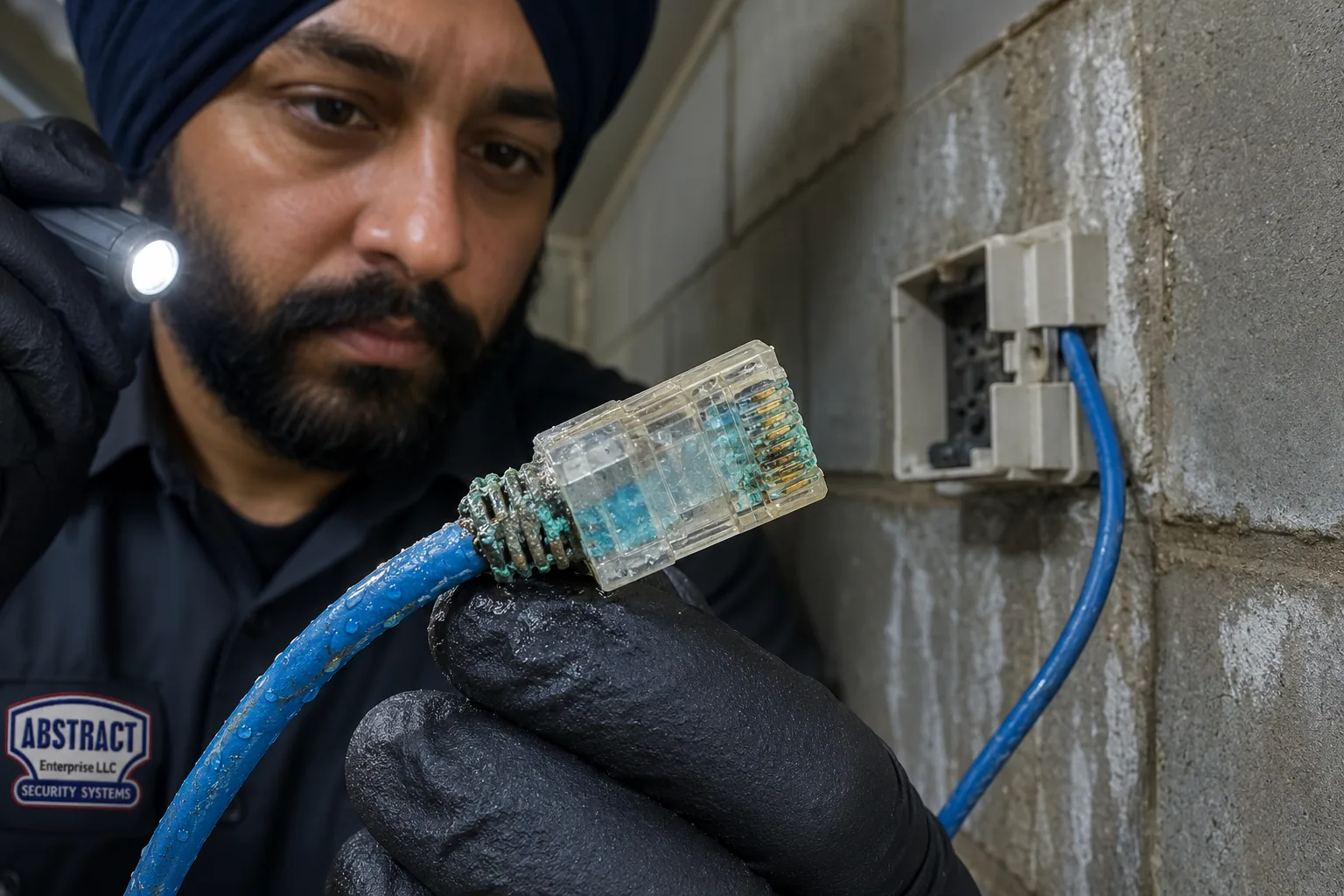
Second, what a storm actually does to cabling. Not everything after a storm is a power problem. Where a run leaves the building for an outbuilding, a gate, a pole or a barn, weather does real damage: water at an entry, movement at an attachment, and surge energy arriving where nothing was bonded. So the honest answer is that both causes are live after weather, and only a measurement separates them.
Third, the absence of on-site technical staff. Most Putnam commercial premises are small — a practice, a village retailer, a restaurant, a contractor's yard, a small office. There is rarely anybody on site whose job is the network, which means the description we get is a symptom rather than a diagnosis, and the useful first step is to ask questions that narrow it before anybody drives anywhere.
Fourth, distance and drive time. Nothing in Putnam is far in miles and everything is slow in minutes. Cold Spring to Brewster crosses the county on winding roads, and a wasted trip is a genuine cost to both parties. That is the reason we push remote triage: not because it is cheaper for us, but because half the calls that begin as emergencies turn out to be a power cycle in the wrong order.
Fifth, the building stock. Carmel, Brewster, Mahopac and Cold Spring hold village main-street commercial in older buildings, frequently converted from residential, with cellar panels and no equipment room. Around them are lakeside communities, small industrial and trade premises, and properties with more than one structure on a parcel. It is a small county with a wide variety of buildings.
What We Repair
What a Putnam Cable Repair Call Covers
We separate supply problems from cable problems, then repair what is actually broken and prove it.
Power-Event vs Cable-Fault Diagnosis
Establishing whether what you are seeing is equipment restarting in the wrong order or a physical fault in the copper, before anything is replaced.
Remote Triage Where Possible
Narrowing the fault by question and, where the equipment is reachable, by inspection, so a site visit happens because it is needed rather than by default.
Post-Storm Assessment
Checking what weather actually did: entries that took water, attachments that moved, and terminations that were exposed to surge.
Ethernet Cable Repair
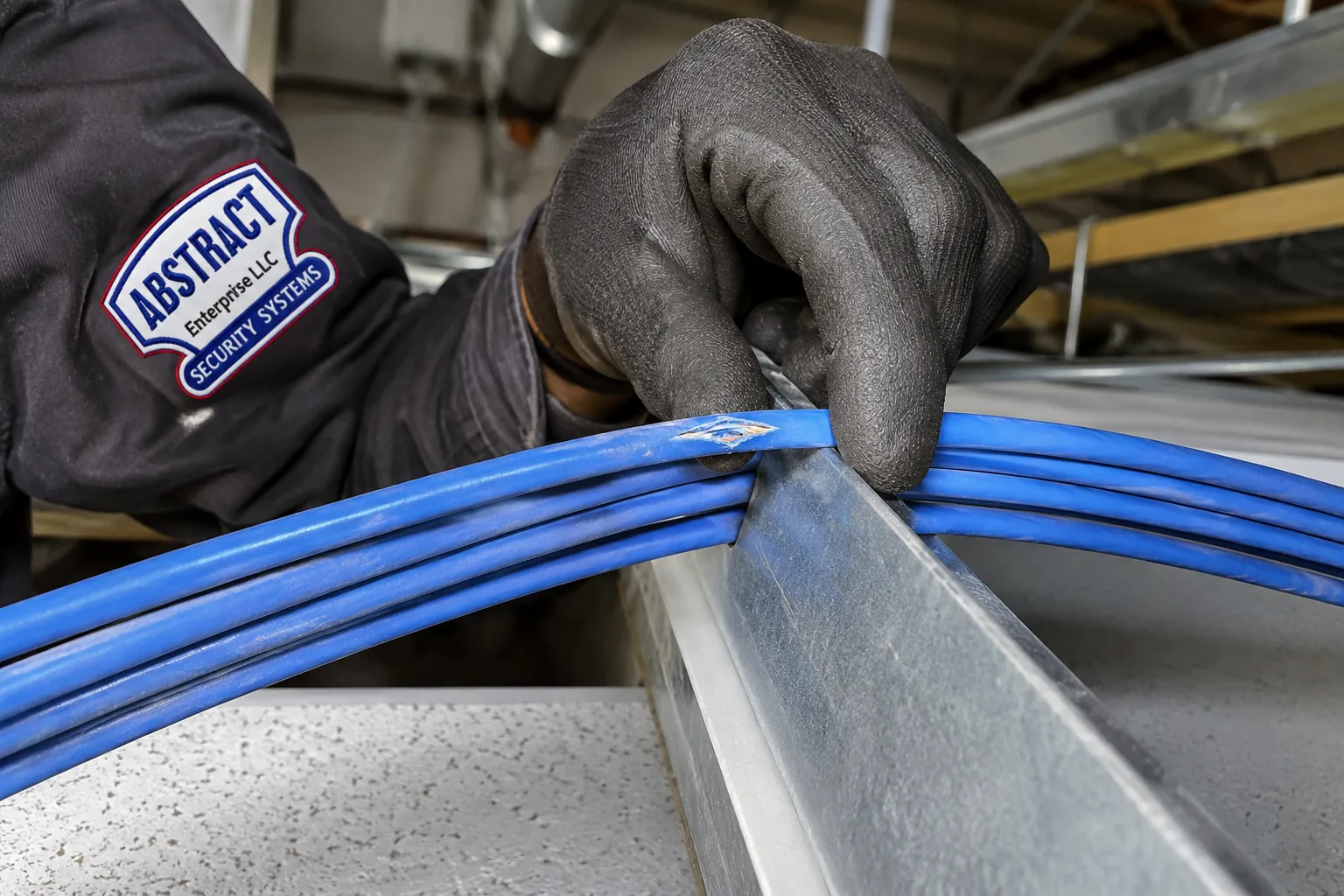
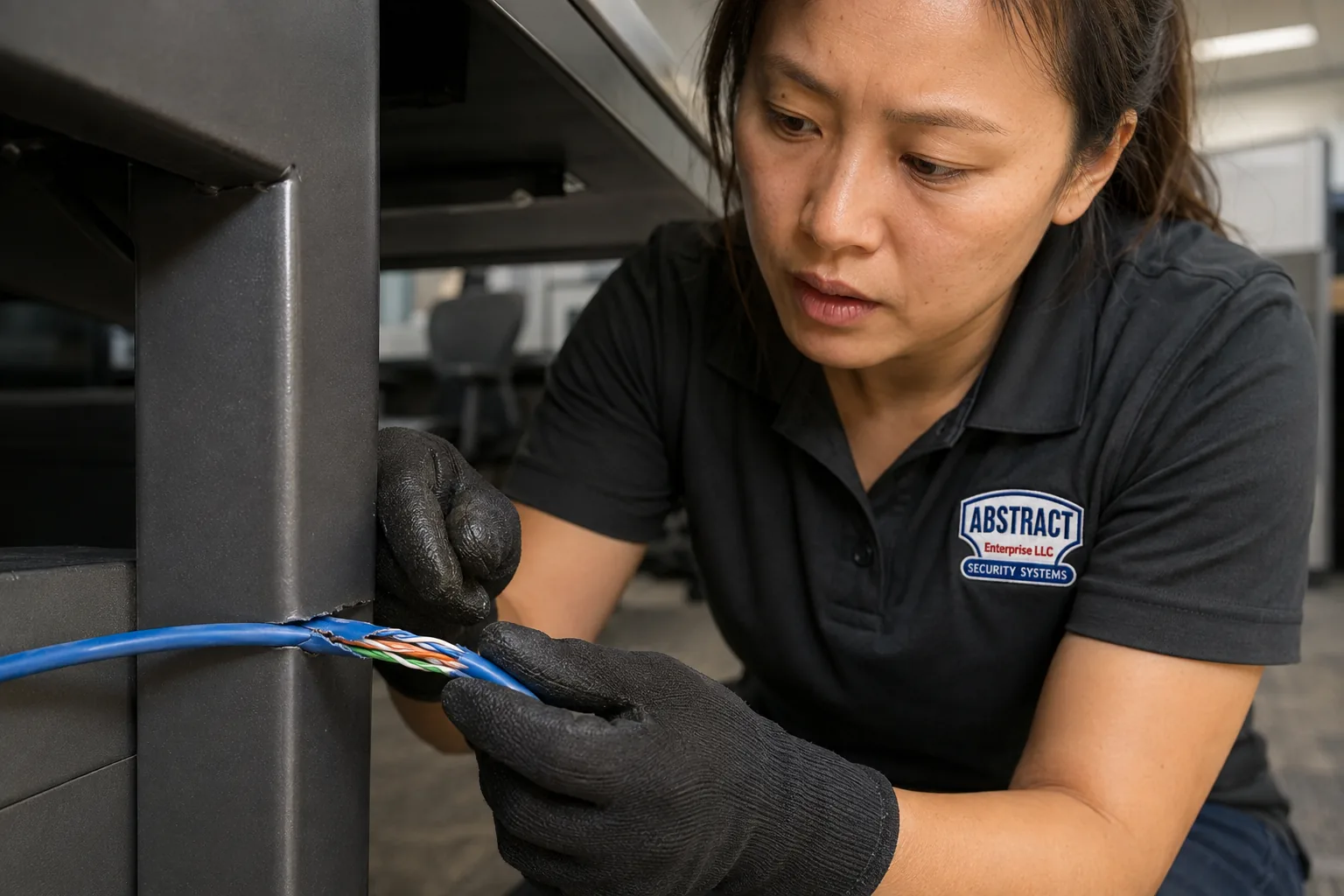
Severed, crushed, worn or damp-damaged runs restored with a junction of matching grade, then measured.
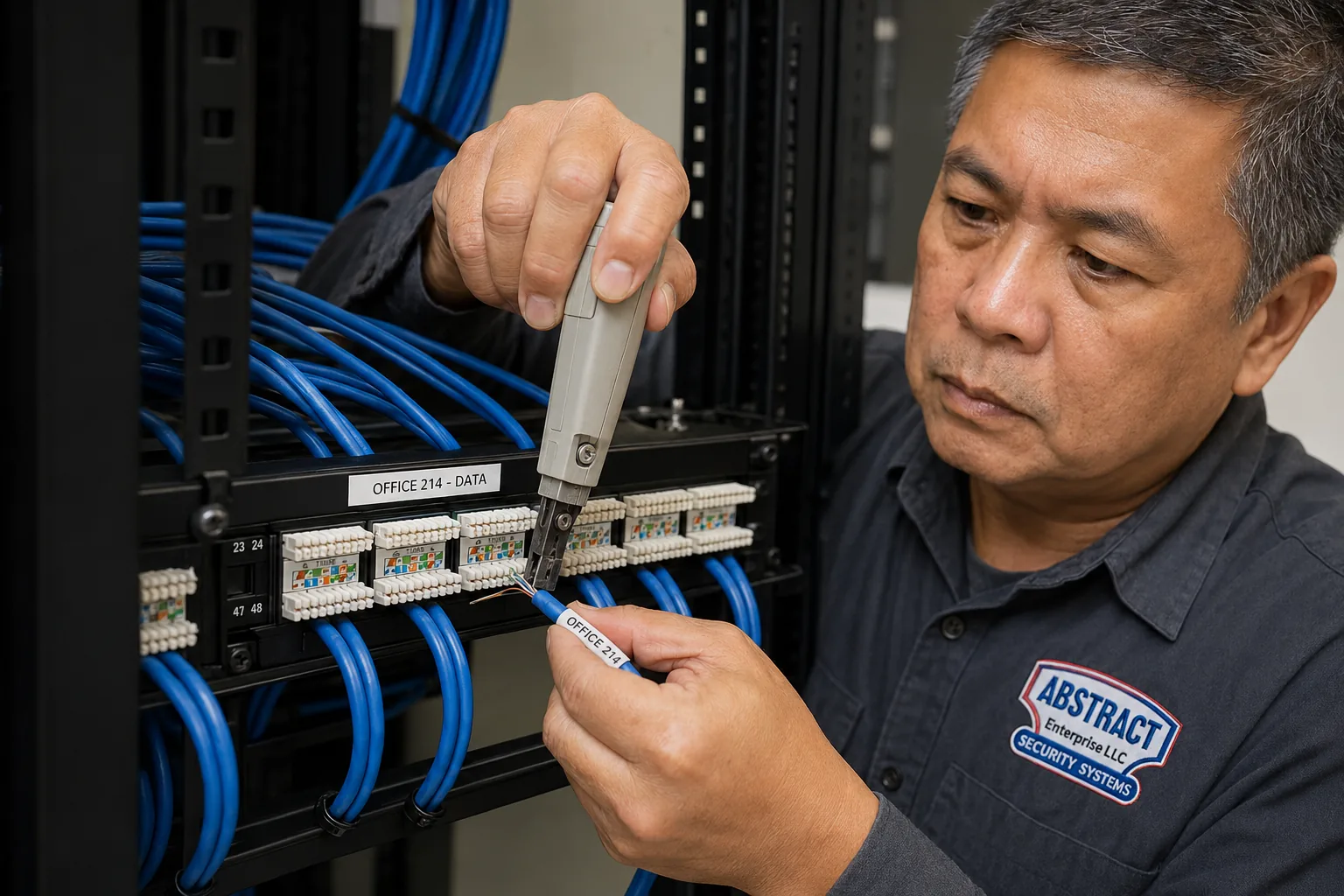
Cat6 and Cat6A Retermination
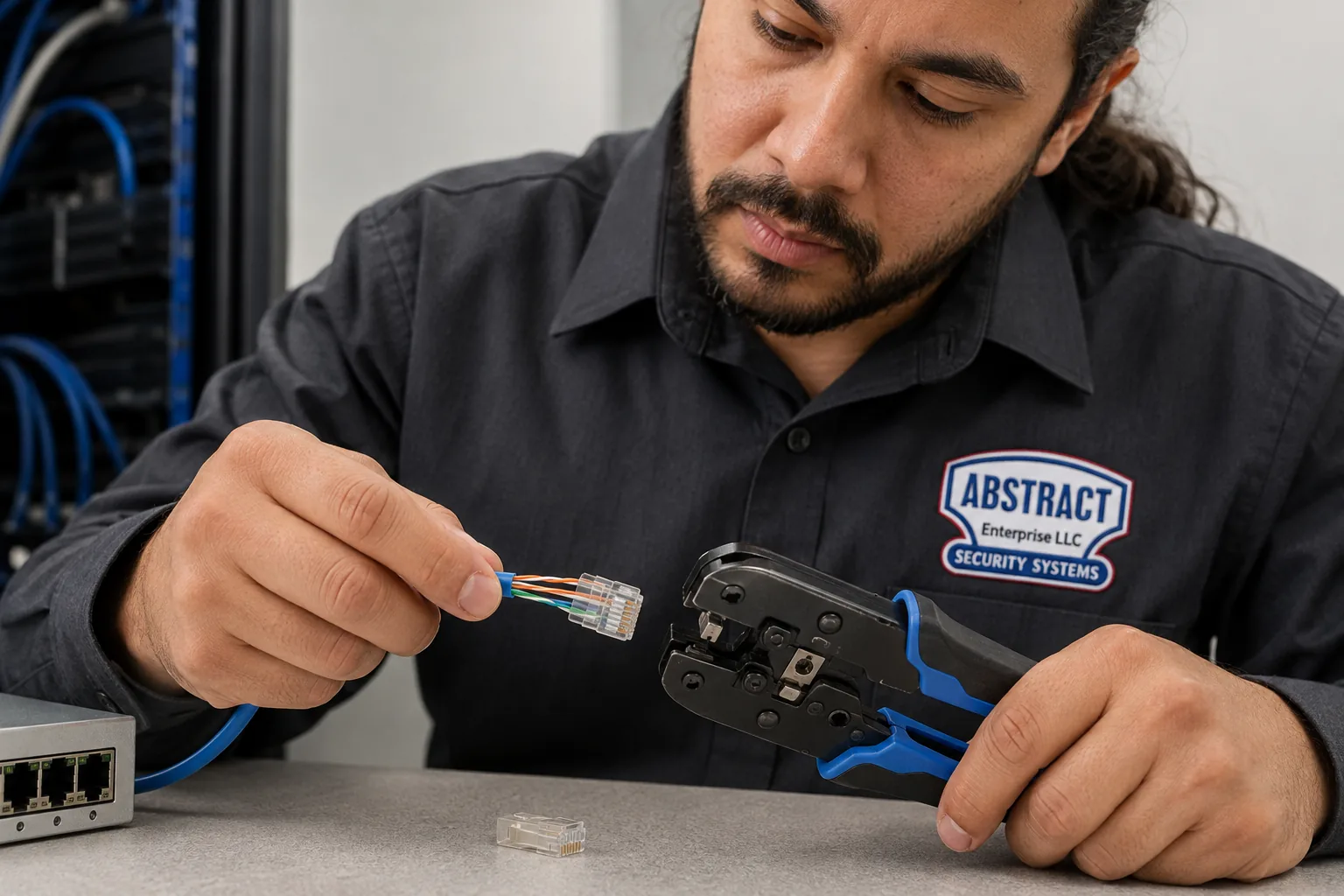
Terminations redone at both ends to T568B with twist held to the contact, so the link certifies rather than merely lighting up.
Network Jack and Panel Repair
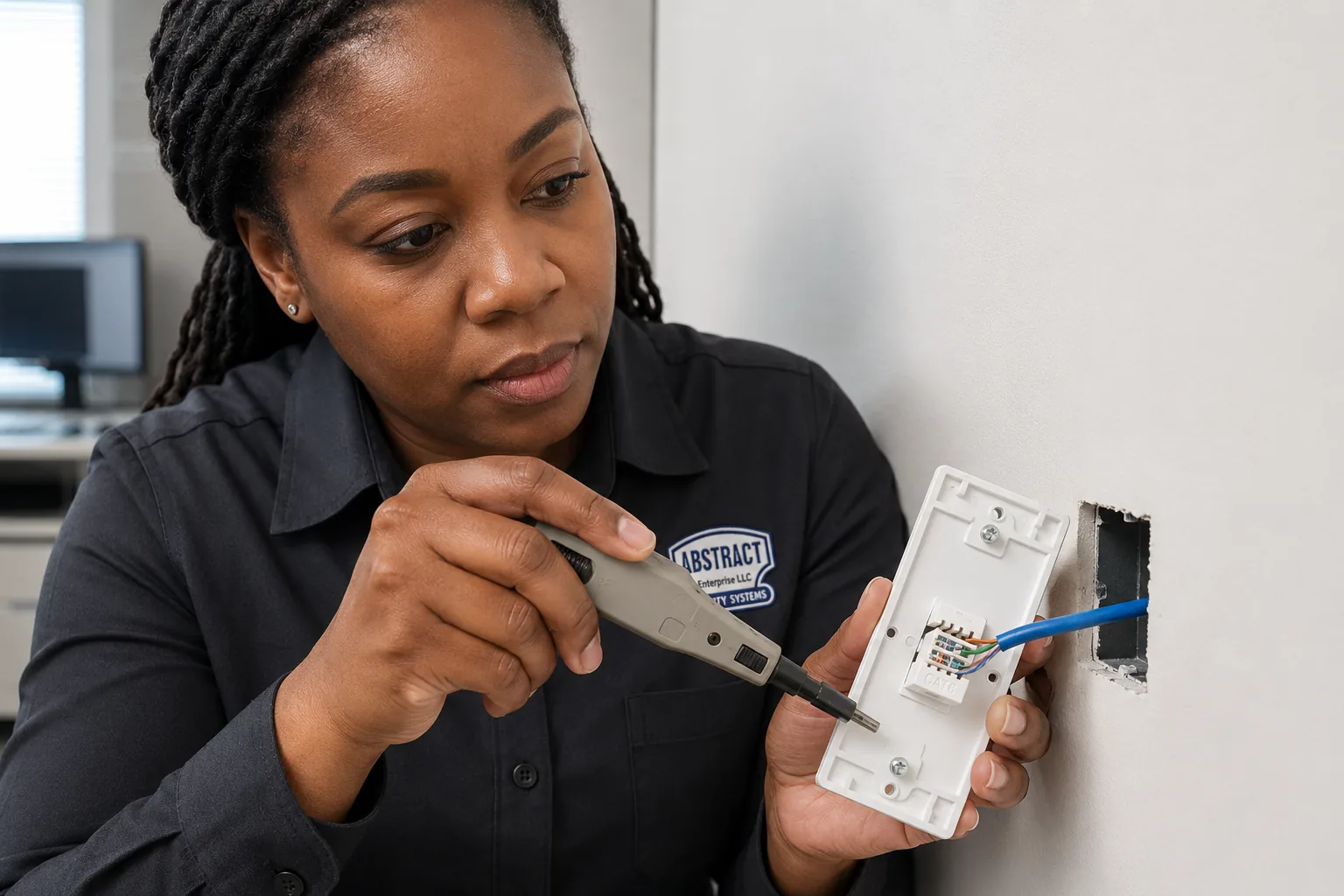
Outlets that have gone dead, jacks with wires resting in the slots and never driven home, and panel positions somebody wired to the opposite standard.
Outbuilding and Yard Run Repair
Runs to barns, garages, gates and detached structures, with the entry detail corrected rather than reproduced.
Certified Testing
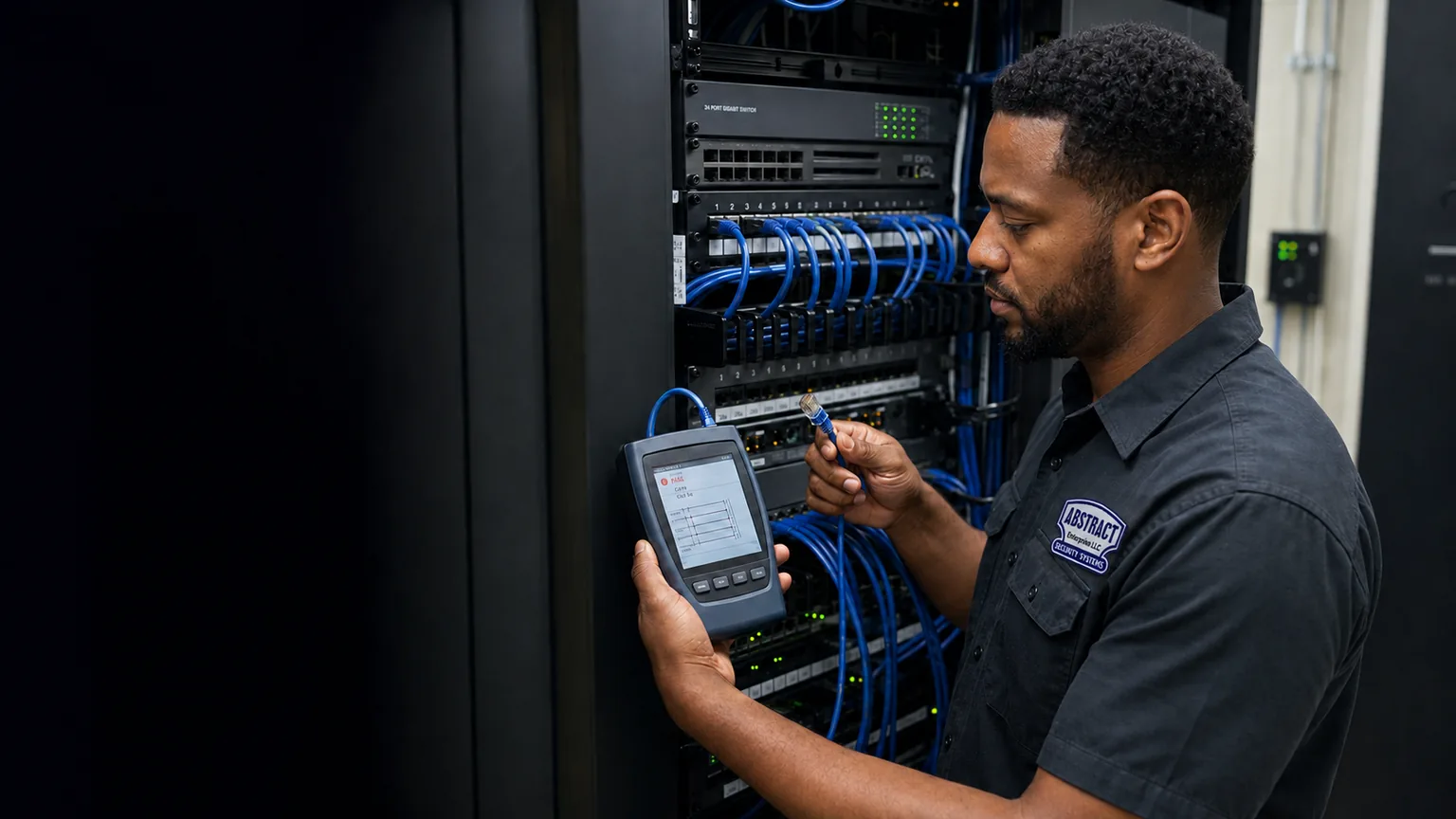
Every repaired run measured for wiremap, distance and performance, with the report saved and the margin recorded.
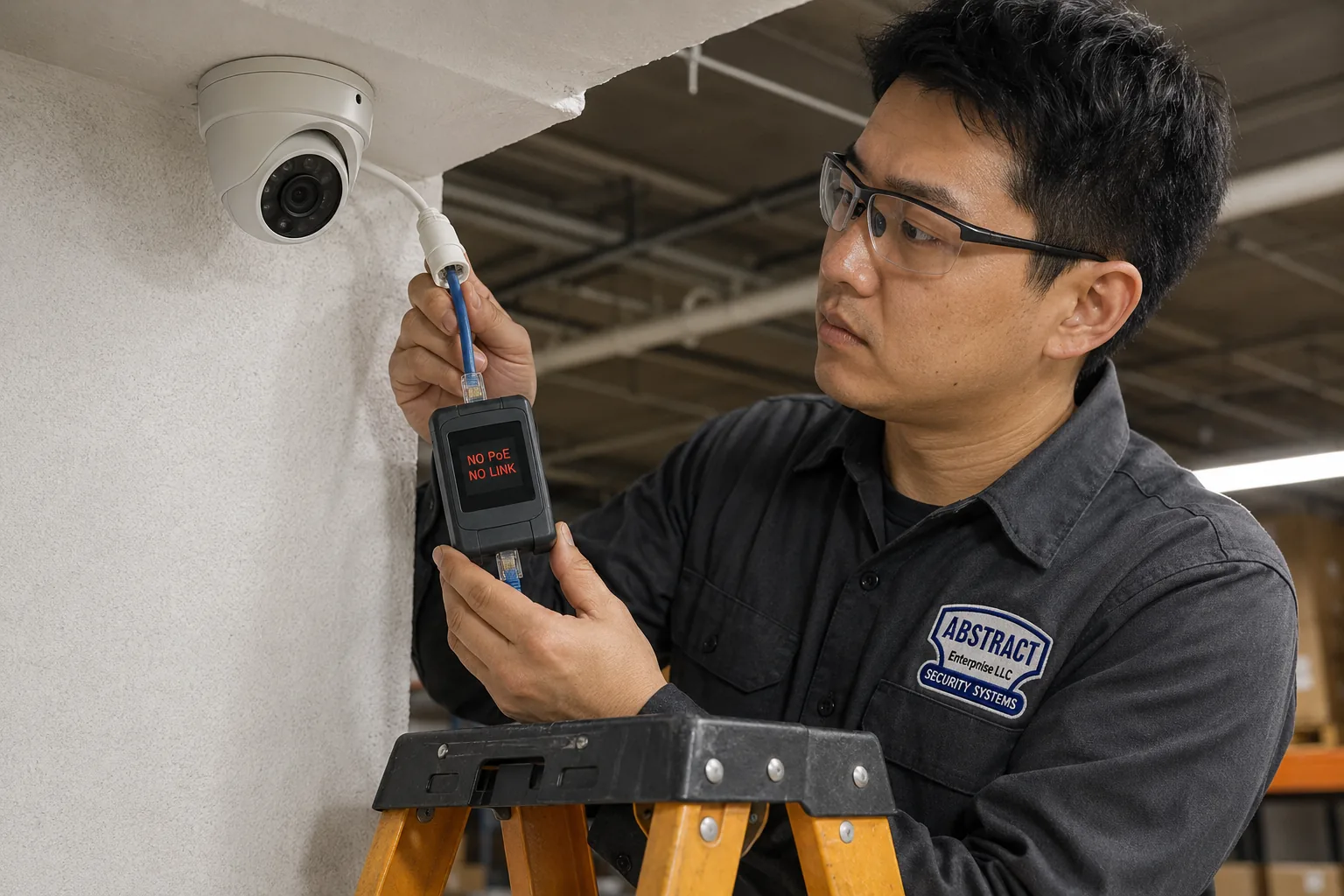
PoE Circuit Troubleshooting
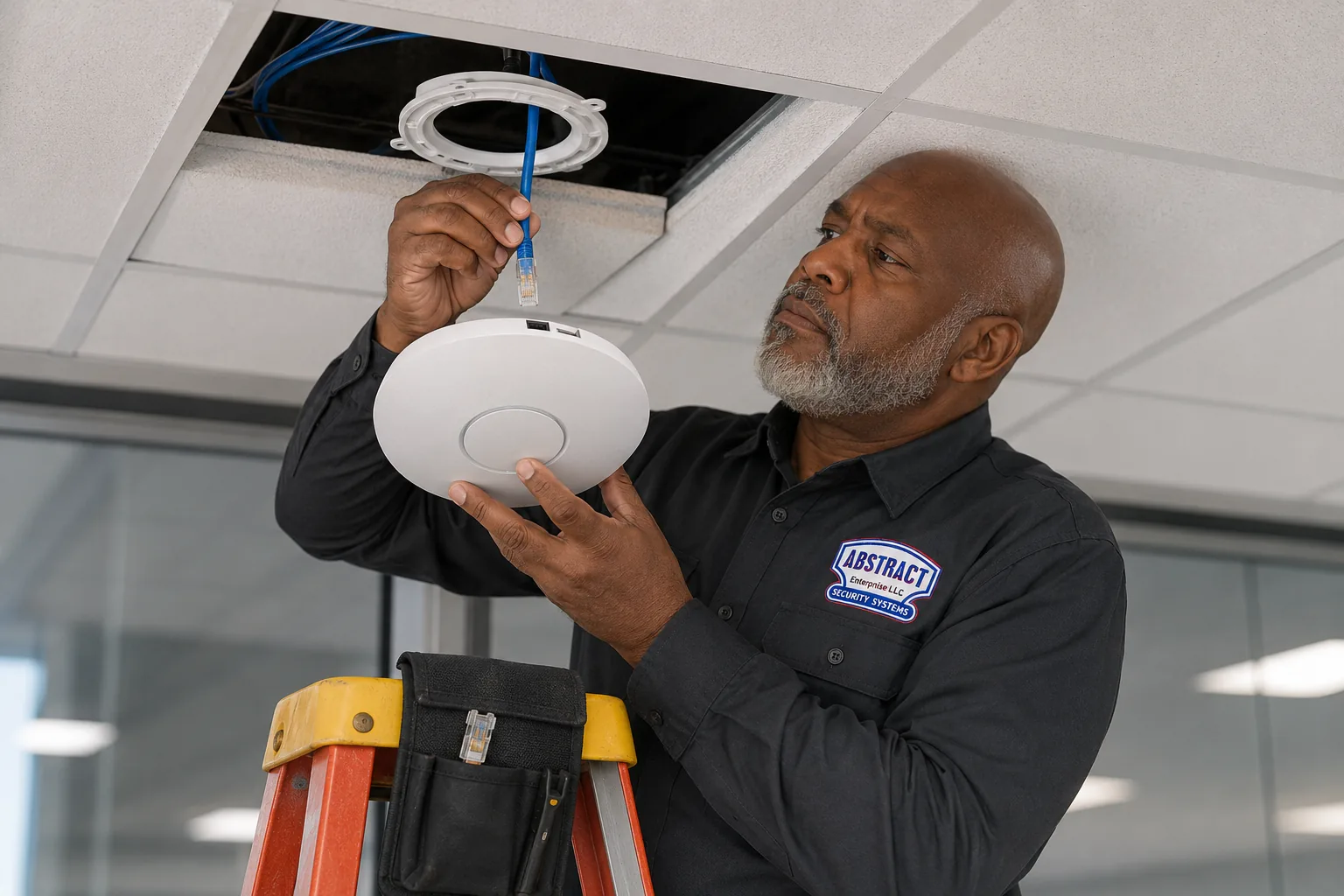
Cameras and access points that cycle. Metered at the device while drawing, which also distinguishes a supply problem from a cable one.
Commonly paired: after weather, the camera and gate runs on a Putnam property are as likely to be affected as the data cabling, and for the same reasons. Testing them in the same visit avoids a second drive across the county — see camera repair and access control.
Plain English
Terms That Come Up on a Putnam Job
The first three explain why so many faults here are misattributed.
Term
What It Means on a Putnam Property
Sag
A momentary dip in supply voltage, too short to be called an outage but long enough to restart equipment. Common on long overhead feeders.
Boot order
The sequence in which equipment restarts after power returns. Get it wrong and a network can appear broken while every cable in the building is perfect.
Surge path
The route energy takes into equipment during weather. Where a cable leaves the building without bonding at the entry, it is one.
Battery backup
Equipment that carries the network through a brief interruption and shuts it down cleanly on a long one, preventing the wrong-order restart entirely.
Split pair
Every conductor lands correctly but two of them are partnered with the wrong wires. The port settles at 100 Mbps and will not go higher, so the user reports it as slow.
Certification
A recorded measurement against the category standard with remaining margin noted. It is what removes the cable from an argument with a number.
Bonding at entry
Tying protection to building ground where a run comes in from outside. Its absence is why weather damages equipment rather than just cable.
Insertion loss
Signal given up along the run, rising with temperature and with water in the path.
Demarc
The end of the carrier's obligation. Everything on the building side belongs to the owner, and that is where our scope starts.
Remote triage
Narrowing a fault by question and, where possible, by inspecting reachable equipment, before a visit is booked.
Equipment
Hardware and Test Equipment on a Putnam Repair
We work with what is installed and replace with commercial-grade components matched to the existing link — Belden, CommScope, Panduit, Leviton, Hubbell, Ortronics, ICC, Berk-Tek and Superior Essex, with outdoor-rated cable and sealed, bonded entry hardware wherever a run leaves the building for an outbuilding, gate or pole. Grade matching decides the outcome: a Cat5e outlet on a Cat6 link derates the entire link whatever runs between them.
Where the active equipment is Cisco, Meraki, Aruba, UniFi, Netgear, TP-Link, Luxul or Araknis, our job is the cable fault sitting beneath it, and likewise beneath powered cameras, radios, handsets and readers. We do not configure any of it: no switch administration, no segmentation, no controllers, no firewall policy. We certify the link and hand the results to whoever runs the network — which on many Putnam sites is a small IT firm or the owner.
The certifier does something specific here beyond finding faults: it settles arguments. When a site has replaced a switch after a storm and the problem persists, a measured report that the copper is clean is what stops the next round of guessing. When it is not clean, the same report tells you exactly which run and how far along.
Need Repair in Putnam County Today?
Same-day and next-morning coverage county-wide. Where the equipment is reachable we will attempt to narrow the fault before dispatching, which on a small site frequently saves a visit entirely.
On a Putnam call the first job is deciding whether there is a cable fault at all.
That sounds obvious and it is routinely skipped. A network that misbehaved after a storm may have nothing wrong with its copper — equipment restarted in the wrong order, a firewall came up after the switches, an access point never re-registered. Establishing that costs a few questions and occasionally a remote look, and it saves a site visit and a parts order.
Where there is a genuine physical fault, the sequence is the usual one: locate it by measurement, repair it properly, and certify the result with the remaining margin recorded. And where a run leaves the building, correct the entry rather than reproducing it — because after the next storm you want the answer to be the same one, not a repeat of this call.
Full Scope
Full Scope of a Putnam Network Cable Repair
Diagnostics
Remote triage before dispatch where equipment is reachable
Power-event versus cable-fault separation
Fault location by measured distance on broken or shorted runs
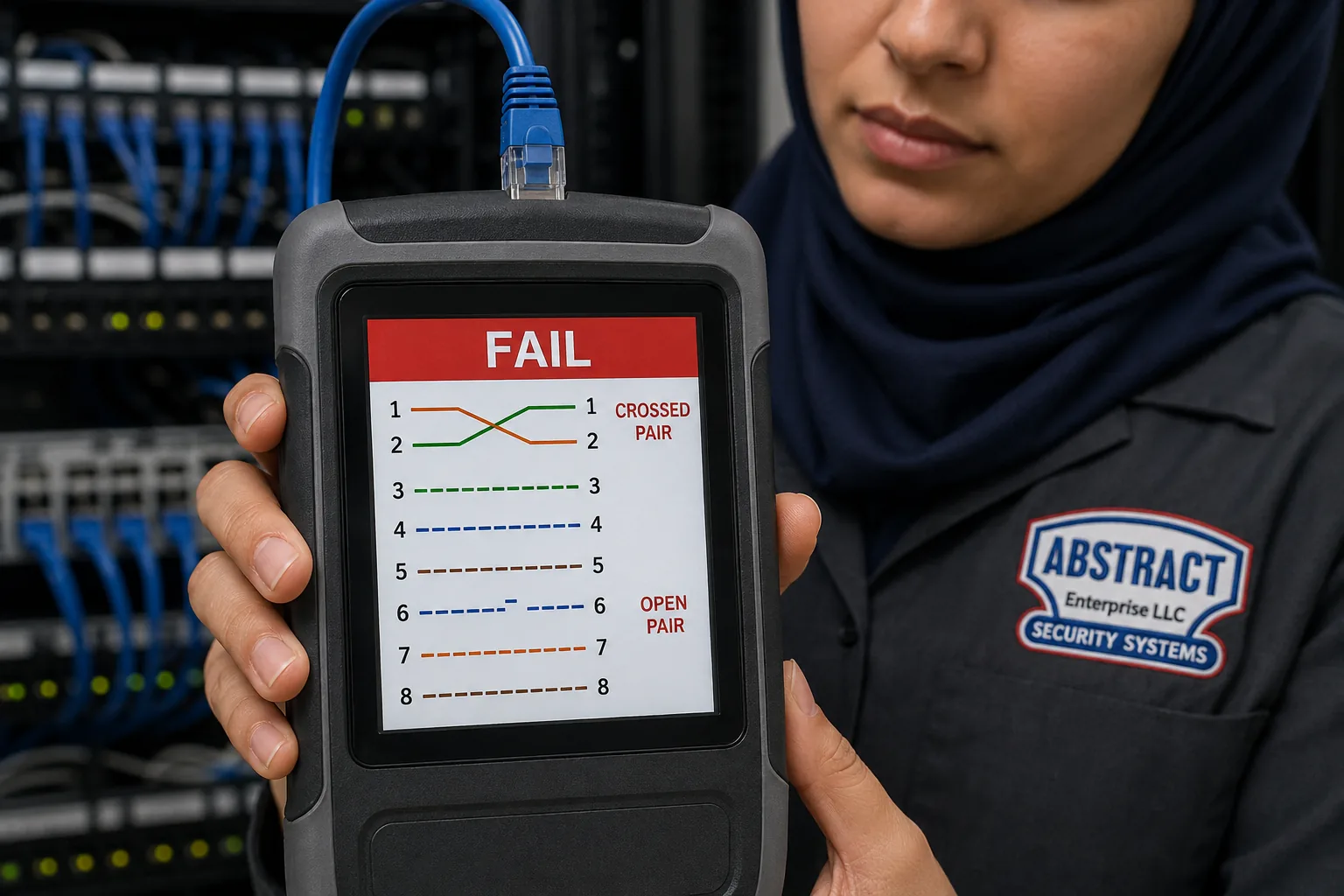
Wiremap faults: opens, shorts, reversals, split and crossed pairs
Measured length against the 90 m and 100 m limits
Insertion loss and crosstalk with remaining margin recorded
Entry inspection on any run leaving the building
PoE measurement at the device under genuine draw
Physical Repair
Keystone and patch panel retermination
Junction repair of matching grade on damaged runs
Outdoor-rated replacement where a run leaves the building
Sealed and bonded entries with a drip loop
Full run replacement where certification fails
Battery backup fitted or corrected where boot order is the real fault
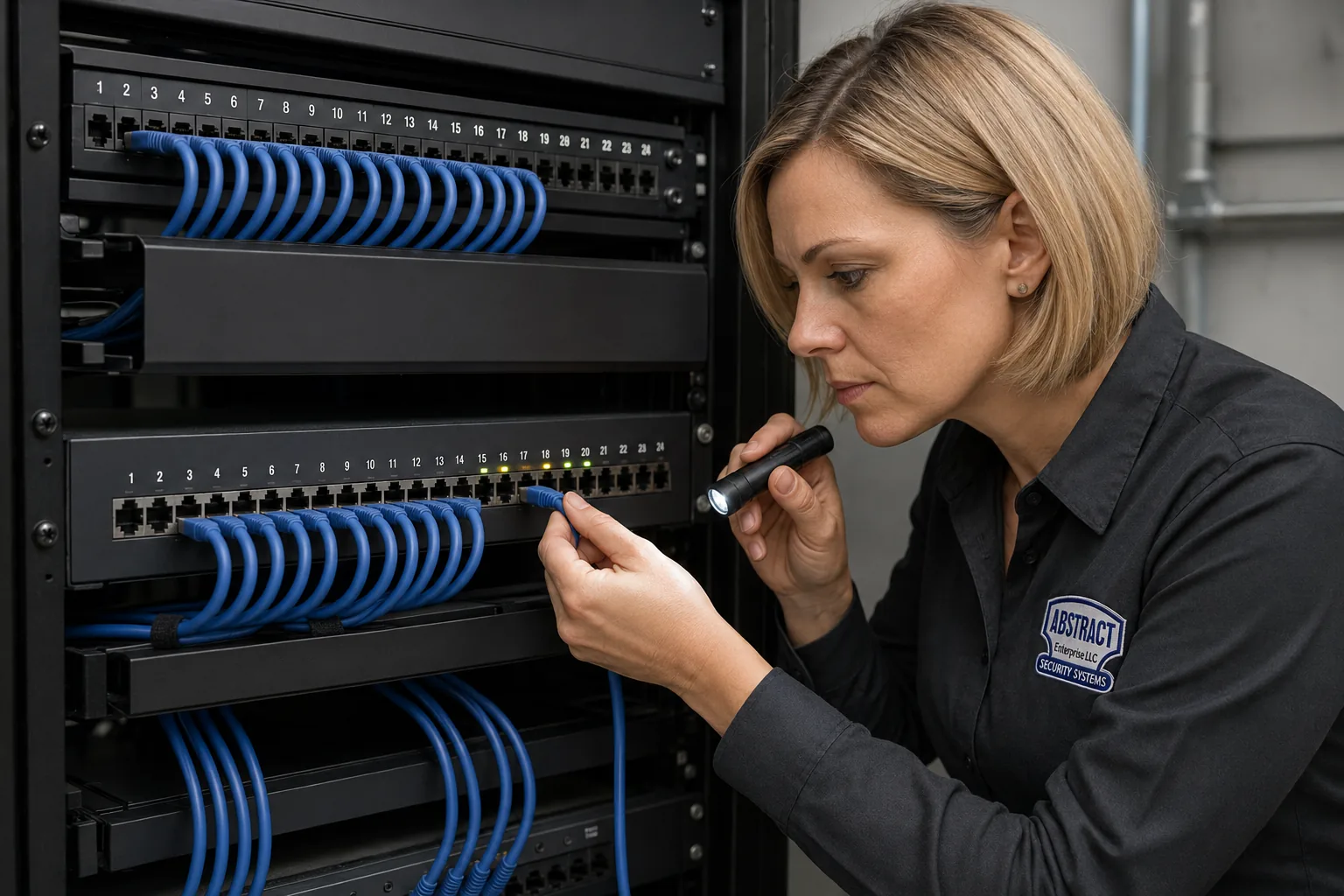
Rack and panel re-dress, cable management, patch cord replacement
Firestop restoration at penetrated rated assemblies
Documentation
Saved test results per repaired run, with distance and margin
A plain statement of whether the cause was supply or cable
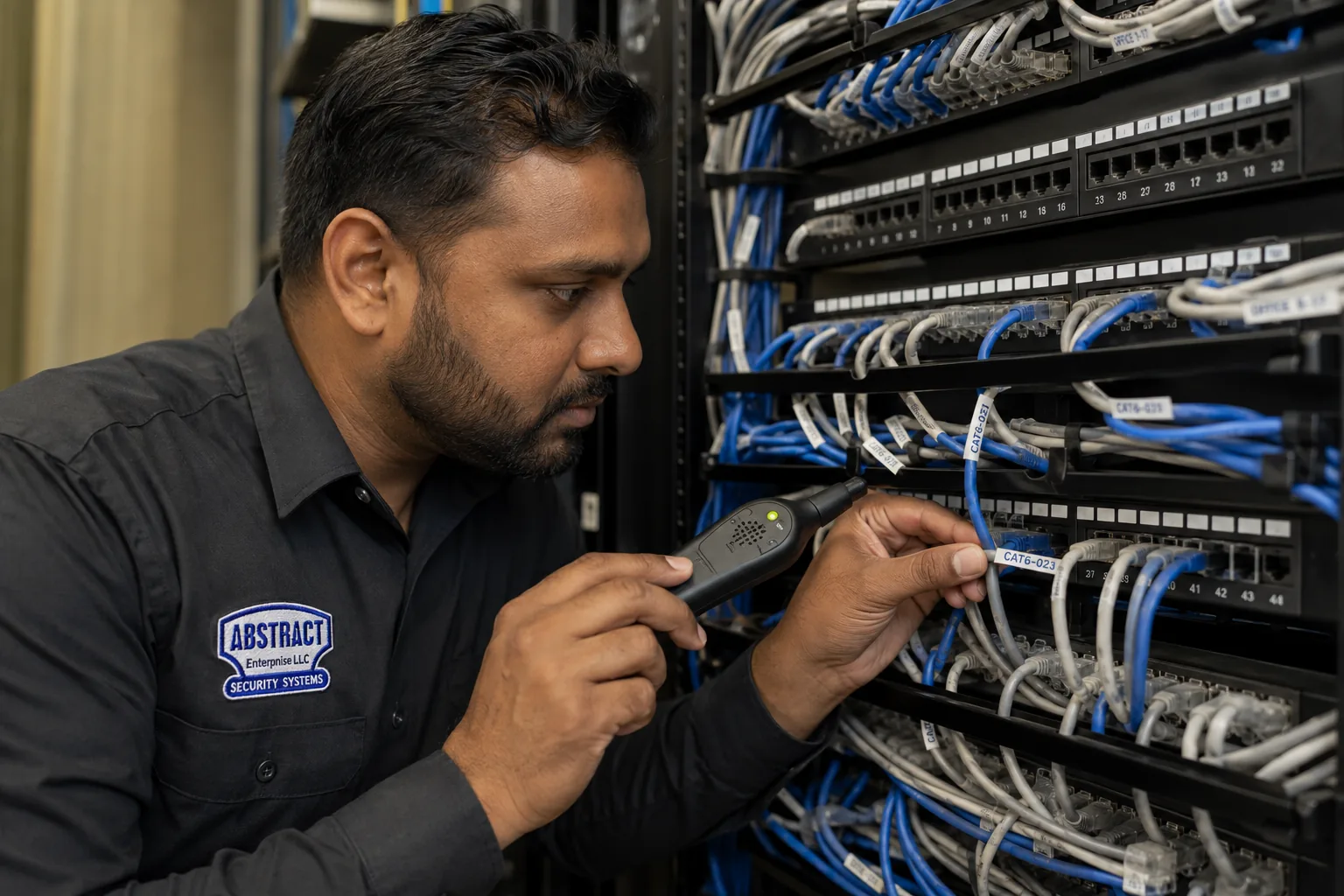
Both-end labelling and a legend for the equipment position
Photo record of entries and concealed repairs
Written findings a non-technical owner can act on
Site Logistics
Remote narrowing before dispatch wherever possible
Visits scoped to complete rather than to diagnose
Before-opening and after-close windows for retail and food service
Exterior work planned around weather and ground conditions
Certificate of insurance where the property requires it
Findings written for an owner rather than an engineer
Coverage Detail
Where We Work Across Putnam County
The Route 6 and Route 52 spine carries most of the county's commercial activity. Carmel holds the county seat, the courts and the professional and medical tenancies around them; Mahopac runs along Route 6 with retail, restaurants and services; Baldwin Place, Somers Corners and the Route 6 plazas continue west toward the Westchester line. Lake Carmel and Kent sit north of the corridor.
Brewster and the eastern towns follow Route 22, Route 312 and the I-84 interchange. Brewster village, Southeast, Patterson and the industrial and trade premises around the interchange form the county's small distribution and light-industrial pocket, with commuter-driven retail and services alongside.
The river towns are entirely different. Cold Spring and Nelsonville on Main Street hold nineteenth-century village commercial — restaurants, retail, galleries and professional offices in masonry buildings with cellar panels and no equipment room — with Garrison, Continental Village and the Philipstown properties around them, many with more than one structure on a parcel. Putnam Valley and the lake communities fill the county's centre.
Who We Serve
Putnam Industries We Repair Cabling For
Village Main Street Commercial
Carmel, Cold Spring, Brewster, Mahopac. Older buildings, cellar panels, no equipment room and improvised routes.
Medical and Dental Practices
Carmel, Mahopac, Brewster. Small practices with no technical staff and no tolerance for a link that comes and goes.
Restaurants and Hospitality
Cold Spring and the river towns in particular, with seasonal visitor trade and outdoor service areas.
Retail and POS
Route 6, Route 22 and the county's plazas. Card terminals failing after weather as often as at peak.
Professional Offices
Legal, accounting and insurance tenancies around the county seat, frequently in converted residential buildings.
Contractors' Yards and Trade Premises
Yards, gates and outbuildings, with runs leaving the building and entries that were never detailed properly.
Municipal and Institutional
Town and village halls, libraries, courts and district facilities across a small county.
Lake and Recreational Properties
Clubs, marinas and seasonal facilities around Lake Carmel, Lake Mahopac and the reservoirs.
Properties With Outbuildings
Barns, garages, annexes and detached structures linked back to a main building.
Real Questions
Fourteen Questions Putnam Businesses Actually Ask
Drawn from recurring themes in small-business, IT and Hudson Valley local discussion threads, grouped by the six question types that come up most.
Cost Questions
1. What does a repair cost here?
$195 an hour against a three-hour minimum, so the opening block is $585. Before that, if your equipment is reachable we will try to narrow the fault remotely, and on a small site that step regularly avoids the visit altogether.
2. Is there a charge for the remote triage?
Not for the questions. If it turns into genuine remote diagnostic work we will say so before starting. The point of it is to avoid billing you for a drive that was never going to help.
3. Why does the quote include correcting the entry rather than just the cable?
Because on a run that leaves the building, the entry is usually why it failed. Replacing cable through an unsealed, unbonded hole reproduces the fault on the same schedule, and after the next storm you are back where you started.
Quality and Trust Questions
4. We replaced the switch after a storm and it is still wrong. What now?
Measure the cable before buying anything else. A certified report either removes the copper from the argument with a number or tells you exactly which run and how far along the fault sits. Either way it ends the guessing, which after a storm is worth more than another part.
5. Do I need a licensed contractor?
Anything past changing a cord, yes. Cabling is low-voltage work with obligations on jacket rating, firestopping and bonding, and any property with insurance requirements will ask for a licence number. Ours is NYS Low-Voltage #12000287431.
6. Nobody here is technical. Will the report be usable?
That is deliberate. The findings are written for an owner rather than an engineer: what was wrong, whether it was supply or cable, what was done and which runs are close to the edge. The detailed test output is there too, for whoever handles your IT.
DIY and Pro Questions
7. After an outage, what should we try before calling?
Restart in order: modem or carrier equipment first, wait for it to settle, then the firewall or router, then the switches, then the access points. A surprising share of post-outage calls resolve there, and it costs nothing to try.
8. Is the tester from the hardware store useful?
For pin order, yes. It reports no distance, no signal loss and no margin, and on a run that has been through several winters those are the numbers that matter.
9. Can we run a cable out to the barn ourselves?
Physically yes, and it is the most common self-inflicted fault on rural properties. Indoor cable outdoors, an unsealed entry and nothing bonded produces a link that works for a season and then fails permanently, and the unbonded entry damages equipment as well as cable.
Technical Questions
10. How do you tell a power problem from a cable problem?
By what fails and in what pattern. Everything restarting together points at supply. One outlet dead while the rest work points at cable. Equipment coming back in the wrong order after an outage points at boot sequence and is fixed with battery backup rather than copper. Where it is genuinely ambiguous, the certifier settles it.
11. Our link to the outbuilding dies every winter. Why?
Look at the entry and the route. Water at an unsealed penetration, movement at an attachment, and cable never rated for outdoors all show up seasonally. If the run has been replaced before and failed again, the specification and the entry are the things that were not changed.
12. A single port sits at 100 Mbps while every other one manages 1000. Why?
A pair is broken or crossed. The older standard needed only two pairs so the port links happily, while gigabit needs all four and either refuses or drops straight back.
Landlord and Tenant Questions
13. We rent a unit in a village building. Who owns the cabling?
Usually the tenant owns what serves their unit, with the building providing the path and a point of presence — but small village leases are frequently silent on it. We document what is physically there and where the fault sits, which is what the parties actually negotiate from.
Complaint Questions
14. Every storm we go through this again. Is there a permanent fix?
Usually yes, and it is two things. Battery backup so equipment rides through brief interruptions and shuts down cleanly on long ones, which removes the boot-order failures entirely. And correcting the entries on any run that leaves the building, which removes the weather-driven cable faults. Together they turn a recurring annual call into a rare one.
Answer The Public
Answer The Public: Putnam Network Cable Questions
Who repairs network cable in Putnam County?
Licensed low-voltage contractors. An electrician installs pathway and anything energised but usually passes terminations on; an IT firm runs the network above the cable and seldom owns a certifier. A dead run in a Cold Spring village building is cabling work.
What causes cabling to fail in Putnam buildings?
Weather-driven damage at entries on runs leaving the building, cable never rated for outdoors, corrosion in cellar panels, terminations executed without twist discipline — and a large number of reported faults that turn out to be supply events rather than cable at all.
When is a run beyond repair?
When it will not certify after both terminations are redone, when the measured distance exceeds spec, when it has been submerged or weather-damaged along its length, or when the specification was wrong for an outdoor route from the start.
Where do faults sit on a Putnam property?
At terminations first, then at every point a run leaves or re-enters a structure, then in cellar panels that have taken damp. And frequently nowhere in the cabling at all, which is why the first step is separating supply from copper.
How quickly can a Putnam repair be scheduled?
Same day or next morning across the county. Where equipment is reachable we will narrow the fault first, because on a small rural site that can turn a visit into a phone call.
Reality Check
AI Overview Reality Check: What Search Results Miss About Putnam Cabling
Search for network cable repair in Putnam County and you get a national cost average, lead-generation directories, and troubleshooting that assumes clean, uninterrupted power. On a wooded county fed overhead, that assumption does most of the damage.
1. Published Troubleshooting Assumes the Power Never Blinks
Almost every online guide starts from the position that equipment has been running continuously. In a hilly, heavily wooded county on long overhead feeders, sags and brief interruptions are routine and most sites see several a year.
Each one restarts something, and equipment that comes back in the wrong order produces a network that looks comprehensively broken while every cable in the building is perfect. Switches up before the firewall, access points up before their switch, devices never re-registering.
The first useful question after any weather event is therefore not which cable failed, but whether anything failed at all. Restarting in order resolves a real share of calls at no cost.
2. It Also Assumes Storms Only Affect Power
The inverse error is just as expensive. Not everything after weather is a supply problem, and sites that assume it is will replace switches while a genuinely damaged run sits there.
Where a cable leaves the building for a barn, a gate, a pole or an outbuilding, weather does real physical damage: water at an unsealed entry, movement at an attachment, and surge arriving where nothing was bonded.
Both causes are live after a storm, which is precisely why a measurement matters. A certified report removes the copper from the argument with a number rather than an opinion.
3. Cost Averages Assume Somebody On Site Knows the Network
Aggregated cost pages implicitly assume a technical contact who can describe the fault accurately. Most Putnam commercial premises are small — a practice, a shop, a restaurant, a yard — with nobody whose job is the network.
That changes the shape of good service. The useful first step is narrowing by question, and where the equipment is reachable, by looking, before anybody drives anywhere. Half the emergencies resolve there.
It also changes the deliverable. A report full of test output nobody on site can read is filed and never used; a plain statement of what was wrong and what was done is what actually gets acted on.
4. Nothing Online Mentions Boot Order and It Is Free to Fix
The sequence equipment restarts in after power returns is absent from consumer-facing troubleshooting, and it accounts for a meaningful share of post-outage calls in this county.
Carrier equipment first, then the firewall or router, then switches, then access points, with a pause between each. Get it wrong and the network appears dead with nothing physically wrong.
Battery backup removes the problem permanently by carrying the site through brief interruptions and shutting down cleanly on long ones. It costs less than one wasted call-out.
5. Drive Time Is Real and Should Change How Work Is Scoped
Nothing in Putnam is far in miles and everything is slow in minutes. Cold Spring to Brewster is a genuine journey on winding roads.
That does not justify a travel surcharge; it justifies triage and scoping. Narrow first, then visit with the right equipment and scope the trip to finish rather than to diagnose.
Aggregated cost pages, written for dense markets, reflect none of this and produce expectations that do not survive contact with a rural county.
6. Lead Directories Sell Your Number Rather Than Checking Anyone's Kit
Angi, HomeAdvisor, Thumbtack and their equivalents resell one enquiry to several firms, and whoever answers first is usually paying most per lead. Ratings sit on accounts spanning many trades.
What breaks it for cable work is how the listings are organised. Pulling and terminating copper is grouped with configuring routers and sorting out wireless, so an enquiry that needs a certifier, a tone set and a punch tool reaches whoever replies first regardless of what they own.
Three questions settle it: what certifier is on the van, will I get a saved result per run, and what is your New York State low-voltage licence number.
7. Rural Outbuildings Get No Coverage at All
A great many Putnam commercial properties have more than one structure — a barn, a garage, an annexe, a trailer — linked back to a main building by a run somebody put in years ago.
Those runs fail seasonally and predictably: wrong jacket, unsealed entry, nothing bonded, no drip loop. Each of those is cheap to correct while somebody is at the wall and expensive to keep ignoring.
General guidance, written for a single building, has nothing to say about any of it, which is why the same run gets replaced repeatedly with the same result.
Find Out Whether It Is Even the Cable.
Certified testing on every repair. Licensed NYS low-voltage contractor. 4.7★ from 201 reviews.
Restart everything in the right order after an outage
Yes
Carrier equipment, then firewall or router, then switches, then access points, pausing between each. This resolves a real share of post-storm calls.
Swap the patch cord at both ends
Yes
Costs nothing and settles a fair number of faults before they become visits.
Move to a different switch port
Yes
A minute of work that clears or convicts the switch.
Test the device on a known-good outlet
Yes
Works elsewhere and the fault is the original outlet or its run.
Note whether everything failed or only one thing
Yes
The single most useful observation you can make. Everything at once points at supply; one outlet points at cable.
Re-punch a keystone jack
Borderline
Feasible with the right tool, though whether it certifies depends on the twist surviving to the contact.
Run cable out to a barn or garage yourself
No
Wrong jacket, unsealed entry, nothing bonded. It works for a season and then fails permanently, and it damages equipment on the way.
Diagnose a fault that only appears after weather
No
Both supply and cable are live candidates and only a measurement separates them.
Work in a panel that has taken damp
No
Corroded contacts and uncertain grounding. This gets assessed rather than poked at.
A quarter hour, nothing owed: the five rows above marked yes. The restart-in-order step is the one worth learning — in this county it resolves more calls than any other single action.
Alternatives
How a Licensed Cabling Contractor Compares Here
vs. Your IT Provider
Strong on configuration and generally honest that copper is not their trade. On a small rural site the practical issue is that the physical work is subcontracted, so the visit belongs to a third party's schedule.
vs. Lead-Generation Platforms
Your enquiry is resold to several bidders and the fastest reply reflects lead spend rather than fit. Nothing there establishes whether the responder owns a certifier or will drive out for one drop.
vs. Your Carrier's Technician
Their remit ends at the demarcation point, which they will tell you and which is fair. After weather they will verify the incoming circuit is healthy — genuinely useful information — and then decline, rightly, to look past it.
vs. Your Electrician
Exactly the right trade for the supply side, and genuinely needed where bonding, surge protection or a generator transfer is involved. They will not certify a data link, and on a post-storm fault you frequently want both trades rather than one.
vs. A Local Handyman
Fine for cords and faceplates and often the fastest hands available. Where it goes wrong is any run leaving the building, because jacket rating, sealing, bonding and a drip loop are not obvious unless somebody has taught you them.
Warning Signs
Five Signs It Is the Cable Rather Than the Power
One outlet is dead while everything else works. Supply problems take down groups. A single dead point is that run and its terminations.
The fault survived a full, correctly ordered restart. If restarting properly did not fix it, you are past boot order and into physical layer.
A port holds 100 Mbps while its neighbours reach 1000. A pair is broken or crossed. No supply event produces that.
The link to an outbuilding fails seasonally. Weather at an entry, not a brownout. It will keep happening until the entry detail changes.
Only one device misbehaves and it is fine on a short cable. The installed run, not the equipment and not the supply.
Community
Community Chatter: Recurring Themes From Public Forums
Paraphrased themes from public homeowner, small-business and IT discussion threads — not customer reviews of AESS.
Rural small-business threads repeatedly describe post-storm outages resolved simply by restarting equipment in the correct order, after a switch had already been bought.
Discussions about outbuildings consistently end at the same place: the run to the barn had indoor cable and an unsealed entry, and had been replaced more than once with the same result.
Owners in wooded areas frequently note how often brief interruptions occur and how rarely anybody connects them to the network problems that follow.
Small-site operators regularly say the useful part of a service call was being told plainly whether the cause was power or cable, rather than receiving a page of test output.
Support procedures written independently by different organisations open with the same first checks, which usually means the sequence has held up against real faults.
Field Video
Watch: Field Diagnostics on a Putnam County Repair Call
Short-form field clips from our channel: youtube.com/@openeye0007 Embed slot reserved — drop the Short iframe here once the clip ID is set.
FAQ
Network Cable Repair Putnam County — Twelve Frequently Asked Questions
What does network cable repair cost in Putnam County?
+
The specialty service rate is $195 an hour against a three-hour minimum, so $585 covers the opening block: locating the fault, repairing it, certifying it and recording the result. New cable starts at $175 for a commercial Cat6 drop. Before any of that, where equipment is reachable we will try to narrow the fault remotely.
How do you tell a power problem from a cable problem?
+
By the pattern. Everything failing together points at supply. One outlet dead while the rest work points at cable. Equipment returning in the wrong order after an outage points at boot sequence, which is fixed with battery backup rather than copper. Where it is genuinely ambiguous, a certified measurement settles it.
What should we try after a power cut before calling?
+
Restart in order and pause between each step: carrier equipment first, then the firewall or router, then the switches, then the access points. A real share of post-outage calls resolve there and it costs nothing to try.
We replaced the switch after a storm and it is still wrong. What now?
+
Measure the cable before buying anything else. A certified report either removes the copper from the argument with a number or identifies exactly which run and how far along the fault sits. After a storm, ending the guessing is worth more than another part.
Our link to the barn fails every winter. Why?
+
Almost certainly the entry and the specification rather than the cable itself. Indoor-rated jacket outdoors, a penetration nobody sealed, nothing bonded and no drip loop all produce seasonal failures, and replacing the cable through the same hole reproduces them exactly.
Is a damaged run salvageable, or is it always new cable?
+
One accessible point of damage takes a properly made junction of matching grade, verified on a certifier. Replace when it fails after both terminations are redone, when measured distance breaks spec, or when it has been weather-damaged along its length.
An outlet is completely dead. Where do you look first?
+
Starting with the likeliest: the cord and whether its clip is intact, then a position at the panel that was never finished or was wired the other way round, then an outlet where the wires sit in place but were never driven home, and only then damage out on the run itself.
Nobody here is technical. Will we understand the report?
+
Yes, deliberately. The findings state plainly whether the cause was supply or cable, what was done and which runs are close to the edge. The full test output is included as well for whoever handles your IT.
Is there a way to stop this happening every storm?
+
Largely, and it is two things. Battery backup carries the site through brief interruptions and shuts it down cleanly on long ones, which removes boot-order failures. Correcting the entries on runs that leave the building removes the weather-driven cable faults. Together they turn an annual call into a rare one.
Do you provide certified test reports?
+
Yes. Every repaired run is measured and you receive the saved result including distance and remaining margin, with both-end labelling and a plain-language summary alongside it.
How is the completed work warranted?
+
Anything AESS supplies is covered for twelve months on parts under the terms of the service agreement. That cover ends if the installed work is altered or interfered with before written approval is given.
Do you work in the neighbouring counties?
+
Yes. The Hudson Valley hub covers this county and the five others around it, and the NYC hub covers the city.
Service Areas
Putnam County Coverage
The whole county, river to the Connecticut line.
Route 6 Corridor
Carmel, Mahopac, Baldwin Place, Lake Carmel, Kent, the Route 6 plazas.
Brewster and the East
Brewster village, Southeast, Patterson, Route 22, Route 312, the I-84 interchange.
The River Towns
Cold Spring, Nelsonville, Garrison, Continental Village, Philipstown.
Central Putnam
Putnam Valley, the lake communities, Oscawana, Roaring Brook and the reservoir properties.
Hudson Valley Hub
The regional hub above this page, covering all six counties.
Applied only where ceiling space is used for return air
After-hours or weekend window
Premium applies
For buildings restricting low-voltage work to off-hours
Published starting rates for Putnam County. No travel surcharge; instead we narrow the fault before dispatch where possible and scope the visit to complete. Final pricing follows from access, route, jacket rating and testing scope, and goes in writing before work starts. Full terms — including 50% deposit, one-year parts-only warranty on AESS-supplied products, and the late-fee schedule — are set out in the service agreement. See structured cabling pricing for new-installation drop rates and Cat6 installation Putnam County for per-drop grade comparisons.
The defining Putnam diagnostic problem. Long overhead feeders under heavy tree cover produce frequent sags and interruptions, and equipment restarting in the wrong order looks exactly like broken cabling.
Weather Damage at Entries
Runs leaving the building for a barn, gate, pole or annexe, with an unsealed penetration, no bond and no drip loop. They fail seasonally and predictably.
Indoor Cable on Outdoor Routes
A jacket never intended for sunlight and water, feeding a detached structure. It works for a season or two and then degrades permanently.
Corrosion in Village Cellar Panels
Carmel, Brewster, Cold Spring and Mahopac village buildings with below-grade terminating space taking damp across seasons.
No Technical Staff On Site
Small premises where the reported symptom is all anybody can offer. It makes remote narrowing valuable and makes a plain-language report far more useful than raw output.
Repeat Replacement Without Diagnosis
A switch bought after one storm, cable pulled after the next, and nobody measuring anything. The cycle continues until something is actually tested.
Cross-sell note: after weather the camera, gate and intercom runs on a Putnam property fail for exactly the same reasons as the data cabling. Testing them in the same visit avoids a second drive across the county — see camera repair and access control.
From the Field
Field Notes
The first question on a Putnam call is whether everything went down or just one thing. That single answer sorts most faults into supply or cable before anybody gets in a vehicle.
After weather, ask whether the site has been restarted in order. It sounds trivial and it resolves a genuine share of calls, and nobody minds being told the fix was free.
On any run leaving the building, look at the entry before the cable. Jacket rating, seal, bond and drip loop — a run failing all four has been on borrowed time since installation, and new copper through the same hole changes nothing.
Write the finding for the owner. Most sites here have nobody technical, and a plain statement of whether it was power or cable is the part that actually gets used. The test output goes underneath it for whoever handles the IT.
Get In Touch
Request a Free Quote
Fill out the form below and we'll get back to you within the hour. Or call us directly at (845) 640-3835.
✅
We Got Your Request!
We'll call you back within the hour. If it's urgent, call us now at (845) 640-3835.
Emergency
Need Repair in Putnam County Right Now?
Network out, register offline, camera feeds lost after weather. Same-day and next-morning county-wide, with remote narrowing first wherever the equipment allows it.
Last reviewed: August 25, 2026 · Next scheduled review: November 2026 Changelog: Aug 2026 — page published. Separating supply events from cable faults established as the primary Putnam thesis; remote triage before dispatch documented; boot-order guidance and battery backup added to scope and pricing; outbuilding entry detail added; plain-language findings for non-technical owners documented; pricing aligned to the $195/hr specialty rate with a three-hour minimum; direct Hudson Valley line (845) 640-3835 used throughout.
Network Cable Repair Putnam County — Licensed, Measured, Explained
NYS Low-Voltage Lic. #12000287431 · 4.7★ from 201 reviews · Serving New York City, Long Island and the Hudson Valley.