What are you looking for?
About Us Contact Us Careers Get a Free Quote 845-640-3835
Pick a service
✅ Got Your Own System?
🎬 Home TheatreQuote 🎶 AV SoundQuote 🔑 Access ControlQuote
Now pick your area
Pick your area
Long Island
Hudson Valley
Services available
Pricing & Tools
Pick a service for pricing
🚪 Intercom Pricing 🔔 Buzzer Repair Pricing
Calculators
📹 Camera System Calculator 🚨 Alarm Calculator ⚡ Cabling Quote Builder ✅ Got Your Own System?
Select your area
Putnam County, New York

Cat6 Installation Putnam County

Cat6 cable installation · data drops · patch panel termination · outbuilding & weather-rated runs · testing & labeling

Cat6 installation for professional and medical offices in Carmel and Mahopac, the Brewster and Southeast commercial corridor, Cold Spring’s Main Street, municipal and school buildings, retail along Route 6, and houses and lake property across the county.

Putnam is the smallest county we cover and almost every job here is a small one. That is not a lesser version of commercial cabling — it is a different discipline, where a fair price means not inventing line items, and where the documentation matters more precisely because there is no IT department to fall back on.

4.7 / 201 Google Reviews NYS Low Voltage #12000287431 Licensed & Insured Cat6 drops from $321

Get a Cat6 Quote

Tell us the building and roughly how many drops — we'll come back with a number.

Or call 845-640-3835

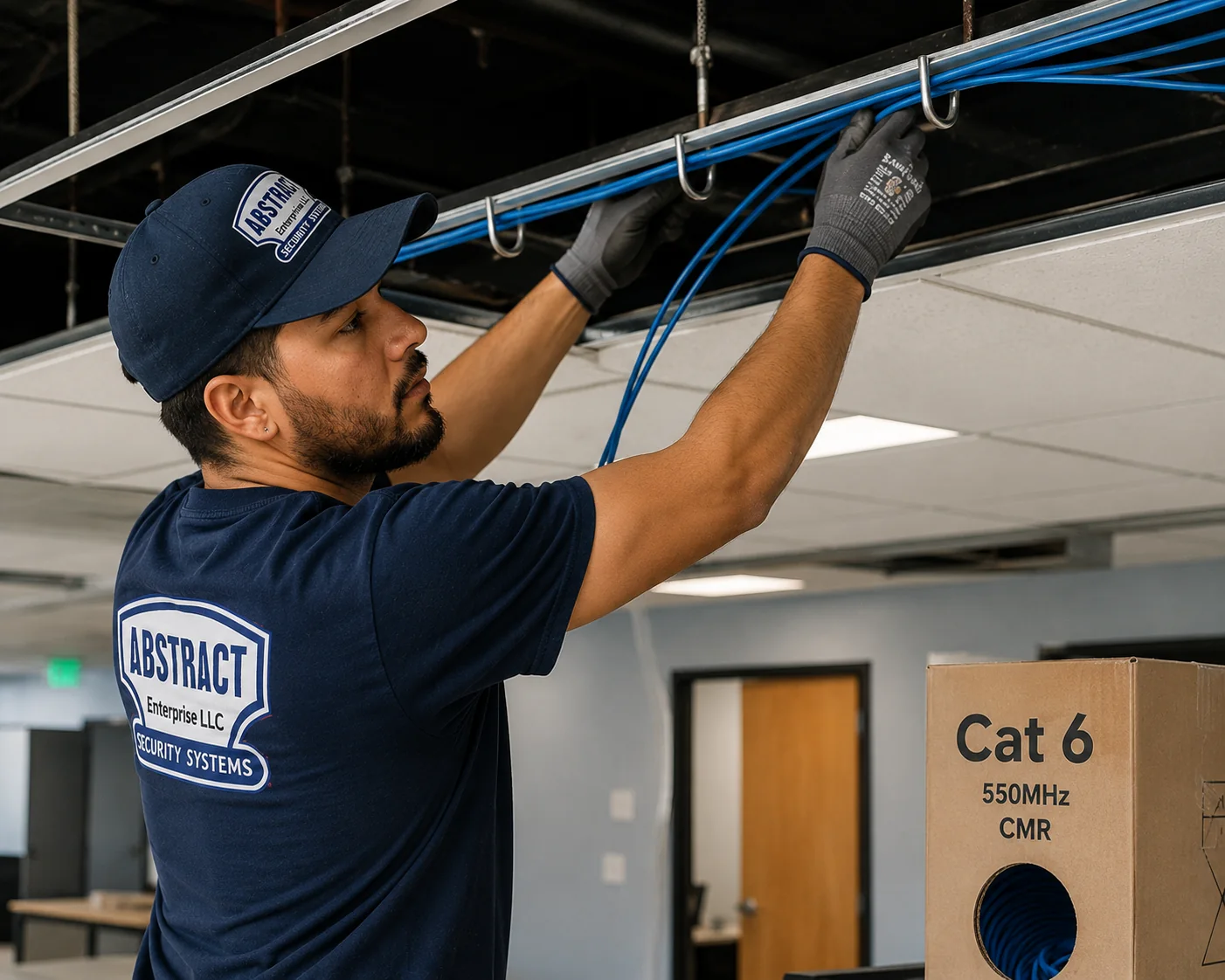
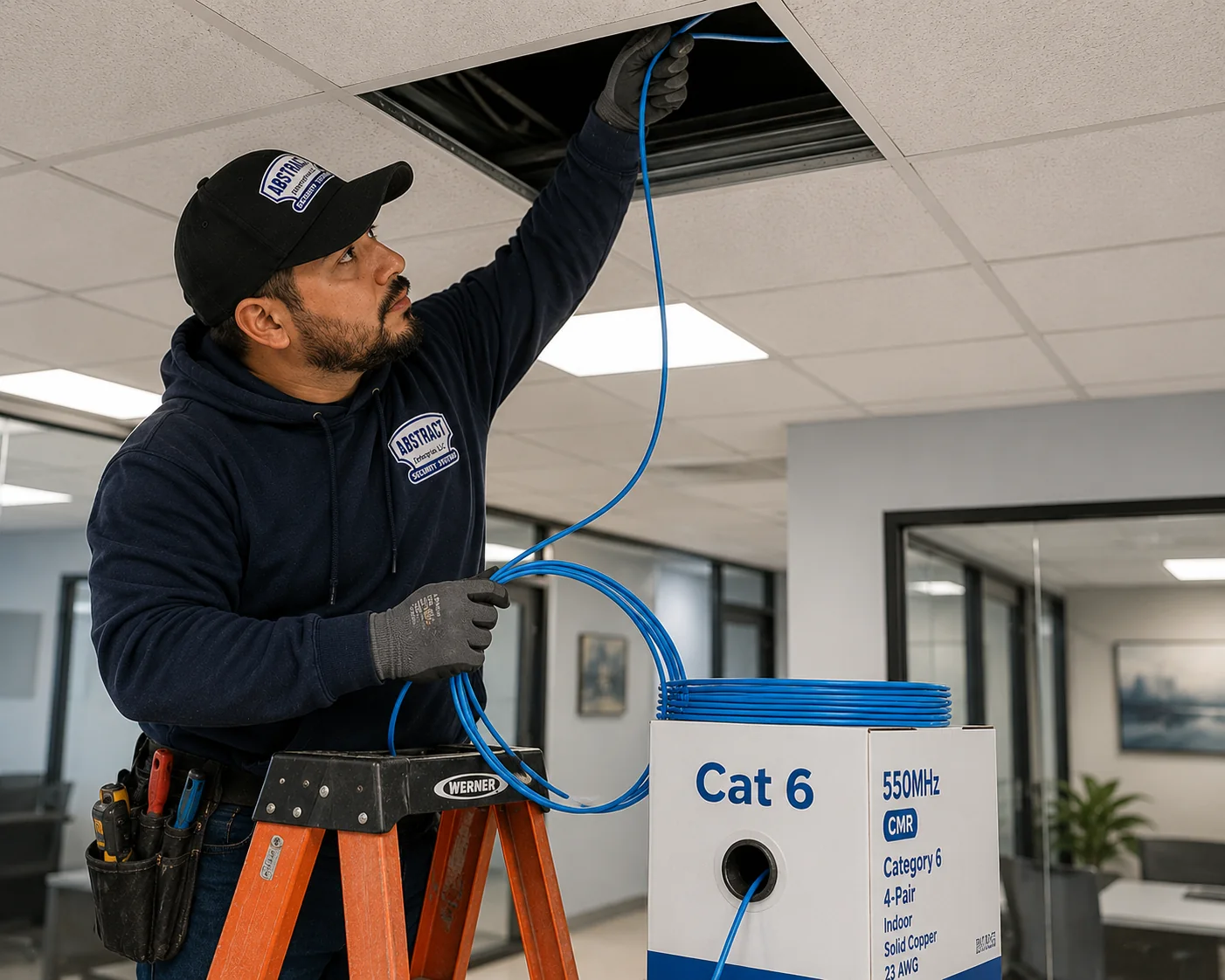
Cat6 installation Putnam County technician feeding cable through an open ceiling tile beside a Cat 6 CMR box
Cat6 installation Putnam County — solid copper Cat 6, 550MHz CMR riser, 23 AWG, dropped through an open tile.
The market

The smallest county we cover, and it changes how the work is priced

Putnam has roughly a hundred thousand people spread across nine towns, no city, and no single commercial core. Almost every job here is small, and small jobs are where contractors either behave well or do not.

There is no Hauppauge here, no distribution belt, no corporate campus. What there is instead is a steady supply of ten and twenty drop jobs: dental and medical practices, law and accounting offices, municipal buildings, school district work, retail along the highway corridors, and a substantial amount of residential — including lake and waterfront property that behaves nothing like a suburban house.

The economics of that are worth stating plainly. On a large commercial job the per-drop rate is the whole conversation, because the extras scale with it. On a ten drop office the extras barely exist — no rack, no lift, no second telecom room — so a fair price is mostly a matter of not inventing line items. That is the discipline this county demands, and it is why a lot of larger contractors quote here badly or decline to quote at all.

Where the difficulty actually is

  • Buildings that fight back. Converted structures, older commercial stock and lake houses frequently have no telecom position, no ceiling void and no obvious route.
  • Runs that leave the building. Outbuildings, garages, boathouses and detached offices are common, and none of them take office-grade cable.
  • Nobody on site who owns the network. Small offices rarely have IT, so the documentation we leave behind matters more, not less.
  • Access on a schedule. A practice with patients or a shop with customers cannot absorb a crew mid-morning, and that shapes the whole job.
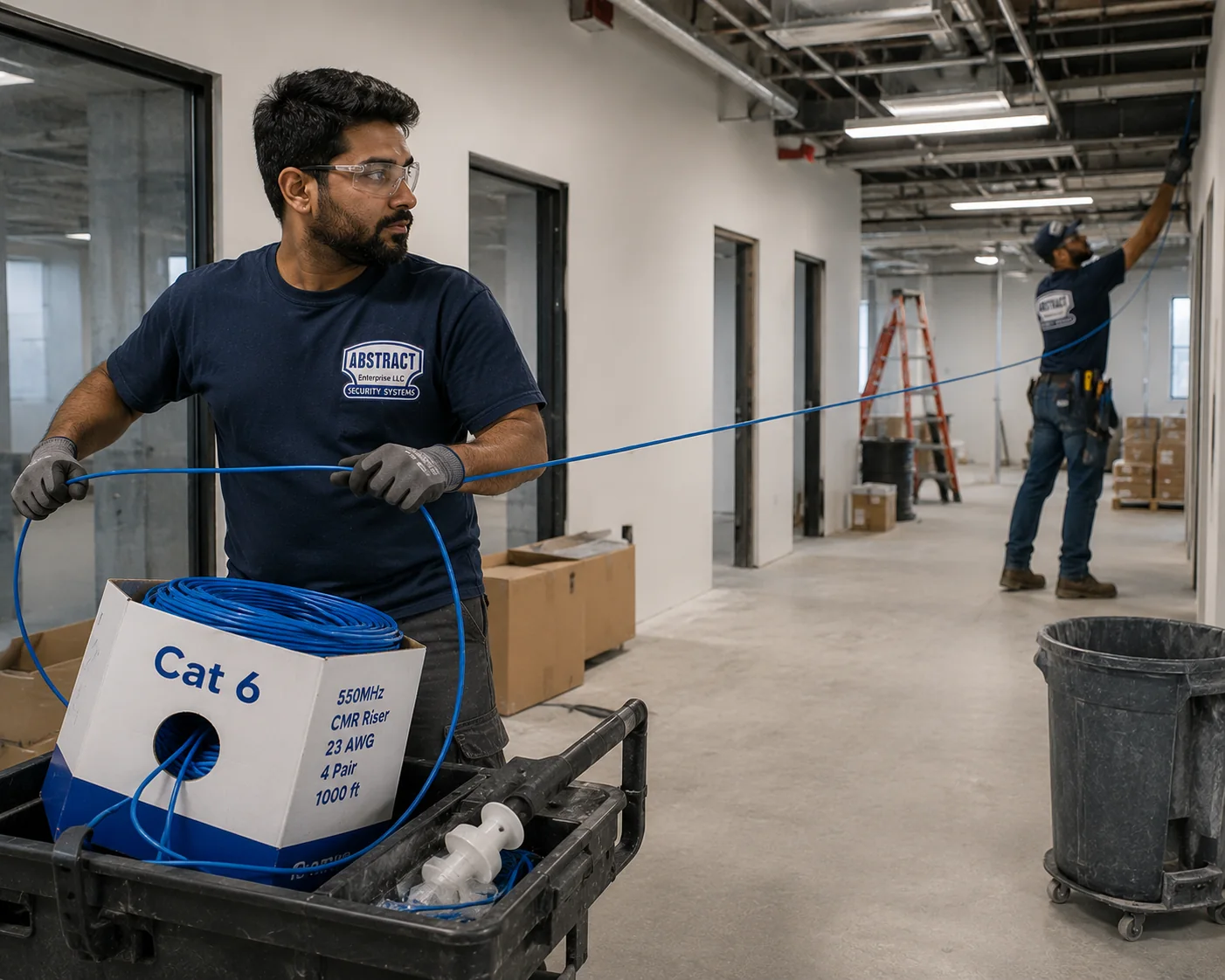
Cat6 cable installation Putnam County two technicians pulling cable along a commercial corridor
Cat6 cable installation Putnam County — a corridor pull in a professional building off Route 6.
Scope

What you are actually buying

On a small job, vague scope is how a fair-looking number turns into a surprise. Here is what a drop means on our estimates.

  • Someone walks it first. A tile comes up, the telecom position gets located or chosen, and the route is worked out before any figure exists.
  • The run itself, carried on proper pathway, off the grid, clear of fixtures and ductwork, never tracking alongside power for any distance.
  • Terminated at both ends — keystone at the outlet, port on the panel, one category held across every component, built to TIA-568 on T568B unless the building already runs A.
  • Tested, every run, with access still open. Not a sample.
  • Marked at both ends, with a map the next person can use without hunting for a toner.
  • Cleaned up properly, which on a small occupied office means at the end of each visit rather than the end of the job.

Separate lines rather than hidden inside the drop rate: wall cabinet or rack, panel, cable management, cords, switch, conduit where it is required, outdoor-rated cable and housings on anything leaving the building, firestopping, coring, and any evening or weekend premium.

Worth asking on a small job. Ask what happens if the wall cannot be fished. A bidder with an answer has looked at the building. A bidder without one has priced a best case and will be back with a change order the first time a rod stops moving.

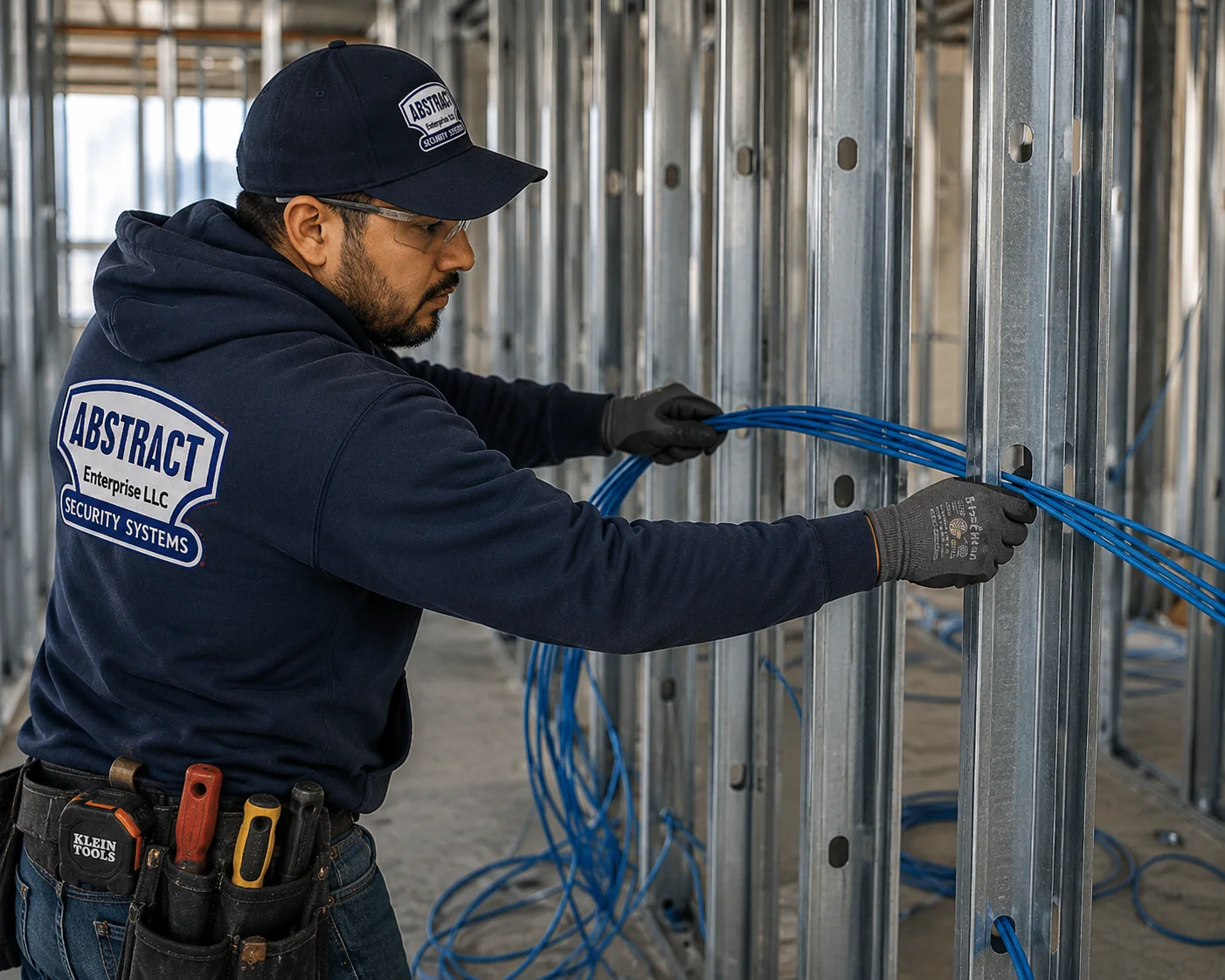
Commercial Cat6 installation Putnam County cable roughed through metal studs before drywall
Commercial Cat6 installation Putnam County — cable in while the partition is still open.
Coverage

Where we install Cat6 in Putnam County

Nine towns, two highway corridors and a lot of water. Here is how the work distributes.

Carmel and Mahopac

Carmel is the county seat, carrying county government, the courts, professional offices and medical practices, with commercial spread along Route 6 and Route 52 through the hamlet and out toward Mahopac. Mahopac itself is the county's largest commercial concentration — retail along Route 6 and Route 6N, medical and dental practices, restaurants and small professional offices, wrapped around Lake Mahopac with substantial residential behind it. Between them these two account for a large share of the county's commercial cabling.

Brewster and Southeast

Brewster village and the town of Southeast around it sit where Interstate 84 crosses Route 6 and Route 22, which makes it the county's most accessible commercial node and the closest thing Putnam has to a highway-oriented business district. Light industrial and flex space, auto and trade businesses, offices near the interchange, retail along Route 6 and Route 22, and the Metro-North terminus bringing commuter-oriented development around it. Older village stock in Brewster proper needs a different method from the newer commercial out on the corridor.

Cold Spring, Garrison and the river

Cold Spring's Main Street is nineteenth-century masonry running down to the Hudson, carrying restaurants, galleries, antiques and small professional offices in buildings with no wall cavity and frequently no ceiling void. Garrison to the south is largely residential and institutional, with estate and campus properties along the river. This is the part of the county where containment planned as a finish detail matters, and where historic district review can apply.

Putnam Valley, Kent and Patterson

The northern and western towns run to residential with commercial concentrated along Route 301, Route 311 and the Taconic corridor. Lake communities are the defining feature — Lake Peekskill, Lake Carmel, Oscawana and the smaller lakes — which means a great deal of the work is houses, many of them originally seasonal and later winterised, with outbuildings, docks and detached garages that need runs leaving the building. Patterson toward the Dutchess line adds agricultural property and small commercial along Route 22.
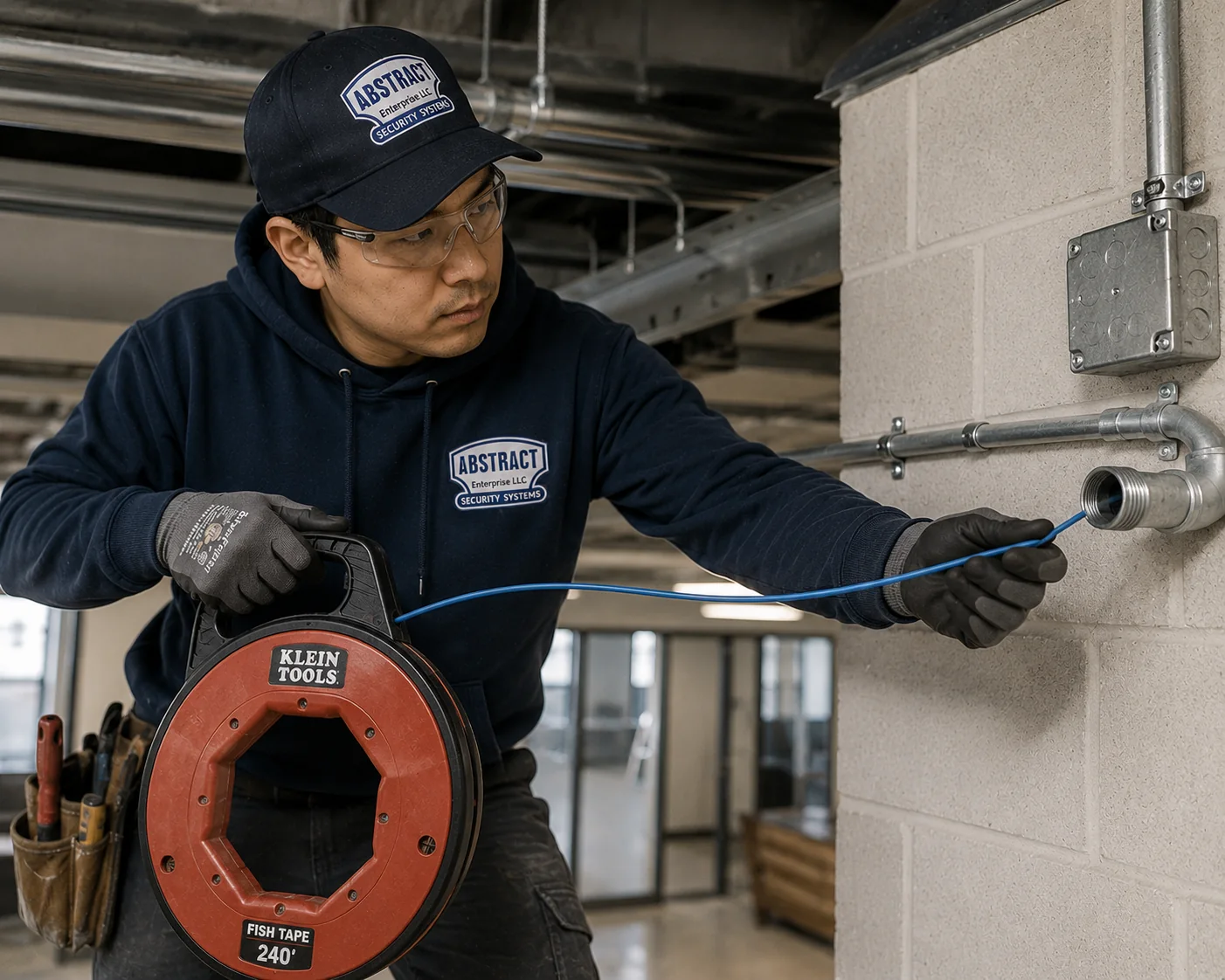
Cat6 wiring Putnam County technician feeding cable into existing conduit with a fish tape
Cat6 wiring Putnam County — reusing conduit already in the wall of an older commercial building.
Method

Getting cable into a Putnam building

  1. Before the walls close

    Cheapest by a wide margin. Cable goes in with the framing open, runs back to the closet, and waits coiled behind a mounted box until the finishes crew has gone; a short return trip terminates, tests and marks it. Ten percent comes off work priced at that stage. On a small build the whole window can be a matter of days, so the call has to come at framing rather than at punch list.

  2. Above a suspended ceiling

    The common commercial case here and generally the easy one. Accessible grid, real space above it, partitions that fish without argument. What complicates it is inherited: cable from earlier tenants clogging the route, ductwork nobody drew, and blocking inside a demising wall.

  3. Older village and masonry stock

    In Cold Spring, Brewster village and the older hamlet centres there is often no cavity and no void. The workable answers are conduit that already exists, containment routed deliberately along structural lines, and creating a telecom position where the building never had one. Pushing a rod through an old wall until something gives creates openings someone then has to fill and repaint.

  4. Houses, lake property and outbuildings

    Most houses wire from the basement and attic with very little opening. Attic heat matters on any run carrying power. What is specific to this county is the outbuilding — a detached garage, a boathouse, a barn or a studio — where the run leaves conditioned space and needs a jacket and a housing chosen for weather rather than for an office ceiling.

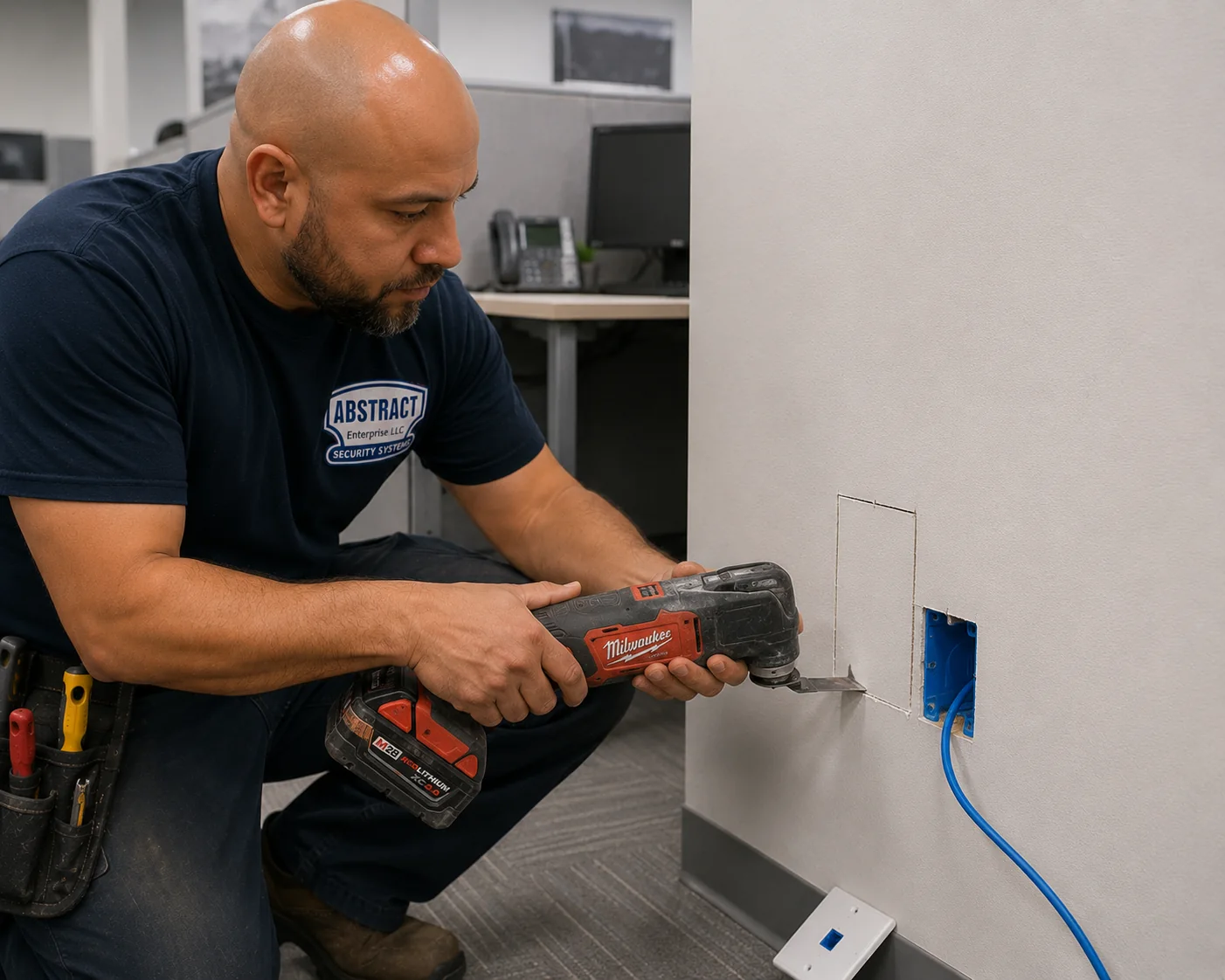
Cat6 retrofit installation Putnam County technician cutting an opening for an old-work box
Cat6 retrofit installation Putnam County — an old-work box cut in once the cable is fished down.
Testing

Small job, same standard

The temptation on a twelve drop office is to skip the part nobody can see. That is exactly the job where skipping it hurts most, because there is no IT department to catch it later.

Every drop is wiremap-tested before the ceiling closes. When the job requires full certification, we test permanent links with a Fluke DSX CableAnalyzer and deliver the pass/fail report with the closeout package.

What a link light will not tell you: that a pair is split and reading continuous while quietly ruining everything above it, that an inch of conductor was untwisted at the punch-down, that the run picked up a nick somewhere along the way. A permanent link test measures the part built into the building. A channel test adds the cords back and reports what the equipment on the end actually experiences.

In a small office the consequence of skipping this is specific. There is nobody on site who will notice a port negotiating at a hundred megabits, or connect a camera rebooting nightly to a termination made badly eighteen months earlier. The test is the only thing standing between a quiet fault and a year of blaming the internet provider.

Not negotiable: nothing gets closed up before it has been tested. Fixing a bad termination while the tile is out takes minutes. Finding it afterward means opening finished work.

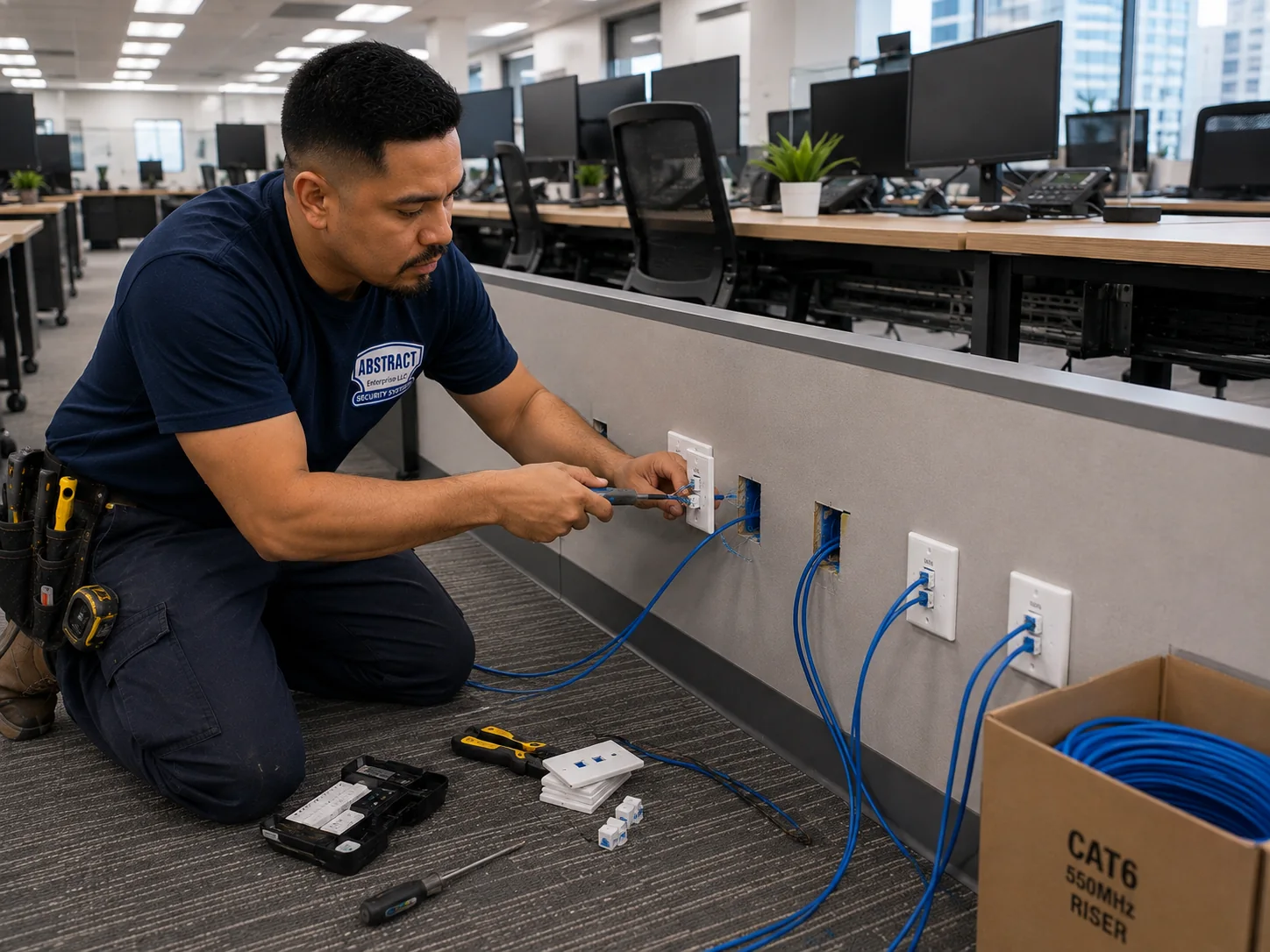
Office Cat6 installation Putnam County technician terminating a row of outlets along a desk run
Office Cat6 installation Putnam County — a bench run built one outlet at a time, each tested as it is closed.
Specification

Picking the cable

Category

Cat6 is what belongs in nearly every drop in this county. The margin it holds over Cat5e — 250 MHz against 100 MHz — is what carries a warm ceiling, a crowded bundle and a slightly imperfect termination without the link quietly dropping a gear, and on new work the gap between them is $45 a drop. Cat6A earns its $459 where ten gigabit at full distance is genuinely called for, on a switch uplink, or into a server. It adds no distance at all, so it never solves a reach problem.

Jacket rating

CMP where the ceiling void carries return air, CMR climbing between floors, CM where neither applies. Converted and older commercial buildings here are the ones that catch people out, because the arrangement is rarely what the building's age suggests. Settled on site rather than assumed.

Shield or no shield

Unshielded is right in almost every building we walk into. A shield only earns its place if it is bonded and grounded properly at the rack — left floating it acts as an aerial and measures worse than plain UTP would have. The genuine cases in Putnam are few: a workshop with real motor loads, or a run that cannot avoid tracking power for a long stretch.

Conductor, and what happens outside

Copper on every run, without exception. The second question this county asks more than most is what happens when the cable leaves the building. A run to a garage, a boathouse or a detached studio needs a jacket rated for weather and a housing rated for the same. Office cable in that position fails on a schedule, and the failure is usually blamed on the device.

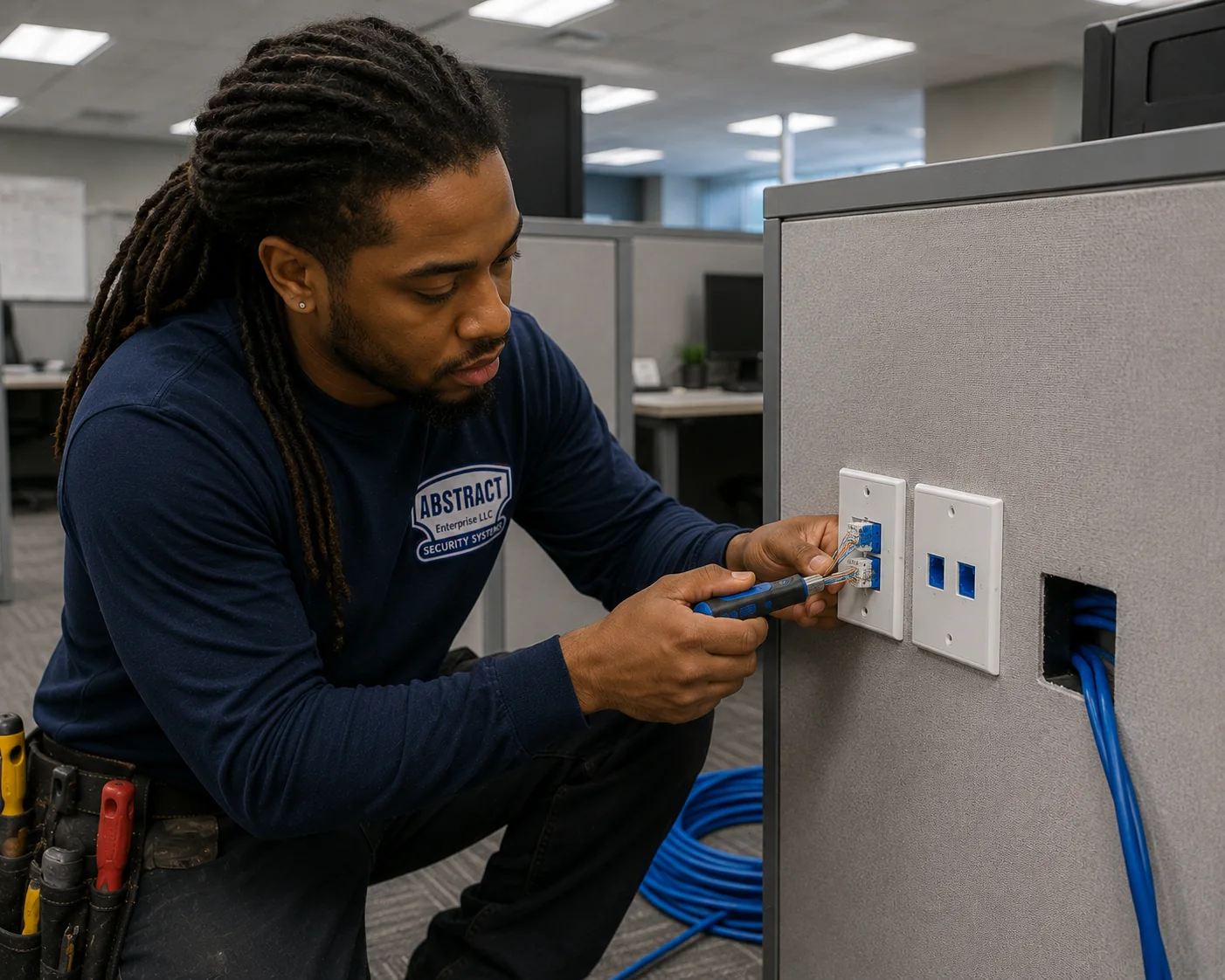
Cat6 keystone termination Putnam County technician punching down a jack at a wall plate
Cat6 keystone termination Putnam County — twist carried right down to the contact.
Pricing

What it costs

Published per drop so you can work out the number before anybody visits.

Cable typePer drop, runs to 100 ft
Cat5e$276
Cat6$321
Cat6A$459
Coax / RG6$276
Speaker wire$229
HDMI$367
Fiber — multimode$642
Fiber — singlemode$733

Each rate covers cable, plate and keystone, a termination at either end, and the test. Ten percent comes off new construction quoted before drywall. Past 100 feet the run is measured as installed and priced from that.

Priced separately: cabinet or rack, panel, management, cords, switch, conduit where required, containment where a wall will not open, outdoor-rated cable and housings for anything leaving the building, firestopping, coring, tracing and mapping of existing cable, and evening or weekend work.

Put your own numbers into the cabling quote builder, or call and describe the building.

Design

How many drops, and where the panel lives

LocationDropsReason
Desk2Computer plus handset, dock or whatever arrives next
Shared printer1Its own port rather than borrowing from a desk
Wireless radio1Wired backhaul; older buildings need them closer together
Camera1Traffic and power on the same run
Door reader1Where entry control is IP at the door
Exam or treatment room1–2Workstation plus imaging or chairside equipment
Meeting room3–4Screen or codec, table box, camera and a spare
Register1Card processing wired rather than sharing the radio
Outbuilding1–2Weather-rated run, usually the longest on the job

The panel position

On a small building this is usually inherited and usually imperfect — a closet, a back office wall, sometimes a basement corner. The questions worth answering before install are whether it has power, whether anything ventilates it, whether it locks, and whether the tenant intends to reclaim the space. A wall-mounted cabinet in the right place beats a floor rack in the wrong one every time on a job this size.

Spares

Terminated and marked at the panel, then coiled in the ceiling or capped behind a blank. On a twenty drop office, three is proportionate. They matter more here than on a big commercial job, because the alternative is a minimum-charge visit for a single cable — and on a small job that call-out is a far larger proportion of the original spend.

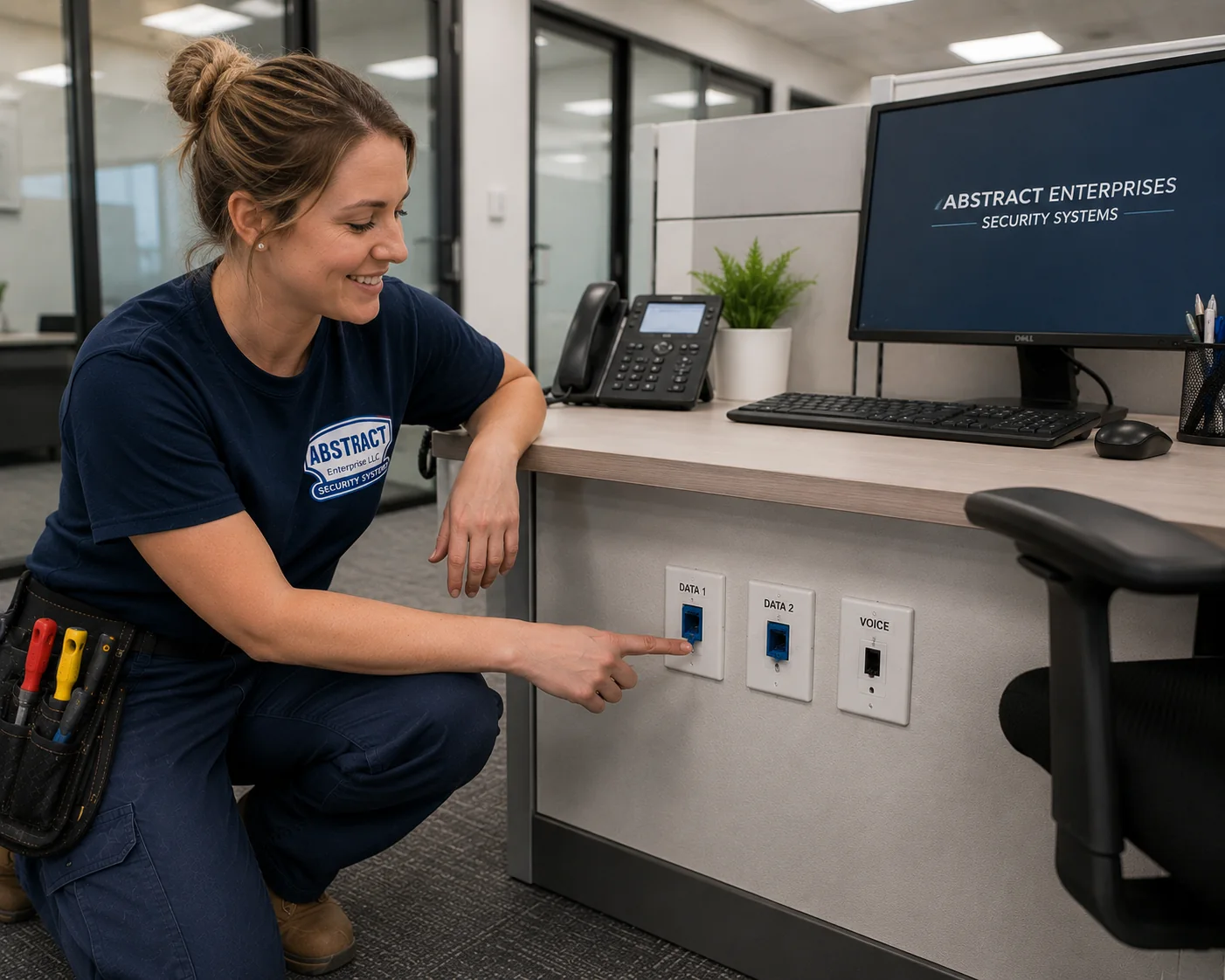
Cat6 data drop installation Putnam County finished data and voice outlets at a desk
Cat6 data drop installation Putnam County — a pair of data ports and a voice port at one seat.
Termination

The panel end, and what you keep

Beyond a handful of drops the fixed cable ends at a panel and every connection after that is made with a cord. It costs slightly more the first time and returns it the moment anything changes, because the cable built into the building never has to be touched again.

Everything is built to TIA-568 and terminated T568B unless the building already runs A throughout. Naming and mapping follow TIA-606-style convention. One category runs through every component, since a 5e keystone landed on Cat6 pulls the whole channel down a grade and will not certify.

Small buildings put the panel in odd places, and it is worth saying so at the walkthrough rather than working around it silently. Shared closets with the electrical panel, unventilated cupboards, basement corners that take damp — all of these change what enclosure makes sense and how the cable needs protecting. On a job with no IT department, a panel somebody can actually reach and read is worth more than a tidier one behind a locked door nobody has a key to.

Handover

Results for every run, the port-to-outlet map, the naming convention in plain language, a materials list, and photographs of anything about to be covered. Short on a small job, and still the difference between a network somebody can maintain and one that has to be rediscovered by the next person through the door.

A fair number of the calls we take here are not new work at all. They are buildings where things function, roughly, but nobody can describe what connects to what. Tracing, mapping and writing up an existing plant is a job in its own right, and in a small office with no in-house support it is frequently worth more than new cable.

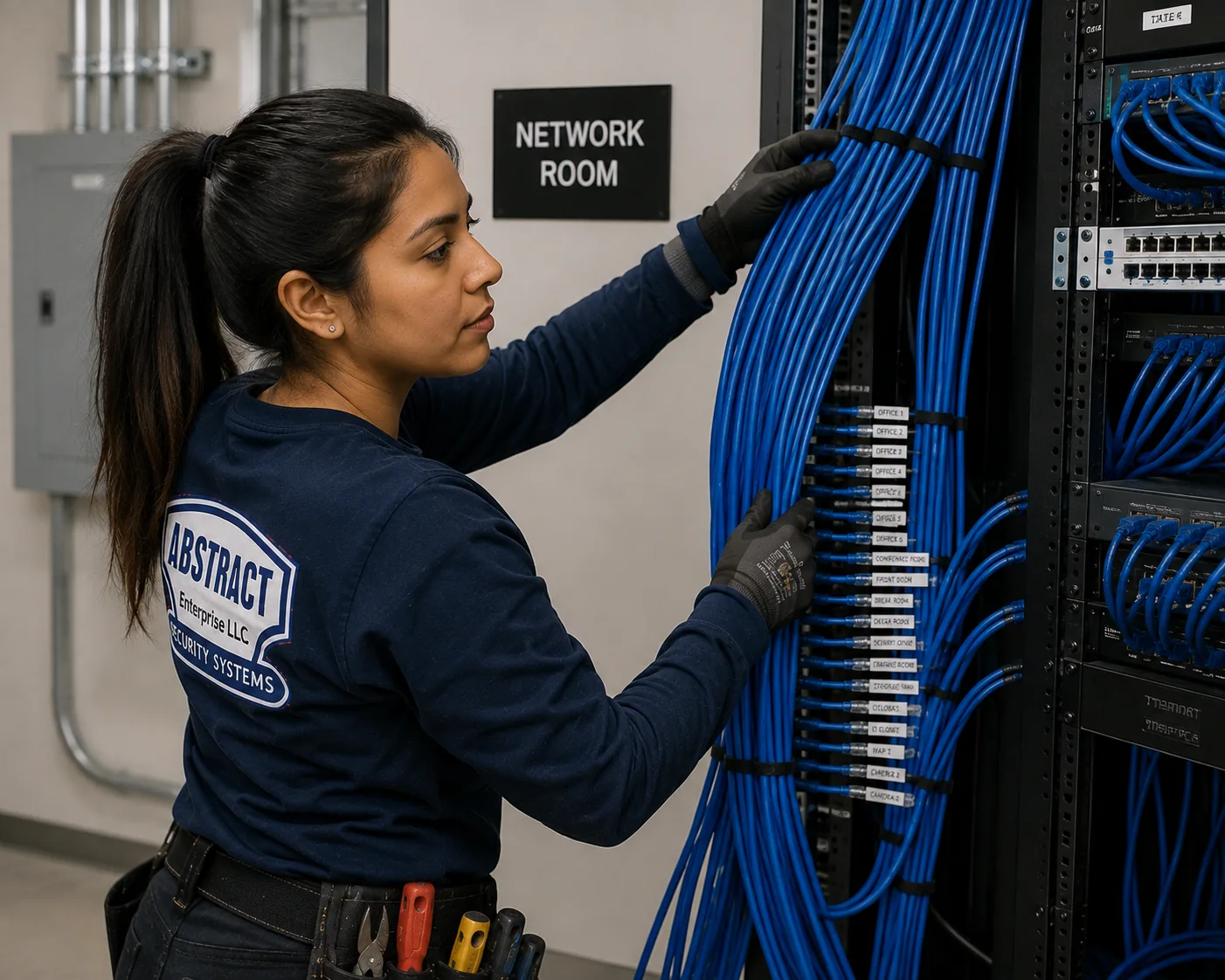
Cat6 patch panel installation Putnam County technician dressing labeled cable into a rack
Cat6 patch panel installation Putnam County — ports named to their rooms before a single cord goes in.
Power over Ethernet

What powered devices ask of the cable

A building's cameras, readers, radios, handsets and intercoms now take both traffic and power from the same pair. One pull covers it and no electrician has to follow behind.

StandardNameUsually powers
802.3afPoEHandsets, basic fixed cameras, simple readers
802.3atPoE+Current radios, pan-tilt and infrared cameras, video intercoms
802.3btPoE++High-power radios, heated outdoor domes, displays, heavier edge devices

Power on a conductor makes heat, a packed bundle gives that heat nowhere to go, and heat pushes resistance up — so less arrives at the far end than left the switch. Copper in a reasonable bundle absorbs it. CCA on a long run in a heavy bundle has nothing spare.

Putnam's version of this problem is distance rather than density. The bundles here are small, but the runs are frequently long — out to a detached garage, across a property to an outbuilding, up to a camera at the end of a driveway. Those are the drops sitting closest to the limit while drawing at the top of the power range, and they are exactly where cheap cable shows itself first.

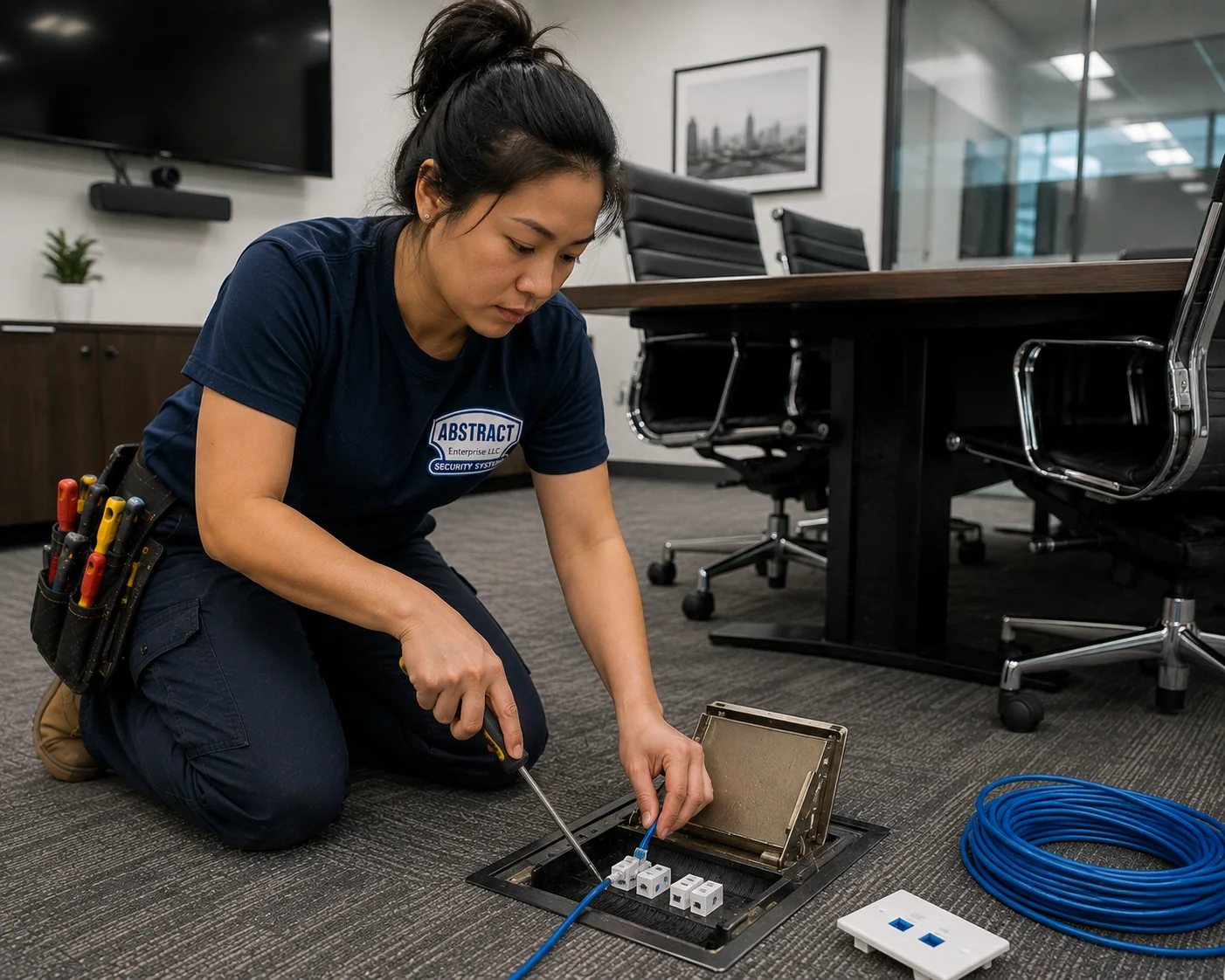
Cat6 floor box installation Putnam County technician landing keystones in a conference room floor box
Cat6 floor box installation Putnam County — keystones landed in a floor box under a meeting table.
From the field

What turns up in Putnam buildings

Method commentary rather than case studies. Patterns we see repeatedly, described generally.

01 · Office cable to the garage

A standard jacket run out to a detached building or a driveway camera. Weather works on it quietly and the device gets blamed.

02 · The panel in a damp basement

Equipment put wherever there was room, in a corner that takes moisture through the year. Nothing fails immediately, which is the problem.

03 · Nobody kept the map

A working plant in a small office with no record of what lands where. Every change afterward starts with a toner and an hour.

04 · The second desk drop that got cut

Trimmed to save a couple of hundred dollars, then added back a year later as a minimum-charge visit for one cable.

05 · A lake house with no route

A seasonal structure winterised over decades, with no cavity, no void and no path between floors that anyone planned.

06 · Containment with no thought

Surface trunking in a Cold Spring storefront run wherever the cable landed. In a room people look at, the shortcut is obvious.

07 · Radios too far apart

Coverage designed as though the walls were drywall. In older masonry it dies two rooms out and the building never gets blamed.

08 · Cable carried by the ceiling

Bundles laid straight onto grid because it was quicker. Against code, and underfoot for every trade that comes after.

09 · The wrong keystone

A 5e jack on Cat6 because it was the one in the van. The channel drops a grade and the drop gets built twice.

10 · Cut to the inch

No slack at either end. The next re-termination costs a whole new pull over six inches of shortfall.

11 · Closed on a Friday

Tile back up and finishes on with nothing tested. Whatever went wrong is now behind a finished surface.

12 · Blamed on the carrier

A year of intermittent trouble in a small office, escalated to the internet provider repeatedly, traced eventually to one termination.

Cat6 installer Putnam County setting a cable bundle into J-hooks above a suspended ceiling
Cat6 installer Putnam County — bundle carried on hooks rather than resting on ceiling grid.
Decisions

Worth paying for, and not

Cat6 or Cat6A

About 43% more a drop, and what it buys is ten gigabit over the whole run. Sensible into a server or between panels. Behind a handset or a radio in a small office it is capacity nobody will ever draw on, and it buys no extra distance.

Cat5e or Cat6

Existing 5e that certifies clean is not worth tearing out. On anything new the gap is $45 a drop, and Cat6's margin is what carries heat, bundle density and power. Hard to justify 5e for cable you intend to keep.

Indoor or weather-rated

The moment a run leaves the building it stops being a preference. Garage, boathouse, barn or driveway camera all need a jacket and a housing chosen for the conditions, and that is specification rather than an upsell.

Panel or straight to the switch

On a very small residential job, terminating direct is defensible. In any commercial building it is a false economy that costs you the first time a desk moves.

Fishing or containment

In older masonry there is frequently no cavity at all. Containment planned along structural lines is the professional answer, not the lesser one — forcing a rod through until something gives makes work for a painter.

Copper or CCA

Not two valid options. More resistance, conductors that break where they land, and failure under power. A little saved on the reel and the building pays it back.

How it runs

Walkthrough to handover

  1. Look at it

    Someone stands in the building, opens a tile, finds or chooses the panel position, and establishes the route — including anything heading outdoors. Drop positions marked and constraints identified before a figure exists.

  2. Quote

    Quantity at the published rate, every piece of hardware on its own line, and any premium condition named rather than buried. Deposit up front, balance at completion, terms printed on the document.

  3. Get ready

    Insurance to the owner, access and hours agreed, licence and permit position confirmed with the town, and anything needing ordering ordered before the crew arrives.

  4. Rough in

    Pathway up, cable pulled, penetrations firestopped, boxes mounted, cable dressed back to the panel with slack at both ends.

  5. Trim out

    Outlets landed, plates fitted, panel punched down, hardware mounted, every end marked as it is made.

  6. Test

    All of them, before anything closes. Anything failing is corrected while we can still reach it, then tested again.

  7. Hand over

    Results, map, naming, materials and photographs of concealed routes. Site cleared.

Subcontract work

A share of what we do here comes through general contractors and electricians on fit-outs. We work to your sequence, provide insurance and paperwork in your format, agree ceiling space with the other trades up front, and hand back documentation that drops into your closeout. Taking a data package you would rather not staff is normal work.

Our standard

What you can hold us to

Not testimonials — the commitments that apply to every Putnam job, however small.

Small jobs get the same standard

Twelve drops or a hundred and twenty, the testing, marking and documentation do not change.

No invented line items

On a job with no rack and no lift, the quote does not acquire hardware it does not need.

Everything tested

Each run verified before anything closes over it, certified to permanent link where the job calls for it.

Weather-rated outside

Any run leaving conditioned space gets cable and housings chosen for the conditions rather than an office specification.

Documentation you keep

Results, mapping and naming handed over, because in a building with no IT staff that record is the only one there will be.

Reachable later

Warranty written out below, and later changes taken up as continuing work.

Diagnosis

When the cabling is the fault

In an office with no IT staff, cabling is the last thing anybody suspects and frequently the thing at fault.

  • A port running at a hundred megabits. Gigabit needs all four pairs sound. Damage one and the link steps down silently, and in a small office nobody is watching port speeds.
  • A camera or radio that restarts on a cycle. Power arriving short at the far end, decided by conductor, run length and how warm the bundle gets.
  • Trouble that started outdoors. The drop to the garage or the driveway camera failing while everything inside is fine usually means office cable was installed where a weather-rated run belonged.
  • Coverage that stops dead at a wall. That is masonry rather than radio, and it wants another drop and another radio rather than more transmit power.
  • A fault with a date on it. Cable resting on grid gets stood on by whoever opens that ceiling. Trouble beginning days after other work is damage until proven otherwise.

We start at the panel rather than the desk. Identify the run, test the permanent link, take the reading at face value. A pass clears the building's cable and points at a cord, a port or the device. A failure names the parameter, and that leads to a termination first, damage second and length third. Redoing both ends resolves most of them.

FAQ

What people ask us in Putnam

Cat6 sits at $321 per drop on runs inside 100 feet. That price holds the cable, the plate and keystone, a termination at either end, and the test once the run is closed out. Anything priced ahead of drywall on new construction drops ten percent. Past 100 feet we measure the route as built and quote from that. Putnam is a small county and travel rarely shifts a number here, which is not something we can say about Suffolk or the far west of Orange.

The per-drop rate is the rate. What changes with scale is everything around it — a ten-drop office needs no rack, no lift and no second telecom room, so the extras that dominate a warehouse quote simply do not appear. Putnam work skews small and that generally works in your favour. Where a small job does get expensive is when the building fights back: a lake-house basement with no access, a converted structure with no closet, or a run that has to leave the building to reach an outbuilding.

Putnam licenses at county level, and the towns and villages layer their own permit and inspection requirements on top. There is no single statewide electrical or low-voltage licence in New York, so the honest answer always depends on where the building sits. Ask any bidder which licence they carry and who issued it, then check it against your own town before the job is scoped. Monitored alarm, camera and access control work sits under a separate state requirement that plain data cabling does not.

Yes, and a good share of Putnam work is exactly that. Houses here mostly wire well from a basement and an attic, which keeps wall opening to a minimum. Lake and waterfront properties add two wrinkles: outbuildings and boathouses that need an outdoor-rated run rather than office cable, and older seasonal structures that were never built with a wiring path in mind. Both are walkthrough findings rather than phone estimates.

Two per seat, a port of its own for any shared printer, one behind each radio, camera and reader, and three or four wherever a screen lives. On a ten or fifteen person office that arithmetic lands somewhere around twenty-five to thirty-five drops, and the temptation is always to trim it. The drops worth keeping are the second one at each desk and the spares, because those are the two that stop you calling us back.

Across a shortened distance, yes. The number usually cited is in the region of 55 metres, and a tightly packed bundle pulls it in further as alien crosstalk starts to bite. A full-length ten gigabit channel is Cat6A territory. For the desks, handsets, cameras and radios that make up nearly every Putnam drop, Cat6 is the right specification and the sensible one.

Copper-clad aluminium puts a copper skin over an aluminium core. It is cheaper on the reel and it is not the same product. Aluminium carries more resistance, which becomes a real problem the moment a camera or a radio is drawing power down the pair, and it is brittle enough that conductors fracture where they are punched down. It will show a link light and still fail the device on the end. Every run we install is copper.

It depends on how the space moves air rather than what the building looks like. Where the void above the ceiling handles return air, plenum jacket is required. Vertical shafts between floors take riser jacket. Older Putnam commercial buildings vary considerably and a converted structure rarely announces which arrangement it uses, so we settle it on site with the building and the authority having jurisdiction.

No termination changes a cable's category — the rating is a property of the cable itself, so an upgrade means new cable. What you can sometimes keep is the route. If the existing 5e runs in conduit or on a tidy hook run with capacity to spare, the replacement follows it and that is where the saving sits. Cable stapled to a joist or thrown loose above a tile leaves nothing worth reusing.

Yes — Carmel, Brewster, Mahopac, Putnam Valley, Cold Spring, Garrison, Patterson, Kent and Southeast. Putnam is compact enough that we treat it as one service area rather than splitting it, which is genuinely different from how we schedule Suffolk or Ulster. The practical effect is that a small job here does not carry a travel surcharge dressed up as something else.

Yes. Medical and dental practices scheduling around patients, retail that opens in the morning, and school districts working to a fixed summer break all push work into evenings and weekends. Municipal buildings often prefer it too. The premium for out-of-hours work is quoted as a line of its own rather than folded quietly into the drop price.

Test results for every run, a map tying each panel port to the outlet it serves, the naming convention written out in plain language, a list of what cable and components went in, marked drawings where drawings exist, and photographs of any route about to be closed up. On a small building that package is short. It is still the difference between a network somebody can maintain and one they have to re-discover.

Related work

What these drops end up feeding

Warranty

Get a Cat6 quote

Send us the building, an approximate drop count and your timeline. If anything needs to reach a garage, barn or boathouse, mention it — that changes the cable.

🛡 Cat6 installation warranty. Abstract Enterprises Security Systems provides a three-year warranty on products supplied by AESS for normal wear and tear. It does not cover existing or customer wiring, customer-supplied equipment, lightning or other acts of God, power outages or surges, physical damage or unplugging, internet, router or phone changes, or camera readjustments requested after completion. After the warranty period, service is $195 per hour with a three-hour minimum ($585). Full terms: abstractenterprisessecuritysystems.com/warranty.

Call 845-640-3835
WhatsApp message us
NYS Low Voltage License #12000287431
4.7 / 201 Google Reviews

Request a Cat6 Estimate

We'll follow up to arrange a walkthrough.

Or call 845-640-3835