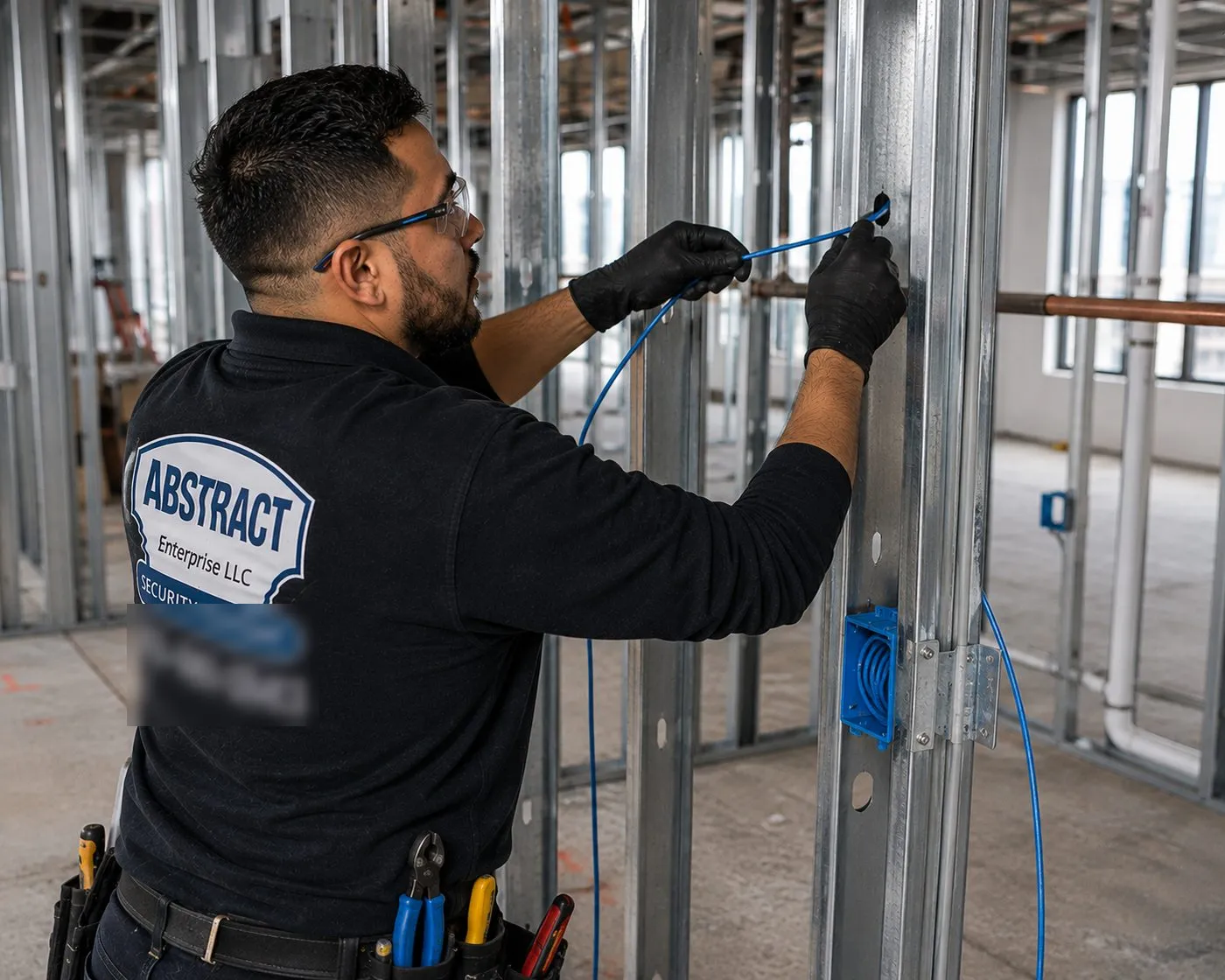
Building-to-Building Links · Buried & Aerial Routes · Strip-Centre Runs · Fusion Splicing · OTDR Proof
Staten Island networks rarely fail for lack of an internet provider. They fail in the gap between buildings: the office at the front of a Richmond Avenue lot and the shop at the back, the house in Great Kills and the detached garage that became a workplace, the warehouse on the West Shore and the guard booth at its gate. That gap is where private fiber belongs. We design it, bury it or hang it, splice and test every strand ourselves, and hand you a record that shows exactly where it runs.
Reviewed and updated October 17, 2026 · Written by Anwar Timothy, NYS licence #12000287431

Two buildings, one network? Most Staten Island fiber quotes start with a sketch of the lot. Call the Staten Island line at (347) 934-8335 or use the 60-second form, and tell us what stands at each end and what lies between them — lawn, asphalt, a shared driveway or open air.
Staten Island is the part of New York City that was built outward instead of upward. Instead of towers with risers, it has houses with yards, shopping strips with parking lots in front, warehouses with truck courts behind, and institutions spread across campuses with a building here and an annex there. That shape decides what a network needs. In Manhattan the hard part of a fiber job is going up; on Staten Island the hard part is going across — from one structure to another, over or under whatever separates them.
The numbers make the point. The Citizens Housing and Planning Council, working from the city's 2023 Housing and Vacancy Survey, reports that 83 percent of Staten Island's housing units sit in one- or two-family homes. And the city's own study of its power lines found that 72 percent of the electrical wire installed on Staten Island hangs overhead — roughly 7,140 miles of it — compared with 12 percent in Brooklyn and none at all in Manhattan. When a borough's utilities live on poles and its buildings stand apart, private links between buildings become the everyday problem, and the question of whether those links go up in the air or down into the ground comes up on almost every job.
Water and weather sharpen that question. Sandy killed 23 people on Staten Island, and the city's rebuilding report says all but one of those deaths were on the East and South Shores, where more than 11,700 buildings stood in areas that flooded. Eight years later Tropical Storm Isaias left about 29,000 Con Edison customers on the Island without power as trees and branches brought down overhead lines. Neither storm was about internet service, but both show what a careless low-voltage route is exposed to: water at ground level and falling limbs above it. A fiber link that is planned for both lasts; one that is strung up in an afternoon often does not.
What property owners usually do not lack is a provider. Verizon reported that by the end of 2013 its fiber passed virtually all premises on Staten Island, and the cable company now advertises fiber-powered service across the borough too. What owners lack is the owner-side link: the tested, protected glass that carries service from wherever the provider stops to the second building, the far end of the warehouse, the upstairs office or the gate. That is the part we build, and it is also where most of our Staten Island structured cabling work begins, because fiber between buildings almost always ends in copper inside them.

A landscaper's edger nicked the conduit, a falling limb pulled the aerial cable off the garage, or the back building simply went dark one morning. Those are repairs, priced separately from new installation. We try to reach the Island the same day, and once a technician is on site most single faults — a crushed jumper, a dirty connector, a broken pigtail inside an enclosure, a cable pulled out of its strain relief — are found and fixed inside one to two hours. Call (347) 934-8335 and say "fiber repair," or see our Staten Island network cable repair page if the fault is on copper.
Our work starts where the carrier's ends. Verizon or Spectrum lands service at a terminal on the house or unit; from that point to the garage, the yard building or the back office is yours to own, and we only sign off once a power meter has read every strand.
The classic Staten Island job: an office facing Hylan Boulevard or Forest Avenue and a shop, storeroom or second unit at the back of the same lot. Armored or outdoor-rated fiber, buried in conduit or carried overhead on a private span, joins them as one network.
Detached garages, converted carriage houses, home offices over the garage and backyard studios. One small fiber cable replaces the long outdoor copper run that keeps failing after storms, and the outbuilding gets the same service as the house.
For tenants in one-storey shopping rows along Richmond Avenue, Victory Boulevard, Hylan Boulevard and Forest Avenue: a protected run from the landlord's service room or the carrier's terminal at one end of the row to your unit, built to the landlord's rules.
On the West Shore and in the Island's smaller industrial pockets: fiber to the far end of a distribution floor, to dock-door cameras, to yard poles and to the guard booth at the gate, where copper runs either fall short or pick up surges outdoors.
Schools with an annex, parishes with a hall and a rectory, medical practices in two buildings, nonprofits with a main house and an outbuilding. Fiber ties them to one network, one phone system and one camera recorder.
Mixed-use buildings on Bay Street, Port Richmond Avenue and New Dorp Lane, and low-rise apartment buildings on the North Shore: a riser cable from the service entry to small enclosures upstairs, so any provider can reach any unit.
For houses raised above the flood line: moving the provider's handoff and the home network up and out of the ground-level enclosure, with fiber carrying the link between the old entry point and the new living level.
Fusing factory-polished pigtails onto strands inside a cabinet or a rack tray, rejoining a run that a landscaper's spade or a contractor's saw went through, and terminating glass a developer left in a coil behind the drywall.
A written loss reading for each strand, end-face photos from the inspection scope, OTDR traces wherever the cable spends time outdoors or runs long, matching labels at both ends — and a drawing of the lot that shows where anything buried actually lies.

Detached houses on their own lots, rows of attached townhouses, low strip centres and big single-storey warehouses make up most of what we wire here. Six of them come up again and again, and each one points the cable a different way.
Colonials, high-ranches, split-levels and capes from Westerleigh to Annadale. Basements or crawlspaces, attics with insulation, attached or detached garages, and a yard between the house and anything behind it. Fiber usually enters through the basement or garage and leaves for an outbuilding underground.
Rows of two- and three-storey townhouses built around private streets and shared parking, many governed by a homeowners' association. Exterior walls, roofs and common ground often belong to the association, so the route is as much a paperwork question as a technical one.
Houses on the East and South Shores lifted onto new foundations, with parking, storage or open space where the living floor used to be. The provider's line may still arrive low; the network now has to live high.
A row of storefronts under one roof with parking in front and service access behind. Each unit has its own ceiling cavity; the carrier usually lands in one place. Fiber runs along the row in the ceiling, on the rear wall or behind the units.
High-bay distribution buildings on the West Shore and smaller block or metal buildings with fenced yards in Port Richmond, Mariners Harbor, Rossville and Charleston. Long single floors, outdoor equipment and trailers that sometimes move.
The St. George/New Brighton Historic District, designated in 1994, preserves suburban houses built between the 1830s and the 1930s, and Snug Harbor's Greek Revival halls date from 1833. Masonry, old plaster and protected exteriors call for interior routes and careful openings.
Houses. The basement or the garage is where the route starts, because that is where the provider's terminal and the electrical service usually are. Inside, fiber follows joist bays, closet stacks and the gap beside plumbing, the same paths an electrician would look for. Outside, the cable leaves through a sealed sleeve below the siding line and either drops into buried conduit or climbs to a private aerial span. Where the house has an attached garage, any opening through the fire-separation wall is sealed with a listed firestop product, not foam from a can.
Townhouses and associations. Before anything is drilled we find out what the association owns. Often the unit owner controls the interior and the board controls the exterior, the roof and the ground. We draft a short description of the route, the size and colour of any exterior conduit and how the ground will be restored, so the board can approve one clear request instead of a vague one.
Strips, warehouses and yards. These are run for durability. Fiber goes on strut or in conduit along rear walls, in armored jacket across warehouse floors, and inside sealed enclosures at dock doors and yard poles. Outdoor runs to trailers or booths end in a weatherproof box with strain relief, so a moved trailer pulls a patch cord rather than the cable.
Historic buildings. On a protected facade we keep routes inside wherever possible, because exterior work on a landmark or in a historic district goes to the Landmarks Preservation Commission. Inside, we reuse existing chases and keep openings small and documented. Owners who are upgrading the whole house at once often add a Staten Island low-voltage scope for intercom, cameras and audio on the same walk.

Most commercial fiber calls from the Island come from one of six districts, and the building type in each one shapes the route long before the cable is chosen.
Matrix Global Logistics Park on Gulf Avenue near the Goethals Bridge holds Amazon's 855,000-square-foot building and IKEA's 975,000-square-foot fulfilment centre, and the city agreed in 2024 to hand its 225 acres at the Howland Hook Marine Terminal to the Port Authority. Distances here are measured in hundreds of feet on a single floor, and tenants often arrive with their own corporate cabling standards.
A 100-acre business park east of Route 440, developed by the city and the Port Authority in the mid-1980s for satellite and fiber communications. It has five buildings totalling 700,000 square feet; the NYIIX internet exchange lists a connection point there, and a 2007 industry report described a new diverse underground fiber entry to the Telehouse building at 7 Teleport Drive.
The borough's civic centre by the ferry terminal, with Empire Outlets' 340,000 square feet of retail and Lighthouse Point at 5 Bay Street, whose first phase added 115 apartments and 60,000 square feet of commercial space. The 2019 Bay Street rezoning covers 20 blocks around Tompkinsville and Stapleton and was expected to bring about 1,800 new homes.
The Staten Island Mall, opened in 1973 with 1.37 million square feet, is the second-largest shopping centre in the city, and Richmond Avenue around it is lined with strip centres, pad-site restaurants and medical offices. Tenant fiber here is short, horizontal and governed by the landlord.
Staten Island University Hospital runs 668 beds across its Ocean Breeze and Prince's Bay campuses, and many independent practices on the Island work out of converted houses and small office buildings. Imaging and records move between rooms and buildings, and practices often grow by taking the building next door.
Two- and three-storey mixed-use buildings and one-storey shops, many with a second building or a garage at the back of the lot. The typical job is a link from the front unit to the rear structure, or from a shared basement to an upstairs office.

Walk almost any residential street south of the expressway and look up. Power, telephone and cable lines run pole to pole, and service drops swing across front yards to the side of each house. With nearly three-quarters of the borough's installed electrical wire overhead, Staten Island owners are used to seeing cable in the air, and the first instinct when two buildings need connecting is to do the same: put up a span from the house to the garage or from the front building to the back one. Sometimes that is the right call. Often it is not, and the difference is worth understanding before anyone buys hardware.
When a private aerial span makes sense. The ground between the buildings is something you do not want to open — a new paver driveway, a concrete truck court, a mature planting bed — and the gap is short enough to cross in one span with good clearance over anything that drives beneath it. Both buildings have a solid attachment point at a sensible height, and nothing taller than the span stands between them. In that case an all-dielectric, self-supporting fiber cable or a fiber lashed to a small messenger wire can be installed in a day, with drip loops and a sealed entry at each end. Because the cable contains no metal, it does not carry lightning or ground differences from one building to the other.
When it should go underground. Trees overhang the route. The span would cross a driveway used by delivery trucks or a parking lot where box trucks and lifts operate. The buildings are far enough apart that a mid-span pole would be needed. Or the owner simply wants the link to survive the next big storm. The Isaias outage on the Island in 2020 was a lesson in what wind and falling branches do to anything strung through trees. A fiber cable in buried conduit, entering each building through a sealed sleeve, sits out of reach of all of that. It costs more on day one, and it is the version we recommend whenever the ground allows it.
What not to do. Never attach a private cable to a utility pole you do not own, and never lash it to the provider's drop. Utility poles belong to their owners and carry attachment rules of their own; the provider's drop belongs to the provider and will be moved, replaced or cut without notice to you. A private link should run from your building to your building over your land. We also avoid stapling cable along fences, gutters or downspouts, which is how many failing backyard links we are asked to replace were first installed.
A hybrid is common. On many lots the best route goes underground across the yard and comes up the outside wall of the outbuilding in a short run of conduit, or runs overhead between two buildings that sit close together and then drops into the ground to cross a driveway. We sketch both options on the site walk, price each, and say which one we would choose on our own property.

A buried fiber run on a private lot is not a large excavation. The trench is narrow, the conduit is small and the cable inside it weighs very little. But Staten Island ground carries more rules and more surprises than many owners expect, and a good installation deals with them before the first cut rather than after.
Protected land. The city's Special Natural Area District was created to protect the Island's remaining natural features, and its Staten Island portion covers more than 3,500 acres across about 2,400 lots around the Greenbelt and Shore Acres. Within it, City Planning describes rock outcroppings, trees and forests, wetlands and water features and steep slopes as protected, and modifying a significant feature such as steep slope topography or a rock outcrop requires authorization from the City Planning Commission. A shallow conduit trench across a flat lawn is a very different thing from regrading a slope, but the safe order of work is to confirm the lot's status, route around protected features and keep a written record of what was disturbed.
Utilities and private lines. Every buried route begins with a markout through 811, which brings the utilities out to mark their gas, electric, water and telecom lines. Those markouts stop at the utility's own equipment. Sprinkler systems, landscape lighting, buried downspout lines, pool equipment feeds and the sewer lateral to the street are private, and nobody marks them for you. We ask the owner what has been installed over the years, look for the clues on the surface, and dig the first stretch of every crossing by hand.
Driveways and paving. Asphalt and pavers are the most common obstacle between two Staten Island buildings. We avoid cutting them where possible by running along the edge of the paving, by boring a short distance under it, or by crossing at an existing expansion joint. If a cut is unavoidable it is kept narrow and patched to match, and the proposal says so in advance.
Restoring the yard. Turf is cut and rolled back, soil is set aside on tarps and replaced in layers, and pavers are lifted and relaid rather than broken. A pull box is set flush with the grade where the route turns, so the cable can be reached later without digging. A marked-up site sketch shows where the conduit runs and at what depth, and we photograph the open trench before backfilling.
On the Island the questions change with the property: a raised house in Midland Beach raises different ones from a strip unit on Richmond Avenue or a yard off Arthur Kill Road. Here they are, sorted that way, with the answer right under each. Shorter questions about coverage, scheduling and materials are gathered in the FAQ further down the page.
Up, with everything else that matters. When a house is lifted, the living space moves to the new upper level, but the provider's line often still arrives where it always did — low on the old wall or in the space beneath the house. Leaving the provider's terminal, the router and the network switch down there puts the most water-sensitive part of the system exactly where the next surge would reach it. The better design brings the provider's handoff to a sealed point as high as their technician will allow, then runs fiber or protected cable up to a small cabinet on the living level, where the router, switch and backup power live.
Below the living floor, anything that has to stay there should be in sealed conduit and outdoor-rated cable, with no connectors or electronics at ground level. If the house has a garage or storage space beneath it, cameras or access points there can be fed from above. We coordinate with the provider about where their terminal can go, because moving their equipment is their job, and we leave a sketch showing the route through the new structure.
By giving the board something specific to approve. Most townhouse associations on the Island separate what the owner controls — usually the interior — from what the association controls, which tends to include exterior walls, roofs, common ground and shared parking. A request that says "we want to run some cable outside" is easy to refuse. A one-page description that shows the exact route, the size and colour of any exterior conduit, where the wall would be penetrated and how it would be sealed, and how any disturbed ground would be restored, is usually straightforward to approve.
We prepare that description and a simple drawing as part of the proposal, and we will answer the board's or managing agent's questions directly if they prefer. Where the association will not allow exterior work at all, an interior route through the unit, the garage or a shared utility space is often possible, and we look for one before suggesting anything on the outside.
Possibly nobody beyond the owner, and possibly the City Planning Commission — it depends on what the work would touch, and the honest first step is to find out before digging. The district's rules protect natural features — trees, steep slopes, rock outcrops, wetlands and water features — and City Planning describes Commission authorization as required when a significant natural feature such as steep slope topography or a rock outcrop is to be modified. A narrow conduit trench across an existing lawn or along the edge of an existing driveway is a much smaller intervention than any of those, but it is not our place to decide on the city's behalf what counts.
What we do is design the route to avoid protected features entirely: staying on already-disturbed ground, keeping well clear of tree root zones and outcrops, following existing paths and paving, or going overhead between buildings for a short span instead of trenching across a slope. If no route avoids them, we tell you so and recommend that the owner or their architect confirm with City Planning before any work is scheduled. We will not dig first and ask afterwards.
Usually, yes. Most of a tree's feeding roots lie in the top layer of soil and spread well beyond the trunk, so the damage comes from open trenches that slice across them close to the tree. The simplest answer is to route around the tree at a generous distance. Where that is not possible, a short horizontal bore under the root zone, entered and exited outside it, carries the conduit beneath the roots instead of through them.
An overhead span past a tree is the option we like least. Branches grow, sway and fall, and a cable strung through a canopy is the one most likely to be pulled down in the next windstorm. If a tree stands between your buildings, it is usually a reason to go under rather than over, and we price the bore as a separate line so you can see what protecting the tree costs.
Whoever owns or has rights over the ground the cable will cross. Shared driveways on the Island come in several forms: a driveway split down the property line, one owned by one neighbour with a written right of way for the other, or a strip of common land in a townhouse development. The deed, survey or association documents usually say which, and if the cable would cross ground you do not own, you need the owner's written agreement before we dig or bore under it.
Often the problem disappears once the lot is measured. A route that stays on your side of the line, runs along your own edge of the paving or goes overhead between your two buildings may avoid the shared strip entirely. We look for that first. If the only sensible route crosses shared ground, we provide a short description and sketch you can give your neighbour, and we schedule the work for a time that does not block their car.
Through the landlord, and on the neighbour's schedule rather than ours. In a one-storey strip the carrier usually lands in one service room at one end, so a unit in the middle or at the far end of the row can only be reached through the ceiling cavities of the units in between, along the rear wall outside, or through a corridor behind the shops. The landlord controls all of those routes and the access to the other tenants' spaces, so the first step is the landlord's written approval of the path.
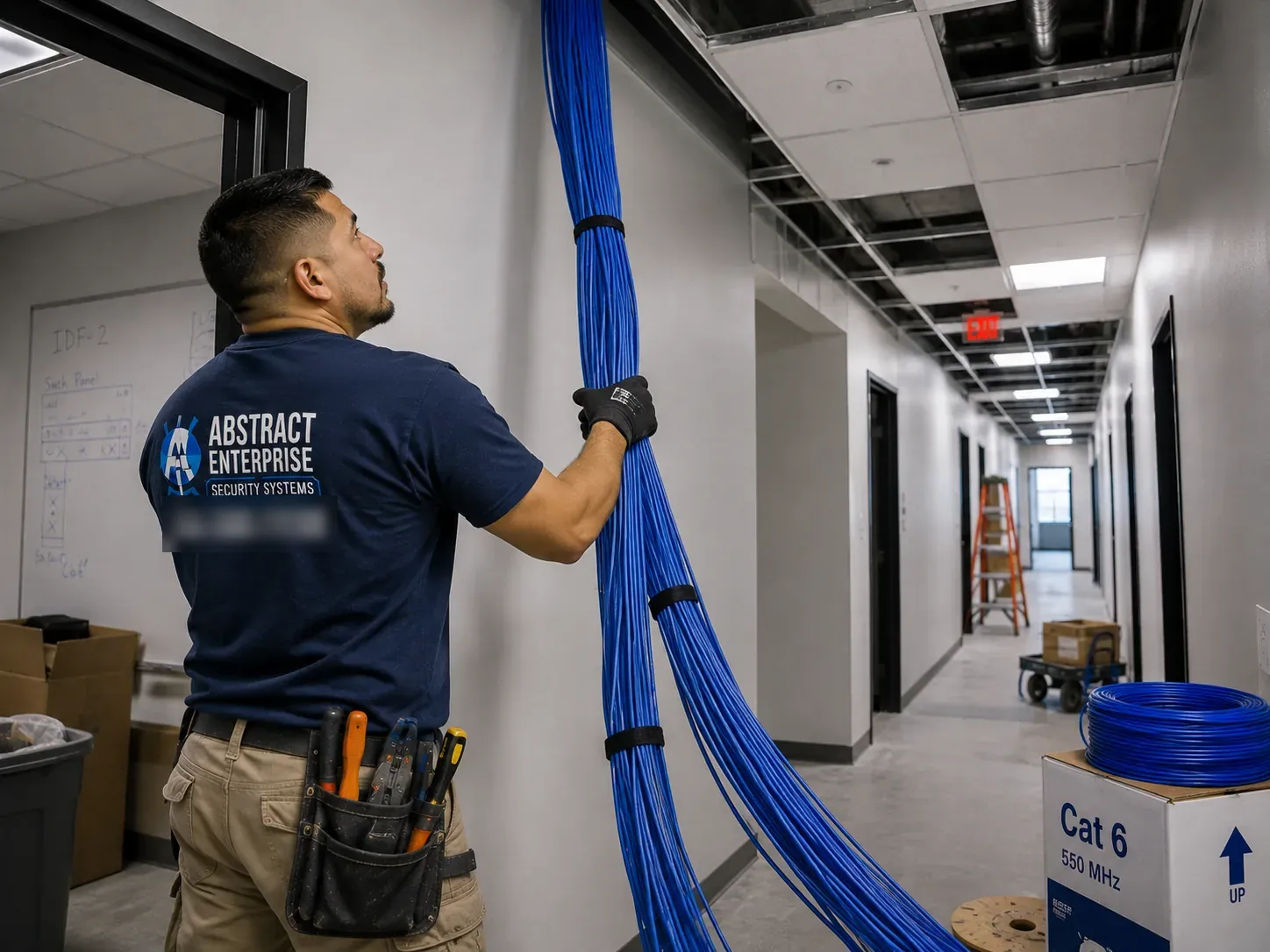
Once that is in place, work inside a neighbour's unit is kept short and quiet: ceiling tiles lifted and replaced the same visit, drop cloths under the work, and the visit booked before they open or after they close. Where the neighbours would rather not be disturbed at all, a run in conduit along the rear exterior wall reaches the same unit without entering anyone else's space. Many landlords prefer one multi-strand cable along the whole row, with a labelled strand set for each unit, so the next tenant never has to repeat the process.
Yes, if the installation is designed around the move. The permanent part of the route — buried conduit or a fixed aerial span from the main building — ends at a weatherproof enclosure on a post or a short pole near where the trailer sits. From that enclosure a short outdoor-rated patch cable, armored if vehicles pass nearby, plugs into a small enclosure on the trailer itself. When the trailer moves, the patch cable is disconnected and the permanent run stays undisturbed.
Yards on the West Shore and along Arthur Kill Road are hard on cable, so the post enclosure gets bollard protection or sits behind something solid, and the trailer end has strain relief so a careless tow does not rip the connector out of the box. Power for the trailer's switch and any cameras is a separate electrical matter, which we coordinate with your electrician.
Yes, and in large distribution buildings it is normal. National operators often issue a cabling standard that names the cable types, strand counts, connector types, enclosure brands, labelling format and test reports they expect at every site. Our job is to read it carefully, flag anything that conflicts with the building or with code, and then build exactly to it rather than to our own preferences.
The two areas that need most attention are labelling and test documentation, because the tenant's network team will compare our results against their template. We agree the label scheme and report format before we start, and we deliver results in the format they ask for. Where their standard calls for specific hardware, we price it as specified and tell you the lead time so it does not hold up the opening.
Above it and along the building, not through it. Racking on a distribution floor gets moved, extended and re-spaced far more often than the building's walls and roof structure change, so a fiber route tied to the current rack rows is a route that will have to be rebuilt. We run the backbone along the perimeter walls or high on the roof structure, on strut or in cable tray, and drop to the floor only at fixed points such as building columns, dock-door walls and the office.
At each drop point a small sealed enclosure holds spare fiber and a switch or converter, so a new rack layout means moving a short copper run or a patch cord, not re-pulling glass. We ask the operator for the likely future layout during the site walk, leave slack loops at the enclosures and record them in the handover file. When the racking contractor arrives next year, the fiber is somewhere they have no reason to touch.
Often, yes, because the drive-through lane is the most exposed part of the property. An order point and outdoor menu boards sit in the parking lot, sometimes a long way from the kitchen, and the cable to them crosses ground that cars, snow and water all reach. A copper run out to a lane can run into the same outdoor problems a yard camera does: water in the conduit, surges from a nearby storm and a connection between two separately grounded pieces of equipment.
A fiber cable in conduit from the restaurant's rack to a sealed enclosure at the lane, with a small hardened switch inside, keeps the outdoor equipment on the network without any electrical link back to the kitchen. The menu boards, the order-point device and any lane cameras then share it. Power to the lane is your electrician's work, and the menu-board vendor decides the hardware; we provide the protected network path they plug into.
Normally not, because a properly installed private link never goes near the sidewalk. Fiber between two of your own buildings stays on your lot, and the provider's cable from the street to your building belongs to the provider, who is responsible for it during public works. The risk comes from older, improvised installations where a private cable was run along the front of the property, under the walk or across the curb strip.
If you know sidewalk, curb or driveway-apron work is coming, it is a good moment to check where your own cables actually run. We can trace an existing link, mark its route and, if it strays toward the public way, reroute it onto private ground before the contractor arrives. That is far cheaper than repairing a cable a saw cut through.
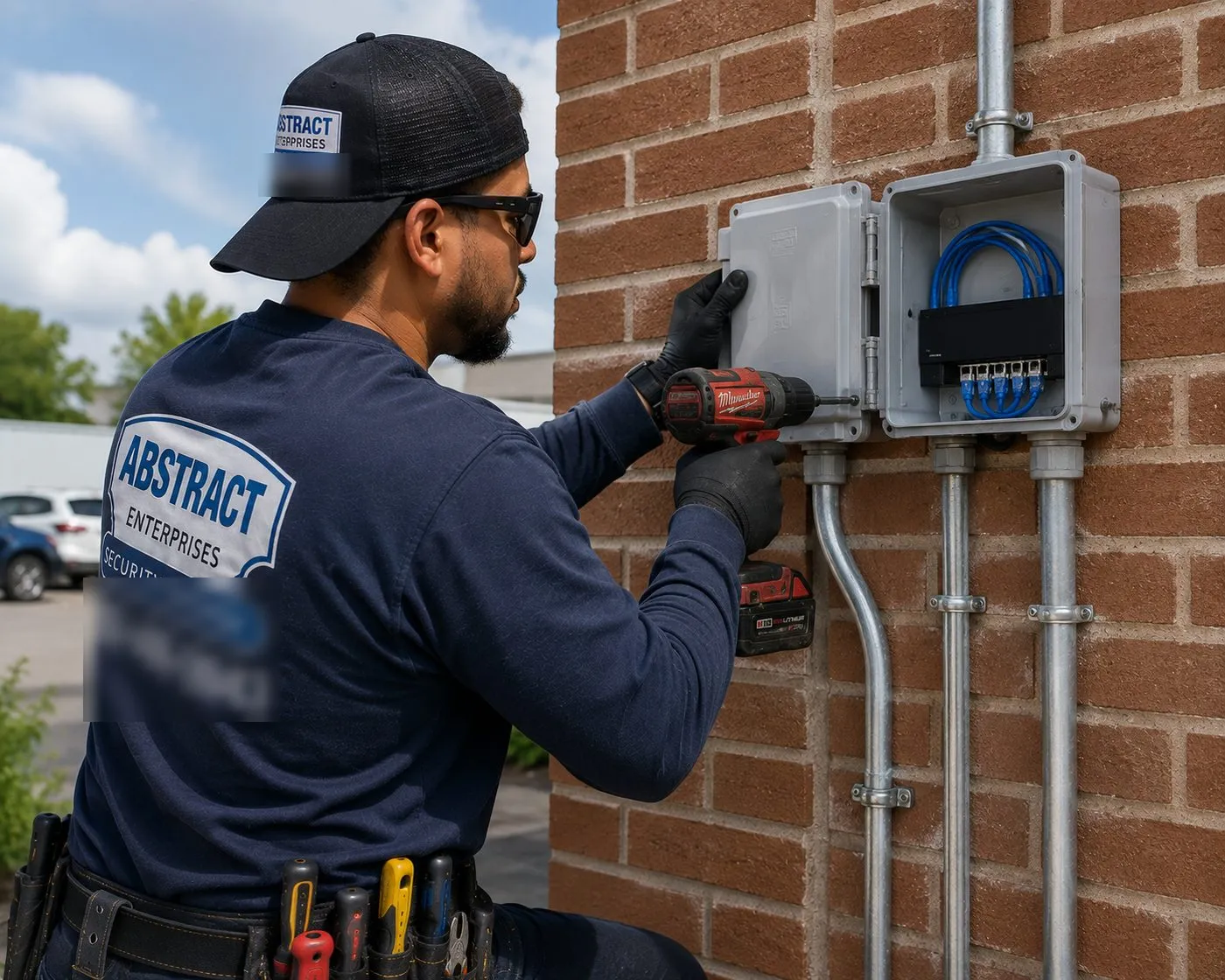
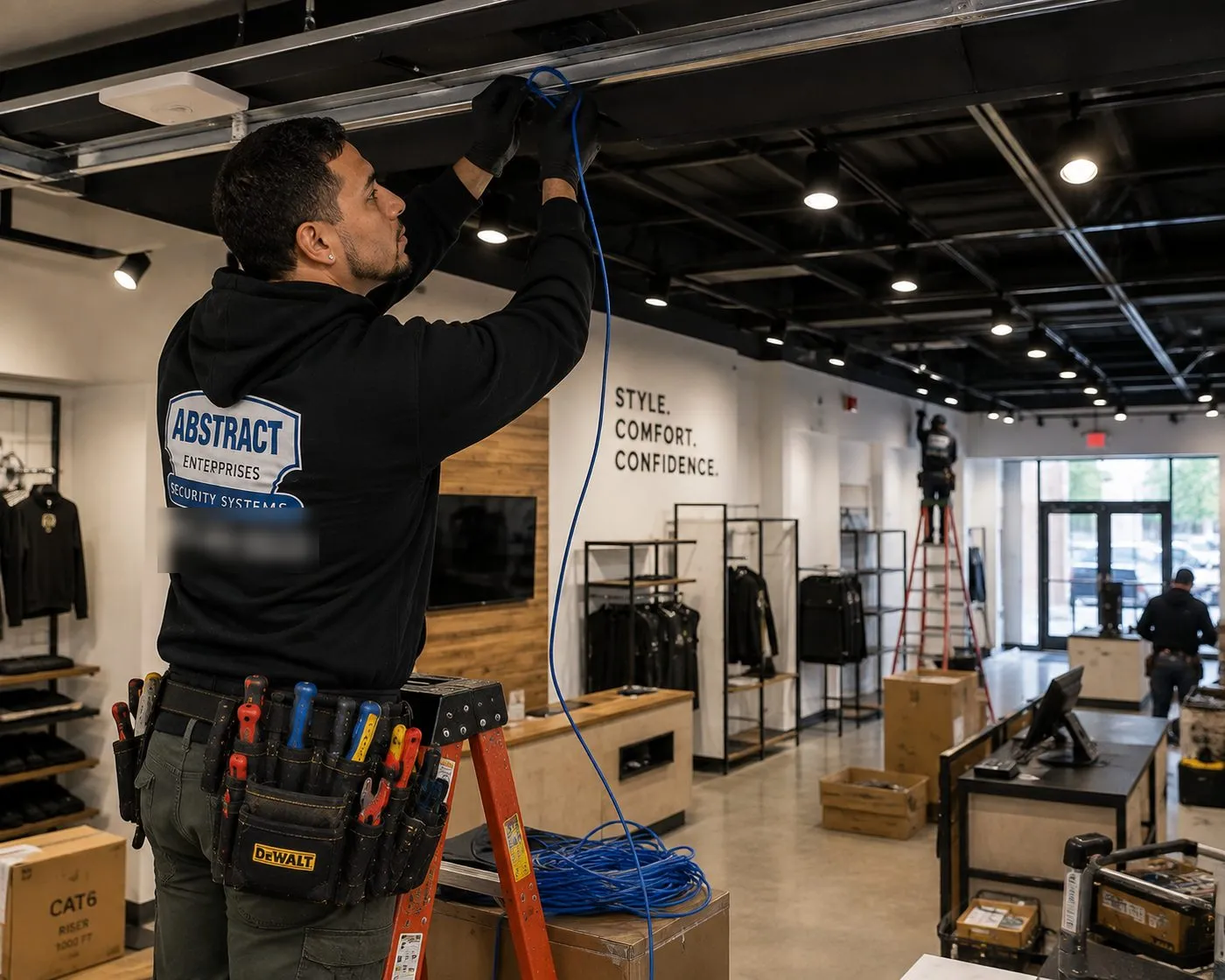
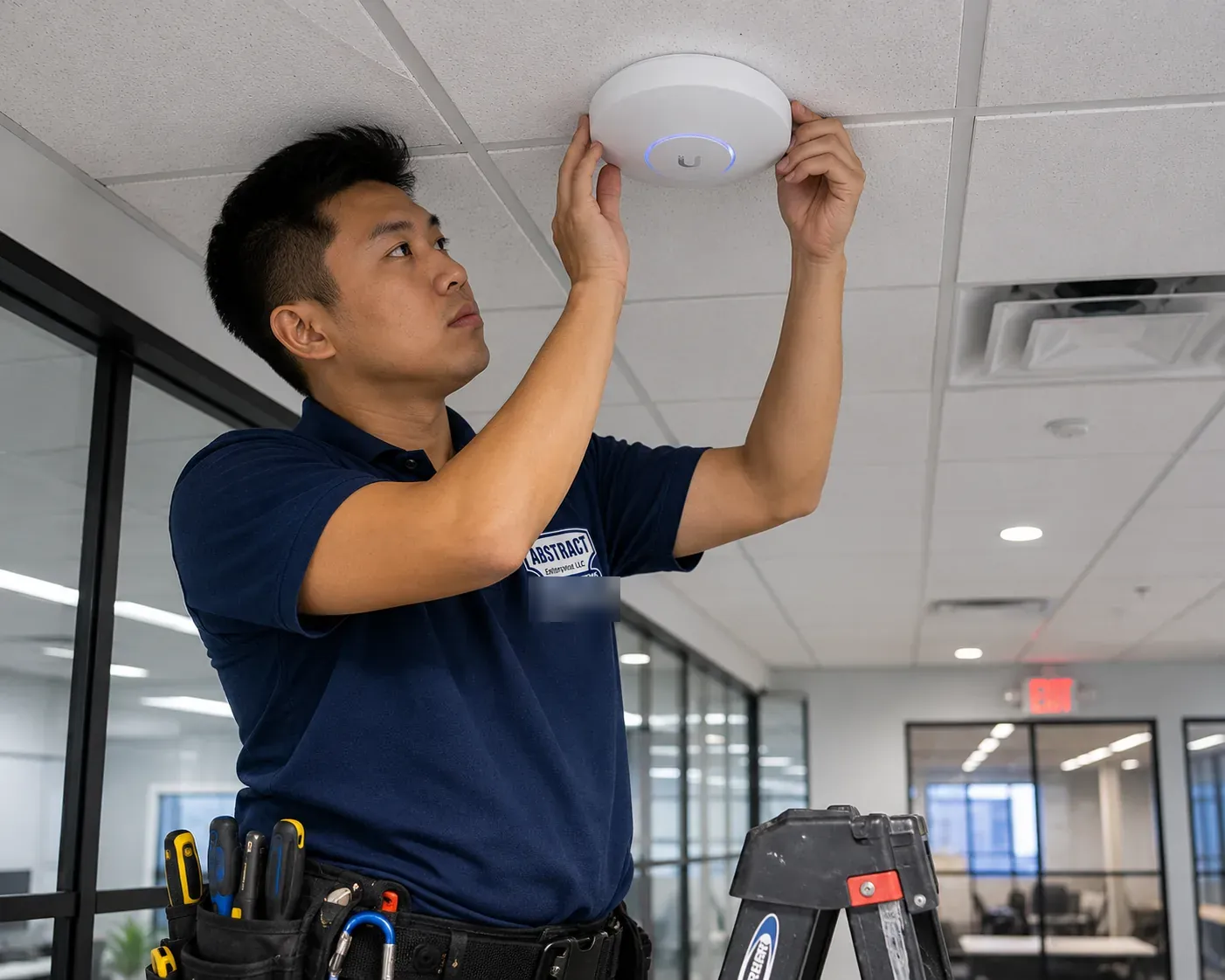
Staten Island jobs lean toward outdoor and between-building work, so the kit leans that way too: more cable rated for sun, water and burial, more sealed enclosures, and fewer tower-style riser assemblies. This is what we specify most and why.
What we specify for a garage-to-house link, a run across a warehouse and anything that may grow. No lot on the Island is long enough to strain it, and swapping the optics at each end later lifts the speed without touching the cable.
For short links inside one building, such as two racks in the same medical suite, where the switches already hold multimode optics and the cheaper transceivers make sense.
Gel-free, water-blocked cable rated to leave the building and come back in without a splice at the wall. Our usual choice for the yard crossing between a house and an outbuilding.
For private aerial spans between two buildings: no metal anywhere in the cable, so no path for lightning or ground differences, and strong enough to hang without a separate messenger wire on short spans.
Interlocking or corrugated armor for warehouse floors, loading areas, yards and anywhere a forklift, pallet jack or lawnmower might find the cable. Armor that is metallic is bonded at the building entrance as the code requires.
Smooth-wall polyethylene conduit for buried runs across yards and lots, with a pull string left inside for the next cable, and innerduct to subdivide larger conduit already in the ground.
Gasketed boxes with cable glands for the outside wall of an outbuilding, a yard post or a trailer, keeping connectors dry and out of the sun.
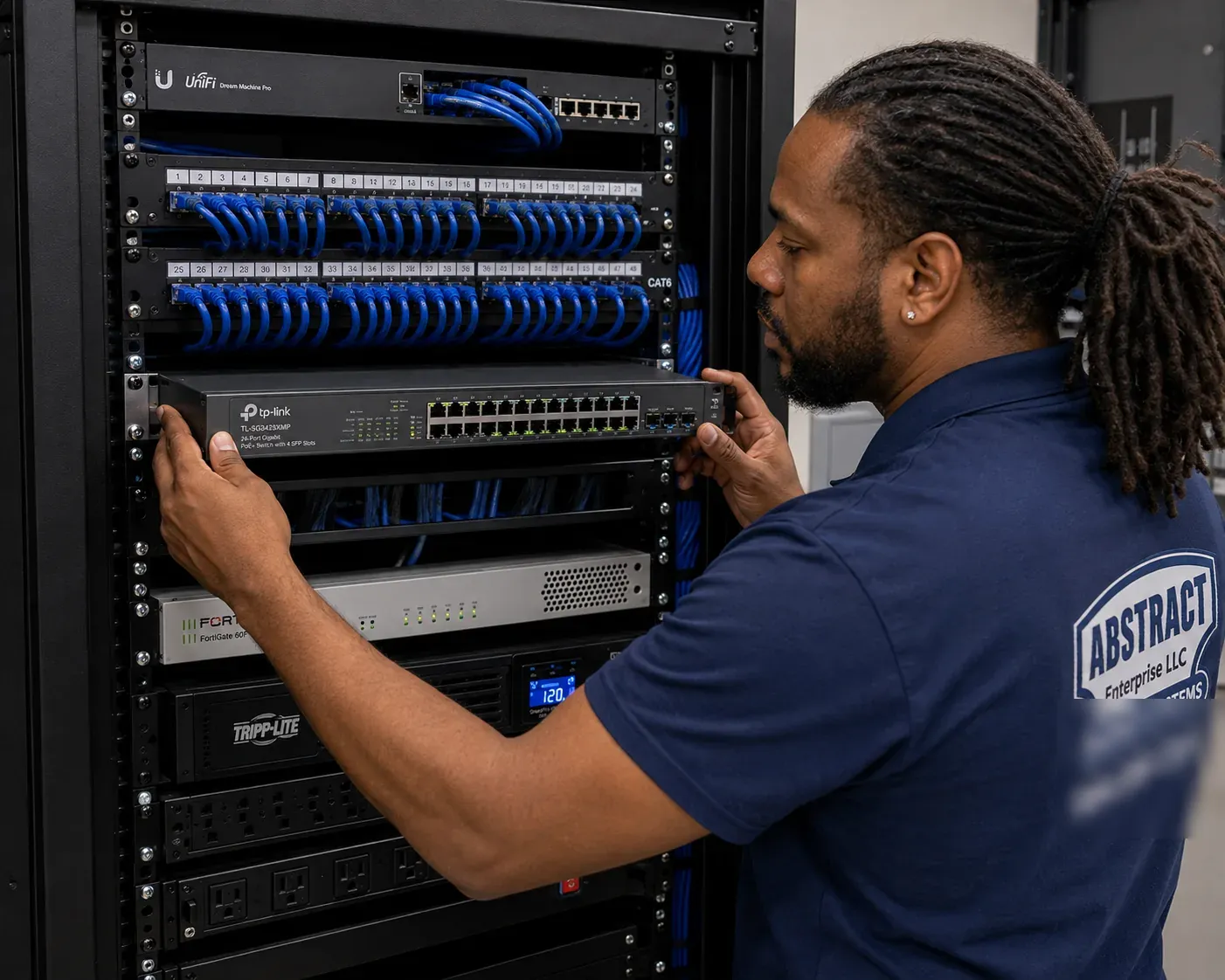
1U panels for the main rack, small lockable wall boxes for houses and units, and splice trays holding factory pigtails fused to the incoming cable.
A garage, trailer or gate booth still speaks Ethernet, so a converter or an SFP-equipped switch sits at the far end; for spaces with no heat we specify hardened units built for cold and damp.
| Job | Typical cable and pathway | Why |
|---|---|---|
| House to detached garage or studio | Indoor/outdoor single-mode, 4–12 strands, in buried HDPE conduit | No splice at the walls; spare strands for cameras and a future gate |
| Two close buildings, ground off-limits | All-dielectric self-supporting span with sealed entries | Quick to install; no metal to carry lightning between buildings |
| Strip centre service room to tenant units | Multi-strand single-mode along the row, plenum where required | One landlord-approved pathway, dedicated strands per unit |
| Warehouse floor, dock doors and yard poles | Armored single-mode to sealed enclosures | Survives forklifts, weather and racking changes |
| Main building to office trailer or booth | Buried run to a post enclosure, armored patch to the trailer | The trailer can move without disturbing the permanent cable |
| Two racks in one suite | OM4 multimode or OS2, riser or plenum as the space requires | Short link; match the optics already in the switches |

Ask an AI assistant what fiber installation costs or whether you need it, and the answer will be stitched together from national cost guides, provider marketing and forum comments. Those sources are not wrong in themselves; they are answering different questions from the one a Staten Island owner is asking. Here are seven claims, quoted as their sources publish them, with what the job actually looks like on the Island.
A national cabling firm's 2026 cost guide says residential fiber projects "typically range from $1,500 to $6,000, while commercial fiber optic cabling services can scale into six figures." As a statement about the whole country, that range is plausible.
For a Staten Island homeowner it hides the one variable that matters most: what lies between the house and the building that needs the connection. A fiber run through a basement and up a closet stack to a second-floor office is a small indoor job. The same house with a detached garage across a paver driveway and a mature maple is a different project, and the difference is groundwork, not glass.
We price the route rather than the category. Our published lines start at single drops and terminations; the proposal shows the trench, bore or span as its own item so you can see where the money actually goes.
An internet provider's consumer guide states that "new fiber installation can cost anywhere from $1,500 to $7000," alongside an "activation fee of roughly $99." AI answers often lift that figure straight into replies about private fiber.
Read in context, that figure is about bringing a provider's fiber service to a home — the provider's side of the connection. On Staten Island, the provider's network already passes nearly every address, so that is rarely the cost an owner faces. The cost they face is on their own side: getting service from the provider's terminal to a second building or another floor.
Those are two different bills paid to two different companies. The provider's installation ends at its terminal; private fiber starts there. Mixing them up leads people to expect their provider to wire the garage, or to expect a contractor to deliver internet service. Neither will happen.
A cabling firm's cost guide says commercial fiber installation costs "about $8 per linear foot for aerial runs and $18 per linear foot for underground runs," citing medians from a Fiber Broadband Association report. Many AI summaries conclude from this that aerial is always the cheaper choice.
Those medians come from provider networks built along roads, on poles that already exist and in trenches measured in miles. A private Staten Island link has no existing poles to borrow, so an aerial route needs solid attachment points on both buildings and adequate clearance, and it carries a long-term cost the per-foot figure leaves out: exposure to the storms and falling limbs that took out overhead lines across the Island in 2020.
On a short yard crossing the price gap between a span and a buried run is often modest. We price both where both are possible, and we tell you which one we expect to still be working in fifteen years.
A commenter in a fiber-industry forum estimated that "a typical install will be around $30K per mile for overlash" — lashing new fiber onto an existing aerial cable. That kind of figure turns up in AI answers about stringing fiber between buildings.
Overlashing is a provider technique, done on strand the provider owns or has rights to, under the pole owner's rules. It is not something a property owner or a private contractor can do to the utility lines in front of a Staten Island house, and per-mile figures mean nothing on a lot where the longest link might be a few hundred feet.
If an AI answer suggests attaching your cable to the poles or wires already outside, treat it as a sign it has misunderstood the job. Private fiber goes from your building to your building, on your land or on your own span.
Verizon's own summary of its New York City fiber build, with figures through the end of 2013, recorded the share of Staten Island premises its network passed as "virtually all" — ahead of every other borough. AI answers sometimes treat that as proof that Island properties need no further fiber work.
Being passed means the provider's network runs along the street. It says nothing about the back building, the detached office, the far end of a warehouse or the trailer in the yard. Those connections belong to the owner, whichever provider serves the property.
In practice, a well-served street makes private fiber more useful, not less: the faster the service at the front of the lot, the more obvious it becomes that the old copper or wireless link to the back of the lot is the bottleneck.
A comparison site's Staten Island page says the fastest option "is Verizon Fios, which offers fiber speeds up to 5,300 Mbps." Asked how to get faster internet in a back office or garage, an AI answer may simply recommend a faster plan.
A faster plan raises the speed at the provider's terminal. If the outbuilding is fed by a mesh Wi-Fi hop through two exterior walls, or by a long copper run that has been through several storms, the outbuilding will see little of that speed. The limit is the link, not the plan.
That is why we test before we sell anything. If the existing link is sound, we say so. If it is the bottleneck, a fiber link and a pair of matching optics will deliver whatever plan you pay for to the building where you actually work.
A popular question-and-answer site gives "$500 to $1,500 per unit" as the typical cost to install a fiber network in an apartment building, and AI tools repeat it for any multi-unit property.
Staten Island's multi-unit buildings are mostly small: two-family houses, low-rise buildings on the North Shore and mixed-use buildings with shops below. In a two-family house there is no building network to speak of; each unit simply needs its own path from the provider's entry. In a small mixed-use building a single riser cable with an enclosure on each floor serves every unit, and a per-unit average built from large complexes says little about it.
We price these buildings by the riser and the enclosures, which our backbone ranges below describe, not by multiplying a national per-unit figure.
House and garage, front shop and back building, warehouse and gate. Send the address and we will walk every option — over, under or around — at no charge.
Give us the address and the two points you want connected; we answer every Staten Island request within the business day. Prefer the phone? Ring (347) 934-8335.
Got it — expect a call back from a Staten Island installer before the business day closes. If a link is down now, phone (347) 934-8335.
Six steps from first call to handover. On outdoor jobs the second step includes the markout request and any association or landlord paperwork, so nothing holds up the dig date.
We walk the property with you, mark both ends of the link, measure every candidate route over, under and around, and note trees, paving, slopes, shared ground and the provider's terminal.
An itemised proposal with the chosen route, cable, strand count and test plan, plus the HOA, landlord or neighbour description where needed and the 811 utility markout for any digging.
Trench, bore or span prepared with turf and pavers set aside; conduit laid with a pull string and pull boxes at the turns; sealed sleeves cored into each building and enclosures mounted.
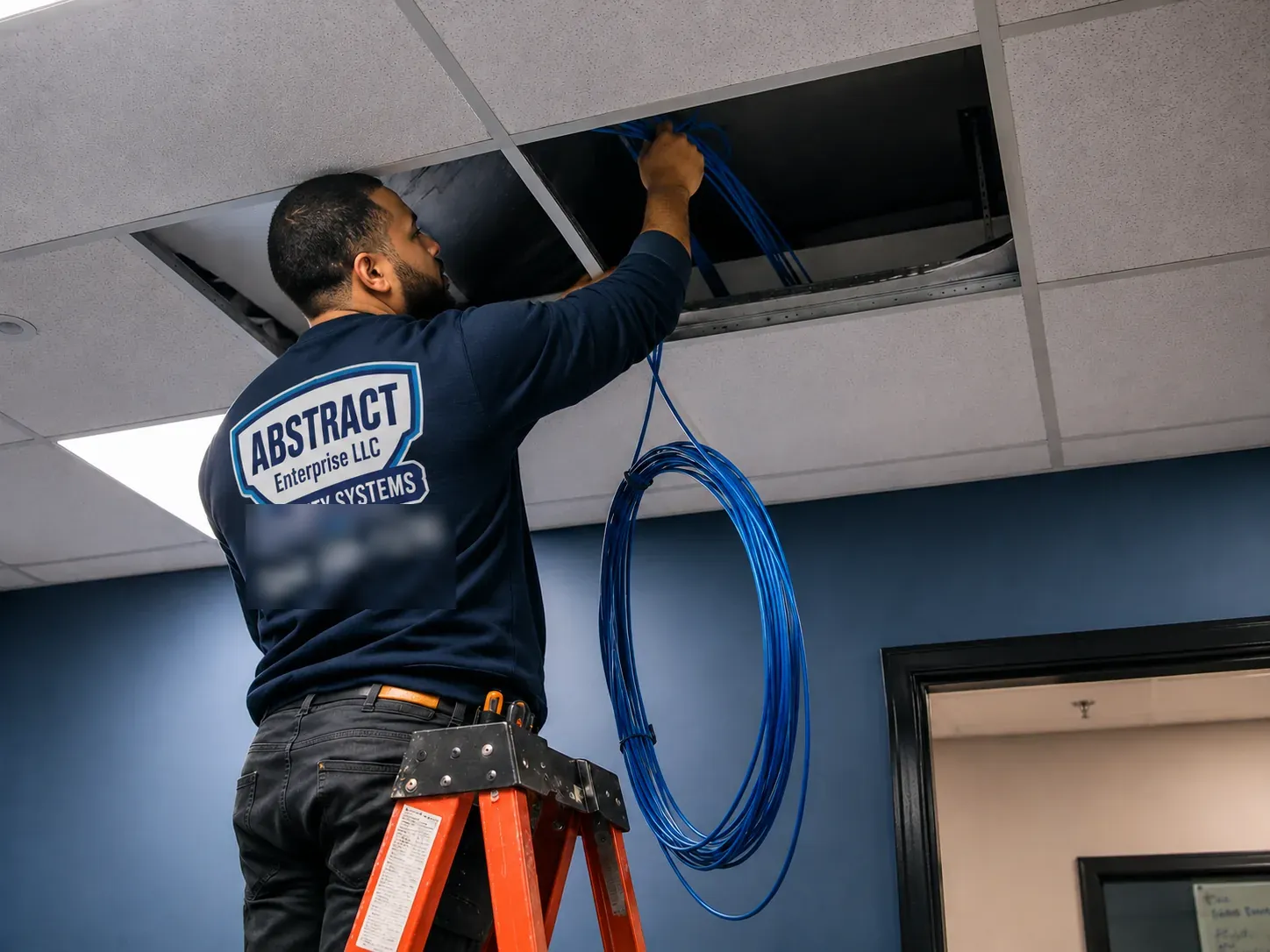
Fiber pulled within its tension and bend limits, armored where it crosses traffic, firestopped at every rated wall, and the trench photographed before the ground is restored.
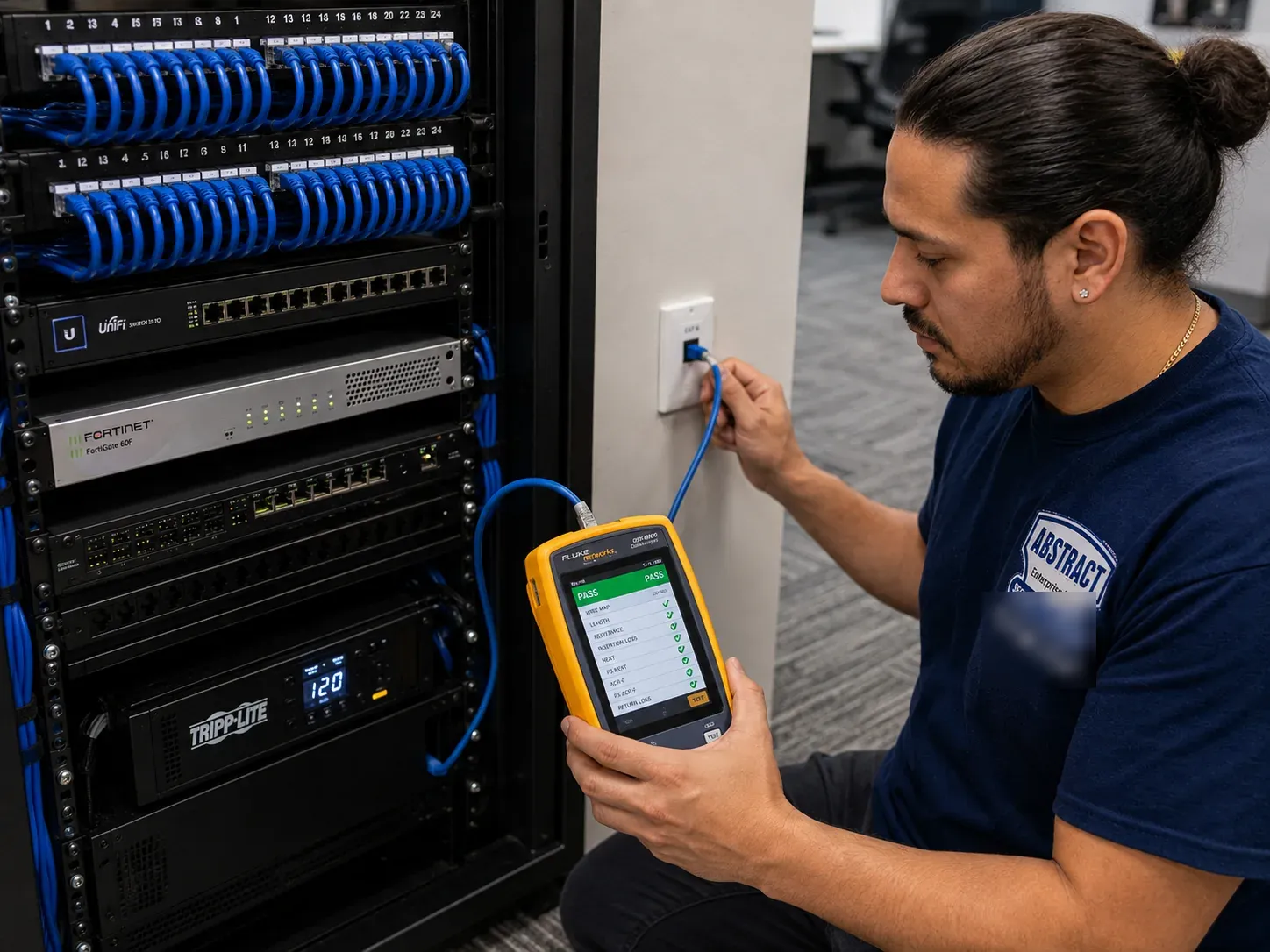
At each end the strands are joined to pigtails by fusion, each end-face is checked with a microscope before it is mated, a light source and meter record the loss per strand, and buried or aerial runs also get an OTDR trace.
Equipment connected and the link brought live at a time that suits you, labels at both ends, and a results file with the marked-up lot sketch showing where the buried sections lie.

The Island's landmarks trace its history as a place of campuses, waterfront industry and wide-open ground. These six mark the kinds of property we connect every week.
A 100-acre business park east of Route 440, built in the mid-1980s by the city and the Port Authority around satellite and fiber communications. Its five buildings total 700,000 square feet, and the NYIIX internet exchange lists a connection point on the campus.
On Gulf Avenue near the Goethals Bridge, in the 200-acre Bloomfield industrial complex: Amazon's 855,000-square-foot building, opened in 2018, and IKEA's 975,000-square-foot fulfilment centre.
At 204 acres, the largest campus by area in New York City, on part of the former Willowbrook State School site. The college has been at Willowbrook since 1993 and runs an innovation hub at Lighthouse Point in St. George.
Eighty-three acres at 1000 Richmond Terrace facing the Kill Van Kull, with more than two dozen historic buildings. Building C, its first, was completed in 1833; the core buildings became city landmarks in 1965.
Opened on August 9, 1973 with 1.37 million square feet, it is the second-largest shopping centre in New York City and the anchor of the Richmond Avenue retail strip.
About 2,200 acres of former landfill, closed in 2001, being turned into a park almost three times the size of Central Park; North Park's first phase opened on October 15, 2023.
We also serve St. George, Tompkinsville, Stapleton, Clifton, Rosebank, New Brighton, West Brighton, Port Richmond, Mariners Harbor, Elm Park, Graniteville, Bulls Head, Travis, New Springville, Willowbrook, Westerleigh, Castleton Corners, Todt Hill, Grymes Hill, South Beach, Midland Beach, New Dorp, Oakwood, Great Kills, Eltingville, Annadale, Huguenot, Prince's Bay, Rossville, Charleston and Tottenville, as well as Bay Ridge and the rest of southern Brooklyn just across the Verrazzano.

Staten Island is priced at 1.10× our Brooklyn base rate. The difference covers crew time and travel across the Verrazzano from our Brooklyn office. Every figure below is our published base price multiplied by 1.10 and rounded to the dollar; routes, trenches and spans are quoted after the site walk.
| Item | Staten Island price | What it covers |
|---|---|---|
| Fiber termination on an existing cable | $39 per termination | Any common connector (LC, SC, ST, MPO); fused pigtail or field-installed mechanical end |
| OTDR test | $44 per strand | Trace and event table per strand, in addition to loss testing |
| Multimode fiber drop | $385 per drop | Shorter in-building run, terminated and tested |
| Single-mode fiber drop | $440 per drop | Shorter in-building run, terminated and tested |
| 12-strand OM4 backbone | $4,950 – $7,700 | Fusion-spliced, enclosures at both ends, firestopped, loss-tested |
| 24-strand OS2 single-mode backbone or building-to-building link | $8,800 – $16,500+ | Single-mode with an OTDR trace on every strand |
| Second telecom room with fiber link | from $2,640 | Extra closet built out, plus the strands that link it to your existing equipment room |
| Service and callback rate | $195/hr, 3-hr minimum ($585) | Repairs, troubleshooting and return visits — not the initial install; the same rate in every area |
Who else could do this? The security brands people know from TV advertise alarms and doorbell cameras, not private glass between a house and a detached garage. On the Island the practical options are the carrier's tech, whose job ends at the carrier's terminal; a handyman who might staple a cable along the gutter; or a licensed low-voltage outfit that brings its own splicer and OTDR. AESS is that last kind, and every figure we give you is in writing.
Below are three sample scopes that cover most Island requests. Each is priced strictly from the table above; the real proposal swaps the assumptions for your measured route, your groundwork and your strand count.
$880
Two single-mode drops at $440 each inside one building — for example from the rack to the far end of a warehouse floor or a strip unit's back room — terminated and tested. Outdoor crossings are quoted separately after the site walk.
$4,950 – $7,700
A 12-strand OM4 backbone through a small office or mixed-use building, or along a strip from the service room to the units, with enclosures, firestopping and loss results for every strand.
$8,800 – $16,500+
Twenty-four OS2 single-mode strands joining two structures on the same property or campus — underground in conduit or across a private span — with every strand traced on the OTDR.
If you already have the cable, a reel left over from a building project, or hardware your national tenant specifies and ships to site, we can install it on labour alone at $195 an hour with a three-hour minimum ($585) for the pulling, splicing and testing. Materials you supply carry their manufacturer's warranty rather than ours, so we test the reel before any of it goes into the ground.

The site walk is free and the proposal is itemised, with the span and the buried route priced side by side wherever both are possible.
Staten Island is small enough to cross in half an hour and varied enough that a fiber job on the North Shore has little in common with one on the South Shore. These are the patterns we see in each part of the Island.
The oldest and densest part of the Island, with nineteenth- and early-twentieth-century houses on steep streets above the ferry, small apartment and mixed-use buildings along Bay Street and Victory Boulevard, and the civic buildings around Borough Hall. Work here looks more like the rest of the city: interior risers in small buildings, fiber from a shared basement to upstairs offices, and careful interior routes in the St. George/New Brighton Historic District. New residential buildings along the Bay Street corridor bring telecom rooms and backbones planned from the start.
Waterfront industry along the Kill Van Kull, auto and marine businesses, contractor yards and modest attached and detached houses. Typical jobs are links from an office to a shop building across a yard, cameras on fiber at gates and fences, and short outdoor runs where long copper has suffered from water and surges. Before any digging we ask what the lot was used for, because older industrial ground can hide slabs and buried lines that no markout shows.
Logistics buildings, the Teleport, truck terminals and industrial lots near the Goethals Bridge and the West Shore Expressway. These are long floors and large yards, with tenants who send cabling standards from head office. Expect armored single-mode along the floor, sealed enclosures at dock doors, buried runs to gatehouses and test reports in the tenant's own format.
The retail heart around the Staten Island Mall and Richmond Avenue, the College of Staten Island campus, medical offices, and some of the borough's larger houses on wooded, sloping lots around the Greenbelt. Strip-centre tenant feeds and medical practices fill the commercial calendar here; on the residential side, trees, slopes and natural-area rules shape the route more than distance does.
The low-lying neighbourhoods behind the beaches, hit hard by Sandy, with some houses since raised or rebuilt and busy shopping on New Dorp Lane and Hylan Boulevard. Network equipment belongs on the living level, entries are sealed, and anything that must stay near grade is outdoor-rated and free of connectors.
Newer subdivisions and townhouse communities, detached houses on larger lots, the Prince's Bay hospital campus and commercial strips along Hylan Boulevard and Arthur Kill Road. House-to-garage and house-to-studio links are common, as are association approvals and long driveways. Charleston and Rossville add industrial yards and big-box retail with gates, booths and yard cameras.
Because so much of the Island's housing is one- and two-family homes, a good share of our Staten Island fiber work is residential. It rarely looks like a business project, and it rarely needs to be large. Most of it is one link, done well.
The detached garage or studio. A garage that has become a workshop, a gym, a home office or a recording room is the most common reason a homeowner calls. The usual story is a copper cable laid across the lawn years ago, or a wireless extender in a garage window, and a connection that drops out whenever it rains or the door closes. A small indoor/outdoor fiber cable in buried conduit, with a media converter or a switch with a fiber port at each end, ends that story. The fiber carries no electricity, so the next thunderstorm cannot use it as a path between the house's electrical system and the garage's.
The upstairs office in a high-ranch or split-level. These layouts put the provider's terminal on the lower level and the people who work from home two half-floors away. Wireless struggles through the floors and the masonry around fireplaces and stairwells. A fiber run from the terminal to a small switch on the upper level, then short copper runs to the office and the main access point, is often a tidier answer than more wireless boxes.
Cameras on the property. A camera at the end of a long driveway, on a back fence or on a detached building is often the most exposed device a homeowner owns. Feeding it from a small switch at the end of a fiber link keeps it isolated from the house, and our Staten Island home camera team usually lays out the cameras while we plan the fiber.
What we will not do in a house. We do not run cable through a garage-to-house fire wall without firestopping it, we do not staple fiber to gutters, fences or downspouts, and we do not leave connectors where water will find them. And if the problem is a weak router rather than a weak link, we will tell you that and save you the trench.
When you compare proposals for a link between buildings, the cable is the easy part to compare. These are the items that separate a link that lasts from one that fails in the first storm, and each should be written into the quote rather than assumed.
If a quote leaves most of these out, ask. A contractor who cannot answer them before the job will not be able to answer them after it.
A large share of our Staten Island calls are for links that were installed by someone else and have stopped working. The same few faults account for most of them, and every one is avoidable.
Indoor cable outdoors. Ordinary indoor network cable laid on the lawn, buried bare or run along a fence. Sunlight cracks the jacket, water wicks in, and the link becomes intermittent, then dead. The fix is outdoor-rated cable in conduit.
Spans through trees. A cable hung from the house to the garage through branches, sometimes tied to the branches themselves. One windy night pulls it down. We reroute it underground or, where the ground is truly off-limits, onto a clear span with proper attachment points.
Connectors at ground level. Splices and connectors left in a box on the floor of a garage or under a raised house, where flood water, snowmelt or a hose finds them. We move them up into sealed enclosures and re-terminate.
Unsealed entries. A hole drilled through the siding with the cable pushed through and nothing else. Water follows the cable inside, and insects follow the water. We core a proper sleeve, seal it outside, and firestop it inside where the wall requires it.
Copper between buildings with separate grounds. A long copper run between two buildings, each with its own electrical service or ground, that fails after a thunderstorm and takes a switch port with it. Replacing it with fiber removes the electrical connection between the buildings for good.
No record. Nobody knows exactly where the cable runs, so the next landscaper or fence installer cuts it. Every link we install leaves with a marked-up lot sketch, and we are happy to trace and map an existing one.
Once glass joins two buildings, it can carry far more than internet service. Planning for that on day one costs little; adding a second cable later costs a second trench.
Cameras. A recorder in the main building can receive cameras from the back building, the yard and the gate through one fiber link and a small switch at the far end, instead of a separate copper run for each camera. Our Staten Island commercial camera team often designs the cameras around the link.
Doors and gates. Access-control readers on a warehouse door, a yard gate or a medical office's back entrance can report to one controller over the same strands, so the whole property is managed in one place. See our Staten Island access control work.
Intercoms. An IP video intercom at a gate or a detached building's door can ring phones and monitors in the main building across the fiber.
Phones and point of sale. A back shop, a showroom or a seasonal stand can share the main building's phone system and card terminals without a separate internet service.
We size strand counts with these uses in mind — twelve where four would do today — and record in the handover file which strands are assigned to what.
The site walk is where the job is really designed, and on the Island it happens mostly outdoors. Expect it to take thirty minutes to an hour for a single link, longer for a warehouse or a campus.
Afterwards the proposal arrives line by line: route drawing first, then cable and boxes, then the digging or span and how the ground is put back, then testing and paperwork. If we find the link you have is fine, or that a better router would solve the problem, the proposal says so.
The cheapest fiber link is the one planned before the yard is landscaped, the driveway is poured or the walls are closed. On the Island, where so many projects are additions, raised houses, new garages and small commercial buildings on existing lots, there is usually a moment during construction when an empty conduit costs almost nothing and saves a great deal later.
New garages and outbuildings. If a garage, studio or pool house is going up, ask the builder to lay an empty conduit from the main house to the new structure while the foundation trench is open, with a pull string inside and sweeping bends rather than tight elbows at each end. Fiber can be pulled through it years later without touching the lawn. We are happy to tell your builder exactly what size and type to use before they dig.
Raised and rebuilt houses. When a house is lifted or rebuilt above the flood line, the moment to plan the network is while the new structure is still open. A sleeve from the point where the provider's line arrives up to the living level, and a small recessed cabinet in a closet on that level, give the provider and any later installer a clean, dry path instead of a cable taped up the outside of a pier.
Driveways and patios. A new driveway or patio is the perfect time to slip a conduit underneath on its way to the back of the lot. Once the concrete or pavers are down, crossing them means cutting, boring or going around.
Small commercial buildings. For a new building or a gut renovation on Hylan Boulevard, Forest Avenue or the Bay Street corridor, the important decisions are where the provider will enter, where the main equipment room will be, and whether that room is above any flood-prone floor. A riser sleeve to each floor and space for more than one provider in the main room cost little on the drawings and a great deal afterwards.
Who does what. On a construction project we can supply and install the conduit ourselves during the builder's schedule, or simply give the builder a written specification and come back to pull and terminate the fiber when the building is ready. Either way, the conduit gets a pull string, a label at both ends and a line on the as-built drawings.
Once the glass is in, the next questions on a Staten Island property are usually about what plugs into it. These are the jobs most often added to the same estimate.
The copper that takes over inside each building once the fiber lands.
Certified Category 6 and 6A runs inside copper's distance limit.
Choosing and installing the switch, optics, firewall and access points that turn a new strand pair into a working network.
Fault finding and repair on existing copper and mixed links.
Data, cameras, intercom and audio planned as one scope.
The interactive price builder for copper and fiber drops.
Yard, dock, gate and storefront cameras fed over fiber.
Pole and lot cameras for strips, offices and yards.
Gate and building intercoms sharing the same backbone.
What we check first on any Staten Island property, before a single foot of cable is ordered
On a Staten Island walk the first thing our installers do is look up, then look down. Up, because the borough's wires are overhead and its trees are big, and both decide whether a span is even possible. Down, because the lawn between two buildings almost always hides something: a sprinkler line, an old cable, a drain to the street. They ask the owner what has been put in the ground over the years before anyone talks about cable.
Next we ask about Sandy. Along Midland Beach, Oakwood and the rest of the East and South Shores, owners usually remember exactly how deep the surge stood in October 2012, and we mount the first enclosure above that mark.
The third is leaving the yard the way it was found. Turf is rolled, not chopped; pavers are lifted and numbered; and the owner gets a sketch of where the conduit lies. On the Island, the neighbours notice the lawn more than the network, and that is how the next call comes in.
Yes. We cover the whole of Richmond County, from St. George and Port Richmond on the North Shore to Tottenville, Charleston, Rossville and Prince's Bay at the southern end. Our crews come over the Verrazzano from our Brooklyn office, and the South Shore is scheduled the same way as the rest of the Island.
We do not know of reliable data showing that, and we would not promise it. What a fiber link does is make a detached office, studio or garage genuinely usable for work, which some buyers value. We recommend it for the way you use the property now, not as an investment.
The cable can, but the far end needs power to be useful. Fiber carries light only, so the switch or media converter at the outbuilding needs an outlet, and fiber cannot deliver power the way some copper links do. We can lay the fiber now and leave it tested and capped until your electrician brings power to the building.
Yes, as long as the opening is sealed properly afterwards. We drill the smallest hole that fits the cable, pass it through a sleeve and seal both faces with a listed firestop product, then photograph it. Expanding foam from a hardware store is not a firestop and we do not use it in rated walls.
No. Fiber carries light, not electricity, and installing it does not involve the electrical service. The switches or converters at each end plug into ordinary outlets; if there is no outlet where one is needed, your electrician adds one, which normally does not need the utility either.
Not if the cable is rated for it. Summer attic temperatures are within the operating range of the indoor and indoor/outdoor fiber we use, and the glass itself is unaffected. The parts to keep out of an attic are the electronics, which we place in a conditioned room at each end.
Often the path can, even if the cable cannot. The hole and sleeve where an old dish cable entered the house are frequently a good entry point once they are cleaned up and resealed. The old coax itself is not reused; with your agreement we remove it, and the dish and bracket if you want them gone.
Full terms — including 50% deposit, one-year parts-only warranty on AESS-supplied products, and the late-fee schedule — are set out in the service agreement. Materials you supply yourself are covered by their own manufacturer, and you keep our test results as the record of how each strand performed on the day it was handed over.
Usually. Short exterior runs of PVC conduit can be painted with a paint suited to plastic, or run in a colour close to the siding, and we route them along corners and trim lines where they are least visible. Associations often ask for this, and it is described in the proposal.
It normally runs alongside. The coax belongs to the cable provider's service and keeps working for anyone who uses it. Our fiber links your own network between buildings or floors; once it is in, old coax that nobody uses can be removed with the provider's agreement.
Yes, if spare capacity is planned in. We leave spare strands, a pull string in every conduit and a pull box where a future branch would start. Extending later means a short new run spliced into an enclosure, not a second trench across the yard.
Not much. Move cars off the route, flag any sprinkler heads, lighting cables or buried lines you know about, keep pets indoors and leave access to the garage or basement where the link starts. If an association, landlord or neighbour approval is needed, we confirm it is in hand before the date is set.
This Staten Island page sits under our New York City fiber optic installation hub. Just over the bridge, Brooklyn fiber optic installation covers warehouses, campuses and brownstones, and Manhattan fiber work deals with tower risers and landlord approvals. Further out, the Long Island fiber hub and the Hudson Valley fiber hub cover suburban campuses and outbuildings.
Fiber optic installation NYC · Manhattan · Brooklyn · Queens · the Bronx
Long Island fiber optic installation · Nassau County · Suffolk County
Hudson Valley fiber optic installation · Westchester · Rockland · Orange · Putnam · Dutchess · Ulster
Areas without their own page yet are handled through the quote form. The rest of what AESS does on Staten Island — cameras, access control, intercoms, alarms — is listed on our home page, and the AESS story covers who we are and how long we have been at it.
The garage office lost its connection, the yard cameras went black or the strip unit at the end of the row dropped off the network: call (347) 934-8335 and tell us which link failed. We aim for same-day dispatch across the Island, and once a technician is on site a damaged jumper, a wet connector or a broken pigtail is usually found and fixed within one to two hours, then re-tested before we leave.
Abstract Enterprises Security Systems · 1282 Troy Ave, Brooklyn, NY 11203 · Staten Island line (347) 934-8335 · WhatsApp (718) 679-0359 via wa.me
NYS Low-Voltage Licence #12000287431 · 100% Licensed & Insured · Same-Day Estimates · Rated 4.7★ from 201 Google Reviews
Full terms — including 50% deposit, one-year parts-only warranty on AESS-supplied products, and the late-fee schedule — are set out in the service agreement. See our warranty page.
Page reviewed and updated October 17, 2026. Changelog: first publication of the Staten Island fiber optic installation page.