Existing-Fiber Audits · OM1 Retirement · Tenant Separation on Shared Campuses · Mill & Loft Backbones · OS2 & OM4 · Fusion Splicing · OTDR
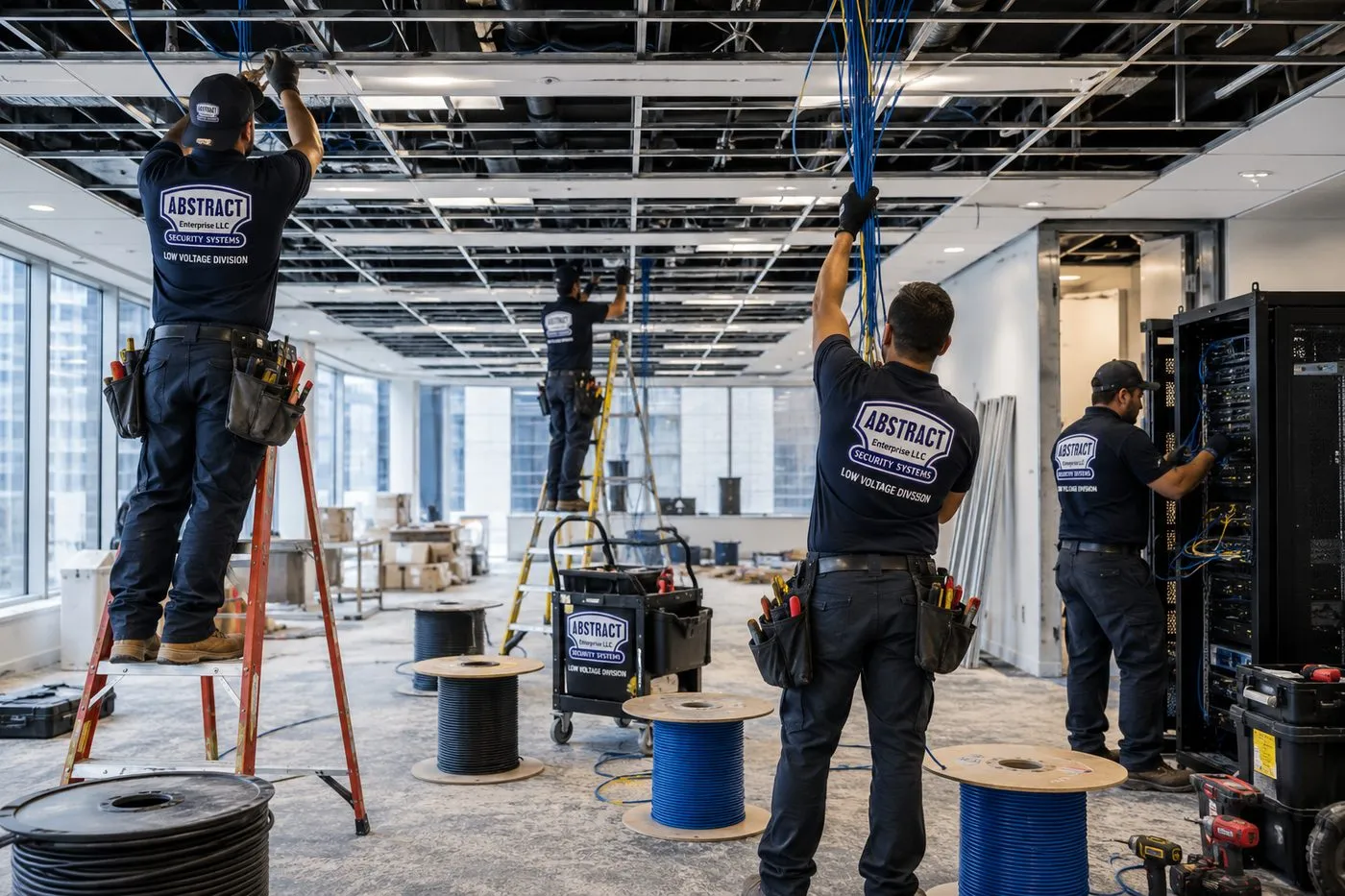
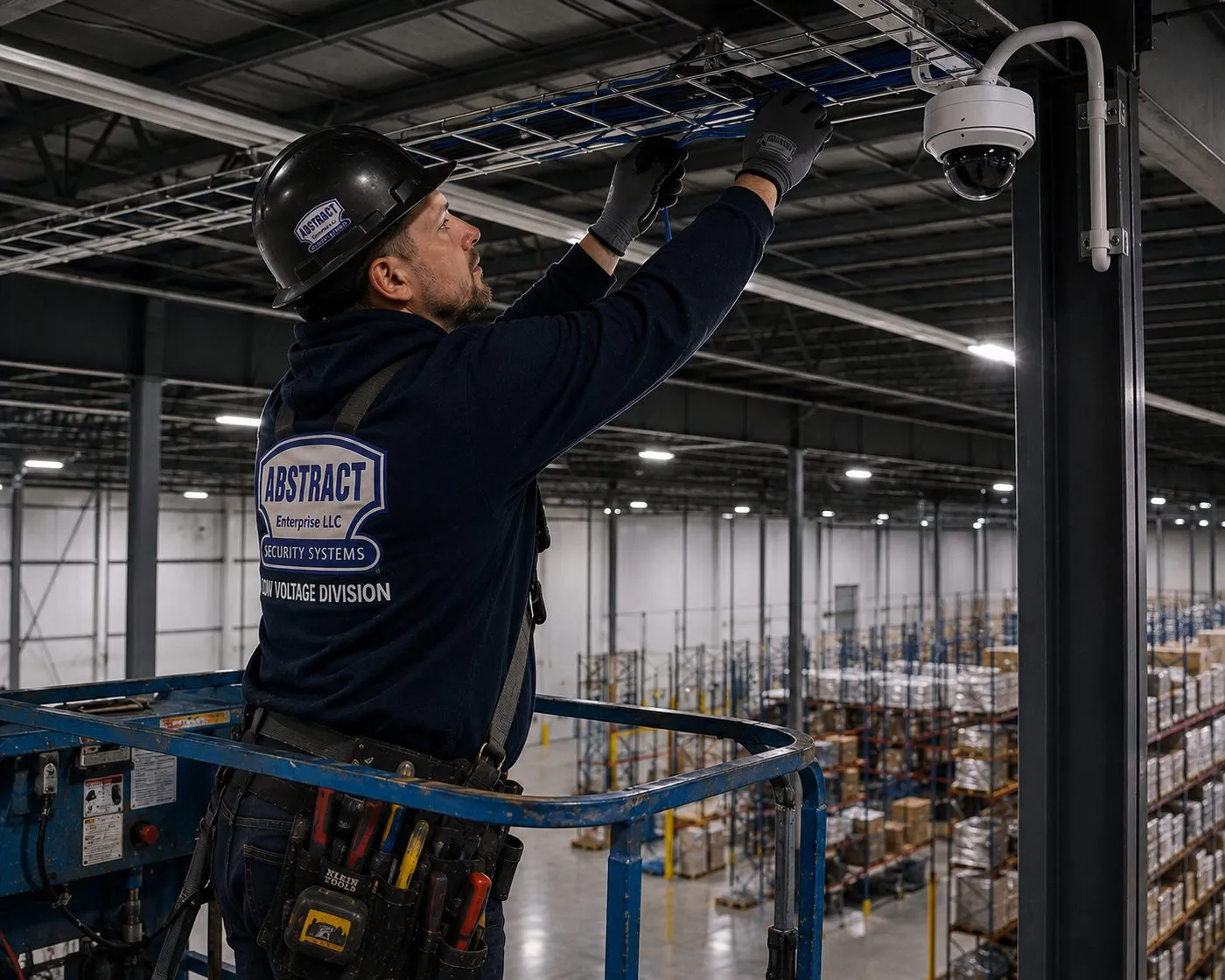
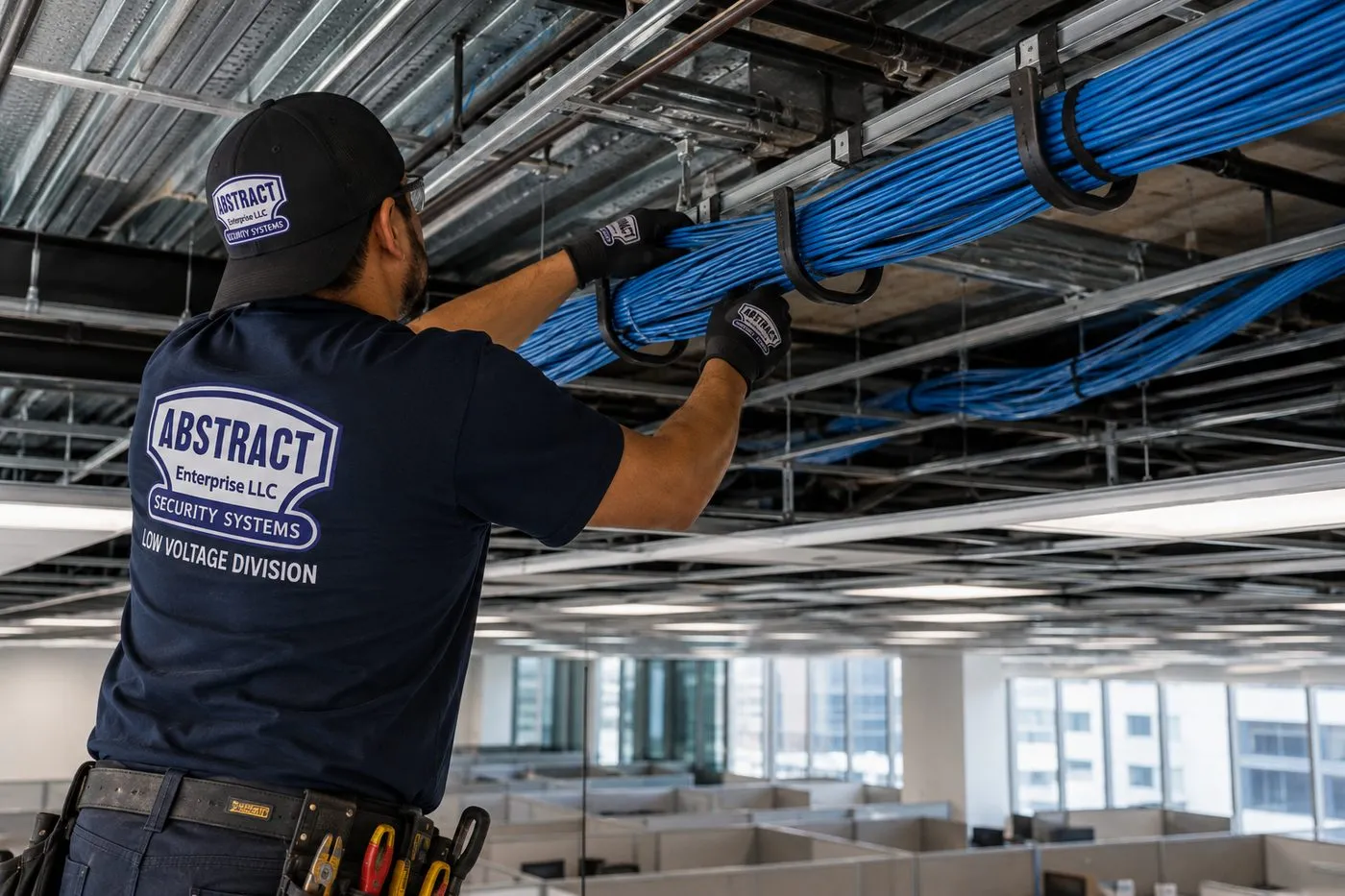
A great deal of Dutchess County was wired once already. IBM built plants in Poughkeepsie and East Fishkill that grew to dozens of buildings; hospitals and colleges added wing after wing; nineteenth-century mills along Fishkill Creek became lofts, galleries and offices. Many of those buildings still carry fiber that someone else designed for a purpose that no longer exists — orange-jacketed multimode from the 1990s, cables with no labels, strands that end in a room your company does not lease. We find out what that glass can still do, retire what it can't, and install new single-mode and OM4 backbones where the building needs them, tested strand by strand and documented so the next owner is not starting from guesswork.
Reviewed and updated October 17, 2026 · Written by Anwar Timothy, NYS licence #12000287431

Inherited a building full of cable nobody can explain? Ring the Dutchess line at (845) 640-3835 or send the 60-second form with a photo of the rack or the place the fiber comes in. The person who answers is an installer who has opened a lot of old telecom closets, not a call-centre script.
Dutchess County's networking problem is less about distance than about history. For most of the second half of the twentieth century the county's economy was organised around one employer and its suppliers. IBM's Poughkeepsie plant, begun in 1948, grew to more than fifty buildings on 423 acres according to the Center for Land Use Interpretation, and a sister plant in East Fishkill made the semiconductors that Poughkeepsie assembled into computers. Around those plants came office buildings on Route 9, suburban subdivisions in Wappinger, LaGrange and East Fishkill, and campus growth at the hospitals and colleges. All of it was wired, and much of it was wired with fiber earlier than most places, because a company that built mainframes needed fast links between buildings long before the rest of the economy did.
Then the shape of that economy changed. The Los Angeles Times reported in 1993 that IBM's local head count, which had peaked at 30,700 in 1985, had fallen to 13,800. The Center for Land Use Interpretation describes many of the Poughkeepsie plant's buildings as unused today. The East Fishkill campus became iPark 84, a multi-tenant business park; when it changed hands in August 2026 as part of a $450 million portfolio, the trade press described it as a 270-acre park of about 1.8 million square feet, originally built for IBM's flagship semiconductor plant and now home to tenants including IBM, the Samsung subsidiary eMagin and the agricultural firm Cal-Maine. A New York State Department of Environmental Conservation filing for one of its buildings records the state's Office of General Services leasing about 305,000 square feet there as warehouse space. One owner's campus has become many tenants' addresses, and its cabling was never designed for that.
The same pattern repeats at a smaller scale in the river towns. Beacon's Fishkill Creek was lined with mills: the Groveville carpet mill employed more than 700 people in the 1880s before the works closed and moved to Yonkers, and its buildings are now the Lofts at Beacon, with the old management building turned into storage and gallery space. Dia Beacon occupies a former Nabisco box-printing plant built in 1929 — three buildings and a train shed joined into a single structure of nearly 300,000 square feet. Buildings like these change use every generation, and each new occupant inherits whatever the previous one left in the ceilings: abandoned copper, half-terminated fiber, a rack in a room that now belongs to someone else.
And then there are the institutions that never stopped growing. Vassar Brothers Medical Center in Poughkeepsie opened a 752,610-square-foot patient pavilion in January 2021 alongside its existing hospital. Marist University's data centre in the lower part of Donnelly Hall is, in the university's own words, “the primary hub for the campus computer network.” Bard College's campus in Annandale-on-Hudson holds more than 70 buildings and has absorbed two historic estates in a decade. Every addition like that has to be joined back to the network room in the oldest building, and the oldest building's fiber is usually the least documented thing on the site.
That is why most fiber work in Dutchess starts with a question rather than a cable: what is already here, and is any of it worth keeping? Old multimode fiber is not useless. At one gigabit it still carries a signal a long way. At ten gigabits its reach collapses to a few dozen metres, and the connectors on the ends are often a style modern switches no longer take. Sometimes the right answer is to clean, re-terminate and re-certify the existing glass; sometimes it is to leave it in place as a labelled spare and pull new single-mode beside it; sometimes it is to remove it, because a tangle of dead cable in a ceiling is a code problem and a fire-load problem as well as an annoyance.
The last part of the Dutchess picture is that new fiber is finally reaching places that never had it. In April 2026 New York State's ConnectALL office began implementing federal broadband awards that include $11.4 million to Reasnor Telephone Company to bring fiber to 795 locations in Dutchess County, and $23.7 million to Archtop Fiber to serve 1,638 locations across Columbia, Dutchess, Orange and Sullivan counties. Years earlier, the Dutchess County Central Labor Council had filed a resolution with the state's utility regulator complaining that Verizon was “refusing to complete and expand the installation of its fiber-optic cable in remaining portions of Dutchess County.” Provider fiber arriving at the road is good news. It still stops at one terminal on one wall, and getting it to the rest of a property is private work.
Those facts sort Dutchess fiber jobs into a handful of recurring kinds. Tenants on former single-company campuses who need their own path. Owners of converted mills and factories who need a backbone that can be seen without being ugly. Hospitals, colleges and schools joining new buildings to old ones. Route 9 office buildings whose 1990s backbone is due for a decision. And homes and businesses at the end of a new provider's construction, who need the glass carried the last few hundred feet. Each has its own section below.
A new backbone rarely stays data-only for long; cameras and card readers tend to follow it. Our commercial camera installers in Dutchess County and our Dutchess access control team plan from the same survey, so spare strands and switch ports are reserved for them before the ceilings close.

An old link that dropped after someone moved a patch cord, a strand that went dark when a ceiling was opened during a tenant fit-out, a connector that worked for twenty years and then didn't — these are repairs, and we treat them as repairs. We send a technician the same day when the schedule allows, and most faults at a reachable point — a dirty or cracked connector, a broken pigtail, a crushed patch cord, a tray that was knocked loose — are found and fixed in one to two hours on site. Call (845) 640-3835 and say it is a fiber repair. For copper faults, see our network cable repair service in Dutchess County.
In a county where so many buildings arrive pre-wired, the first service is often finding out what you already own. Every item below can be quoted on its own or folded into one project, and every one ends with tested strands, labelled ports and a written record.
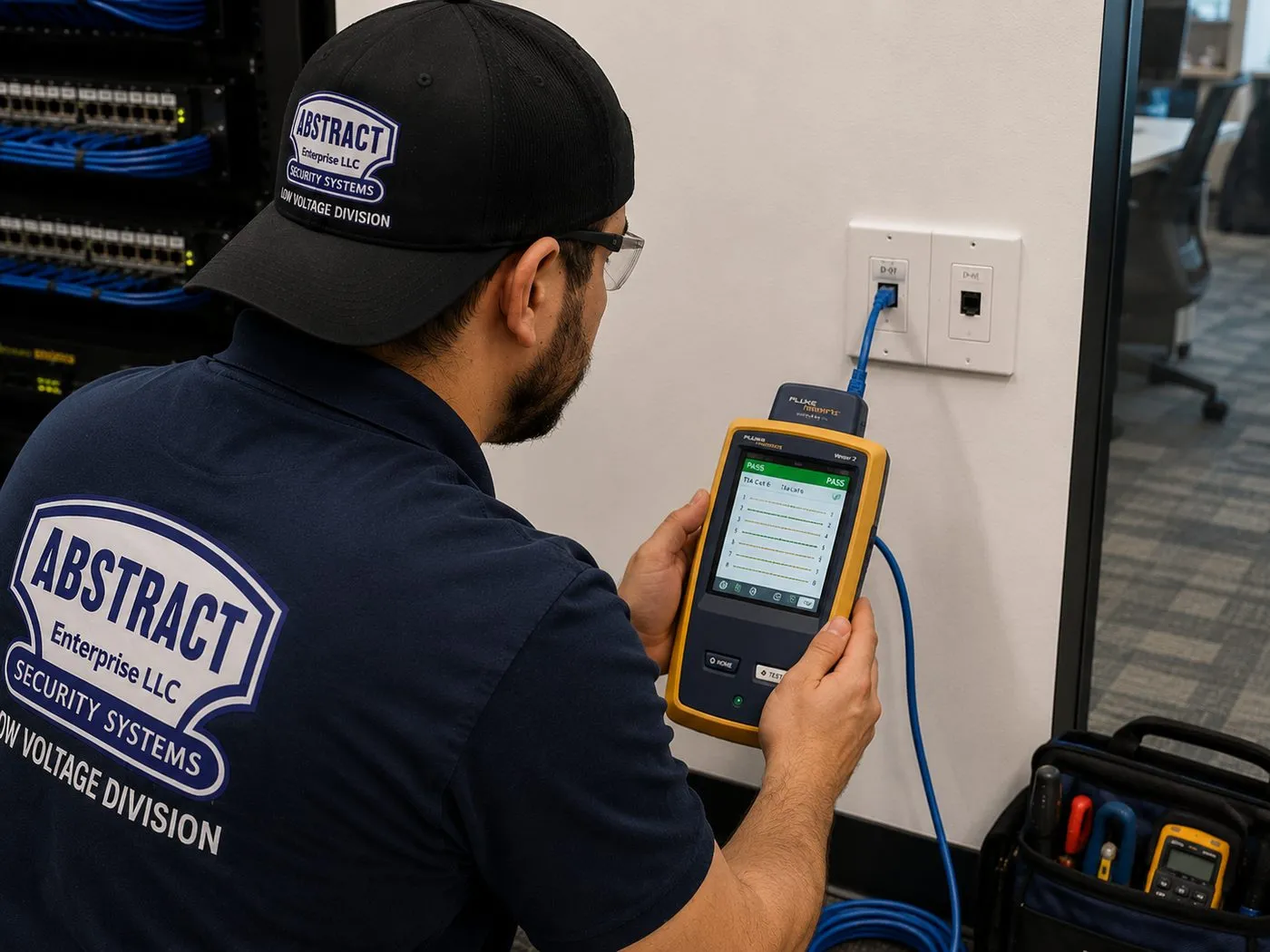
We trace every fiber cable we can reach from end to end, identify its type from the jacket print and the connectors, inspect the end faces under a scope, measure loss on each strand and shoot an OTDR trace where a run is long or has a mid-span splice. You get a strand-by-strand report saying what each one can carry today.
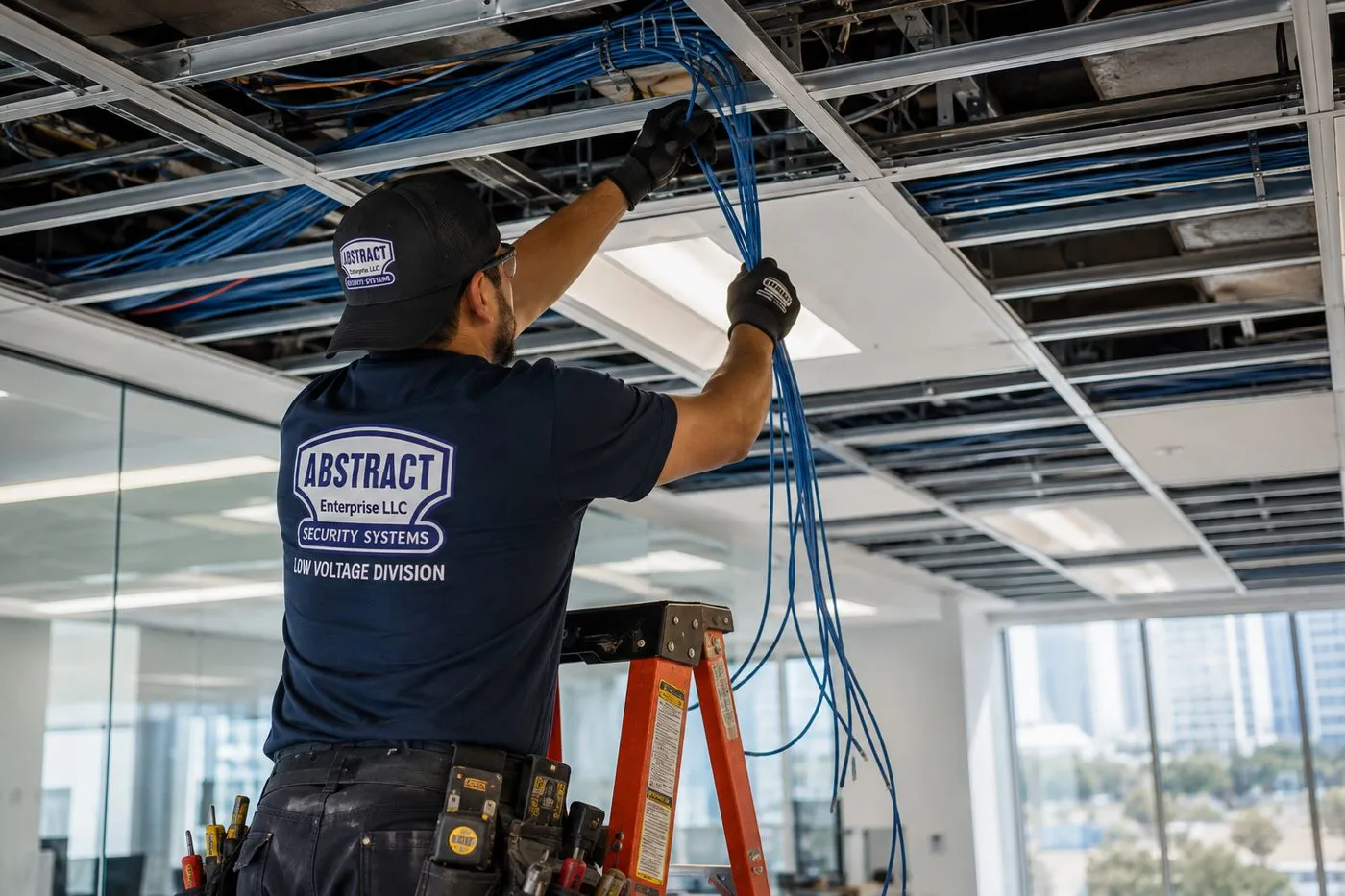
Where old 62.5-micron OM1 or early 50-micron OM2 limits what your switches can do, we pull new OS2 single-mode or OM4 alongside it, cut the links over one at a time, and then either remove the old cable or leave it tagged as a spare.
For companies leasing one building or one wing of a former single-owner campus, we build a path the tenant controls — dedicated strands in the landlord's backbone where that is allowed, or a new cable in the tenant's own pathway where it is not.
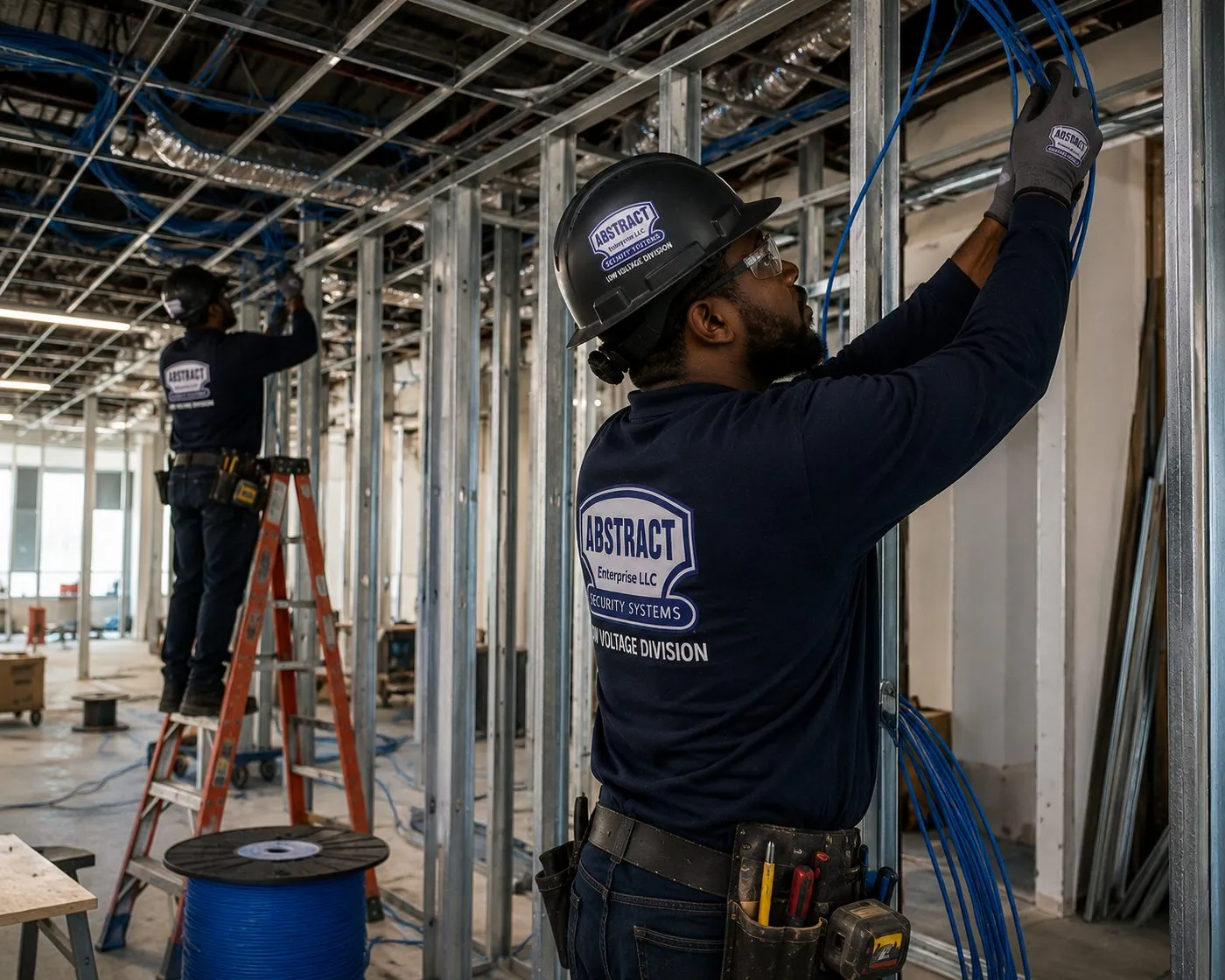
Exposed-construction buildings along Fishkill Creek and in the river towns need fiber that can run in plain sight: in raceway painted to match, along timber beams, or through existing chases, with every penetration in old brick sealed and fire-stopped.
Hospitals, schools, churches and offices that add a wing usually put a new network room in it. We join that room back to the main one through whatever path the builders left, or create one, and splice both ends into panels that match.
When Verizon, Optimum, Reasnor, Archtop or another carrier lands its terminal on an outside wall or in a basement, we carry the service on owner fiber to the room where your network actually lives.
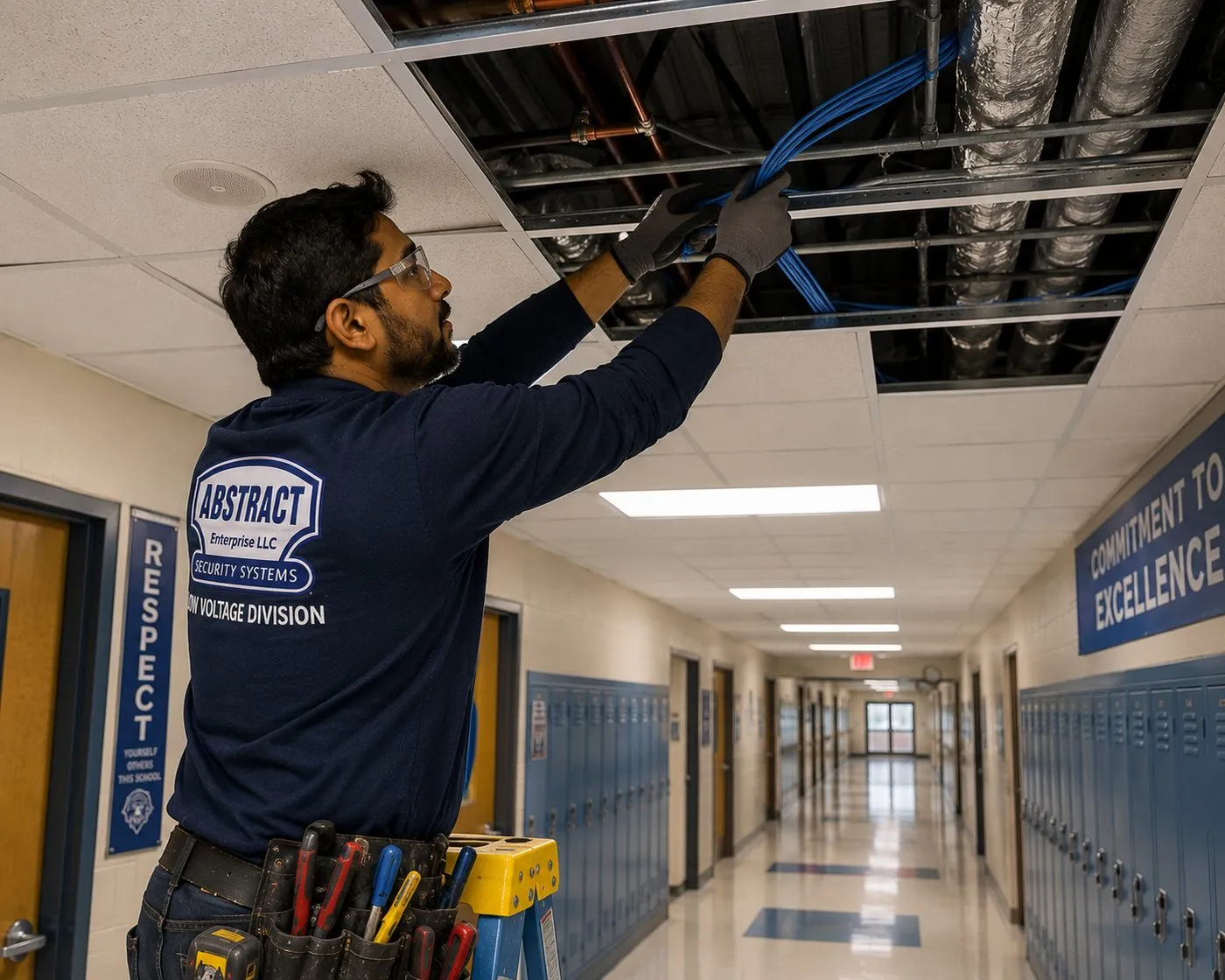
Dead fiber and copper in ceilings and risers is removed back to where it can be reached, or, if you want it kept for future use, labelled as such so it no longer counts as abandoned.
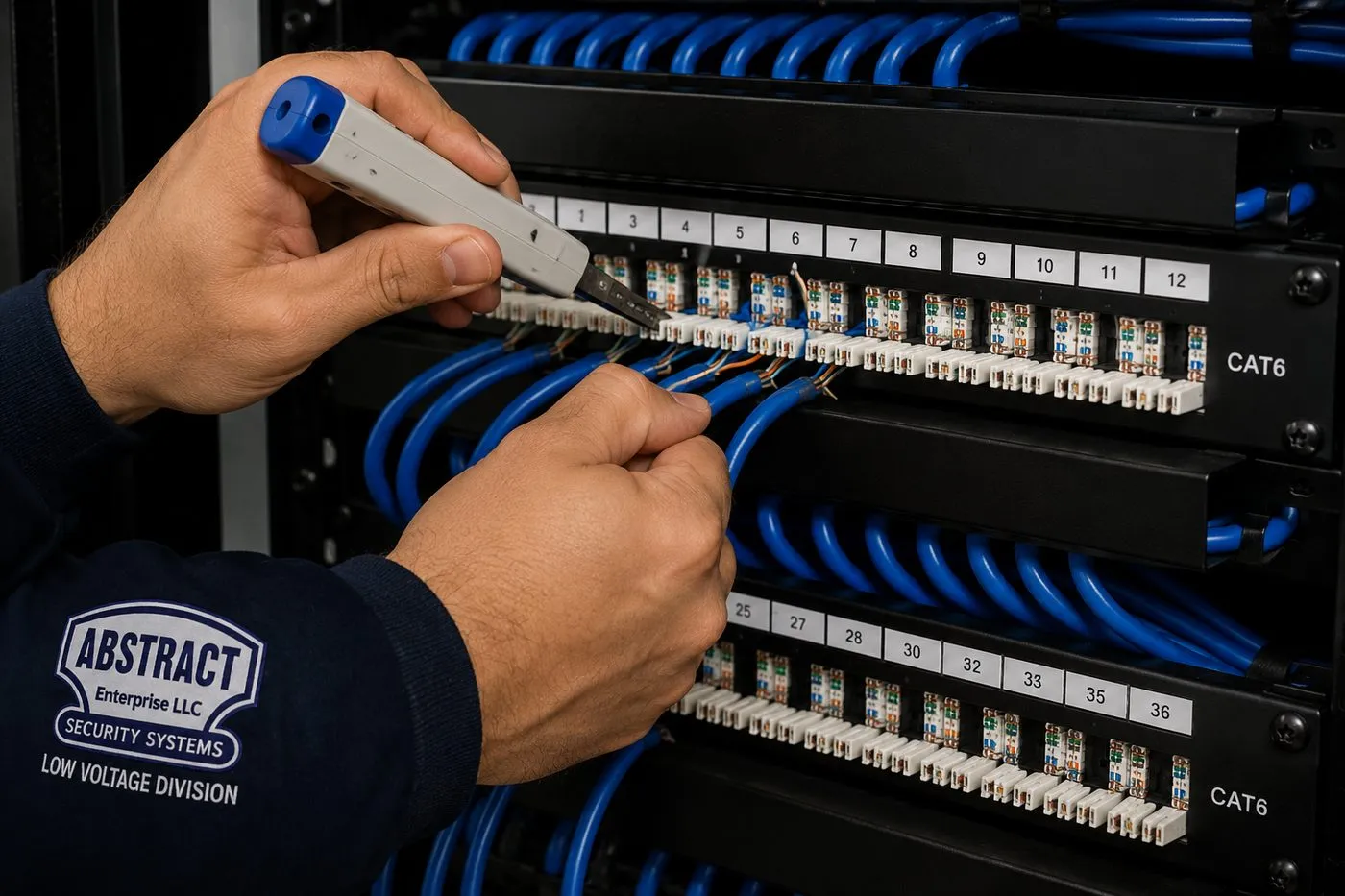
Old ST and SC connectors re-terminated as LC to suit current switches and patch panels, by fusion-splicing factory-polished pigtails onto the existing glass rather than by improvising adapters in the rack.
Loss tests on every strand, OTDR traces where they tell you something, labels at both ends that match the drawing, and a closeout file that an IT manager, landlord or buyer can read without calling us.
Behind all of these sits the inside wiring the fiber feeds. Once the backbone reaches a floor or a building, our structured cabling crews in Dutchess County run the copper to desks, access points and cameras, and our network installation team configures the switches at each end.

Dutchess buildings were put up in bursts, and each burst left a recognisable kind of cabling behind. Knowing which kind of building you are in tells us, before we open a single ceiling tile, what we are likely to find and where the route will be easy or hard.
Large-floorplate industrial buildings from the 1950s to the 1980s, many of them built to cleanroom or manufacturing standards and since re-let to warehouse, light-industrial and office tenants. Expect deep raised floors or interstitial spaces in some, generous cable trays in most, abandoned systems everywhere, and a central telecom area that may now sit inside another tenant's lease.
Brick and timber mill buildings on Fishkill Creek in Beacon and on Wappinger Creek, now lofts, studios, offices, a hotel and event spaces. Thick masonry walls, heavy timber or steel framing, high ceilings, exposed construction and very few hidden chases. Routes have to be planned so that the cable is either invisible or neat enough to be left visible.
Multi-storey office buildings from the 1980s and 1990s along the Route 9 spine in Fishkill, Wappinger and the Town of Poughkeepsie — four-storey Class A buildings like those of the Westage Business Center at Route 9 and I-84, with stacked telecom closets and a backbone that is now thirty or more years old.
Hospital campuses that have grown in stages, and the medical office buildings around them. Every new tower or pavilion brings new network rooms that need diverse paths back to the old core, and work above ceilings in occupied clinical areas has to follow the facility's own rules.
Campuses in Poughkeepsie, Hyde Park and Annandale-on-Hudson mix twentieth-century academic buildings with nineteenth-century mansions, gatehouses and outbuildings acquired along the way. The academic core is usually well served; the converted estate buildings at the edges are where fiber is missing or improvised.
Brick commercial blocks on Main Street in Poughkeepsie and Beacon, with shops below and offices or apartments above, and the newer apartment buildings that have gone up near them. Fiber here is about getting from a shared basement entry to several separate tenants without crossing anyone else's space.
In the big IBM-era floorplates the pathway is rarely the problem; the tray is there and it is usually wide. The problem is what is already in it. We tone and trace before we add anything, because a tray full of cable with no labels is the easiest place to cut a live link by mistake, and because the building owner may want the dead cable out of the tray before new cable goes in. Long horizontal runs in these buildings often exceed what copper can do, so even a single far office or a remote camera closet is a fiber job.
In the mills, the pathway is everything. We look for the routes the building already gives us: old line-shaft openings, abandoned freight-elevator or chute shafts, pipe chases, and the space behind exposed timber beams. Where cable must be visible we put it in surface raceway or on neat supports along a beam line, and we agree the line with the owner before anything is fixed. Every hole through old brick is drilled with a rotary bit rather than hammered, sleeved, and sealed afterwards with a listed fire-stop product. Armoured or interlocking-armour indoor cable is our default in mills because the cable spends its life within reach of tenants, carts and occasionally rodents.
In the Route 9 office buildings, the decision is usually whether the 1990s riser fiber stays. We test it, and if the strand count and loss figures support the speeds the tenant needs, we re-terminate it and keep it. If not, we pull new OS2 or OM4 through the same sleeves after confirming they have room, which is quicker than coring new ones. In hospitals and on campuses we work to the institution's cabling standard where one exists, and we provide method statements in advance for any work above occupied rooms.
Owners of mixed-use buildings in Beacon and Poughkeepsie often pair a new fiber backbone with a building-entry upgrade. Our Dutchess intercom installers can put the video intercom and door release on the same backbone, kept on its own network away from the tenants' traffic.

Business fiber in Dutchess clusters in a few places, and each has its own landlord pattern, building type and typical job. These are the corridors where most commercial enquiries come from.
The former IBM East Fishkill campus off I-84, now a multi-tenant park with manufacturing, warehouse and agricultural tenants and a new ownership group as of August 2026. Typical work: a tenant's own fiber between its building and the park's telecom entry, splitting shared strands, and reviving or removing systems left from the single-company era.
IBM's Poughkeepsie site on South Road, where the company still tests and manufactures mainframes, sits among office buildings, retail and medical offices along Route 9. Typical work: office backbones, medical suites, and fiber for contractors and suppliers working near the campus.
The interchange area where Route 9 meets I-84, with office buildings such as 300 Westage Business Center Drive, a four-storey Class A building of about 122,000 square feet, plus hotels, plazas and service businesses. Typical work: riser fiber replacement, new tenant fit-outs and links between buildings that share a parking field.
Brick commercial blocks downtown, county and city offices, the hospital district and the Arlington business area on Raymond Avenue near Vassar College. Typical work: getting a new provider's fiber from a shared basement to an upper-floor office, and joining two adjacent buildings owned by the same business.
Galleries, restaurants, studios and offices along Main Street, the creekside mill complexes, and new apartment buildings near the Metro-North station. Typical work: backbones in mixed-use buildings, exposed-route installs in converted industrial space, and fiber for building-wide cameras and door entry.
Rhinebeck, Red Hook, Millbrook and the Harlem Valley towns along the Metro-North Harlem Line from Pawling north to Wassaic, the northernmost station on the system. Typical work: schools, libraries, town halls, inns and offices in older buildings, and owner fiber from new rural provider builds into the building.

Before anything new is bought, it pays to know exactly what the old cable is. Most of that can be read from the cable itself: the colour of the jacket, the printing along it, the connectors on the ends and the hardware it lands in. This is the short version of what our technicians look for when they open an older Dutchess telecom room.
By long industry convention, indoor multimode fiber of the older 62.5-micron and 50-micron kinds came in orange jackets, laser-optimised 50-micron OM3 and OM4 in aqua (OM4 sometimes in violet), and single-mode in yellow. A building full of orange cable is very likely to be OM1 or OM2. But outdoor and armoured cables are usually black regardless of what is inside, and installers did not always follow the convention, so the colour only tells us where to look. The printing along the jacket is better evidence: it normally states the core size (62.5/125 or 50/125 for multimode, a single-mode designation for single-mode), the strand count, the fire rating such as OFNR or OFNP, and often a manufacturing date.
The fiber type sets how far a given speed will travel. Published figures for OM1, the 62.5-micron multimode most common in 1990s buildings, put the reach at 275 metres for 1-gigabit 1000BASE-SX but only 33 metres for 10-gigabit 10GBASE-SR. In other words, an OM1 riser that has carried gigabit traffic between floors for decades without complaint may not carry ten gigabits even from one end of a single floor to the other. OM3 and OM4 reach about 300 and 400 metres at ten gigabits; single-mode OS2 goes many kilometres at the same speed. That one table is the reason so many Dutchess backbones are due for a decision now: the switches being bought today expect ten-gigabit or faster uplinks, and the glass in the ceiling was chosen for something slower.
| Fiber type you may find | Usual jacket | What it does well today | Where it runs out |
|---|---|---|---|
| OM1 multimode, 62.5 µm | Orange | Gigabit links up to about 275 m; legacy equipment | 10-gigabit beyond about 33 m |
| OM2 multimode, 50 µm | Orange | Gigabit links; short 10-gigabit runs | Most 10-gigabit backbone distances |
| OM3 / OM4 multimode, 50 µm | Aqua (OM4 sometimes violet) | 10-gigabit to roughly 300 / 400 m; short 40/100-gigabit | Building-to-building distances |
| OS1 / OS2 single-mode | Yellow indoors, often black outdoors | Any speed in a building or across a campus | Needs single-mode optics at both ends |
Round, bayonet-style ST connectors were common on fiber installed in the late 1980s and 1990s; square push-pull SC connectors followed; small LC connectors are what current switches, optics and patch panels expect. Finding ST connectors on a backbone does not mean the glass is bad, only that it has not been touched for a long time. The usual fix is to fusion-splice new LC pigtails onto the existing strands inside a new panel, which keeps the old glass and gives it modern ends. What we avoid is a rack full of ST-to-LC hybrid patch cords and adapters, which add loss and connection points and make the next person's job harder.
A backbone terminated in rack-mount enclosures with splice trays, labelled strands and slack stored in loops was installed by someone who expected it to be maintained. A backbone with field-polished connectors on bare strands, no strain relief and a coil of cable stuffed behind a panel was not. Both can still work. The first kind is usually worth keeping and re-terminating; the second kind often has hidden damage near the ends, and we test it before we promise anything.
A light-source and power-meter test on each strand gives its total loss, which we compare with a loss budget for the speed you want. An OTDR trace shows where along the cable the loss happens — a bad splice at a mid-span enclosure, a tight bend at a floor penetration, a damaged section where the cable was crushed — and how long the cable really is. A scope check on each end face finds the scratched or dirty connectors that cause most failures. The audit report puts all three together, strand by strand, so the decision to keep, re-terminate or replace is made on numbers rather than on the age of the building.

A campus built for one owner has one network design: a central room, a backbone fanning out to every building, and no reason to separate anyone from anyone. When that campus is re-let to a dozen tenants, the physical network stays the same but the ownership underneath it changes completely. That is the situation at iPark 84 and in a number of smaller former corporate sites across Dutchess, and it produces a predictable set of fiber questions.
On most re-tenanted campuses the inter-building fiber belongs to the landlord, as part of the property, and the telecom rooms it lands in may sit in a building the landlord kept, a building another tenant leases, or a building nobody currently uses. Your lease may grant you strands in that backbone, may say nothing at all, or may require you to bring your own. We read the relevant lease language with you before designing anything, because the cheapest technical answer — patching into strands that already reach your building — is only available if the landlord agrees, in writing, that those strands are yours to use.
There is a difference between a tenant having its own strands in a shared cable and a tenant being connected to a shared network. Dedicated strands are physically separate glass: nothing travels on them but your traffic, and the only thing you share with neighbours is the sheath. Plugging into a landlord-managed switch is a shared network, however well it is configured. For manufacturers, healthcare tenants, government lessees and anyone with an insurer or auditor asking about segmentation, we recommend dedicated strands terminated in a panel inside space the tenant controls, with the landlord's end in a locked enclosure or a labelled panel the landlord's own staff are told not to repatch.
Carriers usually bring their fiber into the campus at one point — the old main telecom entrance — and stop there. If your building is not that building, the circuit has to be extended across the campus on private fiber. That extension is where tenants most often discover that the landlord's backbone is OM1 multimode, that the strands to their building were cut during an earlier renovation, or that the cable runs through a building that is now locked and dark. An audit of the specific strands between the entrance and your building, before you order the circuit, avoids a go-live date with nothing to plug into.
Former single-owner campuses often have life-safety, building-automation or security systems that were connected over the same backbone years ago and are still running. Before strands are reassigned, we identify what is lit and what each live strand carries, because the fiber that looks spare on an old drawing may be the one carrying a fire-alarm network or a central-plant controller. Nothing gets moved until the system owner has confirmed it.
The opposite case comes up too: a business that grew up inside a larger organisation's campus network and now has to stand alone, because of a sale, a spin-off or a move to a building the parent no longer occupies. Separation means giving the departing building its own internet entry, its own core switch and its own fiber between any buildings it keeps, then cutting the old links at both ends so that nothing still bridges the two organisations. We plan the separation as a sequence of small cutovers, each tested and reversible, so neither side loses service on the day.
Whatever is agreed about strands, rooms and access on a shared campus should end up on paper that outlives the people who negotiated it. We provide a one-page strand assignment for each tenant link: which cable, which strand numbers, which panel ports at each end, who may patch them and who holds the key to each enclosure. Landlords attach it to the lease file, tenants keep it with their network records, and the next contractor on the campus can see at a glance which glass is spoken for. On a park that has already changed owners once in 2026, that sheet is the difference between a ten-minute answer and a week of tracing.

Owners, tenants, facilities staff and IT managers across Dutchess raise the points below when a building’s fiber comes up for decision. One full answer apiece; quick extras sit in the FAQ near the bottom of the page.
A light source and power meter give one number per strand: how much light arrives at the far end. That is enough to say whether a link will work, but not why it is weak. An OTDR sends pulses down the strand and reads the light reflected back, so it draws the whole length of the cable — where each connector and splice sits, how much each one loses, where a tight bend or a crushed section is, and how long the cable really is. On inherited Dutchess backbones that last point matters: drawings often say a riser is 200 feet when it actually loops through a mechanical room and runs 340. Where a strand fails the power-meter test, the trace usually tells us whether the fault is a dirty connector we can clean in a minute, a bad mid-span splice we can redo, or damaged cable that has to be replaced.
Occasionally. There are transceivers designed to push ten gigabits further over older multimode fiber than standard short-reach optics manage, and on a riser that genuinely cannot take another cable — a full sleeve in a landmark-quality stair, say, or a route through a tenant who will not grant access — they can buy years. The catches are cost per port, which is higher than standard optics; compatibility, because your switch maker may not support third-party modules; and the fact that every future upgrade faces the same problem again. In most Dutchess office and campus buildings a new single-mode cable through the existing pathway costs less over the life of the backbone, so we recommend specialist optics only where the pathway, not the budget, is the obstacle.
No, not because of the connectors alone. If the audit shows the glass itself is in good condition and suits the speed you need, we cut off the old connectors and fusion-splice factory-polished LC pigtails onto each strand inside a new rack-mount panel. The cable stays; only its ends change. That is usually a fraction of the cost of a new backbone and gives a cleaner result than a rack full of hybrid ST-to-LC patch cords. If the audit shows the glass is the wrong type for the speed, re-terminating it does not help, and we say so before quoting the work.
If they are genuinely abandoned, the electrical code expects the accessible portion to be removed, unless the cable is tagged as reserved for future use. The first step is establishing that they really are dead: a cable with no labels can still be carrying an alarm panel, a camera or a neighbour's link. We tone and trace where possible and check both ends for light before anything is cut. Cable that proves dead and reachable comes out; cable that the owner wants to keep gets a durable tag stating that it is reserved and where it goes. Removal also frees tray and sleeve space for the new cable, which is often what makes the new backbone affordable.
It matters a great deal. The light-carrying core of 62.5-micron fiber is wider than that of 50-micron fiber, so when a 62.5 strand feeds a 50 strand a large share of the light simply misses the smaller core and is lost at the joint. The link may still come up on a short run and then fail when it is moved, extended or asked for more speed, which is why mixed patching produces some of the most confusing faults we see in older Dutchess telecom rooms. The fix is labelling and separation: panels and patch cords for each fiber type clearly marked, ports grouped so the two never meet, and any existing mixed patch found during an audit replaced with a cord of the right type.
Yes, if it is found before anything is reassigned. On re-let corporate campuses it is common for a life-safety or central-plant system installed in the single-owner era to keep riding a pair of strands in the old backbone, usually unlabelled and owned by the landlord rather than any tenant. We check every strand into your building for light, trace the lit ones to their equipment, and ask the landlord and the system’s service company to confirm what each carries. Those strands are then labelled and left in the landlord’s control, physically separate from anything assigned to you, and any work that could interrupt them is scheduled with the system’s owner and, where a fire-alarm path is involved, its monitoring company.
Almost everything about how the work is done, very little about the fiber itself. Cleanrooms have their own entry procedures, garments and approved materials, and many prohibit drilling, cutting or open cable reels inside the controlled space. We therefore plan to do the dusty work — coring, pulling and splicing — outside the room or in an interstitial space above it, bring the cable through a sealed penetration agreed with the facility, and finish inside with pre-terminated cords or factory-polished assemblies so that nothing is cleaved or polished in the room. The facility’s contamination-control team sets the rules; our job is to design the route so that the time spent inside is as short as possible.
Often, and they are some of the best vertical routes a mill offers, because they already pass through every floor without anyone having to cut historic timber. The condition is that each opening must be closed properly afterwards. A shaft that now carries cable is a path for fire and smoke between floors, so where the cable passes through each floor line we seal it with a listed fire-stop system rated for the construction, which in a timber floor is a different product from the one used in concrete. We also check whether the shaft has been floored over, used for plumbing or electrical since, or captured inside a tenant’s unit, and we agree access with the owner before relying on it.
By choosing a line and making it look intentional. We walk the building with the owner to find the existing vertical routes — an old shaft, a chase beside a stair, a pipe run that already climbs the building — and the horizontal lines that follow the structure, usually along the side of a beam rather than across the ceiling. Cable runs in armoured construction or in surface raceway painted to match, fixed at regular intervals so it never sags. Where it passes through brick or a timber floor, the hole is drilled cleanly, sleeved and fire-stopped. Done that way, a backbone in an exposed building looks like part of the restoration rather than an afterthought, and it can be added to later without opening anything.
By giving the wing two links that cannot fail together. The first runs through whatever pathway the builders provided between the new network room and the main one. The second takes a physically different route — a different corridor, a different floor or the other end of the connection between the buildings — and lands on a different switch in the main room. With both lit and the network configured to use either, a contractor’s saw, a flooded ceiling or a damaged sleeve on one route leaves the wing running on the other. Where only one route exists today, we install the conduit for the second during the current work, so that adding it later is a cable pull rather than a construction project.
Sometimes a useful part. Special-construction quotes cover the carrier's cost of extending its network from the nearest point to your building, and they often include the section on your own property: a trench up a long driveway, conduit across a parking lot, or an entry into the building. Some carriers will let the owner provide that private section — a conduit built to their specification with a pull string in it — and will reduce the charge accordingly. Ask the carrier for its specification and its demarcation point in writing. We can build the private conduit and the building entry to match, and carry the fiber on from the carrier's terminal to your network room. The carrier still installs and owns its own cable.
It can, but crossing railroad property is not something a contractor or an owner can simply do. Any cable over, under or along the tracks needs the railroad's agreement, and that process is far slower and more formal than an ordinary job. In the river towns along the Hudson Line and the villages on the Harlem Line, we first look for a route that avoids the railroad altogether: an existing road bridge or underpass with a public utility path, a carrier circuit between the two addresses, or a point-to-point wireless link across the tracks as a stopgap or a permanent answer. If none of those works and the crossing is essential, we help you open the conversation with the railroad and design to whatever it requires.
Every optical link has a budget: the amount of light the transmitter sends, minus what the receiver needs, is all the loss the cable, connectors and splices are allowed to use up. Faster standards generally leave less room, and on multimode fiber they also limit distance because of how light spreads in the core, not just how much is lost. That means a cable which passed comfortably for gigabit can fail a ten-gigabit or 25-gigabit budget even though nothing about it has changed. When we audit old Dutchess backbones we test each strand against the budget for the speed you plan to run, not just the speed it runs today, and we report the margin left so you know how close each link is to the edge.

The cable and hardware are chosen for the building you have, which in Dutchess often means working beside glass that is already there. These are the categories that make up most of our work in the county.
Our default for new risers, inter-building links and anything expected to outlast the switches at either end. Distance is effectively unlimited inside a building or campus, and it carries every current speed. Common in 12- and 24-strand counts for Route 9 office buildings and campus tenants.
Chosen when the existing switches and optics are multimode and the runs are short — inside one large floorplate, or between closets in the same building. Sensible for owners who want to keep their current short-reach optics while retiring OM1.
Fiber inside a flexible aluminium armour, used in mills, warehouses, mechanical rooms and anywhere the cable is exposed to carts, ladders, tenants or rodents. It can run without conduit in many places where plain cable would need it.
OFNR riser-rated cable for vertical shafts between floors and OFNP plenum-rated cable for air-handling ceilings. In older Dutchess buildings we confirm which ceilings are return-air plenums before ordering, rather than assuming.
Panels with splice trays and LC adapter plates, sized with spare capacity, in each telecom room. Old ST or SC terminations are retired into these by splicing LC pigtails onto the existing strands.
Lockable boxes for tenant demarcation points, small rooms in mills and converted houses, and the landlord's end of dedicated tenant strands on a shared campus.
A mill and its outbuilding, or two buildings sharing one Main Street lot, can be joined by a single continuous cable whose rating covers indoor shafts and the buried conduit in between, so no splice box is needed where it passes through each wall.
Single-mode or multimode transceivers matched to the switches at each end, and media converters where an older device has only a copper port. We confirm compatibility with your switch maker before ordering.
Fusion splicer, inspection scope, light source and power meter, and OTDR on every job that warrants one, with results kept in the closeout file alongside photos and the labelled drawing.
| Option | When it fits | What you keep | What changes |
|---|---|---|---|
| Re-terminate and re-certify | Glass tests well and suits the speed you need | The existing cable and pathway | New LC ends, new panels, new labels and test results |
| Overbuild beside it | Old glass is sound but the wrong type for 10-gigabit and above | Old cable for gigabit and legacy devices | New OS2 or OM4 for uplinks; old cable later retired or tagged |
| Replace and remove | Glass is damaged, too short of strands, or blocking the pathway | The pathway, if it has room | Everything else; abandoned cable removed |

Search assistants answer fiber questions by summarising whatever pages they can find. We tried to retrieve the fiber cost guides from Angi, HomeAdvisor and Fixr while writing this page and could not, so the claims below are quoted from the pages that did come back — cost guides, provider-comparison sites and a technical blog. Each is accurate somewhere. Here is where each one goes wrong in a Dutchess building.
That is how BroadbandNow summarises Poughkeepsie, and an AI answer will happily turn it into “your Poughkeepsie office can get fiber.” Availability figures like this are built from provider-reported coverage by address or census block. They describe whether a carrier says it can serve an address, not whether the building is wired to take that service to the room where your equipment lives.
Residents notice the gap. On Reddit's Hudson Valley forum one poster described Fios as “unavailable at my address, but available directly behind me and across the street,” and a former Beacon resident wrote that they had “lived in a corner of town without fiberoptic service.” Coverage in Dutchess is patchy at the scale of a single block, and the rural awards announced in 2026 exist precisely because thousands of locations were still unserved.
Even where a carrier serves the building, its fiber ends at a terminal. In an old mill or a re-tenanted campus building, the distance from that terminal to your suite can be the hardest part of the job. Ask the carrier where its demarcation point will be, then ask what it will take to get from there to your rack.
A New York metro fiber firm's page gives that figure, and another New York cost guide repeats the $1–$6 range for ordinary indoor pulls. For a straightforward run through open ceilings it is a fair description of the pulling labour. It is a poor way to estimate a Dutchess job, because in the buildings described on this page the footage is seldom where the money goes.
On an inherited backbone, the cost sits in finding out what is there, removing what is dead, terminating and splicing both ends, and testing every strand. A 300-foot riser replacement in a 1990s office building might involve as much time identifying and clearing the old cable as pulling the new one. In a mill, the time goes into the route: drilling and sleeving masonry, painting raceway, working round tenants.
That is why our Dutchess pricing, further down, is built from published per-termination, per-strand and per-backbone figures rather than a price per foot. A per-foot number is useful for comparing two outdoor bids on open ground. It does not describe the work of reviving or replacing fiber inside an old building.
The distance figure in that technical blog is right; it matches the published reach for standard 10-gigabit short-reach optics on OM1. The conclusion an AI summary draws from it — that every OM1 backbone must be ripped out — is not. Many Dutchess buildings still have devices that only need gigabit: older switches, building-automation controllers, printers, cameras. OM1 serves those well at up to about 275 metres.
The practical answer is usually to keep the old glass for what it still does well and add new glass for what it cannot. Pulling OS2 single-mode beside the OM1 lets the uplinks move to ten gigabits and beyond, while the OM1 carries legacy traffic until those devices are retired. Removal can come later, when it frees space someone actually needs.
And “links fail” is too tidy. Beyond its rated distance a 10-gigabit link on OM1 may refuse to come up, or it may come up and drop errors intermittently, which is worse because it looks like a switch fault. Only a test against a proper loss and distance budget tells you which strands can be trusted for which speeds.
A New York fiber cost guide published in July 2026 says exactly that, and adds that single-mode transceivers cost roughly 1.5 to 5 times as much as multimode ones. AI answers tend to take the first half and drop the second, concluding that single-mode is always the cheaper choice.
The total depends on how many ports you light and what you already own. A building with a stack of multimode optics already installed, and short runs between closets, may be cheaper to keep on OM4 for now. A campus link, a riser you expect to keep for twenty years, or a backbone feeding equipment you have not bought yet usually favours single-mode, because the glass outlives several generations of optics.
In Dutchess the existing equipment matters more than usual, because so much of it was bought for the old multimode backbone. We list the optics each option needs in the proposal, so the comparison includes them.
That range comes from a fiber cost guide that labels its figures as orientation, not quotes, and it is a reasonable national bracket. An AI answer will often present it as the local price. Our published Dutchess County prices for a single fiber drop are $536 for multimode and $612 for single-mode, at the county's area rate.
Those figures sit inside the national range, but they are not the same thing as a backbone. A drop is one run from a closet to a single endpoint. A backbone between floors or buildings is priced separately, and the published ranges for those are shown in the pricing section of this page.
The cheapest drop in an old building is often the one that re-uses existing glass after a test. The most expensive is the one that has to be pulled through a full tray of abandoned cable that nobody has authorised us to remove. Clearing the pathway can change the price of every drop that follows it.
That is how long a national carrier says its in-home service installation can take, and AI answers often borrow such figures for any fiber question. It describes a technician connecting one home to a carrier network that is already built to the street. It says nothing about building or reviving a private backbone.
An audit of an office building's existing fiber is commonly a day of field work. A new riser in a Route 9 building is usually a few working days once materials are on site. A tenant's dedicated path across a re-tenanted campus can take longer, because the lease approvals and landlord access come first and the cable comes last.
The carrier side of the timeline is separate again. If a new circuit is part of the plan, the carrier's own provisioning time — including any special construction — usually sets the go-live date, so it is ordered first.
A New York cost guide gives that premium for plenum-rated cable, and AI answers sometimes treat it as unavoidable. Plenum cable is required in ceilings that serve as air-return plenums, and the premium is real where it applies.
But not every ceiling is a plenum. Many older Dutchess buildings have ducted returns, where the ceiling space is not part of the air path; others have plenum ceilings on some floors and not others after decades of renovation. Vertical shafts take riser-rated cable, and interlocking-armour cable has its own ratings.
We check how each space is actually used before ordering, and specify plenum cable where the space requires it rather than everywhere by default. The result is neither a code shortcut nor an automatic surcharge.
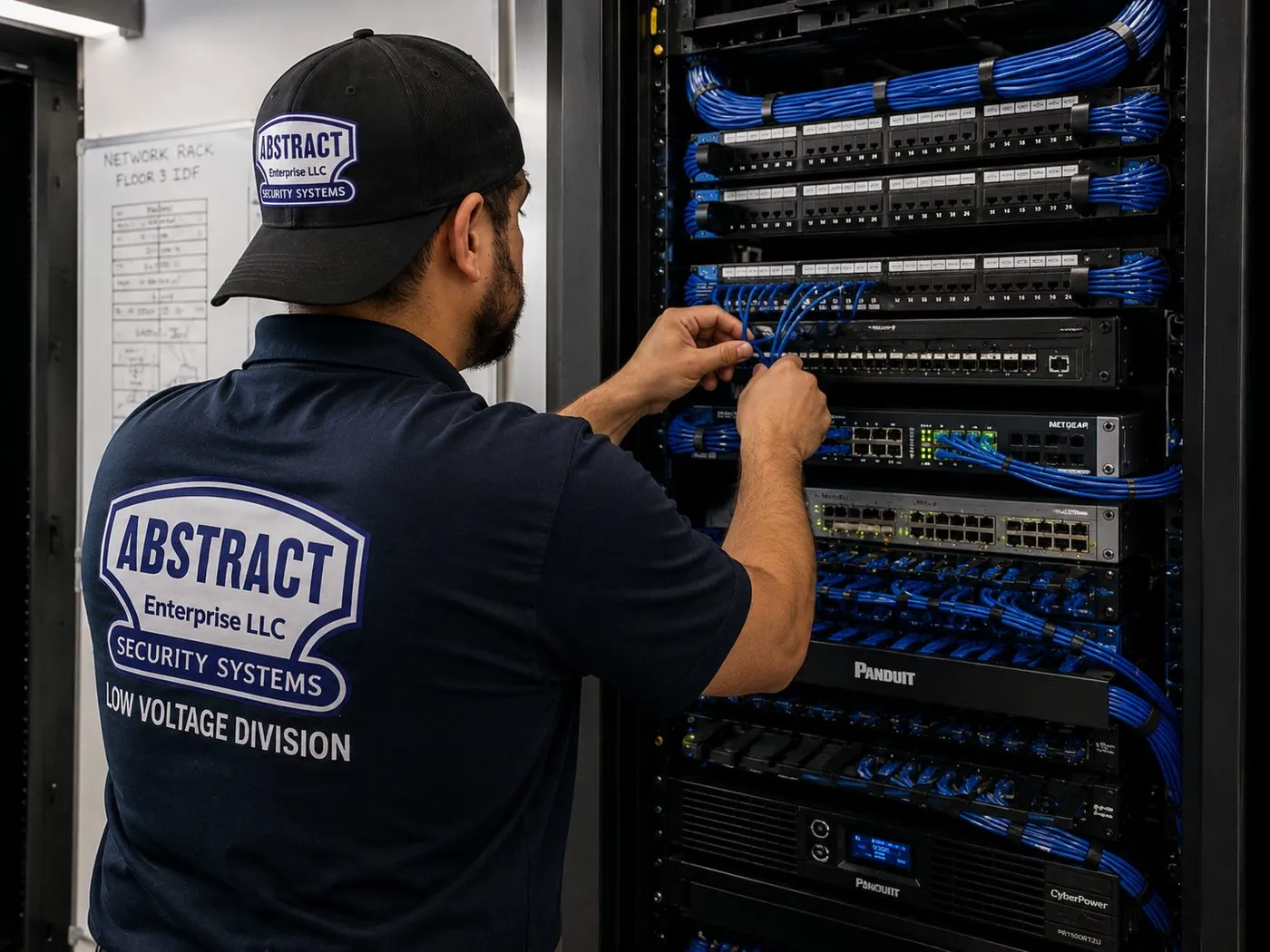
A photo of the rack and the address is a good start. From there we can usually say whether the answer is a test, new ends on old glass, or a fresh backbone — with a Dutchess price attached.
A few lines are enough to start: the address, what kind of building it is, and what fiber (if any) is already there. A Dutchess installer replies within the business day — or call (845) 640-3835 directly.
Thanks — this goes to the Dutchess crew lead, who phones back the same working day. For an outage happening now, use (845) 640-3835.
Seven steps. On a building that already has fiber, the first two matter most, because they decide how much of the old plant is kept.
We visit every telecom room and pathway involved, photograph what is there, and collect whatever drawings, old test results, leases or campus standards exist.
Trace, identify, scope and loss-test the cable already in place, with OTDR where useful, and confirm which strands are lit and what they carry.
Keep, re-terminate, overbuild or replace for each link, with cable type, strand counts, panels, optics, removal scope and every line priced at the Dutchess rate.
Landlord or campus sign-off, insurance certificates, any town, county or state permit for routes outside the building, and work windows agreed around tenants or patients.
Remove or tag abandoned cable where authorised, then pull new cable within its bend and tension limits, with sleeves sealed and fire-stopped at every penetration.
LC pigtails go on by fusion splice at each end; every end face is scoped; every strand gets a loss reading, and the OTDR is used wherever the design calls for it.
Move live links to the new fiber one at a time, label both ends to match the drawing, and deliver test results, photos and the updated record.

Our crews take work in all twenty Dutchess towns and both cities. The six places below are named because each typifies a kind of building found across the county; naming them is not a claim that we have been hired inside any of them.
The former IBM East Fishkill semiconductor campus, about 270 acres and 1.8 million square feet, now a multi-tenant business park sold in August 2026 as part of a $450 million portfolio. The archetype of a single-owner network inherited by many tenants.
The plant begun in 1948 that grew to more than fifty buildings on 423 acres, where IBM still tests and builds its mainframes. Its suppliers, contractors and neighbouring offices are part of the county's technical economy.
A hospital on the river whose 752,610-square-foot, eight-level patient pavilion opened in January 2021 beside the older buildings — the textbook case of joining new network rooms back to an established core.
A 1929 Nabisco box-printing plant of three buildings and a train shed, nearly 300,000 square feet in all, donated to Dia in 1999. It stands for Beacon's industrial buildings turned to new uses.
The carpet mill on Fishkill Creek that employed more than 700 people in the 1880s, now the Lofts at Beacon, with a working hydroelectric dam — the tallest on the creek — and the old management building turned to gallery and storage space.
A 380-acre Livingston estate with a mansion, houses, cottages and barns, bought by Bard in 2016 and added to a campus of more than 70 buildings in Annandale-on-Hudson. Historic estate buildings at the edge of a college network.
We also cover Marist University and the Arlington district on Raymond Avenue, the Culinary Institute of America's campus in the former St. Andrew-on-Hudson Jesuit novitiate in Hyde Park, the Route 9 office buildings of Fishkill and Wappinger, Wappingers Falls, LaGrange, Pleasant Valley, Millbrook, Rhinebeck, Red Hook, and the Harlem Valley from Pawling and Dover to Amenia and Wassaic. For the wider region, see our Hudson Valley fiber optic installation hub.

Dutchess carries an area rate of 1.53 on our standard price list; each figure below is a published base price times 1.53, rounded to the nearest dollar, and nothing in the table was invented for this page. For reference, the unmultiplied list reads: termination $35; OTDR per strand $40; drops $350 multimode and $400 single-mode; 12-strand OM4 floor-to-floor $4,500–$7,000; 24-strand OS2 between buildings $8,000–$15,000+; an added telecom room with its fiber link from $2,400.
| Item | Dutchess County price (1.53×) | Where it shows up on a Dutchess job |
|---|---|---|
| Fiber termination (per connector) | $54 | Re-terminating old ST or SC strands as LC; finishing a cable someone left bare |
| OTDR test (per strand) | $61 | Auditing inherited fiber; proving a new backbone at handover |
| Multimode fiber drop | $536 | A single OM4 run from a closet to one endpoint |
| Single-mode fiber drop | $612 | A single OS2 run, such as to a remote room or a tenant demarcation |
| 12-strand OM4 floor-to-floor backbone | $6,885 – $10,710 | Replacing an OM1 riser in a Route 9 office building; joining closets in one large floorplate |
| 24-strand OS2 building-to-building backbone | $12,240 – $22,950+ | A tenant's own link across a shared campus; a new wing joined to a main building |
| Second telecom room with fiber link | from $3,672 | A new network room in an addition, a converted mill floor or a re-let building |
Service calls, troubleshooting and return visits are billed at $195/hr, 3-hr minimum ($585). That rate is never applied to a new installation.
An audit is priced from the same lines. Testing a 12-strand cable with an OTDR is 12 strands at $61, or $732. If the audit shows the glass is good and the old connectors need replacing, re-terminating all 12 strands at both ends is 24 terminations at $54, or $1,296. A building with three or four such cables between closets can therefore know exactly what it has, and have it brought up to date, for a known sum before anyone talks about a new backbone. Where the walkthrough finds that a cable is clearly unusable — cut, crushed or the wrong type for any use you have — we say so and do not charge to test it.
National brand versus local contractor. People sometimes ask whether ADT, Ring or SimpliSafe could do this. Those companies sell security products and monitoring; auditing a thirty-year-old riser, splicing a tenant’s strands on a shared campus and clearing dead cable out of a mill ceiling are outside what they offer. The realistic choices in Dutchess are a carrier's installer, who works only up to the carrier's terminal; an electrician, who may pull cable but rarely splices or tests glass; a national integrator, which suits large institutions but may subcontract the field work; or a licensed local low-voltage contractor with its own splicer and test gear, who walks the building with you and answers for the result. For copper drops priced alongside the fiber, see our Dutchess County structured cabling pricing.
Most Dutchess enquiries land near one of the three scopes below. Each total is simple arithmetic on the county table; the proposal you receive breaks your actual building down line by line.
$2,028
For a building with one 12-strand cable you suspect is still good: OTDR testing of all 12 strands ($732) and new LC terminations on all 24 ends ($1,296), so the old glass comes back with modern connectors and a test report. Missing panels or enclosures are added at cost.
$6,885 – $10,710
A new 12-strand OM4 backbone between floors or between closets in one large floorplate, fusion-spliced into rack panels and loss-tested — the usual answer to an OM1 riser in a Route 9 office building. Removal of the old riser cable is quoted as its own line.
$12,240 – $22,950+
Twenty-four single-mode strands between two buildings — a tenant's building and the campus entrance, or a new wing and the main network room — spliced into enclosures at both ends and traced strand by strand with an OTDR.
If your IT department has already bought the cable, panels or optics, labour to install, splice and test them is $195 per hour with a three-hour minimum ($585). We check reels for continuity before they go into a pathway, and confirm that optics match the fiber type at both ends before anything is pulled. Materials you supply are covered by their maker's warranty rather than ours.
The visit is free, and the proposal that follows it is priced line by line at the Dutchess rate.
Replacing a backbone in an empty building is simple. Replacing one in a building where people are working, patients are being treated or a production line is running is a matter of sequence. This is the order we follow in occupied Dutchess buildings.
The new cable goes in beside the old one, through a separate sleeve where possible, and is spliced, terminated and tested before a single live link is touched. Nothing about the old backbone changes during this stage; if the new work is paused for a week because a floor is busy, nobody notices.
We list every strand that carries light on the old backbone, what it connects at each end, and who owns the equipment. On re-tenanted campuses and in hospitals that list nearly always contains a surprise — a building-automation controller, a fire-alarm network, a camera recorder in a room nobody visits. Each surprise gets an owner and a cutover slot.
Each link moves from old to new in its own window, chosen with the people who depend on it: early morning for an office, between shifts for a manufacturer, a quiet period agreed with the facilities team for a clinical area. The old strands stay connected at the far end until the new link has carried traffic without errors, so going back is a matter of moving one patch cord.
Once nothing depends on the old backbone, it is either removed where accessible or tagged at both ends as reserved, with the tag stating where it runs. Leaving it unlabelled is the one option we do not offer, because that is how the next owner ends up paying someone to repeat this whole exercise.
None of these is unusual, and all of them can be fixed. They are listed so you know what an audit is looking for and why the first visit is spent looking rather than pulling.
The audit report lists what we found in each room with photographs, so you can decide what to fix now and what can wait. Most of these are inexpensive to put right once identified; the expensive version is discovering them during a cutover.
The fiber connects the rooms and buildings; these Dutchess County services handle what runs on it.
Horizontal copper fanning out from every closet the new backbone reaches.
Copper to each desk, camera and access point downstream of the glass.
Core and edge switching, firewall and Wi-Fi set up on the new links.
When the problem turns out to be copper rather than glass, this team traces it.
One licensed crew for every low-voltage trade in a fit-out, from data to door entry and sound.
Camera systems recorded centrally over the backbone.
Cameras for large floorplates and re-let industrial buildings.
Card and keypad entry for tenant suites, labs and telecom rooms.
Public-district and private-school surveillance, recorded centrally over the backbone.
Old buildings keep their secrets in paperwork as much as in ceilings. None of the following is required before we visit, but each item shortens the audit and sharpens the proposal.
For a single office floor, a few photographs of the rack, the fiber panels with their covers off and the ceiling around the closet are often enough for us to suggest a likely budget before the visit.
Three habits our technicians keep in any telecom room they did not build. This describes how we work; it is not a story about a particular client.
The first rule in an inherited room is that nothing is cut until it has been proven dead at both ends. A crew will check every strand that looks spare with a light meter or visual fault locator and follow the cable as far as it can be followed before anyone reaches for a cutter. The drawings on the wall are treated as a hint, not a fact.
The second rule is to photograph before touching. Every panel is photographed with its cover off, every label is recorded as found, and those photos go into the closeout file. When a question comes up months later about what a strand used to do, the answer is in the pictures.
The third is to leave the room better labelled than it was found, even if the job was only one link. A new label on each strand that was touched, stating where it goes, costs a few minutes and saves the next technician an afternoon. Old buildings in this county have changed hands too many times for anyone to rely on memory.
Yes. We work from Beacon and Fishkill north through Poughkeepsie, Hyde Park, Rhinebeck and Red Hook, and across the county through LaGrange, Millbrook and Pleasant Valley to Pawling, Dover, Amenia and Wassaic. Every Dutchess address is priced at the same county rate shown on this page.
For a building with a handful of fiber cables between two to four closets, the field work is usually one day, including tracing, connector inspection, loss tests and OTDR traces where needed. The written strand-by-strand report follows within a few business days.
Yes. The audit is a paid piece of work and the report is yours: test results, photographs, a labelled drawing and our recommendation. You can use it to get other bids, to plan the work in-house, or to show a landlord or buyer what the building contains.
Yes, with your say-so. Many Dutchess tenants need the landlord or the campus IT office to agree before strands are reassigned or cable removed, and sending them the same report, photos and drawing you receive saves a round of questions. We can also walk them through it on site.
Yes, and in many Dutchess buildings they do for years. Each type gets its own panels or clearly marked ports, and the optics at each end must match the fiber they plug into. The usual pattern is single-mode for the new uplinks and the old multimode kept for gigabit devices until they are retired.
Usually. A visual fault locator shines red light down the strand so a break near an end glows through the jacket, and an OTDR trace from one end gives the distance to the fault. Together they normally narrow it to one panel, one splice tray or one section of cable before anything is opened.
We recommend it and quote it as a line. Dirty end faces cause more fiber faults than broken glass, and older Dutchess rooms often have connectors that have never been inspected. Each one is scoped, cleaned with the proper tools, and scoped again before it is reconnected.
Yes, if they test well for the speed that system needs. Cameras and door controllers rarely need more than a gigabit, so older multimode strands are often ideal for them. We relabel the strands for their new purpose and land them on equipment kept separate from the office network.
Yes. An OTDR works from one end, so a strand that runs through a locked tenant space or a closed building can be traced and measured from an end we can reach. We cannot inspect or clean connectors inside the room, so the report notes any splice or patch point we could not see.
Yes. Cable we remove leaves the site with us unless you ask to keep it, and the removal is listed as its own line in the proposal so you can see what it costs. Where the landlord or campus requires a record of removal, we note it in the closeout file.
Yes. If your organisation specifies cord colours, lengths, connector types or a labelling scheme, we follow it and match the drawing to it. Where there is no standard, we use a simple one that records building, room, panel and port at both ends.
Yes. Even twenty-year-old loss readings or OTDR traces give a baseline: if a strand measured well then and badly now, something has happened to it since, which points straight at connectors, patch cords or a later renovation. We compare them with our own results and keep both in the closeout file.
This page sits beneath our Hudson Valley fiber optic installation hub. Each county and borough listed has its own fiber page, and we take work in all of them.
Abstract Enterprises fiber optic installation in the Hudson Valley · Putnam County fiber optic installation · Ulster County fiber · Westchester · Rockland · Orange County
AESS fiber optic installation in NYC · Manhattan fiber backbones · fiber optic installation in Brooklyn · Queens · the Bronx · Staten Island
Long Island fiber optic installation for Nassau and Suffolk counties.
Our full service list starts at the AESS home page; the people behind it are introduced on our about page.
A link between closets gone dark, a tenant cut off after a ceiling was opened, a riser that started dropping errors? Call (845) 640-3835. We send a technician the same day when the schedule allows, a typical connector or patch fault takes one to two hours to find and fix, and the repaired strands are measured before we leave. If the old glass is the real problem, we will show you the numbers and quote its replacement separately.
Abstract Enterprises Security Systems · 460 E Fordham Rd, Bronx, NY 10458 · Dutchess County line (845) 640-3835 · WhatsApp (718) 679-0359 via wa.me
NYS Low-Voltage Licence #12000287431 · 100% Licensed & Insured · Same-Day Estimates · Rated 4.7★ from 201 Google Reviews
Full terms — including 50% deposit, one-year parts-only warranty on AESS-supplied products, and the late-fee schedule — are set out in the service agreement. See our warranty page.
Page reviewed and updated October 17, 2026. Changelog: first publication of the Dutchess County fiber optic installation page.