Main Street Shops · Route 9 Plazas · Office & Tech Parks · Farms & Wineries · Restaurants & Venues · NYS Licensed
Commercial Security Camera Installation in Dutchess County
Long Cable Runs · Barns & Back Lots · Snow & Lightning · Remote Viewing Where the Internet Is Thin
Dutchess County business is spread out. A Beacon gallery shares a party wall with its neighbour; a Route 9 retailer in the Town of Poughkeepsie has a parking field bigger than its store; a Millbrook-area farm has a tasting room, a barn and a gate that sit hundreds of feet from the only internet connection on the property. We design commercial camera systems around that geography — how far the picture has to travel, what the weather will do to it, and who needs to see it from a phone in Fishkill at two in the morning — and then put sharp, usable images on your doors, registers, docks, lots and gates.
Last reviewed October 18, 2026 by Anwar Timothy (NYS licence #12000287431) · Dutchess surveys and installs are scheduled from the AESS Bronx office, 460 E Fordham Rd
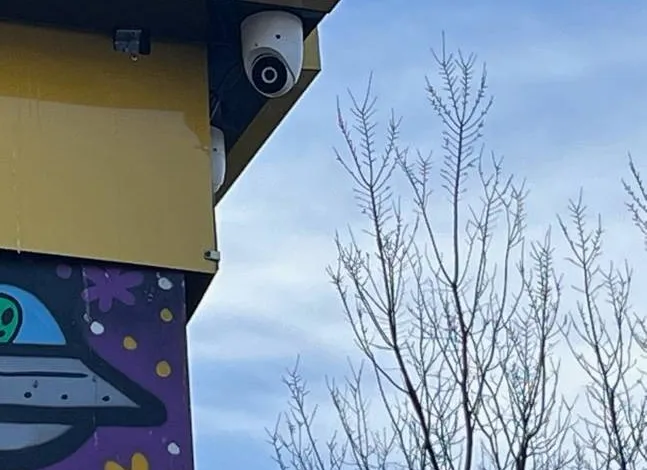
Example photo from an AESS installation, shown to illustrate the technique; it is not a Dutchess County job. A white dome camera sits under the corner of a yellow fascia board, with a second small camera body just below it, a painted purple mural panel underneath and leafless branches against a pale blue sky.
Dutchess Business Camera Quote
Town, type of business and roughly how big the property is — a written reply comes back the same business day
✅
Request Sent!
The Dutchess desk will call you back about the property the same business day.
25+
Years Experience
✓
Same-Day Estimates
100%
Licensed & Insured
4.7★
201 Google Reviews
Three answers let us size a Dutchess job on the phone: how far the farthest camera is from the place the internet comes in, whether every building on the property already has power and a network jack, and who needs to watch the video away from the site. Call the Dutchess desk on (845) 640-3835 with those and you will hear which row of the price table below your business falls into before anyone drives out.
Free on-site survey, then a fixed written price — no “to be confirmed on site” lines
Owned recorder and footage on local systems, with no monthly fee to keep recording
Installed and supervised under NYS licence #12000287431, fully insured
Why Dutchess County Properties Need Commercial Security Cameras
Most Dutchess businesses are not robbed in daylight in front of a crowd. They are entered at dawn through the one opening nobody thought about, or emptied a little at a time by someone who knows where the camera does not look. The local record says this plainly. In August 2024, News 12 showed video of a burglar outside a Poughkeepsie pub pulling an air conditioner out of a window at about seven in the morning, crawling through the gap and leaving with two cash registers. The same week, Poughkeepsie detectives were looking for suspects in two separate business break-ins — one on Fox Street around 5:30 on a Sunday morning, another at a closed business on Hooker Avenue where cash was taken. In June 2026 a Poughkeepsie shop shared its own counter video of a man walking up to an unattended register and taking the tip jar.
The pattern repeats up and down the county. At 4:30 on the morning of June 13, 2024, Beacon police were called to a burglary in progress at a jewelry store at 226 Main Street, where the front door glass had been broken; A Little Beacon Blog reported that a resident's call helped limit the loss and that two suspects, linked to other jewelry-store burglaries, were later arrested in Newark. In June 2023, three men from Connecticut were arrested by Dutchess deputies while trying to steal from a business in Rhinebeck, and were tied to burglaries in Orange and Sullivan counties as well. In August 2021 the Dutchess County Sheriff's Office reported that thieves had used crowbars to break into a deli in the Town of Beekman and carried out its ATM, and warned business owners across the county that similar crimes might follow. In June 2024 deputies arrested a man after a forced entry that did extensive damage inside a distillery on Noxon Road in LaGrange.
Retail theft is the other half of the picture, and it is concentrated where the parking lots are biggest. In January 2024 the Town of Poughkeepsie police announced a unit of three officers, funded by a $375,000 federal COPS grant secured by Rep. Pat Ryan, whose only job is chronic theft from local businesses. Police told News 12 that big-box stores were being hit hardest, and store employees named tools, cold and flu medicine and shrimp as the most-stolen items. That unit works the way every detective does: it needs a clear face, a clear vehicle and a reliable time stamp. A camera that shows the back of a hood from fifteen feet up does not give it any of those.
Public cameras will not do the job for you. The City of Poughkeepsie received a $75,000 grant in 2024, secured by Assemblyman Jonathan Jacobson, to upgrade its crime cameras and add new ones, some of them on the Main Street corridor; Mayor Yvonne Flowers said the upgrade was needed so police were “clearly seeing what is happening.” City cameras watch streets and intersections. They do not see inside your stockroom, your loading door, your tasting barn or the corner of your lot where the dumpster hides a parked car. Those views have to come from your own system, recorded on equipment you control, and exported in a form the police can use the same day.
What makes Dutchess different from the boroughs, and even from its Hudson Valley neighbours, is distance. The county runs from the Hudson Highlands at Beacon to the Columbia County line above Red Hook, and from the river to the Connecticut border at Amenia and Millerton. A single business property here can include a storefront, a detached garage, a barn, a production building and a gravel lot, each a few hundred feet from the next. Copper network cable is designed for runs of up to 100 metres — about 328 feet — so anything farther needs fibre, a wireless bridge or a second switch with its own power. Internet service gets thinner the farther you go from Route 9. Snow loads, ice and summer thunderstorms are part of every outdoor plan. Those are the problems this page is about.
Dutchess facts that shape a business camera plan
2:47 to 2:58 a.m. — the eleven minutes in which surveillance video recorded two people breaking the front door of a convenience store on Salt Point Turnpike in Clinton and taking its cash registers (Patch, September 2017). A precise time stamp is what lets police match video to phone and plate records.
$375,000 in federal COPS money for three Town of Poughkeepsie officers dedicated to chronic retail theft, with big-box stores named as the most frequent targets (News 12, January 2024).
1.1 million square feet — the Poughkeepsie Galleria on Route 9, the largest shopping centre in Dutchess County, opened in 1987 just north of Wappingers Falls (Wikipedia). The plazas and pad sites around it share the same parking-lot problems on a smaller scale.
47.1 inches of average annual snowfall over the last 30 years in Dutchess County, according to the county's Natural Resources Inventory — enough to bury a low-mounted camera and to send roof snow sliding past a high one.
130 acres — the estate at Millbrook Vineyards & Winery on Wing Road, with a 30-acre vineyard and walking trails (Destination Dutchess). Agritourism properties are measured in acres, not square feet.
Late night and early morning — when the Sheriff's Office said vehicle larcenies, three vehicle thefts and an attempted burglary happened in Amenia and Millerton in April 2021. Eastern Dutchess incidents tend to happen when nobody is on the road to see them.
Most Dutchess owners who call about cameras end up asking about the doors as well, because the camera that matters most sits next to the lock. Our Dutchess access control installers work from the same survey, so the front door, the side door and the gate get one plan, and the cable for both goes in once.
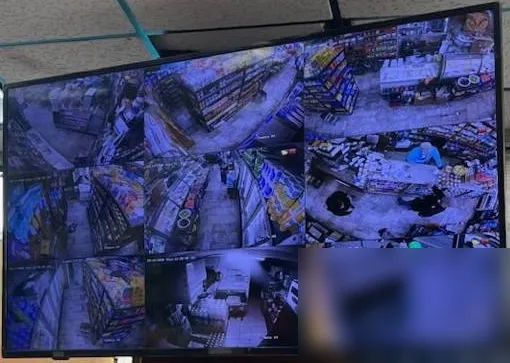
Example photo from an AESS installation, shown to illustrate the technique; it is not a Dutchess County job. A flat-screen monitor hung from a drop ceiling shows nine camera tiles looking down on shelving aisles, a deli-style counter and a back room; one tile has been blurred.
Cameras Dark at a Dutchess Business? Same-Day Repair
If the recorder stopped writing after a storm, a camera on the lot has gone black, or the app on your phone has said “offline” since the internet provider swapped your router, call (845) 640-3835. We book the next open slot, check power, surge protection and switch ports first, and most systems are recording again within one to two hours of arrival. Our Dutchess security camera repair page covers what a repair visit includes.
What We Install
Commercial Security Camera Services in Dutchess County
Every Dutchess job is a mix of the services below. The survey decides which ones a property actually needs; nobody is sold a PTZ or a plate reader to make a package look bigger.
🏪
Storefront & Main Street Systems
Door, register, sales floor and stockroom cameras for the narrow, deep shops on Main Street in Beacon and Poughkeepsie and the village centres of Rhinebeck, Millbrook and Pawling, with the recorder hidden in the back room.
🅿️
Parking Field & Entrance Coverage
Wide-area and pan-tilt-zoom cameras for plaza lots along Route 9, Route 44 and Route 55, with a dedicated camera at each driveway for vehicles and, where the angle allows, plates.
🌾
Farm, Winery & Outbuilding Links
Point-to-point wireless bridges and outdoor fibre that carry video from barns, tasting rooms, greenhouses and equipment sheds back to one recorder, without trenching across a field when the survey says you don't have to.
🏭
Office, Lab & Industrial Units
Lobby, corridor, dock and yard coverage for tenants in office and industrial parks from the Route 9 corridor to East Fishkill, with permissions that keep each tenant's video separate.
🍽️
Restaurants, Bars & Inns
Counter, cash, bar, back door and delivery cameras that respect the rooms New York law keeps off limits, with a staff screen that shows the floor and nothing else.
📶
Remote Viewing on Thin Internet
Recorders set up to send phone-friendly sub-streams, cellular routers where there is no wired service, and alerts tuned so a slow connection carries the clips that matter.
⚡
Surge & Weather Protection
Grounded surge protection on every outdoor run that enters a building, sealed and drip-looped connections, and mounting heights chosen with snowbanks and roof slides in mind.
🔄
Takeovers & Upgrades
Orphaned systems left by a previous tenant or installer, analog cameras moved to IP, recorders replaced and passwords recovered or reset so the owner controls the system again.
📄
Evidence-Ready Configuration
Accurate time synchronisation, retention sized to how long incidents take to surface, and trained staff who can export a clip for police or an insurer the same day.
Building Specialists
Commercial Security Cameras for Dutchess County's Architecture
Dutchess commercial property falls into six broad shapes. Each one hides its cable paths, its weak doors and its problem lighting in a different place, so each gets a different first question on the survey.
Main Street brick and frame storefronts
Nineteenth- and early-twentieth-century buildings in Beacon, Poughkeepsie, Rhinebeck and Millbrook: deep narrow shops, apartments or offices upstairs, a rear door onto an alley or a small lot, and party walls shared with the neighbour. The weak point is usually the back door, not the display window.
Route 9 plazas and big-box pads
Single-storey steel and block buildings with flat roofs, long blank walls and parking fields measured in acres, from the Galleria area south through Wappingers Falls and Fishkill and north to Hyde Park. Distance across the lot and glare from headlights decide the camera choice.
Office, lab and industrial parks
Multi-tenant buildings with drop ceilings, shared lobbies and loading docks, including the campuses built for IBM's era in the county — the East Fishkill site is now iPark 84, home to onsemi's fab. Tenant separation and cable through finished ceilings are the issues.
Farms, wineries, cideries and distilleries
Barns, tasting rooms, greenhouses and production buildings spread over many acres, often on one electric service and one internet line. Everything is about getting video from the far building back to the house or office.
Inns, restaurants and event venues
Converted houses, carriage barns and purpose-built banquet spaces with guest parking, delivery doors, bars and outdoor terraces. Guests should feel welcome, not watched, so placement and camera style matter as much as coverage.
Medical and professional offices
Converted houses and low office buildings along the main roads, where reception, records rooms, medication storage and the staff entrance need cameras and the exam rooms and changing areas must never have one.
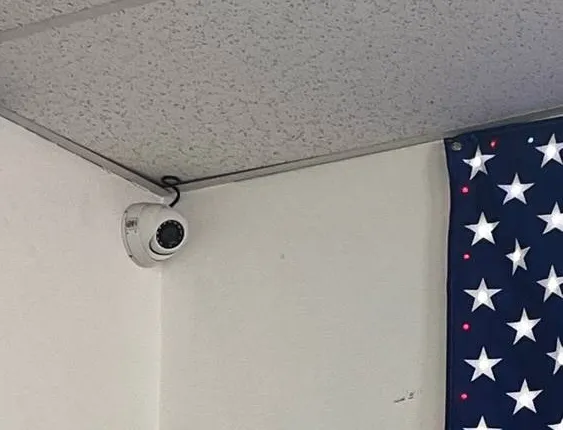
Example photo from an AESS installation, shown to illustrate the technique; it is not a Dutchess County job. A compact white dome camera is mounted where two white walls meet a speckled ceiling tile, its cable looped neatly above it, beside a hanging flag with white stars on blue.
Methods that change from one building type to the next
Old masonry. In a Main Street building, cable from the front of the shop to a rear stockroom usually travels above a pressed-tin or plaster ceiling, through a basement, or along a surface raceway painted to match. Brick and stone walls are drilled with masonry bits and every exterior penetration is sealed against water and insects. We look for an existing chase — an old telephone line or a disused chimney flue is common — before cutting anything new, and we keep camera bodies off decorative cornices and window surrounds wherever a plain wall or soffit gives the same view.
Block and steel. On a plaza building, cameras for the lot usually mount on the parapet or high on the block wall, fed through the roof or down the inside of the wall to a closet near the electric room. Roof penetrations are kept to a minimum and flashed, or replaced by a conduit that drops down the outside of the building into the back of house. Long blank walls let us space cameras evenly and overlap their fields, which matters for following a person or a car across the lot rather than seeing them in one frame and losing them in the next.
Drop ceilings and shared lobbies. In office and industrial parks, cable runs above the grid in plenum-rated jacket where the ceiling space is used for air return, and cameras sit on tiles or on hard-lid soffits. Shared lobbies and corridors raise a different question: whose camera is it? We agree that with the landlord in writing before installing, so a tenant's recorder never quietly records a common area the landlord has its own rules for.
Outbuildings. On a farm or winery, the first job is a map: where the internet enters, where the recorder will live, how far each building is from it, and whether the buildings can see each other. Clear line of sight usually means a pair of wireless bridge radios; no line of sight means fibre in conduit, or a relay point on a pole or another roof. Every building that receives a cable from outside gets surge protection bonded to that building's electrical ground.
Guest-facing buildings. In inns and venues, we favour small domes and turrets in neutral colours, mounted where the architecture already has a corner or a beam, and we put the obvious cameras where obviousness helps — the cash point, the liquor storage, the delivery door. Bathrooms, changing rooms and staff locker rooms never get cameras.
Clinics and offices. In medical and professional buildings, the recorder lives in a locked room or cabinet, the staff screen shows reception and entrances only, and retention and access are written down so the practice can answer a records question about who could see what.
Commercial Security Cameras
Business Security Cameras in Dutchess County
Dutchess commerce follows a handful of corridors. These are the ones our crews drive most, described by the kind of business found along them, not by any client.
Route 9 through the Town of Poughkeepsie, Wappingers Falls and Fishkill. The county's retail spine. The Poughkeepsie Galleria sits on Route 9 just north of Wappingers Falls, and the road south of it is lined with plazas, auto dealers, chain restaurants and pad sites; IBM still lists an office at 2455 South Road, the Route 9 address of its Poughkeepsie site. This is where the Town of Poughkeepsie's chronic-theft unit concentrates, and where lots, entrances and loss prevention at the door matter most. A typical job here is eight to sixteen cameras: entrances and exits, registers, high-value aisles, the receiving door and the lot.
Main Street, Poughkeepsie. Older commercial blocks, restaurants, bars, service businesses and offices, with apartments above many of them, and city cameras already on parts of the corridor. Rear doors, alley lighting and cash handling are the recurring themes; the burglaries on Fox Street and Hooker Avenue reported in 2024 are the kind of after-hours entries a back-door camera with good low-light performance is meant to catch.
Main Street, Beacon. Galleries, boutiques, jewelers, cafés and restaurants in a long run of storefronts from the Metro-North end of town toward Mount Beacon, drawing day visitors to Dia Beacon in the former Nabisco box-printing factory by the river. Shops here need clear faces at the door, discreet cameras on high-value cases, and coverage of the front glass — the 2024 jewelry-store burglary began with a broken door pane.
Raymond Avenue and the Vassar side of the Town of Poughkeepsie. Shops, restaurants and services that live alongside Vassar's campus of roughly 1,000 acres. Business follows the academic calendar, which means busy evenings in term time and quiet weeks over breaks — exactly when a system needs to alert someone rather than wait to be reviewed.
Route 9 north: Hyde Park, Rhinebeck and Red Hook. Restaurants and inns that live off visitors to the Culinary Institute of America's Hyde Park campus and the historic estates, farm markets, and the 162-acre Dutchess County Fairgrounds in Rhinebeck with its fair, Sheep and Wool Festival and craft shows. Seasonal staff, outdoor seating and event-day crowds shape these systems.
Route 44, Route 55 and Route 22 to the east. Millbrook, LaGrange, Pleasant Valley, Amenia and Millerton: farms, wineries, distilleries, horse properties, garden centres and village shops. Distances are long, internet can be limited and incidents tend to happen late at night. These are the jobs where wireless links, cellular backup and good infrared lighting earn their cost.
I-84 and the East Fishkill and Fishkill business parks. Office, warehouse and manufacturing tenants near the interstate, including iPark 84 on the former IBM East Fishkill campus, where onsemi bought the chip fab from GlobalFoundries. Docks, yards, perimeter fencing and visitor entrances, often with corporate or federal customers asking questions about equipment origin.
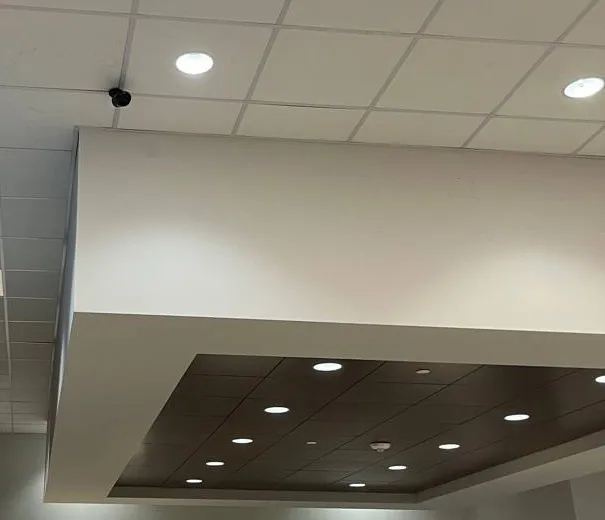
Example photo from an AESS installation, shown to illustrate the technique; it is not a Dutchess County job. A small black camera hangs from a white ceiling grid near two round downlights, above a white bulkhead that frames a dark panelled ceiling dotted with recessed lights.
Compliance callouts for Dutchess businesses
Rooms that are off limits. New York Labor Law §203-c bars employers from video recording employees in a restroom, a locker room or a room the employer has set aside for changing clothes, except under court order. Restaurants, gyms, clinics and farms with staff changing areas are planned around that line from the first sketch.
Employee monitoring notice. New York's electronic-monitoring notice law, Civil Rights Law §52-c, requires employers who monitor employees' telephone, email or internet use to give written notice at hiring, get an acknowledgment and post a notice; the statute's text speaks to those communications rather than naming video cameras. Many employers put cameras in the same written policy anyway. We tell you what each camera sees; your employment counsel decides what the notice should say.
Audio. Every system we install has microphones switched off unless the owner, with advice, decides otherwise and the people being recorded have consented. Video-only is the default on every Dutchess job.
Federal equipment rules. Section 889 of the 2019 National Defense Authorization Act covers video surveillance equipment made by Hikvision and Dahua, among others, and since August 13, 2020 has restricted its use by federal contractors and in federally funded work. If your business holds a federal contract, receives federal grant money, or supplies a customer that asks, we specify a compliant line from the start.
Licensing. New York State's Department of State licenses security and fire alarm installers, a licence that requires 81 hours of qualifying education and an exam. AESS works under NYS licence #12000287431 and carries full insurance. Building permits and facade rules vary by city, town and village in Dutchess; we confirm them with the local building department and the property owner before mounting anything outside.
General information, not legal advice — we design to keep you compliant and recommend counsel for your situation.
Your Questions Answered
Commercial Security Cameras in Dutchess County: Questions Answered
These are the questions Dutchess owners and managers actually put to us, grouped by the problem behind them. Each answer is specific to how things work here.
Budget and planning
What does a camera system cost for a storefront on Main Street in Beacon or Poughkeepsie?
A typical Main Street shop needs four to six cameras: the front door from inside, the register or counter, the sales floor, the stockroom, the rear door and sometimes the alley or rear lot. On our Dutchess list that falls in the small retail row, $6,120 to $13,770 installed with the recorder, drives, cable, labour and setup. Where in that range you land depends mostly on how the cable gets from the front of a deep, narrow building to the back, and whether the rear door faces an unlit alley that needs an infrared or colour-at-night camera.
Why are Dutchess prices higher than the same cameras in the Bronx?
The equipment costs the same; the time does not. Dutchess jobs start with a longer drive from our Bronx office, properties are larger, cable runs are longer, and outbuildings and lots need outdoor-rated cable, surge protection and sometimes wireless links. Our published area multiplier for Dutchess County is 1.53 times our Brooklyn base list, and every price on this page already includes it. The survey is still free, and the price you sign is fixed.
Can a Route 9 plaza landlord and its tenants share one recorder without seeing each other's stores?
Yes. A recorder can hold cameras for the parking field, the shared walkways and the back-of-house corridor for the landlord, plus each tenant's interior cameras, with user accounts that only show each party its own views. In practice many plazas prefer separate recorders per tenant and a landlord system for the lot, because leases end and tenants change. We sketch both options at the survey and let the lease decide.
Distance, outbuildings and connectivity
How does video get from a tasting barn or equipment shed back to the office on a Millbrook-area farm?
Three ways, chosen by distance and line of sight. Inside about 300 feet, outdoor-rated network cable in conduit, buried or on a messenger wire, is simplest. Farther than that, or across a field you don't want trenched, a pair of point-to-point wireless radios mounted on the two buildings carries the video as long as they can see each other. Where trees or terrain block the view, outdoor fibre in conduit carries video for long distances with no electrical connection between buildings, which also helps in lightning country. The survey tells us which one each building needs.
What if a rural site near Pine Plains or Stanfordville has slow internet or none at all?
The cameras record locally no matter what the internet does, so the evidence is always on the recorder. Remote viewing is set up for the connection you have: lower-resolution sub-streams for live viewing, alerts that send short clips rather than continuous video, and scheduled checks rather than all-day streaming. Where there is no wired service at all, a cellular router with an outdoor antenna can carry alerts and on-demand viewing. We test signal at the recorder location during the survey before promising anything.
Can cellular service really carry cameras at a site with no cable or fibre to the road?
It can carry viewing and alerts; it is not meant to upload every camera all day. A cellular router connects the recorder to the internet so you can check live views, search recordings and receive notifications on your phone. Data use depends on how often you watch and how many alerts the system sends, so we set motion zones carefully and explain the data plan before you choose it. If coverage at the building is weak, an outdoor antenna on the roof or a pole often makes the difference.
Weather and power
Will outdoor cameras keep a clear picture through a Dutchess winter of ice and roof snow-slides?
They will if they are placed for it. Dutchess averages about 47 inches of snow a year, so we keep cameras clear of the line where roof snow slides off a metal roof, under soffits or hoods that keep the lens dry, and high enough that plowed banks in the lot never block the view. Outdoor cameras we install are weather-rated and sealed at every connection, with drip loops so meltwater runs away from the plug. We also aim the lot cameras so that a camera's own infrared light is not reflected straight back off falling snow.
How do you keep a lightning strike in open country from killing the whole system?
By giving the surge somewhere to go other than the recorder. Every outdoor cable that enters a building gets a surge protector bonded to that building's electrical ground, and long links between buildings use fibre or wireless where possible so there is no copper path for a strike to follow. The recorder and network switch sit on a battery backup with surge protection. A nearby strike can still damage a single exposed camera, but it should not take the rest of the system with it.
Lots, gates and license plates
Can a camera at our lot entrance on Route 44 or Route 9 read license plates reliably?
Only a camera set up for that one job. Plate capture needs a narrow field of view on the driveway where cars slow down, a fast shutter, the right angle and infrared that works with reflective plates at night. A wide lot camera will show that a car came in, but rarely the plate. On a busy state road we put the plate camera on the entrance lane inside the property, not on the highway itself, where cars move slowly and straight toward the lens.
The Town of Poughkeepsie already has plate-reader cameras on the roads — do I still need my own?
Residents on r/hudsonvalley have pointed out plate-reader cameras around Poughkeepsie and near the Galleria, and posters list locations such as Hooker Avenue and North Hamilton Street. Whatever is on the public roads belongs to someone else, under their rules, and you cannot search it. Your own entrance camera ties a vehicle to the exact moment someone walked into your store or onto your yard, and you can export it the same day. The two are complementary, not substitutes.
Industry questions
Our East Fishkill tenant has a federal customer — which cameras survive an NDAA Section 889 review?
Section 889 names video surveillance equipment from Hikvision and Dahua, along with Huawei, Hytera, ZTE and their affiliates. A compliant system avoids those brands and products built on their components, including recorders and white-label cameras. We document the make and model of every component so your compliance team can answer the customer's questionnaire, and we will tell you plainly if a camera you already own is on the wrong side of the line.
Where do cameras belong in a restaurant kitchen and bar near the CIA in Hyde Park?
At the cash points, the bar and liquor storage, the walk-in and dry storage doors, the delivery entrance and the dining room entrance. Kitchen line cameras are useful for food safety and training if staff know about them, mounted high and protected from grease and steam. Restrooms, locker rooms and any room set aside for staff to change are excluded by New York Labor Law §203-c. Restaurants in the Hyde Park area that hire culinary students and graduates usually want a written camera policy in the employee handbook too.
Can a vendor at the Dutchess County Fairgrounds get cameras for one weekend?
Temporary coverage for an event is possible when there is power and a place to mount, and the fairgrounds' own rules allow it. For a weekend we usually suggest a small kit of battery-backed cameras recording locally, with cellular viewing if you need to watch from home. For outdoor sites with no power at all, such as staging lots, our solar surveillance trailers in Dutchess are the better tool. Talk to the event organiser first; their insurance and placement rules come before ours.
Evidence, insurance and existing systems
What does the Town of Poughkeepsie police need from my footage after a shoplifting incident?
A clip of the incident from every camera that saw it, exported in the recorder's original format with a player, plus a standard video file that opens on any computer, a note of the date and time, and the recorder's time checked against a phone. The best clip shows the face at the door on the way in, the act itself and the vehicle in the lot. We set up the export and train your manager to do it in a few minutes, because a department running a theft unit is looking for patterns across stores and needs the clip while the trail is fresh.
Should a Dutchess business tell its insurer about a new camera system?
Yes, and ask what they want documented. Some insurers ask whether the system records continuously, how long footage is kept, whether the recorder is protected from being stolen with the cash, and whether cameras cover particular areas such as the safe or the stock. We give you a written camera schedule and a description of retention and access that you can send to your agent. Whether that changes your premium is between you and the insurer.
We moved into a Fishkill office park unit with a previous tenant's cameras — can you take them over?
Usually. We find the recorder, identify the cameras and their condition, and either recover the admin access with the landlord's authorisation or reset the recorder and cameras so the new tenant owns the passwords. Old analog cameras can often be replaced while reusing the cable, and sound network cable can be tested and kept. Whatever cannot be reused is listed so the landlord and tenant can agree who removes it.
How do you cover the window and air-conditioner openings that burglars used on Poughkeepsie bars?
By treating every opening as a door. In the 2024 Poughkeepsie pub burglary the entry was through a window after an air conditioner was pulled out. We walk the outside of the building looking for wall and window units, basement windows, coal chutes, roof hatches and fire escapes, and cover each one with a camera that sees a person approaching it, not just the opening itself. Inside, a camera on the register area and one on the route from that window to it gives police the face and the action in one sequence.
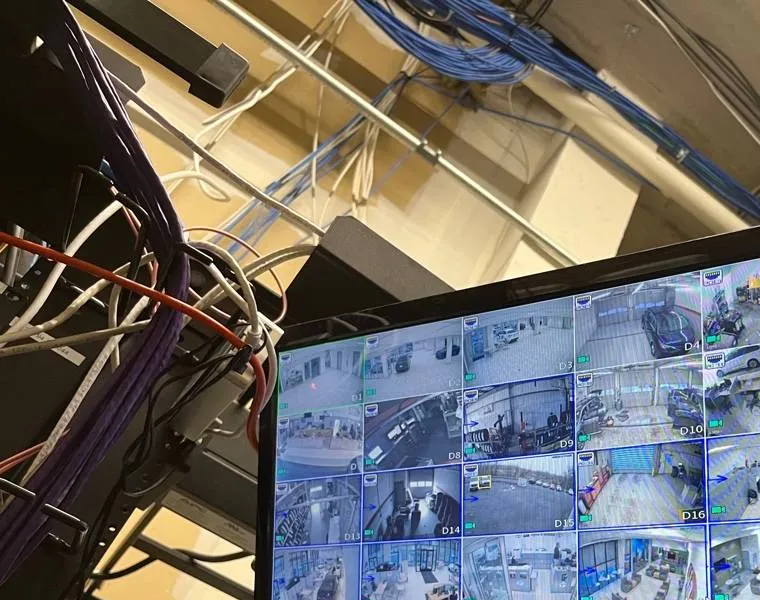
Example photo from an AESS installation, shown to illustrate the technique; it is not a Dutchess County job. Bundles of blue, white and purple network cable and an orange cable run along a steel pipe and down a rack frame, beside a monitor showing a grid of camera views of a showroom, offices and a service area.
Camera Schedules by Business
What a Dutchess Camera Schedule Usually Includes
No two properties get the same list, but certain businesses keep needing the same views. These outlines are where our surveys usually start; the walk-through then adds, removes and moves cameras.
Plaza or big-box retailer on Route 9. A face camera at every customer entrance, set at head height looking into the store; overview cameras on the sales floor; dedicated cameras on the aisles the store says are hit most — the tools, medicine and seafood named in the Town of Poughkeepsie reporting are typical; register and self-checkout cameras; the receiving door and stockroom; and a lot view from each entrance with plate capture where the driveway allows.
Beacon or Poughkeepsie Main Street shop. The door from inside and outside, the counter and cash, display cases with high-value stock, the back room and the rear door. Shops with glass frontages benefit from a camera that sees anyone approaching the glass from the sidewalk after hours, not just people already inside.
Restaurant, bar or café. Host stand and entrance, bar and back-bar, every cash point and the tip jar, the liquor and dry storage doors, the walk-in, the delivery door and the dumpster area. Dining-room cameras are placed to see tables and aisles, not to stare at guests.
Winery, cidery, distillery or farm market. The tasting-room counter and retail shelves, the cash point, the production or barrel room door, the farm gate and the parking field, the equipment yard and fuel storage, and any building reachable from a back road. Cameras on outbuildings link back to one recorder.
Office, lab or industrial tenant. The tenant's entrance and reception, the corridor to secure rooms, the server or records room door, the loading dock and yard, the visitor lot and any fence line. In multi-tenant buildings the landlord's common-area cameras and the tenant's own are kept on separate accounts.
Medical or professional office. Reception and waiting room, the staff entrance, medication or records storage doors and the parking lot. Exam rooms, restrooms and changing areas are never covered.
Equipment
Types of Commercial Security Cameras We Install
There is no single best camera for a Dutchess business. The right system mixes types according to what each location has to see, how far away it is and what the light and weather do there. The product photographs below are manufacturer images of camera and recorder types we work with; they are shown to illustrate the categories, not as photos from a Dutchess site.
Turret and dome cameras
The workhorses for interiors, entrances and soffits. Turrets avoid the reflections a dome bubble picks up from infrared at night; vandal-resistant domes suit low, reachable spots in bars and plazas.
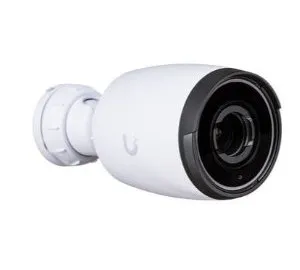
4K and 8MP bullet cameras
Long, narrow views down a lot aisle, a fence line or a loading yard. The visible body itself discourages loitering at a back door.
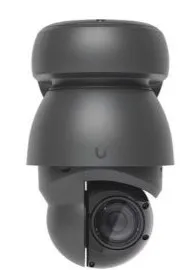
Pan-tilt-zoom (PTZ) cameras
For large parking fields, farm yards and fairground-type spaces where an operator or an automatic tour follows activity. Always paired with fixed cameras so nothing depends on where the PTZ happened to be pointing.
Multi-sensor and dual-lens cameras
Two or more lenses in one housing to cover a building corner, an intersection of aisles or a wide entrance from one mounting point — useful where every wall penetration counts.
Plate-capture cameras
Narrow, fast-shutter cameras on the entrance lane of a lot or gate, set up for reflective plates at night.
Colour-at-night and active-deterrent cameras
Cameras with built-in warm light or a strobe and speaker for rear doors, dumpster corrals and farm gates, where a visible response at 3 a.m. is the point.
Recorders and servers
NVRs sized to camera count and retention, or rack-mount recording servers for larger sites and multi-building campuses, on battery backup and surge protection.
Wireless bridges, fibre and cellular routers
The links that make Dutchess outbuildings and rural sites work: radio pairs between buildings, fibre where copper won't reach, and LTE routers where there is no wired internet.
Manufacturer product photo, shown to illustrate the camera type. A black pan-tilt-zoom camera on a white background: a rounded upper housing with a small logo and a lower rotating module holding a large lens.Manufacturer product photo, shown to illustrate the camera type. A white bullet camera angled to the right on a short white mounting arm, with a large lens inside a black front ring, on a white background.
Brands, platforms and the NDAA question
We install and service the major professional lines, including Hanwha, Axis, Uniview, Ubiquiti UniFi Protect, Dahua and Hikvision, as well as Lorex for smaller sites. Hudson Valley business owners on Reddit regularly ask for installers who work with UniFi equipment they already own, and we do. For a private business with no federal customer or grant, price-competitive lines can make sense. For anyone covered by Section 889, we specify NDAA-compliant cameras and recorders and avoid relabelled products built on restricted components.
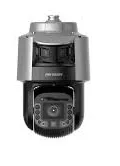
Manufacturer product photo, shown to illustrate the camera type. A small grey and black camera with a wide panoramic lens band at the top and a pan-tilt-zoom module below, bearing a Hikvision logo. Hikvision equipment is covered by NDAA Section 889, so this type is only offered to private businesses with no federal connection.
National brands vs. a local Dutchess install: ADT, Ring and SimpliSafe
Consumer camera brands such as Ring and SimpliSafe are built around one account, one app and a cloud subscription, which suits a small office or a single door. They struggle with what Dutchess businesses actually need: a camera 400 feet away in a barn, twenty cameras on one recorder, separate access for a manager and an owner, or footage that stays on site when the internet is slow. ADT and similar national providers sell monitored packages under multi-year agreements with equipment chosen for them. A locally installed, owned system records on hardware you keep, carries no per-camera monthly fee to keep recording, and is serviced by a crew that has walked your property. Consumer cameras still have a place — a doorbell at a farm house, a spare indoor camera in a back office — alongside the business system.
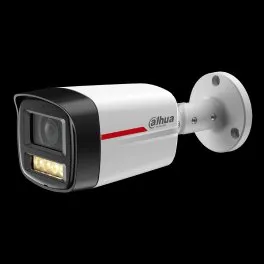
Manufacturer product photo, shown to illustrate the camera type. A white bullet camera with a black front shroud, its lens above a glowing warm-white light, a thin red stripe and a Dahua logo on the body, mounted on a white bracket against a black background.
AI Overview Reality Check
What AI Gets Wrong About Commercial Security Cameras in Dutchess County
We tried to record Google's AI Overview for commercial camera searches while building this page, and it was not accessible from our build environment, so we are not quoting it. What we can test are the cost guides and claims that AI summaries are built from — Angi's national cost page, a 2026 commercial pricing guide from an integrator, and the usual advice repeated across aggregator sites — against what Dutchess properties actually involve.
1. “Security camera installation costs about $1,300.”
Angi's cost page, updated in September 2026, gives a national average of $1,289 and a typical range of $590 to $2,040. It is a home-focused page about putting a few cameras on a house, and for that it is a fair guide.
A Dutchess business system is a different job. A small Main Street shop needs four to six cameras on a recorder with drives sized for weeks of retention; a plaza or farm needs lot coverage, outdoor cabling and often a link to a second building. None of that is in a house average.
An integrator's 2026 commercial guide puts installed cost per camera anywhere from about $400 for basic HD cameras to over $2,500 for advanced analytics models. Our Dutchess list works out at $765 to $3,825 per camera all-in, which reflects longer runs and travel as well as the hardware.
2. “Labour is $100 to $200 per camera.”
Angi quotes $100 to $200 per camera for professional installation, and $80 to $200 for wired systems. A per-camera labour figure assumes each camera is a short, similar run to the recorder.
In Dutchess the runs are not similar. The camera over the register in a Beacon shop might be twenty feet from the recorder; the camera on the gate of a LaGrange farm might need a trench, a wireless bridge or a fibre run with surge protection at each end. One gate camera can take more labour than a whole sales floor.
That is why we price a property after walking it, by the route the video has to travel, rather than by counting cameras.
3. “Wireless cameras avoid the cost of running cable.”
Consumer wireless cameras connect over Wi-Fi to a router, and many run on batteries. In a single building with good Wi-Fi, they can be convenient.
Across a Dutchess property, Wi-Fi rarely reaches the barn, the far end of the lot or the back of a stone building, and batteries need someone to charge them through a winter that averages 47 inches of snow. A camera that is offline when the incident happens records nothing.
The wireless that works here is different: point-to-point bridge radios that link two buildings, feeding wired cameras that are powered over their network cable. That is still “wireless,” but designed for distance and weather.
4. “Cloud storage is safer than a recorder on site.”
Cloud recording protects against the thief who takes the recorder, and multi-site owners find it convenient. Those benefits are real.
But cloud recording needs upload bandwidth for every camera, all day, and much of eastern and northern Dutchess cannot provide that reliably. Cloud platforms also carry an ongoing fee, commonly quoted at $20 to $80 per camera per month.
For most single-site Dutchess businesses, the better answer is local recording on an owned NVR, hidden or locked away from the cash, with alerts and remote viewing over the connection the property has. Where a cloud platform makes sense, we will recommend one.
5. “A visible camera stops break-ins.”
Visible cameras discourage casual theft. They did not stop the 2024 Poughkeepsie pub burglary, where the burglar was recorded pulling out an air conditioner, or the dawn break-in at a Beacon jewelry store, or the Beekman deli whose ATM was carried out.
What cameras did in those cases was record evidence, and the quality of that evidence decided how useful it was. That changes the design: a face-height camera covering the route from the entry point to the cash is worth more than a high dome that sees the whole room badly.
Deterrence works best combined with physical measures — lighting, locks, window bars, an alarm — and with cameras that can trigger a light or a voice warning at a rear door after hours.
6. “Any licensed installer is the same; just pick the cheapest quote.”
Licensing matters: New York's security installer licence requires qualifying education and an exam. But a licence does not tell you whether the installer has planned for a 600-foot run to a barn, surge protection on a lightning-exposed fence line, or remote viewing on a rural internet connection.
Ask any bidder to show you the cable route for the farthest camera, what happens when the internet goes down, how long footage is kept and how a clip is exported. A low quote that leaves those blank usually means they were left out.
Ask, too, about Section 889 if your business has any federal connection. A cheaper camera that a customer's compliance team later rejects is the most expensive camera on the job.
7. “Installation takes a day.”
For four cameras on a house, a day is realistic. A Main Street shop with four to six cameras is often one or two days as well.
A plaza, a multi-building farm or an office-park unit with a shared lobby takes longer, and part of that time is not spent drilling: confirming the landlord's approval, coordinating roof access, waiting for a wireless bridge to be aligned, or scheduling around a restaurant's service hours.
We give every Dutchess job a written schedule with the survey, and stage the work so the most important doors are recording at the end of the first day.
A Camera Plan Drawn Around Your Property, Not a Package
Tell us the town, the type of business and how many buildings are on the property. We walk it, map the cable routes and the internet, and send a fixed Dutchess price with a camera-by-camera schedule.
A useful Dutchess request tells us the town or road, what the business does, how many doors and buildings need coverage, how far apart they are, and what internet service reaches the property. A written reply comes back the same business day; to talk it through, call (845) 640-3835.
✅
We Got Your Request!
Received. Someone at the Dutchess desk will read through your property notes and phone you back today; for anything urgent, ring (845) 640-3835 now.
How It Works
Our Installation Process
The same seven stages apply to a one-room shop on Beacon's Main Street and to a four-building farm off Route 44. Nothing is drilled until stage four, because on a Dutchess property the distances and the internet connection set the price long before the cameras do.
1. Map the property on the phone
You tell us the town, the business, the buildings and the internet service. We place you on the Dutchess price table and list what the survey will need to see.
2. Walk it from the farthest building
We start at the building or gate farthest from the internet, pace the distances, test the upload speed and cellular signal, then work back to the doors and registers.
3. Send a fixed written price
You receive a camera-by-camera schedule, a cable and link route, retention days and one fixed Dutchess price, with any landlord approvals noted.
4. Clear access and approvals
We confirm roof and ceiling access with the landlord, any facade or building-department questions with the owner, and a schedule around your opening hours.
5. Put the key doors on first
Entrances, registers, the rear door and the recorder go in first, so the most important views are recording at the end of the first day.
6. Link the lot and the outbuildings
Lot cameras, plate capture, wireless bridges or fibre to other buildings follow, with surge protection bonded at every building entry.
7. Hand over and train
We set owner, manager and staff accounts, check time sync and retention, run a test export with your staff and leave the schedule and cable map.
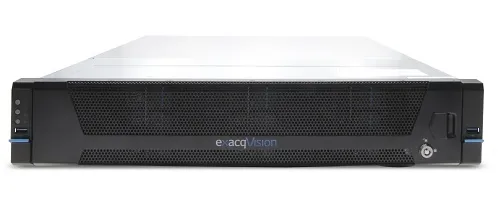
Manufacturer product photo, shown to illustrate the camera type. A two-unit rack-mount recording server with a silver top, a black perforated front bezel, status lights at the left and a key lock at the right.
Coverage Area
Commercial Security Cameras Near Dutchess County's Landmarks
When a caller says “just past the Galleria” or “near the fairgrounds,” our dispatcher knows where the crew is going. These six reference points anchor how we route Dutchess surveys. They are public places, listed for orientation only — none of them is an AESS customer or project.
Poughkeepsie Galleria, Route 9
Opened in 1987 just north of Wappingers Falls, 1.1 million square feet and the largest shopping centre in the county (Wikipedia). The anchor of the Route 9 retail corridor and its plazas.
Walkway Over the Hudson
The former rail bridge that opened as a walkway in 2009, 212 feet above the river and 1.28 miles long between Poughkeepsie and Highland (Walkway Over the Hudson). Its visitors feed the restaurants and shops nearby.
Dia Beacon
The museum in a former Nabisco box-printing factory on the Beacon riverfront (Dia Art Foundation) that helped turn Beacon's Main Street into a gallery and restaurant destination.
Culinary Institute of America, Hyde Park
The CIA's main campus since 1970, in the former St. Andrew-on-Hudson novitiate between the Hudson and Route 9, with about 2,300 students and public restaurants (Wikipedia).
Dutchess County Fairgrounds, Rhinebeck
162 acres on Route 9, home to the Dutchess County Fair, the Sheep and Wool Festival, craft fairs and antique shows (Wikipedia) — event-day crowds for every business nearby.
Heritage Financial Park, Route 9D
The county-owned ballpark, formerly Dutchess Stadium, opened in 1994 with 5,400 seats and home to the Hudson Valley Renegades (Wikipedia), a short drive from the I-84 business parks.
We also serve the City of Poughkeepsie and the Town of Poughkeepsie, Beacon, Fishkill, East Fishkill, Wappingers Falls, Hopewell Junction, Hyde Park, Rhinebeck, Red Hook, Tivoli, Millbrook, LaGrange, Pleasant Valley, Clinton, Stanfordville, Pine Plains, Amenia, Millerton, Dover Plains, Pawling and Beekman.
Pricing
Commercial Security Camera Cost in Dutchess County
Dutchess prices on this page are the AESS commercial camera list multiplied by the Dutchess factor of 1.53 that applies across our services, which covers the longer travel, larger properties and outdoor work the county involves. Every figure is all-in: cameras, recorder and drives, switches, cable, labour, configuration and handover. A locally recorded system has no monthly fee to keep recording.
Business
Typical cameras
Dutchess price
Usually covers
Small retail or office
4–6
$6,120–$13,770
Entrance, register or reception, sales floor, stockroom, rear door. Local NVR, 30-day retention, phone app.
Mid-size office or restaurant
8–12
$13,770–$27,540
Lobby or dining room, corridors, kitchen doors, bar and cash, delivery door, exterior and part of the lot.
Warehouse, plaza, farm or industrial
16–30
$27,540–$53,550+
Docks, yards, lots and outbuildings; PTZ and plate capture; wireless or fibre links; longer retention.
Multi-site or multi-building campus
30–50+
Custom
Several buildings or locations on one platform, access-control integration, central management.
Per camera, that works out at roughly $765 to $3,825 installed in Dutchess. A four-to-eight camera shop or restaurant commonly lands between $6,120 and $22,950, and a sixteen-camera warehouse or farm with PTZ, plate capture and long retention can reach $45,900.
What moves a Dutchess property up or down the table
Distance to the farthest camera. A camera within 300 feet of the switch is a cable run; beyond that it needs fibre, a wireless bridge or a powered switch in another building.
Outbuildings. Each barn, shed or second building adds a link, surge protection at both ends and often a small switch and battery backup.
Construction. Old masonry and finished ceilings take longer to cable cleanly than open steel and drop ceilings.
Lot size and lighting. Large or unlit parking fields need more cameras, PTZ coverage or infrared range; plate capture adds a dedicated camera per entrance lane.
Internet at the site. Where there is no wired service, a cellular router and antenna are added to make remote viewing possible.
Reuse. Sound network cable or coax from an old system can lower the price of an upgrade considerably.
The survey and the written fixed price cost nothing. Once a system is in, later service or diagnostic calls are charged at $195 an hour with a three-hour minimum ($585); that rate never applies to the original installation.
Want the Price for Your Property?
Send the town, the type of business and the number of buildings. The Dutchess desk will place you on the table above and book a survey.
Most Dutchess quotes begin from one of these outlines. The survey moves cameras in or out of each one to suit the property, and the number you approve in writing is the number on the final invoice.
🏪
Main Street — from $6,120
4–6 cameras: front door, register or reception, sales floor, stockroom and rear door. Local NVR with 30 days, phone app for the owner, export training and a written camera schedule.
🍽️
Plaza & Restaurant — from $13,770
8–12 cameras: everything in Main Street plus dining room or lobby, bar and cash points, delivery door, building exterior and the near part of the lot. Analytics for person and vehicle alerts.
🌾
Yard, Farm & Campus — from $27,540
16–30 cameras: docks, lots, gates and outbuildings, PTZ and plate capture where they fit, wireless or fibre links between buildings, surge protection and longer retention.
Already Own Cameras? Labour-Only Installation
Bought a kit online, or inherited boxed cameras from a project that stalled? We can mount, cable and set them up for labour only, once we have confirmed the cameras and recorder work together and suit the spots you have in mind — an indoor camera on a barn gable will not last a Dutchess winter. Pricing and booking for this are explained on our bring-your-own-equipment installation page. Hardware you supply is covered by its maker's warranty, not ours.
Seasons and Budgets
Phasing a Dutchess System Around the Season
Many Dutchess businesses run to a calendar: orchards and farm markets peak at harvest, wineries and venues fill on summer and autumn weekends, inns and restaurants follow the visitor season, and shops near the colleges follow the academic year. A camera project that lands in the middle of the busy season disrupts the business it is meant to protect, so we plan the work around the calendar and, where the budget needs it, split the system into phases that each make sense on their own.
Phase one: the money and the doors. Cash points, the main entrance, the rear or delivery door and the recorder. This is where most losses start, and the recorder, switch and battery backup are sized for the full system from the beginning so later phases plug in rather than replace anything.
Phase two: the lot and the edges. Parking field coverage, plate capture at the entrance, the dumpster corral, fence lines and loading areas. For seasonal businesses this phase is best done before the busy months begin, while the ground is workable and the lot is empty.
Phase three: the outbuildings. Barns, sheds, greenhouses, production buildings and gates, with their wireless or fibre links. Where trenching is needed, we schedule it for dry ground outside the frost months.
Each phase carries its own fixed price from the Dutchess list. Because the drawings and camera schedule already exist after the first survey, later phases are quicker to price and to install.
Rural Connectivity
Remote Viewing That Works on Dutchess Internet
The most common complaint we hear about existing systems outside the Route 9 corridor is not about cameras. It is that the app stopped working, or that it takes a minute to load a picture, or that alerts arrive an hour late. Almost always the cameras are fine and the problem is the way the recorder talks to the internet. This is general technician guidance on how we set it up.
Record locally, view remotely. The recorder on site holds every camera at full quality, whatever the internet is doing. Remote viewing is a separate job, and on a slow connection it should never compete with recording. We configure each camera with a main stream for recording and a lighter sub-stream for phones, so a manager checking the lot from home sees a usable picture without trying to pull 4K video through a rural line.
Measure the upload, not the download. Internet plans are sold on download speed, but remote viewing depends on upload — how fast the site can send video out. During the survey we test the upload at the recorder location. If it is low, we plan for alerts with short clips and on-demand viewing; if it is healthy, live multi-camera viewing is realistic.
Cellular where there is nothing else. For a barn, a seasonal farm stand or a property with no wired service, a business cellular router gives the recorder an internet connection. Signal is checked at the building, and an outdoor antenna on the roof or a mast often turns one bar into a working link. We set motion zones and schedules carefully so the data plan carries the alerts that matter rather than every passing deer.
Keep the network separate. Cameras sit on their own network segment or switch, not on the shop's guest Wi-Fi, so a busy weekend of visitors streaming video in a tasting room does not slow the cameras and the cameras do not slow the point-of-sale system.
Plan for the router being replaced. When an internet provider swaps a router, remote access often breaks. We document how the recorder reaches the internet and leave the settings with you, so a provider visit becomes a ten-minute fix rather than a service call.
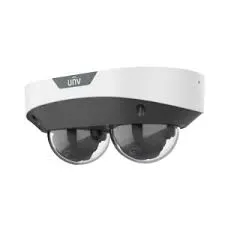
Manufacturer product photo, shown to illustrate the camera type. A white oval ceiling-mount housing with a dark band and two smoked dome lenses side by side underneath, on a white background.
Weather & Power
Outdoor Camera Runs Built for Dutchess Weather
Indoor cameras in a Dutchess shop live the same life as indoor cameras anywhere. Outdoor cameras do not. The county's Natural Resources Inventory puts average snowfall at 47.1 inches a year over the last three decades, a local climate-resilience group notes about 44 inches of rain a year with many extreme downpours, and New York's hazard-mitigation program tracks expected losses from damaging lightning county by county. A camera system on a lot, a fence or a barn has to be built for all three. What follows is general technician guidance on how we do that.
Mount for the worst week, not the survey day. A camera that looks perfect in October can be useless in February. We look for where plows pile snow in the lot, where roof snow slides off metal and shingle roofs, where icicles form on gutters, and where water runs down a wall in a storm. Cameras go under soffits, eaves or purpose-made hoods, above the height of the tallest snowbank, and out of the slide path below any roof edge.
Seal every connection. Outdoor connections are made inside weather-rated junction boxes or the camera's own sealed base, with a drip loop so water running along the cable falls away before it reaches the plug. Cable that crosses open ground runs in conduit, buried or fixed to a building or messenger wire, rather than lying loose where a mower or a frost heave can reach it.
Give lightning a path to ground. Every outdoor run that enters a building passes through a surge protector bonded to that building's electrical ground. Between buildings we prefer fibre or wireless, which carry no electrical surge from one structure to the next. Recorders and switches sit on battery backup units with surge protection, which also keeps the system recording through the short power blinks that follow summer storms.
Light the scene for night and snow. Built-in infrared works well on a clear night but reflects off falling snow and rain close to the lens, turning the picture white. On lots and gates we often add a separate light, use cameras with colour-at-night sensors, or set the camera's infrared so the brightest reflections fall outside the frame.
Check it before it matters. A short visit each autumn to clean lenses, check seals and test surge protectors and batteries costs far less than discovering a dead camera the morning after a break-in.
Ownership & Evidence
What You Own When the Install Is Finished
A Dutchess business system should outlast its installer, its manager and, often, its tenant. Every handover includes the same parts.
A camera schedule. One line per camera: its name as it appears on screen, where it is, what it is meant to see, its type and how many days it keeps footage. It is the document your insurer, your landlord or a new manager will ask for, and the one a technician uses years later to find a camera that has gone dark.
Owner-held passwords. The owner holds the administrator account. Managers and staff get their own accounts with only the views and functions they need — live view at the counter, search and export for the manager, full control for the owner.
A tested export routine. Before we leave, a named person exports a clip from two cameras, plays it on another computer and checks the time against a phone. Police departments and insurers both lose interest in video that cannot be opened or whose time is wrong.
A cable and link map. A simple drawing of where each cable runs, where each switch and wireless link sits and where the surge protectors are, so the next electrician or roofer knows what not to cut.
Retention that matches reality. Thefts are often discovered days later, during a stock count or when a bank statement arrives. We size drives so the recorder keeps at least as long as it takes your business to notice a problem, and longer where an insurer or a customer requires it.
Complete Services
Every Commercial Security Camera Service in Dutchess County
Cameras usually lead to a second question — the door lock, the network, the alarm. The same Dutchess survey can cover any of these related services.
Intrusion alarms that pair with cameras on doors and windows.
Field Notes
Field Notes: Walk to the Farthest Building First
What follows describes our standard survey habit on multi-building properties in general; it is technician guidance, not the story of a specific customer.
On a property with more than one building, we start the survey at the building farthest from where the internet comes in, not at the front door. We stand at the far barn or shed and ask four things: can we see the main building from here, is there power inside, is there anything metal or wet between the two, and what would a thief see from the road. Then we walk back toward the main building pacing the distance, noting trees, fences, driveways and anything that would make a trench expensive. Only after that do we go inside and talk about the register and the stockroom. The far building decides the design — whether the system needs a wireless bridge, fibre, a second switch or a cellular router — and it is the part a rushed quote most often leaves out. Starting there also means the owner hears the hardest part of the price first, and nothing about it changes on installation day.
FAQ
Dutchess County Commercial Security Camera FAQ
Do you schedule surveys in northern Dutchess towns such as Red Hook, Tivoli and Pine Plains?
+
Yes. We cover the whole county, from Beacon and Fishkill in the south to Red Hook, Tivoli, Pine Plains, Millerton and Amenia in the north and east. Crews travel up from our Bronx office, and you are given an arrival window when the survey is booked.
Can a Beacon gallery or shop stay open while the cameras go in?
+
Usually, yes. Noisy work such as drilling masonry and pulling cable through the ceiling is scheduled before opening or on the day you are closed, and work on the sales floor is done in sections so customers can still move around. Ladders and tools stay inside a marked area, and everything is cleared at the end of each day.
Will a camera on a historic Main Street facade in Poughkeepsie or Rhinebeck need anyone’s approval?
+
It can. Rules for exterior changes differ between the City of Poughkeepsie, the towns and the villages, and some buildings sit in historic districts or under a landlord’s own design rules. Before mounting anything on a facade we ask the building owner and check with the local building department, and we choose small cameras in colours that suit the building.
How many days of footage should a busy Route 9 store keep?
+
At least 30 days for most retail, because thefts are often discovered during a stock count or when a customer complains weeks later. Stores that deal with frequent shoplifting or with insurance claims often keep 60 to 90 days on the entrance and register cameras. We size the recorder’s drives for the retention you choose and show you how to check it.
Can a Hyde Park restaurant’s line staff watch the dining-room cameras without seeing the office?
+
Yes. Each person gets their own account, and accounts can be limited to particular cameras and to live view only. A kitchen or host-stand screen can show the dining room, the door and the bar while the office, cash room and recordings stay visible only to the owner and manager.
When you replace an old system in a Wappingers Falls plaza, do you take the dead cable out?
+
We remove the old cameras and recorder as part of the job and reuse any cable that tests sound. Abandoned cable that will not be reused is removed where it is reachable, and where it runs inside walls or through a landlord’s shared space we list it so the landlord can decide. Nothing is cut in a shared ceiling without the landlord’s agreement.
Who keeps the recorder and passwords when a Dutchess business is sold or a tenant leaves?
+
Whoever paid for the system owns it. At handover the owner receives the administrator password and the camera schedule. If the business is sold, the owner can hand those to the buyer, and we can reset accounts for the new owner. If a tenant leaves equipment behind, we only take it over with the owner’s or landlord’s written authorisation.
Can a winery’s tasting-room and production-barn cameras sit in one app?
+
Yes. Cameras in every building connect back to one recorder over cable, fibre or a wireless bridge, and the owner sees all of them in one app. Managers can be given only the tasting room or only the production side. If two buildings have separate internet services, we still bring the video to one recorder so the app shows a single site.
Could you check our outdoor cameras every autumn before the Dutchess snow season?
+
Yes. A pre-winter visit cleans domes and lenses, checks seals and drip loops, tests surge protectors and battery backups, confirms that infrared still reaches the lot, and adjusts any camera a summer of growth or a new sign has blocked. Our Dutchess camera maintenance page has more on scheduled visits.
Is the Bronx office the one that sends crews to Dutchess County jobs?
+
Yes. Dutchess County work is booked and dispatched through our Bronx office at 460 E Fordham Rd, and the Dutchess desk on (845) 640-3835 handles quotes, scheduling and service calls for the county.
Each Dutchess incident, place, statistic and legal point above is linked to its source here, so you can read the original. Prices are our own commercial list at the 1.53 Dutchess multiplier, not taken from any outside guide.
Recorder Down After a Storm? Call the Dutchess Desk
If thunder took out the cameras on the barn, the lot cameras went black after a power cut, or the app has been offline since the weekend, phone (845) 640-3835. We book the next open slot, check surge protectors, power and the link to each building first, and most systems are recording again within one to two hours of arrival.
Dutchess Business Cameras From a Licensed, Insured Crew
Abstract Enterprises Security Systems · 460 E Fordham Rd, Bronx, NY 10458 · (845) 640-3835 · WhatsApp (718) 679-0359 via wa.me
NYS Low-Voltage Licence #12000287431 · 100% Licensed & Insured · Same-Day Estimates · Rated 4.7★ from 201 Google Reviews
Cameras and recorders carry their manufacturers' warranties. Full terms — including 50% deposit, the 30-day warranty and optional paid extended warranty, and the late-fee schedule — are set out in the service agreement. See our warranty page.
Page reviewed and updated October 18, 2026. Changelog: Dutchess County page rebuilt from scratch around Route 9 retail, Main Street storefronts, office and industrial parks, farms and wineries, long cable runs, outbuilding links, rural remote viewing, snow and lightning, plate capture and NDAA questions, with new sourced local research, Dutchess pricing and a new FAQ.