Business CCTV for Office Towers · Retail · Restaurants · Co-ops · Multi-Tenant — IP/PoE · Local NVR · Landmark-District Compliant · No Monthly Fees · Licensed & Insured
Professional commercial security camera installation, CCTV surveillance systems, 4K IP cameras, and local NVR recording for Manhattan businesses — office towers in Midtown and the Financial District, retail along Fifth Avenue and in SoHo, restaurants, co-ops, and multi-tenant buildings from the Upper East Side to Harlem. Abstract Enterprises is a licensed and insured commercial CCTV company — with no monthly fees on local NVR.
The core driver is loss and liability. Retail shrinkage and organized theft on flagship corridors, employee and vendor theft in stockrooms, package and inventory loss in lobbies and loading areas, slip-and-fall and worker-comp claims, and disputes that come down to one person’s word against another — commercial CCTV turns all of those into reviewable footage. Manhattan insurers frequently discount premiums for a professionally installed system, and retailers may qualify for state retail-security incentives.
Manhattan adds its own shape: vertical buildings with riser cabling, building-management protocols and COIs, landmark-district facades, and some of the highest property values and foot traffic in the country. Owners and managers use cameras for accountability and visibility — watching entrances and registers, verifying deliveries, covering lobbies, elevators, and garages in co-ops and office towers, and keeping eyes on multiple floors or locations from one phone. A camera placed and configured correctly — covering your property without aiming into private spaces — protects the business and keeps you compliant with New York City law.
From a four-camera retail shop to a thirty-camera warehouse, we design coverage around how your business actually operates, then install it clean and own-it outright on local NVR.
POS and entrance coverage to cut shrinkage on high-traffic corridors, 8MP at registers and doors for face capture, stockroom and loading-area coverage against internal loss.
Lobbies, elevator banks, reception, server-room and IDF doors, and floor perimeters — discreet domes integrated with turnstiles and card access.
Lobbies, package rooms, garages, service entrances, roof and stairwell doors — board-documentation-ready installs with concealed riser cabling.
Kitchen, dining, bar, register, and delivery entrances. Discreet placement, health-code-aware mounting, remote open/close oversight for owners.
Waiting rooms, corridors, pharmacy and records-room doors, and entrances — longer retention and NDAA-compliant hardware where grants apply.
Vaults, safes, registers, and entrances with 4K ID capture, dual recording, and alarm/access integration for high-value retail and finance.
There’s no single best commercial camera — the right system mixes types by what each area needs.
Sleek, vandal-resistant, discreet aiming — lobbies, retail floors, offices.
Visible, directional deterrent — perimeters, exteriors, long hallways.
Pan-tilt-zoom or auto-track — one unit covers a warehouse or lot.
Flexible aiming, low night glare — the indoor/outdoor workhorse.
One unit covers a whole floor — open offices, retail, stockrooms.
Reads plates at gates, docks, and secured entrances with a 4K overview.
Detect heat in darkness or fog — perimeters, yards, critical sites.
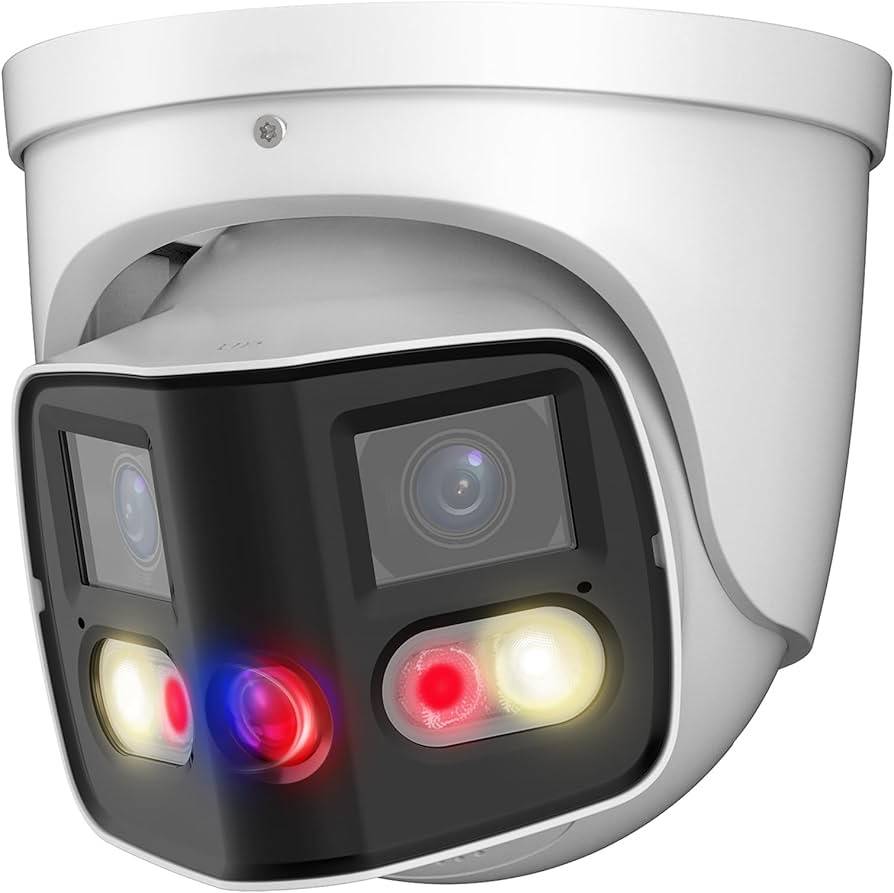
One housing, multiple lenses — corners and wide intersections on one channel.
On recording, the choice is local NVR vs. cloud. A local NVR means you own the hardware with no per-camera monthly fee — best for single-site businesses. Cloud platforms (Verkada, Avigilon Alta, Eagle Eye) carry a monthly fee but simplify multi-site management. We recommend on your sites and budget, not our margin.
A network camera sending video over data cabling — the commercial standard in Manhattan towers, higher resolution and remote access than analog.
One Cat6 cable carries power and video to each camera — essential for clean runs through riser closets and drop ceilings in high-rises.
The recorder storing footage on local drives on-site. NVR is what modern IP systems use; no monthly cloud bill.
Detail. 4MP baseline for general areas; 8MP/4K at entrances, registers, and lobbies where you must ID a face.
Days of footage kept before overwrite. Most Manhattan businesses run 30–90 days; finance and jewelry keep longer.
The vertical cabling pathway and floor closets in a high-rise. Commercial camera cabling routes through risers and IDFs — building-management coordination required.
On-camera intelligence — person/vehicle detection, line-crossing, loitering — that cuts false alerts and makes footage searchable.
Hardware allowed for federally funded projects under Section 889 (Axis, Hanwha, Avigilon, Verkada). Matters for institutions and grants.
NDAA-compliant (schools, government, grant-funded, most enterprises): Axis, Hanwha Vision (Wisenet), Avigilon, Verkada. Private commercial (non-federally-funded retail, restaurants, warehouses): Hikvision, Dahua, Lorex deliver outstanding price-to-performance. Under NDAA Section 889 the latter are barred from federally funded projects, so if you take Title I, Medicare/Medicaid, or government-contract dollars, we steer you to a compliant line from the start. We also do bring-your-own-equipment installs, expansions, and analog-to-IP upgrades.
Live and recorded video on iOS/Android, from anywhere, for every floor or location.
On-device detection that ignores street noise and weather to cut false alerts on busy corridors.
Register overlay tying transactions to video for shrinkage and dispute resolution in retail.
Building-wide infrastructure for lobbies, elevator banks, stairwells, and service entrances.
Cameras tied to turnstiles, card and fob entry, and elevator access on one platform.
PoE routed through riser closets, conduit, and drop ceilings — no exposed cable in finished space.
Own the recorder and footage outright — no per-camera cloud bill.
Co-op board documentation and insurance-grade retention provided on request.
We walk your space, map entrances, registers, docks, and blind spots, and design coverage around your operation — not a flyer package.
A written quote: camera count, types, placement, NVR or cloud, retention in days, cabling scope, one number. No change-order games.
PoE cabling routed through walls, ceilings, risers, and conduit, code-compliant and fire-stopped, by a licensed NYS low-voltage contractor.
Remote viewing on your phone, every camera tested, full app walkthrough, ongoing local support — the crew that installed it answers.
We install business CCTV across every Manhattan commercial corridor — the office towers of Midtown and the Financial District, the flagship retail of Fifth Avenue and SoHo, the Diamond District, the medical and professional offices of the East Side, and the co-ops and luxury towers from the Upper East Side to Tribeca.
Corporate floors, lobbies, and elevator banks — the densest commercial office market in the country.
High-rise offices, trading floors, and new mixed-use towers with strict building-management protocols.
Flagship stores and boutiques — entrance, register, and floor coverage against shrinkage and ORC.
High-value jewelry and finance — vault, safe, and 4K ID capture with alarm integration.
Co-ops, condos, and luxury towers — lobby, package room, and garage coverage with board documentation.
Historic facades under LPC rules — discreet, reversible exterior mounting and documentation.
Straight answers to the questions owners raise on Reddit, in our inbox, and on every survey.
All-in, $500–$2,500 per camera installed. A small retail or restaurant system of 4–8 cameras commonly runs $4,000–$15,000; a full office-floor or multi-tenant build can reach $30,000+ with access integration and long retention. High-rise riser work and building-management coordination push Manhattan labor toward the top of the range.
Vertical buildings, union-access rules, COIs for building management, after-hours work windows, and riser/IDF cabling all add labor. A finished Midtown office floor with concealed runs is far more work than a ground-floor shop.
Be wary of anyone who quotes without a site survey, uses unnamed off-brand cameras, or can’t produce a COI for your building. The cheapest quote almost always changes once they hit the riser. Ask for a NYS license number, a written fixed-price scope, and Manhattan references.
Most Manhattan commercial and co-op buildings require a licensed, insured contractor with a current COI naming the building. We provide that paperwork and coordinate access windows with management before we start.
For a tiny storefront with two cameras, maybe. For an office floor, co-op, or anything needing riser cabling and building coordination, DIY usually fails the moment you need to run cable through a finished ceiling or satisfy building management.
WiFi struggles through Manhattan’s steel-and-concrete construction and across floors. Commercial systems are wired PoE for reliability and continuous recording.
Depends on entries, blind spots, and what you’re protecting. Rough starts: small retail 4–6, office floor 8–16, lobby/co-op 6–12, multi-tenant 16+. We map exact placement on the survey.
Manhattan’s brick, steel, and concrete kill wireless signal across rooms and floors. Hardwired PoE over Cat6 is the reliable commercial standard — stable power, stable video, continuous recording.
4MP baseline for general areas; 8MP/4K at entrances, registers, lobbies, and ID points. Most businesses keep 30–90 days; finance, jewelry, and medical keep longer.
In New York City, Local Law 3 (the biometric identifier law) requires conspicuous signage and bars selling biometric data where you use facial recognition; commercial-tenant rules and DCWP enforcement apply. Standard motion/person detection generally isn’t biometric — we’ll tell you which side your system is on and post compliant notice.
We disable audio by default — New York is one-party-consent and a camera capturing conversations can be illegal eavesdropping under Penal Law §250.05. New York’s Electronic Monitoring law also requires written employee notice, and cameras can’t go in bathrooms or locker rooms (§250.45).
That’s the most common complaint we hear in Manhattan: cable left in the riser, no warranty callbacks, no answer. We’re a local licensed contractor with COIs, a parts warranty, and crews that answer when you call.
We cover all of Manhattan with site surveys and a fixed-price proposal after the walk-through, plus building COIs.
$500–$2,500 per camera installed; 4–8 camera systems commonly $4K–$15K, more for office floors.
Axis, Hanwha, Avigilon, Verkada lead NDAA-compliant; Hikvision and Dahua win on price for private commercial.
New York’s retail-theft programs can offset video-security upgrades for eligible retailers — ask your accountant; we provide itemized invoices.
Boards usually require a licensed insured contractor, a COI, and board documentation — all of which we provide.
NVR: own it, no monthly fee, best single-site. Cloud: monthly fee, best multi-location or no-IT.
Search “commercial security camera installation cost” and AI Overviews, Angi, HomeAdvisor, and Fixr hand you a national average — usually around $1,000–$1,300 per install — that has almost nothing to do with wiring a real building in Manhattan. Here’s what those numbers leave out, and what actually drives a commercial quote in a Manhattan high-rise or storefront.
Aggregators like Angi and HomeAdvisor blend mostly home and small-business jobs nationwide. A commercial system here is priced per camera all-in — $500–$2,500 each — because the cost lives in cabling, fire-stopping, switch and storage infrastructure, and labor through difficult building stock, not in the camera itself. A 16-camera warehouse reaching $30,000 isn’t an outlier; it’s a normal mid-size job.
Fixr and similar sites quote a tidy per-camera number. The site survey is where the truth shows up: how many dedicated Cat6 runs, through what walls, how many rated penetrations need fire-stopping, what switch and NVR your camera count and retention require. Any quote without a walk-through is a guess that will change.
National results skip the part that gets businesses sued or fined: no-audio eavesdropping rules, employee electronic-monitoring notice, biometric notice if you enable face recognition, felony placement restrictions, and facade review on protected buildings. A licensed local contractor builds those in.
Generic “best business camera” roundups push whatever brand pays for placement. For a school, government office, or any federally funded organization, NDAA Section 889 bars Hikvision and Dahua outright — pick wrong and you can lose funding or face a full rip-and-replace.
Cloud platforms market simplicity, and for multi-site businesses they’re great. But the per-camera monthly fee adds up fast, and for a single location a local NVR is usually cheaper over any multi-year horizon — no recurring bill, full ownership of footage.
Coverage is about placement, not count. One well-aimed fisheye or PTZ can replace three poorly placed fixed cameras. A thoughtful 10-camera system beats a sloppy 20-camera one. We design to your entries, blind spots, and risk — not a quota.
Commercial CCTV here is worth it — for loss prevention, liability, insurance, and visibility — but only when designed for your building and configured for the law. The right move isn’t the cheapest per-camera quote online; it’s a licensed contractor, a real survey, and a fixed price you can hold them to.
Monitoring contract, multi-year monthly fee, proprietary hardware. We install commercial IP/PoE you own outright, no contract, no monthly fee on local NVR.
Consumer DIY-plus, monthly for features, no riser cabling or building coordination. We do licensed, COI-backed commercial cabling with NYC compliance built in.
Subcontracted cabling, call-center support. We’re the local licensed crew that surveys, pulls the COI, installs, and answers your callbacks.
Free survey, fixed price, commercial-grade Axis/Hanwha/Avigilon, NDAA options, Local Law 3 and audio compliance, you own the footage.
New York is one-party-consent; a camera recording conversations you’re not part of can be a felony under Penal Law §250.05. We disable audio unless there’s a clear, lawful reason.
Cameras in bathrooms, locker/changing rooms, and break rooms are a felony under §250.45. We map placement to legitimate areas only.
New York’s Electronic Monitoring law requires written notice and acknowledgment at hire. We flag what you must post and provide.
Manhattan is inside New York City, so Local Law 3 (the biometric identifier law) applies: if you use facial recognition, you need conspicuous signage and cannot sell biometric data, with DCWP enforcement and fines. Standard motion/person detection generally isn’t biometric, and we’ll tell you which side your system is on. LPC landmark-district rules also affect exterior mounting in SoHo, Tribeca, and other historic districts.
Manhattan has more designated landmark districts than any borough. Exterior cameras in LPC historic districts (SoHo, Tribeca, the Upper East Side, Greenwich Village) require discreet, reversible mounting and often Landmarks review — we install to those standards and provide documentation.
We right-size retention (commonly 30–90 days, longer for finance/healthcare) so footage is there when an insurer, the police, or a court asks.
General information, not legal advice — we design to keep you compliant and recommend counsel for your situation.
Every quote is fixed-price after a free survey — here are honest Manhattan ranges so you can budget first. All-in: hardware, cabling, labor, configuration. No monthly fees on local NVR.
4–6 cameras
$4,000–$9,000
Entrance, register/reception, floor, stockroom, exterior. Local NVR, 30-day retention, app setup.
8–12 cameras
$9,000–$18,000
Lobby, hallways, dining/conference, kitchen, exterior. NVR or cloud, analytics.
16–30 cameras
$18,000–$35,000+
Docks, aisles, perimeter, yard. PTZ + LPR, longer retention, thermal where needed.
30–50+ cameras
Custom
Unified VMS or cloud across locations, access-control integration, central management.
Almost always network or cabling — undersized switch, no PoE budget, or CCA cable run through a riser. We audit and re-cable so the system stays up.
Wrong resolution or placement. We put 8MP/4K at entrances, lobbies, and registers and aim for face capture.
We’re licensed and insured and provide a COI naming your building, plus coordinate access windows with management.
We install owned local-NVR systems with no monthly fee and no contract — you keep hardware and footage.
We take over orphaned high-rise jobs, clean up the riser cabling, and become the local crew that answers.
We right-size retention, document the system, and design placement and Local Law 3 notice to meet requirements.
“Two office floors in Midtown — they coordinated the COI with our building management, ran everything through the riser cleanly, and tied the cameras to our turnstiles. Nothing exposed, and I watch both floors from my phone.”
— Daniel K., Office Manager, Midtown
“Flagship on Fifth Avenue. 8MP at every entrance and register, discreet domes on the floor, stockroom covered. Shrinkage is down and the footage actually IDs faces.”
— Priya S., Retail Operations, Manhattan
“Our co-op board needed documentation and a licensed contractor with insurance. They handled the lobby, package room, garage, and service entrance — concealed cabling, board paperwork, no monthly fee.”
— Robert A., Co-op Board, Upper East Side
“Restaurant in SoHo — kitchen, dining, bar, and the delivery door. Audio off so we stay legal, discreet placement that fits the landmark block, and they walked our staff through the app.”
— Marco T., Restaurant Owner, SoHo
From the truck — the Manhattan job that explains why the survey matters: a 12-camera install across two floors of a Midtown office tower. On paper, straightforward. In reality, building management required a COI naming the building, all cable had to route through the riser and IDF closets, and the work had to happen in an after-hours access window so we didn’t disrupt the tenants. We concealed every run through the drop ceiling, tied the lobby and elevator-bank cameras to the turnstiles, set 60-day retention for the tenant’s insurer, and disabled audio. The client first wanted cheap cameras off a website; what actually protected the business — and got us in the door with management — was the part that never shows up in an online quote: the COI, the riser cabling, the access coordination, and a placement plan that covers the floor without aiming anywhere it shouldn’t.
Manhattan is one stop in our commercial coverage. We install business CCTV across all five boroughs and the wider New York region — choose your area:
All-in, Manhattan businesses typically pay $500 to $2,500 per camera installed. A 4 to 8 camera retail or restaurant system commonly runs $4,000 to $15,000, and an office-floor or multi-tenant build can exceed $30,000 with access integration and longer retention. High-rise riser work pushes labor toward the top of the range. We give a fixed price after a free survey.
Vertical buildings, riser and IDF cabling, building-management COIs, after-hours access windows, and union-access rules all add labor compared with a ground-floor or suburban install. We price it accurately after the walk-through.
Yes. We’re a licensed, insured NYS contractor and provide a Certificate of Insurance naming your building, and we coordinate access windows with management before we start.
Not on a local-NVR system — you own the recorder and footage with no recurring fee. Cloud platforms charge roughly $20 to $80 per camera per month. Most single-site Manhattan businesses choose local NVR.
It depends on entries, blind spots, and what you’re protecting. Typical starts: 4 to 6 for small retail, 8 to 16 for an office floor, 6 to 12 for a co-op lobby, 16+ for multi-tenant. We map exact placement on the survey.
Axis, Hanwha, Avigilon, and Verkada for NDAA-compliant projects, and Hikvision, Dahua, and Lorex for private commercial use where price matters. We also do bring-your-own-equipment installs and analog-to-IP upgrades.
In New York City, Local Law 3 requires conspicuous signage and bars selling biometric data where you use facial recognition, with DCWP enforcement. Standard motion or person detection generally isn’t biometric. We post compliant notice and tell you which side your system is on.
We disable audio by default. New York is one-party-consent, and a camera capturing conversations you aren’t part of can be illegal eavesdropping under Penal Law Section 250.05.
Yes. New York’s Electronic Monitoring law requires written notice and acknowledgment at hire, and you cannot place cameras in bathrooms, locker rooms, or changing areas. We plan placement so your system stays compliant.
Yes. In LPC historic districts like SoHo, Tribeca, and the Upper East Side we use discreet, reversible exterior mounting and provide documentation for Landmarks review where required.
Yes. We integrate CCTV with turnstiles, card and fob access control, elevator access, and video intercom for office and multi-tenant buildings, all on one visit.
Yes — expansions, analog-to-IP upgrades, repairs, and takeovers of orphaned high-rise systems. We reuse hardware that still performs and replace what doesn’t.
Free on-site survey, fixed-price proposal, licensed and insured, no monthly fees on local NVR. Office towers, retail, restaurants, co-ops, and multi-tenant buildings across Manhattan — Midtown, FiDi, SoHo, the Upper East Side, and Harlem.
"Excellent work installing cameras at my building in Brooklyn. Clean wiring, professional team, everything works perfectly on my phone. No monthly fees was the biggest selling point."
"Best security camera company in NYC. They installed cameras on my brownstone without damaging the brick. Cables are completely hidden. 4K picture quality is incredible day and night."
"Had 8 cameras and an intercom system installed at our retail store. The team was professional, showed up on time, and the quality is amazing. I can see everything from my phone anywhere."