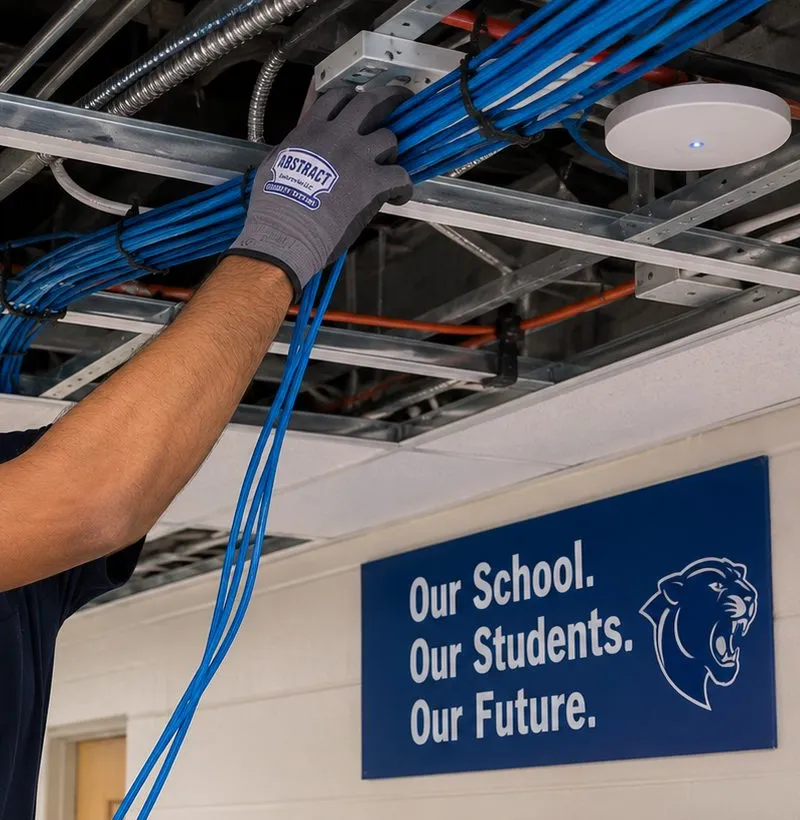
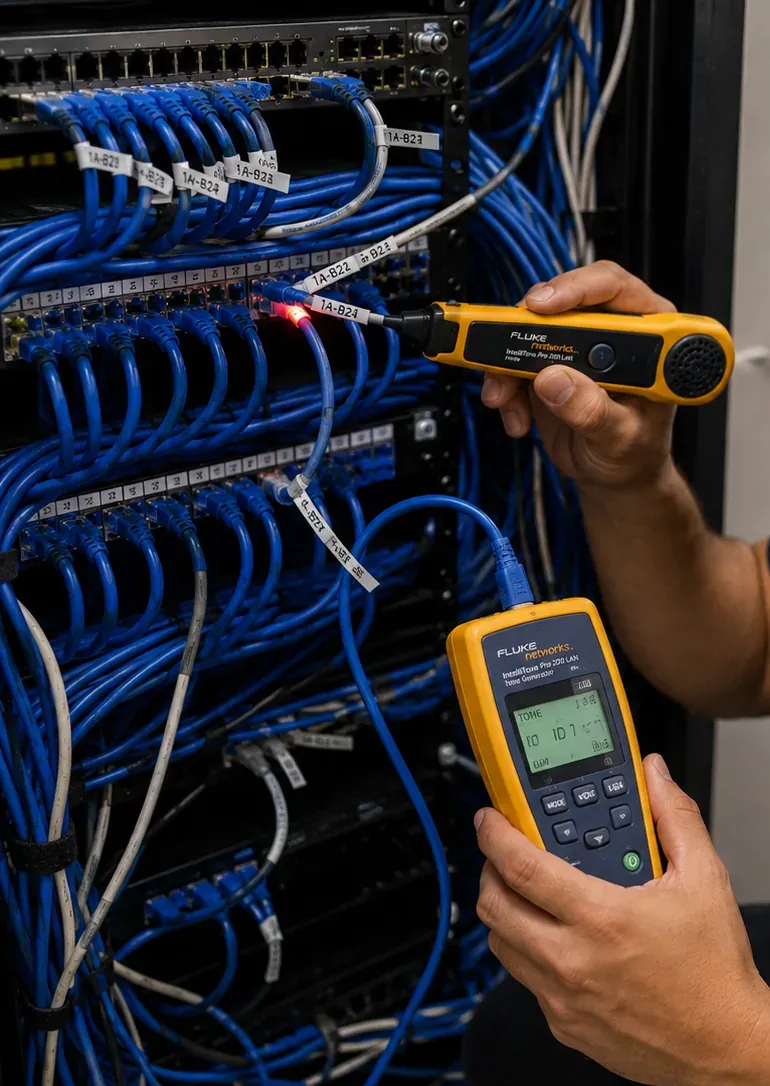
Storefront Links ยท Office-Floor Risers ยท Dorm Backbones ยท Venue Networks ยท Fusion Splicing ยท OTDR Proof
Fordham's buildings rarely keep one job for long. A 1930s savings bank on the Grand Concourse now sells groceries on the ground floor and houses college students upstairs; a 1929 movie palace is coming back as a 4,000-seat arts centre; storefronts on Fordham Road change hands every season and office floors above them fill with clinics, schools and agencies. Each change of use leaves somebody else's cabling behind and asks for a new path to the service entrance. We plan that path, pull it, splice it and test it โ from an office a short walk from the Fordham Road and Webster Avenue corner.
Reviewed and updated October 17, 2026 ยท Written by Anwar Timothy, NYS license #12000287431

Start with what the building was, and what it is turning into. That one sentence tells us more about a Fordham fiber job than any floor plan. Call the Bronx line at (646) 490-0629 or use the 60-second form.
Fordham is where the Bronx comes to shop, change trains and go to class. The City's Department of Small Business Services, working with the Fordham Road BID, counted 657 storefronts along Fordham Road, the Grand Concourse, Jerome and Webster avenues, East 188th Street and Kingsbridge Road, and called the district one of the busiest commercial corridors in New York City. The BID itself, formed in 2005, describes almost 300 specialty stores, from national chains to family businesses. Behind and above those shop windows sit older office buildings, clinics, colleges, churches and apartment houses, many of them on their second or third use.
That churn is the real story for anyone wiring a building here. The same study found 80 storefronts vacant when it was taken and rated about a fifth of all storefronts in poor condition. Every lease that ends leaves patch cords, modems and unlabeled cable in a cellar; every new tenant asks the provider for a fresh line and, too often, a fresh hole through the wall. Upstairs, the picture is similar: a floor that held an insurance office becomes a dental practice, then a charter school, then a social-service agency. Each one needs its own clean, tested path back to where the carrier's equipment lands, and none of them can afford to wait while somebody guesses which old cable is live.
Residents feel the gaps at home as well. A July 2025 report on the Bronx digital divide found that in Fordham, Bedford Park and Norwood more than 30 percent of households lack broadband, and the State Comptroller's 2025 analysis, using a different definition, put the share for the same area at close to half, with a third of households relying on a cellular data plan alone. Those are household figures rather than building surveys, but owners and managing agents know the pattern behind them: service is sold at the curb, while the stairwell, the cellar and the hallway between the carrier's box and the apartment door are the owner's to solve.
The neighbourhood is also growing taller. Lehman College's first residence hall opened in August 2026 inside the landmarked Dollar Savings Bank building at Fordham Road and the Concourse; a twelve-storey dormitory for 600 students is planned at 2740 Webster Avenue, with a 510-unit building proposed next door. New buildings get one chance to put sleeves, risers and a proper telecom room in before the walls close, and old buildings get many chances that each cost more. We work on both. Owners often add cameras or door access during the same visit, which is why our Fordham structured cabling team usually walks the building with us.

Payment terminals frozen at lunchtime, an upstairs practice cut off after someone re-hung the ceiling tiles, half a residence floor offline on the eve of move-in: those are repair calls, scheduled separately from new installs. Same-day dispatch is the aim, and from our East Fordham Road base most addresses in the neighbourhood are minutes away. A single fault โ a jumper caught under a tile, a fractured pigtail, an end-face nobody cleaned โ is normally traced and fixed inside one to two hours on site. Ring (646) 490-0629 and ask for fiber repair; copper problems found on the same visit go to our Bronx network cable repair team.
Most Fordham jobs are short and vertical rather than long and horizontal: a cellar to a second-floor suite, a lobby to a tenth-floor office, a basement room to every corridor of a residence hall. These are the services we are asked for most often between Jerome Avenue and Southern Boulevard.
A short, protected run from the provider's box in a shared cellar to the register area, stockroom or office of one ground-floor tenant, labelled so the next tenant inherits something useful.
Strands from the service entrance to each upper floor of an older office building, ending in a small enclosure per floor so clinics, agencies and schools each get their own patch point.
Single-mode trunks from a main room to telecom closets on each floor of a dormitory, sized for switches that feed wireless access points and wired room ports.
When a bank, theatre or department-store floor becomes something else, we survey what is left, keep what tests well, remove what is dead and draw a new route.
Links for box offices, ticket scanners, bars, stage positions and camera points in performance and event spaces, kept on separate strands from the building office.
Fiber to the suite, then copper to each room, so that medical offices and social-service agencies on shared floors have a tested, documented connection of their own.
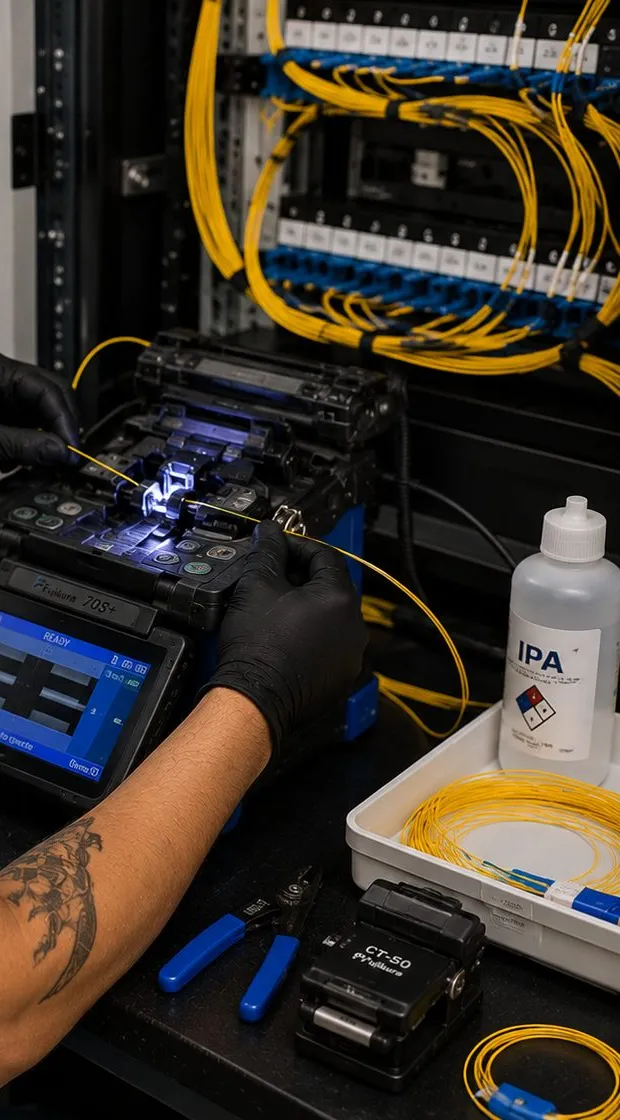
Pigtails fused on site, mechanical connectors only where a client asks for them, every end inspected under a scope before it is plugged into anything.
Inherited plant identified strand by strand, tested, re-labelled and drawn up, so a building with ten past tenants finally has one accurate record.
Loss testing on every strand and OTDR traces on longer or spliced links, with results handed to the owner, the college IT office or the incoming tenant.
One- and two-storey retail buildings with a shared cellar and a flat roof. Fiber stays in the cellar or rides a protected path at the back of each unit, never across the sales floor.
Upper floors of clinics, schools and agencies above shops, often with a cramped core and decades of abandoned cable in the closets. A riser plan starts with clearing space.
Masonry and plaster landmarks along the Concourse whose great halls cannot take a visible cable. Routes follow cellars, attics, back-of-house stairs and the walls of service rooms.
Five- and six-storey buildings on the side streets off the Concourse, with brick bearing walls and one main stair. Fiber climbs a chase or a sleeved corner, never the exit stair.
Taller buildings such as Fordham Hill, nine high-rises built by the Equitable Life Assurance Society in 1950 and a co-op since 1982, where a board decides on shared risers.
Concrete buildings rising along Webster Avenue and near the campuses, where the cheapest fiber is the sleeve and pull string left in the slab before it is poured.
| Building type | Usual route | What we watch for |
|---|---|---|
| Retail row with shared cellar | Cellar ceiling to a sleeve under each tenant's back room | Other tenants' stock, cellar doors that only open from one shop, damp corners near the street wall |
| Older office building | Existing telephone closets stacked floor over floor | Full sleeves, dead copper that has to come out first, unsealed holes from past tenants |
| Landmark hall or theatre | Cellar, service stairs, projection and dressing-room spaces | Ornamental plaster, designated interiors, long horizontal distances inside one building |
| Prewar apartment house | Pipe chase, stacked closets or a new sleeved core | Exit stairs that cannot carry cable, tenants at home all day, lath-and-plaster walls |
| New concrete building | Sleeves and risers drawn before the pour | Room sizes, cooling and power in each closet, strand counts for future tenants |
The physical rules don't change from one building to the next: cable is pulled by its strength members, kept above its rated bend radius, given a service loop at each end and protected where it leaves a closet. What changes is where the path can go without spoiling a finish, blocking an exit or crossing somebody else's lease.

Six strips of the district account for most of our commercial calls. Each has its own building stock and its own reason for needing glass instead of another long copper run.
Chain stores, phone shops and the edge of Fordham University's Rose Hill campus. Short storefront links and back-office runs, worked around the heaviest foot traffic in the district.
The old commercial crossroads: the Dollar Savings Bank building, the former Concourse Theatre block and office buildings with agencies and clinics upstairs.
One Fordham Plaza, reported by the New York Times as a 557,000-square-foot office and retail building, sits beside the rebuilt plaza and Metro-North station; new housing climbs Webster to the north.
Monroe University's Bronx buildings โ King Hall and Jerome Hall on Jerome Avenue, Monroe Hall on East Fordham Road โ among auto shops, offices and stores under the 4 train.
Smaller shops and service businesses leading toward Belmont and the SBH Health System buildings on Third Avenue, where suites need dependable links between rooms.
The Bronx Library Center, Poe Park and the stores and offices between the Concourse and Jerome Avenue, with apartment buildings close behind.

The clearest example sits at the corner of Fordham Road and the Grand Concourse. The Dollar Savings Bank building, an Art Deco bank put up in the 1930s and expanded in the early 1950s with a ten-storey office block and a clock tower, was designated a city landmark โ exterior and interior โ in 1994. The bank closed in 2014. In 2024 the banking hall reopened as a Fine Fare supermarket, and in August 2026 the office wing opened as the Lehman Grand, Lehman College's first residence hall, with more than 180 beds and free Wi-Fi in every room. One address went from tellers and safe-deposit boxes to checkout lanes on the ground floor and students upstairs.
Three blocks north, the Loew's Paradise, which opened on the Concourse in September 1929 and has been closed for nearly thirty years, is being restored as the Paradise Performing Arts Center: 4,000 seats, a restaurant, a bar and a new rooftop stage, with a community preview announced for November 10. A theatre that once needed a projector and a box-office telephone will now need ticket scanning, point-of-sale terminals, cameras, stage communications and a guest network, all inside a building whose ornament cannot be touched.
The same thing happens at a smaller scale every month. A department-store floor is divided into a dozen units; a bank branch becomes a phone shop; a dentist takes over a suite that used to be a travel agent. In each case the questions are the same, and they are rarely about the fiber itself. Which of the old cables is still connected to anything? Who owns the closet where the old tenant's rack sits? Does the new use need separate networks for the business, the residents and the building's own systems? Is there a route from the service entrance to the new space that does not cross another tenant's lease?
Our answer is to survey before we design. On the first visit we trace and test what is already in the walls, photograph every closet and cellar room, and mark which strands and copper pairs are live, which are dead and which belong to the provider. Dead cable is removed, not abandoned on top of the new work. Anything worth keeping is re-terminated and re-labelled to the new tenant's plan. Then the new route is drawn โ often shorter than the old one, because the building's use, not its history, sets where the equipment should sit.
Timing helps. The cheapest moment to fix a building's fiber is between uses, when floors are empty, ceilings are open for the new fit-out and nobody's business depends on the old cable. Owners who call us while the architect is still drawing the conversion usually end up with a riser that costs less, hides better and serves the next three tenants as well as the first.

One resident on Reddit called Fordham Road "probably one of the most chaotic shopping area in the country." Anyone who has carried a cable reel along it at three in the afternoon would understand the sentiment. The City's pedestrian count on East Fordham Road between Valentine and Tiebout avenues recorded 7,296 people in a weekday-afternoon count, and state traffic counts put more than 32,000 vehicles a day on the stretch east of Webster Avenue. Vendors set up in front of many stores, and the City's own study noted that on some blocks street vendors equal storefronts in number.
The street itself is changing in 2026. On July 22 the City broke ground on a redesign that converts Fordham Road's curbside bus lanes into offset bus lanes from Sedgwick Avenue to Boston Road, with the work due to be finished by the end of the year. Before the redesign, the Department of Transportation surveyed 217 businesses and found that 60 percent received deliveries in the existing curbside bus lane. The new layout gives the curb back to parking and loading, with rules set block by block โ on some blocks a commercial loading zone in the morning that turns into metered parking later in the day. Bus-mounted cameras have issued tickets for blocking bus lanes since 2022.
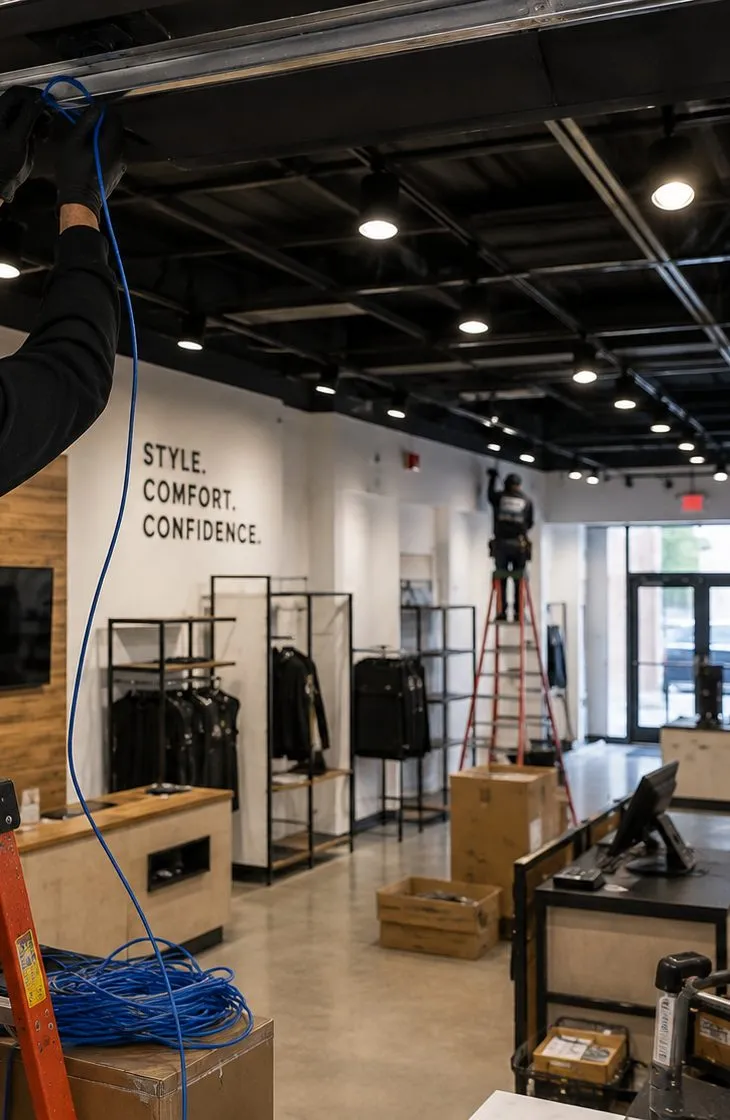
For fiber work that means three things. First, we plan the arrival: reels, ladders and tools are unloaded at the legal loading space on that block, at the time the sign allows, and the van moves on rather than waiting in a lane. Second, we plan the noise: drilling and coring happen inside the city's weekday hours unless a variance is in place, and in buildings with apartments over shops we tell residents the day before. Third, we plan around trade: for a store, the messy part of the job happens before the gates go up or after closing, so the sales floor is never blocked while customers are inside.
The buses matter too: the City's assessment counted an average of more than 875,000 riders a month on the Bx12 Select Bus Service alone in 2021, and a work van stopped in a bus lane holds all of them up. None of this changes the price on our published rates, but it does change the calendar. A cellar-to-storefront link that might take one day on a quiet side street can be split across two early mornings on Fordham Road. We would rather tell you that on the walk than discover it on the day.
Fordham has more protected interiors than most commercial districts. The Dollar Savings Bank building's banking hall is a designated interior landmark as well as an exterior one, and the Paradise is being restored to the atmospheric ceiling, stars and all, that made it famous. In spaces like these the visible surfaces are the reason the building matters, and no network plan is worth a scar on them.
The Landmarks Preservation Commission says a permit for interior work is needed when the interior has been designated, when the work needs a Department of Buildings permit, or when interior work affects the exterior. Ordinary repairs and maintenance do not need one, and the Commission's staff will say whether a particular job does. For an owner, that means the fiber route should be settled with the architect or preservation consultant early, not improvised by whoever arrives first with a drill.
In practice, landmark halls are wired from the spaces nobody sees. Cellars under banking floors, back-of-house corridors, service stairs, attic spaces above plaster ceilings and the walls of later partitions all carry cable without touching protected finishes. Equipment goes into rooms that were always utilitarian โ a former vault annex, a storeroom, a projection booth. Where a cable must cross a protected surface, it does so through an existing opening, a grille or a joint chosen with the preservation team, and every fixing is reversible.
We document those choices as we go: photographs before and after, the route marked on the drawing, and a note of every fixing point. That record helps the owner answer the Commission, the college or the next contractor, and it means the next change of use can follow the same hidden path instead of cutting a new one.
Not every old building on the Concourse is designated, and the rules differ between a protected interior, a protected facade and a building with no listing at all. Owners who are unsure can check with the Commission before the walk; we plan the route as if the finishes are protected either way.
Retail is still the backbone of the district. The City's inventory listed 65 clothing and shoe stores, 46 phone and electronics shops, 40 department, furniture and general-merchandise stores and ten supermarkets, grocers and specialty food stores along the assessed corridors. Each type uses its network differently, and each has a different reason to care about the cable between the cellar and the sales floor.
Supermarkets run checkout lanes, scales, price-check terminals, cameras, refrigeration alarms and often a pharmacy or bank counter. The equipment is spread across a large floor and the back-of-house is busy all day with pallets and hand trucks, so cable in the stockroom and the cellar needs real protection. A short fiber link from the main room to a switch near the front end, with armored cable or conduit through the stock areas, keeps the long runs off the floor and out of the way of deliveries.
National and regional chains usually arrive with their own network design and a vendor who configures the equipment remotely. What they need locally is a clean, tested path from the building's service entrance to their back office, finished before the store-opening date, with test results the head office can file. Independent shops โ the phone repair counter, the jeweller, the tax preparer โ usually need only one drop, but they need it to work on the first day of the lease.
Across all three, the landlord's choice matters most. When a building has a labelled path from the cellar to each storefront, a new retailer's opening is a matter of patching in. When it does not, every new lease starts with a hole in the wall and a wait for the provider. The first approach costs a little more once and much less every time a unit turns over.
Phone and electronics shops are a special case worth a sentence. They test handsets, activate service and run payment terminals all day, so a dropped connection stops sales at once. A short, documented link from the building's entry point to the counter, separate from whatever the upstairs offices use, is one of the most cost-effective things a landlord on this corridor can provide.
Much of Fordham Road's retail sits in low commercial buildings โ one or two storeys of shops over a cellar, often several units under one roof. The cellar is where everything meets: the provider's lines, electric meters, the sprinkler main, each store's stock and, very often, a tangle of cables from tenants long gone. It is also where most of our storefront work happens, because it keeps the sales floor untouched.
Cellars like these are rarely as simple as the floor plan suggests. They may be split by partitions that follow old lease lines, joined by doors only one tenant can open, or divided by fire-rated walls that cable can only cross through a sealed sleeve. Ceilings are low and crowded, floors near the street wall can be damp, and the only way in may be a sidewalk hatch or a stair behind one particular shop.
So the first job in a shared cellar is agreeing the route with the landlord and, where it crosses their space, with the neighbouring tenants. The cable then runs high on its own supports, clear of sprinkler pipes and stock shelving, in conduit where it passes storage, with each tenant's strands ending in that tenant's own small enclosure. Done that way, one landlord-owned path serves every unit in the row and the next tenant inherits it.
It also keeps the cellar safer to work in. Loose cable draped over pipes and stock is a trip and snag hazard for the people who unload deliveries every morning, and it hides leaks and damage from the super. A single supported path, clearly labelled, is easier for everyone who uses the cellar to live with.
Questions grouped the way Fordham jobs tend to arrive: from the street and the shop floor, from old buildings taking on new uses, and from student housing and stages.
At the commercial loading space on your block, inside the hours its sign allows โ never in the bus lane. The redesign moves the bus lanes away from the curb and returns the curb to loading and parking, with regulations that vary by block and by time of day. On the walk we read the signs outside your door, and on the day the crew unloads in that window, carries materials in and moves the van to legal parking. If your block's loading time is morning only, the first hour of the job is planned around it.
City construction-noise rules allow work on weekdays between 7 a.m. and 6 p.m.; work before 7, after 6 or on a weekend needs an after-hours variance from the Department of Buildings or the Department of Transportation. Pulling and splicing fiber are quiet, but coring a sleeve through a slab or a brick wall is not. We therefore schedule the loud steps inside normal hours, leave the quiet ones for early or late if a store needs that, and give the managing agent a dated notice to post for residents.
By keeping the open time short and the area marked. A sidewalk cellar door is opened only while a crew member stands at it, with cones and a barrier around it, and closed between trips; a ladder inside a store sits behind a taped-off zone with one person watching the floor. Most storefront fiber is pulled in the cellar, so the time anything is open to the street is measured in minutes. On blocks with vendors outside the door we agree the timing with the store so nobody's pitch is moved during trading.
Cable can pass through a vault; equipment should not live in one. Sidewalk vaults are colder, damper and more exposed to water from the street than the rest of a cellar, and they are hard to reach without opening the sidewalk doors. We route the fiber through the vault in sealed conduit if that is the only path, and put the enclosure and any switch on the building side of the foundation wall, mounted off the floor and away from the street wall where seepage shows first.
Sometimes, and it can be a very secure one, but check three things first. Air: a vault was built to stay sealed, so racks of switches can overheat without ventilation or cooling added. Access: steel doors, time locks and solid walls make it awkward to bring cables in, and drilling a vault wall is slow, heavy work. Use: in a designated interior, alterations need the Landmarks Commission's approval. Where those three work out, a former vault makes a dry, lockable main room; where they don't, a plain storeroom next to it is usually the better choice.
Through the structure that holds the new level up, not across the open hall. When a tall space is divided โ a mezzanine office over a supermarket aisle, a balcony in a former showroom โ the new floor is carried on columns or hung from above, and those supports give a hidden path. We run sleeved cable up beside a column or inside the new partition, enter the mezzanine from its floor and keep the historic walls and ceiling of the hall free of fixings. If the mezzanine is still being built, a sleeve placed in its framing saves a great deal of effort later.
No โ and the reason is the code, not preference. The city building code prohibits penetrations into or through interior exit stairs except for a short list of items that serve the stair itself, so a riser cannot be pinned up the stairwell wall or passed through it. In older walk-ups and elevator buildings we look instead for a pipe chase, a stack of closets, an old dumbwaiter or chute that has been taken out of service, or a corner of each apartment where a sleeved core can be cut and sealed. One of those almost always exists.
Density and one owner of the network. In an apartment building each household usually buys its own internet service; in a residence hall the college or operator provides one network to hundreds of people who all go online at the same hours. That means a main room, a telecom closet on each floor or every other floor, single-mode strands between them with spares, and switches that power many wireless access points. The building also carries card readers, cameras and staff systems that should ride separate strands or separate networks from the students' traffic.
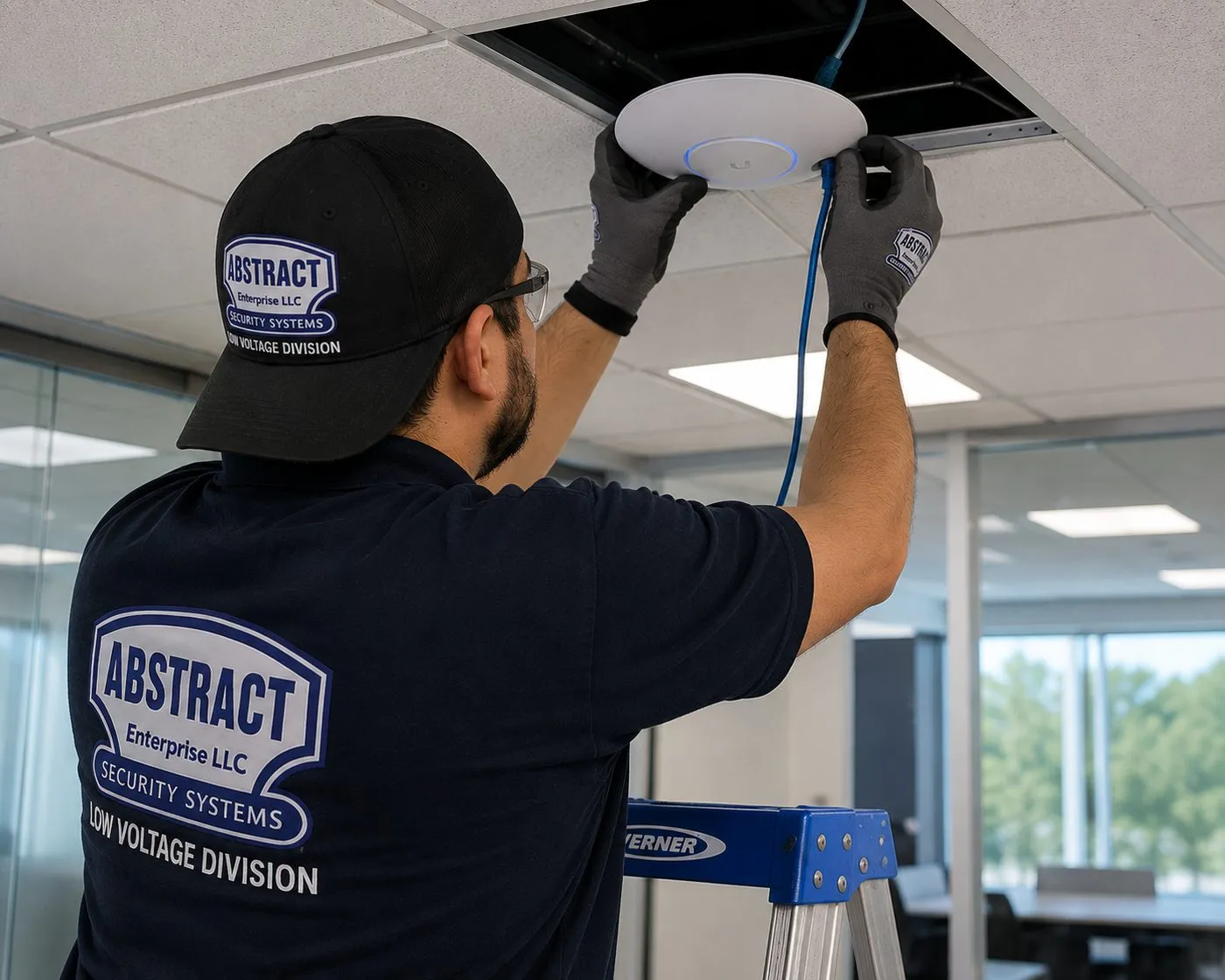
Yes, at least one per room, and often a wireless access point in or near the room itself. Many residence halls now use small in-room access points with built-in wired ports, so a student can plug in a desktop, console or printer while the same device provides Wi-Fi. A hallway full of access points struggles through masonry walls and heavy fire doors, so the closer the access point is to the bed, the better. Every one of those devices needs a copper drop from a floor closet, and every closet needs fiber back to the main room.
More than most owners expect. Box office and ticket scanning at every entrance; point-of-sale at bars and the restaurant; cameras covering lobbies, exits and the loading door; stage-management communications and links to lighting and sound positions; a guest wireless network that can handle a full house; and the building's own office, alarm and access systems. In a large historic house those points can be far apart inside one building, so a fiber backbone with small switches near each zone is usually simpler than very long copper runs. Agree the routes before any decorative restoration closes the walls.

The default for risers in residence halls and office buildings: low loss, long reach, and room for faster optics later without re-pulling.
Short links inside one floor or one store where the switches already take multimode optics. Inexpensive at both ends, limited in distance.
OFNR between floors, OFNP above ceilings used as return-air space โ common in older office buildings that have been refitted many times.
Interlocking armor through cellars and stockrooms where pallets, hand trucks and deliveries move past the cable every day.
Factory-made MPO or LC assemblies for new buildings where closet positions are fixed and the schedule is tight.
Small lockable boxes for a storefront back room or a suite closet, where a full rack would not fit and should not be needed.
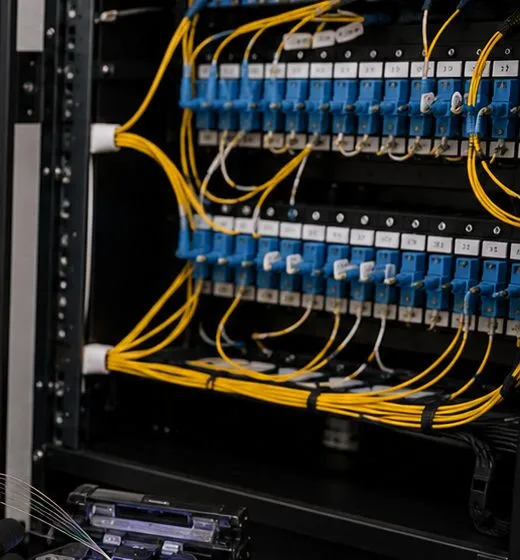
Rack-mounted fiber panels in main rooms and floor closets, with fusion-spliced pigtails in trays behind labelled adapters.
SFP modules or converters that put a fiber link onto ordinary copper equipment at each end, matched to the strand type.
| Situation | Usual choice | Why |
|---|---|---|
| One store, equipment within about 90 m of the cellar box | Copper (Cat6 or Cat6A) is often enough | Category cable is rated to 100 m per channel; fiber earns its place when distance, electrical noise or floors get in the way |
| Upper-floor suites in an office building | 12-strand OS2 riser, enclosure per floor | Each tenant gets its own strands without new holes every lease |
| Residence hall, 8โ12 floors | OS2 backbone with spares to each closet | High device density; capacity grows by changing optics, not cable |
| Theatre or large hall with distant zones | OS2 to small switches near each zone | Long distances inside one building, few permitted routes |
| Cellar runs past deliveries and stock | Armored indoor cable or conduit | Crush and cut protection where people move goods daily |
For buildings that change use, single-mode glass is the safer bet. Its reach is far beyond anything inside one building, and when a residence hall or an office floor needs more capacity, the optics at each end are upgraded rather than the cable. Multimode is still sensible for a short link inside one store or one floor where the switches already use it, but for a riser that should serve whatever the building becomes next, we normally specify OS2 with spare strands and say so plainly in the proposal.

Search summaries and cost guides from sites such as Angi, HomeAdvisor and Fixr are written for houses and generic offices. Below are claims that appear in search results for Fordham and Bronx connectivity, quoted as published, with what they leave out on the ground.
Verizon's own Bronx page says this, and as a statement about streets it is broadly fair: fiber runs under most of the borough's corridors, Fordham Road included.
Availability on a map says nothing about the cellar of a particular building. In Fordham's older commercial buildings the carrier's line often stops at a box installed for a tenant who left years ago, and the path from there to a new suite, dorm floor or storefront belongs to the owner.
That gap is the work on this page: a short, tested, owner-held link from where service lands to where it is used, so that the next provider or the next tenant can plug in without drilling.
This appears in a Reddit answer to a New Yorker whose street had fiber but whose building did not. It describes the carrier's engineering queue for bringing its own service into a building.
An owner's internal fiber does not sit in that queue. A riser for an office building or a link from a cellar to a store is usually measured in days of work once access and approvals are arranged; the walk, proposal and scheduling add a week or two.
The two jobs fit together: if the internal path is already in place and labelled, the carrier's job is often shorter, because its technician is not also trying to work out how to reach the fourth floor.
CNET's ranking compares service plans. Plan speed matters, but it is measured at the provider's equipment, not at the register, the exam room or the dorm bed.
In older Fordham buildings the slow part is frequently the inside path: a decades-old copper pair, a daisy-chain of small switches in a ceiling, a single access point trying to cover a whole floor through brick walls.
Buying a faster plan without fixing that path pays for speed nobody receives. A fiber riser to each floor and a sensible switch and access-point layout lets the plan deliver what the advertisement promised.
This tip from a New York computer-help site is correct for one apartment, and moving the router is always worth trying first.
For a building, the same three causes point to a structural answer. Router placement becomes access-point placement on every floor; interference becomes thick masonry and fire doors between rooms; outdated equipment becomes whatever previous tenants left in the closet.
Those are solved with cable rather than a new gadget: access points close to the people using them, wired back to floor closets, with fiber tying the closets together. That is the pattern now used in residence halls like the ones opening near Fordham Road.
An IT services blog makes this point, and for a single storefront or a small office on one floor it is often true; we say so on walks.
Where it misleads in Fordham is the word "sites." Fiber is not only for separate buildings. Copper cabling is limited to 100 metres per channel, and in a multi-storey office building, a long theatre or a residence hall the distance from the main room to the far closet can exceed that, while every floor adds a closet that needs a link.
The practical rule is simple: copper inside each floor or store, fiber between floors and between closets. Most buildings here need both, and our proposal shows exactly where each one goes.
This is a forum comment from Richmond, Virginia, not New York, but it is widely repeated and largely right: carriers bring service to a demarcation point, and the building side is the owner's or the tenant's.
What the comment skips is who decides. In a Fordham building with a dozen tenants, "the landlord's responsibility" can mean nobody's, and each tenant ends up ordering its own drop through its own hole in the wall.
The fix is a building-owned riser with labelled strands per floor or per unit, documented and handed to the managing agent, so the next lease starts with a patch cord rather than a drill.
T-Mobile and other carriers quote figures like this for connecting a single home to their network, and for that job they are reasonable.
An owner's fiber in a Fordham building is a different job. A storefront link may take a morning; a riser through a six-storey office building may take several days; a residence hall backbone is a multi-week project planned around move-in.
The time also depends on the street. The same link takes longer on Fordham Road than on a quiet side street because loading windows, noise hours and trading hours split the work. Our proposals say how many visits the job needs, not just how many hours.
That is the starting point for every Fordham fiber plan. We walk the building free and put the route and price in writing.
Give us the address, what each floor or unit is used for today and who has to approve the work. You'll hear back from a Bronx installer within the business day, or phone (646) 490-0629.
A Bronx installer will call you back the same business day. If it can't wait, call (646) 490-0629.
We walk with the owner, super or managing agent from the service entrance through the cellar, every closet and each space the fiber must reach, tracing and testing the cable already in place.
You receive a marked-up plan of where the cable enters, which floors or units it reaches and how it gets there, with a cost for each item taken from our rate table and any removal work or exclusions shown on their own lines.
Loading windows on the block, noise hours, landlord, college or board sign-off, any landmark approvals and certificates of insurance are settled, and dated notices go up for residents.
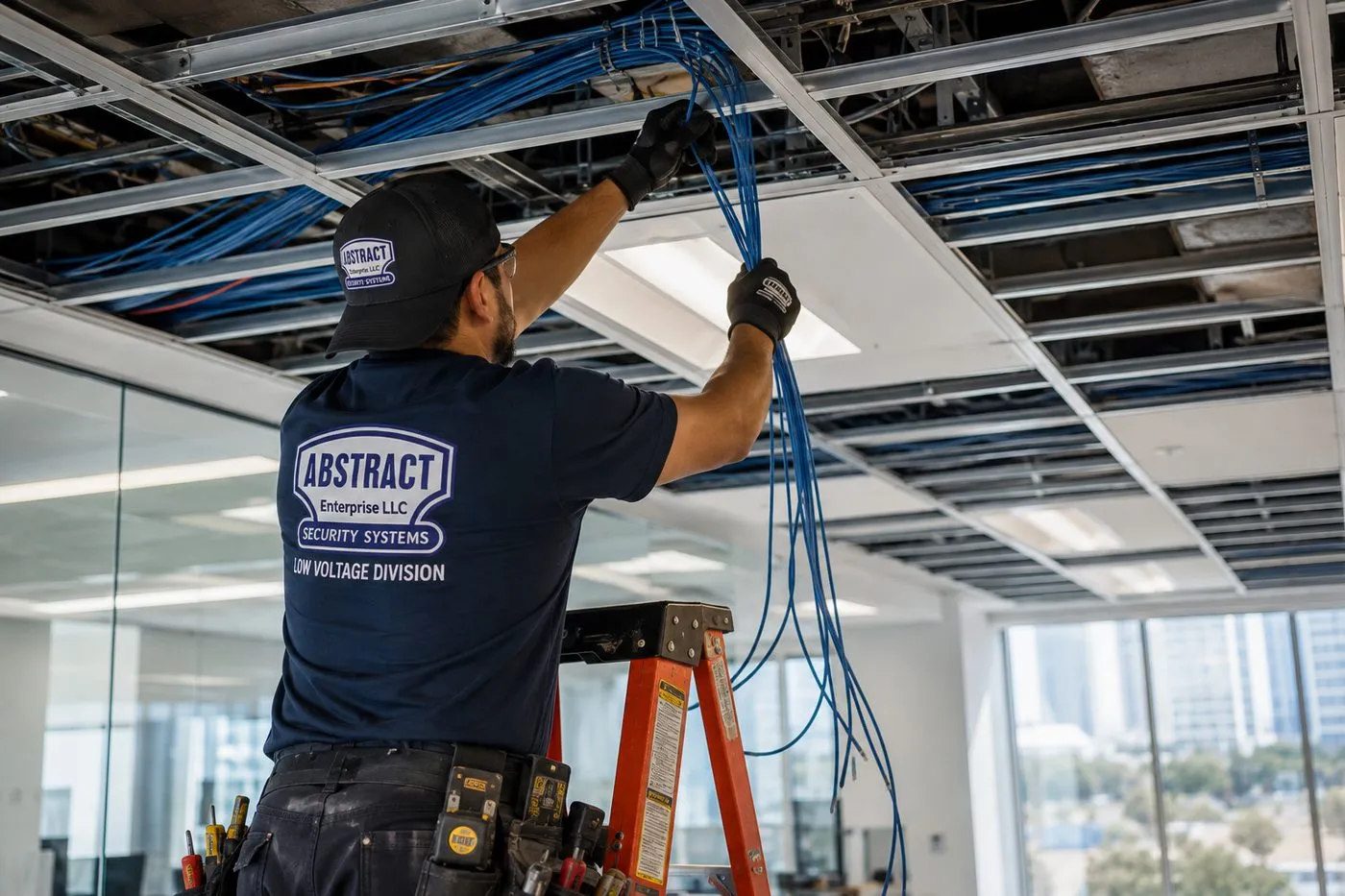
Dead cable comes out, sleeves are cored and sealed, supports and enclosures go in, and work areas in stores are set up before opening or after closing.
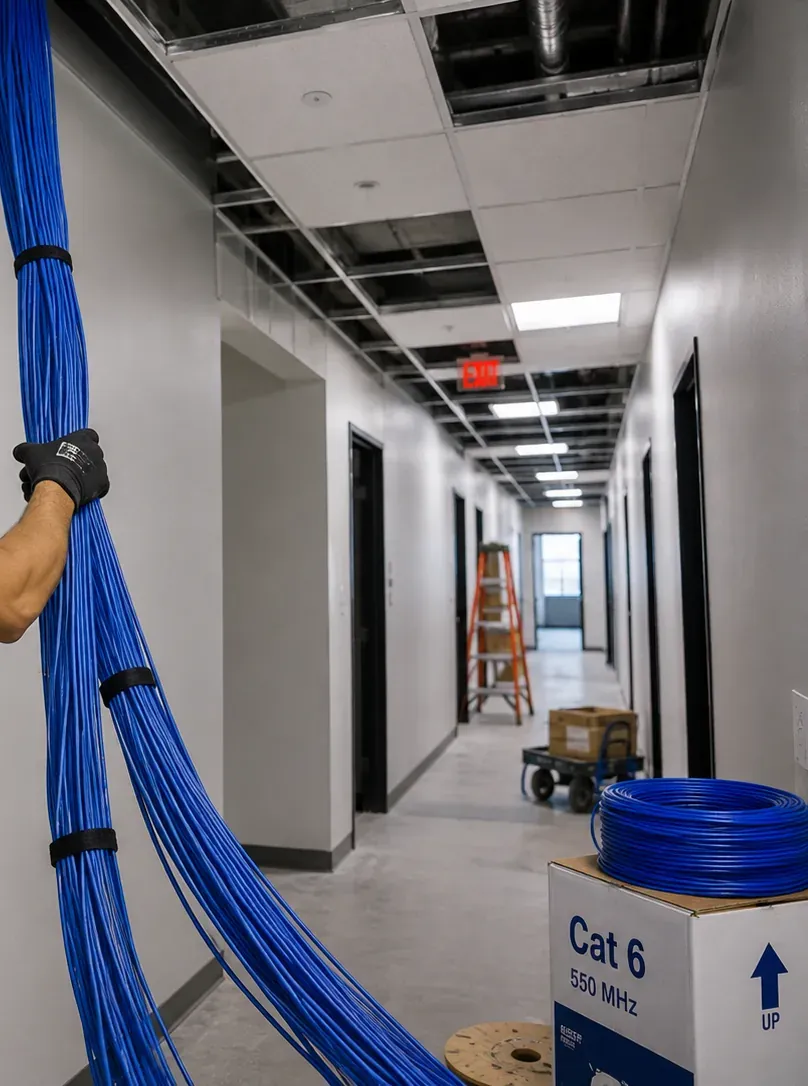
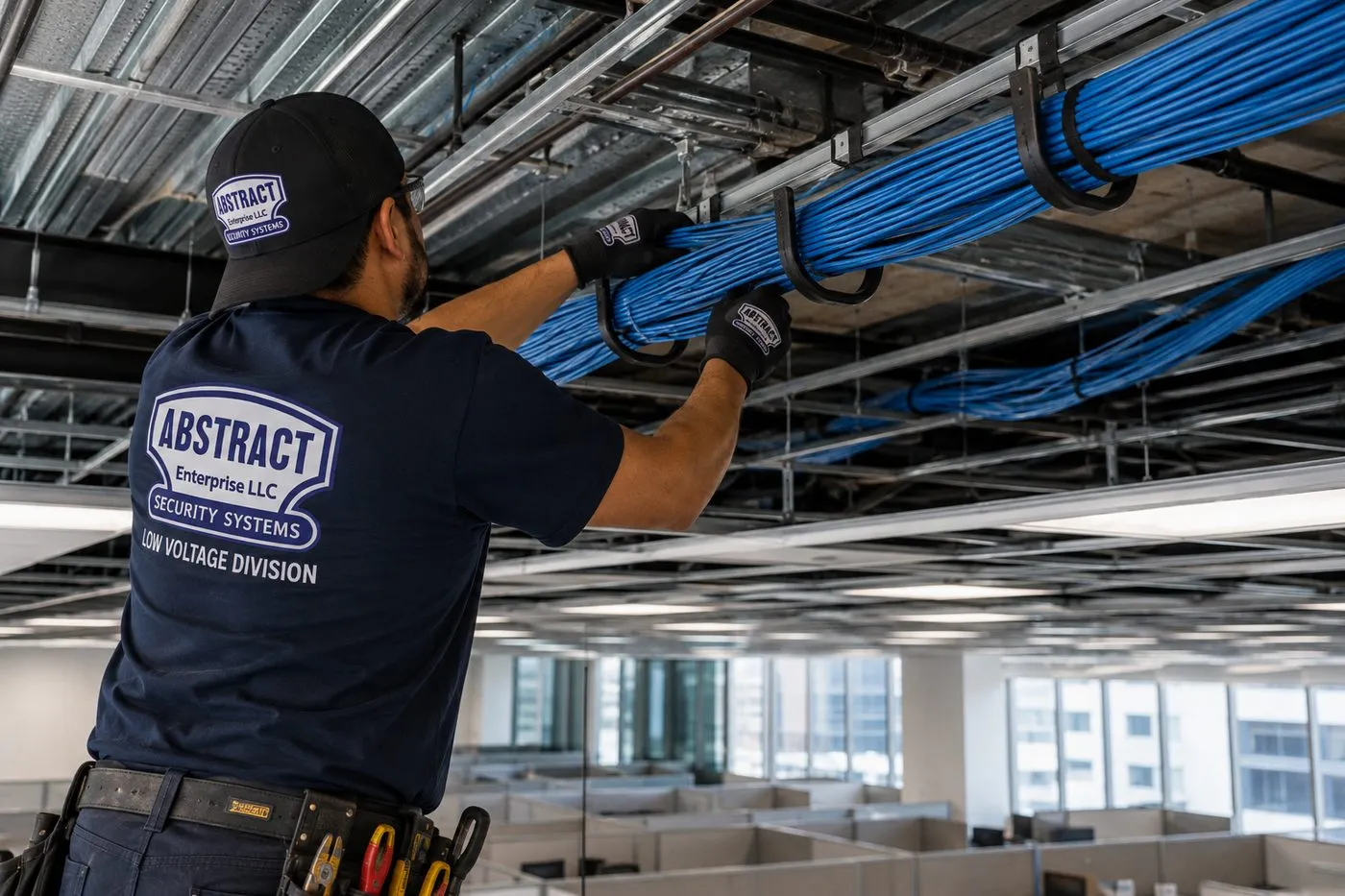
Cable is pulled by its strength members within its bend radius, fusion-spliced to pigtails at each end, and armored or sleeved where deliveries and stock move past it.
Each connector is inspected and cleaned, every strand is loss-tested, and longer or spliced links get OTDR traces compared against the design.
Both ends are labelled to one scheme, service is moved across at the quietest hour the building has, and the owner receives the drawing and the test results.
Rebuilt in 2016 for nearly $34 million above the Fordham station, which the City ranks as Metro-North's fourth busiest; home to the Bronx Night Market from April to October.
The clock-towered Art Deco landmark at Fordham Road and the Concourse, now a Fine Fare supermarket below and Lehman College's Lehman Grand residence hall above.
John Eberson's 1929 movie palace at 2403 Grand Concourse, returning as the 4,000-seat Paradise Performing Arts Center with a new rooftop stage.
NYPL's 78,000-square-foot library at 310 East Kingsbridge Road, opened in January 2006 as the system's first green library and the largest in the borough.
A park since 1902 on the Concourse at Kingsbridge Road, with the poet's cottage moved there in 1913 and a 2,700-square-foot visitor center opened in 2012.
Founded in 1841 as St. John's College; 85 acres of Gothic buildings and lawns across Fordham Road from the plaza.
We also serve the neighbourhoods around Fordham: Belmont, Bedford Park, University Heights and Kingsbridge Heights, plus Fordham Manor and Fordham Heights.
No Fordham surcharge: work here is billed on the borough-wide Bronx rates, the same 1.00ร level as our Brooklyn base. Drop prices match those in the Bronx structured cabling price builder. Risers and long links get a firm figure after we have walked the building, always inside the ranges shown here, and every proposal itemises each line for the owner, college or tenant paying for it.
| Item | Price | What is included |
|---|---|---|
| Termination on an existing fiber | $35 per termination | LC, SC, ST or MPO; fused pigtail or mechanical connector |
| OTDR test | $40 per strand | Trace and event table for each strand, in addition to loss testing |
| Multimode fiber drop | $391 per drop | Shorter in-building run, terminated both ends and tested |
| Single-mode fiber drop | $447 per drop | Shorter in-building run, terminated both ends and tested |
| 12-strand OM4 backbone between floors | $4,500 โ $7,000 | Fused into enclosures at both ends, firestopped, loss-tested |
| 24-strand OS2 backbone or building-to-building link | $8,000 โ $15,000+ | Single-mode with an OTDR trace on every strand |
| Second telecom room with fiber link back | from $2,400 | Room build-out plus the fiber tie to the main room |
| Service and callback rate | $195/hr, 3-hr minimum ($585) | Repairs, troubleshooting and return visits โ not the original install |
Where do the big names fit? Household brands like ADT, Ring and SimpliSafe are about alarms and cameras; private fiber inside a building is outside what they sell. In Fordham the real choice is between the carrier's technician, whose job ends at the carrier's equipment, a citywide integrator that may hand the cabling to a subcontractor, and a licensed installer that splices and tests with its own tools. AESS is that last kind, working from East Fordham Road.
These sample bundles mirror the requests we get most from storefront landlords, office owners and student-housing operators around Fordham Road. The figures use nothing but the rate table above; your own proposal swaps in your building's real floors, units and route.
$894
Two single-mode drops at $447 each โ for example from the provider's box in a shared cellar to a store's register area and to its upstairs office. Terminated, tested and labelled for the tenant and the landlord.
$4,500 โ $7,000
Twelve strands of OM4 from the cellar to an enclosure on each floor of an older office building, so clinics, schools and agencies can each take service without new holes. Sealed penetrations and per-strand results included.
$8,000 โ $15,000+
Twenty-four strands of OS2 with an OTDR trace on every one: the core of a residence-hall backbone, a link between two buildings on one lot, or a long run through a theatre. Larger buildings repeat the unit per closet.
A university IT department or a retail chain may insist on its own approved cable and hardware, and a landlord may have half a reel sitting in the cellar from the last fit-out. In that case you provide the materials and pay only for our time: $195 an hour, three hours minimum ($585), covering the pull, the splicing and the testing. The warranty on parts you supply comes from their maker, not from AESS, which is why a light source goes on every reel before we install it.

Student housing is the newest building type in Fordham and the one with the least room for error. The Lehman Grand opened in August 2026 with 58 furnished rooms and free Wi-Fi throughout, inside a landmark whose tower was built as offices. On Webster Avenue at East 197th Street, a twelve-storey dormitory planned for 600 students is scheduled for completion in July 2028, ready for the following academic year. Fordham University's own campus sits across Fordham Road, and Monroe University, a fixture of Fordham since 1967, holds classes in buildings on Jerome Avenue and East Fordham Road.
Residence halls load a network differently from apartments. Everyone arrives on the same weekend, everyone streams at night, and the operator โ not each resident โ is responsible when it fails. A good plan starts with the main room, sized with cooling and backup power, then a telecom closet on each floor or every other floor, joined by single-mode fiber with spare strands. From each closet, copper reaches access points in or near every room, plus card readers, cameras and laundry or vending systems on their own networks.
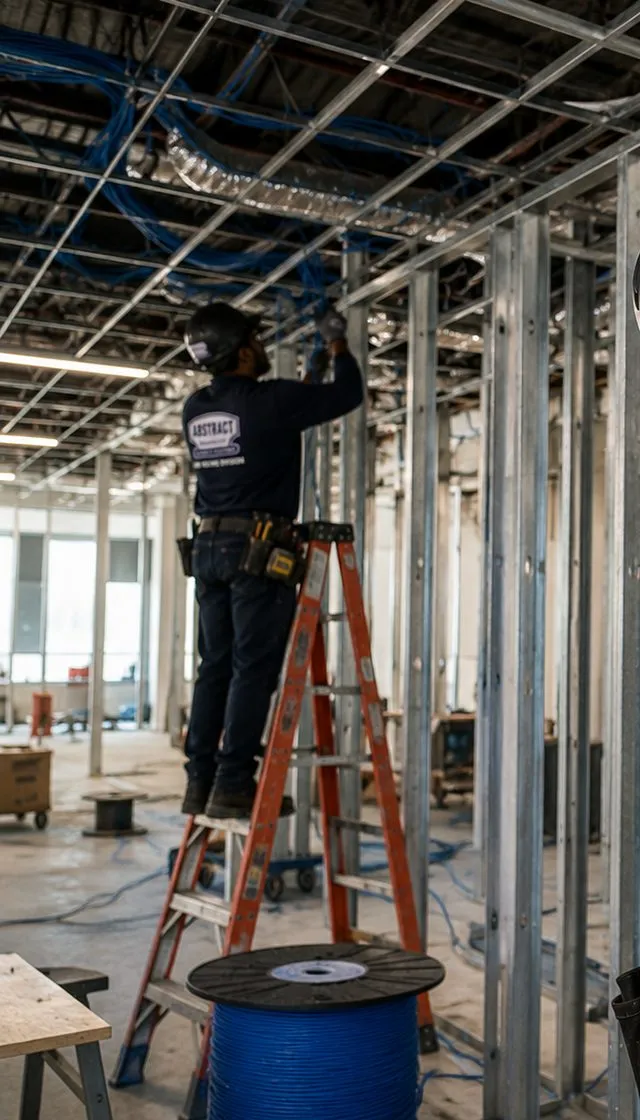
In a converted building the hard part is the riser. Office towers of the 1950s were built with telephone closets, but rarely in the positions a dorm floor plan needs, and their cores are crowded with pipes. We survey every floor, mark where a closet can go without costing a bedroom, and core a new sleeved path where the old one is unusable. In a new building the same plan goes onto the architect's drawings instead, so sleeves and closets are poured into place.
Timing is the other constraint. Testing, labelling and access-point placement have to be finished before the first student arrives, not during orientation week. We build the schedule backwards from move-in and hand over test results floor by floor, so the college's IT team can configure as we go. Summer is the natural window in an existing residence hall, while rooms are empty; in a new building, the window is the gap between the closets being finished and the ceilings being closed.

Fordham has three kinds of campus within walking distance of each other. Fordham University's Rose Hill is the traditional one: 85 acres behind walls, with its own grounds, tunnels and central IT. Monroe University is the opposite: King Hall and Jerome Hall on Jerome Avenue, Ustin Hall a few blocks south, and Monroe Hall on East Fordham Road, each an ordinary city building on an ordinary city block. Lehman College now adds a third pattern, with students living in a leased building on the Concourse less than a mile from its main campus and linked to it by shuttle.
Each pattern changes the fiber plan. On a walled campus, the university's own network team owns the outdoor plant and usually wants a contractor to work inside its standards and its maintenance windows. In a campus of separate street-front buildings, every building is effectively its own site: a service entrance, a main room and a riser, joined to the others over carrier circuits because private cable cannot simply be strung across public streets. In a leased residence hall, the landlord owns the building, the college runs the network, and the agreement between them decides who maintains the riser.
Our part is the same in all three: build each building's internal fiber so that it is tidy, documented and ready for whoever operates it, and hand the test results to the college's IT office. Where a college already has a cabling standard โ label formats, connector types, preferred enclosures โ we build to it and say so on the proposal.
The same applies to the private developers now building student housing near Webster Avenue. Their buildings may be leased to one college or several, so the backbone should be generous and neutral: spare strands to every closet, closets sized for more than one operator's equipment, and a main room that a future tenant's network team can take over without rewiring.
The City's assessment counted 40 doctors', dentists' and medical storefronts in the district, 20 schools and educational sites and 26 government offices, nonprofits and houses of worship, and described Fordham's office buildings as home to community organisations, agencies, health care and social services. Many of those tenants sit on upper floors: a dental group on the third floor, a tutoring school on the fourth, a benefits office above that. One Fordham Plaza alone has listed office suites from 1,700 to nearly 18,000 square feet.
These tenants share one problem: each needs a reliable, private connection, and each lease is shorter than the life of a cable. When the building has no shared riser, every new tenant asks the provider for its own line, and over twenty years the closets fill with orphaned cable. A building-owned fiber riser with an enclosure on each floor breaks that cycle, and it costs less than most owners expect once it is spread over the leases it will serve. The landlord owns the strands; each tenant patches into its own pair and brings its own internet contract; the next tenant inherits a labelled, tested connection.
For clinics, the riser also carries the building's systems โ cameras at the street door, access control on the elevator lobby โ on separate strands from the tenants. For schools, it gives the operator a single, documented path for its own network. For agencies that handle personal records, it means the connection to the suite runs through a locked enclosure on that floor rather than an open shelf in a shared closet, and the building can show which strands reach which tenant. Around the corner on Third Avenue, larger health systems such as SBH spread their services across several buildings; for a practice that needs to link two suites in one building, a short fiber link between floors is usually the cleanest answer.

Step a block off Fordham Road and the shops give way to apartment houses: prewar walk-ups and elevator buildings on the side streets, larger postwar buildings toward University Heights and Fordham Manor, and new affordable buildings rising along Webster Avenue, such as a twelve-storey building with 188 senior apartments at 2850 Webster. Many of these buildings have shops on the ground floor and residents above, which is why noise hours and dated notices matter so much in this neighbourhood.
For owners, the question is usually how to make the building easy for providers to serve. The City's housing agency has noted that new fiber service needs fiber in the street and an accessible basement entry point, and that federal rules bar exclusive and graduated revenue-sharing deals that lock a building to one provider. An owner-installed riser โ a sleeved path and a few spare strands or pathways from the cellar to each floor โ gives any provider a ready route, so residents get a choice and the hallways do not end up with surface cable from every company that wins a customer.
The physical work is modest compared with an office tower. A prewar building of five or six storeys usually needs one vertical path, a small enclosure in the cellar and a pull box on each floor. The care is in the details: a chase that avoids the exit stair, fire-rated sealing at every floor, painted covers in the public hallway and work scheduled so that residents with young children or night shifts are not woken by coring. Where the board or owner wants it, the same visit can bring cameras or a video intercom onto the building network.
Our Bronx office is at 460 East Fordham Road, inside the neighbourhood this page describes. That is useful in practical ways. A site walk on a nearby block can often be fitted into the same week, a second look at a tricky cellar does not mean a long drive, and on the day a crew can bring exactly what the job needs and return for a missing part rather than improvising.
It also means we know how the corridor behaves. The City's weekday count on East Fordham Road found 1,798 pedestrians in the morning against 7,296 in the afternoon, so storefront work goes early. December brings the holiday rush and the tree lighting in Bryan Park. Those details shape the schedule we propose.
What it does not mean is a different price: Fordham is priced on the same published Bronx rates as the rest of the borough. The walk is free, the proposal lists every line, and if a job is better done by copper than by fiber, the proposal says that too.
Being local also makes the follow-up easier. A tenant who moves into a suite six months after we finish can ask us to patch in a spare pair or extend a link, and the records from the original job are already on file with the owner. Small additions like that are charged at the service rate shown in the pricing table, without a new survey of the whole building.
The walk is free and usually takes under an hour for a storefront or a single office floor, longer for a residence hall or a theatre. We start where the provider's service enters, which in Fordham is almost always a cellar, and follow the route the fiber would take to every space on your list.
Within a few business days you receive a drawing and a written price built from the published rates on this page. If copper will do the job better than fiber, or if the provider can solve the problem without us, the proposal says so.
Whether it comes from us or from someone else, a fiber proposal for a building in this neighbourhood should answer a handful of questions in writing before any work is booked. If it doesn't, ask.
What happens to the old cable? In a building with a long tenant history, removal of dead cable and abandoned equipment is real labour. A proposal that ignores it either leaves the mess in place or adds it later as an extra.
Which strands go where? The proposal should show strand counts per floor or unit, how many are spare, and how they will be labelled, so that the landlord can assign them to tenants without calling the installer.
When and how will the crew work? Hours, number of visits, how the block's loading rules and the store's trading hours are handled, and whether any after-hours variance is needed.
How will it be tested? Loss testing on every strand as a minimum, OTDR traces on longer or spliced links, and a promise that the results are handed to the owner rather than kept by the contractor.
What is excluded? Electrical work, patching and painting beyond the openings made, landmark filings and provider charges should be named plainly, so that nobody is surprised at the end.
Copper drops, patch panels and racks that the fiber riser feeds.
Storefront, lobby and cellar cameras recording back over the building network.
Card and fob entry for office lobbies, dorm doors and telecom rooms.
Video entry for apartment houses and mixed-use buildings.
Intrusion alarms for stores and offices, coordinated with any ceiling work.
Switches, wireless access points and firewalls on the new backbone.
Category cable from each floor closet to rooms, desks and ceilings.
Faults on copper and fiber found, fixed and re-tested.
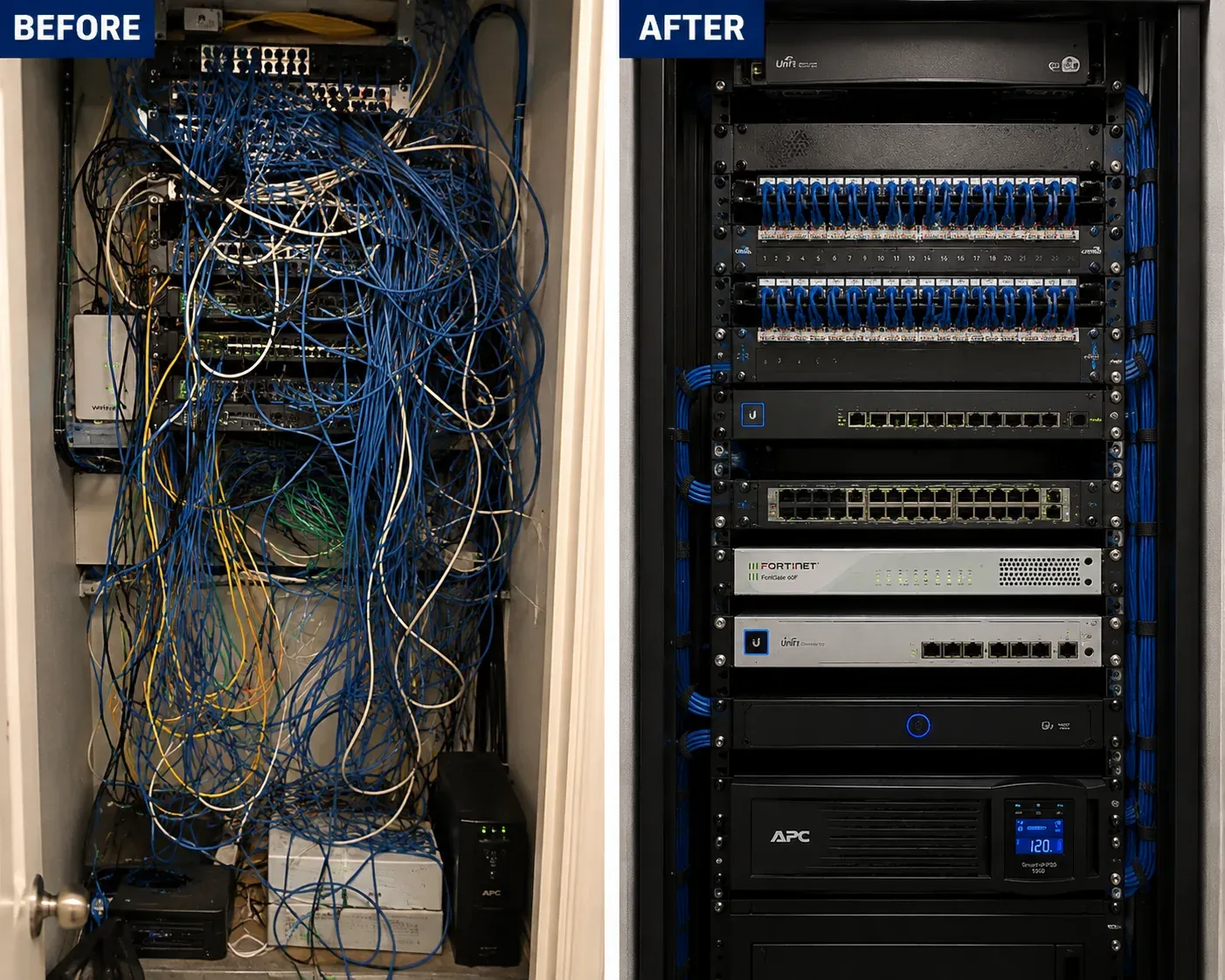
In a district where leases turn over quickly, the most valuable thing a fiber job leaves behind may be the paperwork. A building whose strands are labelled, drawn and tested can be handed from one tenant to the next in an afternoon. A building whose records left with the last tenant's IT company has to be traced from scratch, again.
At handover we leave three things with the owner or managing agent, not with any single tenant: a drawing of the route from the service entrance to every enclosure; a strand table showing which pair serves which floor, unit or system and which are spare; and the test results for every strand. A printed copy goes inside the main enclosure door, and a digital copy goes to the owner by email.
When a new tenant arrives, the landlord can assign a spare pair from the table and the tenant's provider can patch in at both ends. When a strand is reassigned, the table is updated. It sounds like a small habit, but it is what stops the cellar from filling up with another generation of mystery cable.
What we do first in a building that has outlived several tenants (our routine, not a report on any one address)
Before anything new goes in, we find out what is already there. In a building that has had a bank, a shoe store and a phone shop on the ground floor, the cellar ceiling usually holds cable from all three. We put a tone on every pair and a light source on every strand we can reach, and we write down what answers.
The second habit is asking who else uses the cellar. In a row of attached stores, the cellar may be split by lease lines nobody has drawn; a route that looks free can run through a neighbour's stockroom. The super or the managing agent usually knows, and asking costs nothing.
The third is leaving the building better documented than we found it: one label scheme, one drawing and one set of test results, handed to the owner rather than kept in a tenant's file cabinet.

Yes. Our office is on East Fordham Road, so the neighbourhoods around it โ Belmont and Arthur Avenue to the east, Bedford Park and Norwood to the north, University Heights and Kingsbridge Heights to the west, and Fordham Manor and Fordham Heights โ are all close by. We take fiber work across the rest of the Bronx too.
If the work can wait, yes. Late November through December is the busiest stretch of the year on the corridor, sidewalks are crowded and stores rarely want ladders on the floor. Planned links are best booked for January or the autumn; anything that has failed is repaired whenever it is needed, in the hours the store chooses.
It can if motion sensors or ceiling contacts are disturbed, so we ask you to put the system on test with your monitoring company before work starts and to tell us where the sensors are. We avoid moving alarm wiring; if a sensor is in the way, your alarm installer relocates it.
Usually the screens are fed by copper from a small switch near the window, and fiber brings the network to that switch from the cellar or back office. That keeps long runs on glass and short runs on ordinary cable. Window equipment also needs power planned with your electrician.
No. The sprinkler installation standard, NFPA 13, does not allow sprinkler piping or its hangers to support other systems. Fiber goes on its own supports โ J-hooks, tray or threaded rod fixed to the structure โ even when the sprinkler main looks like the easiest place to tie off.
Because cable follows the path, not the tape measure. It climbs from the cellar floor to the ceiling, detours around beams and ducts, rises through each floor, and leaves a service loop at both ends for future re-termination. In an older building those additions can add a large share to the straight-line distance.
If the stockroom's scanners, printer and camera are within about 90 metres of cable from the switch, copper is normally enough and cheaper. Fiber becomes worth it when the run is longer, when it passes heavy electrical equipment, or when the cellar link will also serve other tenants. We measure the real route on the walk.
Check whether the provider's box has lights, restart only the equipment your IT contact allows, and note what else is down โ phones, cameras, card terminals. Then call us with that list. Knowing whether the whole store or one device is affected tells the technician what to bring.
Fiber gives off no electrical signal to pick up, and tapping it means physically bending or cutting the glass, which shows up as loss on a test. That makes it harder to tap unnoticed than copper, but it is not a substitute for encryption and locked enclosures. We install lockable boxes for sensitive tenants.
The damage is usually a claim against the provider, and the strongest evidence is the test record taken at handover. Because every strand is tested and the results are left with you, a new fault can be shown to have appeared after a specific visit. We document the damage and repair it at our standard service rate.
No. Low-voltage cabling does not change how a building is used or occupied. A change of use โ offices becoming a dormitory, a bank hall becoming a store โ may need a new or amended certificate, but that is filed by the owner's architect for the conversion, not for the fiber.
This Fordham page sits under our Bronx fiber optic installation page, which covers large complexes, campuses and Hunts Point cold-chain sites. Other neighbourhood pages in this series include fiber optic installation in Downtown Brooklyn and fiber optic installation in Flushing.
NYC fiber optic installation ยท Bronx ยท Manhattan ยท Brooklyn ยท Queens ยท Staten Island
Long Island fiber optic installation ยท Nassau County ยท Suffolk County
Hudson Valley fiber optic installation ยท Westchester ยท Rockland ยท Orange ยท Putnam ยท Dutchess ยท Ulster
Fordham, Bronx (this page) · Downtown Brooklyn, Brooklyn · Flushing, Queens · Hunts Point, Bronx · Bloomfield, Staten Island · Chelsea, Manhattan · Brooklyn Navy Yard, Brooklyn · Jamaica, Queens · Financial District, Manhattan · DUMBO, Brooklyn · Long Island City, Queens · Port Morris, Bronx · St. George, Staten Island · Midtown, Manhattan · Stapleton, Staten Island
For everything else we install, visit the Abstract Enterprises Security Systems home page or read about Abstract Enterprises.
If the card machines have frozen, the clinic upstairs has lost its records system or students are reporting no Wi-Fi on one floor, phone (646) 490-0629 with the address and the unit affected. Our crews leave from East Fordham Road with same-day dispatch as the goal. The usual culprits โ a crushed patch lead, a contaminated end-face, a snapped pigtail in a tray โ are typically put right within one to two hours of arrival, and the repaired strand is tested again before the technician goes.
Abstract Enterprises Security Systems ยท 460 E Fordham Rd, Bronx, NY 10458 ยท Bronx line (646) 490-0629 ยท WhatsApp (718) 679-0359 via wa.me
NYS Low-Voltage License #12000287431 ยท 100% Licensed & Insured ยท Same-Day Estimates ยท Rated 4.7โ from 201 Google Reviews
Full terms โ including 50% deposit, one-year parts-only warranty on AESS-supplied products, and the late-fee schedule โ are set out in the service agreement. See our warranty page.
Page reviewed and updated October 17, 2026. Changelog: first publication of the Fordham fiber optic installation page.