What are you looking for?
About Us Contact Us Careers Get a Free Quote (800) 486-0943
Pick a service
✅ Got Your Own System?
🎬 Home TheatreQuote 🎶 AV SoundQuote 🔑 Access ControlQuote
Now pick your area
Pick your area
Long Island
Hudson Valley
Services available
Pricing & Tools
Pick a service for pricing
🚪 Intercom Pricing 🔔 Buzzer Repair Pricing
Calculators
📹 Camera System Calculator 🚨 Alarm Calculator ⚡ Cabling Quote Builder ✅ Got Your Own System?
Select your area
Home › Fiber Optic Installation NYC › Fiber Optic Installation Bronx › Riverdale
Licensed Low-Voltage Contractor · Spuyten Duyvil to the Yonkers Line · Campuses, Co-op Towers & Hillside Houses

Fiber Optic
Installation in
Riverdale

Hillside Campus Links · Co-op Tower Risers · House-to-Cottage Runs · Ridge-Safe Routing · Fusion Splicing · OTDR Proof

Riverdale is built on a ridge. The Bronx reaches its highest ground here, about 280 feet up near the Riverdale Country School, and the whole slope from Spuyten Duyvil to Fieldston is mapped by the City as a protected natural area. That changes how fiber gets from one building to the next. A school's science wing sits a storey above its library, a care campus steps down toward the Hudson, a co-op tower's garage is dug into the hill under the lobby, and a house stands well above the cottage at the foot of its lawn. We plan every route around that grade — and around the rock, trees and rules that come with it — from our Bronx office at 460 East Fordham Road, with our own splicers and test sets.

Reviewed and updated October 17, 2026 · Written by Anwar Timothy, NYS license #12000287431

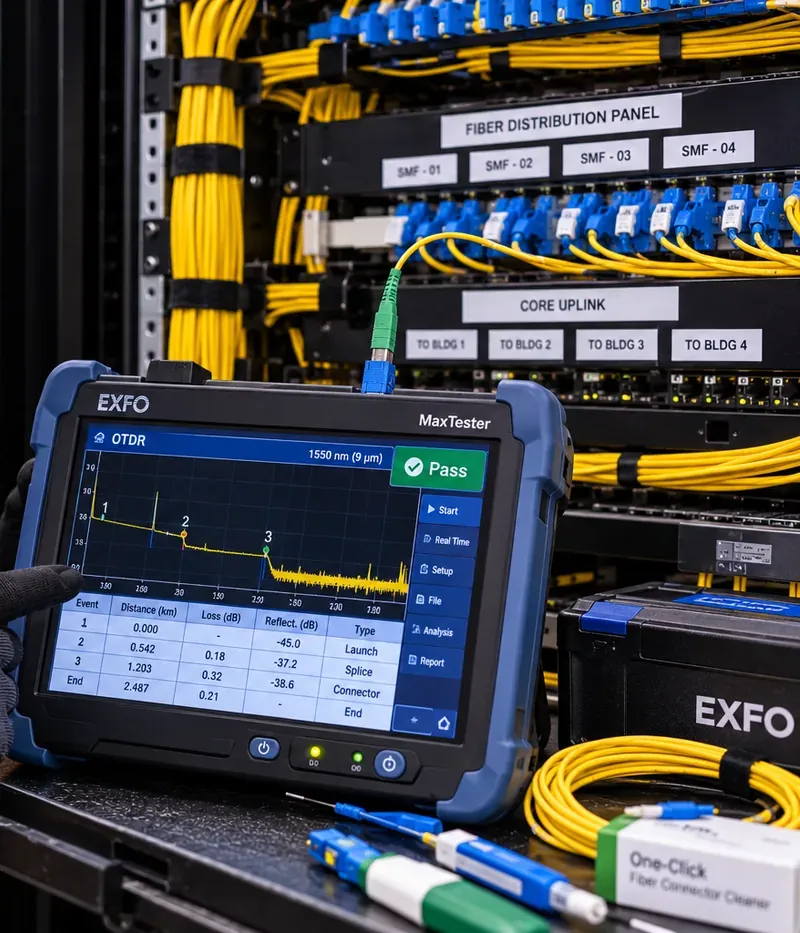
OTDR tester showing a passing trace beside a fiber panel labelled for links to four buildings, Riverdale Bronx fiber optic installation
An OTDR screen reads Pass in front of a rack whose labels read Fiber Distribution Panel, Core Uplink and To Bldg 1 to 4, with yellow jumpers and a connector cleaner on the shelf — the kind of panel a campus backbone ends in.
Riverdale Fiber Quote
Which buildings, how far apart and how far uphill — we call back the same business day

✅
Request Sent!
A Bronx installer will call you back the same business day.
25+
Years Experience
✓
Same-Day Estimates
100%
Licensed & Insured
4.7★
201 Google Reviews

Start with the slope, not the cable. A useful Riverdale quote begins with three facts: which buildings need joining, roughly how far apart they are, and how much higher one stands than the other. Ring the Bronx line at (646) 490-0629 or fill in the 60-second form and we will ask the rest on the phone.

  • Free site walk, usually within a few business days, with the grade measured on the spot
  • Our own crew pulls, splices and tests; every strand's result is yours to keep
  • Licensed under NYS #12000287431 and fully insured, with a written estimate the same day as the walk
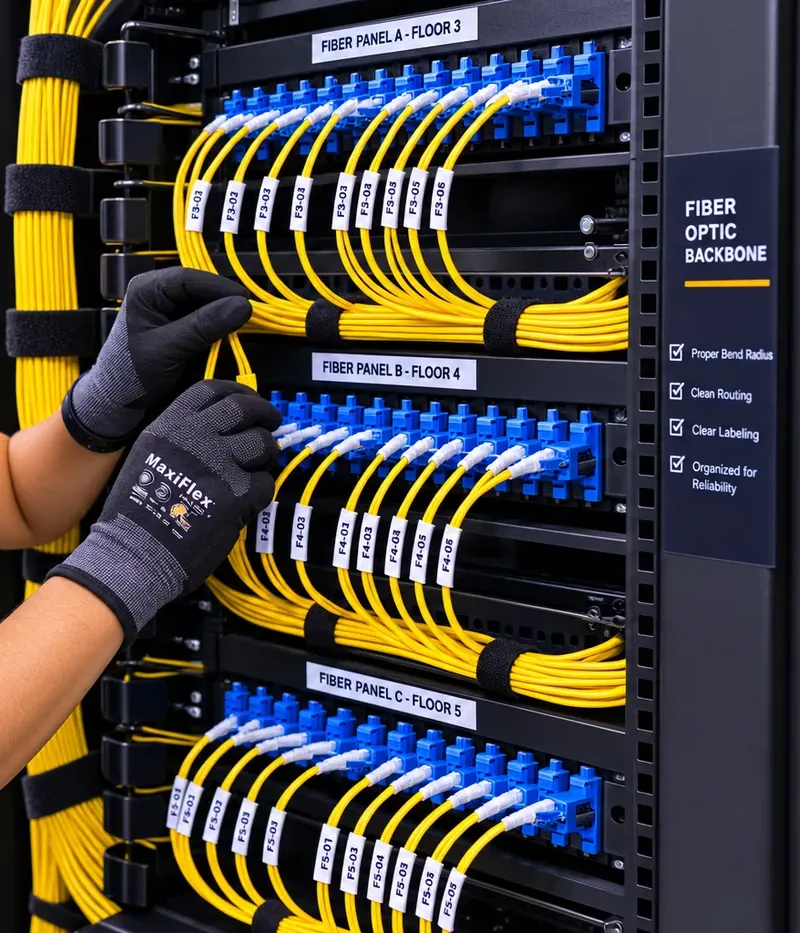
Gloved hands dressing labelled yellow jumpers across fiber panels marked for floors three to five, Riverdale Bronx riser fiber
Three fiber panels labelled for floors 3, 4 and 5, each port with a numbered tag, as a riser in a tower might be organised.
The Neighborhood

Why Riverdale Properties Need Fiber Optic Installation

Most of New York is flat enough that a fiber route is a question of distance and walls. Riverdale is different because the land itself is in the way. The neighbourhood climbs from the Hudson River and the Metro-North tracks up a ridge of hard rock to the edge of Van Cortlandt Park, and the borough's highest point — about 280 feet — is in the Chapel Farm area near the Riverdale Country School. The Hudson River Guide describes Riverdale as having "one of the highest elevations in New York City." Driveways drop a full storey from gate to garage, and two buildings close together on a map can stand far apart in height.

The buildings were placed on that slope in waves. First came estates and villas looking out at the Palisades; the Riverdale Historic District preserves what is left of seven estates laid out in the 1850s along a shared carriage lane that is now Sycamore Avenue. Then came Fieldston's houses on private, curving roads, then schools and colleges that took whole hillsides for their campuses. After the Henry Hudson Bridge opened in December 1936 and the parkway brought cars up the ridge, six-storey brick apartment houses filled in during the 1950s and brick towers of ten to twenty storeys rose in the early 1960s, the tallest cluster of them in Spuyten Duyvil. Unlike most of the Bronx, Wikipedia notes, Riverdale is "mostly owner-occupied housing," and many of those towers are co-operatives run by their own boards.

Carrier fiber is not the gap. The Riverdale Press reported in July 2014 that Verizon had laid 13 miles of underground and aerial fiber through the neighbourhood, so that "for almost every building in Riverdale, all that is needed" is a short lateral cable from the street. The gap is everything the carrier does not do: the link from a school's main building to a gym across a ravine, the riser from a co-op's cellar to its eighteenth floor, the run from a house to a studio over the garage at the bottom of the lawn. Residents also feel how fragile a single connection can be — one Riverdale poster on Reddit's r/OPTIMUM asked whether anyone else was "getting outages from 4 hours to 12 hours," and storms regularly bring branches down on the overhead lines that still serve many streets.

On top of the grade sit the rules that protect it. The whole ridge is mapped as Special Natural Area District NA-2, where the Zoning Resolution counts excavating and filling as a "site alteration" whether or not any agency issues a permit, where rock outcrops cannot be altered without City Planning Commission authorization, and where trees six inches thick or more are protected. Inside the Riverdale Historic District the Landmarks Preservation Commission also reviews any excavation on a slope steeper than 15 percent. None of this stops a fiber link; it decides the route. That is why our Riverdale structured cabling crew usually walks the grounds with us — the copper drops, cameras and door access ride the same pathways.

Riverdale facts that shape a fiber plan

  • 280 feet: the highest elevation in the Bronx, in the northwest corner near the Riverdale Country School — most campus and estate routes here cross real grade, not a flat yard.
  • NA-2: the Special Natural Area District that covers the Riverdale ridge, Spuyten Duyvil and Fieldston, whose text describes "steep slopes, rock outcrops, ponds, brooks, swampy areas and mature trees."
  • 15 percent: the slope above which any excavation or fill in the Riverdale Historic District comes under Landmarks review, under the Commission's own rules for the district.
  • 13 miles: the underground and aerial fiber Verizon said it had installed in Riverdale by July 2014, leaving most buildings one lateral cable from service.
  • 38.4 percent: the 2024 homeownership rate in Riverdale/Fieldston reported by NYU's Furman Center, against 32.7 percent citywide — owners, boards and institutions, not absentee landlords, commission most fiber work here.
  • 131 calls: the Bronx service requests NYC Parks received after the August 7, 2026 storm, 21 of them for downed trees, as reported by the Riverdale Press — a reminder that anything overhead on these streets lives under a canopy.
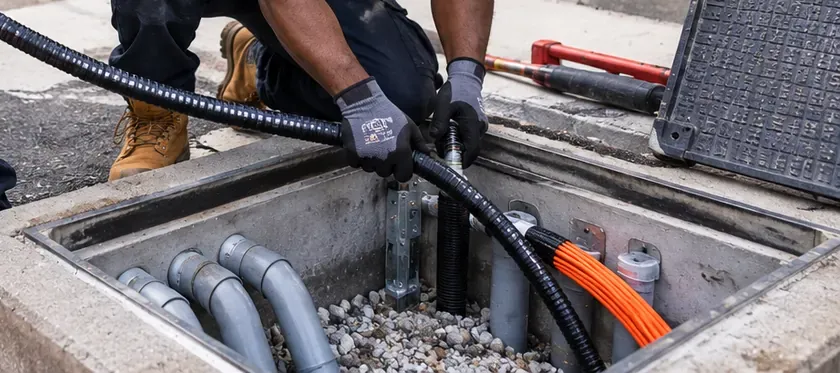
Gloved hands guiding black armored fiber cable into a concrete handhole with grey conduit sweeps, Riverdale Bronx underground fiber
Armored cable being fed into a small concrete handhole on a gravel base, with grey conduit sweeps and orange inner tubes inside — the buried end of a building-to-building route.
Repair Capture

Ridge Link Out Since the Last Downpour?

Water running downhill found a cable entry, a fallen limb pulled an aerial drop off a house, a landscaper's spade went through a run nobody had marked, or a link between two campus buildings went dark the morning after a storm. Repairs are booked on their own track, so a fault never waits behind a new installation. We aim to have a technician in Riverdale the same day, and the common causes — a wet splice case, a crushed jumper, a connector that took on grit — are typically found and fixed within one to two hours of arrival. Call (646) 490-0629 and say "fiber repair," or use our Bronx network cable repair service when copper on the same site has failed too.

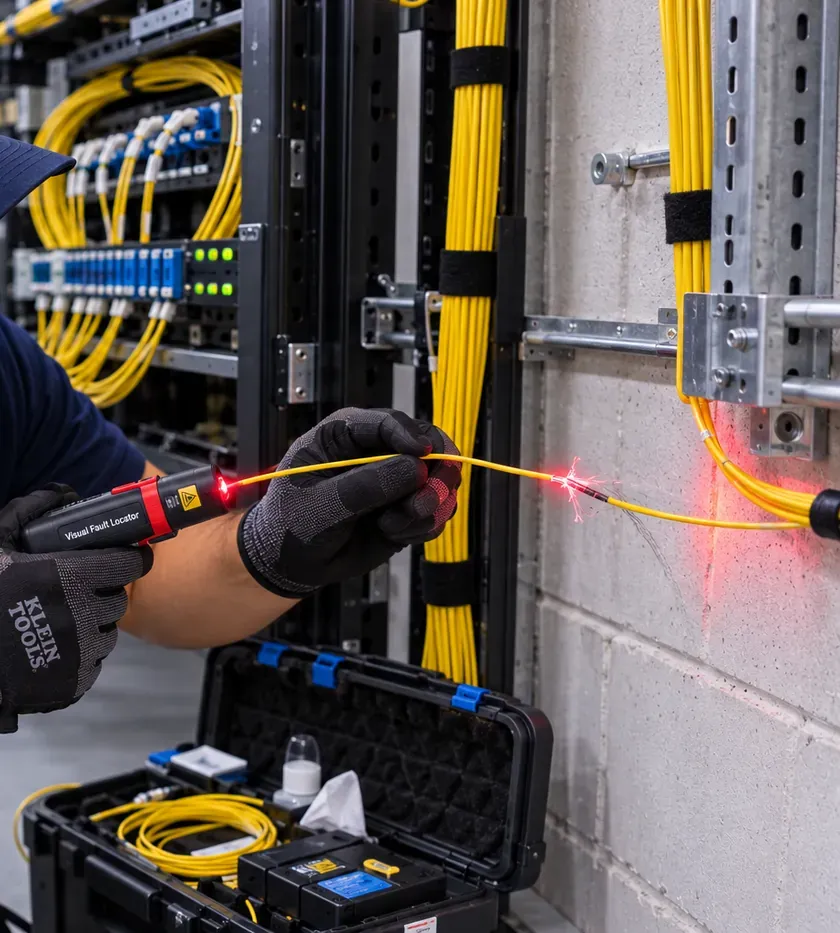
Red light from a visual fault locator glowing at a break in a yellow fiber along a block wall, Riverdale Bronx fiber repair
A visual fault locator held in a gloved hand sends red light down a yellow fiber; the light escapes in a bright spot where the strand is broken, beside a block wall and an open tool case.
What We Install

Fiber Optic Installation Services in Riverdale

Links Between Buildings on a Slope

Single-mode fiber from one building to another where the ground rises or falls between them — a school's upper and lower wings, a care campus stepping toward the river, a house and its cottage — routed through buildings, along walls, in conduit or underground, whichever disturbs the least protected ground.

Campus Backbones

A star of fiber from one main room to every building on a hillside campus, with spare strands and conduit left for the building that has not been designed yet, and a drawing that shows which strand serves which wing.

Co-op and Condo Tower Risers

A building-owned riser from the cellar or garage-level entrance to every floor of a 1960s brick tower, so residents, the front desk, cameras and the laundry room can be served without each provider drilling its own holes.

House-to-Outbuilding Runs

Fiber from a main house to a carriage house, garage studio, pool house or guest cottage downhill or uphill from it, ending in a small enclosure and media converter so the outbuilding behaves like another room of the house.

Undergrounding the Last Stretch

Where a provider's line arrives on poles through the trees, we can build the conduit on your own land so the carrier can bring its cable in below ground from the property line.

Fusion Splicing and Termination

Pigtails fused into wall or rack enclosures, splices protected in trays, and LC or SC adapters ready for the switch — whether the cable came up a hill, across a footbridge or up eighteen floors.

Testing and Certification

Every strand loss-tested with a light source and power meter, every campus or riser link traced end to end with an OTDR, and the results delivered with a labelled route drawing the owner keeps.

Shop and Office Connections

Short runs for businesses along Riverdale Avenue, Johnson Avenue and West 231st Street — from a shared cellar to a ground-floor shop, or between a medical office's rooms on two floors.

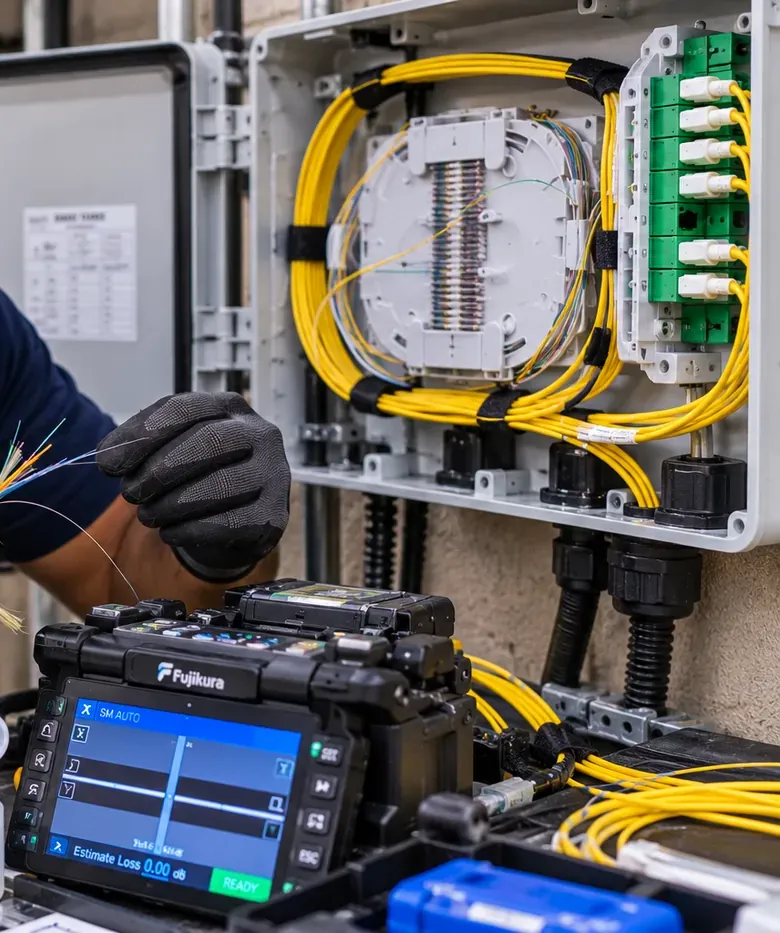
Open wall fiber enclosure with a splice tray and green adapters above a fusion splicer, Riverdale Bronx fiber termination
An open grey wall enclosure holds a round splice tray and a column of green adapters with yellow pigtails; a gloved hand holds a broken-out cable above a fusion splicer whose screen reads Ready.
Building Specialists

Fiber Optic Installation for Riverdale's Architecture

Riverdale's buildings were fitted to the hill rather than the hill to the buildings, so each type hides its natural cable route somewhere different. These are the six we meet most often, and the first thing we look for in each.

1960s Brick Co-op Towers

Ten to twenty storeys on the slopes above the Henry Hudson Parkway and in Spuyten Duyvil, usually with a single cellar telephone room and no closets above. The lowest floors are often a garage cut into the hill. First question: is there a stack of spaces — trash chute room, compactor closet, linen closet — that lines up floor to floor?

1950s Six-Storey Apartment Houses

Brick walk-up and elevator buildings from the decade before the towers, often built into a slope so that the rear cellar opens at grade. First question: which side of the building does the carrier reach, and is that the high side or the low side?

Fieldston Houses

Tudor, Colonial Revival and Mediterranean houses on private, curving streets in a Landmarks historic district, many with stone bases, detached garages and terraced gardens. First question: does the route stay on the owner's land, or touch a road the Fieldston Property Owners' Association owns?

Estate Houses on the River Slope

Nineteenth- and early-twentieth-century villas in Hudson Hill and the Riverdale Historic District, with gatehouses, carriage houses and long drives that fall toward the river. First question: how much of the lot is steeper than 15 percent, and where are the outcrops?

Hillside Campus Buildings

School, college and care-campus buildings from many decades — some joined by bridges or tunnels, some standing alone on their own terrace. First question: where is the campus's main network room, and which buildings sit above and below it?

Mixed-Use Strips and Post-2005 Condos

Shops with apartments above along Riverdale Avenue and Johnson Avenue, and newer condominium buildings in Central Riverdale with sleeved telecom closets. First question: who controls the cellar, and was a riser sleeve left open at construction?

Towers on the slope: use the stack, not the stair

A 1960s tower almost always has a vertical stack of small service rooms — the trash or compactor room on each floor, a linen or porter's closet, an abandoned incinerator flue space. Those are the best homes for a riser, because the building's interior exit stairs are not available: the New York City Building Code bars penetrations into interior exit stairways except for the stair's own equipment.

Apartment houses built into the hill: enter on the low side

Many 1950s buildings here have a front door at street level and a rear cellar that opens onto a yard or a lower street. The carrier's cable can come in on either side, and the choice matters: an entry on the low side keeps the sleeve out of the soil that sits against the high side of the foundation, where groundwater collects after heavy rain. We set the incoming sleeve with a downward pitch to the outside, seal it against water as well as fire, and keep the enclosure on the wall well above the floor.

Fieldston and estate houses: the garden is part of the building

In a Fieldston or Hudson Hill house the hard part is rarely inside. Inside, fiber follows the same paths as the existing wiring — up a closet, through a basement ceiling, behind a stair. Outside, the route to a garage, studio or cottage crosses lawns, walls, paths and planting beds that may be protected by the natural area rules, the historic district rules, or both. We draw the outdoor route on the lot first, mark the outcrops, large trees and steep sections, and only then decide whether the link goes underground, along a wall in conduit, or through a building that already connects the two points.

Campus buildings: the main room sets the shape

On a campus that climbs a hill, the main network room is usually in the oldest or most central building, and every other building connects back to it. When buildings sit on separate terraces, a link that runs uphill to the main room and a link that runs downhill to a gym may need entirely different routes. Each tie is surveyed separately, with its own elevation profile.

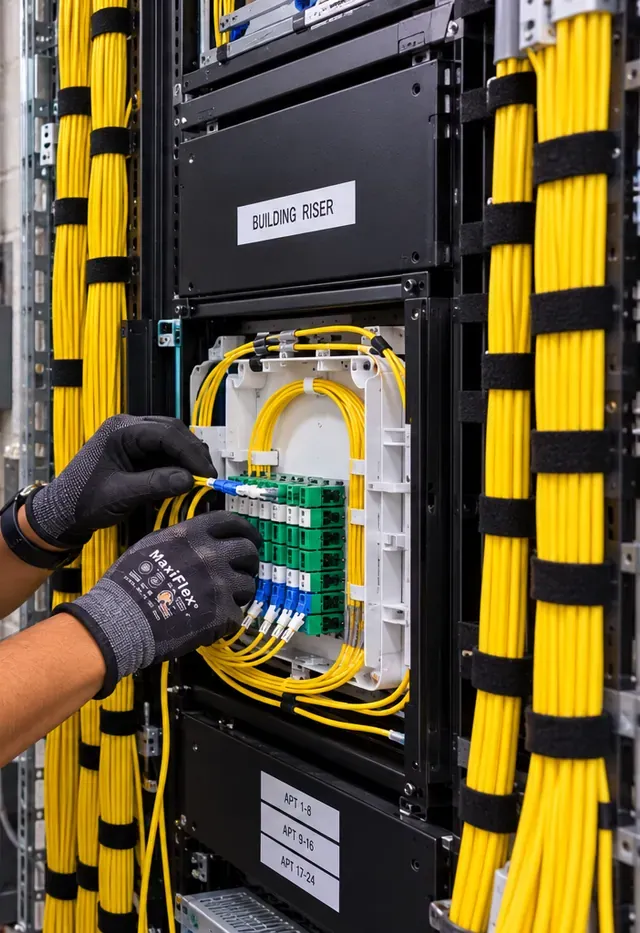
Fiber panel labelled building riser with green adapters and apartment labels below, Riverdale Bronx co-op riser fiber
A rack panel labelled Building Riser, a splice tray with green adapters being patched by gloved hands, and labels for groups of apartments on the panel below, between thick bundles of yellow cable.
Commercial Fiber Optic Installation

Business Fiber Optic Installation in Riverdale

Riverdale's businesses are mostly small and close to home: shops, medical and dental offices, banks, restaurants and services strung along a few corridors, with the large employers being its schools, colleges and care campuses. Each corridor has its own building stock and its own reason to want fiber.

Riverdale Avenue

The neighbourhood's main north–south street. The Riverdale Press counted about 50 stores on its central two-block shopping stretch, and a broker quoted by the paper in 2026 called it "one of the strongest retail corridors in the district." Fiber here links a shop's back room to the carrier in a shared cellar, or two floors of a medical office.

Johnson Avenue

The shopping street of the Spuyten Duyvil and Kingsbridge edge, described by the Riverdale Press as "perhaps four blocks of 35 stores, 4 banks, a supermarket" and a pharmacy. Ground-floor businesses under apartments, often on sloping blocks.

West 231st Street and Broadway

The business district at the southeast corner of Riverdale, where it meets Kingsbridge and Marble Hill. Older commercial buildings with tenants on several floors.

North Riverdale

Eateries, salons and specialty businesses around Mosholu Avenue and the northern end of Riverdale Avenue, close to the Yonkers line. Short runs from a building's cellar to a single shop.

Campus and Care Employers

The neighbourhood's colleges, independent schools and its large care campus on Palisade Avenue run offices, kitchens, clinics and residence buildings on multi-acre hillside grounds — the biggest fiber users in Riverdale.

Rules and safety points that come up on Riverdale jobs

  • Digging on the ridge is a "site alteration." The Zoning Resolution's natural-area chapter defines excavating, filling and topographic changes as site alterations "whether or not a permit is required" from Buildings or Transportation, so an outdoor trench is planned against the NA-2 rules before it is dug.
  • Rock outcrops and big boulders stay put. Modifying a rock outcrop always needs City Planning Commission authorization, as does moving an erratic boulder six feet or more across; outdoor routes go around them.
  • Historic-district grounds. In the Riverdale Historic District, Landmarks regulates walls, paths, drives, gates and any excavation or fill on a slope over 15 percent, and no work starts before its permit is issued.
  • City streets need a street opening permit. NYC DOT's Highway Rules require a permit for any excavation in a street, issued only to registered permittees and per 300 feet of block, which is why private fiber stays on private land and carriers handle the street.
  • Exit stairs are off limits. The Building Code bars penetrations into interior exit stairways, so co-op risers use service-room stacks or new sleeves instead.
  • Listed cable and sealed holes. Riser-rated (OFNR) cable between floors, plenum-rated (OFNP) where ceilings carry return air, and a listed firestop system in every rated floor or wall we open.

Owners who are already opening ground or walls often add door access and cameras in the same visit; our Riverdale access control and Riverdale security camera crews can use the same conduit and the same strands.

Gloved hands dressing yellow fiber jumpers in a wall enclosure with blue SC adapters and an oval splice tray, Riverdale Bronx
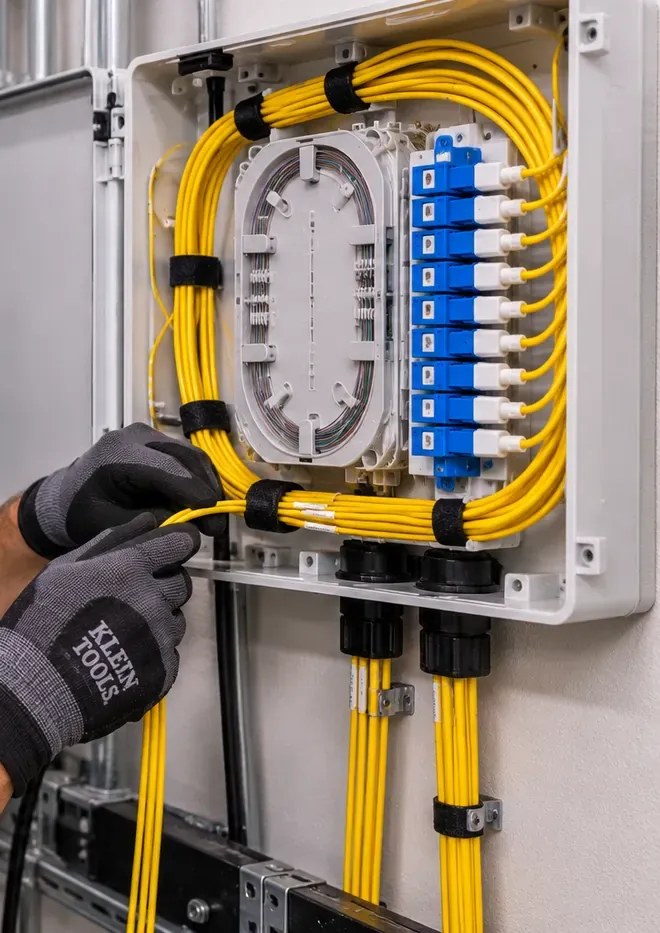
A wall-mounted enclosure with an oval splice tray and a column of blue SC adapters; yellow jumpers are strapped into neat loops and leave through sealed glands at the bottom — a compact termination for a garage wall or service room.
The Ridge Rules

How the Riverdale Ridge Decides a Fiber Route

The Zoning Resolution describes the Riverdale ridge plainly: "This ridge contains steep slopes, rock outcrops, ponds, brooks, swampy areas and mature trees," and "much of the Riverdale Ridge and Riverdale Park are in their natural state." The City protects those features through the Special Natural Area District, and the rules reach further than most owners expect. The definition of a "site alteration" includes "excavating, filling," changes to drainage and "modification of any other natural features, whether or not a permit is required from the Department of Buildings, the Department of Transportation or other public agencies." A fiber trench across a lawn is excavation. On some lots it is small enough to fall inside an exemption; on others it needs City Planning's authorization; on a few, the right answer is not to dig at all.

The rock is the other half of the story. NYC Parks notes that Fordham gneiss runs along the surface of the Bronx in two ridges, "one along the west side in Riverdale," and Riverdale lots are full of it — bare stone in lawns, ledges behind garages, boulders left by the glaciers. The Riverdale Nature Preservancy's summary of the rules is blunt: "Modification or alteration of a rock outcrop must always be authorized by the City Planning Commission." Trees are protected too. A healthy tree six inches or more across, measured four and a half feet above the ground, may be removed only in limited cases, and the critical root zone of a tree marked for preservation is part of the "area of no disturbance" that rules out trenching and "tunneling for utilities."

The slope itself sets a third limit. Lots with an average slope of 10 percent or more are "Tier II" sites, where grading beyond 15 feet of a building's foundation needs Commission authorization, and portions steeper than 25 percent are "steep slopes" with their own protection. Any digging that is approved must avoid creating new steep slopes or erosion, and exposed earth has to be covered and seeded quickly. The Riverdale Press reported an arborist's point in August 2026 that on Riverdale's steep terrain, rain "can rush downhill" rather than soak in — the same water that scours a fresh trench.

None of this is a reason to avoid fiber. It is a reason to choose the route with the ground in mind. The table below is how we compare the options for a link between two buildings on a Riverdale lot. It is a planning guide, not legal advice; where a route needs an authorization, the owner's architect or the Bronx office of City Planning confirms it first.

RouteWhen it suits a Riverdale lotWhat to watch
Through a building that already joins the two pointsCampus wings joined by a corridor, bridge or tunnel; a house and garage under one roofFire-rated walls between parts of the building, and who controls each space
Surface conduit on a wall or retaining wallWhere a wall already runs between the buildings, so nothing is dugFixings into masonry rather than into stone outcrops; painted to match; Landmarks review in a historic district if visible
Shallow trench in a lawn or bedGentle ground, no outcrop, well away from large treesWhether the lot falls inside the NA-2 exemptions; erosion cover and reseeding; marking the route for future digging
Trench along a driveway or path edgeWhere a drive already crosses the slope between buildingsDriveways and private roads have their own grading rules; keep the conduit in the disturbed edge, not the planted side
Under-path or under-wall boreShort crossings under a path, wall or steps that should not be openedRock may stop a bore; locate other utilities first
Aerial span between buildingsRarely; only where neither building nor ground offers a routeLimbs and ice; Riverdale's canopy makes overhead runs the most exposed choice
Light source and power meter held at a fiber rack during loss testing, Riverdale Bronx fiber certification
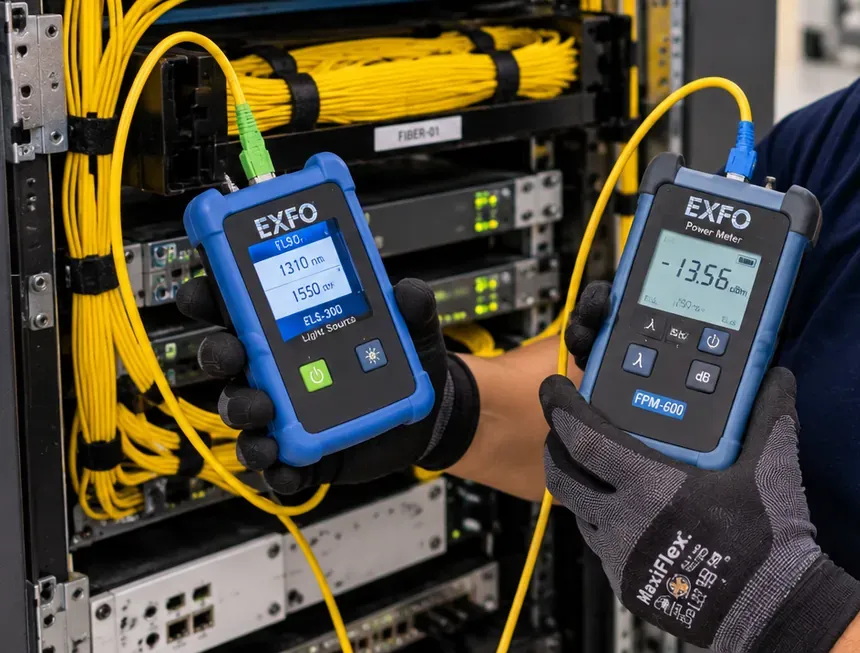
A light source set to 1310 and 1550 nm and a power meter reading in dBm, held in gloved hands at a rack of yellow patch cords — the loss test every strand gets before handover.
Hillside Campuses

Fiber for Riverdale's Schools, Colleges and Care Campuses

Few New York neighbourhoods hold as many institutions on as much sloping ground. Their published descriptions read like a survey of the ridge. Manhattan University occupies a campus of about 22 acres, divided into a north and a south campus, with the north side overlooking Van Cortlandt Park; one of its engineering buildings was once the Fanny Farmer chocolate factory, according to the student paper. Riverdale Country School's Hill Campus covers 19.5 acres on Fieldston Road with six academic buildings, two science buildings, a freestanding arts centre and a maker space, and its River Campus for the youngest pupils sits on 8 acres along the Hudson. The Municipal Art Society describes the University of Mount Saint Vincent as "perched on 70 acres of steep leafy hills on the banks of the Hudson River overlooking the Palisades." Wave Hill, the public garden and cultural centre, is a 28-acre estate on the slopes above the river with two historic houses.

The same pattern repeats on every one of these sites: buildings from different decades, each on its own level, joined by paths and stairs rather than corridors. A campus network has to treat each building as a separate destination with its own route back to the main room. In a flat office park the routes would all look alike; on a Riverdale hillside one tie might be a short pull through a connecting corridor, the next a run in conduit along a retaining wall, and a third a carefully planned trench that skirts an outcrop and the root zone of an old oak. We survey each link on its own and price it on its own, so the institution can see which ties are simple and which need design time.

Care campuses add a second layer. The Hebrew Home at Riverdale lists a 32-acre campus along the Hudson at Palisade Avenue, and when it presented an expansion in 2013 the Riverdale Press described plans for four- to eight-storey buildings on a 14-acre site just to the south, with parking moved underground and additions to existing buildings. A campus that grows in phases like that needs a backbone designed to be extended: spare strands, spare conduit and pull boxes left where the next building will connect. The Riverdale Nature Preservancy follows that campus's permits to make sure natural-area protections "negotiated with the community continue to be honored" — a reminder that on this ridge, utility routes for a new building are part of a public conversation, not an afterthought.

  • Star, not daisy chain: each building gets its own link back to the main room wherever the ground allows, so one cut does not take down every building beyond it.
  • Single-mode everywhere outdoors: distance is never the limit on a Riverdale campus, but a building added in ten years will want speeds today's multimode cannot carry far.
  • Spare conduit at every crossing: once a route under a path or along a wall has been approved and built, a second empty duct beside the first costs little and saves a second approval later.
Gloved hands strapping a yellow fiber bundle into overhead cable tray from an orange lift basket in a high-bay building, Riverdale Bronx
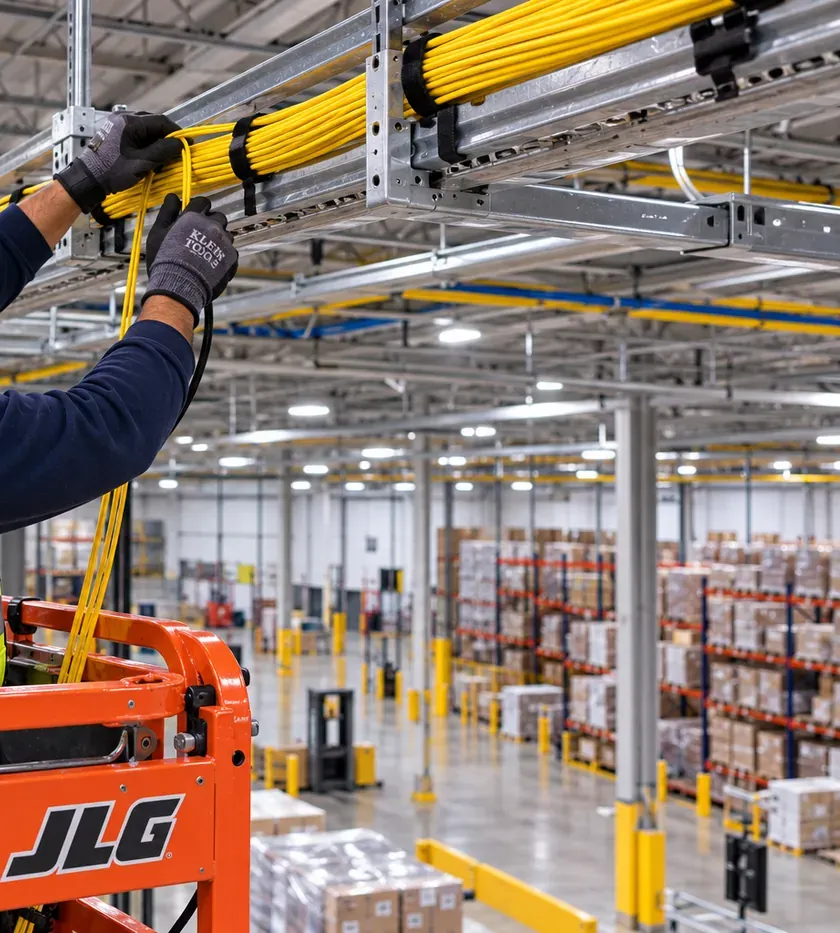
From the basket of an orange lift, gloved hands strap a yellow bundle into overhead tray in a tall building with storage racking below — the same method serves a campus gym or maintenance building.
Co-op Towers

Risers for Riverdale's Co-op and Condo Towers

The brick towers that rose along the parkway and in Spuyten Duyvil in the early 1960s were built for one telephone company and one television antenna. Most were later converted to co-operatives, and the Association of Riverdale Cooperatives and Condominiums now counts more than 100 co-op and condominium buildings among its members. When Verizon brought its fiber up the ridge, the Riverdale Press noted that "co-ops lead the way" in signing up, and a photograph from the time shows a technician opening the fiber hub in the basement of a co-op on Blackstone Avenue. That pattern still holds: carrier fiber usually reaches the cellar or the garage, and the building decides how it travels up.

A building-owned riser changes that decision from a negotiation with each provider into something the board controls. One set of sleeves and one fiber cable climb the building through a stack of service rooms; a small enclosure on each floor, or every few floors, feeds the corridor; and providers, the building's cameras, the lobby desk, the laundry-card system and the elevator lobby screens all patch in at the bottom. Boards like it because holes stop multiplying in the hallways. Shareholders like it because a new provider can reach them without a fresh round of drilling.

Riverdale's towers bring two quirks. The first is height on a hill: a building's lowest occupied level is often a garage dug into the slope, with the lobby one or two floors higher and the carriers arriving at whichever level faces the street. Where the main fiber room goes depends on which level stays dry and accessible, not on which is called the basement. The second is the roof. Many ridge-top roofs collected antennas and old cable over the decades, and a riser project is a good moment to trace and label what is still live.

We work to each co-op's alteration agreement and house rules: a written scope and drawing for the managing agent, certificates of insurance where the agreement asks for them, and a closeout file the board keeps.

Yellow fiber fed from a coil into wire basket tray above lifted ceiling tiles, Riverdale Bronx classroom or office fiber
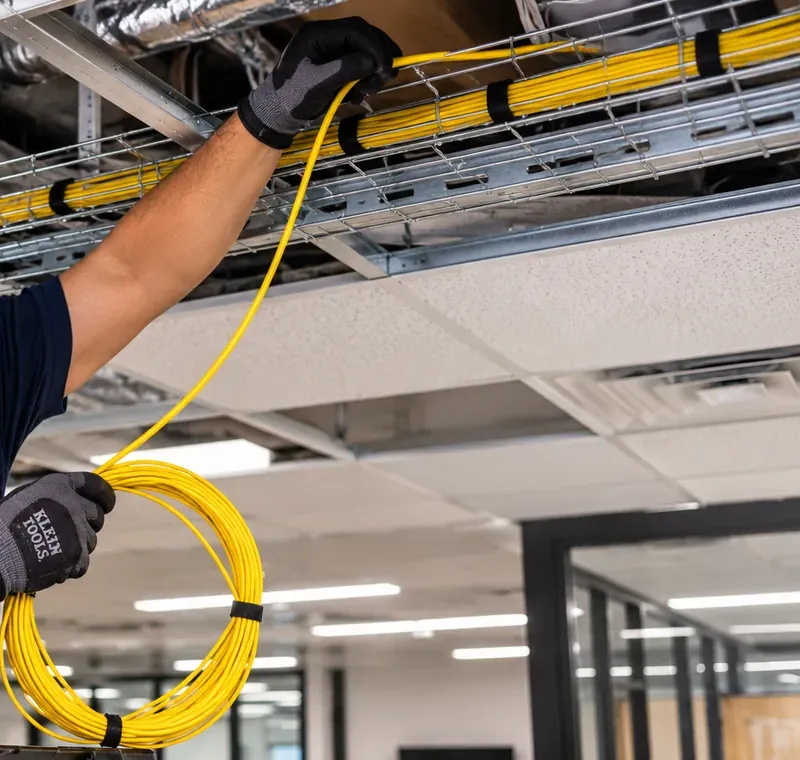
A gloved hand lays yellow fiber into a wire basket tray above lifted ceiling tiles while the other holds the coil, in an open-plan room with glass partitions.
Section by Section

Riverdale's Sections and the Fiber Work Each One Brings

Riverdale's own sections are argued over, but most residents recognise these. The table describes the building stock named in public sources and the fiber work it tends to produce; it is not a list of our past jobs.

SectionWhat stands thereTypical fiber work
Spuyten DuyvilThe densest group of high-rise co-ops, around Kappock Street and Johnson Avenue, above the Spuyten Duyvil Metro-North station and the Henry Hudson BridgeTower risers, garage-level entrances, shop links on Johnson Avenue
Central RiverdaleSix-storey apartment houses, 1960s towers along the Henry Hudson Parkway, newer condominiums and the Riverdale Avenue shopping stretchRisers, condo closet stacks, cellar-to-shop links
Hudson HillEstate houses and institutions on the slope above West 246th Street, west of the parkway, including Wave HillHouse-to-outbuilding links on steep lots, careful outdoor routes
Riverdale Historic District34 buildings on what were seven 1850s estates along Sycamore Avenue, entirely inside the natural area districtOutdoor routes planned for Landmarks and NA-2 review
FieldstonA Landmarks historic district of houses on privately owned, curving streets south of West 250th Street and east of the parkway, plus two independent-school campusesHouse runs, school campus ties, coordination with the property owners' association
North RiverdaleApartment buildings, houses and shops above West 254th Street toward the Yonkers line, near the Riverdale Metro-North station at the foot of West 254th StreetSmall risers, shop links, house runs
Riverdale Avenue near the Yonkers lineThe University of Mount Saint Vincent's hillside campus and the Hebrew Home's Palisade Avenue campusCampus backbones and phased extensions
Manhattan College ParkwayManhattan University's north and south campuses, overlooking Van Cortlandt ParkCampus links between buildings at different levels
West 231st Street and BroadwayThe business district at the Kingsbridge edgeMulti-floor office and shop connections

Two Metro-North Hudson Line stations, Riverdale and Spuyten Duyvil, serve the neighbourhood, linked to nearby streets by the MTA's weekday Hudson Rail Link shuttle buses.

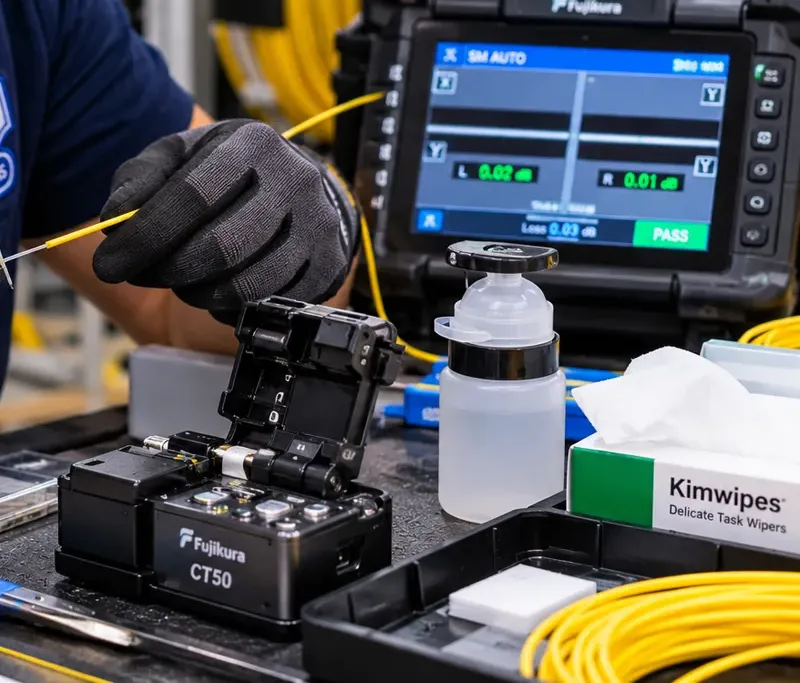
Fiber cleaver, alcohol dispenser and wipes in front of a fusion splicer screen reading pass, Riverdale Bronx fiber splicing
A precision cleaver, an alcohol dispenser and a box of lint-free wipes on the bench, with the fusion splicer behind showing estimated losses of a few hundredths of a dB and a Pass result.
Your Questions Answered

Fiber Optic Installation in Riverdale: Questions Answered

Thirteen questions Riverdale owners, boards, schools and campus managers ask, grouped by the kind of ground or building involved. Each answer assumes the slope and the rules described above.

The ridge, the rock and the rules

Our lot is inside the Special Natural Area District — does a narrow fiber trench count as a "site alteration" that City Planning has to authorize?

It counts as a site alteration, but that does not always mean an authorization. The Zoning Resolution defines site alteration to include excavating and filling "whether or not a permit is required" from any other agency, so even a narrow trench is covered. Whether City Planning has to approve it depends on the lot: small, gently sloping lots with no significant natural features can fall inside the exemptions, while a Tier II lot (average slope of 10 percent or more) needs authorization for grading more than 15 feet from a building's foundation, and steep slopes, outcrops and protected root zones are treated more strictly still. We mark where a proposed trench meets those features; the owner's architect or City Planning confirms whether a filing is needed, and we supply the route drawing. Often the simplest answer is a route that avoids the question — through a building or along a wall.

A bedrock outcrop runs between our house and the cottage — may it be chipped for conduit, or must the route go around it?

Plan to go around it. Under the natural area rules, modifying or altering a rock outcrop always needs City Planning Commission authorization, and erratic boulders six feet or more across may be moved only with the same approval. Chipping a channel across a ledge is exactly the kind of alteration those rules cover. The usual alternatives are to follow the edge of the outcrop where soil is deep enough, to run conduit across the surface of a wall or path that already passes the rock, or to route through a building. Seeking authorization to alter the rock is possible but slow, so it starts long before any installation date.

Our garage sits a full storey below the house on a terraced lot — should the fiber enter the lower building at the top or at the bottom?

Usually at the top, or as high on the uphill wall as the structure allows. A cable that runs downhill and enters at the base of the lower building brings water with it: rain follows the trench and the conduit, and the entry sits where groundwater collects against the foundation. Entering high on the uphill face keeps the sleeve above the wet zone, lets the conduit drain away from the building, and often shortens the route because it follows the slope rather than descending to the bottom and climbing again indoors. Where only a low entry is possible, the conduit is pitched away from the wall and the sleeve sealed against water.

Hillside campuses

Our school's buildings stand at different levels on one hillside — should every link run back to one hub, or can they be chained building to building?

Back to one hub wherever the ground allows. In a chain, the building at the end depends on every building and every link before it, so a single trench dug by a landscaper or a single tray damaged during a renovation can isolate half a campus. A star — each building tied directly to the main room — keeps faults local and lets each building be upgraded on its own schedule. Where a direct route would cross an outcrop or a protected slope, a building can be fed through its neighbour on its own strands, so it still behaves as a separate link.

Two of our buildings are joined by an enclosed footbridge over a ravine — can the fiber travel inside it?

Usually, and it is often the best route on a Riverdale campus because it leaves the ravine untouched. A footbridge has a ceiling, a floor or a side wall where a small tray or raceway can run, and its two ends meet the buildings at a known point. We check three things first: whether the bridge's structure lets cable be fixed without drilling its main members, whether the bridge forms a fire separation with either building so penetrations need a listed firestop, and whether expansion joints at the ends need a slack loop so the cable is not strained when the bridge moves with the seasons.

Riverdale Park or Wave Hill land separates our buildings — what routes keep the fiber on our own property?

Not without the City's agreement, and that is rarely the quick route. Parkland belongs to NYC Parks, and Riverdale's public open spaces — Riverdale Park along the river and the Wave Hill gardens — are managed as natural areas or gardens, so a private utility crossing would need permission from the agency that runs them. In practice we look for a route that stays on the owner's land, even if it is longer: around the park along the owner's boundary, through another building the owner controls, or, where the two buildings are on opposite sides of a public street, by leasing capacity from a carrier that already has a franchise to be in the street.

On a senior-living campus, should residents' apartment internet ride the campus fiber or a carrier's own wiring?

Either can work, but the decision should be made deliberately, because it decides who answers the phone when a resident's service fails. If residents buy service from a carrier, the carrier's wiring should reach each apartment on its own path, and the campus fiber stays dedicated to nurse-call, cameras, doors and the business office. If the campus provides internet to residents as part of its service, resident traffic can share the campus backbone on its own strands and its own network segment, so a fault in a resident's room cannot affect clinical or safety systems.

Co-op and condo towers

Our 1960s co-op tower has a telephone room in the cellar and nothing on the upper floors — where does a building riser usually fit?

In a stack of service rooms that line up floor to floor. Towers of that era almost always have a trash or compactor room, a porter's closet or a former incinerator space on every floor in the same position, and those rooms give a riser a protected home without touching apartments or exit stairs. We core one small sleeve per floor through the slab inside that stack, after scanning, and fix a slim enclosure on the wall every few floors. Without a stack, a chase built in a hallway corner is the next choice.

The hallways in our building have plaster ceilings and no drop ceiling — how does fiber reach each apartment door?

In a slim, paintable raceway run along the corridor where the wall meets the ceiling, or tucked into an existing crown moulding where there is one. Fiber cables are thin, so a raceway a little over an inch wide carries enough strands for a whole floor. From the riser enclosure, the raceway follows the corridor and drops a short tail to each apartment door, where the provider or the building connects inside. Painted to match, it is barely visible, and it avoids opening plaster ceilings that would have to be patched and may contain materials that need testing before anyone cuts into them.

Our building's lowest level is a garage cut into the slope, with the lobby two floors higher — where should the main fiber room go?

Usually at or just below the lobby level, not in the garage. A garage on the low side of a hillside building collects water, salt and vehicle exhaust, and it is the level most likely to flood in a heavy downpour. Carriers may still bring their cable into the garage because that wall faces a street, so we place only passive equipment there — a sealed wall enclosure where the carrier's lateral is spliced — and run the cable up to a main room on a dry floor where switches and battery backup can live.

Houses, historic districts and private streets

Does a fiber trench across the lawn of a house in the Riverdale Historic District need a Landmarks permit?

Often, yes. The Landmarks Preservation Commission's rules for the Riverdale Historic District say it will regulate any change to the district's landscape that affects walls, steps, paths, drives, railings, fences and gates, any change that affects a hedge or mature tree, and "any excavation or fill in a slope exceeding 15 percent." Many lawns in the district are that steep. The rules also say no work should start until the Commission has issued a permit. Compatible work that damages no significant landscape feature can get a staff-level permit; anything more goes to a public hearing. Because the district lies entirely inside the natural area district, the same trench is also measured against the zoning rules. We provide the route drawing, cable specification and restoration method the application needs.

The provider's line reaches our house on poles through the tree canopy — can the stretch on our own property be put underground?

Usually, by building the pathway yourself and asking the provider to use it. Carriers are generally willing to bring a service underground from the property line if the owner supplies a conduit to their specification: the right size, sweeps rather than tight bends, a pull string, a sealed entry into the house and a handhole or riser at the lot line where their cable will transition from the pole. We build that conduit on private land, document it, and you then schedule the carrier to move the service. The part on the public street stays the carrier's business under its own permits.

Fieldston's streets belong to the property owners' association — whose consent does fiber need to run along or across one?

The association's, as the owner of the road. Fieldston's streets and common areas are privately owned and maintained by the Fieldston Property Owners' Association, so a private fiber link that runs along or under one of its roads is work on someone else's land, even though the road looks public. City street rules, such as NYC DOT's street opening permits, are written for city streets; on a private road the owner's consent and conditions come first. Most Fieldston fiber jobs never need this, because the link runs between a house and its own garage or studio on the same lot. Where a link must use the road, we prepare a route and restoration plan for the association.
Equipment

Types of Fiber Optic Cabling We Install

OS2 Single-Mode Cable

Our default for anything that leaves a building in Riverdale: campus ties, house-to-cottage links and tower risers. It carries today's and tomorrow's speeds over any distance the neighbourhood can produce.

Indoor/Outdoor Loose-Tube Cable

Water-blocked, gel-free cable that can run from a buried conduit straight into a building's interior without a splice at the wall — the right choice where a route crosses wet ground on a slope.

Interlocking-Armored Cable

Metal armour under the jacket for runs where a spade, a mower edge or a rodent might reach the cable, such as along garden walls, in garages and through crawlspaces. Armour entering from outdoors is bonded at the entrance.

HDPE Conduit and Innerduct

Tough plastic duct for buried runs and long sweeping bends down a hill, with innerduct inside so a second cable can be pulled later without digging again.

Riser-Rated (OFNR) Cable

The listing required for cable passing between floors of a co-op or condo tower, installed in sleeves that are firestopped at every slab.

Plenum-Rated (OFNP) Cable

Required in ceiling spaces that carry return air, which are common in campus classroom buildings and newer offices.

Handholes, Warning Tape and Tracer Wire

A small buried box at long pulls or sharp changes of direction, bright tape a foot above the conduit, and a tracer wire so the route can be found with a locator before anyone digs near it.

Enclosures, Media Converters and SFP Optics

Lockable wall enclosures with splice trays and adapters at each end, small converters for a single outbuilding device, and optics matched to the owner's switches for campus and riser links.

AI Overview Reality Check

What AI Gets Wrong About Fiber Optic Installation in Riverdale

We could not see Google's own AI Overview from our research tools, so the claims below are the ones that cost guides, provider pages and local websites publish and that AI answers tend to repeat. Each is quoted as its source states it. Each is reasonable somewhere; each misleads on a Riverdale ridge.

Claim 1: "Fiber optic cable installation costs average $4,500"

Angi, which also operates HomeAdvisor, states that "fiber optic cable installation costs average $4,500 for most homeowners, with most installations ranging from $1,500 to $7,000." It is an average for bringing fiber to a house in general, not for any particular lot.

On a Riverdale property the house is rarely the expensive part. A link to a cottage on a gentle lawn may cost less than Angi's average; the same link on a Tier II lot with an outcrop in the way may need design work, a longer route or an authorization before a spade goes in. The variable is the ground, which no national average can see.

Use the national figure to sanity-check a quote for a simple house, and expect a Riverdale proposal to show the route, the length and the ground conditions line by line.

Claim 2: "Underground installation has a median cost of $18 per foot"

A widely shared cost article cites the Fiber Broadband Association's 2025 figures: a median of $18.00 per foot for underground construction and $8.00 per foot for aerial. Those numbers come from carriers building networks along streets and roads across the country, with crews and machines sized for miles of plant.

A private link between two buildings on a Riverdale lot is short, hand-dug in places, routed around protected trees and rock, and restored to a garden standard. Its cost per foot can be far higher than a highway median, while its total is still modest because the run is short.

The useful lesson in the per-foot figure is the gap between underground and aerial. On a street with heavy canopy, the cheaper aerial option is also the one most likely to come down in the next storm.

Claim 3: "No landlord or co-op board approval required, no wiring"

An internet-provider guide written for Riverdale promotes 5G home internet with exactly that pitch: "no landlord or co-op board approval required, no wiring, plug-and-play setup in 15 minutes." For one apartment with a strong signal on a high floor, it can be a reasonable choice.

It does nothing for a building or a campus. A co-op's cameras and door entry or a school's five buildings still need cable between them. Wireless signal also varies sharply on a ridge, where one side of a tower faces the transmitter and the other faces the hill.

Fixed wireless works well as a backup circuit, fed over fiber from a window or roof to the main room. It is not a substitute for the backbone inside.

Claim 4: "All that is needed to get FiOS are street-to-building wires"

The Riverdale Press reported in 2014, quoting Verizon, that with 13 miles of feeder cable in place, "for almost every building in Riverdale, all that is needed to get FiOS are street-to-building wires known as 'lateral' cables." That was accurate for the carrier's network, and AI answers still lean on it to suggest fiber is a solved problem here.

The lateral stops at the building. In a twenty-storey co-op, service still has to climb the riser and reach each door; on a campus it has to reach the buildings that are not on the street; on an estate it has to reach the cottage down the hill. Those stretches belong to the owner.

A carrier lateral is the start of the job, not the end of it. The board or institution decides whether the inside part is built once, deliberately, or piece by piece by each provider.

Claim 5: "Fiber installation can take up to 4 hours"

T-Mobile says its in-home fiber installation "can take up to 4 hours," and similar figures from other providers appear in almost every AI answer about timing. They describe a technician connecting one home to fiber that already reaches the door.

A campus tie on a slope involves a survey, a decision about the natural area rules, possibly a Landmarks filing, digging and restoration around protected trees, then pulling, splicing and testing.

The installation days themselves are often short. The calendar is set by approvals and, on campuses, by the school year — so the walkthrough should come months before the date the link is needed.

Claim 6: "Low-voltage work doesn't need a permit, so there's nothing to approve"

This one is not a quotation but an assumption we hear constantly, and AI summaries of New York cabling rules tend to support it. It is half true: low-voltage cabling under 50 volts does not need its own Department of Buildings permit.

On the Riverdale ridge, the Zoning Resolution counts excavating as a site alteration "whether or not a permit is required from the Department of Buildings," and the Riverdale Historic District rules put excavation on slopes over 15 percent under Landmarks review. Co-ops add their own alteration agreements.

No DOB permit does not mean no approvals. It means the approvals come from City Planning, Landmarks, a board or an association instead, and they are planned into the schedule.

Claim 7: The Bronx is "99.8 percent" wired, so every building already has fiber

The Center for an Urban Future's July 2025 report on the Bronx digital divide says "nearly 99.8 percent of the Bronx is now wired for high-speed internet," then notes that problems remain, "including individual buildings not yet wired for broadband." AI answers often keep the number and drop the qualification.

In Riverdale the qualification applies inside property lines. A street can be fully wired while a school's newest building, a co-op's upper floors or a house's studio still has no fiber of its own.

Coverage at the street is the carrier's measure. The measure that matters to an owner is whether every building and every floor that needs a connection actually has one.

Tell Us How Far Apart — and How Far Uphill. We'll Find the Route.

Send the address, the buildings that need joining and a rough idea of the slope between them. We walk the ground, mark the rock, trees and steep sections, and put the route and the price in writing.

Full Service List

Every Fiber Optic Service We Handle in Riverdale, the Bronx

Across the Bronx our fiber crews work in towers, campuses, distribution buildings and storefronts. In Riverdale the work is weighted toward hillside sites, co-ops and houses.

Installation, Routing and Cable Pulling

Our fiber optic installation services in Riverdale often begin outdoors: fiber optic cable installation between buildings, fiber optic cable routing along walls and corridors, and fiber optic cable pulling through conduit sized for the bends a slope demands. Underground fiber optic installation, fiber optic conduit installation and armored fiber optic cable installation carry links down lawns and past garden walls; indoors, fiber optic riser installation, apartment building fiber optic installation and multi-floor fiber optic installation serve the co-op towers and classroom blocks.

Campus, Institutional and Commercial Fiber

Commercial fiber optic installation here means schools, colleges, care campuses, houses of worship and shops. Fiber optic backbone installation ties every campus building to one room, a commercial building fiber backbone upgrade retires worn-out links, and data center fiber optic installation organises the main room. Fiber optic network upgrades, fiber optic network switch installation and SFP transceiver installation light the glass on the day we finish; warehouse fiber optic installation methods serve campus gyms and maintenance buildings.

Splicing, Termination and Panels

Fiber optic splicing services start with fiber optic cable stripping and fiber optic cable cleaving, then fiber optic fusion splicing and fiber optic splice tray installation. Fiber optic termination follows the run: fiber optic patch panel installation, fiber distribution panel installation and fiber optic rack installation in the main room; fiber optic termination box installation and fiber optic distribution box installation on a garage or service-room wall; fiber optic wall outlet installation, LC fiber connector installation and fiber optic patch cord installation at the switch.

Testing, Certification, Repair and Upkeep

Fiber optic testing and certification closes every job: fiber optic OTDR testing, fiber optic signal loss testing, optical power meter testing and fiber optic light source testing, with fiber optic network certification reports for the board or IT office. When a link fails, fiber optic troubleshooting, fiber optic break detection, fiber optic visual fault locator testing, fiber optic connector inspection and fiber optic connector cleaning lead to broken fiber optic cable repair, fiber optic cable repair at a connector or fiber optic cable replacement, then fiber optic network repair and fiber optic network restoration, proven by fiber optic cable testing and fiber optic signal testing. Fiber optic rack cleanup, fiber optic cable management, fiber optic cable labeling and fiber optic maintenance keep the fiber optic infrastructure installation in order. As a licensed low-voltage fiber optic installation contractor serving Riverdale, the Bronx, we carry each job from survey to final test.

Get In Touch

Request a Free Quote

Tell us which buildings or floors need fiber and what lies between them — lawn, rock, a road, a footbridge or eighteen storeys. We reply the same business day, or call (646) 490-0629.

✅

Request Received

Thanks — the Bronx office has your details and will phone you back the same business day. For anything urgent, call (646) 490-0629.

How It Works

Our Installation Process

Seven stages, written for a neighbourhood where the ground and the approvals matter as much as the cable. The same seven appear in this page's HowTo data.

1. Walk the ground, both ways

We walk each route downhill and uphill from the carrier's entry to every building that needs service, measuring the height difference and noting where water runs, which walls and paths already climb the slope, and where the main room should sit.

2. Map rock, trees and slope

Outcrops, large boulders, trees six inches or more across and sections steeper than 10, 15 and 25 percent are marked on a sketch of the lot, so the route avoids protected features from the start.

3. Choose the route and price it

Through a building, along a wall, in a shallow trench, under a path or, rarely, overhead: the proposal explains the choice for each link and prices every line from our published rates.

4. Clear the approvals

The board, managing agent, school, property owners' association, Landmarks or City Planning each receive the drawing and scope they need, with certificates of insurance, before any work date is fixed.

5. Build the pathway

Conduit with sweeping bends, handholes at long pulls, sleeves sealed against water and fire, warning tape and tracer wire in every trench, and exposed soil covered and reseeded as the rules require.

6. Pull, splice and protect

Cable is pulled within its tension and bend limits, fusion-spliced onto pigtails in enclosures at each end, armoured or ducted where tools and rodents can reach it, and every rated wall or slab is firestopped.

7. Test, label and hand over

Every connector is inspected and every strand loss-tested, campus ties and risers get OTDR traces, labels match the drawing, and the owner receives the results, an as-built route drawn on the lot plan and photographs of the buried sections.

Coverage Area

Fiber Optic Installation Near Riverdale's Landmarks

Wave Hill

The 28-acre public garden and cultural centre at West 249th Street and Independence Avenue in Hudson Hill, set on the slopes above the Hudson. Wave Hill House dates from 1843 and Glyndor House from 1927; the estate was given to the City in 1960 and draws about 65,000 visitors a year.

Riverdale Historic District

Designated in 1990, the district's 34 buildings stand on what were seven 1850s estates served by a shared carriage alley, now Sycamore Avenue. It lies entirely inside the natural area district, and its landscape has its own Landmarks rules.

Fieldston Historic District

Designated by Landmarks in January 2006, the planned community of houses on privately owned, contour-following streets between Manhattan College Parkway, the Henry Hudson Parkway, West 250th Street and Broadway.

Manhattan University

The roughly 22-acre campus on Manhattan College Parkway, split into north and south campuses; the north campus, centred on the Quad, overlooks Van Cortlandt Park. The university has been in Riverdale since the 1920s.

University of Mount Saint Vincent and Fonthill

A 70-acre campus at 6301 Riverdale Avenue on "steep leafy hills" above the river, home to Fonthill Castle, which stands on the slopes above the Hudson where the Hudson River Railroad was planning its tracks along the shore below.

Riverdale Park

The Forever Wild park along the western edge of the ridge, with a trail of just under a mile under mature canopy and views of the Hudson, running beside the Metro-North tracks.

We also work in Kingsbridge, Kingsbridge Heights, Marble Hill and Van Cortlandt Village next door, and across the borough from our office at 460 East Fordham Road. Our Spuyten Duyvil cabling, Fieldston cabling and Hudson Hill cabling pages cover the copper side section by section, and the Bronx fiber optic installation page covers the whole borough from Co-op City to the Harlem River.

Pricing

Fiber Optic Installation Cost in Riverdale

Riverdale is priced exactly as the rest of the Bronx. The lines below are the ones published on our Bronx fiber optic installation page; the per-drop figures come from our Bronx structured cabling price builder. Campus ties, risers and house-to-outbuilding links are quoted after a site walk within the published ranges, and every proposal lists each line separately.

ItemRiverdale priceWhat is included
Termination on an existing fiber$35 per terminationFused pigtail or connector on a strand already in place — how an older campus or riser cable is put back to work
OTDR test$40 per strandA full trace with its event list for every strand, in addition to the basic loss test
Multimode fiber drop$391 per dropA shorter in-building run, terminated at both ends and tested
Single-mode fiber drop$447 per dropA shorter in-building run, terminated at both ends and tested
12-strand OM4 backbone between floors$4,500 – $7,000Riser fused into enclosures at both ends, firestopped and loss-tested
24-strand OS2 backbone or building-to-building link$8,000 – $15,000+Single-mode with an OTDR trace on every strand
Second telecom room with fiber link backfrom $2,400Room build-out plus the fiber tie to the main room
Service and callback rate$195/hr, 3-hr minimum ($585)Repairs, troubleshooting and return visits — not the original installation

What moves a Riverdale fiber price up or down

  • What lies between the buildings. A connecting corridor or footbridge is the cheapest route; a lawn is next; rock, protected trees and steep sections lengthen the route or call for design and filing time.
  • Whether approvals are needed. A lot inside the natural area exemptions moves straight to installation. A Tier II lot, a historic-district garden or a private road adds drawings and waiting time, which the proposal shows separately.
  • Restoration. Hand-digging near roots, relaying stone paths and reseeding are priced as their own lines.
  • Where the carrier lands. A garage-level entrance on the low side of a building means an extra passive enclosure and a run up to the main room.
  • Strand count and spare conduit. Twenty-four strands instead of twelve, and an empty duct beside the first, add little now and avoid a second dig later.

Why not a national brand? ADT, Ring and SimpliSafe are household names, but they sell alarm and camera equipment with monitoring plans; designing a fiber route across a protected hillside or up a co-op tower is not part of their offer. A Riverdale owner is really choosing among three kinds of installer: the internet provider, whose work ends at its own box; a general integrator that may hand the cabling to a subcontractor; or a licensed Bronx low-voltage contractor whose own crew surveys, pulls, splices and tests. AESS is the third, and the table above is the price list we work from.

Rock, Roots or Eighteen Floors? Get the Route Walked Before It's Priced.

A free walkthrough marks every outcrop, tree and steep stretch on the way, so the quote reflects the route that can actually be built.

Shop Our Systems

Fiber Optic Installation Packages & Pricing

Three totals that match common Riverdale requests. Each is added up from the published lines above and nothing else; your own proposal will be built from your route and your strand plan.

Starter — Riser Health Check

$900

For a co-op or campus building with an older fiber cable nobody has tested in years: twelve strands re-terminated at $35 each ($420) and traced with an OTDR at $40 each ($480). The board or IT office learns exactly which strands are good, with a labelled panel to show for it.

Standard — Upper Building Gets Its Own Room

from $3,294

A second telecom room with a fiber link back to the main room, from $2,400, for a building on a higher or lower terrace, plus two single-mode drops at $447 each ($894) to the rooms in that building that need direct fiber.

Premium — Terraced Campus Tie

from $10,400

A 24-strand OS2 building-to-building link at $8,000–$15,000+, with an OTDR trace on every strand, joining two campus buildings on different levels, plus a second telecom room from $2,400 at the far end.

Bring Your Own Equipment — Labor Only

Schools and colleges often buy cable, enclosures and optics through their own purchasing. Supply the materials and we charge labor alone at $195 an hour with a three-hour minimum ($585) for routing, splicing and testing. Warranty on owner-bought parts stays with whoever made or sold them, so we test a customer-supplied reel before it goes in the ground and record the result in the closeout file.

Worked Example

Pricing a Link Between Two Terraces on a School Campus

This is not a client project. It is a hypothetical Riverdale campus, used to show how a proposal is put together from our published lines. Assume a main building on an upper terrace, a newer arts building one level down, an older 12-strand cable between them that nobody has tested, and four rooms in the arts building that need their own fiber.

Proposal lineBasisAmount
Test the old cable firstOTDR trace on 12 strands at $40$480
Put good strands back to workRe-terminate 12 strands at $35$420
New tie between terraces24-strand OS2 building-to-building link$8,000 – $15,000+
Room in the arts buildingSecond telecom room with fiber link backfrom $2,400
Rooms that need direct fiberFour single-mode drops at $447$1,788
SubtotalTest, salvage, tie, room and drops$13,088 – $20,088+
ExclusionsZoning or Landmarks filing fees, architect's drawings, electrical circuits, network switches, carrier chargesBy others or listed separately

Where the new tie lands in its range depends almost entirely on the ground. If the two buildings share a corridor or a footbridge, the route is short and indoors. If the only path is across a sloping lawn past an outcrop and two large trees, the trench is longer, partly hand-dug and restored to the garden's standard.

Site Walk Checklist

What We Look at on a Riverdale Property Before Fiber Is Quoted

Every Riverdale proposal starts with a free walkthrough. These are the nine things we check, roughly in the order we reach them; boards, schools and homeowners can use the same list to get ready.

  1. Where the carriers land. Each provider's entry — garage wall, cellar, front wall or pole — and whether it is on the high or low side of the building.
  2. The main room. Which room will be the hub, whether it is dry, cool and powered, and how far it sits from the entry and the riser.
  3. The grade. The height difference between the buildings to be joined, measured on site, and which parts of the route are steeper than 10, 15 and 25 percent.
  4. Rock and boulders. Every outcrop and large boulder near the route, photographed and marked on the sketch.
  5. Trees. Trees six inches or more across near the route, with the distance from each trunk, so the trench can stay out of root zones.
  6. Existing connections. Corridors, footbridges, tunnels, walls and drives that already join the two points and could carry the cable without digging.
  7. Old cable. Any fiber or copper already between the buildings or up the riser, tagged and sampled so the proposal can say whether it is worth testing.
  8. Approvals. Whether the lot is in a historic district, on a private road or in a co-op, and who must sign off — board, managing agent, association, Landmarks or City Planning.
  9. Timing. School calendars, events and weather windows for outdoor work and cutovers.

After the walk we send a written proposal with a route sketch, the ground conditions along it and line-by-line prices.

Storms and Trees

Canopy, Downpours and Power Dips: Keeping Riverdale Links Running

Riverdale's trees are a large part of why people live here, and they are the biggest everyday threat to anything strung overhead. The Riverdale Press reported in August 2026 that after a storm on August 7, NYC Parks received 131 service requests in the Bronx, 21 of them for downed trees; a tree split at West 235th Street and Johnson Avenue, another took up about half of the Henry Hudson Parkway West service road until crews removed it three days later, and earlier in the year trees had fallen onto cars on Manhattan College Parkway and on Independence Avenue near West 246th Street. Parks told the paper that storms of that size had become far more frequent in 2026.

For a fiber plan, that argues for keeping private links below ground or inside buildings wherever the rules allow, and for moving the provider's last stretch underground on private land where it now hangs from poles through the canopy. It also argues for care with the trees themselves. The same article quotes an arborist explaining that on Riverdale's steep terrain, heavy rain can rush downhill away from tree beds; a trench dug carelessly across a slope makes that worse and can damage the roots that keep a tree standing. Routes that stay out of root zones protect both the cable and the canopy.

Power is the second weather risk. News 12 reported that on July 3, 2026 about 1,000 customers in Riverdale were without electricity during a heat wave and that Con Edison had reduced voltage by 8 percent in parts of the northwest Bronx, including Riverdale. Fiber itself does not care about voltage, but the switches and media converters at each end do. On a campus or in a co-op, we recommend battery backup at the main room and at any building whose link carries cameras, door entry or nurse-call, sized to ride through short outages and to shut equipment down cleanly in long ones.

Complete Services

Every Fiber Optic Installation Service in Riverdale

Riverdale Structured Cabling

Copper drops, patch panels and racks fed by the fiber, from co-op corridors to classroom blocks.

Security Cameras in Riverdale

Driveway, garage and campus cameras that record centrally over the new links.

Access Control Riverdale

Door readers for co-op lobbies, garages and campus buildings, controlled over the backbone.

Intercoms in Riverdale

Lobby and gate intercoms for towers and houses, with the riser carrying the signal upstairs.

Smart Locks in Riverdale

Networked locks for apartments, cottages and offices, set up around each building's rules.

Cat6 Repair Riverdale

Fixes for dead jacks and damaged copper runs in the same buildings the fiber serves.

Fire Alarm Installation Riverdale

Fire alarm work coordinated with riser and campus routes.

Alarm Systems in Riverdale

Intrusion alarms for houses, outbuildings and shops, linked over fiber where the distance calls for it.

Network Installation Bronx

Switches, firewalls and Wi-Fi on top of the fiber, plus extra telecom rooms tied back to the main one.

Cat6 Installation Bronx

Category 6 runs from each fiber enclosure to desks, cameras and access points.

Bronx Cabling Price Builder

Live copper and fiber drop prices for the borough, used for every per-drop figure quoted above.

Next door, our Kingsbridge structured cabling and Van Cortlandt Village structured cabling pages cover the apartment buildings across Broadway, and the Riverdale door buzzer repair team handles the older entry systems many towers still use.

Field Notes

Field Notes: Walking a Riverdale Route Before Anyone Digs

How our installers read a sloping site (our standard practice, not the story of a single job)

We walk the route twice: once downhill and once uphill. Going down, you notice where water will run and where a trench would turn into a gully. Coming back up, you see which walls, steps and paths already climb the slope and could carry a conduit with no digging at all. The two walks rarely suggest the same route, and the best one usually borrows from both.

We push a thin probe into the soil along any line we are considering. Where it stops a few inches down there is rock or a buried slab, and the line moves before anyone digs.

And we ask who looks after the grounds. On a campus or a large property the groundskeeper knows where the old irrigation lines, drains and lighting cables run, where the ground stays wet in spring and which trees the owner treasures most. Ten minutes with them is often worth more than any drawing.

FAQ

Riverdale Fiber Optic Installation FAQ

Do you take fiber work in Spuyten Duyvil, Hudson Hill, Fieldston and North Riverdale, up to the Yonkers line?
+

Yes. We work across every part of Riverdale, from the co-op towers above the Spuyten Duyvil station to the houses and campuses near the Yonkers line, and in Kingsbridge, Marble Hill and Van Cortlandt Village next door. Site walks and repairs are booked from our Bronx office like any other Bronx job.

Which weeks of the year suit fiber work on a school or college campus?
+

The summer break is best for anything outdoors or disruptive, such as trenching between buildings, coring through slabs and cutting a building over to a new link, because paths are empty and nobody is teaching in the rooms we need. Winter and spring breaks suit shorter indoor jobs. Walking the campus in spring leaves time for drawings and approvals before the break.

Do snow and ice on Riverdale's steep streets hold up outdoor fiber work?
+

They can. Frozen ground cannot be trenched cleanly or restored properly, and icy, sloping driveways make it unsafe to move equipment and reels up and down a lot. We schedule outdoor digging for months when the ground is workable and keep winter for indoor work such as risers, splicing and testing.

Can a synagogue or church send its livestream camera and sanctuary audio over fiber from the balcony to the office?
+

Yes, and fiber is often the cleanest way to do it. A camera position in a balcony or at the back of a sanctuary can be a long way from the office where the streaming computer sits, and the route may cross rooms with lighting dimmers and sound equipment. A pair of strands with small converters at each end carries video and network signals over that distance without interference. We install and test the link; the AV equipment stays with the congregation's supplier.

Is a conditioned basement room, such as a wine room, a good home for a large house's fiber equipment?
+

It can be, if it stays dry and the equipment has its own space. Steady temperature suits switches and converters, but a sealed room can trap the heat they give off, and anything at floor level in a basement on a slope is exposed to water if a drain backs up. We mount equipment high on the wall and check the room stays within its operating range.

Can you work from our landscape architect's grading and planting plan so the fiber route is drawn on it?
+

Yes, and on a Riverdale property it saves time. A landscape plan already shows contours, trees, walls and planting beds, which are the same features that decide a fiber route and that the natural area rules protect. We mark the conduit, handholes and entries on a copy of the plan, so planting, lighting and irrigation stay clear of the cable.

Does the height difference between two buildings on a slope change the price of the link?
+

Indirectly. Fiber carries light the same way uphill or downhill, so the slope does not change the cable or the testing. What changes with height is the route: a steep section may need to be followed diagonally rather than straight down, hand-dug or bypassed through a wall or a building, and it needs erosion control after the trench is closed. Those differences appear as separate lines on the proposal, so you can see what the slope adds.

Can you produce a fiber design that our school's IT consultant can put out to bid?
+

Yes. Some schools and colleges must compare several bids for larger projects. We can provide a design package with a route drawing on the campus plan, cable types and strand counts for each link, enclosure locations, testing requirements and the ground conditions found on the walkthrough, so every bidder prices the same work.

Is a fiber trench left open overnight, and how is it made safe on a sloping lawn?
+

We avoid it. Short trenches are dug, laid and backfilled the same day. Where a longer route takes more than one day, the open section is covered with boards or plates, fenced or taped off, and the downhill end is protected so that overnight rain does not turn the trench into a channel. Disturbed lawn is reseeded once the trench is closed.

Can the fiber to a pool house or guest cottage also carry its alarm keypad and gate intercom?
+

Yes. Once a fiber link reaches an outbuilding, a small switch at that end can serve the alarm panel, an intercom station, a camera and a Wi-Fi access point, each on its own network segment if needed. The alarm and intercom installers set up their own equipment; the fiber gives them a reliable connection.

Sources

Sources Behind This Page

Every local fact on this page comes from a published source, listed below so it can be checked. Where a source could not be opened when the page was written, the point was left out rather than guessed.

SourceWhat it supports
NYC Zoning Resolution, Article X Chapter 5 — Special Natural Area DistrictNA-2 ridge description, definition of site alteration, Tier I/II sites, steep slopes, exemptions, areas of no disturbance
Riverdale Nature Preservancy — Natural Features Protected by the SNAD (2021)6-inch caliper trees, rock outcrops, erratic boulders, Tier II grading, topsoil cover
Riverdale Nature Preservancy — Hebrew Home permit renewal (2023)community monitoring of SNAD protections on a campus permit
63 RCNY Chapter 6 — Riverdale Historic District rules (Landmarks Preservation Commission)34 buildings, seven estates and Sycamore Avenue, excavation on slopes over 15 percent, permit before work
Wikipedia — The Bronx280-foot highest elevation near the Riverdale Country School
Hudson River Guide — Riverdaleone of the highest elevations in the city
Wikipedia — Riverdale, Bronxboundaries, sections, 1950s and 1960s apartment buildings, owner-occupied housing, Spuyten Duyvil high-rises
Cultural Heritage Online — Henry Hudson Bridge (1936)bridge opened December 12, 1936 as part of the Henry Hudson Parkway
Riverdale Press — Verizon's fiber optic network nears completion in Riverdale (July 10, 2014)13 miles of feeder fiber, lateral cables, co-ops leading sign-up
Riverdale Press — Downed trees highlight challenges facing greater Riverdale's urban forest (Aug. 21, 2026)August 7 storm, 131 Bronx requests, fallen trees on named streets, steep-terrain runoff
Riverdale Press — Hebrew Home unveils expansion (Jan. 9, 2013)14-acre expansion site at 5801 Palisade Avenue, four- to eight-storey buildings, underground parking
Riverdale Press — The heart of our communities (Oct. 21, 2010)Johnson Avenue and Riverdale Avenue store counts
Riverdale Press — Study explores retail challenges in northwest Bronx neighborhoods (May 2026)Riverdale Avenue as a strong retail corridor, North Riverdale businesses
News 12 Bronx — Con Edison customers without power amid heat wave (July 3, 2026)about 1,000 Riverdale customers out, 8 percent voltage reduction
NYU Furman Center — Riverdale/Fieldston neighbourhood profile38.4 percent homeownership in 2024
Riverdale Press — Riverdale cooperatives association re-elects boardmore than 100 member co-ops and condominiums
Wikipedia — Fieldston, Bronxprivately owned streets, property owners' association, 2006 historic district and boundaries
NYPAP — Riverdale Historic District1990 designation
Wikipedia — Manhattan University22-acre north and south campuses overlooking Van Cortlandt Park
The Quadrangle — Behind the names of Manhattan College (2014)engineering building in the former Fanny Farmer chocolate factory
Riverdale Country School — Campus19.5-acre Hill Campus buildings
Wikipedia — Riverdale Country SchoolHill Campus on Fieldston Road, 8-acre River Campus
Wikipedia — Horace Mann SchoolWest 246th Street and Tibbett Avenue campuses
Municipal Art Society — The historic campus of the College of Mount St. Vincent70 acres of steep hills on the Hudson
Wikipedia — Fonthill Castlecastle on the slopes above the Hudson
RiverSpring Living — Hebrew Home at Riverdale32-acre campus along the Hudson
Wikipedia — Wave Hill28-acre estate, 1843 and 1927 houses, given to the City in 1960, 65,000 visitors
NYC Parks — Riverdale Park hiking trailsForever Wild ridge trail of just under a mile
Nathan Schiller — Parks of the Bronx: Riverdale (2022)Riverdale Park between the train tracks and a forest road
NYC Parks — Fordham gneiss in New York Citygneiss ridge along the west side of the Bronx in Riverdale
Wikipedia — Riverdale station (Metro-North)station at the foot of West 254th Street
MTA — Hudson Rail Linkweekday shuttle between the Spuyten Duyvil and Riverdale stations
34 RCNY §2-11 — Street Openings and Excavations (NYC DOT Highway Rules)street opening permits per 300 feet, registered permittees
2022 NYC Building Code §1023.5penetrations into interior exit stairways
Cabling Installation & Maintenance — Select properly listed optical fiber cablesOFNR and OFNP listings
Fiber Optic Association — Installing fiber optic cablepulling tension and bend radius
Angi — Fiber optic cable installation costthe $4,500 homeowner average
The Network Installers — Fiber optic installation cost (citing the Fiber Broadband Association, 2025)underground and aerial median cost per foot
Building Health X — Riverdale internet providers5G home internet without board approval or wiring
T-Mobile — Fiber optic installationin-home installation up to four hours
Center for an Urban Future — Understanding and Overcoming the Bronx Digital Divide (July 2025)99.8 percent of the Bronx wired; individual buildings still unwired
Reddit r/OPTIMUM — Riverdale/Bronx outages threadresident report of 4- to 12-hour outages (search excerpt)
All Areas Served

Fiber Optic Installation Across New York

This page covers Riverdale. It sits under our Bronx fiber optic installation page, which sits under the NYC fiber optic installation hub. Every other borough and county we serve has its own fiber page, and so do the neighbourhoods listed below.

Fiber is one of many trades we cover. The full service directory lists cameras, entry systems, alarms and cabling; the Abstract Enterprises Security Systems home page gives the overview; and our company story tells how a licensed Bronx low-voltage contractor came to serve the whole region.

Riverdale Campus or Co-op Offline Right Now?

A classroom building cut off from the main room, a co-op's cameras and door entry dark on the upper floors, a cottage that lost its link after the storm: call (646) 490-0629, tell us which link failed and anything that happened nearby — digging, a fallen limb, a renovation. We aim for a same-day visit; most faults like these are located and repaired within one to two hours on site, and we leave the re-test reading with you.

Fiber Optic Installation Riverdale — Routed With the Ridge, Not Against It

Abstract Enterprises Security Systems · 460 E Fordham Rd, Bronx, NY 10458 · Bronx line (646) 490-0629 · WhatsApp (718) 679-0359 via wa.me

NYS Low-Voltage License #12000287431 · 100% Licensed & Insured · Same-Day Estimates · Rated 4.7★ from 201 Google Reviews

Full terms — including 50% deposit, one-year parts-only warranty on AESS-supplied products, and the late-fee schedule — are set out in the service agreement. See our warranty page.

Page reviewed and updated October 17, 2026. Changelog: first publication of the Riverdale fiber optic installation page.