What are you looking for?
About Us Contact Us Careers Get a Free Quote (800) 486-0943
Pick a service
βœ… Got Your Own System?
🎬 Home TheatreQuote 🎢 AV SoundQuote πŸ”‘ Access ControlQuote
Now pick your area
Pick your area
Long Island
Hudson Valley
Services available
Pricing & Tools
Pick a service for pricing
πŸšͺ Intercom Pricing πŸ”” Buzzer Repair Pricing
Calculators
πŸ“Ή Camera System Calculator 🚨 Alarm Calculator ⚑ Cabling Quote Builder βœ… Got Your Own System?
Select your area
Home › Smart Lock Installation NYC › Manhattan › Harlem
Licensed Low-Voltage Contractor · HDFC Co-ops, Tenant-Run Buildings, Mount Morris Park & Strivers' Row Rowhouses, 125th Street Shops · Manhattan Line (929) 560-0737

Smart Lock
Installation in
Harlem

Street Doors Run by Resident Boards · Codes a Volunteer Can Manage · No Monthly Fee to Open the Door · Landmark Stoops · Lenox, Seventh & Eighth Avenue Storefronts

In much of Harlem, the person who decides what happens to a building's front door is not a management company downtown. It is a neighbour: the treasurer of an HDFC co-op who works days at the hospital, the president of a tenant association in a City-owned walk-up, the owner who lives on the parlor floor of a brownstone and rents the floors above. We install smart locks, keypads and fob readers for those people — systems a volunteer can run from a phone, that do not lock the building into a monthly bill, that survive the annual board election, and that respect the rowhouse facades of Mount Morris Park and Strivers' Row and the shopfronts along 125th Street, Malcolm X Boulevard and Frederick Douglass Boulevard.

Reviewed and updated October 17, 2026 by Anwar Timothy, owner · Harlem jobs: (929) 560-0737 · NYS license #12000287431

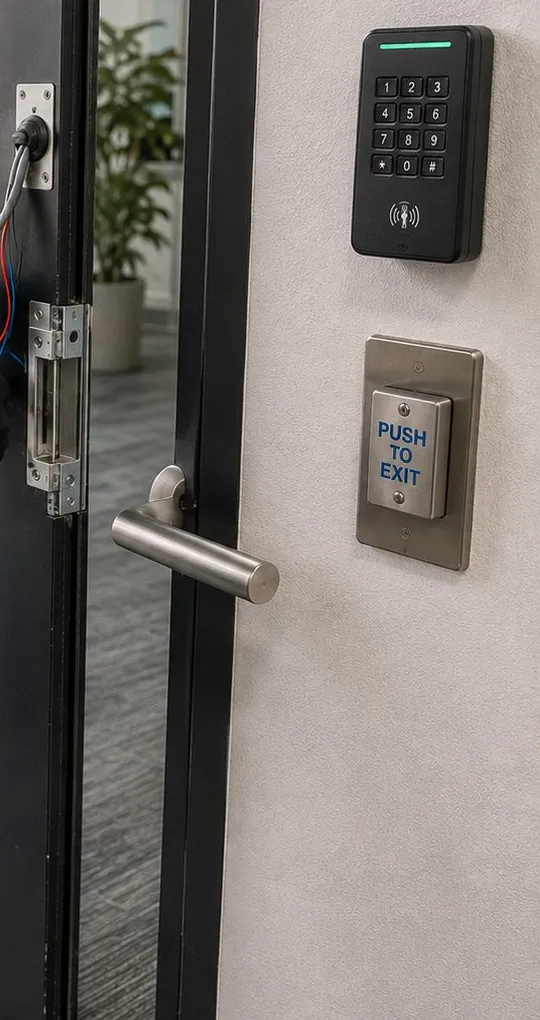
Keypad reader, push-to-exit button, lever handle and electric strike on a glass entry door, smart lock installation Harlem Manhattan
A complete keyless door in one frame: keypad and card reader on the wall, a push-to-exit button below it, a lever on the door and an electric strike being wired into the jamb.
Free Harlem Smart Lock Quote
Tell us whether it is a street door, an apartment door or a shop — and who decides for the building — and a licensed installer answers the same business day

✅
Request Sent!
An installer who works north of 110th Street will call you back the same business day.
25+
Years Experience
✓
Same-Day Estimates
100%
Licensed & Insured
4.7★
201 Google Reviews

Sitting on a board, a tenant association or a brownstone deed, and tired of copying keys for the street door? Ring the Manhattan line, (929) 560-0737, or send the 60-second form with a photo of the door from both sides. We answer three things before anyone visits: what the door can take, who in the building has to sign off, and what it costs at the published Manhattan rate.

  • Written quotes a treasurer can put in front of shareholders or tenants before a single part is ordered
  • Codes stored in the hardware, so the door keeps opening if an app company or a monthly plan disappears
  • NYS license #12000287431 · fully insured · Rated 4.7★ from 201 Google Reviews
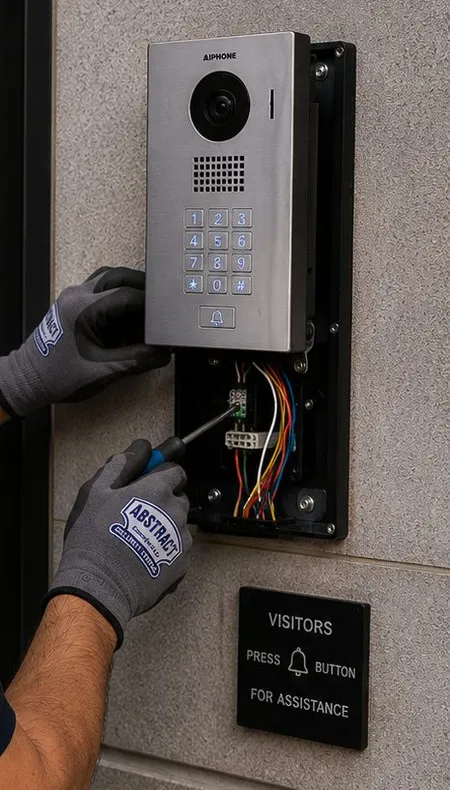
Stainless video intercom with numeric keypad opened for wiring on a stone entrance wall beside a visitor sign, Harlem Manhattan street door
A stainless video intercom with a keypad, opened at the back box for wiring, beside a small “press button for assistance” sign. On a co-op street door the keypad and the intercom are often one panel.
The Neighborhood

Why Harlem Properties Need Smart Lock Installation Built for Buildings Their Residents Run

Harlem has an unusual share of buildings where residents are the management. In the 1970s and 1980s, according to the city's Department of Housing Preservation and Development (HPD), New York acquired many residential buildings that landlords had abandoned or let fall into financial distress. HPD rehabilitated a number of them and gave the tenants the chance to own their apartments as shareholders in limited-equity co-operatives organised as Housing Development Fund Corporations, the HDFC co-ops that dot the side streets between Central Park North and the Harlem River. HPD's own description of the arrangement is plain: the co-op gets reduced property taxes in exchange for income and resale restrictions, and its board is responsible for the building's finances and for complying with the law and the regulatory restrictions placed on it. The Columbia Spectator reported in April 2024 that Community Board 9, which covers West Harlem, has more HDFCs than any community board in the city, 220 of them, while HDFCs as a whole make up about one percent of the city's apartment buildings.

Alongside the finished co-ops sit buildings still on the way. HPD's Tenant Interim Lease program, as quoted by the Harlem organising group PA'LANTE Harlem, lets organised tenant associations in City-owned buildings lease the building from the City, manage and maintain it, and eventually buy their apartments for $250 each. PA'LANTE's account of the April 2017 City Council hearing on the program records HPD agreeing to pay heating fuel for all 148 TIL buildings then in the program, and the group says more than 164 buildings never completed the conversion. In those buildings the tenant association collects the rents and arranges the repairs while the City remains the owner. So when the street door stops latching, the people who have to fix it, budget for it and decide who gets a key are the tenants themselves.

That changes what a smart lock is for. In a managed rental building a keyless entry system is a landlord's purchase; here it is a decision a volunteer board makes with the building's own money, often under scrutiny. The Spectator piece quoted residents describing HDFCs that cannot meet the maintenance HPD says they need, and UHAB, the non-profit that has long supported these co-ops, wrote in June 2023 that around 20 percent of HDFCs have fallen into distress. Boards in that position cannot sign up for a system that bills every month forever, or one that only the treasurer understands. They need equipment that keeps working when nobody is paying attention to it, records that a new board can inherit after the annual election, and a price that can be explained in one line at a shareholder meeting.

The rest of Harlem's housing adds its own layers. The NYU Furman Center's profile of Central Harlem, Manhattan Community District 10, counts 63 public housing properties with 7,766 apartments, 13.6 percent of the district's rental units, plus six Mitchell-Lama properties holding 2,449 homes. In September 2022 the City Comptroller's auditors visited 262 NYCHA developments citywide and found residential entrance doors open or with broken locks 57.9 percent of the time. Then there are the rowhouses. The Mount Morris Park Historic District, designated in 1971 and extended in 2015 by more than 250 further rowhouses, and the St. Nicholas Historic District, better known as Strivers' Row, put a landmark facade on many of the doors we are asked about. Many of those houses are owner-occupied with a rental floor or two, so the owner is both resident and landlord at the same front door.

Finally, Harlem is busy at street level. The 125th Street Business Improvement District runs along the neighbourhood's main commercial spine, past the Apollo Theater and the Studio Museum's new building; Frederick Douglass Boulevard turned into a restaurant row after the city rezoned it in 2003; and Malcolm X and Adam Clayton Powell Jr. Boulevards carry churches, salons, groceries and offices on the ground floors of apartment buildings. Many of those shops rent from the co-op or the brownstone owner upstairs. A good Harlem smart lock plan treats the shop, the street door and the apartments as separate decisions, made by separate people, on one building.

Harlem figures that shape a smart lock job

  • 15.3 percent: the Furman Center's 2024 count of Central Harlem households who own their home, under half the 32.7 percent seen across the city — so the typical door answers to a co-op, an agency, a non-profit or a landlord.
  • 220: HDFC co-ops inside Community Board 9 in West Harlem, the most of any board in the city (Columbia Spectator, April 15, 2024).
  • 13.6 percent: share of Central Harlem's rental units in NYCHA public housing in 2025, across 63 properties and 7,766 apartments (NYU Furman Center).
  • 46.9 percent: Central Harlem homes with one occupant in 2024, by the Furman Center's figures — which is why a trusted neighbour's code so often doubles as the spare key.
  • 10.9 percent: privately owned rental units in Central Harlem rented with a Housing Choice Voucher in 2024 (NYU Furman Center), which brings federal inspection standards to many brownstone rental floors.
  • 57.9 percent: NYCHA residential entrance doors the Comptroller's auditors found open and/or with broken locks across 262 developments in 2022.

Taken together, those numbers describe the job. A Harlem door often has an owner who is also a neighbour, a budget set at an annual meeting, a facade the Landmarks Preservation Commission cares about, and a rotating cast of people who need to get in. We plan the lock around who decides and who pays first, and the hardware second.

Most boards that ask us about the street door also ask about the buzzer and the cameras. Our Manhattan intercom installation team handles the panel and the apartment stations, and apartment building camera installation in Manhattan covers the vestibule and the mailboxes.

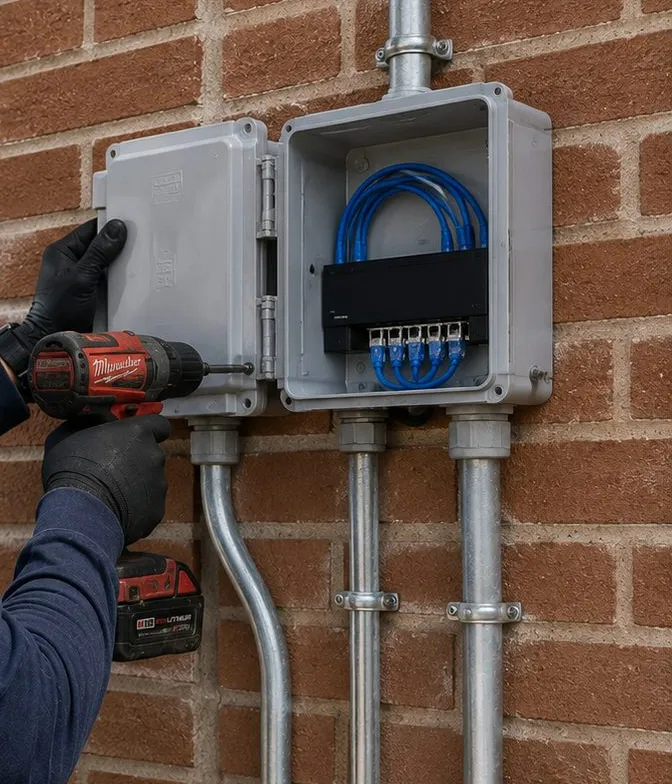
Gloved installer opening a grey weatherproof enclosure with network cable inside, fed by three metal conduits on a brick wall, Harlem Manhattan building entry wiring
A weatherproof enclosure with patch cords inside, fed by three runs of conduit on a brick wall. On a street-door upgrade, the power supply and controller need a dry, lockable home like this one.
Repair Capture

Keypad or Strike Failing North of 110th Street?

A street-door keypad that lights up but will not release, an electric strike that hums and stays shut, an apartment smart lock that stopped answering the app after the router was replaced, or a fob a resident swears worked yesterday — those are repairs, and we book them into the next open 2-hour window. Most battery, pairing, strike-alignment and power-supply faults are cleared within one to two hours of the technician reaching the door. A failed electric strike on a building entrance is $369–$606 at the Manhattan rate. If the whole buzzer system is down rather than just the lock, our Manhattan door buzzer repair service takes it from there. Call (929) 560-0737 and tell us which door and which building.

What We Install

Smart Lock Installation Services in Harlem

Uptown keyless work falls into a handful of jobs, and most Harlem requests combine two or three of them. Every one ends the same way: the door closes and latches by itself, it opens from inside with one motion and no key, and every code, fob and phone key has been tried from the sidewalk side with the door shut.

HDFC and Co-op Street Doors

A keypad or fob reader on the wall, an electric strike in the frame and an exit device inside, sized to what a small co-op can budget and set up so two or more volunteers can add and delete residents.

Tenant-Association Buildings

Entry upgrades for buildings still in a City program, scoped in writing so the association can send the plan to its HPD contact before any work, with the City's emergency access preserved.

Brownstone Front Doors With Rental Floors

Keypad deadbolts or a reader-and-strike on the shared front door of an owner-occupied rowhouse, with separate codes for the owner's household and each rental floor.

Apartment Smart Locks

Keypad and fingerprint deadbolts, or inside-only retrofits, on individual apartment doors in co-ops, rentals and condos, added beside an existing lock where the law or the building requires one to stay.

Shop, Restaurant and Office Doors

Staff codes, opening schedules and an entry log for storefronts on 125th Street, Frederick Douglass Boulevard, Malcolm X Boulevard and Adam Clayton Powell Jr. Boulevard, from a stand-alone keypad lock to a reader with a strike.

Gates, Gardens and Shared Spaces

Keypad and fob access for rear-yard gates, alley gates, laundry rooms, community rooms and garden gates, scheduled so a gate can stand open when a rule says it must.

Closers, Strikes and Frames First

The repair that has to come before any electronics: a closer that actually pulls the door shut, a strike re-set where the bolt lands, and a frame screwed back to the masonry.

Credential Registers and Handover

A written list of every code and fob by apartment, a second and third administrator, and a short training session so the next board inherits a working system rather than a mystery.

Service, Re-Pairing and Removal

Battery and motor faults, new routers and phones, cancelled fobs after a sale or move-out, and removal of old intercom keypads and strikes with the hole made good.

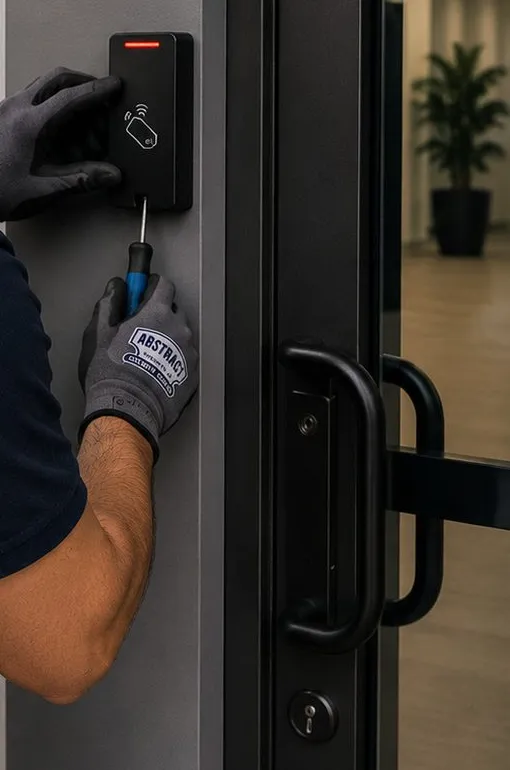
Installer with gloved hands fixing a proximity card reader to the frame beside a glass door with a pull handle, keyless entry Harlem Manhattan
A proximity reader being fixed to the frame beside a glass door with a long pull handle. Fobs suit buildings where many residents come and go and no one wants to share a code.
Building Specialists

Smart Lock Installation for Harlem's Architecture

Six kinds of building make up most of what we see between 110th Street and the Harlem River Drive, and each one narrows the hardware before any catalogue does.

Rehabilitated HDFC Walk-Ups

Five- and six-story tenements and apartment houses that the City took over, renovated and sold to their tenants. Doors and frames range from originals to replacements of the 1980s and later; the budget is the co-op's own, and the board is usually its residents.

Mount Morris Park Rowhouses

Romanesque Revival, Queen Anne and neo-Grec rowhouses on the 16 blocks between West 118th and West 124th Streets, Fifth Avenue and Adam Clayton Powell Jr. Boulevard, plus the 2015 extension. Stoops, double doors and landmark facades.

Strivers' Row

The houses on both sides of West 138th and 139th Streets between Seventh and Eighth Avenues, built in 1891–93 for developer David H. King Jr. to designs by James Brown Lord, Bruce Price and Clarence S. Luce, and Stanford White. Gated rear alleys run behind them.

Public and Mitchell-Lama Developments

NYCHA towers such as St. Nicholas Houses, home to more than 3,500 residents according to a 2016 Mayor's Office of Criminal Justice release, and middle-income Mitchell-Lama buildings. Agency and program rules decide what a resident may add to a door.

Newer Condos and Rentals

Buildings completed since 2010 along Frederick Douglass Boulevard, 125th Street and the avenues; the Furman Center counts 4,576 new units in Central Harlem from 2010 to 2025. Modern steel doors, building-wide entry apps and a managing agent.

Storefronts Under Apartments

Ground-floor shops in walk-ups and co-ops on the avenues, usually aluminium-and-glass fronts behind a roll-down gate, with the residential entrance a few feet away and frequently the same landlord as the apartments above.

How the method changes by building

HDFC walk-ups. Start with the door, not the reader. A co-op that buys a keypad for a street door with a tired closer has bought a keypad for an open door. We check that the closer pulls the door into the latch from every angle, that the strike lines up, that the hinges are tight in the frame, and only then size the electronics. We also look at where the power supply can live: a dry, lockable spot in the vestibule or cellar that the board, not a stranger, can get to.

Mount Morris Park and other landmark rowhouses. The Landmarks Preservation Commission's rules treat repairing or replacing ordinary door hardware as ordinary repair, but they carve out ornate historic hardware on special doors, and anything new on a facade can need the Commission. We photograph the door and surround first, keep ornate pieces where they are, put electronics on the inside face wherever we can, and if a keypad has to show on the street we choose the most modest housing and finish that will do the job.

Strivers' Row and houses with rear access. A house with a gated alley has more than one way in, and the rear gate is often shared with neighbours. We treat the front door, the garden door and any gate as separate decisions, and we will not change a shared gate until every household that uses it has agreed who holds codes.

Public housing and Mitchell-Lama buildings. Here the agency or the housing company sets the rules. The state law that lets most New York tenants add a lock of their own, Multiple Dwelling Law section 51-c, expressly excludes buildings owned by a municipal housing authority. We tell residents of those buildings, honestly, what is and is not theirs to change before quoting anything.

Post-2010 buildings and shopfronts. A modern steel unit door is easy to fit, so the limit is usually the condo's rules or the entry app the developer chose. A shopfront is the opposite: its slim aluminium stile will not take a household deadbolt, which leaves a keypad lock built for storefront stiles or a wall reader driving a strike in the frame. Most shop owners who add staff codes also want cameras on the door — our commercial security systems for Manhattan businesses cover both.

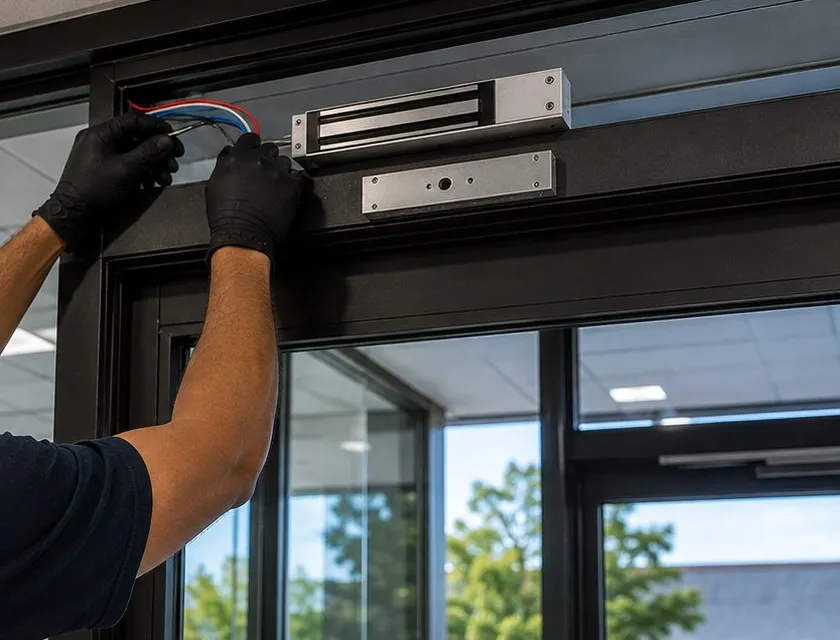
Gloved hands wiring an electromagnetic lock and armature plate at the header of a glass entrance door, commercial keyless entry Harlem Manhattan
An electromagnetic lock being wired at the head of a glass entrance, with its armature plate below. On egress doors the city code ties a lock like this to one-hand release hardware.
Commercial Smart Locks

Business Smart Lock Installation in Harlem

Harlem business doors cluster on a few corridors, each with its own hours and its own crowd. These are the patterns we plan for on each.

125th Street

The neighbourhood's main commercial street and home of the 125th Street Business Improvement District. Long opening hours, heavy foot traffic past the Apollo and the Studio Museum, and roll-down gates on most fronts: staff codes that change often and a log of who opened up.

Frederick Douglass Boulevard

Rezoned by the city in 2003, which DNAinfo reported in 2010 had set off a restaurant and bar boom along the boulevard. Late closings, early produce deliveries and kitchen staff who turn over by the season.

Malcolm X Boulevard (Lenox Avenue)

Restaurants, groceries, churches and institutions such as the Schomburg Center at 135th Street, many on the ground floors of apartment buildings whose co-op or owner is the commercial landlord.

Adam Clayton Powell Jr. Boulevard

The wide Seventh Avenue corridor through the heart of the neighbourhood, with offices, clinics, salons and congregations alongside the Strivers' Row blocks and Abyssinian Baptist Church on West 138th Street.

Churches and Community Organisations

Congregations, food pantries, after-school programs and tenant-organising groups in church halls, brownstones and storefronts, where several groups share one door on different days.

Shops Inside Resident-Run Buildings

Laundromats, delis and salons that rent the ground floor of an HDFC co-op, where the shop's rent can matter to the building's budget and the board sits on both sides of the lease.

Compliance callouts for Harlem business doors

  • Maglocks on a way out: under section 1010.1.9.9 of the city's Building Code, a magnetic lock on an exit door or a tenant-space door is only acceptable when the door carries its own release hardware — a lever or bar with a built-in switch that a person can operate one-handed without thinking, that kills the lock's power directly, and with a lock that lets go whenever power is lost.
  • Fire-labelled doors and frames: NFPA 80 allows round holes for listed hardware to be made on site; a rectangular strike pocket or other cut-out is a field modification that the listing laboratory must approve, as Lori Greene's iDigHardware columns explain. Cellar and stair doors in older buildings often carry labels.
  • Permits for the wiring: door readers, strikes and controllers run below 50 volts, and section 28-105.4.7 of the Administrative Code exempts that class of signal and data cabling from an electrical permit if a licensed master or special electrician, or a qualified person under the electrical code, does the work. Bringing 120 volts to the power supply is a job for an electrician.
  • Historic districts: putting anything new on the outside of a Mount Morris Park or Strivers' Row building means checking with the Landmarks Preservation Commission first, although like-for-like swaps of plain door hardware generally count as ordinary repair — decorative hardware on designated special doors excepted.
  • Accessible operation: the 2010 ADA Standards say door hardware must not require tight grasping, pinching or twisting of the wrist and set operable parts between 34 and 48 inches, so we place keypads and choose exit hardware accordingly.

Those references are there for you to verify with your own architect or lawyer; they are not legal advice. Owners who put staff on codes tend to want a camera on the same entrance — see our commercial security camera installation in Manhattan.

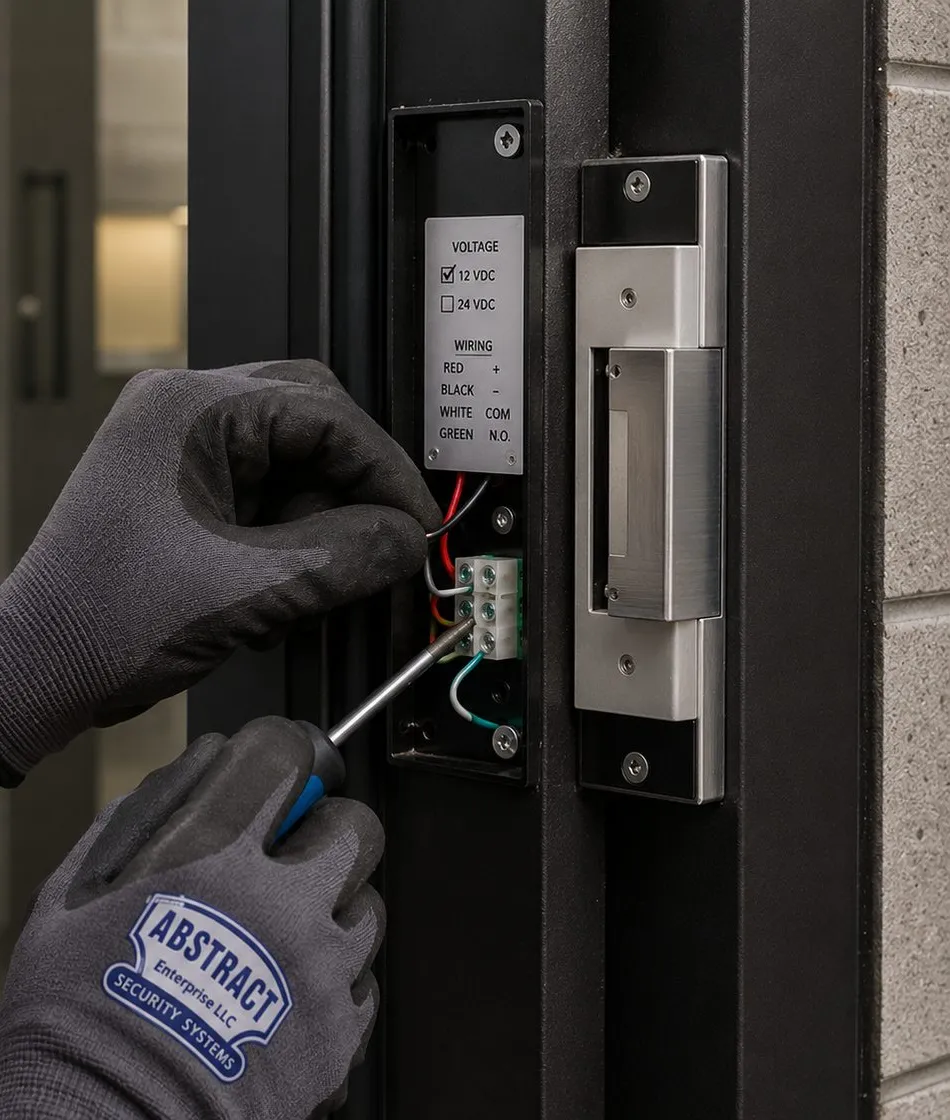
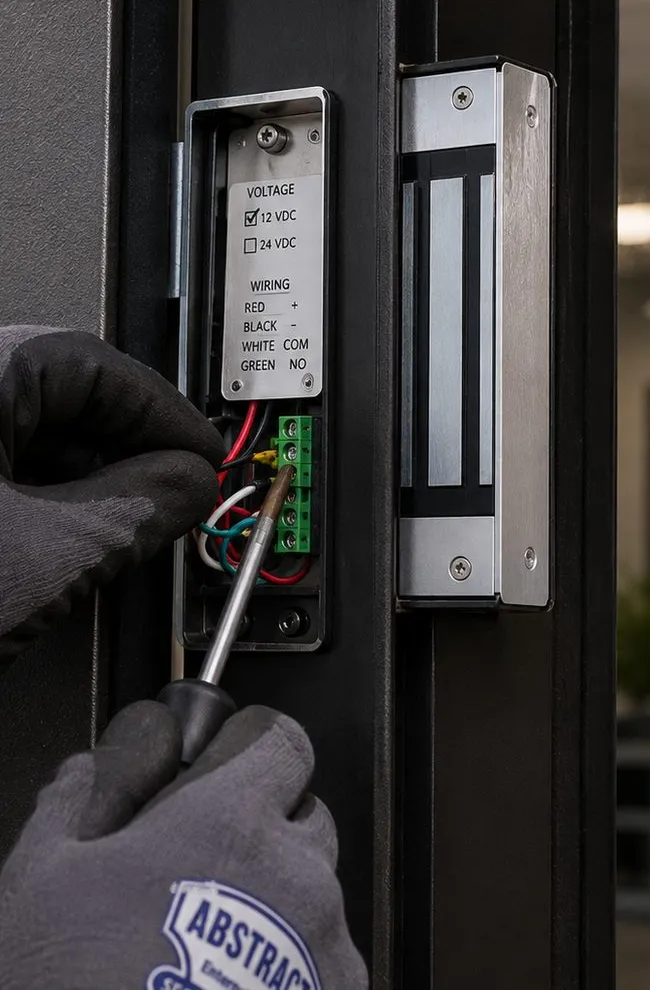
Technician tightening wires on a terminal block below a labelled voltage and wiring plate beside an electric strike in a steel door frame, Harlem Manhattan
Terminating the strike wiring at a terminal block under a label that records the voltage and wire colours. A labelled strike is one a future board can have serviced without guesswork.
Your Questions Answered

Smart Lock Installation in Harlem: Questions Answered

Below are the issues that come up when a co-op board, a tenant association, a rowhouse owner or a shopkeeper calls us about a door, sorted by the decision behind them. When a law or a published standard decides the matter we cite it by name; treat the rest as practical experience rather than legal advice.

Buildings run by the people who live in them

When our HDFC board changes at the annual election, how do the outgoing officers hand over control of the street-door system?

Plan the handover on the day the system goes in, not the night before the election. Every keypad and fob system has an owner account, the login that can add administrators, delete users and change settings. In a co-op that account should belong to the corporation, set up with an email address the board controls as a body rather than a member's personal inbox, and a password kept with the building's records. Under it, each current officer gets their own administrator login, so the log shows which officer added which resident. When officers rotate, the outgoing ones are removed as administrators at the first meeting of the new board and the incoming ones are added; the owner login and its password are passed on in the same envelope as the bank signature cards. Keypads that also store a programming code in the hardware should have that code written on the same sheet. We leave a printed handover page with exactly those items, and if a board ever finds itself locked out of its own account because a former officer kept the only login, a programming visit at the published Manhattan rate can usually recover control at the panel.

Can our board use the street-door entry log to check whether a shareholder really lives in the apartment?

Be very careful before you do. HDFC co-ops generally require shareholders to live in their apartments, and HPD notes that almost all of them limit subletting, so boards have a real interest in occupancy. But an entry log was installed to run a door, and using it to investigate a neighbour turns a convenience into surveillance. New York City's Tenant Data Privacy Act, Local Law 63 of 2021, limits what owners of multiple dwellings that use smart access systems may collect, requires consent before collecting reference data such as fingerprints, and bars using the data to harass or evict; whether and how it reaches a particular co-op is a question for the board's lawyer. Our practical advice is to decide the rule before anyone needs it: adopt a written policy saying what the log is kept for, how long entries are kept, and who may look at them, and give it to every resident when their fob or code is issued. A log that only records fob numbers, not names, is also easier to defend. We can configure retention and access to match whatever policy the board adopts.

Our building is still in the City's Tenant Interim Lease program — can the tenant association put a keypad on the front door itself?

Not on its own say-so. Under TIL the City still owns the building and the association manages it under a lease, so changes to the building's fabric, including the entrance door and its lock, belong in a conversation with the association's HPD contact before anyone drills. That is not a formality: the City needs emergency access, may have rehabilitation work planned that would replace the door anyway, and may have its own standard for entry hardware in buildings it owns. What we can do is make that conversation easy. We visit, photograph the door, frame and existing buzzer, and write a one-page scope: what would be installed, where the power would come from, how the City and the fire department would still get in, what it would cost at the published rate, and what it would look like if the City later takes the building through renovation. The association sends that to HPD and books the work once it has an answer. In the meantime, repairs to a broken closer or strike are ordinary maintenance the association already handles.

Our reserve fund is thin — should the board fix the door closer and strike first, or go straight to a keypad?

Fix the door first. A keypad controls who can unlock a door; it does nothing for a door that never closes. In older Harlem walk-ups the usual culprits are a closer that has lost its pull, a strike that no longer lines up with the latch because the frame has moved, and hinges whose screws have stripped out of the wood. Those repairs are a small fraction of a keypad installation, and they solve the complaint most residents actually have, which is the door standing open. State law also points that way: Multiple Dwelling Law section 50-a requires automatic self-closing and self-locking entrance doors in class A multiple dwellings built or converted after January 1, 1968, and the obligation falls on whoever owns the building, which for an HDFC is the co-op. Once the door shuts and locks reliably, the board can decide in a later budget whether keys are still workable or whether codes and fobs would save money on lock changes. If you want both in one visit, the keyless door is $1,875–$3,125 at the Manhattan rate and includes setting up the strike; we will still tell you if the closer is the real problem.

Rent-paying tenants still live in our HDFC alongside the shareholders — do they get street-door codes on the same terms?

They should, and the system makes that easy. Many HDFC buildings still house tenants who rented when the building was converted and never bought in, or who rent apartments the co-op owns. Their right to enter the building does not depend on whether they hold shares, and the city's Housing Maintenance Code makes the owner responsible for giving every apartment a working way in. On the door, a renter's fob or code is set up exactly like a shareholder's, filed by apartment number, and cancelled on the same rules when they move out. What differs is the paperwork behind it, which the board already handles under the lease. Two things to avoid: issuing renters a different, more limited credential that only works some hours, and charging renters for credentials in a way that shareholders are not charged. Both invite disputes, and a door system is not the place to settle a building's arguments about who belongs. If the building has a rent-stabilized tenant, the state housing agency's rules on required services are worth reading before any change is announced.

Cloud video intercoms bill by the month — how does that compare over ten years with a stand-alone keypad for a twelve-unit HDFC?

Write the comparison down before choosing, because the up-front price is only part of it. A stand-alone keypad or fob controller with an electric strike is a one-time purchase: our single-door keypad or fob reader with strike is $1,875–$3,125 installed at the Manhattan rate, and after that the running costs are batteries for any backup, the occasional new fob, and repairs if something fails. A cloud-connected video intercom adds features many buildings like, such as answering the door from a phone anywhere and issuing delivery codes remotely, but most charge a subscription or per-apartment fee, and the building's ability to use some features depends on keeping that account paid. Ask any vendor for the full ten-year figure in writing: hardware, installation, the fee schedule, what happens to the door if the fee lapses, and whether the panel works on a different service if the company is sold. For a small co-op with a tight budget, a keypad that stores its codes in the hardware is the low-risk floor; you can add a video panel later without throwing it away. We will price both honestly if you want to compare.

Brownstone owners who are also landlords

Our tenant pays part of the rent with a Housing Choice Voucher — will the unit inspection look at the lock on their door?

Yes, the entry door is on the inspection list. HUD's NSPIRE standard for entry doors, which voucher inspections follow, records a failure if an entry door cannot be secured by at least one installed lock, and a separate failure if the door's self-closing mechanism is damaged, inoperable or missing where one is fitted; both carry a 30-day correction window for voucher units. The same standard lists a damaged or inoperable auxiliary, meaning additional, installed lock as a low-severity item that does not fail the unit. In practice that means two things for a brownstone owner. First, the tenant's door must have a working primary lock the tenant can use; a smart deadbolt does that job well, provided it keeps a working key cylinder and the batteries are looked after. Second, if a smart lock is added beside an existing lock rather than replacing it, a later fault in the smart lock is less likely to fail the unit because the original lock still secures the door. We note on the invoice which lock is primary so the inspector and the agency have a clear record.

Our house backs onto the gated alley behind Strivers' Row — can the alley gate take a keypad, and who has to agree?

It can, but the gate is rarely yours alone. The rear alleys behind the St. Nicholas Historic District houses are one of the district's distinctive features: Wikipedia's account of the district notes they are gated, that some gates still carry “Walk Your Horses” signs, and that they once allowed discreet deliveries without disturbing the main houses. Several households usually use the same gate, so changing its lock is a decision for all of them, ideally recorded in writing with who pays and who administers the codes. Because the gates sit inside a historic district, a visible keypad or a new post on the street side is a question for the Landmarks Preservation Commission; we prefer a solution that keeps the historic gate and sign untouched, with a weatherproof keypad mounted on the alley side where it is less visible, or a battery-powered keyless gate lock that needs no wiring at all. Each household then gets its own code, which ends the old problem of copied gate keys circulating among contractors and former tenants.

Shops, restaurants and shared grounds

Our shop rents the ground floor of an HDFC co-op — who approves a keypad on the shop door, the co-op as landlord or HPD?

Start with your commercial lease and the co-op board. The co-op is your landlord, and almost every commercial lease says something about alterations to the storefront and about the landlord keeping a key. If the building has a regulatory agreement with HPD, the board may also need to consider whether the agreement touches the commercial space, which is the board's question to answer, not yours. What helps everyone is a clear, small scope: a keypad lock or reader on your own door, nothing changed on the residential entrance next to it, no wiring through the residential hallway, and your codes kept entirely separate from the building's. We put that in writing for the board's meeting. The arrangement for the landlord's access is usually a sealed key or a landlord code that is logged when used. Keep in mind that the Columbia Spectator's reporting on HDFC finances described one co-op left with a very large unpaid water bill after a ground-floor business left, so boards are understandably careful with commercial tenants; a tidy, reversible installation is the easiest kind for them to approve.

Our restaurant on Frederick Douglass Boulevard takes deliveries through the sidewalk cellar doors — can those be put on a code?

Usually not the sidewalk doors themselves, and that is fine. Those steel hatches sit in the public sidewalk and are normally secured from below with bars or a hasp, because anything operable from the street side becomes a hazard and a target. The useful place for a code is one step further in: the door between the cellar and the kitchen, or the cellar's own interior door, which a delivery driver reaches after the staff open the hatch from below. A keypad lock or a reader with a strike on that inner door lets a produce driver or the opening cook in at five in the morning on a code that only works in a delivery window, and it leaves a record of every opening. If the cellar door carries a fire label, we work within what its listing allows, and we keep a one-motion exit on the inside so nobody can be trapped below. For the hatch itself, a stout hasp and a padlock that only the manager holds remains the right answer.

Our GreenThumb community garden has to be open to the public at set hours — can a keypad gate still work there?

Yes, if it is set up around the rule rather than against it. The GreenThumb license NYC Parks issues to community gardens requires the garden to be kept open to the public for at least 20 hours a week from April through October, and the program's site lists each garden's open hours for that season. A keypad or fob lock on the gate solves the garden's real problem, which is that the volunteer with the only key cannot be there every time. Members get personal codes so they can garden at other hours, and a scheduled unlock, or a simple practice of opening the gate on a code during posted hours, keeps the public hours honest. We favour battery-powered, weatherproof keyless padlocks or gate locks that need no wiring, since most garden gates have no power. Ask the garden's GreenThumb outreach coordinator before changing a gate on Parks property, and post the open hours where the public can see them.
Equipment

Types of Smart Locks We Install

Six families of hardware cover almost every Harlem door. Which one fits depends on who owns the door, how many people use it, and what the building can afford to run for the next ten years.

Stand-Alone Keypad and Fob Controllers

A keypad or proximity reader wired to an electric strike, with codes stored in the controller itself. No account, no monthly fee, managed at the panel or through software. The budget workhorse for HDFC street doors.

Video Intercom Panels With Keypads

An intercom and keypad in one housing, so visitors call apartments and residents enter a code. Cloud-connected versions add remote answering and delivery codes, usually with a subscription.

Keypad and Fingerprint Deadbolts

Battery smart deadbolts for apartment doors and brownstone front doors, with a key cylinder behind the keypad and codes stored in the lock. Easiest for relatives who will never use an app.

Inside-Only Retrofits

Motor units that fit over the inside of an existing single-cylinder deadbolt and leave the outside alone — August describes its retrofit as leaving the outside untouched. Useful where a co-op wants corridor faces to stay uniform.

Commercial Keypad Locks and Electric Strikes

Heavier keypad locks for shop back doors and narrow aluminium storefront stiles, or strikes in the frame driven by a reader. Staff codes and schedules for 125th Street and the boulevards.

Keyless Padlocks and Gate Locks

Weatherproof battery locks for alley gates, garden gates, bike rooms and storage cages, where running power is impractical and copied keys are the problem being solved.

Features that matter more in resident-run buildings than in brochures

  • Codes in the hardware: the door keeps working if a cloud service, an app or an account lapses.
  • Multiple administrators: at least two, ideally three, so one officer moving away never strands the building.
  • Exportable user lists: a register by apartment number that a new board can print and check against residents.
  • A mechanical override: a key switch or cylinder for the fire department, the super and the day the power fails.
  • Adjustable release time: enough seconds for an older resident with a cane or a parent with a stroller to get through.
  • Batteries the treasurer can buy: standard cells, not proprietary packs, and a low-battery warning that reaches more than one phone.

National alarm packages compared with a local licensed installer

QuestionNational alarm brands (ADT, Ring, SimpliSafe)AESS, local and licensed
Who is the system built for?Mostly single households buying a monitored packageThe building as it actually works: a board, a tenant association, an owner with tenants, a shop
Does the door depend on a plan?Often tied to a paid plan — Ring, for example, states that using a Z-Wave lock through Ring Alarm requires a subscription and recognises only codes made in its own appWe favour hardware that stores codes locally; a plan is optional, never required to open the door
Who fixes the closer, strike and frame?Generally outside a sensor-and-panel installationPart of every street-door job, because a door that will not close defeats any lock
Who writes the scope for the board or HPD?The customerWe do, in plain language, with the published price
Gloved hands with a screwdriver connecting coloured wires to a green terminal block under a voltage label next to a magnetic lock on a dark door frame, Harlem Manhattan
Connecting wires to a magnetic lock's terminal block, with the 12-volt setting ticked on the label beside it. Matching the lock's voltage to the power supply is the first thing we check on any existing system.
AI Overview Reality Check

What AI Gets Wrong About Smart Lock Installation in Harlem

Google's AI Overview could not be captured from the environment this page was built in. What follows are common claims from cost guides, product pages and lifestyle articles — the raw material those summaries are built from — set against what actually happens at a Harlem street door, rowhouse or apartment.

“A smart lock costs a few hundred dollars installed”

The figure most often quoted comes from Fixr: in a January 2025 update it put a typical installed smart lock between $250 and $400, about $300 on average, for one Wi-Fi lock plus an accessory on a single-family door, with a handyman charging $50 to $100 an hour.

That is a sensible figure for one family's front door. It has nothing to say about a co-op street door, where the job is a reader, a strike in a steel or wood frame, a power supply with backup, an exit device inside, credentials for every apartment and a closer that actually works.

So we publish building-door prices separately: a single-door keypad or fob reader with an electric strike is $1,875–$3,125 at the Manhattan rate. An apartment-door smart lock is quoted flat after a free walkthrough because the door decides the work.

“The property manager will handle it”

Advice written for renters assumes a landlord with a management office who decides on entry systems and pays for them.

In an HDFC co-op the shareholders are the owner and their board is usually volunteers; in a TIL building the tenant association manages under a lease from the City; in a brownstone the landlord lives downstairs. HPD describes HDFC boards as responsible for both the co-op's finances and its compliance with the law and its regulatory restrictions.

That is why our quotes for Harlem buildings are written to be read at a meeting, with the price, the scope, what it costs to run, and who in the building will administer it.

“Pick the system with the best app”

Product reviews rank locks and intercoms by their apps, and AI answers follow. Apps matter, but in a small co-op the more important question is what happens when the account owner moves, the subscription lapses or the company is sold.

Ring's own support pages say its Z-Wave lock feature requires a subscription and works only with codes created in the Ring app; other brands have their own conditions. A door whose codes live only in a cloud account is a door the building does not fully control.

We therefore start from hardware that stores codes locally and works with no internet, and add app features on top where the building wants them and can afford them.

“A smart lock is all you need to stop strangers getting in”

Marketing copy treats the lock as the security. On a multi-family street door the weak point is usually the door itself: a closer that does not pull it shut, a strike that misses the latch, or a resident who props it for a delivery.

The Comptroller's 2022 audit of NYCHA building doors found entrance doors open, or with broken locks, 57.9 percent of the time across 262 developments; the report described doors propped with bricks and rocks. No credential system helps a door in that condition.

The lasting fix is mechanical first — closer, strike, hinges — then electronic, with a door-position alert where the budget allows so the board learns when the door is left open.

“Landmarked houses can't have keypads”

Owners in Mount Morris Park and on Strivers' Row are sometimes told that landmark status rules out modern locks entirely.

Section 2-14 of the Commission's rules lets owners repair or swap plain hardware — a knob, a handle, a hinge — without a permit, but not the decorative exterior pieces on doors the rules call special. A new door, or work that alters the facade, goes to the Commission.

In practice most rowhouse jobs keep the historic hardware, put the electronics on the inside face and use a modest keypad; where something new would show on the facade, the job pauses for the Commission before any drilling.

“Any renter can swap the deadbolt for a smart one”

Many national articles tell renters to replace the landlord's deadbolt and swap it back at move-out.

In a New York multiple dwelling the owner must provide the lock on each apartment entrance door, and Multiple Dwelling Law section 51-c gives tenants the right to add a lock of their own, up to three inches in circumference, in addition to the owner's, with a duplicate key for the owner on request. The same section excludes buildings owned by a municipal housing authority.

So in a Harlem rental we add rather than swap; in a co-op we follow the proprietary lease; and in NYCHA we explain plainly what the resident may and may not change.

“Wi-Fi locks connect from anywhere in the house”

Marketing photos tend to put the lock and the router a few steps apart. The fine print is stricter: August tells customers to keep its Wi-Fi bridge 10 to 15 feet from the lock and warns that walls between bridge and router weaken the link.

A brownstone has brick party walls, plaster on lath and a front door a full floor below the router; a co-op street door may be a vestibule away from any apartment's Wi-Fi at all.

We test signal at the door before choosing between a bridge, a Thread border router, a wired controller or a lock that needs no network, and we never sell remote features a door cannot reliably reach.

A Street Door Your Board Can Actually Run

Send a photo of the door from both sides and tell us how many apartments and who decides. We will tell you what it needs, what it costs and what it costs to run.

Get In Touch

Request a Free Quote

Give us the building type, the number of apartments and the name of whoever signs off — board, association, owner or landlord — and we reply in writing before the end of the business day. To talk it through by phone, dial (929) 560-0737.

✅

Thanks — We Have Your Door

A Harlem-area installer will phone you back today with next steps for your building. If a door has failed and people cannot get in, call (929) 560-0737 now instead of waiting.

How It Works

Our Installation Process

Seven steps, whether the door is the street entrance of a co-op off Lenox, a parlor-floor door on West 122nd Street or a shopfront on 125th Street.

1. Photos and the decision-maker

You send photos of the door from both sides and its edge, and tell us who decides for the building: a board, a tenant association, an owner, a landlord. We say what approvals the job needs before anything else.

2. Free walkthrough and written scope

At the door we test the closer, strike and hinges, find a home for any power supply, check for fire labels and landmark hardware, and write a one-page scope with the published Manhattan price.

3. Approval in the building's own way

The board votes, the association checks with HPD, the owner tells the tenants, or the co-op's landlord signs off on a shop door. We answer questions at the meeting if asked and wait for the yes.

4. Door repair before electronics

Closer adjusted or replaced, strike re-set, hinge screws re-anchored and the frame made solid, so the door shuts and latches on its own before any keypad, reader or smart lock goes on.

5. Installation and wiring

Keypad, reader or smart lock fitted, strike and exit hardware wired, power supply mounted where the building can reach it, and every connection labelled for whoever services it next.

6. Credentials and administrators

Codes or fobs issued by apartment or by staff member, two or three administrators set up under an account the building owns, and every credential tried from the street side with the door closed.

7. Handover page and training

A printed register of credentials, the owner login, the programming code and the service details, plus a short session showing your administrators how to add and remove people themselves.

Coverage Area

Smart Lock Installation Near Harlem's Landmarks

Six places that mark out the doors we work on in Harlem, from a cast-iron fire tower on a rock outcrop to the blocks where the stoops are landmarks.

Marcus Garvey Park and the Fire Watchtower

The park at the heart of the Mount Morris Park Historic District holds the cast-iron Mount Morris Fire Watchtower, completed in 1857 and restored by the City in 2019, according to NYC Parks. Rowhouses on the surrounding blocks fill our requests for landmark-sensitive keypads.

Strivers' Row

West 138th and 139th Streets between Seventh and Eighth Avenues, built in 1891–93 and designated the St. Nicholas Historic District in 1967. The gated rear alleys, with their “Walk Your Horses” signs, are among the few in Manhattan.

The Apollo Theater

At 253 West 125th Street, opened in 1914 as Hurtig & Seamon's New Burlesque Theater and reopened as the 125th Street Apollo in 1934, the Apollo anchors the stretch of 125th Street where shopfront doors see crowds well into the night.

The Studio Museum in Harlem

The museum opened its new seven-floor, 82,000-square-foot building at 144 West 125th Street on November 15, 2025. Its designers say the entrance steps evoke the stoops of Harlem's brownstones — the same stoops whose doors we fit.

The Schomburg Center

The New York Public Library's research center at 515 Malcolm X Boulevard and 135th Street, founded in 1925 and named a National Historic Landmark in 2017, now holding more than 11 million items. Lenox Avenue's co-ops and walk-ups stretch north and south of it.

Abyssinian Baptist Church

The congregation's building on West 138th Street was dedicated on June 17, 1923, according to Village Preservation. Churches like it, and the halls and annexes around them, are where several community groups often share one entrance.

We also serve East Harlem, Hamilton Heights, Sugar Hill, Manhattanville, Morningside Heights, Washington Heights and the rest of Manhattan through the Manhattan smart lock installation page. Police coverage follows the same map: the 28th Precinct, on Eighth Avenue, serves central Harlem, and the 32nd Precinct serves the northeastern part of the neighbourhood.

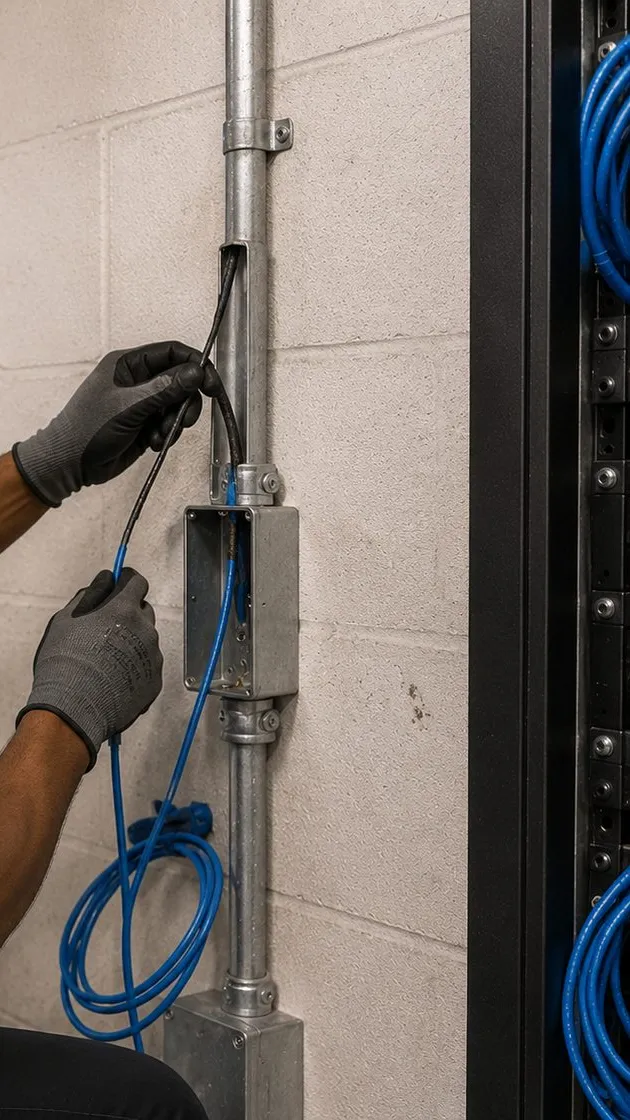
Gloved hands feeding blue network cable into a metal conduit riser and junction box on a painted block wall, low-voltage pathway for a Harlem Manhattan entry system
Feeding blue network cable up a metal conduit riser past a junction box on a painted block wall. A cellar-to-vestibule run like this is how a controller reaches the street door without opening the hallway walls.
Pricing

Smart Lock Installation Cost in Harlem

Harlem work is billed at the Manhattan rate, and this table splits fixed published prices from jobs that can only be priced after a visit. Building, suite and storefront doors carry published AESS prices set at a Brooklyn base and multiplied by 1.25 for every Manhattan neighbourhood, so a keyless street door on West 128th Street costs what it would in Midtown. Smart locks on individual apartment and rowhouse doors have no published AESS figure, because the door, the frame and the locks already on it decide the work; those are quoted flat, in writing, after a free walkthrough, and the quote is what you pay.

ItemHarlem priceScope and source
Single-door keypad or fob reader with electric strike$1,875–$3,125 installedOne entrance — an HDFC lobby, a vestibule, a storefront or an office — at the published $1,500–$2,500 Brooklyn base times 1.25
New electric strike on a building or suite door$313–$563Swapping a dead or wrong-voltage keeper while the rest of the buzzer system stays; door-buzzer list price $250–$450 multiplied by 1.25
Failed electric strike repair$369–$606Residents press the buzzer, it sounds, and the door stays shut; repair list price $295–$485 multiplied by 1.25
Programming-only visit for hardware already on the doorFirst hour $265, then 30-minute blocksRecovering an owner login, adding administrators, re-pairing a bridge, loading a credential list; published Manhattan setup-only rate
Apartment, rowhouse or gate smart lockQuoted flat at free walkthroughSet after we see the slab, the locks already fitted, any historic hardware and where power could come from; AESS publishes no fixed figure here
Service and callback rate$195/hr, 3-hour minimum ($585)Only for call-backs after sign-off; the original installation is never billed by the hour

What moves a Harlem quote

  • The door's condition: a door that already closes and latches is quick; one that needs a closer, a re-set strike and re-anchored hinges takes longer, and we say so in the scope.
  • Where power can come from: an outlet in the vestibule or a short run from the cellar is simple; a long fish through a finished stair hall is not.
  • The frame: wood, hollow-metal and fire-labelled frames are prepared differently, and labelled frames are kept to what the listing allows.
  • Landmark hardware: keeping an ornate knob or escutcheon in place while the electronics go inside takes care and time.
  • How many credentials: eight apartments is a short list; forty residents, a shop and the super's schedule is a longer one worth doing properly.

National figures, for comparison

Fixr's national guide, updated January 2025, puts smart lock installation at $250–$400 with a $300 average and handyman labour at $50–$100 an hour. That is third-party data for a house door, not an AESS price, and it does not describe a building entrance. If you are comparing another company's building system, ask for the full ten-year cost including any per-apartment or monthly fees, what happens to the door if those fees stop, and whether the price includes fixing the closer and strike.

Before any drilling you receive and sign our service agreement; the deposit, warranty and late-fee terms are summarised in the licensed-and-insured block at the foot of this page.

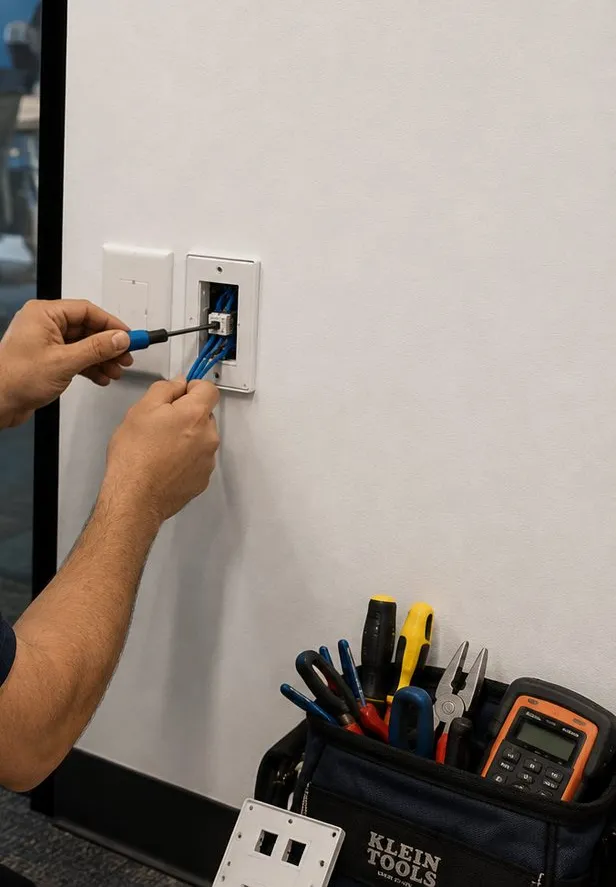
Hands terminating a blue cable into a data jack on a white wall plate with a tool bag below, wired port for a reader controller Harlem Manhattan
Terminating a data jack in a wall plate, with the tool bag on the floor below. Networked controllers in shops and larger co-ops often need a wired port like this.
Shop Our Systems

Smart Lock Installation Packages & Pricing

Three packages cover most of what Harlem buildings ask for. Two carry published prices at the Manhattan multiplier; the household package is priced after we have seen the door, because a much-repaired 1890s rowhouse door and a 2015 condo door are not the same job.

Starter — Household or Rowhouse Door

Quoted flat at walkthrough

A keypad or fingerprint deadbolt, or an inside-only retrofit, on an apartment or brownstone door; strike and latch corrected; separate codes for the owner's household and each rental floor where there are tenants; a second administrator; printed code sheet.

Standard — Strike Upgrade for a Working Door

$313–$563

When the buzzers, wiring and handsets are fine and only the keeper in the frame is at fault, we fit a fresh electric strike to the street, vestibule or suite door at the Manhattan rate. If an existing strike has simply failed, the repair line applies: $369–$606.

Premium — Keyless Street, Shop or Office Door

$1,875–$3,125

One keypad or fob reader on the wall and an electric strike in the frame, at the Manhattan rate, with an exit button or sensor inside, credentials for every apartment or staff member, two or three administrators and a handover page your next board can use.

Bring Your Own Lock — Labour Only

If the board or owner has already purchased the hardware, installation is priced as labour alone, fixed at the walkthrough. We check the box against the door first — slab thickness, backset, mortise or bored prep, strike voltage — confirm the codes live in the device, and make sure it fits whatever the building's approval requires. A customer-supplied product carries its manufacturer's warranty rather than ours, and if it is the wrong product for the door we say so before anything is drilled. A programming-only visit for hardware already installed is $265 for the first hour, then 30-minute blocks.

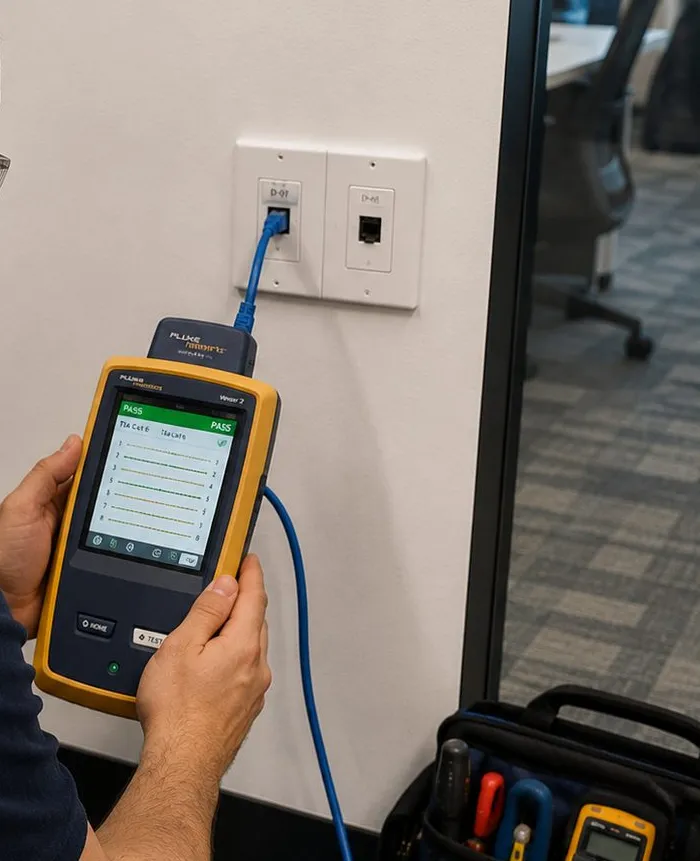
Handheld cable certifier showing a pass result while connected by blue cable to a wall jack, low-voltage testing for Harlem Manhattan keyless entry
A handheld certifier connected to a wall jack shows a pass before anything is plugged in. A tested cable is one less thing to blame when a reader misbehaves later.

Ready to Put the Street Door Back in Residents' Hands?

One page, one price, one plan for who runs it after the next election. Call or send the form and we will write it for your meeting.

Public and Middle-Income Housing

Residents of NYCHA and Mitchell-Lama Buildings: What Is Yours to Change

Harlem has a large share of agency-run housing, and the honest answer about smart locks there starts with ownership. The Furman Center counts 63 NYCHA properties in Central Harlem, among them St. Nicholas Houses, which a 2016 Mayor's Office of Criminal Justice release described as home to more than 3,500 residents and the site of an expanded program of Layered Access Control doors. NYCHA's own design guidelines describe layered access control as a way to add security for building entry doors. Those entry doors, the readers on them and the keys to them belong to the Authority.

The building entrance is NYCHA's. A resident cannot add a keypad or reader to a NYCHA lobby door, and should not try. When an entrance door is broken or propped, the route is the Authority's own repair system and, where conditions persist, the elected officials and tenant association who press the Authority. The Comptroller's 2022 audit, which found entrance doors open or with broken locks 57.9 percent of the time across 262 developments, is a useful document to cite in that conversation.

The apartment door is mostly NYCHA's too. The state right for tenants to add their own lock, Multiple Dwelling Law section 51-c, expressly excludes buildings owned by a municipal housing authority. Residents who want more security on their own door should ask the development's management what the lease and NYCHA's rules allow before buying anything. We will not drill a NYCHA apartment door without written permission, and we tell callers that before quoting.

Mitchell-Lama is different again. The Furman Center counts six Mitchell-Lama properties in Central Harlem with 2,449 homes. These middle-income developments are supervised by a city or state housing agency and run by a housing company, sometimes as a co-op. Changes to unit doors follow the house rules and the supervising agency's requirements, so the managing office comes first, and we prepare a scope for it in the same way we would for an HDFC board.

What residents can usually do without touching the door. A doorbell camera or door viewer that sits inside the apartment, a door-position sensor that sends an alert when the door opens, and a careful household plan for spare keys need no drilling and no permission in most buildings. They are not a substitute for a working lobby door, but they give a household information while the building's own problems are pursued through the proper channels.

Boulevard Businesses

A Staff Code Plan for a Harlem Shop, Restaurant or Congregation

Ground-floor businesses on 125th Street, Malcolm X Boulevard, Adam Clayton Powell Jr. Boulevard and Frederick Douglass Boulevard share a pattern: early openings, late closings, staff who change with the season and a landlord who may live upstairs. This is the plan we set up with owners, laid out so it can be pinned inside the office door.

Owner and managers

The owner holds the administrator account; one or two managers have their own administrator logins so they can add a new hire on a Saturday without phoning anyone. Each has a personal code that works at any hour.

Openers and closers

The people who open and close get codes that work in a window around opening and closing times. The entry log then shows who actually opened up and when, which settles most of the arguments that keys never could.

Everyone else on staff

Cooks, stylists, stock clerks and part-timers get codes that work only during their shifts, created on the first day and deleted on the last. Nobody carries a key home, and nobody needs the locks changed when someone leaves on bad terms.

Deliveries

Regular suppliers who arrive before opening get a code for the back or cellar door that works only in their delivery window. Occasional deliveries are met in person.

The landlord

Most commercial leases give the landlord a right of access. A landlord code that is logged whenever it is used, or a sealed key kept in a known place, meets that obligation while keeping the record clear.

Congregations and community groups

Churches and community organisations with several groups using one entrance on different days follow the same idea: each group leader has a code that works on that group's day and hours, and the trustees hold the administrator account. When a group stops meeting, one deletion closes its access.

Two physical points matter as much as the codes. The door must open from inside with one motion and no key at all times when people are inside, and the keypad should face away from the busiest sightline on the sidewalk so codes are not read over a shoulder.

Visit Logistics

Planning a Visit North of 110th Street

Our technicians come down to Harlem from the Bronx office on Fordham Road, across the Harlem River bridges, and the shape of the neighbourhood decides how we plan the day.

One trip with the right parts. Before the visit we ask for photos of the door from both sides, its edge, the frame and whatever is already on it, plus a photo of any buzzer transformer or power supply in the cellar. That way the technician arrives with the right strike, closer, reader and cable rather than discovering on the stoop that something is missing.

Two-hour arrival windows. Avenue traffic and parking on the side streets vary through the day, and a 2-hour window covers both without leaving a board member waiting in the vestibule all morning. If the super or a resident needs to let us into the cellar, tell us and we will call ahead.

Keeping the door in service. On a street door we keep the building secure throughout: the old lock stays working until the new strike is ready, and if the work runs into the evening the door is never left unlockable. Residents are told in advance, with a short notice we can supply for the lobby.

Working hours and quiet. City rules allow residential construction work on weekdays between 7 AM and 6 PM, and many co-ops set narrower hours in their house rules. Drilling a strike pocket takes minutes; most of the visit is adjustment, wiring and programming.

Testing from the sidewalk. Every code and fob is tried from the street side with the door closed, the exit device is tested from inside, and the power supply's backup is checked by switching off its feed so the board knows what the door does in an outage.

Day One for Residents

What Changes for Residents the Day the Street Door Goes Keyless

Boards worry, rightly, about the morning after. A smooth changeover in a Harlem walk-up or co-op usually comes down to five small things, and we help with each of them.

A notice in the lobby a week ahead. It says which day the work happens, that the old key keeps working during a set changeover period, how residents collect their fob or code, and who to call if something goes wrong. We supply a plain one-page notice the board can sign and post, and it can be translated into Spanish or any other language the building uses.

A distribution table, not a scramble. On the first evening a board member sits in the lobby with the credential register, checks each apartment off, and hands over fobs or writes down chosen codes. Apartments that miss it are followed up by the building liaison rather than left with no way in.

Help for residents who need it. Older shareholders, residents with limited vision or mobility, and anyone uneasy with technology get a fob rather than a code if they prefer, a longer release time if they need it, and a few minutes at the door practising with the board member present.

The people who are not residents. The super, home attendants, the mail carrier's access arrangement, the fire department's key box and regular contractors each need an answer before day one. We go through that list with the board at the walkthrough so nobody is forgotten.

A clear end to the old keys. After the changeover period the board decides whether to re-key the mechanical cylinder so only the super, the board and the fire department box can open it with a key. From that day, a lost key stops being a building-wide problem and a lost fob is a one-minute deletion.

Board Planning

A Ten-Year Worksheet for a Resident-Run Street Door

Volunteer boards are asked to approve a door system in one meeting and then live with it for a decade. This is the worksheet we walk through with HDFC boards and tenant associations before they vote, so that the decision is about the whole life of the door rather than the price on the day.

1. What is actually wrong with the door today

Write down the complaint in residents' own words. “The door doesn't close” is a closer or strike problem. “Too many people have keys” is a credential problem. “Strangers follow residents in” is partly behaviour and partly the speed at which the door closes. “We keep paying for lock changes” is a cost problem. Each points to a different first spend, and only some of them are solved by a keypad.

2. The one-time cost

For a single street door with a reader and an electric strike, our published Manhattan figure is $1,875–$3,125 installed. Add any door repair the walkthrough finds, written separately so the board can see it. If the building also wants a new intercom panel, that is a separate line rather than something bundled out of sight.

3. The running cost

List every recurring charge: subscription or per-apartment fees if the system is cloud-based, replacement fobs, backup batteries for the power supply, and service calls outside warranty. A stand-alone controller that stores codes in the hardware has very few of these. A cloud system may have many. Multiply by ten years and put the total next to the one-time cost.

4. What happens if the money runs short

Ask, in writing, what the door does if a subscription lapses, an account is suspended or the company is sold. The acceptable answer is that the door still opens for every resident with their existing code or fob. If the answer is less clear, treat the system as a risk for a building whose budget can tighten.

5. Who runs it, and who runs it next

Name two or three administrators by role, not by person: president, treasurer, building liaison. Decide where the owner login lives. Decide how credentials are issued to new residents and cancelled when people move out or sell, and who handles a lost fob at nine at night. Write it into the house rules or minutes so the next board inherits the answer.

6. Privacy and records

Decide what the entry log is for, who may read it and how long it is kept, and tell residents when they receive their credential. Keep it simple: most boards only ever need to know which fob opened the door during a specific incident.

7. Approvals and paperwork

Note whether the building has an HPD regulatory agreement, whether it is still in a City program, whether the facade is in a historic district, and whether the commercial tenant's lease is affected. Each of those is a short check before work rather than a problem after it.

Bring the worksheet to the walkthrough and we will fill in the numbers with you.

Owner-Occupied Rowhouses

One Front Door, Two Roles: The Brownstone Owner Who Is Also the Landlord

The Furman Center counted 22 sales of two- to four-family buildings in Central Harlem in 2024, a small number that hides a large stock of rowhouses where an owner lives on the lower floors and rents the upper ones. On those houses one front door serves two households with different rights, and the owner is both neighbour and landlord at the same threshold. These are the points we settle with owners before choosing hardware.

Which doors are shared and which are private

Walk the house from the sidewalk to each apartment and list every door: areaway gate, outer door, vestibule door, any door on the stair, each apartment door, the garden door and any rear gate. The shared ones are the owner's to maintain for everyone; the apartment doors are where each household's privacy starts. A smart lock on the front door does not entitle the owner to a log of when a tenant comes home, and we set it up so that tenants' codes are theirs to use without the owner watching each entry.

How tenants get their codes

Each adult tenant gets a personal code, issued in writing with the lease. If the house is a three-family or larger multiple dwelling, the state and city rules about keys and locks for tenants apply, including the unlawful-eviction provisions that forbid changing a lock on someone who lives there without giving them a key. In practice, a code is a key: it should never be cancelled to settle a rent dispute.

Keeping the house landmark-correct

In Mount Morris Park or on Strivers' Row the outer doors are usually historic. We keep the electronics on the inside face of the outer door or move the keyless point to the vestibule door, choose a keypad finish that sits quietly against old wood, and leave any ornate hardware in place.

When the owner travels

Many owners want a contractor or a cleaner let in while they are away. A one-time or scheduled code, created from the app, does that without handing a key to anyone; the tenants' codes are unaffected, and the owner sees exactly when the visitor arrived and left.

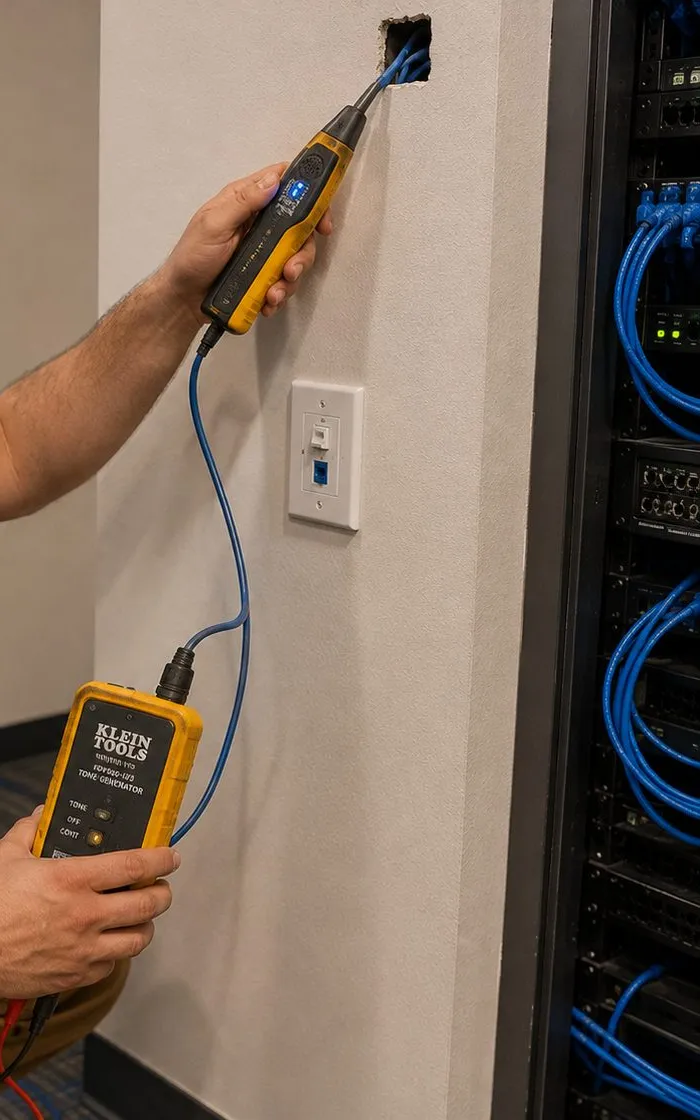
Installer holding a yellow tone probe at an opening in a wall while a tone generator hangs from the cable below, tracing wiring for a Harlem Manhattan door upgrade
Tracing an existing cable with a tone generator and probe. Old buzzer and bell wires in rowhouses are worth identifying before anyone decides whether they can be reused.
Terms

Harlem Building Terms You Will Hear on a Lock Job

  • HDFC co-op: a limited-equity co-operative organised as a Housing Development Fund Corporation, usually created from a City-owned building, with reduced taxes in return for income and resale limits, as HPD describes them.
  • Regulatory agreement: a contract between an HDFC and HPD that can set income limits and reporting duties; boards check it before major spending.
  • Tenant Interim Lease (TIL): an HPD program in which a tenant association leases and manages a City-owned building on the way to buying it as a co-op.
  • Multiple dwelling: a building occupied by three or more families living independently; state and city lock and door rules apply to it.
  • Section 50-a: the part of the Multiple Dwelling Law requiring self-closing, self-locking entrance doors and, in buildings of eight or more apartments built or converted after January 1, 1968, an intercom.
  • Section 51-c: the part of the same law that lets tenants add their own lock beside the owner's, excluding municipal housing authority buildings.
  • Electric strike: the electrically released keeper in a door frame that lets a keypad or reader open a door that otherwise stays locked.
  • Fail-secure and fail-safe: whether a strike stays locked or releases when power is lost; street doors usually fail secure with a mechanical override.
  • Special door: LPC shorthand for an important historic entrance; its decorative exterior knobs, plates and hinges cannot be swapped under the ordinary-repair rule.
  • NSPIRE: HUD's inspection standard, used for Housing Choice Voucher units, which includes requirements for entry doors to be securable.
Complete Services

Every Smart Lock Installation Service in Harlem

A street-door project usually raises questions about the rest of the building. These are the related services we provide across Manhattan.

Access Control Installation Manhattan

Fob and keypad readers for co-op street doors, community rooms and offices.

Abstract Enterprises Intercom Installation

Audio and video panels with apartment stations for walk-ups and co-ops.

Intercom Repair

Handsets that stopped ringing and panels that no longer release the door.

Door Buzzer Installation Manhattan

New buzzer and strike systems for brownstones and small buildings.

AESS Door Buzzer Repair

Street doors that buzz and stay shut, and push-buttons that went quiet.

Doorbell Camera Installation Manhattan

See who is on the stoop before you let them in.

Home Automation

Locks, lights and thermostats together for rowhouse owners.

Commercial Security Systems Manhattan

Access, cameras and alarms for shops on 125th Street and the boulevards.

Apartment Building Cameras

Vestibule, mailbox and stair coverage for boards and owners.

Low-Voltage Installation Manhattan

Cable, conduit and power behind readers and controllers.

Alarm Installation

Door contacts and alarms that arm when the door locks.

Get a Quote

One request covering the lock and anything else on this list.

Field Notes

Field Notes From Harlem Street Doors

Our usual routine on a resident-managed building's entrance, described in general terms rather than as the story of any single job

The first visit is mostly listening. Whoever meets us — a board member, a tenant leader, an owner — usually describes the door in terms of the people who misuse it. We note that, then close the door gently from fully open and watch. If it stops short, bounces off the strike or needs a push, the conversation turns to the closer and the frame before anyone mentions keypads.

Next we look for the power. Old buzzer transformers in cellars, a dead outlet in the vestibule, a strike wired years ago by someone who left no notes. We trace what is there, label it, and decide whether to reuse it or start clean.

Then the paperwork. We ask who can sign, whether the building has an agreement with HPD, and whether the facade is landmarked. A five-minute answer at the start saves a stalled job later.

On installation day the last hour belongs to the administrators. We sit with two of them, add a test resident, delete it, look at the log together and write the owner login on the handover sheet in front of them. A system that only the installer understands has not really been handed over.

FAQ

Harlem Smart Lock Installation FAQ

What does a keypad and electric strike on an HDFC building's street door cost in Harlem?
+

A single-door keypad or fob reader with an electric strike is $1,875 to $3,125 installed at the Manhattan rate, which is our published $1,500 to $2,500 base multiplied by 1.25. Any closer, hinge or frame repair the walkthrough finds is listed separately so the board can see it, and nothing is ordered until the board approves the written scope.

Do you also work in Sugar Hill, Hamilton Heights and the blocks around Marcus Garvey Park?
+

Yes. Our Manhattan crews cover all of Harlem from Central Park North to the Harlem River, including Sugar Hill, Hamilton Heights, Manhattanville and the Mount Morris Park blocks, as well as East Harlem and the rest of the borough. Jobs are booked in 2-hour arrival windows from the Bronx office on Fordham Road.

Will you train two or three residents to run the system, not just one board officer?
+

Yes, and we recommend it. At handover we sit with at least two administrators, show them how to add and delete a resident, read the log and change a schedule, and leave a printed page with the owner login and programming code. If the board changes later, a programming-only visit can train the new officers at the published rate.

Can you invoice the co-op corporation or tenant association rather than a board member personally?
+

Yes. Quotes, the service agreement and invoices can be issued in the name of the HDFC, the co-op corporation or the tenant association, with the building address, so the paperwork matches the building's books and its auditor's records. Tell us the exact legal name when you request the quote.

Can the street door stay released longer for a neighbour who walks slowly?
+

On most controllers, yes. The release time after a valid code or fob can be lengthened, and some systems allow a longer time for individual users, which helps residents with canes, walkers or strollers. We set it at handover and balance it against the closer speed so the door still shuts and locks behind them.

If the board loses track of which fob belongs to which apartment, can you rebuild the list?
+

Usually. Most controllers keep a record of every enrolled credential and when it was last used, so we can export what is enrolled, match fobs to apartments with the board, delete anything unaccounted for and print a fresh register. It is a programming visit at $265 for the first hour, then 30-minute blocks.

Can residents keep using the old street-door key while everyone switches over to codes?
+

Yes. Most street-door strikes and readers leave the mechanical cylinder working, so keys and codes can run side by side for a set changeover period while fobs are handed out. At the end of it the board can re-key the cylinder so only the super, the fire department box and the board hold keys.

Do you give HDFCs or non-profits a discount?
+

Our published prices are the same for every building, which keeps quotes easy for a board to compare and defend. What we can do is keep the scope tight, separate essential door repairs from optional extras, and phase work across budget years so a small co-op only pays for what it has approved.

All Areas Served

Smart Lock Installation Beyond Harlem

Shut Out on a Harlem Stoop or Street Door Tonight?

Blank keypad, a strike that clicks without opening, or an app that has lost the lock — phone (929) 560-0737. If a mechanical key or override still opens the door, use it and book the next open 2-hour window; most battery, pairing, power-supply and alignment faults are fixed within one to two hours once we reach the door.

Smart Lock Installation Harlem, Manhattan — Licensed, Insured, Built for Resident-Run Buildings

Abstract Enterprises Security Systems · 460 E Fordham Rd, Bronx, NY 10458 · Manhattan line (929) 560-0737 · WhatsApp (718) 679-0359 via wa.me

NYS Low-Voltage License #12000287431 · 100% Licensed & Insured · Same-Day Estimates · Rated 4.7★ from 201 Google Reviews

Products you supply carry their manufacturer's warranty. Full terms β€” including 50% deposit, one-year parts-only warranty on AESS-supplied products, and the late-fee schedule β€” are set out in the service agreement. See our warranty page.

Nothing on this page is legal advice; it points to the housing statutes, city codes, HPD program rules, landmark regulations and HUD inspection standards a Harlem door job runs into. Content checked October 17, 2026. Changelog: first edition of the Harlem guide.