What are you looking for?
About Us Contact Us Careers Get a Free Quote (800) 486-0943
Pick a service
✅ Got Your Own System?
🎬 Home TheatreQuote 🎶 AV SoundQuote 🔑 Access ControlQuote
Now pick your area
Pick your area
Long Island
Hudson Valley
Services available
Pricing & Tools
Pick a service for pricing
🚪 Intercom Pricing 🔔 Buzzer Repair Pricing
Calculators
📹 Camera System Calculator 🚨 Alarm Calculator ⚡ Cabling Quote Builder ✅ Got Your Own System?
Select your area
Licensed Low-Voltage Contractor · Dutchess County · Student Rentals, Hosted Homes, River Estates & Main Street Shops

Smart Lock
Installation in
Dutchess County

Lease Turnover Code Resets · Owner-Host Guest Access · Pre-1980 Doors Handled Lead-Safe · Estate & Caretaker Key Control · Shop & Kitchen Door Keypads

In Dutchess County the keys never stay put for long. Students hand back a house near Marist or Bard every May and a new group arrives in August; a Beacon or Rhinebeck owner rents out the home they live in for a weekend; a caretaker who has carried an estate’s key ring for twenty years retires; a Hyde Park kitchen loses half its staff when the culinary term ends. We fit smart locks that let the person in charge decide who gets in, for how long, and take that access back cleanly — on old painted doors, historic fronts and busy shop entrances from Beacon to Millerton.

Reviewed and updated October 17, 2026 · Written by Anwar Timothy, NYS licence #12000287431

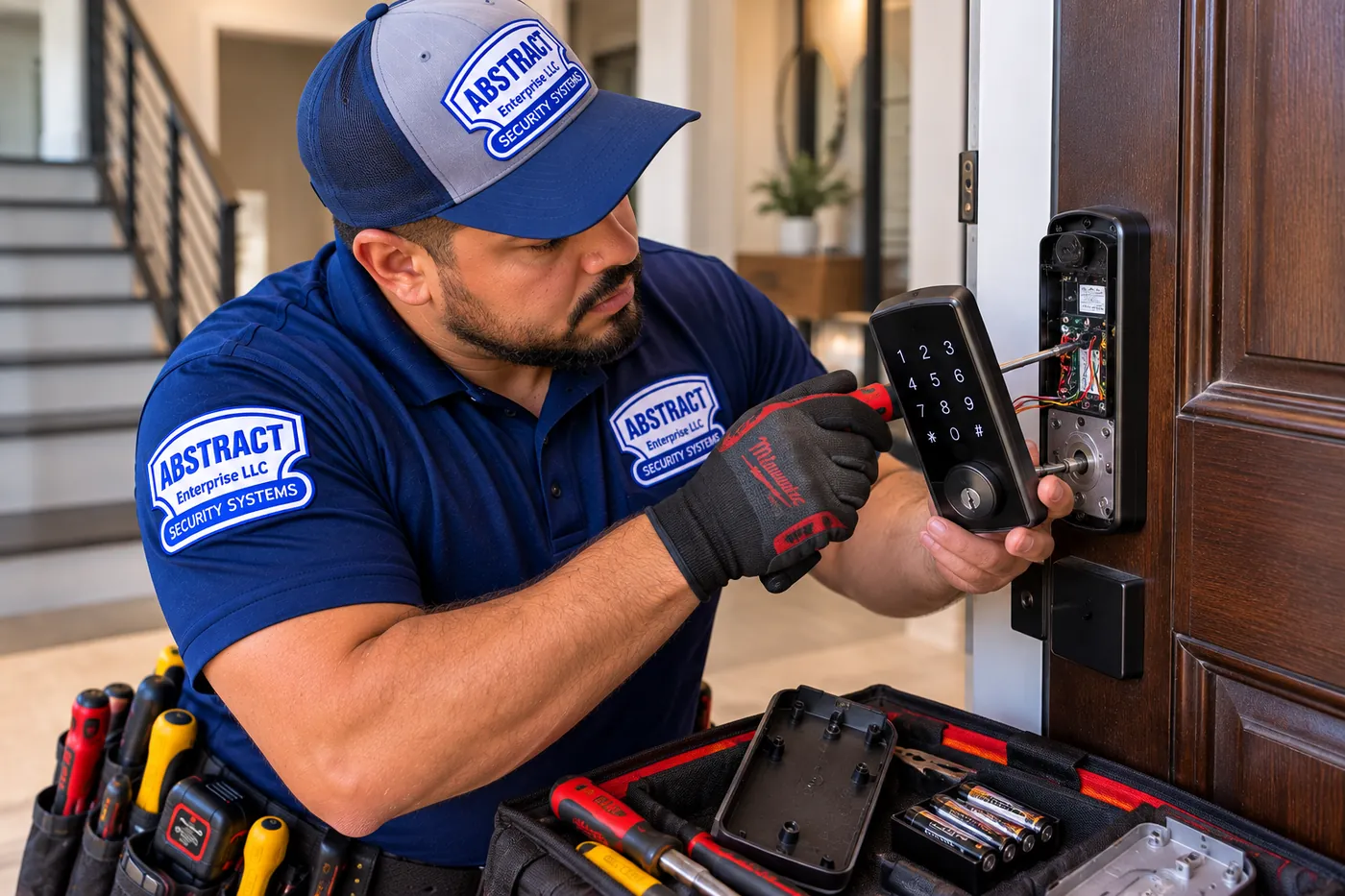
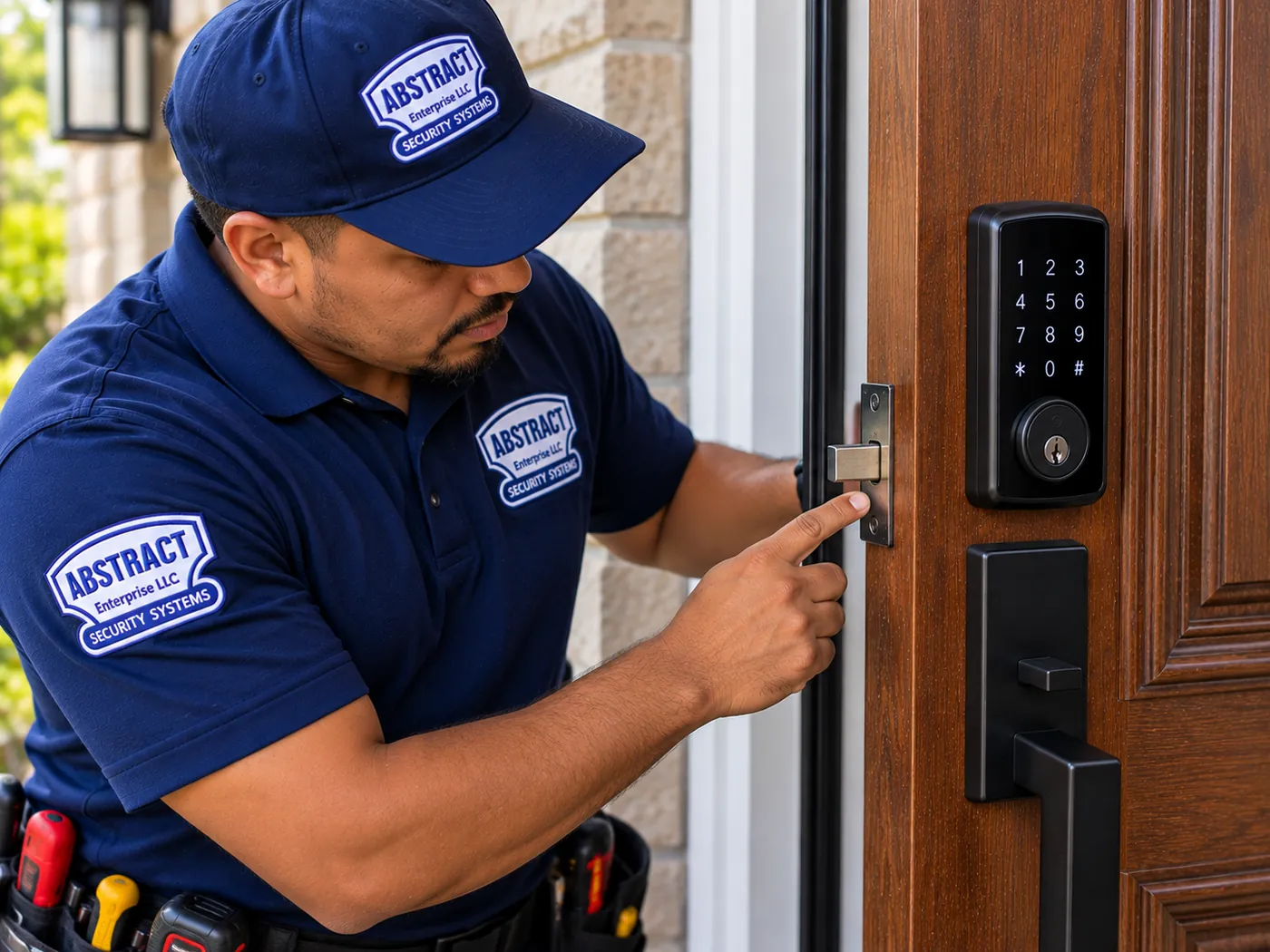
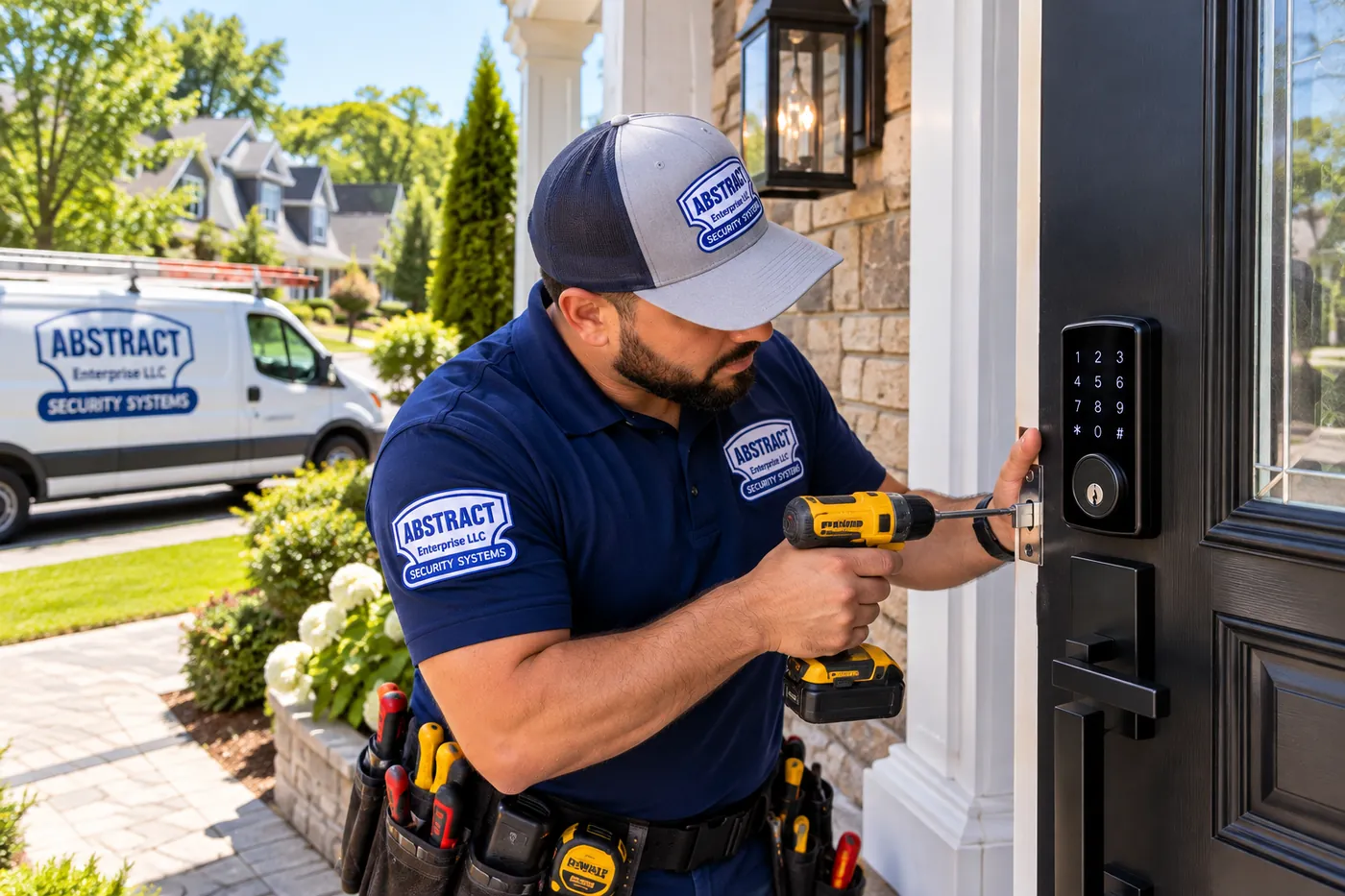
AESS technician installing a keypad smart deadbolt on a suburban home front door with the AESS van outside in Dutchess County
Gloved hands use a small screwdriver on a stainless push-to-exit plate with a green button, under a sign reading “Exit button for door release”, while a black keypad reader with a green light sits on the door frame above a lever handle.
Free Dutchess County Smart Lock Quote
Tell us the town, the doors and who needs to get in — we call back the same business day

✅
Request Sent!
We'll call you back the same business day.
25+
Years Experience
✓
Same-Day Estimates
100%
Licensed & Insured
4.7★
201 Google Reviews

Handing over a Dutchess house to new tenants, guests or staff, or locked out of one that stopped responding? Call our Hudson Valley line, (845) 640-3835, or send the 60-second form. A licensed installer reads every request and tells you, before anyone drives out, which doors are worth converting and how the codes should be organised for the people who come and go.

  • A walk around every door before a price is given, then one flat written figure for the job
  • Codes that expire on the date you choose — end of lease, end of stay, end of season
  • NYS licence #12000287431 · fully insured · 2-hour arrival windows, 8 AM to 8 PM
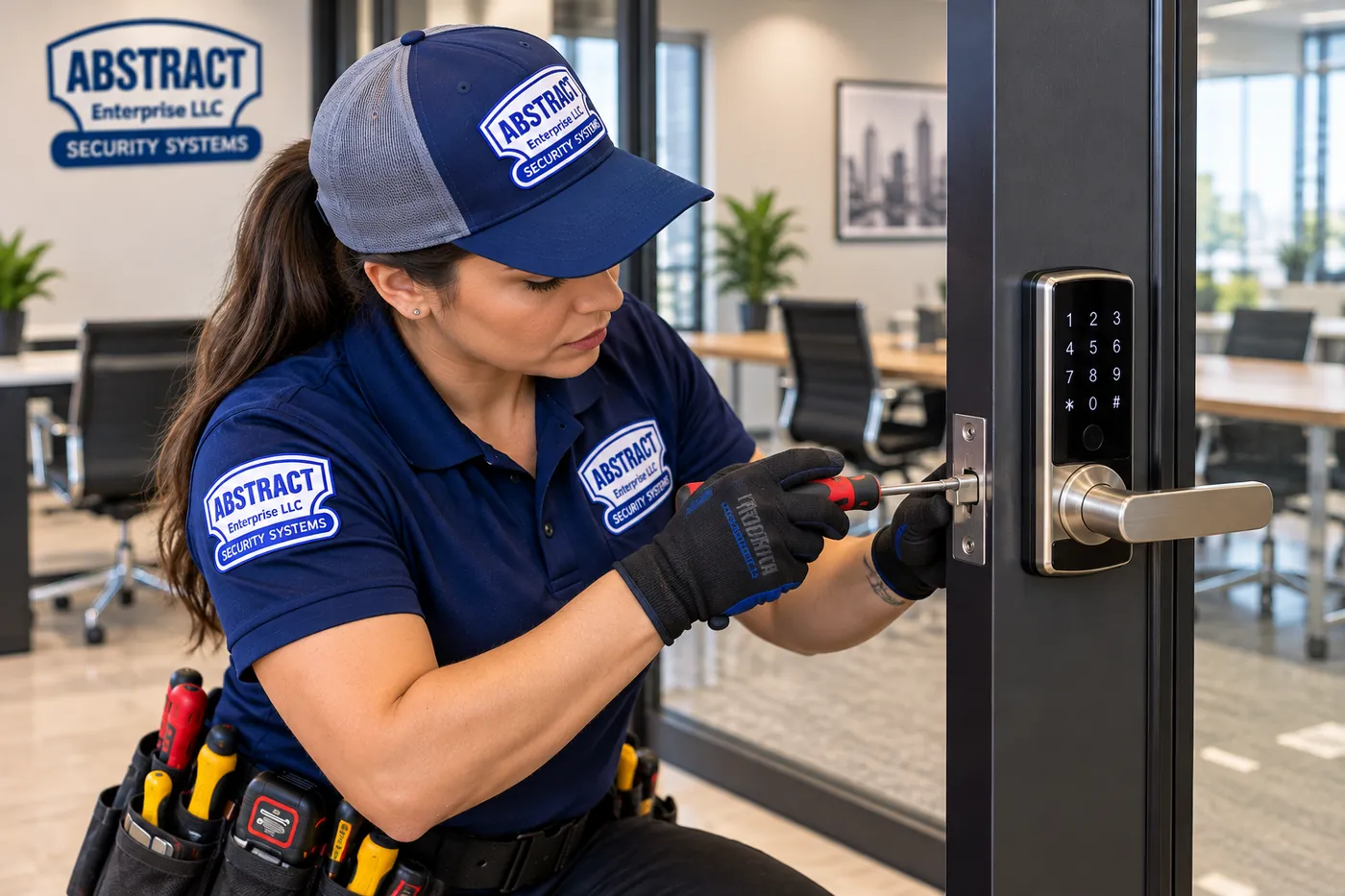
AESS technician installing a keypad lever smart lock on an office suite door in Dutchess County
Keypad lever lock on an interior office door — good for suites, supply rooms and server closets.
The Neighborhood

Why Dutchess County Properties Need Smart Lock Installation Built Around Turnover

Most smart lock advice assumes one household that never changes. Dutchess County rarely works like that. The county is mostly owner-occupied — the Census Bureau’s QuickFacts put the owner-occupied rate at 69.2 percent for 2020–2024, across roughly 124,843 housing units and about 300,708 residents in its July 2025 estimates — yet a striking share of the calls we get from here are about doors that somebody else uses. A landlord in the City of Poughkeepsie re-letting a two-family. Parents who bought a house near campus for their own child and rent the other rooms. A couple in Beacon who rent their home to visitors while they travel. An estate owner in Rhinebeck or Staatsburg whose caretaker, gardener and housekeeper each carry a copy of a key nobody has counted in years. The lock is the easy part. The hard part is knowing, at any moment, exactly who can open each door — and being able to change that without a locksmith.

The colleges set one of the county’s clocks. Marist University reports 6,382 students on a campus that sits on Route 9 in the Town of Poughkeepsie, and its own housing pages tell graduate students that they must live off campus, in apartment complexes or in private homes around Poughkeepsie and the nearby towns. Vassar sits on roughly a thousand acres on the other side of the city, with the Arlington neighbourhood’s houses and apartments around it. Up the river, Bard’s residence-life office says the majority of its off-campus students live close to the college in Red Hook, Tivoli or Rhinebeck. Every one of those leases ends in late spring and begins again in late summer, often with five or six unrelated young adults in one house, and each of them used to be handed a key that could be copied at any hardware store on Route 9. A keypad lock with individual codes changes that turnover from a re-keying job into a few minutes in an app — if it is planned properly.

Short-term rentals set the second clock, and in Dutchess the rules change at every town line. The City of Beacon’s 2020 law, as The Highlands Current summarised it in February 2026, lets homeowners and tenants rent their own primary residence for up to 30 days at a time and no more than 100 days a year, and does not allow accessory dwelling units to be rented that way; the same report found 133 Beacon units listed on Airbnb in July 2025 against only 33 registered with the city. The Town of Rhinebeck rewrote its short-term rental law in 2025: an applicant must submit a floor plan of every level showing bedrooms, windows and exits, authorise the Code Enforcement Officer and the Fire Inspector to inspect, and name a contact who will answer the town within 24 hours. Red Hook’s chapter on short-term rentals asks for a designated local contact whenever the owner is not staying within 15 air miles. None of those laws mentions locks. All of them assume that the right person can get into the house quickly, and that guests can get out of it.

Then there is the age of the doors. Dutchess is not the oldest county in the valley — a Stacker analysis of Census Bureau data puts the median home here at 1971 — but about 18 percent of the county’s homes, some 22,056 of them, were built in 1939 or earlier, concentrated in exactly the places where rentals cluster: the City of Poughkeepsie, Beacon, and the old village centres of Rhinebeck, Red Hook, Millbrook and Pawling. Old doors mean old paint. Dutchess County’s health department tells owners of two-or-more-unit rental properties in the City of Poughkeepsie’s 12601 zip code, built before 1980, that they must register with the New York State rental registry and obtain a lead safety certificate after an inspection that includes dust-wipe sampling. Drilling a new bore through a painted door and frame is a small job, but it is exactly the kind of job that makes dust, and we treat it that way.

And because this is New York State rather than New York City, the tenant rules that apply here are the state’s. Since the Housing Stability and Tenant Protection Act of 2019, section 768 of the Real Property Actions and Proceedings Law makes it unlawful anywhere in the state to change the lock on an occupant’s entrance door without supplying them with a key — and the state Bar Association notes the act made unlawful eviction a Class A misdemeanor statewide. A smart lock gives a Dutchess landlord a very fast way to break that law by accident, simply by deleting a code. Part of every rental job we do here is setting up the access so that the owner keeps control without ever being one tap away from a lockout.

Dutchess County figures that shape a smart lock job

  • 69.2 percent: the owner-occupied housing rate in Dutchess for 2020–2024, per Census QuickFacts — which leaves roughly three in ten homes rented, many of them in the city centres and near the colleges.
  • 21.1 percent: residents aged 65 or over in QuickFacts, with 2.40 people per household — smaller households, often an older owner, and more outside helpers who need a code.
  • 22,056 homes: the number built in 1939 or earlier, about 18 percent of the county’s stock, in Stacker’s reading of Census data — the solid, heavily painted doors that need the most care when a lock is changed.
  • Pre-1980, 12601: the City of Poughkeepsie rental properties with two or more units that must register with the state rental registry and hold a lead safety certificate, according to the county health department.
  • 133 listed, 33 registered: Beacon short-term rental units on Airbnb in July 2025 versus registrations on file with the city, as reported by The Highlands Current.
  • 15 air miles: the distance in Red Hook’s short-term rental chapter beyond which an away owner needs a designated local contact.
  • 620 farms: Dutchess’s count in the 2022 Census of Agriculture, averaging 161 acres — the reason so many properties east of the Taconic have more than one building and more than one door to think about.

Most Dutchess owners who rent a door out also want to see who is standing at it. Our doorbell camera installation in Dutchess County is often fitted on the same visit, so a code that is used at an odd hour comes with a picture, and the AESS alarm installers for Dutchess County can add door contacts and smoke and carbon monoxide monitoring that a host or landlord can check from away.

AESS technician servicing the keypad wiring of a smart lock during a repair visit in Dutchess County
Repair visit — opening the keypad to check the harness and contacts on a lock that stopped responding.
Repair Capture

Smart Lock Dead at a Dutchess Rental, House or Shop?

A keypad that went dark the night before guests arrive in Rhinebeck, a deadbolt that grinds because an old Poughkeepsie frame has shifted again, a lock that dropped off the Wi-Fi when the tenants replaced the router, an app account that belonged to a caretaker who has since left, or a shop keypad on Main Street in Beacon that rejects the manager’s code at opening time — we treat each of those as a service call, not a sales visit. We book it into the next open 2-hour window, and most power, pairing and alignment faults are fixed in one to two hours once a technician is at the door. A setup-only visit for a lock that is already on the door is $275 for the first hour in Dutchess, then 30-minute blocks; if the fault is a building entrance whose electric strike has failed, the repair runs $451–$742 at our Dutchess rate. Call (845) 640-3835 and say it is a smart lock problem, or see door buzzer repair in Dutchess County for entrance buzzers and releases.

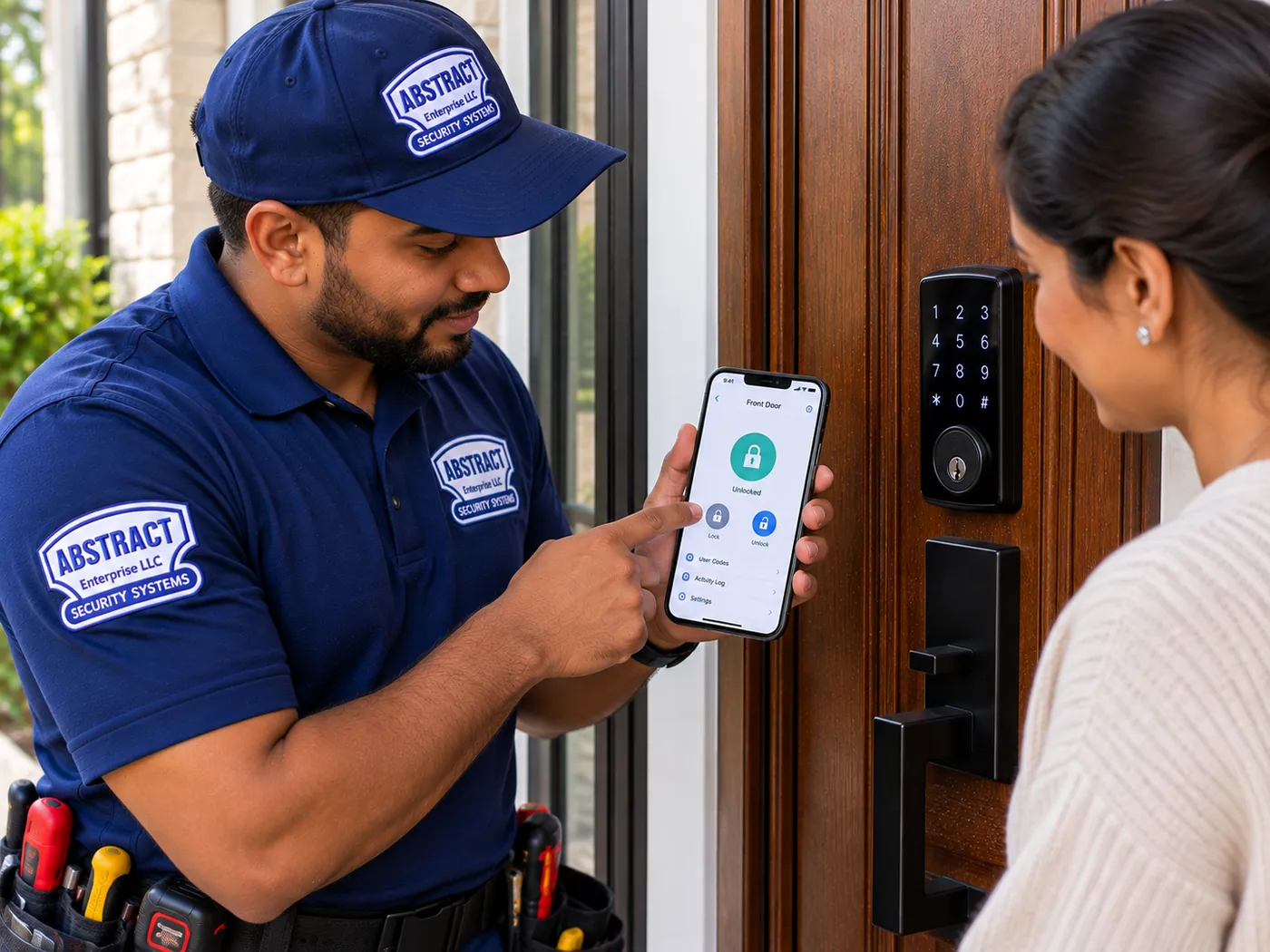
AESS technician walking a customer through locking and unlocking her new smart lock from the app in Dutchess County
Walking the owner through the app before we pack up — lock, unlock, codes and history.
What We Install

Smart Lock Installation Services in Dutchess County

Every service below ends in the same three tests. The door closes and latches on its own weight or closer; anyone inside can open it with one ordinary motion, in the dark, without a code or key; and the person who manages the property can add and remove a user in front of us, on their own phone, before we leave.

Lease-Turnover Lock Setup

Smart deadbolts on the doors of rented houses and two-families, with a code per tenant, an owner administrator account that never leaves the owner’s hands, and a written turnover routine for May and August.

Owner-Host Guest Access

For Beacon, Rhinebeck, Red Hook and Hyde Park homes rented while the owner is away: dated guest codes, a lockable owner’s closet or room, and access for the cleaner and the town’s local contact.

Lead-Aware Work on Old Doors

Re-using existing bores wherever the new lock allows, minimising new drilling on painted pre-1978 doors and frames, containing and cleaning up dust, and telling you before we start if the job would grow past minor repair.

Historic and Heavy Front Doors

Locks chosen to look right on Federal, Greek Revival, Italianate and Victorian fronts — interior-only retrofits, traditional-looking handlesets and keypads mounted where they don’t change the face of the door.

Estate and Caretaker Key Control

An inventory of every door, key and code on a multi-building property, a plan for who manages what, and a clean handover when a caretaker, farm manager or housekeeper leaves.

Upper-Floor and Deck Doors

Smart deadbolts or alarm contacts on second-storey balcony, deck and porch-roof doors — the openings State Police have reminded Dutchess residents to lock.

Main Street Shop Doors

Keypad deadbolts and keypads with electric strikes for shops, studios and galleries in Beacon, Rhinebeck, Millbrook and Pawling, with separate credentials for any apartment above.

Restaurant and Kitchen Doors

Back-of-house and delivery doors with per-person codes for seasonal staff, schedules that match shifts, and an inside release that never needs a code.

Repairs, Re-Pairing and Account Recovery

Dead batteries, misaligned bolts on settling frames, bridges lost after a router swap, and lock accounts stranded on a former tenant’s or employee’s phone.

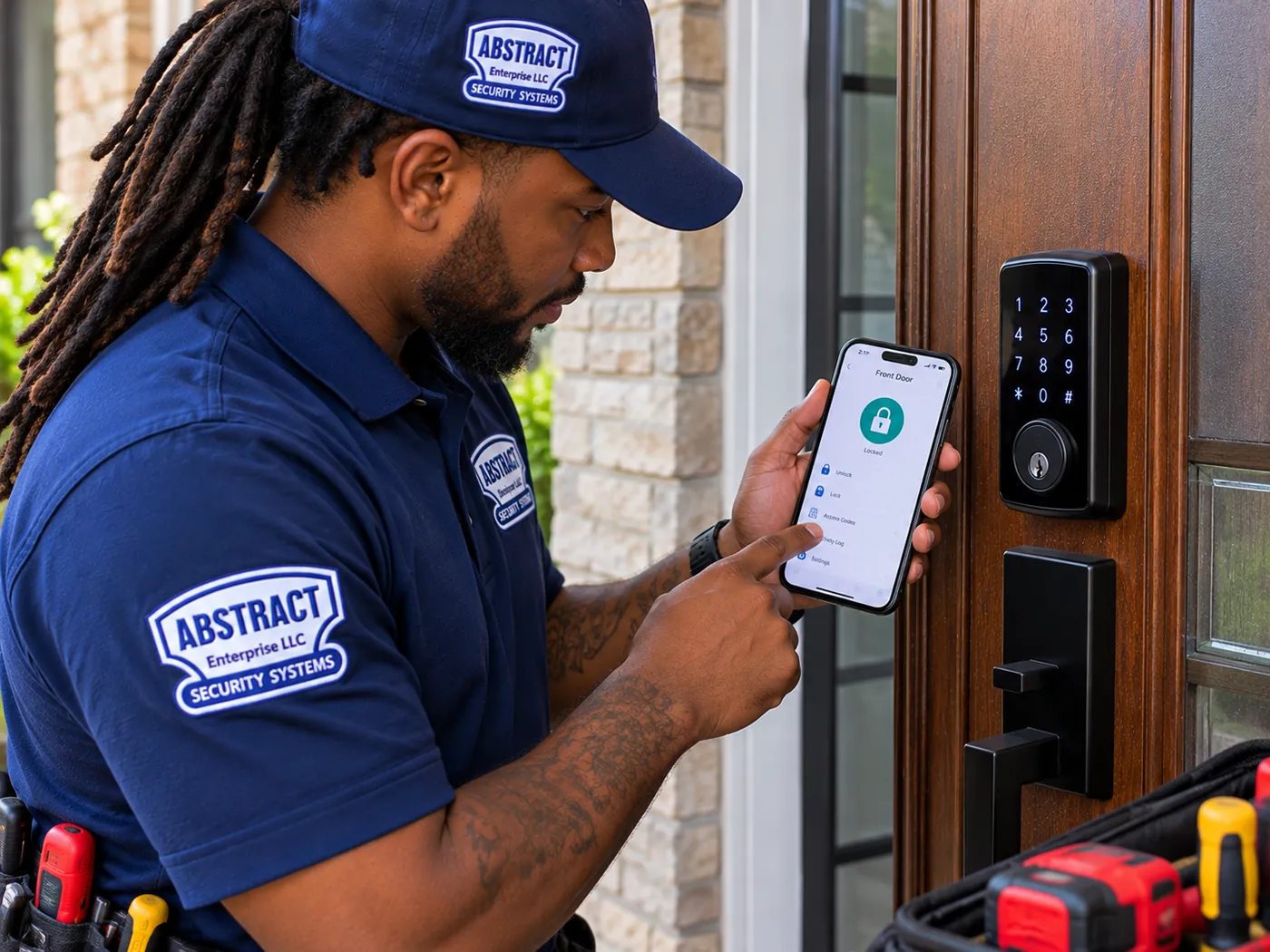
AESS technician checking the locked status of a keypad smart lock in the mobile app after installation in Dutchess County
Confirming lock status, access codes and the activity log from the phone.
Building Specialists

Smart Lock Installation for Dutchess County Architecture

A county that stretches from the Hudson Highlands at Beacon to the Connecticut line at Amenia has more door types than most. These are the ones we meet most often, and what each one changes about a keyless installation.

City of Poughkeepsie Two- and Three-Families

Frame and brick houses on narrow lots, many split into flats with separate front and side entrances and a shared hall. Heavily painted doors, frames that have moved, and — in pre-1980 rentals in 12601 — a lead safety certificate that the owner will not want disturbed.

Student Houses Near the Campuses

Single-family houses let by the room around Marist, Vassar and Arlington, and in Red Hook and Tivoli for Bard. Four to six tenants, one or two exterior doors, sometimes bedroom-door locks, and a turnover every year.

Beacon Rowhouses and Mill Conversions

Nineteenth-century brick rows near Main Street and lofts in converted industrial buildings. Owner-occupied homes rented for short stays under the city’s primary-residence rule, and steel loft doors with commercial-style hardware.

Village Houses in Historic Districts

Rhinebeck’s historic district, first listed in 1979 and expanded in 2021, and the City of Poughkeepsie’s locally designated districts: Federal, Greek Revival and Victorian fronts where the look of the door matters to the owner and sometimes to a review board.

River Estates and Their Outbuildings

From Hyde Park and Staatsburg up through Rhinebeck to Annandale: main houses with gatehouses, carriage houses and cottages, and staff who have carried keys for years. Many doors, many people, and no record of who holds what.

Suburban Subdivisions

Wappingers Falls, Fishkill, Hopewell Junction, LaGrange and the Town of Poughkeepsie: standard pre-bored doors, attached garages and sliding patio doors. The easiest doors to convert, and the ones where the garage entry is usually the family’s real front door.

Lake and Weekend Houses

Cottages and houses in eastern Dutchess, used on weekends or let by the month. A keypad here mostly saves somebody a long drive with a key.

Main Street Storefronts

Beacon, Rhinebeck, Millbrook, Pawling and Millerton: shops at street level with apartments above and a shared rear stair. Aluminium storefront doors, older wood shop doors, and residents who must never share a code with the business.

Door details we check on every Dutchess job

Paint, and what is under it. On any house that looks older than about 1978 we assume the door and frame carry old paint unless the owner has a lead certificate or test that says otherwise. We choose locks that can use the existing cross bore and edge bore where possible, so the new work is mostly in screw holes and strike mortises rather than fresh large holes. Where more cutting is unavoidable we mask the floor, catch dust at the drill, and clean with a HEPA vacuum and wet wipes rather than a broom. The EPA’s renovation rule treats disturbing six square feet or less of interior painted surface, or twenty square feet or less outside, as minor maintenance and repair, as long as no prohibited practice is used; a lock change is normally far below that. If a job would grow beyond it — replacing a whole door, say — we tell you before we start.

Doors that are thicker, older or out of square. Many Dutchess front doors are heavier than the 1-3/8 to 1-3/4 inch range a typical smart deadbolt is listed for, or are bored at an unusual backset, or are fitted with an old mortise lock. Before recommending a model we measure thickness, backset and bore size, and check the frame for rot. Where a door is outside the lock’s range, the answer is usually an interior retrofit unit over a compatible deadbolt, a lock line with a thick-door kit, or a carpenter’s repair first.

Frames that move with the seasons. An old wooden jamb is a different width in August than in February. Someone turning a key by hand never notices a sixteenth of an inch; a small motor driving the bolt does, stalling and draining batteries. We test the bolt with the door pulled shut by hand, closed by its own weight and closed by any storm door, and we adjust or enlarge the strike so the bolt throws cleanly in both seasons.

One plain motion out. Every lock we put on a Dutchess house door opens from inside with a thumb-turn or lever, no key, code or app. That matters most in rentals and hosted homes, where the person inside is a stranger to the house, and where a town’s permit file already shows where the exits are.

Dutchess owners reworking a rental’s doors usually look at the entrance system too. Our Dutchess County intercom installation service covers two- and three-family front doors and small apartment buildings, and the AESS door buzzer installers in Dutchess County replace tired buzzer and strike systems from Poughkeepsie to Beacon.

Commercial Smart Locks

Business Smart Lock Installation in Dutchess County

Dutchess businesses are mostly small, and many of them are seasonal. A gallery on Beacon’s Main Street that opens Thursday to Sunday, a farm stand that hires for the harvest, a restaurant near the Culinary Institute of America’s Hyde Park campus that staffs up for the summer and loses students in the fall, a dental practice on Route 9 with early and late shifts. The keyless question in these businesses is turnover: how to give a new hire a way in on their first day and take it away on their last, without changing the locks. These are the corridors where our Dutchess commercial calls cluster.

Main Street, Beacon

A historic Main Street almost a mile long, with shops, galleries, cafés and restaurants, many in older buildings with apartments above. Separate shop and residential credentials are the first thing we set up.

Route 9: Poughkeepsie to Fishkill

Plazas, medical and professional offices and service businesses from the Town of Poughkeepsie through Wappingers Falls to Fishkill and the I-84 interchange. Shift staff, audit trails and suite doors that open onto shared corridors.

South Road and the IBM Corridor

The Town of Poughkeepsie’s South Road, where the county IDA’s project summary places a new IBM quantum computing facility of about 300,000 square feet at 2455 South Road, with construction starting in September 2026. Contractors and suppliers around the site need office and yard doors that log who came and went.

Rhinebeck and Red Hook Villages

Shops, restaurants and inns on and near Mill Street and Montgomery Street in Rhinebeck and along Route 9 in Red Hook. Older wood shop doors in historic buildings, seasonal staff, and owners who live elsewhere.

Hyde Park and the Route 9 River Corridor

Restaurants, motels and visitor businesses along Route 9 near the CIA and the Vanderbilt estate. Kitchen and delivery doors used by many hands, and codes that need to end when the season does.

Millbrook, Pawling and the Harlem Valley

Village shops in Millbrook, Pawling and Millerton, and businesses along Route 44, where the Sheriff’s Office has reported an attempted break-in at a Millerton jewelry store. Long drives for anyone with a key, so remote management earns its place.

Compliance callouts for Dutchess business doors

  • Exit without knowledge or effort. A door that serves as a way out must open from the inside without a key, a code or special knowledge. Keypads go on the outside; inside, it is a lever, a thumb-turn, panic hardware or a push-to-exit control.
  • Fail-safe or fail-secure, door by door. When power drops, an electric strike or magnetic lock either releases or stays locked. Which is right depends on whether the door is on the exit route and what the building code and fire marshal expect, so we specify it per door.
  • Historic exteriors. In the City of Poughkeepsie the Historic District and Landmark Preservation Commission reviews exterior alterations and repairs, and changes in exterior appearance, to buildings in its districts; in the Village of Rhinebeck the historic district overlay sends major exterior modifications to the Planning Board. We prefer readers and keypads that mount on the frame or inside the vestibule, and we tell owners to check with the municipality before anything visible changes.
  • Apartments above. Where a shop shares a building with tenants, the residential doors carry the state’s tenant protections, including the lockout rule in RPAPL 768. Business credentials never open a tenant’s door.

Some Dutchess businesses outgrow standalone keypads quickly — a practice with four doors and two shifts, a contractor yard with a gate, an office that wants video tied to every entry. Past that point the right tool is a controller-based system, handled by our access control installation in Dutchess County, often alongside commercial security cameras for Dutchess businesses.

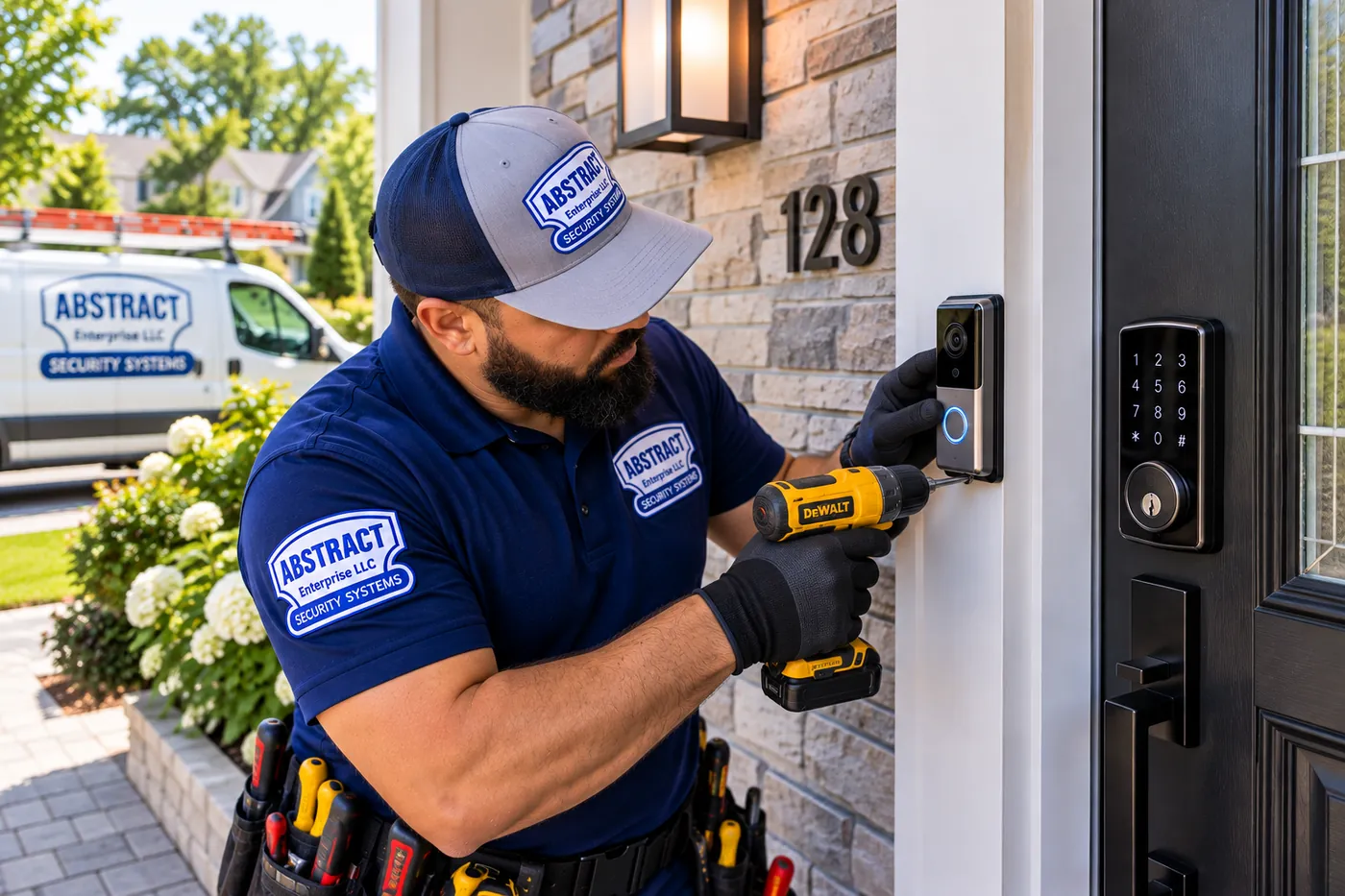
AESS technician mounting a video doorbell beside a newly installed keypad smart lock in Dutchess County
Video doorbell and smart lock at the same visit — see who is there, then let them in.
Your Questions Answered

Smart Lock Installation in Dutchess County: Questions Answered

Five kinds of Dutchess owner call us most: landlords letting to students, people hosting guests in their own homes, owners of old houses and estates, families reacting to a police warning, and businesses with staff who change every season. Their questions are answered below in those five groups; money, scheduling and travel sit in the FAQ near the end of the page. We are lock installers, not lawyers, so wherever a statute or town code comes up we name it and you can check it, or have your attorney check it, for yourself.

Student houses near Marist, Vassar and Bard

We let a house near Marist to a new group of students every August — how do we wipe every old code between May move-out and move-in?

Treat the turnover as a checklist rather than a scramble, and build it into the lock from the first day. When we set up a student house, each tenant gets their own code or fob, created with an end date that matches the lease, and the owner keeps the only administrator account. In May, when the lease ends, those codes stop working on their own; the owner doesn’t have to remember to delete anything. Over the summer, the house can run on a short list of owner, painter, cleaner and contractor codes, each with its own dates. In August, the new group is enrolled, preferably in person on move-in day so each student tests their own code at the door while someone watches.

Three things go wrong if this isn’t planned. A tenant is made an administrator “to help” and quietly creates codes for friends that the owner can’t see. A shared house code is used instead of individual codes, so nobody knows who let whom in, and changing it means telling every tenant. And the mechanical key cylinder is forgotten: the students had copies of the old key, and the new lock’s cylinder was never re-keyed. We fix all three at installation by keeping administration with the owner, using one code per person, and re-keying or replacing the cylinder whenever a lock outlasts a group of tenants.

Keep a short record of each turnover: which codes were removed, which were added, and the date the cylinder was last changed. If a dispute about a missing item or a late move-out ever comes up, the lock’s log and that record together tell a clear story.

Can each student in a shared Poughkeepsie rental have a keypad lock on their own bedroom door?

It can be done, and students often ask for it, but it needs more thought than the front door. A bedroom-door lock in a house let by the room is mainly about privacy and belongings, so a simple keypad lever or deadbolt with the student’s own code is usually enough. What it must never do is make the room harder to leave. The inside has to open with a plain turn or push, and there should be nothing — no second key-only bolt, no code needed from inside — that could slow a student down if the hall is full of smoke at 3 a.m.

The owner also needs a way in. Leases usually give the landlord a right of access with notice, and in an emergency someone has to be able to open the room without breaking the door. That means the owner keeps an override code or a master key for every bedroom lock, held securely and logged when used. It also means thinking about the state’s lockout rule: once a student has their own lockable room under a lease, deleting their bedroom code to force them out is no different, legally, from changing the front-door lock on them.

Before you fit locks to bedrooms in a City of Poughkeepsie rental, check with the city’s building department about how the house is classified and whether bedroom locks affect its occupancy or its rental registration. If the house is a pre-1980 multi-unit rental in 12601, remember that interior doors are painted surfaces too, and the lead-safe precautions in the next group of answers apply to them as well.

A student tenant in our Arlington house is behind on rent — can we switch off their code?

No. In New York State the lockout rule is not limited to New York City. Section 768 of the Real Property Actions and Proceedings Law, strengthened by the Housing Stability and Tenant Protection Act of 2019, makes it unlawful to remove or disable the lock on an occupant’s entrance door, or to change it without giving them a key, except under a court’s warrant of eviction. Disabling a tenant’s keypad code is, in practice, changing the lock without supplying a key. The state Bar Association notes that the 2019 act made unlawful eviction a Class A misdemeanor statewide, and the Attorney General’s guidance to police treats it as a criminal matter.

What a smart lock can legitimately do in a rent dispute is document. The log shows when the tenant was using the house, which can matter if they claim to have moved out. Scheduled codes for the tenant’s guests or a subletter that the lease doesn’t allow can be removed, because those people are not the occupant. But the occupant’s own code stays live until a court says otherwise or the tenant hands back possession.

This is the main reason we set up rental locks with the owner as the only administrator and the tenants as ordinary users: it puts the owner in control of guests and contractors without putting a lockout button in an angry moment’s reach. For the dispute itself, talk to a landlord-tenant lawyer, not to the lock’s app.

Hosting under Dutchess town rules

Beacon only lets us host in the home we actually live in — how do we give guests the house and still lock away our own things?

That is the everyday problem of a primary-residence rental, and it has a tidy answer. Beacon’s 2020 short-term rental law, as The Highlands Current described it, allows homeowners and tenants to rent their own primary residence for up to 30 days at a time, up to 100 days a year, and the city code says no one may operate a short-term rental without first obtaining a permit. So the house is full of your clothes, papers, tools and wine. Guests get a dated code on the front door; the owner’s room, a closet, a home office or the basement gets its own smart lock or keyed lock that the guest code doesn’t open.

Choose the inner lock for the room’s purpose. For a closet or storage room, a keypad or keyed lever that opens only for the owner is enough. For a whole bedroom you keep for yourself, use a lock with a plain inside turn as well, so nobody can be shut in by accident. Never lock a door that is part of a guest’s way out of the house, and never lock a door that hides the electrical panel, the water shut-off or the boiler from the person you have left in charge of the house.

Then set up the front door so you can run it from wherever you are travelling: a connected lock or a bridge near the door, guest codes that start at check-in time and end at check-out, a separate code for the cleaner limited to turnover days, and a notification when each code is first used, so you know the guests arrived.

Rhinebeck’s short-term rental application asks for a floor plan showing every exit — should the lock plan follow it?

Yes, and it is the most useful document you will have for the job. The Town of Rhinebeck’s 2025 short-term rental law asks applicants for a floor plan of every occupiable level — basement, first floor, second floor and any attic rooms — showing bedrooms, windows and exits, and asks them to authorise the town’s Code Enforcement Officer and Fire Inspector to inspect. Once you have drawn that plan, every door marked as an exit has to open from inside, for a guest who has never seen the house, without a code, key or app.

We use the plan to decide which doors get which hardware. The main entrance gets the smart lock that guests use. Secondary exits marked on the plan — a kitchen door, a door to a deck, a basement walk-out — get locks with a simple inside thumb-turn and are kept on the same code list or left keyed, but never fitted with anything that needs a code from inside. Doors not on the exit route, like an owner’s closet, can be locked off. The result is a lock layout that matches what the inspector will be looking at on paper.

Remember that the plan, the permit and New York’s new state short-term rental registry, Chapter 99 of the Laws of 2025, are separate obligations, and that the Village of Rhinebeck takes its own permit applications at Village Hall. If your house is in the Rhinecliff hamlet districts, the town law also requires a special use permit from the Planning Board. We fit locks; we don’t file permits.

Red Hook wants a local contact within 15 air miles when we’re away — what does that person need from the lock?

Their own way in, that works even if your phone is off. Red Hook’s short-term rental chapter asks for a designated local contact when the owner is not staying within 15 air miles of the town while the property is rented. That person exists to deal with problems quickly, and most problems at a rental start at a door: a guest who can’t get the keypad to work, a code that was mistyped when it was created, a door left open in the rain, a noise complaint that needs someone on the doorstep.

So the local contact gets a permanent personal code, separate from the cleaner’s and the guests’, and a physical key kept somewhere they can reach at night. If they are comfortable with apps, they can also be given a limited role in the lock’s app so they can see whether the door is locked and issue a replacement guest code; if not, a code and a key are enough. Either way, they should know where the spare batteries are kept and how the external battery terminals or emergency key work on your particular lock.

Test it once before the first booking: the contact opens the door with their own credential while you watch the notification arrive, then locks up again.

Older houses, estates and historic villages

Our Poughkeepsie two-family was built before 1980 — does drilling the door for a smart lock raise a lead-paint problem?

It can, so we work as if it does. The Dutchess County health department says owners of rental properties with two or more units in the City of Poughkeepsie’s 12601 zip code, built before 1980, must register with the New York State rental registry and obtain a lead safety certificate, after an inspection that includes a visual check for deteriorated paint and dust-wipe sampling. Doors and frames are among the most painted, most rubbed surfaces in any old house, and drilling, chiselling a strike mortise or sanding a sticking edge all make fine dust.

The good news is that a lock change is a very small amount of disturbed paint. The EPA’s renovation, repair and painting rule treats work that disturbs six square feet or less of interior painted surface, or twenty square feet or less of exterior surface, as minor maintenance and repair rather than a renovation, so long as no prohibited work practice, window replacement or demolition is involved. We keep it that way: we choose locks that fit the existing bores where possible, cut only what the new hardware needs, never dry-sand or use a heat gun on old paint, catch dust at the bit, lay plastic under the work and clean up with a HEPA vacuum and wet wipes.

If the door is in poor condition — peeling, chipped, or binding so badly it needs planing — that is a bigger job, and on a registered rental it is one the owner should plan with a lead-safe certified contractor. We will tell you at the walkthrough if we think a door has crossed that line, before any tool touches it.

Which smart locks look right on a Victorian or Federal-style front door in Rhinebeck or Poughkeepsie’s historic districts?

The ones you can’t see from the street. On a historic front door the most discreet option is usually an interior retrofit unit that mounts over a compatible single-cylinder deadbolt on the inside face and leaves the outside of the door exactly as it was, keyhole and all. Where an outside keypad is wanted, a traditional-style handleset with an integrated keypad, or a slim keypad mounted on the frame or inside a vestibule, changes the face of the door far less than a large modern touchscreen escutcheon.

Finish matters as much as form. Unlacquered or oil-rubbed bronze, aged brass and black iron read as period on a Victorian or Greek Revival door; satin nickel and glossy black glass read as twenty-first century. We bring finish samples to the walkthrough and check the lock against the hinges, knocker and mail slot already on the door.

Whether a change needs approval depends on where you are. The Village of Rhinebeck’s historic district overlay sends new construction and major exterior modifications to the Village Planning Board; the City of Poughkeepsie’s Historic District and Landmark Preservation Commission reviews exterior alterations, repairs and changes in exterior appearance within its districts. Neither body’s published summary mentions lock hardware specifically, so ask the village or city before you change anything visible, and keep the original hardware in case you or a future owner want it back.

The caretaker who has looked after our river estate for years is leaving — how do we take back every key, code and app login?

Start with an inventory, because on an estate nobody usually has one. Walk every building — the main house, gatehouse, carriage house, cottages, greenhouse, pool house, barns — and list every exterior door, what kind of lock it has, which keys open it and who holds them. Then list every electronic credential: lock codes, alarm codes, gate codes, garage-opener remotes, and the email address each smart device’s account is registered to. On properties that have been run by one trusted person for years, a surprising number of those accounts are registered to the caretaker’s own email.

Then move control, not just keys. Every app account should belong to an owner’s or estate office’s email, with the new caretaker added as a user with the access they need. Codes the departing caretaker knew are retired; mechanical cylinders on the doors they had keys for are re-keyed, ideally to a restricted keyway whose blanks can’t be cut at a hardware counter. Gate and alarm codes change the same day.

Smart locks make the next handover much easier. With each staff member on their own code, a departure becomes a single deletion and a log entry instead of a weekend of re-keying — which makes a caretaker’s departure a sensible moment to convert the most-used doors on the property.

Break-ins and the habits police warn about

The State Police told Dutchess residents to lock second-floor entry points too — does an upstairs deck or balcony door need a smart lock?

It needs to be locked, which is not quite the same thing. In January 2025 the New York State Police issued a public-safety alert about a series of targeted residential burglaries in Dutchess, Westchester and Putnam counties, and the first piece of advice was to make sure all doors and windows are securely locked, “including second-floor entry points.” Upstairs balcony doors, doors onto a deck over the garage, and porch-roof doors are easy to forget, because nobody walks through them every day and they feel out of reach.

For most of those doors, a good mechanical deadbolt or the door’s own multipoint lock is perfectly adequate — the problem is remembering to use it. That is where a door contact tied to an alarm or a smart-home hub helps: it can tell you, at bedtime or when you set the alarm, that the upstairs deck door is still open. A smart lock makes sense on an upper door that is used regularly, such as a deck off a kitchen on a hillside lot, because auto-lock removes the remembering altogether.

One caution: sliding glass doors and some French doors can’t take a standard smart deadbolt at all. For those we look at secondary bars and pins, door contacts and, if the family wants it, a camera covering the deck.

Should we stop keeping a house key or garage remote in the car parked in our Millbrook or Amenia driveway?

Yes. The Dutchess County Sheriff’s Office has reported thefts from and of vehicles in the north-east of the county — in April 2021, for example, it described several larcenies from vehicles and three vehicle thefts in the Amenia and Millerton area, alongside an attempted break-in at a jewelry store on Route 44 in Millerton that ended when the alarm sounded. Its advice was to lock vehicles and never leave valuables or keys or fobs inside. A house key in the glovebox or a garage remote clipped to the visor turns a car break-in into a way into the house.

A keypad on the door from the garage or the side door removes the reason to keep a spare key in the car. The family uses codes; the garage remote lives in the house or on a keyring; and if a car is stolen or broken into, nothing in it opens the house. Where the garage door opener itself is app-connected, set it to close automatically after dark and send a notification when it opens.

On farms and large properties east of the Taconic, the same thinking applies to barns and equipment sheds: keys hanging inside the barn door, or a combination written on the frame, are as good as no lock. A keypad or a code-only padlock is a small change that keeps working when nobody is around.

Shops and restaurants

Our shop on Beacon’s Main Street shares a back stair with the apartment upstairs — how do we keep shop codes off the tenant’s door?

Put the two on separate locks and, ideally, separate systems. In many of the brick buildings along Beacon’s Main Street, the shop’s back door and the apartment’s entrance open onto the same rear stair or yard. If both doors run on one keypad system with one administrator, a shop employee’s code can end up opening the tenant’s door, or the tenant can end up with a code to the stockroom. Neither is acceptable, and the first is a privacy problem for the tenant and a liability for the owner.

The cleanest setup is a business keypad on the shop’s door administered by the business, and a residential lock on the apartment door administered by the landlord or the tenant. Where the shared stair has its own street door, that door can carry a reader or keypad that both the shop and the tenant use, but with separate credentials on each side so either can be removed without affecting the other. The tenant’s door carries the state’s tenant protections, so it is never part of the shop’s schedule.

If the shop is a tenant of the building too, put the arrangement in writing with the landlord before we install: who owns each lock, who holds the administrator accounts, and what happens to codes when the lease ends.

Our Hyde Park restaurant hires culinary students for the season — how should kitchen-door codes work when they leave in the fall?

Give each person their own code with an end date on the day you hire them. The Culinary Institute of America’s Hyde Park campus runs its own student restaurants, and if your kitchen takes on students or seasonal cooks for the busy months, the same turnover arrives every fall. The worst arrangement is the one most kitchens have: a single back-door code that everyone knows, that was last changed two summers ago, and that a dozen former employees could still use.

With per-person codes, the schedule does the work. A cook who works dinner service has a code that opens the kitchen door from mid-afternoon to close; a baker’s code works from before dawn; the season’s students have codes that expire on the date the season ends. The manager sees in the log who opened the delivery door at 5:40 a.m., and when someone leaves early, one deletion closes the door to them.

Keep the inside simple: a kitchen’s back door is usually an exit, so the inside opens with a lever or panic bar, never a code. If the walk-in or the liquor storage needs its own control, a separate keypad lock on that door, with a shorter list of codes, keeps the high-value stock behind a second layer.
AESS technician checking latch and bolt alignment at the door edge during a smart lock installation in Dutchess County
Checking bolt throw and strike alignment — a bolt that binds drains batteries and jams motors.
Equipment

Types of Smart Locks We Install

Pick the lock for the turnover, not for the brochure. A door whose users change every August, every weekend or every season needs a lock that can issue and expire credentials without a visit. Bring a model you already own or ask for our recommendation after the walkthrough; the eight families of hardware below cover nearly every rental, hosted home, estate and shop door in the county.

Connected Keypad Deadbolts

Wi-Fi or bridge-connected locks with individual codes, start and end dates and an activity log. The workhorse for student houses and hosted homes, because codes can be issued and expire without anyone driving to the door.

Interior Retrofit Units

Fit over an existing single-cylinder deadbolt on the inside face only, leaving the outside of a historic door, and its key, unchanged. Paired with a small exterior keypad where guests need a code.

Traditional-Style Keypad Handlesets

Lever or thumb-latch handlesets with an integrated keypad in bronze, brass or black finishes, for Federal, Greek Revival and Victorian fronts in Rhinebeck, Poughkeepsie and the villages.

Keypad Levers for Interior Doors

Simple code levers for an owner’s closet in a hosted home, a bedroom in a shared student house, or a stockroom behind a shop, always with a plain inside release.

Restricted-Keyway Cylinders

Mechanical cylinders whose key blanks can’t be bought over the counter, fitted to smart locks and to the doors that stay keyed — useful when tenants or staff change every year.

Mechanical Push-Button Locks

No batteries and no app: a fixed code that the owner changes by hand. Sensible for barns, sheds, pool houses and seasonal cottages where electronics aren’t wanted.

Keypads and Readers With Electric Strikes

For shop fronts, kitchen and delivery doors and the shared street doors of small buildings, with a push-to-exit control inside so the way out never depends on the system.

Bridges, Hubs and Door Contacts

Plug-in bridges that link a Bluetooth lock to the internet, hubs for Z-Wave or Thread locks, and contacts that report when an upstairs or rear door is left open.

National brands versus a Dutchess installer. National alarm companies sell a smart lock as an add-on to a monitoring plan, and big-box stores sell it in a box with a template. Neither will stand in a Poughkeepsie two-family and work out which doors are exits, which tenant gets which code, and how to drill an old painted door without spreading dust. That planning is what a local, licensed installer is for, and it is where most of our time on a Dutchess job goes.

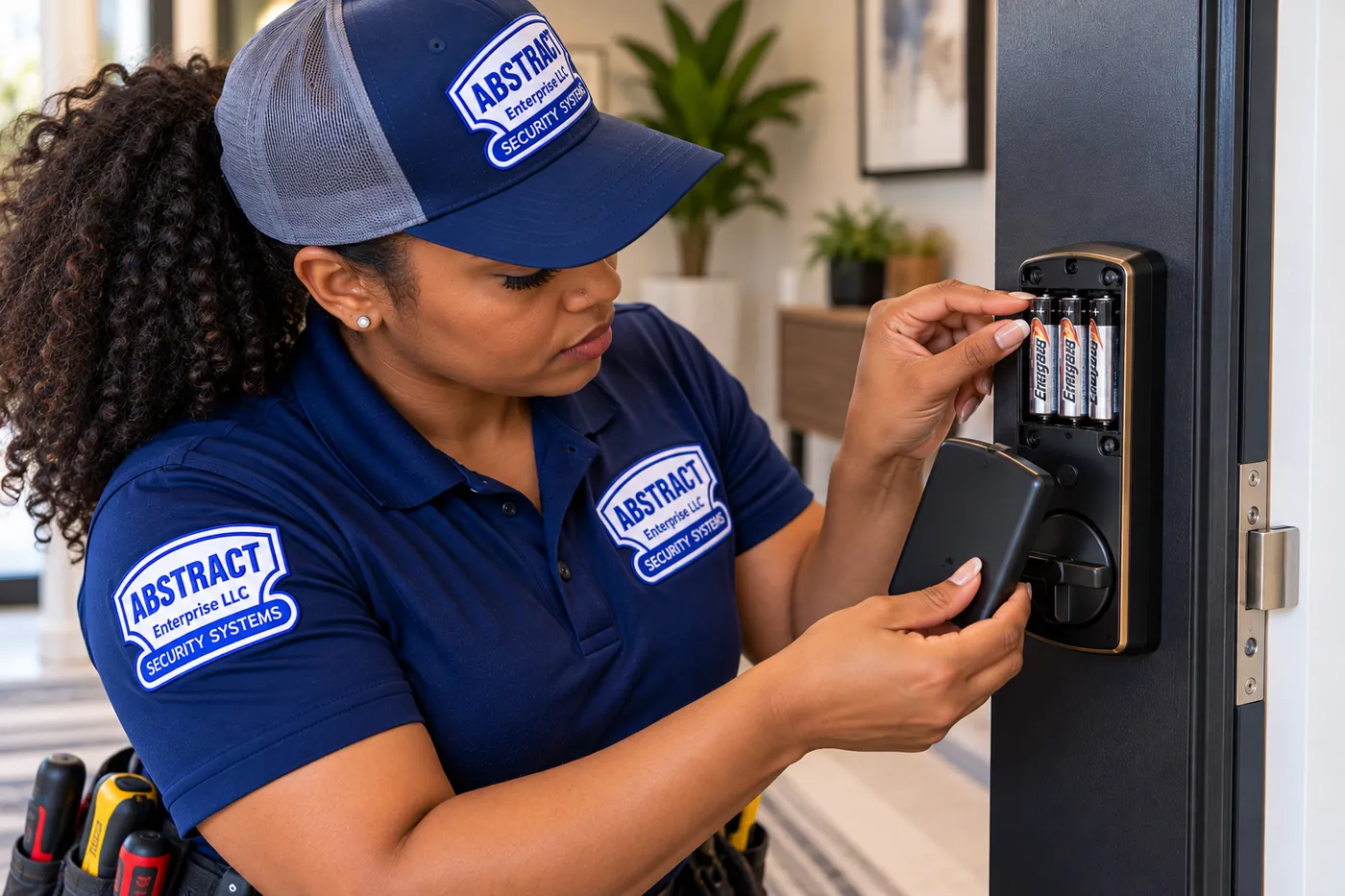
AESS technician replacing the batteries in a smart lock interior unit during a service visit in Dutchess County
Fresh batteries and a check of the motor — the fix for most locks that start acting up.
AI Overview Reality Check

What AI Gets Wrong About Smart Lock Installation in Dutchess County

Before the claims, an honest limitation: our research tools had no way to load Google’s AI Overview, so nothing in quotation marks below is lifted from it. Instead we collected the statements that keep recurring in hosting blogs, national cost pages and lock advertising, since that is the material automated answers are built from, and set each against what we find on real doors in Dutchess County.

“A smart lock installation costs about $300”

National cost guides publish figures like Fixr’s January 2025 range of $250 to $400 for one smart lock fitted to one ordinary door. That is a reasonable national number for a pre-bored suburban door and a homeowner who will manage the lock themselves.

It doesn’t describe a Poughkeepsie rental with painted pre-1980 doors, a student house with six tenants to enrol and a turnover routine to set up, or a Rhinebeck hosted home where three doors on the town’s floor plan each need different hardware.

We quote those jobs flat after a free walkthrough, and we publish the figures we can: keypad-and-strike work on shop and building doors is $2,295 to $3,825 per door at our Dutchess rate, and a setup-only visit is $275 for the first hour.

“Give your Airbnb guests a code and you’re done”

Hosting blogs often treat keyless check-in as the finish line. In Dutchess it is the first step of a longer list. Beacon allows short-term rentals only in a host’s primary residence and caps them at 100 days a year; Rhinebeck wants a permit, a floor plan of exits and an inspection; Red Hook wants a local contact; the Town of Pleasant Valley moved its own short-term rental law through state environmental review in 2025.

The Highlands Current found 133 Beacon listings in July 2025 against 33 registrations. A smart lock does nothing for a host who hasn’t got a permit.

Read your town’s law first. Then let the lock serve the permit: guest codes that match the booking dates, a code for the local contact, and exits that open freely from inside.

“The lock is the main safety feature of a rental”

A lock keeps the wrong people out. It does nothing about the dangers inside. In October 2024 a mother and her daughter died in a fire at an Airbnb in Salt Point; Dutchess investigators allege, according to CBS New York, that the listing falsely claimed a smoke alarm and that the property lacked a required local permit mandating smoke and carbon monoxide detectors and extinguishers on each floor. Those are allegations in a criminal case, not findings.

The lesson for hosts doesn’t depend on how that case ends. Working smoke and CO alarms, extinguishers and clear exits come before any keyless convenience.

When we fit a rental’s locks we walk the exits with the owner, and we will point out a missing or chirping alarm on the way. Our fire alarm installation team in Dutchess County can take that further.

“Landlords can just change the code when a tenant stops paying”

Property-management articles sometimes present keyless entry as a way to “enforce” leases. In New York State it is not. RPAPL 768 makes it unlawful to change or disable the lock on an occupant’s entrance door without supplying a key, outside a court-ordered eviction, and it applies in Poughkeepsie and Red Hook exactly as it does in the city.

Deleting a tenant’s code is changing the lock. A smart lock makes it faster, not lawful.

Use the lock for what it is good at in a rental — separate codes, dated access for contractors, a record of when the door was used — and leave possession disputes to the courts.

“Installing a smart lock is a 20-minute DIY job on any door”

On a modern pre-bored door with a standard backset, a confident homeowner can often fit a smart deadbolt with a screwdriver. Many Dutchess doors are not that door: thick old slabs, odd backsets, mortise locks, frames that have moved, and multiple coats of old paint.

On a pre-1978 house the paint is the part a how-to video never mentions. Drilling or chiselling old paint makes dust, and in a rental that may already hold a lead safety certificate, that dust is the owner’s problem.

We measure first, reuse bores where we can, keep the disturbance within minor-repair scale and clean up with a HEPA vacuum and wet wipes. If a door needs more than that, we say so before starting.

“Smart locks are only for new homes”

Lock marketing photographs new doors in new houses. Yet about 18 percent of Dutchess homes were built in 1939 or earlier, and many of the people who most need controlled access — landlords near the colleges, hosts in village houses, estate owners — own exactly those buildings.

Interior retrofit units, traditional handlesets with keypads and thick-door kits exist precisely for older doors. The skill is in choosing the one the door can take without damage.

On a historic front we start with the least visible option and keep the original hardware, so the change can be undone.

“The app keeps everything safe, so who holds it doesn’t matter”

An app is only as safe as the account behind it. On estates and in rentals we regularly find locks registered to a former caretaker’s email, a property manager who has moved on, or a tenant who was made an administrator to be helpful.

Whoever holds the administrator account controls every code. If that person leaves, the owner may not be able to change anything without resetting the lock.

We set up every Dutchess lock with the owner, or an estate office address the owner controls, as administrator, with a second administrator for backup, and everyone else as ordinary users.

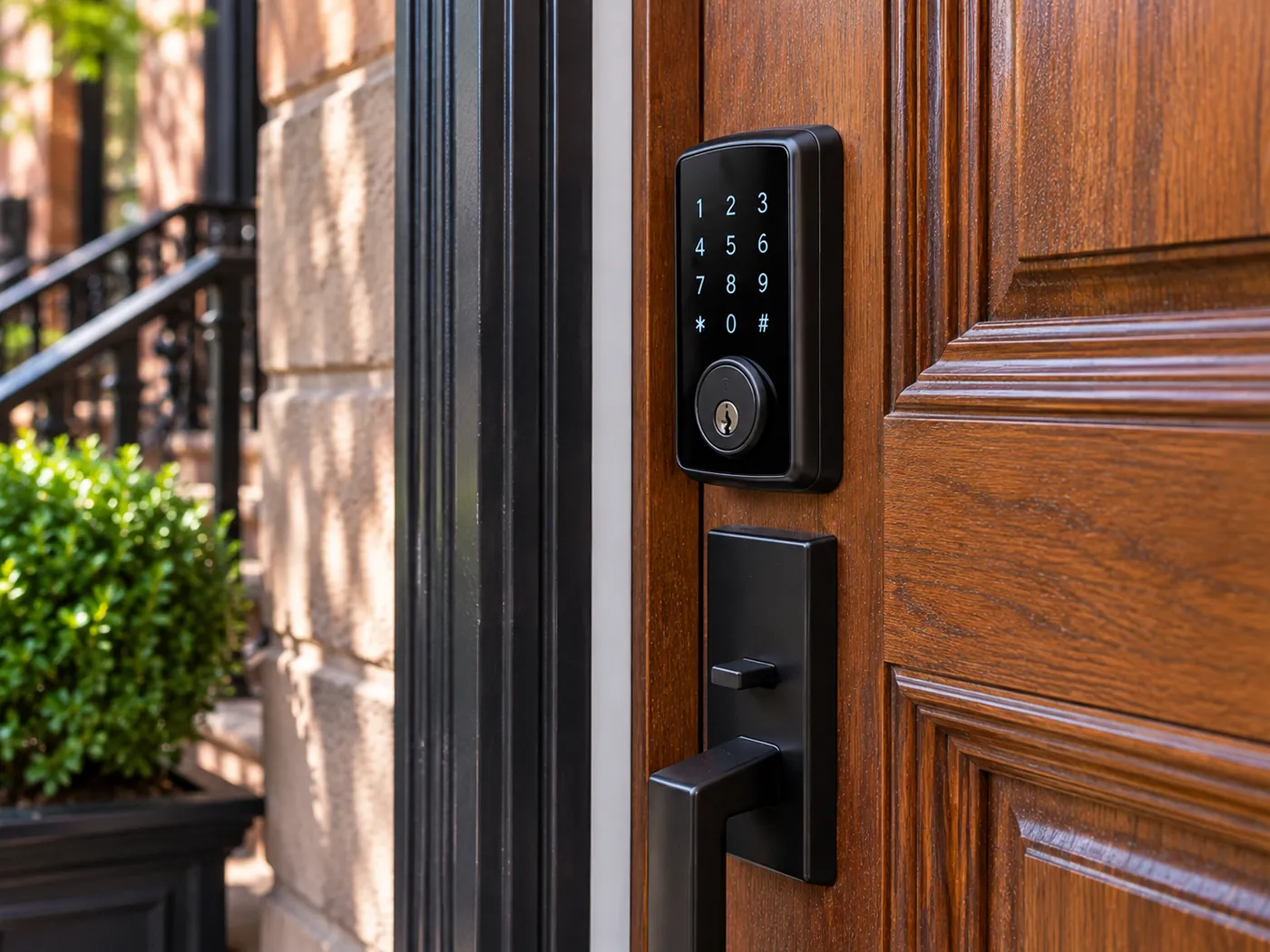
Finished black keypad smart deadbolt and handle on a wood brownstone front door after smart lock installation in Dutchess County
A finished keypad deadbolt on a brownstone front door — keyless entry with a key backup.

Keys That Answer to You, Not to Whoever Had Them Last

One phone call is enough to start: describe the property, the lease or booking calendar and anyone who still holds an old key. A licensed installer will sketch the access plan and the cost.

Get In Touch

Request a Free Quote

Mention the town, how many doors, and whether tenants, guests, a caretaker or staff use them. If a lease ends or a permit inspection is due on a set date, put that in too. A written answer comes back the same business day, or ring (845) 640-3835 to talk it through.

✅

Request Received

A licensed installer will call before close of business today. For anything urgent, phone (845) 640-3835.

How It Works

Our Installation Process

From a single Hopewell Junction side door to a Rhinebeck estate, the sequence is the same.

1. Who comes and goes

On the phone we list every door and every person or group who needs it — owners, tenants, guests, a local contact, caretakers, staff — and when their access should start and end.

2. Walk the doors and the paperwork

At the free walkthrough we measure each door, check frames and paint, note which doors are exits on any permit floor plan, and test signal where a bridge or hub would go.

3. Access plan and flat price

A door-by-door schedule names the hardware, the administrator and the turnover routine, with one fixed total; commercial entrance lines use the Dutchess figures published below.

4. Prepare doors with dust control

Floors are covered, existing bores reused where possible, dust caught at the drill on older painted doors, strikes aligned and reinforced, and cleanup done with a HEPA vacuum and wet wipes.

5. Install, connect and prove the exits

Locks are fitted and paired, bridges placed, and every exit door is opened from inside by hand, in the dark, with no code, to prove nobody can be trapped.

6. Hand over control

The owner becomes administrator on their own phone with a backup, users are enrolled with end dates, cylinders are re-keyed if needed, and you keep a written turnover routine.

Coverage Area

Smart Lock Installation Near Dutchess County Landmarks

Six places that explain why Dutchess doors are so varied: river estates with outbuildings, a nineteenth-century campus, a factory turned museum, and the gardens and bridges people come here to see.

Walkway Over the Hudson, Poughkeepsie

Opened in 1888 as a railroad bridge and now a state historic park, 212 feet above the river and 1.28 miles long between Poughkeepsie and Highland. The neighbourhoods at its Poughkeepsie end are full of the older two- and three-family houses that make up much of the city’s rental stock.

Vassar College

Founded in 1861 on roughly a thousand acres, with its Main Building of 1865 by James Renwick Jr. The houses and apartments of Arlington around it are let to students and staff, and turn over with the academic year.

Locust Grove, Poughkeepsie

Samuel Morse’s Italianate mansion on 200 acres above the Hudson, with a carriage house and ice house among its buildings — a picture of the multi-building river properties whose keys we are asked to bring under control.

Wilderstein, Rhinebeck

An 1852 Italianate house remodelled and enlarged in 1888, home to three generations of the Suckley family; its last resident, Margaret “Daisy” Suckley, FDR’s cousin and confidante, died there in 1991. The kind of Victorian front door where the hardware has to suit the house.

Montgomery Place, Annandale-on-Hudson

More than 380 acres between Bard’s Annandale and Massena campuses, with a federal-style mansion, houses, cottages and barns, home to the Livingston family from 1805 to 1986. Estates like it are why outbuilding doors and staff access come up so often in northern Dutchess.

Dia Beacon

A 1929 Nabisco box-printing factory of nearly 300,000 square feet, now a museum by the river in Beacon. It sits at the foot of a city whose old industrial buildings and Main Street rows are now homes, lofts, studios and shops.

Also near the work we do: Innisfree Garden’s 185 acres in Millbrook, created by Walter and Marion Beck as their private home, and Mount Gulian in Beacon with its c. 1730 Dutch-style barn. We serve the City of Poughkeepsie and the Town of Poughkeepsie including Arlington and Spackenkill, Beacon, Fishkill, East Fishkill, Hopewell Junction, Wappingers Falls, Wappinger, LaGrange, Pleasant Valley, Hyde Park, Staatsburg, Rhinebeck, Rhinecliff, Red Hook, Tivoli, Annandale-on-Hudson, Milan, Clinton, Salt Point, Stanford, Pine Plains, Millbrook, Washington, Union Vale, Beekman, Pawling, Dover Plains, Wingdale, Amenia, Wassaic and Millerton.

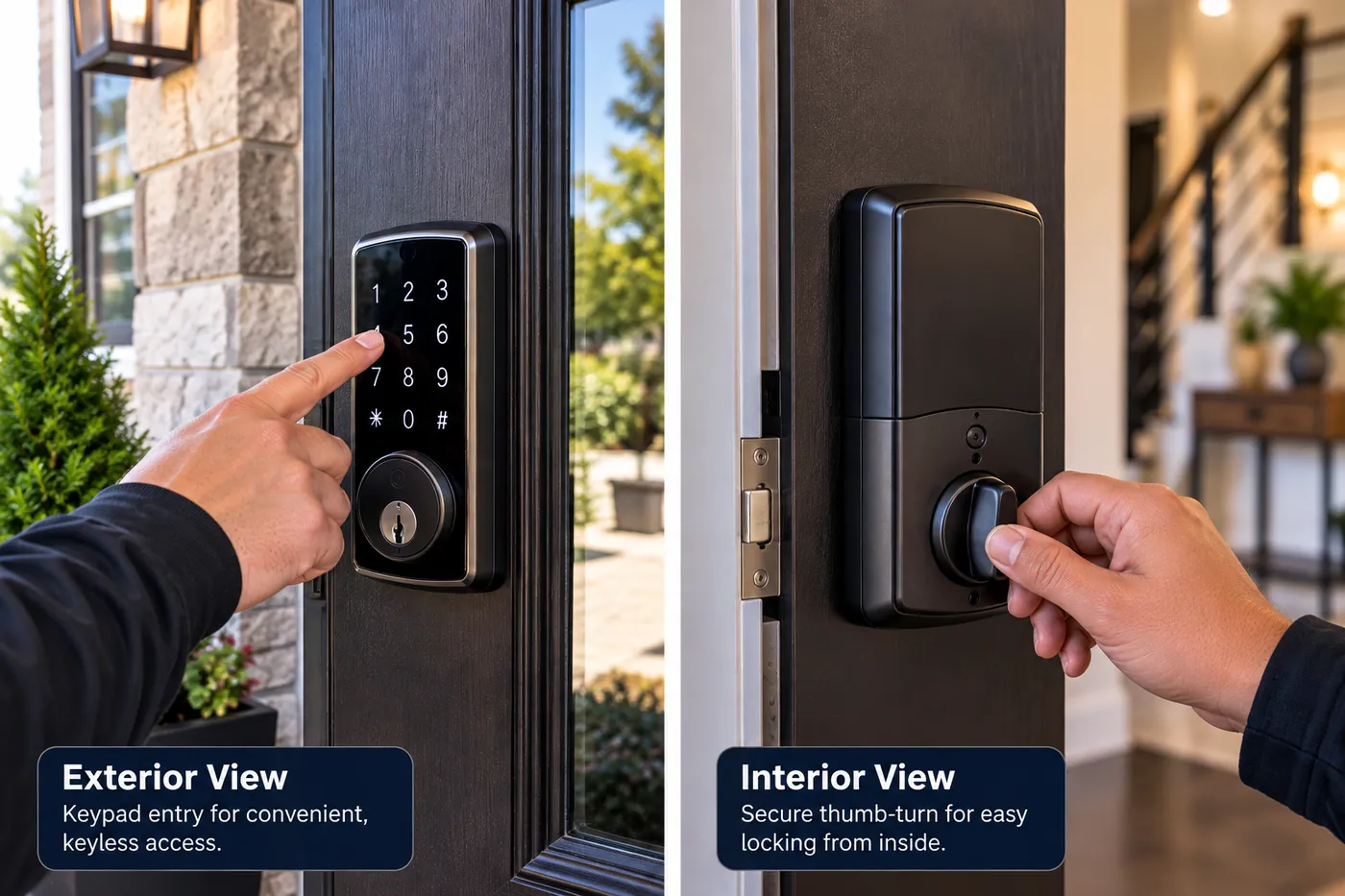
Exterior keypad and interior thumb-turn views of a smart deadbolt installed in Dutchess County
Outside: keypad entry with a key override. Inside: a thumb-turn so nobody gets locked in.
Pricing

Smart Lock Installation Cost in Dutchess County

Two kinds of number appear on this page: prices AESS publishes, and jobs we only price after seeing them. Keypad, fob-reader and electric-strike work on shop and building doors already has county figures on our Hudson Valley smart lock page, and Dutchess carries our 1.53 area multiplier on the published Brooklyn base, so those lines appear below at the Dutchess rate. A smart lock on a house door has no published AESS price, because the door and the people decide the work: one keypad on a modern side door in Wappingers Falls is a short visit, while a Poughkeepsie two-family with painted 1920s doors, six tenants to enrol and bedroom locks is a long one. Those jobs are quoted flat, in writing, after a free walkthrough, and the figure you are given is the figure you pay.

ItemDutchess County priceScope and source
Smart lock on a house, rental, hosted home or estate doorQuoted flat at free walkthroughNo published AESS figure; set after we measure each door and plan the users
Single-door keypad or fob reader with electric strike$2,295–$3,825 installedShop, kitchen, office or small-building entrance; published $1,500–$2,500 base × 1.53
New electric strike on an entrance door$383–$689Fitted during entrance work; $250–$450 published figure × 1.53
Failed electric strike repair$451–$742Entrance that buzzes but won’t release; $295–$485 published figure × 1.53
Setup-only visit (app, codes, schedules, bridge; no hardware change)$275 first hour, then 30-minute blocksOur published Dutchess setup-only rate
Service and callback rate$195/hr, 3-hour minimum ($585)After-install service calls; not charged on the initial installation

What moves a Dutchess quote

  • Door age and paint: pre-1978 painted doors take dust control and more careful cutting, and a door in poor condition may need a carpenter or a lead-safe certified contractor first.
  • Door type: heavy historic slabs, mortise locks and unusual backsets call for retrofit units, thick-door kits or traditional handlesets rather than a standard deadbolt.
  • Number of users and how often they change: enrolling one couple is quick; setting up six tenants with end dates, a cleaner, a local contact and an owner backup takes longer and is worth doing properly.
  • Exits on a permit plan: a hosted home with several exit doors needs each one fitted and tested so it opens freely from inside.
  • Buildings on the property: estates and farms with gatehouses, cottages and barns add doors, and sometimes a bridge, hub or network link to reach them.
  • Re-keying: restricted-keyway or re-keyed cylinders on the smart locks and on the doors that stay mechanical, whenever keys have been in many hands.

About the $250–$400 you may have seen online. That range is Fixr’s national figure from January 2025 for fitting a single smart lock to a single standard door. It is a third-party average, not something AESS charges, and it leaves out everything that makes a Dutchess rental or estate job what it is: old paint, a permit floor plan, six tenants on lease-dated codes, and an owner who needs to stay in charge of all of them.

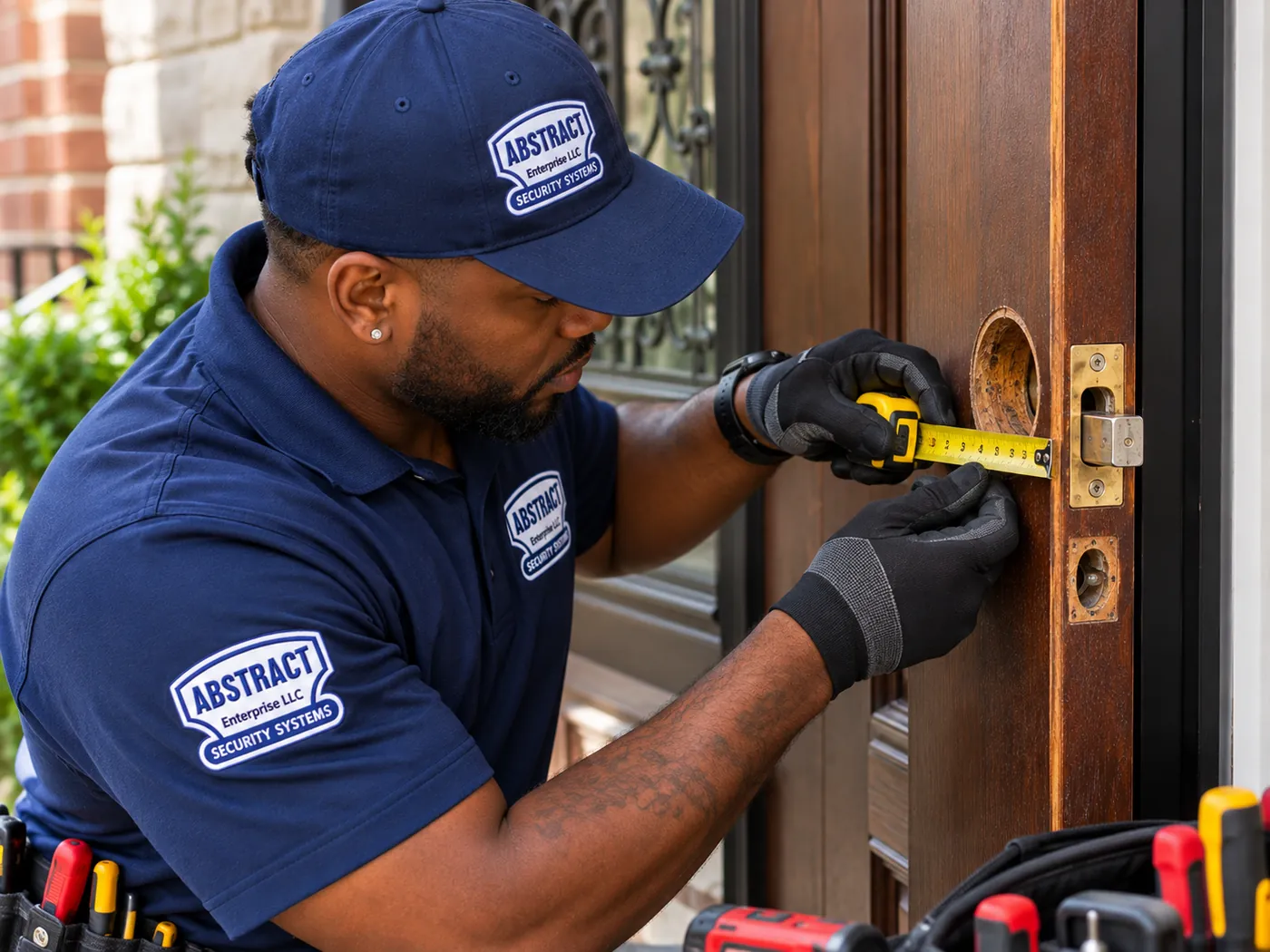
AESS technician measuring the door bore with a tape measure before a smart lock installation in Dutchess County
Measuring the bore and backset first, so the new smart deadbolt fits the existing door without re-drilling.
Shop Our Systems

Smart Lock Installation Packages & Pricing

Most Dutchess jobs fall into one of three shapes. The first and last have fixed published figures; the middle one, a full access plan for a rental, hosted home or estate, depends on the doors and the people, so it is priced only after the walkthrough.

Starter — Program and Hand Over

$275 first hour

For a lock that is already on the door: move the administrator account to the owner, delete stale codes, create users with end dates, connect a bridge, and leave a written turnover routine. Then 30-minute blocks if the job runs longer.

Standard — Property Access Plan

Quoted flat at walkthrough

Smart locks on the doors that deserve them, chosen for the door and the people: connected keypad deadbolts, retrofits for historic fronts, interior keypad levers, re-keyed cylinders on the rest. Dust-controlled work on older doors, exits proven by hand, owner set as administrator.

Premium — Keyless Shop or Building Door

$2,295–$3,825

For a shop, kitchen or small-building entrance: reader or keypad, electric strike, power supply and an inside release, one door, Dutchess rate. Each staff member’s fob or code is set to lapse when their season or job ends.

Bring Your Own Lock — Labour Only

If the lock is already sitting in its box, keep the receipt and send us the model. Fitting is priced as labour only, as a flat figure once we have seen the door. We first make sure the door can take it (thickness, backset, bore, finish) and that it can do what a Dutchess rental or hosted home needs — expiring user codes, an owner-held administrator account and a free inside release. Anything that would need a key or code to leave the house we decline. Locks you buy are covered by their maker’s warranty, not ours.

Ready to Take Back Control of Every Key?

Phone photos of both faces of every door, plus a word on who comes and goes, let us plan the visit before anyone drives out.

Across Dutchess

How Smart Lock Jobs Change Across Dutchess County

Forty-odd miles separate Beacon from Millerton, and the jobs change along the way: from city landlords and student houses in the south-west, through river estates and village hosts, to farms and weekend places whose owners are usually somewhere else.

City of Poughkeepsie and Arlington

The county seat’s older two- and three-family houses, small apartment buildings and the student-let houses around Vassar and Marist. Most calls are from landlords: individual tenant codes with lease end dates, re-keying after a group leaves, and dust-controlled work on painted doors in the pre-1980 rentals that the county health department lists for the state rental registry. The Poughkeepsie station on Metro-North’s Hudson Line, with Amtrak service, also makes this a base for commuters who are away from the house all day.

Town of Poughkeepsie, Spackenkill and South Road

Suburban subdivisions, condominiums and Marist’s campus on Route 9, plus the offices and suppliers along South Road where the county IDA’s summary places IBM’s planned quantum computing facility. Family homes want garage-entry keypads and upstairs deck contacts; businesses want suite and yard doors with per-person codes.

Beacon

Brick rows near the almost-mile-long Main Street, loft conversions in old factories, and owner-hosts renting their own homes under the city’s primary-residence short-term rental law. Owner’s-closet locks, dated guest codes and separate shop and apartment credentials on Main Street are the usual requests.

Fishkill, East Fishkill, Hopewell Junction and Wappingers Falls

Commuter subdivisions near I-84 and the Taconic, Route 9 plazas and medical offices, and the village centre of Wappingers Falls. The doors are mostly modern and pre-bored, so the work is quick; the planning is about the garage entry, the sliding door to the deck, and codes for dog walkers and cleaners while the family commutes.

Hyde Park, Staatsburg and Rhinebeck

The river estates, village houses in Rhinebeck’s historic district, restaurants near the CIA, and owner-hosted homes under the Town of Rhinebeck’s permit law and the Village’s own permit process. Discreet hardware on historic fronts, lock plans that follow the permit’s floor plan of exits, and caretaker handovers on the estates.

Red Hook, Tivoli and Annandale

Village houses and apartments let to Bard students and staff, farmhouses on the rural roads, and hosted homes under Red Hook’s short-term rental chapter with its 15-air-mile local-contact rule. Turnover routines and a code for the local contact are the two things we set up most.

Millbrook, Washington, Stanford and Pine Plains

Horse farms, estates and weekend houses in the rolling country of central and northern Dutchess, where properties often have several buildings and the owner may be in the city during the week. Remote code management, mechanical push-button locks on barns and an end to spare keys left in cars.

Pawling, Beekman, Dover and the Harlem Valley to Amenia and Millerton

Weekend houses, farms and village centres near the Connecticut line, and Wassaic, the northern terminal of Metro-North’s Harlem Line. Long drives for anyone with a key, the Sheriff’s reminders about vehicles and fobs, and shop doors on Millerton’s Main Street.

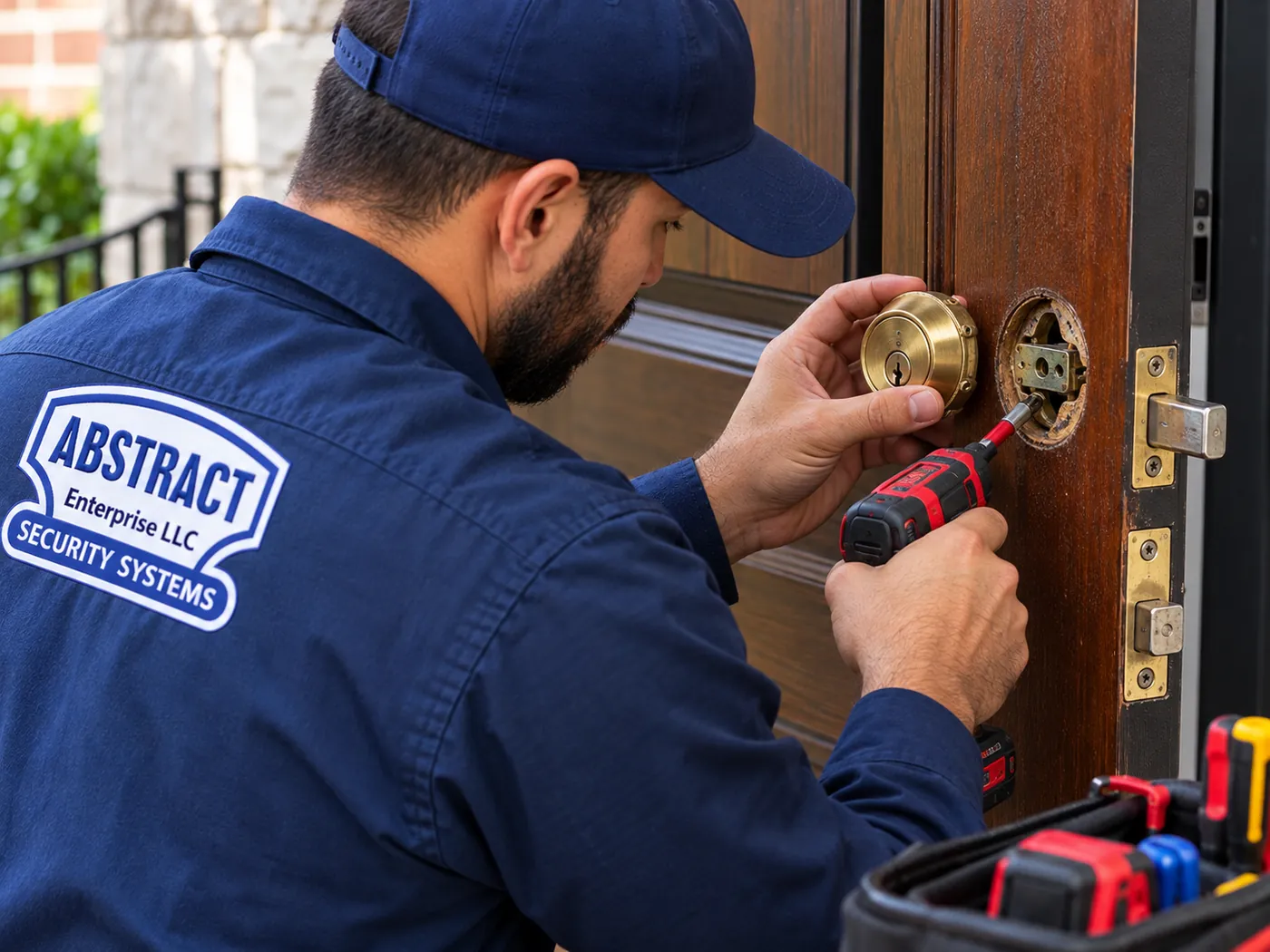
AESS technician removing an old brass deadbolt with a drill to prepare the door for a smart lock in Dutchess County
Old brass deadbolt coming out — the first step of a smart lock swap on a wood entry door.
Turnover Plan

A Code Plan for Dutchess Landlords, Hosts and Estates

Fitting a lock is quick; deciding who holds which credential is the part that lasts. Before we leave a Dutchess property we fill in a table like this one with the owner, one row for every kind of person who needs the doors.

PersonCredentialHow we set it up
Owner or estate officeAdministrator on the app, plus a code and a keyRegistered to an email the owner controls, with a second administrator for backup; never a tenant, guest or employee
Long-term or student tenantPersonal code or fobEnd date matching the lease; never removed mid-tenancy except by agreement or court order; cylinder re-keyed when a group leaves
Short-term guestDated codeStarts at check-in, ends at check-out; owner’s closet and private rooms on separate locks the code doesn’t open
Town-required local contactPermanent code and a keySeparate from the cleaner’s and guests’ codes; tested once before the first booking
Caretaker, housekeeper, farm managerPersonal code per buildingOnly the doors they need; deleted and cylinders re-keyed on the day they leave
Seasonal staffScheduled codeActive for their shifts only, with an end date at the close of the season
Contractors, painters, cleanersTemporary codeDated for the job, so nobody has to remember to remove it

Two habits keep it working. Review the user list at every turnover and at least twice a year, deleting anyone who no longer needs access. And keep the mechanical keys under control: at least one with someone nearby who can reach the house at night, and a fresh cylinder whenever keys have been in too many hands. If anything needs changing after we leave, our setup-only visit in Dutchess is $275 for the first hour.

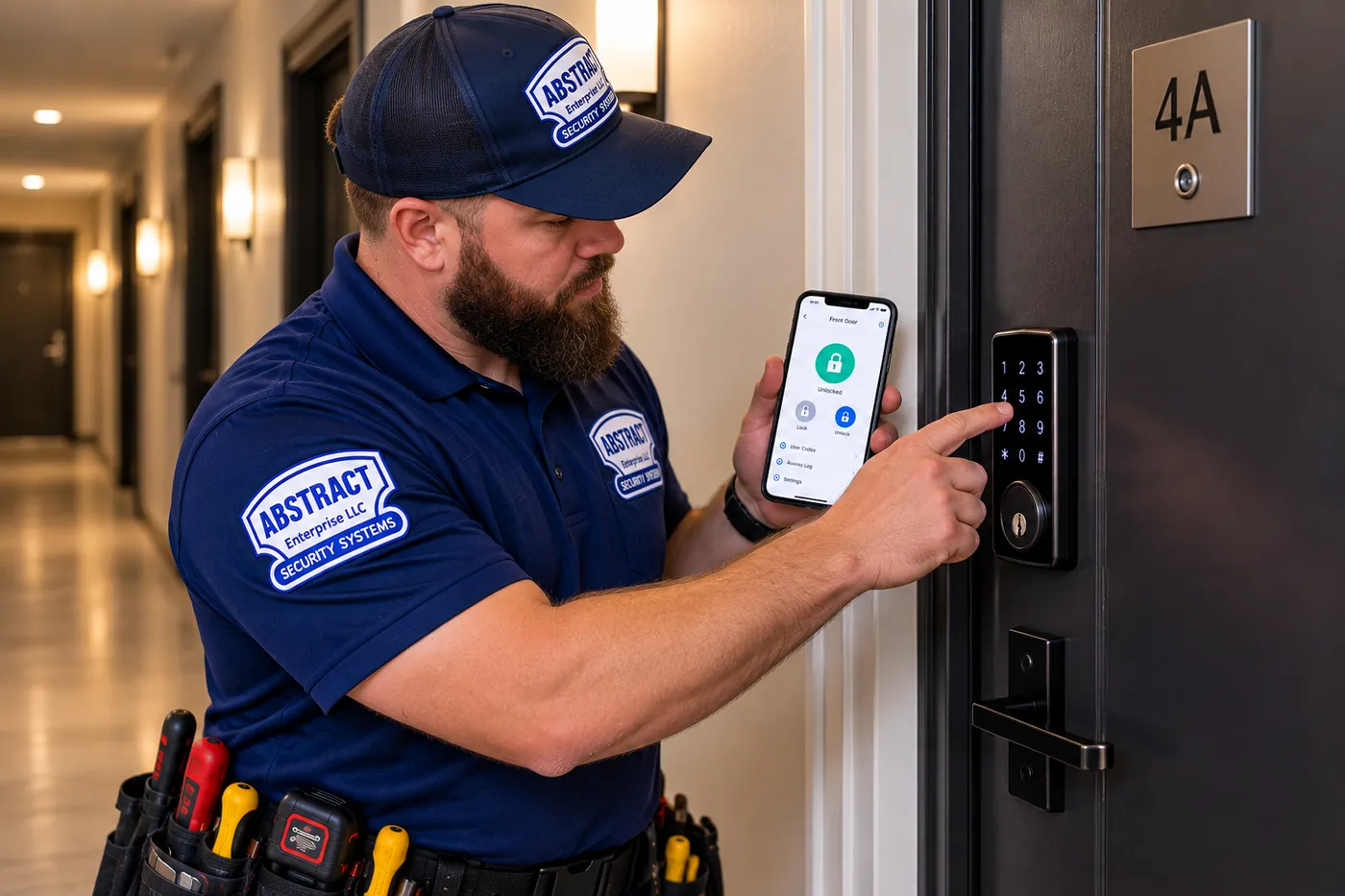
AESS technician testing a keypad smart lock on an apartment unit door with the mobile app in Dutchess County
Apartment unit door, tested from the keypad and the app — handy for owners renting out units.
Older Doors

A Lead-Aware Checklist for Changing Locks on Old Dutchess Doors

A lock change is small work, but on a painted door in an old house it should still be done carefully. This is what we go through before drilling any door that may carry pre-1978 paint.

  • How old is the house, and is it a registered rental? In the City of Poughkeepsie’s 12601 zip code, pre-1980 rentals with two or more units fall under the state rental registry and its lead safety certificate. We ask, and we plan the work so we don’t undo it.
  • Can the existing bores be reused? We choose locks whose cross bore, edge bore and backset match what is already in the door, so new cutting is limited to screw holes and small mortises.
  • Is the work minor repair? The EPA treats disturbing six square feet or less of interior painted surface, or twenty square feet or less outside, as minor maintenance and repair when no prohibited practice is used. A lock change is normally well inside that.
  • What practices are off the table? No open-flame or heat-gun paint removal, no power sanding of old paint, no dry scraping that spreads dust.
  • How is dust contained? Plastic sheeting under the door, dust caught at the bit, and cleanup with a HEPA vacuum and wet wipes before anyone walks through.
  • Is the door sound? Peeling paint, a split stile or a frame that binds is a carpentry and lead-safe painting job first; we say so and stop rather than drill into it.
Connectivity

Keeping Remote Codes Working When the Owner Is Far Away

Many Dutchess rental and estate owners manage their locks from somewhere else — a weekday apartment in the city, an office in Westchester, a winter away. Remote code changes only work if the lock can reach the internet, and the house’s internet only works if it has power.

  • Wi-Fi built into the lock: simplest where the door has a strong signal. In thick-walled old houses and estates it often means adding an access point near the entrance.
  • Bluetooth lock with a bridge: the bridge plugs in near the door and relays to the router; August, for example, recommends its Connect bridge within 10–15 feet of the lock. We test signal at the bridge position, not at the router.
  • Z-Wave or Thread with a hub: better where several locks and sensors share one system, such as an estate’s outbuildings, and kinder to batteries.
  • Codes that work offline: codes already stored in the lock keep working when the internet or power is down; only new codes and remote unlocks wait for the connection to come back.

Power is the other half. When storms crossed the region on June 27, 2024, the Times Union reported roughly 10,000 Central Hudson outages in Dutchess alone. Battery locks keep working through an outage; the router and bridge do not. For hosted homes and estates we often put the router, bridge and hub on a small battery backup so the owner can still see the door during a short outage. In houses where Wi-Fi doesn’t reach the door, a cable run to an access point is the permanent fix; our Dutchess County network installation team and structured cabling in Dutchess County handle that work.

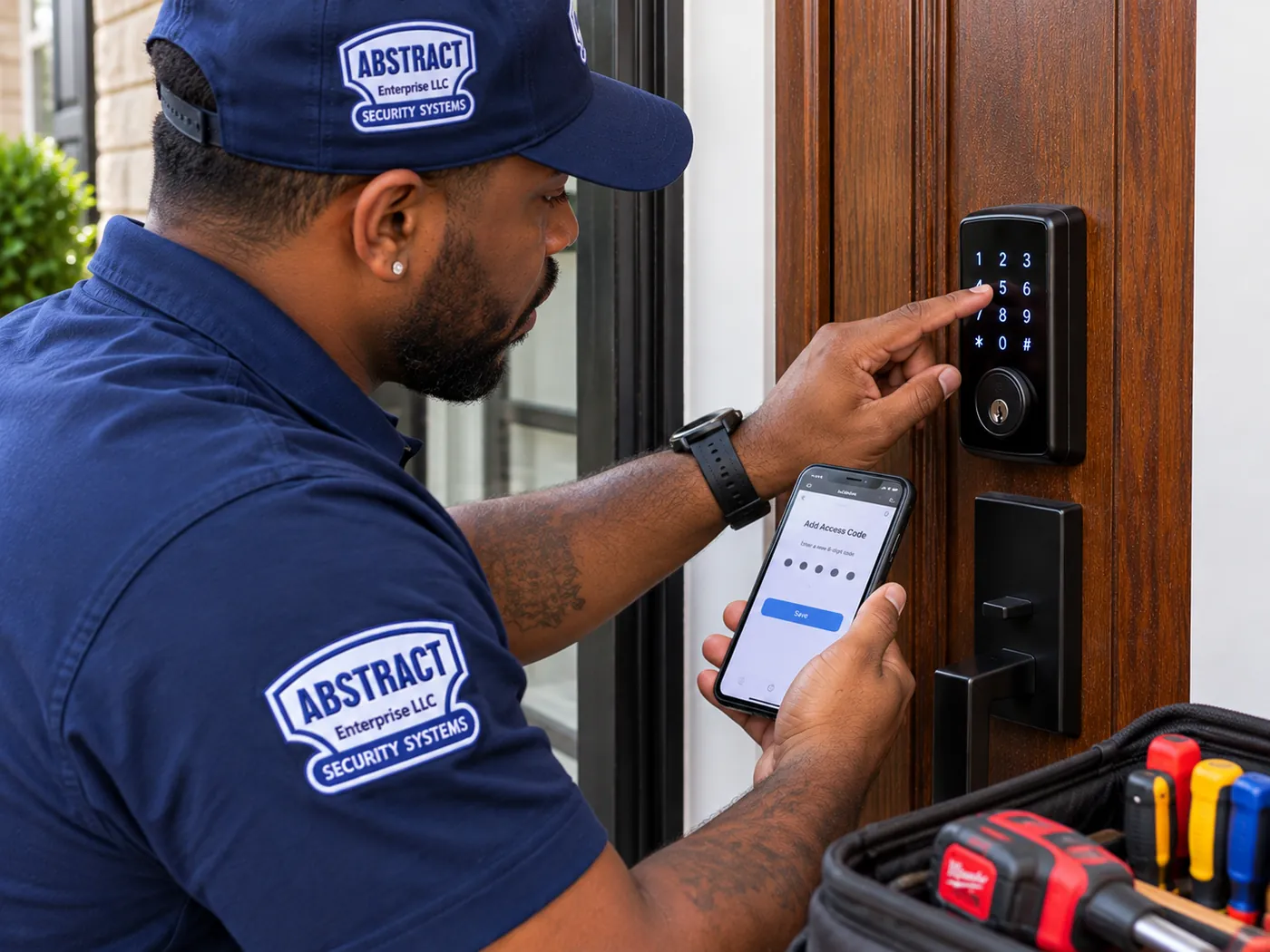
AESS technician programming a new user access code in the smart lock app at the front door in Dutchess County
Adding user codes in the app at the door, so every code is tested before we leave.
Complete Services

Every Smart Lock Installation Service in Dutchess County

A lock job in Dutchess often turns into a short list: a camera at the guest door, smoke alarms for the rental permit, cabling to reach a far door.

Access Control Installation Dutchess County

Readers, keypads and controllers for shops, offices, gates and building entrances with several doors.

AESS Doorbell Cameras in Dutchess County

A picture of whoever used the code, at rentals, hosted homes and estates.

Intercom Installation

Entry stations for two- and three-family houses, small buildings and estate gates.

Abstract Enterprises Intercom Repair Dutchess

Dead stations, failed door releases and wiring faults on existing systems.

Door Buzzer Repair in Dutchess County

Strikes that hum but won’t release and buzzers that have stopped answering.

Alarm Installation Dutchess County

Door and window contacts, upstairs-door reminders and monitoring for houses and shops.

Fire Alarm Installation

Smoke and carbon monoxide detection for rentals, hosted homes and commercial spaces.

Home Security Cameras

Driveways, decks, barns and side doors covered for owners who are often away.

AESS Home Automation in Dutchess County

Hubs and scenes that bring locks, lights, thermostats and sensors together.

Low-Voltage Installation Dutchess County

Door wiring, data, cameras and sound, handled by one licensed crew.

Request a Quote

One form for any mix of the services above.

Field Notes

Field Notes on Dutchess Rental and Estate Doors

General working practice on Dutchess jobs where keys have passed through many hands — how we sequence the visit, not an account of any single property

Before touching a door we ask for the key ring. Every key the owner has, every spare from the kitchen drawer, and the names of everyone who might still hold one: past tenants, the last property manager, a cleaner, a contractor from three summers ago. Nobody ever has the full list, and that is the point of the exercise — it tells us which cylinders need changing as well as which doors need smart locks.

Then we ask who owns the accounts. On older smart installations the lock, the bridge and the garage opener are often registered to someone who is no longer around. We get those accounts moved to the owner first, or plan a factory reset, before any new hardware goes in.

Then the paint and the doors. We look at the age of the house, ask about any lead certificate, and check thickness, backset, bores and frames. Old painted doors get the dust-control routine; doors that need a carpenter get a note, not a drill.

Last, the exits. If there is a town floor plan, we walk it door by door. If there isn’t, we draw a rough one with the owner. Every exit is opened from inside, in the dark, by hand, before we leave.

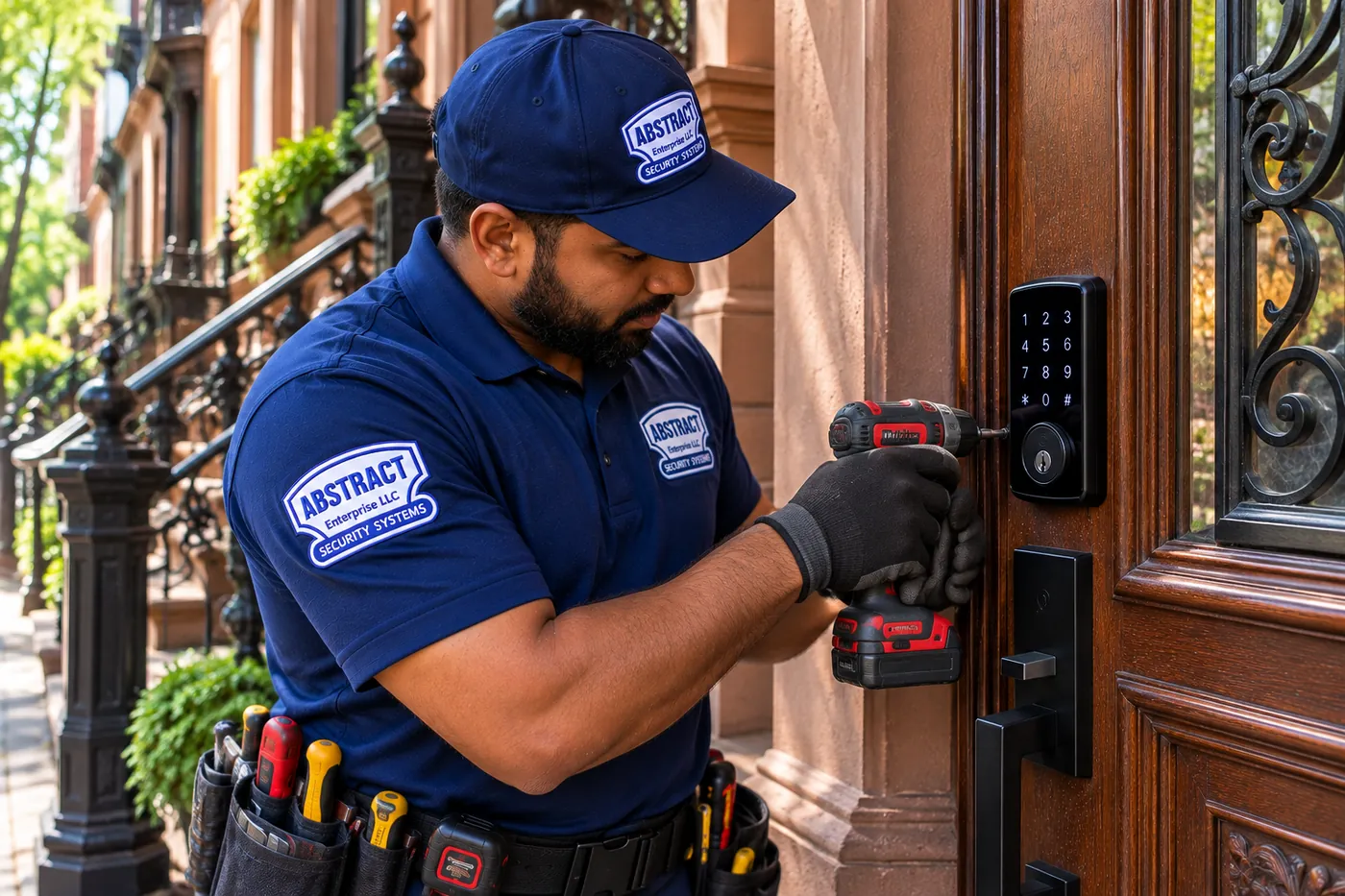
AESS technician drilling to mount a keypad smart lock on a brownstone stoop door in Dutchess County
Mounting a keypad deadbolt on a stoop door with ironwork and an original wood frame.
FAQ

Dutchess County Smart Lock Installation FAQ

What does a keypad with an electric strike cost on a Dutchess County shop or building door?
+

At our Dutchess County rate, which is the published base times 1.53, one door fitted with a keypad or fob reader, an electric strike and an inside exit button runs $2,295 to $3,825 installed. If only the strike is needed it is $383 to $689 new, or $451 to $742 to repair a failed one. House, rental and estate door locks have no list price; they are quoted flat once we have walked the doors.

Do you come out to Pine Plains, Millerton and the Harlem Valley, or only along Route 9?
+

We cover the whole county, from Beacon and Fishkill in the south to Tivoli, Pine Plains and Millerton in the north and Pawling, Dover Plains, Amenia and Wassaic along the Connecticut line. Appointments are booked in 2-hour arrival windows between 8 AM and 8 PM, seven days a week.

Can you do the walkthrough before our student tenants move out in May?
+

Yes, and it is the best time. We can measure the doors, look at the paint and frames and plan the codes while the house is occupied, with notice to the tenants as your lease requires, then install in the gap between move-out and the new group's arrival so the new tenants start on fresh codes and re-keyed cylinders.

Can the locks go in the week before our Rhinebeck short-term rental inspection?
+

Usually, if you book early. Send us the floor plan you are submitting with the application so we can match the hardware to the exits on it. We install, test every exit from inside, and leave you a short note of which lock is on which door to keep with your permit paperwork.

Can the smart locks take the same key as the rest of our Poughkeepsie building?
+

Often, yes. Many smart deadbolts accept a standard or re-keyable cylinder, so the cylinder can be keyed alike with your other doors or brought onto your existing master key system. Tell us the keyway or bring a key to the walkthrough and we will confirm which lock models can match it.

Is there a separate travel charge for the far north and east of the county?
+

No separate travel line. Travel is built into the quote, and our published Dutchess prices already reflect the county rate. What changes the price is the doors and the work, not whether the house is in Beacon or Millerton.

Can you come in the evening, after we get home on the train from the city?
+

Yes. Our arrival windows run until 8 PM, seven days a week, so a 6 to 8 PM window on a weekday or any time at the weekend works for most commuters. Installing while you are there means you can be enrolled as administrator on your own phone before we leave.

If our buyer doesn't want the smart lock, can you put a plain deadbolt back before closing?
+

Yes. Keep the original deadbolt if you still have it, or we can fit a new mechanical one that suits the existing bores. We remove the smart lock, delete it from your account so the buyer can't be locked out by an app they don't control, and fill any extra screw holes.

Can the accessory apartment behind our Beacon house get its own keypad for a year-round tenant?
+

Yes. A long-term tenant's door can have its own smart lock with the tenant's code and the owner as administrator, kept separate from the main house. Beacon's short-term rental law, as reported, does not allow accessory dwelling units to be rented for short stays, so this setup is for a regular lease, not guest bookings.

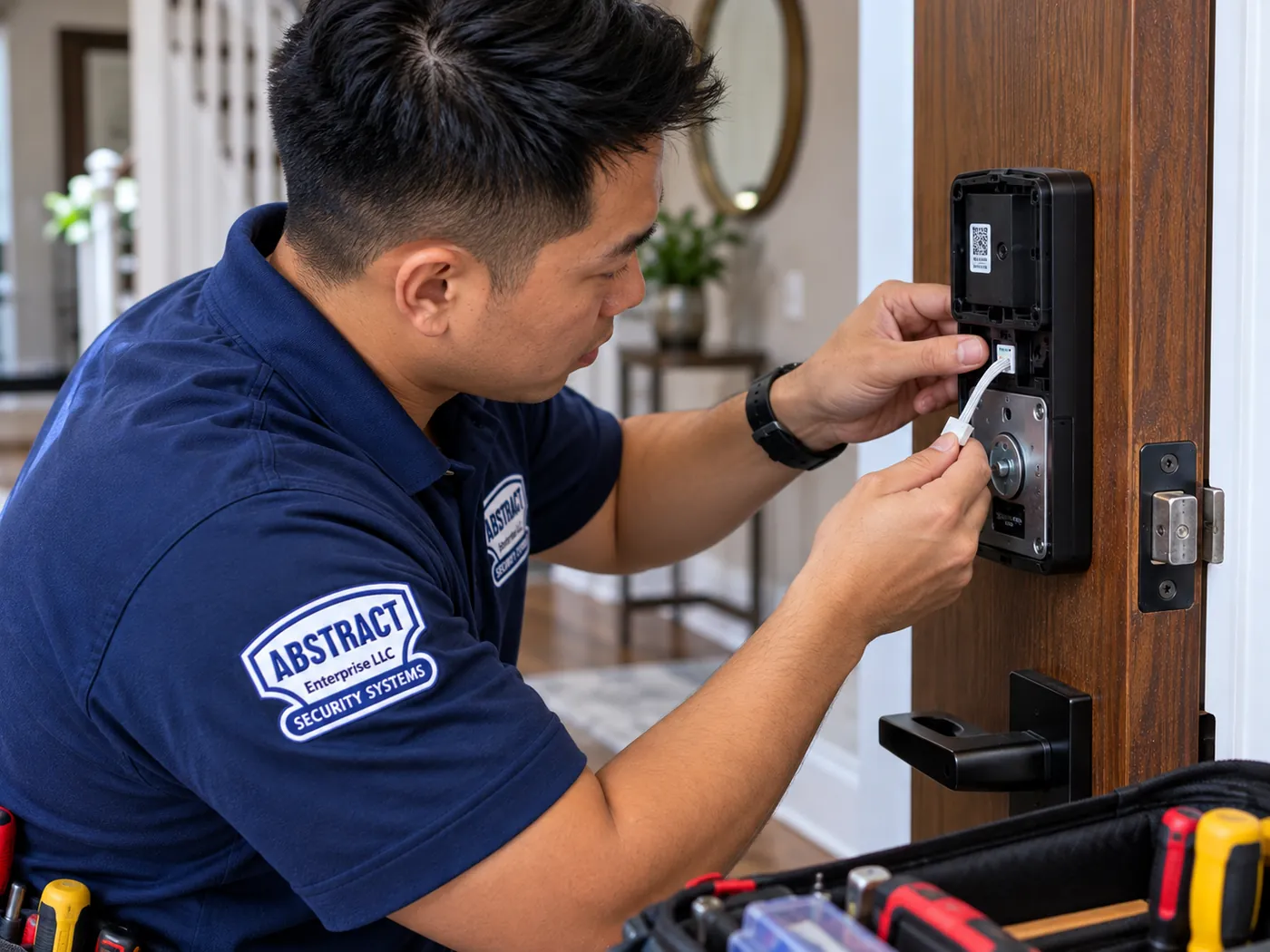
AESS technician connecting the ribbon cable on the interior unit of a keypad smart lock during installation in Dutchess County
Seating the ribbon cable between the outside keypad and the inside unit — a loose connector is the top cause of dead keypads.
All Areas Served

Smart Lock Installation Across New York

For the valley-wide picture — weekend houses, batteries in a hard winter, barns and county-by-county prices — go up one level to our Hudson Valley smart lock installation hub. Westchester, Rockland, Orange and Putnam already have their own smart lock pages. Until Ulster gets one, its link takes you to the quote form; our crews cover it today. Further south, the city and Long Island have regional pages, with separate pages for every borough and for Nassau and Suffolk.

Everything else we fit, from cameras to cabling, is listed on the Abstract Enterprises Security Systems home page; the people behind it are on our about page.

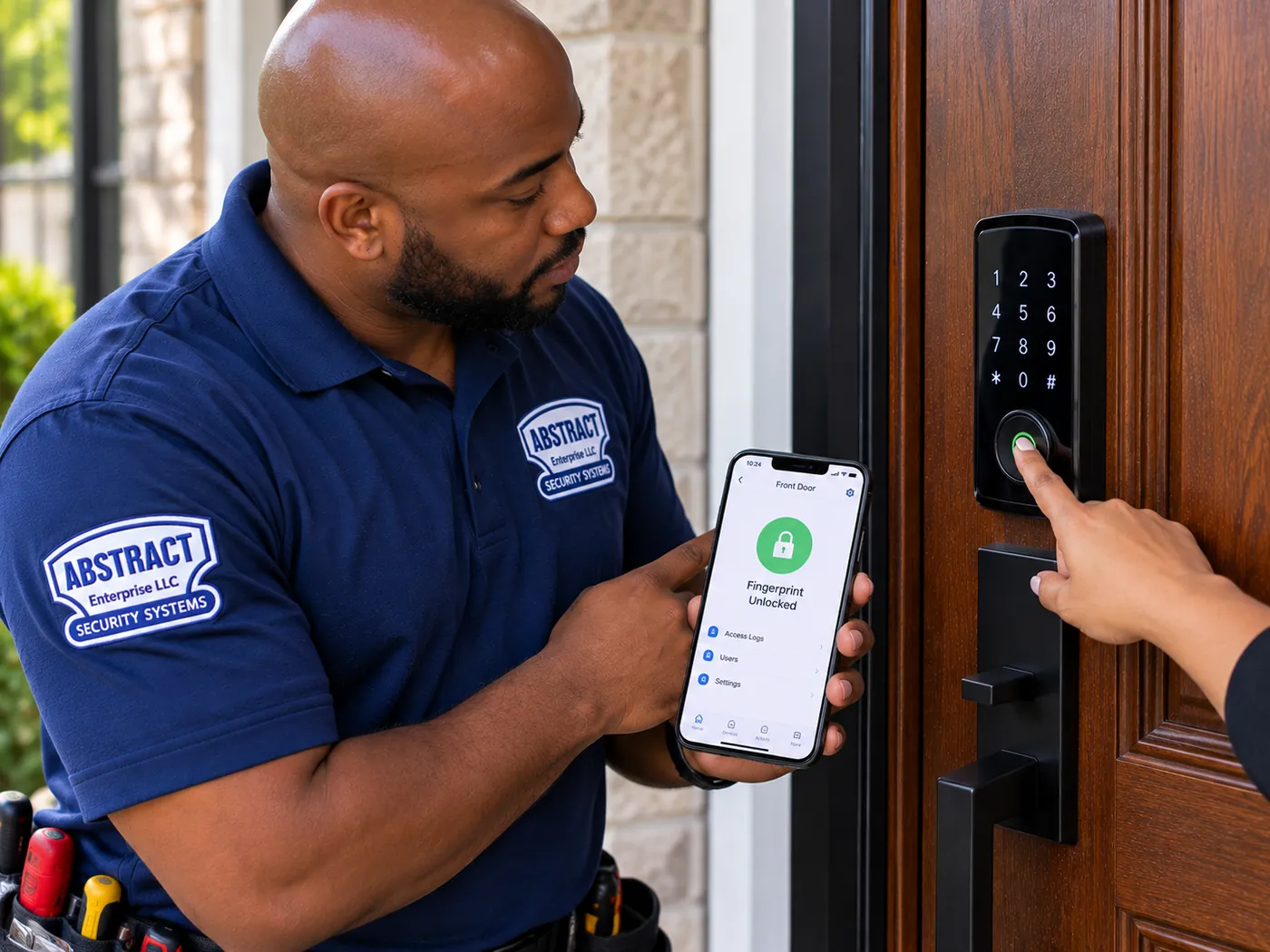
AESS technician showing a homeowner a fingerprint unlock on a new smart lock with the app confirming access in Dutchess County
Enrolling and testing a fingerprint with the owner — the app logs every unlock.

Locked Out Somewhere Between Beacon and Millerton Tonight?

Guests stuck on the porch in Rhinebeck, a tenant’s code refused in Poughkeepsie, a bolt jammed by a frame that swelled in the rain: ring (845) 640-3835. The next 2-hour arrival window is yours, and a technician on site usually clears a battery, pairing or alignment fault within one to two hours. In the meantime, try the lock’s emergency key or external battery terminals, and call your local contact if you have one — that is what they are for.

AESS technician fastening the strike for a keypad smart lock on an office glass-frame door in Dutchess County
Business smart lock on an aluminum office door — codes per employee, no keys to collect.

Smart Lock Installation Dutchess County — Licensed, Insured, Turnover-Ready

Dutchess County customers call (845) 640-3835 or message WhatsApp (718) 679-0359 through wa.me. Abstract Enterprises Security Systems, 460 E Fordham Rd, Bronx, NY 10458.

NYS Low-Voltage Licence #12000287431 · 100% Licensed & Insured · Same-Day Estimates · Rated 4.7★ from 201 Google Reviews

Locks you supply carry their manufacturer's warranty. Full terms — including 50% deposit, one-year parts-only warranty on AESS-supplied products, and the late-fee schedule — are set out in the service agreement. See our warranty page.

This page explains how Dutchess County rentals, town rules and older houses affect smart lock installation; it is not legal advice. Page reviewed and updated October 17, 2026. Changelog: first publication of the Dutchess County smart lock installation page.