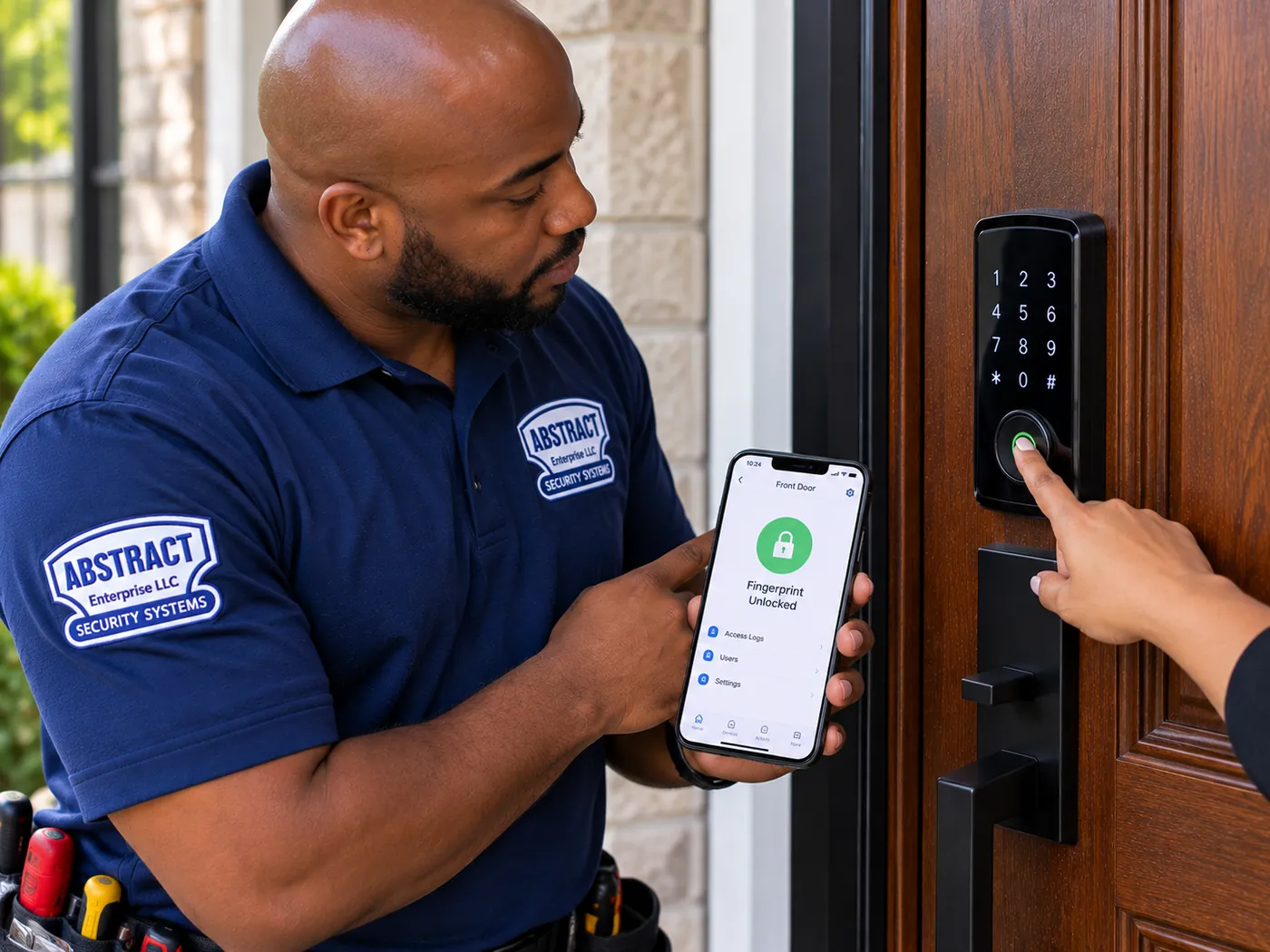
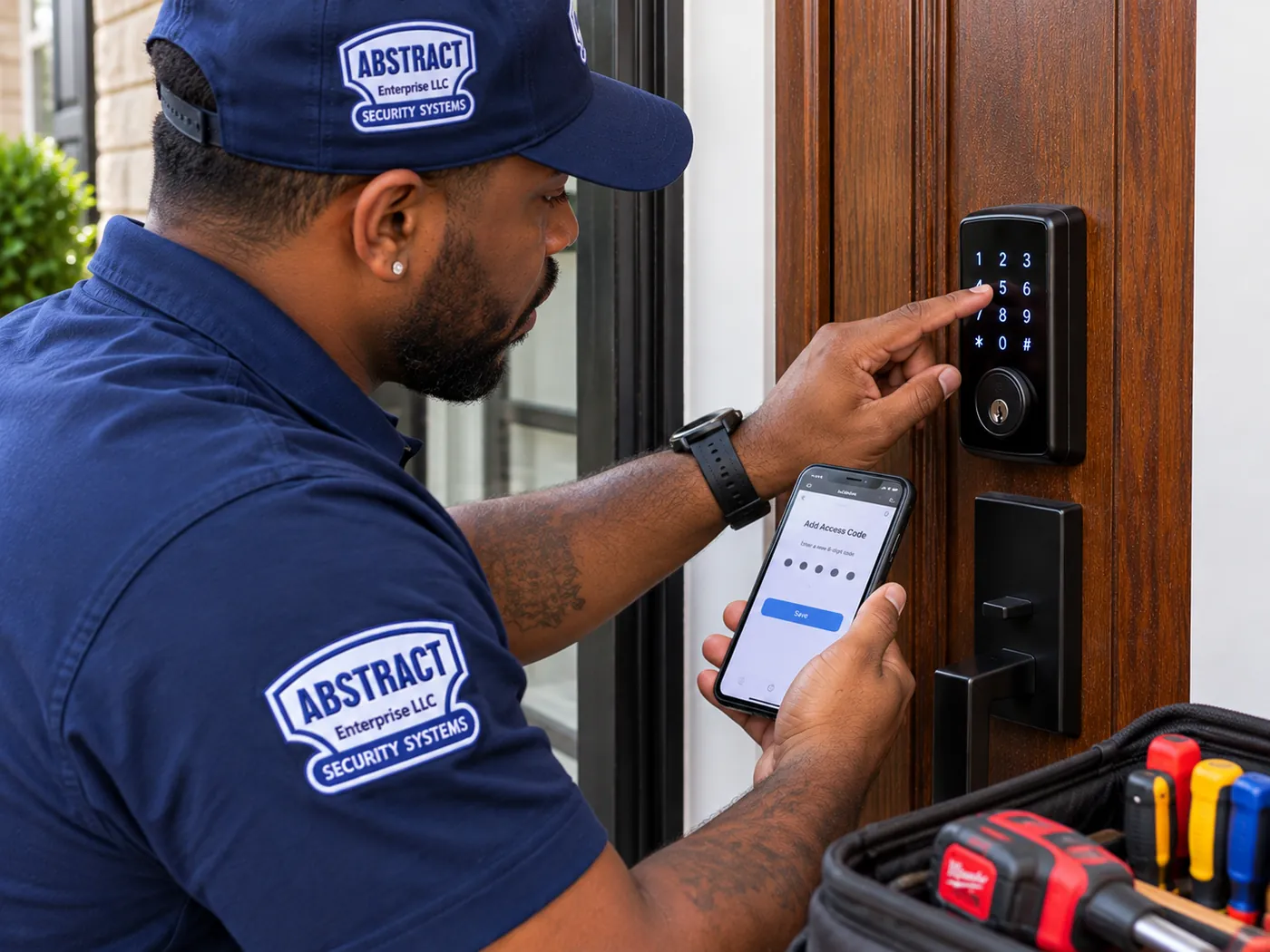
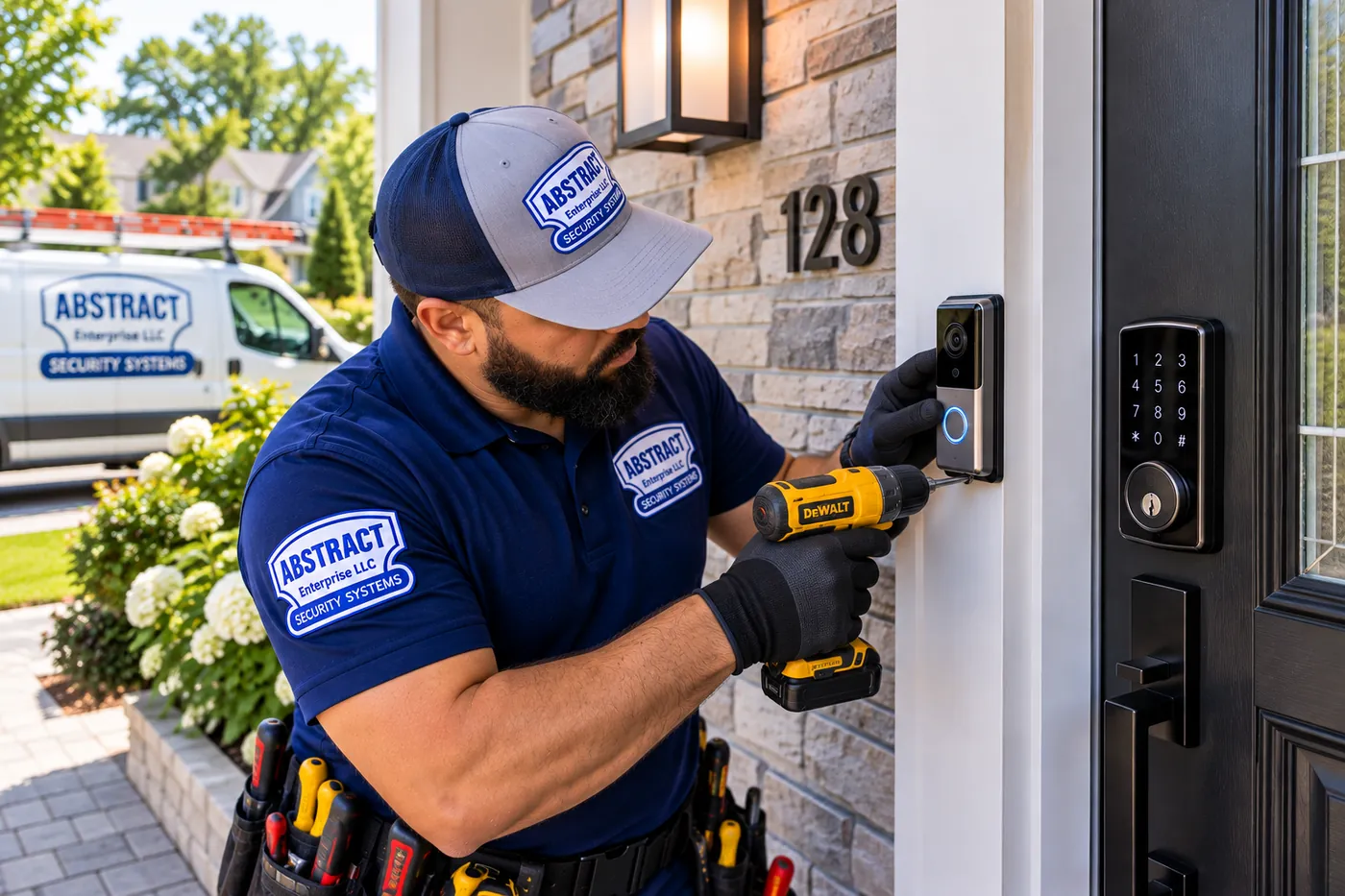
Second Locks Above the Bottom Lock · Steel Apartment Doors · Vestibule & Street-Door Keypads · Two-Family & Row-House Entries
In the Bronx the first question about a smart lock is not which brand. It is whose door it is. NYCHA keeps the bottom lock on every public-housing apartment. Parkchester North tells owners and their tenants not to touch the bottom cylinder. Co-op City shareholders hand units back to Riverbay in their original condition. A homeowner in Williamsbridge or Throggs Neck who rents out the second floor owes that tenant a key lock and a key. We sort out who controls the door before anything is drilled, then fit a lock that respects every keyholder and still opens from inside with one hand.
Bronx crews dispatched from Fordham Road · Page by Anwar Timothy (NYS license #12000287431), reviewed and updated October 17, 2026

Not sure whether your building lets you change the lock? Call (646) 490-0629 or send the 60-second form with a photo of the inside of the door. We tell you, before anyone climbs your stairs, which locks your building rules leave open to you and who will need a key afterwards.

Ask ten Bronx residents who controls their front door and you will hear ten different answers. A NYCHA tenant in Edenwald or Mott Haven lives behind a bottom lock that the housing authority installed and will not let them replace. A shareholder in one of Co-op City's 35 towers owns shares in a cooperative that expects the apartment back in its original state. A Parkchester condo owner bought the unit but not the bottom cylinder, which the condominium's rules say belongs to the condominium. A renter on the Grand Concourse has a private landlord, a lease, and a state law that lets them add a lock of their own. A family that owns an attached house in Throggs Neck or a two-family in Wakefield controls every door, but owes the upstairs tenant a lock and a key. Same borough, same kind of smart lock box on the shelf, five completely different jobs.
That is why most of the bad smart-lock outcomes we hear about in the Bronx have nothing to do with the hardware. A keypad deadbolt goes in where the bottom lock used to be, and the management office treats it as an unauthorized alteration. A shareholder installs a lock with no key cylinder, and the building has no way in when a pipe bursts upstairs. An owner of a two-family house decides to go app-only on the tenant's door and discovers that the city's Housing Maintenance Code says the owner of a dwelling must provide a key lock and at least one key. The lock worked perfectly in each case. The plan did not.
The rules that decide these jobs are written down, and we read them before we quote. New York's Multiple Dwelling Law, section 51-c, gives tenants of multiple dwellings the right to install their own lock, separate from the owner's, no more than three inches in circumference, with a duplicate key to the landlord on request — but the same sentence carves out buildings under the supervision and control of a municipal housing authority. NYCHA's own resident handbook fills that gap for public housing: tenants may not replace the bottom lock, may buy an additional lock and are responsible for it, and NYCHA reserves the right to break it in an emergency. The Parkchester North Condominium's rules say owners and their tenants may not change the bottom lock cylinder, may add or change a second cylinder, and must file all unit door keys with the management office. Riverbay's published FAQ for Co-op City says outgoing shareholders are responsible for restoring their unit to its original standard. Each of those sentences changes which smart lock fits.
Then there are the doors themselves. The University Neighborhood Housing Program, which tracks Bronx buildings through its Building Indicator Project, put the median age of the borough's multifamily apartment buildings at 87 years in 2014. That means steel-clad and hollow-metal apartment doors, mortise locks set into the door edge, frames that have been painted a dozen times, and a ghost-map of old holes where police locks, rim cylinders and chain guards came and went. Post-war towers, from Co-op City to the Riverdale high-rises along the Henry Hudson Parkway, trade that problem for concrete corridors that weaken Wi-Fi and Bluetooth at the door.
And the Bronx has a reason to take door hardware more seriously than anywhere in the city. On January 9, 2022, a fire that began with a defective space heater at Twin Parks North West, a 19-story building at 333 East 181st Street, spread smoke through the tower because self-closing doors failed to close; seventeen people died. The City Council's response, Local Law 71 of 2022, required HPD to proactively inspect self-closing doors in buildings at high risk of fire fatality. In its first year of those inspections HPD issued 853 self-closing door violations in 66 Bronx buildings. A smart lock that keeps a door from latching on its own is not a minor annoyance here. It is exactly the defect inspectors are looking for.
Most Bronx building owners who ask about apartment smart locks end up talking about the street door too. Our access control installation team in the Bronx handles vestibule fob readers and keypads, and the Abstract Enterprises intercom installers in the Bronx keep the buzzer and door release working alongside them.

A keypad that stopped lighting up after the cold snap, a motor that grinds because the steel door no longer meets the strike, a bridge that dropped off after a new router went in, codes that will not sync to a parent's phone, or a vestibule strike that buzzes but no longer releases — those are service calls, and we treat them that way. We book the next open 2-hour window we can, and most alignment, battery and pairing faults are fixed in one to two hours once a tech is standing at the door. If the fault is the building's front door rather than your own lock, a failed electric strike repair is $295–$485 on our published Bronx door-buzzer pages. Call (646) 490-0629 and say it is a smart lock problem, or see our door buzzer repair page for Fordham if the trouble is downstairs.

Every Bronx keyless job we take is one of the services below, or two of them on the same visit. Each one finishes the same way: the door swings shut and latches without a push, the lock opens from inside with one simple motion, everyone who is owed a key still has one, and every code, fob and phone has been tested in front of you.
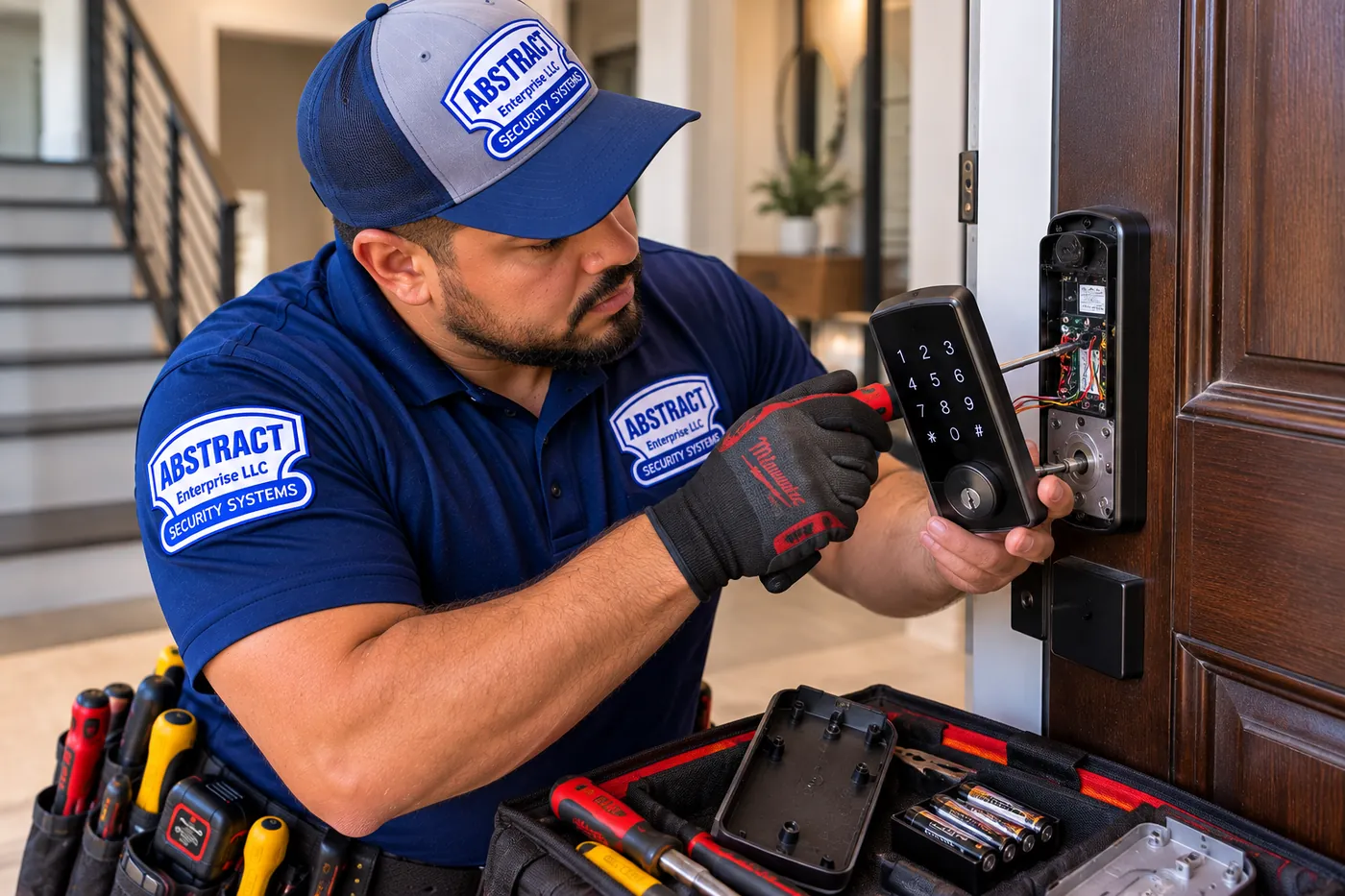
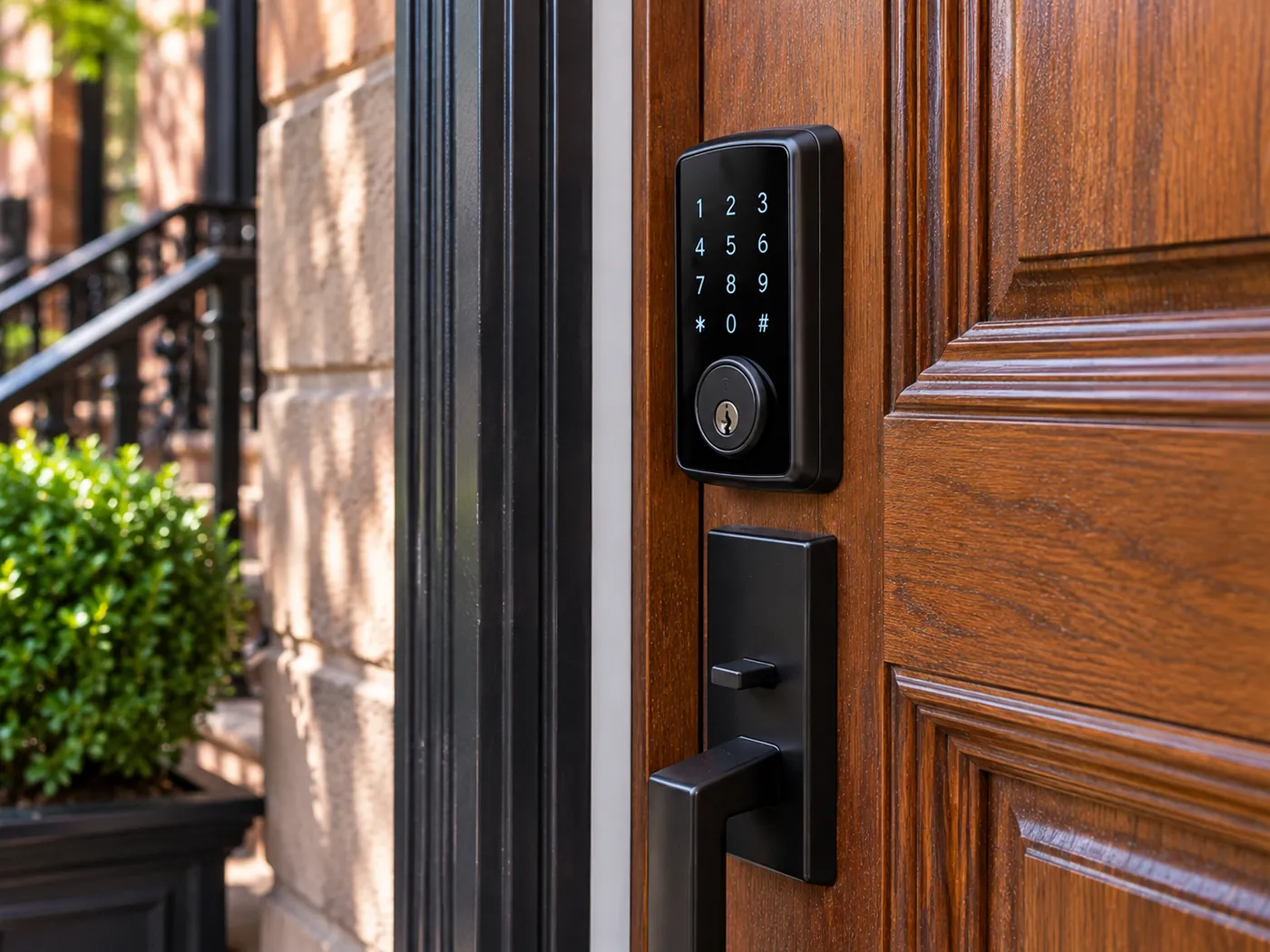
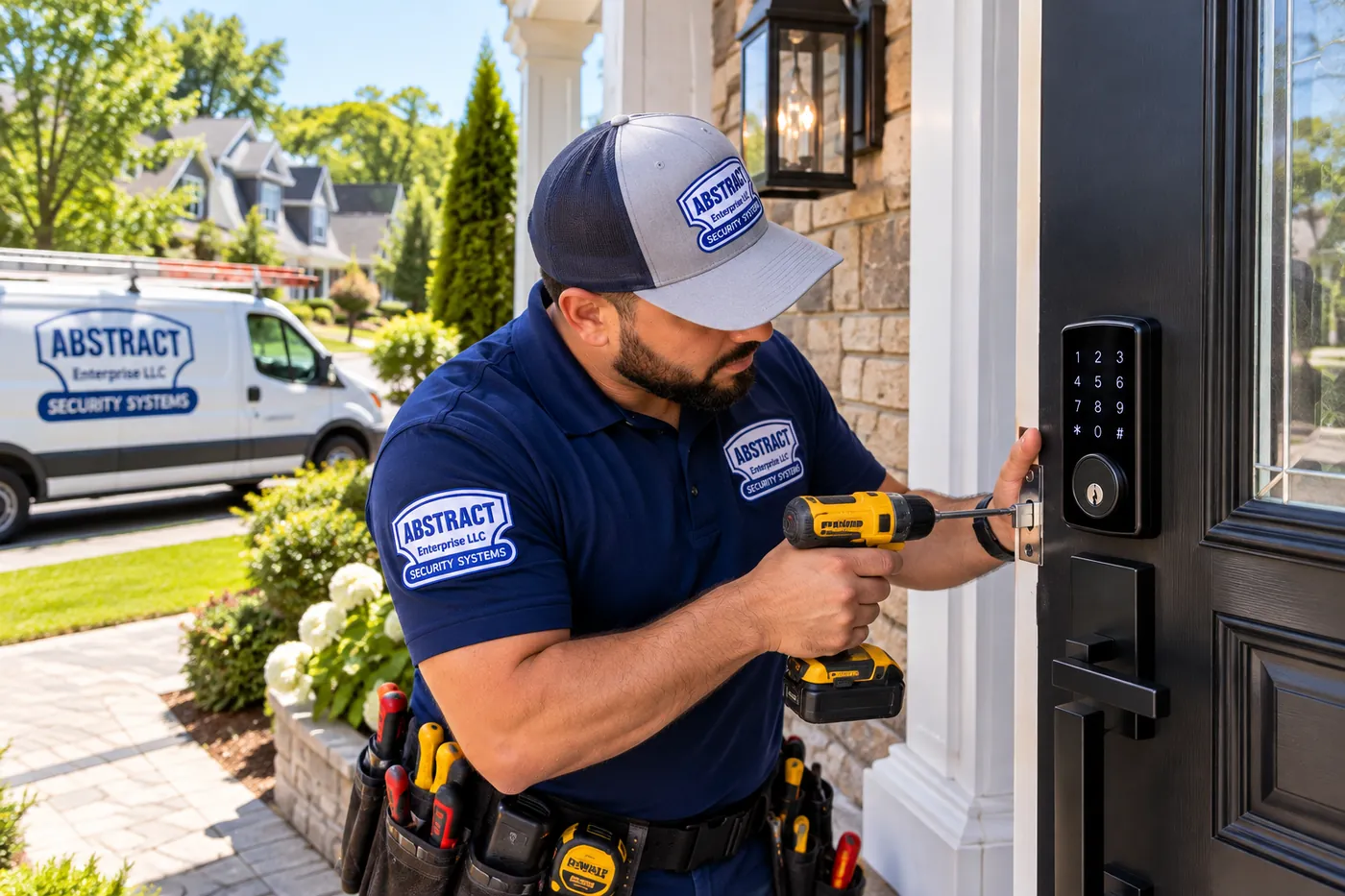
The most common Bronx request. Where the building owns the bottom lock — NYCHA, Parkchester and many private rentals — we add a smart deadbolt as the second lock, positioned in solid steel above the existing hardware, and leave the bottom lock exactly as the building installed it.
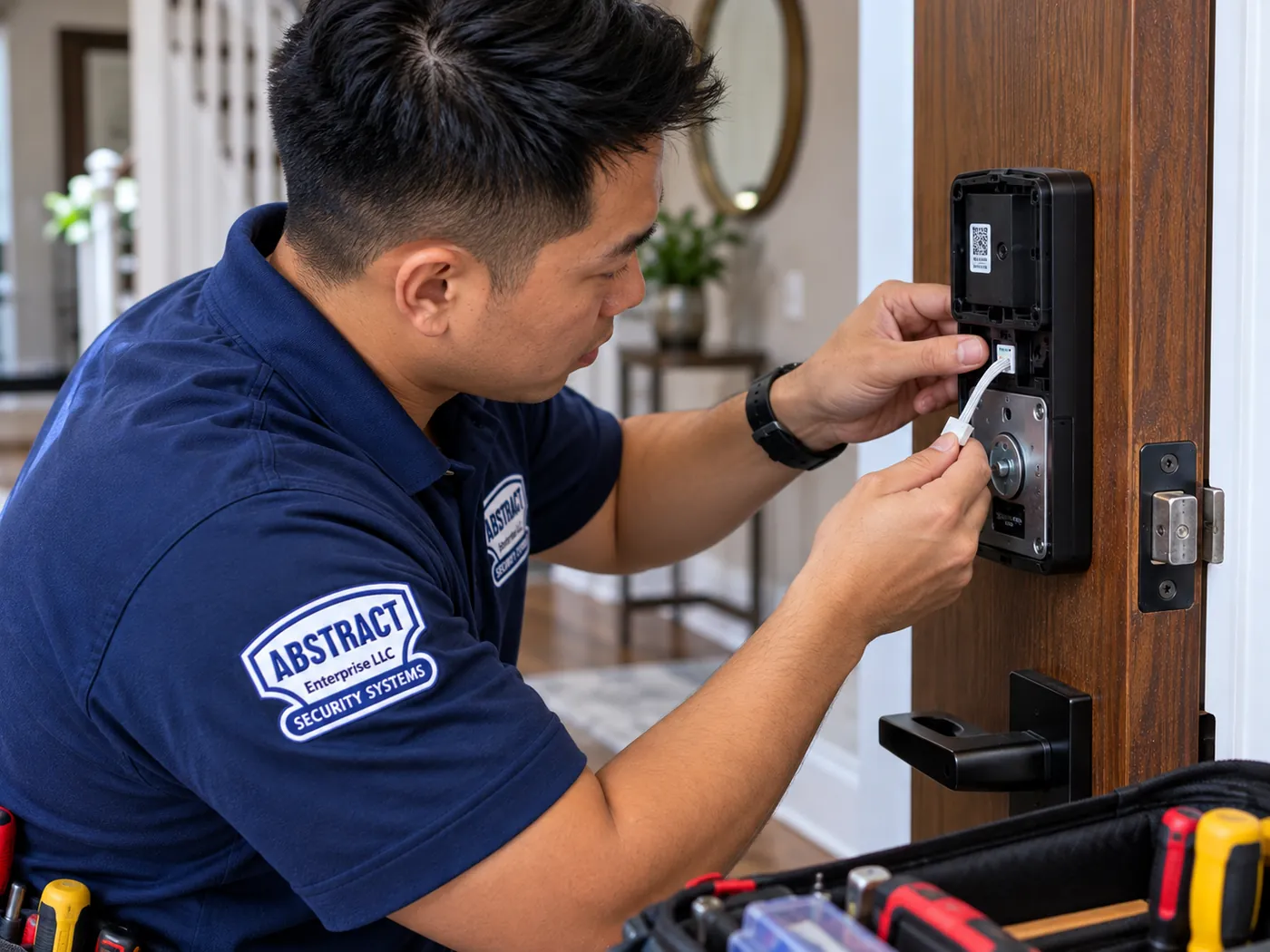
Where a single-cylinder deadbolt is already on the door and belongs to you or your landlord allows it, a retrofit unit replaces only the inside thumb-turn. The hallway side and the existing key stay untouched, which matters in co-ops that keep corridor hardware uniform.
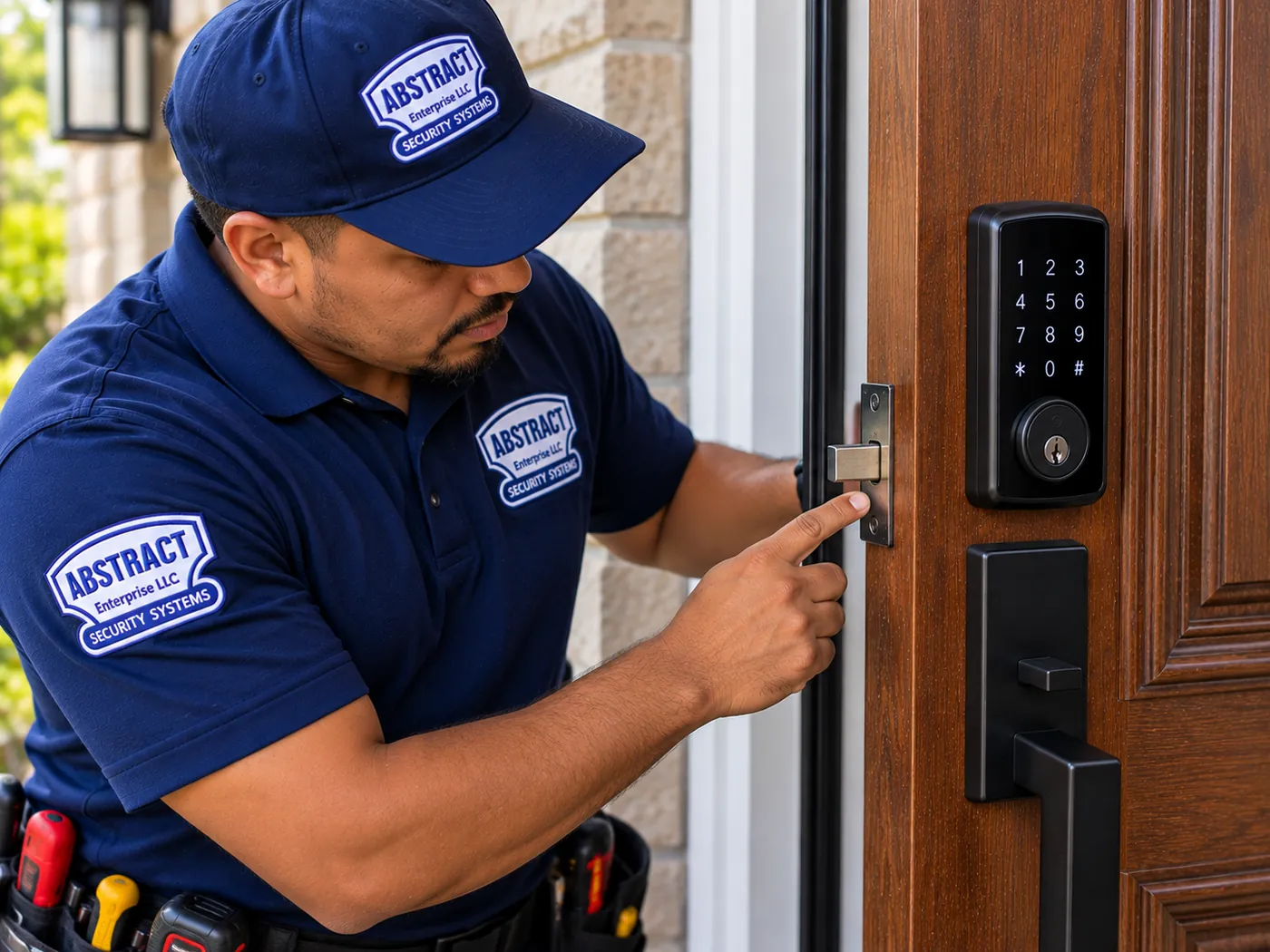
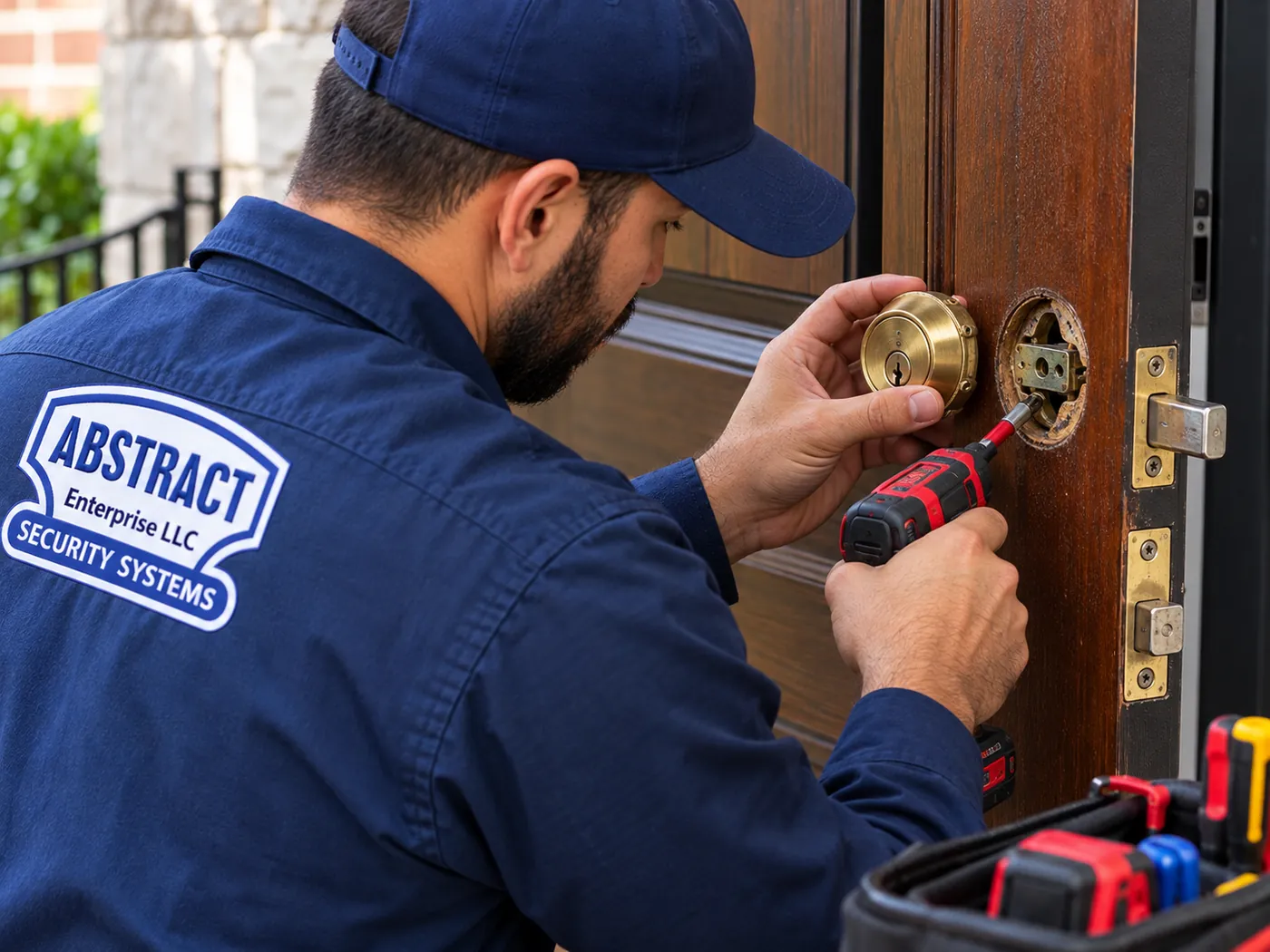
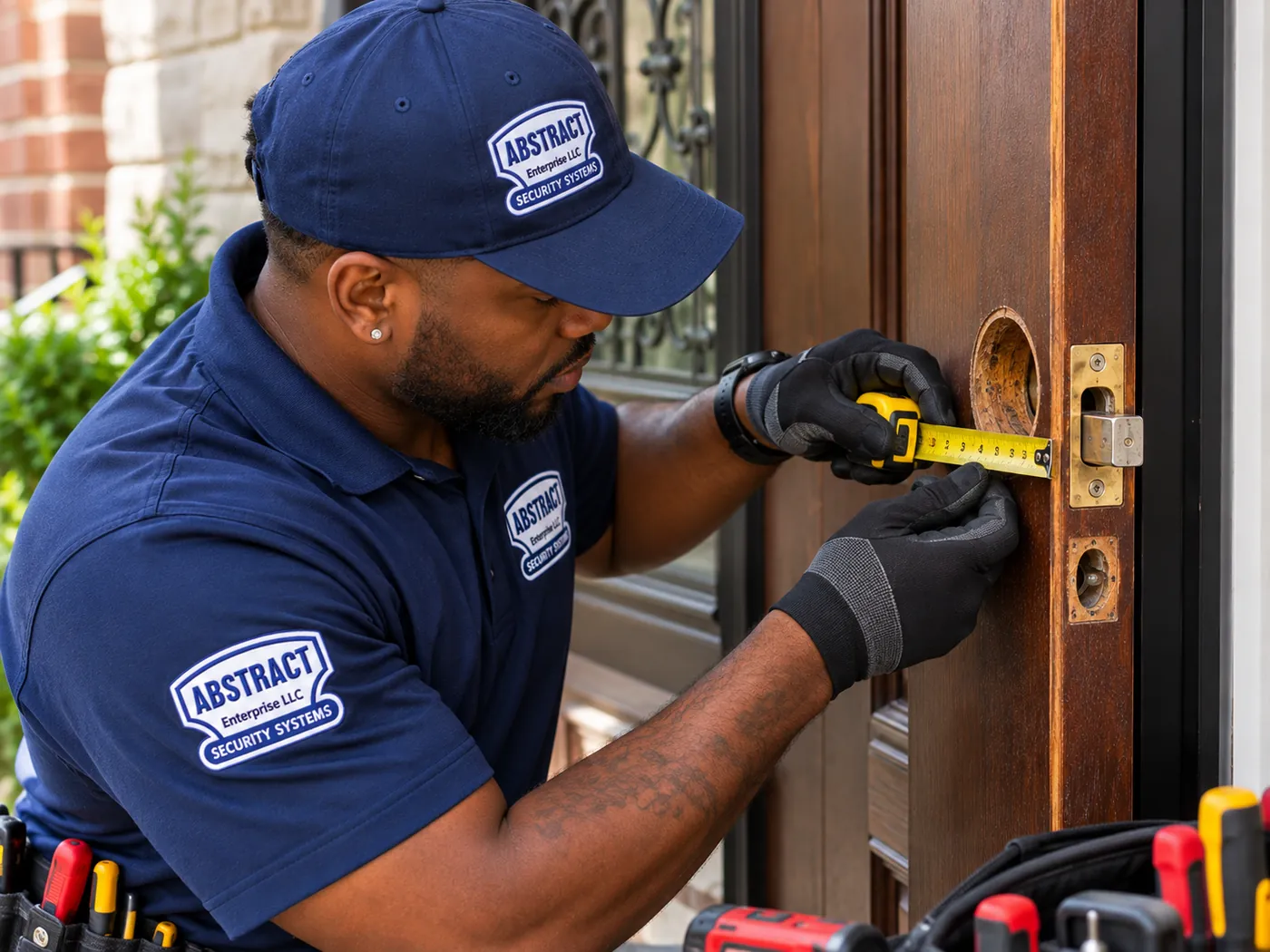
Boring a clean 2-1/8-inch hole through a steel-skinned door without crushing the skin or hitting an internal stiffener takes the right cutters and a template. We check for fire labels, existing reinforcements and old holes first, and only cut where the door and the building allow it.
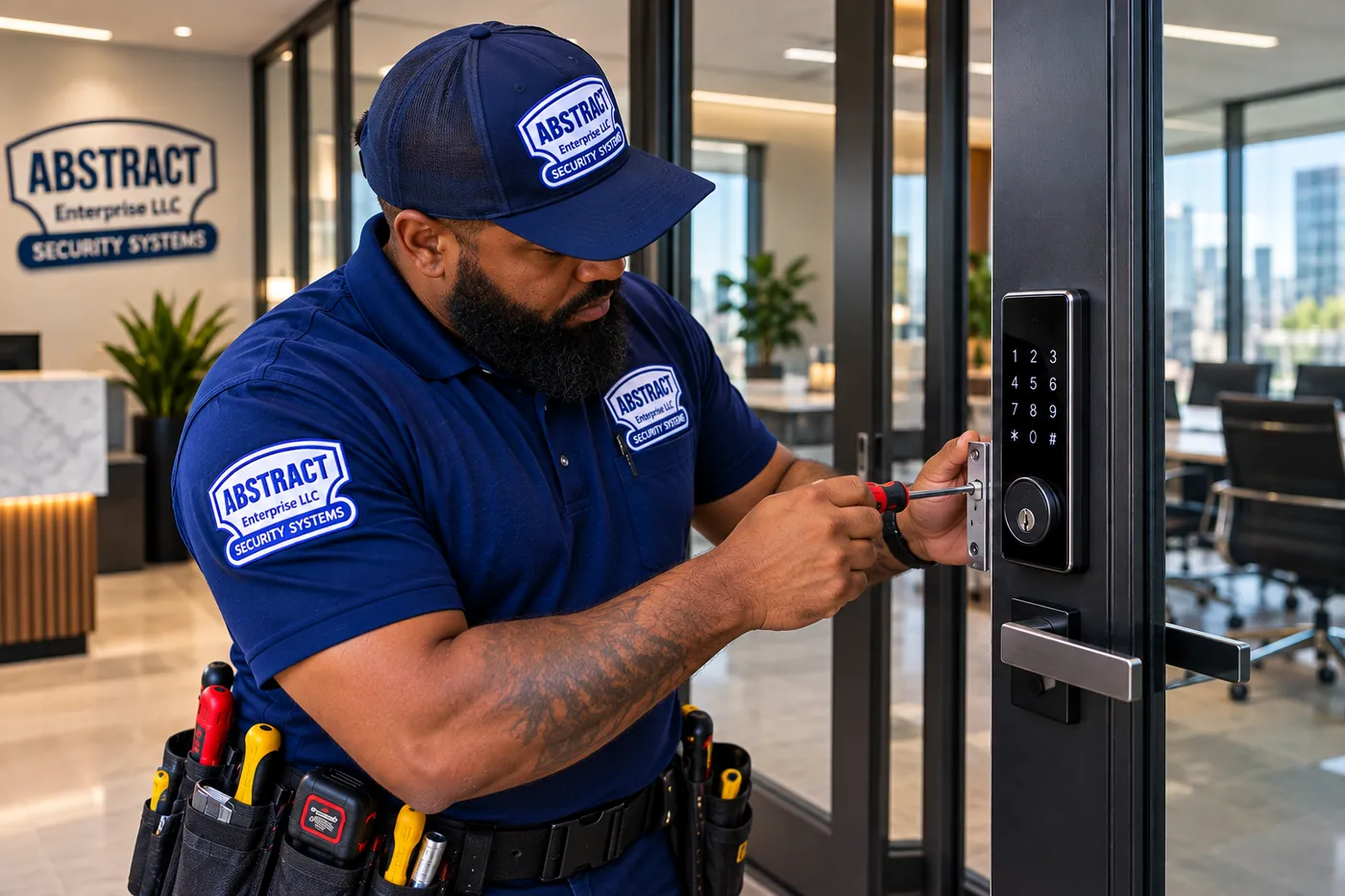
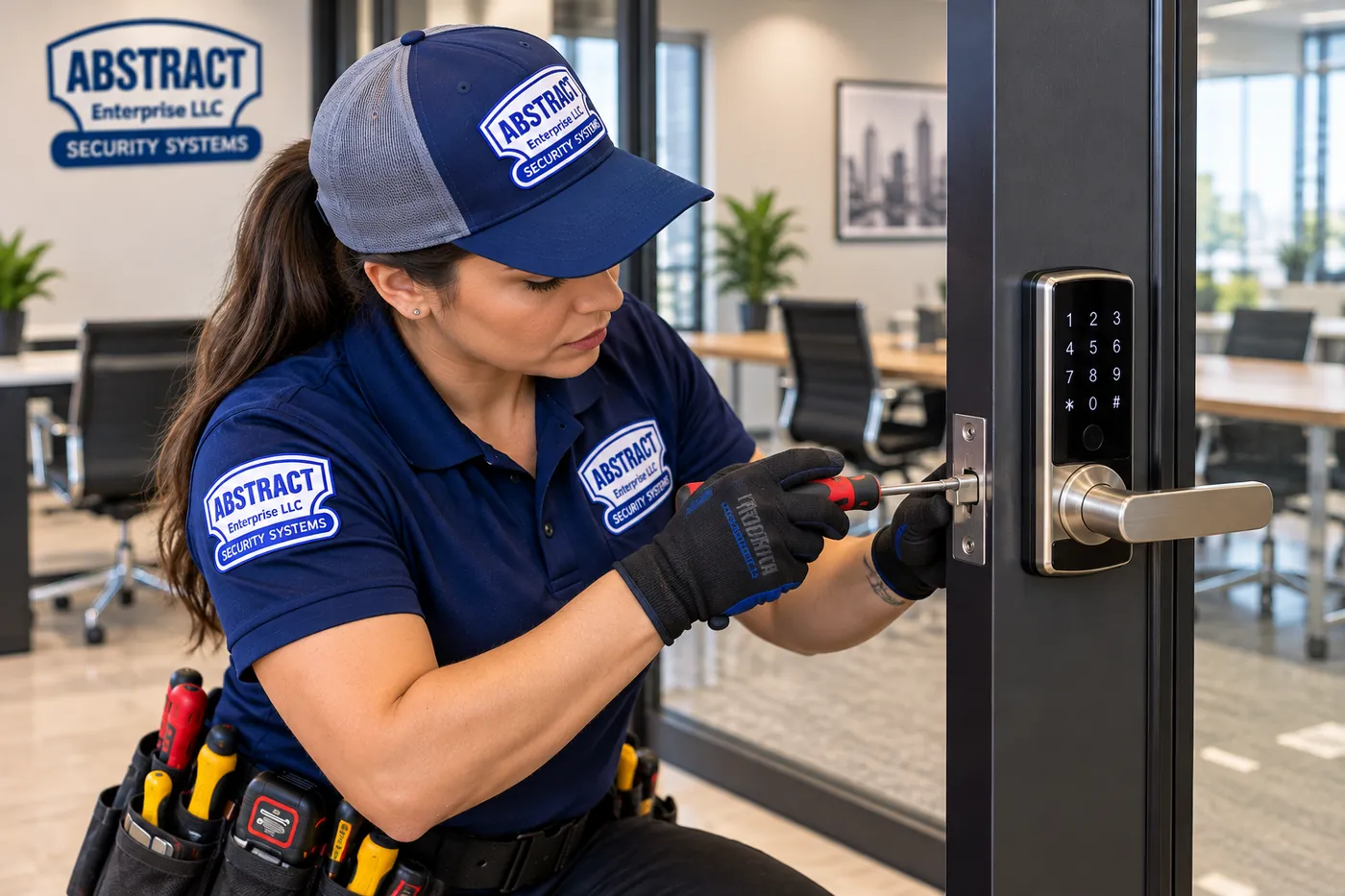
A keypad or fob reader with an electric strike on a walk-up's street door or a vestibule inner door, wired to a power supply and controller inside. On our published Bronx access-control page a single-door keypad or fob reader with electric strike is $1,500–$2,500 installed, Bronx pricing equal to the Brooklyn base.
For owner-occupied homes with a rental unit: a smart lock on the owner's door, a key lock with a key for the tenant's door that can also take a code if the tenant wants one, and a separate credential for the shared front or side entrance.
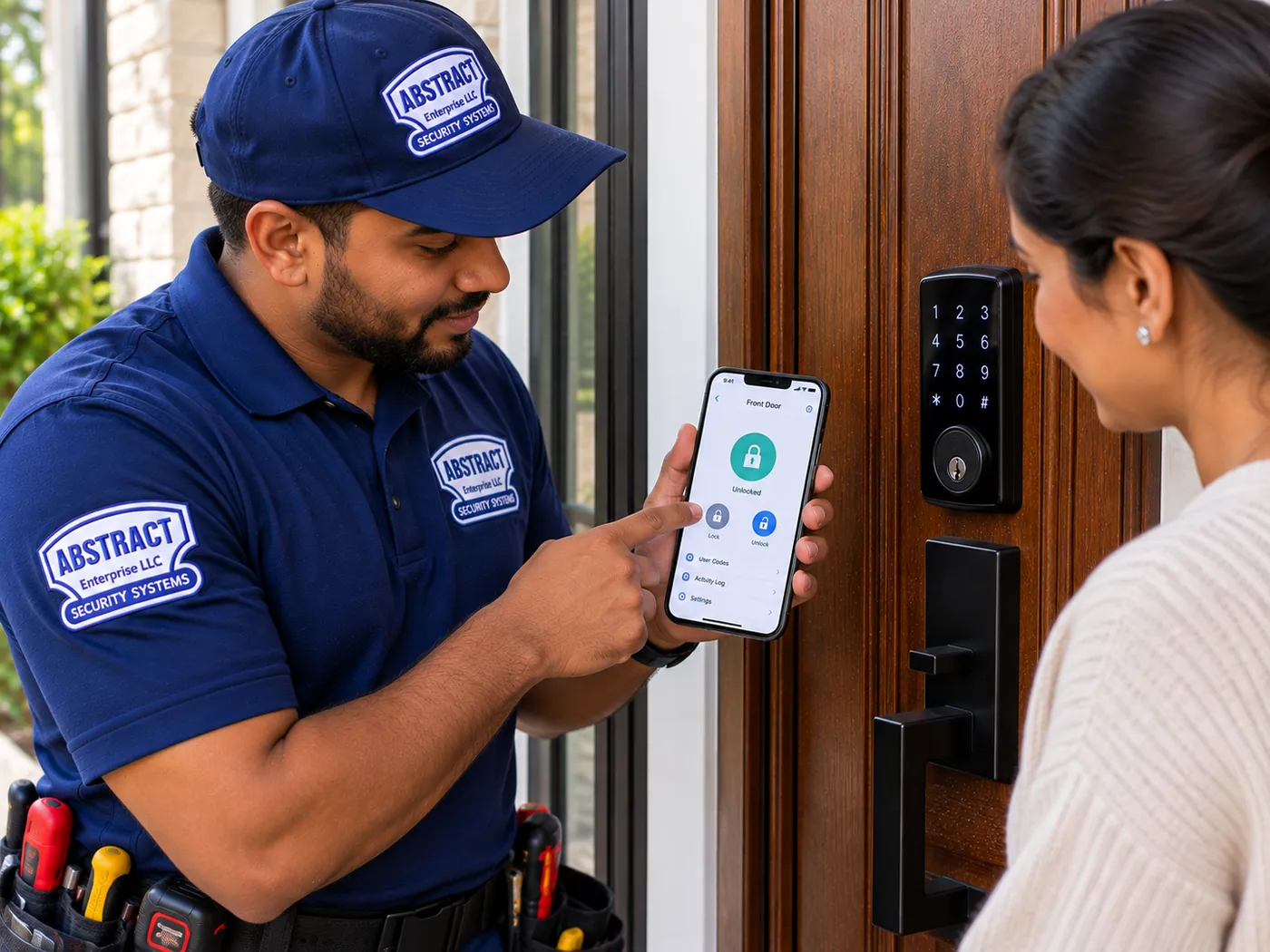
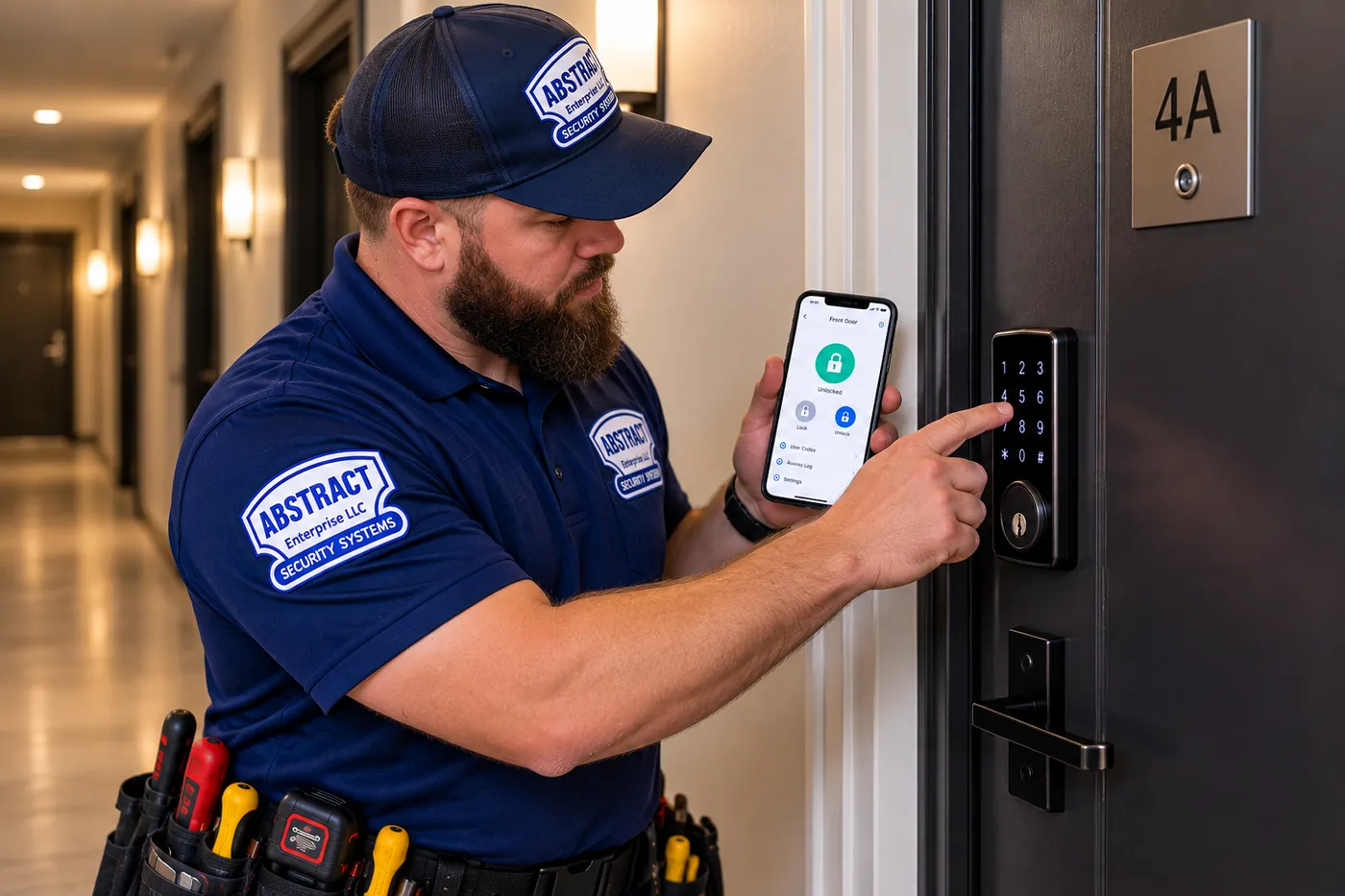
Adult children managing a parent's door from another neighborhood, timed codes for a home health aide, a code for the super that the household can see in the log — set up and explained in person, not left in an app nobody opens.
Getting a lock at the end of a Co-op City or Riverdale corridor online: bridge placement inside the unit, Thread border routers, and a test from mobile data on the street before we call it finished.
Keypad deadbolts and reader-and-strike sets for storefronts on Fordham Road, Third Avenue at the Hub, White Plains Road and East Tremont Avenue, set so staff codes can be cancelled the day someone leaves and exit never needs a key.
Strikes moved so a drooping steel door latches again, batteries and contacts cleaned, admin access recovered after a phone change, and locks re-joined to a new router after an internet-provider swap.

The building decides two things before we ever look at the lock: who must keep a key, and what the door is made of. These are the building types we meet most often between Mott Haven and Wakefield, and what each one means for a smart lock.
From Edenwald Houses, the borough's largest development with 40 buildings and 2,034 apartments, to the Patterson Houses in Mott Haven. The bottom lock is NYCHA's and stays. A resident-bought second lock is allowed, is the resident's responsibility, and can be broken by NYCHA in an emergency, so we fit one with a keyed cylinder and a door-friendly position.
Concrete high-rises of 24 to 33 floors run by the Riverbay Corporation. Long corridors and concrete walls make signal planning the main technical question, and Riverbay's move-out restoration rule makes reversibility the main rules question: we keep the original hardware and fixings bagged and labeled for the day the unit changes hands.
Red-brick buildings on a planned campus, now split into Parkchester North and South condominiums. Under Parkchester North's rules the bottom cylinder belongs to the condominium, a second cylinder can be added or changed, and every unit door key goes on file with the management office — so a second smart lock must keep a key that can be filed.
The Art Deco and Art Moderne apartment houses of the Grand Concourse Historic District, most built between 1916 and 1941. Heavy steel-clad unit doors, mortise locks, deep backsets and frames out of square after a century of settling. Smart options are chosen around the mortise pocket and the closer.
Five- and six-story walk-ups in Tremont, Morrisania, Highbridge and Belmont with private landlords. Tenants have the Multiple Dwelling Law right to add a lock; owners have the Housing Maintenance Code duty to provide one. The street door is often the owner's best keyless upgrade.
Pre-war and post-war elevator co-ops along the Hudson side of the borough, with boards, managing agents and proprietary leases that expect a duplicate key or code for the corporation. Paperwork comes first: a certificate of insurance to the agent and a clear answer on whether the board wants to see the lock.
Brick and frame two-families in Williamsbridge, Wakefield, Baychester, Morris Park and Pelham Bay, owner downstairs and tenant upstairs or the reverse. One owner, two dwelling units, a shared entrance and sometimes a basement door — each needs its own credential plan.
From the semi-detached row houses of the Longwood Historic District to attached brick homes in Throggs Neck and Country Club. Single-owner doors with simple rules, unless the house is landmarked or the front door is original, in which case historic fabric comes first.
Edgewater Park and Silver Beach, where residents own their houses but the land is held by a cooperative. The house door is the owner's; salt air off Long Island Sound is the reason we look hard at finishes and battery compartments.
Whose lock is the bottom lock? Before anything else we establish who owns the lock that is already there. In public housing and in Parkchester the answer is written down: it belongs to the housing authority or the condominium. In a private rental it is the landlord's, and the Housing Maintenance Code says the owner of a dwelling provides a key lock and at least one key. In a co-op it depends on the proprietary lease and house rules. If the bottom lock is not yours, the smart lock is an addition, never a swap.
Where does a second bore go? Bronx apartment doors often carry the history of every lock they have ever had: a filled hole from a rim cylinder, a plate from a brace-bar police lock, screw holes from two generations of chain guards. A smart deadbolt needs its bore and its latch to land in solid material with enough edge distance, and it must clear the bottom lock's trim, the peephole and the chain guard. We map the old holes before choosing a height, and we use reinforcement plates where the steel skin has been weakened.
Is it a mortise door? A long rectangular faceplate on the door edge, with a cylinder screwed in above the lever, means a mortise lock. Most consumer smart deadbolts are designed for bored doors. On a pre-war mortise door the options are a separate smart deadbolt above the mortise lock where the door and building allow it, a mortise-format smart lock body, or a retrofit where a single-cylinder deadbolt already exists.
Does the door still close and latch by itself? We open the door to ninety degrees, let go and watch. If it stops short, bounces off the strike or needs a shoulder, the closer, hinges or frame need attention before any motorized bolt goes on. After Twin Parks the Bronx has every reason to treat this as the first test, not the last.
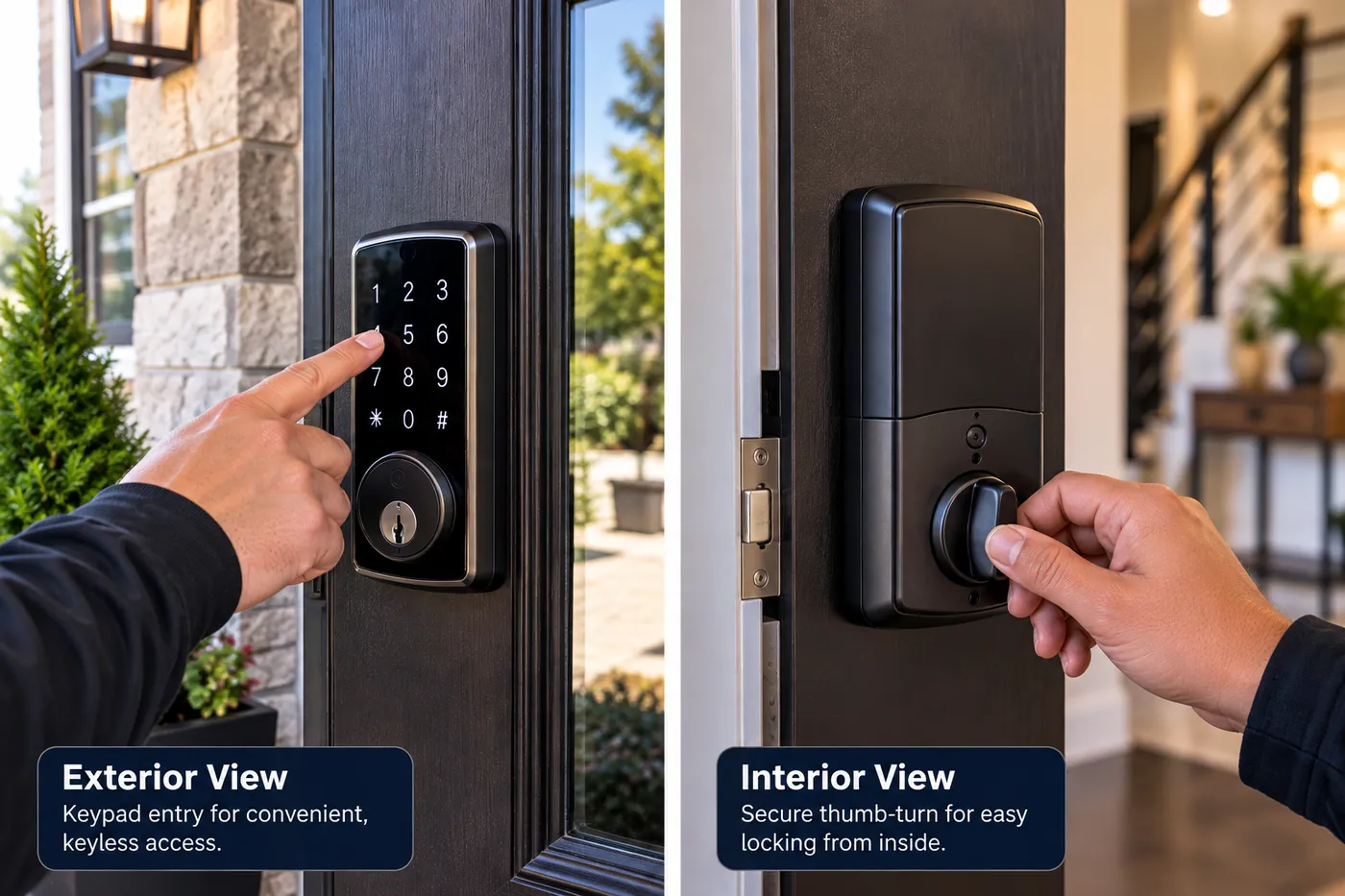
What is on the inside? HPD's fire-safety guidance says your apartment door must open from inside without a key and that double-cylinder locks on apartment doors are illegal. Every residential lock we fit has a thumb-turn or lever inside. We do not install code-to-exit or key-to-exit models on any Bronx home.
Most Bronx owners who modernize unit doors also look at the camera at the entrance. Our doorbell camera installation in the Bronx puts a picture behind every remote unlock.

This table is the conversation we have on the phone before every Bronx apartment job. It does not replace your lease, your proprietary lease or your building's house rules, and it is not legal advice; it is a summary of the published rules we work to, so that the lock you choose does not start a dispute.
| Where you live | Who owns the existing lock | What you can usually add | Who must be able to get in | Source we work from |
|---|---|---|---|---|
| NYCHA apartment | NYCHA (the “bottom lock”) | An additional lock you buy and maintain; the bottom lock stays | NYCHA may break a tenant lock in an emergency; a keyed cylinder avoids a drill-out | NYCHA Resident Handbook (2024) |
| Parkchester North condo unit | The condominium owns the bottom lock | A second cylinder may be added or changed | All unit door keys filed with the management office | Parkchester North Rules and Regulations (updated January 2009) |
| Co-op City apartment | Shareholder's unit within Riverbay's cooperative | Changes that can be reversed on move-out | Riverbay; outgoing shareholders restore the unit to original standard | Riverbay Corporation FAQ |
| Private co-op (Riverdale, Concourse) | Per proprietary lease and house rules | Usually a lock change with a duplicate key or code given to the corporation | The board and managing agent | Proprietary lease; co-op counsel commentary |
| Private rental apartment | The owner, who must provide a key lock and at least one key | A tenant-installed lock up to three inches in circumference, in addition to the owner's | The landlord or agent, with a duplicate key on request | Multiple Dwelling Law § 51-c; Housing Maintenance Code § 27-2043 |
| Tenant unit in an owner's two-family house | The owner | Whatever the lease allows; the owner must still supply a key lock and a key | Tenant always; owner by agreement | Housing Maintenance Code § 27-2043 |
| Owner's own house or unit | You | Any lock that opens from inside without a key | Whoever you choose | HPD fire-safety guidance on inside release |
Two patterns come out of that table. First, in most Bronx housing the smart lock is the second lock on the door, not a replacement. That changes the hardware choice: we look for a smart deadbolt with a keyed cylinder that can sit above an existing lock on a steel door, rather than a retrofit that needs a deadbolt you do not own. Second, almost every row ends with somebody other than the occupant needing a way in. A smart lock with no key cylinder is the wrong product for most Bronx apartments, however convenient it looks in the store.
The Multiple Dwelling Law right to add a lock is real, but it is narrower than many renters assume. It covers an additional lock, separate from the owner's. It does not cover removing the owner's lock, and it does not apply in buildings supervised by a municipal housing authority, hotels, motels or dormitories. Any lease clause that charges extra rent or a fee for exercising the right is void under the same section. When a tenant tells us the landlord has objected, the first thing we check is whether the request was to add or to replace.

Bronx small businesses mostly trade from storefronts on busy shopping streets, very often with apartments above and a roll-down gate in front. The keyless question for a shop is the same everywhere: several people open and close at different hours, keys get copied, and an employee who leaves still has one. The Bronx twist is the shared building. A stair door beside the shop may serve the apartments upstairs, and the shop's credentials must never open it. The city's Department of Small Business Services lists twelve business improvement districts in the borough; these are the corridors where we see the most door work.
The Fordham Road BID's strip, which the Norwood News described as 175 storefronts between Washington and Jerome Avenues, a few blocks from our own office. Retail with early opening shifts and high staff turnover: cancellable per-person codes on the rear service door matter more than app features.
The HUB Third Avenue BID, which describes the area as the Bronx's oldest commercial district. Older multi-story buildings with shops at grade and offices above mean a reader on a second-floor office door at the top of a shared stair is a typical request.
The Belmont BID's food-shopping streets around the Arthur Avenue Retail Market, open since October 1940. Bakeries, butchers and delis with deliveries before dawn want a keypad the morning crew can use and a log of who opened.
BID-managed corridors under the elevated lines in the north Bronx. Narrow aluminum storefront doors usually call for a reader and electric strike rather than a residential deadbolt, with the keypad reachable once the gate is up.
Two east Bronx BIDs with professional offices, medical practices and family businesses. Small offices often want two doors on one schedule — the street door and the suite door — without a full access-control system.
From the BID along Southern Boulevard to the 161st Street district near the courthouse and Yankee Stadium. Mixed-use buildings dominate, so separating residential and commercial credentials is the first design decision.
Kingsbridge, Morris Park and Castle Hill complete the list of Bronx BIDs, with the same narrow storefronts and apartments overhead.
For multi-door sites — schedules, elevator readers, central management — the job becomes full access control. Our commercial security camera installation in the Bronx often goes in alongside it so each door event has a camera view on the same timeline.

These are the questions Bronx callers actually put to us, sorted by the kind of building they live or work in: public housing and Mitchell-Lama co-ops, condo complexes, rent-stabilized buildings, pre-war walk-ups, building entrances, owner-occupied houses and shops. Pricing, scheduling and coverage questions are in the FAQ further down. Nothing here is legal advice; where we lean on a statute, a city code section or a building's published rules, we name it so you can read it yourself.
Above it, as a second lock. NYCHA's 2024 resident handbook says the front door of your apartment has been equipped with a lock it calls the bottom lock, that NYCHA does not allow tenants to replace that lock, and that you may buy an additional lock, which you are then responsible for installing, caring for and maintaining. That is a clear green light for an added smart deadbolt and a clear red light for any plan that takes the bottom lock out to make room.
Two further lines in the same handbook shape the hardware choice. Residents may not alter their apartments or add fixtures or fittings without prior written consent from the property management office, and NYCHA reserves the right to break a tenant-installed lock in an emergency. So we recommend asking the management office in writing before the visit, choosing a smart deadbolt with a keyed cylinder rather than a keypad-only model, and placing it where it clears the bottom lock's trim and the door's fire-safety sticker. Note that the Multiple Dwelling Law section that gives most New York tenants a right to add a lock specifically excludes housing-authority buildings; in public housing, NYCHA's own rules are the ones that count.
The door is also a self-closing fire door that NYCHA inspects periodically. Whatever we add has to leave it closing and latching by itself, and the handbook makes residents responsible for anything, even a doormat, that stops the closer working.
You do. The handbook says that, at the lessee's request, NYCHA will drill out resident-installed locks but is not responsible for replacing them. It also explains the lockout charges for NYCHA's own lock: a work order during business hours and $47.25 on the resident's account for a new lock and keys, plus a $50 fee after hours, with special accommodation for seniors and disabled residents.
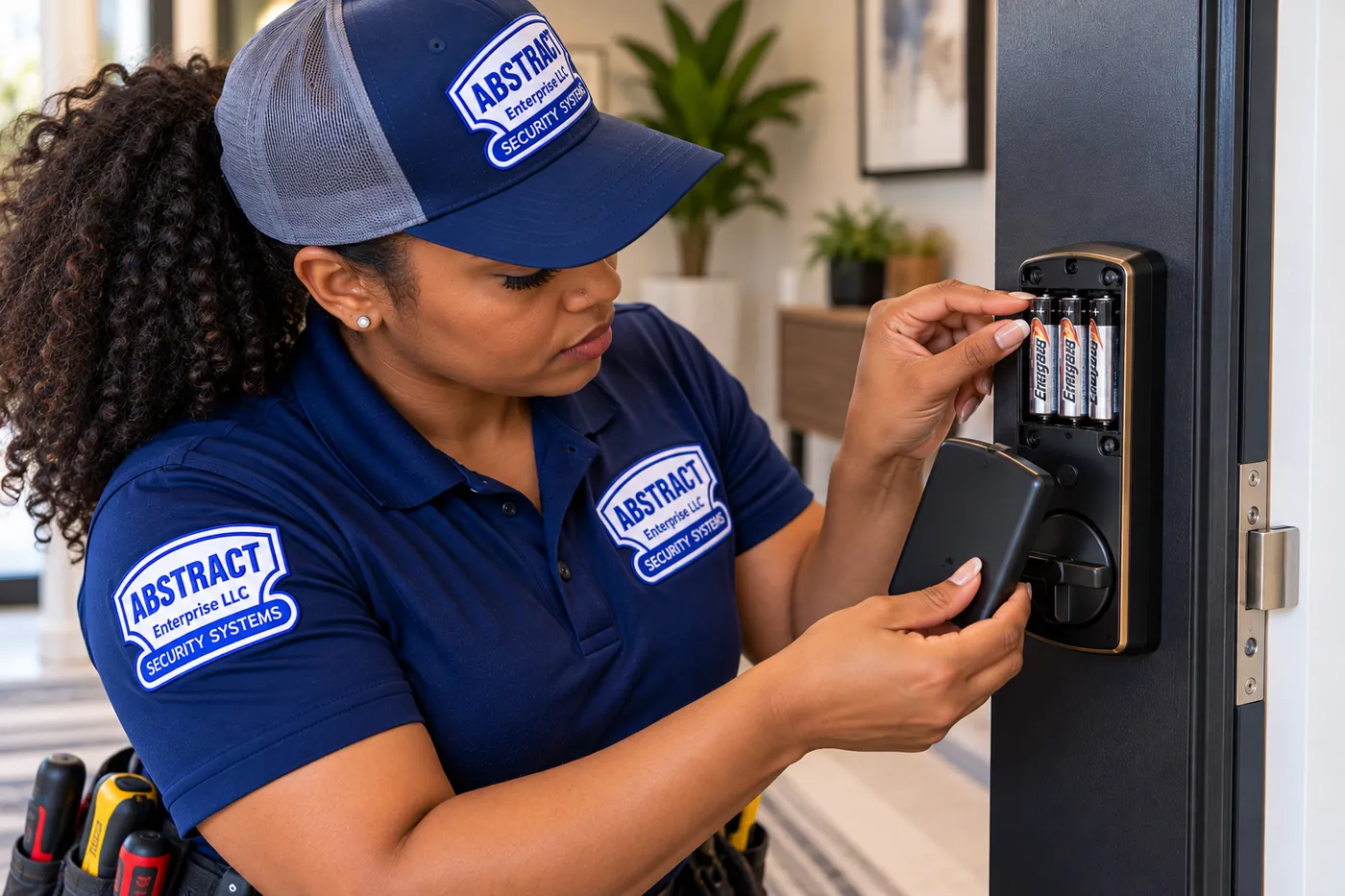
That is the strongest argument we know for keeping a mechanical key on any smart lock in public housing. If the batteries die or a phone is lost, a key in a trusted relative's pocket gets you in without a drill. We also set the lock's low-battery alerts to go to two phones in the household, and we show you the emergency power contacts some models have on the outside face, so a dead battery is an inconvenience rather than a drill-out and a replacement bill.
Plan as if the answer is yes. Riverbay's published FAQ says outgoing shareholders are responsible for restoring their unit to its original standard, or Riverbay will deduct the cost of completing the restoration from their equity. A smart lock fitted through new holes in the door, or one that replaced original hardware, is the kind of change that can end up on that list.
So in Co-op City we work in a way that can be reversed cleanly. Where the existing hardware can host a retrofit, we use it and bag the original thumb-turn with its screws, labeled with the apartment number. Where a second lock is the only option, we confirm with the shareholder's Cooperator Service Office what the building permits before drilling, and we keep the template and hole size on the handover sheet so a future restoration can be quoted accurately.
More than people think. The Parkchester North Condominium's Rules and Regulations, updated January 2009, say unit owners or their tenants may not change the bottom lock cylinder because the bottom lock is the property of the condominium, but that a second lock cylinder may be added or changed, with all unit door keys filed with the management office. That leaves the second-lock position fully open for a smart deadbolt, as long as its key can be copied and filed.
In practice that means a keypad, fingerprint or app deadbolt with a standard keyed cylinder in the second position, a key handed to management, and a written note of the model for the owner's records. A keyless-only lock, or one with a proprietary key that cannot be duplicated locally, works against the filing rule. Parkchester South has its own condominium documents; if you are in a South building, send us the relevant page of the rules and we will work to it.
The paper trail has two links, and both need a key. Your landlord is the unit owner, who answers to the condominium's management office; you are the owner's tenant. The condominium rule speaks of unit owners or their tenants, so the filing obligation follows the door, whoever installs the lock. A second smart lock you add should come with one key for your landlord and one for the management office, or a single key to your landlord with their written confirmation that they will file it.
Because the building is a multiple dwelling and your landlord is a private owner rather than a housing authority, the Multiple Dwelling Law right to add a lock with a duplicate key on request also applies to you. Ask your landlord in writing first anyway. A one-line email naming the lock model and promising the keys avoids nearly every dispute we have seen.
Yes, that is one of the services the state treats as essential. New York State Homes and Community Renewal's Fact Sheet #14 on rent reductions for decreased services lists, among required services, maintenance of front or entrance door security, including but not limited to the lock and buzzer. Tenants in rent-regulated apartments can file a service complaint with the Office of Rent Administration when a required service is not maintained, and the agency can issue an order that reduces the rent and directs repairs.
For an owner, that is a good reason to treat a dead lobby strike or buzzer as urgent rather than routine. For a tenant, it is worth knowing that your own smart lock on your apartment door is separate from that building service: you maintain what you add, and the owner maintains the entrance. We repair entrance strikes and buzzers on the owner's instruction; a failed electric strike repair is $295–$485 on our published Bronx door-buzzer pages.
Usually, yes. A floor-braced bar lock is a surface-mounted lock with its own cylinder through the door, and many Bronx apartment doors still carry one from decades past. It does not stop a smart deadbolt being added, but it takes up space on the door face and its cylinder hole is often exactly where a smart lock's exterior keypad would want to sit. We map the police-lock cylinder, the bottom lock, the peephole and the chain guard before choosing a height that clears all four.
What we will not do is leave a household with more ways to lock themselves in than to get out. If the police lock needs a key from inside, or its bar is hard for an older resident to lift, we talk through whether it should stay. HPD's guidance is that your apartment door must open from inside without a key; every lock on the door, old or new, should meet that test.
Whether it closes and latches by itself. Local Law 71 of 2022, passed after the Twin Parks fire, directed HPD to create a program to identify buildings at high risk of fire fatality and inspect their self-closing doors proactively. HPD's report to the City Council says it began those inspections in September 2023 in 300 multiple dwellings, inspected about 21,297 apartment and public-area doors through June 2024, and issued 3,151 self-closing door violations, 853 of them in 66 Bronx buildings. NYCHA's handbook describes the same test: opened and released, the door must swing shut and completely close and latch by itself.
A smart lock affects that test in one way: if its strike is slightly out of line, or its bolt drags on the frame, the closer cannot pull the door home. We set the latch so it catches on the closer's swing alone, confirm the deadbolt throws without the door being pushed, and leave the closer itself alone unless the owner asks us to adjust it.
Only if the tenants ask. Multiple Dwelling Law § 50-a requires automatic self-closing and self-locking entrance doors on class A multiple dwellings erected or converted after January 1, 1968. For buildings erected or converted before that date, the same section requires self-closing, self-locking doors and an intercom when tenants occupying a majority of the apartments request or consent in writing, on forms the department prescribes. Many owners of pre-1968 walk-ups have long since installed them anyway.
A keypad or fob reader on a street door is one way to meet that request, provided it is paired with a self-closing door and a strike that relocks every time. The same section makes it a misdemeanor for anyone to willfully damage, jam or interfere with that equipment, so a propped or taped strike is a problem for whoever did it, not only for the owner.
From the outside, yes; from the inside, no. In class A multiple dwellings erected or converted after January 1, 1968, Multiple Dwelling Law § 50-a says every entrance from the roof must have a self-closing door that is not self-locking and is fastened on the inside with movable bolts, hooks or a lock that does not require a key to open from inside the dwelling. The rule protects anyone using the stair to escape upward.
So any keypad on a roof door sits on the roof side and controls entry from the roof, while the stair side keeps a free-turning release. Owners worried about roof access from the stairs should look at an alarmed exit device or a door contact tied to an alert rather than a lock that traps people on the stair.
Add to it, not replace it. The same section of the Multiple Dwelling Law requires class A buildings erected or converted after January 1, 1968 with eight or more apartments to have an intercommunication system at the self-locking lobby door that lets each apartment talk to a visitor and release the door from the apartment. A keypad gives residents a keyless way in; it does not give a grandmother on the fourth floor a way to let her home health aide in.
Our usual Bronx design keeps the intercom, adds a keypad or fob reader on the same strike, and wires both through a controller so either can release the door. If the intercom itself is failing, our intercom repair crews in the Bronx bring it back before the keypad goes in.
A key lock and at least one key. Housing Maintenance Code § 27-2043 says the owner of a dwelling shall provide a key lock in the entrance door to each dwelling unit and at least one key. The extra requirements in that section — a heavy-duty latch set, a heavy-duty deadbolt with a thumb-turn inside, and a chain door guard — apply to class A multiple dwellings, which a two-family house is not. The peephole rule in § 27-2041 also has exceptions for two-family homes: it does not apply to owner-occupied units, and a tenant-occupied unit in a one- or two-family home needs none if a person outside can be seen from inside.
The practical design is a smart deadbolt with a keyed cylinder on the tenant's door, a key handed over at move-in, and the keypad or app features set up for the tenant if they want them. Your own door can be as keyless as you like, as long as it opens from inside without a key.
Check your own community's rules; we have not seen a published lock rule there. Edgewater Park is a 60-acre waterside cooperative of 675 single-family homes in Throggs Neck, where residents own their houses and the cooperative holds the land. The house and its doors are generally the homeowner's to change, and smart locks there are usually a single-owner decision.
What does matter on that peninsula is weather. Houses close to Long Island Sound see salt air and wind-driven rain, so we favor locks with sealed exterior keypads and good finishes, keep the battery compartment on the inside, and check the door's weatherstripping so a motorized bolt is not fighting a swollen frame. The same applies in Silver Beach and on City Island.
The residents' and the owner's, not the shop staff's, unless the stair is also the shop's only route to a storeroom or exit. The residential entrance belongs to the multiple dwelling: its self-closing and self-locking duties come from the Multiple Dwelling Law, and its tenants' smart-access data is covered by the Tenant Data Privacy Act if an electronic system is used. Shop employees turn over often; giving them a code to the residents' hallway invites exactly the problem keyless entry is meant to solve.
Where the shop genuinely needs the stair, we put the shop on its own schedule, log its entries separately and keep its codes off the residential side outside business hours. On a building that combines shops and apartments, the owner usually wants one controller with two user groups, which a single-door keypad set can provide; a single-door keypad or fob reader with electric strike is $1,500–$2,500 installed in the Bronx.
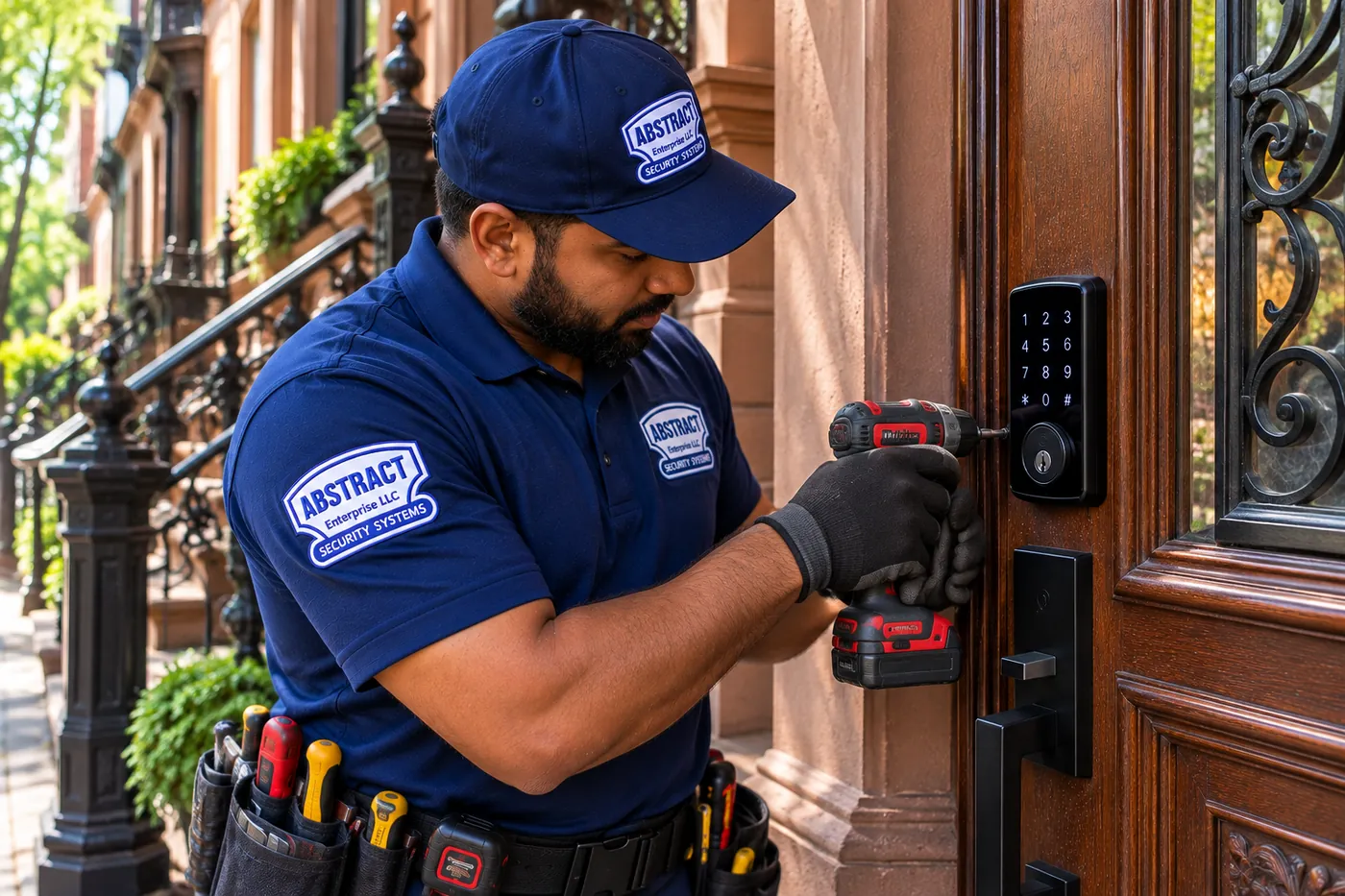
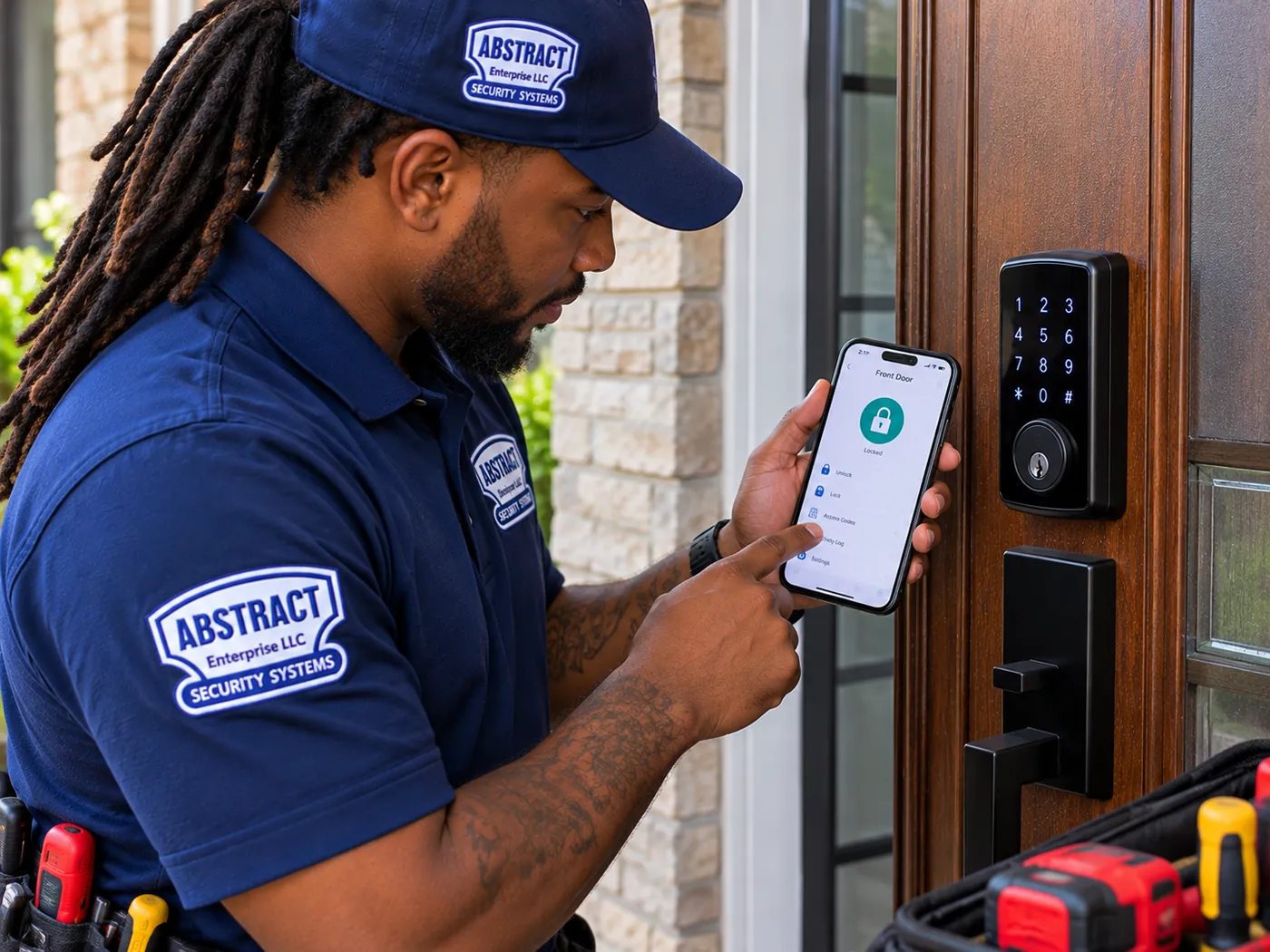
In the Bronx the right lock is usually the one that can be the second lock on a steel door and still leave a key for somebody else. These are the categories we fit, with the building types each one suits. Buy your own and we will install it, or we will recommend a model at the walkthrough.
Big-box brands versus a Bronx installer. A national retailer sells the box and the app. It does not know that NYCHA keeps the bottom lock, that Parkchester North files every unit key, that Riverbay wants the unit back in original condition, or that a post-1968 roof door must open from inside without a key. An installer who works these buildings every week can tell you which lock fits the rules before you buy it, and answers to you afterwards from an office on Fordham Road.
How we wrote this section: Google's AI Overview could not be opened from the research tools used for this page, so nothing below claims to quote it. Each heading is a claim that national cost guides, retailers and general how-to articles publish and that answer engines tend to repeat. Under each one is what changes when the door is in a Bronx building.
On a wood door in a single-family house with a standard bored deadbolt, that is fair. Retrofit units and like-for-like smart deadbolts are designed for exactly that door, and a handy owner can fit one with a screwdriver.
In much of the Bronx, the deadbolt is not yours to swap. NYCHA does not allow tenants to replace the bottom lock. Parkchester North says owners and tenants may not change the bottom cylinder. A private landlord owns the lock the Housing Maintenance Code makes them provide. The “swap” in the headline is often the one step the rules forbid.
The correct Bronx version of the job is usually an addition: a second, keyed smart deadbolt on a steel door, positioned around the existing hardware. That is not a weekend screwdriver job, and it is where a licensed installer earns the fee.
Partly true in New York, and the details matter. Multiple Dwelling Law § 51-c gives tenants of multiple dwellings the right to install and maintain their own lock, separate from the owner's, no larger than three inches in circumference, with a duplicate key to the landlord on request.
The same sentence excludes buildings under the supervision and control of a municipal housing authority, and that is a large share of Bronx apartments. NYCHA residents get a parallel permission from the housing authority's own handbook instead, with its own conditions: buy and maintain the extra lock yourself, and accept that NYCHA may break it in an emergency.
So a general answer that tenants can add a lock is roughly right for a Concourse walk-up and incomplete for Edenwald. Know which rulebook covers your door before you buy.
LawnStarter's national cost guide puts the average at $330, with a typical range of $200 to $460 and labor of $50 to $110. As a national figure for a standard deadbolt on a standard door, it is a reasonable reference.
It does not price a new 2-1/8-inch bore through a steel-skinned apartment door, a reinforcement plate over a door already peppered with old holes, a fifth-floor walk-up, or the time spent confirming what a co-op board or condominium management office will accept.
That is why we quote apartment-door smart locks flat after seeing the door, and price street-door keypads from the Bronx access-control figures already published on this site: $1,500 to $2,500 for a single-door keypad or fob reader with electric strike, with Bronx pricing equal to the Brooklyn base.
Retail marketing presents a keyless door as the end of copied keys. For a homeowner who controls every door, it can be.
In Bronx housing, almost every published rule assumes somebody else keeps a way in. Parkchester North requires all unit door keys to be filed with management. Proprietary leases in New York co-ops commonly require a shareholder who changes a lock to give the corporation a duplicate, and co-op lawyers note that the obligation can extend to combination codes. The Multiple Dwelling Law gives a landlord a duplicate key on request.
The Bronx-ready version of keyless is a smart lock with a keyed cylinder: convenient for the household, and still compliant with whoever is entitled to a key.
Some security articles still recommend locks that need a key on both sides, on the theory that a burglar who breaks a sidelight cannot reach in and turn the thumb-turn.
HPD's fire-safety guidance says it is illegal to install double-cylinder locks on apartment doors because they can trap residents inside during a fire, and that your apartment door must open from inside without a key. In post-1968 class A buildings, the Multiple Dwelling Law also says the roof door must open from inside without a key. The Bronx learned in January 2022 how fast smoke moves when doors fail.
Our rule is simple: every residential door we touch opens from inside with a thumb-turn or lever. Security comes from a strong strike, a reinforced door and a lock that cannot be shimmed, not from locking people in.
Most smart-lock advice stops at your own front door, because most of it is written for houses.
In a Bronx walk-up, the street door is often the weakest link and the owner's legal responsibility. The Multiple Dwelling Law sets the rules for self-closing, self-locking entrance doors and intercoms, and the state's rent agency counts front or entrance door security, including the lock and buzzer, as a required service in rent-regulated buildings. A perfect smart lock on the apartment door does little if the vestibule strike has been propped open for a month.
For owners, the better first project is often the street door: a keypad or fob reader with a strike that relocks every time, wired alongside the intercom. For tenants, reporting a broken entrance lock is the first step, before any smart lock upstairs.
Product pages show a lock and a router in the same bright room, a few feet apart.
Bronx apartment doors sit at the end of hallways in masonry and concrete buildings whose median multifamily age was 87 years back in 2014, beside public corridors full of neighbors' networks. Lock radios are low-power by design. A lock that works perfectly by Bluetooth at the door can fail the moment you try to open it from work.
We test from the door before choosing between Bluetooth alone, a plug-in bridge, Wi-Fi built into the lock or Matter over Thread, and we finish every install by locking and unlocking from mobile data out on the street.

Tell us the building and who holds keys today. We will tell you which lock your rules allow, who needs a key afterwards, and what it costs.
NYCHA, Co-op City, Parkchester, a private rental, a two-family house or a shop — tell us the building and what is on the door now, and a written answer comes back the same business day. Rather talk it through? Call (646) 490-0629.
Expect a call from a Bronx installer today or the next business day. Door stuck or lock dead right now? Dial (646) 490-0629.
Six steps, whether the door is a NYCHA apartment in Soundview, a Parkchester condo or the street door of a six-family in Tremont.
Six places that between them hold most of the door rules on this page: a Mitchell-Lama cooperative, a condominium campus, a historic boulevard, a landmarked row-house district, a waterside co-op of houses and an island at the end of a causeway.
Built from 1966 and completed in 1973 on the former Freedomland site between I-95 and the Hutchinson River Parkway: 35 towers of 24 to 33 floors plus seven townhouse clusters, 15,372 apartments, governed by the Riverbay Corporation's board. Concrete corridors and move-out restoration rules make it a reversible-install neighborhood.
Co-op City access control →MetLife's planned community announced in 1938, laid out on a 129-acre site with only 27 percent built on: 171 red-brick buildings and 12,271 apartments, now Parkchester North and South condominiums. The condominium owns the bottom lock; the second lock is where smart hardware goes.
Parkchester access control →Designated on October 25, 2011 for its concentration of Art Deco and Art Moderne apartment buildings, most built between 1916 and 1941. Heavy steel-clad unit doors, mortise locks and a century of settling in the frames.
Concourse access control →Semi-detached row houses designated a historic district by the Landmarks Preservation Commission in 1980 and extended in 1983. Original front doors and their surrounds are historic fabric; keypads usually belong on the inside or on a secondary door.
Longwood access control →A 60-acre waterside cooperative of 675 single-family homes near the Throgs Neck Bridge, a co-op since 1988, where residents own their houses and the land is held in common. Owner-controlled doors, salt air off Long Island Sound.
Edgewater Park access control →An island about 1.5 miles long and half a mile wide with 4,417 residents at the 2020 census, reached by the City Island Causeway Bridge that opened on October 29, 2017. Houses, small marinas and shops along City Island Avenue, and a long drive for any locksmith who isn't already in the Bronx.
City Island access control →We also install smart locks in Mott Haven, Port Morris, Melrose, Morrisania, Hunts Point, Longwood, Highbridge, Concourse Village, Fordham, Belmont, Tremont, University Heights, Kingsbridge, Riverdale, Fieldston, Norwood, Bedford Park, Soundview, Castle Hill, Clason Point, Unionport, Parkchester, Westchester Square, Pelham Bay, Country Club, Throggs Neck, Silver Beach, Morris Park, Pelham Parkway, Allerton, Williamsbridge, Wakefield, Baychester, Eastchester and Edenwald, plus Manhattan, Queens, Brooklyn, Staten Island, Long Island and the Hudson Valley.

The Bronx carries no area surcharge: our published Bronx prices equal the Brooklyn base. Below is every figure we have actually published that applies to keyless doors, with its scope and where it comes from. An individual apartment-door smart lock has no published AESS price, because the door decides the work — a retrofit on an existing deadbolt and a second lock bored through a steel door with a reinforcement plate are different jobs. Those are quoted flat, in writing, after a free walkthrough, and the quote is the bill.
| Item | Bronx price | Scope and source |
|---|---|---|
| Your own unit or house: keyed second deadbolt, retrofit, or mortise-body conversion | Quoted flat at free walkthrough | Nothing published for this line yet: the figure depends on the steel, the old holes and what the building permits, so it is written up once we have stood at the door |
| Single-door keypad or fob reader with electric strike | $1,500–$2,500 installed | Listed as the “single door” figure on our Bronx access-control page for a walk-up entrance, vestibule, shop or office suite; Bronx equals the Brooklyn base |
| New electric strike on a lobby door | $250–$450 | Bronx door-buzzer pages list this line for a replacement strike fitted during a building entry upgrade |
| Failed electric strike repair | $295–$485 | Bronx door-buzzer repair pages list this for an entrance that hums when buzzed but stays shut |
| Setup-only visit (app, bridge, codes, no hardware change) | $225 first hour, then 30-minute blocks | Bronx rate for visits that only touch apps, bridges and codes |
| Service and callback rate | $195/hr, 3-hour minimum ($585) | Applies to later service calls, never to the original install visit |
Some charges Bronx residents ask about are not AESS prices at all. NYCHA's resident handbook lists a $47.25 charge to the resident's account for a new NYCHA lock and keys after a daytime lockout drill-out, and a further $50 after hours. Co-op City's Riverbay deducts restoration costs from an outgoing shareholder's equity. Condo management offices may charge for key copies. We mention these so you can budget for the whole picture; none of them are on our invoice.
National cost guides for comparison. LawnStarter's national guide puts smart lock installation at an average of $330, with most jobs between $200 and $460 and labor of $50 to $110. That is national third-party data for an ordinary door, not an AESS price.
Full terms — including 50% deposit, one-year parts-only warranty on AESS-supplied products, and the late-fee schedule — are set out in the service agreement. Locks you buy yourself carry their manufacturer's warranty.

Three ways most Bronx keyless jobs come together. The two building-door packages carry published Bronx prices; the apartment-door package is quoted at the walkthrough because no two Bronx doors carry the same history of holes.
Send a photo of the inside of the door and its edge, and tell us who owns the building. We will tell you which lock position is open to you and what the walkthrough will cover.
In a Bronx walk-up there are usually two locked doors between the sidewalk and your kitchen, and they are governed by different people under different rules. Getting them confused is the most common reason a keyless project stalls. Here is how they differ in practice.
| Street or vestibule door | Your apartment door | |
|---|---|---|
| Who decides | The building owner or co-op/condo board | Depends on the building: housing authority, condominium, corporation, landlord or you |
| Main rules | Multiple Dwelling Law § 50-a self-closing, self-locking doors and intercoms; HCR treats entrance lock and buzzer as a required service in regulated buildings | Housing Maintenance Code § 27-2043 key lock; MDL § 51-c tenant’s added lock; HPD inside-release guidance; building rules |
| Typical hardware | Keypad or fob reader, electric strike, power supply, controller, intercom | Battery-powered smart deadbolt, retrofit unit or mortise-format lock |
| Data rules | Tenant Data Privacy Act applies when an owner uses fobs, apps or biometrics | Your own lock's app is your data; an owner-installed smart unit lock falls under the same Act |
| Power | Wired low voltage, with a fail-safe or fail-secure choice | Batteries, with low-battery alerts and an emergency key or power contact |
| Published Bronx price | $1,500–$2,500 single door; strike $250–$450; strike repair $295–$485 | Quoted flat at walkthrough |
For tenants, the lesson is that the street door is the owner's to fix, and a broken entrance lock is worth reporting before investing in your own door. For owners of two- to twenty-unit buildings, the street door is usually the best keyless investment: it controls who reaches every apartment door, it replaces a ring of copied street keys, and it can be wired alongside the intercom the law already requires in many buildings. Unit doors can follow later, one tenant at a time, with consent and a key.
Owners planning both should run one cable route and one controller location from the start. Our structured cabling installation in the Bronx and the AESS network installation team can lay the backbone so a cloud-managed controller does not rely on a tenant's Wi-Fi.

Owners of Bronx two-families and attached houses control every door, which makes the rules simpler and the design choices more personal. This is the plan we walk through with owners in Williamsbridge, Wakefield, Morris Park, Pelham Bay, Country Club and Throggs Neck.
Owners who want lights, thermostats and locks on one schedule can tie the lock into a wider system through our home automation installation in the Bronx, and an alarm panel that arms when the last person locks up through our alarm installation service.

Many of our Bronx smart-lock calls come from adult children, not from the person who lives behind the door. A parent in Co-op City or Parkchester has an aide who comes four mornings a week, a grandson who checks in on weekends and a super who needs to get in when the radiator leaks. A smart lock can make that household easier to run, or more confusing, depending on how it is set up.
| Who | What we set up | Why |
|---|---|---|
| The resident | A short, memorable code; fingerprint if buttons are hard to read; a physical key kept as backup | The person who lives there should never be locked out by the technology meant to help them |
| Family managers | Admin access on two family phones; low-battery and door-left-unlocked alerts | A dead battery is noticed from Pelham Bay or Yonkers before it becomes a lockout |
| Home health aide | A personal code limited to visiting days and hours | The log shows arrivals and departures, and the code stops working outside the schedule |
| Super or management | A key where the building files keys; optionally a code the family can see used in the log | Meets building rules and keeps emergency access |
| Contractors | One-time or same-day codes | Nobody keeps a working code after the job |
We leave a printed card inside the door listing who holds which code and how to delete one, and we walk the family manager through deleting and re-adding a user before we leave. When a parent's needs change, a setup-only visit to re-plan the codes is $225 for the first hour in the Bronx, then 30-minute blocks.

A new lock is often part of something bigger: a building entry upgrade, a family moving a parent in, or a shop opening on Fordham Road. These Bronx services usually come along on the same visit.
Fob readers, keypads and controllers for street doors, vestibules, offices and multi-door buildings.
New talk-and-release panels, video or audio, for walk-ups, elevator buildings and two-family houses across the borough.
Dead stations, failed releases and riser faults on existing building intercoms.
Neighborhood-by-neighborhood repair pages for lobby releases and call buttons that have quit.
See the caller on your phone first, then decide whether to buzz them in or unlock from work.
Storefront and lobby cameras that sit on the same timeline as door events.
Entry, data, camera and audio wiring under one NYS low-voltage license.
The full list of systems we fit and fix, from cameras to cabling.
Send one request covering the lock and anything else on this list.
How our installers read a Bronx door before choosing a lock — working practice across many doors, not the story of one job
We start in the hallway, not at the lock. Whose name is on the sticker inside the door, is there a fire-safety notice, does the corridor hardware match the neighbors'? That tells us whether we are in public housing, a condominium, a co-op or a private rental before anyone says so, and which rulebook we are working under.
Then we count holes. A typical older Bronx apartment door has the bottom lock, a peephole, a chain guard and the ghosts of two or three earlier locks: a filled rim-cylinder hole, the screw pattern of a police-lock plate, a patched latch pocket. The new lock has to land in solid steel with enough room around it, and its outside keypad has to clear the bottom lock's trim. Sometimes the best position is a few inches higher than the customer pictured.
Next comes the swing test. We open the door to ninety degrees and let go. If it does not close and latch by itself, nothing else happens until it does, because a smart lock on a door that won't latch is a self-closing violation waiting for an inspector.
Last, the phone. We stand at the door on the building's Wi-Fi, then on mobile data, and only then choose between Bluetooth, a bridge or Thread. And before we pack up, a key goes to whoever the building rules say must have one.
Yes. Our area multipliers put the Bronx at the same 1.00 base as Brooklyn, so the published figures apply unchanged: a single-door keypad or fob reader with electric strike is $1,500 to $2,500 installed, a new lobby electric strike is $250 to $450 and a failed strike repair is $295 to $485. Apartment-door smart locks are quoted flat after a free walkthrough.
Either works. We can supply the model we recommend at the walkthrough, chosen to suit your door and your building rules, or install one you have already bought as labor only. A lock we supply is covered by the parts terms in our service agreement; a lock you buy carries its manufacturer's warranty.
Yes. We can survey the street doors and vestibules across a portfolio in one visit, price each from our published Bronx figures, and schedule the installs building by building so every entrance keeps a working intercom and a door that relocks while the work is done.
Gladly. Many Bronx buildings like the super or the management office to see the door before and after the work. Give us the super's number when you book and we will arrange the arrival window with him, show him the second-lock position and hand over any key the building files.
Yes. As a guide we use the 2010 ADA Standards for door hardware, which call for operable parts between 34 and 48 inches above the floor that do not need tight grasping, pinching or twisting of the wrist, and we favor lever trim and large keypad buttons. NYCHA residents who need a change to their apartment for a disability can also ask NYCHA about reasonable accommodation.
Yes. We book 2-hour arrival windows seven days a week between 8 AM and 8 PM. If your building limits contractor hours, tell us when you book and we will pick a window inside them.
Not a public-housing door. NYCHA's handbook requires prior written consent from the property management office for alterations, so we ask to see that consent before we bore a second lock. For condos and co-ops we will tell you what the published rules say and recommend getting the answer in writing; if the building says no, we suggest an option that needs no new holes.
Yes. Many smart locks and video doorbells can be set up so the doorbell alert and the unlock button sit in the same app or on the same smart display. We install the camera where the building allows, usually on a house door or inside a private vestibule, and test that a remote unlock follows a live view.
In a house you own, often yes: many smart deadbolts take a standard cylinder that a locksmith can key to match your other locks. Where the building owns the bottom lock, as NYCHA and Parkchester North do, its cylinder is not yours to re-key, so expect two keys.
Not as a separate line. Stairs, door material and building logistics are included when we set the flat price for an apartment-door smart lock at the walkthrough, so the figure you are given already reflects a walk-up.

This is the Bronx page of our smart lock service. The NYC smart lock installation hub covers the rules every borough shares; Staten Island and Nassau County have their own pages written for one- and two-family houses; and the Long Island and Hudson Valley hubs cover suburban houses and county rules. Manhattan, Brooklyn and Queens pages are on the way, and until then those links open our quote form.
Smart lock installation NYC · Bronx (this page) · Staten Island smart locks · Manhattan · Brooklyn · Queens
Smart lock installation in the Hudson Valley — Westchester, Rockland, Orange, Putnam, Dutchess and Ulster.
Our warranty terms and the story about our company are a click away, and every other service starts at the Abstract Enterprises Security Systems home page.

If the keypad is blank, the bolt will not throw, the app has lost the lock or the vestibule strike has stopped releasing, call (646) 490-0629. We book the next open 2-hour window from our Fordham Road office, and most battery, pairing and alignment faults are fixed in one to two hours once we are at the door. In public housing, try your mechanical key or a relative's spare before asking for a drill-out; NYCHA will drill a resident-installed lock on request but will not replace it.

Abstract Enterprises Security Systems · 460 E Fordham Rd, Bronx, NY 10458 · (646) 490-0629 · WhatsApp (718) 679-0359 via wa.me
Rated 4.7★ from 201 Google Reviews · Same-Day Estimates · 100% Licensed & Insured under NYS Low-Voltage License #12000287431
Full terms — including 50% deposit, one-year parts-only warranty on AESS-supplied products, and the late-fee schedule — are set out in the service agreement. See our warranty page.
Statutes, city code sections and building rules are summarized here so you know which questions to ask; for advice on your own lease or proprietary lease, speak to a lawyer. Reviewed and updated October 17, 2026. Changelog: Bronx smart lock page first published.