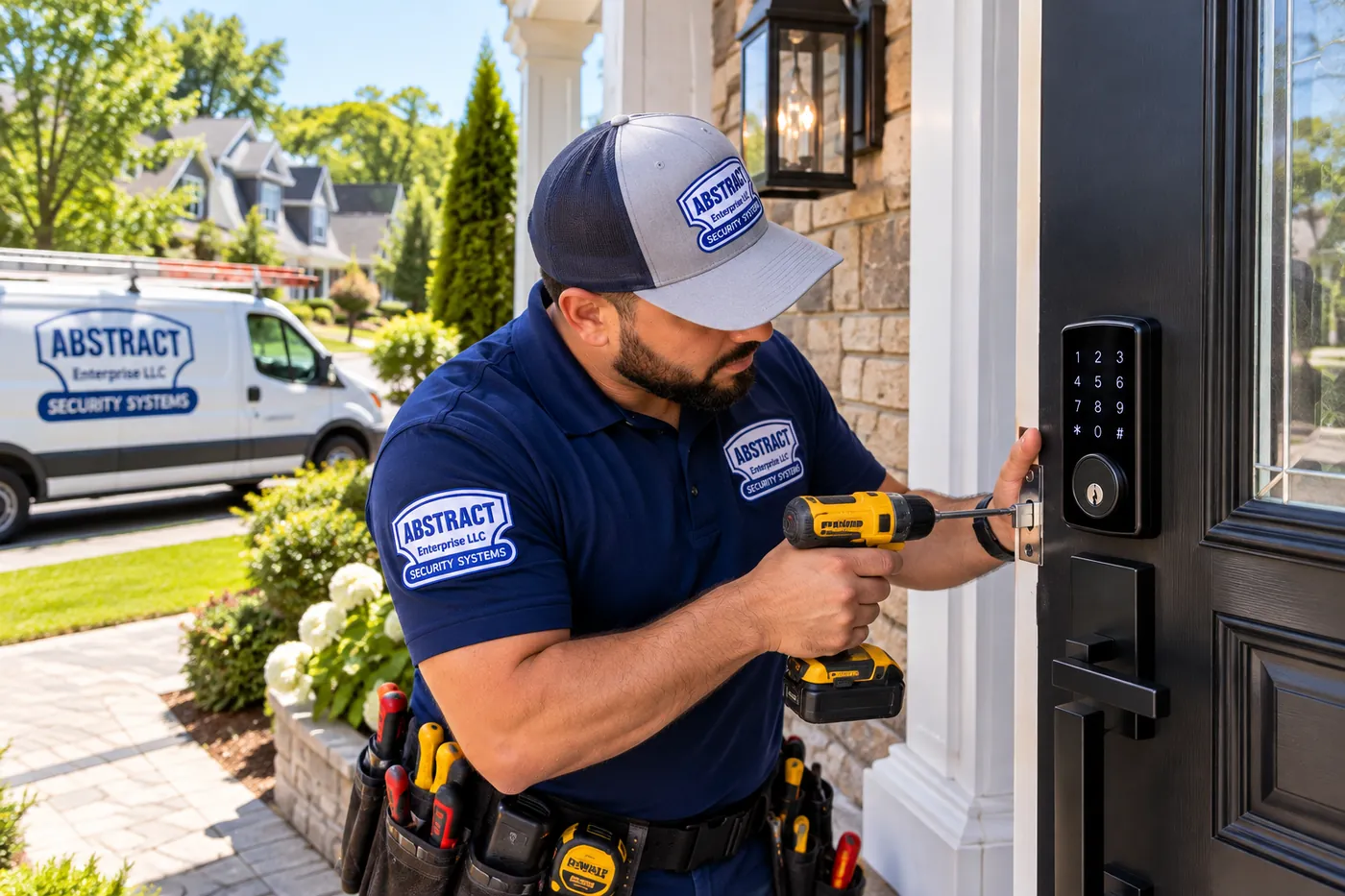
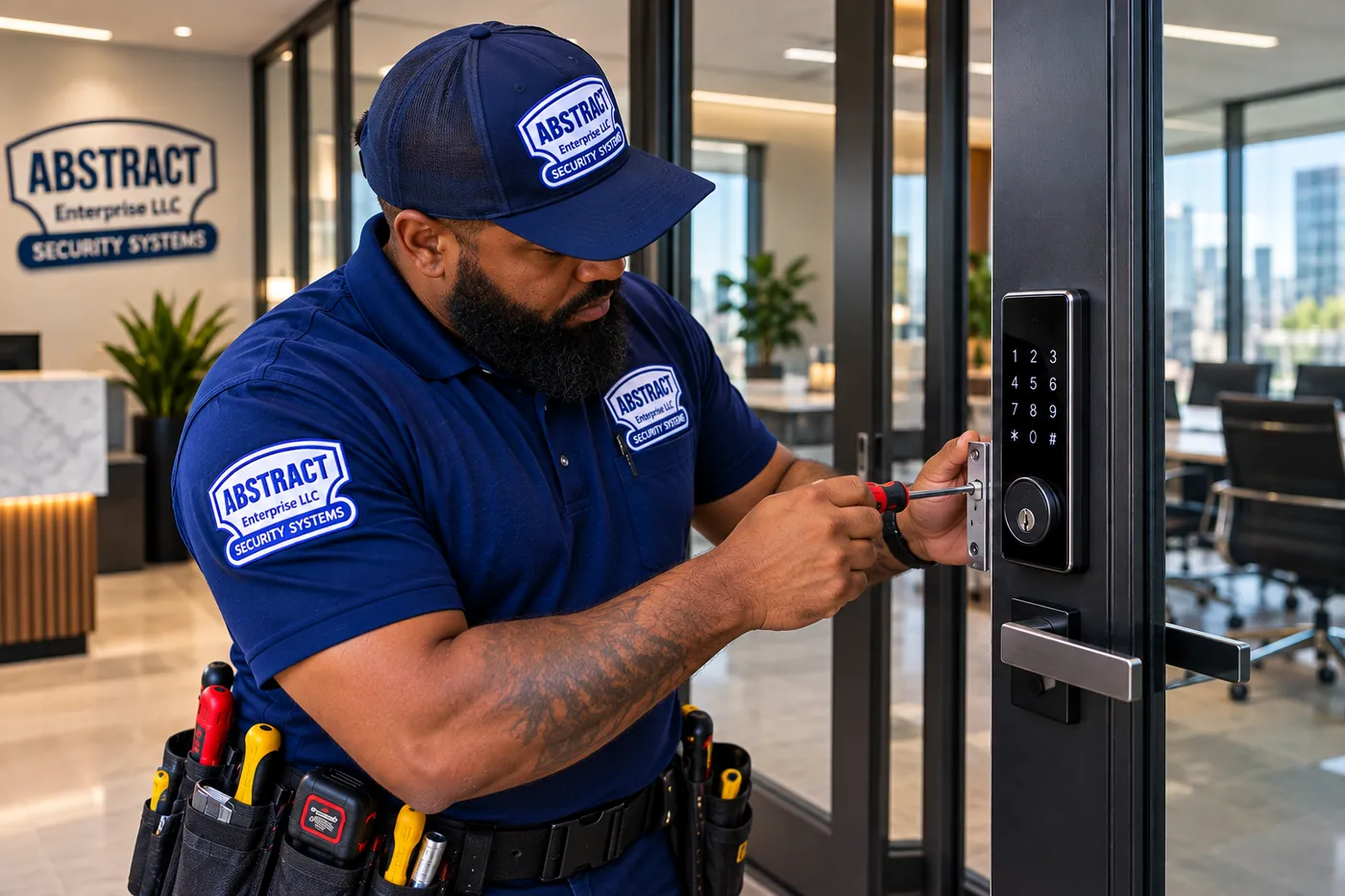
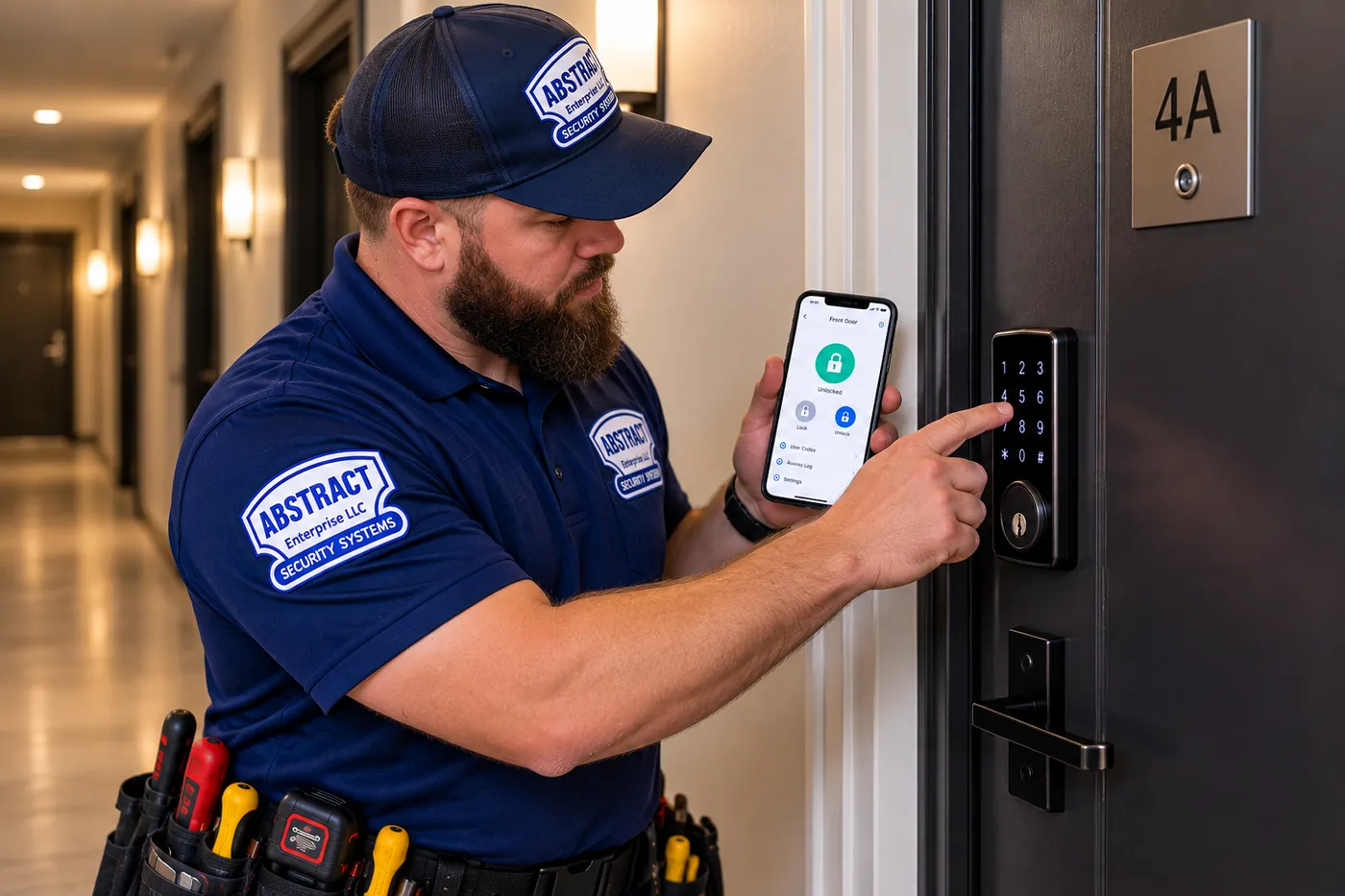
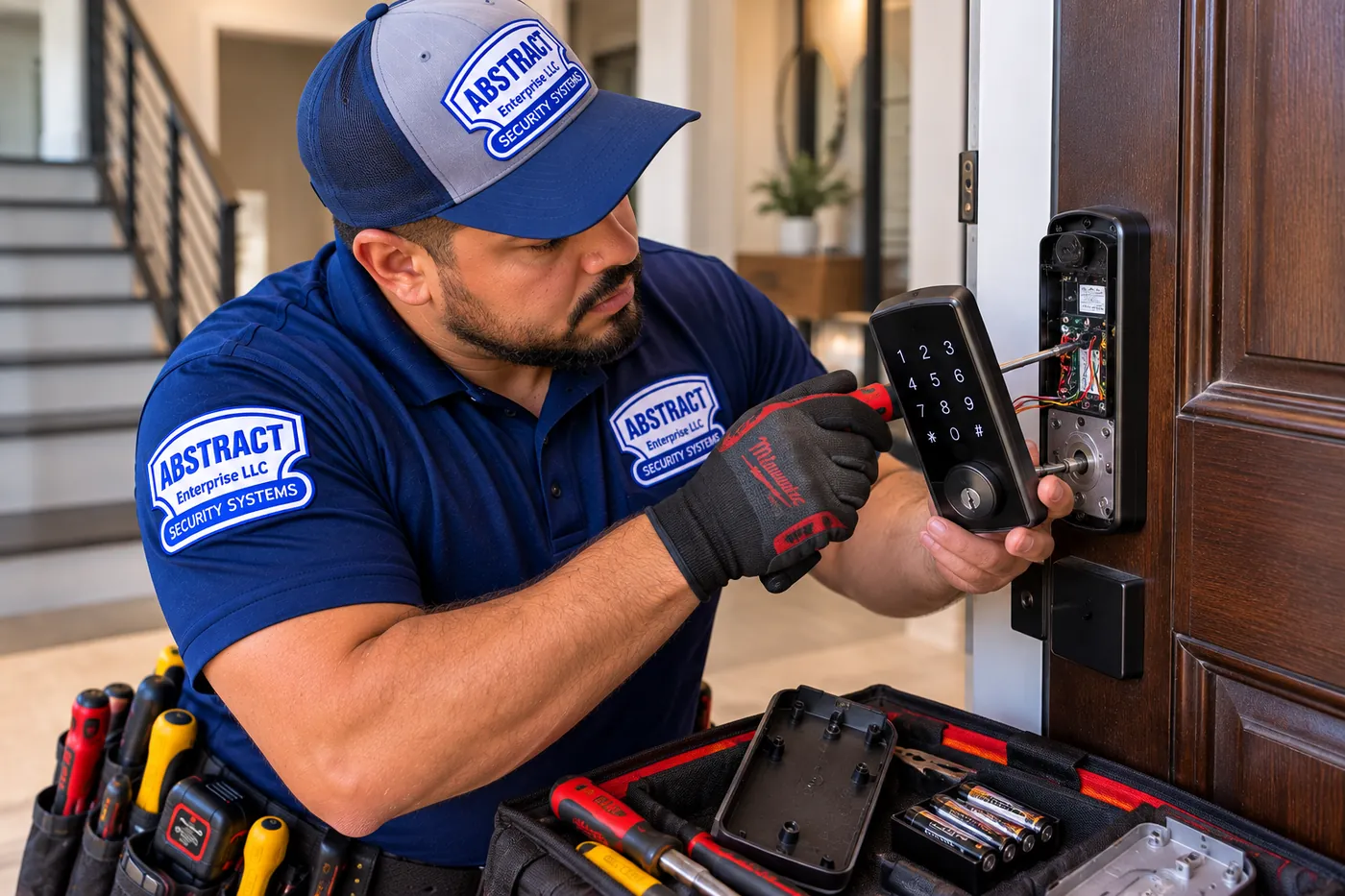
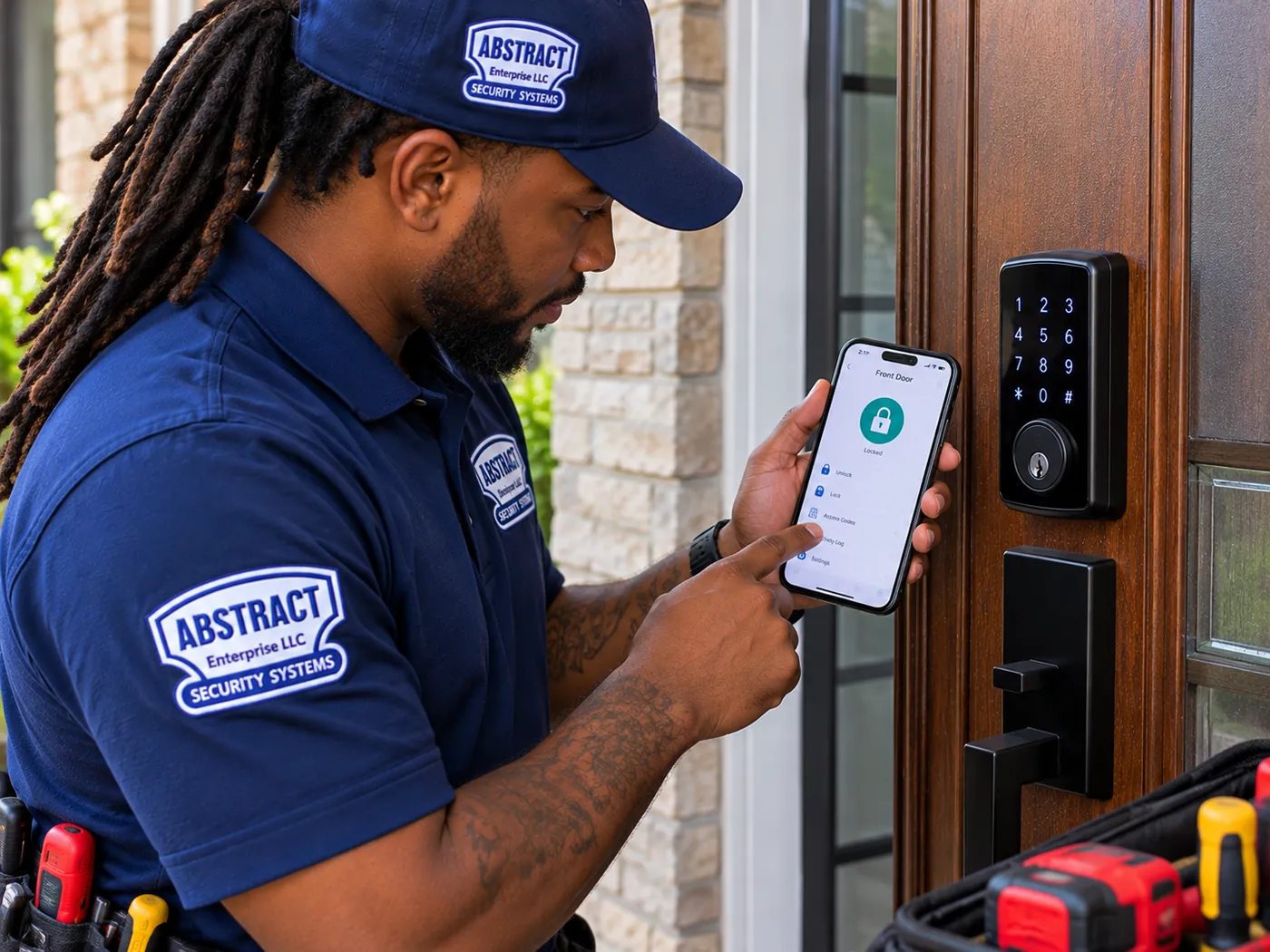
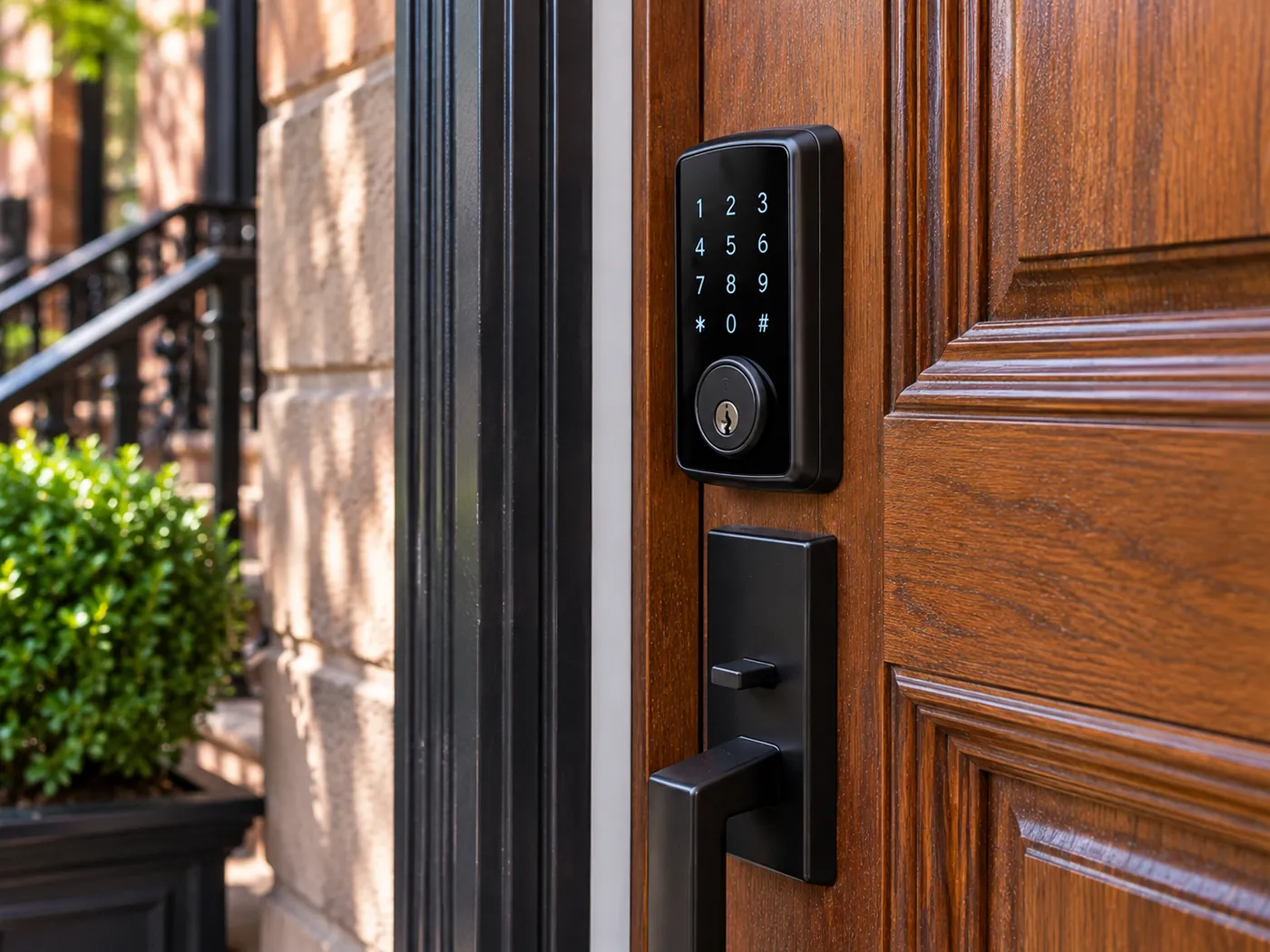
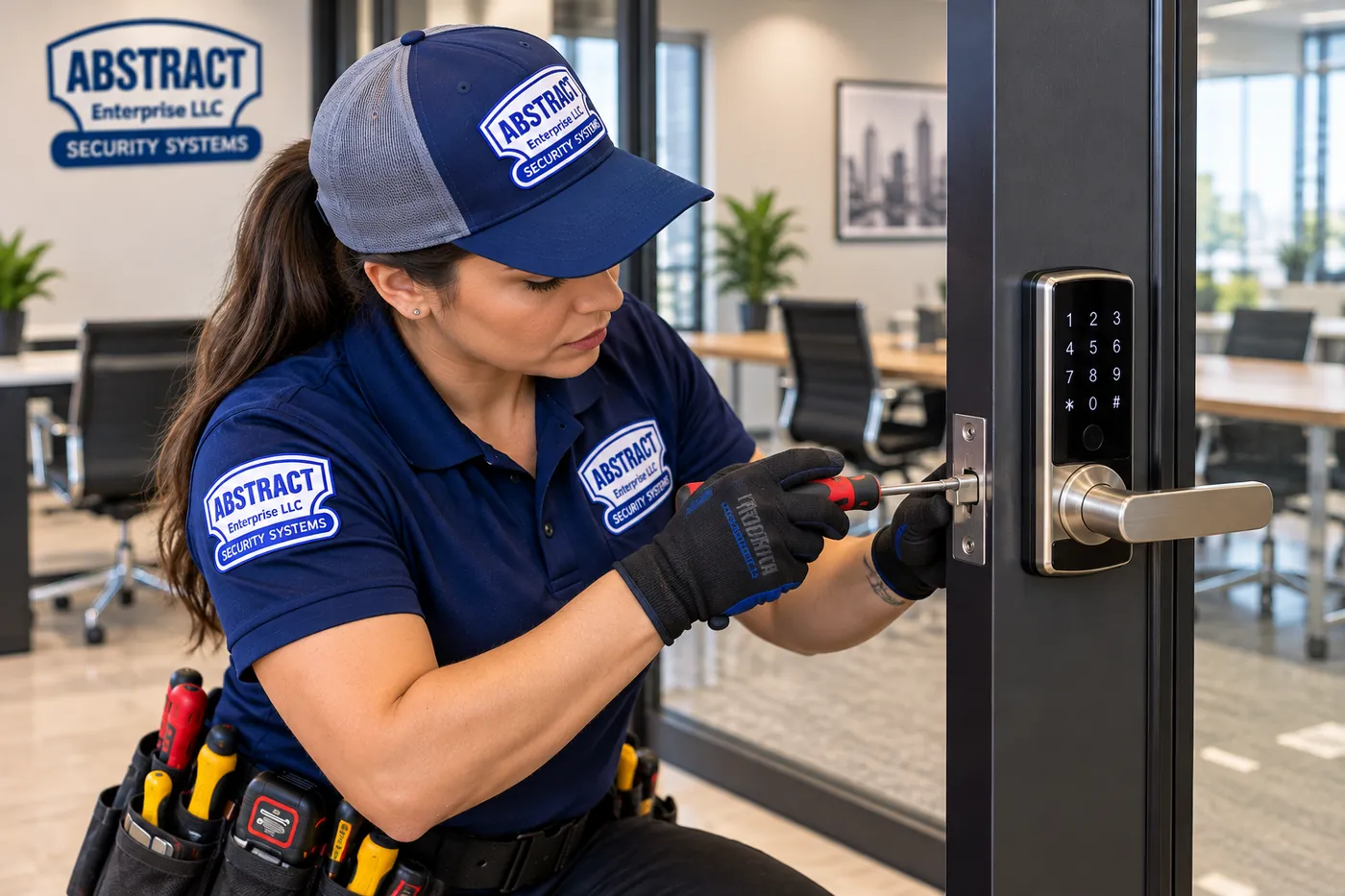
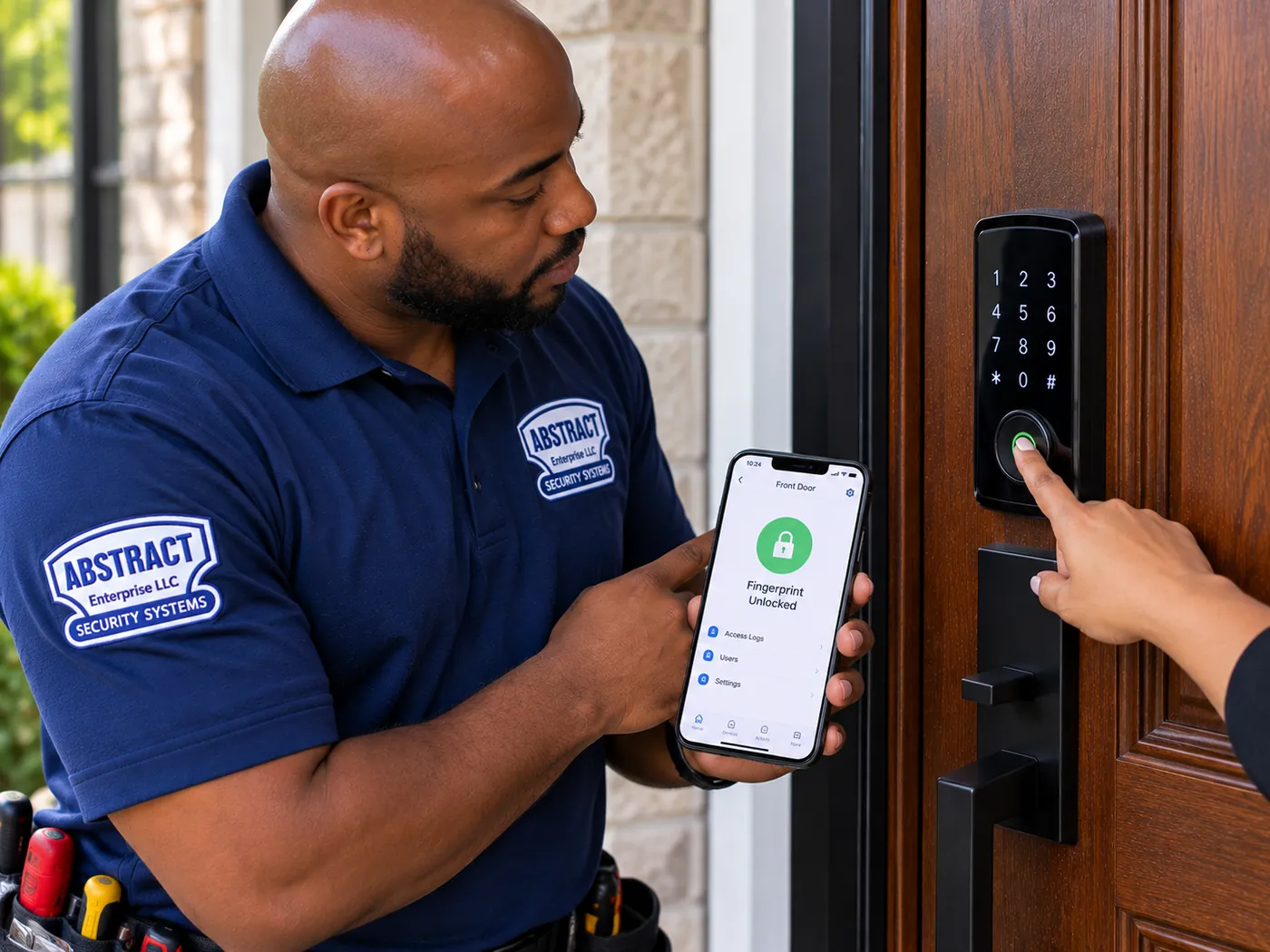
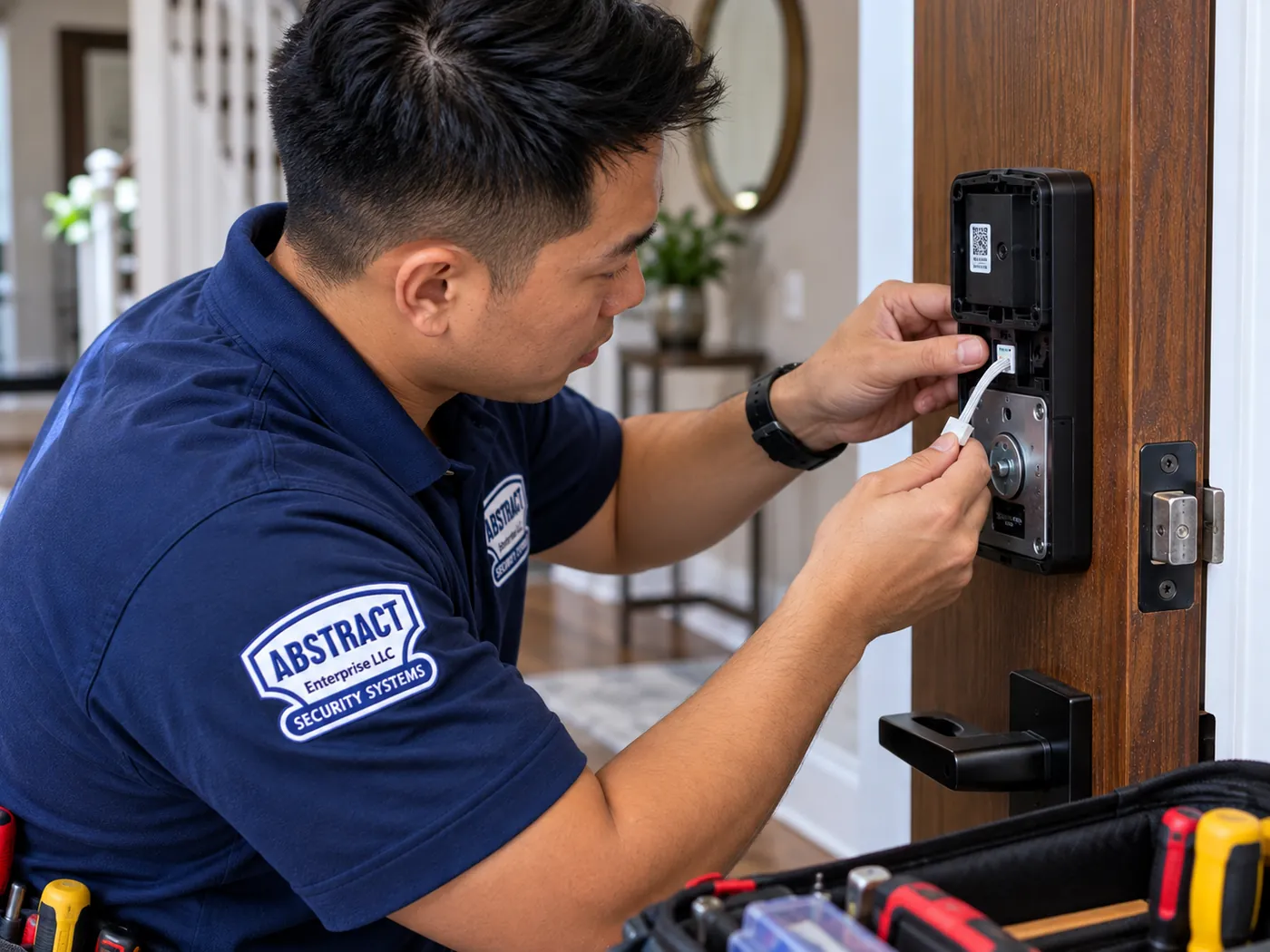
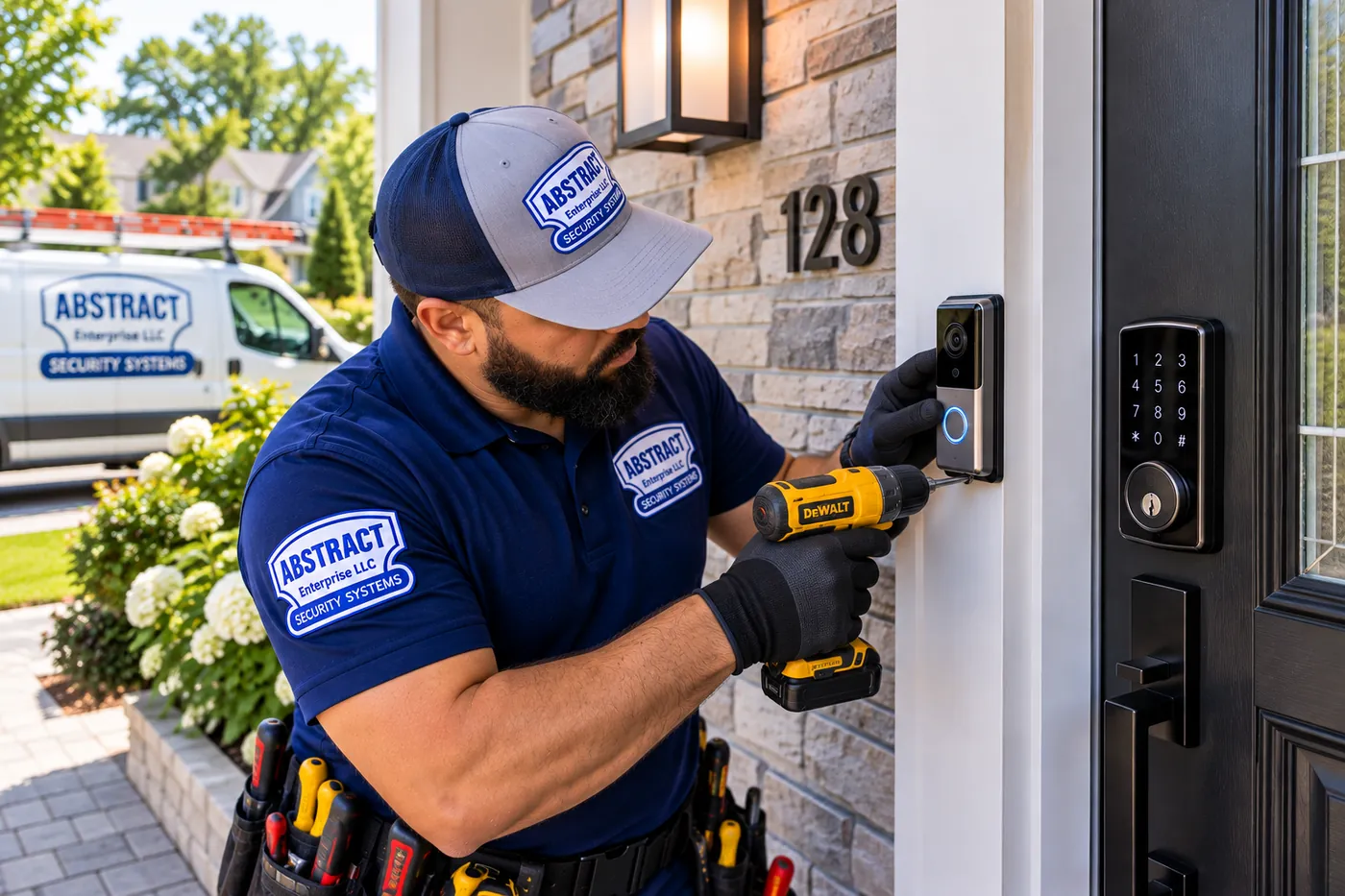
Shabbat-Ready Door Plans · Mechanical & Electronic Keypads · Deck Sliders · Codes for Large Households · Grant-Ready Shul & School Doors
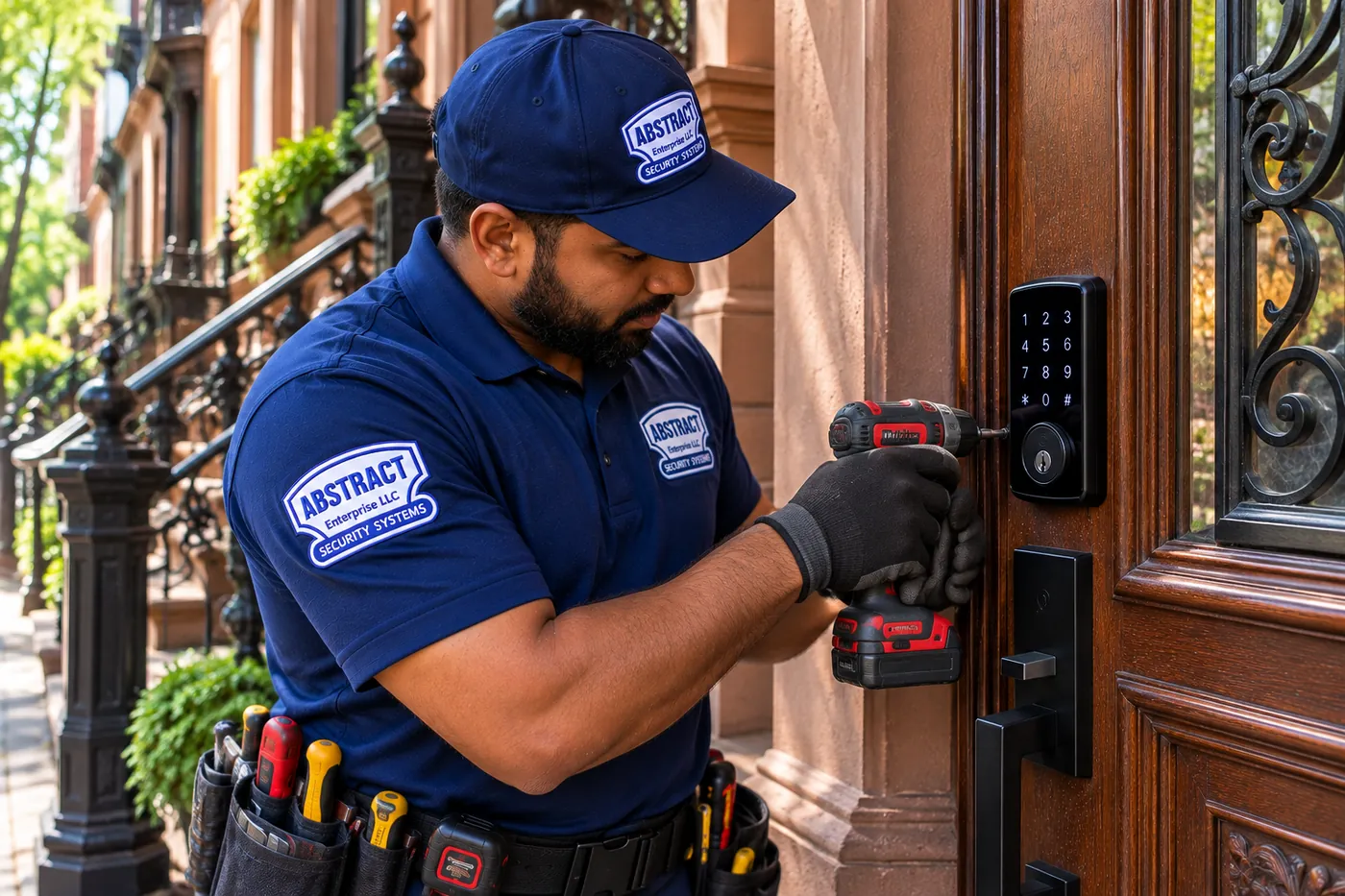
In Rockland the question is rarely "which smart lock is best?" It is "who has to get through this door, and when?" A raised ranch in Wesley Hills with nine children and a steady stream of Shabbat guests, a split-level in New City where both parents commute over the Mario Cuomo Bridge, a shul in Monsey that has to stay welcoming and stay secure, a shop on Route 59 that closes early on Fridays. We fit keyless locks that suit those lives — electronic where electronics help, purely mechanical where they don't — and every one of them still opens from inside with one plain turn.
Reviewed and updated October 17, 2026 · Written by Anwar Timothy, NYS licence #12000287431

Planning keyless doors anywhere from Tappan to Tomkins Cove, or locked out of one that stopped answering? Ring our Rockland line, (845) 640-3835, or send the 60-second form. A licensed installer reads every request and will tell you, before anyone drives out, which doors are worth converting, which should stay mechanical, and what the job is likely to involve.

Rockland was built quickly, for families, and the families keep getting bigger. The Historical Society of Rockland County sums up the county's modern history in a few lines: by 1950 fewer than 150 farms remained, and through the 1950s homes went up at a rate of more than a thousand a year, driven by the Tappan Zee Bridge opening in 1955 and the Palisades Interstate Parkway and New York State Thruway being completed in the same decade. What went up were raised ranches, split-levels, capes and colonials on quarter-acre and half-acre lots, most of them with a front door, a door from the garage, a back or side door, and a sliding glass door onto a deck or patio. Those doors are standard, pre-bored and generally easy to convert. The households behind them are where the planning starts.
The Census Bureau's QuickFacts table for Rockland County reports 3.22 persons per household for 2020–2024 — well above the 2.99 in Nassau County and 2.93 in Suffolk — and an owner-occupancy rate of 67.9 percent. In practice that means houses where eight, ten or twelve people come and go, older children who need their own codes, grandparents, babysitters, cleaners, tutors and a long table of guests every week. A lock that holds a handful of codes, or that only works properly through one parent's phone, is outgrown in the first month. The same table counts 357,397 residents in about 110,000 housing units (July 1, 2025 estimates) and notes that 44.2 percent of residents over five speak a language other than English at home.
The single biggest difference between Rockland and every other county we serve is Shabbat. The Jewish Virtual Library puts the county's Jewish community at about 92,000 people, close to a third of the population, with the largest Orthodox and Hasidic communities in the Town of Ramapo, in and around Monsey and the villages of New Square and Kaser, which the Forward has described as more than 90 percent Hasidic. For an observant family, an electronic keypad, a fingerprint reader, a fob and a phone app are all unusable from candle-lighting on Friday until Shabbat ends on Saturday night, and the same is true on Yom Tov. Chabad.org's guide to doors on Shabbat is plain about it: doors that open with electronic key cards, fobs or keypads may not be used, and even a smart lock opened by hand from inside raises questions because of its automatic re-locking and its activity log. A smart lock job in Monsey therefore starts with a different question from one in Nanuet: which door will the family actually use on Shabbat, and how will it open?
That concern is not only about houses. On December 28, 2019, the seventh night of Hanukkah, a masked man with a large knife forced his way into a Hasidic rabbi's home in Monsey, where almost 100 people had gathered to watch the candle-lighting, and wounded five of them; one, a 72-year-old man, died in March 2020 after weeks in a coma. In the days that followed, Rockland officials announced a volunteer armed patrol for synagogues and Senator Kirsten Gillibrand urged community leaders at a roundtable in Ramapo Town Hall to apply for security grant funding for their schools and places of worship. Since then, door hardware has become part of the routine for shuls, yeshivas, mikvaos and community organisations across the county — and in September 2026 New York State announced a record $70 million in Securing Communities Against Hate Crimes grants, with locks and access controls among the eligible improvements and 99 grants totalling more than $24 million going to the Mid-Hudson region.
The fourth Rockland factor is housing pressure. Big households and high prices push families to rent out a basement apartment or a few bedrooms, and the county has spent the last four years cracking down on what that can turn into. After a fire at a Spring Valley apartment building in March 2022, county inspectors listed more than 100 violations, and the Buildings and Codes director singled out doors that did not close properly, because self-closing, fire-rated doors are what keep a fire contained. A year later, after five members of one family died in a Spring Valley house fire, inspectors cited buildings owned by the same landlord for illegal single-room occupancies and missing smoke and carbon monoxide detectors. The county's Health Department permits and inspects rooming houses every year, and its rules specifically cover door locks. A keypad on every bedroom door is not a neutral upgrade in Rockland; it is something code inspectors notice.
Most Rockland families who call about a smart lock also want to see who is outside before they open up. The doorbell camera installation team in Rockland County can put a camera on the same door during the same visit, and the AESS alarm installers in Rockland add door contacts to the doors that don't get a smart lock at all.

Faults are booked as service calls into the next open 2-hour window: a blank keypad after the first cold snap, a bolt grinding against a strike that a settling split-level has pushed out of line, a lock that vanished from the app with the old router, a shul entrance that won't release, a shop keypad nobody can program since the person who set it up left. Most battery, pairing and alignment faults take one to two hours on site. A failed electric strike on a building entrance is $384–$631 to repair at our Rockland rate. Call (845) 640-3835, or for entrance buzzers see our door buzzer repair service in Rockland County.

Most Rockland bookings fall into one of the categories below. Whatever the category, we don't leave until four things are true: the door pulls shut and latches by itself, a single plain motion opens it from inside, there is a way in that needs no battery, and everyone on the access list has used their own method in front of us.
We pick one door as the family's Shabbat door and fit it with something that needs no electricity — a mechanical push-button deadbolt or a plain keyed cylinder — and put electronic smart locks on the doors used during the week.
Battery-free keypad deadbolts with a mechanical combination and a key override. No log, no motor, no auto-lock timer, nothing to switch off on Friday afternoon and nothing to go flat in January.
Keypad, fingerprint and app-connected deadbolts for the garage door, side door or front door the family uses on weekdays, with enough code capacity for a large household and a schedule for each babysitter or cleaner.
Keyless hook-bolt locks and secondary bars for the sliding glass door off the kitchen of a raised ranch or split-level — the door that most often has nothing but a thumb latch.
Separate locks and separate codes for a legal accessory unit's own entrance, with an inside release that never needs a code, and no keypads fitted to bedroom doors in a single-family house.
Keypads and fob readers with electric strikes, request-to-exit hardware and door contacts on community buildings, specified so the door is controlled during the week and has a workable arrangement for Shabbat and Yom Tov.
Keypad deadbolts and keypad-and-strike doors for stores on Route 59, offices along Route 303 and Main Street businesses in Nyack, Nanuet, New City and Pearl River, with per-employee codes and a log the owner can check.
Readers, strikes and cable runs on a door frame planned around an existing mezuzah, so nothing is drilled through or mounted over it and the case never has to come down.
Dead batteries, lost administrator accounts, strikes knocked out of line by a settling frame, auto-lock timers that need changing, and keypads damaged by snow-melt salt on the step.

Rockland's doors are mostly younger than the county's history. A few river villages and hamlets have houses from the 1800s and earlier, but most of the county's front doors went up in the post-1955 building boom and in the infill and expansion that has continued ever since. These are the building types we see most, and what each means for keyless entry.
Clarkstown, Orangetown and much of Ramapo: a front door that opens onto a split foyer with stairs up and down, a garage door into the lower level, and a slider from the upper-level kitchen to a deck on posts. Standard pre-bored doors, and three or four entrances to plan.
New City, Pomona, Nanuet and Valley Cottage: a main entrance at the middle level, often a side door into the family room, and a garage at the lowest level. Frames from the 1960s and 1970s that have settled unevenly, so we check every strike before any motorised bolt goes in.
Pearl River, Tappan, Blauvelt and Suffern: centre-hall and side-hall colonials and smaller capes, many with sidelights beside the front door and a back door off the kitchen. Good doors for smart deadbolts once the old hardware is cleared out.
Original ranches and splits that have been extended upward and outward for growing families, with new front entrances, additional doors to a lower-level dining room or a separate unit, and heavier traffic through every door than the original builder ever imagined.
Spring Valley, Haverstraw, Nanuet and Suffern: two- and three-storey complexes with unit doors on a shared hallway or directly on a walkway. Management and association rules come first, and shared hallway doors must keep closing on their own.
Nyack, Piermont, Haverstraw and Grand View: older frame and brick houses on steep streets near the Hudson, with heavier doors, mortise locks and porches. Fewer of them, but each takes more care than a pre-bored suburban door.
Converted houses and purpose-built buildings across Ramapo and Clarkstown, with a main entrance that sees hundreds of people a day, side doors that must stay exits, and a Shabbat routine that rules out keypads and fobs for many users.
Route 59 from Suffern to West Nyack and the office parks along Route 303 in Orangeburg and Blauvelt: aluminium storefronts, glass entry doors with continuous hinges, and steel rear doors onto service lanes.
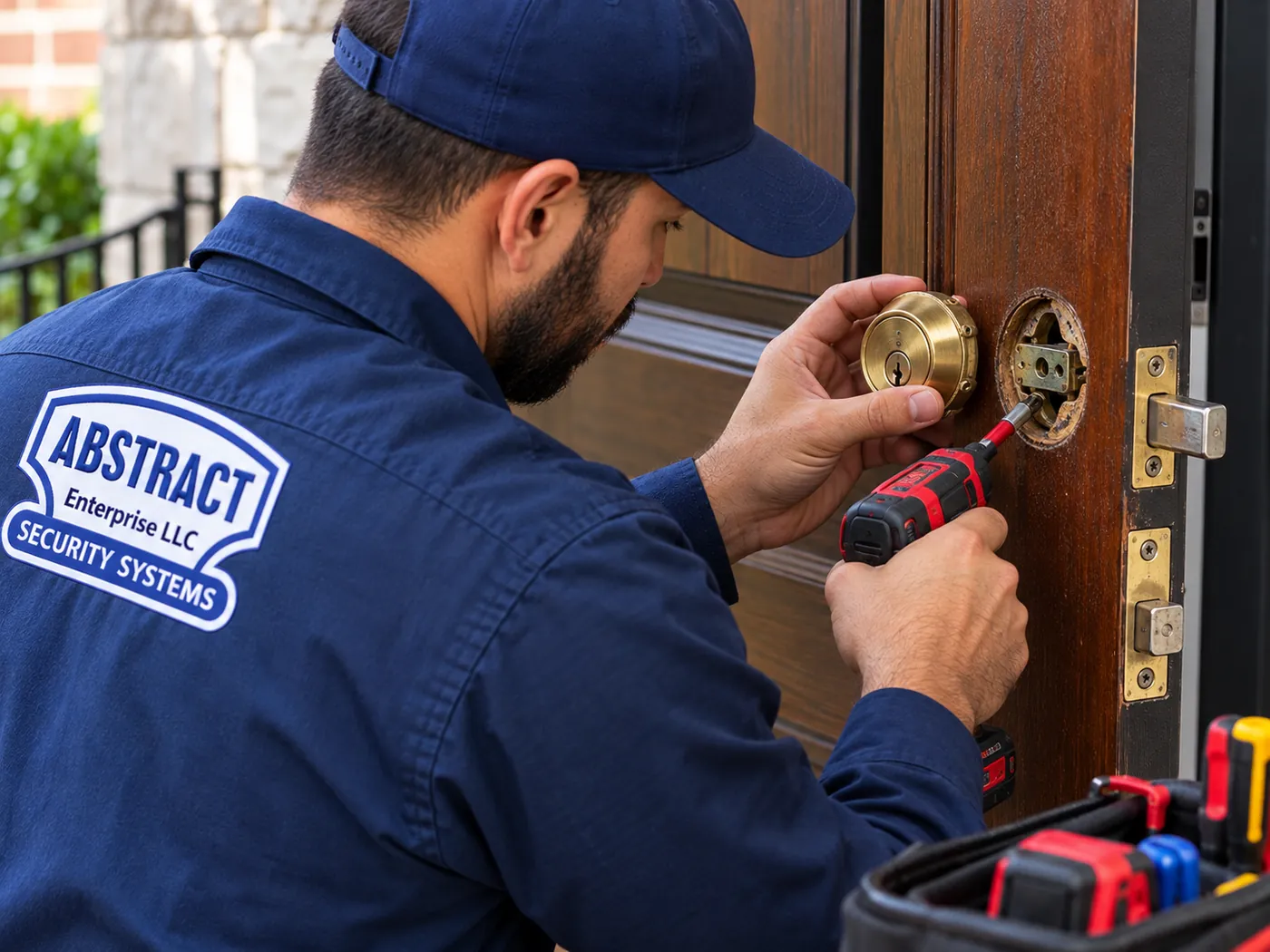
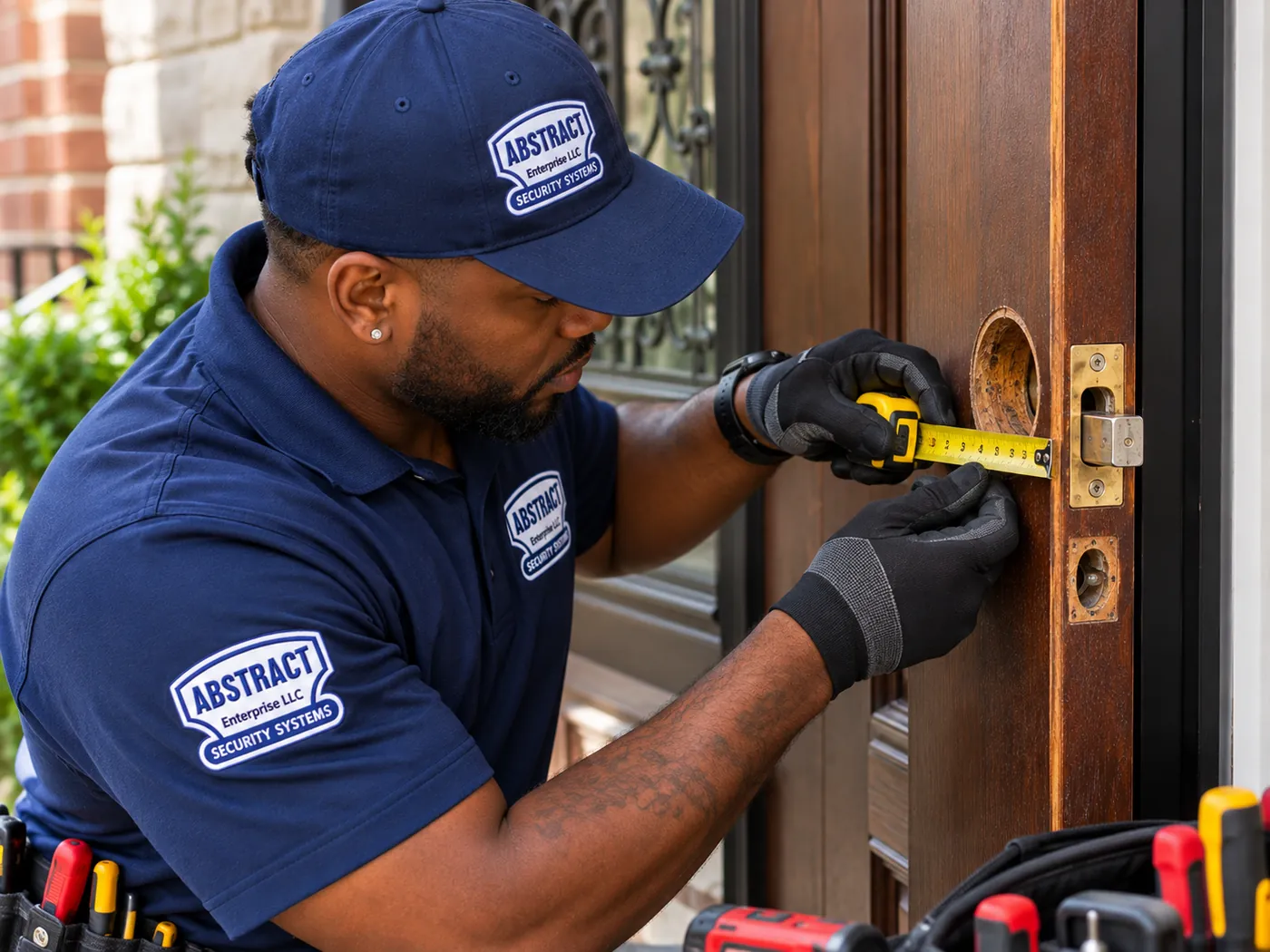
Pre-bored doors and what's left in them. Most Rockland exterior doors were bored at the factory for a standard knob and a separate deadbolt. Allegion's preparation specification for Schlage's smart deadbolts, for example, calls for a door between 1-3/8 and 2 inches thick, a 2-1/8-inch or 1-1/2-inch cross bore, a 1-inch edge bore and a 2-3/8 or 2-3/4-inch backset — exactly what most of these doors already have. The trouble is what successive owners have added: a second deadbolt above the first, a chain, a surface bolt, filler plates over abandoned holes. We remove what isn't needed, fill what's left and make sure the bolt goes into solid wood.
Sidelights and glass. Colonials and newer houses often have glass sidelights beside the front door. A thumb-turn within arm's reach of a pane of glass can be reached by someone who breaks it. That's a real argument for a smart lock with an inside button rather than a long paddle in easy reach, and for keeping the auto-lock on during the week. It is never an argument for a key-operated inside cylinder, which turns a front door into a trap in a fire.
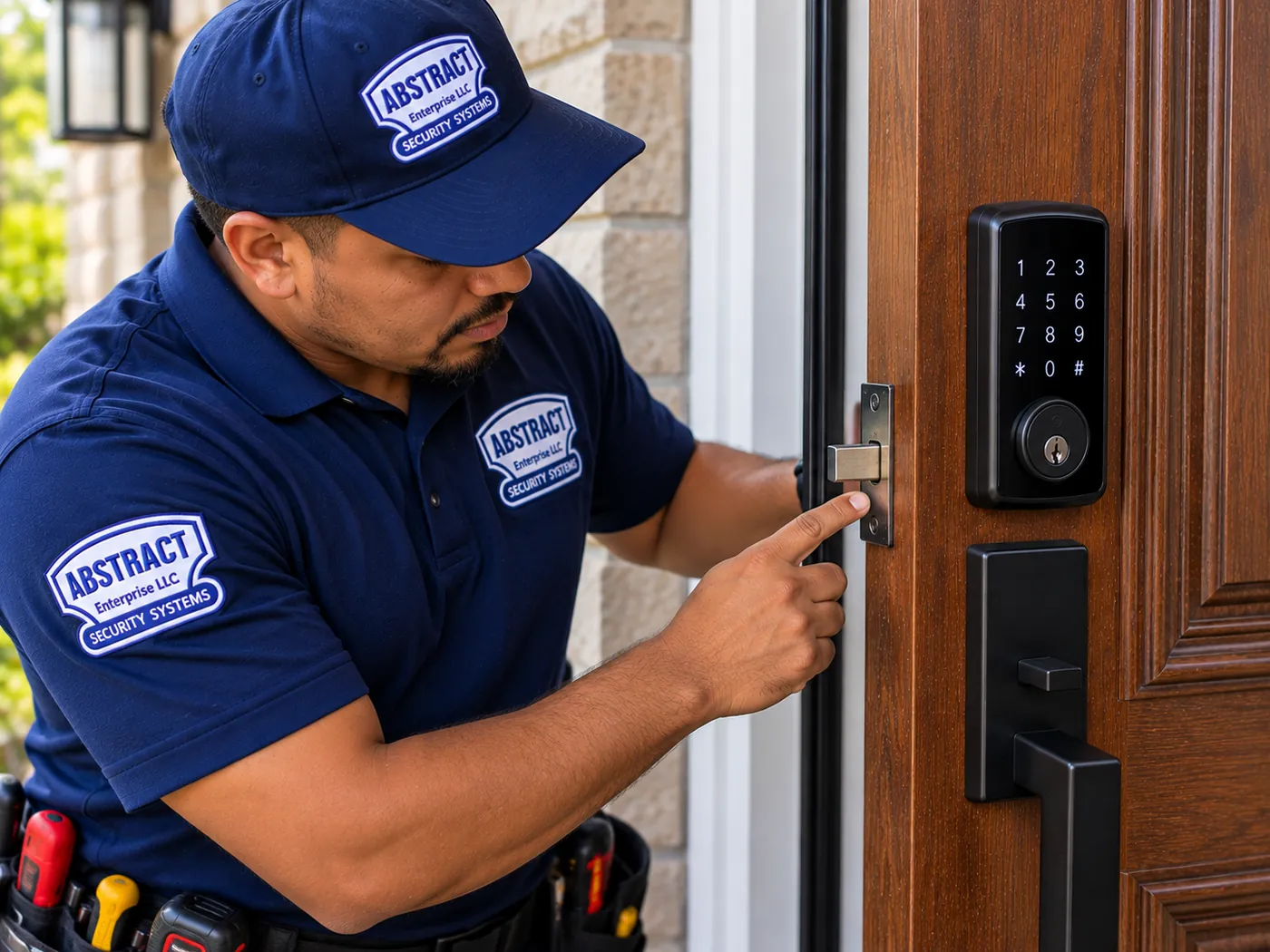
Split-level frames. Split-levels and raised ranches settle unevenly, because the lower level sits partly on a slab or foundation wall and the upper level sits on framing. A front door that latched cleanly in 1972 can now need a shoulder against it. A motorised deadbolt won't push a bolt into a misaligned strike; it strains, drains its batteries and reports a jam. We test the bolt with the door pulled shut by hand and by its own weight, and move or enlarge the strike until it throws without contact.
The mezuzah side of the frame. On a large share of Rockland front doors there is a mezuzah on the right-hand doorpost as you enter. It usually sits in the upper third of the post, well above where a deadbolt or a frame-mounted reader goes, but strike reinforcement screws, a door-position sensor or a cable run for an electric strike can come close. We look before we drill, plan around the case, and if anything on the frame has to move we say so before work starts, so the family can decide how they want it handled.
Association and landlord doors. In Rockland's garden apartments and condominiums the outside of a unit door often belongs to the association or landlord. We ask to see the alteration rules or lease clause first. Where the outside can't change, an interior retrofit over the existing deadbolt leaves the hallway side and the key untouched; where it can, we match the neighbouring doors' finish.
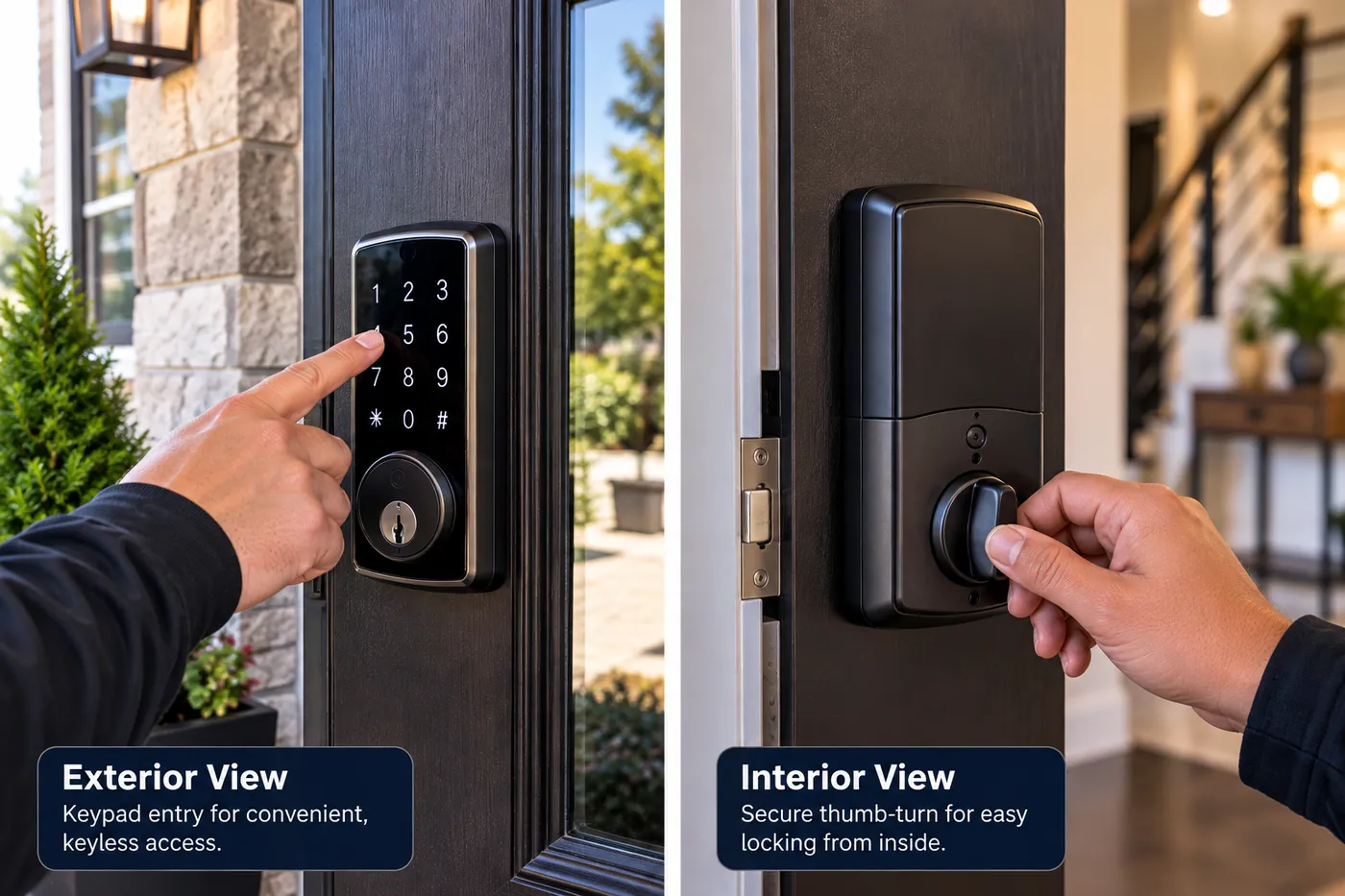
Leaving never needs a credential. On a Rockland house door the inside of every lock we fit is a thumb-turn, a lever or a push-button, and nothing more. The model residential code requires exit doors to be readily openable from inside without a key or special knowledge; with a dozen children and guests in a house, we would insist on it anyway.
Two-family owners and small landlords often want the front entrance sorted at the same time. For a talk-and-release entrance there is our Rockland County intercom installation service; where only the buzzer and strike need replacing, the AESS door buzzer installers in Rockland handle it.

Rockland business is spread out along a few long roads rather than packed into a downtown. Route 59 runs the width of the county from Suffern through Airmont, Monsey, Spring Valley and Nanuet to West Nyack and Nyack; Route 303 carries the office parks of Orangeburg and Blauvelt; Route 304 runs up through New City, the county seat. Along those roads are strip centres, medical and professional offices, kosher groceries and restaurants, auto businesses and a regional mall. Many owners have the same keyless problems — several people opening at different times, a back door that matters as much as the front, staff turnover — plus one Rockland-specific one: a large share of businesses close early on Friday and stay closed until Saturday night.
The Monsey stretch of Route 59 is lined with kosher markets, bakeries and restaurants — Yelp's Monsey listings place several at Route 59 addresses — alongside pharmacies, clothing stores and offices. Owners want staff codes that end when someone leaves and a door schedule that respects early Friday closing.
The Shops at Nanuet opened in 2013 on the site of the old Nanuet Mall, and the road around it is a run of strip centres, restaurants and service businesses. Rear doors onto service lanes and delivery areas are where most of our requests land.
Opened March 4, 1998, and, as of December 2022, the twelfth-largest mall in the United States by leasable space. Tenant back-of-house doors, stockrooms and offices inside the mall run under the landlord's rules, which we follow.
Office parks and light-industrial buildings with tenant suites, glass entry doors and steel side doors. Small tenants often want a keypad or reader on their suite door before they are ready for a full access control system.
A walkable main street of shops, restaurants and pubs that hosts the county's St. Patrick's Day parade, which Rockland County Government calls the second largest in New York State. Small storefronts with apartments or offices above and a back door onto parking.
Nyack's Main Street and Broadway, with restaurants, galleries and shops in older buildings, and New City's Main Street around the county courthouse, with law and professional offices in converted houses and small office buildings.
Past three or four doors, separate keypads become hard to manage: codes have to be changed one door at a time and nothing ties the logs together. At that point a central access control system makes more sense, and our access control installation in Rockland County designs it, while commercial security cameras for Rockland businesses record what happened at each door when it opened.

These are the questions Rockland families, congregations and business owners ask us before a keyless lock goes on a door, grouped by situation: observant households, large families, the doors that raised ranches and split-levels actually have, rented rooms and accessory apartments, community buildings, and shops. Price, scheduling and coverage questions are in the FAQ further down. Where Jewish law comes into it, we describe the hardware and point you to the published guidance; the decision about what your household or congregation uses on Shabbat belongs to you and your rabbi, not to a lock installer. Nothing here is legal advice either.
One that involves no electricity at all on the door you use that day. Chabad.org's guide to doors on Shabbat says there is generally no issue with an old-fashioned lock and key, or with combination locks that are entirely mechanical, while doors that open with electronic key cards, fobs or keypads may not be used. That leaves two practical choices for the Shabbat door: a conventional keyed deadbolt, used with a key that can be carried in a permitted way, or a mechanical push-button deadbolt whose combination works through springs and tumblers rather than circuits. Several manufacturers sell battery-free push-button deadbolts; some online listings even put "Sabbath" in the product name.
For most Rockland families the answer is a split plan rather than one lock for everything. The door you use on Shabbat — usually the front door, because guests and the walk to shul both start there — gets the mechanical keypad or a plain keyed deadbolt. The garage-to-house door or side door, which the family uses during the week with cars, groceries and car seats, gets the electronic smart lock with codes, fingerprints and the app. A 2017 article by an Orthodox home-automation installer reached the same conclusion: he put his electronic smart lock on the garage entrance precisely because he doesn't use the garage on Shabbat.
Whatever goes on the Shabbat door, the inside still opens with one plain turn of a lever or thumb-turn, so getting out never involves a code, a key or a decision. We test that with you before we leave, and we label which door is which on the instruction sheet so a babysitter or a guest isn't confused on Friday night.
Usually some of them, but rarely all of them in one tap, and that is the problem. Chabad.org notes that some smart locks lock themselves after a set time, which creates an electrical action, and that even with auto-lock turned off most smart locks record every use and send a signal to the app whenever the door is locked or unlocked — including when it's turned by hand from inside. Its practical advice is that, ideally, smart locks should be disabled before Shabbat. The Orthodox installer who tested a popular keypad deadbolt in 2017 found the same two issues, the 30-second auto-lock timer and the activity log, and wrote that a "Shabbat mode" would be a game changer. We have not found a mainstream residential smart lock that offers one.
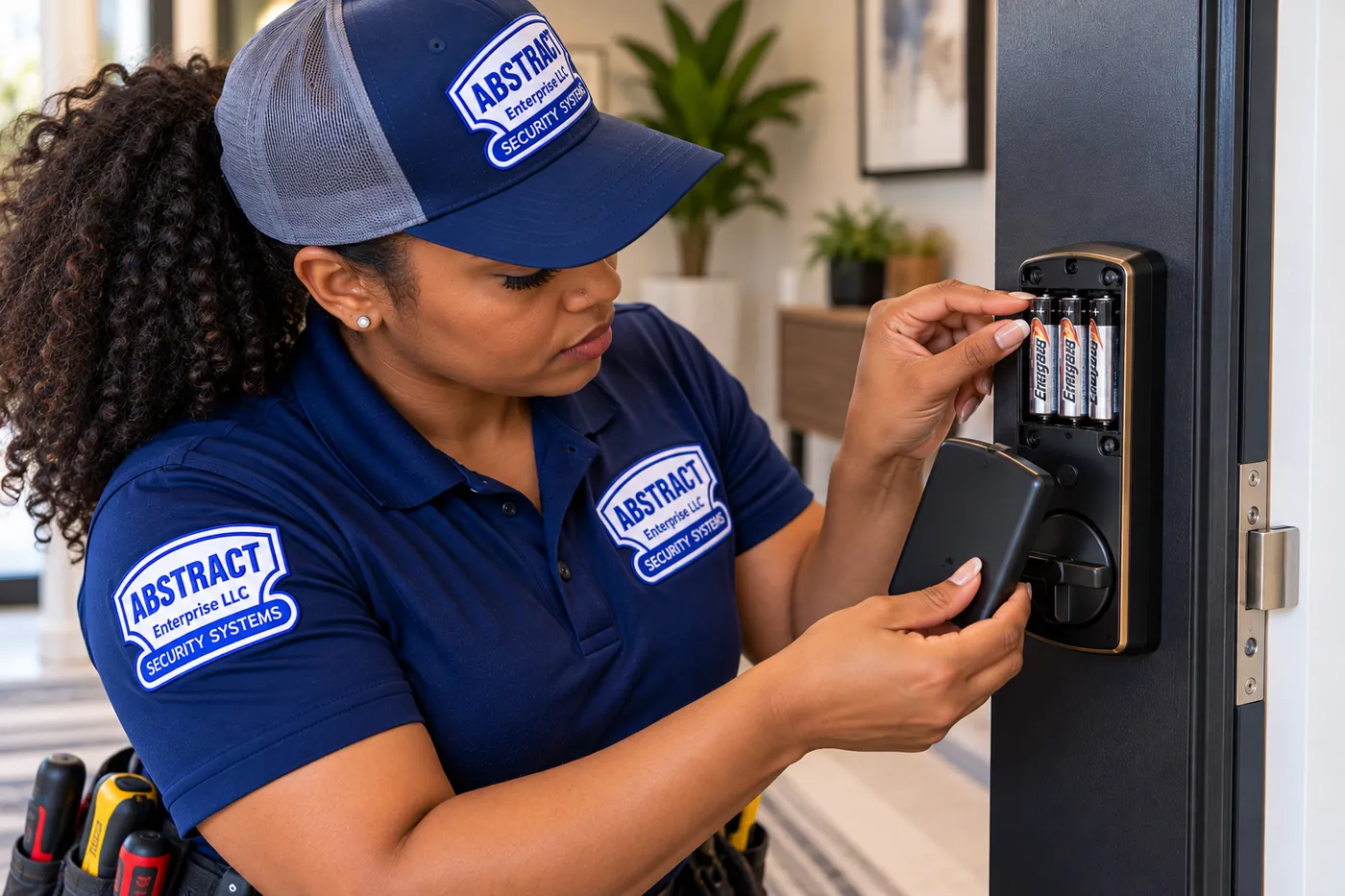
What can be done in practice depends on the model. Auto-lock can be switched off in the app or on the lock on most models, and switched back on after Havdalah. Logging is harder; on many locks the only certain way to stop the electronics is to cut their power. On some models that means sliding the battery pack out or flipping a battery-compartment connector, which takes seconds once you know where it is; on others it means removing the batteries entirely. We show you exactly how on your lock, note it on the instruction sheet, and if the lock makes this awkward we tell you before you buy it.
The other option is to stop fighting the electronics. Put the smart lock on a door you don't use on Shabbat, and give the Shabbat door hardware that has nothing to switch off. Families who host every week often find that easier than remembering a battery routine every Friday at candle-lighting, and it means a guest who arrives on Shabbat afternoon never touches anything electronic.
Not usually, but it is worth checking before anything is drilled. Published guidance places the mezuzah on the right-hand doorpost as you enter, in the lower part of the upper third of the post — the Chicago Mitzvah Campaign's FAQ adds that it shouldn't be higher than four inches below the lintel, and Chabad.org says that on a very tall doorway it goes at shoulder height. A residential deadbolt or a keypad on the door itself sits much lower, typically a few inches above the handle, so on most front doors the two never meet.
Where they can come close is on the frame. If the door is hinged on the left as you walk in, the latch and strike are on the right-hand post — the same post as the mezuzah. Long strike-reinforcement screws, a door-position sensor, or a cable run up to an electric strike or a frame-mounted reader can all end up in that post. We look at the mezuzah's position at the walkthrough, keep our drilling and cable routes clear of it, and mount any reader on the wall or the opposite side of the frame if the post is crowded.
If frame work genuinely requires the mezuzah to come down — say a rotted post has to be replaced — we tell you first and leave its removal and re-affixing to you, because how and when it goes back up is a question for your family and your rabbi, not for us. We never cover, drill through or re-fix a mezuzah ourselves.
More than most families need, if you choose the model with that in mind. Schlage lists 100 user codes for its Encode models, and Kwikset's Z-Wave 700 locks list 250. Cheaper locks and some retrofit units hold far fewer, and a few store fingerprints and codes in separate, smaller pools. In a Rockland household with parents, eight children, a grandparent, a babysitter, a cleaner and a tutor, you can reach twenty codes before anyone has a guest — so we check the capacity, and the number of fingerprints, against your list before recommending a lock.
Keeping them straight is a naming habit, not a technology problem. Every code goes in under a person's name, never "code 7". Children get their own codes rather than sharing one family code, so the log shows who came home at what time, and so you can delete one child's code after it's been shared with a friend without changing everyone else's. Staff get scheduled codes that only work on their days. Guests get codes with an end date, which disappear on their own.
Two people should hold administrator access — usually both parents, or a parent and an older child who lives at home — so a lost phone never locks the family out of its own lock. Review the user list before every major holiday season and delete anyone who no longer needs access. We set up the first version of the list with you on installation day, and leave it printed on the instruction sheet.
Yes, if the locks are connected to the internet through Wi-Fi, a bridge or a hub. The app's home screen shows each connected lock as locked or unlocked, and most apps or smart-home systems can send a notification at a set time, or after a door has been unlocked for a set number of minutes. Ramapo police, after a night in April 2024 when people walked into unlocked homes in Airmont looking for car keys and valuables and tried a sliding door in New Hempstead, reminded residents to lock doors, secure windows and set alarms before bedtime — a door-status check at bedtime does exactly that job.
A status check is only as good as the lock's sense of whether the door is actually closed. A deadbolt can report "locked" with its bolt thrown into thin air if the door was left resting against the frame. Locks with a built-in door-position sensor, or a separate door contact, can tell the difference between a door that is shut and bolted and one that is just bolted. On the doors that matter most at night, we fit and calibrate that sensor.
Remember that the check covers only the doors with connected locks. A mechanical Shabbat door or a slider with a hook-bolt lock won't appear in the app. For those, an alarm door contact can report open or closed, and the family's bedtime routine — a last walk past the front door and the slider — still matters.
Yes, and it is often the weakest door in the house. Most factory slider latches are hooks operated by a small thumb lever, built to keep the door closed rather than to resist someone lifting or forcing it. In the April 2024 Ramapo incidents, police specifically mentioned an attempt to open a sliding door in New Hempstead. On a raised ranch the slider is usually on the upper level, onto a deck reached by outside stairs, which makes it less exposed than a ground-floor patio door — but not unreachable.
Ordinary smart deadbolts and retrofit units are designed for swinging doors and won't fit a slider. The keyless options are different hardware: surface-mounted keyless locks with a hook bolt that catches the frame, such as Lockey's C150, which its maker describes as mechanical, keyless and weather resistant, with a 3/8-inch hook-bolt throw for sliding glass patio doors; and electronic slider locks sold by several smaller brands. A mechanical hook-bolt lock also suits an observant household, since there's nothing electronic to disable on Shabbat.
Whatever lock goes on, we add the cheap layer that matters most on a slider: a security bar or a pin that stops the door being slid, and anti-lift blocks in the top track so the panel can't be lifted off its rollers. Where you'd like to know when the slider opens, an alarm contact covers it.
Almost always. Doors from Rockland's post-war building boom were bored for a separate knob and deadbolt, and smart deadbolts are designed for exactly that preparation. Allegion's specification for Schlage's smart deadbolts calls for a 1-3/8 to 2-inch door, a 2-1/8-inch or 1-1/2-inch cross bore, a 1-inch edge bore and a 2-3/8 or 2-3/4-inch backset — the standard sizes most of these doors already have. The smart deadbolt goes in the upper hole; the knob or a matching lever stays in the lower one.
Two things can complicate it. First, holes that have been enlarged or moved over sixty years: a previous owner may have added a second deadbolt, fitted a handleset with a thumb-latch grip, or patched a hole badly. We measure the backset and the bore on the day, and fill and reinforce anything the new lock won't cover. Second, the old strike: original strikes are often held by short screws into the trim. We replace them with long screws into the framing so the bolt holds against a kick.
If you'd like the lower hole to carry a matching keyless lever rather than a plain knob, most smart deadbolt lines have one. On doors where the knob is used to latch the door and the deadbolt is the lock, we leave the knob non-locking so nobody is ever locked out by the knob alone.
No. Most residential smart deadbolts work on in-swinging and out-swinging doors, and many motorised models sense the door's handing during setup. An outward-swinging door does change three things we check. The hinges are on the outside, so the pins must be non-removable or secured, otherwise the door can be lifted off regardless of the lock. The keypad faces the weather more directly, because there's no recess to shelter it. And a storm door is usually impossible, so the lock itself takes the rain.
Out-swinging doors are most common in Rockland on additions and side entrances to lower levels, where an inward-swinging door would hit stairs or a landing. On those, the step outside is often small, and anyone using the keypad stands where the door will swing into them. We position the keypad so it can be reached and read from beside the door's swing rather than in front of it.
For an outward-opening door that's also an exit from a lower-level apartment or playroom, the inside hardware has to open with one motion, without a key or code, like every other exit door we work on.
Start with the permit, not the lock. Rockland County's Department of Health says it inspects and permits every rooming house in the county each year, and that rooming houses are subject to specific requirements on bathrooms, cooking and dining, door locks, sleeping-room floor space, smoke and carbon monoxide detector locations, and local building codes. Letting rooms to unrelated boarders can turn a house into a rooming house in the eyes of the county and your town or village, and that comes with a permit and an inspection before any lock question.
The county has been actively enforcing those rules. After the 2023 Spring Valley house fire that killed five members of one family, inspectors cited buildings owned by the same landlord for illegal single-room occupancies, illegal conversions and missing smoke and carbon monoxide detectors, and the county had already taken over code enforcement in Spring Valley the year before. A keypad lock on every bedroom door of an otherwise ordinary single-family house is one of the things that makes an inspector look twice.
So we don't fit keypad or keyed locks on bedroom doors in a house unless the owner can show us the space is permitted for that use. Where it is, the locks have to suit the permit's conditions and open from inside with one motion, never needing a key or code to get out. For a legal accessory apartment with its own entrance, we fit that entrance like any other front door: its own lock, its own codes, a plain inside release.
Yes. Governor Hochul's September 8, 2026 announcement of the Securing Communities Against Hate Crimes awards lists the improvements the money funds, including lighting, locks, alarms, panic buttons, fencing, barriers, access controls, shatter-resistant glass and security training. Organisations could request up to $250,000 each in that round, and 99 grants totalling more than $24 million went to the Mid-Hudson region. Keypads, readers, electric strikes, door contacts and request-to-exit hardware all fall under locks and access controls.
What matters for an application is that the door work is specific and justified. Grant reviewers and administrators want to see which doors, what hardware on each, and why — a main entrance that needs controlled entry during the week, side doors that need to be locked from outside but stay exits, a school wing that needs separate credentials. We walk the building with your board or security committee, write an itemised quote door by door, and note where hardware choices are driven by egress rules so that nothing in the plan conflicts with the fire code.
Grant programmes have their own rules about procurement, timing and when work can start; follow the programme's guidance and the award letter, and don't commission work before you're allowed to. We'll provide the documentation you need when you're ready.
By planning for Shabbat as its own operating mode rather than an exception. Chabad.org's guidance notes that electronic key cards, fobs and keypads can't be used on Shabbat, and suggests arranging before Shabbat to use a door with a standard key or having staff open the door. For a congregation, that usually means the main entrance is attended during services: a greeter, a security volunteer or a hired guard who sees who is coming in, with the door unlocked only while someone is watching it.
The access control system can support that without anyone touching it on Shabbat. Doors can be set on a schedule before Shabbat begins, so they unlock and relock at fixed times; whether a pre-set electronic schedule is acceptable for your community is a question for your rabbi, and we set it up whichever way the shul decides. Side and rear doors stay locked from the outside all Shabbat while remaining exits from inside with panic hardware. A camera at the entrance gives the person at the door a view of the approach.
During the week, the same doors run normally: codes or fobs for staff, teachers and regular volunteers, schedules for minyanim and classes, and a log the administrator can check. The hardware is the same; only the schedule and the people at the door change.
Partly, and it's worth knowing which part. Most consumer smart lock apps and many small access control systems schedule by clock time and day of the week, not by sunset, so a schedule set for 3:45 p.m. on Fridays in December is wrong by April. Some smart-home platforms and larger access control systems can trigger on sunrise and sunset or hold a calendar of exception days. Candle-lighting time moves every week and Yom Tov falls on different weekdays every year, so even a sunset-aware schedule needs checking around the holidays.
The arrangement that works for most Rockland shops is simpler. The door relocks automatically every time it closes, so it is never left unlocked overnight or over Shabbat. Opening for the day is done by the first employee with a code. Closing is done by people rather than by a timer, with the last person out checking the door. Staff codes are set to stop working from Friday afternoon to Saturday night, adjusted seasonally, so nobody can open the store during that time by accident or otherwise.
If the store reopens on Saturday night or runs on Sundays, we set a separate weekend schedule. The owner gets a notification if the door is opened outside business hours, which is the alert that actually matters.
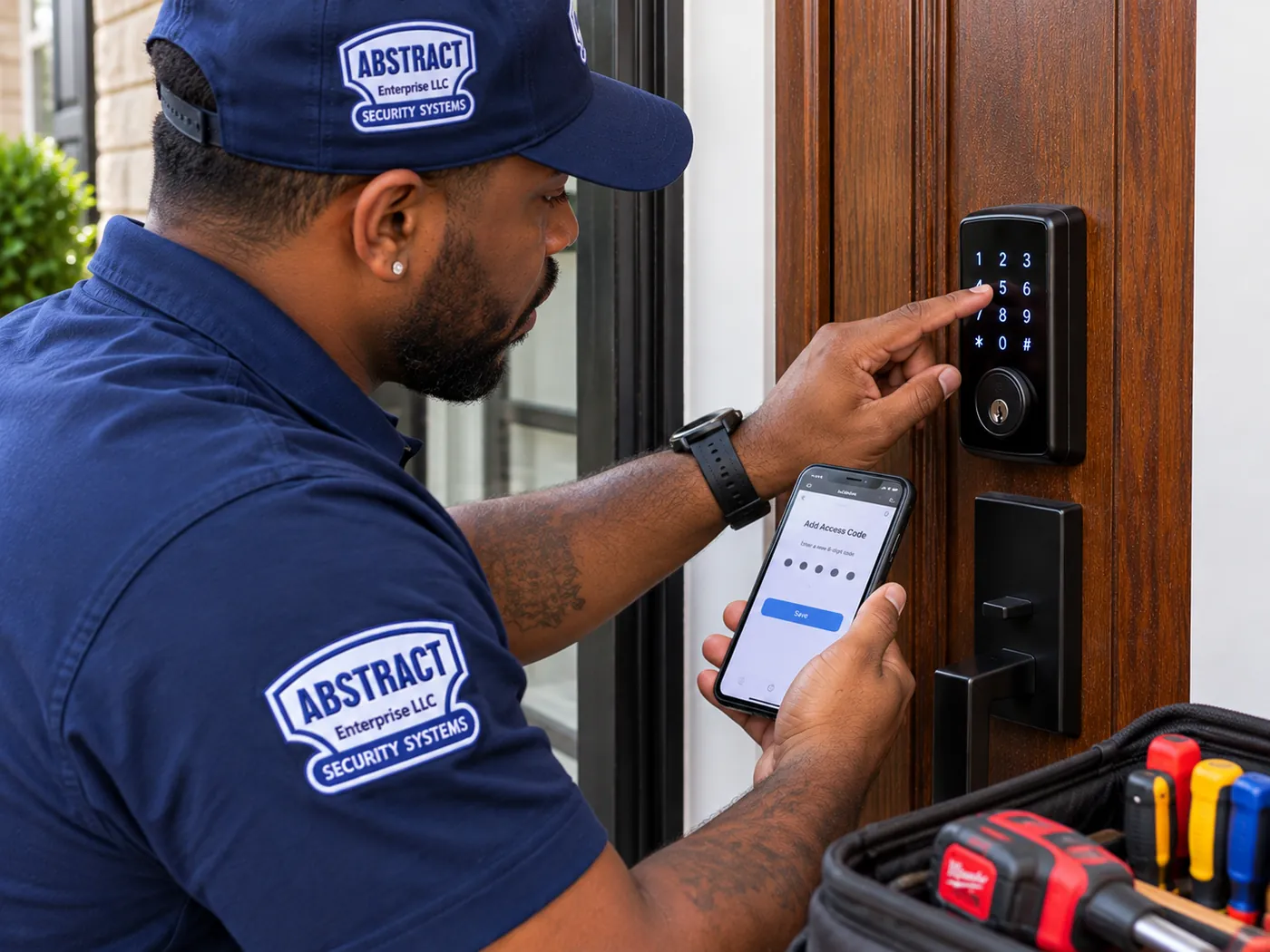
In Rockland the deciding question is often whether a door has to work without electricity one day a week. You can buy your own lock and have us fit it, or let us recommend one after the walkthrough. These are the categories we install in Rockland houses, apartments, community buildings and shops.
Battery-free keypad deadbolts with a mechanical combination and a key override. Our usual choice for a Shabbat door, and for any door where nobody wants to think about batteries.
Electronic deadbolts with codes, schedules, auto-lock and app control, chosen for code capacity in large households. Best on the garage or side door the family uses during the week.
Useful for small children who can't manage a code yet. Two fingers each, so a plaster on one finger doesn't lock anyone out.
Surface-mounted hook-bolt locks, mechanical or electronic, for sliding glass doors to decks and patios, fitted with a security bar and anti-lift blocks in the track.
These mount on the inside face of the door over the deadbolt that's already there, so the hallway side, the cylinder and every existing key stay as they were. In Rockland that suits condominium and garden-apartment doors whose exterior belongs to the association or landlord.
The usual answer for a shul, school, office or shop entrance: credentials outside, a strike in the frame that frees the latch, and a push-to-exit device inside so leaving never depends on the electronics.
So the app knows whether a door is actually closed, not just bolted, and so a mechanical door or a slider can still report open or closed at bedtime.
The connection between a battery lock and the internet. In split-levels and raised ranches the router is often a level away from the door, so we test signal where the bridge will sit, not where the router is.
National brands versus a Rockland installer. Alarm companies sell a lock as part of a monthly plan, and big-box stores sell it in a box. Neither will stand in your front hall and work out that your front door is your Shabbat door, that your slider has a thumb latch, that your lock needs room for twenty-two codes and that the right-hand doorpost already has a mezuzah. That conversation is what a local, licensed installer is for, and it's where we spend the most time.
First, how this section was put together. Google's AI Overview was out of reach of the research tools behind this page, so the seven claims below are not its text. They're ideas that recur in national cost guides, product pages and how-to articles, which is the material automated answers are built from, and under each one we set out what Rockland doors actually show.
Fixr's national cost guide, updated in January 2025, puts a typical smart lock installation at $250 to $400, with an average of $300. That figure assumes one ordinary door, one lock and a homeowner who will configure the codes.
A Rockland job is rarely that. It's commonly a split plan — a mechanical Shabbat door, an electronic garage door, a slider lock — with a frame to square up and twenty people to enrol. For community buildings and shops, a keypad with an electric strike is $1,950 to $3,250 installed at our Rockland rate.
The national figure isn't wrong; it just describes a different job. We give you a flat written figure for yours after the walkthrough.
It's easy to assume that a smart lock, like the rest of a connected home, can simply be switched into a Shabbat setting. We haven't found a mainstream residential smart lock that offers one. The Orthodox installer who tested a popular keypad deadbolt in 2017 wrote that a Shabbat mode "would certainly be a game changer", precisely because it didn't exist.
What the locks have are separate settings: auto-lock on or off, sounds on or off, and in some cases a privacy mode. None of them stops the lock logging events. Chabad.org's guidance is that, ideally, smart locks should be disabled before Shabbat.
That's why we plan an observant household's doors around hardware that needs no Shabbat routine at all, rather than relying on a setting the lock doesn't have.
Smart lock marketing promises a keyless life, but every lock we fit still has a mechanical override, and for many Rockland families the key is the Shabbat credential. Chabad.org describes the Shabbat belt, made so that the key itself fastens it, as the practical way many people take a key out on Shabbat where there is no eruv.
A key also covers the rare failure: a dead battery, a jammed motor, a keypad cracked by ice. Mechanical push-button deadbolts avoid both problems, which is one reason we recommend them on the Shabbat door.
Keep at least one key for every electronic lock in the house, and one with a trusted neighbour.
Ordinary smart deadbolts and retrofit units don't fit sliders, and some articles stop there. In fact there are keyless locks made for sliding glass doors, including surface-mounted hook-bolt models. Lockey's C150 is one, described by its maker as mechanical, keyless and weather resistant.
On a raised ranch's deck door, a keyless slider lock plus a security bar and anti-lift blocks is a large improvement over the factory thumb latch.
It's also the kind of door Ramapo police mentioned after the April 2024 attempted break-in in New Hempstead.
Mechanically, fitting a battery smart deadbolt to a pre-bored door is not hard. Legally, Rockland County has required home improvement contractors to be licensed since 1986, and under Chapter 286 of the Laws of Rockland County, effective May 14, 2026, anyone doing home improvement work on residential property needs a county Home Improvement Licence. The county lists locksmith work and low-voltage systems among its licence classifications.
The county's Office of Consumer Protection keeps an online database where you can check a contractor's licence, and warns that unlicensed contractors may not carry liability, disability or workers' compensation insurance.
Check before you book anyone, us included.
Online advice about renting rooms often treats a lock on each bedroom door as the finishing touch. In Rockland, rooming houses are permitted and inspected every year by the county's Department of Health, with rules on door locks among the requirements, and the county has cited landlords for illegal single-room occupancies after deadly fires.
A lock cannot make a rooming house legal, and a keyed or coded lock on the inside of a bedroom door can make a fire far more dangerous.
If you're considering renting rooms or an accessory apartment, talk to your town or village building department and the county first. We'll fit door hardware that matches what the space is allowed to be.
A good deadbolt that is actually locked protects its door well. That's all it protects. The 2013 daytime burglaries Clarkstown police investigated in Nanuet and New City targeted unoccupied homes during working hours, and police advised residents to lock every window and door.
What a smart lock adds is convenience and information: the bolt goes across even when someone forgets, and the app says when it hasn't. Sliders, ground-floor windows and the door in from the garage still need their own answers.
So the quote we write often has three lines: the locks, a doorbell camera on the front step, and alarm contacts for the openings a lock can't watch.

Tell us which doors you use on weekdays and which on Shabbat, and how many people need to get in. We'll tell you which lock goes where, and the price.
List the doors, the town, and who needs to get in — family, guests, staff, congregants — and whether any door has to work without electronics on Shabbat. You'll hear back in writing the same business day. Prefer the phone? Our Rockland number is (845) 640-3835.
It's with us. Expect a call from one of our licensed installers today, during business hours. If a door is failing right now, phone (845) 640-3835 instead.
Seven steps, whether it's one mechanical keypad on a front door in Pomona or the entrances of a yeshiva in Spring Valley.
On the phone we list every door, every person who needs access and how, and which door must work without electronics on Shabbat and Yom Tov.
At the free walkthrough we check each door's bores, frame and strike, the slider and its track, which way each door swings, the mezuzah's position, and Wi-Fi signal at each door.
A written plan names the hardware for each door and the reason for it, with one flat figure. Shul, school and shop entrances are priced line by line from our published Rockland rates, which suits grant paperwork.
Old hardware out, abandoned holes filled, strikes moved or reinforced with long screws into the framing, so each bolt throws cleanly with a light push.
Locks fitted, bridges or hubs placed where the signal is strong, door-position sensors calibrated, and slider bars and anti-lift blocks added.
Every door is opened from inside, by hand, in the dark, with the lock's power removed, to prove that getting out never depends on a code, a key or a battery.
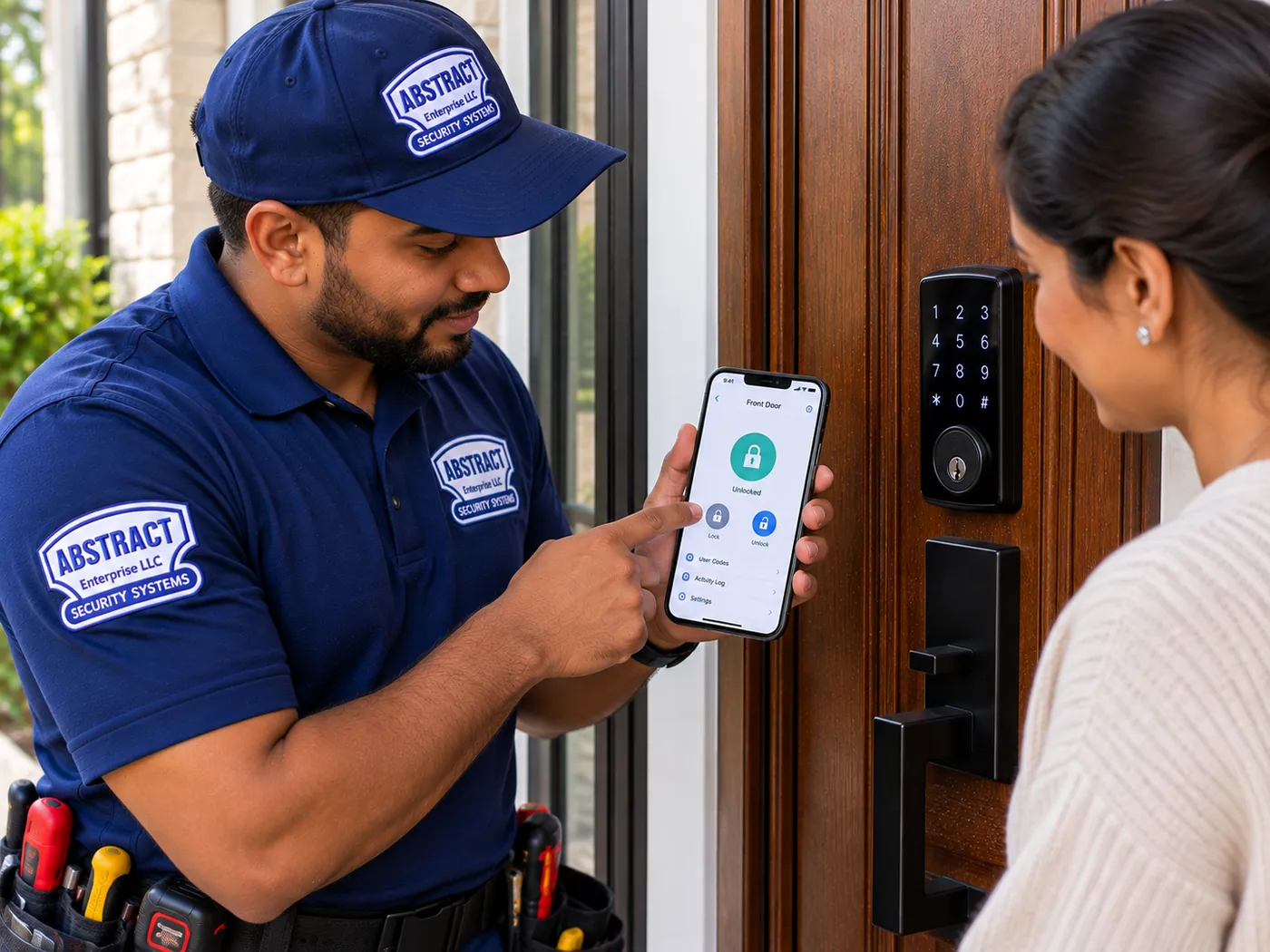
Everyone tries their own way in while we watch, staff schedules go in, two phones get admin rights, and you're shown each lock's Shabbat routine and left a printed sheet.
Six places that show how long people have been building, guarding and opening doors in Rockland, from colonial stone houses to the bridge that set off the suburban boom.
Built in 1700 of stone and brick, described by the Hudson River Valley Heritage Area as the oldest surviving building in Rockland County, and used by George Washington as a temporary headquarters. Orangetown's oldest doors are a long way from a smart deadbolt.
The painter was born in Nyack in 1882 and grew up in this house at 82 North Broadway, now a museum and study centre. The river village around it has the county's densest stock of older frame houses and porches.
The twin spans between South Nyack and Tarrytown opened in 2017 and 2018, replacing the 1955 Tappan Zee Bridge that started Rockland's suburban growth. Commuters who cross it twice a day are why so many Clarkstown and Orangetown houses sit empty all day.
By 1883, with 41 brickyards employing an estimated 2,400 men, Haverstraw had become the world's largest producer of bricks, the museum records. The village's brick rows and storefronts are some of the county's heaviest doors.
Built in 1826 at the Stony Point Battlefield State Historic Site, it is the oldest lighthouse on the Hudson River and operated for ninety-nine years. The northern towns around it are mostly post-war houses on bigger lots.
The mile-long pier, nicknamed "Last Stop USA", was the last American ground that more than a million service members of the Second World War stood on before shipping out from Camp Shanks. Piermont's small village houses climb the hill behind it.
We also serve Monsey, Spring Valley, Airmont, Wesley Hills, New Hempstead, Pomona, Montebello, Chestnut Ridge, Suffern, Hillburn, Sloatsburg, Viola, New Square, Kaser, Nanuet, New City, West Nyack, Valley Cottage, Congers, Bardonia, Pearl River, Orangeburg, Blauvelt, Tappan, Sparkill, Palisades, Grand View-on-Hudson, South Nyack, Upper Nyack, Haverstraw, West Haverstraw, Garnerville, Thiells, Stony Point and Tomkins Cove.

Some of our prices are published; the rest are set after we have seen the doors, and we tell you which is which. Entrance hardware for shuls, schools, offices and shops (keypads, fob readers, electric strikes) starts from a published Brooklyn base, to which Rockland's 1.30 area multiplier applies; the table shows the results. House doors have no published AESS price, because each house is different: a single push-button deadbolt on a sound door takes little time, whereas a Shabbat door, a weekday smart lock on the garage, a slider with bar and anti-lift blocks, a split-level frame that has to be squared and twenty people to enrol takes most of a day. For those we walk the house for free and give a flat written price, and that price doesn't change.
| Item | Rockland price | Scope and source |
|---|---|---|
| Smart lock, mechanical keypad or slider lock on a house or apartment door | Quoted flat at free walkthrough | We have no published figure for house doors; the price follows a look at each door and at how the family uses it on weekdays and on Shabbat |
| Single-door keypad or fob reader with electric strike | $1,950–$3,250 installed | One controlled entrance for a shul, school, office or shop; the $1,500–$2,500 base figure × 1.30 |
| New electric strike on an entrance door | $325–$585 | Fitted during entrance work; published $250–$450 × 1.30 |
| Failed electric strike repair | $384–$631 | For a strike that has stopped releasing; our $295–$485 base figure × 1.30, with half-dollars rounded up |
| Setup-only visit (codes, schedules, app, bridge; no hardware change) | $235 first hour, then 30-minute blocks | Our published Rockland setup-only rate |
| Service and callback rate | $195/hr, 3-hour minimum ($585) | After-install service calls; not charged on the initial installation |
About the national figures you'll see online. Cost guides quote a single lock on a single door; Fixr, for one, gave $250–$400 with a $300 average in January 2025. Treat that as a national benchmark from a third party, not as our price. It leaves out exactly what makes Rockland jobs longer: a second, mechanical door for Shabbat, a deck slider, a settled split-level frame and a list of twenty people to enrol.
Rockland orders tend to fall into one of three shapes. The two entrance options have published county prices. The house plan doesn't, because the number of doors, the size of the household and its Shabbat needs vary from house to house, so it's priced once we've seen them.
Quoted flat at walkthrough
A mechanical push-button or keyed deadbolt on the Shabbat door, electronic smart locks on the weekday doors, a keyless lock and bar on the slider. Strikes squared and reinforced, exit tested in the dark, every family member and staff member enrolled, admin on two phones, Shabbat routine shown for each lock.
$325–$585
Supplied and fitted at the county rate when a shul, school, office or shop entrance is being made keyless. If an existing strike has simply stopped working, it is repaired for $384–$631 instead.
$1,950–$3,250
One entrance made keyless at the Rockland rate: keypad or fob reader on the frame, electric strike in it, push-to-exit inside, weekday schedules set and a Shabbat arrangement agreed. We itemise the quote if it is going into grant paperwork.
Already have the lock? We'll install it for a flat labour-only price agreed after the walkthrough. Before you open the box we check it against the door (thickness, bores, backset, which way it swings) and against the household (enough code and fingerprint slots, and a straightforward way to switch it off or disable features for Shabbat if you need that). Any model that needs a key or a code to get out, we decline. Your own lock is covered by its maker's warranty, not ours, and if it doesn't suit the door you'll hear that before any drilling.

Photograph the front door, the garage door, any side door and the slider from outside, and tell us the headcount. We'll reply with what the walkthrough needs to look at.
Rockland's five towns share a county line and a lot of the same hardware, but not the same houses or the same weeks. Here is how our work differs from one to the next.
The county's largest town by population and home to most of its Orthodox and Hasidic communities. Our Ramapo work is dominated by split door plans — a mechanical Shabbat door, electronic weekday doors — for large households, plus shul, yeshiva and community-building entrances and the shops along Route 59. Spring Valley adds older multi-family buildings, where the county's own code inspectors now enforce the rules, and Suffern and Sloatsburg add a village main street and older houses near the Ramapo River.
Many Ramapo houses have been extended more than once, so the original front door may now be an inside door and the real entrance is on the addition. We walk the whole house and ask which entrance guests use on Shabbat and which the family uses with strollers during the week. The extension's lower-level door, often outward-swinging onto a small step, usually needs its hinges secured and its keypad moved out of the swing.
Raised ranches and split-levels from the 1960s and 1970s, newer subdivisions, the county seat in New City and the retail of Route 59 in Nanuet and West Nyack. Typical calls are commuter households who want the garage door keyless and a bedtime check of every door, and shops and offices near the Shops at Nanuet and the Palisades Center that want staff codes.
Capes and colonials in Pearl River and Tappan, the office parks along Route 303, and the river villages of Nyack and Piermont with older frame and brick houses. Pearl River and Tappan jobs are usually front and kitchen doors on houses from the 1920s to the 1960s; Nyack and Piermont are where we meet mortise locks and heavy doors that need more care.
Brick rows and older multi-family buildings in the village by the river, garden apartments, and post-war houses inland. Small landlords ask about entrance keypads and separate codes for each unit; homeowners ask about the same front-door and slider work as elsewhere in the county.
The county's northern town, mostly houses on bigger, wooded lots, some a long way from the router. Detached garages and sheds, long driveways and doors at the far end of the house make signal the main technical question; outdoor-rated keypads and a bridge near the door are the usual answers.

The hardware takes a few hours. Deciding which door does what, on which day, is what makes it work for years. This is the plan we draw up with observant families before we leave. It is a description of hardware, not a ruling: your rabbi decides what your household may use.
| Door | Weekdays | Shabbat and Yom Tov |
|---|---|---|
| Front door | Mechanical push-button code or key, plus a doorbell camera if you want one | The same mechanical code or key; nothing electronic on the door to switch off |
| Garage-to-house door | Electronic smart lock: codes, fingerprints, app, auto-lock, schedules for staff | Not used, or locked from inside before Shabbat; inside thumb-turn always works for exit |
| Side or kitchen door | Electronic smart lock or keyed deadbolt, depending on traffic | Locked from inside before Shabbat unless it is the family's Shabbat door |
| Deck slider | Keyless hook-bolt lock, security bar, anti-lift blocks | Mechanical, so it works the same; bar in place when not in use |
| Accessory apartment entrance | Its own lock and codes for the occupant | Whatever the occupant chooses for their own door |
Two habits keep it working. First, test the mechanical code and the key on the Shabbat door every Friday morning, not at candle-lighting, so a stiff cylinder or a forgotten code is found while there's time to deal with it. Second, if any electronic lock on a door you might use on Shabbat needs to be powered down, make it part of the same pre-Shabbat routine as the timers and the urn. If something stops working after we leave, our setup-only visit in Rockland is $235 for the first hour.

Much of Clarkstown and Orangetown empties out on a weekday morning. Parents drive over the Mario Cuomo Bridge to Westchester, down the Palisades Parkway to the city or across the state line into Bergen County, and the house is left to the school bus, the dog walker, the cleaner and the delivery drivers. Clarkstown police's warning after the 2013 daytime burglaries in Nanuet and New City was aimed at exactly these houses: thieves were choosing homes that were empty during working hours. A smart lock does three useful jobs in a house like that.
The garage door is usually the one to convert: the family uses it with cars and car seats, it's out of sight of the street, and in a raised ranch or split-level it opens into the lower level. Add a doorbell camera at the front for deliveries and visitors, and an alarm contact on the slider.
One caution: alerts for every opening soon get ignored, so we set them for what matters — the first arrival after school, any opening in a quiet period, a door left unlocked. And agree with older children what the parents will see in the log before the lock goes on.

Rockland's code enforcement has changed since 2022. This is the checklist we go through before fitting any lock that separates one occupant from another in a house.
If you're unsure whether a space is permitted, ask the building department first. We'd rather wait a week than fit hardware that has to come off after an inspection.

Most of the community buildings we work on in Rockland are planning door security with a grant application or award in hand. This is what we go through with the security committee.
Many of these buildings also need cameras, and some need panic buttons. Our school security camera installation in Rockland team works alongside the door work, and the Rockland security camera installers cover the entrances and parking areas.

A lock is often the first job on a longer list. These Rockland services are the ones most often booked alongside it.
When a congregation, school or office needs schedules and credentials across several doors at once.
See who is on the step before anyone opens the door.
Audio and video intercoms for two-family entrances and small buildings.
Dead stations, failed releases and wiring faults on existing intercoms.
For the building entrance whose release clicks and does nothing, or whose buzzer has gone silent.
Door and window contacts for sliders and the doors without smart locks.
Entrances, hallways and parking for garden apartments and multi-family buildings.
Hubs and routines that tie locks, lights and sensors together.
Access points and wiring so a lock a level away from the router stays connected.
Door wiring, data, cameras and sound, handled by one licensed crew.
How a Rockland visit runs, step by step — our standing routine, not an account of any particular customer's house
We start by asking which door the family uses on a Tuesday and which on a Shabbat afternoon. In Ramapo the answer is often two different doors, and that single fact decides more about the job than any lock's feature list.
Then we look at the frame before the door. On a split-level or raised ranch we hold the door shut and look at the gap along the latch side, because a house built on two levels settles unevenly and the strike is often a sixteenth of an inch off. We look at the right-hand doorpost too, note where the mezuzah is, and plan the screws and cables around it.
Then the slider. We walk upstairs to the kitchen, lift the slider panel gently to see whether it rides up in its track, and try the thumb latch. Most of the time a bar and a pair of anti-lift blocks are needed whatever lock goes on.
Last, the list of people. We count them with the parents, children by name, staff by day, and only then choose models, because a lock that runs out of code slots in a house of eleven is the wrong lock however good its reviews are.
Yes. We cover all five Rockland towns — Ramapo, Clarkstown, Orangetown, Haverstraw and Stony Point — including every village and hamlet in them. Appointments are booked in 2-hour arrival windows between 8 AM and 8 PM, and the direct line for Rockland is (845) 640-3835.
Yes. We book Friday appointments early enough to finish, test and hand over well before candle-lighting, so the family isn't learning a new lock in the last hour before Shabbat. Sunday appointments are available too, and if you'd rather nobody works at the house or shul on Shabbat or Yom Tov, tell us and we'll book around it.
Yes. Mechanical push-button deadbolts, with a combination that works without batteries and a key override, are one of the most common locks we fit in Rockland, usually on the door a family uses on Shabbat. We fit them the same way as a smart lock: strike squared and reinforced, combination set with you, and the inside tested by hand.
Often. If the smart lock and your existing locks use the same keyway family, the other cylinders can be re-keyed to the smart lock's key so one key opens every door. If they don't, the alternative is to replace the other cylinders with ones that match. We check the keyways at the walkthrough and tell you which applies.
Usually under an hour for a single deadbolt on a pre-bored door, from removing the old lock to a working new one. The door can still be closed and latched while we work. Frame repair, filling old holes or an electric strike takes longer, and we tell you in advance which doors will be affected and for how long.
Yes, with the school's agreement on timing. We plan noisy work such as drilling frames and running cable for after hours or between sessions, keep a working exit on every door we touch, and leave each door secured at the end of the day. Our technicians check in at the office and follow the school's visitor procedure.
On most smart locks, yes. Many models let you lower the volume or switch sounds off in the app or from the keypad, and some keep a single quiet confirmation tone. We set the volume with you at handover and show you how to change it. Mechanical push-button locks make no electronic sounds at all.
It can, if your purchase contract doesn't include it with the house. We remove it, fit a standard deadbolt in its place so the house you are leaving stays secure, and install the smart lock on the new door, provided the new door's bores and thickness suit it. Delete all codes and remove the lock from your app account before you hand over the old house.

You're on the Rockland County page. Its parent is the Hudson Valley smart lock installation hub, which deals with second homes, winter cold, patchy rural internet and licensing in all six valley counties. Westchester also has a page of its own; Orange, Putnam, Dutchess and Ulster are handled through the hub until theirs are published. The city and Long Island are covered by regional pages plus pages for individual boroughs and counties.
Regional page: Hudson Valley smart lock installers. County pages: keyless locks in Westchester County, Ulster County old-door locks, and Rockland, which you are reading.
Citywide: NYC smart lock installation. Boroughs: Manhattan apartment and suite locks, Brooklyn brownstone and rowhouse locks, Queens house and co-op locks, Bronx building and house locks, Staten Island home locks.
Regional: smart locks across Long Island. Counties: Nassau County smart locks, Suffolk County smart lock installation.
For our full range of security and low-voltage work, start at the Abstract Enterprises Security Systems home page, and to see who runs the company and its licensing, read our about page.

Phone (845) 640-3835 for a blank keypad, a lock that has dropped off the app, a split-level door whose bolt has stopped reaching the strike, or a shul entrance that won't release. You'll get the next free 2-hour arrival window, and battery, pairing and alignment problems are normally put right within an hour or two of the technician arriving. Until then, use the key or the mechanical code; neither relies on a battery.

Our Rockland line is (845) 640-3835; to send photos of your doors, use WhatsApp (718) 679-0359 at wa.me. Office: Abstract Enterprises Security Systems, 460 E Fordham Rd, Bronx, NY 10458.
NYS Low-Voltage Licence #12000287431 · 100% Licensed & Insured · Same-Day Estimates · Rated 4.7★ from 201 Google Reviews
Locks you supply carry their manufacturer's warranty. Full terms — including 50% deposit, one-year parts-only warranty on AESS-supplied products, and the late-fee schedule — are set out in the service agreement. See our warranty page.
Nothing on this page is legal advice or a religious ruling; it describes hardware and the published rules we work within in Rockland County. Page reviewed and updated October 17, 2026. Changelog: first publication of the Rockland County smart lock installation page.