/> /> >>>> >>
Updated November 2026 · Licensed NYS #12000287431 · Serving all of Rockland County
Apartment Building CCTV for Co-ops · Condos · Garden Complexes · Multi-Family · Mixed-Use — Lobby · Hallway · Stairwell · Garage · Entry — IP/PoE · NVR · No Monthly Fees · Licensed & Insured
Professional security camera installation for Rockland County apartment buildings — lobbies, hallways, stairwells, mailrooms, package rooms, laundry rooms, parking garages, and entrances — for co-ops, condos, garden complexes, and multi-family buildings across all six counties: Westchester, Rockland, Orange, Putnam, Dutchess, and Ulster — Nyack, New City, Nanuet, Spring Valley, Suffern, and Haverstraw. 4K IP cameras at entry points, local NVR recording with 30-day retention, remote viewing for property managers and boards, and placement designed around New York privacy law. Abstract Enterprises is a licensed and insured CCTV company — with no monthly fees on local NVR.
The core driver is safety and liability. Package theft from lobbies and vestibules, unauthorized entry through a propped or tailgated door, vandalism and graffiti in stairwells, vehicle break-ins in the parking garage, mailroom and laundry-room theft, disputes between residents, and slip-and-fall claims in common areas — a building camera system turns all of those into reviewable footage. Apartments are far more likely to be burglarized than single-family homes, and Rockland communities like Spring Valley, Haverstraw, and Monsey see real multi-family property crime. For a co-op or condo board, footage is also liability protection: it answers what happened in the lobby, the stairwell, or the garage before it becomes a lawsuit.
New York adds its own rules. A building camera system is legal in common areas — lobbies, hallways, stairwells, mailrooms, laundry rooms, parking garages, and entrances — but never inside a unit, and never in a bathroom or locker room, where hidden surveillance is a felony under Penal Law §250.45. Hallway cameras must be aimed so they don’t capture into an apartment when a door opens. Audio is almost always disabled to stay clear of eavesdropping law. And in a co-op or condo, common-area cameras typically require board or HOA approval and a licensed, insured contractor carrying a certificate of insurance that names the building. Placed and configured correctly, cameras protect residents and keep the board on the right side of the law.
From an eight-camera garden complex to a 32-camera high-rise condo, we design coverage around how your building actually flows — entry, lobby, hallways, stairwells, mailroom, laundry, back doors, and the garage — then install it clean and owned outright on local NVR.
4K cameras at the front door and vestibule for clear face capture of everyone who enters, tied to the buzzer or video intercom — essential where a Rockland building has no on-site doorman.
Package theft is the #1 complaint in Rockland County buildings too. A camera on the mailroom and package shelf captures who took what, with 30-day retention so a resident can report it days later.
Discreet domes on each floor landing and in stairwells — aimed at corridor traffic, never into a unit when a door opens — to deter loitering, dumping, and unauthorized access in Spring Valley, Nanuet, and Haverstraw corridors.
Vandal-resistant cameras in elevator cabs and at each landing — the highest-incident zones in most mid-rise and high-rise buildings — wired cleanly through the shaft with the managing agent’s coordination.
Bullet and PTZ cameras across the garage, surface lot, driveway, and courtyard — the areas that generate the most vehicle break-ins and after-dark incidents on Rockland County properties — with license plate capture at the entrance.
Basement amenity and storage rooms — laundry, bike storage, package lockers, and tenant storage cages — where theft and unauthorized access cluster. IR cameras for low-light basements.
There’s no single best camera for a building — the right system mixes types by what each common area needs, from a discreet lobby dome to a vandal-proof elevator camera.
Sleek, vandal-resistant, discreet aiming — lobbies, hallways, elevator landings, and community rooms.
Visible, directional deterrent — building entrances, courtyards, driveways, and perimeter walls.
Pan-tilt-zoom — one unit covers a full parking garage, large courtyard, or surface lot.
Flexible aiming, low night glare — entrances, stairwell landings, and covered walkways.
One ceiling unit covers an entire lobby or laundry room — fewer cameras, no blind corners.
Reads plates at the garage gate and driveway so management logs every vehicle entering resident parking.
Camera-equipped door station at the entrance — residents see and buzz in visitors, and every entry is recorded.
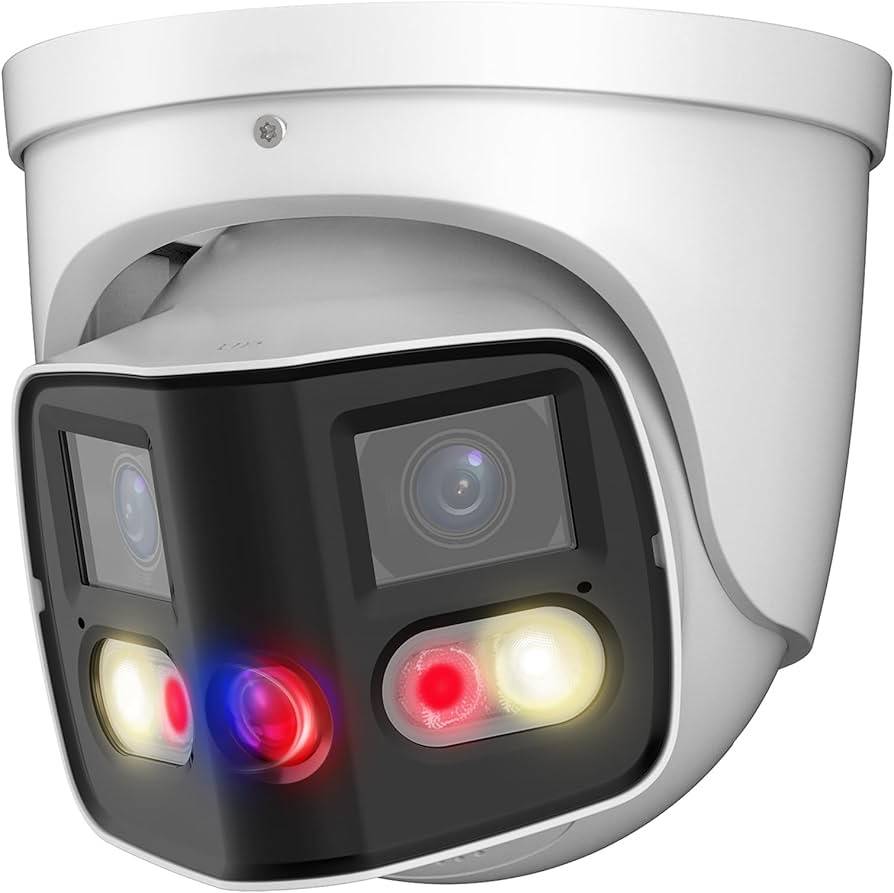
One housing, multiple lenses — covers a long corridor and its stairwell landing on a single channel.
On recording, the choice is local NVR vs. cloud. A local NVR in a locked management office means the building owns the recorder and footage with no per-camera monthly fee — the right call for a single Rockland building. Cloud platforms (ButterflyMX, Verkada, Eagle Eye) carry a monthly fee but simplify management across a whole portfolio. We recommend based on your building and budget, not our margin, and size storage for a real 30–60 day retention.
A network camera sending video over data cabling — the professional commercial standard, higher resolution and remote access than analog.
One Cat6 cable carries power and video to each camera — the backbone of a clean commercial install.
The recorder storing footage on local drives. NVR is what modern IP systems use.
Detail. 4MP baseline for general areas; 8MP/4K at entrances, the lobby, and the mailroom — anywhere you must ID a face.
Days of footage kept before overwrite. Buildings should run 30–60 days so a resident can report a package theft a week later and the footage still exists.
On-camera intelligence — person/vehicle detection, loitering, line-crossing — that cuts false alerts and lets a super search hours of lobby footage in seconds.
Video Management Software tying many cameras (and access control) into one searchable interface on larger sites.
Lobbies, halls, elevators, mailrooms, laundry, and garages — where a building may legally record. Cameras never go inside a unit, bathroom, or locker room.
For most private Rockland County apartment buildings — co-ops, condos, and garden complexes — Hikvision, Dahua, Lorex, and Uniview deliver outstanding price-to-performance for lobby, hallway, and garage coverage. For buildings with any federal funding (HUD, Section 8 project-based, or public-housing dollars), NDAA Section 889 can bar those brands, so we steer to a compliant line — Axis, Hanwha Vision (Wisenet), or Avigilon — from the start. For entry, we integrate camera-equipped video intercom (including ButterflyMX where a board prefers a cloud platform). We also do bring-your-own-equipment installs, expansions, and analog-to-IP upgrades of an existing building system.
Live and recorded video on iOS/Android for the super, managing agent, and board — from anywhere.
On-device detection and loitering alerts at entrances and the garage that ignore wind and rain.
Dedicated mailroom and package-shelf cameras with 30-day retention — the fix for the #1 building complaint.
Plate capture at the resident-parking gate and driveway paired with a 4K overview camera.
One login across every building in a portfolio for a managing agent or management company.
Cameras tied to the video intercom, fob entry, and door schedules so every buzz-in is on video.
Own the recorder and footage outright — no per-camera cloud bill.
Right-sized storage so footage is there when a resident, insurer, or court asks — not overwritten.
We walk the building with the manager or board — entrances, lobby, hallways, stairwells, mailroom, laundry, garage, and blind spots — and design common-area coverage that stays off every unit door.
A written quote for the board or owner: camera count, types, placement map, NVR and retention in days, cabling scope, one number. We provide a certificate of insurance naming the building.
PoE cabling routed through halls, risers, and exterior runs to the garage and perimeter, fire-stopped and code-compliant, by a licensed NYS low-voltage contractor — scheduled around residents with minimal disruption.
Remote viewing set up for the super and managing agent, every camera tested, a full walkthrough, and ongoing local support — the crew that installed it answers the callback.
We install building CCTV across every Rockland community and every kind of residential stock — from the dense multi-family buildings of Spring Valley, Haverstraw, and Monsey to condo towers in New City, garden apartment complexes along the Route 59 corridor in Nanuet, historic mixed-use in Nyack and Piermont, and the co-op and gated communities of Suffern and Congers.
Rockland’s densest apartment stock — lobby, hall, stairwell, and parking coverage on a high-channel NVR with manager access, often retrofitting aging 1980s–90s systems.
Mid- and high-rise condos — lobby, garage, and amenity coverage with board documentation and managing-agent coordination.
Board- and HOA-governed communities — we handle approval documentation, COIs naming the association, and discreet placement that respects the governing documents.
Nyack, Piermont, Haverstraw, and Grand View-on-Hudson — discreet cameras and hidden cabling that respect the architecture of older village buildings.
Low-rise multi-building complexes across Nanuet, Pearl River, and Valley Cottage — courtyard, walkway, surface parking, and per-entrance coverage tied together on one system.
Residential over retail along Route 59 and Main Street Nyack — separate the residential lobby and halls from the commercial ground floor, each recorded correctly.
Which cameras go where depends on the building. We tailor common-area coverage to the property type and who manages it.
Owner- or management-run rentals — lobby, hallway, mailroom, and entrance coverage that reduces landlord liability and package-theft complaints.
Board-governed cooperatives — approval documentation, COI naming the corporation, and placement that respects the proprietary lease and unit privacy.
Condo associations — common-element coverage of lobbies, elevators, and garages coordinated with the managing agent and board.
Apartments over retail — separate residential and commercial entrances, each recorded and access-controlled correctly.
Federally funded buildings — NDAA-compliant hardware (Axis, Hanwha, Avigilon) where Section 889 applies, so funding stays intact.
High-end condos and rentals — architectural-grade discreet cameras, video intercom, and garage LPR on one platform residents expect.
A building camera system only works if the people running the building can use it. We set up access and workflow for every role — owner, board, managing agent, and super — so footage is there and usable when something happens.
Reduce liability, cut package-theft and parking complaints, and protect the asset. One login to check any Rockland property from your phone, backed by a crew based on Fordham Road in the Bronx, no monthly fee on local NVR.
We bring board-ready documentation, a COI naming the association, and a camera map that respects unit privacy — so approval is a formality, not a fight.
Manage every lobby, stairwell, and garage across a Rockland portfolio from one dashboard. We standardize the system so onboarding a new building is fast.
Simple app access to pull a clip in seconds, a clear camera map on the office wall, and a local crew that answers when a camera goes down — important where a building has no full-time doorman.
For most Rockland County buildings, a well-placed local NVR system with 30–60 day retention is enough. But when a board wants more, modern IP cameras add AI on the camera itself — and, where the budget justifies it, live remote monitoring — without adding a mandatory monthly contract to the whole building.
On-camera AI flags someone lingering in the lobby, vestibule, or stairwell at 3am — and ignores wind, rain, and passing headlights so alerts mean something.
The mailroom camera can flag when a package is dropped and when it’s taken — the searchable event trail that ends “who took my package” disputes.
At the garage or lot entrance, LPR logs every plate entering resident parking — the fastest way to resolve a hit-and-run or an unauthorized vehicle.
Instead of scrubbing hours of lobby video, a super searches by person, vehicle, or time and pulls the clip in seconds to share with police.
For higher-risk buildings, live agents watch entrances after dark and can talk down a trespasser through a speaker — added only where it earns its cost.
A management company sees every property’s lobby, stairwell, and garage from one cloud dashboard — add a building without rebuilding the workflow.
Most installers stop at “cameras up, here’s the app.” The questions boards and property managers actually ask come later — when a package goes missing, when a car is hit in the lot, when police need a clip, when an insurer asks how far back the footage goes. We set the building up to answer all of them.
The super exports a clip in a couple of taps and shares it with police or the managing agent — no calling the installer, no waiting. We show your staff exactly how on install day.
We help you set a simple, consistent policy for who can request footage and how — the transparency that prevents the “management won’t share the video” complaint that fills NYC building forums.
We size the NVR for 30–60 days so footage still exists when an incident is reported late or an insurer asks — the retention window most building policies expect.
A mailroom camera and garage coverage plus a searchable event trail turn a theft or hit-and-run report into a named clip in minutes — the biggest quality-of-life win for residents and management.
Most “the cameras are useless” complaints trace back to a handful of avoidable install errors. Here’s what a licensed job gets right that a low-bid crew or DIY kit misses.
A lobby camera bolted to the ceiling captures the top of heads, not faces. We mount entrance cameras at face height for clear ID of everyone who enters.
Cameras aimed into a glass front door wash out in daylight and headlights at night. We angle and choose WDR cameras so the entrance stays readable around the clock.
Consumer Wi-Fi cameras choke across a spread-out Rockland complex where the router can’t reach a detached building or the far end of the lot. We wire core coverage on PoE for continuous, reliable recording.
A 7-day NVR loses the footage before a resident reports the incident. We size storage for a real 30–60 day window.
The dark corner of the garage, the back entrance, and the stairwell are where incidents cluster and where cheap jobs skip coverage. We map every entry and the whole lot, not just the front lobby.
A recorder with zero spare channels means the next camera is a full replacement. We leave spare capacity and cable paths for expansion.
Straight answers to the questions boards, owners, and managing agents raise on Reddit, in our inbox, and on every building walkthrough.
All-in, roughly $500–$1,500 per camera installed. A small garden complex covering entries, lobby, and mailroom (8–12 cameras) commonly lands $6,000–$14,000; a full mid-rise or high-rise with per-floor hallways, stairwells, and garage (16–32 cameras) typically runs $12,000–$28,000+. Rockland labor rates run about 25% above the city, and cabling drives the spread, so we quote a fixed price only after a walkthrough.
In an apartment building the cabling is the work. Labor runs roughly $75–$150/hour in Rockland, and running Cat6 from a lobby NVR up through risers to every floor and out to a detached garage or surface lot — through older Spring Valley and Haverstraw buildings with plaster walls and fire-rated penetrations — is far more labor than the cameras themselves.
Be wary of anyone who quotes without walking the building, uses unnamed off-brand cameras, or can’t provide a certificate of insurance naming the association. The cheapest quote almost always changes mid-job. Ask for a NYS license number, a written fixed-price scope, and references from other Rockland County buildings.
Yes. In New York, installing security systems requires the NYS Department of State Security & Fire Alarm Installer license, and most co-op/condo and HOA rules require licensed, insured contractors with a COI naming the association. Unlicensed installers can’t legally take payment for this work in New York. We’re NYS #12000287431, insured, and provide COIs for the managing agent.
Yes. Rockland County building owners may record common areas — lobbies, hallways, stairwells, mailrooms, laundry rooms, and garages — because residents have no reasonable expectation of privacy there. Cameras may never go inside a unit, and hallway cameras must be aimed so they don’t see into an apartment when the door opens.
A tenant may generally put a camera inside their unit or a peephole-style camera on their own door, but a camera aimed down a shared hallway or at a neighbor’s door can violate other residents’ privacy and usually needs landlord or board approval. Building-wide common-area coverage is the landlord’s or board’s job — that’s what we install.
Depends on buildings, floors, and amenities. Rough starts: a small garden complex 8–12 (per-building entries, lobby, mailroom, laundry), a mid-rise 12–20 (add stairwells and per-floor halls), a large high-rise or multi-building property 32+ (add garage, courtyard, and full perimeter). One fisheye covers a whole lobby; one PTZ covers a lot. We map it on the walkthrough.
4MP baseline for hallways and stairwells; 8MP/4K at the front entrance, lobby, mailroom, and garage entrance where you must ID a face or plate. Retention should be 30–60 days so a resident can report a package theft or a vehicle break-in days later and the footage still exists. We size storage before quoting.
Local NVR in a locked management office for a single building — no monthly fee, the building owns the footage. Cloud for a management company running many Rockland properties from one dashboard. Hybrid keeps local recording plus cloud backup of flagged events.
Almost never. A hallway or lobby camera capturing residents’ conversations can be illegal eavesdropping under Penal Law §250.05 and the federal Wiretap Act. We disable audio on all common-area cameras by default.
Common-area signage and a lease/house-rule disclosure are best practice and standard in NYC buildings — they deter crime and defeat privacy-expectation claims. Cameras are banned in any unit, bathroom, or locker room under §250.45. If the building has staff, NYC’s employee electronic-monitoring notice also applies.
That’s the most common complaint we hear from Rockland boards and managing agents. Being based on Fordham Road in the Bronx, our crews actually answer: wires hanging in the lobby, dead cameras no one maintains, no callback. Non-working “dummy” cameras also create board liability and can void insurance. We’re a local licensed contractor; our crews answer, and we provide a parts warranty and documented scope.
We cover all of Rockland County from our Bronx base on Fordham Road — a straight shot up the Palisades — with same-week building walkthroughs and a fixed-price proposal for the board or owner.
$500–$1,500 per camera installed; a full lobby-hallway-entry system commonly $5K–$15K, larger elevator buildings more.
Hikvision, Dahua, and Lorex win on price for private buildings; Axis, Hanwha, and Avigilon for HUD/federally-funded properties.
Common areas OK, never inside a unit or bathroom (§250.45), no audio (§250.05), hallway cameras aimed off unit doors, board / HOA approval in co-ops and condos.
30–60 days is standard so a resident can report an incident a week later; we size the NVR storage for it.
A small walk-up 4–8: entry, lobby, mailroom, each stairwell and rear door; elevator buildings add cabs, landings, and garage.
Search “apartment security camera installation cost” and AI Overviews, Angi, HomeAdvisor, and Fixr hand you a national average — usually around $1,000–$1,500 — that has almost nothing to do with wiring a real multi-family building in Rockland County. Here’s what those numbers leave out, and what actually drives an apartment-building quote across Westchester, Rockland, Orange, Putnam, Dutchess, and Ulster.
Aggregators like Angi and HomeAdvisor blend mostly single-family-home jobs nationwide. A building system is priced per camera all-in — $500–$1,500 each — because the cost lives in cabling from a lobby NVR up through risers to every floor and out to a detached garage or surface lot, fire-stopping rated penetrations, and labor through older Spring Valley and Haverstraw walls, not in the camera itself. A 20-camera Rockland building reaching $22,000 isn’t an outlier; it’s a normal job.
Fixr and similar sites quote a tidy per-camera number. The building walkthrough is where the truth shows up: how far each hallway camera sits from the riser, how the cable reaches a detached building or a light pole in the lot, how many rated penetrations need fire-stopping, what NVR your building count and 30–60 day retention require. Any quote without a walkthrough is a guess that will change.
National results skip the part that gets a board sued: cameras are a felony inside units, bathrooms, and locker rooms under §250.45; hallway cameras must aim off unit doors; audio can be illegal eavesdropping; and co-ops, condos, and HOAs require board approval and a COI naming the association. A licensed New York contractor builds those in.
Generic “best apartment camera” roundups push whatever brand pays for placement. For a building with HUD, Section 8 project-based, or public-housing funding, NDAA Section 889 can bar Hikvision and Dahua — pick wrong and you can lose funding or face a full rip-and-replace. Private co-ops and condos have no such limit.
Cloud platforms market simplicity, and for a management company running many Rockland properties they’re great. But the per-camera monthly fee adds up fast on a 20-camera building, and for a single building a local NVR in a locked office is usually cheaper over any multi-year horizon — no recurring bill, the building owns the footage.
Coverage is about placement, not count. One well-aimed lobby fisheye or a single PTZ over the lot can replace several poorly placed fixed cameras, and the entrances, mailroom, and garage matter more than a tenth hallway angle. A thoughtful 14-camera building system beats a sloppy 28-camera one. We design to your entries, amenities, and blind spots — not a quota.
A building camera system here is worth it — for package theft, vehicle break-ins, unauthorized entry, liability, insurance, and resident reassurance — but only when designed for your building and configured for New York law. The right move isn’t the cheapest per-camera quote online; it’s a licensed contractor, a real walkthrough, board-ready documentation, and a fixed price you can hold them to.
Monitoring contract, multi-year monthly fee, proprietary hardware. We install building IP/PoE the co-op or owner owns outright — no contract, no monthly fee on local NVR.
Consumer DIY, monthly for features, no real cabling and no building-law compliance. We do licensed, fire-stopped riser cabling with NYC common-area placement rules built in.
Great intercom, but a single-product install. We build the whole building system — cameras, NVR, intercom, and garage — and answer the callbacks.
Free walkthrough, fixed price, board-ready COI, common-area placement that respects unit privacy, local NVR the building owns — no monthly fee.
A hallway or lobby camera recording residents’ conversations can violate Penal Law §250.05 and the federal Wiretap Act. We disable audio on all common-area cameras.
Cameras inside any unit, bathroom, or locker room are a felony under §250.45. Hallway cameras are aimed so they never capture into an apartment when the door opens. Common areas only.
Common-area signage and lease/house-rule disclosure are standard NYC practice — they deter crime and defeat privacy-expectation claims. If the building has staff, the employee electronic-monitoring notice also applies.
Common-area camera work in a co-op or condo typically requires board approval and a licensed, insured contractor carrying a COI that names the corporation. We provide the documentation the managing agent needs before work starts.
On landmarked NYC buildings and historic districts, exterior camera work may require Landmarks Preservation Commission (LPC) review. We use discreet, color-matched mounting and provide documentation.
We right-size retention (30–60 days) so footage exists when a resident reports late. We also keep cameras genuinely working — non-functional “dummy” cameras create board liability and can void the building’s insurance.
General information, not legal advice — we design to keep you compliant and recommend counsel for your situation.
Every quote is fixed-price after a free building walkthrough — here are honest NYC ranges so a board or owner can budget first. All-in: hardware, riser cabling, labor, configuration. No monthly fees on local NVR.
4–8 cameras
$5,000–$12,000
Entrance, lobby, mailroom, stairwells, rear door. Local NVR, 30-day retention, app setup for the super.
12–20 cameras
$12,000–$25,000
Lobby, elevators and landings, per-floor hallways, mailroom, laundry, entrances. NVR, 30–60 day retention.
24–40 cameras
$25,000–$45,000+
Full common-area coverage plus parking garage, courtyard, and LPR at the gate. Video intercom integration.
50+ cameras
Custom
Unified cloud or VMS across every building for a management company, intercom + access integration, central dashboard.
The #1 NYC building complaint. We put a 4K camera on the mailroom and package shelf with 30-day retention so management can see exactly who took what.
Wrong resolution or placement. We put 8MP/4K at the entrance and lobby at eye level and aim for clear face capture of everyone who enters.
We cover the entrance and vestibule and integrate the video intercom so every buzz-in is recorded and unauthorized entries are caught on camera.
We take over orphaned building systems, fix the cabling, and become the local crew that answers — because dead “dummy” cameras are a board liability.
We design common-area-only placement that never sees into a unit, disable audio, add signage, and document the camera map for the board’s records.
Multi-building cloud or unified VMS so a managing agent sees every lobby, elevator, and garage across the portfolio from one phone.
“Our Nyack co-op had constant package theft. They put a 4K camera on the mailroom and lobby and a fisheye over the entry — the thefts stopped, and the board finally had footage when a resident reported one.”
— Rachel B., Co-op Board President, Nyack
“22 cameras across our New City condo — lobby, every hallway, both stairwells, and the garage with plate capture at the entrance. Clean riser runs, fixed price, done over three days around residents. No monthly fee, it’s on our own NVR.”
— Mike D., Building Owner, New City
“We manage six properties across Rockland and needed one platform. Cameras in every lobby, stairwell, and garage with resident-friendly placement that stays off apartment doors. I check all six from my phone.”
— Anthony R., Property Manager, Nanuet
“Our Spring Valley building needed lobby, stairwell, and laundry-room coverage plus the parking lot — discreet domes, audio off so we stay legal, COI naming the association, and they walked our manager through the app.”
— Sofia L., Condo Board Treasurer, Spring Valley
From the truck — the job that best explains why the walkthrough matters: an 18-camera system across a three-building garden complex in Nanuet. On paper a two-day install. In reality the parking-lot runs meant trenching conduit to two light poles, the mailroom sat in a detached building, and each building’s entry needed its own drop back to the management-office NVR — and with no on-site doorman, the entry cameras had to do the work a staffed lobby does in the city. We ran weatherproof exterior cable to the lot and perimeter, fire-stopped the rated penetrations between units and corridors, mounted a PTZ (gear dispatched from our Fordham Road shop in the Bronx) to cover the whole lot from one pole, and set the NVR for 45-day retention so residents could report a package theft or a hit-and-run late and still have footage. Every hallway camera was aimed down the corridor, never at a unit door — the board’s biggest privacy worry — and audio was off on all of them. The board wanted cheap-and-fast cameras off a website; what actually protected the property was the part that doesn’t show up in an online quote: the exterior cabling, the compliance, the COI, and a placement map that covers every entry, the mailroom, and the full lot without aiming anywhere it shouldn’t.
Multi-family buildings, condo towers, co-ops, and garden complexes across every Rockland community — Nyack, New City, Nanuet, Spring Valley, Suffern, and Haverstraw. Explore related building camera services and nearby areas:
Go up a level — the full six-county Hudson Valley apartment building camera program on one hub.
All camera installation across Rockland — homes, buildings, retail & commercial across every community.
Retail, office & mixed-use CCTV along the Route 59 & Route 303 corridors across Rockland.
Camera-equipped video intercom at the building entrance — pairs with your Rockland CCTV.
Multi-family & condo CCTV across Yonkers, White Plains & New Rochelle — sister county page.
No-drill wireless cameras for townhouse units & spread-out Rockland complexes.
Same-day apartment building camera repair across Rockland County — most systems back up in 1–2 hours.
Cameras are one layer. Most NYC buildings pair them with entry control and recording that all live on one system. Explore the rest of what we install and service for multi-tenant properties:
Single-family homes, brownstones, and individual co-op and condo units across NYC.
Ground-floor retail, offices, and the commercial side of mixed-use buildings.
Camera-equipped door entry so residents see and buzz in visitors — every entry recorded.
Fob and card entry on lobby and amenity doors, tied to the camera system so every door event is on video.
The recorder and storage sizing that gives your building a real 30–60 day retention window.
Same-day repair when a Rockland building system goes down — most fixed in 1–2 hours.
All-in, Rockland County buildings typically pay $500 to $1,500 per camera installed. A small garden complex covering entries, lobby, and mailroom (8 to 12 cameras) commonly runs $6,000 to $14,000, and a full mid-rise or high-rise with per-floor hallways, stairwells, and garage (16 to 32 cameras) runs $12,000 to $28,000 or more. Rockland labor runs about 25% above city rates. We give a fixed price after a free building walkthrough.
Not on a local-NVR system — the building owns the recorder and footage with no recurring fee. Cloud platforms charge roughly $20 to $80 per camera per month. Most single Rockland County buildings choose local NVR; management companies with many properties sometimes prefer cloud.
It depends on buildings, floors, and amenities. Typical starts: 8 to 12 for a small garden complex, 12 to 20 for a mid-rise, 24 to 40 for a large high-rise or multi-building property with a garage. We map exact placement on the building walkthrough.
Hikvision, Dahua, and Lorex for private co-ops, condos, and rentals where price matters, and Axis, Hanwha, or Avigilon for buildings with HUD or federal funding that triggers NDAA Section 889. We also integrate video intercom and do analog-to-IP upgrades of an existing building system.
4MP is the baseline for hallways and stairwells; 8MP or 4K at the front entrance, lobby, mailroom, and garage entrance where you must ID a face or plate. Buildings should keep 30 to 60 days so a resident can report a package theft or vehicle break-in days later and the footage still exists.
Local NVR for a single site with no monthly fee and full ownership. Cloud for multi-site operations or tenants without IT staff. Hybrid gives resilience for sites that can’t afford downtime.
We disable audio on all common-area cameras. A hallway or lobby camera capturing residents’ conversations can be illegal eavesdropping under Penal Law Section 250.05 and the federal Wiretap Act.
Common-area signage and a lease or house-rule disclosure are best practice and standard in NYC buildings. Cameras can never go inside a unit, bathroom, or locker room under Penal Law Section 250.45. If the building has staff, New York’s employee electronic-monitoring notice also applies.
Yes — every Rockland community, from Nyack, New City, and Nanuet to Spring Valley, Suffern, Haverstraw, Pearl River, and Monsey, plus the rest of the Hudson Valley, the NYC boroughs, and Long Island. Same-week building walkthroughs in most areas.
Yes. In New York, installing security systems requires the NYS Department of State Security & Fire Alarm Installer license, and most co-op, condo, and HOA rules require a licensed, insured contractor carrying a COI that names the association. We are NYS licensed #12000287431 and fully insured, and provide COIs for the managing agent.
Yes. We integrate building CCTV with the video intercom and with card and fob access control so every buzz-in and door entry is recorded, all on one visit.
Yes — expansions, analog-to-IP upgrades, repairs, and takeovers of orphaned building systems. We reuse hardware that still performs and replace what doesn’t — and we make sure every camera actually works, since dead cameras are a board liability.
Existing system failing? We also do same-day apartment building camera repair — most fixed in 1–2 hours.
Free building walkthrough, fixed-price proposal, licensed and insured, board / HOA-ready COI, no monthly fees on local NVR. Co-ops, condos, garden complexes, and multi-family buildings across all of Rockland County.
"Excellent work installing cameras at my building in Brooklyn. Clean wiring, professional team, everything works perfectly on my phone. No monthly fees was the biggest selling point."
"Best security camera company in NYC. They installed cameras on my brownstone without damaging the brick. Cables are completely hidden. 4K picture quality is incredible day and night."
"Had 8 cameras and an intercom system installed at our retail store. The team was professional, showed up on time, and the quality is amazing. I can see everything from my phone anywhere."