Home CCTV for Brownstones · Co-ops & Condos · Apartments · Single & Two-Family Homes · Walk-Ups · Driveways & Backyards — 4K IP/PoE · Local NVR · Board Docs · No Monthly Fees · Licensed & Insured
Professional residential security camera installation, home CCTV surveillance systems, 4K IP cameras, and local NVR recording for New York homeowners and tenants across all five boroughs — Brooklyn brownstones and row houses, Manhattan co-ops and condos, Queens single and two-family homes, Bronx apartment buildings, and Staten Island houses. Brick-safe mounting, hidden cabling, board and landlord documentation, and package-theft and backyard coverage — from a single doorbell camera to a whole-home system. Abstract Enterprises is a licensed and insured residential security camera company — with no monthly fees on local NVR. For business and commercial CCTV, see our commercial security camera installation service; for our full residential and commercial camera service across the city, see security camera installation NYC.
For most New York households it starts with one frustration: packages vanishing off the stoop, a car broken into overnight, a stranger buzzing every apartment, or simply not knowing who is at the door while you are at work. A home camera system answers all of it — clear footage and an instant phone alert the moment something moves at your front door, in your driveway, or in the backyard. It deters the opportunist who walks the block looking for an easy hit, it settles disputes with a neighbor or a delivery company, and it gives you eyes on the house from anywhere. Many home insurers also trim a few percent off the premium for a professionally installed system, which over a few years quietly pays for part of the install.
What makes a New York home different from a suburb anywhere else is the building. A Park Slope brownstone with a landmarked facade, a pre-war Manhattan co-op with a board to satisfy, a Bed-Stuy walk-up where the lease forbids drilling, a Queens two-family with a driveway and a backyard, a Bronx apartment over a busy avenue — each one is a different job with a different right answer. We have spent twenty-five years learning where cable can run inside old masonry and plaster without opening the walls, how to mount into mortar joints instead of brick face, how to get a co-op board to sign off, and how to give a renter real coverage with nothing that leaves a mark. That is the difference between cameras that look good in a photo and a system that actually protects your home.
Every home is different, so we start with what you actually need rather than a boxed package. Most New York homes end up with some mix of the systems below — a doorbell at the entrance, a few wired cameras on the high-value zones, and wireless where running cable is not worth it.
The single most useful home camera in New York. A camera at the door — battery or hardwired — that shows you visitors, deliveries, and exactly where packages disappear, with two-way audio so you can speak to whoever is on the stoop.
Hardwired PoE cameras run cleanly to a recorder in your basement or closet, covering every door, the driveway, the yard, and the blind corners — recording 24/7 with no dropouts and no monthly fee.
Battery and plug-in cameras for renters and tricky spots — a fence, a shed, a rooftop, a rental apartment — that mount without holes and come down clean when you move.
Cameras that capture real color after dark instead of a gray blur, so a face at the door or a car in the driveway at 2am is actually identifiable.
Live video, recorded clips, and smart alerts on your phone — person and vehicle detection so you are notified about people and cars, not every passing branch or cat.
A network video recorder (NVR) in your home stores everything on a local drive. You own the footage, it never leaves the building, and there is no cloud subscription unless you want off-site backup.
Coverage is about placement, not camera count. One well-aimed doorbell and a good rear-yard camera protect a house better than a dozen cameras pointed at nothing. We walk your property and design around your real entry points and blind spots.
Face capture at the entrance, the package drop, and the vestibule — the first thing we plan on almost every home.
Your cars, the side of the house, and anyone approaching after dark, with plates readable at the curb.
The rear door, garden, cellar entrance, and the dark side passages burglars actually use to get in unseen.
Ground-floor and garden-level windows and any low, reachable access point on the building.
In multi-family and co-op buildings, the lobby, stairs, and shared entrance — planned to cover your space without pointing into anyone else’s.
Roof access, sheds, and detached garages on houses with the room for them.
You do not need to learn the jargon to get a good system, but a few terms come up on every quote. Here is what they mean in plain English.
One thin Cat6 cable carries both power and video to a camera — the cleanest, most reliable way to wire a house, with nothing but a single wire to hide.
The recorder that stores your footage on a drive inside your home. No monthly cloud bill, and the video never leaves the building.
How much detail a camera captures. 4MP is plenty for a hallway; 4K at the front door and driveway means a face or a plate is actually readable.
Cameras that stay in color after dark instead of switching to gray infrared — the difference between “a person” and “that person.”
On-camera smarts that tell a human or a car from wind, rain, and a swaying tree, so your phone only buzzes when it matters.
A camera built into a door chime — the one camera most renters can install without board or landlord approval.
We install professional-grade cameras chosen for a house, not a corporation — brands that deliver 4K, full-color night vision, and reliable AI at a price that fits a home budget. Depending on your building and what you want to see on your phone, that usually means Hikvision, Dahua, Lorex, Reolink, Amcrest, or Uniview, with premium options like Eufy or Axis when a client asks for them. We are not tied to one manufacturer and we make nothing extra by steering you to a particular brand — we pick what fits your home. We also install bring-your-own cameras you already bought, set up doorbell-only systems, and upgrade or take over older setups another company left behind.
Search “home security camera installation cost” and the AI Overview, Angi, HomeAdvisor, and Fixr hand you national numbers that have little to do with a real New York home. Here’s what they leave out.
Angi, HomeAdvisor, and Fixr publish a national per-camera average — roughly $100 to $200 in labor per camera — built mostly from new-construction suburban jobs. In New York the cost lives in the building: mounting on brownstone brick without damaging it, fishing cable through old masonry and plaster, and the gap between a one-doorbell apartment and a whole-house system. The camera is the cheap part.
National results never mention that a NYC co-op needs board approval and documentation, or that a landmarked block restricts what you can mount on the facade. Those rules shape the whole install, and getting them wrong means a rejected job or a fine. We build the approval and the discreet placement in from the start.
Generic best-of roundups push whatever brand pays for the slot, then assume open walls and a suburban ranch. The right camera for your home depends on the building and what you want to see on your phone, not a sponsored list. We match the hardware to the house.
Coverage is about placement, not count. One well-aimed doorbell and a good rear-yard camera protect a house better than a dozen pointed at nothing. A thoughtful six-camera home beats a sloppy twelve-camera one.
Cloud cameras advertise simplicity but charge per camera every month forever. A local recorder in your home means you own the footage, it never leaves the building, and there is no recurring bill — cheaper over any multi-year stretch for a whole home.
Generic guides skip the rules that actually apply here: New York is one-party-consent, so we disable audio by default to avoid illegal eavesdropping, and cameras can’t point into a neighbor’s windows or shared spaces you don’t control. We design to keep you compliant.
A home camera system here is worth it — for stopping package theft, watching the door and yard, deterring break-ins, and peace of mind — but only when it’s designed for your building and configured for the law. The right move isn’t the cheapest per-camera quote online; it’s a licensed contractor, a real in-home walk-through, and a fixed price you can hold them to.
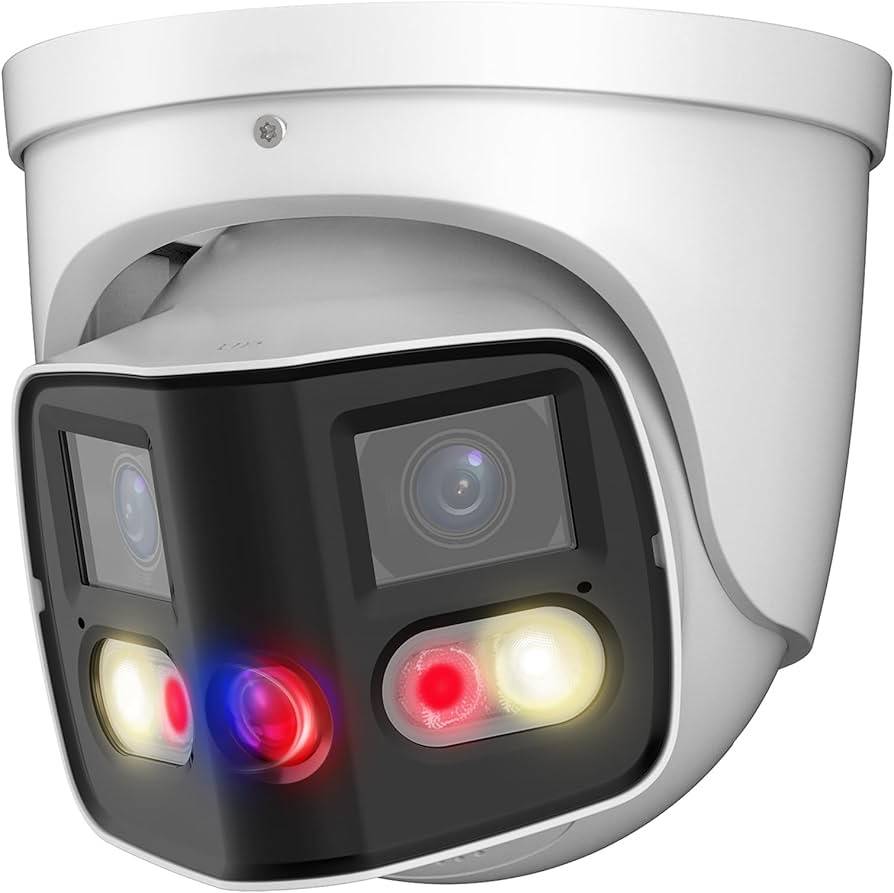
What should I realistically budget for cameras on a NYC home?
For a 4 to 8 camera home system, $850 to $2,500 all-in is realistic — cameras, wiring, recorder, labor, no monthly fee. A single doorbell is a couple hundred installed; a whole brownstone with many cameras runs higher. The building, not the camera count, is what moves the number.
Why was my brownstone quote higher than my cousin’s house upstate?
Because the building fights you. Fishing one clean cable drop through 1920s brick, plaster, and finished ceilings can take three times as long as the same camera in new construction — and that labor, not the camera, is most of the price.
How do I avoid getting burned by a cheap installer?
Skip anyone who quotes over the phone without seeing the home, uses unnamed off-brand cameras, or leaves cable stapled to the facade. Ask for a NYS license number, a written fixed-price scope, and references in your borough. The lowest quote almost always grows mid-job.
Is a licensed contractor really necessary for a house?
In New York, installing and maintaining security systems legally requires a state license. A licensed low-voltage contractor also does brick-safe, code-compliant, concealed cabling a handyman won’t — and stands behind it with a warranty.
Can I just buy a Ring kit and do it myself?
For a renter who needs one doorbell, sure. For a whole home it usually disappoints — Wi-Fi drops through brick, no local recording, exposed wires, dead batteries every few months. A wired or hybrid system with a local recorder is what actually holds up.
Why do my Wi-Fi cameras keep cutting out in the back of the house?
Wi-Fi looks strong on your phone next to the router but loses most of its signal by the back of a brownstone, and dense apartment Wi-Fi causes congestion. We hardwire the zones that matter and use wireless only where it makes sense.
How many cameras does a typical NYC home need?
It depends on doors, blind spots, and yard. Rough starts: 1 to 3 for an apartment, 4 to 8 for a row house or two-family, 6 to 12 for a single-family or brownstone with a driveway and backyard. We map exact placement on a free walk-through.
Wired or wireless — which is better for a house?
Wired PoE for the zones that matter, because it records around the clock and never drops. Wireless for tricky add-ons like a shed, rooftop, or rental where drilling is not allowed. Most NYC homes end up a hybrid of both.
How long does the footage stay before it records over?
Most homes keep 14 to 30 days on a local recorder, longer with a bigger drive. No cloud fee — the footage stays on a drive in your home.
I rent — what can I put up without drilling or asking the landlord?
Battery and plug-in doorbell and indoor cameras that mount without holes are usually lease-safe, and we install them so they come down clean when you move. Anything hardwired or exterior, we check your lease first.
I’m on a co-op board — can you handle the approval paperwork?
Yes. We provide board documentation, coordinate with management, and design discreet, management-approved coverage for entrances and shared spaces. Co-op and condo approval work is routine for us.
My last installer left wires hanging and ghosted me — how are you different?
That is the single most common complaint we hear. We conceal every cable, document the job, warranty the parts, and answer when you call — and we regularly take over and clean up systems another company botched.
Every quote is fixed-price after a free in-home walk-through — here are honest ranges so you can budget first. The price is all-in: cameras, cabling, recorder, labor, and setup, with no monthly fee on a local NVR. The building moves the number more than the camera count, because fishing cable through old brick and plaster is the real work.
A doorbell plus one or two indoor or window cameras, NVR or app-based, set up clean and renter-friendly.
Both entrances, driveway, backyard, and a doorbell, with full-color night vision and a local recorder.
Whole-property coverage — every door, stoop, vestibule, driveway, garage, and rear yard, brick-safe and concealed.
Every floor, roof access, detached structures, board documentation if needed, and a recorder sized for long retention.
We come to your home, look at every door, window, and yard, find the blind spots, and map exactly where each camera goes — then hand you a written, fixed-price quote with no pressure.
Licensed technicians run cable through walls, basements, and risers, mount into mortar joints not brick face, and leave nothing exposed on your facade. In historic districts we keep everything discreet and Landmarks-friendly.
We configure the recorder, set up live viewing and alerts on your phone for free, test every camera, and walk you through the app before we leave. Ongoing support is always a call away.
This is our NYC residential hub. We install home security cameras in every borough — pick yours, or see our full camera service for the whole city.
Brownstones, row houses, walk-ups, and two-families — brick-safe, board-ready.
View Brooklyn →Co-ops, condos, walk-ups, and townhouses — board docs and discreet installs.
View Manhattan →Our full residential and commercial camera service across the five boroughs.
Security Camera Installation NYC →New York housing has rules, and we work inside them. If you rent, we install no-drill doorbell, plug-in, and battery cameras that respect your lease and come down clean when you move — real coverage with nothing that costs you a deposit. If you own in a co-op or condo, we provide board documentation, coordinate with building management, and design discreet coverage the board will actually approve; this is routine work for us. And if you own a house, we handle everything from a single doorbell to a whole-property system, fishing cable through old masonry without touching a landmarked facade.
A few legal points we build in automatically: we disable audio by default, because New York is a one-party-consent state and recording conversations you are not part of can be illegal eavesdropping; we aim cameras at your own property, never into a neighbor’s windows or a shared space you do not control; and in landmarked historic districts we keep facade hardware minimal and discreet to stay on the right side of Landmarks rules. This is general information, not legal advice — but it is how we keep your install clean and compliant.
Homeowners and renters across the five boroughs find us under many of these searches. Every one points to the same licensed crew — from a single residential doorbell camera installation to a whole-home residential security camera installation, plus repair, upgrade, and service.
Plenty of New Yorkers start with a DIY kit and call us six months later. Here’s an honest comparison so you can decide where your home actually lands.
DIY is fine — a battery doorbell you can mount yourself and take when you move.
Professional. Cable through brick and plaster, brick-safe mounting, and a local recorder are not a weekend job.
Professional. Board documentation, management coordination, and discreet facade placement are required.
Professional. DIY Wi-Fi cameras drop and miss events; wired PoE records continuously.
Professional. The difference between a clean install and wires stapled across your facade.
Long monitoring contract, multi-year monthly fee, proprietary gear you never own. We install a home system you own outright — no contract, no monthly fee on a local recorder.
Consumer Wi-Fi cameras, cloud subscriptions to unlock features, exposed mounting. We do licensed, brick-safe, concealed cabling with local recording and zero fees.
Boxed self-install kit with monthly monitoring — fine for renters, thin for a whole home. We design real coverage for your doors, yard, and blind spots.
No license, no code-compliant cabling, no board docs, no warranty. We’re a licensed contractor who documents and warranties the work.
Free in-home walk, fixed price, professional-grade cameras, a local recorder you own, board and landlord docs, hidden cabling, no monthly fee — ever.
A doorbell or vestibule camera aimed at the drop point with face capture and two-way audio — the highest-value home camera in NYC.
Brick and plaster kill Wi-Fi. We hardwire the zones that matter with PoE so they record 24/7 and never drop.
Wrong cameras. Full-color night vision makes a face or a car identifiable after dark instead of a smear.
No-drill doorbell and battery cameras that mount reversibly and respect your lease.
We provide board documentation and coordinate with management for a discreet, approved install.
We re-run everything concealed through masonry, basements, and risers, and clean up the previous job.
“Cameras on my Fort Greene brownstone without a mark on the brick — cables completely hidden, 4K day and night, a doorbell right at the stoop. Best in NYC.”
— James L., Fort Greene, Brooklyn
“Upper East Side co-op — they handled the board paperwork, coordinated with management, and did a clean discreet install at my unit door and the hallway.”
— Susan R., Manhattan
“Two-family in Bayside — driveway, backyard, both entrances, full-color night vision. I watch the whole property from my phone, no monthly fee.”
— Tony M., Bayside, Queens
“I rent in Bed-Stuy and they set up a doorbell and indoor cameras with zero drilling, totally lease-safe. Packages stopped walking off.”
— Aisha B., Bed-Stuy, Brooklyn
The Park Slope brownstone job that explains why the walk-through matters: the owner wanted “a few cameras” off a website. In reality the stoop needed a doorbell aimed at the package drop with face capture, the parlor and rear yard needed full-color night vision because the garden goes pitch black, and getting a clean cable from the cellar recorder up to the third-floor rear meant fishing through 1900s brick and plaster without opening the walls or touching the landmarked facade. We mounted into mortar joints, not brick face, concealed every run, set 21-day local retention, and disabled audio. The part that actually protected the house was never the cameras off the website — it was the brick-safe routing, the night-vision placement, and a doorbell aimed exactly where packages disappear. That judgment only comes from walking the building first.
Camera offline, recorder not recording, can’t view on your phone, footage blurry at night, or a system another company installed and abandoned? We diagnose and fix residential camera systems across all five boroughs — most issues handled same-day, often in 1 to 2 hours. We repair, secure, and upgrade existing setups, including ones we didn’t install.
A 4 to 8 camera home system typically runs $850 to $2,500 all-in — cameras, wiring, recorder, and professional installation, with no monthly fee on a local NVR. A single doorbell is far less; a whole multi-floor house is more. The building drives the price more than the camera count. We give a fixed price after a free in-home walk-through.
Yes — this is core to our NYC work. We mount into mortar joints rather than the brick face, fish cable through masonry, plaster, basements, and risers, and leave nothing exposed on the facade, following Landmarks rules in historic districts.
No-drill doorbell, plug-in, and battery cameras that mount reversibly and respect your lease. We set them up cleanly so you can take them when you move. Anything hardwired or exterior, we check your lease first.
Yes. We provide board documentation, coordinate with management, and design discreet, management-approved coverage. Board and condo work is routine for us.
Not on a local-NVR system — you own the recorder and footage with no recurring fee, and we set up free phone viewing. Cloud backup is optional if you want footage stored off-site.
It depends on your doors, blind spots, and yard. Typical starts: 1 to 3 for an apartment, 4 to 8 for a two-family or row house, 6 to 12 for a single-family or brownstone. We map exact placement on the walk-through.
A doorbell or vestibule camera aimed at the drop point, with face capture and two-way audio, is the highest-value home camera in NYC for porch piracy. We place it exactly where packages disappear.
Yes — we install full-color night vision so yards, driveways, and entries are usable color footage after dark, not a gray infrared blur.
Wired PoE for the zones that matter — front door, driveway, backyard — because it records around the clock and never drops. Wireless for tricky add-ons like a shed, rooftop, or rental. Most NYC homes end up a hybrid.
Yes — live feeds, recorded clips, and motion alerts on iOS and Android, set up free with no monthly charge. We do a full app walkthrough before we leave.
In New York, installing and maintaining security systems requires a state license. We are NYS licensed #12000287431 and fully insured, with brick-safe, code-compliant, concealed cabling.
Yes — expansions, upgrades, repairs, and takeovers of systems left with exposed wiring or no support. We keep what still works and replace what does not.
"Excellent work installing cameras at my building in Brooklyn. Clean wiring, professional team, everything works perfectly on my phone. No monthly fees was the biggest selling point."
"Best security camera company in NYC. They installed cameras on my brownstone without damaging the brick. Cables are completely hidden. 4K picture quality is incredible day and night."
"Had 8 cameras and an intercom system installed at our retail store. The team was professional, showed up on time, and the quality is amazing. I can see everything from my phone anywhere."