Home CCTV for Brownstones & Row Houses · Two-Family Homes · Co-ops & Walk-Ups · Detached & Semi-Detached Homes · Stoops, Driveways, Backyards & Cellars — Brick-Safe & Landmarks-Aware · 4K PoE · Local NVR · No Monthly Fees · Licensed & Insured
Professional residential security camera installation, home CCTV surveillance systems, 4K IP cameras, and local NVR recording for Brooklyn homeowners — the brownstones and row houses of Park Slope, Fort Greene, Bed-Stuy, and Cobble Hill, the two-family frame and brick homes of Flatbush, Sunset Park, and Canarsie, the co-ops and walk-ups across the borough, and the detached and semi-detached homes of Bay Ridge, Sheepshead Bay, and the Jamaica Bay waterfront. Coverage for the stoop and parlor door, the package shelf where porch piracy happens, dark rear yards and gardens, cellar and garden-level entrances, driveways and detached garages, and side alleys between houses — with brick-safe, Landmarks-aware mounting, full-color night vision for poorly lit side streets, and person-and-vehicle AI that ends the alert fatigue of a busy block. From a single doorbell camera to a whole-house system, no monthly fees on local NVR. Abstract Enterprises is a licensed and insured residential security camera company. For business and commercial CCTV, see our commercial security camera installation in Brooklyn; for our full residential and commercial camera service in the borough, see security camera installation Brooklyn.
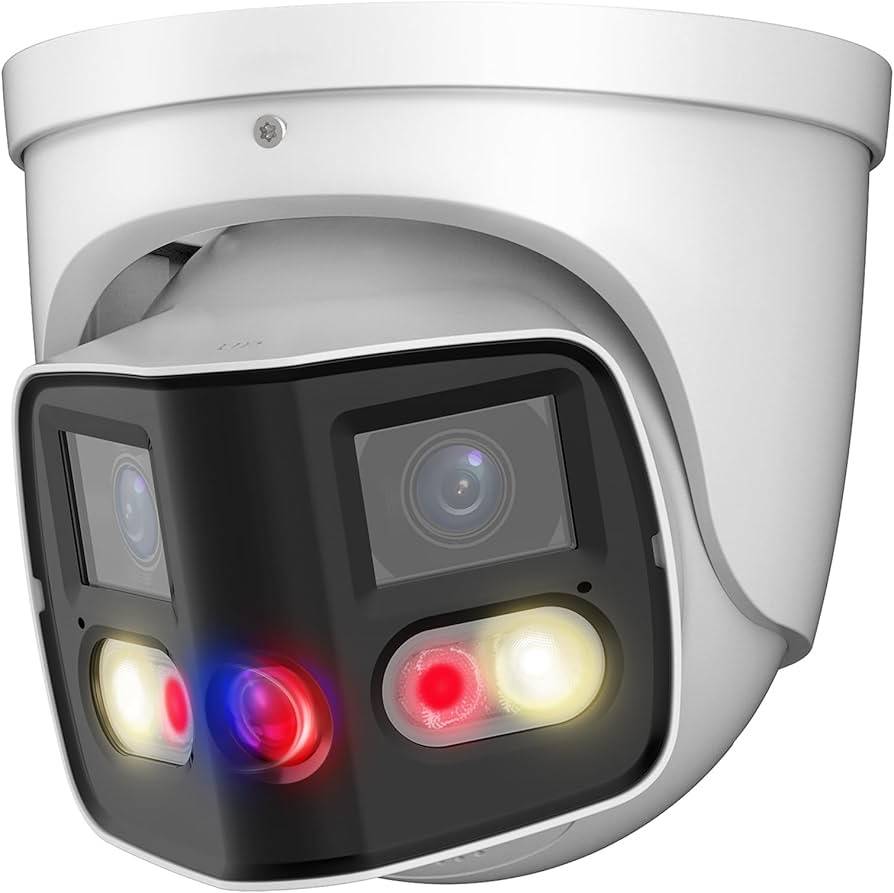
In Brooklyn it usually starts on the stoop. Packages lifted off the front steps or out of the vestibule, a car gone through overnight on the side street, someone testing the garden-level door, or just wanting to see who’s ringing before you buzz them in. A camera at the stoop and the rear yard gives you a clear face and an instant phone alert the moment something moves — and on a row-house block with no doorman and the street right there, that’s often the difference between a shrug and a police report that actually goes somewhere. Many Brooklyn insurers also trim the homeowner’s premium for a documented system.
What makes a Brooklyn home different is the building stock and the block. A Park Slope brownstone in a Landmarks district, a Bed-Stuy row house, a two-family frame house in Flatbush, a Bay Ridge semi-detached with a driveway and garage, a Bergen Beach detached home on the waterfront, a co-op or walk-up on the avenue — each one carries its own entry points and its own wiring. Brownstones need the stoop, the parlor door, the garden-level entrance, the rear yard, and the cellar covered, mounted in the mortar joints so the brick and the Landmarks rules stay respected. Frame houses wire differently than brick. Detached homes in the southern neighborhoods need driveways, garages, and side alleys. And on a busy block, the cameras have to tell a person from the constant street traffic or you’ll ignore the alerts by week two. Getting a system that fits your house means knowing all of that first.
We start with your house type, your block, and your entry points — not a boxed package. A brownstone, a frame two-family, and a detached Bay Ridge home each get a different plan, and most end up with a doorbell at the stoop plus wired cameras on the real vulnerable spots.
A camera at the stoop and front door — battery or hardwired — covering the package shelf where porch piracy happens, with two-way audio to speak to whoever’s at the door.
Hardwired PoE cameras run to a recorder in the cellar, covering the stoop, parlor door, garden-level entrance, rear yard, and cellar — mounted brick-safe with hidden cabling, recording 24/7, no monthly fee.
Dark back yards, gardens, and cellar entrances — the access points burglars actually use on a row house — captured in full color overnight.
For Bay Ridge, Marine Park, and the detached neighborhoods: driveways, detached garages, side alleys between houses, and plate-readable views at the curb.
Many Brooklyn side streets and rear yards are poorly lit. Cameras that stay in real color overnight make footage of a package thief or break-in usable, not a gray blur.
Person and vehicle AI that classifies people versus the constant cars and street motion, so you only get alerts that mean something — not hundreds of false pings a night on a high-traffic block.
Coverage is about placement, not camera count. On a row-house lot, a well-aimed stoop camera and the rear yard protect a home better than a wall of cameras pointed at nothing. We walk the whole property — front steps to cellar to back garden — and design around your real entry points.
Face capture at the front steps and the vestibule shelf — the first thing we plan on almost every Brooklyn home.
The garden-level door and cellar entry — the quiet access point burglars favor on a row house.
The back of the house and the garden, often unlit and reachable from neighboring yards.
For detached and semi-detached homes: the driveway, detached garage, and the alley between houses.
Ground-floor and fire-escape-accessible windows on walk-ups and frame houses.
For small co-op and multi-family buildings: lobby, hallways, and stairs on one recorder, board-friendly placement.
A few terms come up on every Brooklyn quote. Here’s what they mean in plain English.
One thin Cat6 cable carries both power and video to a camera — the cleanest, most reliable wiring, and far better than Wi-Fi through a Brooklyn brick or brownstone wall.
The recorder that stores your footage on a drive in the cellar or a closet. No cloud bill, and the video never leaves the house.
Cameras that stay in color after dark instead of switching to gray infrared — essential on poorly lit Brooklyn side streets and rear yards.
On-camera smarts that tell a person from passing cars and street motion, so your phone only buzzes when it matters — critical on a busy block.
Mounting in the mortar joints and color-matching conduit so cameras go up without damaging brick or a Landmarks-protected facade.
The detail a camera captures — we run 4MP on general zones and 4K at the stoop and curb, where a readable face or plate actually matters.
We install professional-grade cameras chosen for a Brooklyn house and block, not a corporation — brands that deliver 4K, full-color night vision, and reliable AI while mounting discreetly on a brownstone or frame facade. Depending on your home and what you want on your phone, that usually means Hikvision, Dahua, Lorex, Reolink, Amcrest, or Uniview, with premium options like Eufy or Axis when a client asks. We’re not tied to one manufacturer and make nothing extra steering you to a brand — we pick what fits your house, your block, and your facade. We also install bring-your-own cameras, set up doorbell-only systems, change default passwords and secure cameras someone bought online, and upgrade or take over older setups another company left behind.
Every quote is fixed-price after a free in-home walk-through — here are honest ranges so you can budget first. Everything’s in that figure — cameras, cabling, recorder, labor, setup — with no monthly charge on a local NVR. On a Brooklyn home the house swings the total as much as the camera count: brick or frame, a Landmarks facade, cable fished up from the cellar, and how many separate doors a row house puts on the street.
A doorbell plus one or two cameras on the entry and a window, set up clean, no monthly fee.
Stoop, parlor door, rear yard, and cellar, with full-color night vision and a local recorder in the cellar.
Stoop, parlor, garden-level, rear yard, cellar, and interior — brick-safe, Landmarks-aware, concealed cabling.
Driveway, garage, side alleys, backyard, and entries for Bay Ridge, Marine Park, and waterfront homes.
We come to your home, look at the stoop, parlor door, garden-level entrance, rear yard, cellar, and any driveway or garage, find the blind spots, and hand you a written fixed-price quote — no guessing, no site-unseen estimates.
Licensed technicians mount in the mortar joints, color-match conduit, and fish cable through the cellar and walls so nothing’s exposed — Landmarks-aware on protected facades.
We configure the recorder, tune the AI for your block, set up live viewing and alerts on your phone for free, change any default passwords, test every camera, and walk you through the app before we leave.
What should I budget for cameras on a Brooklyn home?
For a 4 to 8 camera row house or two-family, $2,000 to $4,500 all-in is realistic — cameras, wiring, recorder, labor, no monthly fee. A co-op apartment can start around $850; a full brownstone or a detached home with a driveway and garage runs higher. The building — brick or frame, how many entrances — drives the number, not the camera count alone.
Why does a brownstone cost more than an apartment to wire?
More entrances and a harder install. A brownstone means the stoop, parlor, garden-level, rear yard, and cellar, with cable fished through the cellar and walls and mounting that respects the brick and Landmarks. An apartment is a quick job; a five-entrance row house is a real one.
How do I avoid a bad installer in Brooklyn?
Skip anyone who quotes without seeing the house, uses unnamed off-brand cameras, drills carelessly into the brick, or staples cable to the facade. Ask for a NYS license number, a written fixed-price scope, and references in your neighborhood. The rock-bottom quote nearly always swells once the brick and the entrances are in front of them.
Do I need a licensed contractor for a house?
New York law won’t let just anyone install and maintain these systems — it takes a state license. A licensed low-voltage contractor also runs the code-compliant, concealed, mortar-joint cabling a handyman won’t touch on a brownstone — and backs it. We’re NYS #12000287431 and insured.
Can I just buy a kit and do it myself?
For one doorbell, sure. For a brownstone or frame house it usually disappoints once you hit brick walls, multiple entrances, a Landmarks facade, and Wi-Fi that drops through thick masonry. A wired PoE system with a local recorder is what holds up here.
Why do my Wi-Fi cameras keep dropping?
Wi-Fi fades through Brooklyn brick and brownstone walls, and a dense block is full of competing networks. The rear yard and cellar are exactly where consumer Wi-Fi cameras fail. We hardwire the permanent cameras so they stay up.
How many cameras does a Brooklyn home need?
It depends on the house. Rough starts: 1 to 3 for a co-op, 4 to 8 for a row house or two-family covering the stoop, rear yard, and cellar, 6 to 10 for a full brownstone, more for a detached home with a driveway and garage. We pin the exact camera spots during a free walk-through of the house.
Can you mount on brick without damaging it or breaking Landmarks rules?
Yes — we mount in the mortar joints, color-match conduit, and fish the rest through the cellar so the brick and a Landmarks-protected facade stay intact. It’s the core skill on a Brooklyn brownstone job.
How long is footage kept?
Most homes hold 14 to 30 days on the cellar recorder, longer once you size up the drive. No cloud fee — the footage stays on a drive in your house.
I own a two-family and rent the other unit — what can I cover?
You can cover shared and exterior areas — the stoop, vestibule, rear yard, cellar, and hallways — but not inside a tenant’s unit, and audio must be off in shared spaces under one-party-consent. We place cameras to protect the building and stay compliant.
Can you cover a small co-op or apartment building?
Yes — lobby, hallways, stairs, mailroom, and entrances on one recorder, placed to avoid any view into a unit, with documentation a board expects.
My last installer left wires on the facade and ghosted me — how are you different?
That’s the most common complaint we hear. We mount brick-safe, conceal every cable through the cellar and walls, document the job, warranty the parts, and answer when you call — and we take over and clean up systems another company botched.
Search “home security camera installation cost” and the AI Overview, Angi, HomeAdvisor, and Fixr hand you national numbers that have little to do with a real Brooklyn brownstone or row house. Here’s what they leave out.
Angi, HomeAdvisor, and Fixr publish a national per-camera average built mostly from suburban single-family jobs. In Brooklyn the cost lives in the building: brick versus frame, a Landmarks facade, fishing cable through a brownstone cellar, and how many separate entrances a row house has. The camera is the cheap part.
Generic guides never mention mounting in mortar joints, color-matched conduit, or Landmarks-protected facades — the things that decide whether a Brooklyn install looks clean or wrecks your brick. We mount brick-safe and respect the district.
Best-of roundups push whatever brand pays for the slot, then assume a house with easy attic access. The right camera for a Brooklyn brownstone or frame house depends on the facade and the block — not a sponsored list. We match the hardware to the house.
What protects a row house is where the cameras point, not how many. A single well-aimed stoop camera plus the rear yard and cellar beats a dozen aimed at nothing — a deliberate six-camera layout outperforms a careless twelve.
Wi-Fi drops through thick brownstone and brick walls, and a dense block is full of competing networks — so consumer cameras at the rear yard and cellar fall offline. Serious Brooklyn installs are wired PoE, something national guides never warn you about.
Cloud kits look easy until the per-camera charge hits your card every month forever. Drop a recorder in the cellar and the footage is yours, stays in the house, and costs nothing month to month — the cheaper road on any Brooklyn multi-year horizon.
A home camera system here is worth it — for porch piracy, a clear view of the stoop and rear yard, deterring break-ins, and watching the house while you’re away — but only when it’s installed for your building and mounted to respect the brick. The smart move isn’t the lowest per-camera number online — it’s a licensed contractor, a genuine walk-through of the house, and a fixed price you can hold them to.
Plenty of Brooklyn owners start with a DIY kit and call us later. Here’s an honest comparison so you can decide where your house lands.
DIY is fine — a battery doorbell you can mount yourself.
Professional. Multiple entrances, brick-safe mounting, and cellar cable runs are not a weekend job.
Professional. Mortar-joint mounting and color-matched conduit take a contractor who knows the district.
Professional. Plate-readable angles and concealed exterior runs take real work.
Professional. Dialing person/vehicle detection so street traffic doesn’t ping you all night takes setup, not a default kit.
Long monitoring contract, multi-year monthly fee, proprietary gear you never own. We hand you a home system that’s yours from day one — no contract, nothing owed monthly on a local recorder.
Consumer Wi-Fi cameras that drop through Brooklyn brick, cloud subscriptions to unlock features, exposed mounting on your facade. We do licensed, brick-safe, concealed PoE with zero fees.
Boxed self-install kit with monthly monitoring — thin for a multi-entrance row house. We design real coverage for the stoop, rear yard, cellar, and driveway.
No license, no code-compliant cabling, no brick-safe or Landmarks experience, no warranty. We’re a licensed Brooklyn outfit that documents the install and warranties the parts.
Free walk-through, fixed price, professional-grade cameras, brick-safe concealed mounting, a local recorder you own, no monthly fee — ever.
This is our Brooklyn residential page, part of our NYC home-camera network. Jump up to the NYC hub, see our full Brooklyn camera service, or switch to commercial.
Our NYC residential hub — home cameras across all five boroughs.
View NYC Hub →Our full residential and commercial camera service across Brooklyn.
Brooklyn Camera Service →Business CCTV for Brooklyn retail, restaurants, offices, and buildings.
View Commercial →A doorbell aimed at the steps and vestibule shelf with face capture and two-way audio — the highest-value Brooklyn home camera.
A full-color camera on the garden-level and cellar entrance — the quiet access point row-house burglars favor.
Brick and distance kill Wi-Fi. We hardwire PoE to the rear yard and cellar so the cameras stay up.
Motion-only cameras. We use person and vehicle AI so only people and cars alert, not every passing car.
We mount in the mortar joints and color-match conduit — brick-safe and Landmarks-aware, no damage.
We re-run everything concealed through the cellar and walls, and clean up the previous job.
“Park Slope brownstone in the historic district — ColorVu at the stoop and rear yard, everything mounted in the mortar joints, conduit color-matched, the rest fished through the cellar. Clean, compliant, no damage to the brick.”
— Elena M., Park Slope
“Two-family in Flatbush — stoop, parlor door, rear yard, and cellar covered, full-color overnight, recorder in the basement. Stopped the package thefts and I watch it all from my phone. No monthly fee.”
— Andre W., Flatbush
“Semi-detached in Bay Ridge — driveway, garage, side alley, and backyard, plate-readable at the curb, cabling hidden. Professional from the walk-through to the walkthrough.”
— Nadia P., Bay Ridge
“Bed-Stuy row house — they tuned the AI so the busy block doesn’t ping me all night, just people at my door and gate. Great price, brick-safe, no monthly fee.”
— Marcus L., Bed-Stuy
The Park Slope brownstone that explains why respecting the building is the real skill: a historic-district row house, an owner who wanted full-color cameras at the stoop and rear yard but was terrified about the brick and Landmarks, five separate entrances from the stoop down to the garden level, a dark back garden reachable from the neighbor’s yard, and a busy avenue half a block away triggering motion all night. On paper, hang some cameras. In reality the job was the facade and the block: we mounted everything in the mortar joints so the brick stayed untouched, color-matched the conduit so it disappeared against the stone, fished the rest of the cable through the cellar, put full-color cameras on the stoop, garden-level door, and rear yard for the unlit overnight hours, tuned the person-and-vehicle AI so the avenue traffic stopped pinging the owner, and set the recorder in the cellar with 30-day retention and phone access. The part that actually protected the house — and kept the owner happy — was never the cameras off a website; it was the brick-safe mounting, the Landmarks-aware conduit, and a placement plan that only comes from walking a brownstone first.
Camera offline, recorder not recording, can’t view on your phone, footage blurry at night, forgot the password, NVR failed, or a system another company installed and abandoned? We diagnose and fix residential camera systems across Brooklyn — same-day. We repair, secure, and upgrade existing setups, change default passwords on cameras bought online, and take over systems we didn’t install.
Brooklyn homeowners find us under many of these searches. Every one points to the same licensed crew — from a single residential doorbell camera installation to a whole-brownstone residential security camera installation, plus repair, upgrade, and service.
A 4 to 8 camera row house or two-family typically runs $2,000 to $4,500 all-in — cameras, wiring, recorder, and professional installation, with no monthly fee on a local NVR. A co-op apartment can start around $850; a full brownstone or detached home runs higher. The building drives the price more than the camera count — brick versus frame, a Landmarks facade, and how many entrances all move it. We give a fixed price after a free walk-through.
Yes — we mount in the mortar joints, color-match conduit, and fish cable through the cellar so the brick and a Landmarks-protected facade stay intact. It’s the core skill on a Brooklyn brownstone job.
Yes — that’s the standard row-house plan: the stoop and package shelf, the parlor and garden-level doors, the rear yard, and the cellar entrance, all on one recorder.
Yes — we install full-color night vision so dark Brooklyn side streets, rear yards, and gardens record in usable color, not a gray infrared blur.
We use person and vehicle AI and tune the detection zones so passing cars and street motion are ignored and only people and vehicles at your property alert — the biggest complaint we fix on a high-traffic block.
No — with a local NVR the recorder and footage in your cellar are yours, nothing’s billed monthly, and phone viewing comes set up at no cost. Want an off-site copy? Cloud backup is an optional add-on, not a requirement.
It depends on the house. Typical: 1 to 3 for a co-op, 4 to 8 for a row house or two-family, 6 to 10 for a full brownstone, 6 to 12 for a detached home with a driveway and garage. We settle exact placement when we walk the house.
Wired PoE for permanent cameras — Wi-Fi drops through brick and brownstone walls and a dense block of competing networks. We hardwire the stoop, rear yard, and cellar so the system stays up.
Yes — full-color night vision so the stoop, rear yard, and gardens are usable color footage after dark, not a gray blur.
Yes — live views, saved clips, and motion alerts on any phone, configured at no charge, and we don’t leave the house until you can work the app yourself.
New York requires a state license to install and service security systems, and we hold it — NYS #12000287431, fully insured — with the brick-safe, concealed, code-compliant cabling a Brooklyn brownstone or frame house needs.
Yes — expansions, upgrades, repairs, password resets on cameras bought online, and takeovers of systems left with exposed wiring or no support. Whatever still runs we keep on the system; the rest comes out.
"Excellent work installing cameras at my building in Brooklyn. Clean wiring, professional team, everything works perfectly on my phone. No monthly fees was the biggest selling point."
"Best security camera company in NYC. They installed cameras on my brownstone without damaging the brick. Cables are completely hidden. 4K picture quality is incredible day and night."
"Had 8 cameras and an intercom system installed at our retail store. The team was professional, showed up on time, and the quality is amazing. I can see everything from my phone anywhere."