Home CCTV for Co-ops & Condos · Pre-War Apartments · Walk-Ups · Brownstones · Doorman & Non-Doorman Buildings · Townhouses · Lofts & Penthouses — Board-Approved · COI Handled · Wired PoE · Local NVR · No Monthly Fees · Licensed & Insured
Professional residential security camera installation, home CCTV surveillance systems, 4K IP cameras, and local NVR recording for Manhattan apartments and homes — the doorman and non-doorman co-ops of the Upper East and Upper West Sides, condos in Midtown and Battery Park City, pre-war classic-sixes, walk-ups in Hell’s Kitchen and the East Village, brownstones in the Village, Chelsea, and Harlem, lofts in SoHo and Tribeca, and pre-war buildings up in Washington Heights and Inwood. We handle the parts that make a Manhattan install different: co-op and condo board approval, a Certificate of Insurance to the managing agent, doorman registration and freight-elevator booking, no-drill installs for renters, concealed cabling through pre-war plaster and brick, and channel-locked wiring that survives a building with 60-plus competing Wi-Fi networks. From a single doorbell camera to a whole-apartment system, every install respects NY privacy law and house rules. Abstract Enterprises is a licensed and insured residential security camera company — with no monthly fees on local NVR. For business and commercial CCTV, see our commercial security camera installation in Manhattan; for our full residential and commercial camera service in the borough, see security camera installation Manhattan.
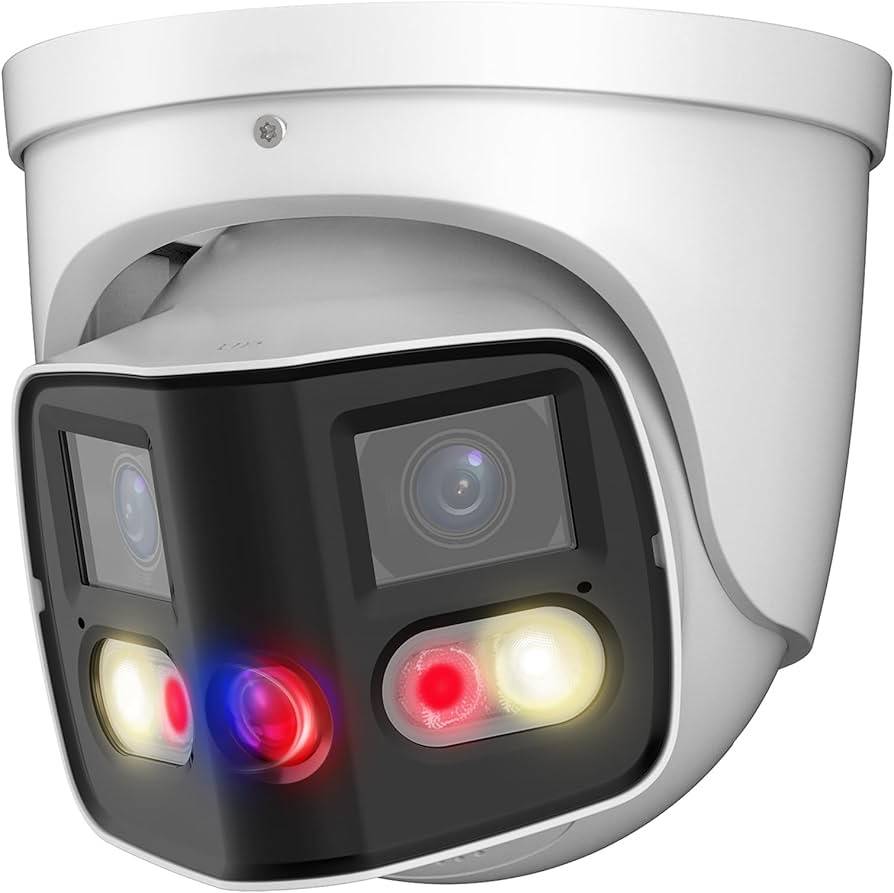
In Manhattan it almost always starts at the front door of the apartment. Packages lifted from outside the unit or the lobby, a stranger tailgating into the building, deliveries that vanish, or simply wanting to see who’s knocking before you open up. A camera at your door and inside the entry gives you a clear face and an instant phone alert the moment something moves — and on a doorman or non-doorman co-op floor, that’s often the difference between a shrug and a police report that goes somewhere. Many Manhattan insurers also shave the renter’s or homeowner’s premium for a documented system.
What makes a Manhattan home different isn’t the lot — it’s the building and the rulebook around it. A pre-war classic-six on the Upper West Side, a post-war tower in Midtown, a SoHo loft, a Village brownstone, a Hell’s Kitchen walk-up, a Battery Park City glass condo — each one carries its own wiring era and its own access rules. Co-op and condo boards require approval before a doorbell or hallway camera goes up, the managing agent wants a Certificate of Insurance 48 hours ahead, the doorman needs you registered and the freight elevator booked, many leases forbid drilling, and the radio environment — 60 to 80 visible Wi-Fi networks in a typical Midtown line — will knock cheap wireless cameras offline within weeks. Getting a system that actually works here means knowing all of that before the first screw goes in.
We start with your apartment, your building’s rules, and whether you own or rent — not a boxed package. Most Manhattan homes end up with a doorbell or entry camera and a camera or two inside, wired where the building allows and no-drill where the lease requires.
A camera at your apartment door — aimed only at your own doorway per house rules — that shows visitors and deliveries with two-way audio, board-approved and neighbor-respecting.
Discreet PoE cameras run to a small recorder inside your apartment, covering the entry, living space, and windows — recording locally with no cloud bill and nothing leaving the unit.
For rental leases that forbid drilling: peephole cameras, plug-in indoor cameras, and battery doorbells mounted without touching the structure — fully removable when you move.
Cameras that stay in real color in a dim pre-war hallway or a dark entry instead of a gray infrared blur, so a face at the door at 2am is actually identifiable.
Where wiring isn’t an option, Wi-Fi cameras locked to a clear channel so they survive a building with dozens of competing networks instead of dropping offline by week two.
Concealed cabling routed through plaster, brick, and terracotta without damage, and exterior hardware that respects LPC rules on landmarked brownstone facades.
Coverage here is about placement and compliance, not camera count. A well-aimed doorbell and an entry camera protect an apartment better than a wall of cameras — and they keep you on the right side of house rules and privacy law. For boards, we plan common-area coverage that never sees into a unit.
Face capture at your own doorway and the package drop — aimed only at your immediate space, never a neighbor’s door, per NYC rules.
Just inside the unit looking back at the door, so you see anyone who comes through whether you’re home or away.
Ground-floor and fire-escape-accessible windows — the classic walk-up and brownstone entry point.
In-unit coverage you control — living areas, a home office, or a nanny/pet view, with privacy zones where you want them.
For townhouse and brownstone owners: the stoop, the parlor entry, and the rear garden or yard.
Lobby, hallway, and stairwell coverage for co-op and condo boards — placed to avoid any view into a unit, with board sign-off and COI handled.
A few terms come up on every Manhattan quote — especially the building-rule ones. Here’s what they mean in plain English.
One thin Cat6 cable carries both power and video to a camera — the cleanest, most reliable wiring, and the standard in a dense Manhattan building where Wi-Fi is unreliable.
The recorder that stores your footage on a drive inside your apartment. No cloud bill, and the video never leaves the unit.
Certificate of Insurance — proof of our liability coverage, naming your building and managing agent, submitted before we install. Most Manhattan buildings require it 48 hours ahead.
Co-op and condo boards require written sign-off before a doorbell or any common-area camera goes up. We provide the scope and documentation boards expect.
Peephole, plug-in, and battery cameras mounted without penetrating walls — how renters add cameras under a lease that forbids drilling.
Pinning a Wi-Fi camera to a clear radio channel so it stays online in a building showing 60-plus competing networks instead of dropping offline.
We install professional-grade cameras chosen for an apartment and a tough building, not a corporation — brands that deliver 4K, full-color night vision, and reliable AI while staying discreet on a pre-war wall or a landmarked facade. Depending on your unit and what you want on your phone, that usually means Hikvision, Dahua, Lorex, Reolink, Amcrest, or Uniview, with premium options like Eufy or Axis when a client asks. We’re not tied to one manufacturer and make nothing extra steering you to a brand — we pick what fits your apartment, your building’s rules, and your lease. We also install bring-your-own cameras, set up doorbell-only or no-drill renter systems, and upgrade or take over older setups another company left behind.
Every quote is fixed-price after a free in-unit walk-through — here are honest ranges so you can budget first. That figure covers everything — cameras, cabling, recorder, labor, setup — with nothing monthly on a local NVR. Here the building swings the total more than the camera count: pre-war plaster and brick, concealed runs, board-required conduit in common areas, and weekend-only work windows all push it around.
A doorbell or peephole camera and one indoor camera, mounted without drilling, fully removable, no monthly fee.
Entry, doorbell, and in-unit coverage, board-approved with COI handled, wired PoE and a local recorder.
Stoop, parlor entry, rear garden, and interior — concealed pre-war cabling, full-color night vision.
Board systems for lobby, hallways, stairwells, mailroom, and entrances — placed off-unit, COI and approvals handled.
We come to your apartment, look at the door, entry, windows, and any common-area scope, map blind spots, confirm your building’s rules, and hand you a written fixed-price quote — no guessing, no site-unseen estimates.
We prepare the scope your board expects, submit the COI to your managing agent, register with the doorman, book the freight elevator, and run concealed cabling through pre-war walls — nothing surface-mounted.
We configure the recorder, set privacy zones, disable audio where required, set up live viewing and alerts on your phone for free, test every camera, and walk you through the app before we leave.
What should I budget for cameras in a Manhattan apartment?
For a co-op or condo apartment, $1,500 to $4,000 all-in is realistic — cameras, wiring, recorder, labor, no monthly fee. A renter no-drill setup can start around $850. A brownstone or townhouse runs higher because there’s far more to cover. The building, not just the camera count, drives the number.
Why does Manhattan cost more than the suburbs to wire?
Pre-war plaster, brick, and terracotta walls, no existing conduit, concealed runs, freight-elevator and weekend-only work windows, and conduit some boards require in common areas all add labor. A single drop in a 1920s walk-up can take three times as long as the same drop in new construction.
Do I need board approval to install a camera?
For a doorbell or any camera in a hallway or common area, almost always yes — co-op and condo boards require written approval first, and the doorbell can’t face a neighbor’s door. Inside your own unit you generally have wide latitude. We prepare the scope and documentation boards expect.
What is a COI and why does my building want one?
A Certificate of Insurance proves our liability coverage and names your building and managing agent. Most Manhattan buildings require it 48 hours before any work, along with doorman registration and a freight-elevator booking. We handle all of it — FirstService Residential, Douglas Elliman, Halstead, Compass, Brown Harris Stevens, AKAM and the rest.
I rent — can I install cameras without drilling?
Yes. Inside your unit you can use plug-in indoor cameras and battery or peephole doorbell cameras that don’t require drilling, and under NY’s 2025 amendments a landlord must permit tenant cameras that don’t record common areas or neighbors. Anything that drills or runs through building structure needs written landlord approval.
Where can my camera legally point?
At your own doorway and the immediate space in front of your apartment — not a neighbor’s door, not general hallway traffic, not into anyone else’s windows. New York is one-party-consent, so we disable audio on anything facing a hallway. We place every camera to keep you compliant.
Why do my Wi-Fi cameras keep dropping offline?
A typical Midtown apartment shows 60 to 80 competing Wi-Fi networks and a shredded 2.4GHz band. Consumer cameras lose the channel and drop within weeks. We hardwire where the building allows and channel-lock the wireless where we can’t, so the system actually stays up.
Wired or wireless for a Manhattan apartment?
Wired PoE wherever the building permits — it records around the clock and ignores the radio chaos. No-drill wireless only where a lease forbids drilling, locked to a clear channel. Most Manhattan homes are wired in-unit with a small recorder.
How long is footage kept?
Most apartments keep 14 to 30 days on a local recorder, longer with a bigger drive. No cloud fee — the footage stays on a drive inside your unit.
Can I just buy a kit and do it myself?
For one no-drill doorbell, sure. For anything wired in a pre-war building — concealed runs through plaster and brick, board approval, COI, channel-locking — a licensed install saves you a rejected job and a wall you damaged. Most callers who DI’d first call us to redo it.
My last installer left wires along the baseboard and ghosted me — how are you different?
That’s the most common complaint we hear. We run cable concealed through walls and ceilings, document the job, satisfy the building’s COI and board requirements, warranty the parts, and answer when you call — and we take over and clean up systems another company botched.
Search “apartment security camera installation cost” and the AI Overview, Angi, HomeAdvisor, and Fixr hand you national numbers that have little to do with a real Manhattan building. Here’s what they leave out.
Angi, HomeAdvisor, and Fixr publish a national per-camera average built mostly from suburban single-family jobs. In Manhattan the cost lives in the building: pre-war plaster and brick, no existing conduit, concealed runs, freight-elevator windows, and board-required conduit in common areas. The camera is the cheap part.
Generic guides never mention board approval, COI to the managing agent, doorman registration, or no-drill lease clauses — the things that actually decide whether your install happens at all. We handle all of it before a screw comes out of the bag.
Best-of roundups push whatever brand pays for the slot, then assume a house with easy attic access. The right camera for a Manhattan apartment depends on the building, the wall, and your lease — not a sponsored list. We match the hardware to the unit.
With 60 to 80 networks visible in one apartment line, the 2.4GHz band is shredded and consumer Wi-Fi cameras drop offline within weeks. Serious Manhattan installs are wired, or at minimum channel-locked — something national guides never warn you about.
Cloud kits sell ease and then bill you per camera every month with no end. A recorder in your unit means the footage is yours, never leaves the apartment, and costs nothing recurring — the cheaper path over any multi-year stretch.
Generic guides skip the rules that matter here: cameras can only cover your own doorway, never a neighbor’s; audio must be off on anything facing a hallway under one-party-consent; and landmarked facades have LPC limits. We design to keep you compliant and out of a dispute.
A home camera system here is worth it — for package theft, a clear view of your door, deterring building break-ins, and peace of mind — but only when it’s installed for your building and configured for the law. The right move isn’t the cheapest per-camera quote online; it’s a licensed contractor who handles the board, the COI, and a fixed price you can hold them to.
Plenty of Manhattan residents start with a no-drill kit and call us for the wired or board-approved work. Here’s an honest comparison so you can decide where your apartment lands.
DIY is fine — a battery doorbell or peephole camera you can mount yourself, fully removable.
Professional. Concealed runs through plaster and brick, board approval, and COI are not a weekend job.
Professional. Board approval, off-unit placement, and COI are mandatory — a DIY job here gets you a violation.
Professional. Keeping cameras online in 60-plus competing networks takes setup, not a default kit.
Professional. LPC rules and concealed facade routing take a licensed contractor who knows the district.
Long monitoring contract, multi-year monthly fee, proprietary gear you never own — and they don’t handle your board or COI. We install a system you own outright, board-approved, no contract, no monthly fee on a local recorder.
Consumer Wi-Fi cameras that drop offline in a dense Manhattan building, cloud subscriptions to unlock features, exposed mounting. We do licensed, concealed, channel-locked or wired installs with zero fees.
Boxed self-install kit with monthly monitoring — and no help with board approval, COI, or pre-war wiring. We design real coverage and handle the building.
No license, no code-compliant concealed cabling, no COI the building will accept, no warranty. We’re a licensed contractor who satisfies the board and documents the work.
Free in-unit walk, fixed price, professional-grade cameras, board approval and COI handled, concealed cabling, a local recorder you own, no monthly fee — ever.
This is our Manhattan residential page, part of our NYC home-camera network. Jump up to the NYC hub, see our full Manhattan camera service, or switch to commercial.
Our NYC residential hub — home cameras across all five boroughs.
View NYC Hub →Our full residential and commercial camera service across Manhattan.
Manhattan Camera Service →Business CCTV for Manhattan retail, restaurants, offices, and buildings.
View Commercial →A doorbell aimed at your own drop point with face capture and two-way audio — the highest-value Manhattan home camera.
We prepare the scope and COI boards expect and place common-area cameras off-unit, so the board approves instead of rejecting.
60-plus competing networks shred the band. We hardwire where allowed and channel-lock the rest so they stay up.
No-drill peephole, plug-in, and battery cameras that mount without touching the structure and come off clean when you move.
We route concealed cable through plaster, brick, and terracotta without damage — standard pre-war work for us.
We re-run everything concealed through walls and ceilings, and clean up the previous job.
“Pre-war co-op on the UWS — they got board approval squared away, submitted the COI to our managing agent, and ran everything concealed through the plaster. Doorbell and an entry camera, all on my phone. No monthly fee.”
— Rebecca H., Upper West Side
“I rent a walk-up in the East Village — no-drill doorbell and an indoor camera at the door, nothing touched, fully removable. Stopped the package thefts cold.”
— Daniel K., East Village
“Tribeca loft — clean wired install, full-color night vision, channel-locked so it never drops despite a building full of Wi-Fi. Professional from the COI to the walkthrough.”
— Sofia R., Tribeca
“Harlem brownstone — stoop, parlor entry, and rear garden covered, cabling hidden, LPC-respectful on the facade. Watch the whole place from my phone. Great price, no monthly fee.”
— Marcus B., Harlem
The Upper West Side classic-six that explains why the building matters more than the camera: a pre-war co-op on a high floor, a board that required written approval before a single doorbell, a managing agent who wanted the COI 48 hours ahead, plaster-and-lath walls that kill 5GHz Wi-Fi past fifteen feet, and a doorman who needed us registered with the freight elevator booked for a weekday window. On paper, hang a doorbell and a camera. In reality the job was the paperwork and the walls: we built the scope the board signs off on, filed the COI, registered with the building, fished concealed cable through pre-war plaster so nothing showed, aimed the doorbell only at the owner’s doorway to stay clear of the neighbor and NYC privacy law, disabled audio in the hallway-facing direction, channel-locked the in-unit feed against a building full of networks, and set 30-day local retention with phone access. The part that actually got cameras up and kept them up was never the hardware off a website — it was knowing the board, the COI, the walls, and the law before we started.
Camera offline, recorder not recording, can’t view on your phone, footage blurry, cables that failed when the building re-pointed its facade for Local Law 11, or a system another company installed and abandoned? We diagnose and fix residential camera systems across Manhattan — same-day, with the building COI emailed same-day. We fix, harden, and upgrade what’s already there — including other companies’ installs. Most repairs $150–$1,500.
Manhattan residents find us under many of these searches. Every one points to the same licensed crew — from a no-drill residential doorbell camera installation to a board-approved whole-apartment residential security camera installation, plus repair, upgrade, and service.
A co-op or condo apartment typically runs $1,500 to $4,000 all-in — cameras, wiring, recorder, and professional installation, with no monthly fee on a local NVR. A renter no-drill setup can start around $850; a brownstone or townhouse runs higher. The building drives the price more than the camera count — pre-war walls, concealed runs, and board-required conduit all move it. We give a fixed price after a free in-unit walk-through.
For a doorbell or any common-area camera, almost always yes — boards require written approval first, and the doorbell can’t face a neighbor’s door. Inside your own unit you generally have wide latitude. We prepare the scope and documentation your board expects.
Yes — we submit the Certificate of Insurance to your managing agent, register with the doorman, and book the freight elevator. We work with FirstService Residential, Douglas Elliman, Halstead, Compass, Brown Harris Stevens, AKAM and the rest routinely.
Yes. Inside your unit you can use plug-in indoor cameras and battery or peephole doorbell cameras that don’t require drilling. Under NY’s 2025 amendments a landlord must permit tenant cameras that don’t record common areas or neighbors. Anything that drills or runs through building structure needs written landlord approval.
At your own doorway and the immediate space in front of your apartment — not a neighbor’s door, not general hallway traffic, not into anyone’s windows. New York is one-party-consent, so we disable audio on anything facing a hallway. We place every camera to keep you compliant.
A typical Manhattan apartment shows 60 to 80 competing Wi-Fi networks and a shredded 2.4GHz band, so consumer cameras lose the channel and drop within weeks. We hardwire where the building allows and channel-lock the wireless where we can’t, so the system stays up.
No — with a local NVR the recorder and footage are yours, nothing’s billed monthly, and phone viewing comes configured at no cost. If you want an off-site copy, cloud backup is an optional add-on, not a requirement.
Yes — concealed routing through plaster, brick, and terracotta is standard pre-war work for us. Nothing surface-mounted along baseboards.
It depends on the unit. Typical: 1 to 2 for a renter (doorbell plus one indoor), 2 to 4 for a co-op or condo, 5 to 10 for a brownstone or townhouse with a stoop and rear garden. We settle exact placement during the in-unit walk-through.
Yes — live views, saved clips, and motion alerts on any phone, set up at no charge, and nobody leaves your apartment until you can work the app yourself.
In New York, installing and maintaining security systems requires a state license — and most buildings won’t accept a COI from anyone unlicensed. We are NYS licensed #12000287431 and fully insured.
Yes — we add on, modernize, repair, and adopt orphaned systems, including the ones left with wires along the baseboard or no support behind them. Whatever still performs stays; the rest gets swapped.
"Excellent work installing cameras at my building in Brooklyn. Clean wiring, professional team, everything works perfectly on my phone. No monthly fees was the biggest selling point."
"Best security camera company in NYC. They installed cameras on my brownstone without damaging the brick. Cables are completely hidden. 4K picture quality is incredible day and night."
"Had 8 cameras and an intercom system installed at our retail store. The team was professional, showed up on time, and the quality is amazing. I can see everything from my phone anywhere."