Audio & Video Buzzers · Multi-Tenant Panels · Electric Strikes · Maglocks · 4-Wire Retrofit — Licensed & Insured
Audio and video door buzzer systems installed in NYC apartment buildings, walk-ups, brownstones, co-ops, and storefronts. We retrofit modern entry over your existing wiring — no wall demolition, no monthly fees. New York City’s door buzzer installation specialist.
A door buzzer system is the front line of security for any NYC apartment building. It lets tenants verify a visitor and release the front entrance without walking down to the lobby. Across the five boroughs, most multi-unit buildings still run on aging audio panels with corroded wiring, dead handsets, and door releases that no longer hold. Abstract Enterprises installs, upgrades, and rebuilds door buzzer systems for apartment buildings, brownstones, co-ops, and commercial properties throughout New York City — from a single-button replacement to a full video entry retrofit across dozens of units.
We work the way NYC buildings actually need it done: reusing the low-voltage copper already in your walls wherever possible, coordinating with supers and boards, and scheduling around tenants so the entrance is never left unsecured. Whether you manage one brownstone in Bedford-Stuyvesant or a portfolio of walk-ups across Washington Heights and the Bronx, the buzzer gets installed clean, tested unit-by-unit, and handed over working.
Abstract Enterprises is New York City’s professional door buzzer installation company — a licensed low-voltage contractor and door buzzer installer serving residential and commercial properties across all five boroughs. We handle apartment door buzzer installation, building door buzzer installation, multi-tenant door buzzer installation, commercial door buzzer installation, video door buzzer installation, wireless door buzzer installation, and wired door buzzer installation. Whether you need a new building buzzer installed, a broken panel replaced, or an audio system upgraded to video — we are the door buzzer installation company NYC property owners trust. Affordable, licensed, no monthly fees.
New York’s housing stock is overwhelmingly multi-unit — walk-ups, brownstones, pre-war co-ops, and high-rises where dozens of tenants share one front entrance. That single door is the difference between a secure building and an open one.
With Amazon and food delivery constant, an audio-only buzzer leaves tenants buzzing in strangers blind. Video verification lets residents see the courier before releasing the door — the single most-requested upgrade in NYC buildings.
Many buildings still run 1970s analog panels on brittle copper. When the buzzer dies, tenants prop the front door open — defeating the whole point. We retrofit modern systems over that same wiring.
A dead door release or jammed strike means anyone walks in. In dense NYC buildings that’s a real safety problem — for seniors, for deliveries, for emergency access.
Under NYC’s Multiple Dwelling Law, residential intercoms must provide two-way communication between the apartment and the entry. A non-functioning buzzer can become a habitability complaint.
Rentals churn. Rekeying a building every move-out is expensive. Buzzer systems paired with fob access let you deactivate a credential instantly instead of calling a locksmith.
NYC requires safe egress at all times. Any electric strike or maglock we install is configured fail-safe or fail-secure per FDNY and life-safety rules, with a request-to-exit on controlled doors.
Classic voice-only entry. A tenant station in each unit, a call panel at the door, and a door release. Durable, simple, affordable — ideal for small walk-ups that need reliability over features.
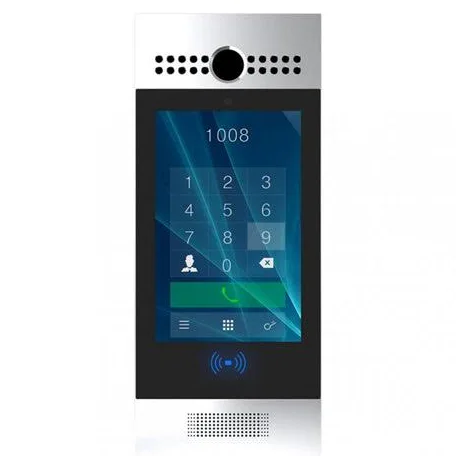
Camera at the entry, video at each unit or on a smartphone. Tenants see who’s there before buzzing them in. The standard upgrade for NYC residential buildings.
App-based panels with no in-unit hardware — residents answer the door and release it from their phones, anywhere. Best for buildings with heavy turnover.
Vandal-resistant stainless panels with a tenant directory for buildings of 6, 12, 24+ units. Each unit individually wired and labeled.
The workhorse of NYC residential entry. Fail-secure release that holds the door locked from outside while always allowing free exit. Sized to your existing frame.
For frameless glass lobby doors where you can’t cut the frame. Fail-safe maglocks release on power loss or fire alarm — a code requirement in NYC commercial lobbies.
🔑 Most buzzer jobs pair with access control. If you’re already opening the entrance, adding key-fob or card access for tenants costs little extra on the same visit and eliminates locksmith calls on every move-out. See access control →
The outdoor unit at the entrance with buttons (and a camera, on video systems). Visitors press your unit’s button to ring you.
The unit inside each apartment that rings, lets you talk, and has the button you press to “buzz” the door open.
The release plate in the door frame. Energize it and the door pushes open. Most NYC residential buzzers use a fail-secure strike.
An electromagnet that holds a door shut with hundreds of pounds of force. Releases when power is cut — required to be fail-safe for egress.
Fail-secure stays locked when power dies (you can still exit). Fail-safe unlocks when power dies. The right choice depends on the door and fire code.
Technology that sends HD video and audio over the old low-voltage copper already in your walls — so you upgrade to video without rewiring the building.
A button or sensor that releases a controlled door from the inside so anyone can always leave freely. Mandatory on code-controlled doors.
Older buildings run 2-wire analog. IP systems run on Cat6 and add app access and cloud features but usually need new cable.
We’re brand-agnostic — we recommend the right system for your building, not whatever earns us a kickback. We install and service Aiphone (GT & IX/IXG), Comelit, 2N, Akuvox, ButterflyMX, DoorBird, Siedle, Urmet, Fermax, Hikvision, Dahua, Elvox/Vimar, Linear, and Mircom.
For repairs and panel replacement, we also service legacy hardware found in older NYC buildings — Nutone, M&S Systems, IST, and discontinued analog panels — matching new components to your existing wiring wherever possible.
The Aiphone GT Series reuses existing 2-wire infrastructure, making it ideal for pre-war NYC buildings where rewiring isn’t practical.
ButterflyMX is smartphone-first — residents answer from their phones, great for high-turnover rentals. Note it carries a per-unit subscription.
Comelit and Aiphone are one-time purchases with no mandatory subscription — lower total cost of ownership over a building’s life.
Buzzers, entry cameras, and fob access all run on the same low-voltage wiring through the same conduit paths. Installing together means one licensed technician, one site visit, one clean job — most customers save $200–$400 in labor.
Record everyone who’s buzzed in. A camera at the entrance gives you footage to match against the buzzer log — invaluable after a package theft or break-in. Cameras →
Tenants enter with a fob; visitors use the buzzer. Deactivate a lost fob in seconds instead of rekeying the building. Access control →
A full intercom build adds room-to-room communication, elevator integration, and concierge stations on top of front-door entry. Intercoms →
2–4 unit conversions with concealed wiring and period-appropriate panels. Compatible with landmark-district facade rules.
6–50+ unit walk-ups and elevator buildings with full directory panels and per-unit handsets.
Board-approved upgrades with documentation for building management and alteration agreements.
Buzz-in entry for jewelers, pharmacies, and after-hours access with controlled release.
Staff and visitor entry, reception release, multi-door control for commercial tenants.
Controlled waiting-room and back-office entry with ADA-height call panels.
Multiple entry points, freight access, flexible tenant configurations in converted buildings.
Standardized systems across multiple buildings for managers and landlords.
Cost
Quality / Trust
DIY vs Pro
Technical
Landlord / Tenant
Complaints
Free on-site assessment. Honest quote. No monthly fees.
Dead handset, jammed door release, panel down — we run same-day buzzer repair across the five boroughs. Most common failures fixed in 1–2 hours.
Search “door buzzer installation NYC” and you’ll get a wall of national lead-aggregator estimates and brand marketing. Here’s how that stacks up against what really happens on a New York building.
Type your job into Angi, HomeAdvisor, or Fixr and you’ll get a tidy national average that means almost nothing for a five-borough multi-unit building. Those tools price a generic doorbell, not a 12-unit pre-war walk-up with corroded riser wiring. The honest NYC range runs from a few hundred dollars for a single audio replacement to well past $10,000 for a full cloud video system across dozens of units.
What moves the number is unit count and wiring condition — not the brand name on the panel. A building where we can reuse the existing 2-wire copper costs a fraction of one that needs new Cat6 pulled through finished pre-war walls. No estimator captures that because no estimator has seen your basement.
That’s why every reputable NYC installer quotes after a site visit, not over a form. When a national platform spits out a fixed price before anyone has looked at your entrance, treat it as a lead-generation guess, not a quote.
Manufacturer marketing makes a video retrofit sound like a plug-and-play swap. In a real NYC building, retrofitting means using 4-wire converters to push HD video over original low-voltage copper — which works beautifully when the existing wiring is intact, and not at all when decades of moisture have eaten the conductors.
The skill is diagnosing which building you have before quoting. We test the existing run on the site visit. If it carries signal cleanly, you save 30–40% versus a rewire. If it doesn’t, we tell you up front rather than discovering it mid-install and surprising you with a change order.
Aggregator listings and brand sites rarely make this distinction because they’re not the ones standing in your lobby with a meter. The retrofit promise is real — but only a contractor who’s tested your specific wiring can honestly make it.
Generic guides treat the door release as an afterthought. In New York, the lock choice is a code decision. An electric strike on a residential door is typically fail-secure; a maglock on a commercial glass lobby door must be fail-safe and tied into the fire alarm so it releases on alarm or power loss, with a request-to-exit device for free egress.
Get this wrong and you’ve created a life-safety violation — a door that traps people in an emergency, or one that fails open and defeats the security you paid for. FDNY and NYC life-safety standards govern this, and a handyman following a video tutorial usually doesn’t know it.
This is the single biggest reason to use a licensed contractor for building entry work. The buzzer is the easy part; the door release is where compliance lives, and it’s not something an out-of-state estimator or a budget bid will account for.
Smart-buzzer marketing leads with convenience and quietly attaches a per-unit subscription. App-first platforms can be excellent for high-turnover buildings, but at scale a recurring per-door fee adds up to real money over a building’s life — money that a one-time Comelit or Aiphone purchase never charges.
Neither model is wrong; they fit different buildings. A 40-unit rental with constant churn may genuinely benefit from app-based management. A stable co-op usually shouldn’t be paying a subscription forever for a front door. The mistake is choosing without anyone explaining the ten-year cost.
We lay the tradeoff out plainly so the board or owner decides with eyes open — not after the first renewal invoice arrives.
A five-star national brand isn’t the same as a contractor who’s wired a thousand New York entrances. The platforms surface companies that spend on ads and reviews, which tells you about their marketing budget, not whether they’ve ever retrofitted a Bed-Stuy brownstone or coordinated with a Riverdale co-op board.
Ask any installer how they’d handle your exact building — the answer reveals experience faster than a star rating. Local knowledge of supers, board documentation requirements, and landmark-district hardware rules is the difference between a clean job and a stalled one.
That experience doesn’t show up in an aggregator profile. It shows up when someone walks your basement and immediately knows what they’re looking at.
Plenty of articles walk through installing a video doorbell, and for a single-family home that’s reasonable. They quietly skip the reality that a multi-tenant building is a different animal — shared risers, a directory panel, a code-rated release, and the legal obligation to keep two-way communication working under the Multiple Dwelling Law.
A miswired strike, an ungrounded run, or a maglock with no exit device isn’t a cosmetic mistake in a building — it’s a hazard shared by every tenant. The cost of getting it wrong is far higher than the labor you’d save.
This is why “can I DIY it” has a different answer for a house than for a building, even though search results blur the two together.
Every shortcut the internet offers — instant estimates, plug-and-play retrofits, DIY kits — assumes a generic building that doesn’t exist in New York. The five boroughs are full of pre-war wiring, landmark facades, board approvals, and egress rules that no national tool accounts for.
The reliable path is unglamorous: a free site visit, an honest read of your wiring, and an itemized quote for the system your building actually needs. That’s the service we provide, and it’s the one piece of advice that holds true no matter which contractor you ultimately hire.
Reasonable for a house: a Wi-Fi video doorbell, a transformer, and an hour of your time. Fine for one door and one home. No code accountability, and not viable for shared entrances.
Required for any building: shared wiring, directory panel, code-rated release, egress compliance, and a one-year parts warranty. Licensed & insured (NYS #12000287431), firestopped and grounded, reusing existing copper where possible.
“Nine times out of ten when a super tells me ‘the whole system’s shot, we need to rewire,’ the wiring’s fine — it’s the panel and a couple of dead handsets. I’ll meter the run in the basement before anyone signs off on a rewire. Last month in a Grand Concourse building the management company had a bid for a full IP rewire at five figures. The 2-wire copper tested clean. We dropped in an Aiphone GT retrofit, kept the existing risers, and they paid a fraction of that quote.”
“The other thing people don’t expect: the buzzer is the cheap part. It’s the door release where jobs go sideways. I’ve walked into glass-door lobbies with a maglock and no request-to-exit device — meaning if the power dropped, people could be trapped. We don’t leave a controlled door without a clean egress path, period. That’s not an upsell, that’s code.”
— Field tech, Abstract Enterprises · 25+ years on NYC entrances
Tell us your building size and we’ll call with a ballpark.
“Our Bed-Stuy brownstone’s buzzer had been dead for months. They retrofitted a video panel over the old wiring in one afternoon — no holes in the walls. Tenants can finally see who’s at the door.”
— Marcus T., Bedford-Stuyvesant, Brooklyn
“Manage 6 buildings in the Bronx. They standardized our buzzer + fob setup across all of them. Move-outs used to mean a locksmith every time. Now I deactivate a fob from my phone.”
— Diana R., Fordham, Bronx
“Co-op board got three bids. Two wanted to rewire the whole building. Abstract tested the wiring, said it was fine, and installed Comelit for way less. No monthly fee either.”
— Howard L., Upper West Side, Manhattan
“Glass-door lobby in our Astoria building needed a maglock done right. They handled the fire-alarm tie-in and exit device. Passed inspection first time.”
— Sofia M., Astoria, Queens
“Storefront on Hylan Blvd — needed a buzz-in for after dark. Clean install, professional, showed up when they said. Recommend.”
— Anthony P., New Dorp, Staten Island
“Buzzer let people in but we couldn’t hear anyone. Fixed the audio line and upgraded us to video same visit. Honest about what needed doing.”
— Grace K., Flushing, Queens
Best for high-turnover rentals — no in-unit hardware, residents manage from phones, strong delivery features. Tradeoff: per-unit monthly subscription that compounds over years.
Buy-once, no recurring fee. Aiphone GT reuses 2-wire for cheap retrofits; Comelit offers modular video. Best long-term value for stable co-ops and owner-held buildings.
For larger or vandalism-prone entrances — IP69K/IK10-rated durability and advanced access integration. Best when you need ruggedized hardware and scale.
There’s no universally “best” buzzer — only the right fit for your building’s size, turnover, wiring, and budget. We recommend based on your building, not a vendor relationship.
Real ranges for NYC buildings. Final pricing follows a free site visit — unit count and wiring condition drive the number.
Single audio buzzer or replacement · electric strike release · existing wiring reused · 1–2 unit buildings.
HD video entry panel · smartphone door release · home or small building · 4-wire retrofit available.
Directory panel, all units wired · audio or video by unit count · optional fob integration · 6 to 50+ units.
Service calls booked online are $250 and applied toward the work. NYC base rates; outer-area pricing (Long Island, Hudson Valley) varies by market.
Usually a failed electric strike or power supply. We diagnose and replace the release, often same visit.
Corroded audio line or dead handset — common in pre-war buildings. Repairable, and a prompt to consider video.
Aging panel or riser fault. We test the run and advise repair vs. retrofit honestly.
We replace with vandal-resistant stainless, recessed and reinforced for exposed entrances.
Sign the release or buzzer has failed. Fixing it restores security and stops the propping. Pair with access control →
Package theft driver. We upgrade audio-only systems to video so tenants see before buzzing. Add a lobby camera →
New audio & video buzzer systems for every building type.
Same-day handset, panel, wiring & release repair.
Retrofit video over existing wiring.
Directory systems for 6–50+ units.
Door release for standard frames.
Fail-safe locks for glass lobby doors.
Add tenant fob access to your buzzer.
App-based remote door release setup.
Tell us about your building. We’ll call you back within the hour — no obligation.
Audio or video, one unit or fifty — we install door buzzer systems that last, with no monthly fees and a free on-site assessment first. Licensed, insured, and built for New York buildings.
Freshness: Updated May 2026 · NYS Lic #12000287431 · Changelog: May 2026 — published NYC door buzzer install hub (Blueprint v2.1)
We install and service door buzzer systems across all five NYC boroughs, Long Island, and the Hudson Valley. Choose your area: