Yonkers to Peekskill · Co-op Boards · ETPA Rentals · Tower Garages · Village Rules
Westchester packs four different kinds of apartment building into one county: glass rental towers rising around the Metro-North stations in Yonkers, New Rochelle and White Plains; brick co-ops from the 1910s and 1920s in villages like Bronxville and Tuckahoe; garden co-op courts off Central Avenue in Hartsdale; and three- and four-storey walk-ups above storefronts in Peekskill, Ossining and Mount Vernon. Each one has a different owner, a different approval path and a different weak spot. We design building camera systems around who has to say yes — the co-op board, the rental owner, the managing agent, the village — and then around the doors where things actually go missing.
Reviewed and updated October 18, 2026 · Written by Abstract Enterprises Security Systems, NYS licence #12000287431 · Westchester bookings handled through our Bronx office at 460 E Fordham Rd

Three answers tell us most of what a Westchester building will need: which municipality it sits in (a city such as Yonkers or White Plains, a village such as Bronxville or Ossining, or an unincorporated hamlet such as Hartsdale), whether it is a co-op, a condo or a rental, and whether it was built before 1974. Those three facts decide who approves the work, which local office may want paperwork, and whether the tenants live under rent stabilization. Call the Westchester desk on (914) 877-2578 with them and we can place the building on the price table below during the call.
Westchester is not one apartment market; it is at least four, sharing a county line. South of the Cross County Parkway, Yonkers and Mount Vernon have the density of the Bronx next door, with six-storey elevator buildings, prewar walk-ups and, increasingly, new towers on the Yonkers waterfront. Along the Sound, New Rochelle has added a downtown skyline in less than a decade. White Plains has built rental towers within a short walk of its Metro-North station. And scattered through the villages — Bronxville, Tuckahoe, Larchmont, Scarsdale, Hartsdale, Tarrytown, Ossining, Peekskill — are co-op buildings and walk-ups where the board meets in somebody's living room and the super lives in the basement. A camera plan that works for one of those buildings is often wrong for the next.
What they share is the problem that brings boards and owners to us. In November 2024, ABC7 New York reported that three people were arrested on Bronx River Road in Yonkers after packages were taken from the lobby of an apartment building at number 345; officers found open Amazon boxes with the contents removed, and the charges included possession of burglary tools. The Yonkers police lieutenant quoted in that report made the point every building manager should hear: the sooner the department gets information, the sooner it can react. A building whose lobby camera shows a clear face and a time stamp hands police that information in minutes rather than days.
In October 2026 the Yonkers Times described how package theft in the city's apartment buildings has “moved indoors” — out of the street and into crowded lobbies, unlocked mail areas and overflowing package rooms that were never designed for today's volume. The piece notes that Yonkers housing runs from older walk-ups and prewar buildings to newer waterfront developments, and that some older properties have no package room at all, so the vestibule absorbs the overflow. It also makes a point we agree with: footage can show someone entering a room, but without a delivery record it is hard to know which box they took or whether it was theirs. Cameras are one half of a package plan, and the camera half has to be aimed where the hand-off actually happens.
Westchester adds two layers that most of the city does not have in the same form. The first is rent regulation outside New York City: Westchester County's housing office lists eighteen municipalities — including Yonkers, Mount Vernon, New Rochelle, White Plains, Port Chester, Tarrytown and Sleepy Hollow — that have adopted the state's Emergency Tenant Protection Act, so a pre-1974 building with enough units in one of them is usually rent-stabilized, with tenants who know their rights and a state rent office in White Plains they can call. The second is the patchwork of local government: thirty-odd cities, towns and villages, each with its own building department, plus county consumer-protection rules for contractors. A camera project in Bronxville and one in Peekskill can need different conversations before they start.
Then there is the building stock itself. Bronxville's own village history describes how, in the 1910s, the developer William Van Duzer Lawrence introduced the suburban apartment building — Gramatan Court and the Alger Court complex among them — along with apartments above shops and some of the first town houses in the county, all on a one-square-mile village of narrow streets and granite outcroppings. A century later, Yonkers is financing towers of 25 and 17 storeys at Larkin Plaza, and New Rochelle has approved thousands of new rental units around its station. The cable path, the closet, the recorder location and the approval path are different in every one of those buildings, and that is where most of our design time goes.
Most Westchester buildings that start with cameras end up looking at the front door as well, because the lobby camera works best beside a reliable lock and intercom. Our Westchester intercom installation crew and the team handling access control across Westchester County work from the same building survey, so the entrance gets one design instead of three separate visits.

When the recorder in the basement of a Yonkers or Mount Vernon building stops writing, or the camera over a New Rochelle package room shows a grey tile, call (914) 877-2578. We book the next open slot and most single-camera, power-supply or recorder-drive faults are fixed within one to two hours of arrival. Service visits are billed at $195 an hour with a three-hour minimum ($585).
These are the pieces a Westchester building system is assembled from. A twelve-unit Ossining walk-up may need three of them; a new White Plains tower with a garage and a roof deck may need all nine.
One camera inside the vestibule facing the street door at head height and one on the inner door, so every buzz-in, every courier and every person who follows a resident inside is recorded from the front.
A camera on the hand-off point where couriers drop boxes and one covering the shelves or lockers, aimed to work alongside a delivery log — the gap the Yonkers Times described in 2026.
Gate, ramp and level cameras for the parking decks under new rental towers, set for the glare at a street-level entrance and the low light two levels down.
Cameras on the paths, building doors and shared parking court of a Hartsdale- or Greenburgh-style garden co-op, carried between buildings on outdoor-rated cable or fiber.
Discreet lobby, stair and service-door cameras in 1910s–1930s brick buildings where plaster walls, oak trim and a board's sense of the lobby set the rules for every cable.
A separate residential entrance camera for walk-ups over Main Street storefronts in Peekskill, Ossining or Port Chester, kept apart from the shop's own system and its customers.
A recorder in a locked space the super controls, on battery backup, sized for the days of footage the owner or board decides to keep — and wired so the management office can reach it remotely.
Cameras left by a developer on a cloud subscription, or an analog system inherited from a previous owner, surveyed, documented and moved onto equipment the building controls.
A camera-by-camera schedule, marked-up plans, a retention and access description and a fixed price, written to go into a co-op board packet or an owner's capital plan.

Six building types cover nearly every Westchester apartment property we are asked about. They need broadly the same camera positions; what separates them is how cable moves through the structure, where a recorder can live, and who can veto the plan.
The new high-rises in downtown Yonkers, New Rochelle and White Plains: steel and concrete, sleeved risers, an IDF closet on most floors, a garage below and an amenity floor or roof deck above. Cabling is straightforward; the work is coordinating with the property manager's existing access control and making the garage readable.
Four- to six-storey brick buildings from the 1910s to 1930s in Bronxville, Tuckahoe, Larchmont, Scarsdale and Pelham, often with plaster on terra-cotta or masonry, no hung ceilings and a small elevator. Cable follows old telephone and doorbell chases, closets and the elevator machine room.
Two- and three-storey buildings arranged around lawns and a parking court, common in Hartsdale, Greenburgh, White Plains and Yorktown. Each building may have its own basement and entrance, so the backbone between them is the design question.
The six-storey elevator buildings of Yonkers, Mount Vernon and New Rochelle, many of them rent-stabilized under ETPA. Long corridors, a single lobby, a basement laundry and boiler room, and owners who want a durable system with clear tenant notices.
Three- and four-storey frame and brick walk-ups on the hillsides of Peekskill, Ossining, Sleepy Hollow and Tarrytown, where streets climb from the Hudson and a building can have entrances on two levels. Small unit counts, tight budgets, and rear yards that need watching.
Mixed-use blocks on Pondfield Road in Bronxville, Main Street in Peekskill, Westchester Avenue in Port Chester and Mamaroneck Avenue in White Plains: a narrow residential door beside a shop, a stair, and two or three floors of apartments with a shared rear exit.
Towers. New construction usually has empty sleeves or conduit from the main telecom room to each floor's closet. We run one cable per camera to the nearest closet switch, link the closets back to the head-end on fiber or a dedicated network, and leave the developer's tenant internet alone. The garage is often the hardest part: long concrete runs, sprinkler mains in the way, and ramps where a plate is only readable for a second or two. We plan garage cameras with the property manager's parking operator, because that is who will be asked for the footage.
Prewar village co-ops. These buildings were never designed for cable. The usable paths are usually the old telephone riser beside the elevator, the dumbwaiter or incinerator chase if one survives, the elevator machine room, and the cellar ceiling, which is where the recorder normally ends up. Where a hallway has no route at all, a single camera at each end of the floor, fed down a closet, often covers what a camera at every door would. Every masonry penetration is sealed again, and anything visible in the lobby is painted or run in a finish the board approves.
Garden complexes. The first question is whether the buildings already share anything: a conduit between basements, an old coax trunk, a common laundry building. If not, we compare outdoor-rated cable along existing paths, a fiber pair in a short trench where the co-op allows it, and point-to-point wireless between roof edges where it does not. Westchester's rock is a real factor here — Bronxville's village history describes streets laid out around “massive granite outcroppings” — so we avoid digging where an aerial or wireless link will do.
Pre-1974 elevator rentals. Long double-loaded corridors on six floors usually mean a camera at each end, one at the elevator landing on the floors the owner chooses, and a backbone up the stair or a riser closet. The basement is the hub: boiler room, meter room, laundry, bike storage and the recorder. Owners of ETPA buildings tend to want equipment that will last a long time without attention, so we favour wired PoE cameras, a recorder on battery backup and a monthly health report rather than anything that needs charging or subscriptions.
River-town walk-ups and storefront apartments. With six or twelve apartments, the budget is small and the building is too. A recorder in a locked closet or the basement, three to six cameras — street door, inside the door, the stair, the rear exit and the mailboxes — and outdoor cameras in weather-rated housings for the yard and side passage. In mixed-use buildings the shop keeps its own system and the residential entrance gets its own, because the two have different owners, hours and footage requests.

In New York City, one licensing system and one building department cover every apartment building. Westchester layers state law, a county consumer-protection code and the rules of whichever city, town or village the building sits in. None of it is hard, but a board or owner who skips it can end up with a stop-work visit or a contractor who should not have been on site. This is how we approach it on every Westchester job; it is a practical summary, not legal advice.
New York's Department of State licenses security and fire alarm installers under Article 6-D of the General Business Law. Its published regulation, 19 NYCRR §195.2(b)(1), brings work on a closed-circuit television or video surveillance system within the licence when the system is used to detect or monitor intrusion, theft and similar events — which describes almost every apartment building camera system. Abstract Enterprises Security Systems installs and supervises under NYS licence #12000287431. Ask any installer for their state licence number and check it with the Department of State before signing.
Westchester County's Department of Consumer Protection administers the county's home-improvement contractor licence. The licensing law defines home improvement as work on a private residence, townhouse, condominium, apartment or dwelling place “of not more than three units,” and it excludes electrical work and alarm work performed by a county-licensed alarm business. A two-family house in Mount Vernon may fall under that licence; a 48-unit co-op in Hartsdale does not.
The same county Consumer Protection Code has a separate article (Chapter 863, Article XV) for alarm businesses and alarm agents. Town codes that refer to it, such as the Town of Cortlandt's alarm chapter, describe that licence as covering the business of installing or servicing police or fire alarm devices. A camera system that records but does not signal the police is not obviously an “alarm device” in that wording; a system tied to an intrusion panel that reports to a central station plainly is. Because the published texts do not settle the camera-only case, we tell boards to put the question to Consumer Protection directly at (914) 995-2155 for their specific design, and we design the paperwork around the answer.
Each Westchester city and village runs its own building department. Low-voltage camera cable inside an existing building is often treated differently from new electrical circuits, but the answer is local: some departments want to know about any penetration through a fire-rated floor or wall, any new outlet for a recorder, or any work in a landmark or architectural-review district. Where a new circuit is needed for a recorder or a garage camera, a licensed electrician pulls it under the municipality's electrical rules. We ask the building department before the job is scheduled, not after.
Several Westchester towns and villages require an alarm permit for police or fire alarm devices, issued only when the installer is an alarm licensee. Cortlandt's code, for example, makes it a violation to keep such a device without a permit from the Director of Code Enforcement. Where a building's cameras will trigger an alarm response, we identify the local permit before installation; where they will not, we say so in the proposal so the board has it in writing.
In an ETPA building, tenants deal with New York State Homes and Community Renewal's rent office, which has a Westchester office in White Plains. Cameras in lobbies, hallways, laundry rooms and other common areas are generally permitted in New York, and never where tenants have a reasonable expectation of privacy; audio is a separate question under the state's eavesdropping law. Notice is not always strictly required, but owners who post it and explain the system to the tenants' association tend to avoid complaints, and rent-regulated tenants do have a state complaint route if they believe a camera invades their privacy. We give owners an accurate description of every camera; whether and how to notify tenants is a decision for the owner and their counsel.
Westchester managing agents, co-op boards and some municipalities ask contractors for a certificate of insurance before work starts, naming the corporation, the owner or the managing agent as additional insured. The safest practice is the one New York co-op managers recommend generally: have the certificate sent by the contractor's insurance broker rather than by the contractor, check the policy dates and carrier, and keep it on file with the work order. Our broker issues certificates directly in the wording the building asks for. We also agree working hours, noise limits, parking for the van and access to keys and the basement with the super before the first day, because a crew waiting at a locked door is time the building pays for.
Westchester co-op boards answer to their own proprietary lease and bylaws, and also to the county's Fair Housing Law, which since August 2021 sets deadlines for handling purchase applications and requires board members to take two hours of fair housing training every two years. That calendar matters: a camera proposal that arrives without drawings, a price and a retention policy tends to slide to the next quarter. Ours arrives ready to vote on.
Apartment buildings in Westchester are owned and run as businesses: by REITs and developers in the downtowns, by family owners with five or ten buildings in Yonkers and Mount Vernon, and by co-op corporations with professional managing agents. These are the corridors where most of that work is concentrated, and what the owners there tend to ask for.
Getty Square, Larkin Plaza and the Hudson riverfront north of the Yonkers Metro-North station, where new towers sit beside older walk-ups. Owners ask for garage coverage, package-room cameras that work with their delivery systems, and cameras that survive the river-facing side.
The blocks around the New Rochelle station rezoned for transit-oriented development, where lohud reports the city has authorized more than 10,500 rental units and 500 condos in a decade. Lease-up teams want cameras on amenity spaces, mailrooms and garage gates from the first day of occupancy.
South and North Lexington Avenue and the streets around the White Plains Metro-North station, where rental buildings such as The Metro at City Square at 34 South Lexington sit directly across from the trains. Commuter foot traffic through lobbies is the common complaint.
Dense blocks of pre-1974 elevator buildings and walk-ups, many rent-stabilized, owned by smaller landlords. The asks are basic and practical: a lobby that records, mailboxes that are watched, a basement door that stops being forced.
Village co-ops near the Bronxville and Tuckahoe stations and along Pondfield Road, where boards want cameras that cannot be seen from the street and lobbies that look exactly as they did before.
Main Street mixed-use buildings and hillside walk-ups, plus newer projects such as Peekskill's Lofts on Main in the downtown arts district. Small systems, clear pricing and someone local to call when a camera goes dark.

Garden co-ops and condo courts are the building type most often under-quoted in Westchester, because each building looks small. The cameras are not the hard part; the connections between buildings are. A complex of five two-storey buildings around a lawn and a parking court needs one place where every camera's video ends up, and four links to get it there.
Hartsdale alone has dozens of co-op listings at any time, and residents talk about these buildings frankly: one r/Westchester poster who had bought two Hartsdale co-ops described the application as a pain but the experience as positive overall. Boards there are used to process. What they rarely have is a drawing of how their buildings connect.
First, look for what is already shared. Many complexes have a conduit between basements for an old intercom, cable TV trunk lines, or a laundry building wired to the others. Any of these can save a trench. We test old conduit with a pull string and check whether it is full before counting on it.
Second, choose the link per building, not per complex. A building twenty metres away across a path may get outdoor-rated cable along a fence or under a covered walk. One across a parking court may get a fiber pair in a narrow saw-cut trench if the board allows it. One at the far end of the lawn, with a clear line of sight between rooflines, may get a point-to-point wireless bridge. Mixing methods is normal.
Third, put a small switch in each basement. Each building's cameras run to a switch in its own basement or utility room, on a small battery backup, and only the link travels between buildings. If one link fails, only that building's cameras are affected, and the recorder shows exactly which.
Fourth, keep the recorder where management can reach it. In most complexes that is the management office or the main building's basement. The board decides who holds keys and passwords; the drawings show every link so the next contractor, or the next board, can follow it.
These are the questions Westchester owners, boards, managing agents and supers put to us, grouped by the part of the job they belong to. Each one is tied to a real kind of building or a real local rule, because in this county the answer genuinely changes from Yonkers to Bronxville to Peekskill.
No. The county's licensing law defines home improvement as work on a residence, condominium, apartment or dwelling of not more than three units, so a 40-unit building is outside it, and the law separately excludes electrical work and alarm work done by a county-licensed alarm business. What does apply in Yonkers is the state licence for security installers, which covers video surveillance systems used to detect intrusion or theft, plus whatever the City of Yonkers building department wants for penetrations or new circuits. A contractor who shows you only a county home-improvement licence for a large building is showing you the wrong document.
The county code's alarm article is described in town codes such as Cortlandt's as covering the business of installing or servicing police or fire alarm devices. A recorder that simply stores video is not clearly an alarm device under that wording. The answer changes if the cameras feed an intrusion panel, trigger a monitoring station, or are sold as part of a monitored package. Because the published texts leave room for interpretation, we put the specific design to the Department of Consumer Protection before work starts and keep their answer with the building's records.
It depends on the scope, so we ask rather than guess. Running low-voltage cable through existing walls and ceilings is often handled differently from new electrical work, but drilling through a fire-rated floor, adding a dedicated circuit for a recorder, or mounting equipment on a facade can each bring the building department in. We describe the job to the department in writing, file anything it asks for, and have a licensed electrician pull any new circuit. The board or owner gets copies of whatever was filed.
Usually not, if the cameras stay independent of the fire alarm. Local alarm permits in Westchester towns and villages generally attach to police or fire alarm devices and to the property's occupant, and a camera system that does not signal anyone leaves the fire panel and its permit untouched. We never connect cameras to a fire alarm panel. If the board later wants intrusion alarms that report to a monitoring station, that is a separate design with its own local permit question.
Tell them what is being recorded, where, how long footage is kept and who can see it. New York generally allows cameras in common areas without tenant consent, and formal notice is not always required, but tenants in ETPA buildings know their rights and have a state rent office to call. A short letter, a sign at the entrance and a conversation with the tenants' association prevent most complaints. We give the owner a plain list of every camera and what it covers; the owner and their attorney decide the wording.
Take the complaint seriously, because a camera that looks into a home is exactly what New York privacy guidance warns against. The fixes are simple: move the camera so it looks along the corridor rather than across a doorway, narrow its field of view, or apply a privacy mask in the recorder so that door's opening is blacked out in both live view and recordings. We check every hallway camera for this at handover, but buildings change; we re-aim and mask on a service visit and give the owner a screenshot showing the result.
No: fix the lock first. Westchester County's tenant guidance lists broken doors, locks and mailboxes among the conditions tenants can report to their local building inspector, and New York's warranty of habitability covers common areas as well as apartments. A camera on a door that does not latch records the problem without solving it. Repair the door, closer and lock, then put the camera inside the vestibule facing the door so that anyone forcing it or propping it is identified.
Yes, if the camera is inside, facing the door at head height, rather than outside looking at it. Most propped doors are propped by residents or contractors for convenience, not by intruders, and a clear face and a time stamp usually end the habit after one conversation. Adding a door-position contact that sends the super an alert when the door stays open for more than a minute or two makes the camera useful in real time rather than only afterwards.
The camera rules themselves do not change. Whether or not a building is stabilized, New York's general position is the same: common-area cameras are usually allowed, nothing should look into a home, and audio raises eavesdropping questions. What changes is the route a tenant has for complaints. A stabilized tenant can go to the state rent office as well as the local building inspector; a tenant in your nine-unit building would go to the inspector or to court. Either way, a written description of the cameras and a sensible retention policy are the best protection an owner has.
Split the garage into zones that match who uses them. A plate camera and an overview at the street entrance cover everyone; cameras at the point where the residential levels separate, at the elevator lobbies and at the stair doors cover residents only. That way the retail operator's footage requests and the residential manager's never need the same files. We set up separate user accounts for each operator and agree in writing who exports what, so a fender-bender on the retail level does not open the residential archive.
Cover the doors, not the people relaxing. A camera at each entrance to the gym, lounge, co-working room and roof deck answers almost every question a manager will have: who came in, when, and whether they were a resident. Cameras inside the gym and on the deck itself are better kept to equipment areas and edges, never changing rooms or restrooms. On the river-facing roof we use housings rated for wind-driven rain and stainless fixings, because exposed decks above the Hudson take weather that a street-level camera never sees.
They give the desk a clear view of both doors at once so the attendant can stop the cut-through politely and early. We put a face-height camera on each entrance and lay out the desk screen so both appear large, with an overview of the lobby beside them. Pair that with a fob reader on the secondary door, so only residents can open it from outside, and the cut-through usually stops within weeks. The footage then matters only when something actually goes wrong.
Often, yes. Many cloud cameras also speak the open ONVIF standard and can be recorded locally; some are locked to their own service and must be replaced. We test each model, keep the ones that work, and replace the rest in phases so the building is never without coverage. The cable the developer installed is usually perfectly reusable. Moving to local recording ends the per-camera subscription, and the building — not a former developer account — holds the administrator password.
A camera inside a glass vestibule pointing toward a bright western sky sees a dark person against a bright background; in late afternoon the sun off the Hudson makes it worse. Three fixes, usually combined: turn the camera so it looks across or back toward the door from the outside wall rather than straight out through the glass; use a camera with true wide dynamic range, which exposes the face and the sky separately; and add a second camera outside, under the canopy, facing in, which catches the face in even light. We test the angle at the time of day the problem happens, not at noon.
Cover your own lot, your doors and the edge where your property meets the path, and stop there. A camera that looks along your boundary will catch anyone stepping onto your property from the path, which is what matters to the building. The path, the station stairs and the railroad's land are someone else's property, with their own cameras and their own rules about footage. If an incident on the boundary needs footage from both sides, police can request it from each owner.
We look for the routes the original builders left: the telephone and bell chase beside the elevator, closets stacked floor over floor, an old dumbwaiter or incinerator shaft, and the elevator machine room. In most buildings of that age one of those gets cable from the cellar to the top floor. On each landing a single short run from the chase to a camera above the stair or at the end of the hall is usually enough, finished in a small painted raceway or fished behind trim where possible. Nothing is chased into plaster without the board seeing a sample first.
At your property line, as nearly as a lens allows. Cameras on your building doors, your path and your half of the court are your corporation's business; a camera that sweeps the neighbour's entrance invites a complaint and an awkward board-to-board conversation. We mark the line on the plan, aim and mask cameras to it, and suggest the two boards agree in writing how a shared incident in the middle of the court will be handled — for example, each exports its own view to the police.
Go over or through the air instead of down. Options, in order of preference: an existing conduit or sleeve to the garage, if the original builders left one; outdoor-rated cable on an existing route such as a fence line or a covered walkway; a point-to-point wireless bridge from the building's roof or wall to the garage; or a camera at the garage that records locally and is reached over the building network. A short trench is a last resort where ledge is shallow, and any digging needs a utility mark-out first.
Do the walkthrough and proposal between meetings, so the board votes on something finished. We walk the building with the super or a board member, send the camera schedule, plans, retention and access description and a fixed price, and answer questions by email before the meeting. If the board wants more time on hallways or exterior cameras, it can approve the entrance and package-room phase now and the rest at the next meeting; each phase is priced to stand on its own.
Overnight, the system should do what the attendant would. We set motion-based alerts on the entrance and package room for the hours the desk is empty, sent to the super or the managing agent's on-call phone, with a snapshot so the recipient can see at a glance whether it is a resident coming home or something to act on. During the day the alerts are switched off and the attendant has a live desk view instead. Retention stays the same around the clock.
Bring a photo of the facade with the camera position marked, the camera's cut sheet with its size and colour, how the cable will reach it, and why that position was chosen over a less visible one. Reviewers in Westchester villages tend to care about the same things: the smallest camera that does the job, mounted on plain surfaces rather than ornament, finished to match, with no loose cable. We prepare that packet as part of the board proposal, and if a street-side camera is not approved, the plan usually works from inside the vestibule instead.
Use the building wherever it gives a clear view, because a wall mount is cheaper, easier to power and harder to vandalise than a pole. The rule of thumb is distance and angle: a camera can identify a face or a plate only within a limited range of where it is mounted, so a lot deeper than that from the wall, or one with parked cars blocking the view from the building, needs a mid-lot position. Where a pole is needed, it usually goes beside an existing light pole so it can share the conduit and power, and the light helps the night picture.
The recorder should tell them. We set it to send an email or app notification to the managing agent and a named board member when a camera loses video, a drive reports errors or the recorder restarts after a power cut. A short weekly summary confirming every camera recorded can go to the same people. That way a dead camera is noticed within hours, rather than on the morning someone needs the footage, and nobody on a volunteer board has to log in to check.
Inside the residential vestibule, looking out at the street door, and at the foot of the stair. That catches every person who enters the apartments and very little of the sidewalk in front of the shop. If an exterior camera is needed for the residential door, a narrow lens aimed along the door rather than across the shopfront keeps the shop's customers out of frame. The shop keeps its own system; ours records only the residential side, on a recorder the building owner controls.
Treat it as two front doors. Each entrance gets a camera inside facing the door and, where the stair is open between them, a camera at each landing where the two routes meet. That usually means four to six cameras for the circulation alone, before mailboxes and the rear yard. Buildings on Hudson River slopes often have a basement that is at ground level on the downhill side, so we check that door as carefully as the main ones.
Two places: outside the basement door, aimed at head height on anyone approaching it, and inside, covering the door from the room. The outside camera identifies the person; the inside one shows what they did. Add a steel door or at least a latch guard and a proper lock, because a camera does not stop a pry bar. In a small building the recorder can sit in the same basement in a locked steel box, with its power on a battery backup so cutting the lights does not cut the recording.
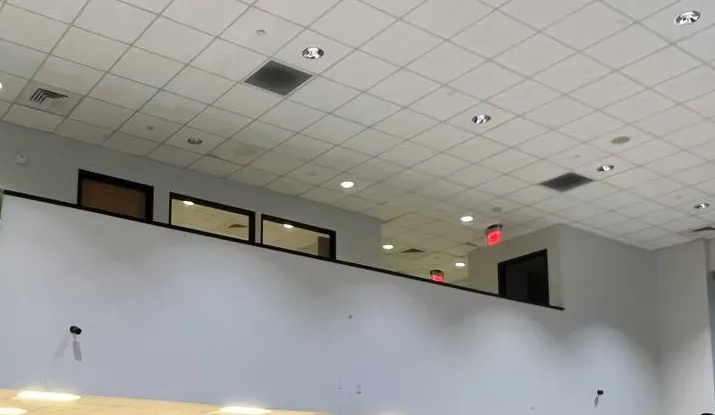
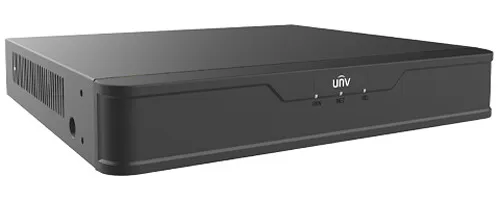
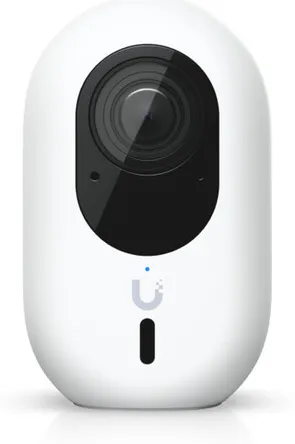
We install wired PoE IP cameras from established manufacturers such as Uniview, Dahua, Hikvision and Ubiquiti, chosen per location rather than per brand. These eight categories cover what Westchester buildings need.
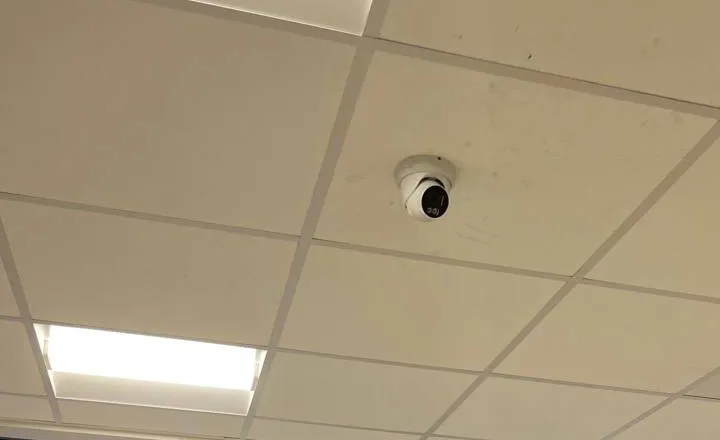
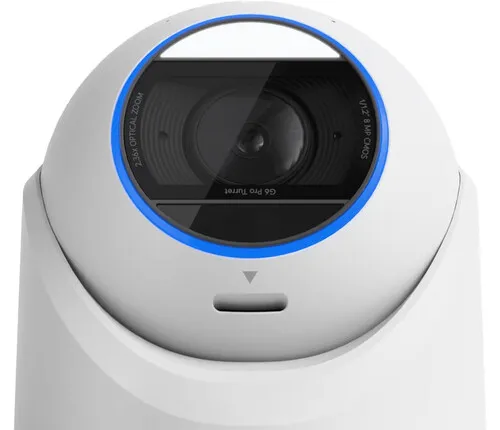
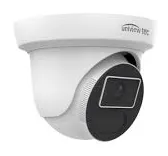
The workhorse for lobbies, vestibules and corridors in Yonkers and New Rochelle rentals: easy to aim, good infrared for unlit stairs, and no dome bubble to collect dust or reflect lobby lights.
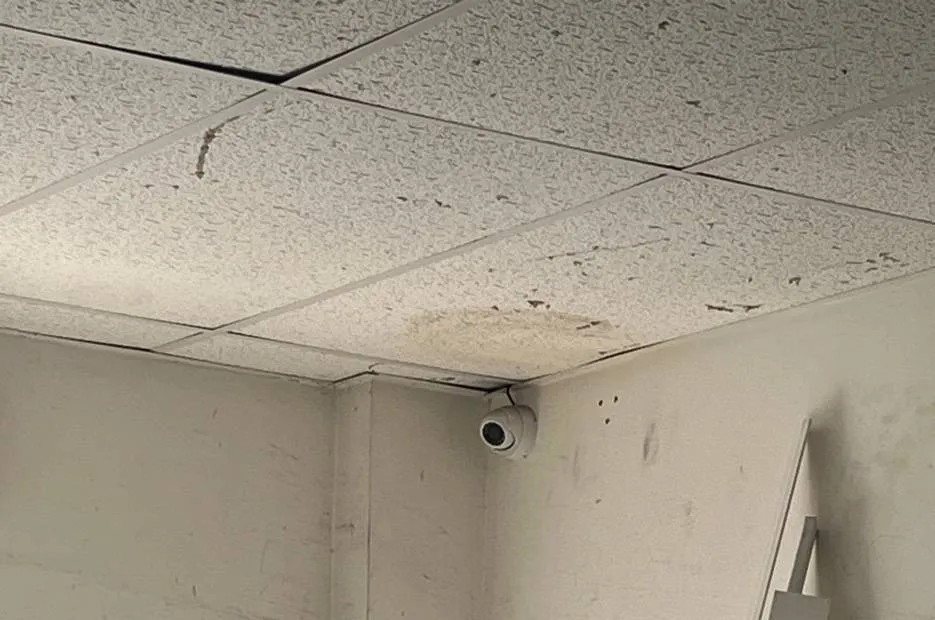
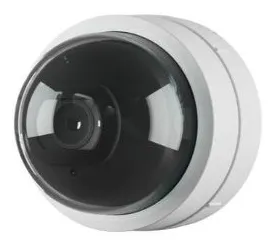
Low-profile domes for elevator cabs, low ceilings and entrances within reach, common in prewar village co-ops where a board wants the camera to look like a light fitting.
Small cameras for package rooms, mailbox alcoves and management offices where a full turret would look out of place, recording onto the building recorder rather than a phone app.
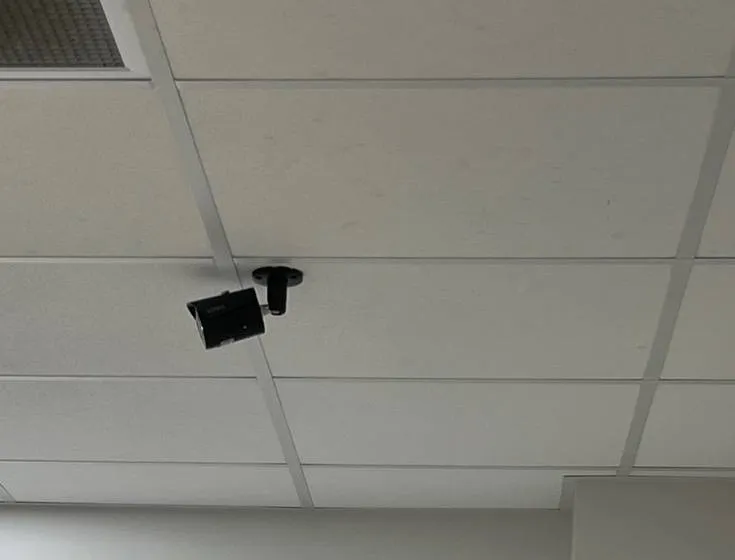
Longer-range cameras for rear yards, side passages and parking courts behind walk-ups in Peekskill and Mount Vernon, with a visible shape that tells a passer-by the yard is watched.
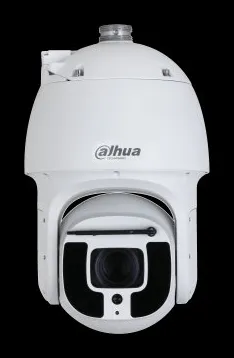
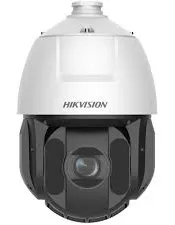
Pan-tilt-zoom cameras for large garden-complex parking courts and tower garage entrances, used alongside fixed cameras so that nothing goes unrecorded while the PTZ looks elsewhere.
Narrow-angle cameras set for the speed and angle of a garage ramp or gate, so a plate is legible on the recording when a car arrives or leaves.
Recorders sized by camera count and retention days, with redundant drives on larger systems, in a locked closet or cellar on battery backup, and reachable remotely by named accounts.
Point-to-point wireless and fiber to carry video between buildings in a garden complex, across a parking court to a detached garage, or from an elevator cab up the hoistway.


Instead, this section tests the claims those summaries are built from — published cost guides from Angi, HomeAdvisor and Thumbtack, contractor directories, and licensing explainers that rank for Westchester searches — against what a Westchester apartment building actually involves.
Thumbtack's Yonkers page says installation can run from about $100 for a single camera line to $1,000–$2,200 for an entire system, and Angi gives a New York average of $1,509, typically $797 to $2,222. For a house or a small shop, those ranges are reasonable.
An apartment building's “entire system” is a different object. Even a twelve-unit Ossining walk-up needs the street door, the vestibule, the stair, the mailboxes and the rear exit covered, all wired to a recorder in a locked space; a Yonkers elevator building adds every floor, the laundry and the basement doors.
That is why the Westchester table further down this page starts at $6,250 for a small building. The difference is not camera prices; it is cable through masonry, the number of doors and the hours it takes to do it in an occupied building.
HomeAdvisor's published range per camera, including labour, assumes a short run from each camera to a recorder in the same house. Angi's figure of $100 to $350 per camera for installation alone makes the same assumption.
In a six-storey Mount Vernon rental, one corridor camera on the top floor may need a run through a riser closet, a fire-stopped penetration at every floor and a switch in a closet halfway up. In a Hartsdale garden complex, one camera on the far building may need a bridge across the parking court.
Our installed Westchester range, $625 to $1,875 per camera, reflects that. Cameras next to the recorder sit at the bottom; cameras at the far end of a building or a complex sit at the top.
At least one licensing explainer that ranks for Westchester camera-permit searches says the county requires a “Westchester County Low Voltage License.” We could not find such a licence on the county Department of Consumer Protection's site.
What the county code does contain is a home-improvement licence limited to dwellings of three units or fewer, and an alarm business and agent licence described in town codes as covering police and fire alarm devices. The state's Department of State licence covers video surveillance used to detect intrusion.
The safe course for a board is to ask any installer for the state licence and to put the alarm-licence question for its specific design to Consumer Protection. A confident summary is not a substitute for that phone call.
Summaries of camera rules for rentals often assume city law. Westchester County lists eighteen municipalities that have adopted the Emergency Tenant Protection Act, from Yonkers and Mount Vernon to Tarrytown, Port Chester and Mount Kisco.
That matters for cameras because rent-stabilized tenants have a state agency to complain to, and an owner who installs cameras without explanation can find the system becoming part of a dispute.
Notice, a sensible retention period and cameras that never look into an apartment are cheap insurance. The answers that assume no tenant rules apply outside the five boroughs are simply wrong here.
The Bronx River Road case in Yonkers in 2024 ended in arrests because someone phoned the police quickly. Cameras help identify; they rarely prevent on their own.
The Yonkers Times put it plainly in 2026: footage can show someone entering a package room, but without a delivery record it is hard to know which package they took or whether it was theirs. The fix is a camera on the hand-off point plus a log or lockers.
We design package-room cameras to be read alongside that log — one view on the drop-off, one on the shelves — so that a missing box becomes a five-minute search, not an argument.
Consumer reviews praise Wi-Fi cameras for easy setup, and in a house that is fair. A garden co-op with six buildings, brick walls and a parking court in the middle is not a house.
Wi-Fi does not cross brick buildings reliably, battery cameras need someone to charge them, and every camera on a separate app account becomes a password problem when the board changes.
We use wireless where it is the right tool — a dedicated point-to-point bridge between rooftops, or across an elevator hoistway — and wired PoE cameras for everything else.
National brands are built around one household's account and a monthly plan. That fits a single family; it does not fit a building where the super, the managing agent and the board need different levels of access, and where the account must survive a change of owner or agent.
Consumer systems also struggle with long cable runs, riser closets, garages and 30 to 90 days of retention on dozens of cameras. A building system records locally on hardware the corporation or owner owns, with no per-camera subscription.
Residents can still use their own doorbell or indoor cameras inside their apartments, subject to the board's or owner's rules for the hallway. The common areas belong on the building's system.
Tell us the municipality, the number of units and who has to approve the work. We walk the building, then send a camera schedule, plans and a fixed Westchester price your owner or board can act on.
The most useful Westchester requests name the city, village or hamlet, the street, the number of units and floors, whether the building is a co-op, condo or rental, roughly when it was built, and what is there now. We reply in writing the same business day; to talk it through, call (914) 877-2578.
Thanks — the Westchester desk will review the building details and call you today. If it can't wait, call (914) 877-2578.
Seven steps, from a Peekskill walk-up to a New Rochelle tower. The second and fourth steps are the ones that are specific to Westchester: knowing which local office and which decision-maker a building answers to before anyone drills.
You give the municipality, street, unit count, ownership and building age. We place it on the Westchester table and tell you who will need to approve the work.
We confirm the state licence position, ask county Consumer Protection and the city or village building department about the design, and note any alarm permit or electrician work.
With the super we walk every entrance, the mailboxes, package room, corridors, basement, garage or parking court and the property edges, and photograph closets and cable routes.
The owner or board receives a camera list, plans, retention and access description, local paperwork notes and a fixed Westchester price, phased if wanted.
Street doors, vestibules, mailboxes and package room go in first and record from the first evening, so the building is better covered before corridor work starts.
Corridors, stairs, elevator, basement rooms, garage, parking court and links between buildings follow, with every rated penetration fire-stopped and photographed.
We set named accounts to the agreed policy, confirm retention, mask any view into an apartment, train staff to search and export, and hand over drawings and passwords.

Westchester buildings are easiest to place by the station, the village centre or the development nearest them. These six are reference points we use when booking walkthroughs. They are named as landmarks and building types only — not as Abstract Enterprises Security Systems projects.
A National Historic District within a one-square-mile village whose own history credits William Van Duzer Lawrence with bringing the suburban apartment building, apartments over shops and the county's first town houses in the 1910s, including Gramatan Court and the Alger Court complex.
RXR's two-tower Larkin Plaza, 439 apartments at 25 and 17 storeys (Multi-Housing News), in the downtown around Getty Square and the Hudson waterfront, where new rentals stand next to prewar walk-ups.
The station-area district where, according to lohud, fourteen apartment buildings with 2,456 units opened between 2018 and 2023 and the city has since authorized more than 10,500 rental units; Highgarden Tower added 219 affordable apartments (Governor's office).
The cluster at the gateway to downtown White Plains, directly across from the Metro-North station, including The Metro at 34 South Lexington Avenue; the White Plains BID also lists 25 North Lex, a 500-unit residence a short walk from the station.
Main Street walk-ups and newer projects such as Lofts on Main, a $28 million development of 75 apartments in two four-storey buildings (New York Housing Conference), above the Hudson and a short ride from the Peekskill station.
The village whose white marble, found in 1822 according to Bronxville's village history, was shipped for Greek Revival buildings from Boston to New Orleans — now a compact district of prewar apartment buildings near the Tuckahoe station.
We also serve Mount Vernon, Pelham, Eastchester, Scarsdale, Hartsdale, Ardsley, Dobbs Ferry, Hastings-on-Hudson, Irvington, Tarrytown, Sleepy Hollow, Ossining, Croton-on-Hudson, Larchmont, Mamaroneck, Harrison, Rye, Port Chester, Rye Brook, Elmsford, Valhalla, Pleasantville, Mount Kisco, Yorktown, Somers and Cortlandt.

Westchester prices on this page are the Abstract Enterprises Security Systems apartment-building list multiplied by the 1.25 Westchester factor that applies across our services. Every figure is installed and all-in: cameras, recorder and drives, switches, cable, labour, fire-stopping, configuration and handover. A locally recorded system has no monthly fee.
| Building | Typical cameras | Westchester price | Usually covers |
|---|---|---|---|
| Walk-up, small co-op or apartments over shops | 4–8 | $6,250–$15,000 | Street door, vestibule, mailboxes, stair, rear exit or yard and basement door; recorder in a locked closet or the cellar. |
| Mid-size elevator building or small garden complex | 12–20 | $15,000–$31,250 | Everything above plus corridors or landings, elevator, package room, laundry, boiler and meter rooms, or two to four garden buildings; 30–60 days retention. |
| Rental tower, large co-op or multi-building complex | 24–40 | $31,250–$56,250+ | Full common areas, garage ramp and levels, amenity floor and roof doors, parking court, desk or office monitoring, and links between buildings. |
| Portfolio or campus | 50+ | Custom | Several buildings or sites on a central management view, each with its own recorder, for owners with properties across several Westchester cities. |
Per camera, that is roughly $625 to $1,875 installed in Westchester. The low end is a camera beside the recorder in a cellar; the high end is a camera at the far end of a six-storey corridor or across a parking court from the head-end.
ADT sells monitored security on a contract, built around an alarm panel and a monthly fee; for a building, the monitoring part rarely fits and the camera part is usually limited in count and retention. Ring and SimpliSafe sell cameras tied to one account and an optional subscription, priced and designed for a single household. All three work well for what they are designed for. A Westchester apartment building needs something they are not: dozens of wired cameras on one recorder the corporation or owner owns, named accounts for the super, agent and board, retention set by policy rather than by plan, and a contractor who handles the cable through the building.
After installation, service visits are billed at $195 an hour with a three-hour minimum ($585). The walkthrough and written proposal that produce your fixed price are free.

Three starting points for Westchester buildings. Each is adjusted after the walkthrough, and the final price is fixed in writing before the owner or board signs.
4–8 cameras: street door, vestibule, mailboxes, stair, rear exit and basement door. Recorder with 30 days of footage in a locked enclosure, battery backup, owner and super accounts, and a written camera list for tenant notices.
12–20 cameras: Walk-Up Essentials plus corridors or landings, elevator, package room, laundry and basement rooms — or two to four garden buildings linked on fiber or a bridge. 30–60 days retention.
24–40 cameras: full common areas, garage ramp and levels with plate positions, amenity and roof doors, parking courts, desk or office monitoring, and up to 90 days on the key entrances.
If an owner or board has already bought equipment, or a developer left cameras in boxes, we can install, cable and configure it on a labour-only basis after checking that the recorder and cameras are compatible and right for the locations. Details are on our bring-your-own-equipment page. Equipment you supply carries its manufacturer's warranty rather than ours.

A large share of the older apartment buildings in Yonkers, Mount Vernon, New Rochelle and White Plains are rent-stabilized under ETPA, and many owners hold several of them. Camera projects in those buildings go best when they are planned as a long-lived building service rather than a gadget, and when tenants understand them from the start.
Start with the doors and the mail. The street door, the vestibule, the mailbox bank and the basement door are where tenants' complaints and losses concentrate. Fixing a lock or closer before adding a camera is not just good practice; Westchester's county housing office lists broken doors, locks and mailboxes among conditions tenants can report to their local building inspector.
Keep cameras out of homes. Corridor cameras should look along the hall, not into doorways. Where a camera's view would catch the inside of an apartment when a door opens, we re-aim it or mask that part of the image. Laundry rooms are fine to cover at the door and machines; staff changing areas are not.
Explain it in writing. A one-page notice listing the camera locations, the retention period and how footage is released — to police, under a court order, or as the owner's policy allows — answers most questions before they become complaints. We supply the factual description; the owner and their counsel decide the policy.
Know where tenants will go with questions. Westchester County's housing office points ETPA tenants to New York State Homes and Community Renewal's Office of Rent Administration, which has a White Plains office at (914) 948-4434, and to the local building inspector for conditions such as broken doors and locks. An owner who has already answered the obvious questions in writing rarely hears from either about cameras.
Plan for the long haul. Owners of ETPA buildings tell us what they want most is a system that keeps working without attention. That means wired PoE cameras, a recorder on battery backup in a locked space, drives sized for the retention period with room to spare, and a recorder set to email the management office when a camera or drive fails, so a dead camera is noticed in days, not at the next incident.
Portfolio view. An owner with buildings in two or three Westchester cities can see every recorder from one management account, while each super sees only his own building. Footage stays on each building's recorder, so one building's internet outage never affects another's recording.
Westchester co-op and condo boards are volunteers with day jobs, often meeting monthly or quarterly, and they already carry county deadlines on purchase applications. A camera proposal that needs a second meeting usually loses a season. Ours is written to be decided at the first one.
A camera list in plain English. One line per camera: its name as it will appear on screen, its location, what it is meant to see, and how long it keeps footage. Board members who have never thought about cameras can read it in five minutes.
Plans with arrows. A floor plan or sketch for each level, showing each camera and its view, plus the cable route. For a garden complex, a site plan showing every building and how they connect. For a village co-op, a note on which cameras are visible from the street and how they are finished.
A short access policy. Who can watch live (the super, a lobby attendant), who can search and export (the managing agent), who administers the system, and how requests from residents and police are handled and logged. Guidance used by New York co-ops commonly keeps footage 30 to 90 days and limits access to a few named people; the board picks its numbers and we build the system to enforce them.
Local paperwork, listed. Which state licence we hold, what we asked the county and the city or village building department and what they said, and whether any electrician work or permit is involved.
A fixed price, phased. One figure per phase from the Westchester list on this page, so the board can approve the entrances and package room now and the corridors, garage or second building in the next budget year without paying twice for the same backbone.
Most of the calls we get from Westchester rental managers start with a missing box. The Yonkers Times' 2026 piece on Yonkers buildings describes the pattern well: parcels get past the front door, then vanish from crowded lobbies, open mail areas and package rooms where anyone with building access can browse the shelves. A camera alone answers “who went in”; it does not answer “which box was theirs.”
Put one camera on the hand-off. The most useful single view in a package room is the place where the courier puts the box down, at a height and angle that shows the label side of the box and the courier's face. That view settles most disputes about whether a delivery ever arrived.
Put a second on the shelves or lockers. A wide view of the shelving, or of the locker bank's doors, shows who took what and when. Paired with a delivery log or locker records, it turns a search through hours of footage into a check of one time stamp.
Light it properly. Package rooms are often converted storage rooms with one bulb. A camera with good low-light performance helps, but an LED fixture on a motion sensor helps more and costs less.
Control the door. A fob or code on the package-room door means the footage only has to explain the residents who were let in, not everyone who walked through the lobby. Where the building has no package room at all, which the Yonkers Times notes is common in older properties, the vestibule camera and a lockable cabinet are the realistic first step.
Building camera systems usually connect to other low-voltage work. These are the related Westchester services our crews handle from the same survey.
Cameras for Westchester homes, shops and offices outside the apartment-building setting.
Dead cameras, failed drives and lost recorder passwords on existing systems.
Recorders and drives sized to a building's camera count and retention.
Video and audio intercoms at the street door, working alongside the entrance cameras.
Fobs and readers for side doors, package rooms, amenity floors and garages.
Ramp, gate, deck and parking-court coverage, including plate positions.
Backbones between garden-complex buildings and up tower risers.
Scheduled health checks so the owner or board knows every camera records.
Our wider Westchester camera price list for homes and businesses.
This is general technician guidance — how our crews approach a Westchester walkthrough — not an account of a particular job.
Before counting cameras, we walk the edges of the property with whoever knows it best, usually the super. Where does the building end and the neighbour's parking court begin? Which doors do residents actually use, as opposed to the ones on the plan? Is there a door at the bottom of the hill that opens onto the basement? Where do couriers leave boxes when nobody answers the buzzer? In a garden complex we stand in the middle of the court at dusk and look at which paths are dark. In a tower we ride to the lowest garage level and check whether a phone has signal, because that tells us how the recorder will reach the cameras there. In a village co-op we stand on the sidewalk opposite and decide which camera positions would be visible from the street, because the board will ask. Only then do we sit down with a plan and number cameras. The edges are where unwanted visitors come in and where disputes about footage start, and a plan that gets them right needs fewer cameras in the middle.
Yes. The handover includes written steps for searching, exporting and checking the cameras, and the Westchester desk on (914) 877-2578 can talk a new super through the basics by phone. If he needs hands-on training at the recorder, that is booked as a service visit at the published service rate, and we can cover several staff in the same visit.
Please do. A board member or owner on the walkthrough can answer questions the super cannot, such as which areas the board considers sensitive and what the budget looks like. The super is still the best guide to doors, keys and the basement, so the most useful walkthroughs have both.
No. Cameras run on their own wired network with their own switches, kept separate from the residents’ Wi-Fi and the provider’s equipment. Where cameras must share a closet or a fiber path with the provider, we agree port assignments and labelling with the provider’s administrator through the managing agent, so neither system can affect the other.
Yes, if the owner or board wants it. Old cameras and brackets are taken down, holes patched to a paintable finish, and dead cable removed from closets and risers where it can be pulled without opening walls. Anything removed is listed in the handover documents so the building knows what changed.
Yes. We can design the whole system now and install the parts outside the lobby first, leaving cable and a labelled connection point where the lobby cameras will go. Coordinating with the renovation contractor before ceilings close is far cheaper than opening finished work afterwards.
Yes. Each building keeps its own recorder, so recording never depends on another building’s internet connection, and a central management account can view all of them. Each super’s account can be limited to his own building, and the owner decides who sees what.
Repairs and single-camera replacements on an existing system are billed as a service visit at $195 an hour with a three-hour minimum ($585), plus the cost of the replacement camera if one is needed. You are told the charge before the visit is booked.
The terms are in the service agreement the board signs, including a 50% deposit, the the 30-day warranty and optional paid extended warranty and the late-fee schedule. The walkthrough and the written proposal are free, and nothing is owed if the board decides not to proceed.
Yes. We photograph the finishes along our working route and at each camera location before we start, and share them with the super. It protects the building and us, and it gives the board a clear before-and-after record of any area where we patched or painted.
Yes. The building owns them. At handover the owner or managing agent receives the camera list, the plans with cable routes, the recorder and switch passwords and an administrator account in the building’s name. Any future contractor can pick up from those documents without needing anything from us.
Usually not. Recording is local, so the cameras keep recording whether or not the internet is up. Remote viewing for the managing agent and the board uses the management office’s existing connection, on a separate network segment. A dedicated line only makes sense where the office connection is very slow or the board wants remote viewing completely separated from office use.
When the cameras are in, many Westchester boards and owners turn to the entrance hardware next; the same crew handles building intercoms in Westchester and fob access for Westchester apartment doors.
This Westchester County page sits under apartment building security camera installation across the Hudson Valley. Every other area page for building camera systems is listed below.
NYC overview · Manhattan · Brooklyn · the Bronx · Queens · Staten Island
The Abstract Enterprises Security Systems home page lists every service we offer, and our company page covers licensing and insurance.
Every local fact, rule and incident on this page traces to one of the publications below; where only a search-result excerpt was available, it is marked as such. Prices are from the Abstract Enterprises Security Systems apartment-building list with the Westchester multiplier applied.
If the management office finds a gap in last night's recording, or a camera in a garage or package room has gone dark, phone (914) 877-2578. We check power, switch ports and drives first, and most buildings are recording again within one to two hours of arrival.
Abstract Enterprises Security Systems · 460 E Fordham Rd, Bronx, NY 10458 · (914) 877-2578 · WhatsApp (718) 679-0359 via wa.me
NYS Low-Voltage Licence #12000287431 · 100% Licensed & Insured · Same-Day Estimates · Rated 4.7★ from 390+ Google Reviews
Cameras and recorders carry their manufacturers' warranties. Full terms — including 50% deposit, the 30-day warranty and optional paid extended warranty, and the late-fee schedule — are set out in the service agreement. See our warranty page.
Page reviewed and updated October 18, 2026. Changelog: Westchester County page rebuilt from scratch around the county's four apartment markets — station-area towers, village co-ops, garden complexes and river-town walk-ups — with new sourced research on ETPA municipalities, county and village licensing, local incidents and development, Westchester pricing, and new questions and FAQ.