Garden Complexes · Condo & HOA Communities · 55-Plus · Village Main Streets · Station Rentals · NYS Licensed
Apartment Building Security Cameras in Suffolk County
Parking Fields · Carports · Mailbox Kiosks · Pool Gates · Long Outdoor Runs · Shore Wind
Suffolk apartments rarely stack up; they spread out. A typical rental or condo community here is a dozen two-storey buildings scattered around a parking field, with carports along the edge, a clubhouse and pool in the middle and a row of mailbox kiosks by the entrance road. Downtown, the apartments sit over storefronts on Main Street in Patchogue, Bay Shore or Riverhead, and beside the LIRR in Ronkonkoma and Wyandanch they sit over a garage. We design camera systems for owners, HOA and condo boards and management companies that work across those distances — the long cable runs, the light poles, the wind off the bay and the town rules — so the footage shows faces and plates, not dots.
Reviewed and updated October 18, 2026 · Written by Abstract Enterprises Security Systems, NYS licence #12000287431 · Suffolk bookings handled through our Brooklyn office at 1282 Troy Ave
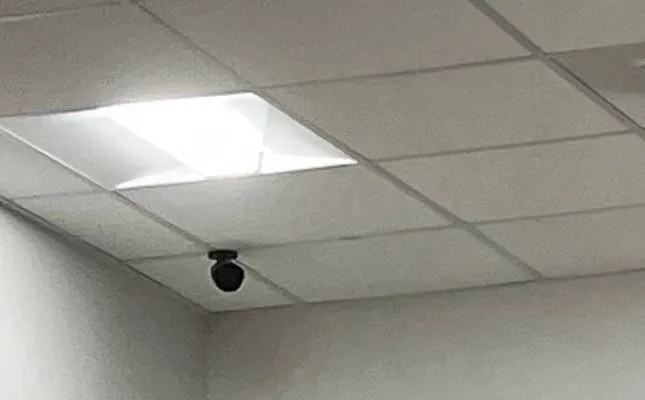
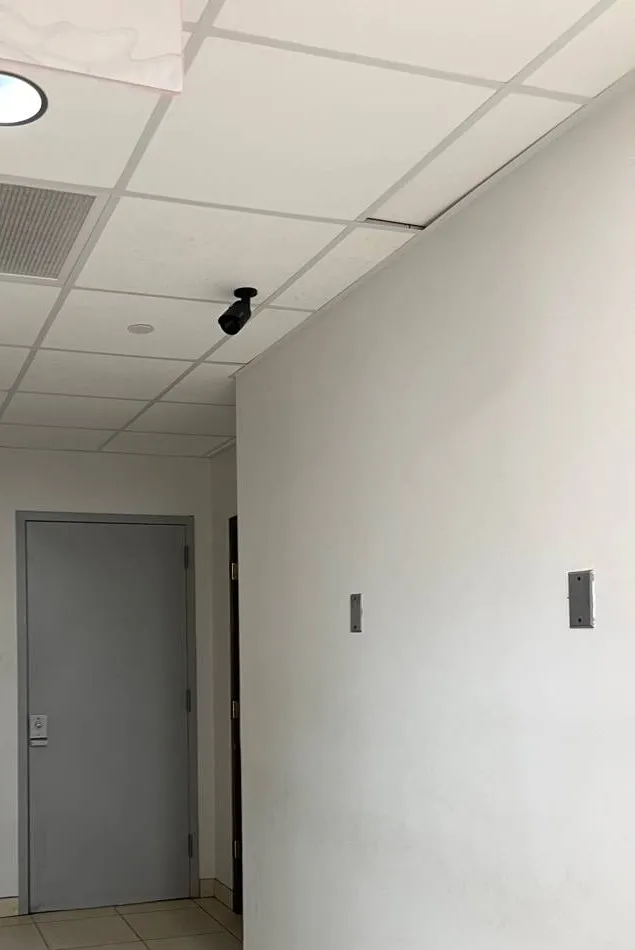
Example photo from an Abstract Enterprises Security Systems installation: a small black mini dome camera hangs just below a white suspended-ceiling tile near the corner of the room, with a bright square light panel above and to its left.
Suffolk Complex Camera Quote
Give us the town, the number of buildings and who manages the property — we reply the same business day
✅
Request Sent!
A Suffolk estimator will call you back about the property the same business day.
25+
Years Experience
✓
Same-Day Estimates
100%
Licensed & Insured
4.7★
390+ Google Reviews
Out east, the site plan prices the job. Tell the Suffolk line on (631) 407-2884 how many buildings you have, how far the farthest one is from the office or the meter room, whether the parking is open or under carports, and what sits in the middle of the property — pool, clubhouse, mailbox kiosk, laundry building. That is usually enough for a budget range before we drive out.
One survey covers every building, light pole, carport row and entrance on the property, drawn on the site plan
Cable routes planned around lawns, sprinkler lines and the landscaper, with conduit where a trench is unavoidable
Installed under NYS licence #12000287431, with town or village permits handled where a pole or new footing needs one
Why Suffolk County Properties Need Apartment Building Security Cameras
Most Suffolk apartment properties have no front door in the city sense. There is no single lobby where everyone passes a camera. Residents walk from a parking space to an outside stair, couriers drop boxes on a landing, visitors cut across the lawn from the next street, and the only shared indoor spaces are a clubhouse, a laundry building and maybe a leasing office. The things people actually lose — a car window, a catalytic converter, the contents of a mailbox, a bicycle from under a carport, a package left at a breezeway door — are lost outdoors, often a long way from any building wall. A camera plan that works in a six-storey elevator building simply does not fit a property laid out like a small village.
That spread is the defining fact of Suffolk housing. The county grew around single-family homes, and the apartments it does have were mostly built as garden complexes on cheap land, as condominium and co-op communities with their own roads, or as age-restricted 55-and-over developments with clubhouses and gatehouses. The Regional Plan Association puts Long Island's rental vacancy at 4.3 percent, the tightest of any suburban area around New York, and the Long Island Index mapped 1,456 rental buildings and 882 co-ops and condominiums across Nassau and Suffolk in 2016. Every one of those properties is a cluster of entrances, lots and amenities rather than one tower, and every one of them is full, which means turnover is low and residents notice when something goes missing.
The newer stock is different again. Downtown Patchogue has added hundreds of apartments over the last fifteen years — the developer of New Village says 714 multifamily units in all have been added to the village — and the $160 million Carriage House project on West Main Street will add 262 more with over 400 structured parking spaces. At the Ronkonkoma LIRR station, which the Governor's office calls Suffolk's busiest, the 53-acre Station Yards development is approved for about 1,450 homes. In Wyandanch, the station-area plan put 177 apartments beside a new station house and a 500-car commuter garage. Riverhead's East Main Street has the 19-unit Woolworth building and the 134-unit Riverpoint. Those buildings have lobbies, package rooms and garages, but they share sidewalks, garages and lots with shops, restaurants and commuters, which makes the camera question less “who came in” and more “whose space is this.”
Then there is mail. In July 2026, Patch reported that the Suffolk District Attorney had charged three people with stealing about 6,750 checks worth $4.8 million from Postal Service collection boxes using a glue trap tied to a belt, at post offices from Melville and Commack to Medford, Patchogue and Sayville. News 12 followed with a story about how many Long Island post offices have no outdoor cameras at all. Those were USPS boxes, not apartment mailboxes, and we never install on Postal Service property. But condo and garden-complex boards read the same news, and the cluster mailbox kiosk at the head of their entrance road is now the first camera they ask about.
Finally, Suffolk has a weather and distance problem the boroughs do not. Complexes on the Great South Bay and Long Island Sound take wind and salt that wreck cheap brackets, the county's own storm recovery office records a 16-foot surge on Fire Island and more than 31,000 homes flooded in Sandy, and a short summer storm can drop the power to a whole property for an afternoon. Distances matter too: on a large complex the farthest carport can be well beyond the length a single Ethernet run will carry. The rest of this page is about how we plan for all of that, property type by property type.
Suffolk facts that shape a complex camera plan
4.3 percent rental vacancy on Long Island, the lowest of the suburban areas in the New York region, according to the Regional Plan Association — full properties, long tenancies and residents who expect the owner to act.
About 6,750 stolen checks, $4.8 million, taken from USPS collection boxes at some twenty Suffolk post offices in a scheme the District Attorney announced in July 2026 (Patch) — the reason boards now ask about their own mailbox kiosks.
714 multifamily units added to the Village of Patchogue in its revitalisation, including New Village on Main Street (Tritec), with 262 more under way at Carriage House on West Main Street (Governor's office).
53 acres and roughly 1,450 homes at Station Yards beside the Ronkonkoma LIRR station, which carries about 17,000 daily commuters (Governor's office, October 2024).
About 60 county-operated plate-reading cameras on Suffolk roads by October 2026, up from 25 a year earlier, plus what the NY Post describes as hundreds more run by towns, villages and private communities.
16-foot storm surge on Fire Island and more than 31,000 homes flooded in Sandy, according to Suffolk County's recovery office — the reason we think hard about where the recorder lives on the South Shore.
Most Suffolk complexes that start with parking-lot cameras end up looking at the entrances too, because a gate or a building door with a reader tells you who, while the camera tells you what. Our Suffolk County access control installers and the team behind intercoms for Suffolk buildings work from the same site survey.
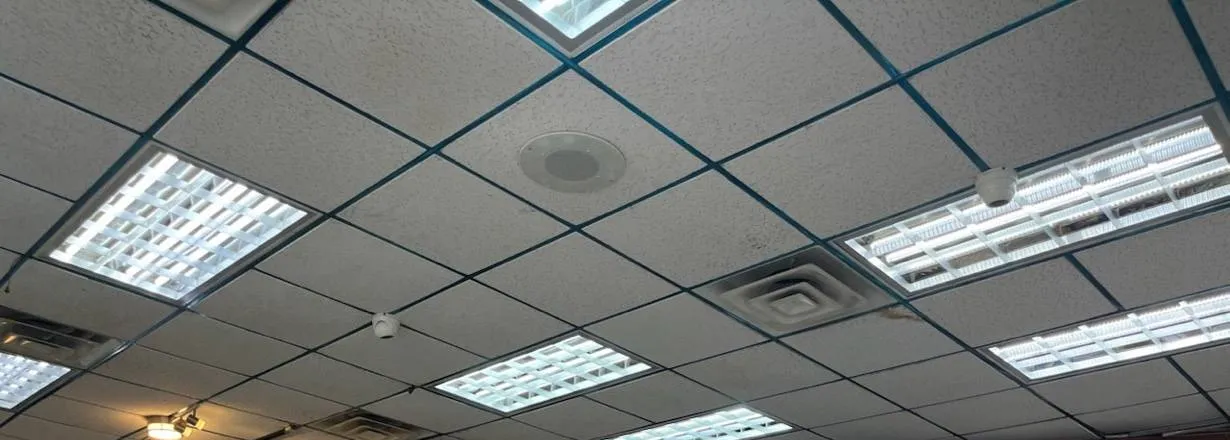
Example photo from an Abstract Enterprises Security Systems installation: a wide drop ceiling with dark teal grid rails, square grille light fixtures, a round ceiling speaker and a square air diffuser, with one small white dome camera near the right-hand lights and another near the left-centre rail.
Carport Camera Went Dark After the Storm? Suffolk Repair the Same Day
Outdoor cameras on a Suffolk complex usually fail for one of three reasons: water in a connector at the bottom of a pole, a surge that took out a switch port, or a recorder drive that quietly stopped writing. Call (631) 407-2884; we book the next open window, and most single-camera or recorder faults are fixed within one to two hours of arrival. Service visits are $195 an hour with a three-hour minimum ($585).
Apartment Building Security Camera Services in Suffolk County
A Suffolk complex system is built outward from the places residents complain about, which are almost never indoors. These nine services cover nearly every job we quote in the county.
🅿️
Parking Fields
Overview cameras on poles or building corners for the whole lot, plus narrower cameras at the aisles that people walk through to their cars, so a break-in shows both the car and the person.
🏠
Carport Rows
Cameras mounted on the carport structure itself, looking down the row, where a pole camera would only see roofs. Cable runs along the carport beam in conduit.
📬
Mailbox Kiosks
A camera that sees the face of whoever stands at the cluster box, and a second that records the car they arrived in, placed so neither looks into a resident's open box.
🚧
Entrance Roads and Gatehouses
Plate and overview cameras at the single road most complexes have in and out, often the most useful camera on the property for the police.
🏊
Pool, Clubhouse and Gym
Gate and entrance cameras for after-hours trespass and fob sharing, kept out of changing areas and positioned so residents using the pool are not the subject.
🧺
Laundry and Trash Buildings
Door cameras for the shared laundry building and the dumpster enclosure, where outsiders tend to dump furniture and mattresses.
🏬
Downtown Mixed-Use Buildings
Residential entrances, rear lots and alleys behind Main Street storefronts, separated from the shop owner's own cameras.
🚆
Station-Area Rentals
Lobby, package room, amenity floor and garage cameras for the new buildings beside Suffolk's LIRR stations.
🗺️
Site Plans and Board Packs
Every camera drawn on the property's site plan with what it sees, a cable route and a fixed price, ready for an HOA or condo board vote.
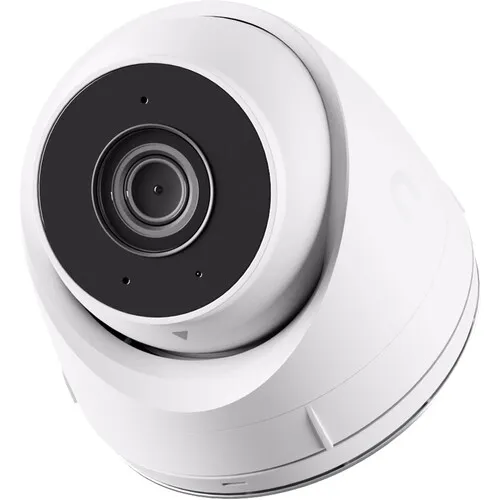
Manufacturer product photo: a white ball-shaped turret camera seated in a white base, its broad black front face holding a single lens and two small dots, on a white background.
Building Specialists
Apartment Building Security Cameras for Suffolk County's Architecture
Seven kinds of property cover almost all of our Suffolk residential work. They differ mainly in distance — how far a camera can be from the equipment that records it — and in who has to say yes.
Garden-Apartment Complexes
Two- and three-storey walk-up buildings, usually brick or frame with vinyl siding, set around parking fields and lawns, often built in the 1960s and 1970s. Outside stairs or small enclosed stair halls, no elevators, and a leasing office or maintenance shop that becomes the head-end.
Condominium and Co-op Communities
Townhouse rows and low buildings on private roads owned by an association, with a clubhouse, pool and mailbox kiosks. The board controls the common elements; unit owners often have their own doorbell cameras.
55-and-Over Communities
Age-restricted developments with a gatehouse or monitored entrance, a large clubhouse and a calendar of events. Residents care as much about privacy and appearance as about crime, and many boards want the system explained in a meeting.
Apartments Over Main Street Stores
Two- and three-storey commercial buildings in downtown Patchogue, Bay Shore, Riverhead, Huntington and other villages, with a side or rear residential door, a back lot and a shop owner downstairs.
Station-Area Rental Buildings
Four- and five-storey buildings with lobbies, package rooms, amenity spaces and structured parking near the Ronkonkoma, Wyandanch, Patchogue and other LIRR stations. The most city-like stock in the county.
Houses With Accessory Apartments
Single-family homes with a permitted apartment upstairs, downstairs or over the garage, under town accessory-apartment laws that generally require the owner to live on the property.
Seasonal and East End Rentals
Summer rentals and small multi-unit houses from the Hamptons to the North Fork, registered with the town or village, empty for long stretches and visited by managers rather than owners.
What changes from one property type to the next
Garden complexes. The working rule for copper Ethernet is about 100 metres, roughly 328 feet, from switch to camera, and on a big complex that is not far. The usual design puts a small weatherproof switch cabinet in each building's utility closet or attic, feeds the cameras on that building and the nearest poles from it, and links the buildings back to the office over fiber or a point-to-point wireless bridge. Cameras go on building corners under the soffit, where they are out of the weather and easy to reach with a ladder, and on the existing light poles where the lot is too wide to see from a wall.
Condo and co-op communities. The roads, lots, kiosks and clubhouse belong to the association, so the association is the client, and the declaration decides what the board can do without a vote of owners. The design challenge is the townhouse rows: long, low buildings where the only sensible mounting points are gable ends and garage-door headers, and where residents will notice every new box on the siding. We favour small turret cameras painted or chosen to match, and cable inside the attic run rather than on the face of the building.
55-and-over communities. Here the gatehouse or entrance and the clubhouse carry most of the weight. Residents are home during the day and walk the roads, so the coverage is about the boundary — who came in, by what road, at what time — rather than about watching people move around. Many of these boards ask us to present at a residents' meeting, and the system is usually set so the office can view live, the manager can search and export, and nobody else can.
Apartments over stores. In a two-storey Main Street building the cable route is the stair to the apartments and the basement or rear storeroom shared with the shop. The residential door is often around the side or at the back off a municipal lot, and that is where the camera matters. The shop's cameras stay the shop's; we agree with the owner where each system's view stops.
Station-area buildings. These are wired like small city buildings: a telecom room on each floor or a riser closet, a lobby with a desk or a package room, and a garage. The difference is the garage is often shared with commuters or retail, so the camera plan has to separate what the residential owner records from what the garage operator records.
Accessory apartments. One owner, one tenant, one house. Two or three cameras usually do it: the shared driveway, the tenant's entrance seen from outside and the owner's front door. The system belongs to the owner and records on the owner's side of the house.
Seasonal rentals. Exterior cameras for driveways, gates and outbuildings, with remote viewing for the owner or manager and nothing indoors. A cellular backup for the internet connection is worth considering where the house is empty in winter.
Most Suffolk owners who add cameras across a complex pair them with better lot lighting or a gate, and with a recorder they can actually reach. Our parking lot camera installation for Suffolk County crew handles the poles and lighting side from the same survey.
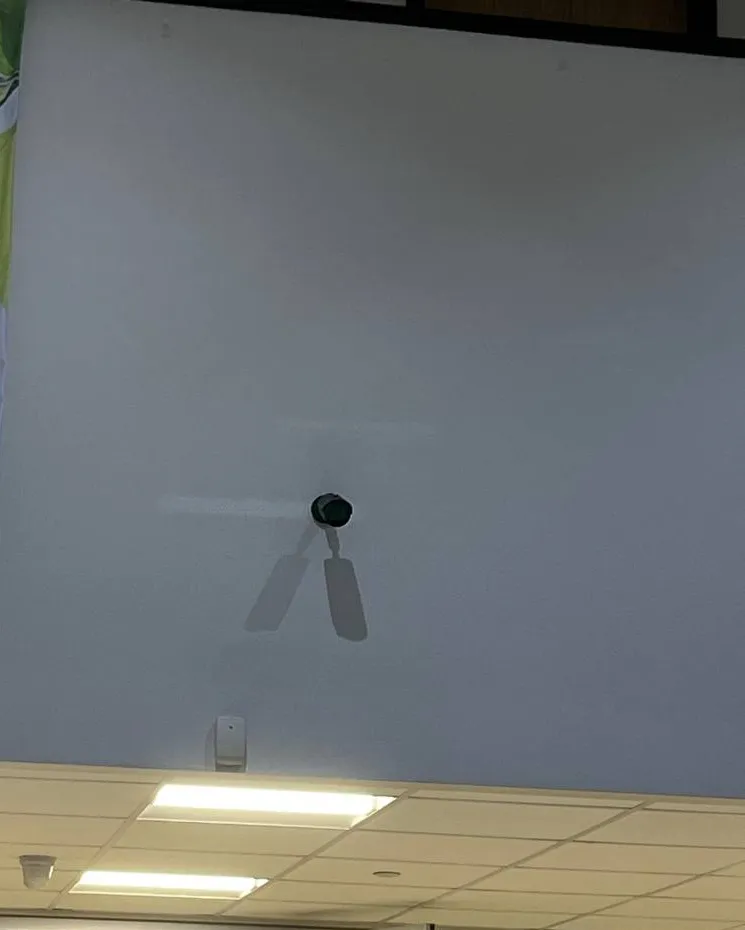
Example photo from an Abstract Enterprises Security Systems installation: a dark bullet camera sits on a short bracket high on a large plain wall, its shadow falling in two lines below it; under it a small white wall sensor and the edge of a drop ceiling with lit panels.
Distance Before Detail
Long Runs, Light Poles and Carports Across a Suffolk Property
The single biggest difference between a Suffolk complex and a city building is the map. Before we choose a camera we draw the property: every building, the office, the electrical service, each light pole, every carport row, the mailbox kiosk, the pool fence, the dumpster enclosure and the entrance road. Then we measure. These are the decisions that come out of that drawing.
Where the head-end lives. The recorder belongs in the most secure, best-ventilated room on the property that has reliable power and internet — usually the leasing office, the maintenance shop or a utility room in the clubhouse. It should not be in a resident's building, a garage bay or a closet under an outside stair. Where a property has no such room, a locked, ventilated wall cabinet in the maintenance shop is the fallback.
How the buildings connect. Each building that carries cameras gets its own small switch in a closet, attic or exterior-rated cabinet. From there, buildings link back to the head-end in one of three ways: fiber in conduit where conduit already exists or a trench is planned anyway; a point-to-point wireless bridge between rooftops or building corners where there is clear line of sight; or, for the nearest buildings, a single copper run under the 100-metre limit. Fiber is immune to lightning-induced surges between buildings, which matters on an open site.
Light poles. Existing lot poles are tempting mounting points because they are high and central. Two things decide whether they work: whether the pole and its base can take a camera bracket and an enclosure, and whether there is a way to get data and power to the top. Many poles have only a lighting circuit on a photocell, which is dead all day. In that case we either run new low-voltage cable in the existing conduit if it has room, add a wireless link at the pole with constant power from a separate circuit installed by an electrician, or choose a building corner instead. New poles and footings are a town building matter and are priced only after we have checked what the town requires.
Carports. The carport roof hides the cars from any camera above it. The answer is cameras under the carport, mounted on the structure at each end of a row, looking along it at a height that sees faces and number plates. Cable follows the carport beam in conduit and returns to the nearest building.
Grass, sprinklers and landscapers. Boards hate trenches across their lawns, and with reason. We plan routes along building walls, under walkways that are being replaced anyway, inside existing conduit, or by wireless, before suggesting any digging. Where a trench is unavoidable, we call in a utility markout first, avoid irrigation lines the landscaper has mapped, and restore the turf.
Snow and plows. Anything at the edge of a lot is at the height of a plow blade and a snow pile. We keep camera equipment on poles and walls well above that line and put protective bollards or curbs where a cabinet has to stand near a drive aisle.
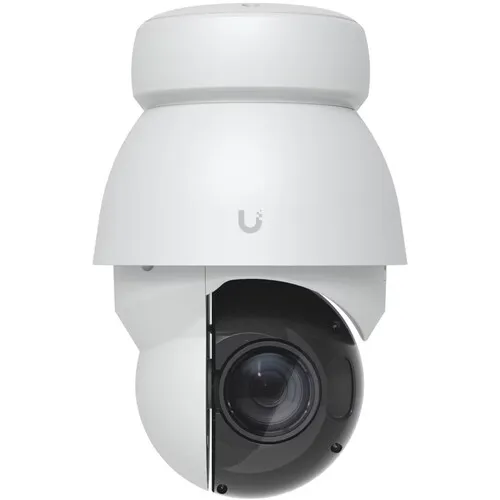
Manufacturer product photo: a white outdoor pan-tilt-zoom camera with a drum-shaped top, a rounded body bearing a small logo, and a lower dome whose dark window holds a large zoom lens, on a white background.
Where the Cameras Go
A Camera-by-Camera Picture of Three Typical Suffolk Layouts
Boards often ask what a finished system looks like before they ask what it costs. The three layouts below are composites of the property types this page describes — not particular addresses or Abstract Enterprises Security Systems jobs — showing how the cameras usually fall once the site walk is done.
Layout
Where the cameras usually go
Typical count
Two-storey Main Street building, shop below, three or four apartments above
Residential door inside and out; top of the apartment stair; rear lot from the building wall; meters and trash area; mailbox wall if the mail comes in through the residential door.
4–6
Garden complex of eight buildings around one parking field, office and laundry building
Entrance road; mailbox kiosk face and pull-in; two or three overview cameras on building corners; one per stair or entry on each building; laundry building door; dumpster enclosure; office door.
18–26
Condo or 55-plus community with private roads, gatehouse, clubhouse and pool
Gatehouse in and out; exit-only gate; two at each mailbox kiosk; clubhouse entrances and lobby; pool gate from outside; fitness room door; maintenance yard; key road junctions where residents walk.
20–34
What the Main Street building teaches. Small buildings are not small problems. The residential door is often shared with deliveries for the shop, the rear lot may belong partly to a neighbour, and the recorder has nowhere safe to live except a closet upstairs. Four to six cameras, placed carefully and recorded somewhere the shop staff cannot reach, usually answer every question the owner has.
What the garden complex teaches. The parking field dominates the count, but the stairs and entries are what residents feel. A plan that puts ten cameras on the lot and none at the stairs will be criticised at the first annual meeting. The balance we aim for is overview where it is cheap, identification where people pass, and one camera per building entrance as a minimum.
What the private community teaches. Roads and gates change everything. With one or two ways in, the entrance cameras become the most valuable on the property, and many interior cameras become unnecessary. The clubhouse and pool then take most of the remaining budget, because that is where residents gather, where fobs get shared and where the board's insurance carrier will ask questions.
In every case, the count follows the site walk rather than a formula. We would rather tell a board it needs fourteen cameras in the right places than sell it twenty-four in the wrong ones.
Wind, Salt and Power
Building Suffolk Camera Systems for the Bay, the Sound and Summer Storms
Suffolk's coastline is long, and a lot of its apartments, condos and seasonal rentals sit near it: along the Great South Bay from Lindenhurst to Bellport, around the Moriches and Shinnecock bays, on the North Shore harbours and on both forks. Three things follow for a camera system.
Hardware that survives salt. Within sight of the water we specify cameras with sealed housings rated for exposed outdoor use, stainless steel fixings and brackets, sealed cable glands and drip loops at every entry, and junction boxes that keep connectors off the bottom of a pole where water collects. Aluminium brackets with steel screws corrode at the joint; a camera that loosens on its bracket in a gale gives a picture of the sky. On the barrier beaches and the bay front we also check every outdoor connection on maintenance visits.
Wind on poles and gables. A pole that holds a light steady may still sway enough to blur a long-lens camera. We favour shorter lenses on poles and mount narrow-field cameras on buildings, which do not move. Gable-end mounts on townhouse rows take the full force of a nor'easter, so they get through-bolted backing rather than siding screws.
Power that blinks. Summer thunderstorms and coastal storms take the power down on whole sections of a property. The head-end goes on a battery backup sized to keep the recorder and the core switch running through a short outage and to shut the recorder down cleanly in a long one; remote switches in each building get their own small units where the cameras on them matter. Surge protection goes on every cable that enters a building from outside, which on an open site with poles is most of them.
In the surge zones that Suffolk evacuated for Sandy — Fire Island and parts of Babylon, Islip, Brookhaven, Riverhead, Southampton and Southold, according to the Wikipedia summary of the storm's effects — we also keep switches and recorders off ground floors where a dry upstairs room exists.
Commercial Apartment Building Security Cameras
Business Apartment Building Security Cameras in Suffolk County
Suffolk's newer apartments cluster in its downtowns and around its stations, side by side with shops, restaurants, offices and commuter parking. These are the corridors where we most often meet residential owners who share a building, a lot or a garage with a business.
Main Street and West Main Street, Patchogue
New Village on Main Street, the Artspace live/work lofts and the Carriage House buildings under way on West Main Street, among bars, restaurants and the theatre. Residents, diners and late-night crowds share sidewalks and municipal lots.
Railroad Avenue, Ronkonkoma
Station Yards beside the LIRR station, a planned downtown of apartments, retail and more than 1,200 parking spaces next to the county's busiest station, where commuter traffic peaks twice a day.
Straight Path, Wyandanch
The Wyandanch Rising buildings beside the rebuilt station house and the 500-car commuter garage, with a public plaza and rink in front of the apartments.
East Main Street, Riverhead
The 19-unit Woolworth building at 128 East Main and the 134-unit Riverpoint further east, among older two-storey commercial buildings with apartments upstairs and river-side parking behind.
Main Street, Bay Shore
Renovated mixed-use buildings with rental apartments over storefronts, including one with 26 new apartments, and a busy evening restaurant row with rear lots shared between owners.
New York Avenue and Main Street, Huntington
Huntington village's older commercial blocks with apartments above, where the residential door is often a narrow street entrance between shops and the back stairs open onto a shared lot.
Compliance callouts for Suffolk residential systems
State licence. New York's Department of State licenses businesses that install or maintain security systems, and its rules name closed-circuit television and video surveillance used to detect intrusion or theft. Abstract Enterprises Security Systems installs under licence #12000287431.
County and town licensing. Suffolk County licenses home improvement contractors, master and restricted electricians and other trades under Chapter 563 of the County Code; its published list of licence types does not include a camera or low-voltage licence. Article XI, which covers electricians, does not apply in towns or villages that run their own licensing, so the rules on the electrical side can change at a village line.
Building permits. Low-voltage cameras on an existing building rarely need a permit. New poles, new footings, new line-voltage circuits and anything on a structure in a flood zone go through the town or village building department, and we price those only after checking.
Privacy. No cameras inside apartments, bathrooms, changing rooms at the pool or clubhouse, or staff locker areas. Audio stays off; New York's eavesdropping law makes recording conversations without a party's consent a crime.
Electrical work. Where a pole or cabinet needs a new 120-volt circuit, that part is done by a licensed electrician for that town, and the low-voltage side by us.
Your Questions Answered
Apartment Building Security Cameras in Suffolk County: Questions Answered
These are the questions Suffolk owners, HOA and condo boards and property managers put to us most, grouped by the part of the property they concern. Each one is answered the way we would answer it on a site walk.
Spread-out complexes and parking fields
Our Ronkonkoma garden complex has a parking field the size of a football field — how many cameras does that take?
Fewer overview cameras than people expect and more detail cameras. Two or three wide cameras on building corners or poles can show the whole field and the movement of cars and people across it, but none of them will identify anyone. Identification comes from narrower cameras where people are funnelled: the entrance road, the walkways between buildings, the paths from the lot to each stair. For a lot that size the honest answer is usually eight to twelve cameras for the parking alone, placed after we have watched where residents actually walk.
Can the existing underground conduit for a Suffolk complex's site lighting be used for camera cable?
Sometimes, and it is the first thing we check, because it saves a trench. If the conduit has room, is intact and runs between the places we need, low-voltage cable can share it with the lighting circuit only where the code and the cable's rating allow; often the better answer is to pull fiber or outdoor-rated data cable through a separate empty conduit laid alongside when the lot was built. We open the pull boxes, test with a fish tape, and tell the board before we promise anything.
Can a single camera on a light pole cover a whole row of carports at a Holbrook or Medford complex?
Not usefully. From a pole the carport roofs hide the cars and anyone standing beside them. A row of carports is covered from underneath: a camera on the carport structure at each end, looking along the row at about head height, catches both the person and the plate. Rows longer than a camera can resolve get a third camera in the middle. The pole camera still earns its place for the open aisles in front of the carports.
How many cameras does a typical two-storey Suffolk garden building need, stairwell by stairwell?
It depends on whether the stairs are inside or outside. Buildings with outside stairs and open landings usually need one camera per stair, mounted under the soffit and covering the foot of the stair and the doors on the landing. Buildings with an enclosed stair hall need one camera inside the entry door and one outside covering the approach. Add one per building for the rear or the side where the dumpsters or meters are, and a typical eight-unit building ends up with three to five.
Our Lake Grove complex backs onto a county recharge basin behind a chain-link fence — can cameras cover that fence line?
Yes, from your side of the fence. Recharge basins, which Suffolk residents call sumps, are dark, overgrown and often used as a short cut onto a property at night. A camera with good infrared or a white-light illuminator on the nearest building, aimed along the fence rather than across the basin, shows anyone climbing over without recording the county's land or the neighbours beyond it. Thermal cameras are an option for long dark boundaries, but most boards find a well-lit, well-placed standard camera enough.
Mail, pools, clubhouses and gates
What camera setup actually helps at the cluster mailbox kiosk in a Suffolk condo, given the Suffolk collection-box thefts reported in 2026?
Two cameras: one facing the front of the kiosk at about a metre and a half above the ground from three or four metres away, which records the face of whoever is standing at the boxes, and one wider camera covering the pull-in space and the road, which records the car. Neither should look straight into an open box, so residents' mail stays private. The 2026 case Patch reported involved USPS collection boxes rather than condo kiosks, but the lesson carries over: the thieves drove up, worked quickly and left, so the car and the time matter as much as the face. Lighting at the kiosk is often the cheapest improvement of all.
Can the clubhouse, pool gate and fitness room of a Suffolk 55-plus community be on cameras without residents feeling watched?
Yes, if the cameras watch the doors rather than the people using the rooms. We put cameras on the clubhouse entrances, the pool gate from outside the fence and the fitness room door, set them to record continuously but leave live viewing to the office, and keep them entirely away from changing rooms, rest rooms and the pool deck itself. Most boards also publish a short description of what each camera sees. Presented that way, residents usually see the system as protecting the building they paid for rather than watching them swim.
Our Brookhaven 55-and-over HOA was pitched a Flock camera that shares plates with police — how is that different from a camera the HOA owns?
A camera the HOA owns records to a recorder the HOA controls, and the board decides how long footage is kept and who sees it; police get footage when the board or a court order hands it over. A subscription plate reader such as Flock's is a service, usually with its own retention rules and, by design, data shared with law-enforcement users. The NY Post reported in October 2026 that Suffolk County roughly doubled its own Flock cameras in a year and that private communities run more. Either can be a reasonable choice; the board should decide with its attorney, knowing which it is buying. We install and maintain owned systems.
Can the cameras at a Commack or Smithtown condo help the board enforce parking rules on boats, trailers and work vans?
They can document it: a camera on the entrance road and overview cameras on the lot give the manager dated pictures of a trailer that has been in a guest space for three weeks. What the board does with that is governed by its rules and declaration. We do not set cameras up to issue tickets or read every plate automatically unless the board has decided it wants that and has taken advice on it.
Downtown buildings and station-area rentals
Our Patchogue Main Street building's rear lot is shared with the restaurant next door — whose cameras cover it?
Whoever owns or leases each part of it, and only that part. Shared rear lots behind Main Street are often split by deed or easement in ways nobody can see on the ground. We ask for the survey, mark your boundary and point your cameras at your residential door, your tenants' spaces and the route between them. If the restaurant wants the rest of the lot covered, the two owners can agree to share a camera in writing; otherwise each records its own side.
Our Riverhead East Main Street building's apartment entrance is a side door off an alley — how do you cover it?
With a camera inside the door looking out at face height, which sees whoever opens it without fighting glare from the street, and a second outside under the eave, which covers the alley approach. A small video intercom at that door often does both jobs. The recorder goes upstairs in a locked closet rather than in a ground-floor storeroom shared with the shop.
How do cameras work at a new transit-oriented rental by a Suffolk LIRR station where the garage is shared with commuters?
By drawing a line where the residential owner's responsibility ends. The residential system covers the lobby, package room, amenity spaces, the residential floors of the garage if they are separate, and the doors from the garage into the building. Public commuter levels are the garage operator's, and their cameras are theirs. Where the building's lease or development agreement says otherwise, we follow it. The doors between the garage and the residential lobby are the most important cameras in the building.
Accessory apartments and seasonal rentals
Does adding cameras to a house with a permitted Babylon or Islip accessory apartment affect the town's accessory apartment permit?
Not that we are aware of. The town accessory-apartment rules we have read concern owner occupancy, parking and the apartment itself — Babylon, for instance, requires the house to be owner-occupied and to have off-street parking for four cars. Exterior low-voltage cameras are not mentioned. The owner should still keep cameras off the tenant's private space and check with the town's accessory apartment office if a renewal inspection is due, since the town is the authority on its own permit.
Are cameras allowed inside or outside an East Hampton or Southampton seasonal rental, and what should the rental registry paperwork mention?
Exterior cameras on driveways, gates and outbuildings are common; cameras inside a rented house raise serious privacy problems and we do not install them. East Hampton Town requires owners who rent by the week, month, season or year to register, and Southampton runs its own rental permit; those registrations concern the rental, not cameras. Many owners also tell renters in the listing and the lease which outdoor areas are recorded, and that is a question for the owner's attorney.
Licences, permits and existing systems
Suffolk licenses home improvement contractors and electricians — which of those licences, if any, covers a camera job?
Neither is a camera licence. Suffolk's Department of Labor, Licensing and Consumer Affairs issues home improvement, master electrician and restricted electrician licences among others, but its list of licence types has no low-voltage or security category. The licence that covers installing security cameras is the State's, issued by the Department of State; Abstract Enterprises Security Systems holds licence #12000287431. If a job adds a 120-volt circuit, that part is done by an electrician licensed where the property sits, which may be the county, the town or a village with its own licensing.
Do camera poles in a Suffolk parking lot need a town building permit?
A new pole with a concrete footing usually does, and so does any new electrical circuit to it; the town or village building department decides, and the answer can differ between Brookhaven, Islip and an incorporated village. Cameras added to an existing light pole or a building generally do not. We check with the building department before quoting a new pole and include any filing in the price.
Example photo from an Abstract Enterprises Security Systems installation: a short white corridor with a beige tile floor ends at a grey steel door with a keypad; a small black bullet camera is fixed to the drop ceiling near the right-hand wall, pointed at the door.
Equipment
Types of Apartment Building Security Cameras We Install
We install Lorex, Dahua, Hikvision, Uniview and other commercial lines, chosen by what each spot on a Suffolk property needs to see and how far it is from anything that can power it.
📏
Varifocal Bullet Cameras
Adjustable lenses for entrance roads, long carport rows and the far side of a parking field, zoomed in on site to the exact width needed.
⚪
Turret Cameras
Small, discreet cameras for building corners, stair soffits and clubhouse doors, easy to match to siding and trim.
🌐
360-Degree Fisheye Cameras
One ceiling camera that sees an entire laundry room, mailroom or clubhouse lobby, cutting the number of mounts on a finished ceiling.
🔄
Outdoor PTZ Cameras
Pan-tilt-zoom units on a building high point for managers who want to follow a vehicle across a large lot live.
📡
Point-to-Point Wireless Bridges
Paired radios that carry video between buildings or out to a pole across lawns and roads, where trenching is not wanted.
🧵
Fiber Links and Outdoor Switches
Fiber between buildings and hardened switches in weatherproof cabinets, which shrug off the lightning surges that copper carries across an open site.
💾
Network Video Recorders
Recorders sized to the camera count and the days the board wants to keep, on battery backup in the office or maintenance shop.
🔋
Surge and Battery Protection
Surge protectors on every cable that enters from outside and UPS units for the head-end and the remote switches that matter.
Choosing cameras for distance and darkness
Suffolk lots are dark in a way city streets are not. Many complexes have a pole light every few spaces on a photocell, a few wall packs on the buildings and nothing in between; carports cast deep shadow, and pool areas go black after closing. For identification at night we place cameras where existing light falls, add light where it is cheap to do so, and choose cameras whose infrared or white-light range genuinely matches the distance, not the number on the box. A wide camera that records a whole lot at night will show shapes; a narrow one aimed at a walkway thirty feet away will show a face. Resolution helps only when the lens matches the job, which is why we prefer varifocal cameras for the long outdoor views and set the zoom on site at night. On roads and entrances, where cars move fast, a camera dedicated to the stopping point at the entrance is worth more than a high-resolution overview.
ADT, Ring and SimpliSafe compared with a complex system
Consumer brands are designed for one house and one account. A Ring or SimpliSafe camera on Wi-Fi works well on a single home's porch, but a Suffolk complex has no Wi-Fi network that reaches the far carports, and battery cameras need someone to charge them across dozens of mounting points. One r/longisland poster said police had told him thieves used a jammer against the Wi-Fi of his Ring cameras before stealing a catalytic converter — a single anecdote, but a reminder that wired cameras do not depend on a radio link. ADT's residential offering centres on monitored alarms for a home. A complex system records on hardware the owner or association owns, with accounts for the office and the manager, retention the board sets and no per-camera subscription. Residents' own doorbell cameras can still sit on their own doors, under the association's rules.
Manufacturer product photo: a long white bullet camera with a sunshield hood over a large lens, a maker’s name printed along its side and a round white wall-mount base, on a white background.Manufacturer product photo: a flat, round white ceiling camera with one dark wide lens set in its centre and a small logo on the upper face, on a white background.
AI Overview Reality Check
What AI Gets Wrong About Apartment Building Security Cameras in Suffolk County
We could not display Google's AI Overview for this topic from our research environment, so we are not quoting one. What we can test are the claims those summaries are built from: published cost guides such as Angi and HomeAdvisor, consumer-camera marketing and general advice pages. None of those sources is written with a forty-building garden complex, a 55-plus community with a gatehouse, or a Main Street building with apartments over a bar in mind, and the summaries rarely say so. Here is where those claims fit a Suffolk property badly, and what we tell boards and owners instead when they bring the numbers to a site walk.
1. “A security camera installation costs around $1,300 to $1,500.”
HomeAdvisor gives a national average of about $1,300 and Angi's New York figure is about $1,500. Both describe a handful of cameras on one house, and for that they are fair numbers.
A Suffolk garden complex is twenty or thirty mounting points spread over several acres, with buildings that have to be linked to each other and poles that have to be powered. The cost is in the distance, not the cameras.
That is why our Suffolk table starts at $6,000 for a small property of four to eight cameras and runs to $54,000 and beyond for large communities. A house-sized average tells a board nothing about its property.
2. “Any camera can be put anywhere if you run a cable to it.”
Advice pages often treat cabling as a detail. On a city building that is close to true, because nothing is far from anything.
On a Suffolk property, copper Ethernet stops at about 100 metres, and the far carport row, the pool gate and the entrance sign are often further than that from the office. Beyond it, a camera needs a switch in a nearer building, a fiber link or a wireless bridge.
The site plan decides the design. A quote that does not mention how the farthest cameras get back to the recorder has not been thought through.
3. “Wireless cameras are the simplest option for big properties.”
Cost guides note that wireless cameras are cheaper to buy, and for a single house that can be right.
Across a complex, consumer Wi-Fi does not reach, batteries go flat in winter, and every camera depends on a radio link. Point-to-point wireless bridges are a different thing: purpose-built radios that link a building or a pole back to the network, with wired cameras at each end.
We use bridges where they save a trench. We do not use battery Wi-Fi cameras as the backbone of a complex system.
4. “Police plate cameras on the roads make your own cameras unnecessary.”
Suffolk now has around 60 county-operated plate readers and many more run by towns and villages, according to the NY Post's October 2026 report. Some residents assume that covers their complex.
Those cameras are on public roads and serve police investigations. They do not see your mailbox kiosk, your carports or the side door of your building, and the board does not control what they keep.
The two are complementary. Your entrance camera shows which car came onto your property at what time; police systems may help trace it afterwards.
5. “Only licensed electricians can install security cameras in Suffolk.”
This one appears in contractor marketing. Suffolk County's licence list includes master and restricted electricians and home improvement contractors, but no camera or low-voltage licence.
The licence that applies to security camera installation is the State's, under the Department of State's security and fire alarm installer rules, which name CCTV and video surveillance systems. A new 120-volt circuit to a pole is electrical work and needs an electrician licensed for that town or village.
So the right question for a board is: does the installer hold the State licence, and who is doing any line-voltage work?
6. “Outdoor-rated means it will last outdoors.”
Product listings lean on weatherproof ratings. A sealed camera housing is necessary but not enough within reach of salt air.
On the bay and the Sound, failures usually start at the bracket, the screws or the cable entry, not the camera. A camera with a good rating on a corroding bracket ends up pointing at the ground.
Stainless fixings, sealed glands, drip loops and junction boxes are what keep a camera working at a waterfront complex through a few winters.
7. “A camera system goes in over a weekend.”
For a house, often true. For a Suffolk complex, the schedule is set by the board's approval, the landscaper, any trench and utility markout, any new pole permit and the weather.
A mid-size garden complex is typically a site survey, a board meeting, a week or two of installation building by building, and a handover day for the office and manager.
We keep the office and the busiest entrance recording from the first day, so the property is covered while the rest goes in.
A Site Plan Your HOA Can Approve
Send the address and the number of buildings. We walk the whole property, then send a marked-up site plan with every camera, cable route and a fixed Suffolk price in time for your next board meeting.
The most useful Suffolk request gives the town or hamlet, how many buildings and units there are, roughly how big the parking area is, whether there are carports, a pool, a clubhouse or mailbox kiosks, who manages the property and what is installed now. A site plan or an aerial screenshot helps more than anything else. We answer in writing the same business day; to talk it through, call (631) 407-2884.
✅
We Got Your Request!
Thanks — a Suffolk estimator will look over the property and call you today. If it can't wait, call (631) 407-2884.
How It Works
Our Installation Process
Seven steps for a Suffolk property, whether it is one Main Street building or a forty-building community. The first three are mostly about the map, because on a spread-out site the layout sets the price.
1. Send the site plan or the address
You tell us the town, the number of buildings and units, the parking and amenities and what is installed now. We give a budget range from the Suffolk table.
2. Walk the property by day and by night
We measure distances between buildings, check poles, carports, kiosks, pool and entrances, open closets and attics, and come back after dark to see the lighting.
3. Draw it on the site plan
Every camera, switch, link and cable route goes on the property plan, with a camera list, retention days and a fixed Suffolk price for each phase.
4. Approval and permits
The board or owner approves; we book any utility markout, check town or village rules for new poles or circuits, and tell the landscaper and pool contractor the dates.
5. Head-end and entrance first
The recorder, battery backup and core switch go in at the office, with the entrance road and mailbox kiosk cameras recording from the first day.
6. Building by building
Each building gets its switch and cameras, then its link back to the office; carports, poles and the pool follow, with every outdoor connection sealed and surge-protected.
7. Night check and handover
We adjust every outdoor camera after dark, set office, manager and board accounts, train staff to search and export, and hand over the plan and passwords.
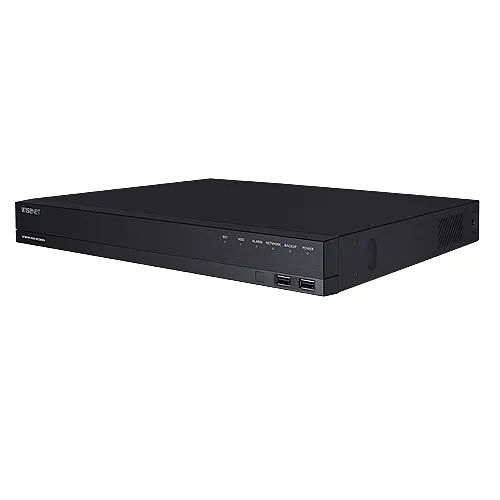
Manufacturer product photo: a slim black network video recorder seen from the front left, with a row of small labelled status lights and two USB ports on the right of its front panel, on a white background.
Coverage Area
Apartment Building Security Cameras Near Suffolk County's Landmarks
Suffolk is better described by its stations, downtowns and shorelines than by its town lines. These six places are reference points for the kinds of property on this page; we name them as places and developments, not as Abstract Enterprises Security Systems projects.
Ronkonkoma LIRR Station and Station Yards
The station the Governor's office calls Suffolk's busiest, with about 17,000 daily commuters, and the 53-acre Station Yards development beside it, planned for roughly 1,450 homes with shops and more than 1,200 parking spaces.
Downtown Patchogue
Main Street's revitalised blocks, where New Village and other projects added 714 multifamily units to the village, the Artspace lofts house 45 live/work apartments, and Carriage House is adding 262 more on West Main Street.
Wyandanch Station Area
The Wyandanch Rising district: a new station house, a 500-car commuter garage, a public plaza with an ice rink and 177 apartments, 123 of them affordable (Long Island Regional Planning Council; NY Housing Conference).
Downtown Riverhead on the Peconic
East Main Street's mix of older commercial buildings and newer apartments, including the 19-unit Woolworth building at 128 East Main, which opened to tenants in 2015, and the 134-unit Riverpoint.
Fire Island and the Great South Bay
The barrier island where Suffolk recorded a 16-foot surge in Sandy, and the bay shoreline opposite it, home to waterfront condos, cottages and seasonal rentals that take the full weather.
The South and North Forks
From the Hamptons to Orient, the East End towns where seasonal rentals are registered with the town or village and county-run plate cameras were added along Route 114 and near Exit 71 in 2025 and 2026 (NY Post).
We also serve Huntington, Huntington Station, Northport, Commack, Smithtown, Hauppauge, Brentwood, Central Islip, Bay Shore, Islip, Sayville, Holbrook, Lake Grove, Centereach, Coram, Selden, Medford, Port Jefferson, Mastic, Shirley, Riverhead and the East End.
Pricing
Apartment Building Security Camera Cost in Suffolk County
Suffolk prices are the Abstract Enterprises Security Systems apartment-building list multiplied by the Suffolk factor of 1.20 that applies across our services, which reflects travel time from our Brooklyn base and the longer outdoor runs Suffolk properties need. Every figure is all-in: cameras, recorder and drives, switches, cable or wireless links, labour, configuration and handover. There is no monthly fee on a locally recorded system.
Property
Typical cameras
Suffolk price
Usually covers
Small building or Main Street mixed-use
4–8
$6,000–$14,400
Residential door, rear lot, stair, mailboxes and trash area; recorder in a locked closet.
Mid-size garden complex or condo section
12–20
$14,400–$30,000
Entrance road, parking aisles, building stairs, mailbox kiosk, laundry and pool gate; two or three buildings linked to the office.
Large community or station-area building
24–40
$30,000–$54,000+
Full site: every building, carport rows, gatehouse or garage, clubhouse, pool and perimeter, with fiber or wireless backbone.
Multi-property portfolio
50+
Custom
Several complexes, each with its own recorder, viewed centrally by the management company.
Per camera, that works out at roughly $600 to $1,800 installed. The low end is a camera on the wall of the building that holds the recorder; the high end is a camera on a carport three hundred feet away that needs its own switch, a wireless link or a fiber run.
What moves a Suffolk property up or down the table
Distance. The farther the outlying buildings, poles and carports are from the head-end, the more switches, links and cable the job needs.
Existing conduit. Empty conduit between buildings or to the light poles saves a great deal; a trench across a lawn, a road or a parking aisle adds cost and time.
Poles. Using existing poles with power is cheap; adding constant power to photocell poles, or new poles with footings and permits, is not.
Exposure. Waterfront and barrier-beach properties need stainless hardware, sealed enclosures and more surge protection.
Night lighting. Dark lots need cameras with longer illuminator range or some added light at key points.
Reuse. A sound recent recorder or cabling in good condition can be kept; an old analog DVR in a leasing office usually cannot carry a modern system.
After installation, service visits are $195 an hour with a three-hour minimum ($585). The property walkthrough and the written proposal are free.
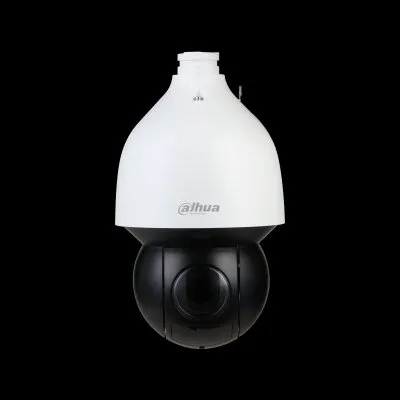
Manufacturer product photo: a white speed-dome camera with a threaded pendant mount at the top, a maker’s logo on the white housing and a large black globe holding the zoom lens below, against a near-black background.
Shop Our Systems
Apartment Building Security Camera Packages & Pricing
Three starting points for Suffolk properties. Each is adjusted after the site walk, and the final price is fixed in writing before the board or owner signs.
🏬
Main Street Building — from $6,000
4–8 cameras: residential entrance inside and out, stair, rear lot, mailboxes and trash area. Recorder with 30 days, phone viewing for the owner or manager and a written camera list.
🌳
Garden Complex — from $14,400
12–20 cameras: entrance road, parking aisles, building stairs, mailbox kiosk, laundry and pool gate, with buildings linked back to the office and battery backup at the head-end.
🏘️
Whole Community — from $30,000
24–40 cameras: every building, carport rows, gatehouse or garage, clubhouse, pool, perimeter and kiosks, on a fiber or wireless backbone with retention up to 90 days at the entrances.
Already Bought the Cameras? Labour-Only Installation
If the association or owner has already purchased cameras and a recorder, we can install, cable and set them up on a labour-only basis after checking that the equipment suits the distances and the weather on your property. See our bring-your-own-equipment page for how that is priced. Equipment you supply carries its own manufacturer's warranty rather than ours.
What the Board Receives
The Site-Plan Proposal a Suffolk HOA Can Approve
HOA and condo boards in Suffolk are volunteers who approve spending for neighbours, and many of them have been burned before by a vendor who installed a few cameras and left. The proposal we send is designed to be read at a kitchen table, passed around a board, presented at an annual meeting and kept by the next manager.
The site plan. An aerial view or the property's own site plan with every camera marked, numbered and drawn with a cone showing what it sees. Each building carries a note of the cameras on it and where its switch will live. Cable routes and wireless links are drawn between buildings, so the board can see at a glance whether anything crosses a lawn or a road.
The camera list. One line per camera: the name it will have on screen, where it is, what it is meant to show (faces at the kiosk, plates at the entrance, the length of carport row C), the camera type and how long it keeps footage. Board members who know nothing about cameras can follow it.
The backbone plan. Where the recorder goes, how each building connects to it, what is fiber, what is wireless and what is copper, where battery backup and surge protection go, and whether any trench, new pole or new electrical circuit is needed and who files for it.
The access and retention description. Which accounts the system will have — live view for the office, search and export for the manager, administration for the board's designee — and how many days each group of cameras keeps footage. The board's attorney can turn this into a resident notice or a rule if the board wants one.
The schedule. Which buildings and which days, when the landscaper or the pool contractor needs to know, and when any utility markout is booked, timed to avoid pool opening weekend and the busiest move-in dates.
The price. One fixed Suffolk figure per phase, from the table on this page, with nothing left to be confirmed on site. A board that wants to start with the entrance and the kiosk this year and the carports next year can vote on each phase separately; the head-end is sized for the whole property from the start.
Footage and Requests
Who Holds the Footage on a Suffolk Complex, and for How Long
On a spread-out property, footage requests come from more directions than in a single building. A resident wants to know who dented a car in aisle B. The pool committee wants to see who propped the gate. The manager needs a clip for the insurer after a slip on the clubhouse steps. A detective from the local Suffolk County Police precinct asks for the entrance camera between two times. A system that works on paper but has no answer to “who can pull that, and how” turns every one of those into an argument.
Accounts by role, not by person. We set the recorder up with a small number of accounts that match jobs: the office sees live pictures from every camera, the manager can search and export, and the board's chosen officer has administration rights for passwords and retention. When the manager changes or an officer's term ends, the account moves to the new person and the old password dies with it. Every export is logged by the recorder, so the board can see later who took what.
Retention by camera group. Thirty days covers most car and package questions on a Suffolk lot, because residents notice a dent or a missing parcel within a week or two. Entrance roads, gatehouses and mailbox kiosks are worth longer — sixty to ninety days — because the reasons to look at them can surface late: an insurance claim, a pattern of mail tampering, a resident who was away for a month. Pool and clubhouse cameras often need less. We size the drives to the board's choices rather than to a round number, and we write the choices into the camera list.
Requests in writing. Most boards adopt a simple rule: requests go to the manager in writing with a date, a time window and a reason; residents are told what the footage shows rather than handed a copy; police requests are answered promptly; anything involving a dispute between residents goes past the board's attorney first. We do not write that rule, but the system enforces whatever the board decides.
Exports that hold up. When a clip does leave the property, it should leave as an original file with the camera name and time stamp, not as a phone video of the office screen. We show office staff how to export properly on handover day, and the Suffolk line can talk them through it later.
Spreading the Cost
Building a Suffolk Camera System in Stages Without Paying Twice
HOA and condo budgets in Suffolk are set once a year, reserve studies have opinions about roofs and paving, and owners vote on special assessments reluctantly. A camera system that can be built in stages, each worth having on its own, is easier to approve. The trick is to make the first stage carry the expensive, invisible parts of the whole design, so the later stages bolt on.
Stage one: the head-end, the entrance and the kiosk. The recorder, battery backup and core switch go in at the office, sized for the full property. The entrance road, the gatehouse if there is one, and the mailbox kiosk are covered first, because they answer the largest number of questions with the fewest cameras. Where a trench or conduit is needed for later stages and the ground is being opened anyway, we lay empty conduit now.
Stage two: the buildings and the walkways. Each building's switch and its stair or entrance cameras, plus the links that bring each building back to the office. This is the stage that touches residents most directly, so it suits the spring or autumn, away from pool season and the heaviest move-in weeks.
Stage three: carports, the far lot and the perimeter. Carport rows, distant parking, the dumpster enclosure, the recharge-basin fence or the wooded edge. These are the most expensive cameras per unit because of distance, and the board can judge whether it still needs them after living with stages one and two for a season.
Stage four, where it applies: the clubhouse and pool interior spaces. Fitness room doors, the clubhouse lobby and the pool gate. Some communities want these first because of fob-sharing or after-hours swimming; others never need them.
Each stage carries its own fixed Suffolk price from the table on this page, and the drawings made for stage one are used for every later stage, so the second and third visits are quicker and cheaper to plan than the first.
Keeping It Recording
A Suffolk Outdoor Camera System Through the Seasons
Indoor cameras in a city lobby can run for years untouched. Outdoor cameras across a Suffolk property live through four distinct seasons, and each one finds a different weakness. A board or owner who knows the calendar can catch problems before a resident does.
Spring. Trees leaf out and grow into views that were clear all winter; a camera that saw the whole entrance road in February may see a maple in May. Spider webs build up on cameras with infrared, and at night the lit web fills the picture. Spring is the time to walk every outdoor camera's view, trim what has grown, and clean the housings.
Summer. Pool season brings the longest days, the most visitors and the most fob-sharing at the clubhouse. It also brings the thunderstorms that test surge protection and battery backup. After any storm that takes the power down, the manager should check that every tile on the office screen came back, and that the recorder shows yesterday's footage.
Autumn. Leaves clog the drip edges and gutters that keep water off cameras under soffits, and early dark means the lot lighting matters again. It is the right season for a lighting walk at night and for checking that pole lights on photocells have not failed over the summer.
Winter. Snow piles grow at the edges of lots and can bury low cabinets; salt spray from plowed roads coats housings near the entrance; condensation forms inside poorly sealed cameras when the temperature swings. After a heavy storm, the cameras on poles and carports are worth a look once the lot is cleared.
Our Suffolk camera maintenance visits follow that calendar, but a manager who glances at the screen every morning and opens the playback once a week will catch most problems first.
Complete Services
Every Apartment Building Security Camera Service in Suffolk County
Camera systems on Suffolk properties usually touch other work. These related Suffolk County services are handled by the same crews from the same survey.
Scheduled checks of outdoor connections, drives and battery backup.
Field Notes
Field Notes: Walk the Property at Night Before You Count Cameras
This is general technician guidance — how our crews approach any spread-out Suffolk complex — not a story about a particular property.
The daytime walk tells you where the buildings are. The night walk tells you where the cameras go. We ask the manager to let us come back after dark, and we walk the routes residents use from their cars to their doors, the path from the road to the mailbox kiosk, the carport rows and the edge of the property where people cut through. We note which pole lights are out, which are on photocells, where the carport shadows fall and which building corners are lit by wall packs. We stand where a camera would go and look at the scene through a phone camera with the flash off. A lot that looked like it needed two pole cameras in daylight often turns out to need three narrower cameras on building corners where the light actually is, and a couple of new wall lights cost less than a camera that cannot see. The night walk is also when we find the gap in the fence and the worn path across the back lawn, which is usually where the trouble comes from.
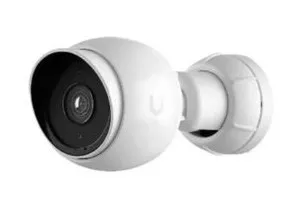
Manufacturer product photo: a small rounded white bullet camera with a black lens face, attached to a short white swivel arm and wall base, on a white background.
FAQ
Suffolk County Apartment Building Security Camera FAQ
How are cameras fixed to vinyl siding and cedar shingles on Suffolk garden buildings without causing leaks?
+
Never straight through the siding into nothing. We use a mounting block made for the siding profile, fix through it into the sheathing or framing behind, seal every penetration and bring cable in with a drip loop below the entry. On cedar shingle we fix to a backing board on the trim where we can. Done that way, a camera can come off years later and leave only a block to cap.
Can the HOA schedule installation so the Suffolk complex’s pool season and summer move-ins aren’t disrupted?
+
Yes. Most Suffolk properties are easiest to work on in spring and autumn, and we plan around pool opening, the busiest move-in weeks and any events at the clubhouse. Work near the pool fence is done before the season or on closed days, and ladders and lifts stay clear of parking aisles on weekend mornings.
Can the cameras at a Suffolk complex send an alert when someone opens the pool gate after hours?
+
Yes. The camera on the pool gate can be set to send an alert to the manager or the office when it sees a person in the gate area during hours the board chooses, with a short clip attached. We tune the detection zone so wind in the trees and headlights in the lot do not set it off every night.
Can a property manager who runs several Suffolk complexes watch them all from one app?
+
Yes. Each property keeps its own recorder, so a fault or an internet outage at one complex never affects the others, and the manager’s app shows all of them together. Board members at each property can be given access to their own complex only.
Will you meet a Suffolk HOA’s architectural review committee about how the cameras will look?
+
Yes, if the committee asks. We can bring the camera models, colour options and photos of mounting blocks and conduit to the committee, mark every exterior position on the site plan, and adjust positions or finishes where the committee asks. Approval from that committee is usually a step before the board vote, and we build it into the schedule.
Do residents of a Suffolk senior community get an explanation of the cameras, or only the office staff?
+
Both, if the board wants it. Office staff and the manager get hands-on training on searching and exporting footage. For residents we can give a short talk at a community meeting covering where the cameras are, what they do not see and who can view footage, using the same site plan the board approved.
What happens if a camera fails at a Suffolk complex during the first year?
+
Call the Suffolk line and we arrange a visit. Equipment we supplied is covered under the service agreement. Full terms — including 50% deposit, the 30-day warranty and optional paid extended warranty, and the late-fee schedule — are set out in the service agreement. Equipment supplied by the owner carries its own manufacturer’s warranty.
Is there a charge when a Suffolk property manager calls with a problem on a system you installed?
+
Many problems — a password, an export, a camera name — are solved on the phone. Site visits for repair or diagnosis are billed at $195 an hour with a three-hour minimum ($585), and the manager is told before any chargeable visit is booked.
Do you take away the old cameras and DVR when a Suffolk complex upgrades?
+
If the board wants them gone, removal of old cameras, brackets and unused cable, and patching of the mounting holes, is listed in the proposal so the board can see it before voting. Before an old recorder leaves the property we give the manager the chance to export any footage that needs keeping, or leave the drive with the board.
Can the Suffolk complex’s maintenance staff change a camera’s angle after installation?
+
They can, but we would rather they asked first. Each camera is aimed and zoomed for a purpose written on the camera list, often at night, and a well-meant nudge can turn a face camera into a view of the sky. If an angle needs to change, call us and we will adjust it and update the list.
Many Suffolk boards that finish a camera project look at the fobs on the clubhouse and pool gate next; when that time comes, the same crew handles access control across Suffolk County.
All Areas Served
Apartment Building Security Cameras Across New York
Every local fact, figure and rule on this page traces to one of the publications below. Prices are from the Abstract Enterprises Security Systems apartment-building list with the Suffolk multiplier applied.
Kiosk Camera Recording Nothing? Call the Suffolk Line
If the office screen shows a black tile for the mailboxes, or the manager finds a gap in last night's recording, phone (631) 407-2884. We book the next open window, check the outdoor connections, switch and drives first, and most faults are fixed within one to two hours of arrival.
Suffolk Complex Cameras From a Licensed, Insured Crew
Abstract Enterprises Security Systems · 1282 Troy Ave, Brooklyn, NY 11203 · (631) 407-2884 · WhatsApp (718) 679-0359 via wa.me
NYS Low-Voltage Licence #12000287431 · 100% Licensed & Insured · Same-Day Estimates · Rated 4.7★ from 390+ Google Reviews
Cameras and recorders carry their manufacturers' warranties. Full terms — including 50% deposit, the 30-day warranty and optional paid extended warranty, and the late-fee schedule — are set out in the service agreement. See our warranty page.
Page reviewed and updated October 18, 2026. Changelog: Suffolk County page rebuilt from scratch around spread-out garden complexes, condo and 55-plus communities, Main Street mixed-use buildings, station-area rentals, accessory and seasonal rentals, long outdoor cable runs, carports, mailbox kiosks, coastal weather and Suffolk licensing, with new sourced local research, Suffolk pricing and a new FAQ.