Brooklyn's multi-family housing was built in layers, and every layer wires differently. A brownstone carved into four rentals has no lobby, only a stoop, a vestibule and a parlor-floor hall. A six-story 1920s building off Ocean Parkway or Eastern Parkway has wings around a courtyard, a marble lobby and a cellar full of old shafts. A Downtown Brooklyn or Williamsburg tower has a glass lobby, a fob system that logs every entry and a city law about what that data may be used for. Hundreds of thousands of apartments sit in rent-stabilized walk-ups where tenants watch closely how cameras are used. We plan building camera systems around the structure you actually have — from our own office on Troy Avenue in East Flatbush.
Every Brooklyn proposal is signed off by the owner, licence #12000287431, at the East Flatbush office on Troy Avenue · Reviewed and updated October 18, 2026
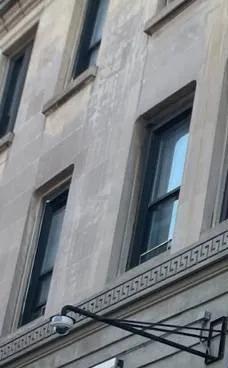
Example photo from another Abstract Enterprises Security Systems job, not a Brooklyn building: a small white bullet camera hangs from a long black steel arm fixed beneath a carved Greek-key band on a pale stone facade, with tall dark sash windows above. Signs and street numbers have been cropped out.
Brooklyn Building Camera Quote
Cross street, building type and unit count are enough for a same-day written range from our Brooklyn desk
✅
Request Sent!
Thanks — the Troy Avenue office has it, and you will hear back before the business day ends.
25+
Years Experience
✓
Same-Day Estimates
100%
Licensed & Insured
4.7★
390+ Google Reviews
Three answers let us rough out a Brooklyn building camera plan over the phone: whether the building has a real lobby or only a stoop and vestibule, where the cellar is in relation to the front door, and whether the block sits inside a Landmarks Preservation Commission historic district. Send them through the form or call (347) 934-8335.
Installed building cameras from $500 to $1,500 each on the Brooklyn list — Brooklyn is the base every other Abstract Enterprises Security Systems area is priced from
The building owns the recorder and the footage; no monthly fee unless you choose off-site cloud storage
Crews leave East Flatbush seven days a week from 8 AM to 8 PM, booked in two-hour windows — licence #12000287431
Why Brooklyn Properties Need Apartment Building Security Cameras
Brooklyn is not one kind of building. The Historic Districts Council describes the borough as running from the vernacular rowhouses of Boerum Hill to the skyscrapers of Downtown Brooklyn, and notes that it holds the city's first historic district, Brooklyn Heights, designated in 1965. Between those two ends sit almost every type of multi-family building New York ever produced: nineteenth-century brownstone and limestone rowhouses later divided into apartments, turn-of-the-century flats buildings, the four-story walk-ups and six-story elevator buildings that filled Flatbush and Crown Heights between the wars, post-war public housing, and the glass towers that went up after the 2004 Downtown Brooklyn and 2005 Greenpoint–Williamsburg rezonings. A camera plan that works in one of them is often wrong for the next one down the block.
The thing every type shares is the front door. Brooklyn's package and lobby thefts rarely involve anything clever; they involve someone getting past a door. In January 2025 PIX11 reported a woman who rang a resident's bell at 7:20 in the morning in a building near Fulton Street and Washington Avenue in Clinton Hill, got through the first door, and was caught in the lobby going through packages and mail; the resident pulled the packages back and the suspect left in an SUV, and police later released her photo. An older CBS New York report showed a man on a Bushwick building's surveillance video walking in off Lawton Street, stuffing parcels from the lobby floor into a bag, leaving, and coming back twice for bigger boxes. A thread on r/Brooklyn about package theft describes the same pattern from the tenant's side: thieves entering the building and taking boxes left in the main hallway, either by getting the street door open or by being let in.
Those stories explain why the first camera in most Brooklyn buildings belongs between the street door and the inner door, and why where it points matters more than how many megapixels it has. They also explain the questions owners ask us next, which are particular to Brooklyn's housing: how to get a cable out of a brownstone's lime-plaster walls without wrecking them, whether a landmarked facade can carry a camera at all, how to wire a 1920s building whose wings wrap a courtyard, and what the city's tenant data privacy law means for a tower that already logs every fob swipe.
There is also a question of trust that is sharper here than in most places. Brooklyn holds more rent-stabilized apartments than any other borough — the city's Independent Budget Office counted about 279,000 in a May 2026 report — and its tenants have shown they will push back when cameras look like a tool against them. In 2019 more than 130 residents of Atlantic Plaza Towers in Brownsville filed a formal objection with the state when their landlord sought approval to replace key fobs with a facial-recognition entry system; the Guardian reported tenants' complaints that existing footage was already being used to slip photos of minor rule violations under their doors. The application was withdrawn that November. A camera system that tenants see as protecting the building gets reported when it breaks; one they see as watching them gets covered with tape. We design for the first kind.
Brooklyn facts that shape a building camera plan
The city's first historic district is in Brooklyn. Brooklyn Heights was designated in 1965, and the borough's list now runs from Park Slope and Fort Greene to Crown Heights North, Ditmas Park and Sunset Park (Historic Districts Council) — facade cameras in those districts follow Landmarks Preservation Commission rules.
About 279,000 rent-stabilized apartments, the largest count of any borough (NYC Independent Budget Office, May 2026, search excerpt).
Nearly 10,000 housing units in Downtown Brooklyn since the 2004 rezoning, with 32 million square feet of new development, according to the Downtown Brooklyn Partnership's president speaking to CBS New York in July 2024.
26,253 new housing units in Greenpoint and Williamsburg in the thirteen years to May 2024, many on or near the waterfront rezoned in 2005 (Greenpointers).
Six stories was the economic ceiling for most middle-class elevator buildings of the 1920s and 1930s, because the building code then required only the first two floors of a six-story building to be fireproof; rooms faced an interior courtyard or the street (Suzanne Spellen, Brownstoner).
Local Law 63 of 2021 requires owners of buildings with keyless “smart access” entry to give tenants a data retention and privacy policy and to destroy authentication data within 90 days (NYC HPD).
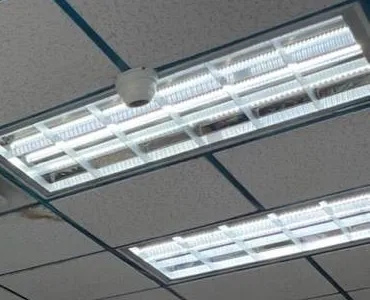
Example photo from another Abstract Enterprises Security Systems job, not a Brooklyn building: a compact white dome camera sits on a grey speckled ceiling tile directly beside a long louvered light panel, with a second light panel lower in the frame and dark blue ceiling-grid rails between the tiles.
Vestibule Camera Dark in a Brooklyn Building
The common Brooklyn failure is not dramatic: the camera over the vestibule or the one at the back of the cellar simply stops, and nobody notices until a package goes missing and the super finds a black tile on the monitor. In older buildings it is usually a power supply in a basement closet that died with the boiler-room heat, a cable chewed or crushed where it passes a cellar door, or a recorder whose hard drive filled and stopped writing. Call (347) 934-8335 for the next two-hour window; most of these are recording again within one to two hours of arrival. Service visits are billed at the published $195 an hour with a three-hour minimum ($585), which never applies to a new installation.
Apartment Building Security Camera Services in Brooklyn
Each of these is quoted on its own line so an owner, a board or a managing agent can choose what to do now and what to leave for a later budget. All of them land on one recorder that the building owns.
Stoop, vestibule and front-door cameras
One camera that sees faces as people come up the stoop or through the street door, and one inside the vestibule that sees the mailboxes and whatever is on the floor between the two doors. In a brownstone conversion that is often the whole front of the system.
Areaway and garden-level entrances
Brooklyn rowhouses often have a second door under the stoop, behind an iron gate in the areaway. It is the door that gets forgotten, and the one a trash crew, a meter reader or an intruder uses. We cover it separately from the stoop.
Stair halls and landings in walk-ups
In a four- or five-story walk-up the stair is the only route between floors. A camera on alternate landings, aimed down the run, identifies anyone moving through the building without filming into apartment doors.
Pre-war lobbies, courtyards and cellars
Six-story buildings from the 1920s and 1930s have a grand lobby, two or more wings, a courtyard and a long cellar with laundry, storage and boiler rooms. We cover the routes between them and leave the marble alone.
Tower lobbies, package rooms and garages
New Downtown Brooklyn and waterfront buildings already have fob readers, a front desk and package rooms. Cameras there are about finding one event fast in a busy day of footage, and about keeping lobby glass from blinding the lens.
Recorder upgrades and takeovers
Plenty of Brooklyn buildings have an old DVR in the super's office feeding a handful of fuzzy analogue cameras. We test what can be kept, replace what cannot, and move the system onto a network recorder the owner controls.
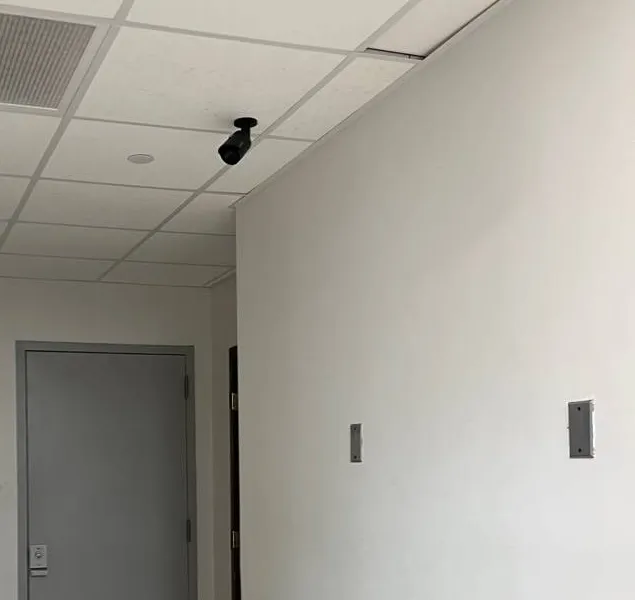
Example photo from another Abstract Enterprises Security Systems job, not a Brooklyn building: a small black bullet camera on a short mount hangs from a white suspended ceiling where a corridor meets a plain white wall, pointed toward a grey steel door with a keypad lock at the end of the passage.
Apartment Building Cameras for Brooklyn's Architecture
These are the six building types that make up most of the Brooklyn camera work we are asked to price. Each has a different weak point, a different place for the recorder and a different way of getting cable from the cellar to the top floor.
Brownstone and limestone rowhouse conversions
Three or four stories over a garden level on a narrow lot, now split into two to eight apartments. No lobby, no riser, no closet to spare. The cellar is the equipment room and the stoop is the main entrance.
Flats buildings and small walk-ups
Late nineteenth- and early twentieth-century four- and five-story buildings with a narrow entrance hall, a single stair and a mailbox bank in the vestibule. The stair hall is the spine of the system.
Pre-war six-story courtyard buildings
The elevator buildings of Flatbush, Crown Heights, Kensington and the blocks along Ocean and Eastern Parkways: wings joined by corridors around courtyards, one grand lobby, and sometimes separate entrances for each wing.
Downtown Brooklyn and waterfront towers
Post-2004 and post-2005 high-rises with curtain-wall glass, amenity floors, garages and keyless entry. Most already have some cameras; the work is coverage gaps, retention and searchable footage.
Rent-stabilized walk-ups and mid-rises
Older buildings, long-term tenants, and a regulatory history that makes how cameras are used as important as where they go. Clear notices, no hidden devices and a written footage policy matter here.
Buildings beside public-housing campuses
Private buildings that share a block or a sidewalk with a NYCHA development. Their cameras belong to them, cover their own doors and courts, and should not be aimed at a neighbouring campus.
Brownstones: work from the cellar up, not from the facade in
Brownstoner's history of plaster explains why these houses fight back. Most brownstones, especially the earlier ones, had lime-plaster walls and ceilings, and on the outside walls the first coat was troweled straight onto the brick, bonding so tightly that it is hard to break a century later. Interior partitions are wood studs with wood lath and three coats of plaster pushed through the gaps to form “keys.” Cutting into either produces cracks well beyond the hole. So we do the opposite of what a quick installer does: we look for the paths the house already has — the old gas and electric chases, the space behind the stair stringer, the closets stacked one above the other, the dumbwaiter if one survives — and we bring cable up those, with short surface runs in painted raceway only where nothing else reaches. The recorder lives in the cellar near the electric meters, on a shelf above the floor.
Walk-ups: the stair hall carries everything
In a walk-up the stairwell is both the thing worth watching and the route for the cable. We usually run one vertical path up the stair hall, either along the inside of the stair stringer or in a single painted raceway tight to the corner, and branch to a camera on alternate landings. Cameras sit high and look down the stair run, so they identify a person climbing without seeing into an apartment when its door opens. The vestibule camera, the cellar door camera and the roof door camera hang off the same path.
Pre-war courtyard buildings: follow the corridors
Suzanne Spellen's history of the Cohn Brothers, among the most prolific architects of Brooklyn's six-story apartment houses, describes the plan: large corner buildings with four or five wings joined by corridors around several courtyards, sometimes with separate entrances, all sharing one central lobby, and lobbies finished in terrazzo, marble, tile or Gothic plaster to impress. For cameras that means the long run is horizontal, along the cellar under each wing, and the vertical runs are short. We put a small switch in the cellar under the far wing rather than dragging every camera back to one closet, and we treat the lobby finish as something to protect: cameras go on the ceiling or above a doorway trim line, never through the marble.
Towers: fill gaps, keep the glass from blinding the lens
The Downtown Brooklyn Partnership counts nearly 10,000 housing units added since 2004, and Greenpoint and Williamsburg added 26,253 in the thirteen years to May 2024. Those buildings arrive with a developer's camera package that usually covers the front desk and the garage ramp well and the bike room, mail room, stair doors and service corridors less well. Lobbies are glass on at least one side, so cameras facing the street need wide dynamic range and should be mounted so the face of a visitor is lit by the lobby, not silhouetted by the street. We also check that the recorder's retention matches what the building's footage policy promises.
Mixed-use avenue buildings: two doors, two owners
Along Nostrand, Flatbush and Rogers Avenues, many of the smaller buildings are two or three stories of tapestry brick with a store at street level and one or two apartments above, reached by a narrow street door beside the shop window. The residential door, the stair and the apartment landings belong on the building owner's cameras; the shop floor usually belongs on the shopkeeper's own system under the lease. We keep the two on separate recorders unless the owner runs both, and we aim the residential door camera tight to the door so it does not record the store's customers on the sidewalk.
Next to a public-housing campus: cover your own frontage
Private buildings across the street from, or sharing a block with, a NYCHA development often ask whether their cameras should reach further because the campus is busy. They should not. NYCHA's own cameras, which the Authority says now cover entrances, roof landings and stairwells at its upgraded developments, are run by its Office of Safety and Security. A private building's cameras should cover its own doors, its own courtyard and its own stretch of sidewalk, with recorder masks blocking anything beyond the property line.
Rent-stabilized buildings: the policy is part of the installation
For older regulated buildings we hand over a written camera list, a one-page footage policy for the owner to adapt, and sign wording for each entrance. Cameras are visible, aimed at common areas and entrances, masked away from apartment doors and windows, and never record sound. That is ordinary good practice anywhere; in Brooklyn it is also the difference between a system tenants rely on and one they organize against.
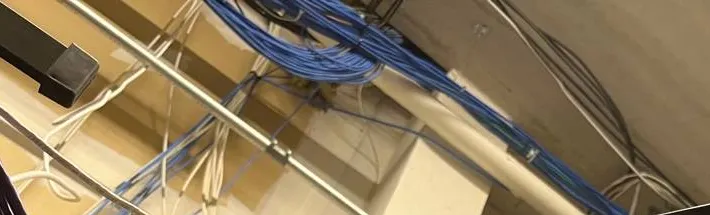
Example photo from another Abstract Enterprises Security Systems job, not a Brooklyn building: loose bundles of blue and white network cable drop from a pale ceiling, cross a horizontal metal pipe and fan out toward the top of an equipment rack at the left edge of the frame.
Buildings that need new cable between floors for more than cameras — Wi-Fi in the halls, a laundry card system, a new intercom — often bring in our structured cabling crews in Brooklyn at the same time, so the stair hall or the cellar is opened once.
Landmark Districts
Facade Cameras in Brooklyn's Historic Districts
A large share of Brooklyn's rowhouse rentals sit inside designated historic districts — Brooklyn Heights, Cobble Hill, Boerum Hill, Fort Greene, Clinton Hill, Park Slope and its extensions, Prospect Heights, Crown Heights North, Bedford-Stuyvesant/Stuyvesant Heights, Prospect Lefferts Gardens, Ditmas Park and the Sunset Park districts among them, according to the Historic Districts Council's Brooklyn listings. In those districts the facade is regulated, and a camera with a bracket and a cable is a change to the facade.
That does not mean a camera is forbidden. Chapter 11 of the Landmarks Preservation Commission's Permit Guidebook allows staff-level permits for security cameras that meet set criteria. The ones that matter most on a Brooklyn rowhouse are these: equipment should not go on or in front of the primary facade unless there is no other option; on small residential buildings, no more than two cameras per 25 feet of street frontage; cameras spaced to avoid a cluttered look; attachments made into mortar joints, plain masonry, wood or metal, not through decorative stone or cast iron; finishes that match the surface; and no more than about ten inches of visible conduit, painted to blend in. Applications go through the Commission's Portico system with photographs, a drawing and the camera's cut sheet.
In practice that steers most Brooklyn landmark jobs toward the same layout: one small camera tucked under the stoop or inside the vestibule ceiling rather than on the brownstone face, a second at the areaway gate if needed, anchors set into mortar joints rather than the stone, and the cable dropped straight through the wall into the vestibule or the garden-level hall so almost none of it shows. The rear facade is usually far less sensitive than the street front. We prepare the photographs, the marked-up elevation and the product sheets for the owner or the owner's expediter to file.
The Commission's Rowhouse Manual is a useful companion: it explains that brownstone, a sandstone, tends to spall when it was set with the grain running the wrong way, while limestone rarely does. On a spalling brownstone front, a bracket screwed into the stone face is a bracket that will eventually pull out with a piece of the facade. That is one more reason the mortar joint, the stoop underside or the vestibule ceiling is the better home for a front camera.
Commercial Apartment Building Cameras
Business Apartment Building Cameras in Brooklyn
Many Brooklyn apartment buildings are also commercial property: a store on the ground floor, an office for the management company, a parking garage open to the public. These are the corridors where we most often meet that mix, and what the camera work usually involves.
Fulton Street and Downtown Brooklyn
The Downtown Brooklyn Partnership's president described Fulton Street as a great shopping street that, before 2004, lacked the housing to hold the district together. Today towers sit on retail bases, so residential lobbies, retail entrances and loading areas share one footprint and need clearly separated camera ownership.
Nostrand, Flatbush and Rogers Avenues
Spellen's research notes that from 1912 the Cohn Brothers' earliest work included two- and three-story tapestry-brick buildings with a store and one or two apartments above, common along these avenues south of Eastern Parkway. The apartment door is usually a narrow street door beside the shopfront.
Kent Avenue and the Williamsburg waterfront
The 2005 rezoning reached the waterfront side of Kent Avenue, West Street and Commercial Street, according to the city's environmental review. Towers there have garages, waterfront esplanade access and amenity decks that see heavy public foot traffic next to private space.
Eastern Parkway
Brownstoner's history of the parkway traces the six-story and taller elevator buildings that followed the Martinique Apartments of 1916, including Turner Towers of 1927 with 181 apartments over 15 stories. Many now have ground-floor offices, clinics or institutional neighbors along the service roads.
Ocean Parkway and Coney Island Avenue
NYC Parks records that Ocean Parkway runs five and a half miles from Prospect Park to Coney Island, with service roads for local and commercial traffic outside the malls, and that noncommercial zoning restrictions followed its 1975 scenic-landmark designation. Coney Island Avenue, the old plank road beside it, carries the shops.
Brownsville and East New York mid-rises
Larger rental complexes here often already have cameras, guards and fobs, as Atlantic Plaza Towers did in 2019. The work is usually upgrading old analogue equipment and writing down how footage is used, not adding more lenses.
Compliance callouts for Brooklyn building owners
Licensed installer. New York's Department of State licenses security and fire alarm installers under Article 6-D of the General Business Law, and 19 NYCRR §195.2 brings closed-circuit television and video surveillance systems used to detect or monitor intrusion or theft within that licence. NYC's business portal routes the licence to the state; there is no separate city installer licence. Abstract Enterprises Security Systems holds NYS licence #12000287431.
Smart-access data. If the building uses fobs, cards, a phone app or biometrics to open doors, Local Law 63 of 2021 applies to that entry system: a written data retention and privacy policy for tenants, express consent before collecting reference data, destruction of authentication data within 90 days unless anonymized, and no use of the data to harass or evict. Cameras are not the entry system, but when we link them to one, we keep the two sets of data separate.
Entrance doors and intercoms. Multiple Dwelling Law §50-a requires self-closing, self-locking entrance doors and, in buildings of eight or more apartments, an intercom with door release from each apartment in class A multiple dwellings built or converted after 1968. Cameras do not replace either; a vestibule camera is only as good as the door it watches.
Sound. New York's eavesdropping statute, Penal Law §250, makes it a felony to capture a conversation unless at least one person in it agrees, so every building camera we fit has its microphone switched off.
Facades in historic districts. LPC permit criteria for cameras apply in designated districts; see the landmark section above.
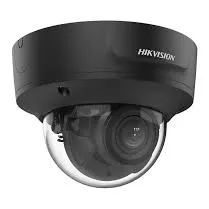
Manufacturer's image: black housing, clear lower bubble, zoom lens visible through it, white backdrop.
Apartment Building Security Cameras in Brooklyn: Questions Answered
These are the questions Brooklyn owners, boards, managing agents and supers put to us most often, grouped by the kind of building they come from. Each is answered for Brooklyn's housing as it actually is.
Rowhouse Conversions, Stoops and Vestibules
Our Park Slope brownstone is now four rentals with no lobby — where does the recorder go?
In the cellar, almost always. A converted rowhouse has no shared room on the upper floors, and the parlor-floor hall is too public and too tight. The cellar usually has the electric meters, a dry wall near the front, and the shortest path to the vestibule overhead. We mount the recorder on a shelf or in a small ventilated wall cabinet a foot or more above the slab, away from the boiler flue, with a small battery backup. If the cellar is the garden-level tenant's space rather than common space, we look for a stair closet or the bottom of the hall closet instead, so no tenant has to let the super into their apartment to restart the recorder.
Is it easier to wire a Brooklyn rowhouse from the cellar up or from the roof hatch down?
From the cellar, in most houses. Cable dropped from the roof has to cross every floor's ceiling and the cornice, and roof penetrations need flashing that someone has to maintain. From the cellar we can reach the vestibule and the areaway in one short run, and the stair-hall cameras by following the stair stringer or the old gas and electric chases up through the floors. We only go in from the top when the only camera wanted upstairs is at the roof door, and then we take a separate short run rather than threading the whole building from above.
Our Bed-Stuy rowhouse has the stoop entrance and a separate garden-level door under it — how many cameras does the front need?
Usually two, and sometimes three. One camera sees faces coming up the stoop; it is best placed inside the vestibule ceiling or under the stoop's cornice, looking out and down, rather than on the brownstone face. A second covers the areaway gate and the garden-level door under the stoop, which is the entrance most often overlooked and the one trash and meter crews use. A third, inside the vestibule, is worth adding when mail and packages are left between the doors. Two cameras placed well beat four placed on the facade where they film the sidewalk.
Our vestibule is barely four feet deep — what kind of lens can see the whole space?
A short focal length, mounted in the ceiling corner above the inner door and looking back toward the street door. In a shallow vestibule a normal lens sees only a chest or a shoulder; a 2.8 mm lens or a wide fixed dome sees the mailboxes, the floor where boxes land and the face of anyone coming through the outer door. We set the exposure for the face rather than the bright glass of the street door, and we avoid domes whose bubble catches the vestibule light. If the vestibule ceiling is decorative plaster, a small flush-mount camera on a painted back box keeps the work reversible.
Landmarked Facades and Old Stone
How does the LPC's limit on cameras per 25 feet of frontage work out on a narrow Brooklyn rowhouse, and does a camera under the stoop count?
On a small residential building the Permit Guidebook allows no more than two cameras per 25 feet of street frontage for a staff-level permit, so a rowhouse with less than 25 feet of frontage can carry up to two exterior cameras on the street side. Whether a device under the stoop or inside the vestibule counts depends on whether it is part of the regulated exterior and visible from the street; an interior vestibule camera generally is not a facade alteration, while one fixed to the underside of the stoop may be reviewed as exterior work. We show every proposed position in the photos and drawings filed through Portico so the Commission decides, not us.
The brownstone on the front of our building is flaking — where can a camera bracket be anchored safely?
In a mortar joint, or not on the stone at all. The LPC's Rowhouse Manual explains that brownstone set with its grain running the wrong way spalls in layers, and a screw anchor in a spalling face will eventually pull out with a piece of the facade. The Permit Guidebook also asks that attachments go into mortar joints or plain masonry, not decorative stone. We anchor into joints with the smallest bracket that will hold the camera steady, use stainless fixings, and when the stone is in poor shape we move the camera to the underside of the stoop, the vestibule ceiling or a wood door frame instead.
Is a camera on the back of a landmarked Brooklyn rowhouse treated differently from one on the front?
Usually yes. The Guidebook's starting position is that equipment should not go on the primary facade unless there is no other option; rear facades that cannot be seen from a public street are far less sensitive, though work there can still need a permit. That makes the rear yard one of the easier places to add coverage on a landmarked house: a camera under the rear eave or over the garden door, with its cable going straight inside, watches the back fence and the yard door where many break-ins start. We still photograph and document it in case the Commission asks.
Pre-War Courtyard Buildings off the Parkways
The terrazzo-and-marble lobby is a selling point in our 1930 Ocean Parkway co-op — how do cameras go in without cutting the stone?
By staying above the stone. In most pre-war lobbies the marble or terrazzo stops at a wainscot or a door trim, and above it is plaster with a ceiling cove or a beam. We place the lobby cameras on the ceiling or just above a doorway trim line, bring the cable down through the ceiling from the floor above or along the cellar and up through an existing light or outlet position, and use small cameras finished to match the ceiling. Nothing is drilled into marble, terrazzo or decorative tile; if a run truly has to cross a stone surface, it goes in a slim painted raceway that can be removed without a mark.
Our 1920s Flatbush six-story still has a sealed dumbwaiter shaft and old gas risers — can they carry camera cable?
Often they are the best route in the building. A disused dumbwaiter shaft runs top to bottom with access at every floor and is usually empty; we confirm it is truly abandoned, check for fire-stopping requirements at each floor, and use it as a vertical path. Abandoned gas or electric chases can work too, but only after the owner's plumber or electrician confirms what is still live. We never share a chase with live gas, and any opening we make through a floor is sealed with rated fire-stop material so the shaft doesn't become a chimney.
The super lives in the basement apartment of our older Brooklyn elevator building — should a camera monitor go in there?
A live-view screen in the super's apartment is useful, as long as the super's access is limited to what the job needs. We give the super a user account that can view live cameras and recent playback but cannot delete footage or change settings, and the owner or managing agent keeps the administrator account. Many supers prefer a phone app over a wall monitor. If the board would rather keep footage review with the managing agent, the super's screen can show live views only, which still lets them see who is at the door at 2 a.m. before going upstairs.
Downtown Brooklyn and Waterfront Towers
Does the curtain-wall glass of a Downtown Brooklyn tower stop wireless cameras from working?
It can. Many modern glazing units carry metallic low-emissivity coatings that weaken radio signals, and the concrete core of a tower blocks them further, so a Wi-Fi camera on a balcony, terrace or the outside of the podium may not reach an access point inside. We cable every camera we can, using the building's existing low-voltage risers, and where a camera truly cannot be wired we test the signal on site with the actual hardware before quoting it. A camera that drops off the network whenever the radio is weak is not a security camera.
Our Greenpoint building opens doors with fobs and an app — does Local Law 63's tenant data privacy rule cover the cameras too?
Local Law 63 of 2021 governs smart-access systems — the fobs, cards, apps and biometrics used to open doors — and requires the owner to give tenants a data retention and privacy policy, get express consent, limit the data collected and destroy authentication data within 90 days unless it is anonymized. HPD's summary does not describe ordinary security cameras as a smart-access system. The overlap comes when the two are linked, for example a clip saved for every fob entry. If you want that link, we set it up so the entry log and the video are kept and deleted on their own schedules, and we recommend the owner's counsel review the privacy policy before it goes to tenants.
How do front-desk staff find one delivery in a day of footage at a 400-unit Downtown Brooklyn lobby?
With search, not scrubbing. Modern recorders can index footage by motion in a drawn area, by person or vehicle, and by time, so staff can draw a box around the package shelf and jump to every moment something was added or taken. We set up those search zones during handover, name every camera by place rather than by channel number, and train the desk to export a clip with its time stamp in a few minutes. In buildings with heavy delivery volume, a camera dedicated to the package shelf, framed tightly, saves more time than any number of wide lobby views.
Rent-Stabilized Buildings and Public-Housing Neighbors
Our building is rent-stabilized — do we need state approval before adding cameras, the way the Atlantic Plaza Towers landlord did?
The Atlantic Plaza Towers case was about replacing key fobs with a facial-recognition entry system, which the Guardian reported was a change to a rent-stabilized building's services that required approval from the state's Homes and Community Renewal agency; it was the first such application the agency had received, and it was later withdrawn. Ordinary common-area cameras that do not change how tenants get into the building are a different thing. Even so, if a camera project also changes entry, intercom or other services, ask your counsel whether a filing is needed before work starts. We do not install facial-recognition entry systems.
Tenants in our Flatbush rent-stabilized building worry the cameras will be used to catch them on lease rules rather than to stop break-ins — how do we answer that?
In writing, before the cameras go up. Give tenants a short notice saying where the cameras are, that they cover entrances and common areas only, that there is no audio, how long footage is kept and who can view it. Then keep to it: no cameras pointed at apartment doors, no new cameras added quietly, and footage reviewed after a reported incident, not trawled for rule violations. Tenants at Atlantic Plaza Towers told the Guardian that photos of minor infractions were being slid under their doors; that is exactly the use that turns a security system into a dispute. We supply sign wording and a model footage policy with every installation.
Our building shares a block with a NYCHA development that just got new cameras — do our cameras need to be coordinated with theirs?
No coordination is required, and the two systems stay separate. NYCHA's cameras are run by its Office of Safety and Security on a video management system shared with the NYPD; the Authority said in November 2023 that its new installations keep footage for 21 days. Your building's cameras belong to your owner and should cover your own doors, courts and sidewalk frontage. Aim them so they do not look into the campus or at its entrances, set your own retention to suit your building, and keep your own export procedure for when police or your insurer ask for a clip.
Party Walls, Old Wiring and Renovations
One owner holds two attached rowhouses next door to each other — can one recorder serve both through the party wall?
Yes, and it is usually cheaper than two systems. We drill one small sleeve through the shared cellar wall, sealed and fire-stopped, and run a single network cable or a short piece of fibre to a switch on the second house's side. Both houses' cameras land on one recorder with one app, and each house's cameras can be grouped separately so tenants or managers see only their own building. If the houses are ever sold separately, the second house's cameras can be split onto their own recorder without rewiring.
Can the old buzzer wiring that runs up our Brooklyn walk-up's stairwell carry camera video?
Sometimes, with adapters, but rarely as the long-term answer. Two-wire extenders can send network signal and low power over an existing pair, which can save opening a plaster wall for one camera. Old buzzer cable, though, is often thin, spliced in several places and shared with the intercom you still need. We test each pair first. If it is sound and spare, an extender can serve a camera or two; otherwise we run new cable along the same path, which is usually easy because the buzzer cable has already shown us the route.
We're gutting our Brooklyn rowhouse floor by floor — is this the time to wire for cameras even if we install them later?
Yes; it is the cheapest moment the house will ever offer. With walls open we can run network cable from the cellar to every future camera position — the vestibule ceiling, the stair hall on each landing, the rear yard eave, the roof door — and leave each one capped in a labeled box. Pulling cable through open studs costs a fraction of fishing it through finished lime plaster later. Mark the positions on your architect's drawings, and if the house is in a historic district, include the exterior positions in the same LPC application as the rest of the facade work.
What does a camera system for a four-unit Brooklyn brownstone conversion typically come to?
On the Brooklyn list, building cameras run $500 to $1,500 each installed, and small walk-up systems of four to eight cameras fall between $5,000 and $12,000. A four-unit brownstone with a stoop camera, a vestibule camera, an areaway camera, a camera on each stair landing, a rear-yard camera and a recorder in the cellar sits inside that small-system range. Where it lands depends mostly on the walls: a house with open chases and a dry cellar is near the low end; one with finished lime plaster, a decorative vestibule and a landmark filing is near the high end. The walkthrough gives you a fixed number.
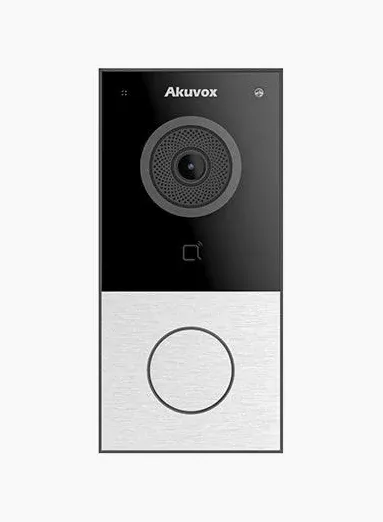
Manufacturer's image: narrow door unit, black top half with lens and status icons, brushed-metal bottom half with a single big round button.
Equipment
Types of Apartment Building Security Cameras We Install
We install Lorex, Hikvision, Dahua, Uniview and Ubiquiti equipment, along with Aiphone, ButterflyMX, Akuvox and 2N door stations, and choose by the spot, not the brand. These are the categories that come up in Brooklyn buildings and where each one earns its place.
Wide fixed domes for vestibules
Short-lens domes or flush cameras for vestibules a few feet deep, set to expose for a face rather than the bright street door. The single most useful camera in a rowhouse conversion.
Turrets for stair halls and cellars
Turret cameras have no bubble to fog or reflect, which suits damp cellars, laundry rooms and stair halls with a bare bulb on every landing. Mounted high and looking down the run.
Mini pan-tilt domes for courtyards
In a pre-war courtyard, one small pan-tilt dome on a wing corner can be set to several preset views and still record a fixed overview between them.
Varifocal cameras for long corridors
The long cellar corridors under a six-story building's wings are easier with a zoom lens set to the corridor's length, so a person at the far end is still identifiable.
Video door stations
A door station with its own camera covers the face at the buzzer itself, and many record to the same recorder as the building cameras, giving a clear image of whoever rang.
Network video recorders
Eight-, sixteen- and thirty-two-channel recorders sized for the building with spare channels, with drives sized for the retention in the footage policy and a battery backup.
Indoor cube cameras
Small cameras for a package shelf, a super's office or a bike-room door, where a full dome would be out of scale.
Wi-Fi cameras, sparingly
For the one spot no cable can reach, tested on site first. Brooklyn's brick party walls and coated tower glass both weaken radio signals.
Vandal-resistant housings
Impact-rated domes for the cellar door, the trash area and the roof door, where cameras get knocked, sprayed or turned.
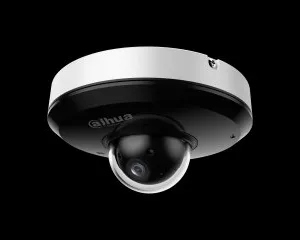
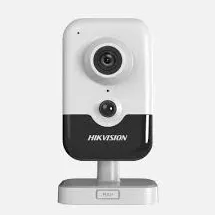
Manufacturer's image: small camera with a white cap, black middle band and clear dome over the lens, set against black.Manufacturer's image: white cube on a short stand, round lens above, black lower face with a second small sensor.
Recorders and drives for an existing system can also be handled on their own through our Brooklyn NVR installation service, and owners who only want the house itself covered, not a multi-unit building, are better served by residential security cameras in Brooklyn.
AI Overview Reality Check
What AI Gets Wrong About Apartment Building Security Cameras in Brooklyn
Instead it takes the claims that AI answers and cost sites commonly repeat for this search — claims published by Angi, HomeAdvisor, vendor blogs and tenant-rights explainers — and tests each against Brooklyn's buildings.
“Security camera installation in New York costs about $1,500”
Angi's New York cost page puts the average at $1,509, with a typical range of $797 to $2,222. That figure blends single-family homes and a few doorbell or driveway cameras, and it is a reasonable number for that kind of job.
A Brooklyn apartment building is not that job. Even a small brownstone conversion needs a recorder in the cellar, a camera in the vestibule, one at the areaway, cameras on the stair landings and a cable path through lime plaster or masonry to reach them. On our Brooklyn list that is a small-system job of four to eight cameras at $5,000 to $12,000, and larger walk-ups and elevator buildings go well past it.
The useful number for an owner is not a borough-wide average but a per-camera installed price for the walls in question. That is why we price by camera on a published range and fix the figure after seeing the cellar and the stair hall.
“Labor is $100 to $350 per camera”
Angi also lists installation at $100 to $350 per camera on top of the camera itself, and HomeAdvisor's guide says labor makes up 50 to 70 percent of a job. The second statement is the more honest one for Brooklyn.
In a building, labor is mostly cable path: fishing from the cellar past the parlor floor, following a stair stringer up four flights, drilling a fire-stopped sleeve through a party wall, protecting a marble lobby. A camera that takes twenty minutes to mount can take two hours to reach, and that is not a per-camera flat fee.
Our installed price per camera includes the cabling, the mounting, the recorder setup and the handover, so the owner is not comparing a low per-camera labor number against an open-ended hourly bill later.
“Wireless cameras save the cost of running cable”
Vendor blogs such as Avigilon's note that wireless cameras for apartment buildings may lower installation cost by avoiding extensive cabling. In an open-plan building with good Wi-Fi coverage, that can be true.
Brooklyn's buildings are the opposite of open-plan. Rowhouses are separated by solid brick party walls, pre-war buildings by masonry partitions and concrete floors, and new towers by coated curtain-wall glass and concrete cores. Each of those weakens radio signals, and a Wi-Fi camera still needs power, which means a cable or a battery someone has to change.
We use wireless cameras where a cable genuinely cannot go and the signal tests well on site. Everywhere else, a single network cable carrying power and video is cheaper over the life of the system than a camera that drops off at the moment someone is propping the cellar door.
“Common areas have no expectation of privacy, so any camera there is fine”
Tenant-rights explainers summarize New York practice correctly: cameras in lobbies, hallways and laundry rooms are generally allowed, cameras where people expect privacy are not, and audio needs consent. AI answers tend to stop there.
Brooklyn adds layers. Buildings with keyless entry fall under Local Law 63 of 2021, which limits what entry data may be collected, requires a written privacy policy and bars using it to harass or evict. Rent-stabilized buildings carry their own rules about changes to services, as the Atlantic Plaza Towers application showed. And tenants here notice how footage is used.
A legal camera can still be a bad one. We aim cameras at entrances and routes, mask apartment doors and windows in the recorder, keep audio off, and hand over a written footage policy, because the system has to work for the people living there as well as for the owner.
“You can't put cameras on a building in a historic district”
This one comes up often in Park Slope, Brooklyn Heights and Fort Greene, and it is wrong. The Landmarks Preservation Commission's Permit Guidebook provides for staff-level permits for security cameras that meet its criteria.
The criteria are specific: avoid the primary facade where another option exists, keep to two cameras per 25 feet of frontage on small residential buildings, attach into mortar joints or plain masonry rather than decorative stone or cast iron, match finishes, and keep visible conduit to roughly ten inches.
Most rowhouse owners can get the coverage they need inside those limits by using the stoop underside, the vestibule ceiling and the rear facade. The paperwork is the photographs, an elevation and a product sheet, and we prepare them.
“Facial recognition is the next step for apartment security”
AI summaries of building-security trends often present face-recognition entry as the obvious upgrade from fobs. In Brooklyn the best-known attempt went the other way.
At Atlantic Plaza Towers in Brownsville, more than 130 tenants filed a formal complaint with the state in 2019 against their landlord's application for a facial-recognition entry system, which the Guardian reported needed state approval because the buildings are rent-stabilized; the complex already had cameras, guards and fobs. The application was withdrawn in November 2019. Two years later the city passed Local Law 63, which now limits how biometric and other entry data may be collected and kept.
We do not install facial-recognition entry. Good cameras at the right doors, a working lock and a clear footage policy solve the problems owners actually describe to us without creating new ones.
“Any camera system is basically the same”
AI answers usually treat “apartment building cameras” as one product with one price and one layout. Brooklyn alone has at least six building types that need different designs.
A four-unit brownstone needs two or three well-placed cameras at the front and a recorder in the cellar. A six-story courtyard building needs switches under each wing and lobby work that respects the stone. A tower needs search tools, retention that matches its policy, and lenses that cope with glass. NYCHA's own campuses, by comparison, use cameras on a fiber backbone with a security operating center and 21-day retention — a design that suits a public-housing authority, not a private walk-up.
The question to ask any installer, including us, is not “how many cameras” but “where does the cable go in this building, and where will the recorder live.” A good answer to that is most of a good system.
A Camera Plan Drawn for Your Building
Send the address or the cross street, photos of the stoop, the vestibule, the stair hall and the cellar, and tell us whether the block is landmarked. We'll mark each camera, each cable route and where the recorder goes, and price it on the Brooklyn list.
A Brooklyn building quote needs four things: the cross street, the building type and number of units, whether there is a lobby or only a vestibule, and who signs off — the owner, a board or a managing agent. A written figure comes back the same business day; to talk it through, call (347) 934-8335.
✅
We Got Your Request!
Received. Someone at Troy Avenue is reading the building details now and will reply today; for anything urgent, ring (347) 934-8335.
How It Works
Our Installation Process
Seven steps, whether the job is three cameras on a Bed-Stuy rowhouse or a full system for a six-story building off Ocean Parkway. In Brooklyn the third step — finding a cable path the building already has — decides most of the price.
1. Photos before the visit
You send photos of the stoop, vestibule, stair hall, cellar and any lobby, plus the cross street. We check whether the block is in a historic district and sketch likely camera positions.
2. Who signs and who sees
We confirm who owns the recorder, who approves the work — owner, board or managing agent — which staff get viewing access, and whether a footage policy or tenant notice is needed.
3. Walk the cable paths
On site we start in the cellar, find the chases, shafts, stair stringers and closets that reach each floor, and check the lobby finishes we must not cut.
4. Fixed written price
Each camera is listed by place with its own price, followed by recorder, cabling and labour lines and one total, fixed in writing for the owner or board to approve.
5. Landmark paperwork if needed
For facades in a historic district we supply photographs, a marked elevation and product sheets for the owner or expediter to file with the LPC before exterior work starts.
6. Cable, mount and aim
Cable goes up existing paths with fire-stopping where floors are crossed; cameras are mounted, aimed for faces at doors, and masked away from apartment doors and windows. Audio stays off.
7. Hand over and document
Accounts for owner, manager and super are created, retention is set to the footage policy, the super practises a search and an export, and the binder stays in the building: camera list, drawing, passwords, sign wording.
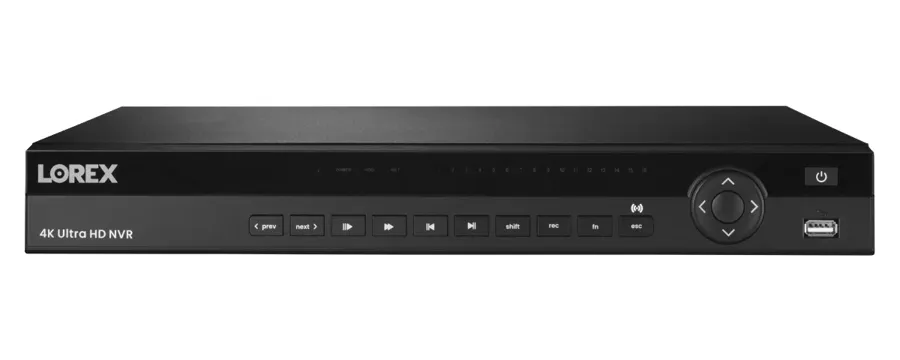
Manufacturer's image: flat black recorder seen from the front, small buttons in a row and a round navigation pad at the right.
Coverage Area
Apartment Building Security Cameras Near Brooklyn's Landmarks
Six places that sum up Brooklyn's building stock, and what each tells us about the cameras around it. Naming them is about geography; it is not a claim that we have worked in any particular building.
Brooklyn Heights Historic District
The city's first historic district, designated in 1965 for its nineteenth-century residential architecture. Rowhouse conversions here are the standard case for LPC-compliant facade cameras.
Eastern Parkway
Built 1870–1874 by Olmsted and Vaux and designated a scenic landmark in 1978. Its six-story and taller elevator buildings, from the 1916 Martinique to the 1927 Turner Towers, define the pre-war lobby job.
Ocean Parkway
Five and a half miles from Prospect Park to Coney Island, built 1874–1876, home of the country's first bike path in 1894 and a scenic landmark since 1975. Pre-war co-ops and rentals line its service roads through Kensington and Midwood.
St. Marks Avenue, Crown Heights North
Where Spellen documents the Cohn Brothers' Excelsior Apartments (1928), Carolyn Apartments (1929), Betsy Ross (1935–37) and 762 St. Marks (1931–32), each replacing a mansion lot: textbook courtyard buildings.
Downtown Brooklyn and the Brooklyn Tower
Nearly 10,000 housing units since the 2004 rezoning, topped by the Brooklyn Tower at 9 DeKalb Avenue, 1,066 feet, the borough's first supertall. Glass lobbies, garages and fob systems.
Greenpoint–Williamsburg waterfront
Roughly 180 blocks rezoned for housing in 2005; Greenpoint and Williamsburg added 26,253 units in thirteen years. Towers next to new waterfront parks such as Bushwick Inlet Park's 50 Kent.
We also serve Bay Ridge, Sunset Park, Bushwick, Bedford-Stuyvesant, Flatbush, Midwood, Kensington, Brighton Beach, Clinton Hill, Fort Greene, Crown Heights, Prospect Lefferts Gardens, Canarsie and East Flatbush, where our office sits on Troy Avenue.
Pricing
Apartment Building Security Camera Cost in Brooklyn
Brooklyn is the base of Abstract Enterprises Security Systems’ price list: every other area's prices are the Brooklyn figures multiplied by a fixed factor, and Brooklyn's factor is 1.00. The ranges below are the published building-camera prices for this service. There is no parking or bridge line added for Brooklyn work.
Line
Brooklyn price
How it usually applies in Brooklyn
Installed building camera, all-in
$500–$1,500 per camera
Low end: a vestibule or cellar camera near an open chase. High end: a stair-landing camera fished through finished lime plaster, or a landmark facade position
Installation labour
$75–$150 per hour
Already inside the per-camera figure; shown separately only when the owner supplies the hardware
Service or repair visit
$195 per hour, 3-hour minimum ($585)
For troubleshooting a system already in place — a new installation never carries this charge
Off-site cloud recording (optional, third party)
About $20–$80 per camera per month, set by the platform
Optional: the recorder in the cellar keeps footage with no subscription at all
What moves a Brooklyn price within the range
The walls. Open chases, a dumbwaiter shaft or a renovation in progress make runs quick; finished lime plaster on brick and decorative lobbies make them slow.
The distance from cellar to camera. A brownstone's vestibule is a few feet above the cellar ceiling; the far wing of a six-story courtyard building may need its own switch.
Landmark status. Facade positions in a historic district take more careful mounting and documentation for the LPC filing.
What can be kept. Usable cable from an old analogue system, a recent recorder or a working door station lowers the cost of an upgrade.
Retention. Longer footage policies need larger drives; we size them to the written policy, not to a guess.
How a Brooklyn quote is laid out
Every written quote lists each camera by place — “vestibule ceiling, facing street door,” “third-floor landing, facing down stair” — with its price, then the recorder and drives, the switches or links, any door-station work, and the landmark paperwork if the facade is involved. Boards can strike a line or move it to a second phase without the rest of the price changing. The total is the fixed price from the walkthrough, not an estimate that grows with the hours spent finding a cable path.
ADT, Ring and SimpliSafe compared with a building system
National home-security brands sell good products for a single household: a doorbell camera, a few indoor cameras, often a monthly plan. In a multi-unit Brooklyn building the questions are different — who owns the footage, how many households share the entrance, whether a camera on a common hallway belongs to one tenant or to the building. HomeAdvisor's guide notes that wireless cameras must sit within Wi-Fi range, which in a brick building means one tenant's router. A building system is wired to a recorder the owner controls, covers the common areas for everyone, and has no per-household subscription.
Shop Our Systems
Apartment Building Security Camera Packages & Pricing
Most Brooklyn buildings fall into one of these three sizes. Treat them as a starting point: the walkthrough moves each line up or down, and nothing starts until the figure is fixed in writing.
Rowhouse & Small Walk-Up — 4 to 8 cameras
$5,000–$12,000. Stoop or street door, vestibule, areaway or garden-level door, stair landings, cellar door and rear yard. Network recorder in the cellar with battery backup, about 30 days of recording, phone access for the owner and super.
Mid-Size Elevator Building — 12 to 20 cameras
$12,000–$25,000. Lobby, vestibule, mail and package area, elevator landings, each wing's corridor, laundry, storage, courtyard and service entrance. Switches under far wings, 30 to 60 days of recording, search set-up for the super and managing agent.
Large Building or Tower — 24 to 40 cameras
$25,000–$45,000+. Full common-area coverage including garage, amenity floors, bike and package rooms and roof doors, with video door-station integration and plate capture at a garage gate where wanted. Retention sized to the building's written policy.
Already bought your own cameras? Labour-only installation
Owners who have already bought cameras and a recorder can have us install them at the Brooklyn labour rate of $75 to $150 an hour. We check the equipment against the building first — a consumer Wi-Fi kit bought for a house is rarely right for a rowhouse with brick party walls — and tell you before we start if anything should be returned. Parts we do not supply are covered by their own manufacturer's warranty, not ours. More on bringing your own equipment is on our install-your-own-camera-system page, and the Abstract Enterprises Security Systems camera calculator gives a quick estimate before you call.
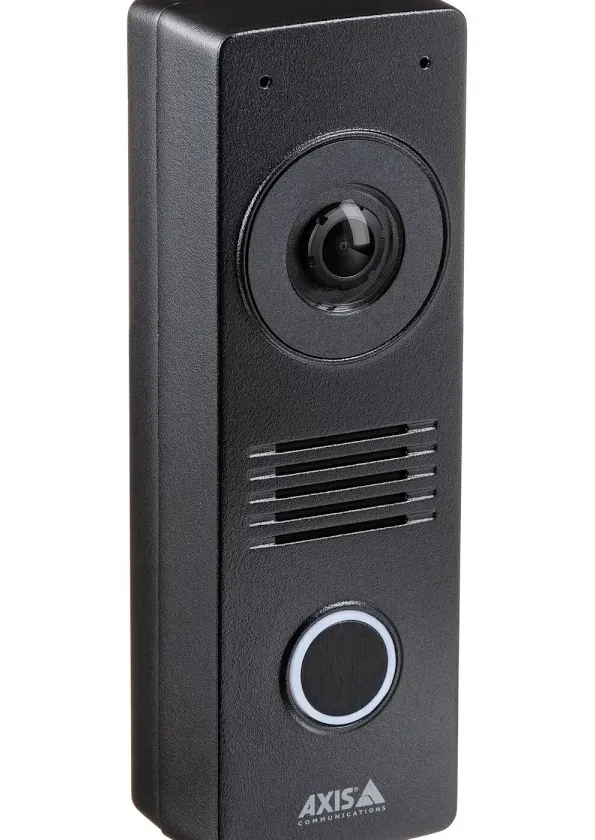
Manufacturer's image: tall black unit, lens at the top, slotted grille mid-way, round button with a white light ring near the base.
Fixed Brooklyn Price, in Writing, Before Any Work
The walkthrough is how a range becomes a number. We look at the cellar, the stair hall and the front, and you get a camera-by-camera price the same week.
Every Apartment Building Security Camera Service in Brooklyn
A front-door camera project in Brooklyn tends to pull in the intercom, the lock or the cabling. These are the related Abstract Enterprises Security Systems services, priced from the same Brooklyn base.
The full Brooklyn camera price list across services.
Field Notes
Field Notes: Start in the Cellar With a Flashlight
No particular building is described here. It is the checklist our crews work through when they first walk an older Brooklyn building.
Before anyone looks at the facade, go down to the cellar and look up. Find where the street-side wall meets the cellar ceiling, because the vestibule floor is right above it; that is the shortest run in the building. Then follow anything that goes vertical: the old gas riser, the electric service, a dumbwaiter shaft, the boxed-in space behind the stair, a closet stacked under another closet. Shine a light into each and ask whether it is live, empty or abandoned, and write it down. Next, look at the floor of the cellar and the walls near it for water lines, because the recorder needs to sit above them. Then walk up the stair hall and look at the stringer, the newel posts and the plaster on the outside wall: tight bonded plaster on brick is where you do not want to cut. Only after that, go outside and look at the stoop, the areaway and the cornice with the LPC limits in mind. Plans drawn in that order put cameras where the cable can reach without opening walls, and the recorder where it will still be dry in ten years.
Manufacturer's image: white dome housing, dark lower dome, short white antenna rising from one side.
FAQ
Brooklyn Apartment Building Security Camera FAQ
How soon after we send the form can someone walk through a Brooklyn building?
+
We reply the same business day with a range based on your photos, then book the walkthrough at a time when the super or owner can open the cellar, the roof door and any locked rooms. Walkthroughs in Brooklyn are scheduled from our Troy Avenue office in East Flatbush, so there is no travel day to work around.
Can we buy our own cameras and pay you for labour only?
+
Yes. Labour-only work is billed at the Brooklyn rate of $75 to $150 an hour. We review the equipment list before the visit, because consumer Wi-Fi kits often struggle with brick party walls and steel-framed floors, and we will tell you if something is unsuitable before installing it. Cameras and recorders you supply carry their own manufacturer's warranty.
Do you need to get inside any apartments, or only the common areas?
+
Normally only common areas: the vestibule, halls, stair, cellar, roof door and any lobby or courtyard. Occasionally the best cable path runs through a closet or ceiling inside an apartment; if so we say so in the proposal, and the owner arranges access with the tenant with proper notice. Most Brooklyn systems are installed without entering a single unit.
Can we see a coverage drawing before we commit to anything?
+
Yes. Every written quote includes a simple floor-by-floor drawing showing each camera position, the direction it faces and roughly what it sees, along with the cable route and the recorder location. Boards and owners use it to agree on positions before work starts, and it is the drawing you keep afterwards.
Which office sends the crew for a Brooklyn job, and how do we reach someone after hours?
+
Brooklyn jobs are run from our office at 1282 Troy Avenue, Brooklyn, NY 11203. The direct line, (347) 934-8335, is answered seven days a week until 8 PM; outside those hours you can leave a message or send a WhatsApp and we call back when the line opens.
Can cameras in a Brooklyn hallway be hidden so nobody knows they are there?
+
We don't install hidden cameras in residential common areas. Visible cameras deter, and a plain notice at each entrance tells residents and visitors what to expect, which avoids disputes later. Small, neat cameras that blend with a ceiling are fine; concealed ones disguised as something else are not something we fit in apartment buildings, and never anywhere people expect privacy.
Do dummy cameras do any good in a Brooklyn walk-up?
+
Not for long. Regular visitors and anyone casing the building soon notice a camera with no cable, no light and no change after an incident, and a dummy records nothing when you actually need footage. FirstService Residential's guidance for New York boards advises against dummy cameras. One real camera in the vestibule does more than several fake ones on the facade.
What happens if someone spray-paints or rips down a stairwell camera?
+
Call us and we will replace or clean it; vandal damage is not a warranty fault, so it is billed as a service visit or a replacement part. To make it less likely, we use impact-rated domes in the spots that get attacked — the cellar door, the trash area, the roof door — mount them out of easy reach, and position another camera so it records anyone approaching the first one.
Will the time stamps on our footage hold up if we need it in Housing Court or for an insurer?
+
We set every recorder to synchronize its clock automatically and check the time zone and daylight-saving setting at handover, so the time on the footage matches the real time. Exported clips carry the camera name and time, and the recorder can export in its own player format with a verification file as well as an ordinary video. Whether footage is admissible is for your lawyer and the court, but accurate time and a clean export are what they will ask about first.
Can new cameras be added to the recorder our Brooklyn building already has?
+
Often, yes. Most network recorders from the last several years accept standard IP cameras, sometimes with limits on which features work across brands. We check the make, model, free channels, drive space and software version during the walkthrough. If the recorder is an old analogue DVR, it can sometimes keep running its existing cameras while new ones go onto a network recorder, and the two are replaced together later.
All Areas Served
Apartment Building Security Cameras Across New York City and Beyond
Brooklyn is one of five borough pages beneath apartment building security camera installation in NYC. The links below lead to the other boroughs and to the Long Island and Hudson Valley pages, each built around the housing found there.
Each Brooklyn fact above is tied to one of these publications or official pages; where only a search excerpt could be read, the entry is marked. Prices are Abstract Enterprises Security Systems’ own published list, with Brooklyn as the 1.00 base.
Brooklyn Building Cameras Down? Call the Troy Avenue Office
When the vestibule camera goes black or the recorder in the cellar stops writing, the cause is usually a failed power supply, a full or failing drive, or a cable crushed at a cellar door. Phone (347) 934-8335; we book the next open two-hour window from East Flatbush, and most systems are recording again within one to two hours of arrival.
Brooklyn Building Cameras From a Licensed, Insured Crew
Abstract Enterprises Security Systems · 1282 Troy Ave, Brooklyn, NY 11203 · (347) 934-8335 · WhatsApp (718) 679-0359 via wa.me
NYS Low-Voltage Licence #12000287431 · 100% Licensed & Insured · Same-Day Estimates · Rated 4.7★ from 390+ Google Reviews
Cameras and recorders carry their manufacturer's warranty. Full terms — including 50% deposit, the 30-day warranty and optional paid extended warranty, and the late-fee schedule — are set out in the service agreement. See our warranty page.
Page reviewed and updated October 18, 2026. Changelog: page rebuilt from scratch for Brooklyn's brownstone and limestone rowhouse conversions, walk-ups, pre-war courtyard buildings along Ocean and Eastern Parkways, Downtown Brooklyn and waterfront towers, and rent-stabilized buildings, covering cellar-up cable routes, LPC facade rules, lobby finishes, Local Law 63 smart-access data, footage policy and Brooklyn pricing.