Long Runs Between Buildings · Salt Air · Flood-Aware Recorders · Lots That Are Actually Lit
Staten Island rarely stacks its rental housing. It spreads it out: an owner downstairs and a tenant upstairs in a Great Kills high-ranch, a converted Victorian split into apartments up the hill from the St. George ferry, a walk-up over a storefront on Victory Boulevard, a South Shore townhouse community whose association owns the road, the parking and the drainage. Cameras for that kind of property are mostly a cabling and weather problem — getting a clean, powered signal from a detached garage or a far parking row back to one recorder, keeping hardware alive within sight of the bay, and putting the recorder above the water line where Sandy once came in. That is the work we plan and price on this page.
Reviewed and updated October 18, 2026 · Written by Abstract Enterprises Security Systems, NYS licence #12000287431 · Booked through our Brooklyn office at 1282 Troy Ave, across the Verrazzano

Four facts let us sketch a Staten Island camera plan before anyone visits: how many separate structures the system has to reach, where the internet comes into the property, how far the farthest parking space is from that point, and whether the lot sits on the East Shore or South Shore flood plain. Send those through the form or ring (347) 934-8335.
Staten Island's rental housing is mostly hidden inside houses. A local brokerage's analysis of the borough's housing puts it plainly: eighty-three percent of Staten Island's housing units sit inside one- or two-family buildings. The two-family house is the island's signature rental — an owner on one floor, a tenant on the other, or two units side by side behind a shared driveway. The same analysis maps where the variations live: up-and-down high-ranches in Great Kills, side-by-side semi-attached pairs mid-block in New Dorp and Dongan Hills, newer semi-attached construction in Charleston and Rossville, larger detached two-families in Tottenville and Prince's Bay, and older detached and converted Victorians on the North Shore around St. George and Stapleton, where it describes the market as investor-heavy.
Bigger apartment buildings are the exception rather than the rule. Commercial Observer reported in January 2026 that rezonings between 1987 and 2003 sharply reduced the parts of the island where townhouses and apartments can be built, and quoted a Holland & Knight attorney saying the zoning makes multifamily construction “virtually impossible”. The same report counted 1,238 units in Staten Island's housing pipeline at the end of 2024 against 40,247 in Brooklyn. What does get built clusters on the North Shore: the Bay Street Corridor rezoning, approved by the City Council on June 26, 2019, covers twenty blocks of Stapleton and Tompkinsville and was expected to bring about 1,800 new homes; its first project, The Pearl at 475 Bay Street, opened in November 2025, and Lighthouse Point in St. George added 115 units.
The third kind of multi-unit property is the one most outsiders miss. A Staten Island real-estate law firm notes that the borough holds more low-rise condominium units than any other borough, almost all of them in planned attached-townhouse communities on the South Shore — Annadale, Huguenot, Eltingville — where one declaration covers a whole community and the association, not the city, owns the roads, the parking areas and the drainage. Those communities have something a Manhattan co-op never has to think about: hundreds of feet of private road and open parking with nobody watching it after dark.
That spread-out stock is exactly why camera systems here behave differently. A system for a Staten Island rental is rarely a lobby dome and a few hallway turrets. It is a driveway, a side gate, a detached garage, a rear yard and a parking row, each at a distance, each outdoors, and all of them expected to land on one recorder that a small landlord or an HOA treasurer can actually use. Package theft is the most common trigger for the call: in August 2025 the Staten Island Advance reported an Elm Park homeowner who had the theft of a delivered package on video and only found it two days later because of a notification problem — and noted that more and more Staten Islanders are turning to locked options for deliveries. Car crime is the second. Police on the island told CBS New York in July 2022 that there had already been more than 250 catalytic converter thefts on Staten Island that year, at an etching event in Graniteville that drew about two hundred people.
Then there is the water. Staten Island's East Shore and South Shore took the worst of Hurricane Sandy in the city: of the 23 storm-related deaths on the island, the city's rebuilding report counts all but one on those two shores, and more than 11,700 buildings there sat in areas that flooded. Every camera plan we write for a property in Midland Beach, Ocean Breeze, New Dorp Beach, Oakwood Beach or the low streets near the shore starts with one question — where does the recorder go so the next storm doesn't take the footage with it.
Most Staten Island owners who call about cameras end up talking about the front door too, because the entrance camera and the intercom share a wall and a cable route. Our Staten Island intercom installers and the Abstract Enterprises Security Systems access control team for Staten Island work from the same visit and the same rack.

On Staten Island the usual pattern is a nor'easter or a summer thunderstorm, a flicker of power, and then the far cameras — the garage, the lot pole, the back fence — never come back while the ones near the house do. That is almost always a tripped outdoor circuit, a water-logged connector or a PoE switch that rebooted without its long runs. Call (347) 934-8335 for the next open two-hour window; most of these are recording again within one to two hours of arrival. Service visits are billed at the published $195 an hour with a three-hour minimum ($585), which never applies to a new installation.
Nine kinds of job make up almost every Staten Island booking in this service. Most are defined by the layout of the lot rather than by the brand of camera.
Front door, side entrance, driveway and rear yard on one recorder, with the owner and the tenant each seeing only the views that belong to them.
Pole and wall cameras for the open lots behind North Shore walk-ups and inside South Shore townhouse communities, with lighting checked at night before anything is aimed.
Outdoor-rated cable in conduit, fibre, or a point-to-point wireless bridge from a detached garage, a second row of townhouses or a rear cottage back to the main recorder.
Housings, brackets and connectors chosen for salt air on the East Shore and along the South Shore beaches, with stainless fixings and sealed cable entries.
A face-height view at the main door of a walk-up or converted Victorian, paired with the intercom so the person buzzing in is on record.
Mailbox banks in walk-up vestibules and porches where deliveries are left, framed so a hand reaching for a box is clear rather than a blur.
A dedicated camera on the one road into a private townhouse community, set up for vehicles and plates, separate from the wide overview cameras.
NVR, PoE switch, surge protection and a battery backup sized to ride through the short outages that follow storms, placed above any known flood line.
A written camera schedule, coverage drawing and price that an HOA board can vote on or a small landlord can compare line for line against another bid.

Six property types account for nearly every multi-unit camera job on the island. They differ less in height than in how far apart their parts are and how exposed those parts are to weather.
High-ranch and colonial two-families of the South Shore and Mid-Island, typical of Great Kills and Eltingville: a garage or rental unit at grade, the main unit above, a front stoop and a side or rear entrance for the second household.
Mirror-image pairs sharing a party wall, common mid-block in New Dorp and Dongan Hills and in newer construction around Charleston and Rossville, often with twin driveways and a shared rear property line.
Large nineteenth-century houses in and around the St. George and St. Paul's Avenue–Stapleton Heights historic districts, divided into apartments, with tall porches, deep front setbacks and timber framing.
Two- and three-storey mixed-use buildings along Victory Boulevard, Bay Street, Forest Avenue and stretches of Hylan Boulevard: a shop at street level, apartments above, a side door to the stairs and a lot or alley behind.
Planned attached-townhouse communities in Annadale, Huguenot and Eltingville where the association owns the internal road, the parking bays and the grounds, and the units are one to three storeys.
Mid-rise rental buildings near the ferry and along the Bay Street corridor, with a staffed or intercom lobby, a mail room, a garage or surface lot and a proper telecom room.
| Property | Where the recorder usually lives | Longest typical run | What decides the plan |
|---|---|---|---|
| Up-and-down two-family | Utility room or garage at grade, or a closet in the owner's unit if the ground floor floods | Front door to rear-yard fence | Which household sees which camera; whether the garage level is below a flood line |
| Semi-attached pair | One side's basement or utility room, by agreement of both owners | Across the shared rear yard to the far driveway | Two owners, one party wall: who pays, who holds the password |
| Converted Victorian | Basement or a locked closet off the common stair | Porch to a detached carriage house or rear garage | Porch depth and shadows; old timber and plaster for cable paths |
| Walk-up over a store | Separate cabinets for shop and residents, or one rack with split permissions | Stair door to the far end of the rear lot | Shop hours versus residential privacy; lighting in the lot |
| Townhouse condo community | Clubhouse, management office or a weatherproof cabinet near the entrance | Entrance to the last parking bay, often several hundred feet | Board approval; association-owned poles, power and trenching rights |
| Newer North Shore building | Telecom or super's room on the ground floor or cellar | Lobby to the far corner of the garage or lot | Existing intercom and access control; management's retention policy |
Two habits matter more on Staten Island than in the denser boroughs. The first is measuring the walk, not the building. A two-family on a deep South Shore lot can need more cable than a six-storey walk-up in another borough, because the cameras that matter are at the edges — the end of the driveway, the gate to the rear yard, the door of the garage forty or eighty feet back. We pace every run on the first visit and mark which ones fall inside a single network-cable length and which need a switch, a fibre link or a wireless bridge in the middle.
The second is deciding who the system belongs to before deciding where the cameras go. In a two-family the owner and the tenant have different rights to the same yard; in a semi-attached pair two owners share a party wall and sometimes a driveway; in a condo community the board owns the common areas and the unit owners own their front doors. Getting that settled first is what keeps a well-built system from becoming a neighbour dispute.

On Staten Island the hard part of a building camera system is rarely the camera. It is the gap between structures: the driveway between a house and its detached garage, the courtyard between two rows of townhouses, the alley between a walk-up and the lot behind it. Every camera has to reach the recorder with power and a clean signal across that gap, outdoors, for years. There are four honest ways to do it, and we choose between them per gap, not per job.
A single run of network cable carrying power and video is limited to roughly 100 metres (328 feet) end to end, including the patch cords at each end. Most two-family garages, side gates and rear fences fall well inside that. Outdoors, the cable has to be rated for wet locations and run in conduit where it crosses open ground or climbs a wall, with drip loops and sealed entries at each box. Where a driveway has to be crossed, we use an existing sleeve if the property has one, follow the line of a fence or a building wall, or go overhead on a messenger wire between two structures where that is neater than cutting concrete.
When the far structure has several cameras — a garage with a camera on each door and one on the lot behind it — it is usually better to run one link to a small outdoor-rated or indoor-mounted switch in that building and fan the cameras out from there. One cable crosses the gap instead of four, and each camera's run starts fresh from the switch. The switch needs local power and, ideally, a small battery backup of its own.
Beyond the copper limit, or where a run passes near heavy electrical equipment, a pair of fibre strands between buildings carries the video with no distance worry and no path for a lightning surge to ride from one building to the other. It costs more per foot and needs a media converter or fibre-capable switch at each end, so we reserve it for the community entrance three hundred feet from the clubhouse, or the second building across a big lot.
Sometimes nothing can be buried and nothing can be strung overhead — the association won't let anyone cut its road, or the gap crosses a neighbour's property. A pair of directional radio bridges, each fixed high on a building with a clear line of sight to the other, can carry a whole cluster of cameras across. Trees are the enemy here: the Greenbelt-edge streets of Mid-Island and the mature planting in older townhouse communities can block a path that was clear in March by June, so we check the line in leaf, not just in winter.
We do not hang battery Wi-Fi cameras on a detached garage and hope the house router reaches it. It may work at first, but a garage door, a parked van or a wet night can drop the link, and battery cameras usually record clips rather than continuous footage. On a rental property, where the footage may one day matter to a police report or an insurer, every camera that covers a common area should be wired, powered and recording continuously.

Much of Staten Island lives close to open water: the Kill Van Kull along the North Shore, New York Bay along the East Shore and its two-and-a-half-mile FDR Boardwalk, the open bay off the South Shore beaches, and the Arthur Kill to the west. Equipment that lasts for years on a sheltered inland wall can fail in two or three seasons on a beach-block porch. Most of the failures we are called to fix outdoors are not the camera's electronics at all — they are the bracket, the screws, the connector or the junction box.
A widely used outdoor CCTV weatherproofing guide says salt air within about five miles of a coast speeds up corrosion, and recommends 316-grade stainless brackets over the more common 304, dielectric grease on electrical connections and self-amalgamating tape over connectors. By that measure, most of the island qualifies. On properties near the water we specify stainless or coated brackets and fixings, cameras with a sealed cable tail rather than an exposed connector block, and junction boxes that keep every joint out of the weather.
The same guide treats IP66 as the minimum for outdoor cameras and IP67 as preferable for any camera exposed to rain without shelter — and makes the point that matters most in practice: a camera with an IP67 housing but an unsealed cable entry has effectively no weather protection at all. That is why, on an exposed Staten Island wall, we spend more time on the entry point and the box than on the camera body.
Cold nights followed by mild days push moisture inside domes, which then fog from the inside and blur the picture. Desiccant packs in junction boxes, breathable vent plugs and domes with anti-fog treatment all help; on the windiest walls we prefer a bullet or turret with a hood over a dome, because there is less glass to fog and less surface for spray to dry on.
In a square mile bounded by Midland Avenue, Father Capodanno Boulevard, Seaview Avenue and Hylan Boulevard — Midland Beach, Ocean Breeze and part of Dongan Hills — WNYC reported that streets sit several feet below Father Capodanno Boulevard, so when the surge topped the road on the night of Sandy the water poured into what researchers called a bowl. Elsewhere on the South Shore, the city's rebuilding report describes the surge travelling inland up creeks and tributaries after eroding the bluffs. For a camera system the lesson is simple: the recorder, the PoE switch and the battery backup do not belong in a ground-floor garage or cellar anywhere near those areas.
New York City's Building Code, Appendix G, requires mechanical equipment and outside appliances on regulated work in flood hazard areas to be elevated to or above the design flood elevation — generally the base flood elevation plus two feet — while allowing electrical wiring below it when it conforms to the Electrical Code. A camera recorder is not a boiler, and a small low-voltage installation is not a substantial improvement, but the logic is the same and we follow it: equipment that stores the footage goes up, on an upper-floor shelf or in an upper closet; only cable and outdoor cameras live near grade. Many East Shore homes rebuilt or raised through the Build It Back programme already have a higher utility space, and that is usually where the rack goes.
Storms that reach the island often bring short outages. A camera system with no backup stops recording at exactly the moment you are most likely to want footage. We fit a battery backup to the recorder and the PoE switch sized for a realistic outage window, surge protection on the incoming power and, on long outdoor runs, on the data line where it enters the building.

Plenty of Staten Island's rental units sit above a business. On the main corridors a single owner often has a shop, a tenant upstairs and a lot out back, and the camera system has to serve all three without letting one see what belongs to another.
The twenty-block North Shore corridor covered by the 2019 Bay Street rezoning: older storefront buildings with apartments above, alongside new rental buildings like The Pearl at 475 Bay Street.
One of the island's main roads, running inland from the North Shore, lined in places with two- and three-storey walk-ups over shops, with rear alleys and small lots behind them.
Described by Wikipedia as the longest street in New York City, running the East Shore and South Shore; strip retail with apartments above, standalone mixed-use buildings and the commercial frontage of several townhouse communities.
A Mid-Island and South Shore commercial road with large parking fields, small office-and-apartment buildings and condo communities set back behind the frontage.
North Shore neighbourhood retail with older mixed-use frontage, where rear yards, side doors and shared alleys carry most of the risk.
The island's most urban district, where the ferry terminal anchors new apartment buildings such as Lighthouse Point and older converted houses on the hill above.
This is general information about rules we work under, not legal advice. A building owner with a specific dispute should speak to an attorney.

These are the questions Staten Island owners, tenants and boards actually raise, grouped by the decision they belong to. Each answer is written for this borough's buildings; none of them is repeated in the FAQ further down.
The owner holds the administrator account; that is not negotiable, because the owner is responsible for the recorder and for anything handed to police. What the tenant sees is a choice, and modern recorders make it easy: we create a second user with live view of the shared cameras — the front walk, the driveway, the mailbox — and no access to the owner's own door or the rear yard if that belongs to the owner's unit. The camera on the tenant's private entrance is the delicate one. We recommend it covers the approach and the step, not the inside of the door when it opens, and that the lease or a short written note tells the tenant it exists and who can view it. Done that way, the tenant gets package alerts from the camera that watches their deliveries, and nobody records the inside of anyone's home.
One recorder is almost always better. Two separate systems mean two apps, two sets of passwords, two hard drives to check and two places footage can be lost. The garage needs only a link back to the house: a single outdoor-rated cable in conduit if the run is under the copper limit, or a small switch in the garage fed by one cable if there are several cameras out there. The only time we suggest a second recorder is when the far building has a different owner — a garage sold off with the neighbouring lot, for example — or when the link would have to cross land nobody will give permission for.
State regulation, 19 NYCRR §195.2, requires a Department of State licence for anyone who installs, services or maintains a closed-circuit or video surveillance system used to detect or monitor intrusion, break-in or theft — which describes nearly every camera a landlord puts on a rental property. An owner can mount a camera on their own home, but paying an unlicensed handyman to do it for a rental is the situation the rule is aimed at. Beyond the legal point, an unlicensed job is usually where we find the problems later: outdoor runs with no conduit, connectors left open to the weather, and a recorder still on its factory password.
In order of preference: an existing sleeve or conduit under the paving, which some communities have from the original construction; an overhead run on a messenger wire between two buildings, where the span is short and the board accepts the look; or a pair of point-to-point wireless bridges mounted high on each row with clear line of sight. The radio option carries several cameras across a gap with no digging at all, and it is the usual answer in South Shore communities where the association owns the paving and won't have it cut. We test the path with the trees in leaf, because a link that is clean in winter can fade when the canopy fills in.
Only if they are on a battery backup, and only for as long as that battery lasts. We put the recorder and the PoE switch that powers the cameras on one uninterruptible power supply and size it for the outage you realistically expect — the short flickers and outages of an hour or two that follow most storms. Outdoor cameras fed from the switch stay up with it. Cameras on their own plug-in adapters do not, which is one more reason we power everything from the switch. If an outage outlasts the battery, the recorder shuts down cleanly and restarts on its own when power returns, so you lose the outage period rather than the whole drive.
By treating the mounting hardware and the connections as the weak point, because they are. Stainless or coated brackets and fixings instead of plain steel; cameras with a sealed cable tail; every joint inside a gasketed junction box with dielectric grease and tape on the connector; drip loops so water runs off the cable before it reaches the box. We prefer hooded bullets or turrets to domes on the most exposed walls, and we mount under eaves or on the lee side of a building wherever the view allows. A yearly check — wiping housings, looking at fixings, re-sealing anything that has started to weep — costs far less than replacing a camera every other summer.
On an upper floor, as far above the flood line as the building allows. In the low streets behind Father Capodanno Boulevard and around New Dorp Beach and Oakwood Beach, the ground-floor garage or cellar is the worst place for the box that holds every recording. We run the camera cables up to a closet or shelf on the first habitable floor or above, put the battery backup and switch with it, and leave only the cameras and their sealed boxes near grade. If a raised home already has an elevated utility space from the rebuilding programmes, that is usually the right spot. And because a drive can fail however well it is placed, we can also send copies of key cameras to off-site storage.
Start at night, not in daylight. We walk the lot after dark with the owner and note which areas sit in shadow, which lights point into a camera's path, and where headlights sweep across. A camera aimed past a bright pole light or into oncoming headlights records a white flare; a camera that relies only on its own infrared in a big dark lot records grey shapes. The fix is usually a mix: cameras mounted on the building looking out with the existing lights behind them, a narrower camera on the entrance where cars slow down, and, where the lot is very dark, extra lighting that the owner's electrician adds before we aim anything. Colour-at-night cameras help, but only where there is some ambient light for them to use.
If the community has one or two entrances and cars must slow to enter, yes — it is the single most useful camera such a community can add. A plate camera is a separate, narrow-view camera mounted to catch the rear plate as a car passes a fixed point, with a fast shutter and its own illumination; the wide overview cameras cannot do that job, however many megapixels they have. In a community whose association owns the road, the board decides whether to keep a searchable log of plates or simply record the images, how long to keep them and who can search them. We set it up to match that policy and keep it modest; a plate camera at a private entrance is about knowing which vehicle came in before a break-in, not about tracking residents.
The board does, acting under the declaration and by-laws. Where the association owns the road, the parking bays and the grounds, those are common elements, and changing them is a board decision; some declarations also require a vote of owners for capital spending above a set amount. What makes approval quick is a clear package: a site drawing with each camera's position and field of view, a statement of what is not covered (no unit windows, no back gardens that belong to individual owners), who may view live and recorded footage, how long recordings are kept, and a fixed price split between equipment, cabling and labour. We prepare that package as part of the quote, and we can present it at a board meeting if that helps.
Often, yes, depending on the declaration and house rules. Cooperator News, answering a nearly identical question from a six-unit condo, noted that condominium documents typically prohibit owners from altering common areas on their own, that a camera which can see into a neighbour's unit raises privacy concerns, and that a camera recording conversations can raise wiretap issues. The practical route is usually to give owners a sanctioned option — a doorbell camera or a small camera aimed at their own step, approved in writing — while the association's system covers the shared walkways and parking. We can set up the community cameras so owners don't feel they need their own.
Generally not. Brick Underground quoted a New York tenant attorney saying a landlord is not obligated to share surveillance footage with a tenant, though it must be handed over to police on request or under a court order. Many small landlords choose to help anyway, and the cleanest way is a simple written policy: the owner or manager reviews the clip, and if it shows a theft, exports it to the tenant or the precinct. We set the recorder up so exporting a single clip takes a minute on a phone, and we make sure the time stamp is correct, because a clip with the wrong time is the first thing anyone questions.
We advise against it, and we switch audio off by default. Common-area video is generally permitted in New York, but recording conversations is a different matter: the state requires the consent of at least one party to a conversation, and a hallway microphone records conversations between people who have agreed to nothing. In a converted house, where the stair hall is close to apartment doors and voices carry, the risk is higher. If you need to know that someone was shouting or knocking, a video-only camera with a clear view of the landing tells you most of what you need without the legal exposure.
Share the recorder, split the permissions. One recorder with one battery backup and one set of maintenance is cheaper and more reliable than two, but the shopkeeper should see the shop floor, the register and the shop's own door, and the residential side should see the residents' entrance, the stairs and the lot. The owner sees everything. Where the shop is a tenant rather than the owner's business, we often give it its own small recorder for the inside of the store and keep the building's recorder for the shared and residential areas, so a change of shop tenant never means handing over residential footage.
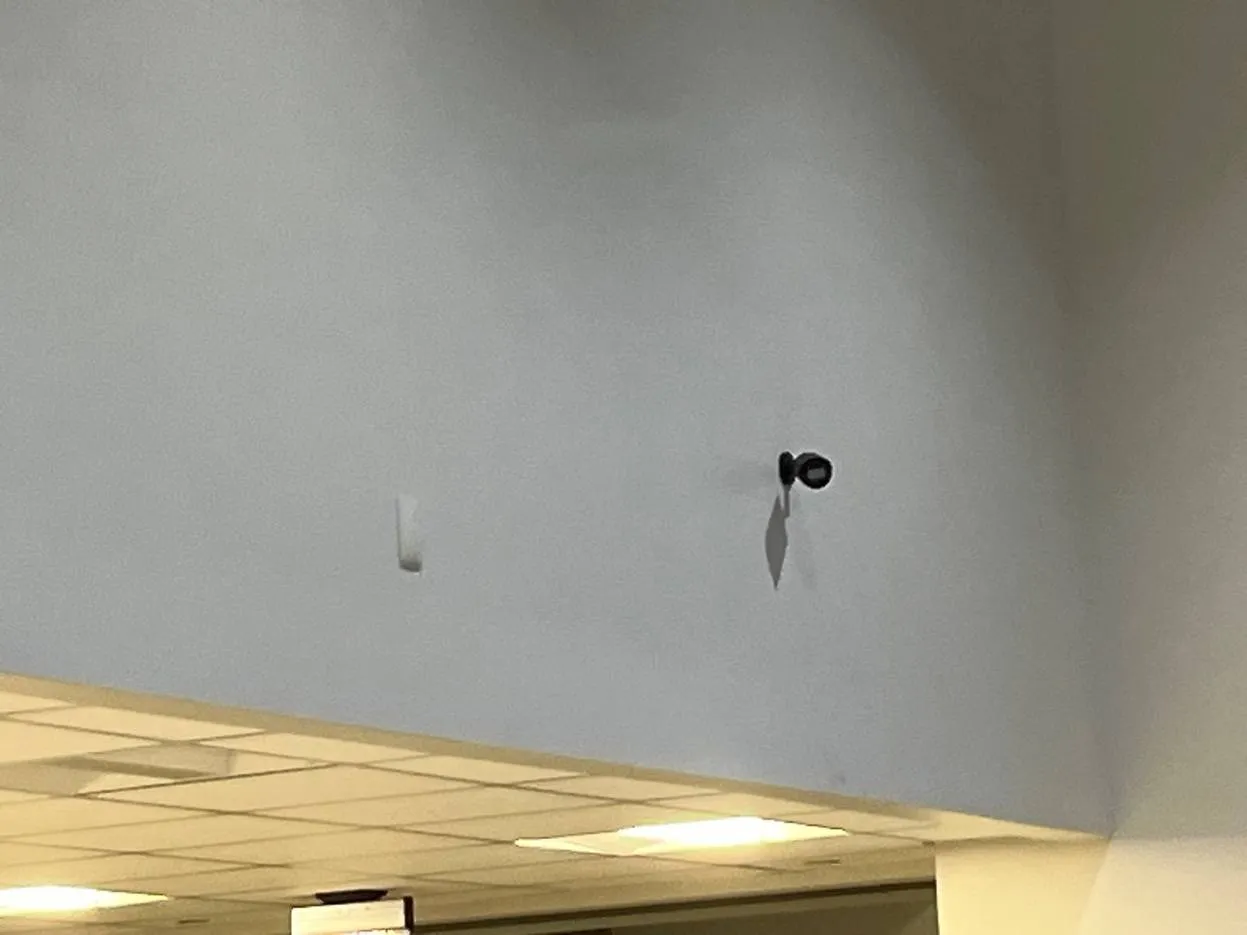
The right camera depends on where it sits on a Staten Island lot more than on brand. We install Lorex, Dahua, Hikvision, Uniview and comparable professional lines, and recommend by position.
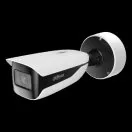
For exposed walls facing a lot or a driveway, where the hood keeps spray and rain off the glass and the long body aims clearly down a narrow space.
For porches, vestibules and garage fronts: no glass bubble to fog or scratch, easy to aim, and less likely to catch infrared glare off a nearby wall.
For low ceilings in walk-up hallways, mail areas and lobbies where a camera within reach needs an impact-rated housing.
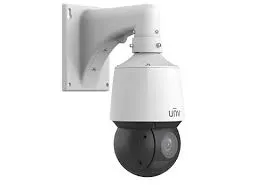
For a large community lot where a guard or manager wants to zoom in live; always paired with fixed cameras, because a moving camera is often looking the wrong way.
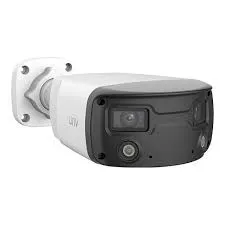
Narrow, fast-shutter cameras at a single entrance road or gate, set for the speed and angle at which cars actually pass.
For lots and yards with some ambient light, where colour night images make a car or a jacket identifiable.
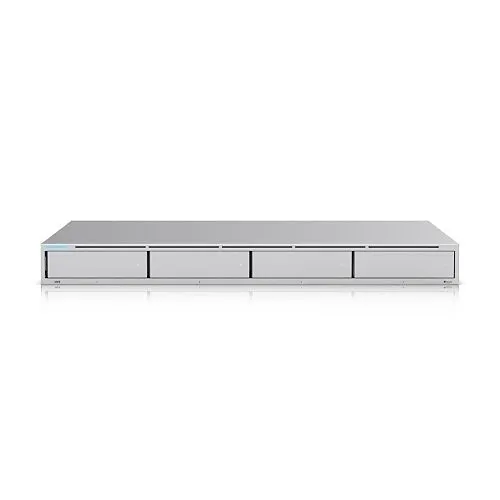
The recorder and the switch that power every camera over its own cable, with drives sized for the retention the owner or board chooses.
To carry a whole cluster of cameras from a detached garage or a second building back to the recorder.
A UPS for the recorder and switch, and surge protection on power and long outdoor data runs, for the outages that follow coastal storms.
Owners often ask whether a Ring, SimpliSafe or ADT setup would do. For a single-family front door, a consumer doorbell camera is fine. For a rental property the differences add up: battery and Wi-Fi cameras record clips when motion triggers them, not continuous footage; they depend on a router that a tenant or the owner may change; the cloud storage that makes them useful is a per-camera subscription; and they are hard to reach from a detached garage. A monitored-alarm company's camera package solves some of that but ties the cameras to a contract. A wired local system records everything to a recorder the owner owns, with no monthly fee unless the owner chooses off-site backup.

Our research environment could not display Google's AI Overview for this search, so we do not quote it. What follows are seven assumptions that search answers and national cost guides such as HomeAdvisor, Angi and Fixr commonly lead people to, each tested against how Staten Island rental properties are actually built.
HomeAdvisor's guide gives a national average of $1,298 for a camera installation, a typical range of $593 to $2,040, and $125 to $450 per camera including labour. Those figures are real, and they are what most people see first.
They describe a house: a few cameras on one building, short runs, indoor recorder. A Staten Island rental system reaches a detached garage, crosses a driveway, climbs a pole in a parking row and survives salt air, and the cost lives in that cabling and hardening.
On the Abstract Enterprises Security Systems Staten Island list, a building system runs $550 to $1,650 per camera installed. The low end is a compact two-family; the high end is a far camera that needs conduit, a switch or a bridge to reach the recorder.
The same guide notes that wireless cameras must be within your Wi-Fi range and that unstable internet can mean lost footage — but many search answers still present wireless as the simple, cheaper choice.
On a deep South Shore lot the camera that matters is the one at the garage or the far parking row, which is exactly where house Wi-Fi is weakest. Battery cameras also tend to record clips, not continuous footage.
Wireless belongs in one place on these properties: a purpose-built point-to-point bridge between two buildings. Every camera on a common area should be wired and powered from the switch.
Answers about license-plate capture often suggest that a 4K or 8K overview camera will pick out plates if you zoom in afterwards.
At night, a moving car's plate under its own headlights and the camera's infrared smears or flares whatever the resolution. Plates are a problem of shutter speed, angle and light, not pixel count.
At a townhouse community entrance, a dedicated narrow plate camera at the point where cars slow down does the job; the wide cameras cover everything else.
Product listings print an IP rating and leave it there, and search summaries tend to repeat it as if the rating settled the matter.
A weatherproofing guide we rely on makes the point plainly: an IP67 housing with an unsealed cable entry has effectively no protection. Near the shore, brackets, screws and connectors corrode before the camera does.
Specify the mounting hardware, seal the entry, box the joints and check them yearly. That, not the number on the box, decides whether a Midland Beach camera lasts.
Installation guides often suggest a basement or utility room for the recorder, because it is out of sight and close to the electrical panel.
On the East Shore and South Shore, the basement or ground-floor garage is where Sandy's water went. The city's rebuilding report counts more than 11,700 buildings in the island's inundated areas.
Put the recorder, the switch and the battery backup upstairs. Only cameras and sealed outdoor boxes belong near grade in those neighbourhoods.
Summaries of tenant law sometimes stop at “common areas are allowed” without the rest of the rule.
Common areas are generally permitted, but cameras may not look into apartments, bathrooms or through windows, and recording conversations without a party's consent is a different legal question. In a two-family, the yard and the stair can be one household's private space, not a common area.
We draw every camera's field of view on the plan, mask out windows and private areas in the recorder, and switch off audio by default.
Some answers treat camera installation as a handyman job with no licensing at all.
New York's Department of State rules require a security and fire alarm installer licence for work on a video surveillance system used to detect or monitor intrusion, break-in or theft. Applicants complete qualifying education, fingerprinting and an exam.
On a rental property, ask for the installer's NYS licence number before work starts. Ours is #12000287431, and it appears on every quote.
Send the neighbourhood, a rough sketch or a satellite screenshot of the property, and photos of the driveway and lot. We'll mark each camera, each cable route and where the recorder goes, and price it on the Staten Island list.
Most Staten Island quotes need five things: the neighbourhood and cross street, how many buildings and units, whether there is a lot or detached garage, where the internet comes in, and whether you own, manage or sit on the board. A written figure comes back the same business day; to talk it through, call (347) 934-8335.
Thanks — an installer will look at the property details and get back to you today. If it can't wait, call (347) 934-8335.
Seven steps, whether the job is four cameras on a New Dorp semi-attached pair or a full community system in Annadale. On Staten Island the first three steps take longer than the drilling, because the property is wide rather than tall.
You send the neighbourhood, the number of buildings, a satellite screenshot and photos of the driveway, entrances and lot. We mark likely camera positions and the gaps that need a link.
We confirm who owns the recorder, which household or unit owner sees which cameras, and, for a condo or HOA, what the board must approve and who signs.
On site we pace every cable run, check where the internet and power are, look at the lot under its own lights, and find the highest safe spot for the recorder.
A camera-by-camera schedule with coverage drawing and a fixed price on the Staten Island list, split into equipment, cabling and labour, ready for a board vote.
Outdoor runs go in conduit with sealed entries, far buildings get a switch, fibre or bridge, and brackets, boxes and connectors are chosen for the exposure.
Cameras go up, are aimed at night as well as by day, and private areas and windows are masked out in the recorder; audio stays off.
We set user accounts and retention, show the owner or board how to export a clip, and leave a written camera list, passwords and the drawing.

Staten Island addresses are easier to picture by the nearest landmark than by house number, and each part of the island brings a different kind of camera job. These six are the reference points our crews use when booking a visit.
Where the free Staten Island Ferry, and the paid routes Commercial Observer lists, all leave for Manhattan and Brooklyn. New rental buildings such as Lighthouse Point, with 115 units, cluster on the hill and waterfront around it.
Wikipedia describes the North Shore's two historic districts as full of large Victorian houses — much of the island's converted-apartment stock, with porches, carriage houses and deep front gardens.
Twenty blocks of Stapleton and Tompkinsville rezoned in June 2019 for about 1,800 new homes; The Pearl at 475 Bay Street, 100% affordable, opened in November 2025 as the plan's first project.
The East Shore's two-and-a-half-mile boardwalk, which Wikipedia calls the world's fourth-longest, fronts the low streets behind Father Capodanno Boulevard that WNYC described flooding like a bowl during Sandy.
The former landfill, opened in 1947 and closed in 2001, being turned into a park almost three times the size of Central Park (Wikipedia) — a West Shore and Mid-Island neighbour to many garden-apartment lots.
The borough's one rail line, running from the ferry terminal at St. George to Tottenville at the island's southern tip, past the South Shore two-family and townhouse neighbourhoods where most of our community work happens.
Our crews come over the Verrazzano–Narrows Bridge from the Brooklyn office with ladders, conduit, cable reels and lift access arranged when a pole or a high wall needs it. Staten Island is the only borough not connected to the subway, and the visits are planned around that: one crew, one van, and the materials for the whole job on board.
We also serve every Staten Island neighbourhood, from Mariners Harbor, Port Richmond, West New Brighton and Westerleigh on the North Shore, through Dongan Hills, New Dorp, Grant City and New Springville in Mid-Island, to Arden Heights, Rossville, Prince's Bay and Tottenville on the South Shore, all on the same Staten Island price list.

Abstract Enterprises Security Systems prices every area from a Brooklyn base with a fixed multiplier, and Staten Island's is 1.10. The figures below are the published building-camera ranges for this service multiplied by 1.10. Nothing here is a special Staten Island tariff; the multiplier covers the bridge crossing and the longer drive time between properties.
| Line | Brooklyn base | Staten Island (×1.10) | How it usually applies here |
|---|---|---|---|
| Installed building camera, all-in | $500–$1,500 per camera | $550–$1,650 per camera | Low end: a camera on the house wall near the recorder. High end: a far garage or lot camera needing conduit, a switch or a bridge |
| Installation labour | $75–$150 per hour | $82.50–$165 per hour | Included in the all-in figure; quoted on its own only for labour-only work |
| Service or repair visit | $195 per hour, 3-hour minimum ($585) | Fault-finding on an existing system; never charged on a new installation | |
| Off-site cloud recording (optional, third party) | About $20–$80 per camera per month, set by the platform | Only if the owner or board wants copies stored away from the property; local recording has no monthly fee | |
Why a web average misleads here. National cost guides price a few cameras on one house. On a Staten Island rental the lines around the cameras — the link to the garage, the hardened hardware, the elevated rack, the battery backup — are what decide the total. Our Staten Island security camera pricing page lists the per-camera figures for houses and businesses.

Three starting points cover most Staten Island multi-unit properties. Each is the published package range for this service multiplied by 1.10; the written quote after the walkthrough fixes the figure inside the range.
$5,500–$13,200
4 to 8 cameras. Front entrance, side or tenant entrance, mail and package spot, driveway and rear yard or stair, on a local recorder with 30-day retention and app access set up for the owner and, where agreed, the tenant.
$13,200–$27,500
12 to 20 cameras. Entrances, halls and mail area plus the parking lot or a detached garage on its own link, 30–60 day retention, battery backup and surge protection.
$27,500–$49,500+
24 to 40 cameras. Every shared entrance, walkway and parking bay, a dedicated plate camera at the community entrance, fibre or wireless links between rows, and a board-ready coverage drawing.
Already bought a recorder and cameras? We install, cable, link and configure them at the Staten Island labour rate of $82.50 to $165 per hour, quoted as a fixed figure after the walkthrough. The maker stands behind equipment you supply. If a camera you bought isn't suitable for a salt-exposed wall or a long outdoor run, you hear that from us before anything is mounted.
A garage, a new parking row or a second building can usually join the recorder you already have. We check the recorder's free channels, drive space and firmware first, and price the new cameras and the link at the same per-camera range.
A satellite screenshot with the buildings marked, a photo of the far end of the driveway or lot, and the number of units is enough for a first written range. The fixed price follows the walkthrough.
The installation is a few days' work. The system then runs for years under whoever owns it — a retired couple renting out the top floor, an investor with three North Shore houses, or a volunteer board in a South Shore community. These are the decisions that make the difference between a system that helps and one that sits unwatched.
Before the cameras go live, write down which areas are covered and which are not, who can view live, who can view recordings, how long footage is kept, and how a resident or police can request a clip. Tenant-rights guidance on New York building cameras notes that telling residents when new cameras go in builds trust even where it is not strictly required. For a condo community that page becomes a board resolution; for a two-family it can be a paragraph attached to the lease.
Retention drives storage cost. Thirty days covers most package and car incidents, which are usually noticed within a week. Communities that want sixty or ninety days should say so before the quote, because the drive size, and sometimes the recorder model, changes with it.
Shared logins are how footage leaks and how passwords end up on sticky notes in a clubhouse. Each owner, board member or manager gets an individual account with only the cameras and rights they need, and the administrator account stays with the owner or the board president. When a board member leaves, their account is removed in a minute.
A plain sign at each entrance that the property is under video surveillance does two jobs: it deters, and it tells residents and visitors what to expect. Inside the recorder, privacy masks black out any part of a view that looks into a unit window or a private yard, and we leave those masks in place even if the camera is later re-aimed.
Townhouse associations that own their roads and parking already carry long-lived infrastructure costs; a camera system belongs in the same reserve thinking. Cameras near the shore should be budgeted for replacement sooner than inland ones, and the recorder's drives are a wear item. We can phase a large community system — entrances and parking first, walkways second — so the board can spread the work across budget periods without buying a recorder twice.
The SILive story of the Elm Park homeowner who found a package theft two days late because notifications weren't working is the common failure in small systems: nobody notices a camera is offline or an alert has stopped. Turn on the recorder's camera-offline and drive-health alerts, send them to two people, and look at every camera once a month.
Building cameras rarely arrive alone. These Abstract Enterprises Security Systems Staten Island services are the ones most often booked alongside them, all on the same Staten Island price list.
One level up: how Abstract Enterprises Security Systems plans building systems across all five boroughs.
Lot-only systems for businesses and communities, with pole mounts and plate capture.
Single-family houses, driveways and detached garages.
Video and audio intercoms for walk-ups, converted houses and community gates.
Fob and keypad entry for building doors, gates and clubhouses.
Recorders, drives and remote viewing for new and existing camera systems.
Same-day fault-finding for cameras that failed after storms, outages or router changes.
Network cable and fibre between buildings for cameras, Wi-Fi and offices.
Shops, offices and warehouses, including the store floors under mixed-use buildings.
This is general technician guidance — the method every Abstract Enterprises Security Systems crew uses on Staten Island — not a story about any particular property.
Before anyone opens a box of cameras, walk the property with a measuring wheel from the spot where the recorder will live to every place a camera might go, and write the number down. Then add the climb: up the wall, along the soffit, down into the box. Any run that comes close to the copper limit gets a switch, fibre or a bridge on the plan now, not on installation day. Next, look up. Note what each camera will hang from — vinyl siding over sheathing, brick, a timber porch beam, a steel pole — and whether that surface faces the water or the prevailing weather. Note the eaves, because a camera tucked under one lasts longer than one on a bare gable. Then come back after dark, stand where a car pulls in and where a person walks to the door, and see what the existing lights really do. Finally, find the high ground for the rack. On the East Shore and South Shore that means asking the owner where the water reached in 2012 and putting the recorder well above it. A plan made that way rarely changes once the ladder comes out.
Plan on more time for the link than for the cameras. A two-family with a detached garage and four to six cameras is usually a one-day job when the cable can follow a fence or wall to the garage. Add a day when the run needs new conduit across open ground, when a lift is needed for a pole in the lot, or when a wireless bridge has to be aligned and tested between buildings. The written quote gives you the expected number of days, so you can tell tenants or residents when to expect the crew.
Sometimes. Old coaxial cable from an analogue system can carry modern video using adapters that send network signals and power over coax, which saves pulling new cable across a courtyard. Whether it works depends on the cable's condition: we test each run for breaks, water ingress and corroded connectors before relying on it. Coax that has been outdoors for decades without conduit is often too far gone, and in that case a new outdoor-rated network cable, fibre or a wireless bridge is the more reliable choice.
If our cable runs in conduit along your own wall or fence, outside work next door usually doesn't touch it. The risk is a buried run near a property line or under a sidewalk strip. We record buried routes on the drawing we leave with you, so you can show any contractor where they are before digging, and we avoid burying cable near a boundary where outside crews are likely to work. If a run is cut, a single cable can be repaired or re-pulled in conduit, and the rest of the system keeps recording.
Yes, we take single-property jobs on Staten Island, including two-family houses with only a few cameras. There is no separate bridge or travel line on the invoice. The 1.10 Staten Island multiplier on the published prices already accounts for the crossing and the longer drives between properties, and it is built into every figure on this page and into the fixed quote we send after the walkthrough.
Yes, by phasing the work rather than by financing it. We design the whole system at once, with the recorder, switches and links sized for the final number of cameras, then install it in stages: usually the entrances and parking first, and the walkways and secondary areas in the following budget year. Each phase gets its own fixed price, and nothing installed in the first phase has to be replaced to add the second.
It changes the aiming and the links more than the cameras. Trees close to a building throw moving shadows that set off motion alerts, block wireless links once the leaves come in, and drop branches on cable runs. We aim cameras along the building and the driveway rather than into the trees, set motion zones to ignore swaying branches, and keep any cable between buildings on a wall or in conduit rather than strung through branches. Wireless bridges are checked for line of sight in summer, when the canopy is fullest.
Usually, yes. Remote viewing needs upload speed rather than download speed, and only for the cameras someone is actually watching; recording happens locally and uses no internet at all. We test the property's upload speed during the walkthrough and set the cameras to send a lighter stream to phones, keeping full quality on the recorder. If the service is weak, board members can still review recordings on site, or the community can add a modest internet line just for the camera system.
It can help identify the vehicle, which is what matters for a report. Dumping usually happens at the least-watched edge of a lot, often at night, so a camera there needs to see a vehicle's plate and shape at the point it pulls in, not just the pile left behind. That means a camera aimed at the access point with enough light for night images, and a recorder that keeps footage long enough for the dumping to be noticed. We also suggest a visible sign, which on its own often moves the problem elsewhere.
The system should belong to the owner or the association, not to the manager. We set the administrator account in the owner's or board's name, give the manager their own user account, and leave the written camera list, passwords and drawing with the owner or board. When a manager leaves, their account is removed and the new manager gets a fresh one. Service visits are booked by whoever holds the administrator account.
Not if the pole and its cable are placed with plowing in mind. We keep entrance poles and cabinets back from the road edge where plows push snow, protect any exposed conduit near the base, and mount cameras high enough to stay clear of piled snow. Plate cameras are aimed so a snowbank at the curb doesn't block the view of passing cars. If a community already has bollards or a guard island at the entrance, that is usually the safest place for the pole.
This Staten Island page sits under apartment building security camera installation in NYC, which covers the city as a whole. Every other area page in this service is listed below; each is written for its own building stock.
NYC apartment building cameras · Brooklyn · the Bronx · Manhattan · Queens
Apartment building cameras on Long Island · Nassau County · Suffolk County
Hudson Valley apartment building cameras · Westchester County · Rockland County · Orange County
Beyond cameras, the same crews install intercoms, access control, alarms and building cabling. The Abstract Enterprises Security Systems home page lists every service, and our company page covers licensing and insurance.
The local facts on this page trace back to the publications below. Items we could read only as a search-result excerpt say so. Every dollar figure is from the published Abstract Enterprises Security Systems price list for this service, multiplied by Staten Island's 1.10.
When the garage camera or the lot pole drops off after a storm, the cause is usually the outdoor link, a wet connector or a power supply that didn't come back. Phone (347) 934-8335; we book the next open two-hour window across the Verrazzano, and most are recording again within one to two hours of arrival.
Abstract Enterprises Security Systems · 1282 Troy Ave, Brooklyn, NY 11203 · (347) 934-8335 · WhatsApp (718) 679-0359 via wa.me
NYS Low-Voltage Licence #12000287431 · 100% Licensed & Insured · Same-Day Estimates · Rated 4.7★ from 390+ Google Reviews
Cameras and recorders carry their manufacturer's warranty. Full terms — including 50% deposit, the 30-day warranty and optional paid extended warranty, and the late-fee schedule — are set out in the service agreement. See our warranty page.
Page reviewed and updated October 18, 2026. Changelog: page rebuilt from scratch for Staten Island's two-family rentals, North Shore walk-ups and converted Victorians, and South Shore townhouse communities, covering links between separate buildings, salt-air hardware, flood-aware recorder placement, parking-lot lighting and plate capture, board approvals and footage policy.