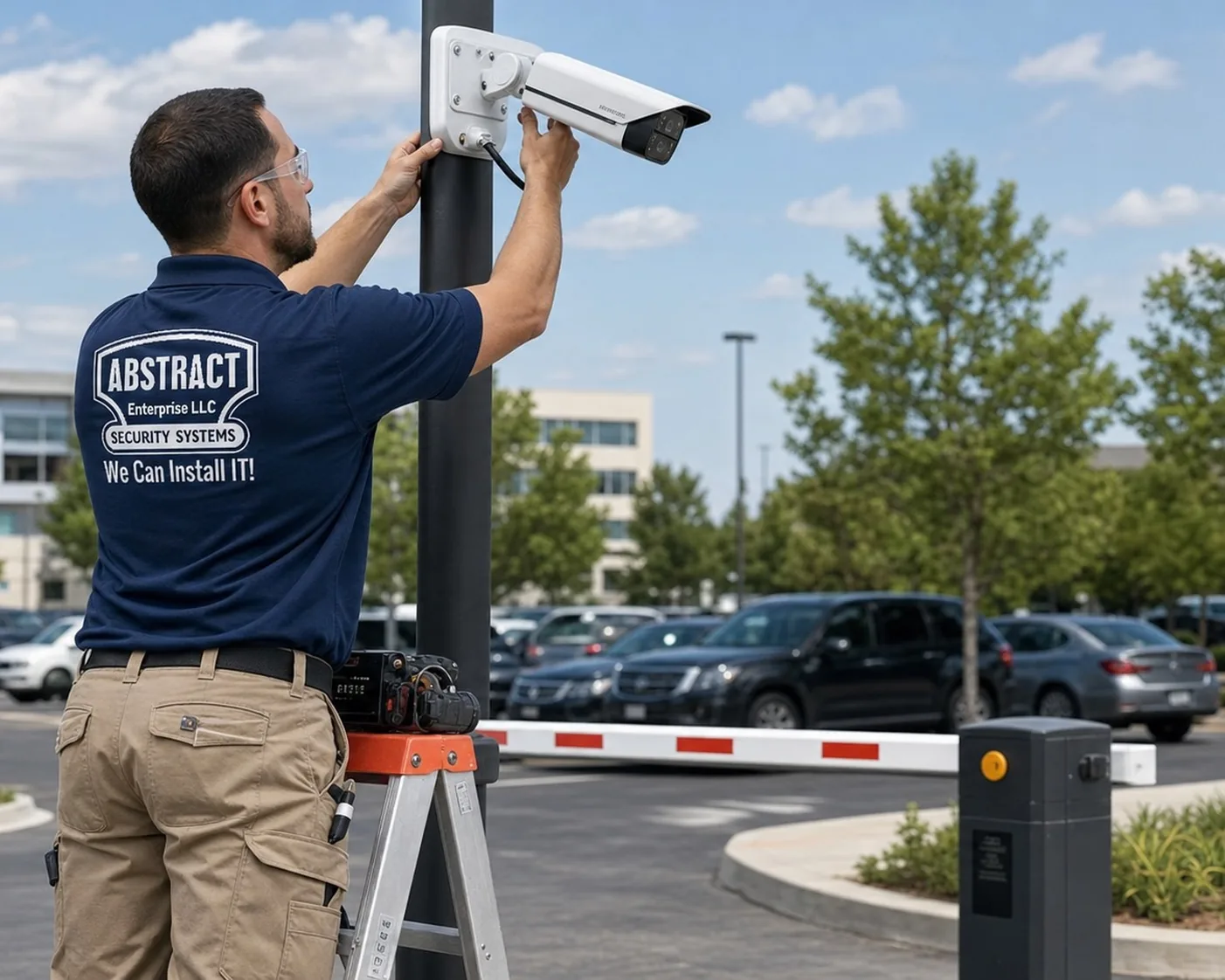
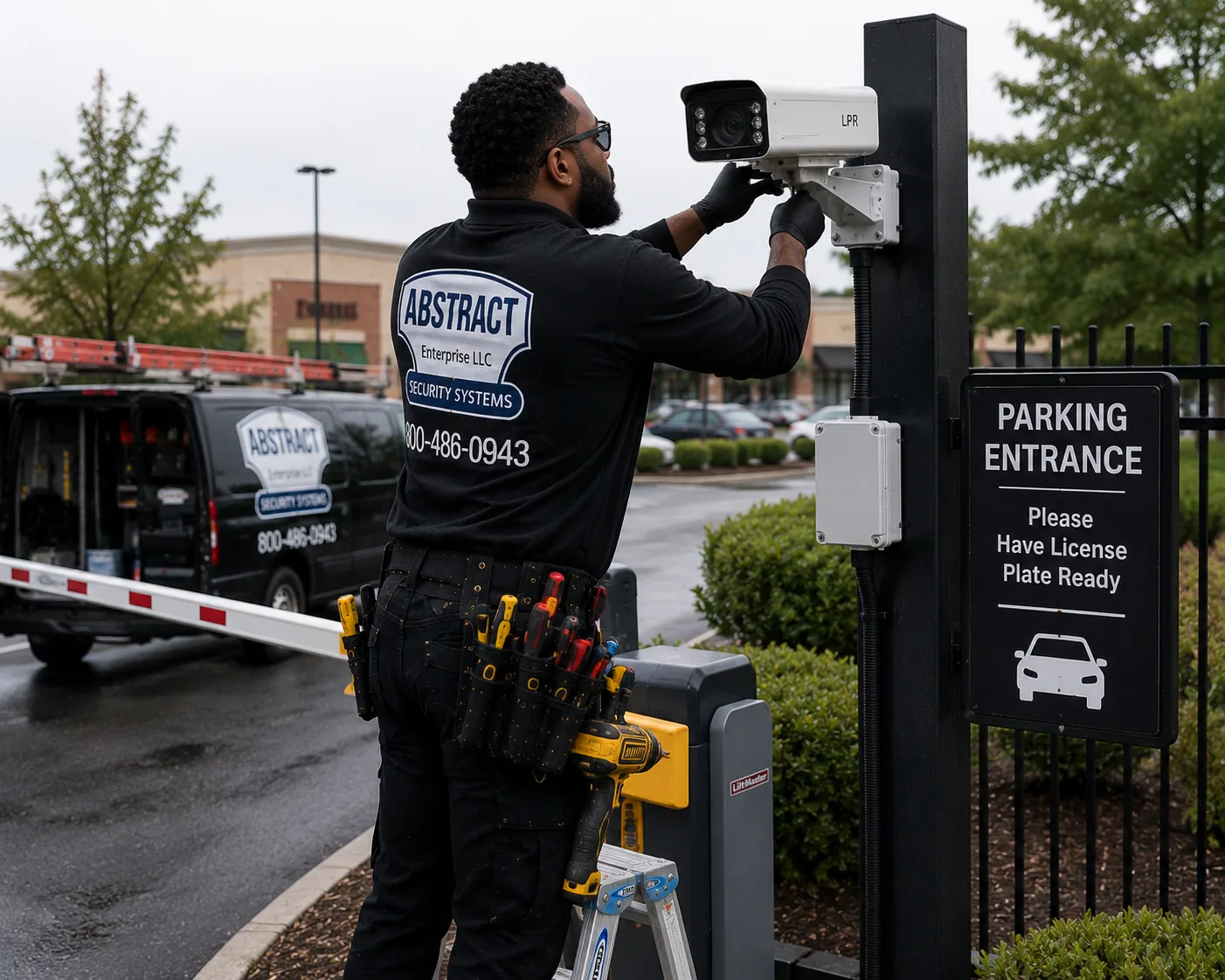
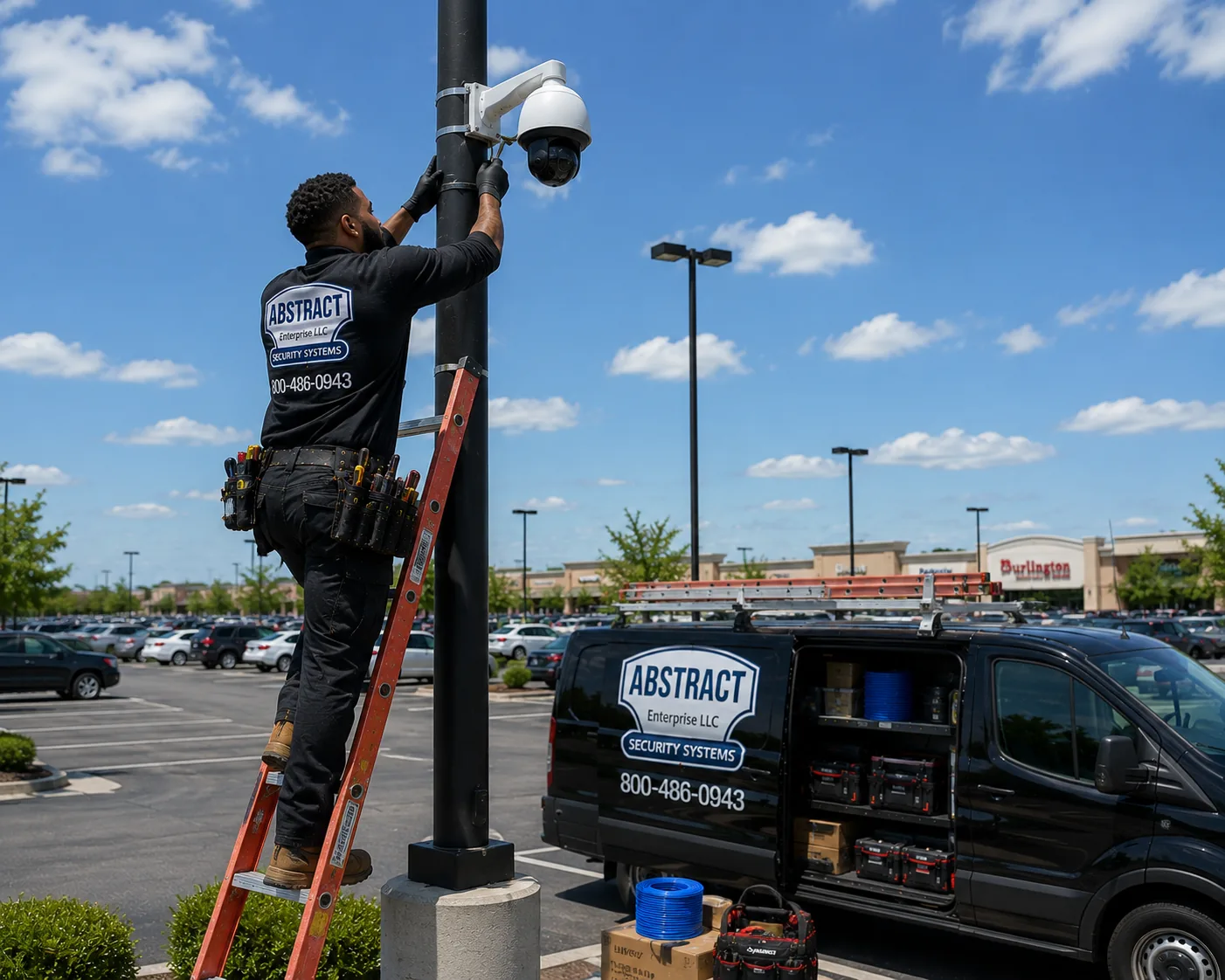
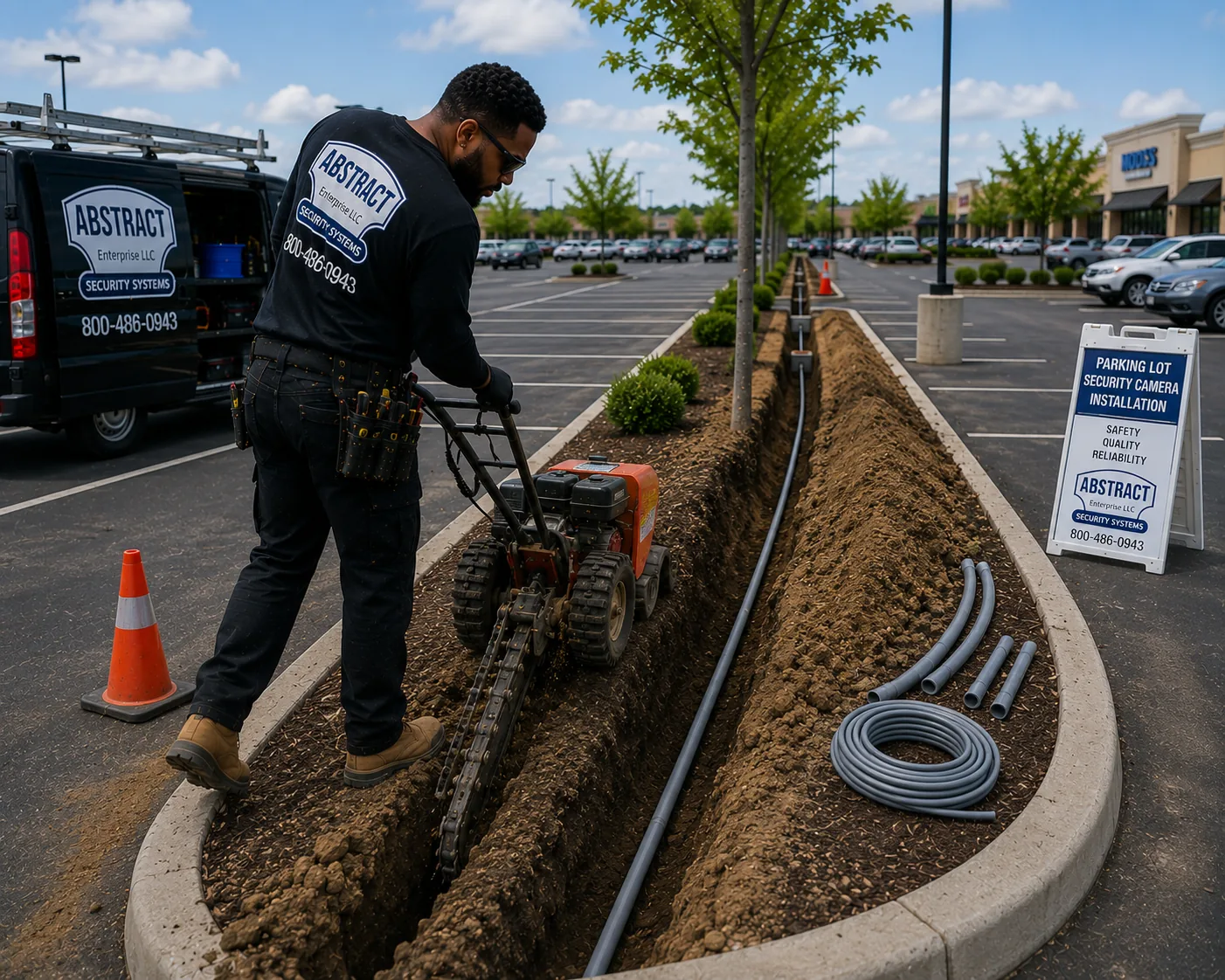
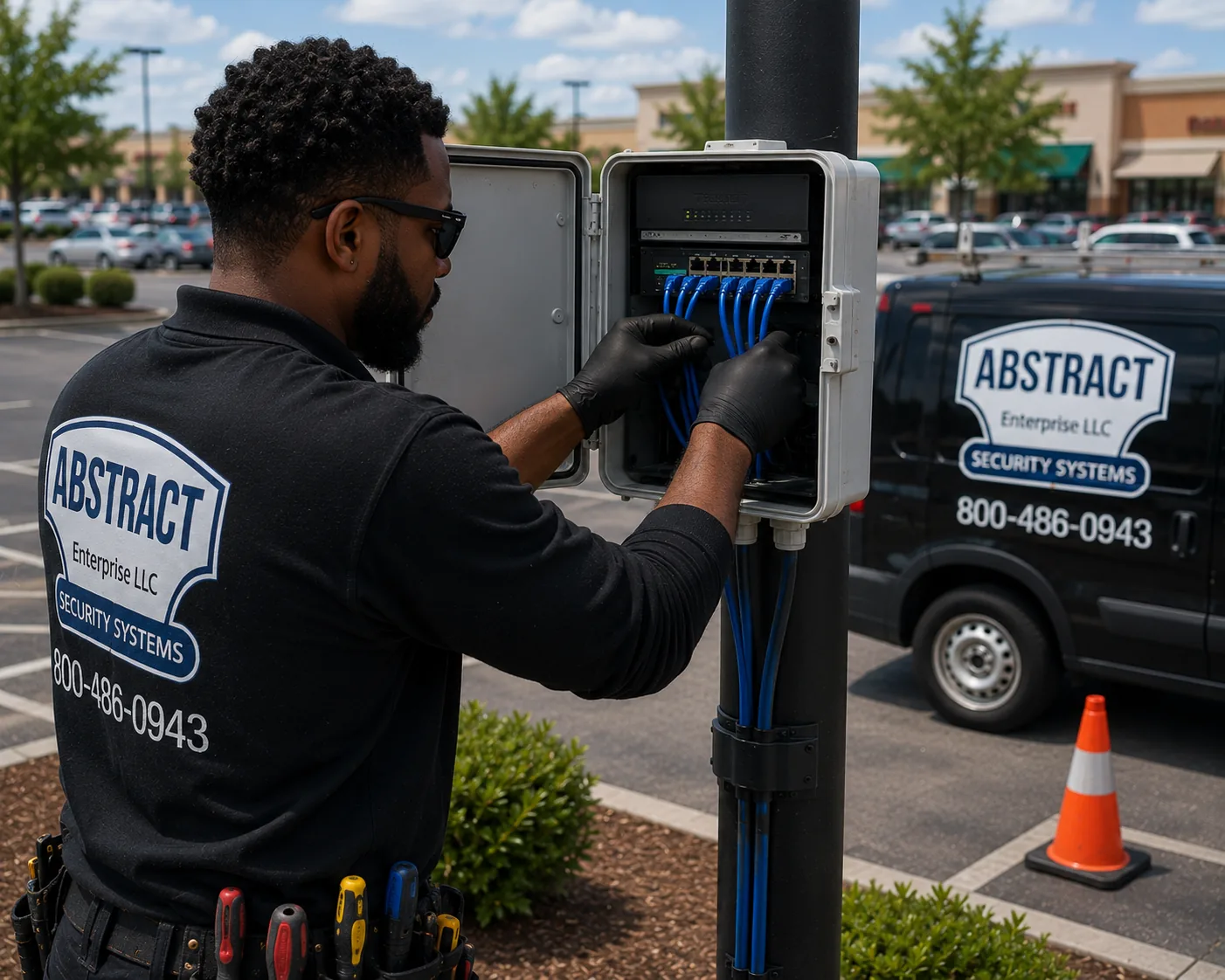
Camera systems for the full range of Brooklyn parking: big-box and shopping center lots, industrial and fleet yards, apartment and co-op parking, house-of-worship and school lots, dealership inventory rows, medical campus parking and structured garages — LPR entrance coverage, pole-mounted 4K cameras, trenched conduit and remote viewing, engineered from a free on-site survey.
· 201 Google Reviews | NYS Low-Voltage License #12000287431 | Free on-site survey
We work throughout Brooklyn, with our office at 1282 Troy Ave.
Reviewed and updated July 24, 2026.
THE NEIGHBORHOOD
Brooklyn is the borough where every parking format coexists inside a few miles. There are genuine big-box lots with hundreds of spaces out toward Spring Creek and Mill Basin, industrial yards holding trailers and fleet vehicles across Sunset Park, Red Hook, Greenpoint and East Williamsburg, apartment and co-op parking serving complexes from Coney Island to Canarsie, storefront lots squeezed behind commercial strips, house-of-worship parking that goes from empty to overflowing on a fixed weekly schedule, and structured garages under newer buildings downtown and along the waterfront. Almost nothing transfers cleanly from one to the next.
Brooklyn’s busiest retail parking runs along corridors like Atlantic Avenue, Fulton Street and Kings Highway — exactly the large, prolonged-stay lots the NYPD flags for catalytic-converter cutting, where a truck or SUV can lose a converter in under a minute. That threat pattern is why entrance capture, aisle coverage and a low-mounted plate view all earn their place on a Brooklyn lot rather than a single wide camera on the building.
That variety is why Brooklyn projects resist templates harder than anywhere else in the city. A design that works for a shopping plaza on Flatbush Avenue is wrong for a fenced contractor yard off Grand Street, which is wrong again for a co-op lot behind a six-story building on Ocean Parkway. The survey is doing real work here — it determines which of several completely different design approaches the property actually needs.
The second Brooklyn characteristic is pressure from the street. Curbside parking is scarce almost everywhere, which means private lots absorb constant unauthorized use. Commuters, contractors, delivery vehicles and neighbors treat any accessible lot as available, and enforcement is one of the most common reasons a Brooklyn property calls about cameras in the first place. That shapes design: entrance coverage and plate records carry more weight here than on properties where the only concern is overnight security.
The third is the ground. Brooklyn parcels frequently sit on fill, on former industrial land, or close to the water table near the waterfront, and buried infrastructure is rarely documented completely. Trenching is usually possible but never assumed, and markouts precede excavation on every project.
Abstract Enterprises Security Systems is a licensed NYS low-voltage contractor, and our office is at 1282 Troy Ave in Brooklyn. Every proposal follows a free on-site survey.
WHAT WE INSTALL
Large open fields with a long building line, multiple curb cuts, cart corrals, outparcels and rear service drives. Building-mounted cameras handle the first rows and lose useful detail beyond them, so far-field and outparcel coverage needs pole positions. Rear service areas carry deliveries and after-hours activity storefront cameras never see.
Smaller lots behind or beside a commercial strip, frequently shared between several tenants under different leases. Coverage is compact, but ownership of the system and access to footage need settling before anything is installed.
Trailer parking, box trucks, contractor vehicles, equipment and material storage behind fencing. Plate capture at the gate carries real weight, perimeter coverage matters as much as interior, and the yard surface is often gravel or broken asphalt rather than finished pavement.
Resident lots with assigned spaces, visitor parking, and pedestrian routes between vehicles and building doors. Board or management approval, resident privacy expectations and a documented footage-access procedure matter as much as camera placement.
Parking that follows a fixed weekly and holiday rhythm — empty for days, then completely full within an hour. Designs favor entrance coverage, pedestrian paths between the lot and the building, and analytics schedules that reflect when the property is genuinely empty.
Sharp arrival and dismissal surges with heavy pedestrian traffic mixed into vehicle movement, plus long quiet periods overnight and through summer. Coverage emphasizes the entrance, the drop-off zone and the walking routes children actually use.
Rows of high-value vehicles along the borough's auto corridors, quiet overnight, demo traffic all day. Perimeter and after-hours coverage, entrance capture, and views tight enough to distinguish activity between rows.
Customer vehicles stored on site awaiting parts or payment, frequently in a fenced yard rather than indoors. These properties hold other people's property for extended periods, which makes documentation of condition and access particularly valuable.
Around-the-clock use with staff arriving and leaving in darkness on both shift ends, visitor traffic under stress, and a mix of surface lots and structured parking on the same property.
Below-grade and multi-level parking under newer residential and commercial buildings downtown, along the waterfront and in transit-adjacent developments. A different engineering problem from open lots, covered in its own section below.
More Brooklyn parking projects begin with unauthorized parking than with any dramatic incident. A lot that is technically private but physically accessible absorbs the overflow from a street where legal parking effectively does not exist, and the property ends up subsidizing the neighborhood.
Camera coverage supports enforcement in three specific ways, and it is worth being precise about what each does rather than promising outcomes.
Entrance plate records. A plate camera at the curb cut produces a time-stamped record of which vehicles entered and when. For a property that tows or issues notices, that record is the difference between an argument and a documented sequence. It works best where the entrance geometry supports plate capture, which is discussed in detail further down this page.
Dwell documentation. Aisle and row coverage shows how long a vehicle occupied a space. On properties where the issue is commuters leaving vehicles all day, or where an assigned space is repeatedly taken, that footage establishes a pattern rather than a single incident.
Access-point awareness. Many Brooklyn lots leak through a gap in a fence, an unchained gate at the rear, or a shared driveway with an adjacent property. Covering those secondary access points shows where the traffic is actually coming from, which sometimes reveals that the fix is a physical one rather than a camera one.
Where enforcement is a primary goal, gating is usually the eventual answer, and cameras installed with that in mind — conduit and power run to the entrance with spare capacity, positions chosen with a future gate arm in the frame — make the later step far cheaper. Footage may help document an incident, but what a policy covers, how a claim is decided, and any impact on premiums are questions only the property owner’s insurer can answer.
Brooklyn entrances have a distinct character: they are narrow, they open directly onto busy commercial streets with heavy pedestrian flow, and the sidewalk crossing is usually only a few feet deep. A driveway off Flatbush, Utica, Nostrand, Coney Island Avenue, 86th Street, Atlantic or Bay Parkway gives a camera very little runway to work with.
That compression cuts both ways. Vehicles are moving slowly because they have to — turning across a sidewalk into a narrow opening forces a near-stop, which is exactly the condition plate capture wants. But the available mounting positions are limited to the building face beside the opening or a post at the property line, and the sightline down the lane is short.
The practical approach places the plate camera looking along the entry path from just inside the property, catching the vehicle as it straightens after the turn, with an overview camera nearby capturing the vehicle and its surroundings in context. Where the driveway is shared between entering and exiting traffic, either two cameras face opposite directions or the design accepts that one direction reads better than the other and documents which.
The sidewalk itself deserves coverage. Pedestrian traffic on a Brooklyn commercial strip is continuous, and every vehicle entering or leaving crosses it. Footage of that interaction matters both for incident documentation and for the disputes that follow when a vehicle and a pedestrian occupy the same space.
Elevated train structures introduce a Brooklyn-specific complication on some corridors. Where an elevated line runs above the street, the shadow it casts changes the lighting at an entrance dramatically through the day, columns can obstruct sightlines, and passing trains introduce vibration on nearby mounting points. Positions near elevated structures get evaluated for all three.
What the system captures varies with camera position, available light, weather, lens selection, vehicle speed, plate condition, maintenance, how recording is configured, and the specifics of the lot.
Brooklyn sits between the extremes. Unlike Manhattan, there are real lots with real open ground and room for poles. Unlike a suburban property, there is almost always a building close enough to mount to — and frequently a neighboring building whose wall overlooks the lot.
Building faces are the first choice wherever they serve the coverage. They are inexpensive, they have power nearby, and they avoid foundation work entirely. The limits are reach and angle: a camera on a two-story wall covers the near rows well and loses identification detail across a large field, and a wall at the wrong end of the property sees the backs of vehicles rather than their plates.
Neighboring buildings sometimes offer the ideal vantage, and that is an ownership conversation rather than a technical one. Attachment to a wall you do not own requires the owner's permission, and on party walls and shared lot lines that agreement is worth having in writing before the design depends on it.
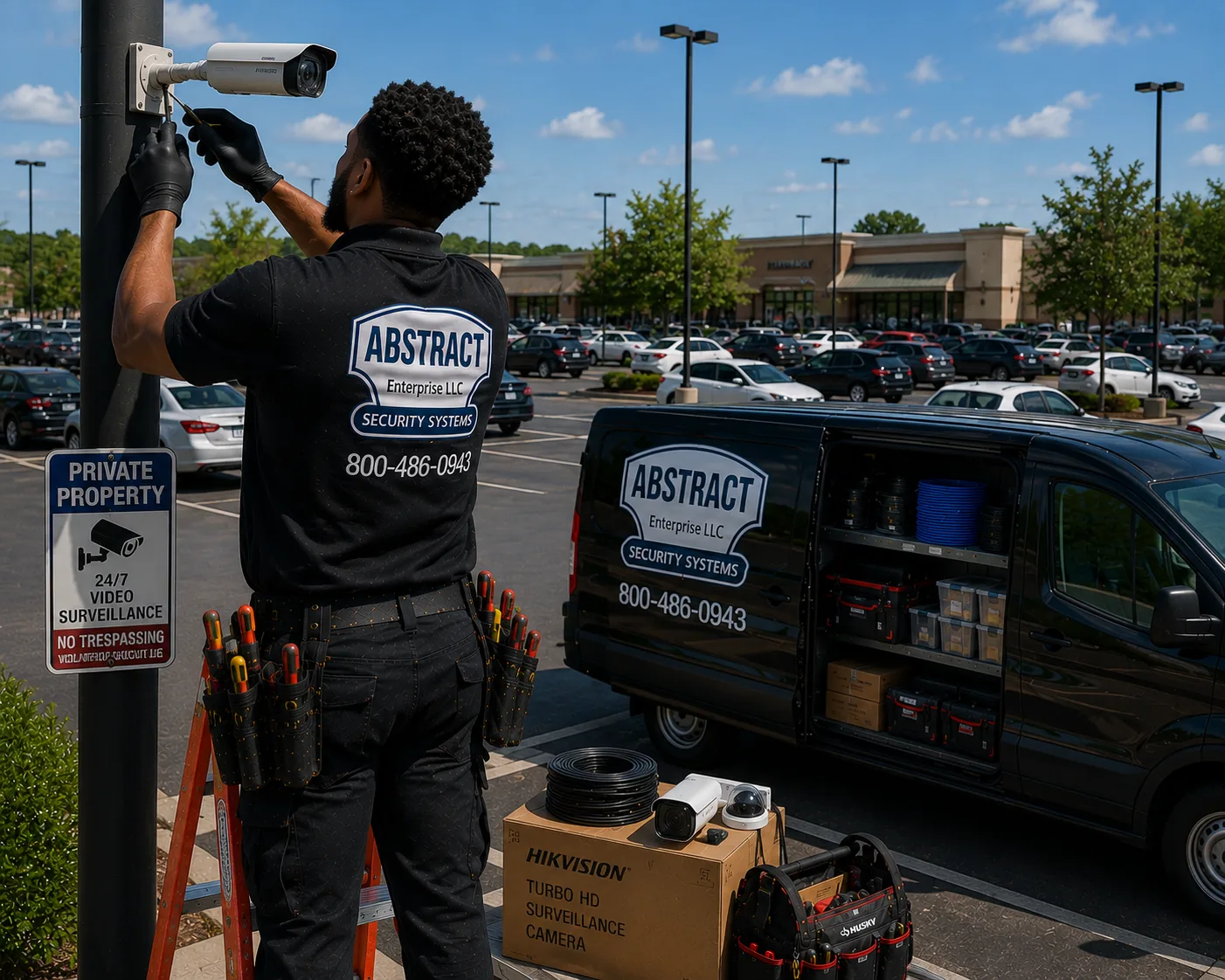
Existing lot light poles are usable on many Brooklyn properties, subject to the same checks that apply anywhere: who owns the pole, whether the circuit is switched by photocell or timer, whether the shaft has usable interior space, and whether the structure can carry the added equipment. Poles at the property edge may belong to the utility rather than the property.
Dedicated camera poles come in when open ground has no other vantage. Footing sized for pole height and wind loading, conduit stubbed through the base with spare capacity, grounding and surge protection on outdoor conductors. On Brooklyn parcels the excavation question is what is buried rather than whether the ground is workable, and markouts precede the dig.
Fence-line and gate posts serve industrial yards well for perimeter and gate coverage, provided the post is substantial enough to hold aim and the run to it is protected.
Mounting to poles, electrical and structural work, trenching, landmarked-district parcels, and right-of-way encroachments may each call for sign-off from the property owner, the utility, or the authority having jurisdiction in Brooklyn, and AESS confirms which apply to a lot before work starts.
Getting cable across a Brooklyn lot is usually possible and rarely predictable. Parcels across the borough have been warehouses, rail yards, fuel depots, factories and vacant land at various points, and what is under the asphalt reflects that history more than any current drawing does.
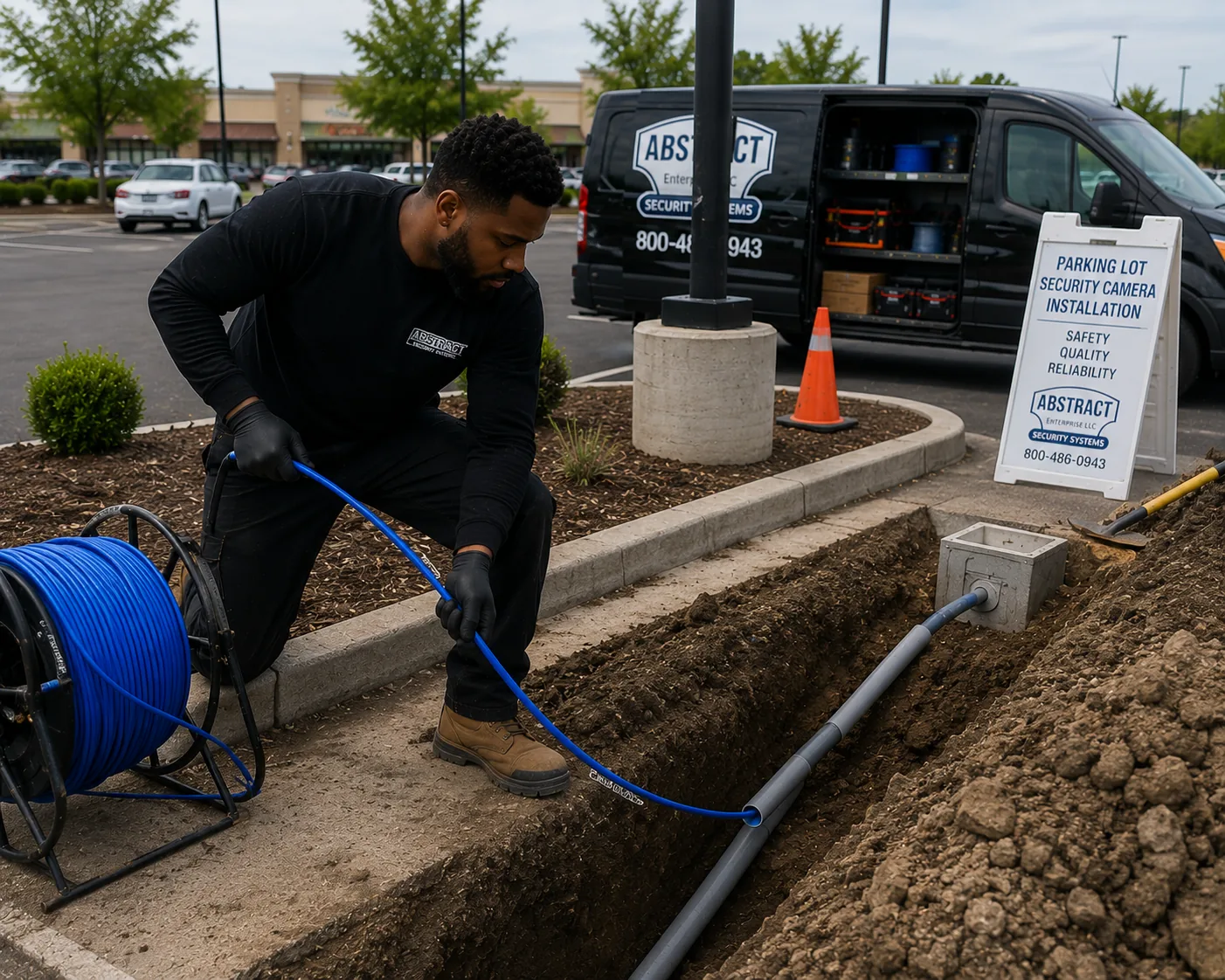
Markouts come before any excavation, without exception. Beyond the marked utilities, the things that actually turn up on Brooklyn lots are old conduit runs from prior tenants, abandoned fuel lines and tank infrastructure on former industrial parcels, irrigation on landscaped properties, and stormwater structures that do not appear where the plan says they should. The design assumption is that the trench will find something, and the pathway is routed with alternatives in mind.
Water table matters near the waterfront. On properties in Red Hook, Greenpoint, Gowanus, Sheepshead Bay, Canarsie and along the Coney Island shore, excavation can encounter water at shallow depth. That does not prevent the work, but it changes how conduit and pull boxes are treated: the assumption is that conduit will hold water, with terminations, drip loops and box placement arranged so water reaching a junction does not travel into equipment.
Route selection favors landscape islands and unpaved margins where the layout offers them. Where a pathway must cross pavement, saw-cut and patch is the direct route, and directional boring is the alternative on properties with recent resurfacing or where a landlord prohibits cutting. Conduit rather than direct burial is the standard, with generous sizing and a pull string left in place, because reopening a Brooklyn lot is disruptive to a business that depends on that parking every day.
Restoration closes the work: compacted backfill that will not settle, surfaces reinstated, striping repainted where cuts crossed marked stalls, and landscape areas made good.
Most Brooklyn lots are small enough that copper reaches, but the larger retail and industrial properties push past Ethernet distance limits, and yards with multiple buildings raise the ground-potential question that fiber solves.
Cat6 with PoE carries the majority of runs, one cable delivering data and power, with environment-rated cable on outdoor and in-conduit segments.
Fiber takes over on long backbones and between separate buildings on the same property. Beyond distance, fiber carries no metal, which removes the surge coupling and ground-potential problems that affect long copper runs between structures on different electrical services — a real consideration on multi-building industrial parcels.
Point-to-point wireless handles gaps that should not be trenched: across a driveway shared with a neighboring property, over recently resurfaced pavement, or out to a detached yard area. Engineered directional links need genuine line of sight, which on a Brooklyn parcel means accounting for a trailer that may eventually park in the path.
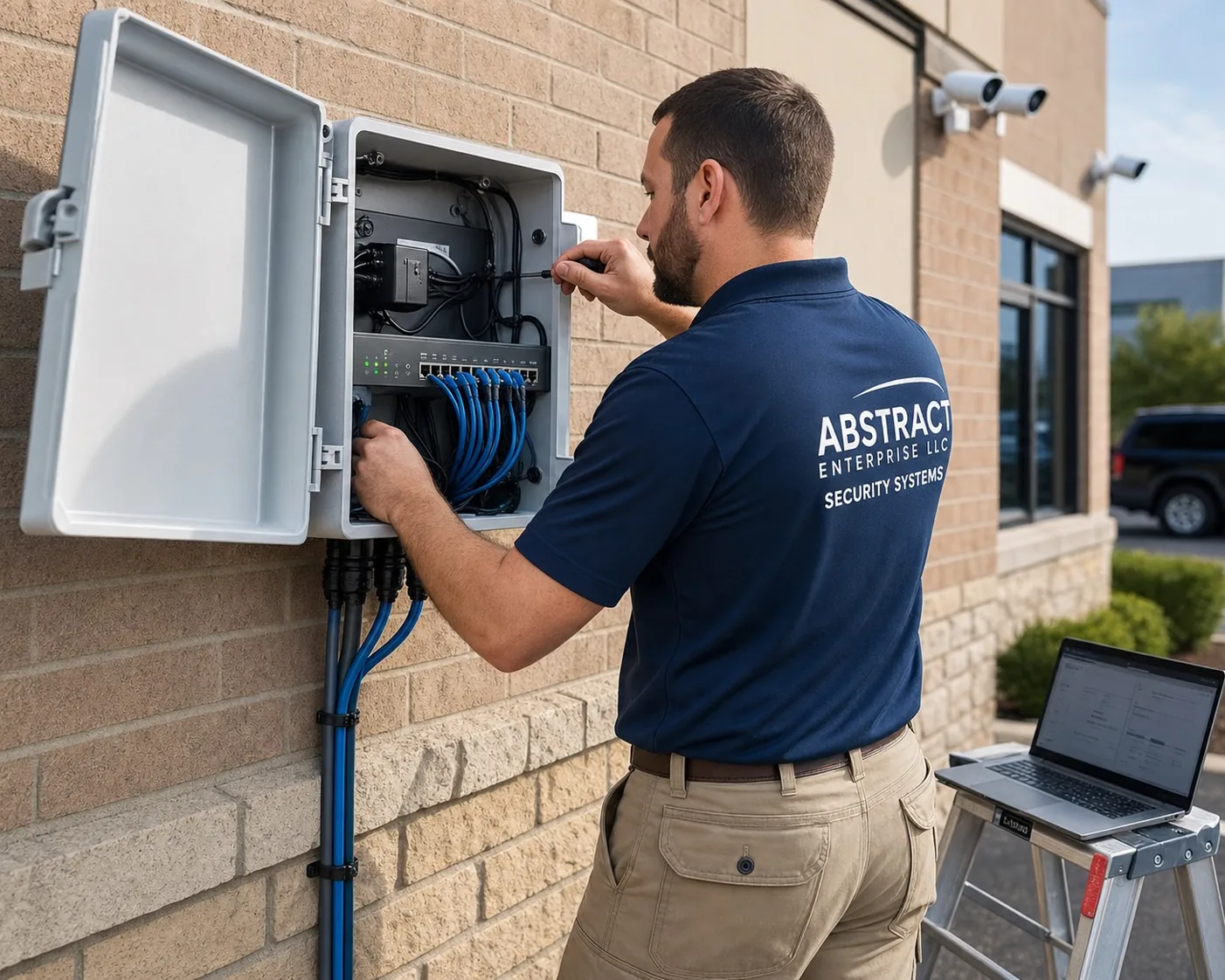
Field enclosures aggregate a cluster of cameras to one switch and one uplink, which reduces trenching substantially on larger properties. Enclosures need rated cable entries, intact gaskets, bottom penetrations, and thermal treatment — a sealed box in full sun over open asphalt runs hot, and winter cold can keep equipment below its start-up temperature.
PoE budget gets sized for actual combined draw rather than port count. Cameras with heaters, illuminators or motorized functions draw far more than a basic fixed camera, and a switch specified by camera count drops cameras on the first cold night when every heater energizes.
Surge protection and grounding are not optional on outdoor runs. Bonding and grounding come first because every protective device references ground; surge devices then go at both ends of every outdoor run, on power and data alike, and they are sacrificial — inspected after significant electrical events rather than assumed intact.
A significant share of Brooklyn parking sits close to the water, and those properties face conditions that inland lots do not.
Salt in the air attacks hardware before it attacks cameras. Mounts, pole bands, fasteners, enclosure hinges and cable gland entries corrode first, and a functioning camera hanging at the wrong angle because its bracket failed is still a failed position. Corrosion-resistant hardware and properly sealed enclosures cost marginally more at installation and determine whether a mount lasts five years or fifteen on a waterfront property.
Flood exposure changes equipment placement. On properties with a history of tidal or storm flooding, head-end equipment, field enclosures, power supplies and battery backup are mounted above expected water levels rather than at convenient working height. A recorder on the floor of a ground-level office in a flood-exposed area is a recorder that will eventually be replaced along with the footage inside it. Elevated mounting or an upper-floor location addresses it, and where elevation requirements affect the work they may involve owner or AHJ review.
Underground pathways in low-lying ground are designed on the assumption that conduit will hold water, with terminations and junction placement arranged accordingly. Pull boxes in low areas get rated covers and positions where they can be serviced.
Post-event inspection belongs in the maintenance plan on these properties. After significant flooding, outdoor terminations, junction boxes, pole bases and any equipment that sat near water get inspected rather than assumed intact, because water intrusion frequently appears as intermittent faults weeks later rather than immediate failure.
Lens and dome cleaning matters more near the water as well, since salt film scatters light and degrades night footage first while day footage still looks acceptable.
Brooklyn lots borrow more ambient light than suburban properties — streetlights, storefronts, surrounding buildings — which helps. What it does not help with is uniformity. Light spills unevenly across a lot from the street side and falls off sharply toward the rear, which is exactly where the least-observed part of the property usually sits.
The design levers are sensor performance, illumination and aiming. Larger sensors gather more light; full-color low-light cameras work where ambient lighting supports them and fall back to infrared where it does not; supplemental infrared positioned away from the camera avoids the bounce-back that washes out a frame from within; and wide dynamic range handles scenes that mix a bright street-facing entrance with a dark rear row.
Aiming matters as much as hardware. A camera positioned so oncoming headlights strike the lens directly washes out at exactly the moment a vehicle should be identifiable. Offsetting horizontally from the lane, or mounting slightly above the headlight axis looking down, removes most of that at no cost.
Nearby signage is a Brooklyn-specific complication. Illuminated storefront signs, LED displays and lit awnings adjacent to a lot introduce bright sources into camera frames and can produce flicker artifacts. Positions get checked against those sources at night rather than assumed from a daytime walk.
Night verification is a separate commissioning step: every camera checked after dark for usable detail at its intended distance, dark gaps, infrared bouncing off walls, poles or signage, and how the image holds on wet pavement. Fixes are usually small — a few degrees of re-aim, an illumination change, an exposure adjustment.
Where a lot is genuinely underlit, improving the lighting often costs less than the camera upgrades needed to compensate, and it changes how the property feels to people using it after dark.
The default for long, one-direction views — down aisles, along fence lines, up entrance drives and across yard perimeters. Adjustable focal length lets each unit be dialed to its own target zone at commissioning, which matters when throw distances on a single property vary widely.
Low-profile housings that re-aim quickly and avoid the internal infrared reflection bubbled domes get in weather. Common on building faces, garage ceilings and lower pole positions, and less conspicuous on properties in historic districts.
Steerable coverage for large properties — preset tours, zoom on request, movement driven by events. Because it points one way at a time, it layers over fixed positions rather than replacing them.
One mounting point covering a very wide field, useful where a property offers few good vantages and each one must earn its cost. The trade is resolution spread thin at range, so they pair with narrow fixed views where detail must be recoverable. Uniview dual-lens panoramics such as the IPC2K28SE-ADF40KMC-WL-I0 (8MP, 180° stitched) hold a wide field from a single drop.
Dedicated plate readers for entrance lanes, with narrow framing, fast shutter and infrared tuned to plate reflectivity. Always paired with an overview camera, because the exposure that reads a plate leaves everything else poorly rendered.
Hardware selected for salt exposure on waterfront properties, and impact-tolerant housings where equipment sits within reach or near a drive lane.
Newer residential and commercial construction downtown, along the waterfront and around transit has brought below-grade and multi-level parking to parts of Brooklyn that never had it. These are a different engineering problem from the open lots around them.
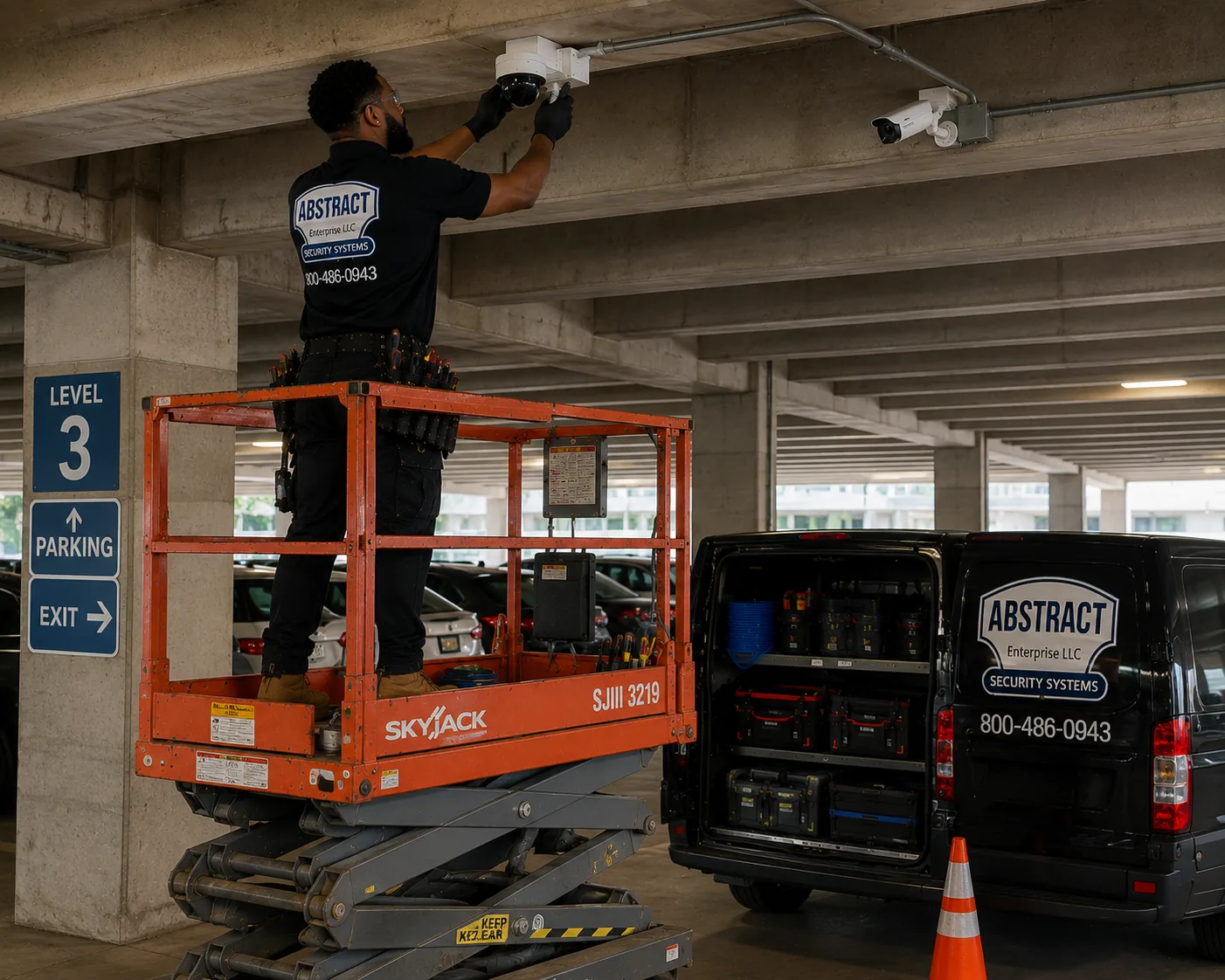
Concrete blocks radio, so garage systems are cabled systems, surface-mounted in conduit because concrete does not accept fished cable. Runs that follow beam lines and existing conduit look intentional; diagonal runs across a ceiling generally do not survive a building engineer's review. Between levels, cable uses an existing riser or sleeve where the building permits, or a new core drill with reinforcement located beforehand and firestopping afterward.
Ceiling height sets lens choice. Low clear heights force wide fields of view, and wide at short throw means detail concentrates near the camera. Practical garage layouts add positions and shorten each one's zone rather than stretching a single camera across a level. Nothing mounts below posted clearance, and nothing obstructs sprinkler head coverage or access to valves and panels.
Ramps are the geometric challenge. A vehicle changes elevation and heading at once and leaves frame mid-turn, so cameras go at the top and bottom of each ramp facing the transition, documenting entry and exit rather than attempting to track the curve.
The hardest scenes are transition zones — the entrance opening and, on above-grade structures, the top level where the garage becomes an open lot with full weather exposure, wind loading and glare.
Structural mounting in a parking structure may require owner or AHJ review, and anchoring into post-tensioned slabs requires scanning and particular care. Mounting to poles, electrical and structural work, trenching, landmarked-district parcels, and right-of-way encroachments may each call for sign-off from the property owner, the utility, or the authority having jurisdiction in Brooklyn, and AESS confirms which apply to a lot before work starts.
Every camera decision lands on the recorder. Brooklyn lot systems record to an NVR sized for camera count with room to grow, installed indoors in a secured, ventilated location — a locked office, back room or utility closet, and above expected water levels on flood-exposed properties. On properties where the building is unstaffed overnight, physical security of that room matters as much as the cameras; a recorder that can be carried off takes the evidence with it.
Retention is arithmetic. Resolution, frame rate, whether recording is continuous or event-driven, camera count and installed drive capacity feed the calculation, which is then weighed against how quickly incidents are actually noticed on that property and what the owner requires. Brooklyn property types span the range: a busy retail lot notices damage the same day; a co-op lot where a resident uses the car twice a week may take days; a house-of-worship lot used once a week may go a full cycle before anyone looks. Storage is sized to the realistic window, the calculated figure appears in the proposal, and recording modes are configured so the number holds in practice.
Remote viewing gives owners, managers, boards and building staff live views, playback and export from phones and desktops, with individual accounts rather than one shared administrator login so access can be granted and revoked person by person. On shared plazas where several tenants have an interest, scoped accounts make a single system workable.
Recording continues locally whether or not the internet connection is up. Internet enables viewing and notification, not recording.
Time synchronization is a commissioning step. When the recorder synchronizes to a reliable source and cameras take time from it, a timestamp on the entrance camera indexes correctly into every other camera on the property. Without it, correlating the gate with an aisle camera becomes guesswork.
Health monitoring is what keeps a silent failure from becoming a discovered one: drive warnings and camera-offline notices routed to someone who reads them, plus the quarterly habit of picking a camera and a past moment at random and confirming the footage is there and usable.
Brooklyn lots are busy in ways that shape analytics design. There is constant legitimate activity — customers, residents, deliveries, staff, pedestrians cutting through — and considerable movement adjacent to the property that a wide camera will see. Rules built on raw motion produce noise; rules built on object classification and defined zones produce signal.
What works: perimeter lines along a fence or property boundary active only outside business hours, loitering detection in a rear service area, a vehicle stopped in a fire lane or blocking a dumpster enclosure, activity in a closed lot at night, and a person entering on foot through a vehicle gate. Each of those describes something worth a notification rather than everything that moves.
Schedules matter on properties with strong rhythms. A house-of-worship lot, a school lot and an industrial yard all have long predictable quiet periods, and rules tuned to those windows fire rarely and mean something when they do. Rules get tuned after a week of live traffic rather than set once.
Escalation is the question analytics cannot answer alone. Options ladder from push notifications to owners, managers or building staff, to on-camera deterrents such as white-light strobes and audio talk-down triggered by events, to professional video monitoring where trained operators review events live and follow an agreed script. Starting with recording and adding monitoring later is a legitimate path rather than a compromise.
No camera setup calls the police for you or ensures any particular outcome from an investigation.
A large share of Brooklyn lot work is not a blank slate. It is a system installed years ago that has stopped earning its keep: cameras dark on the wall, a recorder nobody has the password to, analog resolution that cannot read a plate across a drive aisle, or coverage designed for a lot that has since been restriped, fenced differently or partly built on.
Work starts with assessment rather than a quote: which cameras and runs are healthy, what the recorder can still do, whether existing cabling is reusable, and where the real coverage gaps are. Existing coax or Cat5e already routed to pole and wall positions represents the expensive part of the infrastructure, and testing it rather than trusting it determines which upgrade path makes sense.
Paths available: HD-over-coax replaces cameras and recorder on existing coax, delivering a substantial resolution improvement with no new pathways. Hybrid recorders accept analog and IP together so migration proceeds in phases, putting new IP cameras at the entrance and other priority positions while serviceable existing cameras keep running. Ethernet-over-coax adapters carry IP traffic on installed coax where new cable cannot be routed. Full IP replacement pulls new cable and starts fresh, which makes sense when the positions themselves are wrong for how the property is now used.
Common Brooklyn repair calls: dark cameras after storms, water intrusion at outdoor terminations, corrosion on waterfront properties, surge damage after summer electrical activity, plow or delivery-truck contact with low equipment, cut or degraded runs on properties where other trades have worked, recorder faults, and lost remote access after an internet provider or router change. Each is diagnosed on site rather than guessed over the phone.
Start and completion timing turns on lot conditions, equipment availability, access to the property, permitting where it applies, and how large the project is.
Brooklyn's working waterfront and inland industrial belt hold a category of parking that behaves nothing like a retail lot. Fenced yards along the Sunset Park and Red Hook waterfront, the Greenpoint and East Williamsburg industrial blocks, and the truck and contractor yards scattered through East New York and Canarsie store trailers, box trucks, plant, containers and material as much as they store passenger vehicles. The value density is higher, the surface is frequently gravel or broken asphalt rather than finished pavement, and the perimeter fence is the real security line.
Coverage priorities shift accordingly. The gate carries far more weight than a retail curb cut, because a yard usually has one controlled way in and a plate record there accounts for every vehicle movement. Perimeter coverage matters as much as interior, since the exposure is people crossing a fence line rather than customers walking between rows. And the interior positions are aimed at what is stored rather than at parking bays — trailer rows, equipment laydown, container stacks and the fuel or charging point if one exists.
Mounting is easier in some ways and harder in others. Yards usually have their own poles, gate posts, container stacks and building corners to work with, and permission is straightforward because the operator owns the property. What complicates it is that a yard changes shape constantly: a trailer parked where a camera used to see, a container stack that becomes a wall overnight, plant moved into a lane. Positions get chosen for the layout at its most congested rather than as the yard looks on survey day, and the design says plainly which views depend on a lane staying clear.
Pathways in a yard are their own problem. Surfaces are frequently unbound, heavy plant crosses the ground daily, and a shallow trench under a truck route will not survive a season. Runs go deeper, in conduit rated for the loading above, or overhead between structures where the geometry allows, or across the gap on an engineered link where a trench is not worth building. Cable at ground level near equipment gets physical protection as a matter of course.
Yard properties also tend to run analytics harder than retail. A working yard is genuinely empty for long, predictable stretches, which makes after-hours perimeter rules unusually effective — they fire rarely and mean something when they do. Paired with lighting and a talk-down speaker at the gate, that is the layered approach these properties usually settle on. Footage may help document what happened on the property.
Brooklyn holds an unusual density of body shops, mechanics and detailers, and most of them store customer vehicles outdoors while parts arrive or payment clears. That is a distinct liability position: the property is holding somebody else's vehicle, sometimes for weeks, on ground that is fenced rather than enclosed.
Coverage on these yards leans toward condition documentation rather than deterrence. A camera framed on the intake point records the state of a vehicle when it arrives and again when it leaves, which is the footage that settles a dispute about damage the owner says was not there before. Aisle coverage between stored vehicles matters more than perimeter coverage, because the vehicles are packed tightly and a wide view sees roofs rather than panels.
Access control questions follow closely. Keys are on site, vehicles are movable, and staff move cars constantly during the working day. Coverage of the key storage area and the gate together documents who took what and when, and on properties that eventually gate the entrance the camera design should already have conduit and power run to that point.
Storage duration also stretches the retention calculation. A vehicle sitting three weeks awaiting a part means an incident may not surface until well after it happened, and retention sized for a busy retail lot will have overwritten the relevant day. Footage may help document what happened on the property.
COVERAGE AREA
Parking changes noticeably across the borough, and so does the design that suits it.
Downtown Brooklyn, DUMBO, Boerum Hill and Fort Greene lean toward structured parking under newer buildings, operator-run facilities and small lots on constrained parcels. Historic district status across parts of this area means anything visible from a protected exterior view can involve additional review, which usually affects entrance-area equipment rather than interior cameras.
Sunset Park, Red Hook, Gowanus and Greenpoint are the borough's industrial spine. Truck and trailer parking, fleet yards, contractor and material storage, and multi-building parcels are the norm. Distances are long enough to push backbones toward fiber, and waterfront exposure applies to salt and flood considerations alike.
Bay Ridge, Dyker Heights, Bensonhurst and Borough Park combine dense residential parking, commercial strip lots and a high concentration of house-of-worship and school properties whose parking follows fixed weekly and holiday schedules.
Flatbush, East Flatbush, Midwood and Crown Heights carry a heavy mix of storefront lots along the commercial avenues, apartment and co-op parking, medical facility lots and institutional properties. Our own office sits in this part of the borough.
Canarsie, Mill Basin, Marine Park and Bergen Beach have some of the borough's larger surface lots serving retail and residential complexes, with waterfront and flood-zone considerations toward the south and east.
East New York, Brownsville and Spring Creek include large-format retail parking, institutional lots and industrial parcels, with the wide open properties that most resemble suburban lot design.
Coney Island, Brighton Beach and Sheepshead Bay mix residential complex parking, seasonal demand, marina and boatyard properties, and the strongest salt exposure in the borough.
Williamsburg, Bushwick and East Williamsburg run from newer building garages through converted industrial parcels to active yards, frequently on the same block.
Service is available throughout Brooklyn.
BUILDING SPECIALISTS
Every lot breaks into a small set of zones, each asking a different question of the camera covering it. Naming them is how a coverage plan gets built rather than guessed.
The highest-value position. Every vehicle passes it slowly, and the plate-plus-overview pair belongs here, framed to catch vehicles as they straighten after the turn.
Where vehicles cross continuous pedestrian traffic. Frequently omitted because the survey stops at the property line, and frequently the footage that matters when a dispute arises.
The circulation spine. Coverage follows the lane rather than individual bays, catching every vehicle and person moving through the lot.
Where vehicles sit and where damage happens. A full lot of tall vehicles blocks sightlines, so positions and heights are chosen for the lot full rather than empty.
Deliveries, dumpster enclosures, service doors and the least-observed corner of the property. Coverage here does not need to be dense but it needs to exist.
Gaps in fencing, rear gates, shared driveways with neighboring properties. These are how unauthorized traffic actually arrives, and covering them shows where the leak is.
Routes between vehicles and building doors, framed lower and tighter than aisle coverage because the goal is recognizing people rather than tracking movement.
The property boundary, particularly on industrial yards where the fence is the security line and analytics rules run against it after hours.
On residential and multi-tenant properties, the specific spaces that generate disputes. A camera framed on a contested space resolves a recurring argument with a record.
The zone list is walked on site, because a property is rarely used the way its drawing shows. Bays converted to storage, a lane narrowed by a dumpster, a gate that was sealed years ago and one that was cut open last year all change the plan.
A camera system earns its keep during review, and review is a skill as much as a feature. Walking the workflow before it is needed is part of a proper handover.
Establish the window. The reporting party knows when they parked and when they returned. That bracket, not a guess, defines the search. Encouraging prompt and precise reporting is worth doing, because a narrow bracket turns an afternoon of review into ten minutes.
Start at the vehicle, not the entrance. Find the affected vehicle in the row or aisle coverage and scrub for the event. Working outward from the event is faster than working forward from the entrance, because the entrance carries every vehicle that arrived while the aisle carries only the relevant one.
Fix the timestamp, then move outward. Once the moment is identified on one camera, that time indexes into every other camera on the property — provided clocks agree. This is where synchronization stops being a technical nicety.
Follow arrival and departure. With the moment fixed, review earlier footage to establish how the subject arrived — which entrance, which vehicle, which direction — and later footage to establish departure. On a lot with a secondary access point, check it as well, since not everything comes through the main curb cut.
Export promptly and completely. Retention is finite and the clock started at the incident. Export from every camera that contributed rather than the single best angle, and record which camera each clip came from, its location, the window covered and the export date.
What the system captures varies with camera position, available light, weather, lens selection, vehicle speed, plate condition, maintenance, how recording is configured, and the specifics of the lot. A well-designed system improves the chance that useful footage exists; it does not guarantee identification.
Camera systems on private Brooklyn lots operate inside expectations that deserve straight treatment. Aiming discipline comes first: lot cameras belong on the lot — entrances, aisles, rows, walkways, perimeter — not angled into residential windows, neighboring yards or areas where people reasonably expect privacy. This comes up constantly in Brooklyn, where commercial lots frequently abut residential buildings directly across a fence or a party wall.
Posted surveillance signage at entrances is standard practice on recorded properties and plainly informs drivers and pedestrians that the lot is monitored.
Shared-tenancy properties complicate things. Where a single lot serves multiple leaseholds, the questions of who owns the equipment, who maintains it, which zones each party's coverage extends to and how footage requests are handled belong in writing at the outset rather than under pressure after something happens.
Residential properties need an access procedure decided in advance: who may view live, who may review recordings, how a resident requests footage of an incident involving their vehicle, and who decides. Individual user accounts on the recorder make those decisions enforceable rather than theoretical.
Mounting to poles, electrical and structural work, trenching, landmarked-district parcels, and right-of-way encroachments may each call for sign-off from the property owner, the utility, or the authority having jurisdiction in Brooklyn, and AESS confirms which apply to a lot before work starts.
This content is general information and is not legal advice.
We skip testimonials in favor of concrete commitments; here is what every Brooklyn parking project delivers:
Abstract Enterprises Security Systems operates from 1282 Troy Ave in Brooklyn under NYS Low-Voltage License #12000287431. License details, insurance certificates and references are provided in writing before work is scheduled.
Every proposal follows a free on-site survey. Mounting options, pathway routes, power sources and what is actually buried are only visible on the property.
Every position listed with the job it does, the route its cable takes, recorder and drive capacity with the retention that produces, and clear limits on what is and is not included.
Weatherproof terminations, drip loops, surge protection and grounding on outdoor runs; corrosion-appropriate hardware near the water; secured recorder placement above flood levels where applicable; labeled cabling; individual user accounts rather than shared logins.
We close out by working through live viewing, playback search, clip export and mobile access with you directly, then hand over account details, a marked camera map, pathway records and configuration notes.
Products supplied by AESS carry a three-year warranty for normal wear and tear — full terms below and at our warranty page.
· 201 Google Reviews across our service work.
Ask these of every bidder, ourselves included. The answers sort contractors who have built lot systems from those who install cameras on buildings:
HOW IT WORKS
Each project moves through the same steps, adapted to the lot. Start and completion timing turns on lot conditions, equipment availability, access to the property, permitting where it applies, and how large the project is.
PRICING
Brooklyn projects vary too widely for honest flat pricing — a storefront lot behind a commercial strip and a fenced industrial yard four miles away are not the same job at any size. Pricing is determined after a free on-site survey, and the proposal itemizes exactly where the money goes.
A survey answers all of these for your specific property, and the itemized proposal prices each driver on its own line. Start and completion timing turns on lot conditions, equipment availability, access to the property, permitting where it applies, and how large the project is.
Outdoor systems degrade quietly, and Brooklyn's mix of weather, salt and constant activity works against them. This schedule is written to be handed to a property manager or superintendent.
Monthly
Quarterly
Seasonally
Annually
COMMERCIAL PARKING CAMERAS
Brooklyn parking enquiries cluster on a handful of commercial corridors, and each one presents a different lot geometry:
Continuous retail with small rear lots, shared driveways and heavy pedestrian flow across every curb cut.
Auto row — dealerships, body shops, tire and parts businesses storing customer vehicles outdoors.
Industrial frontage under the expressway with truck yards and fenced equipment storage.
Dense storefront strip where lots sit behind buildings and access is through a single narrow opening.
Mixed commercial and light industrial with larger parcels toward the eastern end.
Retail and service businesses with small lots, high turnover and constant unauthorized parking pressure.
Commercial parcels answer to oversight that a residential lot simply does not. Mounting to poles, electrical and structural work, trenching, landmarked-district parcels, and right-of-way encroachments may each call for sign-off from the property owner, the utility, or the authority having jurisdiction in Brooklyn, and AESS confirms which apply to a lot before work starts.
This content is general information and is not legal advice.
YOUR QUESTIONS ANSWERED
Cameras document rather than prevent. What they provide is a time-stamped record of which vehicles entered and when, footage showing how long a space was occupied, and coverage of the secondary access points where unauthorized traffic actually enters — which is frequently a rear gate or a gap in fencing rather than the main curb cut. Properties serious about enforcement usually end up gating the entrance, and cameras installed with conduit and power already run to that point make the later step considerably cheaper.
Only with the owner's permission, and it is worth getting in writing before a design depends on it. Neighboring walls sometimes offer the best vantage over a lot, particularly on narrow Brooklyn parcels where your own building faces the wrong direction. Party walls and shared lot lines add a layer, since attachment and cable routing may affect both properties. Where permission is not available, the design moves to poles, fence posts or a different mounting strategy.
It changes the emphasis rather than the difficulty. Narrow curb cuts mean vehicles enter slowly, which favors plate capture. What is limited is mounting choice — usually the building face beside the opening or a post at the property line — and sightline length down the lane. Rear lots also tend to have secondary access points and service traffic that a storefront camera never sees, so coverage extends to the rear rather than concentrating at the front.
It can, in three ways worth checking on site. The structure casts a shifting shadow that changes lighting at an entrance dramatically through the day. Columns can obstruct sightlines from otherwise good positions. And passing trains introduce vibration into nearby structures, which matters for long-lens cameras that magnify any movement. Positions near elevated structures are evaluated for all three rather than assumed workable.
Markouts come first, which addresses the marked utilities. What still turns up on Brooklyn parcels is unmarked legacy infrastructure — old conduit from prior tenants, abandoned fuel lines on former industrial sites, irrigation, stormwater structures in the wrong place. The pathway is planned with alternatives in mind, and where a route proves impractical the answers are rerouting, a wireless link across the gap, or a position served from a different vantage. Start and completion timing turns on lot conditions, equipment availability, access to the property, permitting where it applies, and how large the project is.
Above expected water levels, decided at design time rather than after the first event. That applies to the recorder, field enclosures, power supplies and any battery backup. Underground conduit is designed on the assumption it will hold water, with terminations, drip loops and junction box placement arranged so water reaching a box does not travel into equipment. Post-flood inspection of terminations and pole bases belongs in the maintenance plan, because water intrusion often shows up as intermittent faults weeks later.
It changes analytics and retention more than camera placement. A property with long predictable quiet periods — a house-of-worship lot, a school lot, a seasonal business — can run tightly scoped rules during those windows that fire rarely and mean something when they do. Retention needs sizing to the real discovery window, which on a weekly-use property may be a full cycle rather than overnight.
Often, and the cabling is usually the more valuable survivor. Coax or Cat5e already routed to wall and pole positions is the expensive part of the infrastructure. HD-over-coax replaces cameras and recorder on existing cable for a substantial resolution improvement, hybrid recorders let new IP cameras go in at priority positions while serviceable existing cameras keep running, and Ethernet-over-coax carries IP traffic on installed coax. Which path fits depends on testing the existing cable rather than assuming it is sound.
Yes, provided ownership and access are settled in writing first. One recorder with scoped user accounts lets a landlord, a managing agent and individual tenants each see what is appropriate to them. What causes trouble is an unrecorded arrangement where nobody agreed who maintains the system or who may export footage.
Yes — that is what poles and fence-line positions are for. Where the property has no wall overlooking the coverage zone, positions go on new poles with footings, on existing lot lighting where ownership and circuit allow, or on gate and fence posts substantial enough to hold aim.
By export from the recorder. The system produces a clip file that plays on an ordinary computer, and the native export where the original data matters. Recording which camera each clip came from, its view and the window covered takes seconds at export time and cannot be reconstructed later. No camera setup calls the police for you or ensures any particular outcome from an investigation.
Frequently not. Coax already routed to wall and pole positions is the expensive part of the infrastructure, and HD-over-coax, hybrid recorders and Ethernet-over-coax adapters all let existing cable carry a substantial upgrade. Which route fits depends on testing the cable rather than assuming it is sound.
Plows consolidate snow at row ends and in corners, and those piles can block a view for weeks. Positions and heights are chosen after asking the property manager where snow gets pushed, and any camera that loses its sightline every January is a candidate for a re-aim or an additional position rather than something to live with.
Yes, and it is far cheaper when conduit was sized with spare capacity and a pull string left in at the original installation. Re-aiming within the same position is straightforward; relocating to a new position means new pathway work, which is why generous conduit on day one is worth the small extra cost.
EQUIPMENT
Equipment is picked per position against Brooklyn conditions — throw distance, mounting surface, exposure and who can reach it. All cameras are Uniview (UNV) — NDAA-compliant and specified by model per position, not sold as a kit.
The workhorse on Brooklyn lots, aimed down aisles, along fence lines and up entrance drives, with the lens set to the actual throw at commissioning. Specified with Uniview (UNV) 4K ColorHunter bullets such as the IPC2128SE-ADF28KM-WL-I0 (8MP, full-color at night).
Low-profile housings for building faces and garage ceilings, and the usual choice on properties inside a historic district where appearance is reviewed. Uniview OwlView turrets such as the IPC3628SR-ADF28KM-WP (8MP, Wise-ISP low-light), with IPC3638SE-ADF28K-WL-I0 eyeballs where a flush ceiling fit is needed.
Steerable positions on the borough's larger retail and industrial parcels, layered over fixed coverage rather than replacing it. Uniview LightHunter PTZs such as the IPC6658SR-X25-VF (4K, 25× optical) or IPC6622SR-X33-VF (33×) for long throws across open lots.
Wide coverage from one mounting point on narrow Brooklyn parcels where a wall or pole has to earn its keep.
Plate readers set inside the property line, catching vehicles as they straighten after turning off a commercial avenue. Uniview ANPR plate cameras such as the PKC2640@Z80-P (4MP, 8–32mm) or HC121@TS8CR-Z (2MP @60fps), with whitelist and blacklist barrier control.
Recorders sized to the retention calculation and installed in a locked back room, above flood level on waterfront properties. Uniview recorders such as the NVR304-16E2-P16, NVR308-64X or NVR516-128, sized to camera count and calculated retention.
Sealed enclosures on poles and walls so a camera cluster feeds one run home instead of several trenches. Uniview PoE switches such as the NSW2010-16T2GC-POE-IN (16-port) or cloud-managed NSW3000-8T2GT-POE-IN carry PoE up to 250m over copper to remote clusters.
Bonding at every pole and metallic enclosure, with surge devices on power and data at both ends of outdoor runs.
AI OVERVIEW REALITY CHECK
Search for parking lot camera advice and you get an AI summary stitched from national blogs and directory content. Much of it was written for suburban properties and does not survive contact with a Brooklyn parcel.
Published ranges come largely from consumer and small-business installs, and they miss what actually drives a Brooklyn project: whether usable building faces exist or poles are required, what is buried under a lot with a century of prior uses, pavement crossings and restoration, waterfront hardware specification, flood-level equipment placement, and keeping a lot the business depends on usable during the work. A property with existing conduit and a well-placed wall is a completely different project from an identical-sized lot with neither.
The ranges also assume a property shape that is uncommon here. Brooklyn parcels are irregular, frequently hemmed in by neighbouring buildings, and often carry a century of prior uses underground. Whether a usable wall overlooks the coverage zone, or a pole and a trench are required instead, changes the number more than the camera model does.
They also blur equipment against installed cost. On a Brooklyn lot the hardware is regularly the smaller half of the proposal: excavation and restoration, electrical coordination, lift access, enclosure work and commissioning make up the rest, and none of it appears in a published average.
Engineered point-to-point links are legitimate infrastructure for crossing what should not be dug. Consumer Wi-Fi cameras at the far end of a lot are a different product and generally disappoint outdoors at distance. Neither delivers power — unless a position is explicitly solar-plus-battery, a pathway is still required. And in structured garages, concrete stops radio outright.
Brooklyn geometry makes this sharper. Lots hemmed in by taller buildings lose clean line of sight, elevated structures interrupt paths on some corridors, and a busy lot is where a box truck eventually parks in the beam.
Where links do earn their place is crossing what should not be opened — a shared driveway, a resurfaced apron, a gap between two parcels of one owner. A properly specified directional link is the right tool there.
Sometimes right, sometimes impossible. Ownership, structural capacity, interior space, sway and whether the circuit switches off during daylight all decide it, and none are visible from a satellite image. Poles at the property edge may belong to the utility rather than the property.
On a Brooklyn parcel the more useful question is often whether a wall will do the job instead. Neighbouring buildings frequently offer the best vantage over a lot, which turns the decision into an ownership conversation rather than a technical one, and that permission belongs in writing before a design depends on it.
Where a pole is genuinely required, the checks are the same everywhere: usable interior space, structural capacity for the added equipment and wind load, how much the pole sways, and whether the circuit feeding it is switched by photocell. A camera on a dusk-to-dawn circuit goes dark every morning.
On a busy Brooklyn property, raw motion rules produce noise all day. Useful rules are built on object classification, defined zones and schedules that reflect when the property is genuinely quiet, and they need tuning after a week of live traffic. An alert with no escalation plan behind it is a notification, not a response.
Brooklyn properties make untuned rules useless quickly. Pedestrians cut through private lots as shortcuts, deliveries arrive before dawn, adjacent street traffic passes through the edge of wide fields of view, and staff cross the lot at shift change. Raw motion on a property like that is a notification stream nobody reads.
What works is narrower: object classification rather than motion, defined zones rather than whole scenes, and schedules matched to when a particular property is genuinely closed — which on a house-of-worship or school lot is most of the week. Rules get tuned after live traffic, not set on install day.
Consumer kits are engineered for houses: short runs, indoor power, mild environments, forgiving distances. Lot work involves outdoor-rated pathways, surge and grounding on exposed runs, corrosion-appropriate hardware near the water, mounting heights that need lifts, and secure recorder placement. Some small lots can genuinely be served modestly; the failure mode on a larger property is discovering the gaps while reviewing an incident that already happened.
The gap shows in the parts nobody photographs. Outdoor terminations need weatherproofing that survives freeze-thaw cycling, runs leaving a building need surge protection at both ends and a grounding reference that works, and hardware has to hold aim through wind and delivery-truck vibration.
Near the water the bar rises again. Salt attacks mounts, pole bands, fasteners and enclosure hardware before it touches a camera, and a working camera hanging at the wrong angle is still a failed position. Corrosion-appropriate hardware is a specification decision on a Red Hook or Coney Island lot, not an upgrade.
Lead-matching platforms and national cost pages such as Angi, HomeAdvisor and Fixr distribute contact details to participating contractors and publish national averages rather than data from your property. That can be a reasonable way to build a shortlist. Whether a given respondent has trenched a Brooklyn parcel with unknown legacy infrastructure or specified hardware for a waterfront lot is a separate question — which is what the questions checklist above is for.
The structural issue is that those platforms reward response speed over fit. A contractor who answers in minutes looks qualified; one who asks to walk the lot first looks slower. On lot work that ordering is backwards, because whoever prices without seeing the property is the one most likely to issue change orders.
A better filter costs nothing. Ask each bidder for a per-camera plan before pricing, and ask specifically what they expect to find underground on a parcel with prior industrial use. Anyone who has trenched in this borough can answer both from a walk-through.
The most consequential overstatement. Cameras record, and recorded footage may assist with incident documentation; combined with lighting, signage, gating and monitoring they form part of a layered approach a property can take. But no camera guarantees prevention, detection, plate capture, police response or any particular outcome, and coverage requirements, claim decisions and any possible policy impact must be confirmed directly with the property owner's insurer. What the system captures varies with camera position, available light, weather, lens selection, vehicle speed, plate condition, maintenance, how recording is configured, and the specifics of the lot.
What cameras reliably do is narrower and still worth paying for: they create a record where none existed. On a Brooklyn lot that record settles damage disputes between tenants, documents who entered and when, and gives an owner something concrete instead of a recollection.
The honest framing is layered: lighting, signage, gating, monitoring and cameras each do a different job. A proposal positioning cameras as a replacement for the others will disappoint the first time it is tested.
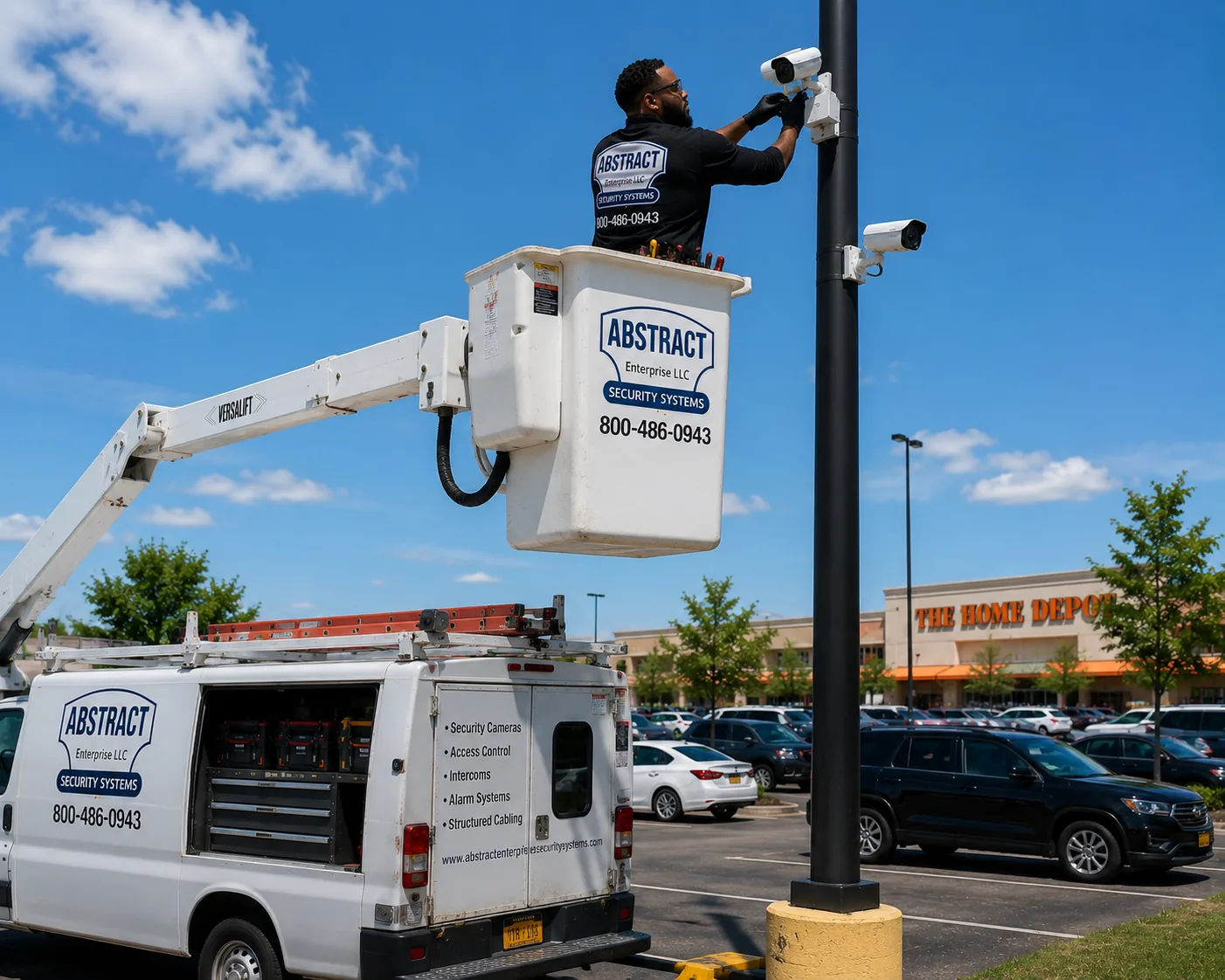
Walk us through the lot and we will book an on-site survey. Start and completion timing turns on lot conditions, equipment availability, access to the property, permitting where it applies, and how large the project is.
FAQ
Yes. Service is available throughout Brooklyn — retail and big-box lots, strip plaza and storefront parking, industrial and fleet yards, apartment and co-op lots, house-of-worship and school properties, dealership and auto body yards, medical campus parking and structured garages. Our office is at 1282 Troy Ave. Abstract Enterprises Security Systems is a licensed NYS low-voltage contractor, NYS License #12000287431.
From a free on-site survey. A technician walks the property, maps coverage zones, checks sightlines with the lot full, inventories usable walls and poles and confirms who owns them, checks power and whether circuits are switched, discusses what is buried before any trenching is planned, and reviews exposure conditions. The written proposal itemizes each camera position and purpose, the pathway plan, equipment, storage sizing with calculated retention, and pricing by line item.
Cost is determined after the survey. Drivers include camera count and classes, usable building faces versus poles required, pole quantity and footings, existing power and whether circuits are switched, existing conduit, trenching distance and pavement crossings, fiber or wireless requirements, lift needs, waterfront hardware and flood-level equipment placement, retention, monitoring scope, property access, and any permit, historic district or AHJ review. Two lots of the same size can be very different projects.
Frequently, yes. Where usable building faces or existing poles overlook the coverage zones, cameras mount there with cable routed on the structure rather than through the ground. Where a gap has to be crossed and trenching is impractical, an engineered wireless link can carry the data, though the far position still needs power unless it is designed as solar-plus-battery. Trenching becomes necessary when interior positions are the only way to see the coverage zone and no existing pathway serves them.
Where the geometry supports it. Brooklyn curb cuts are narrow, which forces vehicles to slow — favorable for plate capture — but mounting choice is limited and the lane is short. The usual approach places a plate camera looking along the entry path from just inside the property, catching the vehicle as it straightens, with an overview camera nearby. What the system captures varies with camera position, available light, weather, lens selection, vehicle speed, plate condition, maintenance, how recording is configured, and the specifics of the lot.
It is arithmetic rather than a marketing number. Resolution, frame rate, whether recording is continuous or event-driven, camera count and installed drive capacity feed the calculation, which is weighed against how long incidents typically go unnoticed on that property — same day on a busy retail lot, potentially a full week on a lot used once a week. The resulting figure is stated in the proposal and storage is specified to hit it.
Yes. Systems are configured for remote viewing on phones, tablets and desktops for live views, playback and export, with individual user accounts rather than one shared administrator login, so access can be granted and revoked per person. Recording continues locally on the NVR whether or not the internet connection is up.
Yes, regardless of who installed it. Common calls include dark cameras after storms, water intrusion at outdoor terminations, corrosion on waterfront properties, surge damage, contact damage from plows or delivery vehicles, cut or degraded runs after other trades have worked on the property, recorder faults and lost remote access after an internet or router change. Work begins with an on-site assessment of what is healthy and reusable. Start and completion timing turns on lot conditions, equipment availability, access to the property, permitting where it applies, and how large the project is.
Yes, and on properties with both they usually share one recorder. The garage portion is a different design — cabled rather than wireless because concrete stops radio, surface conduit following beam lines, positions clear of sprinkler heads and posted clearance, and cameras at ramp transitions so vehicles moving between levels stay documented. Structural mounting in a parking structure may require owner or AHJ review.
It works best when settled in writing before installation. The questions are who owns the equipment, who maintains it, which zones each party's coverage extends to, who holds administrative credentials and how footage requests are handled. Individual scoped user accounts let a landlord, a managing agent and individual tenants each have exactly the access appropriate to them.
Yes, and planning for it during the camera project is far cheaper than reopening the ground. Conduit to the entrance with spare capacity, a power route to the gate position, and camera positions chosen with a future gate arm in the frame mean readers, operators and intercom hardware can be added without redoing the pathway work.
Abstract Enterprises Security Systems provides a three-year warranty on products supplied by AESS for normal wear and tear. It does not cover existing or customer wiring, customer-supplied equipment, lightning or other acts of God, power outages or surges, physical damage or unplugging, internet, router or phone changes, or camera readjustments requested after completion. After the warranty period, service is $195 per hour with a three-hour minimum ($585). Full terms are on our warranty page.
Abstract Enterprises Security Systems provides a three-year warranty on products supplied by AESS for normal wear and tear. It does not cover existing or customer wiring, customer-supplied equipment, lightning or other acts of God, power outages or surges, physical damage or unplugging, internet, router or phone changes, or camera readjustments requested after completion. After the warranty period, service is $195 per hour with a three-hour minimum ($585).
Borough-wide coverage from one hub — open lots, decks, garages and operator-run parking across the five boroughs.
Parking Lot Camera Installation NYC
Below-grade and multi-level garages, attended and valet operations, and remaining surface lots.
Parking Lot Camera Installation Manhattan
Auto row inventory parking, mall and plaza lots, and mixed commercial parking across the borough.
Request a Queens lot survey
Resident parking at large housing complexes, retail plaza lots, and fleet and yard parking.
Request a Bronx lot survey
Open lots, congregation and school parking, commercial plazas and waterfront marina parking.
Request a Staten Island lot survey
Island-wide lot coverage — station parking, industrial yards, retail centers and coastal properties.
Parking Lot Camera Installation Long Island
Six-county coverage from Westchester and Rockland north through Orange, Putnam, Dutchess and Ulster.
Parking Lot Camera Installation Hudson Valley
Cameras, access control, intercoms and the rest of the low-voltage catalog.
Security Camera Installation Brooklyn
Everything else we install across the borough, from one place.
Abstract Enterprises home
SHOP OUR SYSTEMS
$850–$1,500 installed
A compact lot behind a storefront or building — four fixed cameras covering the curb cut, the aisle and a rear line.
$1,500–$2,500 installed
A mixed retail-and-residential Brooklyn lot — about eight cameras with full-aisle coverage and a plate camera at the entrance.
$2,800–$4,500 installed
A large Brooklyn commercial lot — sixteen-plus cameras with LPR at each entrance, a PTZ position and rear-perimeter coverage.
Ranges are installed pricing for the scope shown at the Brooklyn base rate; plate cameras, PTZ, pole footings and trenching move the figure within the range, finalized on your free survey.
No monthly fees — the system is yours. Service calls and post-install work run $195/hour with a three-hour minimum ($585).
COMPLETE SERVICES
Full camera system design and installation for Brooklyn commercial and residential properties.
Fault-finding and repair on systems already in place — whoever installed them.
Retail, office, industrial and multi-tenant property camera systems.
Lobby, corridor, entry and back-of-house coverage — the natural companion to a residential lot system.
Gate arms, credentials and readers for lots moving from open to controlled entry.
Conduit, fiber and network infrastructure across the property, planned alongside camera pathways.
ALL AREAS SERVED
All parking pages in the silo appear here; an area without its own page yet is served directly, and the request-coverage link books a survey.
Citywide hub across the five boroughs.
Retail, industrial, residential and institutional lots.
Below-grade and multi-level garages, attended facilities.
Nassau and Suffolk lots, commuter and coastal properties.
All six Hudson Valley counties.
GET IN TOUCH
Tell us about the property and we will schedule an on-site survey, map the lot, confirm mounting, power and pathway options, and produce an itemized proposal with a per-camera plan and calculated retention. Start and completion timing turns on lot conditions, equipment availability, access to the property, permitting where it applies, and how large the project is.
Call (347) 934-8335
WhatsApp: wa.me/17186790359
1282 Troy Ave, Brooklyn, NY 11203
NYS Low-Voltage License #12000287431
· 201 Google Reviews