Ready When the Police Call · Facts on File Kept True · Clips Found in Minutes
Across Westchester, police departments ask camera owners to put their systems on record. White Plains runs CommunityCam, Harrison and Tarrytown run SecureCam, and Yorktown keeps a Community Camera Registry — and the forms ask how many cameras you have, what brand the system is and how many days it stores before overwriting. Towns and villages also issue alarm permits and charge for false alarms. So a Westchester system is usually known to somebody official, and sooner or later somebody asks it a question. We maintain cameras so the answer is ready: the details on file still match the system, the clock is right, the drive reaches back as far as you said it does, and you can find the right ten minutes of video on the night an officer emails.
Page checked and brought up to date on October 18, 2026 by the AESS owner (NYS license #12000287431) · Westchester bookings (914) 877-2578
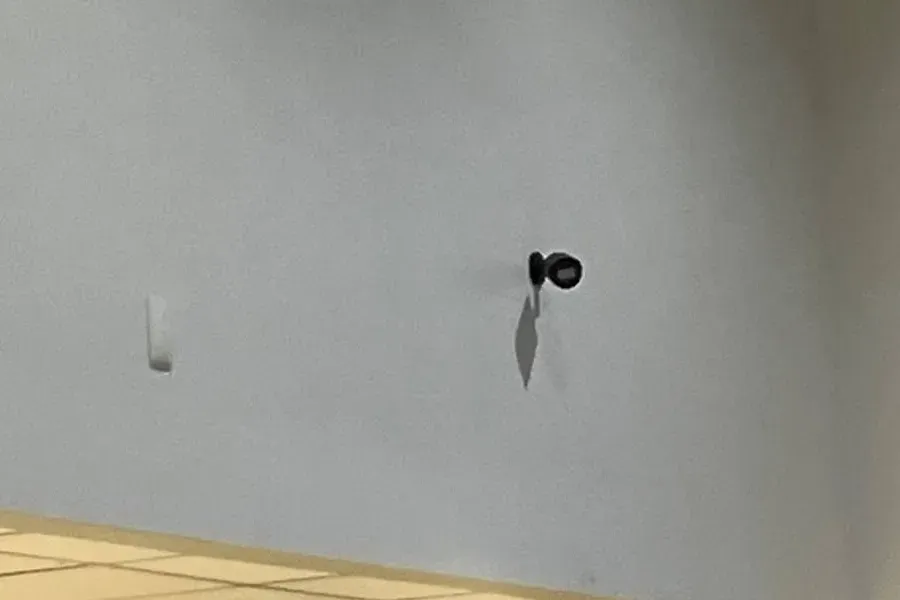
Example photo from another AESS job (not a Westchester County property): a small camera mounted high on a plain wall with a sensor beside it. A camera like this can look fine from the floor for years; whether it recorded the night someone asks about is only known by playing it back.
Westchester Camera Upkeep Quote
Name the town or village, the number of cameras and whether the system is registered with police — a written figure follows the same business day
✅
Request Sent!
Thanks — a technician will call about your Westchester cameras before the business day ends.
25+
Years Experience
✓
Same-Day Estimates
100%
Licensed & Insured
4.6★
390+ Google Reviews
A two-minute test before you call anyone: pick yesterday at 6 p.m., open playback on the camera that faces the street, and see how long it takes you to land on that minute. Then scroll to the oldest day on the drive. If either step defeats you, the system is not ready for a police request. Text a photo of the screen and your town to (914) 877-2578 and we will tell you where to start.
A single Westchester tune-up is $188–$438, and a yearly house plan starts at $250
Every visit ends with a written log you can match against your registration and alarm permit
Quotes go out in writing before the business day ends; licensed by New York State, #12000287431
Why Westchester Properties Need Security Camera Maintenance
Westchester is a county of many small police departments rather than one big one — forty-five local police agencies by one count — and several of them have built a quiet habit: asking residents and businesses to tell them where the cameras are. White Plains started its CommunityCam program in July 2016. Tarrytown's police chief announced SecureCam in November 2019 under the heading "Got video?", saying home systems had become sophisticated enough to help with everything from package thefts to major felonies. Harrison runs its own SecureCam, and Yorktown keeps a Community Camera Registry. Registration is free and voluntary in each place, and none of these departments gets live or remote access to your system by signing you up. What they get is a map: when something happens on your street, they know whose door to knock on.
Read the registration forms closely and they look a lot like a maintenance checklist. Harrison and Tarrytown ask for the number of exterior cameras, the number of interior cameras, the make and model of the system, how it stores video, whether it can be viewed remotely, and the number of days video is stored before being overwritten. White Plains asks how many exterior cameras there are, whether storage is a DVR or hard drive, USB drive, cloud, DVD or even video tape, and how many days are kept — and then sends someone to verify the registration in person. Every one of those answers changes over time. A drive starts failing and the recorder quietly stores less. A camera dies and nobody replaces it. A new doorbell goes up with its own cloud account. The registration still says what it said on the day it was filled in.
The request itself also falls on the owner. Yorktown's program says plainly that in most cases the department will email an alert asking you, the camera owner, to review your camera system and tell them whether you have useful footage. Residents in r/Westchester describe the same thing from the other side — one wrote that when police ask, they review their DVR recordings to help identify people breaking into cars. That is a different skill from glancing at a live view on a phone. It means finding a specific window of time, on the right camera, quickly, then saving it in a way someone else can use. The county's Real Time Crime Center in White Plains takes text or video tips by email at tips@wccops.com, and in February 2026 it was gathering information on possible teen "takeover" gatherings at malls in Yonkers, Mount Vernon and New Rochelle. Private footage is part of how all of this works.
Alarm rules add a second set of eyes. The Town of Mamaroneck requires an alarm user permit for every premises with alarm devices; New Rochelle's Chapter 81 requires an alarm subscriber permit; White Plains charges a $50 residential or $100 commercial permit fee and then a rising fee for false alarms, from $25 for the first up to $250 for the twelfth and beyond; Briarcliff Manor charges $80 for a new permit and $50 a year to renew; Bedford's false-alarm fees increase from the third false alarm in a year. A camera that lets you look before an alarm turns into a police response is worth keeping in working order — and a camera that has quietly stopped recording is worth finding before the next alarm, not after. Most owners combine this upkeep with alarm installation and service in Westchester, because the two systems now answer to the same people.
Westchester facts behind the maintenance plan
Four police camera programs we confirmed. White Plains CommunityCam (2016), Tarrytown SecureCam (2019), Harrison SecureCam and Yorktown's Community Camera Registry — free, voluntary, no live access for police.
The forms ask for retention. Harrison and Tarrytown both ask for the "Number of Days Video is Stored before being Overwritten", plus make, model and remote viewing.
Owners do the searching. Yorktown says that in most cases it emails the owner to review the system and report back.
Alarm permits are local. Mamaroneck, New Rochelle, White Plains, Briarcliff Manor and Bedford all permit alarm systems and charge for false alarms.
Storms still cut power. After the July 4, 2026 storms, Con Edison said Yonkers, Mount Vernon, Rye and New Rochelle had the most storm outages in Westchester; about 2,600 county customers were still out late on July 5.
The licence covers upkeep, too. New York's security and fire alarm installer licence applies to installing, maintaining or servicing CCTV used to detect intrusion or theft — not just to new installations.
What the police registration forms ask, and where the answer lives
Channel list on the recorder, doorbells and cloud cameras counted separately
Make and model of the system
Harrison, Tarrytown
Recorder label and system information screen; firmware version logged
Storage and connectivity
Harrison, Tarrytown, White Plains
Which devices keep video on a drive, on a card or in a cloud account
Days stored before overwriting
Harrison, Tarrytown, White Plains
Oldest recording actually on the drive, read on the day
Remote viewing
Harrison, Tarrytown
App accounts, who has a login, and whether remote playback works
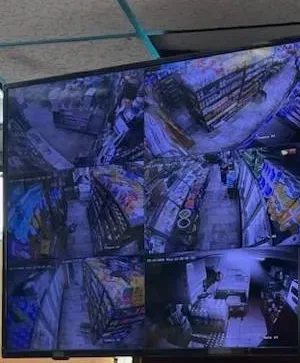
Example photo from another AESS job (not a Westchester County property): part of a store monitor showing several overhead aisle cameras at once. A wall of live tiles shows what the cameras see now, not what the recorder kept; searching the recording is a separate skill we rehearse with you.
Need Camera Repair in Westchester County Today
If the grid is full of black tiles, the recorder is beeping or the app says every camera is offline, the job is a repair first. Call (914) 877-2578; we book the earliest same-day slot we can reach, and most faults are fixed within one to two hours of arrival. If a police department has already asked you for footage, say so when you call — we copy the clip off before anything is restarted, unplugged or reset.
Before we arrive
Do not reset or reformat the recorder. A factory reset can erase settings, and on some models a reformat erases the video itself.
Note the time it stopped. Scroll the playback bar back until the picture returns; that time usually lines up with a storm, an outage or a visit from a contractor.
Check Con Edison or NYSEG first. If your street had an outage, the cameras may simply be waiting for the router and recorder to finish restarting.
Tell us about an open police request. We will save that footage first and write down what we saved.
Security Camera Maintenance Services in Westchester County
A Westchester plan is assembled from the services below. A four-camera house in Harrison and a fifty-camera apartment building in Yonkers draw on different ones, but each starts from the same question: if someone official asked this system for an answer tomorrow, could it give one?
Registration Match-Up
We compare the system with what your registration says — camera count, make and model, storage type, days kept, remote viewing — and give you the corrected figures to send to the department if anything has changed.
Footage-Request Drill
We pick a time window, find it on the right camera, save it and play the saved file on another device. Then we teach whoever answers the police email to do the same thing in under five minutes.
Clock and Time-Zone Check
Recorder, cameras, doorbell and any cloud camera are set to the same time source and the right time zone, so clips from different devices agree to the second.
Street-View Tuning
The cameras facing the road, the sidewalk and the driveway are the ones police ask about. We clean them, check them at night with headlights passing, and adjust exposure so faces and cars are not lost in glare.
Alarm Verification Setup
Where your alarm and cameras can work together, we make sure the camera covering each alarm zone can be pulled up on your phone within seconds of an alert.
Retention Reading
We read the oldest day actually on the drive, compare it with your target and with what you registered, and adjust bitrate, recording mode or storage to close any gap.
Drive and Recorder Health
Drive health data, error logs, fan noise, dust, temperature and firmware level, with a saved copy of the configuration after every visit.
Power and Network Restart Test
We power the recorder and router down and back up in a controlled way to prove every camera returns on its own — the test that matters after a Con Edison outage.
Dated Visit Log
A written record of every camera, the settings found and left, the oldest recording, parts priced and anything that changes your registration or alarm permit details.
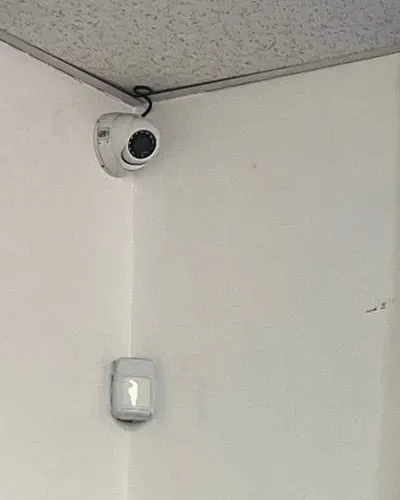
Example photo from another AESS job (not a Westchester County property): a dome camera in a ceiling corner above a small wall sensor. Where an alarm sensor and a camera cover the same spot, the camera is the quickest way to see what set the alarm off.
Building Specialists
Camera Maintenance for Westchester County's Architecture
The county runs from city apartment blocks on the Bronx line to wooded lots in the northern towns, and a camera system wears out differently in each. These are the property types we see most, described in general — none of them is presented as a customer.
Single-Family Houses
The most common registry entry: a doorbell, two to eight cameras and a recorder in a closet or basement. The weak points are a doorbell on a separate app nobody checks, a recorder the original installer set up and nobody has opened since, and a driveway camera that has never been tested at night.
New Downtown Apartment Towers
New Rochelle approved its downtown rezoning in December 2015; by 2025 more than 4,500 new units were online with thousands more on the way. Large new systems arrive with a handover binder, then change hands between property managers. We check that the system still matches the paperwork.
Waterfront Rental Buildings
Yonkers opened the first two of six Hudson Piers buildings in June 2025, the final piece of its downtown waterfront plan. Garages, package rooms, lobbies and river-facing exteriors each need their own check, and river glare at sunrise and sunset is part of the night-and-day test.
Older Apartment Buildings and Co-ops
Systems added in stages over decades — an analog recorder from one era, IP cameras from another. Board members change, passwords are lost and nobody knows how many days the recorder keeps until a resident asks for a clip.
River-Town Village Homes
In Tarrytown, Sleepy Hollow, Irvington and Dobbs Ferry houses sit close to the street on hilly lots. Street-facing cameras are close to sidewalks and passing cars, which makes their aim and night exposure more important than their count.
Larger Lots in the Northern Towns
Longer driveways, detached garages and gates mean longer cable runs and cameras farther from the recorder. Those runs, the junction boxes along them and the camera at the gate get the closest look.
What each property type needs most from a visit
Houses with doorbells: the doorbell's clock, its cloud subscription and its clip length are checked alongside the wired system, because police often ask for both.
Towers and new buildings: the camera list on the recorder is matched against the handover drawings; renamed, moved or added cameras are recorded in the log.
Older multi-family buildings: we find out who holds the admin login and how many days the recorder really keeps before a resident or detective asks.
Village homes near the sidewalk: we test street cameras with real traffic after dark and adjust for headlight glare.
Larger lots: long runs, gate cameras and outbuilding cameras are tested end to end, not just checked for a picture.
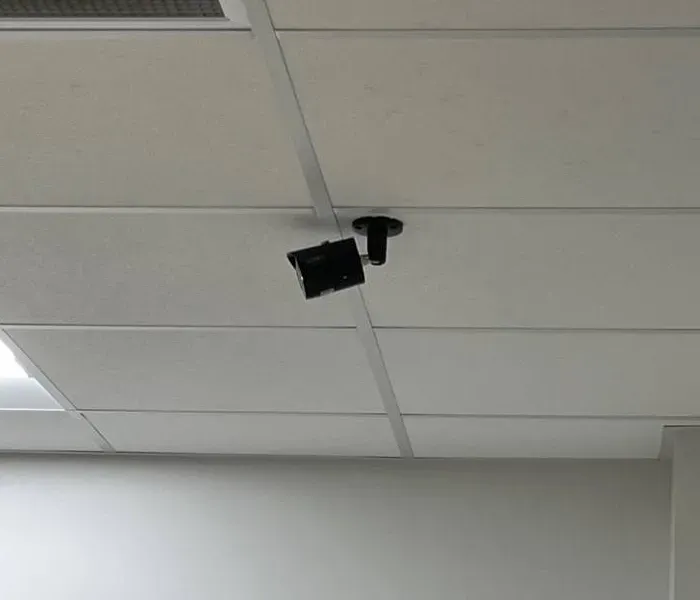
Example photo from another AESS job (not a Westchester County property): a black bullet camera on a short mount under a tiled ceiling. Its view is compared with a saved reference picture on every visit, so a camera knocked a few degrees off its target is caught.
Commercial Security Camera Maintenance
Business Camera Maintenance in Westchester County
Westchester businesses deal with the same police departments, the same registries and the same alarm permits as homeowners, with more at stake: customers, staff, insurers and sometimes a landlord all have an interest in what the cameras recorded. These are the corridors where we spend most of our commercial time.
Central Park Avenue
Roughly eight and a half miles of retail from Yonkers through Greenburgh to White Plains. Strip-centre lots with cameras on poles and facades, headlights at night and plenty of slip-and-fall and fender-bender requests for footage.
Cross County Center, Yonkers
An outdoor centre that opened in 1954 and was named in February 2026 on a list of possible teen "takeover" sites the county's crime center was watching. Store cameras there need to hold full quality on the busiest, most crowded days.
Downtown White Plains
The county seat, home of the CommunityCam program and of the county's Real Time Crime Center. Offices, shops and restaurants here are among the most likely to be asked for footage, and the most likely to have registered.
Boston Post Road, Sound Shore
US 1 through New Rochelle, Larchmont, Mamaroneck, Rye and on to Port Chester: storefront strips, car dealers and restaurants in towns that require alarm permits and charge for false alarms.
Jefferson Valley Mall, Yorktown
An enclosed mall that opened in 1983, in the town whose police email camera owners to review their own footage. Tenants and nearby shops benefit most from fast, rehearsed clip searches.
Around Westchester County Airport
The county-owned airport straddles North Castle, Harrison and Rye Brook, three nautical miles from downtown White Plains, with 158,764 aircraft operations in 2023. Offices, hangars and service businesses nearby run larger systems with more cameras and longer cable runs.
Rules that touch camera upkeep in Westchester
State licence for maintenance work. New York requires a security or fire alarm installer licence to install, maintain or service a CCTV system used to detect intrusion, break-in, theft or movement. Ask for the number; ours is #12000287431.
Local alarm permits. Mamaroneck, New Rochelle, White Plains, Briarcliff Manor and Bedford all require permits and charge false-alarm fees on their own schedules; check your own town or village.
Registry terms. White Plains and Harrison ask registrants not to release video or pictures to the media without first consulting the department, and say registrants are not acting as agents of the police.
Staff areas. New York Labor Law §203-c forbids employers to video record workers in restrooms, locker rooms or rooms set aside for changing, absent a court order — so no re-aim on a visit ever brings one of those rooms into view.
Microphones. Under Penal Law Article 250, capturing a conversation that no participant agreed to is eavesdropping. Firmware updates sometimes enable audio by default; when we find it on, it goes back off unless you have a lawful reason and consent to use it.
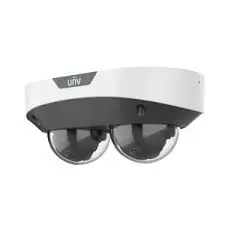
Manufacturer product photo: a dome camera with two lenses under two bubbles on one base. Each lens is a separate channel on the recorder, with its own settings, recording load and view to check.
Your Questions Answered
Security Camera Maintenance in Westchester County: Questions Answered
These are the questions Westchester owners bring us about systems already in service, grouped by the moment they usually come up: when the police ask, when the registration or alarm permit no longer matches, when the power comes back, and when a business is busiest. Prices are further down the page; short booking questions are in the FAQ.
When a Police Department Asks for Video
Yorktown police emailed asking us to check our cameras for a two-hour window overnight — how do we search that much video in a few minutes instead of watching all of it?
Most recorders made in the last ten years have search tools that almost nobody uses. Instead of pressing play at midnight and watching until two, open playback on the camera that faces the street or the driveway, set the start and end times, and look at the coloured bar under the video. Many systems mark motion or "smart" events — a person, a vehicle — in a different colour, so you can jump straight to the moments when something moved. Some recorders also let you draw a box over part of the picture, such as the end of the driveway, and list only the clips where something moved inside that box. On a two-hour overnight window that usually leaves a handful of events to look at.
The catch is that these tools only work if they were set up and if the person searching knows where they are. Event marking depends on motion detection being enabled on that camera, drawn sensibly and not choked by a swinging branch or a porch light. The box search depends on the recorder having stored motion information along with the video. And the menus are different on every brand: Hikvision, Dahua, Lorex, Uniview and the doorbell apps all hide the same idea in different places.
On a maintenance visit we set this up and then rehearse it with you. We pick a real time window from the last few days, find it the fast way on the camera that matters, save it, and play the saved file on a different computer or phone. Then we write the steps for your brand on one page and leave it with the recorder. When the email arrives — Yorktown says it usually comes as an alert asking the owner to review the system — the reply takes minutes, not an evening.
The White Plains registration asks whether we store on a DVR, a USB drive or the cloud — our doorbell uploads to an app and the other cameras go to a box in the basement, so which one actually holds the evidence?
Both, and that is exactly why the answer needs writing down. A typical Westchester house now has two separate systems that happen to point at the same front door: a wired recorder in the basement or a closet, keeping continuous or motion recordings on its own drive for a number of days, and a doorbell that uploads short clips to a cloud account, kept for however long the subscription allows. White Plains' CommunityCam form offers a choice of DVR or hard drive, USB drive, cloud, DVD or CD and video tape for exactly this reason — it wants to know where to look.
The two keep very different records. The recorder usually has the longer, unbroken view, but only for as many days as the drive holds. The doorbell usually has the sharper face at close range, but only in clips, only when its motion sensor fired, and only for as long as the plan keeps them; if the subscription lapsed, it may keep nothing at all. Some doorbells can also record to the wired recorder, which gives you both in one place, but only if that link was set up and still works after the last app update.
On a visit we list every device that records, where each one stores, how long it keeps video and whose account it belongs to, and we write that on the visit log. If the doorbell can be added to the recorder, we tell you what that takes. And if your registration only lists one of the two, we give you the wording to update it, so that when the police ask the department already knows there may be two recordings of the same moment.
Our doorbell clip and the basement recorder show the same car pulling up, but the times are almost two minutes apart — which one is right, and does the difference matter?
Probably neither is exactly right, and yes, it can matter. Each device keeps its own clock. A cloud doorbell usually takes its time from the internet automatically. A recorder may take its time from the internet too, or it may still be running on whatever time somebody typed in when it was installed, drifting a few seconds a week. After a power cut, a recorder without a working time server can come back hours or even days off. Two minutes is a typical gap on a system nobody has looked at in a few years.
When footage from your house is being lined up with footage from a neighbour's camera, a store down the road or a police camera, a two-minute gap makes the sequence harder to follow and invites questions about which clip came first. It also makes searching harder: an officer asks for 3:12 a.m., you look at 3:12 on the recorder, and the car has not arrived yet because your recorder is running slow.
The fix is simple and we do it on every visit. Every recorder, camera and doorbell is pointed at the same reliable network time source and set to the Eastern time zone with daylight saving switched on correctly. We then compare the on-screen time against a reference clock and write the difference in the log. If a device cannot hold accurate time on its own, we note that, and the log tells anyone reviewing a clip how far off that device was at the last check.
A neighbour wants to post our clip of the break-in to a town Facebook group while the police are still investigating — is there any reason to wait?
The two Westchester registries whose terms we read both say something about it. White Plains' CommunityCam terms and Harrison's SecureCam terms each ask registrants not to release video or pictures to the media without first consulting the police department. Whether a community Facebook group counts as "the media" is not spelled out, but the reason behind the request is easy to understand: a clip posted early can warn the people in it, invite guesses that point at the wrong person, or put details out that investigators wanted to keep back.
There is also a practical risk on the maintenance side. A clip that has been downloaded to a phone, trimmed, screen-recorded and re-uploaded loses its original quality and its embedded time information. If the police later need the original, it has to come from the recorder or the cloud account — and if the recorder has overwritten that day in the meantime, the trimmed phone copy may be all that is left.
So our advice is to secure the original first and ask the department before sharing anything. On a visit we show you how to lock or protect a recording on your brand of recorder so it is not overwritten, and how to export a full-quality copy to a USB drive. That way the original stays intact whatever you decide to share, and you can answer the department's request without losing anything. This is practical guidance, not legal advice; the department handling the case is the right place to ask what it wants.
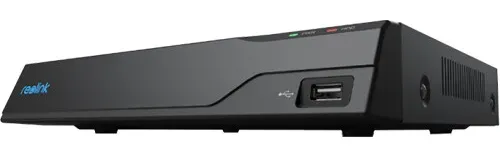
Manufacturer product photo: a desktop network video recorder with a USB port on the front. That port is where a full-quality copy of a clip goes when a police department or insurer asks for one.
When the Paperwork No Longer Matches the System
We signed up for Harrison's SecureCam when the system went in, and since then we have replaced the recorder and added three cameras — what on our registration has gone stale, and how do we fix it?
Probably most of it. Harrison's form asks for the number of exterior cameras, the number of interior cameras, the make and model of the system, the storage and connectivity, the number of days video is stored before being overwritten, and whether the system can be viewed remotely. A new recorder changes the make and model and nearly always changes the number of days. Three more cameras change the count and, because they share the same drive, shorten the days again. If any of the new cameras record to a cloud account, the storage answer has changed as well.
None of this is a problem on its own; the registration is voluntary and the department will still call. The problem is what happens when they rely on it. An officer reading "14 days" may not ask about an incident from ten days ago if your new system actually keeps seven, or may not ask you at all about a side street that your new camera now covers. The registry is only as useful as the facts in it.
On a visit we read every one of those answers from the system itself: the camera count by location, the recorder model, where each device stores, the oldest recording on the drive that day and whether remote viewing works. We put them on a single page in the same order as the form. Harrison's page says registrations can be cancelled by email to the address it lists; for changes, the simplest route is to ask the department how it prefers to receive them and send the new page.
Does signing up for a police camera registry let officers log into our cameras or watch them live?
Not under the four Westchester programs we read. White Plains says its police will not have remote, live or any other access to your system without your express consent. Yorktown says that at no time will its police have direct access to your surveillance system. Harrison and Tarrytown describe their SecureCam programs as a way for police to know where cameras are and to contact you after an incident nearby, then request to view and copy the video. Registration gives them your location and contact details, not a login.
Where people get confused is with separate programs — in some places police invite businesses to share live feeds through a dedicated platform — and with old installer accounts. It is common to find a system with five or six logins on it: the owner, a former tenant, the original installer, a family member who has moved away, a "guest" account created for a babysitter. None of those belongs to the police, but each is a door into the system that nobody is watching.
On a maintenance visit we list every account on the recorder and in the app, confirm with you who each one belongs to, and remove or disable the ones that should not be there. We also check that remote access goes through the manufacturer's current app rather than through an old open port on the router, and we record the result in the log. If you ever decide to share a camera live with anyone, that is a deliberate choice you make with your own login, not a side effect of registering.
Our village charges for repeat false alarms — can the cameras let us see what set the alarm off before anyone is sent?
Often, yes, and in Westchester it can save real money. White Plains charges $25 for a first false alarm, $50 for the second and third, $75 for the fourth and fifth, $100 for the sixth through eleventh and $250 for the twelfth and beyond; Bedford's fees step up from the third false alarm in a year; Briarcliff Manor, New Rochelle and the Town of Mamaroneck all run permit systems of their own. A camera that shows you the dog, the balloon or the cleaner who forgot the code within seconds of the alert lets you call the monitoring company before a car is dispatched.
That only works if three things are true. The camera covering each alarm zone has to exist and point at the right place — many systems have a camera on the front walk but none on the back door that trips the alarm. Your phone has to reach the recorder quickly from wherever you are, which means remote access that works over a cellular connection, not just on the home Wi-Fi. And whoever gets the alarm call needs to know which camera to open, which is easier when cameras are named "Back door" rather than "Camera 6".
On a visit we walk the alarm zones with you, match each one to the camera that sees it, rename the cameras accordingly and test remote viewing from a phone on cellular data. Where the alarm system and the recorder can be linked so that an alarm event bookmarks or pops up the matching camera, we check the link still works. Whether your monitoring company will act on what you see is up to its own procedures and your town's rules, so ask them; our part is making sure the picture is there when you look.
When the Power Comes Back
After the July 2026 storms our power came back and the doorbell reconnected, but the app still shows the wired cameras as offline — what changed?
Very often the router changed, not the cameras. When a house loses power, everything restarts at once when it returns, and devices come back in a race. If the router finishes last, or hands out addresses differently than before, a recorder or camera that was relying on a particular address can end up unreachable even though it is running perfectly. The doorbell, which talks straight to the cloud, reconnects on its own. The recorder, which may depend on a port setting or a fixed address that no longer matches, does not.
The July 4, 2026 storms are a good example of how many Westchester systems go through this at once. Con Edison said that Yonkers, Mount Vernon, Rye and New Rochelle had the greatest number of storm-related outages in the county, and late on July 5 about 2,600 Westchester customers were still waiting for power. Every one of those households and businesses restarted its network when the lights came back. Some systems also lose their time setting in the process, which is why we check the clock at the same time.
The lasting fix is to make the system restart cleanly on its own. On a visit we give the recorder and any IP cameras addresses that cannot be handed to something else, make sure remote access uses the manufacturer's cloud connection rather than a fragile router rule, and put the router, the recorder and the PoE switch on the same battery backup where possible, so a short blink never restarts them at all. Then we prove it: power everything down, bring it back up in the wrong order, and confirm that every camera returns without anyone touching it.
Our internet provider swapped the modem and now the recorder can only be viewed at home — is that a maintenance job or theirs?
Usually ours, although the trigger was theirs. A new modem or gateway often arrives with a new network name, new password, a different address range and its own firewall settings. Devices that join the new network automatically, like phones and laptops, keep working. A recorder set up years ago for the old network may join it but lose the remote connection, or keep working on the home Wi-Fi only because the phone and recorder are side by side. The provider's job ends when the internet works; it does not include your camera system.
The symptom matters in Westchester because remote viewing is one of the questions on the Harrison and Tarrytown registration forms, and because it is what lets you check an alarm from a train platform or an office. A system that works at home but not away from home looks fine every evening and fails exactly when you need it.
On a visit we test remote viewing from a phone on cellular data, not on your Wi-Fi, and fix whatever is blocking it — the recorder's network settings, the manufacturer's cloud service setting, the app version on your phone. We never open the router to the internet in a way that exposes the recorder directly. And we write down which modem or gateway the system was tested with, so the next swap comes with a note of what to check.
Street Cameras, Night Glare and Busy Days
The camera facing our street is the one police would want, but at night every passing car turns the picture white — can that be adjusted, or is it the wrong camera?
It can usually be adjusted. A camera that looks along a street at night is dealing with two extremes at once: a dark road and bright headlights. Out of the box, many cameras set their exposure for the dark, so a pair of headlights floods the picture just as the car passes the one spot where its shape or plate would be visible. Infrared adds to it if the camera's own night lights bounce off a nearby wall, a mailbox or a hedge in the foreground.
Several settings help, and which ones exist depends on the model: wide dynamic range or backlight compensation, a faster shutter at night, a lower infrared level or an infrared "smart" mode that dims close to the lens, and a slight change of angle so headlights cross the frame rather than shine into it. Sometimes the honest answer is that a wide-angle camera will never read a plate at forty feet, and the view is best used for movement and timing while a narrower camera covers the driveway mouth.
We test street cameras after dark with real traffic passing, adjust them, and then play back the recording rather than judging the live view, because the recorded picture is what an investigator will see. Before-and-after stills go into the log. If a camera needs replacing to do the job you want, we say so and price it separately.
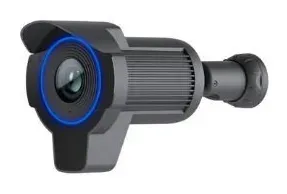
Manufacturer product photo: a bullet camera with a narrow field of view. Cameras like this are aimed at one spot, such as a driveway mouth, and need their night exposure checked with real headlights passing.
Our store at Cross County Center was on the list of possible "takeover" sites in February 2026 — how do we make sure the cameras keep full quality when the place is packed?
By testing what happens when every camera sees movement at once. Many recorders lower quality, drop frames or skip channels when the total recording load climbs past what the recorder or its drive can write. On a quiet Tuesday nothing triggers it. On a crowded Saturday afternoon, or during the kind of sudden crowd the county's Real Time Crime Center was watching for in February 2026, every camera in a store records motion at once, and an overloaded recorder can quietly fall behind just when the footage matters most.
The signs are in the recorder's logs and settings: channels set to a higher bitrate than the recorder's total capacity can sustain, a drive that is old or not rated for surveillance work, a network switch that drops packets when every camera is busy, or "event" recording that bumps quality up for every channel at once. You will not see any of that on a monitor in the back office, because the live view and the recording are separate streams.
On a business visit we add up the recording load against the recorder's rated limit, check the drive's health and type, look at the switch, and then test with as many cameras as possible seeing motion at the same time — staff walking every aisle, for example. We play the recording back and look for dropped frames or blurred motion. If the system is at its limit, we suggest the cheapest fix first, usually adjusting bitrates on the less important cameras.
Our office building has a guard watching the camera monitors all day — doesn't that mean someone would already notice if a camera stopped working?
Not necessarily. A guard watching a wall of live tiles sees what the cameras show right now. The guard does not see whether the recorder is writing those pictures to a drive, how many days the drive holds, whether one drive in a set of four has failed, whether the time stamp is right, or whether a camera has slowly drifted off its view a few degrees at a time. A camera that freezes on its last picture can look live for hours. A camera that records only in low quality because its settings were reset looks identical on the monitor.
Guards also see the same tiles every day, which makes slow changes hard to spot: a lens slowly dimming with dust, a tree growing into a parking-lot view, an infrared light that has failed on one side. Those are exactly the things a maintenance visit compares against the last visit's reference pictures.
So we treat the guard as an early warning and maintenance as the check on the recording. On a visit we read drive health and retention, play back recordings from every camera, compare each view with its reference image, and give the security desk a short list of things they can check daily — a frozen clock on a tile, a black tile, a camera that suddenly shows a wall — and who to call when they see one.
Equipment
Types of Security Cameras We Maintain
Every type of device on a Westchester system needs something different from a visit, and some of them — doorbells and cloud cameras especially — are the ones police ask about most and owners check least.
Video Doorbells
Clock, subscription status, clip length, motion zones that ignore the street, and whether the doorbell also records to the wired recorder. Batteries and chimes tested.
Dome Cameras
Bubbles cleaned with lens-safe materials, checked for scratches and haze, seals inspected and night picture checked for infrared reflection off the bubble itself.
Turret Cameras
Ball mounts checked for movement and locked, infrared LEDs tested, views compared with the last reference image.
Bullet Cameras
Long views down drives and along streets; sunshields cleared, brackets checked, and exposure tuned for headlights at night.
Multi-Lens and PTZ Cameras
Every lens or preset checked, home positions confirmed, tours run end to end and motors listened to for strain.
Recorders
Model, firmware, user accounts, time source, recording schedules, retention and a saved configuration, with dust cleaned from fans and vents.
Surveillance Drives
Health data read, error counts logged, ageing drives flagged before they fail and replacement drives matched to surveillance workloads.
PoE Switches and Routers
Port status, power load, restart behaviour after an outage and remote-access settings that do not expose the system.
Battery Backup
Self-test and load test, battery date logged, and router, recorder and switch confirmed on the same backup.
Manufacturer product photo: a white turret camera. Its ball mount, infrared lights and lens are checked on each visit, and its picture is compared with the last reference image.
National brands versus a local maintenance plan
Plenty of Westchester households began with a brand-name kit or an alarm-company package, supported mainly through that company's own app and devices. The comparison below speaks about typical service models, not any company's current terms.
Question
ADT, Ring or SimpliSafe-style service
AESS Westchester maintenance
Keeping registration details current
Left to the owner.
Read from the system and written up in the order the registry forms use.
Finding a clip for police
Searched in the brand's app; the owner learns it alone.
A rehearsed search on your own brand, with a one-page guide left at the recorder.
Mixed brands in one house
Usually the brand's own devices only.
Doorbell, wired recorder and cloud cameras checked together and their clocks aligned.
Written record
App history and account records.
A dated log of cameras, settings, retention and accounts after each visit.
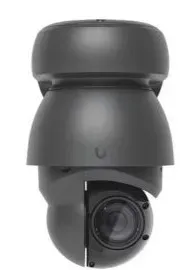
Manufacturer product photo: a pan-tilt-zoom camera. Presets, tours and the home position are run end to end on a visit, because a PTZ left pointing the wrong way records the wrong thing all night.
AI Overview Reality Check
What AI Gets Wrong About Security Camera Maintenance in Westchester County
We could not capture Google's AI Overview for this topic from the environment we research in, so nothing here quotes it. Instead, these are seven statements that turn up again and again in product pages, forum replies and general guides — the material such summaries are built from — each checked against what Westchester's own police and town rules actually say.
Claim 1: "Registering your cameras with the police lets them watch you"
This worry comes up whenever a department launches a camera program, and in r/Westchester threads about police plate-reader cameras it is easy to see why people are wary of surveillance in general. But the registries in Westchester that we read describe something much narrower.
White Plains says its police will not have remote, live or any other access to a registered system without the owner's express consent. Yorktown says that at no time will its police have direct access. Harrison and Tarrytown describe contacting the owner after an incident nearby and requesting to view and copy footage. What police get is your address and contact details.
The real access risk sits elsewhere: forgotten installer accounts, a shared password used by half the family, a router rule opened years ago. Those are maintenance problems, and they exist whether or not you register.
Claim 2: "If something happens, the police will pull the footage themselves"
Sometimes detectives do visit and copy video, and White Plains' program describes a verification visit when you first register. But Yorktown's program is explicit that in most cases the department will email an alert asking the camera owner to review the system and say whether there is useful footage.
That puts the first search on you. If the only person who knows how to use the recorder is the installer who set it up, or a family member who has moved out, the answer to the email may be "we couldn't find anything" when the video was sitting on the drive all along.
So part of maintenance in Westchester is training, not hardware: a rehearsed search, a saved export, and a written page of steps for your own brand, kept where the next person will find it.
Claim 3: "Higher resolution always makes footage more useful"
More pixels help, up to a point. But on the same drive, a higher resolution or bitrate means fewer days stored. The Harrison and Tarrytown forms ask how many days your video is kept before being overwritten precisely because a sharp recording that no longer exists helps no one.
A 4K camera set to maximum quality on a small drive may keep a week; the same camera at a sensible bitrate may keep three. For a request that arrives ten days after an incident, the second setting is the useful one.
We set each camera's quality to its job — full detail on the doorway and the driveway mouth, lighter settings on the back yard — and then read the oldest day on the drive to prove the balance works.
Claim 4: "Cameras put an end to false-alarm fines"
Cameras can help you avoid a dispatch, if you look before the monitoring company calls the police and your company accepts your word that it was a false trip. They do not change your town's permit rules or its fee schedule, and they do not stop the sensor that caused the alarm from doing it again.
White Plains' fees climb from $25 for a first false alarm to $250 for the twelfth and beyond; Bedford's rise from the third false alarm in a year. A camera only helps if it covers the zone that tripped and you can open it fast from a phone away from home.
Maintenance makes that possible: zones matched to cameras, cameras named for what they see, remote access tested on cellular data. The sensor itself is your alarm company's job.
Claim 5: "Infrared night vision lets cameras see in the dark as well as by day"
Infrared lets a camera produce a picture in darkness, in black and white, over a limited range. It does not handle bright light in the same scene well. A street camera at night is dark road and passing headlights at once, and many cameras out of the box wash out exactly when a car is in frame.
Infrared also reflects. A camera close to a wall, a gutter or a dome bubble can glare in its own light, and a spider web in front of the lens glows like fog. All of that is invisible during a daytime visit.
That is why our visits include an after-dark check of street-facing and driveway cameras, with playback of the recording rather than a glance at the live view.
Claim 6: "A wired system comes back by itself after a power outage"
The cameras usually do power back up. Whether they reconnect to the recorder, the recorder reconnects to the internet, and the clock comes back right is another matter. After the July 4, 2026 storms, thousands of Westchester households restarted their networks at once.
Routers that hand out new addresses, recorders that lose their time server, PoE switches that come up after the recorder has already given up looking for cameras — each of those leaves a system that looks fine on a wall but is not recording everything, or cannot be reached from a phone.
A controlled restart test on each visit, fixed addresses, and a shared battery backup for router, recorder and switch turn "usually comes back" into "has been tested coming back".
Claim 7: "Recording your monitor with your phone is good enough to send the police"
It is better than nothing, and the county's Real Time Crime Center does take video tips by email. But a phone recording of a screen loses resolution, adds glare and reflections, and loses the time and camera information embedded in the original file.
If an investigator later needs the original, it has to come from the recorder or the cloud account — and if that day has been overwritten in the meantime, the phone copy is all that is left.
Protect the original first, export a full-quality copy to a USB drive, then send whatever is asked for. We set up and rehearse those steps on every maintenance visit.
Could You Answer a Footage Request Tonight?
Call (914) 877-2578 and we will walk you through finding last night at 2 a.m. on your own recorder. If you get stuck, we will tell you what it takes to make the next search easy.
Give us the city, town or village, a rough camera count, the recorder brand if it is printed on the box, and whether the system is on a police registry or an alarm permit. A licensed technician rings back within the business day with a written Westchester figure for a single tune-up or a yearly plan — or suggests a time to see it first. We book nothing without your go-ahead.
Received — Talk Soon
Thanks, we have it. A call from our Westchester number should follow today; if it cannot wait, dial (914) 877-2578.
How It Works
Our Maintenance Process
The order is the same for a doorbell-and-four-cameras house in Rye Brook and a hundred-camera building in New Rochelle. The first visit is the longest, because it records the system as it really is.
1. Ask the system a question
Before anything is cleaned, we pick a recent time you remember and find it on the street-facing camera with you, so we both see how ready the system is for a real request.
2. List every device and account
Cameras, doorbells, recorders, switches, routers and battery backups are listed with model and firmware, and every login on the recorder and in the app is matched to a person.
3. Check against your paperwork
Camera count, storage, days kept and remote viewing are read from the system and compared with your police registration and the alarm zones on your permit.
4. Written plan and price
Nothing is scheduled until you hold a written Westchester figure and a visit calendar you agree with; deposit and warranty terms sit in the service agreement.
5. Clean, align and tune
Lenses and housings cleaned with lens-safe materials, views compared with reference pictures, clocks aligned to one time source and street cameras tuned for night traffic.
6. Restart and search tests
Power is cycled to prove every camera returns on its own, and a footage search and export are rehearsed and saved as a one-page guide for your brand.
7. Dated log and registration page
Each visit closes with a written log and a one-page summary in the same order as the registry forms, ready to send to the department if anything changed.
Coverage Area
Security Camera Maintenance Near Westchester County's Landmarks
Our technicians cover all of Westchester's cities, towns and villages. We name the places below for the streets and buildings near them; none of them is a client.
Downtown White Plains
The county seat, where the CommunityCam program began in 2016 and where the county's Real Time Crime Center gathers tips. Offices, apartments and shops packed into a few dozen blocks.
Cross County Center, Yonkers
The outdoor shopping centre that opened in 1954 near the Bronx line, named in February 2026 among possible teen "takeover" locations being watched by police.
Lyndhurst, Tarrytown
The Gothic Revival Jay Gould estate in its 67-acre park beside the Hudson, in the village whose police launched SecureCam in 2019 with the question "Got video?"
Jefferson Valley Mall, Yorktown
The enclosed mall that opened in 1983, in the town whose police keep a Community Camera Registry and email owners to review their own footage.
Westchester County Airport
The county-owned airport spread across North Castle, Harrison and Rye Brook, three nautical miles northeast of downtown White Plains, with the state line along its eastern edge.
Kensico Dam Plaza, Valhalla
The plaza at the foot of the dam that holds back the Kensico Reservoir, one of the reservoirs in New York City's water supply system, in the hamlet of Valhalla.
City by city and town by town
White Plains. CommunityCam registration includes a verification visit, and alarm permits cost $50 a year for homes and $100 for businesses, with false-alarm fees on top. We check that what the department verified still matches the system, and that the cameras covering alarm zones can be opened quickly.
Harrison and Purchase. SecureCam's form asks for interior and exterior camera counts, make, model, storage, days kept and remote viewing. Houses and offices here often have a doorbell plus a wired system, and the two rarely agree on the time until someone sets them.
Tarrytown, Sleepy Hollow, Irvington and Dobbs Ferry. River towns with village streets close to the sidewalk. Tarrytown's chief said in 2019 that home video could help with cases "ranging from package thieves to major felonies to roadway incidents". Street-facing cameras and their night picture come first.
Yorktown and the northern towns. Yorktown's registry asks owners to review their own systems when alerted. Longer driveways and detached garages mean we test long runs and gate cameras end to end, and rehearse the search with whoever is most often at home.
Yonkers, Mount Vernon and New Rochelle. The cities where Con Edison counted the most storm outages after July 4, 2026, alongside Rye. Larger apartment buildings, new towers in New Rochelle and Yonkers, and busy retail mean restart tests, account clean-ups and recording-load checks on every visit. New Rochelle requires an alarm subscriber permit under Chapter 81.
The Sound Shore. Mamaroneck, Larchmont, Rye and Port Chester along the Boston Post Road. The Town of Mamaroneck requires an alarm user permit for every premises with alarm devices. Shops and restaurants here benefit most from alarm-zone cameras that can be checked before a dispatch.
Ossining, Briarcliff Manor and Mount Pleasant. Briarcliff Manor charges $80 for a new alarm permit and $50 a year to renew. In Ossining, the Westchester District Attorney reported a March 2026 conviction for a February 2025 home-invasion burglary on South Highland Avenue in which the suspect was caught heading toward the Metro-North station — a reminder that the first minutes after an incident are what cameras on the route are asked about.
Security Camera Maintenance Cost in Westchester County
Every Westchester figure here is the base rate we charge in New York City, times 1.25, rounded to whole dollars. Anything we supply — a new drive, a UPS battery, a dome bubble, a whole camera — appears as its own line on the written quote.
Westchester maintenance work
Price
What it covers
A single visit — house, flat or small shop
$188–$438
Cleaning, day and night views, clock and time-zone check, retention reading, account review, restart test, footage-search rehearsal and a dated log
Yearly plan, house or small property
$250–$625 per year
Scheduled visits, registration and alarm-zone details kept current, alerts set and tested; works out at about $63–$188 a camera a year, depending on count and access
Commercial plan
$1,250–$6,250+ per year
Shops, offices, apartment buildings and multi-site businesses; quarterly or monthly visits, priced after a walkthrough
Same-day repair visit
$238–$1,125
Recording stopped, cameras dropped off the app or the recorder will not start: traced and fixed on the day wherever we can, priced to the fault
Service after an AESS installation
$195/hr, 3-hr minimum ($585)
Billed by the hour only for return trips that change or extend an AESS-installed system; the installation price itself is fixed, never hourly
Within those ranges, the price moves with the number of cameras and devices, how high and how reachable they are, how many separate apps and accounts are involved, and how many visits a year the plan includes. A doorbell and six cameras on a house in Eastchester sit at the low end; a mid-rise building in Yonkers with garage, lobby, package room and roof cameras sits much higher.
Two worked examples on the published prices
A registered house in Harrison. A doorbell, six wired cameras and a recorder in the basement, signed up for SecureCam three years ago, with an alarm monitored by a separate company. The owner wants two visits a year, a corrected registration page and the alarm zones matched to cameras. That falls in the yearly plan range of $250–$625, set once we have seen access to the cameras. A failing drive found on the first visit would be quoted as a part before it is replaced.
A 24-camera store on Central Park Avenue. Floor, register, stockroom, entrance and lot cameras, with a manager who handles police and insurance requests. The owner wants quarterly visits, a recording-load test on a busy day and a one-page search guide for each shift lead. That is a commercial plan in the $1,250–$6,250+ range, priced after a walkthrough. A single tune-up first, to see where the system stands, is quoted at $188–$438.
Each quote spells out when payments fall due, which dates the visits land on and what each visit includes. Full terms — including 50% deposit, the 30-day warranty and optional paid extended warranty, and the late-fee schedule — are set out in the service agreement. We would rather answer a question about a line on the quote now than after it is signed.
Manufacturer product photo: a rack-mount recording server of the kind used in larger buildings and stores. Its total recording load, drive health and retention are read and logged on every commercial visit.
Shop Our Systems
Security Camera Maintenance Packages & Pricing
Most Westchester properties start from one of these three. Where you land depends on how many devices there are, how easy they are to reach and how often you want us back; we charge no monthly fee for video kept on your own recorder.
Westchester Tune-Up
$188–$438
One visit: every camera cleaned and checked by day and after dark, clocks aligned, retention read, accounts reviewed, restart tested, a rehearsed footage search and a written log.
Registered Home Plan
$250–$625 / year
Scheduled visits, a registration page kept current after every change, alarm zones matched to cameras, health alerts tested and a report after each visit.
Business and Building Plan
$1,250–$6,250+ / year
Quarterly or monthly service for stores, offices and apartment buildings: recording-load tests, retention and drive checks, account audits and search guides for staff.
Systems you bought yourself are maintained at the same Westchester rates
Whoever put the system in — a past owner, a different contractor or you, from a box bought online — we look after it at these same Westchester rates. On the first visit each device is written down with its model and firmware, along with a straight opinion on which pieces are worth keeping and which are close to retirement. When you add equipment later, the labor-only figures are in our bring-your-own-equipment calculator.
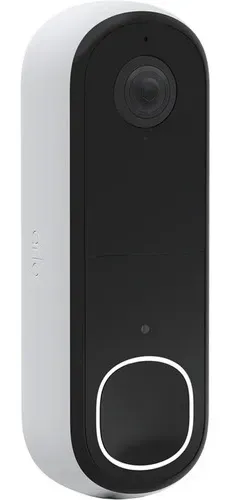
Manufacturer product photo: a video doorbell. Doorbells often keep their own clips in a cloud account; we check their clock, subscription and clip length alongside the wired system.
Talk to a Westchester Camera Technician
Ask about a plan for a registered house, a recording-load test for a store or help with a footage request that is waiting now — the person who answers is the one who plans the visit.
Every Security Camera Maintenance Service in Westchester County
Some things found on a visit belong to another AESS service: a recorder beyond repair, a cut cable, a doorbell to replace, an alarm to connect. These Westchester pages cover each one.
Field Notes: Ask the System the Question Before Anyone Else Does
On a Westchester visit I start by pretending to be the police. I pick a time from the last few days — something the owner remembers, a delivery or a car leaving — and ask them to find it on the camera that faces the street. Then I watch. How long it takes, which menu they open, whether they know the recorder's password, whether the clip they find has the right time on it. That five minutes tells me more about the system than an hour of cleaning.
Then I do it myself, the fast way, and save the clip to a USB stick and play it on my laptop. If the export will not play, or the time on the file does not match the time on the screen, that is the first thing on the list. After that comes the usual work — lenses, views at night, drives, power — and at the end I write the system up in the same order as the registration form, so the owner can check it against what the department has on file.
The cameras rarely surprise me. What surprises owners is how much of the system's value depends on someone being able to ask it a question quickly.
— Owner, NYS license #12000287431
FAQ
Westchester County Security Camera Maintenance FAQ
Quick points on scheduling, getting in, alarm companies and the papers you keep afterwards.
Can you fill in our police camera registration with us during the visit?
+
Yes. We read the answers from the system itself — camera counts, make and model, storage, days kept and remote viewing — and sit with you while you complete the department’s online form, or give you a printed page to send. The registration stays in your name; we are not registered on your behalf.
Can the visit include a practice run of finding and saving a clip, so we know how to do it ourselves?
+
Yes, and we recommend it for whoever is most likely to answer a police email. We choose a real moment from the last few days, find it the fast way, export it to a USB drive and play it on another device, then leave the steps for your brand on one page near the recorder.
Will you call our alarm monitoring company before you power anything down?
+
Yes, if you give us the account details or call them with us at the start. Some alarm panels share power, network or cabling with the camera system, so we ask the monitoring company to put the account on test for the visit and confirm it is back in service before we leave, to avoid a false dispatch.
Do you work at houses behind a gate or at the end of a long private drive?
+
Yes. Tell us the gate code or arrange for someone to open it, and mention any weight limit or narrow bridge on the drive. A camera at the gate itself is part of the visit, and we test the cable or wireless link back to the house as well as the picture.
Can you put up a sign saying the property is under video surveillance?
+
Yes. We can fit a small weatherproof sign near the entrance or the driveway on the same visit and add it to the quote. Signs are common at businesses and apartment buildings, and some owners use them at houses as well; where to put one is your choice.
How much notice do you need to check the system before we leave for a long trip?
+
About two weeks is comfortable, and a week usually works outside the busiest summer and holiday periods. We aim for a few days before you leave, so there is time to replace a failing drive or battery and you can confirm from the road that alerts and remote viewing work.
Is there a charge if the problem turns out to be our internet provider rather than the cameras?
+
The visit is charged at the agreed rate, because the diagnosis still takes the same time. If the fault is with the provider’s line or gateway, we write down exactly what we found and what to tell them, and once they fix it we can confirm remote viewing works again.
Will you leave a written summary of the system with the house papers?
+
Yes. Every visit ends with a one-page summary: recorder model, number of cameras by location, where each device stores video, how many days it was keeping on the day we checked, who has a login and our number. Keep it with the house documents so the next person does not start from nothing.
All Areas Served
Security Camera Maintenance Across the Hudson Valley, New York City and Long Island
Looking for door access, intercoms or cabling instead? The Abstract Enterprises Security Systems home page lists every service, and about us explains how we are licensed and insured.
Sources
Where the Westchester Camera Maintenance Facts Come From
Every camera program, permit rule, fee and dated event mentioned above traces to a link in this list; the Reddit threads were seen only as search snippets. The working routines — rehearsing a footage search, writing the system up in registry order, aligning clocks, testing restarts — are how AESS works, not requirements of any source. Westchester prices are the city base rates times 1.25.
This page is general information, not legal advice. For a police request, an alarm permit, workplace cameras or audio, ask the department or office involved, or a lawyer.
Footage Request Waiting and the Recorder Will Not Cooperate — Call the Westchester Line
A detective's email in your inbox, a recorder that will not show last Tuesday, an app that has lost every camera since the outage — call (914) 877-2578. We save the footage that matters before touching anything, and in most cases the system is recording again within one to two hours of the technician arriving.
Westchester Camera Upkeep From a Licensed, Insured Crew
Abstract Enterprises Security Systems · Westchester bookings (914) 877-2578 · main office 460 E Fordham Rd, Bronx, NY 10458 · WhatsApp us any time
Google reviewers rate us 4.6★ (390+ reviews) · insurance carried on every job · state license #12000287431 · same-day estimates
Anything we supply — drives, UPS batteries, dome bubbles, cameras — keeps its manufacturer's own warranty, and the labour to fit it has its own line. Full terms — including 50% deposit, the 30-day warranty and optional paid extended warranty, and the late-fee schedule — are set out in the service agreement. If a part we installed gives trouble, call the same Westchester number; the visit log shows what went in and when. Our warranty page has the details.
Page reviewed and updated October 18, 2026. Changelog: Westchester County camera maintenance page rebuilt from new research on the White Plains, Harrison, Tarrytown and Yorktown police camera programs, local alarm permits and false-alarm fees, the July 2026 Con Edison storm outages, the county's Real Time Crime Center and the state licence that covers camera servicing, on the maintenance base prices at the Westchester area factor of 1.25.