Seals Checked Before the Storm · Recorders Lifted Above the Waterline · A System the Owner Can Watch From Anywhere
In Queens, the thing that ends most camera systems is water. Basement recorders drown in flash floods like Ida's and July 2026's, salt from Jamaica Bay and the Atlantic eats the brackets on Broad Channel and Rockaway blocks, groundwater keeps cellars in southeast Queens damp all year, and rain finds its way down a cable into the back of a porch camera. Add the fact that more than four in ten Queens homes are lived in by their owners — usually with no super walking the halls — and a quiet failure can go unnoticed for months. Our maintenance visits are built around keeping water out, getting the recorder off the floor, and giving the owner a way to see the system is still recording without being in the building.
Facts on this page re-verified October 18, 2026 · written under the supervision of the owner, NYS license #12000287431 · Queens crews leave from 460 E Fordham Rd, Bronx, NY 10458
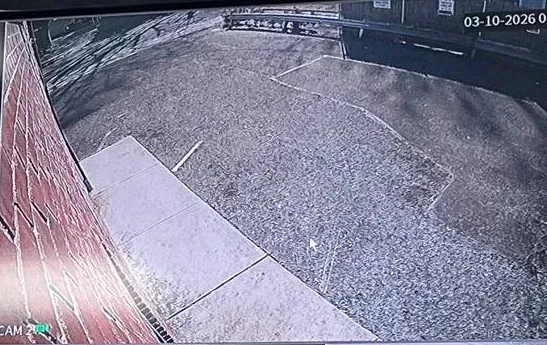
Example photo from another AESS job (not a Queens property): a playback frame from a recorder, showing a paved lot along a brick wall with a drain grate at the bottom. The date stamp in the corner is the first thing we check on a visit — a picture on the screen proves nothing until the recording behind it is confirmed.
Queens Camera Maintenance Quote
Tell us where the recorder sits and how close you are to the water — a written price comes back today
✅
Request Sent!
We will phone you about your Queens cameras before the business day is out.
25+
Years Experience
✓
Same-Day Estimates
100%
Licensed & Insured
4.6★
390+ Google Reviews
Where is your recorder, and how far is the nearest water? Those two answers tell us more about a Queens camera system than its brand or its age. A recorder on a basement floor in Woodside or Flushing is one heavy rain away from a ruined drive; a bracket on a Broad Channel deck lives in salt air every day of the year. Text a photo of the recorder where it sits, plus your cross streets, to (347) 434-6392 and we will tell you what to change first.
$158–$368 buys one storm-ready visit for a Queens house or small shop; $210 a year is where ongoing plans start
Each visit ends with a dated record: seals, connectors, recorder height, drive health and the oldest day on the drive
Same-day written estimates, under NYS license #12000287431
Why Queens Properties Need Security Camera Maintenance
Queens is the borough of the basement. Across Woodside, Maspeth, Ozone Park, Richmond Hill, Flushing, Jamaica and the house-lined streets of southeast Queens, the recorder that holds every camera's footage almost always ends up below grade — next to the boiler, behind the laundry, on top of a cardboard box or on the bare concrete. It is out of the way, close to where the cable comes in, and nobody has to look at it. It is also exactly where water collects first. When the remnants of Hurricane Ida came through on September 1, 2021, Central Park recorded 3.15 inches of rain in a single hour, and the Queens Eagle reported that eleven of the city's twelve storm deaths were in Queens, many of them in basement homes in Woodside, Jamaica and Flushing. Recorders, network switches and battery backups sitting in those same basements were simply underwater.
Ida was not a one-off. On a Saturday afternoon in July 2026, flash floods filled basements and garages in Flushing; one resident told NY1 "this has become a routine — when it's rain, we knew that there's going to be flooding." Two days later, firefighters had to help a family of four over a rear-yard fence after water poured into a basement on 69th Street in Woodside. In southeast Queens the problem comes from below as well as above: after Jamaica Water Supply stopped pumping the local aquifer in 1996 and the city closed dozens of wells, residents across southeast Queens describe groundwater coming up through basement floors almost daily. NY1 reported that one community center there runs two pumps around the clock, moving 13,500 gallons an hour. A recorder in that kind of room does not have to be flooded to fail; months of damp air are enough to corrode its connectors.
Then there is salt. Queens has a coastline most New Yorkers forget: the Rockaway peninsula on the Atlantic, Broad Channel in the middle of Jamaica Bay, and Howard Beach and Hamilton Beach along the bay's northern edge. When Hurricane Sandy hit in 2012, the National Weather Service records inundation of roughly four to seven feet across the peninsula. Smaller floods are now routine. In the first days of January 2022, flood sensors installed with residents' help in Hamilton Beach and Far Rockaway recorded almost two feet of water on some streets and 16 inches at Davenport Court — from a high tide pushed by a modest surge, not a hurricane. Salt water does not have to reach a camera to damage it. Salt carried on the wind settles on stainless screws, aluminum housings and the threads of every cable gland, and the IP rating printed on the box says nothing about it: the IP code itself states that protection against salt water is not guaranteed by the rating.
Finally, Queens is a borough of owner-occupied houses. Census figures show 44.9% of Queens housing units are lived in by their owners — far higher than the Bronx — and many of the rest are two-family homes whose landlord lives somewhere else. There is no super checking a lobby screen every morning. A camera that dies in March may not be noticed until someone needs footage in August, and by then the reason it died — a wet connector, a tripped breaker, a router password changed by the tenant downstairs — has to be worked out after the fact. Maintenance in Queens therefore has two halves: the physical work of keeping water and salt out of the system, and setting things up so an owner who is not on site still knows the system is alive. Owners who keep cameras serviced often have the same visit cover the front-door doorbell camera and the building's intercom, since both share the same weather and the same wiring paths.
Queens facts that shape a maintenance schedule
Ida drowned Queens basements. Eleven of New York City's twelve deaths in the September 2021 storm were in Queens, and Central Park measured 3.15 inches of rain in one hour, the Queens Eagle reported.
Flash floods keep coming. NY1 and Hoodline reported basements and garages flooding in Flushing and Woodside during July 2026 downpours, with an FDNY rescue from a Woodside basement.
Groundwater rises in southeast Queens. Since pumping stopped in 1996, residents report near-daily basement flooding; NY1 described pumps running 24 hours a day at a community center and the city's $2.6 billion drainage build-out.
Tidal flooding reaches Jamaica Bay streets. Sensors in Hamilton Beach and Far Rockaway logged almost two feet of water on some streets in early January 2022; New York Sea Grant reports residents seeing high-tide floods grow deeper and more frequent.
Owners, not supers. 44.9% of Queens homes are owner-occupied (U.S. Census, 2020–2024), so many systems are looked after by a busy homeowner or an absentee landlord.
The grid has failed here before. In July 2006, during a heat wave, failed feeder cables left about 100,000 people in Astoria, Long Island City, Sunnyside and Woodside without power for up to a week.
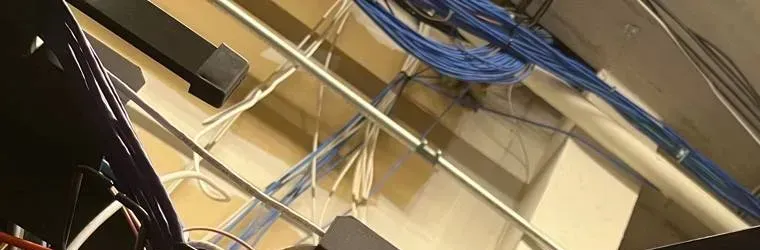
Example photo from another AESS job (not a Queens property): bundles of network cable running above an open ceiling. Every camera's power and video arrives on one of these lines, and wherever a bundle passes a wet wall or a basement window, it is the first thing we inspect after a storm.
Need Camera Repair in Queens Today
Cameras dark after a storm, a recorder that will not start, or a basement that took water overnight? That is repair work first. Ring (347) 434-6392 and we book the earliest same-day slot available; most faults are fixed within one to two hours of arrival. If the recorder got wet, leave it unplugged.
Before we arrive after water or a storm
Do not switch a wet recorder back on. Unplug it at the wall if you can do so safely and keep it unpowered. Turning it on while damp can turn a recoverable drive into a lost one.
Photograph the water line. A picture of how high the water reached on the wall tells us which devices, connectors and outlets need checking — and helps an insurance claim.
Note which cameras dropped and when. If the phone app still opens, write down the last time each dark camera showed a picture.
Keep the old drive, whatever happens. Even a drive that has been underwater can sometimes be read by a recovery lab. Do not throw it out with the debris.
If the damage goes beyond a visit — a drowned recorder, cameras that will not power up — the job passes to Queens security camera repair; cable soaked or cut on its way through a wall goes to Queens network cable repair. After that, the plan exists so the next storm finds the equipment higher and drier.
What We Install
Security Camera Maintenance Services in Queens
A Queens maintenance plan is a menu, not a fixed bundle. These are the nine jobs we are asked for most, from a four-camera two-family in Ridgewood to a freight building off Rockaway Boulevard. Each visit only includes the ones your system actually needs.
Seal and Gasket Inspection
Every outdoor housing has a gasket, and every cable entry has a grommet or gland. They harden, crack and shrink with sun and cold. We open a sample of housings each visit, look for moisture marks inside, and replace gaskets and glands that have stopped sealing.
Connector and Junction-Box Check
Water that gets into a connector travels. We open exterior junction boxes, look for green or white corrosion on the pins, re-terminate anything that has started to corrode and re-seal the box so the next rain stays out.
Recorder Height and Placement
We measure how high the recorder, network switch and battery backup sit above the floor and compare that with any water line on the wall. Equipment within reach of a flood is moved up onto a shelf, a wall bracket or to a higher floor.
After-Storm Triage Visit
After a flood, a nor'easter or a long outage, we check what came back and what did not: wet equipment kept powered down, drives tested before anyone writes to them, cameras and cable runs checked one by one, and a list for the insurer.
Salt-Film Rinse and Hardware Swap
On the Rockaway peninsula, Broad Channel and the Jamaica Bay shore, salt film is rinsed off domes and housings with fresh water before cleaning, and rusting screws and clamps are replaced with stainless hardware before they seize.
Scaffold and Shed Re-Aiming
When a sidewalk shed or scaffold goes up for facade work, entrance cameras end up staring at plywood. We re-aim, temporarily relocate or add a camera for the duration, and put everything back once the shed comes down.
Remote Health Alerts
For owners who do not live on site, we set the recorder to report video loss, drive errors and power loss to the owner's phone, then test each alert by actually unplugging something and watching it arrive.
Off-Site Copy of Key Cameras
A recorder can be stolen or drowned. For the cameras that matter most — the door, the driveway, the dock — we set up a second copy of the footage somewhere else, such as a cloud service or a second recorder upstairs.
Account and App Handover
Phone apps, cloud plans and Wi-Fi cameras are tied to someone's email address. We confirm that the admin account, the recovery email and any subscription belong to the current owner — not a previous tenant, relative or installer.
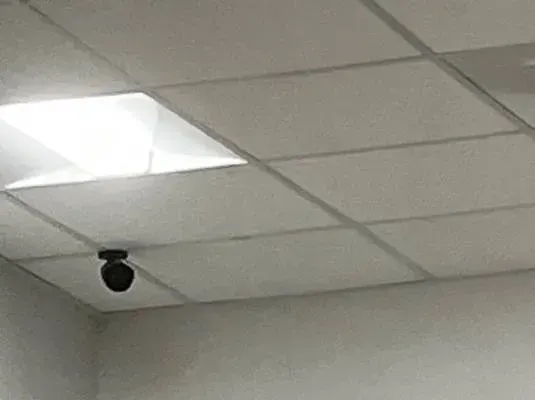
Example photo from another AESS job (not a Queens property): a small ball camera on a drop-ceiling tile next to a light panel. Indoor cameras like this age slowly, so on a Queens plan they usually sit on the longer schedule while the outdoor and basement equipment gets the attention.
Building Specialists
Camera Maintenance for Queens' Architecture
Queens building stock is unusually mixed — attached rowhouses, detached frame houses, bayfront bungalows on pilings, pre-war garden apartments and glass towers along the East River — and each one fails in its own way. These are the types we service most, and what each one tends to do to a camera system.
Attached Two-Family Houses
The brick and frame two-families of Woodside, Maspeth, Ridgewood, Glendale, Ozone Park and Richmond Hill usually have a recorder in the basement, cameras on the front stoop and the rear yard, and Wi-Fi supplied by whichever unit is home most. Basement water, a shared router and an owner who lives upstairs — or not at all — are the three things we check every time.
Detached Houses in Southeast Queens
St. Albans, Hollis, Cambria Heights, Laurelton, Queens Village and Springfield Gardens are blocks of single-family homes with driveways and rear yards. Southeast Queens is where residents describe groundwater pushing up through basement floors, so recorders there should never sit on the slab, and sump-pump circuits and camera circuits should be known separately.
Bungalows and Raised Homes by the Water
Broad Channel, Hamilton Beach, Howard Beach's bay edge and the bungalow blocks of the Rockaways sit in salt air and, increasingly, in tidal floodwater. Many houses were raised or rebuilt after Sandy, which moved cameras higher up decks and under eaves. Brackets, screws and connectors corrode here faster than anywhere else in the city.
Garden Apartments and Historic Districts
Jackson Heights' historic district, designated in 1993, covers about 600 buildings, where Landmarks Preservation Commission permit guidance limits how many cameras go on a frontage and where they sit. When a camera on a landmarked facade needs replacing, the replacement has to fit the same rules, so we document position and mounting before anything comes down.
Elevator Buildings on the Boulevards
Taller co-ops and rentals along Queens Boulevard, in Rego Park, Forest Hills, Kew Gardens and Jackson Heights, fall under the city's facade inspection program for buildings over six stories, with an inspection every five years. That cycle brings sidewalk sheds and scaffolding that block entrance cameras for months at a time.
Long Island City Towers
RentCafe counted 12,533 new apartments in 41 buildings in Long Island City between 2010 and 2017 — more than any other U.S. neighborhood in that stretch. These systems are newer and sit in clean telecom rooms, but many were handed over by a developer with thin documentation and no one named to look after them.
What changes in the work from one building to the next
Basements: recorders, switches and battery backups go on a shelf or wall bracket well above any water line on the wall, and power strips come off the floor too. A dehumidifier in a damp room protects electronics as much as people's belongings.
Frame houses: cameras screwed into vinyl or aluminum siding loosen as the siding moves; we re-mount onto blocks or into framing when a camera starts to wobble.
Raised and waterfront houses: stainless hardware, drip loops on every cable, gland nuts re-tightened, and salt film rinsed with fresh water before any cleaning cloth touches a dome.
Landmarked facades: camera positions and fastening points are photographed and logged so a like-for-like replacement keeps within the permit.
Towers: telecom rooms are checked for heat and for unlabelled equipment, and the building gets a written map of which switch port feeds which camera.
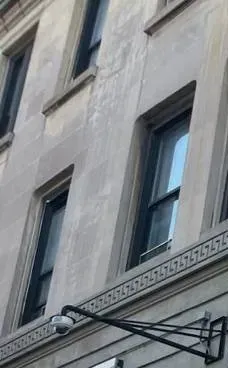
Example photo from another AESS job (not a Queens property): a dome camera on a long steel arm under a stone cornice. Facade cameras like this are the ones a sidewalk shed or a facade crew most often blocks or knocks out of line.
Commercial Security Camera Maintenance
Business Camera Maintenance in Queens
Queens businesses range from a single-counter takeout on Main Street to freight buildings ringing JFK. What they share is that their footage gets asked for — by police, by insurers, by a landlord after a flood — and their cameras sit in some of the city's dampest, saltiest and most truck-heavy conditions. These are the corridors where we look after the most commercial systems.
Downtown Flushing and Main Street
A dense retail district with its own business improvement district and rows of shops, restaurants and offices above them. Flushing flooded again in July 2026, which puts basement stock rooms, recorders and electrical panels at risk on every heavy-rain day.
Jamaica Avenue and Sutphin Boulevard
Jamaica Center has its own BID, and Jamaica station handles weekday ridership of more than 200,000 on the LIRR and the AirTrain to JFK. Storefront cameras here watch heavy foot traffic and need clean domes and correct clocks more than anything else.
Freight Buildings Around JFK
Springfield Gardens, Rockaway Boulevard and the streets around the airport hold cargo and logistics buildings. In 2020 the Queens DA charged a crew accused of stealing more than $6 million in designer goods from JFK air cargo, and investigators used surveillance video from a Jamaica storefront to tie suspects to a stash location. Dock and gate cameras here need long, reliable recording.
Queens Boulevard and Northern Boulevard
Malls, car dealers, repair shops and supermarkets along two of the borough's longest commercial roads. The state's 2024 community air-monitoring results, as reported by the Queens Chronicle, found Queens had the most truck traffic of the ten communities surveyed, with higher diesel pollution along the Van Wyck and near the Whitestone Expressway, and heavy truck traffic on the BQE, LIE and Clearview.
Rockaway Beach Boulevard
Shops, restaurants and services along the peninsula, close enough to the ocean that salt reaches every outdoor camera. In August 2011 water reached about two feet deep in the middle of the boulevard, and Sandy put four to seven feet of water across the peninsula the following year.
Long Island City and Astoria Industrial Blocks
Studios, warehouses, auto shops and new offices between the Queensboro Bridge and the Sunnyside Yard. This part of Queens lost power for up to a week in July 2006, so recorders here are the ones we most often pair with a properly sized battery backup.
Rules and records a Queens business should know about
Ask to see a licence number: anyone opening your housings or your recorder for pay should hold New York's security and fire alarm installer credential from the Department of State, which covers video work. AESS carries NYS license #12000287431.
Licensed cannabis retailers: under 9 NYCRR §125.3, cameras must keep recording through a power outage of at least eight hours and equipment must be tested at least every 30 days — a requirement that matters more in a building that loses power or floods.
Landmarked storefronts: in historic districts such as Jackson Heights, Landmarks Preservation Commission guidance controls camera numbers, placement and conduit on a facade, so a replacement camera may need to match the old position.
Facade inspections: buildings over six stories must have their facades inspected every five years under the city's Facade Inspection Safety Program, and an unsafe facade must be protected at once, usually with a sidewalk shed — plan for the cameras it will block.
Biometrics and audio: a business that collects customers' biometric identifiers must post notice at its entrances under NYC Administrative Code §22-1202, and recording conversations without a participant's consent is eavesdropping under New York Penal Law Article 250. We check those features stay off after an update unless you have decided otherwise.
Pending, not law: Assembly bill A.9470-B, introduced in January 2026, would require businesses to release footage of an on-site felony on formal written request and take reasonable steps not to record over it. It has not passed as of this update.
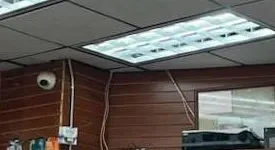
Example photo from another AESS job (not a Queens property): a mini dome where the drop ceiling meets a slat wall, with loose cables running down beside it. Loose, unsupported cable like that is the kind of thing a maintenance visit tidies up before it gets pulled.
Your Questions Answered
Security Camera Maintenance in Queens: Questions Answered
These are the questions Queens homeowners, landlords, boards and shop owners actually bring to us about cameras that are already installed, grouped by what is threatening the system. Prices sit further down the page; quick questions about booking a visit are in the FAQ near the end.
Water From Below: Basements, Groundwater and Flash Floods
Our St. Albans basement rarely floods outright but stays damp all year from groundwater — what does that do to the recorder and switch?
It corrodes them slowly, out of sight. Southeast Queens residents have described groundwater coming up through basement floors since local well pumping stopped in 1996, and NY1 reported in 2024 that one community center there keeps two pumps running 24 hours a day. A basement like that may never show standing water, yet its air sits near saturation for months. Electronics in that air collect condensation every time the temperature drops, and the moisture works into the metal parts first: the recorder's network and video ports, the pins inside the switch, the screw terminals on a power supply.
On a visit we look at the back of the recorder and the switch for green or white crust on the metal, at the fans for rust, and at the drive bay for condensation marks, and we check unused ports, which corrode just as fast as used ones. A small dehumidifier, emptied regularly or drained to the pump pit, protects the electronics as well as the stored belongings. The equipment still goes on a wall shelf or bracket rather than the slab, because a pump can fail on the one night it matters.
If the room cannot be kept dry, the better answer is often to move the recorder and switch upstairs into a closet and run the camera cables up to them. We price that as a one-off job and write down which breaker feeds the recorder and which feeds the sump pump, so a pump that trips its circuit does not take the cameras down with it.
We want a camera watching the sump pit and floor drain — how should it be set up so a rising water line reaches our phone before it reaches the recorder?
Point it low and give it something to compare against. A camera aimed down at the pit, the floor drain or the lowest corner of the basement floor, with a painted line or a strip of reflective tape at a fixed height, makes a rising water level obvious at a glance. Many current cameras can also send an alert when a defined area of the picture changes, so water spreading across the floor can trigger a notification to the owner's phone.
Light matters more than people expect. A dark basement means the camera relies on its own infrared light, and still water reflects infrared back as a bright glare that hides the level. A small light left on over the pit, or a camera with good low-light colour, gives a far more readable picture. The camera itself, its cable connection and the switch port feeding it must sit above the likely water line, or it will drown before it reports anything.
After the July 2026 flash floods in Flushing and the Woodside basement rescue days later, this is one of the simplest additions we make on Queens maintenance visits. We test it the honest way — a bucket of water on the floor — and check the alert arrives on the right phone, then add the camera to the visit log so its view and alert are re-tested each time.
Our co-op's below-grade garage takes water from the ramp drain in heavy storms — what is different about maintaining the garage cameras?
Almost everything is lower, wetter and dirtier than upstairs. Garage cameras sit near the floor at the bottom of the ramp, where storm water and winter road salt arrive first, and their cables often run through junction boxes mounted low on a column or wall. Exhaust and brake dust film the domes faster than any lobby camera, and the light in a garage is uneven, so the night picture depends heavily on clean optics.
On a visit we start at the lowest point: junction boxes and connectors checked for water marks and corrosion, any box within reach of ramp water raised or re-sealed, and the drain-side cameras checked for fogging inside the housing. Domes are washed rather than wiped dry, because grit dragged across plastic scratches it. Camera power supplies or switches mounted inside the garage are looked at as closely as the cameras.
Garages in Forest Hills, Rego Park, Kew Gardens and Jackson Heights co-ops are also where residents' cars and deliveries are most often damaged or taken, so the entrance and ramp views get a daylight and after-dark check each visit, and the board's report lists anything in the garage still sitting below a likely water line.
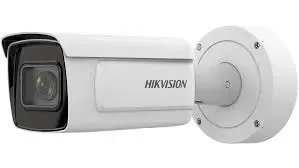
Manufacturer product photo: a white bullet camera mounted on a round junction box. The box hides the cable connection from the weather — but only if its gasket is seated and the cable enters it from below.
Salt, Sand and the Bay
Our Broad Channel house was raised after Sandy and the cameras moved two storeys up — what changes when they sit that high on a house on piles?
Access, wind and the cable run. Many homes on the bay were raised or rebuilt after Hurricane Sandy, which the National Weather Service records as putting four to seven feet of water across the Rockaway peninsula. Cameras that once sat at the top of a porch now sit under eaves two storeys up, on a house that can move slightly in a strong wind, with cables that drop a long way down the outside of the building to reach an equipment space that may itself be lower than the living floor.
A house that flexes loosens mounts, so brackets are checked by hand and re-tightened, and long exterior cable runs are checked for chafing where they pass the edge of a deck or a pile cap. Salt air reaches all of it: screws and brackets are swapped to stainless steel before they seize, and housings rinsed with fresh water before any cloth touches a dome.
The equipment space matters too. If the recorder or switch sits in an enclosure or storage area at ground level under the raised house, it is still in the flood zone the house was lifted to escape. Moving it up into the living floor is usually the single most valuable change on a raised Broad Channel or Hamilton Beach house.
Our pan-tilt camera on Rockaway Beach Boulevard grinds when it turns — is blown sand the cause?
It may well be, along with salt. Pan-tilt and PTZ cameras have moving joints, seals around the rotating parts and small motors, and fine sand blown off the beach works its way into exactly those places. Salt film then cements it there. The usual signs are a camera that grinds or stutters as it moves, presets that no longer land on the same spot, and a patrol tour that drifts out of line over a few weeks.
On a visit we run each preset and patrol and watch whether the camera returns precisely to its home position, listen for the motors, and inspect the seals around the moving parts. The outside of the housing is rinsed with fresh water and the dome cleaned without dragging sand across it. If a motor or gear is failing, we say so in the log and price the repair or replacement before anything is ordered.
Where a moving camera is not essential, we sometimes suggest replacing it with a fixed camera or a multi-lens unit, which has no motors to wear. On the peninsula's busiest blocks a moving camera still earns its place, but it belongs on the more frequent visit schedule.
Does a stainless steel or marine-rated camera on a Rockaway beach block still need maintenance visits?
Yes — less often for corrosion, but not less often overall. A stainless housing resists rust on the body, but the camera inside still has a lens window that collects salt and sand, a gasket that ages, a cable gland that loosens, and a connector at the far end of the cable that may not be stainless at all. Sand blown off the beach also abrades plastic domes and windows over time, which softens the picture permanently.
The Rockaway peninsula has a long record of severe weather. The National Weather Service notes about two feet of water in the middle of Rockaway Beach Boulevard in August 2011 and four to seven feet of inundation across the peninsula during Sandy in 2012, with oceanfront boardwalks and homes destroyed. Equipment that survives that kind of event still needs to be inspected afterwards: mounts can be bent by wind or debris without the camera failing, and a camera aimed at the wrong spot records perfectly — just not what you need.
What a marine-rated camera does change is the type of visit. Instead of replacing rusting brackets every couple of years, the work becomes rinsing, inspecting seals, checking aim after storms and confirming the night picture. That usually makes a stainless upgrade worthwhile on the most exposed corners, while cameras in sheltered spots — under a deck, inside a garage — can stay as they are.
Storms, Outages and the Morning After
Our Astoria building loses power every few summers — how long should a battery backup keep the recorder running, and is it worth having?
Worth having, if it is sized for what you actually need to survive. Northwest Queens has a real history here: in July 2006, during a heat wave, failed feeder cables left about 100,000 people in Astoria, Long Island City, Sunnyside and Woodside without power for up to a week, and the outage reached LaGuardia Airport and parts of the subway. No home-size battery backup will carry a recorder through a week. What it can do is ride through the short flickers and brief outages that are far more common, and keep the recorder running long enough to capture the first, most disorderly hours of a longer one.
The runtime depends on the load, not just the battery. A small recorder alone draws little power; a recorder plus a network switch powering eight outdoor cameras with infrared on at night draws much more. On a visit we measure the actual load, compare it with the battery backup's rated runtime at that load, and tell you in minutes how long the system will last. If the answer is too short, the options are a larger unit, a separate battery for the switch, or setting only the most important cameras to stay powered.
Licensed cannabis businesses do not get to choose: the state security rule requires their video system to keep running through a power outage of at least eight hours. For everyone else, we usually aim for enough runtime to cover a typical short outage and a clean shutdown when the battery runs low, so the drive is not damaged by a sudden cut. We also check that the recorder restarts on its own when the power returns, which not every model does by default.
After a nor'easter, how can we tell from the phone app whether the storm damaged anything?
Quite a lot, in about five minutes. Open the live view and look at every tile: a black tile means the camera has no power or no connection; a picture that is there but foggy, milky or full of droplets means water on or in the housing; a picture that shows a different view from usual means the camera has been moved by wind or debris. Then open playback for the night of the storm and scrub through it — if the timeline has gaps, the recorder or the cameras lost power, and you will see exactly when.
Next, look at the date and time shown on the picture. If it has jumped back to a default year or is hours out, the recorder lost power long enough to reset its clock, and every clip it records from now on will be wrongly stamped until someone corrects it. Finally, check the storage or disk status page if your app shows it. A drive listed as abnormal, uninitialised or missing after a storm is a reason to stop and call, not to press "format".
Write down what you find, with times, and send it to us with photos of any outside cameras that look damaged. That turns a two-hour diagnostic visit into a targeted one, and the notes are useful for an insurance claim. On a maintenance plan, we set the recorder up in advance so most of these problems arrive as alerts on your phone, rather than waiting for you to go looking.
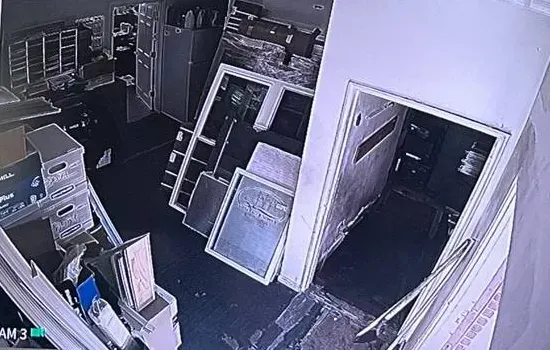
Example photo from another AESS job (not a Queens property): a recorder's view of a crowded storeroom with an open doorway behind. Back rooms like this are often where the recorder itself lives — which is why a thief or a flood can take the footage along with everything else.
Facade Work and Building Contractors
Contractors re-pointing our brick disconnected two cameras and put them back crooked — who should check the system after building work?
Whoever is responsible for the cameras, and ideally before the contractor is paid off. Masons, window installers and roofers routinely take cameras down to reach the wall behind them, and they are not camera technicians: cables get cut short and twisted back together, connectors are left uncapped in the rain, and cameras go back up roughly where they were but aimed at a slightly different patch of sidewalk. The system may look fine on the phone app while recording a useless view.
The cleanest approach is a before-and-after check. Before the work starts, we record a reference snapshot of each camera's view and the condition of its mount and connector. When the work is finished, we compare each camera against its snapshot, re-seal any connection that was opened, replace damaged cable instead of accepting a field splice, and confirm the recorder is still writing every channel.
For co-op and condo boards, this is easy to write into the contractor's scope: cameras removed by the contractor are reinstalled by, or inspected by, the building's camera service. On landmarked buildings, such as those in the Jackson Heights historic district, the check also confirms the cameras went back in their permitted positions and fastenings, rather than somewhere new on the facade.
Owners Who Are Not on Site
Our Ozone Park two-family sits empty between tenants — what should be set up so the cameras keep watching a vacant house?
By having the system report on itself, and by testing that it actually does. Most current recorders can send notifications for video loss on a channel, drive errors, a full or missing drive, and network disconnection. On many systems these are switched off by default, or switched on but pointed at an email address nobody reads. We set them up to reach the owner's phone, then test each one on site — unplugging a camera, pulling network power — and confirm the alert arrives.
Alerts cover sudden failures. They do not catch slow ones: a camera that is still connected but now looks at a wall, a drive that has quietly lost a week of retention, a clock that has drifted. For that, a quick monthly look helps — open the app, scroll through each camera's live view, and spot-check playback from the oldest day you should have. We can leave a one-page checklist for that, and on a remote plan we do the same check ourselves where the owner gives us viewing access.
The other blind spot in a vacant or absentee-owner house is the internet connection. If the cameras rely on a tenant's router and the tenant moves out and cancels service, the cameras keep recording locally but the owner sees nothing remotely. We check whose account the internet service is in, and where it makes sense, give the camera system its own connection so the owner's view does not depend on a tenant's bill.
Burglars in Hollis took the DVR along with everything else — how do we keep footage if the recorder itself is stolen?
It happens more often than people think. In 2017 CBS New York reported a string of about twenty burglaries across Hollis, Queens Village, Richmond Hill, South Ozone Park and St. Albans; one homeowner identified suspects from her own camera footage, while at another house the burglars took the DVR, and the recording with it. A recorder on a shelf in a bedroom closet or on the TV stand is easy to find and easy to carry out.
There are two defences, and they work best together. The first is hiding and securing the recorder: a locked cabinet, a less obvious room, a closet with the recorder bolted down, or a lock box ventilated so the recorder does not overheat. The second is a copy somewhere else: the most important cameras — front door, side gate, the room with valuables — also send footage to a cloud service or to a second small recorder hidden elsewhere in the house. A burglar might find one; they are unlikely to find both.
On a maintenance visit we check that the off-site copy is still working, because these are often set up once and forgotten. Cloud subscriptions lapse when a card expires; a second recorder's drive fills up and stops; a phone app gets logged out. The log records the date of the most recent clip in each copy, so you know your backup is actually current.
We are selling our house in Bayside — what should happen to the cameras, the app account and the recordings?
Three separate things need to be handed over or wiped, and people usually only think about the first. The hardware — cameras, recorder, doorbell — normally stays with the house if it is fixed to the building, unless the contract says otherwise. The recordings belong to you, and you will want to export anything you need before closing and then erase the drive, since a buyer has no business watching months of your family coming and going.
The accounts are the part that causes trouble. Wi-Fi cameras, doorbells and many recorders are registered to the seller's email in a manufacturer's cloud. If the seller does not remove the devices from their account, the buyer cannot add them to theirs, and the seller may keep seeing live video from a house they no longer own. Cloud subscriptions keep billing the seller until cancelled. Recorder admin passwords that only the seller knows lock the new owner out.
On a handover visit we export the clips you want, factory-reset or re-initialise the drive so old footage is gone, remove devices from your cloud account, reset the admin password and give the new credentials to the buyer, and leave them a short note of what is installed and how to reach the manufacturer's support. If you are buying, we can do the reverse: confirm the previous owner's access has truly been removed.
The cameras run on the downstairs tenant's Wi-Fi — what breaks when they change the router password?
Every wireless camera on that network drops off at once, and depending on the system, it may not tell anyone. Wi-Fi cameras store the network name and password they were set up with. When the router is replaced, reset, or given a new password, they cannot reconnect until each one is set up again. Battery and doorbell cameras simply stop sending clips; wired cameras on a recorder keep recording locally but disappear from the owner's phone if the recorder also relied on that router.
In Queens two-families this is a common failure, because internet service often belongs to whichever household moved in last. The cleaner set-up is a network the owner controls for the camera system — a separate inexpensive router or access point on its own internet line, or at least a guest network on the tenant's router that the tenant agrees not to change. Wired cameras on a recorder can run with no internet at all and only use it for remote viewing.
On a visit we list every device on the camera network, note which ones depend on Wi-Fi, check signal strength at each camera — brick party walls and basement ceilings block signal more than people expect — and write down how the network is set up so the next change of tenant does not take the cameras with it.
Businesses, Freight and Newer Buildings
Which cameras at a freight building near JFK deserve a longer recording setting than the rest?
The ones that see goods change hands: the dock doors, the yard gate, the trailer parking and the cage or room where high-value freight waits. Cargo losses are often noticed only when a shipment is counted or a customer complains, which can be well after the event. The JFK air-cargo case the Queens DA announced in 2020 involved two thefts months apart and more than $6 million in designer goods; investigators used surveillance video from a storefront in Jamaica to link suspects to where the goods were stored. Footage that might matter in a case like that should not be the first thing to be overwritten.
Recorders let each camera have its own recording settings. The practical approach is to give priority cameras continuous recording at full quality, longer retention or a dedicated drive, and let lower-priority views — office hallways, the break room — record on motion at lower quality. That frees drive space without buying anything. Where needed, a second recorder or an off-site copy holds the dock and gate cameras for longer still.
On maintenance visits we check the oldest recording on each priority camera separately, not just the recorder as a whole, because a single busy camera can quietly push its own retention down. We also check the clocks against network time and the gate camera's view of plates and trailer numbers in daylight and at night, since a clip that cannot identify a truck is far less useful.
The developer handed our Long Island City condo board a camera system with no paperwork — what should the first maintenance visit produce?
A map of what you actually own. Long Island City added more new apartments than any other U.S. neighborhood between 2010 and 2017, according to RentCafe, and many buildings were turned over to their boards with cameras installed but little documentation: no equipment list, no record of which switch port feeds which camera, recorder passwords held by a subcontractor, and warranties registered in someone else's name.
The first visit builds that record: every camera, recorder, switch and battery backup with its model, serial number, firmware version and location; a floor-by-floor map of camera positions; a reference image of every view by day and night; the retention each camera actually achieves; and a list of who holds which login. The admin credentials are changed and handed to the board, with separate viewing accounts for the managing agent, the resident manager and the front desk.
Newer buildings also tend to have their equipment in warm telecom rooms shared with the internet provider and the intercom. We check the temperature and ventilation there, label the camera equipment so another contractor does not unplug it, and note any warranty still running so a failing device is replaced at the manufacturer's cost while it can be.
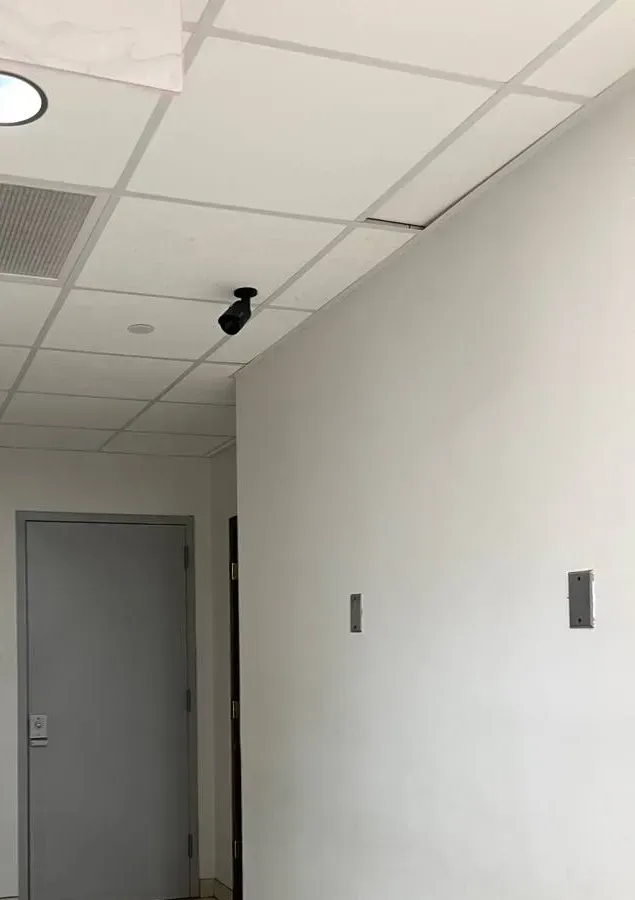
Example photo from another AESS job (not a Queens property): a bullet camera at the ceiling line aimed down a corridor toward a door with a keypad. A newer-building corridor camera like this is quick to maintain — provided someone knows which switch port feeds it.
Equipment
Types of Security Cameras We Maintain
Each piece of a Queens system wears out differently depending on whether it lives in a basement, under an eave by the bay, or on a tower's telecom shelf. This is what we look at on each type.
Dome Cameras
Popular over doors and porches. The bubble collects salt film and sand on the peninsula and road film near the expressways; the base gasket is where moisture gets in. We clean with fresh water first, then lens-safe cloth, and check the seal.
Bullet Cameras
Used on driveways, yards and docks. Their brackets and sunshields are the first metal to rust near salt water, and the cable often enters from the back, where water runs in. Drip loops and glands are checked every visit.
Turret Cameras
Common on newer houses. No bubble, so less night glare, but the ball joint and its lock screw are exposed to weather and rust; a seized joint makes re-aiming after a storm hard.
Stainless and Marine Housings
For Broad Channel, Hamilton Beach, the Rockaways and dock doors near JFK. Body corrosion is solved; window, gasket, gland and connector still need inspection, and windows need rinsing.
Doorbell and Wi-Fi Cameras
The most common cameras on Queens houses. Battery health, signal strength through brick and siding, chime wiring, firmware, cloud subscription status and, above all, whose account the device is registered to.
Recorders (NVR/DVR)
Height above the floor, condensation and corrosion on ports, fan condition, drive health, error logs, firmware, clock, restart-after-power-loss setting and the oldest recording per camera.
PoE Switches
Usually sitting right next to the recorder in the same damp basement. Port status, power budget against the number of cameras with infrared on, and corrosion on unused ports.
Battery Backups (UPS)
Measured load against rated runtime, self-test result, battery age, and whether it sits high enough to survive the same flood as the recorder it protects.
Floodlight Cameras
Combined light and camera units over driveways and yards. Fixture seals, wiring connections in the outdoor box, motion settings that trigger on rain, and lenses fogged from the inside.
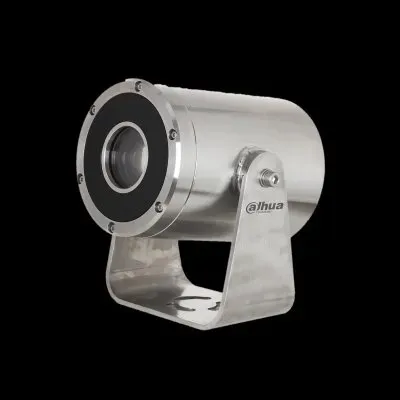
Manufacturer product photo: a camera in a stainless steel housing on a stainless bracket. Housings like this suit bayfront and dock positions; their window, gasket and cable entry still need regular inspection.
National brands versus a local maintenance plan
Many Queens homes start with a do-it-yourself or monitored system from a national brand. Those work well for what they are designed to do. This comparison is based on how such services generally work, not on any company's exact current terms.
Question
ADT, Ring or SimpliSafe-style service
AESS Queens maintenance
Who checks the brackets after a bay flood or a nor'easter?
Usually the owner; support is by phone, app and device replacement.
A technician on site, with salt rinse, hardware swap and seal inspection on waterfront blocks.
Basement recorder moved above the water line
Not applicable to cloud-only devices; local recorders are the owner's responsibility.
Recorder, switch and battery backup re-sited and the circuits documented.
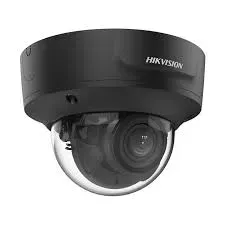
Manufacturer product photo: a black varifocal dome camera. The clear bubble is what collects salt film and road grime, and the seam where it meets the base is where moisture finds its way in.
AI Overview Reality Check
What AI Gets Wrong About Security Camera Maintenance in Queens
Google's AI Overview could not be captured from our research environment, so nothing here quotes it. These are seven assumptions that run through product listings, how-to articles and forum answers of the kind such summaries are built from — set against what water, salt and absentee ownership actually do to Queens systems.
Claim 1: "IP67 on the box means water will never get in"
IP ratings come from the IEC 60529 standard. IP66 means the enclosure withstands powerful jets from a 12.5 mm nozzle for at least three minutes; IP67 means it survives 30 minutes under a metre of water. Those are tests of a new camera in a lab, with its seals fresh and its cable entry assembled correctly.
In Queens the water arrives in ways the test does not cover: running down a cable into the back of a junction box, condensing inside a housing in a damp basement stairwell, or carried in salty air off Jamaica Bay. Gaskets also age. A camera that was IP67 when it shipped is only as sealed as its oldest gasket and its least careful installer.
So "weatherproof" is the starting point, not the end of the story. Checking seals, cable entries and drip loops — and opening a housing when the picture fogs from inside — is what keeps an IP-rated camera actually keeping water out.
Claim 2: "Salt corrosion is only a problem on the beachfront"
The IP code's own definition notes that protection against salt water is not guaranteed by the rating, and salt-mist test standards such as IEC 60068-2-52 exist precisely because salt damages electronics differently from fresh water — including, testing labs note, deteriorating some non-metallic materials as well as metal.
Salt does not stop at the first row of houses. Broad Channel sits entirely in Jamaica Bay; Howard Beach and Hamilton Beach face it; the whole Rockaway peninsula sits between bay and ocean. And in winter, road salt spray coats driveway and garage cameras in every neighborhood of the borough.
For Queens, the practical rule is to treat anywhere near the bay, the ocean or a heavily salted road as a corrosion location: stainless fasteners, fresh-water rinses before cleaning, and a hardware check every visit rather than every few years.
Claim 3: "Wi-Fi cameras can't be knocked out by a flooded basement"
There is no recorder downstairs, so it seems a wireless system is safe. But in most Queens houses the internet arrives in the basement, and the modem and router often sit right there, close to the floor. When that equipment goes under, every Wi-Fi camera and doorbell in the house loses its link at the same moment.
Battery cameras keep their own charge but have nowhere to send clips; plug-in cameras may be on outlets in the same wet room. The owner sees a row of "offline" messages and no footage of the flood itself.
So for wireless systems the flood check is about the network: modem, router and any power supplies lifted off the floor, and a note of which outlets the cameras depend on.
Claim 4: "A recorder that powers back up after a flood is fine"
After Ida, after July 2026's flash floods, people understandably plug their equipment back in to see what still works. A recorder that boots is not necessarily healthy: silt and corrosion on the board, a drive that worked once but fails within weeks, a power supply damaged by moisture.
Booting a wet recorder can also destroy the evidence it holds. If the drive is damaged, spinning it up can scratch the platters further, and some recorders reformat a drive they do not recognise. If the storm period matters for an insurance claim or a dispute, that footage should be copied before the drive is asked to do anything else.
Our rule after a flood is: keep it off, open it, image the drive if the footage matters, then decide. That costs a little time and often saves the one recording you will actually need.
Claim 5: "A battery backup keeps cameras recording through any outage"
A home-size battery backup buys minutes, sometimes an hour, depending on how many cameras the switch powers and whether their infrared is on. Northwest Queens has seen far longer: in July 2006 failed feeder cables left about 100,000 people in Astoria, Long Island City, Sunnyside and Woodside without power for up to a week.
A battery also protects only what is plugged into it. If the recorder is on the backup but the camera switch or the internet modem is not, the recorder keeps running with nothing to record or no way to report.
The realistic goal is to ride through short flickers, record the first hours of a longer outage, and shut down cleanly before the battery is flat. Measuring the real load and runtime on a visit tells you what you actually have.
Claim 6: "Once the floodwater recedes, the outdoor cameras are fine"
Cameras mounted high usually stay dry, but their connections often do not. Junction boxes low on a wall, cable entries near the ground, outdoor power supplies and the first few feet of every cable run sit where street water reaches. In early January 2022 sensors in Hamilton Beach and Far Rockaway recorded almost two feet of water on some streets from a high tide, without a hurricane.
Salt water left in a connector keeps corroding after the street dries. The picture may stay perfect for weeks and then start to flicker or drop out, by which time nobody connects it to the flood.
After any tidal or street flood that reached the base of a building, we open the low connections, flush and dry them, and replace anything that has started to corrode, rather than waiting for the picture to fail.
Claim 7: "Moving the recorder upstairs is all the flood protection a system needs"
It is the most important single step, but rarely the only one. In many Queens basements the recorder shares the space with a network switch powering the cameras, a battery backup, a power strip and the internet provider's modem. If the recorder goes upstairs and the switch stays on the floor, the next flood still takes every camera offline.
Cables matter too. A camera cable that runs through a basement wall below the water line carries water along its jacket into connectors and wall plates. And a basement camera itself — the one watching the boiler room or the back door — needs its own connection placed above any likely water.
So on a flood-risk visit we follow every device and every cable, not just the recorder, and the log lists what is still below the line and what it would cost to raise.
Is Your Recorder Sitting on the Basement Floor?
Send one photo of where it sits to (347) 434-6392. We will tell you whether it, the switch and the battery backup are safe from the next flash flood — and what it takes to move them.
Tell us about the system as it stands: how many cameras, where the recorder lives, whether the property has flooded or sits near salt water, and whether anyone lives on site. A licensed technician calls back the same business day with either a written Queens price or a time to see it first. Nothing is booked until you say yes.
Got It — Thank You
Your Queens request is in the queue and a licensed tech phones you back today. Water rising or cameras dark right now? Dial (347) 434-6392.
How It Works
Our Maintenance Process
The same seven steps for a two-camera bungalow in Hamilton Beach and a sixty-camera tower in Long Island City. The first visit takes longest, because everything afterwards is compared against what it records.
1. Photos of the recorder and the outside cameras
You send a photo of where the recorder sits and of each outdoor camera, plus your cross streets. We ask whether the property has flooded, whether it is near the bay or ocean, and who lives on site.
2. Baseline survey
Visit one is an inventory: each device photographed with its model, firmware and serial, the height of every box above the floor written down, and a daytime and after-dark reference frame saved for every camera.
3. Water and salt risk map
Each device is marked by exposure: below a likely water line, in salt air, under a cable run that carries rain, or sheltered. That map sets which items get attention on every visit and which only once a year.
4. Written Queens price and schedule
A Queens quote arrives in writing: how many visits a year, the jobs on each, one-off items like lifting equipment out of the flood zone, and the service-agreement terms. You decide before a date is set.
5. Seal, clean, test and alert
Salt rinsed, domes cleaned, gaskets and glands checked, connectors opened where needed, drive health and retention read, battery runtime measured, clocks synced, and every alert triggered and confirmed on the owner's phone.
6. Repair or quote what failed
Loose glands and a rusted screw or two get sorted there and then. Anything that costs real money — a fogged camera, a tired drive, a battery past its runtime — is shown to you in a photo with a parts price, and only swapped with your go-ahead.
7. Dated log, owner checklist and next visit
You get a dated record of every check, a one-page monthly checklist for the owner, and the next visit on the calendar — plus an after-storm check offered whenever a major flood or outage hits your area.
Coverage Area
Security Camera Maintenance Near Queens' Landmarks
We cover the whole borough. These six places are listed for the conditions around them — tidal water, salt air, rising groundwater, heavy traffic — and none of them is presented as a customer.
Broad Channel and Cross Bay Boulevard
The only inhabited island in Jamaica Bay, where New York Sea Grant photographed tidal flooding on residential streets and residents report high-tide floods growing deeper and more frequent.
Hamilton Beach and Hawtree Basin
Where some of the first FloodNet sensors went in, with residents' input, in 2021, and where the civic association president compared a December storm to Hurricane Irene.
The Rockaway Peninsula
From Far Rockaway and the bayside of Beach 84th Street, where the January 2022 tidal flood ran deepest, west to Breezy Point, where Sandy destroyed many homes in 2012.
Jamaica Station and Sutphin Boulevard
The LIRR and AirTrain hub with weekday ridership over 200,000, at the heart of a district of storefronts and offices, a short drive from the freight buildings ringing JFK.
Downtown Flushing
A dense shopping and business district with its own BID, where basements and garages flooded again in July 2026 and residents told NY1 flooding had "become a routine".
Long Island City Waterfront
Towers that gave LIC more new apartments than any other U.S. neighborhood between 2010 and 2017, set beside older industrial blocks that lost power for up to a week in July 2006.
Visits also cover Astoria, Ditmars, Steinway, Sunnyside, Woodside, Maspeth, Ridgewood, Glendale, Middle Village, Elmhurst, Corona, Jackson Heights, East Elmhurst, College Point, Whitestone, Bayside, Douglaston, Little Neck, Fresh Meadows, Kew Gardens, Forest Hills, Rego Park, Richmond Hill, Woodhaven, Ozone Park, South Ozone Park, Howard Beach, Jamaica, Hollis, St. Albans, Queens Village, Cambria Heights, Laurelton, Rosedale and Springfield Gardens. Other boroughs are covered from our NYC security camera maintenance hub.
Pricing
Security Camera Maintenance Cost in Queens
Queens carries a 1.05 area factor in our pricing, so the figures below are our New York City base maintenance rates multiplied by 1.05 and rounded to the nearest dollar. Parts — stainless hardware, gaskets, drives, batteries, cameras — are priced separately on your written quote.
Queens maintenance work
Price
What it covers
One-time tune-up, house or small system
$158–$368
A single visit: cameras cleaned and rinsed where salt reaches them, seals and connectors checked, recorder height and drive health checked, oldest recording read, battery backup tested, alerts set, and a dated log
Scheduled plan, house or small building
$210–$525 per year
Waterfront and flood-risk equipment seen more often, sheltered equipment less, priority booking after a storm; in practice about $53–$158 a camera a year, depending on count and access
Commercial plan, monthly or quarterly
$1,050–$5,250+ per year
Freight and logistics buildings, shops, co-op and condo boards, towers; the figure is set once we have walked the site, and covers monthly test records for licensed premises
Same-day repair visit
$200–$945
Recorder underwater, cameras dark after a storm, nothing reachable from the phone — we come the same day, find the fault and price the fix on site
Service after an AESS installation
$195/hr, 3-hr minimum ($585)
Charged only for return trips to alter or extend an AESS-installed system — an original install is always quoted as a fixed job
What moves a Queens price is mainly exposure and access. A house with cameras reachable from a step ladder and a recorder already on a shelf is quick. A bungalow by the bay with rusting hardware on every bracket, a tower with cameras on several floors and a roof, or a basement where the recorder, switch and battery all need raising takes longer the first time — and much less afterwards.
Two worked examples on the published prices
A five-camera two-family in Woodside. Recorder in the basement on the floor, two cameras front and back, one on the side alley, two indoors. The owner wants a visit twice a year and phone alerts. That sits in the scheduled plan range of $210–$525 a year. Raising the recorder, switch and battery backup onto a wall shelf is a one-time job on the first visit, quoted separately with any shelf or bracket as parts.
A 24-camera freight building off Rockaway Boulevard. Dock doors, yard gate, trailer parking, cage room and offices. The operator wants quarterly visits, longer retention on the dock and gate cameras, and an off-site copy of those channels. This is a commercial plan in the $1,050–$5,250+ range, priced after a walkthrough because roof and yard access and the number of exterior cameras decide the hours. Any added drive or second recorder is quoted as parts.
Deposits and warranty cover are spelled out with each Queens price. Full terms — including 50% deposit, the 30-day warranty and optional paid extended warranty, and the late-fee schedule — are set out in the service agreement.
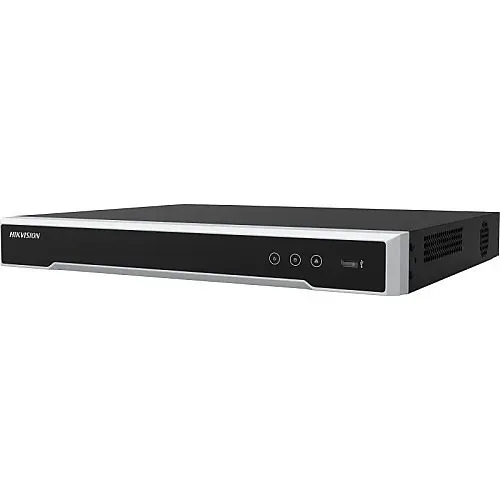
Manufacturer product photo: a slim network video recorder. Small enough to sit on a wall shelf or bracket — which is where a Queens basement recorder belongs, well above the floor.
Shop Our Systems
Security Camera Maintenance Packages & Pricing
Three starting points for Queens properties. Count, mounting height, distance from salt water and the amount of gear sitting below a flood line all move the final number, and footage kept on your own drives carries no subscription.
Queens Storm-Ready Tune-Up
$158–$368
One visit for a house or small shop: every camera cleaned, rinsed where salt reaches it, seals and connectors checked, recorder height and drive health reviewed, battery runtime measured, phone alerts tested, and a written list of anything still at risk.
Owner's Peace-of-Mind Plan
$210–$525 / year
Two to four visits a year for houses and small buildings, priority booking after floods and outages, remote health alerts to the owner, an owner's monthly checklist, and account checks whenever a tenant or owner changes.
Commercial and Waterfront Plan
$1,050–$5,250+ / year
Monthly or quarterly service for businesses, freight buildings, co-ops and towers: priority-camera retention checks, off-site copies, scaffolding and shed re-aims, stainless hardware programmes on the bay, and dated logs for insurers and licensing.
Bought your own cameras? We maintain them at the same rates
Systems from big-box stores, online sellers, previous owners or other installers can go on the same plan. The first visit records every model and firmware version and tells you plainly which devices are worth maintaining and which are close to the end of their life. If you later want equipment added or replaced and supply it yourself, our bring-your-own-equipment calculator shows the labor-only line items.
Talk to a Queens Camera Technician
Ask about an after-flood check, a stainless hardware swap on a bayfront house, alerts for a rental you do not live in, or a documentation visit for a new condo — the person who answers books the visit.
Every Security Camera Maintenance Service in Queens
Upkeep visits regularly uncover bigger work: a recorder the water got to, cable that rotted through a basement wall, a doorbell at the end of its life. These Queens pages cover each of those.
On a first visit to a Queens house, before I touch a camera, I go down to the basement and look at the walls. Most basements that have taken water carry a mark — a tide line on the paint, a stain on the bottom of the drywall, rust on the legs of the boiler, a box that has been dried out and put back. That line is the most useful measurement in the building. Everything electronic below it is at risk, and everything above it is probably fine.
Then I look at what sits under it. Very often it is all there together: the recorder, the switch that powers the cameras, the battery backup, the internet modem and the power strip they all plug into, sitting on the floor or a low shelf because that was where the cables came in. Moving the recorder alone is not enough; the system is only as high as its lowest piece.
Near the bay the order changes — I start outside, at the brackets, because salt tells you its story in rust before anything stops working. Either way, the first visit ends with a list of what is below the line or in the salt, and what it would take to fix. That list matters more than any cleaning cloth.
— Owner, NYS license #12000287431
FAQ
Queens Security Camera Maintenance FAQ
Scheduling, tenants, tides, timing and paperwork — the practical points people ask before a first Queens appointment.
Can you raise our recorder off the basement floor on the same visit as the tune-up?
+
Usually, yes. If you tell us in advance where the equipment sits, we bring a suitable shelf or wall bracket and do the move during the visit, quoted as a separate line. If the recorder has to go upstairs, with new cable runs, that is normally a second, planned visit.
Do you need to go inside the tenant's apartment to reach a camera or the router?
+
Only if a camera, cable or the router is actually inside that unit. In many two-families the internet router sits in the tenant's apartment, so we ask the owner to arrange access in advance, with the usual notice to the tenant. If access is not possible, we work on everything else and note in the log what could not be reached.
On a bayside block, can the visit be timed around high tide?
+
Yes, and on streets that flood at high tide we prefer it. Ladders on a wet street and outdoor connectors opened in spray are both best avoided, so for Broad Channel, Hamilton Beach and the Rockaways we look at the tide table when booking and plan outdoor work for the drier part of the day.
How long does a typical visit to a Queens two-family house take?
+
For four to eight cameras with a recorder that is already in a sensible place, usually a couple of hours. The first visit takes longer because we build the baseline record and may raise equipment off the basement floor. Later visits are shorter because we are checking against what we recorded the first time.
Does someone have to be home for the whole visit?
+
Someone needs to let us in and show us the recorder, and it helps if that person can open the phone app so we can test alerts on the right device. After that, many owners leave us to work and come back for a short walk-through at the end, when we explain the log and anything that needs a decision.
Will you come while there is still standing water in the basement?
+
Not to work on the equipment. Nobody should handle powered electronics standing in water. Get the water pumped out and the power to that area confirmed safe — by Con Edison or a licensed electrician if the panel or outlets were submerged — and we come straight after. In the meantime we can talk you through what to photograph and what to leave unplugged.
Will you remove old cameras and cable a previous installer left behind?
+
Yes, if you want them gone. Dead cameras, abandoned brackets and loose cable are taken down and the holes sealed so water does not get into the wall. Anything still connected to something is traced first, so we never cut a cable that turns out to feed a working device.
Will you label the breakers and outlets the camera system uses?
+
Yes. We label the breaker and outlets that feed the recorder, switch and battery backup, and note them in the log. In a flood or outage that tells whoever is on site exactly what to switch off, and later what has to come back on for the cameras to work.
Is there a charge for the written estimate before we decide on a plan?
+
No. Estimates are free and usually same-day once we have photos or have seen the system. The written quote lists each visit, what it covers, any one-off work such as raising the recorder, and the parts we expect to need, so you can decide without commitment.
All Areas Served
Security Camera Maintenance Across New York City, Long Island and the Hudson Valley
Property elsewhere too? Every borough and suburban county has its own page below, and the citywide maintenance hub covers plans that span several.
Where the Queens Camera Maintenance Facts Come From
Every statistic, rule and news event on this page comes from one of the links below. The maintenance methods — salt rinses, drip loops, raising recorders, alert testing — are our own way of working rather than something these sources prescribe, and the prices are our New York City base maintenance rates with the Queens factor of 1.05 applied.
Nothing here is legal or insurance advice. Licence conditions, leases, flood-claim coverage, audio recording and biometrics are questions for an attorney or your insurer; this page only explains how we look after camera equipment.
Basement Flooded or Cameras Dark — Call the Queens Line
Recorder sitting in water, half the cameras gone since the storm, or a picture fogged from the inside — ring (347) 434-6392. Anything worth saving is copied off before repair work starts, and most systems are recording again within one to two hours of the technician arriving.
Queens Camera Upkeep From a Licensed, Insured Crew
Abstract Enterprises Security Systems — phone for Queens (347) 434-6392; WhatsApp chat (718) 679-0359; office that dispatches Queens crews: 460 E Fordham Rd, Bronx, NY 10458
Google reviewers give us 4.6★ (390+ reviews) · insured · NYS license #12000287431 · same-day written quotes
Gaskets, stainless hardware, drives and batteries we fit come with their makers' own cover as well. Full terms — including 50% deposit, the 30-day warranty and optional paid extended warranty, and the late-fee schedule — are set out in the service agreement. See our warranty page.
Page reviewed and updated October 18, 2026. Changelog: Queens camera maintenance page rebuilt from new research on Ida and July 2026 basement flooding, southeast Queens groundwater, Jamaica Bay tidal flooding and salt exposure, the 2006 northwest Queens blackout, facade-inspection scaffolding, owner-occupied and absentee-owner housing, recorder theft and JFK freight, on the NYC maintenance base prices at the Queens area factor of 1.05.