Keep Your Cameras · More Storage · Remote Viewing · H.265 · No Monthly Fees
Old recorder rebooting, footage missing, or no phone access? We replace outdated and failing CCTV DVRs across Queens — from Astoria and Long Island City to Flushing, Jamaica, and the Rockaways — keeping your existing coax cameras while adding remote viewing, weeks of storage, and modern recording. Licensed, insured New York low-voltage contractor. Same-day service on many jobs.
For a detached home in Bayside or a storefront under the 7 train, a DVR upgrade means replacing the recorder and leaving everything else alone. On a Queens property the cameras are usually spread wide — driveway, front door, detached garage, backyard — and the recorder that ties them together is the part that ages out. Swap that box and the whole spread comes back: phone viewing, weeks of storage, full-resolution recording, without pulling a single long cable run back through the house.
Abstract Enterprises Security Systems is a licensed New York low-voltage contractor (NYS Lic #12000287431) working across Queens — the detached-home neighborhoods of Bayside, Whitestone, and Fresh Meadows; the two-family blocks of Astoria, Sunnyside, and Ridgewood; the dense retail of Roosevelt Avenue, Flushing's Main Street, and Jamaica Avenue; and the coastal stretches of Howard Beach and the Rockaways. On all of them we swap analog HD recorders (TVI, CVI, AHD, CVBS), fit hybrid XVRs, and migrate to NVR when it fits. Everything records locally — no monthly fee, no cloud, no contract. We handle DVR replacement for analog HD systems (TVI, CVI, AHD, CVBS), hybrid XVR upgrades that add IP cameras later, and full migrations to NVR when it makes sense. Every recorder we install records locally with zero monthly fees, zero cloud subscriptions, and zero contracts — you own your equipment outright.
Queens camera systems come in more shapes than any other borough's. A detached Bayside colonial might run eight cameras across a big lot — driveway, garage, side gate, backyard — back to a recorder in the basement. A Forest Hills garden-apartment co-op has a shared box in a management office. A Flushing restaurant or a Jamaica Avenue shop runs a dense sixteen-channel system on a back-room recorder. What they share is age and neglect: the box was wired eight to twelve years ago, lost its firmware and app support long since, and now overwrites in a day or two while the cameras keep working fine.
Two Queens realities make the recorder swap the clear move. First, those long runs to a detached garage or a back fence are usually solid-copper RG59 that still carries HD cleanly — re-pulling a 120-foot run across a yard is exactly the effort you want to avoid. Second, the people who own these systems are frequently not on site: a Flushing shop owner lives elsewhere, a two-family landlord rents both floors, a Rockaway house sits empty half the year. They need reliable remote viewing and footage they can pull from a phone — and a two-day recorder can't give them either. One box, one afternoon, and the coverage works again.
The absent-owner pattern is what makes these failures bite hardest in Queens. The recorder sits in a basement of a rented two-family, or a back room of a shop the owner visits twice a week, and nobody is watching it. A fan seizes, a drive wears out, or a summer brownout in Corona takes down the power supply — and nothing seems wrong until the owner opens the app from home and sees it hasn't connected in weeks, or worse, needs footage of an incident that was never saved. The call we get is almost always after the fact: a break-in, a car keyed in the driveway, a delivery dispute, and a recorder that quit long before.
The cost math is decisive on a spread-out Queens property. Those long runs to the garage, the gate, and the far corner of the yard would each have to be re-pulled if you rebuilt the system — hours of labor fishing exterior walls and trenching, for wiring that already works. A recorder swap leaves every one of those runs in place; only the box they land on changes. For the overwhelming majority of Queens systems installed before the IP era, replacing the recorder rather than the whole system is the right-sized, sensible fix.
Black screens, "no HDD" errors, or a recorder stuck in a reboot loop leave your property unrecorded right now. We diagnose and replace failing DVRs across Queens — many jobs fixed the same day.
The right recorder for a Queens property is decided by what's already run across the lot, not by whatever's newest. Pick wrong one way and you've paid to trench and re-pull long runs that didn't need it; pick wrong the other way and you've locked yourself into dead-end analog when a small premium would have kept the path open. Three options, plainly.
Records analog cameras over coax and converts the signal internally. The direct like-for-like replacement when your cameras and RG59 are healthy and you want the cheapest reliable fix. Modern DVRs add H.265, mobile apps, and larger drives your old unit never had.
Accepts your existing analog cameras on BNC and new IP cameras over the network on the same box. The smart middle path: keep every camera today, add a 4K IP camera at the front door tomorrow — no second recorder needed.
Records IP cameras over Cat6 with PoE. The right move when you want 4K on every channel, color night vision, and license-plate detail, and you're ready to run Ethernet. We migrate you here in stages when it fits.
On a Queens property with cameras spread across a big lot, a hybrid XVR is almost always the right recorder — because it lets you upgrade the one camera that matters without touching the other seven. It runs your existing analog cameras on BNC and accepts new IP cameras over the network, all on one box and one app. The premium over a plain DVR is small, often $20 to $80. For that, the driveway camera can become a 4K plate-reader next year while the backyard and garage cameras keep running as they are — no need to re-pull every long run at once.
Where Queens genuinely needs full IP: the classic case is the driveway. If you want to actually read the plate of a car that pulled in, or identify someone at a dark side gate on a deep lot, analog won't get you there — that's a 4K IP camera with real low-light sensing and an NVR behind it. Same for a shop owner who needs to recognize a face at the register, not just see a shape. And if the outdoor cameras are already failing from years of weather — cracked domes, dead IR — you're buying cameras regardless, so IP is the honest recommendation. We say so instead of selling a swap that leaves the real gap open.
The staged path on a big lot: re-pulling every long exterior run in one weekend is the expensive way to modernize a Queens property — the smart way is a hybrid. Swap the dead DVR for one and all the analog cameras are recording again the same day. Then upgrade the cameras that matter on your own schedule — the driveway this year, the front door when the old one fails — each new IP camera landing on the same box over its network side. Once most channels are IP, a dedicated NVR takes over. No coverage gap, no trenching the whole yard at once.
That approach avoids the two outcomes Queens owners dislike: one big bill to redo everything, and being stuck on obsolete analog with no exit. A homeowner upgrades the driveway camera when a tax refund lands; a shop owner does the register during a slow stretch. The hybrid recorder is simply the hinge that keeps all of it open — which is why we install one even for a property that shows up with nothing but analog cameras on a big spread of coax.
The job follows the same sequence almost every time. First we assess: confirm your camera signal type per channel (TVI, CVI, AHD, or older CVBS), check the condition of the coax and BNC ends, and inspect the health of the existing power supply and drive. This step is what separates a clean swap from a call-back — a tired power supply that isn't caught can damage the new recorder the same way it stressed the old one. Then we match a recorder to what we found, almost always a hybrid so you keep an IP upgrade path. Next we swap: pull the dead unit, install a surveillance-rated drive sized to your retention goal, and re-terminate any BNC runs that need it. Finally we configure: motion recording where it saves storage, continuous where risk is highest, secure view-only user accounts instead of a single shared admin, audio disabled where it shouldn't record, and the mobile app set up and tested on your phone before we leave.
On a straightforward system with healthy cabling, that's a same-day job and your cameras are back online in an afternoon. Where there's BNC repair, added channels, or the start of an IP migration, the timeline stretches — but you know that up front, because we tested before we quoted.
Why we start with the recorder, not the whole system: when a Queens owner calls with "my cameras aren't working," our first move is almost never to quote a new system. It's to figure out whether the cameras actually failed or whether the recorder took the whole system down with it. In the great majority of cases it's the latter — the cameras are fine, the coax is fine, and the box is dead or dying. Replacing just the recorder is faster, far cheaper, and less disruptive than pulling wire through an occupied building, and it keeps the equipment you already paid for doing its job. We only recommend going further — new cameras, an IP migration, fresh cabling — when the assessment actually shows you need it. That test-first, quote-second approach is the whole reason owners call us back for the next building.
A recorder on a Queens property usually shows warning signs for weeks — but if you're rarely on site, you only catch them from the app. These are the tells worth watching for remotely, before the driveway or storefront footage you need turns out to be the footage that quietly stopped saving.
The recorder restarts on its own, often overnight, and you find gaps in the timeline right when incidents happen. Classic failing-drive or dying-power-supply symptom.
The unit boots but reports no hard drive, or footage only goes back a day or two when it used to hold weeks. The 24/7 write load has worn the drive out.
Remote viewing that worked years ago now fails. Manufacturers retire the cloud servers old DVRs depend on — there's no fix on the old box, only a current recorder.
Cameras that clearly still have power show nothing on the recorder. Sometimes a cable or BNC fault, sometimes the decoder in an aging box giving up channel by channel.
A recorder that runs hot or whose cooling fan has stopped is on borrowed time. Heat is what kills the drive and the board.
The model is no longer made, firmware updates stopped, and you can't find compatible cameras. Even if it still runs, you're one failure from a scramble.
The twist-lock connector on the end of your coax cameras. If your cameras use BNC, you're on a DVR/coax system.
Three HD-over-coax signal standards. A pentabrid recorder auto-detects all of them, so mixed-generation cameras record on one box.
Old standard-definition analog (480p). Still supported by modern recorders, so ancient cameras keep working during a phased upgrade.
Newer compression. Cuts storage use ~40–50% vs. H.264, turning days of retention into weeks on the same drive.
A hybrid recorder that takes analog on coax and IP over the network at the same time.
WD Purple / Seagate SkyHawk — built for 24/7 writing. Desktop drives fail fast in a recorder.
We're brand-agnostic — we match the recorder to your existing cameras, not the other way around.
A recorder swap is the natural moment to also review your access control — many buildings pair a new recorder with door entry so entry events and footage line up on one timeline.
From a two-family in Astoria to a storefront on Roosevelt Avenue or a co-op in Forest Hills — whether your recorder sits in a basement in Flushing or a back office in Long Island City, we come to it.
Astoria, Long Island City, Sunnyside, and Woodside — two-family homes, converted lofts, and waterfront mixed-use where recorders run hard.
Jackson Heights, Elmhurst, Corona, and Rego Park — dense apartment buildings and the storefront density along Roosevelt Avenue.
Flushing, Bayside, Whitestone, and College Point — commercial density on Main Street plus single-family homes on the north shore.
Jamaica, St. Albans, Queens Village, and Rosedale — homes and Jamaica Avenue retail on legacy analog runs.
Forest Hills, Kew Gardens, Ozone Park, and Howard Beach — co-ops, garden apartments, and single-family homes overdue for a recorder.
From a two-family in Maspeth to a 60-unit co-op in Forest Hills to a deli on Steinway Street, the recorder is the common failure point — and the common fix.
The buildings that need reliable recorders sit throughout Queens' best-known areas. We service DVR and hybrid recorder upgrades for the homes, storefronts, and multi-tenant buildings across the borough.
Properties near Flushing Meadows–Corona Park, Citi Field, and the USTA Billie Jean King Tennis Center.
Waterfront towers and commercial buildings near Gantry Plaza State Park and the LIC arts district.
The dense retail and restaurant corridor along Main Street and Roosevelt Avenue, one of the busiest commercial districts in the city.
Jamaica Center retail, the transit hub, and the commercial and logistics buildings around JFK Airport.
Beach homes and seasonal businesses along the Rockaway Boardwalk and the peninsula.
Landmarks anchor the map, but most of our recorder work is the ordinary building next door — the two-family, the deli, the shop — wherever an aging DVR finally quit.
Landmarks are referenced for location context only. Links point to official sites and do not imply any affiliation or endorsement.
The busier the block, the harder your recorder works — more motion events, more footage to retain, more reason for reliable remote viewing. In Queens, how much storage and what retention window a building needs often comes down to the foot traffic right outside its door.
Retail density along Roosevelt Avenue. One of the busiest commercial corridors in the city runs recorders hard across storefronts under the 7 train. Aging DVRs here are the classic "stopped saving weeks ago" case — a swap restores retention and phone access.
Main Street, Flushing. Dense restaurants and retail generate after-hours incidents and liability claims — the reason owners here prioritize retention and clean USB export over anything fancy.
Co-op and garden-apartment lobbies in Forest Hills and Rego Park. Entrance, hallway, and package-room cameras feed one recorder — exactly the multi-channel load that benefits from a hybrid box and a properly sized drive.
Two-family blocks in Astoria and Sunnyside. Driveway, entrance, and yard cameras across owner-occupied two-families drive constant footage requests for deliveries and parking disputes.
Jamaica Avenue and the transit hubs. High-traffic retail near major transit runs recorders around the clock — a modern recorder restores reliable retention and remote access for owners who aren't on site.
The Rockaways and the waterfront. Beach homes and seasonal businesses face salt air and storm exposure that stress older equipment — a frequent reason a recorder, and sometimes a run of coax, finally needs replacing.
Not sure what retention and storage your building's traffic calls for? For NYC building and permit context, property owners can consult the NYC Department of Buildings; incidents that need footage are reported to the NYPD. We size every recorder to the property's real activity, not a generic default.
Honest take: if your cameras are one clean signal type and your coax is solid, a careful DIY recorder swap can work. The moment there's a mismatch, a multi-unit building, or a recorder that already fried once, a pro saves you the second purchase. Here's where the two paths actually diverge.
DIY: you guess whether your cameras are TVI, CVI, or AHD and hope the box matches. Pro: verified per channel on site, recorder set to auto-detect so every camera shows video.
DIY: usually skipped — until half the channels read "no signal." Pro: runs tested, connectors re-terminated where they fault, before the new box goes in.
DIY: a tired supply can fry the brand-new recorder the same way it stressed the old one. Pro: supply checked and replaced if needed before anything new connects to it.
DIY: whatever drive shipped in the box, if any. Pro: surveillance-rated drive sized to your camera count, resolution, and retention goal.
DIY: port-forwarding headaches and exposed endpoints. Pro: secure app setup with view-only user accounts, tested on your phone before we leave.
DIY: a simple, matched, healthy single-signal system. Pro: anything mixed-generation, aging, multi-tenant, or already showing failure symptoms.
A recorder upgrade is the natural moment to close the other gaps in a building's security — the technician is already on site, in the closet, with the system open. None of these are required, and none are pushed; they're simply the legitimate related upgrades that make sense to handle in the same visit when the assessment turns them up.
Replacing only the cameras that failed. If the assessment finds one or two dead or degraded cameras — fogged lens, dead night vision, water intrusion — we swap just those while we're there, and leave the working cameras alone. No reason to replace a camera that's fine.
Adding one or more IP cameras to a hybrid recorder. On a hybrid/XVR box, a new camera can be a 4K IP unit at the door that matters most, recording alongside your existing analog cameras on the same recorder — the first step of a staged migration without touching the rest.
Increasing storage. If your goal is 30, 60, or 90 days of retention, we size a larger surveillance drive (or a dual-bay recorder) to hit it. This is often the single most valuable add-on for landlords and businesses who need to look back further than a few days.
Repairing damaged coax or BNC connectors. Where a run faults or a connector has corroded, we re-terminate or repair just that run — restoring the channels that were dropping out without re-cabling the building.
Adding structured cabling for a staged IP migration. If you're planning to move toward IP over time, running Cat6 to a few key locations now lays the groundwork, so future IP cameras drop straight onto a hybrid recorder or a later NVR.
Connecting cameras with access control where appropriate. Pairing a new recorder with door entry lines up entry events and footage on one timeline — so a lobby badge-in and its matching clip are one search away. For apartment buildings and offices, that integration is often where the real value is. An aging buzzer is worth reviewing at the same time; a modern video intercom ties into the same visit-and-verify workflow and, in multi-family buildings, meets the working-intercom obligation landlords already carry.
Lobby, entrance, and hallway coverage landlords must produce on demand — restored on existing coax.
Register and entrance recorders that dropped remote view years ago, brought back with app access.
More retention for liability and after-hours incidents without re-cabling the dining room.
16 and 32-channel recorder swaps covering loading docks and lots on legacy runs.
Clear footage for shrink and slip-and-fall claims, with USB export for insurers.
4 and 8-channel upgrades that reunite older cameras with a phone app.
On a Queens property the recorder quietly decides whether you can hand over footage when you need it — how far back it reaches, who can pull it, and whether it survives as evidence. Here's the plain-terms rundown of what a recorder upgrade touches, especially when the owner isn't on site. General guidance, not legal advice; confirm specifics with your attorney or insurer.
There's no statute fixing a retention period for most private homes in New York, so how many days you keep is your decision — but the recorder is what makes it real. For an absentee Queens owner this matters double: if you only review footage days after an incident, a box that overwrites in 48 hours has already erased what you came for. A current recorder with a right-sized surveillance drive and H.265+ turns a good intention into an actual 30-day window sitting on the drive when you finally look.
For Queens storefronts — a Flushing restaurant, a Jamaica Avenue shop, a Roosevelt Avenue market — the recorder often sits inside an insurance condition. Many commercial policies require working cameras and a defined retention window for theft and vandalism coverage, and some regulated operators like licensed cannabis retailers under the state Office of Cannabis Management carry explicit footage rules. If the policy assumes 30 days on the registers and entrance and the box holds two, a denied claim is where that gap surfaces.
Audio is a separate question: New York is a one-party-consent state, and capturing conversation in a shared entry or a store aisle raises issues plain video doesn't. A current recorder lets you switch audio off per channel where it shouldn't run. It also supports layered accounts — a tenant or manager gets view-only playback of specific cameras while you keep admin rights — which keeps a clean chain of custody when a clip goes to the NYPD or an insurer.
When a clip turns into evidence — a driveway hit-and-run, a delivery dispute, a break-in the police are working — how it was stored and who could reach it starts to matter. A DVR on one shared login can't show a clean trail. A recorder with separate accounts and a straight MP4 export to USB hands over a clip with a clear access history. For a Queens landlord or shop owner who might face an insurer or a courtroom, that's the line between video that holds and video that gets tossed.
If your property is a garden-apartment co-op or a larger multi-family, common-area work may need board or management sign-off and a certificate of insurance from a licensed contractor first. A recorder swap is the easy version of that approval — a contained job at the box, not a building-wide re-wire. As a licensed NY low-voltage contractor (NYS Lic #12000287431) carrying insurance, we provide the COI and documentation up front and work around tenant and management access so the job finishes in one visit.
Installer wants to re-run all my outdoor cables. Needed?
Usually not. Long runs to a garage or gate are a pain to replace, but if they test good, they get reused — you need a recorder, maybe a drive, and a couple of re-terminated ends. The full re-pull quote is what you get when nobody meters the runs first.
Detached house, eight cameras — fix the recorder or start over?
Fix the recorder. On a spread-out Queens system the cameras and long runs are usually fine; it's the box that quit. A recorder-and-drive swap is a fraction of re-cabling a whole lot.
Any monthly fee with a new recorder?
No. It records locally and the app is free. That matters most for an owner watching the property from another borough — reliable remote viewing with zero subscription, versus cloud brands billing per camera monthly.
I'm never at my shop — will a new recorder actually let me watch from home?
Yes, and reliably. We set up the current app with proper accounts and notifications so you get live view and playback from wherever you are — the thing your old recorder's dead app stopped doing.
How do I know the installer isn't padding a big-lot job?
They meter the runs and test the drive before quoting, and tell you if a $150 drive fixes it. On a long-run property that testing is the honest part — ask them to note which runs passed and which needed work.
Can I swap the DVR on my two-family myself?
If the new box matches your signal type and the runs are sound, sometimes. Where it breaks in Queens: an outdoor termination that corroded, a long run that drops out intermittently, or mismatched TVI/CVI/AHD showing black channels.
New recorder's in and the garage camera cuts in and out.
Classic long-run problem — usually a corroded or loose BNC at the far end, sometimes water in an outdoor connector. The signal type may also be mismatched. Auto-detect handles the mismatch; the run itself needs re-terminating.
My cameras were installed in three different years. One box for all?
Yes. A pentabrid recorder auto-detects each channel, so the old driveway camera and the newer door camera record together on one drive — common on Queens homes that added coverage over time.
How long a coax run will still carry a clean HD signal?
Solid-copper RG59 comfortably carries HD analog well past 300 feet — more than enough for a garage or back-fence run. Thin aluminum kit cable is where long runs get lossy, which is why we test the far ends.
How much drive to keep 30 days on an eight-camera house?
Roughly 4TB on H.265+ motion recording, depending on resolution. We size to your channel count and how far back you want to see — useful when you're reviewing footage days after the fact.
Car got keyed in my driveway and the recorder saved nothing.
The recorder had quit — a common Queens call. We restore reliable retention on your driveway and yard cameras so the next incident is on file, and set up remote viewing so you catch a dead recorder before it costs you footage.
Can I give my tenant access without giving up control?
Yes. New recorders support view-only accounts — a tenant in a two-family can watch their own entrance while admin rights stay with you.
Recorder reboots overnight and I lose the driveway footage.
Failing drive or dying power supply — and overnight is when driveway and package incidents happen. Sometimes a drive fixes it; often the box is done. Either way you're losing the window you need.
The app stopped connecting and now I can't check the shop remotely.
The manufacturer retired the server the old recorder relied on — no patch. A current recorder with a supported app restores remote viewing, which for an absentee owner is the whole point of the system.
Natural-language searches we see around Queens recorder upgrades — short answers to the phrasing homeowners and shop owners actually type.
Look at the recorder's camera plugs — round BNC coax means a DVR, blue RJ45 network jacks mean an NVR. Most pre-2016 Queens homes are DVR on coax.
It stays on the old drive. Reuse it and it carries over; install a fresh drive and we pull any critical clips off the old one first.
Yes — a hybrid runs the old analog cameras and a new IP camera together. That's the usual first upgrade on a Queens home: keep coverage, add plate-level detail where cars pull in.
If the cameras and long runs test good, the swap wins easily — re-doing a spread-out system is far more work. Start over only when the cameras themselves are failing.
Only partly. It stops down-recording, but low light is the camera. A dark driveway usually needs a low-light IP camera, not just a new box.
We test each end. Solid RG59 handles long runs fine; an outdoor termination that corroded or a run that took weather damage shows up on the test.
On a hybrid, yes — new IP cameras go on the network side up to the channel count, so the next camera is a quick add, not another trenching job.
Worn drive plus old H.264. A fresh surveillance drive with H.265+ restores weeks — helpful when you review footage days after something happens.
Roughly 4TB on H.265+ for eight cameras, depending on resolution. We size to the real channel count, not a round number.
Not on shared runs — one recorder owns its cameras. For a large lot we fit a single higher-channel recorder rather than two boxes and two apps.
Yes, for the better — the new recorder's current app gives reliable live view and playback from anywhere, replacing the dead app the old box used.
No. The app shows analog and IP cameras in one list, so day-to-day use is the same — you just have room to add IP cameras later.
The follow-ups Queens homeowners and shop owners raise once they start pricing a recorder replacement.
The cameras only capture; the recorder stores every channel, serves playback, and feeds the phone app you check from another borough. Missing footage almost always traces to the recorder.
No. A DVR records the analog cameras most homes already run over coax; an NVR records IP cameras over network cable. A hybrid runs both, which is why it's the usual upgrade.
No. It writes locally to the drive around the clock; an outage only affects remote viewing from your phone, not the footage itself.
Heat, dust, 24/7 write load, and outdoor terminations exposed to weather. The drive or power supply usually goes first, unnoticed until footage is needed.
It shows live cameras but saves nothing — a "no HDD" error means the driveway looked covered while recording nothing.
By channel count — 8 or 16 is typical for a Queens home or shop. We size for current cameras plus room for the next one.
Almost never. Healthy long runs are reused; new cable only comes in where a run has faulted or you're moving a specific camera to IP.
Every 5 to 8 years, driven by drive wear. Reboot loops, a dead app, and shrinking retention are the signs it's time.
It can be — many old systems used exposed port-forwarding. A current recorder with view-only accounts and its own app is far safer, and it's what makes remote viewing dependable.
Adjacent topics Queens owners look into alongside a recorder upgrade — and how each ties back to the decision.
The box that runs analog and IP cameras together. For a spread-out Queens property, it's what lets you upgrade the driveway camera without re-pulling every long run.
How far a run carries a clean HD signal. Solid RG59 handles the long runs to a garage or gate; aluminum kit cable is where distance gets lossy.
WD Purple and Seagate SkyHawk drives built for constant writing. The search that follows a recorder failing, since the drive is the usual first casualty.
Watching cameras from a phone — the whole point for an absentee Queens owner. Old recorders lost their apps when servers retired; a new one restores it reliably.
How many days a system keeps video before overwriting. Tied to drive size and compression — what a recorder upgrade most improves.
The termination on exterior runs, where weather and corrosion cause dropouts. Re-terminating faulted ends is a common part of a Queens recorder job.
Moving a coax system to IP over time. A hybrid recorder bridges it one camera at a time instead of trenching a whole lot at once.
Fixing one camera rather than the recorder. Sometimes a single dropped garage camera is the real issue, which is why we diagnose before quoting.
Search "DVR upgrade cost" and Google's AI Overview pulls a national answer from Angi, HomeAdvisor, and Fixr. It roughly fits a mid-country house. Here's how it holds up, and where it misses, on an actual Queens property — a detached home on a deep lot or a shop under the elevated line.
The fundamentals check out: DVR for analog over coax, NVR for IP over Ethernet, hybrid for both, reuse coax to save, H.265 stretches storage. Where it goes blank is the shape of the job. A Queens system isn't four cameras in a tidy ring — it's runs stretching to a detached garage, a side gate, and the far back fence, some of them well over a hundred feet.
Those long exterior runs are exactly what the summary's tidy numbers ignore. Diagnosing and re-terminating a 120-foot run to a garage is a different job from swapping a box with four short indoor leads, and no national average reflects it.
So the vocabulary applies to Queens; the effort estimate doesn't. That's where the advice starts to drift from reality.
The ranges mix rural DIY drop-ins with licensed work on a real property. They leave out the worn drive, the BNC end that corroded on an outdoor run, and the labor to trace which of eight spread-out cameras is actually faulting. A $200 box becomes an honest $550–$950 once the long runs and the drive are handled.
On a Queens system the dead recorder is rarely the only issue. Weather gets into outdoor terminations, a drive wears from years of writing, and a camera or two at the end of a long run may need attention. The summary prices a box; the property needs the box plus what distance and weather did to the rest.
And the aggregator sells your lead, sometimes to several bidders. That markup rides along in the final price. Booking a licensed installer directly cuts it out.
The one question that decides everything — will the new recorder show all my cameras? — gets waved off. On a Queens property it depends on each camera's signal type and whether a long outdoor run has degraded at the connector. A run that was fine indoors behaves differently after years of weather at an exposed garage corner.
Set the recorder to the wrong signal and those channels go black, not fuzzy — the "new DVR, half my cameras say no signal" complaint, made worse when a property has cameras from several different years on one box.
The fix is methodical: read the signal per channel, let a pentabrid auto-detect, and re-terminate the outdoor runs that fault. That's judgment on your specific spread of cable, which a national article can't provide.
Summaries default to "buy an NVR." For a new build, fine. For a Queens home with healthy analog cameras on long coax runs, it means re-pulling every one of those exterior runs — through walls, soffits, and sometimes underground to a detached garage — to solve what a hybrid fixes at the recorder in an afternoon.
The honest framing is hybrid: keep the long analog runs now, add IP at the one or two spots that need 4K later. The DVR-or-NVR binary erases the option that actually saves a Queens homeowner from trenching the yard.
Your specifics decide it — how many cameras, how long the runs, whether the driveway needs plate detail, whether the coax survived the weather. None of that is in a Fixr table; all of it is on your lot.
You won't read that a failing power supply can take a new recorder down, or that a marginal long run faults the new box just like the old one. On a Queens property the outdoor terminations are where corrosion hides, so a run that "worked" may drop out intermittently — the kind of fault a DIY swap chases for hours.
Nor will it warn that big-box kit cable is often aluminum strand, not solid copper, and struggles over long distances at higher resolution. The summary treats "reuse the coax" as automatic; on a long Queens run it's a test we run end to end before trusting it.
These are how a confident DIYer ends up calling a pro anyway — after buying hardware twice. We meter each run and the power supply before wiring anything new.
A national article has no idea that many Queens owners aren't on site — a shop owner living in another borough, a landlord renting a two-family, a Rockaway house empty off-season — and that reliable remote viewing is the whole point. Getting the app, accounts, and notifications set up correctly is a real part of the job the summary never mentions.
Access matters too: coordinating with a tenant, timing a shop's slow hours, reaching a recorder in a basement the owner rarely visits. That coordination is real time and cost, absent from any generic estimate.
Aggregators optimize for clicks nationwide; they don't know your lot, your tenant, or that you watch the place from a phone two boroughs away. The technician on site does.
Use the AI Overview to learn the terms. Don't use it to price a Queens property or to settle DVR-versus-hybrid-versus-NVR — those answers live in your cameras, your long runs, and how you watch the place.
The real sequence isn't a pitch: identify each signal, test the long runs end to end, check the power supply and drive, confirm the remote setup, then quote. Any number offered before that — from an AI summary or a phone quote — is a guess. The on-site check that replaces the guess is what we do free before quoting.
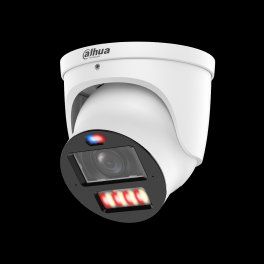
The things most owners don't realize about their recorder — the mistakes that cost people money, and the good news that saves it.
When a system looks completely dead, it's usually just the recorder. The cameras and wiring are often fine — which is why a swap, not a rebuild, is the fix.
A failing camera power supply that stressed the old DVR can damage a brand-new replacement too. It has to be checked before anything new connects.
Buy a recorder that doesn't match your camera signal type and every channel can read "No Signal" — even though the cameras are perfectly good.
Failing recorders often stop saving footage silently. Owners routinely discover the gap only when they go looking for a clip that was never recorded.
The most common misconception: that a dead system means a full replacement. In most Queens buildings, the coax and cameras stay and only the recorder changes.
Old recorders lose remote access when the manufacturer retires its servers. There's no fix on the old box — a current recorder restores it.
A regular computer drive fails fast under 24/7 recording. Surveillance-rated drives (WD Purple, Seagate SkyHawk) are built for the constant write load.
A hybrid/XVR recorder is often only $20–$80 more than a pure DVR — and it lets you add IP cameras later instead of buying a whole new recorder.
The moments that show what actually changes when you replace a recorder — the kind of thing worth seeing before and after, not just reading about.
The same camera, same scene — grainy and dropping frames on the old DVR, then sharp and smooth on the new recorder at the camera's true resolution.
Opening the old box to find the worn hard drive behind the error — the single most common reason a recorder stops saving footage.
Side by side: the discontinued analog-only box next to a hybrid that takes the same cameras today and IP cameras tomorrow.
The phone app that hadn't connected in years coming back to life — live view and playback on the customer's own phone before we leave.
Metering the existing RG59 runs to confirm they're solid copper and good to keep — the step that saves a whole re-wire.
Adding a single 4K IP camera at the front door of an otherwise-analog system, recording alongside the old cameras on the same hybrid box.
The storage timeline going from two or three days on the old drive to weeks on a properly sized surveillance drive with H.265+.
Pulling a clip off the new recorder to a flash drive — exactly what an insurer or the NYPD asks for after an incident.
All three national brands want you on their cameras and their monthly cloud. Every one of them ignores the wired cameras already on your walls. A recorder upgrade is the only option that treats your existing equipment as an asset instead of something to replace.
ADT is a monitoring company first — a contract and a monthly bill, usually paired with their own equipment. Older BNC coax cameras generally don't fit that ecosystem, so the ADT answer tends to be a new proprietary system rather than a recorder that keeps what you have. Our recorder upgrade reuses your cameras and coax, records locally, and carries no monthly fee. Where ADT can make sense is if you actually want 24/7 professional monitoring bundled in; we don't provide central-station monitoring, so if that's the priority, that's a real difference to weigh.
Ring is built around Wi-Fi cameras and cloud video, billed monthly. Good for a renter or a single doorway; a poor fit for a wired multi-camera building. Ring won't record your existing BNC cameras at all, it leans on your Wi-Fi staying up, and footage lives in Ring's cloud on a subscription rather than on a drive you own. For a Queens landlord with eight hallway and entrance cameras on coax, that's a downgrade in reliability and a new recurring bill.
SimpliSafe is a DIY alarm and camera kit, again subscription-driven for meaningful camera features. Like Ring, it doesn't record your existing analog cameras. If you're starting from nothing in a small apartment, it's reasonable. If you already have a wired system and only the recorder failed, buying a whole new DIY ecosystem to replace working cameras is money spent to go backwards. The recorder swap is the proportionate fix.
We quote after reading your cameras and testing the runs end to end, but these are honest planning ranges for a Queens property. The final figure moves with channel count, drive size for your retention, and how much re-termination the long outdoor runs need — no surprise line items.
Three variables move the number more than anything else. Channel count: a 4-channel box is cheaper than a 16- or 32-channel unit, and you want to size for your current cameras plus a little headroom. Drive size: 2TB is entry-level, while 30-plus days across eight higher-resolution cameras may call for 4TB, 6TB, or dual-bay. Cable and connector condition: if your coax and BNC ends test clean, it's a straight swap; if runs fault or big-box cable needs re-termination, that's added labor quoted per run after we test.
A useful rule of thumb: about 2TB holds roughly 30 days of motion-only recording for four 4MP cameras under H.265+, or closer to a week on continuous. Double the cameras or the resolution and you roughly double the storage needed for the same retention. We size the drive to how many cameras you run, at what resolution, and how far back you need to see — then round up. We only use surveillance-rated drives (WD Purple, Seagate SkyHawk) because desktop drives fail fast under constant writing.
Ranges are estimates for planning, not a quote. Service and callback labor billed at the specialty rate with a 3-hour minimum where applicable.
Yes. Most analog HD cameras (TVI, CVI, AHD) work with a new hybrid recorder over your existing coax. We confirm the signal type first, then match a recorder that keeps every camera you already have.
Most residential DVR upgrades in Queens run roughly $450 to $1,200 installed, depending on channel count, hard drive size, and how much BNC re-termination is needed. Commercial 16 and 32-channel jobs run higher.
If your coax and analog cameras are healthy, a hybrid DVR/XVR is the cheaper path and reuses your wiring. If you want 4K on every channel, color night vision, and license-plate detail, moving to an NVR with IP cameras is the better long-term choice.
A new recorder lets older cameras record at their full native resolution and frame rate, and adds H.265 compression for longer storage. It can't turn a 1080p camera into 4K, but many aging DVRs down-record cameras below their real capability.
Yes. Every recorder we install supports a free mobile app for live view and playback with no monthly fee. Older DVRs often lost app support years ago; a new unit restores reliable remote access.
Almost always, as long as we match the signal type. Modern pentabrid recorders auto-detect TVI, CVI, AHD, and CVBS per channel, so a mix of camera generations records on one box.
A DVR typically lasts 5 to 8 years. The hard drive is usually the first part to fail because it writes 24/7. Rebooting loops, missing footage, and app dropouts are the common end-of-life signs.
A DVR records analog cameras over coax and processes video at the recorder. An NVR records IP cameras over Ethernet, where each camera encodes its own video. DVRs reuse coax; NVRs need Cat6 and PoE.
Yes. Newer recorders support larger surveillance drives (up to 10TB+ per bay) and H.265+ compression, which can multiply your retention from days to weeks or months without adding cameras.
Reboot loops and gaps in footage usually mean a failing hard drive or a dying power supply inside the DVR. Sometimes a drive swap fixes it; often the recorder itself is at end of life and a replacement is more reliable.
In most Queens buildings, yes. Solid-copper RG59 coax carries HD analog fine. We test the runs first. Thin pre-made cable from big-box kits sometimes needs re-termination or replacement.
Yes. We supply and install a surveillance-rated drive (WD Purple or Seagate SkyHawk) sized to your retention goal. Desktop drives are never used because they fail under 24/7 recording.
Multi-unit buildings where the DVR quietly stopped saving footage months ago — discovered only after an incident forces someone to pull video that was never there.
Costco and Best Buy systems whose remote viewing died when the manufacturer retired its cloud servers. No fix on the old box — a current recorder restores it and keeps the cameras.
A failing power supply that takes the DVR — and sometimes a DIY replacement bought online — down with it. We check the supply before connecting anything new.
Old drives plus H.264 leaving almost no retention. A larger surveillance drive and H.265+ take the same cameras from days back to weeks.
A DIY box set to the wrong signal type, or coax runs that faulted over the years. A pentabrid recorder plus targeted run repair brings them all back.
Models no longer made, firmware frozen, no compatible cameras left. Still running — but one failure from a scramble. We replace it before it strands you.
More recorder swaps and CCTV walkthroughs on our channel, @openeye0007.
A lot of my Queens calls come from owners who aren't even at the property — they opened the app from another borough, saw it hadn't connected in weeks, and assumed the whole system was shot. Nine times out of ten the cameras are still live and the recorder just quit. I check the drive and power supply first, then walk the long runs, because on these spread-out lots the outdoor terminations at a garage or gate are where weather causes dropouts. Solid-copper RG59 gets reused every time. The jobs I'm called to rescue are always the same: a DVR bought online that didn't match the cameras, or a new box hung off a cooked supply. Test the runs end to end, match the signal, size the drive, and set the remote app up right — for an owner who's never on site, that last part is the whole job.
This Queens page is part of the DVR upgrade silo covering the five boroughs, Long Island, and the Hudson Valley. Jump to the NYC hub or any sibling area below.
All five boroughs from one hub — the recorder-swap starting point for any NYC building.
Pre-war walk-ups and FiDi storefronts where basement recorders age out quietly.
Brownstones and Fifth Avenue multi-family — classic solid-copper RG59 reuse.
Roosevelt Avenue retail density and Astoria buildings overdue for a recorder — you are here.
Fordham Road commercial strip and Grand Concourse stock — the "no one checked it" basement DVR.
Single-family and small-commercial swaps along Hylan Boulevard and the North Shore.
Nassau and Suffolk coverage for suburban homes and commercial recorders.
Recorder upgrades for Nassau homes and storefronts on existing coax runs.
Longer-run analog systems across Suffolk that benefit from a hybrid swap.
Six-county HV hub for homes and businesses north of the city.
Recorder replacement for Westchester residential and commercial systems.
Hybrid XVR upgrades across Rockland that keep existing camera runs.
Orange County recorder swaps with staged IP migration where it fits.
Putnam County upgrades restoring remote viewing and retention.
Dutchess County recorder replacement for homes and small commercial sites.
Ulster County coverage for analog systems ready for a modern recorder.
Each area page covers the recorder-upgrade specifics for that market — local building stock, the GBP and phone routing for that borough or county, and the labor factors that shift pricing outside the city. Serving another area? Jump to the NYC hub, Long Island, or Hudson Valley, or call (347) 434-6392 and we'll route you to the right technician.
One box, one afternoon, footage you can pull from anywhere. We upgrade recorders across Queens — detached homes, two-families, and storefronts from Astoria to the Rockaways — keeping every camera already on your walls.
Last updated July 2026 · DVR upgrade Queens · Reviewed by a licensed NY low-voltage technician