What are you looking for?
About Us Contact Us Careers Get a Free Quote (800) 486-0943
Pick a service
✅ Got Your Own System?
🎬 Home TheatreQuote 🎶 AV SoundQuote 🔑 Access ControlQuote
Now pick your area
Pick your area
Long Island
Hudson Valley
Services available
Pricing & Tools
Pick a service for pricing
🚪 Intercom Pricing 🔔 Buzzer Repair Pricing
Calculators
📹 Camera System Calculator 🚨 Alarm Calculator ⚡ Cabling Quote Builder ✅ Got Your Own System?
Select your area
Home › Smart Lock Installation NYC › Smart Lock Installation Brooklyn
Licensed Low-Voltage Contractor · Based on Troy Avenue, East Flatbush · Brownstones, Frame Houses, Two- to Four-Family Homes & Shops

Smart Lock
Installation in
Brooklyn

Double Front Doors · Vestibule Doors · Garden-Level Entries · Owner-Landlord Code Plans · Stoop Deliveries · Corridor Storefronts

A Brooklyn front door is rarely just one door. A brownstone has a pair of heavy outer doors, a vestibule and a glazed inner door; the garden floor has its own entrance under the stoop; the owner on the parlour floor is often the landlord of the floors above. We plan keyless entry around that reality: which door gets the smart lock, who gets which code, how couriers drop parcels without the stoop becoming a pick-up point, and how the job respects an original door in a landmarked row. Then we fit it, test it from the street and hand you a written list of every code.

Reviewed and updated October 17, 2026 · Written by Anwar Timothy, NYS licence #12000287431

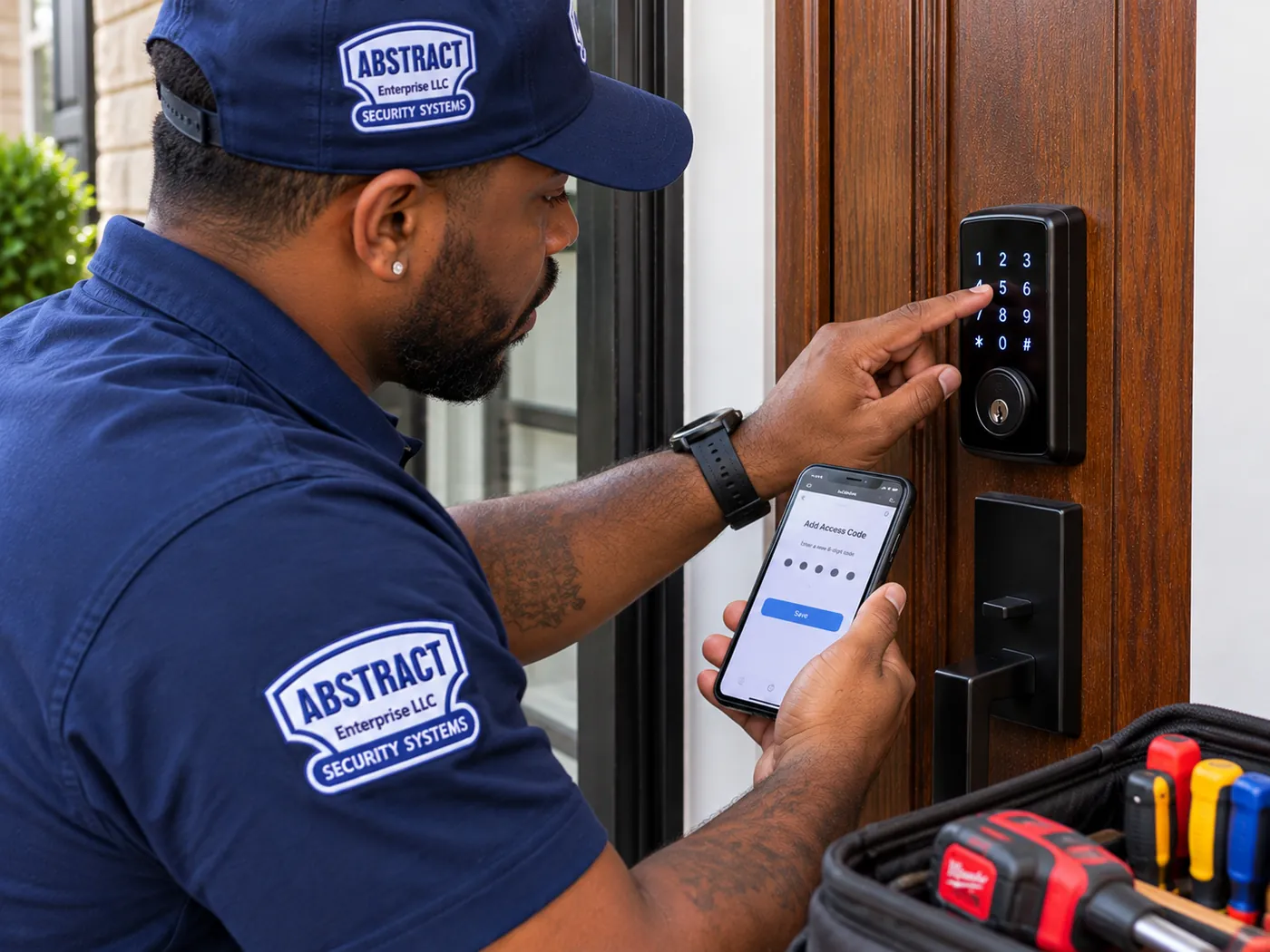
AESS technician programming a new user access code in the smart lock app at the front door in Brooklyn
An AESS technician in a navy hoodie and cap tightens a screw on a white wall keypad whose display reads "System Ready, All Zones Secure", its terminal strip open below; a black card reader and an "Employee Entrance — Authorized Personnel Only" sign sit beside a glass door with a push bar.
Get a Free Brooklyn Smart Lock Quote
Tell us the doors and how many households share the house — we call back the same business day

✅
Request Sent!
We'll call you back the same business day.
25+
Years Experience
✓
Same-Day Estimates
100%
Licensed & Insured
4.7★
201 Google Reviews

Planning keyless entry for a Brooklyn house, or stuck with a lock that stopped answering? Call our Brooklyn line, (347) 934-8335, or send the 60-second form. A licensed installer reads it and tells you which of your doors should carry the smart lock before anyone books a visit.

  • Both sides of the outer doors and the vestibule door checked in person before a price is fixed — the written figure is the figure you pay
  • Building-door keypads and readers priced from the figures already published on our access-control pages, at Brooklyn's base rate
  • NYS licence #12000287431 · fully insured · crews dispatched from 1282 Troy Avenue
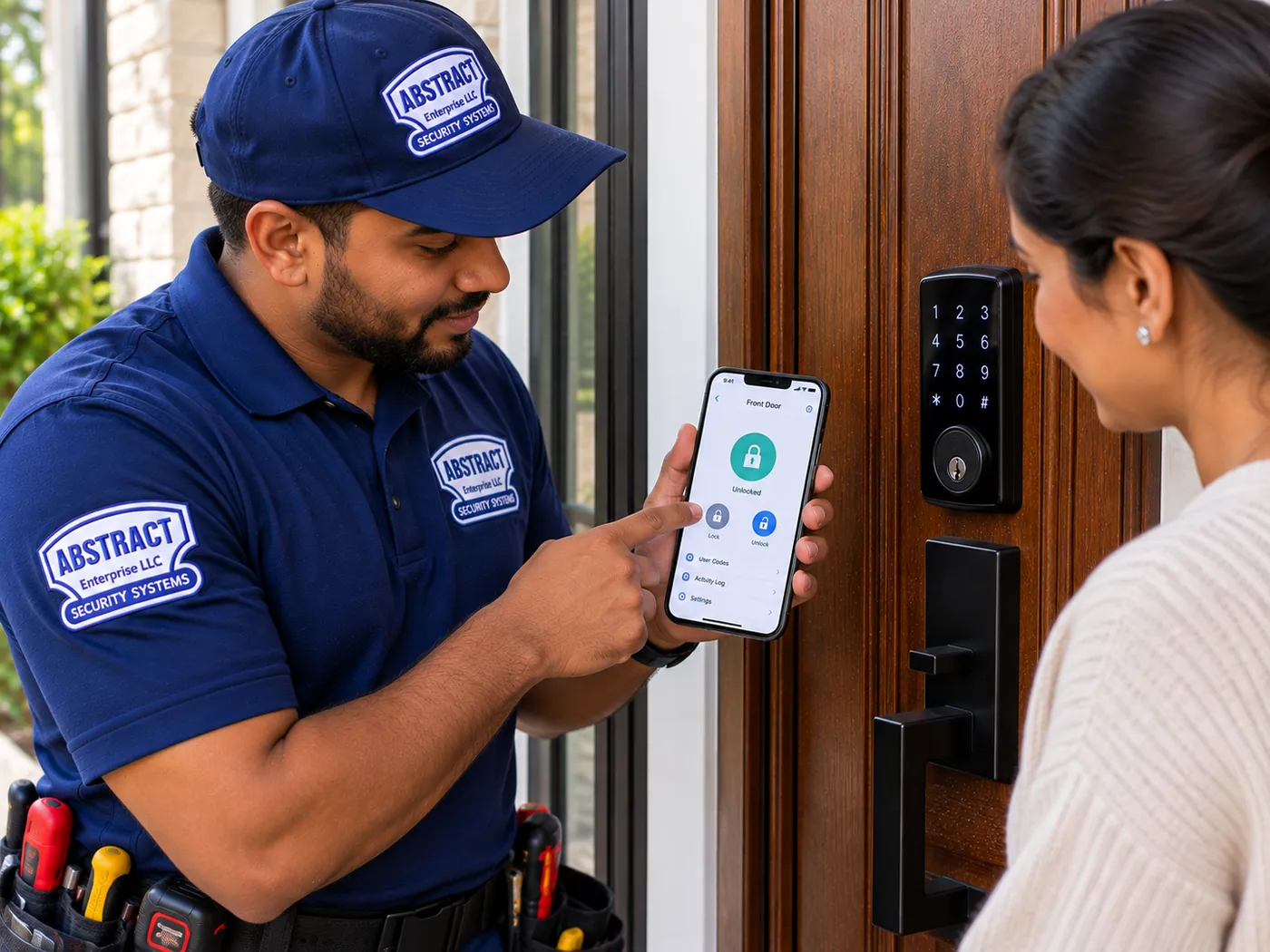
AESS technician walking a customer through locking and unlocking her new smart lock from the app in Brooklyn
Walking the owner through the app before we pack up — lock, unlock, codes and history.
The Neighborhood

Why Brooklyn Homes Need Smart Lock Installation Planned Around the Stoop

Ask a Brooklyn homeowner which is the front door and you often get a pause. On a brownstone or brick rowhouse the answer might be the paired wooden doors at the top of the stoop, the glazed door just inside them that closes off the vestibule, or the gate and door tucked under the stoop at garden level, where many families actually come and go with strollers and groceries. Wood-frame houses in Flatbush, Ditmas Park and Bedford-Stuyvesant add porches, side doors and storm doors to the mix. Every one of those openings has its own hardware, its own exposure to weather and its own list of people who need to get through it.

That is the first thing that sets a Brooklyn smart-lock job apart from the product videos, which almost always show one door, one deadbolt and one household. The second is who lives behind the door. In much of brownstone Brooklyn the person paying for the lock is an owner who lives on one floor and rents out one, two or three others. Census figures put Kings County's owner-occupied rate at 29.5 percent for 2020–2024, so most households here rent — and a large share of those renters live in small buildings whose owner is down the hall or downstairs rather than in a management office. That owner is lock buyer, landlord, neighbour and, at two in the morning, the person a tenant calls when the keypad goes dark.

The rules that govern that arrangement depend on the size of the building. New York's Multiple Dwelling Law treats a building as a multiple dwelling when three or more families live in it independently, so a three- or four-family brownstone falls under the rules that city tenants and their landlords know well, while a one- or two-family house does not. The city's Department of Housing Preservation and Development draws a similar line for paperwork: one- and two-family houses have to be registered with HPD only when neither the owner nor a member of the owner's family lives there. We are not lawyers and we say so, but we know which questions to ask before a lock goes on a shared door, and we build the code plan so that it holds up whichever side of the line your house is on.

Then there is the stoop itself. A parcel left at the top of the steps is visible from the sidewalk, sits outside the outer doors and is gone in seconds if the wrong person walks by. SafeWise's 2025 package theft report, as covered by the New York Post in June 2026, counted 7,828,212 stolen packages in New York State in 2025 — second only to California. A smart lock cannot stop someone lifting a box off the steps, but a keypad on the outer doors with short-lived delivery codes can move the drop-off point into the vestibule, behind a locked door, and leave a record of who used the code and when. Planned with a camera at the stoop, that is the most practical use of keyless entry in this borough.

Finally, a great deal of Brooklyn's housing is protected. Brooklyn Heights became New York City's first historic district in 1965; Stuyvesant Heights in Bed-Stuy followed in 1971 and its expanded district, designated in 2013, covers about 825 more buildings; Park Slope, Prospect Park South and many others have districts of their own. In those rows the front door is part of what the Landmarks Preservation Commission looks after. The good news is that the commission's own permit guidebook lists repairing or replacing hardware — it names hinges, knobs, locks and handles — under work that may not need a permit at all. What it protects is the historic door, its glazing, its surround and its configuration. So the rule we work to on landmarked houses is simple: change the hardware, keep the door.

Newer Brooklyn is a different picture again. The Downtown Brooklyn Partnership counts more than 22,000 housing units built in the district since the 2004 rezoning, and the 2005 Greenpoint–Williamsburg waterfront rezoning has added towers along Kent Avenue and beyond. Those buildings usually arrive with a developer-chosen entry platform on the lobby and amenity doors, and the unit-door question there is less about history and more about whether your lock will live happily alongside the building's app.

Brooklyn figures that shape a smart lock job

  • 2,653,963: Kings County residents as of July 1, 2025, living in 1,141,824 housing units, according to the U.S. Census Bureau's QuickFacts.
  • 29.5 percent: the share of Brooklyn homes that are owner-occupied (2020–2024, QuickFacts). Most doors here have a renter behind them and an owner somewhere nearby.
  • Three families: the point at which New York's Multiple Dwelling Law treats a building as a multiple dwelling — the dividing line between a two-family house and a small apartment building for lock purposes.
  • 1965: the year Brooklyn Heights became the city's first historic district. Rowhouse doors in districts like it are protected; most hardware swaps are not the issue.
  • 22,000+: housing units added in Downtown Brooklyn since the 2004 rezoning, per the Downtown Brooklyn Partnership — towers with their own lobby access platforms.
  • 7,828,212: packages reported stolen in New York State in 2025 in SafeWise's report, as covered by the New York Post — the reason so many stoop owners want a vestibule drop-off code.

Put together, those facts describe what we are actually asked to do here: pick the right door out of two or three, give each person in a shared house exactly the access they should have, protect deliveries without trapping anyone, and leave a historic door looking the way it did when the row was built.

Most Brooklyn owners who put a smart lock on the vestibule also want to see who is on the stoop. Our doorbell camera installers in Brooklyn fit the camera at the same visit, and for buildings with more than a handful of doors the AESS access control team for Brooklyn takes over the street door.

AESS technician mounting a video doorbell beside a newly installed keypad smart lock in Brooklyn
Video doorbell and smart lock at the same visit — see who is there, then let them in.
Repair Capture

Keypad Gone Quiet on Your Brooklyn Stoop?

A keypad on the stoop doors that has gone blank after a wet week, a bolt that only throws if somebody leans on an old wooden door, a tenant whose code stopped working after the owner changed phones, a bridge that lost the lock when the router was moved up to the top floor — those are repairs, not new installs. We book them into the next open 2-hour window we have, and most power, alignment and pairing faults are sorted in one to two hours once a technician is standing at the door. If the trouble is a building entrance whose strike hums but will not release, our published door-buzzer repair figure for a failed electric strike is $295–$485. Call the Brooklyn line at (347) 934-8335 and say it is a lock problem, or see our intercom repair service in Brooklyn if the fault sits in the buzzer system rather than the lock.

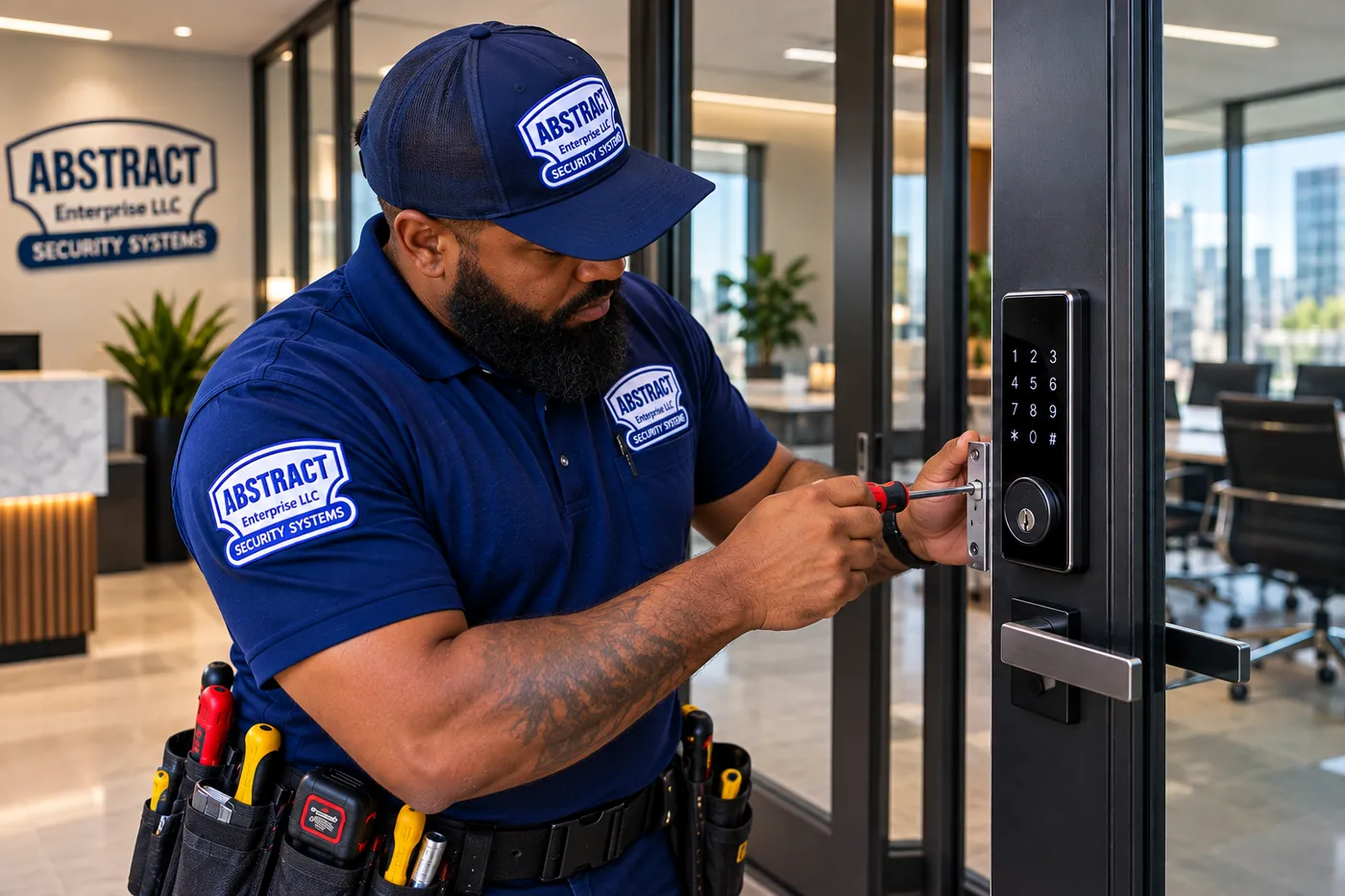
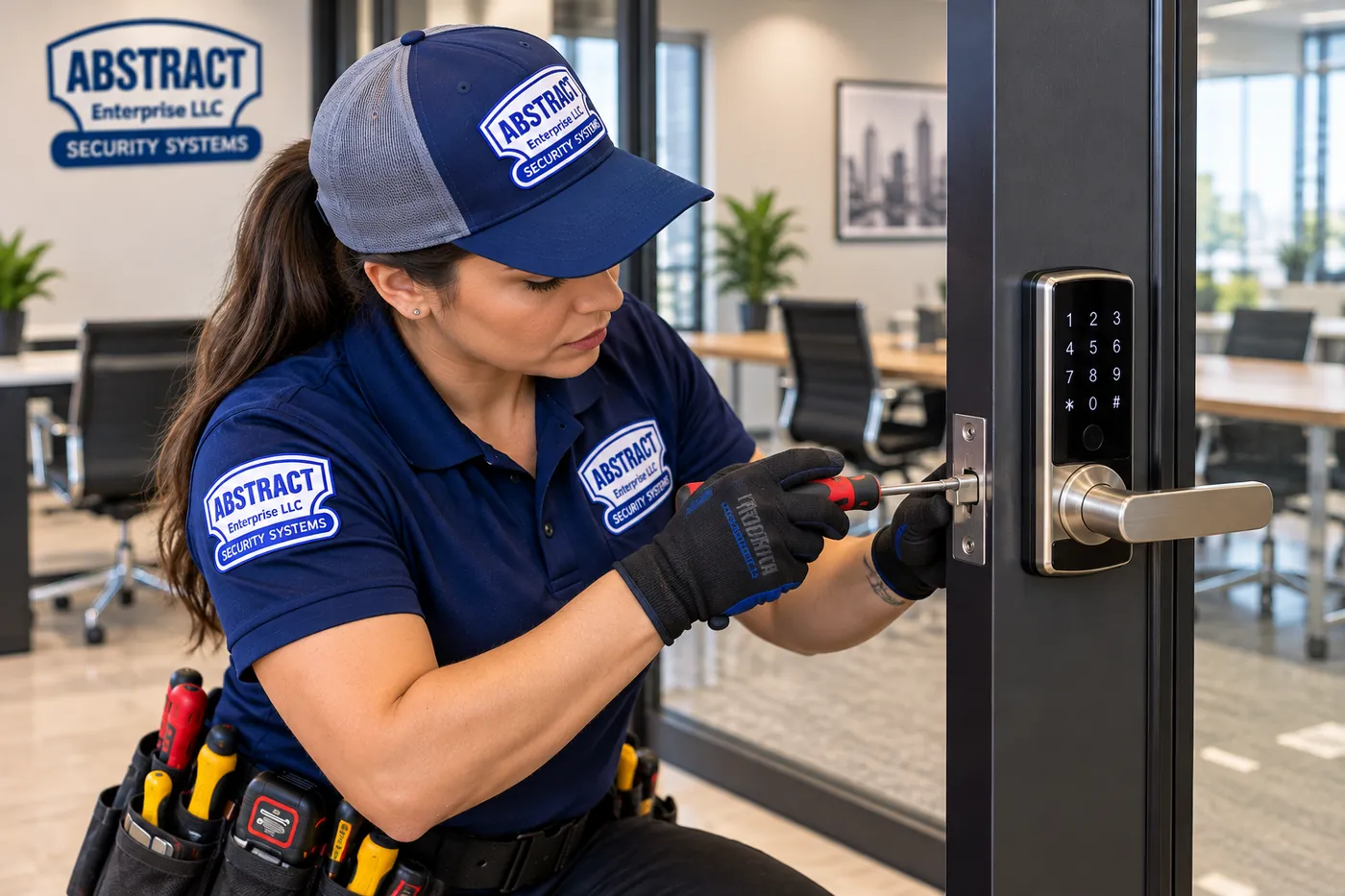
AESS technician fastening the strike for a keypad smart lock on an office glass-frame door in Brooklyn
Business smart lock on an aluminum office door — codes per employee, no keys to collect.
What We Install

Smart Lock Installation Services in Brooklyn

Almost every Brooklyn keyless job we take is one of these, or two or three of them on the same house. All of them finish the same way: each door latches on its own, opens from the inside without a key or a code, and every credential has been tried in front of you from both sides.

Outer Double-Door Keypads

A keypad or fingerprint deadbolt on the active leaf of a brownstone's paired doors, with the second leaf secured properly at head and sill so the pair cannot be pushed apart. The heaviest and most weather-exposed door on the house, and the one that decides whether a delivery code is possible.

Vestibule and Inner-Door Smart Locks

A smart lock on the glazed inner door that closes off the vestibule from the hall. Often the right home for the household's everyday lock, sheltered from rain and sun, with the outer doors left on a key or a separate delivery code.

Garden-Level and Under-Stoop Entries

The door under the stoop and, where there is one, the iron gate in front of it. Many families use this entrance every day, and in owner-occupied houses it is often a tenant's private door. We fit locks that suit a low, shaded and sometimes damp location.

Owner-Landlord Code Plans

For two-, three- and four-family houses: one credential per adult, separate codes for the shared street door and each unit, time-limited codes for cleaners and contractors, and a written register so the owner always knows who can open what.

Courier and Delivery Codes

Short-lived or schedule-limited codes that let a courier into the vestibule and no further, paired with a camera at the stoop, so parcels stop sitting on the top step in full view of the street.

Frame-House Porch and Side Doors

Keypad deadbolts on Victorian and early-twentieth-century frame houses, where front doors often carry glass panels or a mail slot near the lock and a storm door outside. We choose locks and settings with those details in mind.

Condo and Rental-Tower Unit Doors

Unit-door smart locks in Downtown Brooklyn, Williamsburg and Greenpoint towers, chosen to sit alongside the building's own lobby app and within the condo or management rules rather than fight them.

Corridor Storefront and Back-Door Locks

Keypad deadbolts and reader-and-strike sets for shops on Fifth Avenue, Court Street, Flatbush Avenue and Graham Avenue, including the rear door to the yard that so often gets forgotten.

Repairs, Re-Pairing and Code Clean-Ups

Weather-damaged keypads, motors fighting a dropped door, lost admin access, a bridge that fell off the network, and a register of codes that nobody has tidied since the last tenant left.

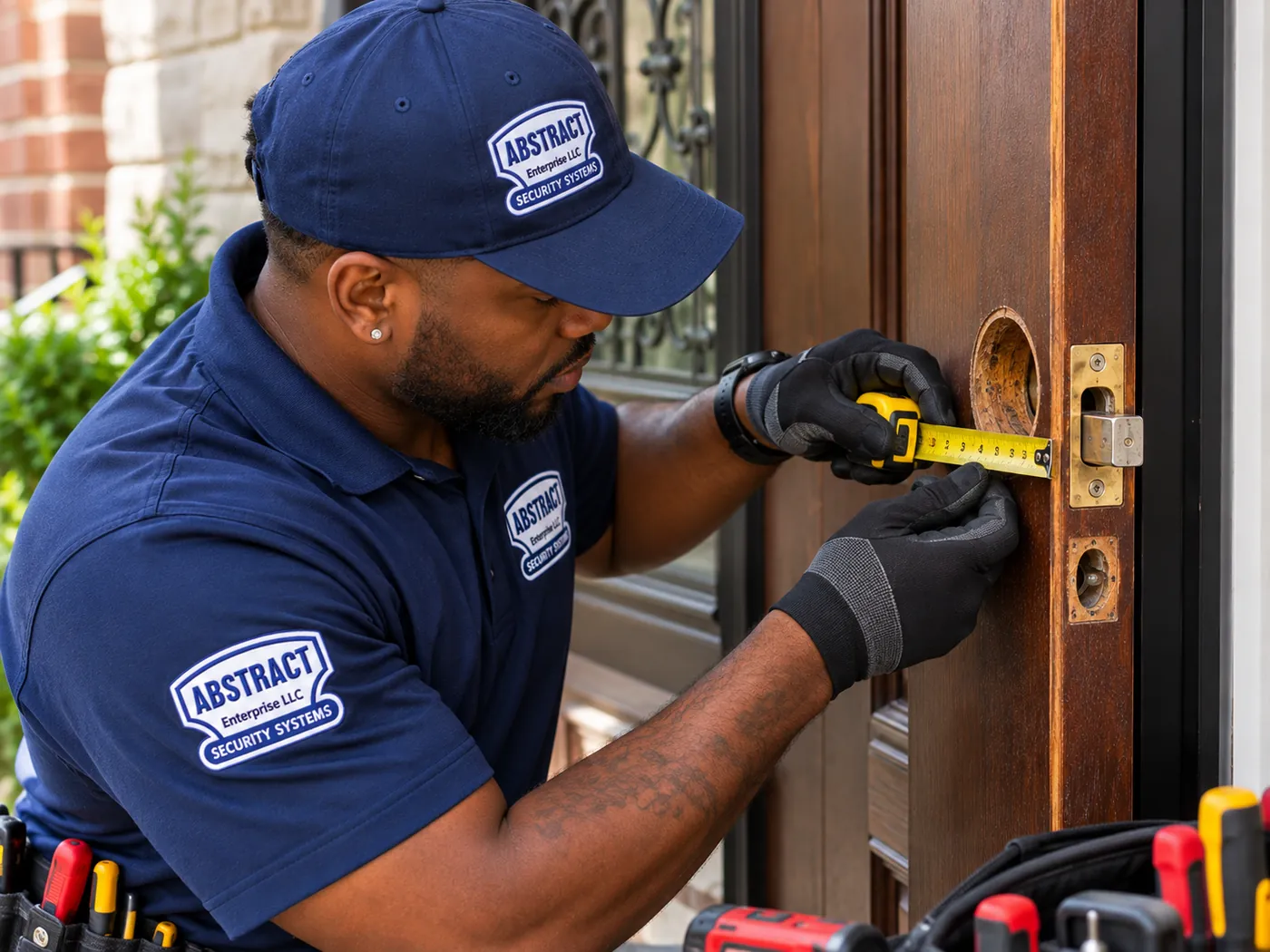
AESS technician measuring the door bore with a tape measure before a smart lock installation in Brooklyn
Measuring the bore and backset first, so the new smart deadbolt fits the existing door without re-drilling.
Building Specialists

Smart Lock Installation for Brooklyn's Architecture

Brooklyn's houses were built over a century and a half by thousands of different builders, and their doors show it. These are the types we meet most often and what each one means for keyless entry.

Brownstone and Brick Rowhouses

Parlour-floor entrance at the top of a stoop, usually with a pair of tall outer doors, a small tiled vestibule and an inner door with glass. Two doors in series means two decisions: which carries the smart lock, and what the other one does when the household is in, out or away.

Garden-Floor Apartments

The level under the stoop, entered through an iron gate and a door a few steps below the sidewalk. Shaded, sometimes damp, and often the tenant's private entrance in a two-family house. A good place for a keypad lock that is sealed against moisture.

Victorian Frame Houses

Freestanding wood houses in Prospect Park South, Ditmas Park and elsewhere in Flatbush, with porches, wide front doors, glass panels, storm doors and sometimes a side or kitchen door. More doors per house than a rowhouse, and wood that moves with the seasons.

Early Wood-Frame Rowhouses

Some nineteenth-century frame houses in Bed-Stuy and other neighbourhoods were built with brick packed between the timber studs — Brownstoner describes the practice, known as brick nogging, as no longer common by 1882. Door frames in these houses may sit in mixed timber and masonry, which affects where a strike can be cut.

Two- to Four-Family Houses

Owner on one floor, tenants on the others, a shared street door and individual unit doors. The building's size decides which housing rules apply, and the code plan has to work for the owner without letting the owner into anyone else's home by accident.

Mixed-Use Buildings on the Avenues

A storefront at street level, apartments above and a narrow residential door beside the shop window. Shop staff and residents must never share a code, and the residential door often still runs on an old buzzer.

New Towers Downtown and on the Waterfront

Concrete and steel-stud buildings in Downtown Brooklyn, Williamsburg and Greenpoint with lobby fobs or phone entry already chosen by the developer, uniform metal unit doors, and condo or management rules about what may be changed.

Large Rental Complexes

Developments like Spring Creek Towers, with 5,881 apartments in 46 buildings by Jamaica Bay. Unit-door decisions there run through management and the building's own entry platform, and we work to whatever management approves in writing.

Door specifics we check on every Brooklyn house

The pair of outer doors. On a double door, one leaf — the active leaf — carries the lock and swings every day; the other is held shut by bolts at the top and bottom. A smart deadbolt on the active leaf is only as strong as those bolts, because a pair with a loose inactive leaf can be pushed open together. Before we fit anything we check that the head and floor bolts engage firmly, that the astragal where the two leaves meet is sound, and that the active leaf closes flush against it. If a door has settled so the leaves no longer line up, we say so and fix the alignment first.

Door thickness and the original lock. Outer doors on older brownstones are often thick, heavy and fitted with a mortise lock set into the edge rather than a round-bore deadbolt. That narrows the choice to a smart lock made for that door's thickness and lock format, a sympathetic second deadbolt where the stile is wide enough, or a smart lock on the vestibule door instead. We measure the stile width, the thickness and any old bores before you buy.

Glass near the lock. Vestibule doors and many frame-house doors have glass within an arm's reach of the inside thumb-turn. A double-cylinder lock that needs a key inside is the wrong fix: building codes generally require a home's exit door to open from inside without a key or special knowledge. The better answers are a lock that relocks itself, laminated or security glazing, and placing the everyday lock on the door with less glass.

Weather on the stoop. Outer doors at the top of a stoop take rain, snow and afternoon sun. We look at which way the house faces and whether the keypad will be sheltered by the door hood or lintel, and we choose locks with an outdoor temperature rating that covers New York winters — Schlage, for example, lists an outside operating range of −31°F to 150.8°F for its Encode Plus.

Landmark status. If the house is in a historic district or is an individual landmark, we treat the door, its glass, its surround and its colour as protected and confine our work to hardware. The commission's guidebook lists replacing locks, knobs, handles and hinges among work that may not need a permit; anything that alters the historic door itself is a different conversation.

Most Brooklyn owners who re-do the front door also want better wiring behind it. Our structured cabling installation in Brooklyn runs cable from the cellar to the vestibule for a reader, camera or bridge when Wi-Fi alone will not do.

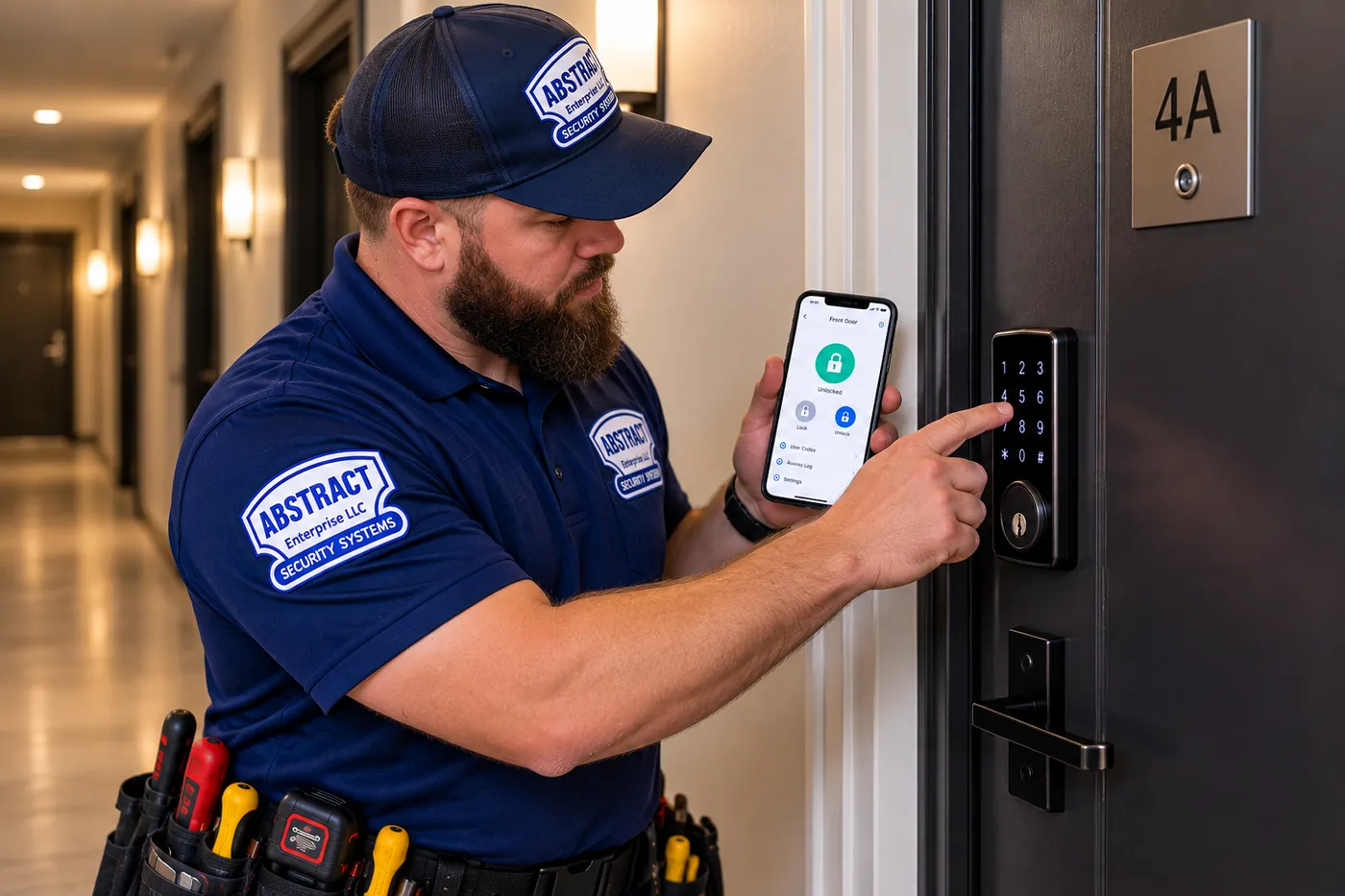
AESS technician testing a keypad smart lock on an apartment unit door with the mobile app in Brooklyn
Apartment unit door, tested from the keypad and the app — handy for owners renting out units.
Commercial Smart Locks

Business Smart Lock Installation in Brooklyn

Brooklyn's small businesses live on its avenues, many of them in buildings with apartments upstairs and a yard or alley behind. The city's Department of Small Business Services lists about two dozen business improvement districts in the borough. These six corridors show the range of doors we are asked to make keyless, from bakery back doors to second-floor studios.

Park Slope 5th Avenue

Covered by the Park Slope 5th Avenue BID: restaurants, cafés, boutiques and services in mixed-use buildings. Typical requests are a keypad on the shop door for opening staff and a separate code for the residential door next to it.

Court Street and Livingston Street

Within the Court-Livingston-Schermerhorn BID near Borough Hall, with offices, professional suites and shops. Suites at the top of shared stairs often want a reader on the office door and a log of who opened it.

North Flatbush and Flatbush–Nostrand

Flatbush Avenue is served by the North Flatbush BID near Prospect Heights, and further south by the Flatbush-Nostrand Junction BID. Busy shop doors here need hardware rated for constant use more than app features.

Graham Avenue, Williamsburg

Graham Avenue's BID runs through East Williamsburg, with small shops, food businesses and studios. Rear doors to yards and delivery doors are the usual weak point we are called about.

Bed-Stuy Gateway on Fulton Street

The Bed-Stuy Gateway BID's stretch of Fulton Street mixes retail, restaurants and community services. Early openings and changing staff make codes that can be cancelled the same day the practical choice.

Kings Highway and Brighton Beach

Two southern Brooklyn corridors with BIDs of their own, lined with family-run shops and services. Owners often want a keypad deadbolt they can manage themselves rather than a full access-control system.

Myrtle Avenue, Atlantic Avenue, Montague Street, Sunset Park and Pitkin Avenue appear on the same SBS list, and the Brooklyn Navy Yard — more than 300 acres with over 550 businesses, by its own 2025 impact report — and Industry City bring makers and studios with doors of their own.

Compliance callouts for Brooklyn business doors

  • Exit without a key. Doors on a required exit path must open from inside without a key, code or special knowledge. A keypad outside is fine; a code or key inside is not. Electric strikes and magnetic locks are paired with a push-to-exit button or motion sensor where the door needs one.
  • Back doors are exits too. The rear door to a yard or alley is often the one locked hardest and the one that matters most in a fire. We fit locks that secure it from outside and release with one motion from inside.
  • Accessible hardware. Under the 2010 ADA Standards, operable door hardware must not require tight grasping, pinching or twisting of the wrist and is mounted between 34 and 48 inches above the floor. Lever trim and push-button keypads meet that more easily than knobs.
  • Storefronts in historic districts. Commercial buildings inside a historic district are regulated as landmarks too. Replacing hardware is generally treated lightly; altering a historic storefront door or adding exposed conduit on the facade is not.
  • Shop and homes in one building. Where a storefront shares a building with apartments, the residential side keeps its own credentials and its own housing rules. Staff codes never open the residents' door.

For multi-door premises with schedules and several staff groups, the job becomes access control. Our commercial security camera installation in Brooklyn is often added so each door event can be checked against video.

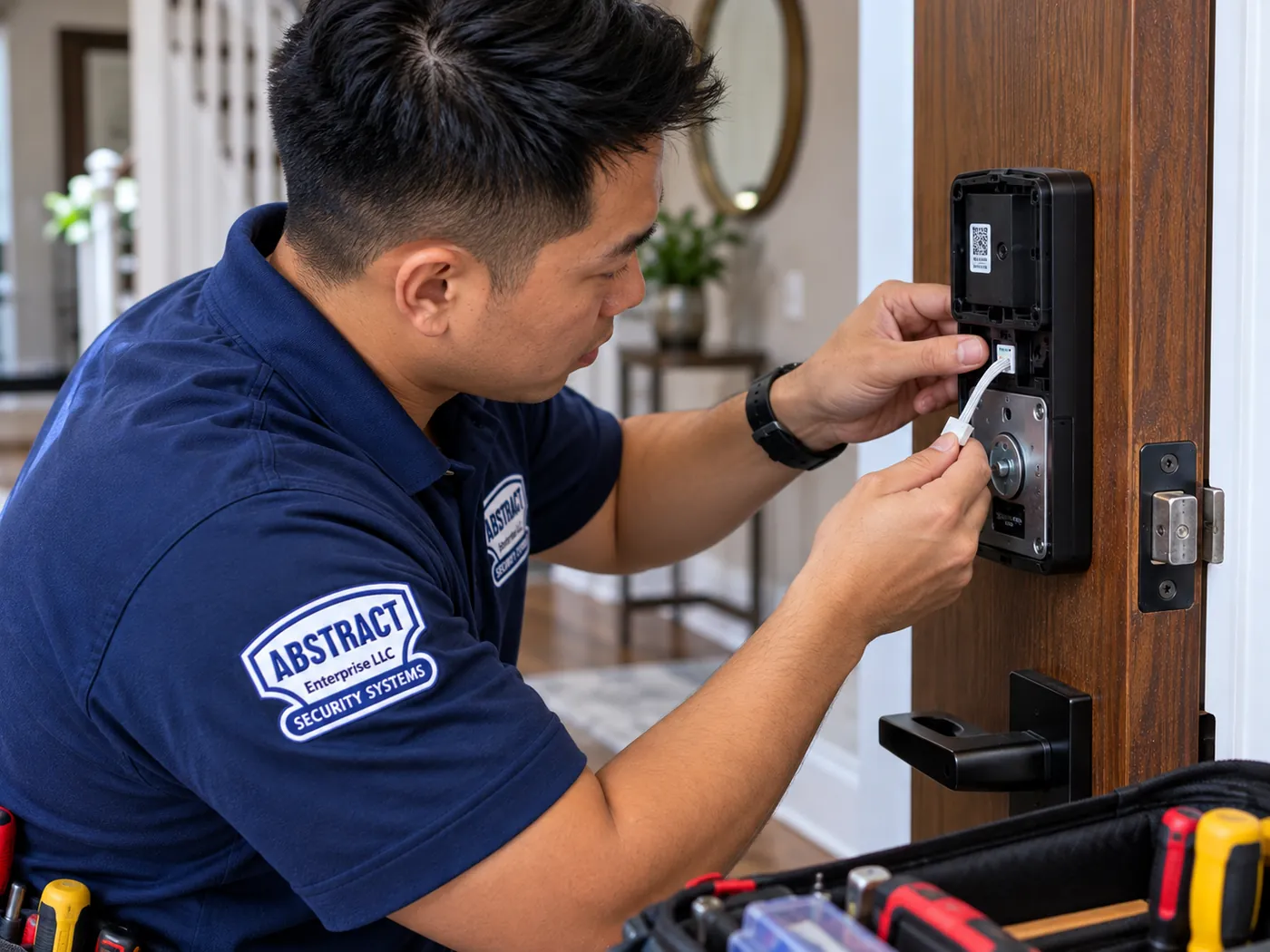
AESS technician connecting the ribbon cable on the interior unit of a keypad smart lock during installation in Brooklyn
Seating the ribbon cable between the outside keypad and the inside unit — a loose connector is the top cause of dead keypads.
Your Questions Answered

Smart Lock Installation in Brooklyn: Questions Answered

These are the questions Brooklyn owners, tenants and shopkeepers bring to us before a smart lock goes on, grouped by the part of the house they are about: the stoop doors, historic fronts and older wood, the shared house, deliveries, newer towers and the avenues. Booking, coverage and day-of-visit questions are in the FAQ near the end of the page. None of this is legal advice; where a law or a city rule is relevant we name it so you can read it yourself.

The stoop, the vestibule and the garden door

On a brownstone with double front doors and a vestibule, which door should get the smart lock — the outer pair or the inner door?

Usually the inner door for everyday use, and the outer pair for security and deliveries — but it depends on how the house is used. The inner door is sheltered from rain and sun, it is a single leaf that closes against one frame, and it is the door the household actually opens dozens of times a day. A keypad or fingerprint lock there lasts longer and behaves better than one exposed at the top of the stoop. The outer doors are heavier, often original and harder to fit, and in many houses they stay latched in the day and are deadlocked at night.

Brooklyn owners argue about this constantly. One thread on Brownstoner's forum, started in 2024, asks exactly whether the deadbolt belongs on the outer doors, the inner vestibule door or both; one reply puts it bluntly: “I think a lock on the outer door is far more secure.” That is true for keeping people off the vestibule floor. The answer we give most often is both, with different jobs: a strong mechanical deadbolt or a weather-rated keypad on the outer pair, and the smart lock you use every day on the inner door.

The exception is the house that wants courier drops in the vestibule. Then the outer door has to carry the keypad, because that is the door the courier opens, and the inner door must be locked whenever a delivery code is live. We draw the plan on paper with you at the walkthrough — who comes in at each door, at what times — before choosing hardware for either.

Can a smart lock work on a pair of doors where one leaf is held shut by bolts at the top and bottom?

Yes, as long as the fixed leaf is genuinely fixed. On a pair of doors, the smart lock goes on the active leaf and throws its bolt into a strike mounted on the edge of the inactive leaf, not into a frame. That means the inactive leaf is doing the job a door frame normally does, and it can only do it if its head bolt and floor bolt are engaged firmly and the leaf cannot flex. We check those bolts, the keepers they drop into and the timber around them before anything else, because a smart deadbolt on a loose pair secures nothing.

Two details matter on older Brooklyn doors. First, the floor keeper is often worn out or filled with grit from the stoop, so the bottom bolt sits on the sill instead of in it; we clean or replace it. Second, the astragal — the strip where the two leaves meet — has to leave room for the bolt and keep a rain-tight seal. A motorised bolt that rubs against a swollen astragal will drain its batteries and eventually stall.

Where the active leaf is narrow or the original mortise lock has to stay, a surface-mounted or narrow-format smart lock is sometimes the only option on the pair. In those houses we often recommend leaving the original lock on the outer doors and putting the smart lock on the vestibule door, which is a far easier fit.

When the garden apartment's only way in and out is under the stoop, what has to stay true about that door and the areaway gate in front of it?

Both have to work as an exit first and an entrance second. For the person who lives on the garden floor, the door under the stoop and the gate across the areaway are the route to the sidewalk in a fire, so each must open from the inside in one simple motion — no key, no code, no phone, no hunting for a padlock key in the dark. That rules out the padlock-and-hasp arrangement many old gates still carry, and it rules out any lock on the garden door that needs a key inside.

Within that rule there is plenty of room. The garden door can take a keypad or fingerprint deadbolt with a plain thumb-turn inside, sealed against the damp that collects below sidewalk level. The gate can stay on a lock with an inside lever, or carry a keypad gate lock or a post-mounted strike with a push-to-exit button, cabled neatly through the areaway wall rather than across the stoop. If power fails, the inside release must still work.

Ownership of the credentials matters as much as the hardware. If the garden floor is a tenant's home, the tenant should administer the code on their own door, and the owner should hold a key for emergencies agreed in the lease rather than a live admin account. Many owners, once they see the options, leave the gate on a simple inside-lever lock and put the smart lock on the door behind it — out of the rain and cheaper.

Should the keypad face the street on the outer doors, or stay sheltered inside the vestibule?

If there is any choice, keep electronics out of the direct weather. A keypad on the outer face of a brownstone door gets driving rain off the stoop, snow piled against the door in winter and, on a south- or west-facing house, hours of afternoon sun on a dark painted surface. Outdoor-rated locks list wide operating temperatures — Schlage gives −31°F to 150.8°F outside for its Encode Plus — but a temperature rating is not a promise about water pooling in a keypad or ice in the bolt pocket.

When the outer doors must carry the keypad — usually for deliveries — we look at the door hood or lintel, the side of the door with the most shelter and the height that keeps the keypad out of splash from the stoop. A keypad set under a deep stone lintel on a north-facing house is a very different proposition from one on a flush door facing the afternoon sun, and we tell you which you have.

Inside the vestibule the problem mostly disappears. That is another reason the everyday smart lock so often ends up on the inner door: it lives in a small, dry, unheated room rather than on the street.

Historic fronts and older wood

If our original front door is too damaged to take a smart lock, what does a replacement have to look like in a Brooklyn historic district?

In a historic district, the replacement has to recall the door it replaces. The Landmarks Preservation Commission's permit guidebook says historic fabric such as doors, sidelights, transoms and door surrounds should be retained, and that staff can approve a new door at a primary facade when it matches the historic door's materials, operation, configuration, details and finish. If the door you have now is not historic, the guidebook points owners to historic doors on similar buildings for the model. Replacing a historic or special door also needs an assessment of its condition.

That is why we try hard not to put a house in that position. Most original doors can take a well-chosen smart lock, or can keep their original lock while the smart lock goes on the vestibule door. If the active leaf has been bored and re-bored by generations of locksmiths until there is no sound wood left at the lock, a door restorer can often splice in new timber before any thought of replacement. Brownstoner's long-running Brownstone Boys renovation diary, from Bed-Stuy, describes an owner who kept and stripped the original second entry door even while the outer pair had to be replaced.

If replacement is truly needed, the order of work matters: the new door is designed and approved first, and the smart lock is chosen to suit the new door's stile and thickness so it does not need altering later. We are happy to give your architect or door maker the lock's preparation drawing so the new door arrives ready for it.

Our Flatbush frame house has glass panels and a mail slot next to the lock — does that change which smart lock we should buy?

It does. Glass within reach of the inside thumb-turn invites someone to break a pane and reach in, and a mail slot near the lock invites a tool to be fed through it. The instinctive fix — a deadbolt keyed on both sides — is the wrong one, because model residential codes require a home's exit door to open from inside without a key or special knowledge, and a key you cannot find in a fire is a key you do not have.

Better answers combine three things. A smart lock with auto-lock and a thumb-turn that is hard to reach from the glass, or one that can be set so the inside turn is not trivially operated through a broken pane. Laminated or security film on the panes nearest the lock. And, on houses with a storm door, using the storm door's own lock as the first line so the glass is not the outer skin. A mail slot can be fitted with an inside hood or cage so nothing fed through it reaches the lock.

We also check the wood. Frame-house doors in Flatbush move with the seasons, and a door that binds in August will make a motorised bolt struggle. We plane or adjust the strike so the bolt throws freely in both summer and winter positions before we leave.

The shared house: owners who are also landlords

I live in my two-family house and rent out the other floor — do the city's tenant lock rules apply to us?

Some do and some do not, and the dividing line is the number of families. New York's Multiple Dwelling Law defines a multiple dwelling as a building occupied as the residence of three or more families living independently. The rules most often quoted about New York apartment locks — a tenant's right to add a lock under section 51-c, the Housing Maintenance Code's deadbolt and chain-guard list, the Tenant Data Privacy Act for smart access in multiple dwellings — are written around those buildings. A one- or two-family house sits outside that definition.

That does not leave a two-family landlord free to do anything. A tenant still lives there lawfully, the city's unlawful-eviction protections are not limited to large buildings, and the lease you signed governs locks and access. Practically, it means your tenant should have their own credential that you do not casually change, a key for their unit door, and an understanding in writing about when you may enter. For paperwork, HPD only requires a one- or two-family house to be registered when neither the owner nor a family member lives there, which is another sign that the city treats owner-occupied small houses differently.

Add a third unit and the picture changes. A three-family brownstone is a multiple dwelling, so if you are converting or already rent two floors, plan the locks as an apartment building would. We will ask how many households live in the house at the walkthrough for exactly this reason, and we suggest you confirm your own obligations with a lawyer if the answer is borderline.

Tenants keep sharing the street-door code with friends and delivery drivers — how do we tighten that without cutting off anyone's access?

Stop sharing one code, and give people the tools to share safely instead. In most small Brooklyn houses the street door started life with a single code everybody knew, and within a year it had been given to a dog walker, two exes and a takeaway driver. The fix is one personal code per adult resident, plus the ability for each resident to issue their own guest codes that expire on their own — a day, a weekend, a weekly cleaning slot.

Then retire the shared code on a date everyone agrees, with notice. Nobody should discover their code has stopped working by standing on the stoop at midnight. We set the new codes up with each household, show them how to create guest codes on their phone, and change the old code only after everyone has tested their new one. The owner keeps an admin account, but does not need to read every tenant's guest list to keep the door secure.

As the owner, can I see when my tenant comes and goes — and should I?

Most smart-lock apps will show the admin every unlock on every door, and that is exactly why owners should think before turning it on for a tenant's private door. In an owner-occupied house the owner and tenant pass each other on the stairs; a lock log that tells the owner when a tenant came home, and with whose code, turns a convenience into surveillance, and it can sour a tenancy quickly.

Our default in small houses is to keep the logs that serve security — the shared street door, the cellar, the owner's own unit — and to give each tenant sole admin of their own unit door, with the owner holding a sealed mechanical key or an emergency procedure agreed in the lease. The owner can still see that the street door was opened with a resident's code; the owner cannot see a tenant's private comings and goings.

If you do want an owner-visible log on a tenant's door, say so in the lease and keep it short. In larger buildings the city's Tenant Data Privacy Act already requires express consent before collecting such data and requires authentication data to be destroyed within 90 days unless anonymised; treating a two-family house the same way is good manners and good evidence if a dispute ever arises.

We host registered guests in our own floor of a two-family house — how do we make sure their code never reaches the tenant's floor?

Treat the house as a set of zones and give the guest exactly one route: street door, stair, host's own unit. NYC311's summary of the short-term rental rules says hosts may not rent out an entire apartment or home for fewer than 30 days, must stay in the same unit as their guests, may have no more than two guests, and must make sure every guest can reach all parts of the dwelling unit and each exit. Registration with the Office of Special Enforcement comes first. None of that gives a guest any business on your tenant's floor, in the cellar or in the yard you share with the tenant.

So the guest's code is issued for the street door and the host's unit door only, for the dates of the stay, and expires on its own at checkout. The tenant's unit door is on a credential the guest never sees; the cellar and rear-yard doors stay keyed or on owner-only codes. Because guests must be able to reach each exit, any door on their route — including the street door from the inside — opens without a code.

Tell your tenant in writing that you host and how the codes are separated; it is their front door too, and a stranger on the stair at night is less alarming when the tenant knows the plan. Whether a particular hosting arrangement is lawful is for the city to decide, not us; our part is making sure the doors behave the way the plan says.

Packages and the stoop

Can a smart lock on the outer doors stop parcels disappearing from our stoop?

It can move the parcels off the stoop, which is most of the battle. A box at the top of the steps is visible from the sidewalk and unguarded; the same box on the vestibule floor, behind a locked outer door, is out of sight and out of reach. A keypad on the outer doors with a delivery code — one that works only in daytime hours, or only on a day you are expecting something — lets a courier step into the vestibule, leave the parcel and close the door behind them, while the inner door stays locked.

Three conditions make it work. The inner door must be locked whenever the delivery code is active, so the vestibule is a sealed box rather than a hallway. The outer doors need to close and latch reliably on their own, or a courier who does not pull hard leaves the house open. And a camera on the stoop or in the vestibule turns each delivery into a recorded event, which discourages misuse of the code. Brooklyn neighbours talk about this all the time — threads on r/Brooklyn and r/parkslope ask what actually works for packages in brownstones — and lockable parcel bins on the stoop are the other common answer.

What a smart lock cannot do is stop a parcel being taken when the courier ignores the instructions and leaves it on the steps anyway. For that you need a clear delivery note on your accounts, a camera, and sometimes a conversation with the carrier. We fit the lock and the camera; the delivery note is yours to write.

Newer towers

The sponsor's team installed the smart lock on our new Downtown Brooklyn or Greenpoint condo door — how do we take the admin rights over from them?

Assume that the people who built, sold and showed the apartment may still hold a way in until you prove otherwise. Locks fitted during construction are typically enrolled by the installer or the sponsor's team, and codes are created for contractors, brokers and walk-throughs along the way. At closing you should receive the lock's admin rights, not just a code, and every code and credential you did not create yourself should be deleted.

How that is done depends on the lock. Some are standalone and need a factory reset and fresh enrolment; others are tied to the building's access platform, in which case management controls the admin side and you ask them, in writing, to remove sponsor and contractor credentials and confirm what remains. Ask, too, whether the mechanical key cylinder was keyed to a construction master; if so, a new cylinder closes that path.

We can do the reset and re-enrolment, change the cylinder, and leave you a short note listing every credential that now opens the door. On fire-rated metal unit doors we use the existing preparation and leave the corridor face matching the building standard, and we check the signal at the door, because concrete corridors are hard on Wi-Fi and Bluetooth alike.

Shops on the avenues

Our café's back door opens onto a yard — how do we lock it properly without blocking the way out?

By separating the two directions. From the yard side the door should be as secure as the front, because rear yards and alleys behind Brooklyn avenues are quiet at night. From inside, it must open in one motion without a key, code or tool whenever the premises are occupied, because in a kitchen fire it may be the nearest exit. The common mistake is a padlock, a slide bolt or a key-both-sides deadbolt added after a break-in, which secures the door by making it useless as an exit.

The usual fixes are a keypad or reader outside with an electric strike or exit device and a push bar inside, or a heavy keyless deadbolt with a simple thumb-turn inside on doors where a push bar is not practical. Staff who take out rubbish get their own codes, which can be cancelled the day someone leaves, and the door can be set to report if it is left open.

Back doors also tend to be steel in steel frames that have been hit, pried and patched over the years. We check the frame and hinges first; a new lock on a bent frame lasts weeks. Single-door keypad or reader with electric strike work is $1,500–$2,500 installed at Brooklyn's base, from the figures published on our access-control pages.

Cost on a Brooklyn house

Why can a brownstone's double doors cost more to fit than an ordinary single door?

Because the lock is the small part of the job. On a pair of tall, heavy, often original outer doors we may need to reset the head and floor bolts, rebuild a worn floor keeper, ease a swollen astragal, deal with a mortise pocket from a lock fitted a century ago, and find a keypad position that stays out of the weather — before the smart lock goes on. A single modern door in a square frame needs none of that.

Two doors in series also mean two locks and a plan for how they work together, and owners who want courier drops add a camera. That is why we quote residential doors flat after seeing them, rather than giving a number over the phone that turns out to be wrong. Building-door items — a keypad or reader with an electric strike, a new strike, a strike repair — are published figures and appear in the pricing section below.

The cheapest version of a good result is often the vestibule-door smart lock with the outer doors left on a solid mechanical deadbolt. If budget matters, ask us to price that option next to the double-door keypad and choose with both numbers in front of you.
AESS technician installing a keypad lever smart lock on an office suite door in Brooklyn
Keypad lever lock on an interior office door — good for suites, supply rooms and server closets.
Equipment

Types of Smart Locks We Install

We are not tied to one brand, and on a Brooklyn house the door usually narrows the field before the feature list does. Buy your own and we will fit it, or let us recommend one after the walkthrough. These are the categories we install here and the doors each suits.

Weather-Rated Keypad Deadbolts

For outer stoop doors and porch doors exposed to rain, snow and sun. Look for an outdoor operating range that covers a New York January and a sealed keypad; we check the door hood and orientation before recommending one.

Interior-Side Retrofit Units

Mount over an existing single-cylinder deadbolt on the inside only, leaving the outside and the key untouched. Ideal for an original vestibule door or a historic outer leaf where you want keyless convenience without changing what the street sees.

Fingerprint Deadbolts

Useful in shared houses where codes get passed around: a fingerprint cannot be texted to a friend. Good on a tenant's private unit door or the owner's own floor.

Mortise-Format Smart Locks

Built to occupy a mortise pocket in a thick door edge, with lever trim and a keypad or reader face. The usual answer for an owner who wants a smart lock on a heavy original door without boring new holes through it.

Narrow-Stile and Glass-Door Locks

For aluminium storefronts and narrow wooden leaves where a residential deadbolt will not fit the stile. Paired with a keypad or reader on the frame or wall.

Keypads, Readers and Electric Strikes

For street doors in three- and four-family houses, mixed-use residential doors and shop doors. The reader sits on the wall or frame, the strike releases the latch, and the power supply lives safely inside.

Gate Locks and Gate Strikes

Weather-rated keypad locks for metal under-stoop and areaway gates, or a strike or magnetic lock on the gate post driven by a keypad, with a mechanical way out from inside.

Bridges, Hubs and Thread Border Routers

The radio link between a lock on the parlour floor and a router two floors up or at the back of the house. Placed and tested so remote access works from mobile data.

Stoop and Vestibule Cameras

Video doorbells and small cameras that show who used a code and where a parcel was left. Fitted at the same visit so a remote unlock is never blind.

National brands versus a local installer. ADT, Ring and SimpliSafe sell monitored systems and smart-home bundles, and the big lock makers sell an excellent box with an app. What none of them sells is a decision about which of your two front doors should carry the lock, whether your inactive leaf will hold, what the Landmarks Preservation Commission will think of a new door, or how a three-family house's code plan should be set up. That judgement is local and specific to the door in front of you, and it is what we bring before the box is opened.

AI Overview Reality Check

What AI Gets Wrong About Smart Lock Installation in Brooklyn

A word on sources first. The research tools behind this page had no way to display Google's AI Overview, so none of the headings below are presented as its wording. Each heading is a claim that cost guides, retailers or general smart-home articles commonly make, and that answer engines tend to repeat. Under each is what changes when the door is on a Brooklyn stoop.

“A keypad smart lock runs about $100 to $250”

Fixr's national cost guide, updated in January 2025, does list keypad units at roughly $100 to $250, with installation labour of $50 to $100. For a box bought at a big-box store and a standard bored deadbolt on a modern door, that is a fair figure for the hardware.

It describes the box, not the door. On a brownstone, the lock might go on a pair of century-old outer doors whose floor bolt no longer engages, or on a vestibule door whose original mortise lock rules out a standard deadbolt. The hardware price barely moves; the work around it does.

That is why our residential doors are quoted flat after a free walkthrough, and only building-door items like a reader with an electric strike carry published figures. A number given before anyone has looked at a Brooklyn door is a guess.

“Put the smart lock on your front door and you're done”

Smart-home guides are written for a house with one front door. A Brooklyn rowhouse typically has two in a row at the parlour floor and a third at the garden level, and a frame house in Flatbush may add a side door and a storm door.

Each of those doors has a job. The outer pair keeps people off the vestibule floor and may need to admit couriers; the inner door is the household's daily door; the garden door may belong to a tenant. A single smart lock on the wrong one leaves the others on keys nobody can track.

The useful question is not “which lock?” but “which door does which job?” We answer that on paper first, and the hardware follows.

“Outdoor keypads are weatherproof”

Manufacturers publish outdoor temperature ranges, and they are impressive: Schlage lists −31°F to 150.8°F on the outside of its Encode Plus. Those figures tell you the electronics will run on a cold February night and a hot July afternoon.

They do not tell you how a keypad copes with rain driven straight off a stoop, snow banked against the door, or water sitting in a bolt pocket and freezing. On a flush brownstone door facing the afternoon sun, those are daily conditions, not edge cases.

So we treat placement as part of weatherproofing: a sheltered side, a height above splash, a hood or lintel overhead, or the decision to move the keypad to the vestibule door entirely.

“A smart lock will stop package theft”

Retailers often bundle smart locks with delivery features, and the theft numbers make the pitch easy: SafeWise's 2025 report, as covered by the New York Post, counted more than 7.8 million stolen packages in New York State that year.

A lock only helps if the parcel ends up behind it. On a brownstone that means a delivery code on the outer doors, a locked inner door so the vestibule is sealed, and outer doors that latch on their own after the courier leaves. Miss any one of those and the lock does nothing for the box on the step.

Add a camera and a clear delivery note to your accounts and the vestibule drop works well. Skip them and you have an expensive deadbolt and the same missing parcels.

“Historic houses can't have smart locks”

General renovation articles often warn that anything in a landmark district needs approval. Plenty does — windows, doors, stoops, facade changes. But the Landmarks Preservation Commission's own permit guidebook lists repairing or replacing hardware, naming locks, knobs, handles and hinges, among work that may not need a permit.

What the commission protects is the historic fabric: the door itself, its glass, transom, sidelights and surround, and its configuration. A smart lock that uses the door's existing preparation, or sits on the inside, leaves all of that untouched.

Where caution is needed is a lock that would require cutting an original door, exposed wiring on a facade, or replacing the door. Those we raise before work begins.

“New York's tenant lock laws apply to every rental”

Renter guides tend to cite New York's tenant lock rights as if they covered every home with a tenant in it. Many of the best-known rules are written for multiple dwellings, which the Multiple Dwelling Law defines as buildings occupied by three or more families living independently.

In Brooklyn that matters, because so many rentals are in two-family houses where the owner lives downstairs. Those houses sit outside that definition, while a three-family brownstone sits inside it. The lease, general landlord-tenant law and the city's eviction protections still apply either way.

We ask how many households live in a house before planning its locks, and we suggest owners confirm their obligations with a lawyer rather than rely on an answer engine's summary.

“Your Wi-Fi will reach the front door”

Setup guides assume the router is somewhere near the entrance. In a Brooklyn rowhouse the internet often arrives in the cellar or the back of the garden floor, and the router lives in an office on the top floor — three floors and the depth of the house from the parlour-floor vestibule.

Masonry party walls, plaster on lath and a vestibule built of stone and tile all eat signal. August's support guidance, for example, asks for its Wi-Fi bridge to sit within 10 to 15 feet of the lock with a strong connection where the bridge is placed.

We test signal at the door, not at the router, and fix it with a bridge, a mesh node in the front room, a Thread border router near the entrance or, in larger houses, a cable from the cellar.

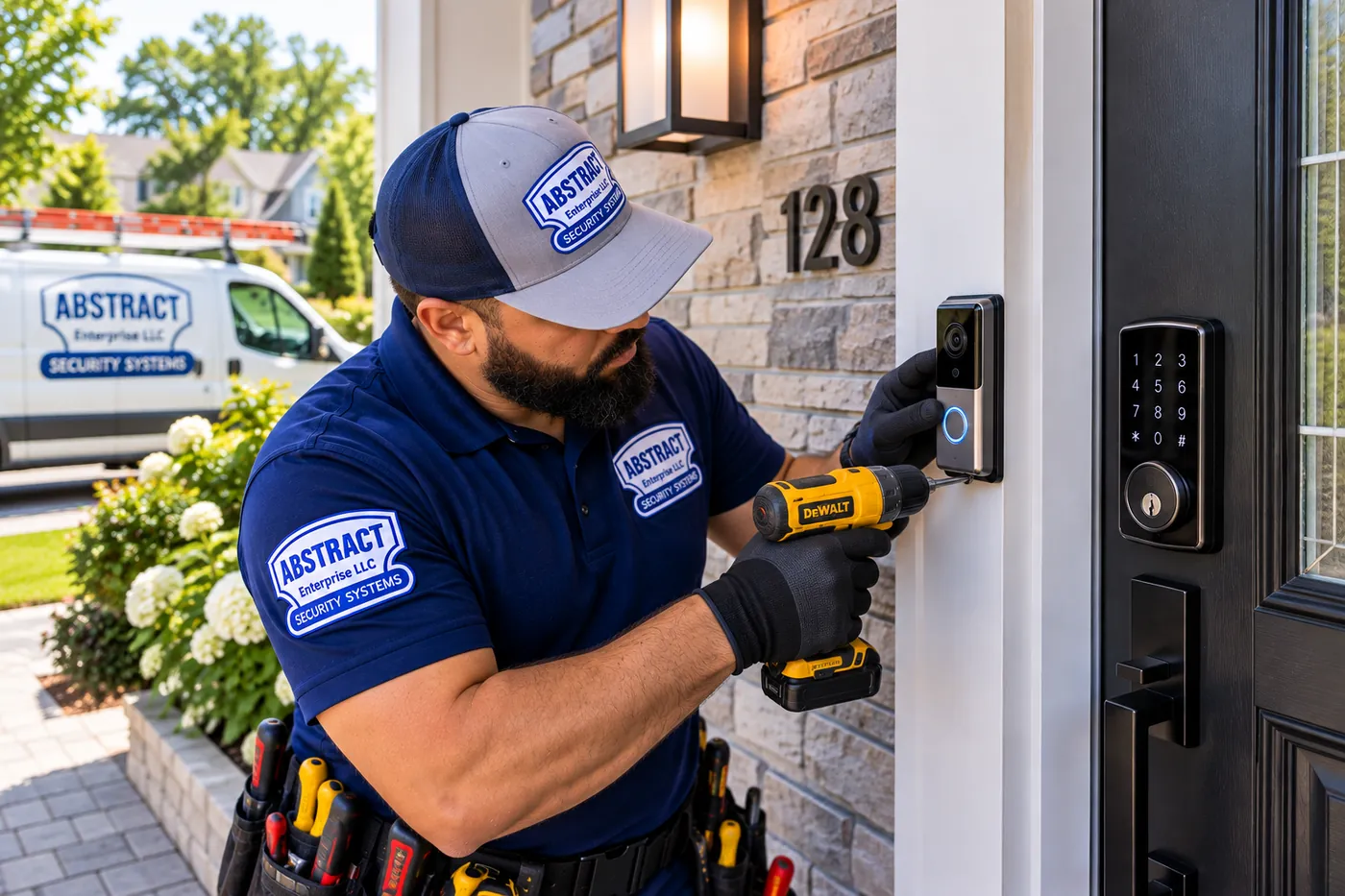
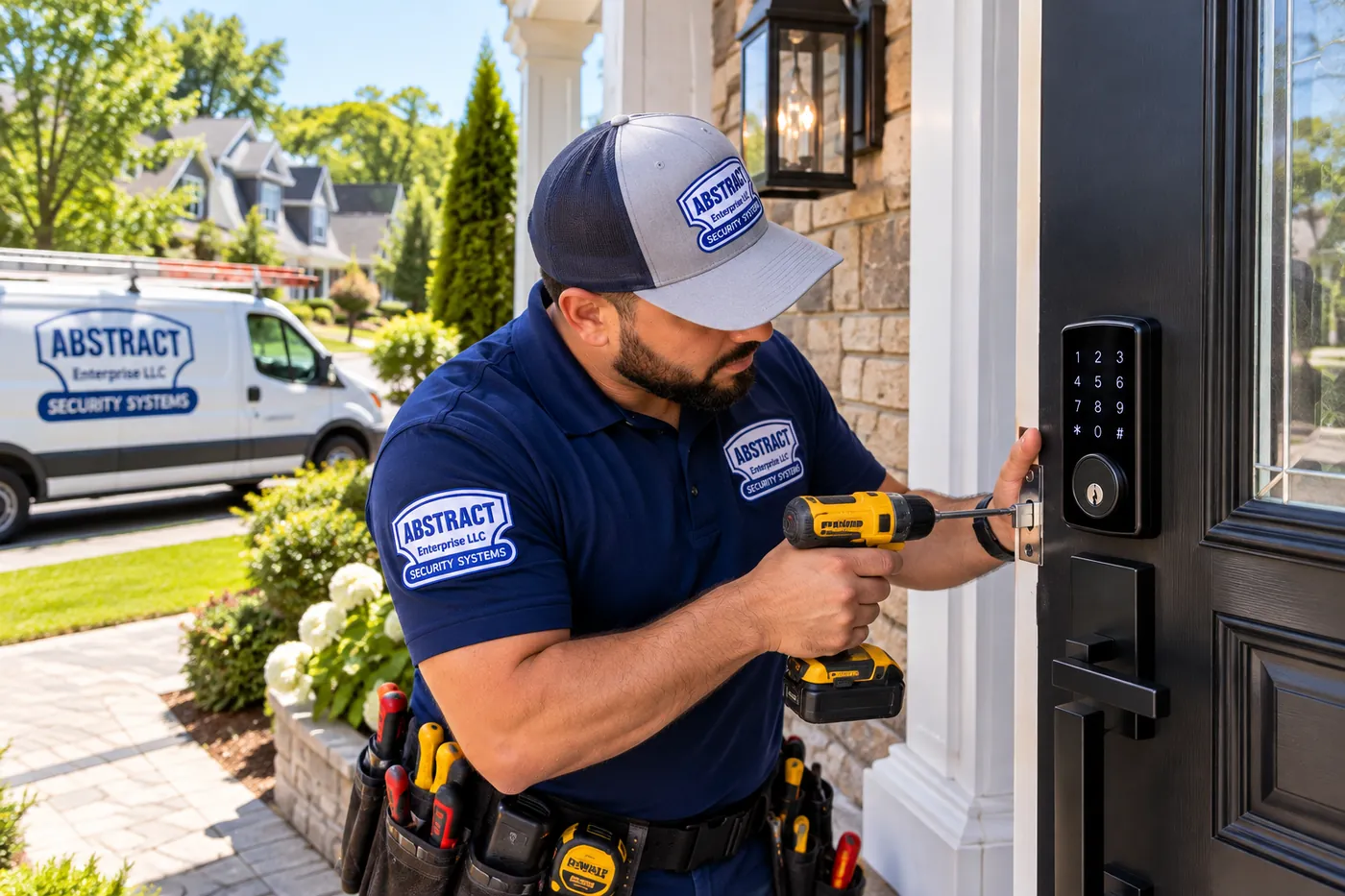
AESS technician installing a keypad smart deadbolt on a suburban home front door with the AESS van outside in Brooklyn
Single-family front door, keypad deadbolt going in — one visit, about an hour on a standard door.

The Right Lock on the Right Brooklyn Door

Photograph the stoop doors, the vestibule and the garden entrance and send them over; we reply with the door we would make keyless first, and why.

Get In Touch

Request a Free Quote

Brownstone, frame house, two-family, tower or shop — describe the doors and who uses them and a written answer comes back the same business day. Rather talk it through? Call the Brooklyn office on (347) 934-8335.

✅

We Got Your Request!

We'll call you back the same business day. If it's urgent, call the Brooklyn office now at (347) 934-8335.

How It Works

Our Installation Process

Six steps, whether the job is one vestibule lock in Carroll Gardens or a code plan for a four-family house in Crown Heights.

1. Photos of every door

You send photos of the outer doors, the vestibule door and any garden or side entrance, inside and out, and tell us how many households share the house. We tell you which doors are candidates for a smart lock and what to expect.

2. Door-by-door plan

Together we decide which door carries the everyday smart lock, whether the outer pair needs a keypad for deliveries, and who gets which code, so the hardware choice follows the plan.

3. Free walkthrough and flat quote

At the house we check head and floor bolts, stile width, thickness, glass near the lock, weather exposure, the inside exit and the signal at each door, then give you a flat written price.

4. Prepare the doors

We reset bolts and keepers, ease astragals and align strikes so each door latches on its own, working only with the existing preparation on historic doors wherever possible.

5. Install, pair and connect

Hardware goes on, every door is opened from the inside by hand to prove no key or code is needed, and the bridge, mesh node or Thread border router is sited until a phone on mobile data down the block can lock and unlock.

6. Codes, register and handover

Every resident is enrolled and tested, guest and delivery codes are set up, the owner gets admin on two devices, and you receive a written register of who can open which door.

Coverage Area

Smart Lock Installation Near Brooklyn's Landmarks

Six places that sum up the doors we work on across the borough, from the first historic district in the city to its tallest tower.

Brooklyn Heights Historic District

Designated on November 23, 1965 as New York City's first historic district, running from Old Fulton Street to Atlantic Avenue and from Cadman Plaza and Court Street to the Promenade. Rows of nineteenth-century brownstone and brick houses where the door is protected and the hardware is where the change happens.

Stuyvesant Heights, Bedford-Stuyvesant

Designated in 1971 and joined in 2013 by the Bedford-Stuyvesant/Expanded Stuyvesant Heights Historic District of about 825 buildings. Brownstone rows with paired outer doors, vestibules and many owner-occupied houses with tenants upstairs.

Prospect Park South, Flatbush

A historic district since 1979, laid out by developer Dean Alvord with freestanding Victorian houses. Porches, wide front doors with glass, side doors and storm doors — the frame-house end of our work.

The Brooklyn Tower, Downtown Brooklyn

At 1,066 feet and 93 storeys on the site of the Dime Savings Bank, the borough's first supertall, with condominiums and rentals. A reminder that Downtown's new towers run on building-chosen entry platforms.

Domino Park, Williamsburg

Opened in June 2018 on the waterfront of the former Domino Sugar Refinery, at the heart of the redevelopment that followed the 2005 Greenpoint–Williamsburg rezoning. New residential towers with lobby apps and uniform unit doors line the area.

Brooklyn Navy Yard

More than 300 acres on the East River with over 550 businesses and more than 13,000 jobs, according to its 2025 impact report. Studios, workshops and small manufacturers with doors that need staff codes rather than key rings.

We also serve Park Slope, Prospect Heights, Fort Greene, Clinton Hill, Cobble Hill, Carroll Gardens, Boerum Hill, Red Hook, Gowanus, Windsor Terrace, Kensington, Ditmas Park, Midwood, East Flatbush around our Troy Avenue base, Crown Heights, Bushwick, Greenpoint, DUMBO, Sunset Park, Bay Ridge, Dyker Heights, Bensonhurst, Sheepshead Bay, Marine Park, Canarsie, East New York, Brownsville, Brighton Beach and Coney Island — every neighbourhood between the Narrows and Jamaica Bay. For a door on a building entrance, our Park Slope access control, Bed-Stuy access control and Ditmas Park access control pages go into neighbourhood detail.

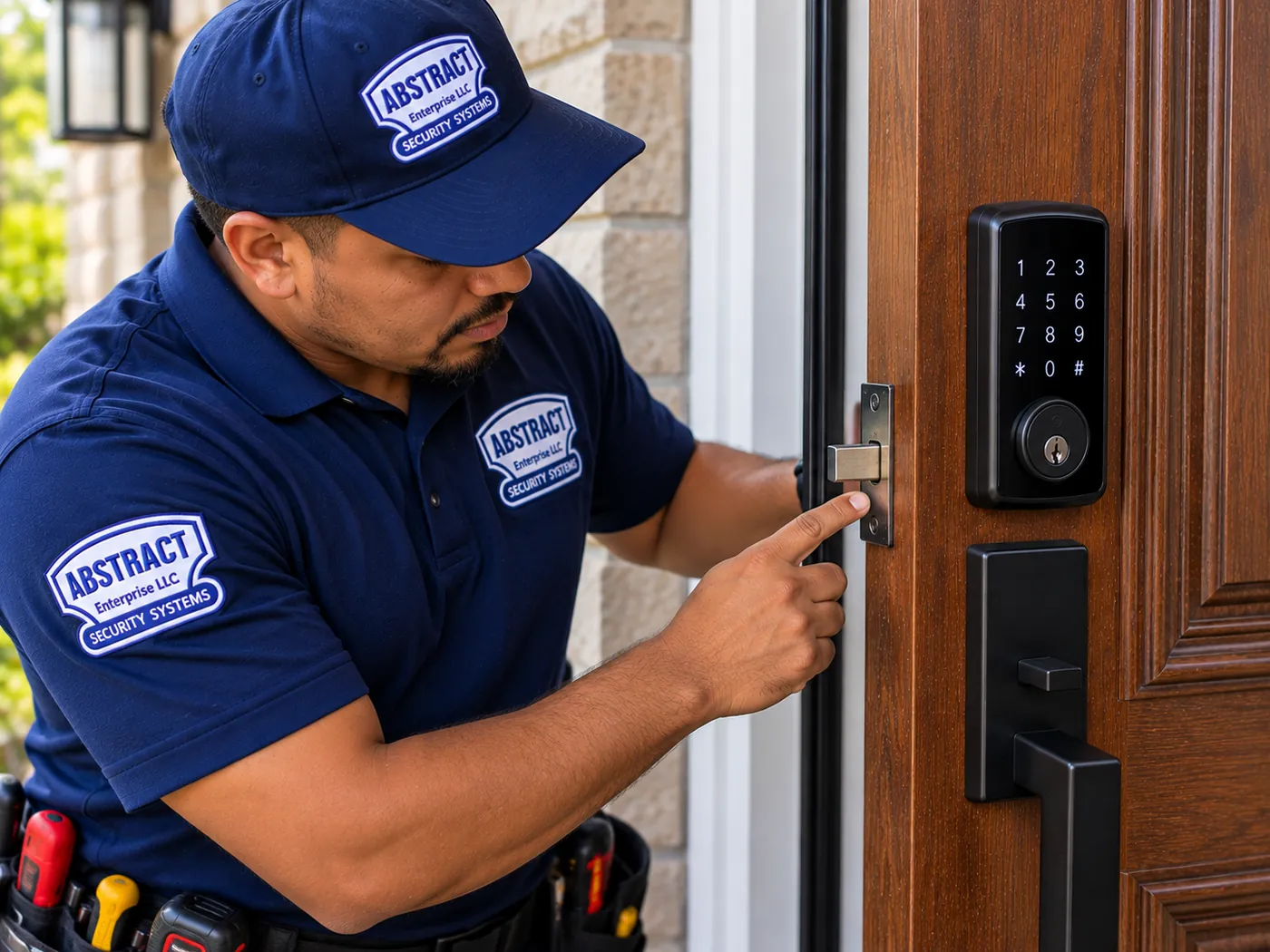
AESS technician checking latch and bolt alignment at the door edge during a smart lock installation in Brooklyn
Checking bolt throw and strike alignment — a bolt that binds drains batteries and jams motors.
Pricing

Smart Lock Installation Cost in Brooklyn

Every AESS area price is calculated from Brooklyn, at a multiplier of 1.00, so the figures in this table are the unadjusted originals. Building-door work — keypads, readers and electric strikes — is already priced on our access-control and door-buzzer pages, and those figures are repeated with their scope. A smart lock on a house or apartment door has no published AESS price, because a vestibule-door retrofit and a pair of original outer doors are very different jobs; those are quoted flat in writing after a free walkthrough, and that quote is what you pay.

ItemBrooklyn priceScope and source
Smart lock on a house, vestibule, garden or unit doorQuoted flat at free walkthroughWe publish no number for this; the written price follows a look at the door, what is on it now and who uses it
Single-door keypad or fob reader with electric strike$1,500–$2,500 installedStreet door of a three- or four-family house, mixed-use residential door, storefront or office door; from our published access-control pages
New electric strike on a building door$250–$450Replacement or first-time strike in the frame of a street or vestibule door, fitted during an entry upgrade; figure from our door-buzzer pages
Failed electric strike repair$295–$485A street door whose buzzer sounds but the latch stays shut; figure from our door-buzzer repair pages
Programming visit only — codes, app and bridge on a lock already fitted$195 first hour, then 30-minute blocksOur published Brooklyn setup-only visit rate
Service and callback rate$195/hr, 3-hour minimum ($585)Return visits after the job is complete; the first installation never carries it

What moves a Brooklyn house quote

  • Which door: a vestibule-door retrofit is the lightest job; a keypad deadbolt on a modern single door is next; a pair of original outer doors with head and floor bolts to reset is the most involved.
  • Door condition: old bores, a mortise pocket, a worn floor keeper, a swollen astragal or a frame that has dropped all add work before the lock goes on.
  • Weather and placement: a keypad on an exposed outer door may need a sheltered position or a different model from the one you had in mind.
  • Codes and people: one household is quick; a two- to four-family house with separate street-door and unit codes, guest codes and a written register takes longer, and is worth doing properly.
  • Signal: a bridge, mesh node or Thread border router to reach a parlour-floor door from a router upstairs.
  • Extras at the same visit: a stoop camera, a gate lock or a cable run from the cellar.

What the national guides say. For context only: Fixr, in a guide last updated in January 2025, gives a nationwide range of $250–$400 for having a smart lock put in, averaging $300. Those are third-party averages for an ordinary modern door, not AESS prices, and they do not describe a pair of stoop doors.

Locks you supply carry their manufacturer's warranty. Full terms — including 50% deposit, one-year parts-only warranty on AESS-supplied products, and the late-fee schedule — are set out in the service agreement.

Shop Our Systems

Smart Lock Installation Packages & Pricing

Three shapes cover nearly every Brooklyn request. Two are building-door work with published Brooklyn prices; the house package gets a fixed quote after we see it, since every stoop is different.

Starter — Stoop and Vestibule

Quoted flat at walkthrough

A smart lock on the vestibule door, the outer pair or the garden entrance, chosen for that door. Head and floor bolts checked on a double door, strike aligned so the bolt throws freely, inside exit without a key confirmed, codes set for the household, bridge placed and tested from mobile data.

Standard — New Entry Strike

$250–$450

For the three- or four-family house whose street door already has a buzzer: a fresh strike in the frame so a keypad or the buzzer can release the latch. If the strike you have simply stopped working, repairing it is listed at $295–$485 instead.

Premium — Keyless Street Door

$1,500–$2,500

Single-door keypad or fob reader with electric strike, installed. For three- and four-family houses, mixed-use buildings and shops: a credential per resident or staff member, exit release inside, and the owner shown how to add and remove people.

Bring Your Own Lock — Labour Only

Already bought a smart lock? We fit it, quoted flat at the walkthrough as labour only. First we confirm it suits the door you have in mind — stile width, thickness, mortise or bored, single or double door, indoor or outdoor exposure — and that it opens from inside without a key. If it is the wrong lock for that door but right for another, we will say which. A customer-supplied lock carries its manufacturer's warranty rather than ours.

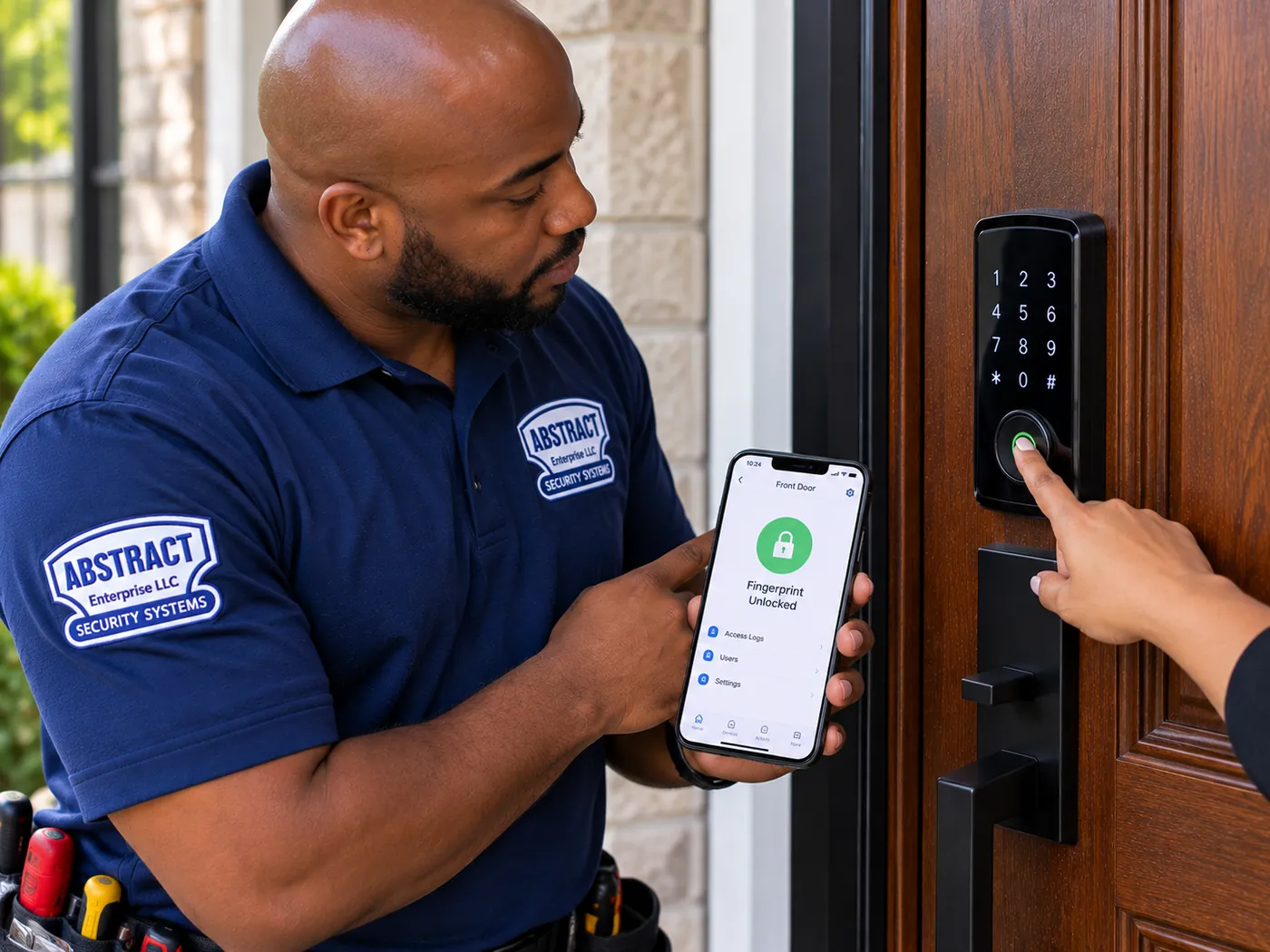
AESS technician showing a homeowner a fingerprint unlock on a new smart lock with the app confirming access in Brooklyn
Enrolling and testing a fingerprint with the owner — the app logs every unlock.

Ready to Make the Stoop Keyless?

Tell us how many households share the house and which doors they use. We will come back with a door-by-door plan and a written price.

Door-by-Door Plan

A Brownstone Door Plan, From the Sidewalk In

This is the walk we take with owners on a typical rowhouse. Your house may skip a step or add one, but most Brooklyn plans are built from these pieces.

OpeningUsual jobWhat we check
Areaway gate under the stoopOften left on a key; keypad gate lock or post-mounted strike if the garden door is a tenant's only entranceGate frame, reach-through gaps, a mechanical way out from inside, a cable route through the areaway wall
Garden-level doorKeypad or fingerprint deadbolt, sealed against damp; the tenant holds admin if it is their private doorShade and moisture, door swelling, who else needs a key
Outer double doorsStrong mechanical deadbolt, or a weather-rated keypad when courier drops are wantedHead and floor bolts, astragal, floor keeper, stile width, exposure and orientation
Vestibule (inner) doorThe household's everyday smart lockGlass near the thumb-turn, original mortise lock, door closing reliably
Hall or stair door to upper unitsKeyed or smart lock per unit, kept separate from the owner'sWhether the house is a multiple dwelling, fire-safety rules, who holds which credential
Cellar and rear-yard doorsKeyless deadbolt or keyed lock, inside release in one motionFrame condition, exit path, whether tenants use the yard

The thread through all of it is that each person gets the doors they need and no more, and every door opens from inside without thinking. A tenant on the top floor needs the street door and their own unit; a courier needs the vestibule and nothing else; a cleaner needs the owner's floor on Tuesdays. Written down like that, the hardware choices become obvious.

Where a stoop camera is part of the plan, we position it to see both the top step and the face of the keypad, so a delivery and the code that opened the door appear in the same clip. Our residential security camera installation in Brooklyn covers the rest of the house if you want it.

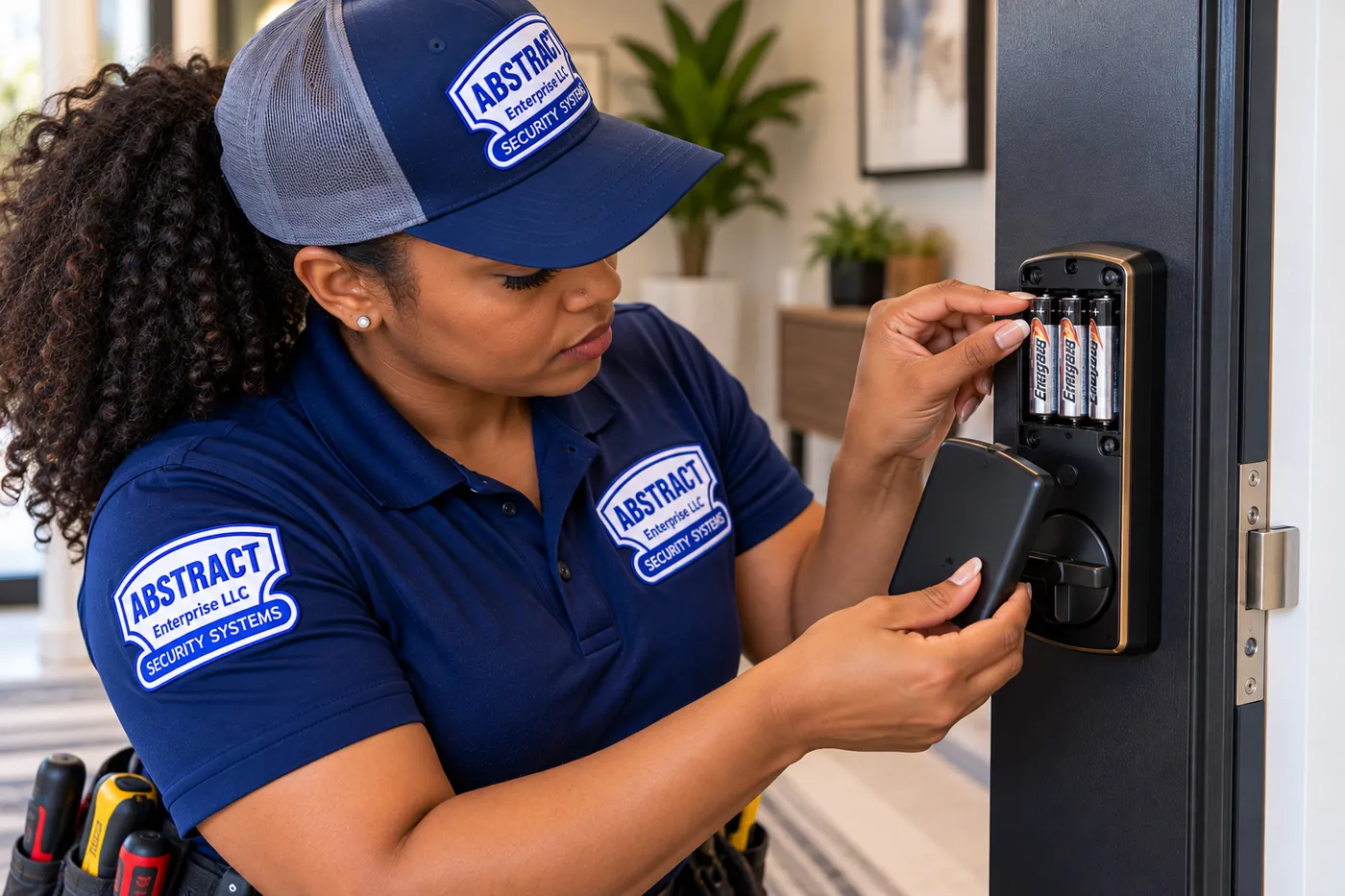
AESS technician replacing the batteries in a smart lock interior unit during a service visit in Brooklyn
Fresh batteries and a check of the motor — the fix for most locks that start acting up.
For Owner-Landlords

Running Codes in a Two- to Four-Family Brooklyn House

Living above or below your tenants changes everything about access. These are the routines we set up with Brooklyn owner-landlords so the locks keep the peace instead of starting arguments.

MomentWhat we set upWhy it matters in a shared Brooklyn house
A tenant moves inPersonal code or fingerprint for each adult on the street door and their own unit; a mechanical key for the unit door; tenant holds admin of their unitThe owner keeps the building secure without holding the keys to someone else's private life
Guests and helpersResidents issue their own expiring guest codes; the owner's cleaner gets a code for the owner's floor onlyNo shared master code drifting around the neighbourhood
CouriersDaytime-only delivery code on the outer doors; inner doors locked while it is liveParcels off the stoop, vestibule sealed
A lost phone or a falling-outThat one credential removed; everyone else unaffectedOne action, no knock-on lockouts
Notice to leaveNothing changes until the unit is lawfully back in the owner's handsRemoving a sitting occupant's access early can amount to an unlawful lockout
Unit handed backCodes deleted, unit cylinder re-keyed, register updatedWhoever moves in next holds the only working credentials

Keep a written register: who holds which code or fob, for which doors, issued and removed on which dates. It costs nothing, it settles most disputes before they start, and if you ever do need to show what happened, it is the record you will wish you had. We leave you a template on handover day.

For houses with an old buzzer panel on the street door, a keyless upgrade does not have to replace the buzzer. Most owners keep it so tenants can let visitors in, and add the keypad alongside; if the old system is failing, our Abstract Enterprises intercom repair crew can get it working while the upgrade is planned.

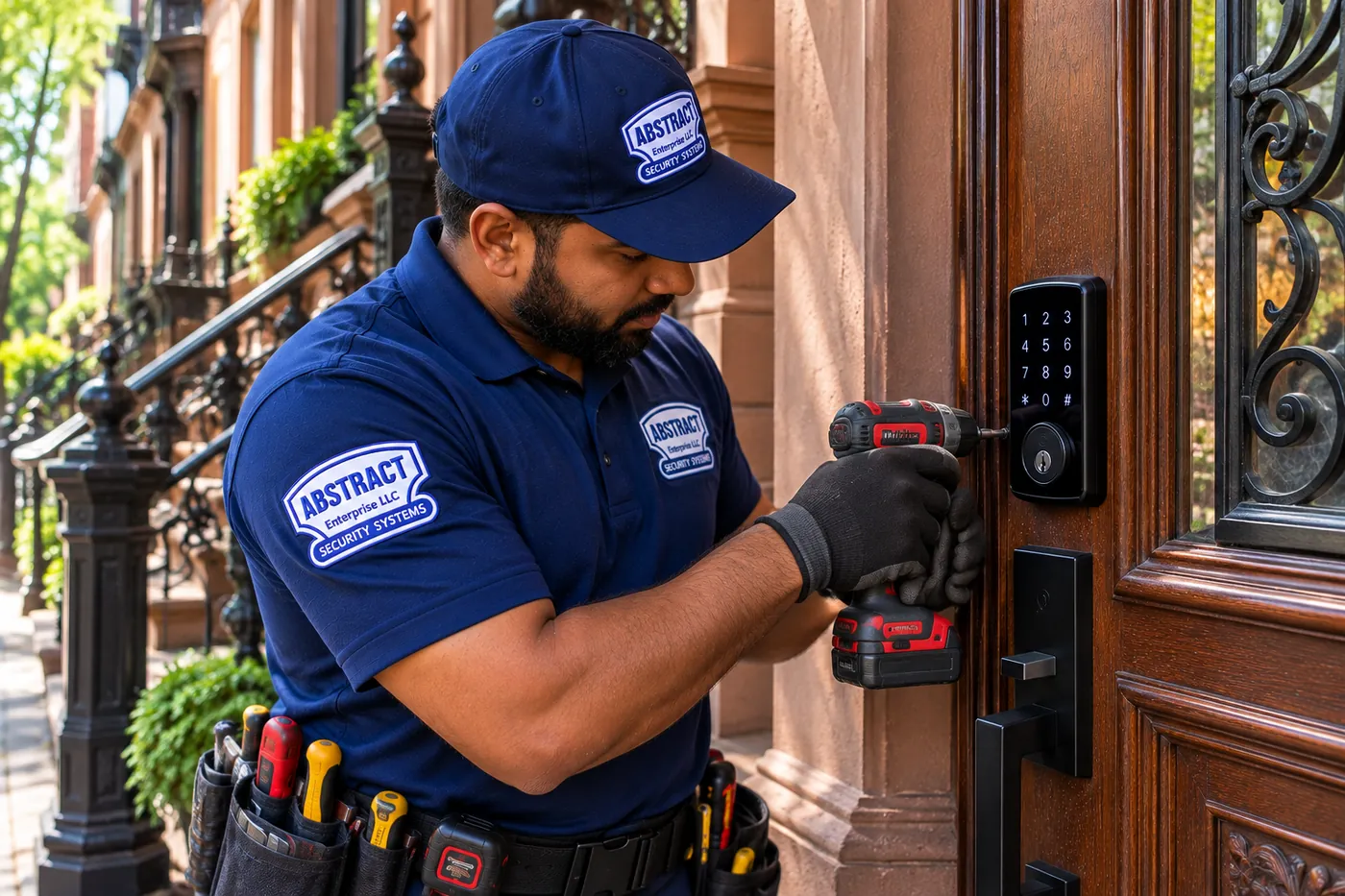
AESS technician drilling to mount a keypad smart lock on a brownstone stoop door in Brooklyn
Mounting a keypad deadbolt on a stoop door with ironwork and an original wood frame.
Connectivity

Getting Signal From the Top Floor Down to the Stoop

In a rowhouse the front door and the router are often as far apart as the house allows. Internet service tends to come into the cellar or the rear of the garden floor, and the router follows whoever works from home, usually to a back bedroom upstairs. The vestibule is at the front of the parlour floor behind stone, tile and plaster.

How we choose the connection in a Brooklyn house

  • Bluetooth on its own: the phone talks to the lock only when you are standing on the stoop. No remote unlocking, but also no extra box in the hall to lose its connection.
  • Bridge near the door: a small plug-in bridge in the front hall relays the lock to the router. August, for one, asks for its bridge within 10 to 15 feet of the lock with a strong connection where the bridge sits, so the hall outlet nearest the vestibule usually wins.
  • Lock with its own Wi-Fi radio: skips the bridge, but then the vestibule itself must have a strong 2.4 GHz signal — in a deep brownstone that usually takes a mesh node in the front parlour.
  • Matter over Thread: the lock joins a low-power mesh through a border router such as a smart speaker or hub. Put the border router on the parlour floor near the front and the lock holds its connection far more reliably.
  • A cable from the cellar: for street-door readers and stoop cameras, a cable up from the cellar beats any radio. We route it through the house, not across the facade.

The test never changes: phone on mobile data, walk down the block, lock and unlock remotely, and confirm the notification arrives. If it fails from the corner, the job is not finished. Our network installation team in Brooklyn handles houses that need a proper mesh or wired backbone.

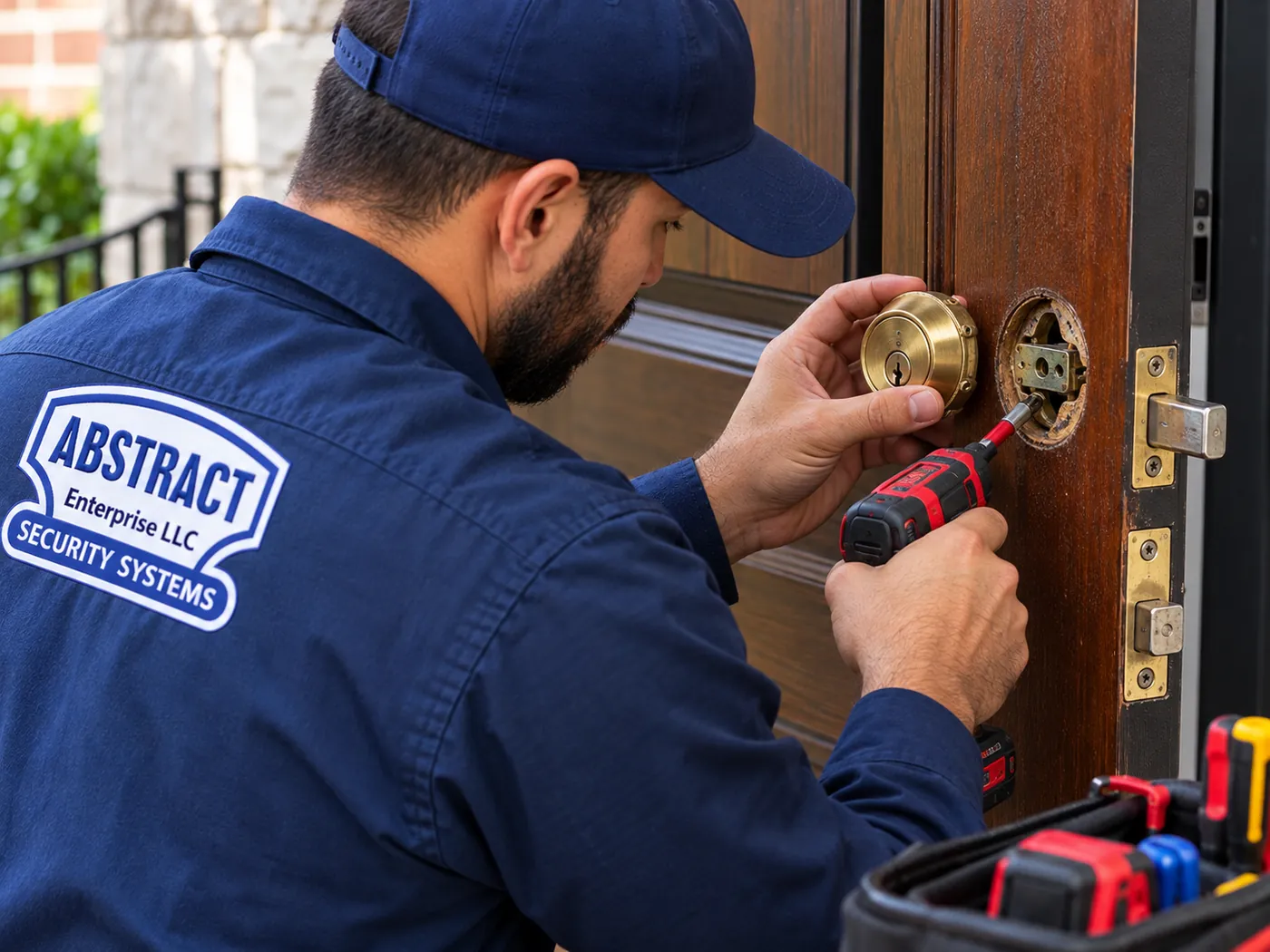
AESS technician removing an old brass deadbolt with a drill to prepare the door for a smart lock in Brooklyn
Old brass deadbolt coming out — the first step of a smart lock swap on a wood entry door.
Complete Services

Every Smart Lock Installation Service in Brooklyn

A smart lock is usually one part of a bigger change at the front of the house. These Brooklyn services often join it on the same visit.

Access Control Installation Brooklyn

Keypads, fob readers and controllers for street doors, shops and multi-door buildings.

AESS Doorbell Camera Installation in Brooklyn

A camera at the stoop so every code and every delivery is on record.

Intercom Repair Brooklyn

When the old buzzer panel by the stoop stops ringing upstairs or stops letting visitors in.

Abstract Enterprises Alarm Installation Brooklyn

Door contacts and alarm panels that can arm when the last person locks up.

Residential Security Cameras

Front, rear and areaway coverage for rowhouses and frame houses.

Apartment Building Cameras in Brooklyn

Lobbies, hallways and package areas in three-family-and-up buildings.

Low-Voltage Installation Brooklyn

The umbrella page for our Brooklyn entry, network, camera and audio work.

All Services

The full list of what AESS fits and fixes, borough by borough.

Get a Quote

Ask for the lock and any of these extras on a single form.

Field Notes

Field Notes on Brooklyn Front Doors

What our technicians look at, in order, on a Brooklyn stoop — a habit built up over many houses, not the story of one job

We start on the sidewalk. Which way does the house face, how deep is the lintel over the doors, how many steps up is the parlour floor, and is there a gate under the stoop? That tells us where weather will hit and which doors the household really uses.

At the outer doors we open the inactive leaf and look at its bolts before we look at the lock. A top bolt that does not reach its keeper, or a floor bolt sitting on a sill packed with grit, means the pair can be pushed apart however good the deadbolt is. Then we close the active leaf slowly and watch where it meets the astragal.

Inside the vestibule we check the inner door for glass near the thumb-turn and for an original mortise lock, and we let it swing shut on its own to see if it latches. Upstairs, we ask how many households live in the house and who uses which door. Only then do we take the phone out, stand in the vestibule and check the signal — and only after all of that do we talk about brands.

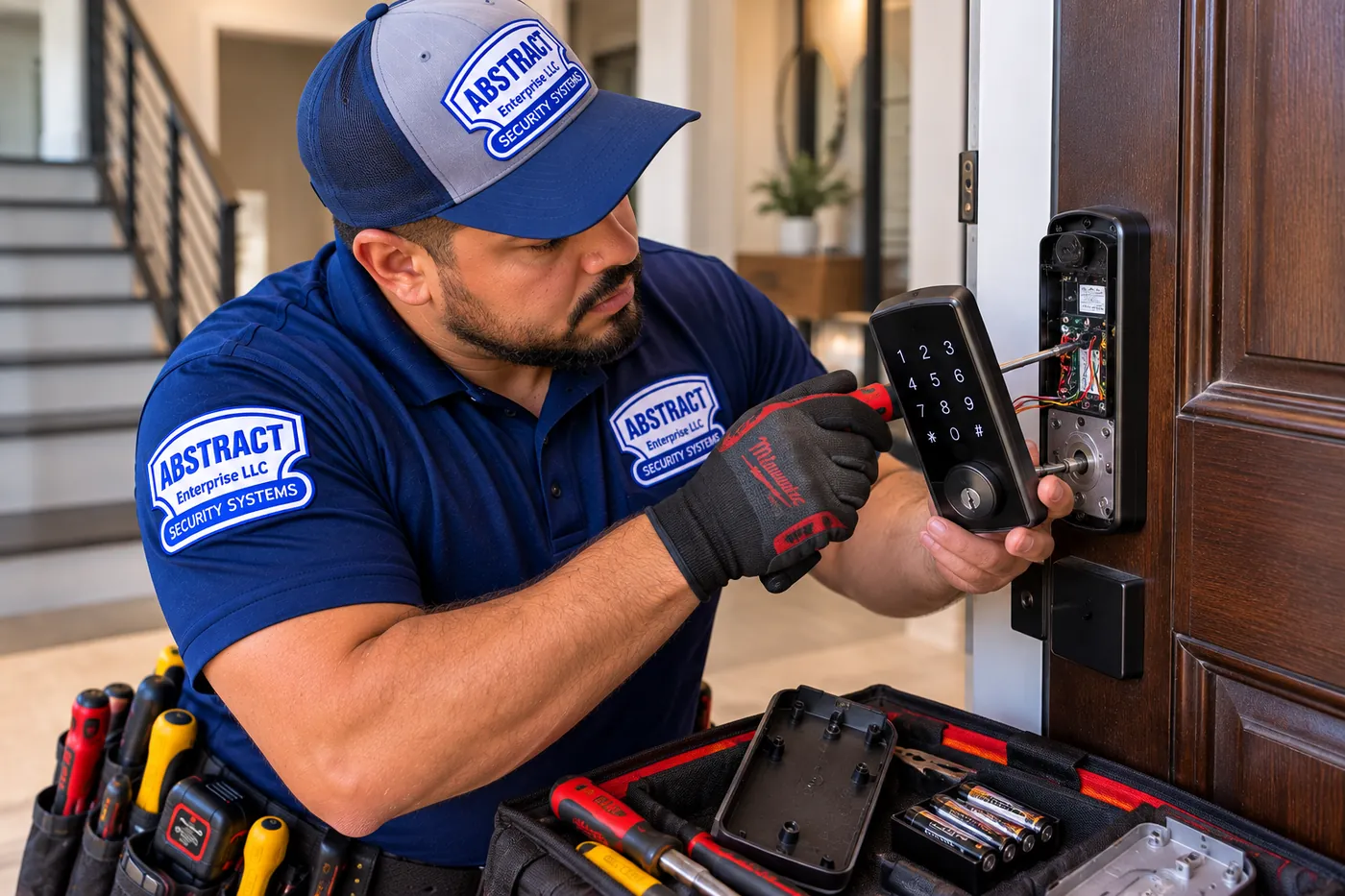
AESS technician servicing the keypad wiring of a smart lock during a repair visit in Brooklyn
Repair visit — opening the keypad to check the harness and contacts on a lock that stopped responding.
FAQ

Brooklyn Smart Lock Installation FAQ

What does a keypad and electric strike on a Brooklyn building door cost?
+

Brooklyn is our pricing base, so the published figures apply as written: a single-door keypad or fob reader with an electric strike is $1,500 to $2,500 installed, a new electric strike on a building door is $250 to $450, and a failed strike repair is $295 to $485. A smart lock on a house, vestibule or unit door is quoted flat after a free walkthrough.

Do you work on brownstones that are mid-renovation, before the doors are finished?
+

Yes, and it is the best time to plan. While walls are open we can run a cable from the cellar to the vestibule for a future reader, camera or bridge, and give your door maker or contractor the preparation details for the lock you intend to fit, so the finished doors need no further cutting.

Can the walkthrough and the installation happen on the same visit?
+

Often, yes. If you already have the lock, or the door suits a lock we carry, and the job does not need a new door, a gate strike or a cable run, we can usually fit it straight after the walkthrough once you approve the written price. Double doors that need bolt and keeper repairs sometimes need a second visit.

Will the buzzer from an upstairs apartment still open the vestibule door after a smart lock goes on?
+

It can, if the door keeps an electric strike that the buzzer system controls. A battery smart deadbolt on its own does not respond to a buzzer, so on houses where tenants buzz visitors in we either leave the buzzer-controlled strike in place and add the smart lock on a different door, or use a keypad or reader that drives the same strike.

Can you fit a video doorbell or stoop camera at the same visit?
+

Yes. Many Brooklyn owners add a doorbell camera or a small camera covering the stoop and vestibule at the same time, so remote unlocks and courier drops are on video. We position it to see both the top step and the keypad.

If we restore our original double doors later, can the smart lock move to the new doors?
+

Usually. A smart lock can be taken off and refitted on a new door if the new door is prepared for the same lock format, thickness and backset. Give us the lock model before the door maker starts and we will send the preparation details so the new leaf arrives ready.

Can a storefront lock be installed before the shop opens?
+

Yes. For shops on Brooklyn avenues we book early-morning slots inside our 8 AM to 8 PM window where we can, so the door is finished and staff codes are working before you open. Tell us your opening time when you book.

Who does a tenant call if the keypad on the house dies at night?
+

Smart locks warn of low batteries well in advance, and most keypad deadbolts can be powered briefly from outside or opened with their key. Every tenant should hold a working key for their own door. If the lock still will not open, call (347) 934-8335 and we will book the next available window.

Will you keep our original brownstone lock and hardware if a smart lock replaces it?
+

Yes. Original mortise locks, knobs, escutcheons and keys are removed carefully, labelled and handed back to you in a bag with their screws, so they can go back on the door if you sell the house, restore the doors or simply change your mind.

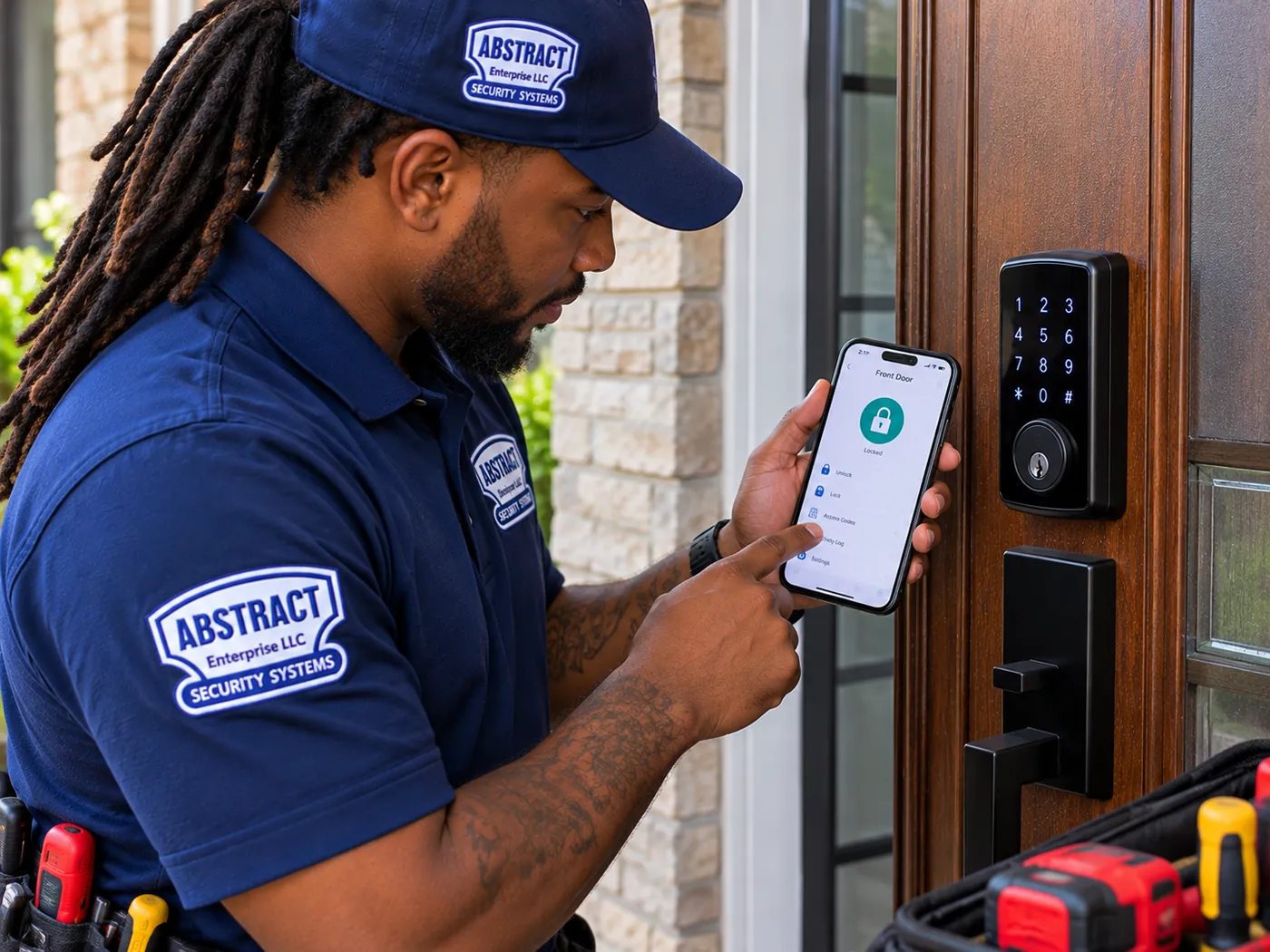
AESS technician checking the locked status of a keypad smart lock in the mobile app after installation in Brooklyn
Confirming lock status, access codes and the activity log from the phone.
All Areas Served

Smart Lock Installation Across New York

This is the Brooklyn page. The five-borough overview, with the renter and co-op rules that apply citywide, lives on our New York City smart lock installation hub. Boroughs without their own page yet open the quote form, and the same crews already work there.

Start again from the AESS home page, or find out who Abstract Enterprises Security Systems are.

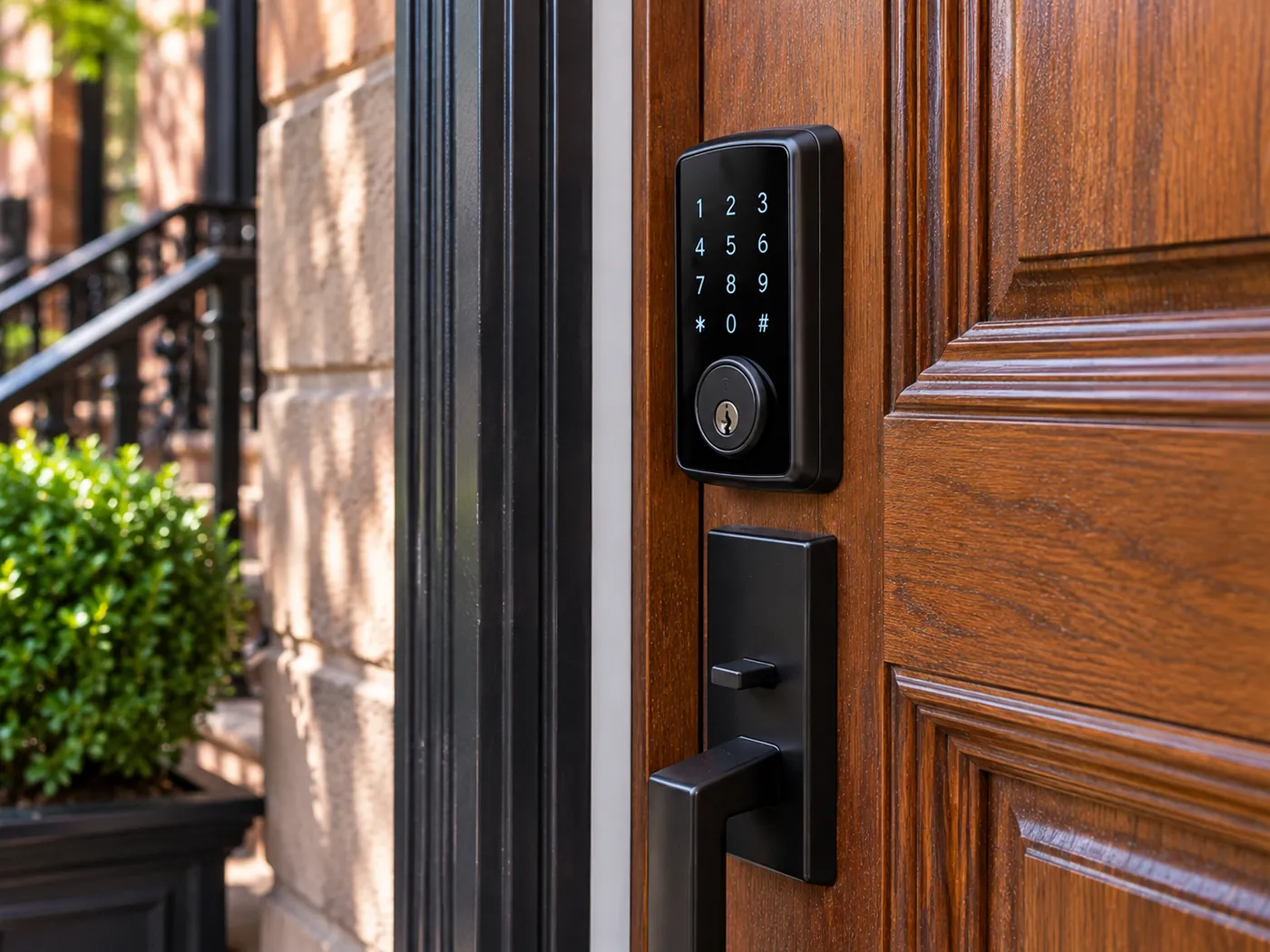
Finished black keypad smart deadbolt and handle on a wood brownstone front door after smart lock installation in Brooklyn
A finished keypad deadbolt on a brownstone front door — keyless entry with a key backup.

Locked Out at the Top of a Brooklyn Stoop Tonight?

Blank keypad on the outer doors, a tenant whose code no longer works, an app that says the lock is unreachable — ring (347) 934-8335. We book the next open 2-hour window, and most power, pairing and alignment faults are fixed in one to two hours once we are at the door.

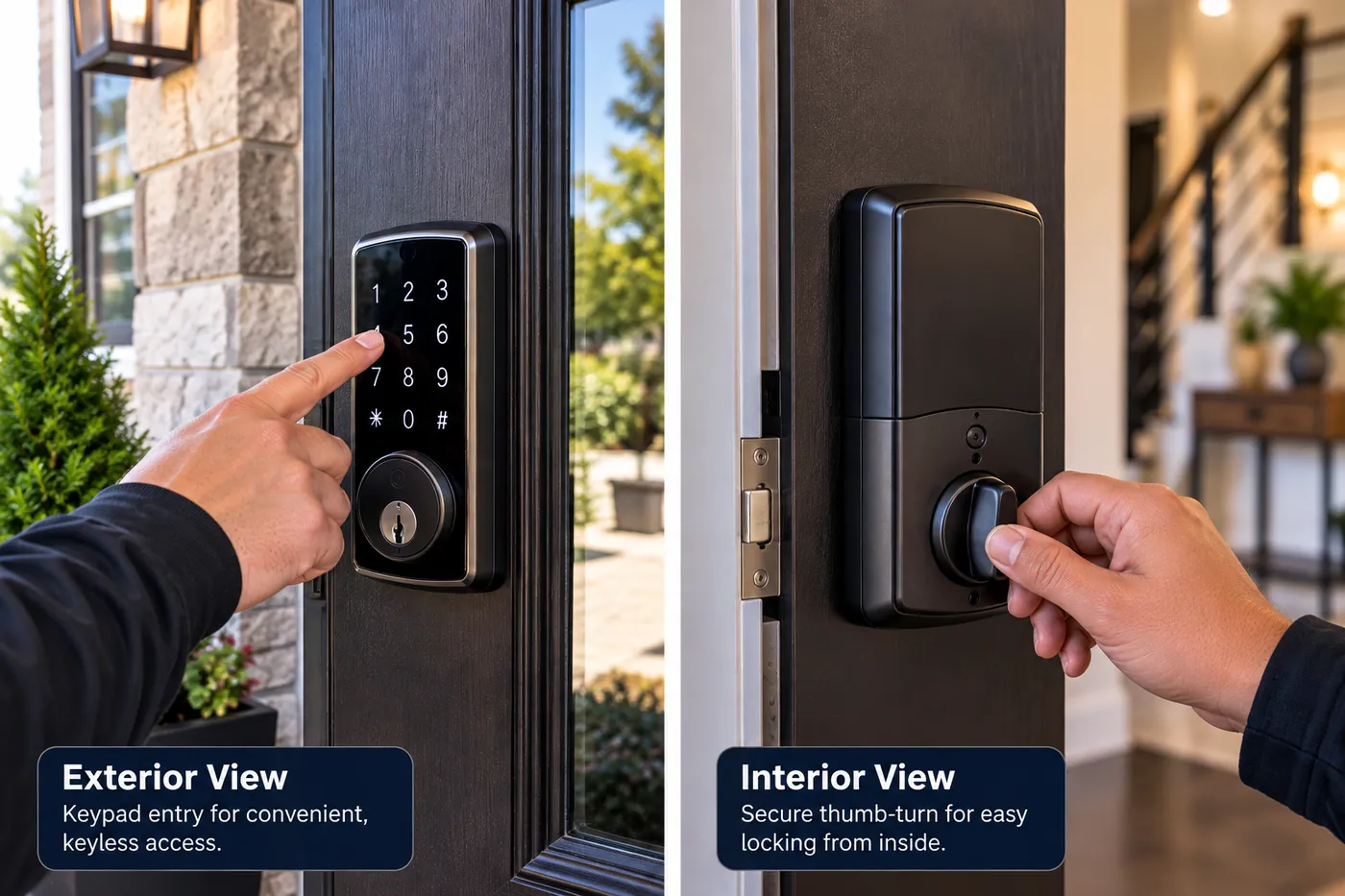
Exterior keypad and interior thumb-turn views of a smart deadbolt installed in Brooklyn
Outside: keypad entry with a key override. Inside: a thumb-turn so nobody gets locked in.

Smart Lock Installation Brooklyn — Licensed, Insured, Local

Abstract Enterprises Security Systems · 1282 Troy Ave, Brooklyn, NY 11203 · (347) 934-8335 · WhatsApp (718) 679-0359 via wa.me

NYS Low-Voltage Licence #12000287431 · 100% Licensed & Insured · Same-Day Estimates · Rated 4.7★ from 201 Google Reviews

Full terms — including 50% deposit, one-year parts-only warranty on AESS-supplied products, and the late-fee schedule — are set out in the service agreement. See our warranty page.

This page explains how Brooklyn houses and New York rules affect smart lock installation; it is not legal advice. Page reviewed and updated October 17, 2026. Changelog: Brooklyn page launched as a child of the New York City smart lock hub, covering brownstone double doors and vestibules, garden-level entries, owner-landlord code plans, stoop deliveries and historic-district doors.