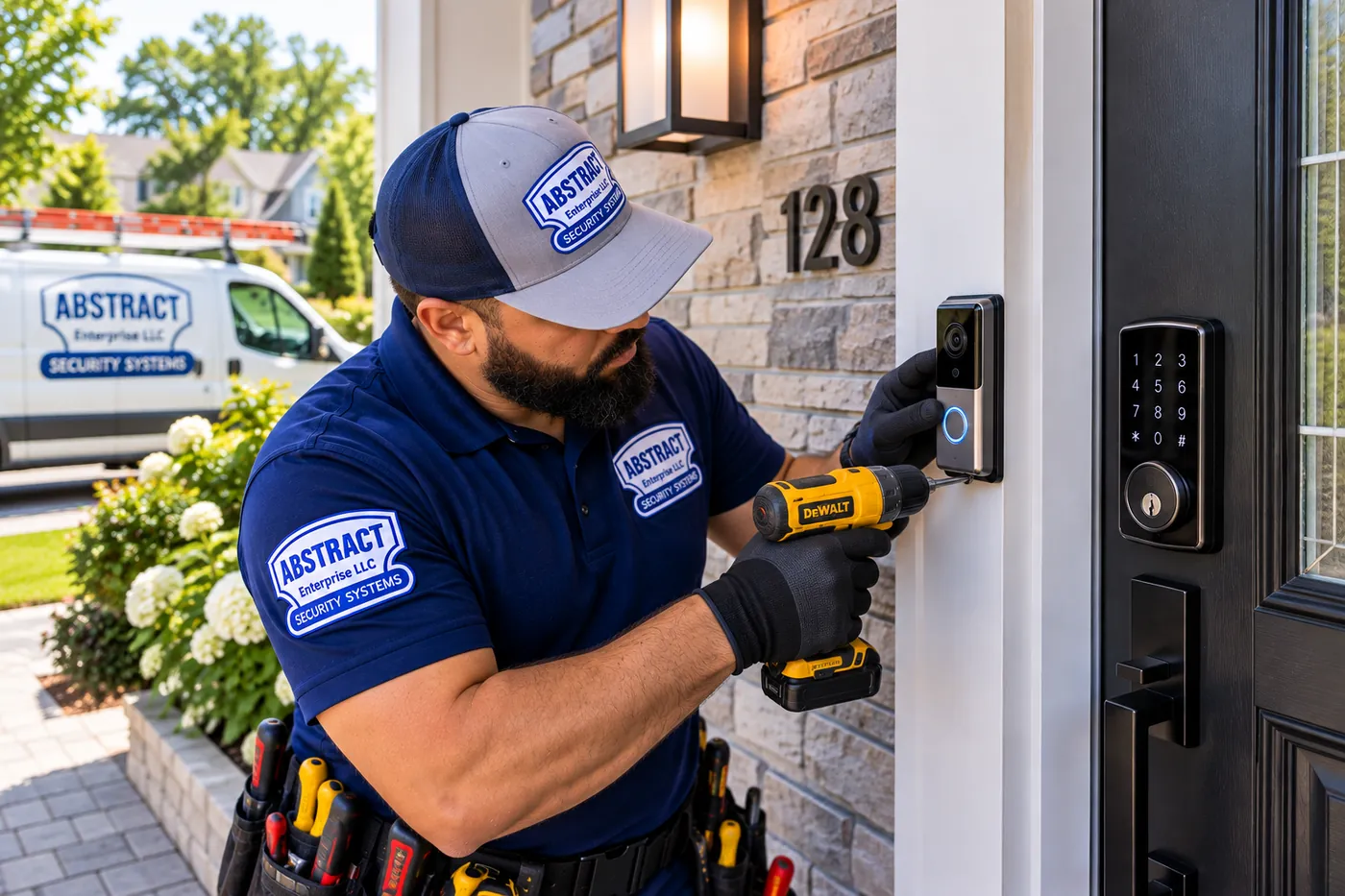
Town Rental Permits · Raised Flood-Zone Houses · Pool-Deck Doors · Bulkhead Cellar Doors · Fire Island Cottages · Knox-Box Business Doors
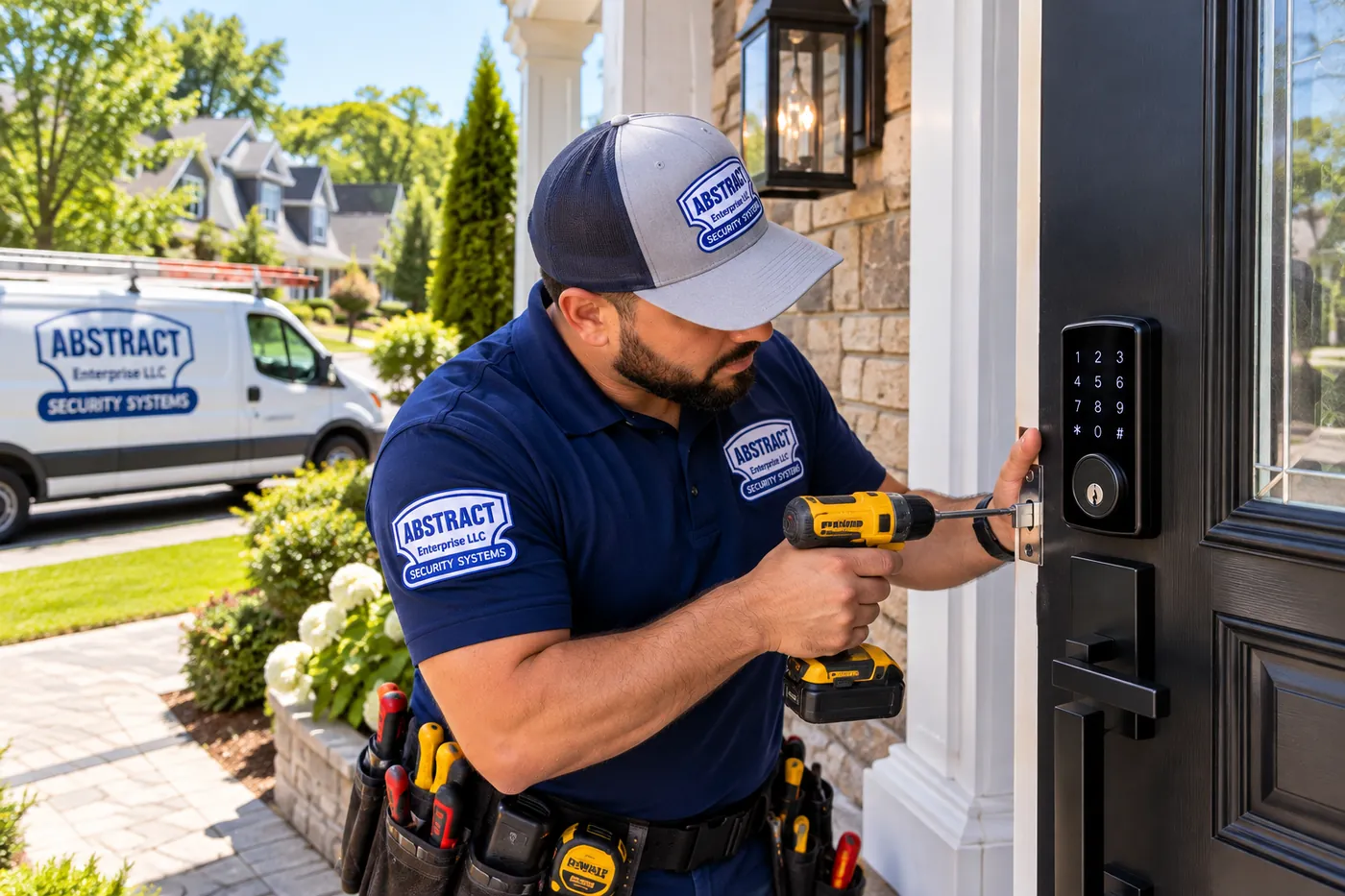
In Suffolk the lock answers to the town and to the water before it answers to the app. A Babylon rental, a Brookhaven accessory apartment, a Lindenhurst house lifted onto pilings after Sandy, a Fire Island cottage you reach by ferry, a back slider that opens onto the pool, and a Hauppauge plant whose Knox-Box has to hold the right keys — each one changes what a smart lock should be and where it can go. We fit keyless locks that suit the door, the rules that cover it and the people who use it, and that always open from inside with one plain turn.
Reviewed and updated October 17, 2026 · Written by Anwar Timothy, NYS licence #12000287431

Got a door in Suffolk that should open with a code, or one that has stopped doing it? Our Suffolk line is (631) 407-2884, and the 60-second form reaches the same desk. A licensed installer reads every request and, before anyone drives out, tells you whether the door, the town's rules and the setting around it suit a smart lock at all.

Suffolk is not one market; it is ten towns strung along eighty-six miles of island. The state lists them as Babylon, Brookhaven, East Hampton, Huntington, Islip, Riverhead — the county seat — Shelter Island, Smithtown, Southampton and Southold, and inside them sit dozens of incorporated villages with codes of their own. Each town writes its own rental-permit law, runs its own fire marshal's office and draws its own flood-zone maps from the federal ones. A keypad deadbolt is the same product in Huntington Station and in Hampton Bays; what the town expects of the door it goes on, and what the weather will do to it, are not. That is why our Suffolk walkthroughs start with an address and a question about the town before anybody looks at a lock.
Most of the doors we see belong to owners, not tenants. Census Bureau QuickFacts put Suffolk's owner-occupied housing rate at a little over 82 percent across roughly 584,000 housing units. Owners make different decisions from renters: they can drill, rewire and replace the slab, and they are the ones who answer to the town when a rental permit comes up for renewal or an accessory apartment is licensed. A growing share of those owners are also landlords of a sort — renting a basement or an upstairs unit, or a whole second house — and the moment a stranger lives behind one of their doors, the lock on it stops being a matter of taste. The model property maintenance code that New York builds on asks that a deadbolt on a rented unit open from the inside without a key, special knowledge or effort, and that it throw at least an inch. Those are small requirements, and they rule out more consumer locks than people expect.
Then there is the water. Suffolk has more of it than land — Wikipedia's county figures, drawn from the Census Bureau, give 912 square miles of land and 1,461 of water — and the South Shore bays, the barrier beaches and the two forks put a large number of homes within reach of a storm surge. When Newsday totalled FEMA's damage assessments in January 2013, Superstorm Sandy had flooded, damaged or destroyed 20,798 structures in Suffolk, more than 8,000 of them by more than half their value. Thousands of South Shore houses were later raised onto new foundations, and in places like Lindenhurst the Long Island Advocate still describes empty lots where state buyouts removed homes altogether. A raised house changes the job completely: the front door moves to the top of a stair, the old ground floor becomes an enclosure that federal flood rules limit to parking, storage and access, and anything electronic left down there is the first thing the next surge reaches.
Behind the shoreline is a county of backyards. In-ground pools are ordinary from Commack to Manorville, and New York's residential pool code treats the house wall as part of the pool barrier when a door opens straight onto the pool area, with a listed alarm required on that door. Older ranches and colonials still have steel bulkhead doors over the cellar stairs. And east of the Long Island Expressway's end, plenty of houses are reached by roads that turn to sand — or, on Fire Island, by no road at all.
Suffolk is also where Long Island goes to work. The Long Island Innovation Park at Hauppauge, which its business association describes as the second-largest industrial park in the nation, holds about 1,350 companies and 55,000 employees. Route 110 in Melville, the Ronkonkoma station area, Riverhead's Route 58 and the village main streets from Bay Shore to Port Jefferson add offices, practices, shops and flex bays. Commercial doors here answer to the fire marshal as much as to the owner: in the Town of Islip, for example, any building with a fire protection system must keep a Knox-Box key vault in service, and the keys in it have to be swapped whenever the locks change.
Suffolk owners who rethink their door locks usually rethink who can see the front step as well. Our doorbell camera installation in Suffolk County puts a picture next to every remote unlock, and the AESS alarm installers in Suffolk handle pool-door alarms, door contacts and flood sensors on the same visit.

A keypad that stopped lighting after a salty nor'easter, a deadbolt that no longer lines up because a raised house is still settling onto its new piers, a lock that dropped off the network when the router was swapped, a cellar-door keypad that took on water, or a shop lock that the morning shift can't open — we book those as service calls into the next open 2-hour window, and most power, pairing and alignment faults are cleared in one to two hours once a technician is at the door. If the trouble is an electric strike on a building entrance that hums but won't release, that repair runs $354–$582 at our Suffolk rate. Ring (631) 407-2884 and say it's a smart lock fault, or see our door buzzer repair in Suffolk County for lobby buzzers and strikes.

The work Suffolk owners and businesses actually book. Every job ends with the same four checks: the door closes and latches on its own weight or closer, the inside opens with a single motion and no key, the outside still takes a mechanical key, and every person who was given a credential has used it in front of us.
Deadbolts on rented houses, basement units and upstairs apartments that open from inside without a key and throw a full inch, with codes the landlord can retire the day a lease ends and a key kept for the tenant's own use.
A separate lock and credential set for the licensed unit's own door, kept apart from the owner's house codes, so each household controls its own entrance and neither app can open the other's door by accident.
Locks for the new front door at the top of the stair, bridges and hubs mounted above the flood line, and plain mechanical hardware on the enclosure door below, where federal flood rules keep the space to parking, storage and access.
Smart locks fitted alongside, never instead of, the listed door alarm a pool code expects on a house door that opens straight onto the pool, plus self-latching hardware choices for gates and sliders.
Keyed lock kits and keypads for steel bulkhead doors and the door at the foot of the cellar steps, set up so whoever is in the basement can always get out without a key or a code.
Cottages in car-free communities reached by ferry or water taxi, planned as single-trip jobs with every part carried in, salt-tolerant hardware chosen in advance and the old lock kept as a spare.
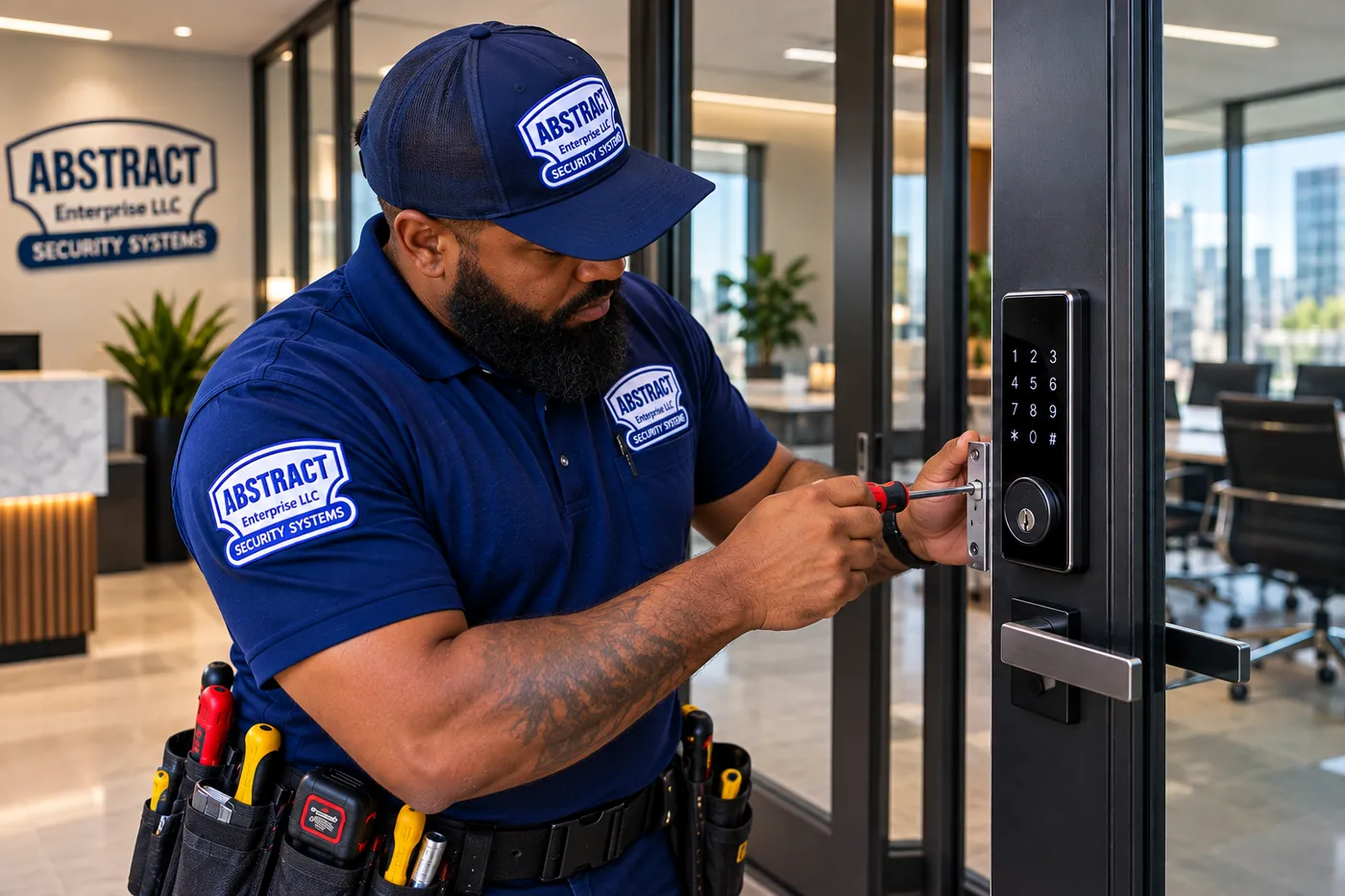
Keypads and readers on man doors in Hauppauge, Islandia, Bohemia and Ronkonkoma, with the Knox-Box key update arranged with the fire marshal and the roll-up bay door left on its own operator.
Records-room keypads with an audit trail for medical and dental offices, after-hours doors for professional suites, and staff and volunteer codes for churches, synagogues, mosques and temples.
Batteries, corroded keypads, bolts that bind after a house settles, bridges lost to a new router, and administrator accounts locked to a phone that has gone missing.

Suffolk's houses and buildings were shaped by three forces — post-war suburban growth, the shoreline, and the industrial parks along the expressway. These are the types we work on most, and what each one means for a keyless door.
West Babylon, Deer Park, Centereach, Selden, Holbrook, Commack: single-storey houses with a front door, a side door off the driveway or carport, a sliding door to the yard and, often, a bulkhead over the cellar stairs. Most doors are bored for standard deadbolts; the slider and the bulkhead are the doors that need thought.
Huntington, Northport, Smithtown, St. James, Setauket and Port Jefferson: two-storey houses with heavier front doors, sidelights, and in the older village centres doors that predate standard boring. Handlesets with a separate deadbolt above are common and change which smart lock fits.
Lindenhurst, Babylon, Bay Shore, Mastic Beach, Shirley and the canal streets between them: homes lifted after Sandy, with a long stair to a new front door and an enclosure below. The lock goes upstairs; the hub goes above the flood line; the enclosure door stays mechanical.
Fire Island's car-free communities, from Saltaire and Ocean Beach to Fire Island Pines and Davis Park, and the barrier-beach village of West Hampton Dunes: wood cottages on boardwalks, salt in the air all year, and doors that face sand-laden wind.
Across Brookhaven, Islip, Babylon and Huntington, owner-occupied houses with a licensed unit in the basement or over the garage. Two households, two entrances, and a lock plan that keeps them separate.
Station Yards in Ronkonkoma and the newer rental buildings in Patchogue, Riverhead and Huntington Station: steel unit doors, building-run entry at the lobby, and leases that decide what a tenant may change on the unit door.
Hauppauge, Islandia, Bohemia, Holbrook, Ronkonkoma and the Route 110 corridor: concrete-block and tilt-up buildings with steel man doors in hollow-metal frames beside roll-up bays, office fronts with aluminium storefront doors, and Knox-Boxes on the wall.
Southampton, East Hampton, the North Fork and Shelter Island: large houses with many doors, caretakers and house managers who need codes, and older farmhouses with thick, hand-fitted doors.
The stair-top door on a raised house. When a house is lifted, the front door is often replaced and re-hung on a new landing, sometimes ten feet or more above grade. New doors are usually steel or fibreglass slabs that arrive pre-bored for a standard deadbolt, which suits most smart locks. What changes is exposure: the landing catches wind-driven rain that the old porch roof used to stop. We favour locks whose makers publish an outdoor temperature and water rating, mount the keypad side under whatever overhang the landing has, and check that the door's weatherstripping isn't so tight that a motorised bolt has to fight it.
The enclosure door below. FEMA's technical bulletins describe the National Flood Insurance Program's rule that enclosures under elevated buildings may be used only for vehicle parking, building access and storage, and its guidance on utility systems expects electrical components below the required elevation to be designed to resist flood loads or moved up. We treat the door into that space as a door that will one day be underwater. It gets a sturdy mechanical lock or a battery-free push-button keypad — nothing that needs power, nothing that will be ruined by salt water, and nothing the flood-plain administrator would read as a sign the space is being lived in.
Sliders onto decks and pools. Sliding patio doors are the weak point of many Suffolk ranches, and very few true smart locks are made for them. Where the slider opens onto a pool area and the house wall forms part of the pool barrier, New York's pool code expects a listed door alarm on it. We pair an auxiliary foot bolt or a keyed slider lock with a door sensor that reports open and closed to the same app as the other locks, and we leave the code-required alarm doing its own job.
Bulkheads and cellar stairs. A steel bulkhead locks from inside with a slide bar. Bilco, which makes many of them, sells a keyed lock kit that lets the door be locked and unlocked from outside while the slide bar still works from inside. A smart lock rarely belongs on the bulkhead leaf itself; it belongs on the door at the bottom of the stairs, if there is one, and only where the inside can still be opened without a key.
Hollow-metal frames on industrial doors. Flex-bay man doors usually hang in steel frames, often filled with grout. Fitting a strike or running a cable through them is slower than in a wood frame and is planned in advance, and on a fire-rated assembly any cutting has to stay within what the door's listing allows. Where that is in doubt we fit a lock that works through the door's existing preparation instead.
Most Suffolk owners who re-do their locks also look at the entrance their visitors use. Our intercom installation in Suffolk County covers two-family and accessory-apartment entrances, and the door buzzer installers for Suffolk fit new buzzer and strike sets where an old one has failed.

Suffolk's commercial doors sit in industrial parks, office campuses, transit districts and village main streets, and each setting brings a different landlord, a different fire marshal and a different kind of staff turnover. These are the districts where our business calls cluster.
The park the Hauppauge Industrial Association counts at about 1,350 companies and 55,000 employees, straddling Islip and Smithtown. Plants, labs, distributors and flex bays with steel man doors, early shifts, and Knox-Boxes that the Town of Islip's fire marshal keeps a master list of.
Office campuses and corporate headquarters along the Huntington side of the Nassau line. Suite doors inside multi-tenant buildings, where the landlord's base-building card system governs the lobby and the tenant decides what goes on its own door.
Station Yards, which the Governor's office describes as 53 acres around Suffolk's busiest LIRR station, with offices and shops at ground level and hundreds of apartments above, a short drive from MacArthur Airport and the Bohemia and Holbrook industrial streets.
Big-box and outlet retail, car dealers and service businesses at the gateway to both forks. Back-of-house doors, stockrooms and employee entrances where codes change with seasonal hiring.
Bay Shore, Patchogue, Port Jefferson, Northport, Huntington and Sayville: storefronts with apartments above, narrow aluminium shop doors, restaurant kitchens with alley exits, and village rules about what can change on a historic facade.
Medical, dental and therapy practices in Stony Brook, Smithtown, Commack and the village centres: suites where a records room, a medication store or a server closet needs a door that logs who opened it.
Islandia, the Bohemia and Holbrook streets around the airport, Commack's shopping roads and the marinas and boatyards of the South Shore bring the same mix of steel doors, staff codes and fire-department access to their own corners of the county.
When one keypad becomes five doors, schedules, a camera timeline and an alarm interface, the job becomes access control. Our access control installation in Suffolk County picks it up from there, and commercial security cameras for Suffolk businesses put a picture next to every door event.

These are the questions Suffolk owners, landlords, practice managers and building operators ask before a smart lock goes on a door, grouped by the situation behind them: town rental rules and second units, flood zones and barrier beaches, backyards and cellars, and commercial doors. Price, scheduling and door-type questions are in the FAQ near the end of the page. Where a law, code or program is mentioned we name it so you can read it yourself; none of this is legal advice.
Not directly, going by the town's own paperwork. The Town of Islip's rental occupancy permit application for one- and two-family dwellings asks the owner to swear to a short list of things: that there are no outstanding violations on the property, that the unit won't be used as a transient rental, that smoke alarms are installed outside and inside every sleeping area and on every storey including basements, and that carbon monoxide alarms are in place where the code requires them. Door hardware isn't on that list. A permit can also be suspended if any federal, state or town violation is issued later, which is the part that should make an owner think about the lock.
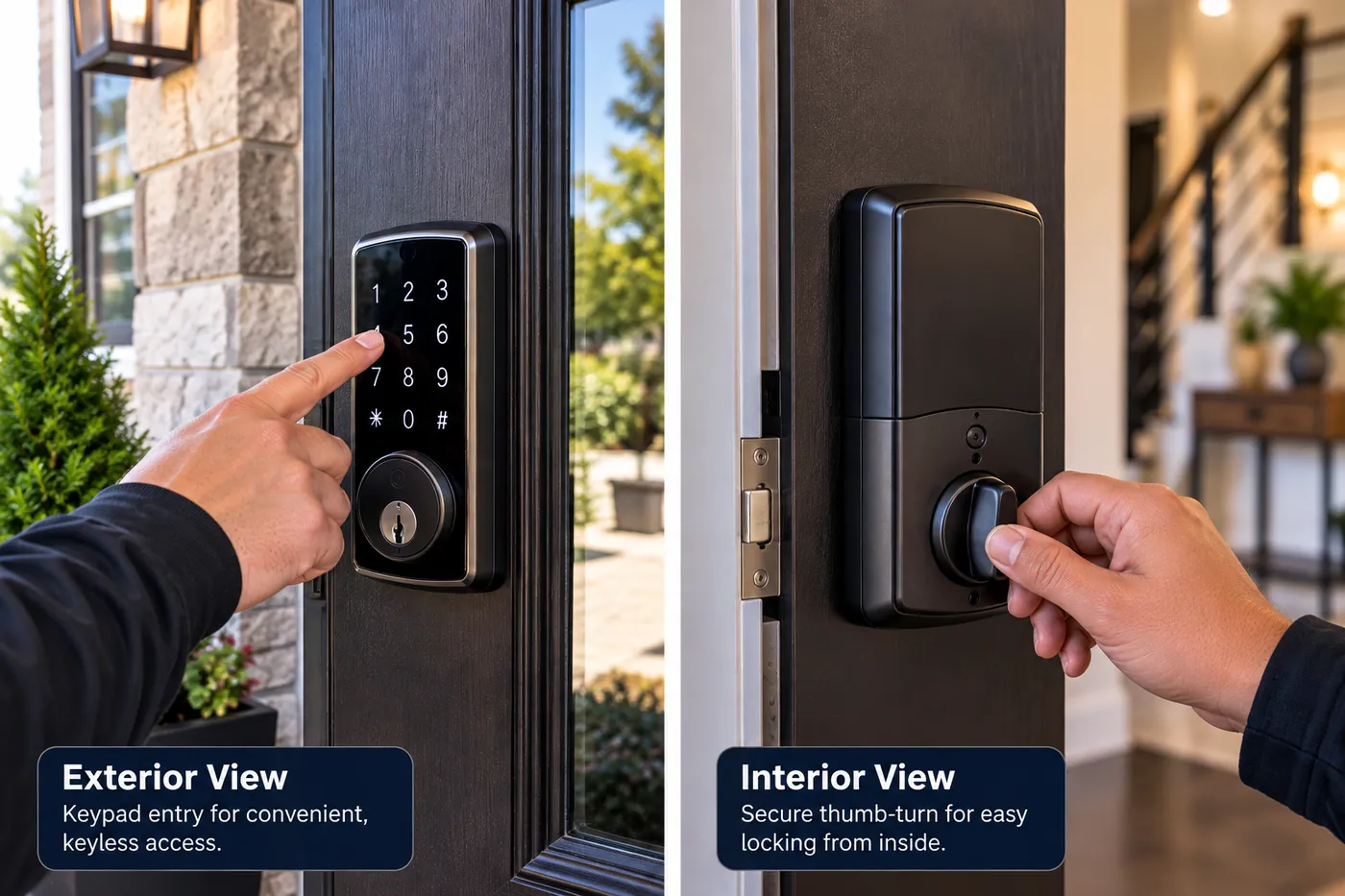
The standard the lock has to meet comes from the property maintenance code. The model version New York's code is built on says that where a door into a rented dwelling unit has a deadbolt, the deadbolt must open from the side people leave by without keys, special knowledge or effort, must throw at least an inch, must be installed to the maker's instructions and must be kept in working order — and it says a sliding bolt doesn't count. A keypad deadbolt with a plain thumb-turn inside and a full one-inch bolt meets that comfortably. A double-cylinder deadbolt, a lock that needs a code to leave, or a cheap retrofit whose bolt throws short does not.
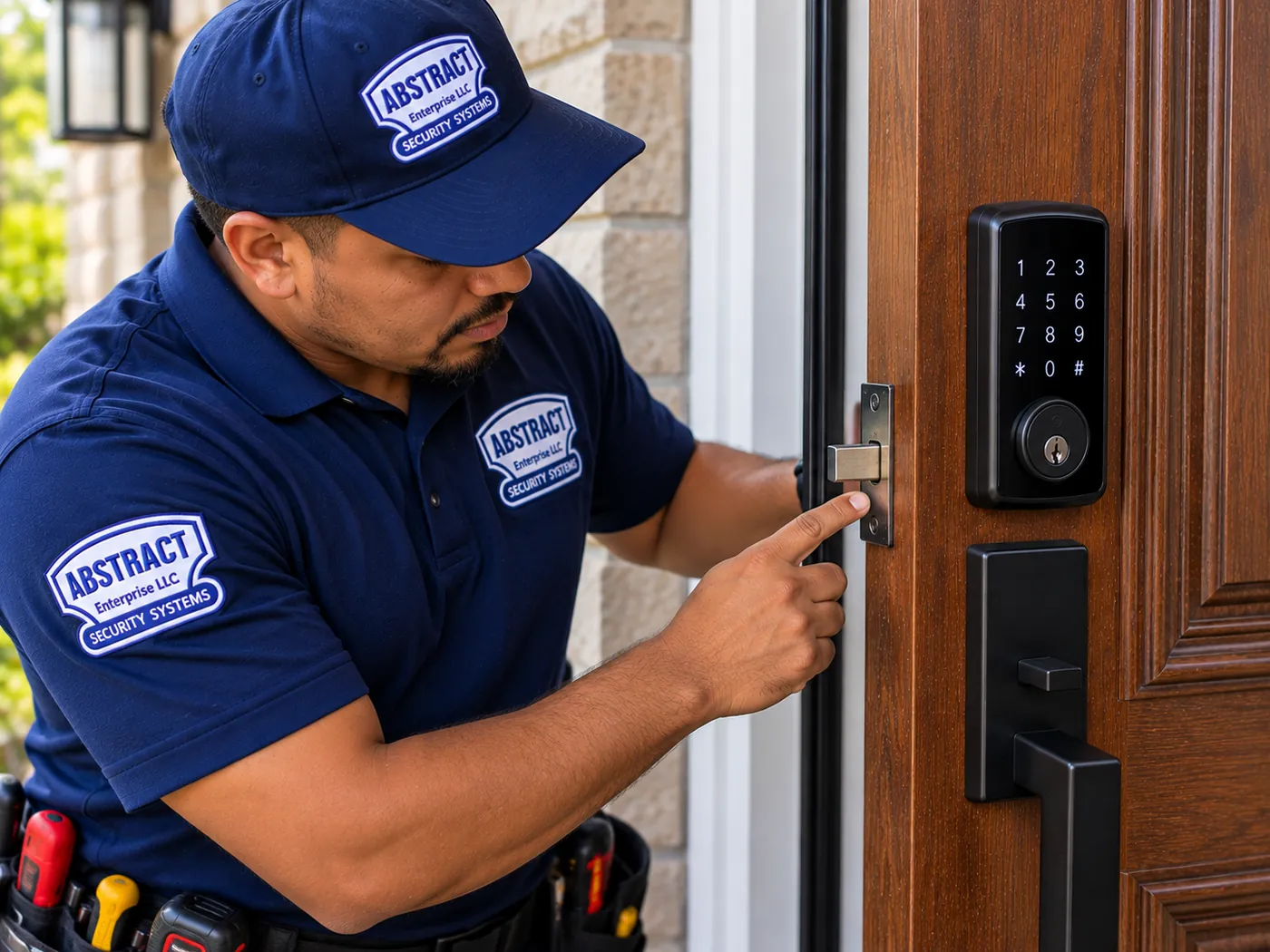
So before a renewal we check three things on every rented door: the inside turn, the bolt throw, and the strike, because a bolt that only half-enters a loose strike is a lock in name only. Then we set the codes up so the tenant has their own, the owner can retire a former tenant's code the day a lease ends, and the tenant keeps a working key. If you rent in Babylon, Brookhaven, Huntington or another town, its permit form will differ in detail; send it to us with your request and we will read it with you.
As a separate home with its own front door, because that is what it is. The Town of Brookhaven's code ties an accessory apartment to owner occupancy — the owner has to live in the house, in either the main unit or the apartment — and requires a provisional accessory apartment licence before anyone moves in. That means two households under one roof, each entitled to a door that the other can't simply open, and an owner who is both neighbour and landlord.
In practice we give the apartment's entrance its own lock with its own administrator account, held by the tenant, rather than adding it as one more door in the owner's app. The owner keeps a mechanical key for the access the lease allows, kept somewhere sensible rather than on a hook by the kitchen door. If the apartment and the main house share an interior door — a basement stair, a door off a shared laundry — that door is locked from both sides with ordinary keyed hardware or a privacy set, never with a code only one household knows, and it must still open from the apartment side if it is part of the tenant's way out.
Two details save arguments later. Keep the tenant's entrance on a separate Wi-Fi network or at least a separate app account, so a change to the owner's router doesn't knock the tenant's lock offline. And put the arrangement in the lease: which doors the tenant controls, how the owner gets in for repairs, and what happens to the tenant's codes on move-out. The lock then enforces an agreement both sides have already signed.
It can have a lock; it shouldn't have electronics that depend on staying dry. FEMA's technical bulletins describe the flood-insurance rule that an enclosure below an elevated building may be used only for parking vehicles, getting into the building and storage, with flood openings so water can pass through rather than push the walls in. FEMA's guidance on building utility systems expects electrical components below the required elevation to be designed to resist flood loads or be moved above it. A powered smart lock and its bridge, sitting at grade on the South Shore, are exactly the kind of thing that guidance is about.
Our usual answer is a strong mechanical deadbolt or a battery-free push-button keypad on the enclosure door, with the house's smart locks on the doors at the top of the stair. If you want to know when the enclosure door opens, a wireless door contact can report to the same app; it is inexpensive, and if salt water ruins it the loss is small. The hub, bridge or router that the upstairs locks rely on goes upstairs too, on an interior wall above the flood line.
It is also worth checking your elevation certificate and any flood-plain conditions attached to the work permit before adding anything to the enclosure, because finishing or equipping that space as if it were living area can affect both compliance and the flood insurance premium. We stay out of that decision and fit hardware that keeps the enclosure looking and working like what it is supposed to be: parking, storage and a way in.
Yes, but it is planned as a one-trip job, because a forgotten part is a lost day. Driving on Fire Island is by federal permit only. The National Park Service's permit FAQs say contractor permits authorise driving only to communities where the holder has work, that summer residents and renters can't get permits because ferry service is considered adequate in season, and that in winter people reach their houses by ferry, water taxi or private boat. For most car-free communities, that means the tools and the lock go over the way the owner does, and nothing is driven to the door.
So the walkthrough is done from photographs and a call: the door's thickness, backset and condition, the strike, the cottage's Wi-Fi or lack of it, and how exposed the door is to wind-blown sand and spray. We bring the lock, a second set of fixings, a spare strike, batteries and the tools to re-drill if the old preparation is rotten, and we take the old lock away or leave it with you as a spare. Locks with published outdoor ratings and a mechanical key are the default, because a cottage door on a boardwalk sees more salt than almost any door on the mainland.
Plan the codes for the way the house is actually used: an owner's code, codes for family and guests with end dates, and one for whoever checks the house out of season. If the cottage has no reliable internet, choose a lock that can create time-limited codes without a connection, and keep a key with a neighbour or caretaker in the community, because getting a locksmith across the bay after the last ferry isn't realistic.
No. They do different jobs, and the pool rule is about the alarm. The New York State Department of State's summary of the residential pool requirements says that where a wall of the house is part of the pool barrier, every door with direct access to the pool through that wall needs an alarm listed to UL 2017, with a touch pad or switch that silences it for a single opening for no more than 15 seconds; where the house sits wholly inside the pool enclosure, every door with direct access needs one. Other approved means, such as self-closing and self-latching devices, are allowed only if they protect at least as well.
A smart lock can't stand in for that alarm. It secures the door against someone outside; the alarm warns that a child inside has opened it. We fit the two together: a slider lock or a hinged-door smart lock that reports locked and unlocked, plus the listed door alarm mounted where the code wants it and where adults can reach the pass-through switch but a small child can't. If the pool door is a hinged French door, the smart lock's auto-lock can be set so the door relocks soon after it closes, which helps, but it is still not the alarm.
The pool gate has its own rules in the same summary: self-closing, self-latching, opening outward away from the pool for a pedestrian gate, with the latch handle inside the enclosure and at least 40 inches above grade, and a lock to keep it shut when the pool is not supervised. A keypad lock can be fitted to many gates, but only one that doesn't defeat the self-latching hardware; the town inspects the barrier, not the app. Pool installers handle the barrier itself; we fit the lock and the alarm and coordinate with them.
The bulkhead itself is a poor place for a smart lock, and if anyone sleeps in the basement it is also part of their way out. Steel bulkheads normally lock from inside with a slide bar. Bilco sells a keyed lock kit for its basement doors that adds an outside key while keeping the slide bar for locking from inside, and that is usually the right level of hardware for the bulkhead leaf. Motorised locks struggle with doors that move as much as a bulkhead does with heat, frost and settling, and the leaf is exposed to rain and snow lying on it.
If there is a door at the foot of the bulkhead stairs into the basement, that door is the better candidate for a keypad, since it sits sheltered under the steel. Whatever goes on it must open from the basement side with a single turn and no key. The model residential code requires a basement, and every sleeping room, to have an emergency escape and rescue opening that works from inside without keys, tools or special knowledge, and many Suffolk basements rely on that stair for it.
So our usual plan is a keyed kit on the bulkhead, a keypad deadbolt with a plain thumb-turn on the inner door if there is one, and a door contact on the bulkhead so the app tells you when it opens. If the basement is, or will be, a bedroom or an accessory apartment, the town's building department decides what the escape opening must be; we make sure the lock never gets in its way.
Plan it before it happens, because a responder at a locked smart door has the same options as at any locked door: someone opens it, or they force it. There is no master code that fire or EMS crews carry for consumer smart locks. What a smart lock does offer is a way for a family member to open the door remotely, from anywhere, the moment they know help is at the step — which only works if the lock is connected, the family member has the app and the notifications reach them.
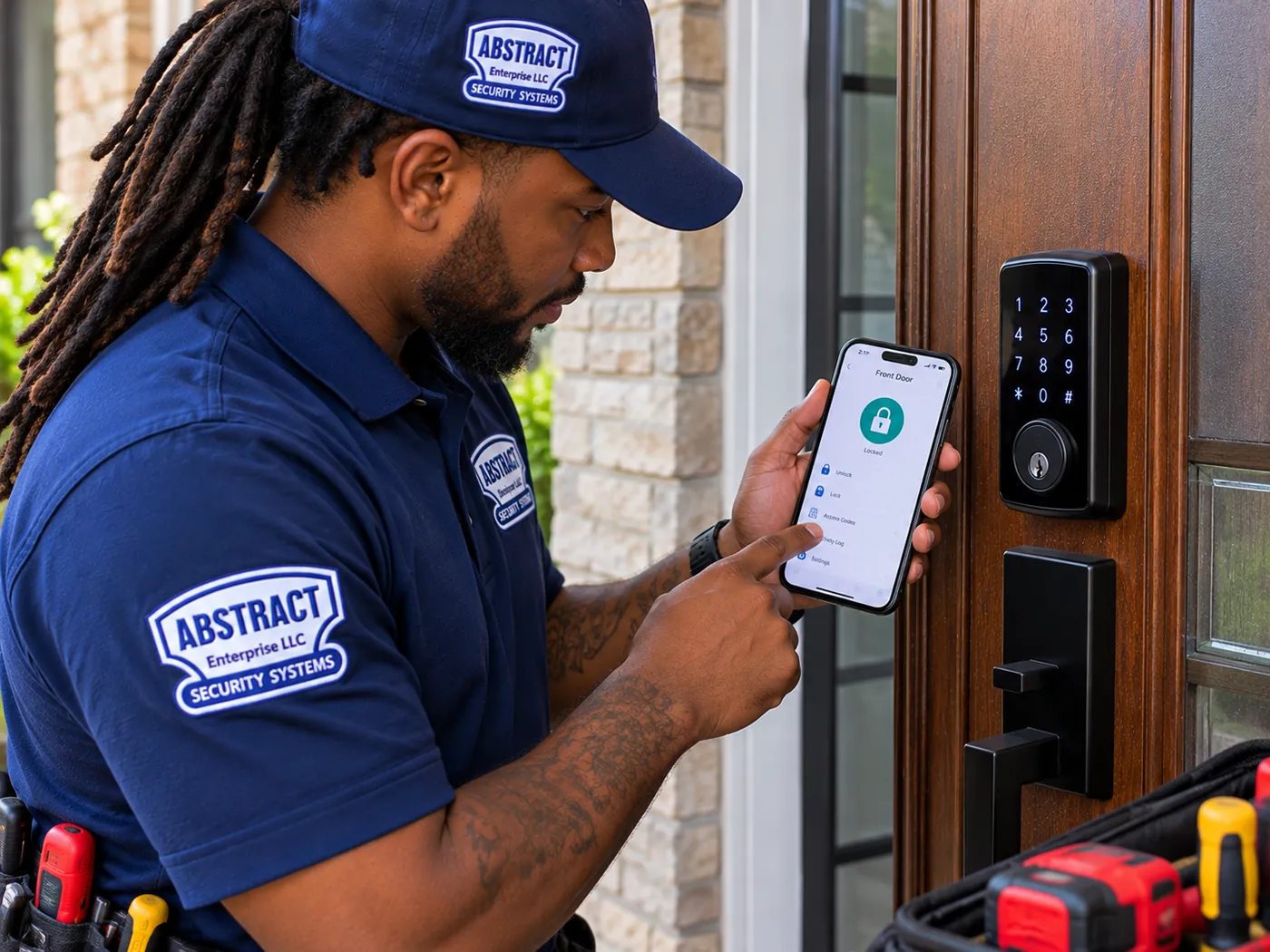
The most reliable set-up we fit for an older parent living alone is layered. The front door gets a connected smart lock with a doorbell camera beside it, so the person who gets the call can see the crew and unlock. A neighbour or nearby relative holds a code of their own. And a mechanical key sits in a key safe or with that neighbour, because a phone, an app and a home network are three things that can fail on a bad night. Ask your local fire district or ambulance company whether it offers or recommends a residential key-box arrangement, and follow its advice on where to mount one.
Two settings matter. Turn on notifications for the door being unlocked or opened, sent to two family members rather than one. And make sure the inside of the door opens with a single, easy turn, so your parent can let people in on a good day and nobody is held up by the lock on a bad one.
They have to change too, and you can't do it yourself. The Town of Islip's Fire Prevention Bureau explains that property owners are not given keys to their own Knox-Box: the fire marshal's office schedules a visit to lock the keys inside, keeps a master list of every box and its key inventory, and only the marshal's office and the local responding fire department can open it. Its bulletin is explicit that whenever you change your locks, you must call the fire marshal to swap the keys, or responders may have to force entry and cause damage. Generally, keys to all spaces in the building go in the box.
Going keyless doesn't mean going keyless for the fire department. Every door we convert keeps a mechanical override — a key cylinder on the lock or a keyed bypass on the strike — and the new keys are what go into the box. Where the system uses cards or fobs, a credential can go in too if the marshal asks for it, but a key that works with the power off is the one that matters. We plan the cylinder change, hand you a labelled key set for the marshal's visit, and keep the old keys working until the box has been updated.
Hauppauge straddles Islip and Smithtown, and the rest of Suffolk's industrial streets fall under other towns and fire districts with their own procedures. We check which office covers your address before the old cylinders come out, so the building is never left with a box full of keys that no longer fit.
The man door, almost always. It is the door staff use to arrive, leave and step out for a break, it is usually the unit's required exit, and it hangs in a steel frame that takes a commercial keypad lever or a strike and reader well. A coded lever that relocks automatically means the last person out can't leave it on the latch, and each employee's code shows up in the log.
The roll-up door is a different machine. A motorised bay door is opened by its operator, and controlling it means working with the operator's own inputs and safety devices, which is a job for the door company. A manual roll-up is secured with its own slide locks or padlock hasps from inside. What we can add is a door contact on the bay door, so the same app that logs the man door also reports when the bay goes up after hours. That gives an owner one timeline for both openings without touching the operator.
If the unit has an office front with an aluminium storefront door as well, that door gets its own keypad or reader and its own schedule, often a later unlock than the shop floor. And whatever you choose, the new keys go into the Knox-Box, as described above.
It helps you do what the rule asks, but it is not compliance on its own. The HIPAA Security Rule's physical safeguards, at 45 CFR 164.310, include a facility access controls standard: limit physical access to electronic information systems and the facilities that house them, while making sure authorised access is allowed. Its implementation specifications cover a facility security plan, procedures to control and validate a person's access based on role, and maintenance records documenting repairs and changes to security-related parts of the facility, which the regulation itself illustrates with hardware, walls, doors and locks.
A keypad or card lock with individual codes and a log fits that well. Each staff member gets a credential tied to their role, the server or records room opens only for the people who need it, and when someone leaves you delete one code instead of re-keying the room — the example HHS's own guidance gives of a physical change worth documenting. The lock's log, kept with your maintenance records, shows who had access and when it changed.
What it doesn't do is write your policies, train your staff or cover the technical safeguards on the computers themselves. A practice is better off treating the lock as one line in its security plan. We supply a written description of each door, the hardware and the credential list for that plan, and we never need access to patient information to do the work.
Possibly; check with the program before you count on it. New York's Securing Communities Against Hate Crimes program, administered by the Division of Criminal Justice Services, gives grants to nonprofit organisations at risk of hate crimes or attacks because of their ideology, beliefs or mission. The Governor's application page says grants can fund interior or exterior security improvements, such as alarms, panic buttons, fences, shatter-resistant glass and public address systems, among other items. Door locks and access control aren't named on that page, so confirm with DCJS whether they are eligible in the round you apply to.
If they are, the doors that matter most for a congregation are usually the ones used outside service times: the office entrance, the school or hall door, the kitchen and delivery door. Coded or card access there lets clergy, staff and volunteers in on a schedule, while the main doors stay on ordinary keyed hardware with panic exit devices for crowds. Every exit still opens from inside with one push.
For an application, we can provide a written scope and itemised quote for each door, product data sheets, and a description of how exits stay free, which is the kind of documentation grant reviewers tend to ask for. We don't prepare applications or advise on eligibility; the program office does.
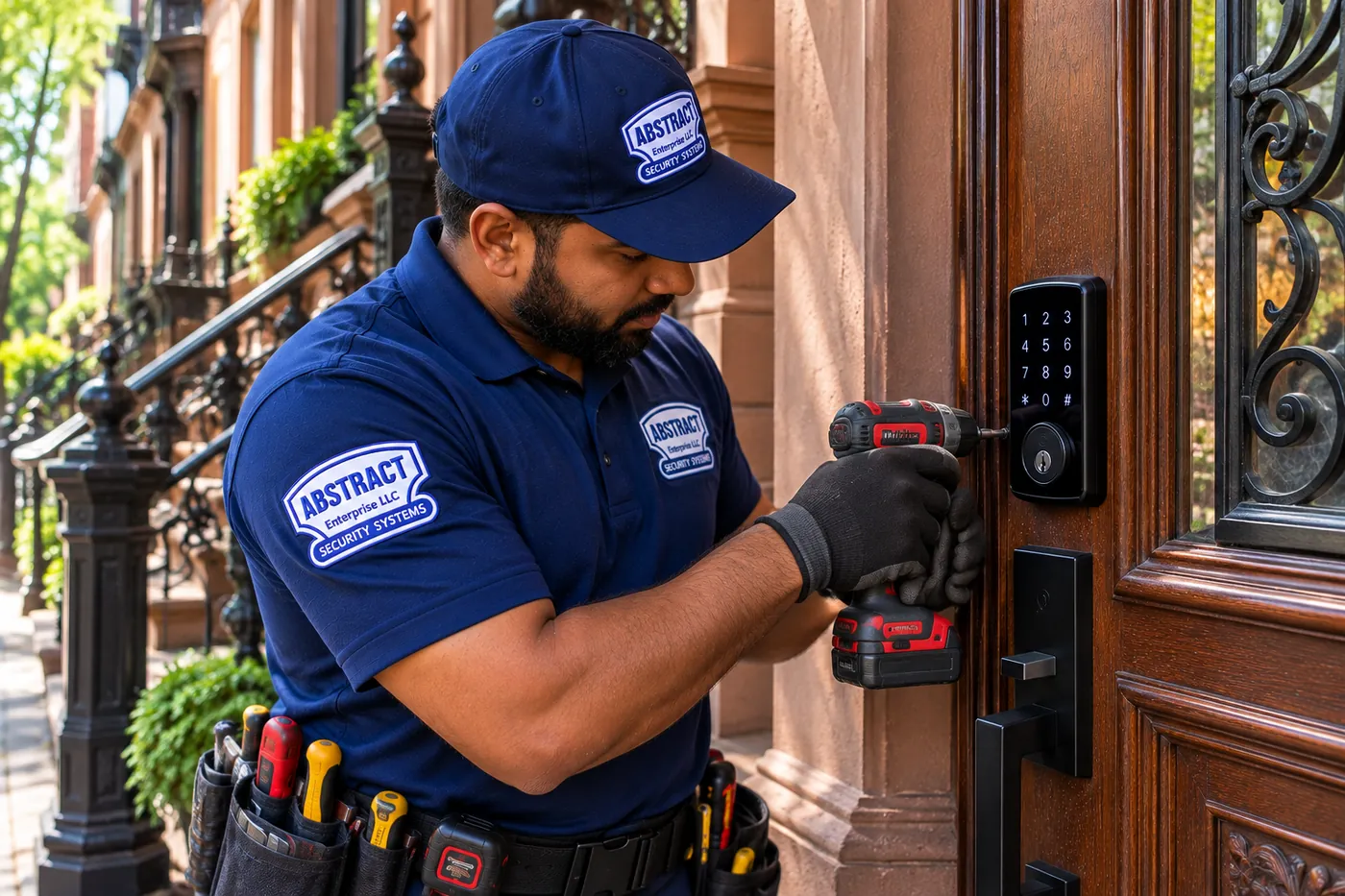
In Suffolk the setting often picks the lock: a cottage on a boardwalk, a door above a flood enclosure, a slider onto a pool, a steel door in a plant. Buy your own and we will fit it, or let us recommend one once we have seen the door. These are the categories we install across the county.
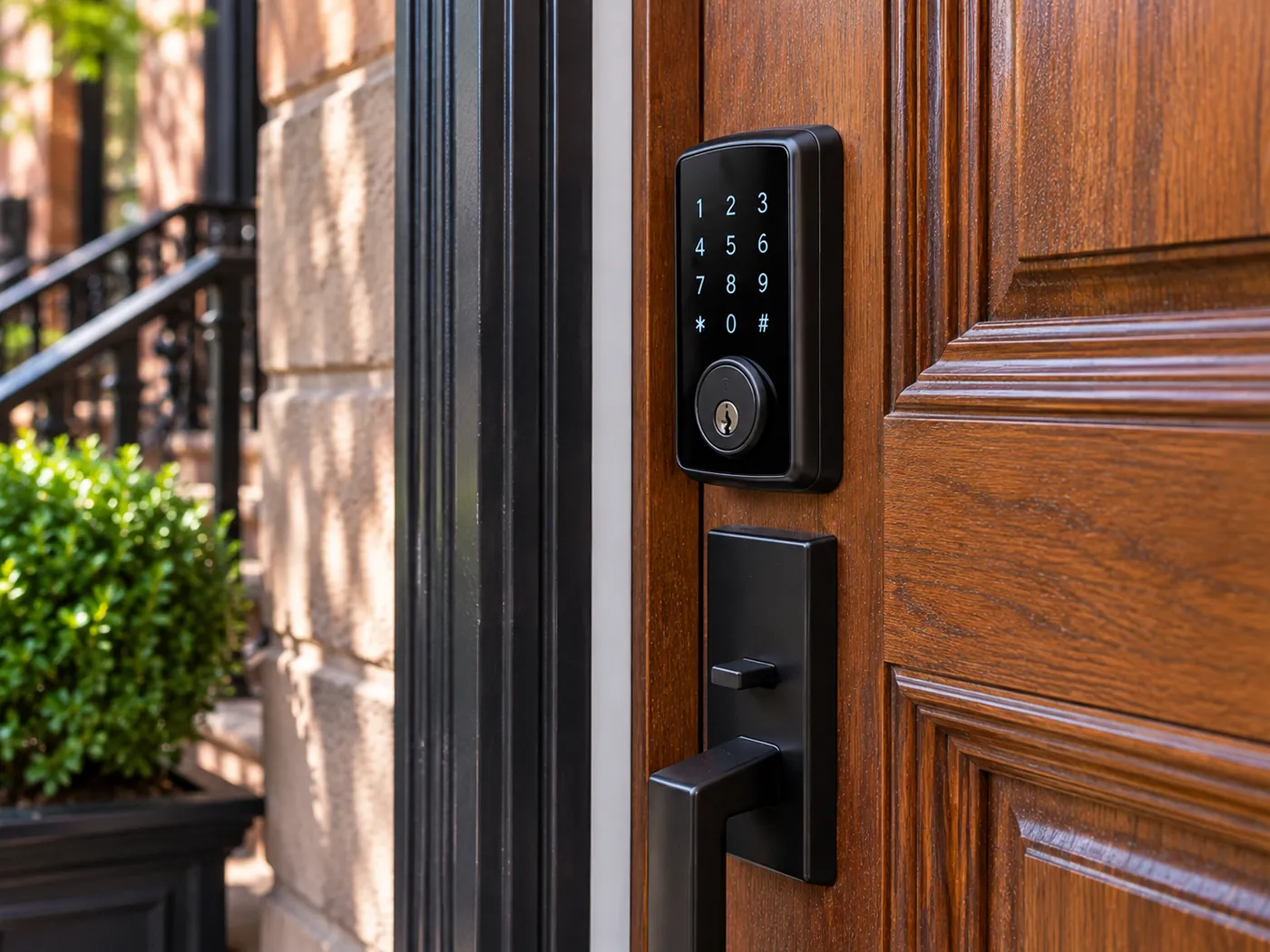
Motorised or manual keypad deadbolts with an inside thumb-turn and a mechanical key outside. The default for house entries, rental units and accessory-apartment doors, where a one-inch throw and a free inside release matter.
Mechanical keypad locks with no electronics at all. Our usual choice for flood-enclosure doors, outbuildings and cottage doors where salt and water would finish a circuit board.
Locks that can issue time-limited guest codes without an internet connection at the door, for Fire Island cottages, boathouses and remote East End properties where Wi-Fi is unreliable or switched off out of season.
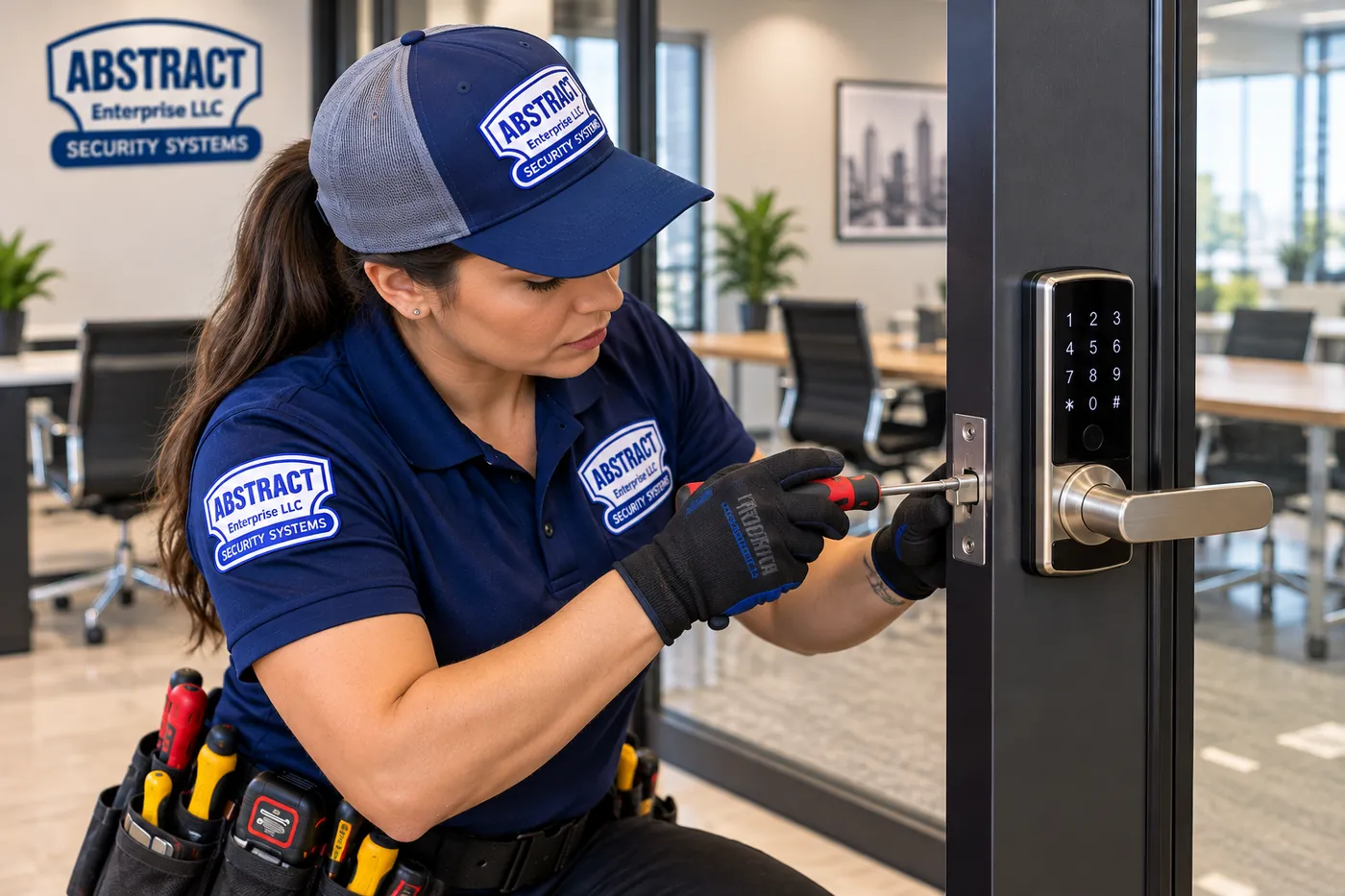
Heavy-duty coded lever locks for steel man doors in hollow-metal frames, with per-employee codes, automatic relocking and a key override for the Knox-Box.
Card, fob or phone readers on the frame with a strike in it and a push-to-exit inside, for office fronts, practice entrances and congregation side doors.
Keyed slider locks and auxiliary foot bolts paired with door sensors, so a sliding door reports to the same app as the hinged doors without pretending to be a smart deadbolt.
UL 2017-listed door alarms with a pass-through switch, fitted where the pool code expects them on doors that open onto the pool area, alongside the door's lock.
Small wireless sensors that report a bulkhead, bay door or enclosure door opening, or water rising under a raised house, to the owner's phone.
National brands versus a Suffolk installer. A national alarm company will sell a lock as part of a monitoring plan, and a big-box store will sell it in a box. Neither will read your town's rental-permit form, check whether the door is above or below the flood line, tell you that a smart lock is no substitute for a pool-door alarm, or arrange the Knox-Box key swap with the fire marshal. Those are the parts of a Suffolk job that a local, licensed installer is for.

A note on method: the tools used to research this page could not open Google's AI Overview, so the seven headings below are not quotations from it. They are claims that recur in product listings, cost-guide sites such as Angi, HomeAdvisor and Fixr, and how-to articles, which answer engines tend to repeat. After each one is what we find on Suffolk doors.
Product pages list the door thicknesses and backsets a lock fits, and most ordinary front doors qualify. Fitting the door's preparation is not the same as suiting the door.
In Suffolk, plenty of exterior doors are poor homes for electronics: the enclosure door under a raised South Shore house, a steel bulkhead over cellar stairs, a slider onto a pool deck, a cottage door facing the ocean on Fire Island. Each has a better answer, and it is usually mechanical.
We sort the doors before choosing locks: which ones get a smart lock, which get a battery-free keypad, which get a keyed kit and a sensor, and which should be left alone.
Landlord blogs present keyless entry as the finishing touch on a rental. Suffolk's towns see it differently. Islip's permit form, for instance, is about smoke alarms, carbon monoxide alarms, open violations and a ban on transient rentals.
A keypad doesn't touch any of those, and the wrong keypad can create a problem: a lock that needs a code to get out, or a bolt that throws short of the inch the model maintenance code calls for, is a violation in waiting.
Get the permit basics right first, then fit a lock that opens freely from inside and lets you retire a former tenant's code the day they leave.
Child-safety roundups sometimes list smart locks and auto-lock among pool precautions. New York's residential pool code asks for something else on a house door that opens onto the pool: a UL 2017-listed alarm, or an approved alternative that protects at least as well.
The difference is direction. A lock keeps people out; the alarm tells the adults that someone inside has opened the door. A toddler who can work a thumb-turn will open a smart-locked door from inside as easily as any other.
We fit both and explain which does what, and we leave the barrier and gate to the pool contractor and the town inspector.
Commercial access-control marketing promises an end to key management. The fire marshal disagrees. Islip's Knox-Box bulletin requires keys to all spaces in the box and an appointment to change them whenever the locks change.
A card or a phone credential is useless to a crew at a dark building with the power off, which is exactly when they need to get in.
Every Suffolk business door we convert keeps a mechanical override, and the new keys go to the marshal's office before the old ones stop working.
Some access-control sellers describe their logs as a HIPAA feature. The Security Rule's facility access controls do ask for access to be limited and changes to doors and locks to be documented, and a log helps with both.
But the rule is a set of policies and procedures across a whole practice, from workstations to backups. No lock satisfies it on its own, and a log nobody reviews protects nothing.
We set up role-based codes, give you the door and credential records for your security plan, and leave compliance decisions to your privacy officer.
Small-business guides picture a single front door. A Suffolk flex unit has two openings, and the bigger one is the roll-up bay.
A keypad on the man door does nothing about a bay door left up after a delivery, or a manual roll-up whose slide locks were never thrown.
We put the keypad on the man door, a contact on the bay door, and both on one timeline, so the owner sees every opening.
It is widely assumed that police, fire and EMS have some way past consumer smart locks. There is no master code they carry for them.
A crew at a locked house door has the options it has always had: someone opens it, a key is found, or the door is forced. For an older person living alone, that is a reason to plan, not to avoid smart locks.
Remote unlock by a family member, a camera at the door, a neighbour's code and a key in safe keeping together give responders a quick way in without anyone breaking the door.
Tell us the town, the doors and what sits outside them — a pool, a flood enclosure, a bay door, a Knox-Box. We will tell you which doors should go keyless, what each lock must do, and the price.
List the doors you want converted, the town they are in and anything unusual about them — a rental permit, a raised house, a pool, a bulkhead, a fire marshal's key box — and you will hear back in writing the same business day. Prefer to talk? Our Suffolk number is (631) 407-2884.
Thanks — a licensed installer will phone you before the end of the business day. Something urgent? Ring (631) 407-2884.
The same six stages apply to a single side-door keypad on a Selden ranch and to a Hauppauge plant with a dozen doors.
On the phone we take the address and list the doors, then note which are rented, which sit near a pool, below a flood line or behind a bulkhead, and which buildings have a Knox-Box. Those answers decide what each lock must do.
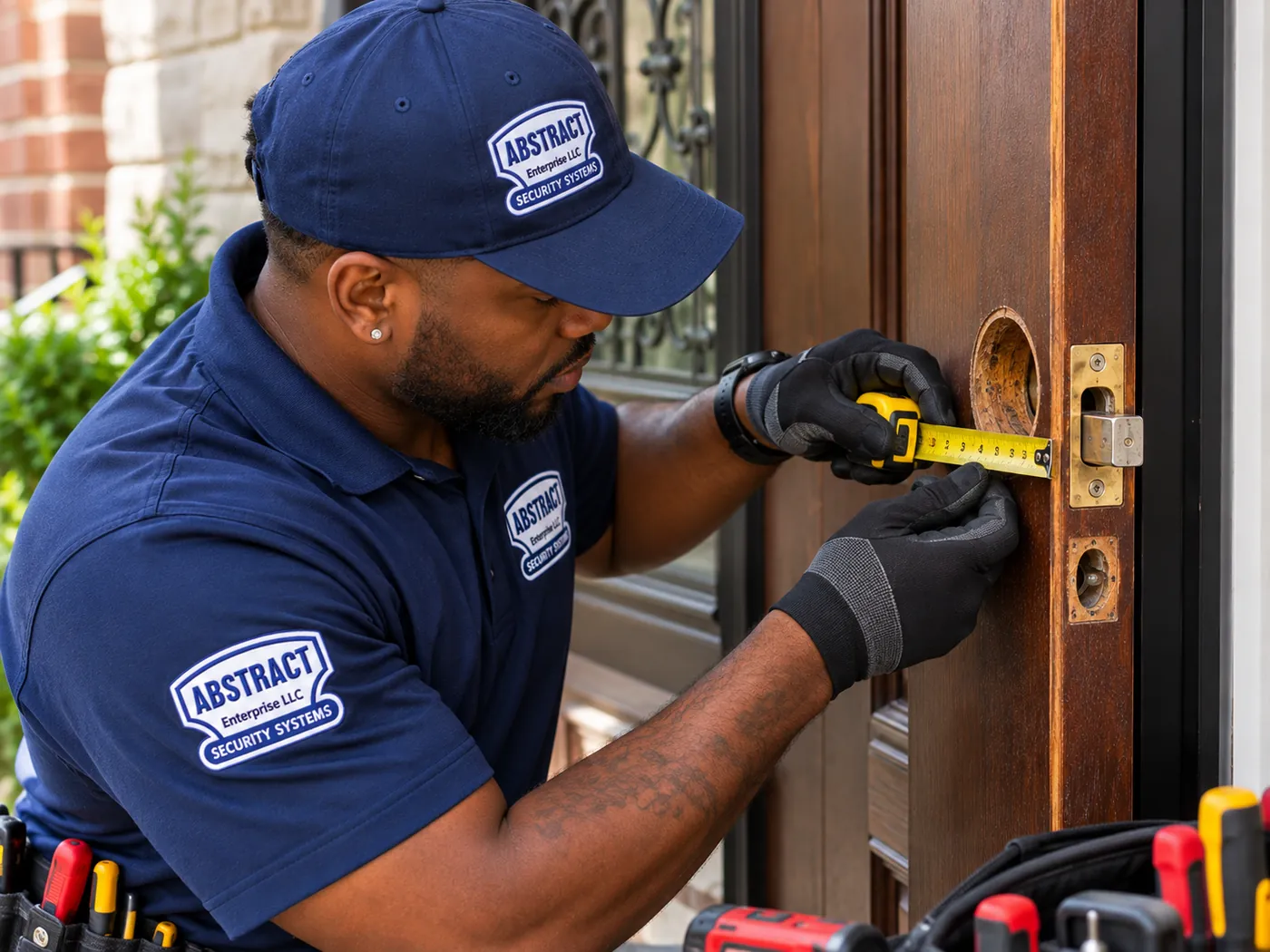
We look at every door that matters, measure thickness and backset, check strikes and frames, test signal at each door and read any permit paperwork you share. Fire Island and island jobs are surveyed from photos.
You get a plan saying which doors get a smart lock, a battery-free keypad, a keyed kit or a sensor, and why, with one flat figure. Business-door work is priced from our published Suffolk access-control rates.
Strikes are aligned or reinforced, hinges tightened and closers set so each door latches with a light push. For businesses, the new key set for the fire marshal's Knox-Box visit is cut and labelled before any old cylinder is removed.
Locks, sensors and any pool-door alarm are fitted and paired, hubs go above the flood line, and every door is opened from inside by hand, in the dark, with the power off, to prove the exit never needs a code.
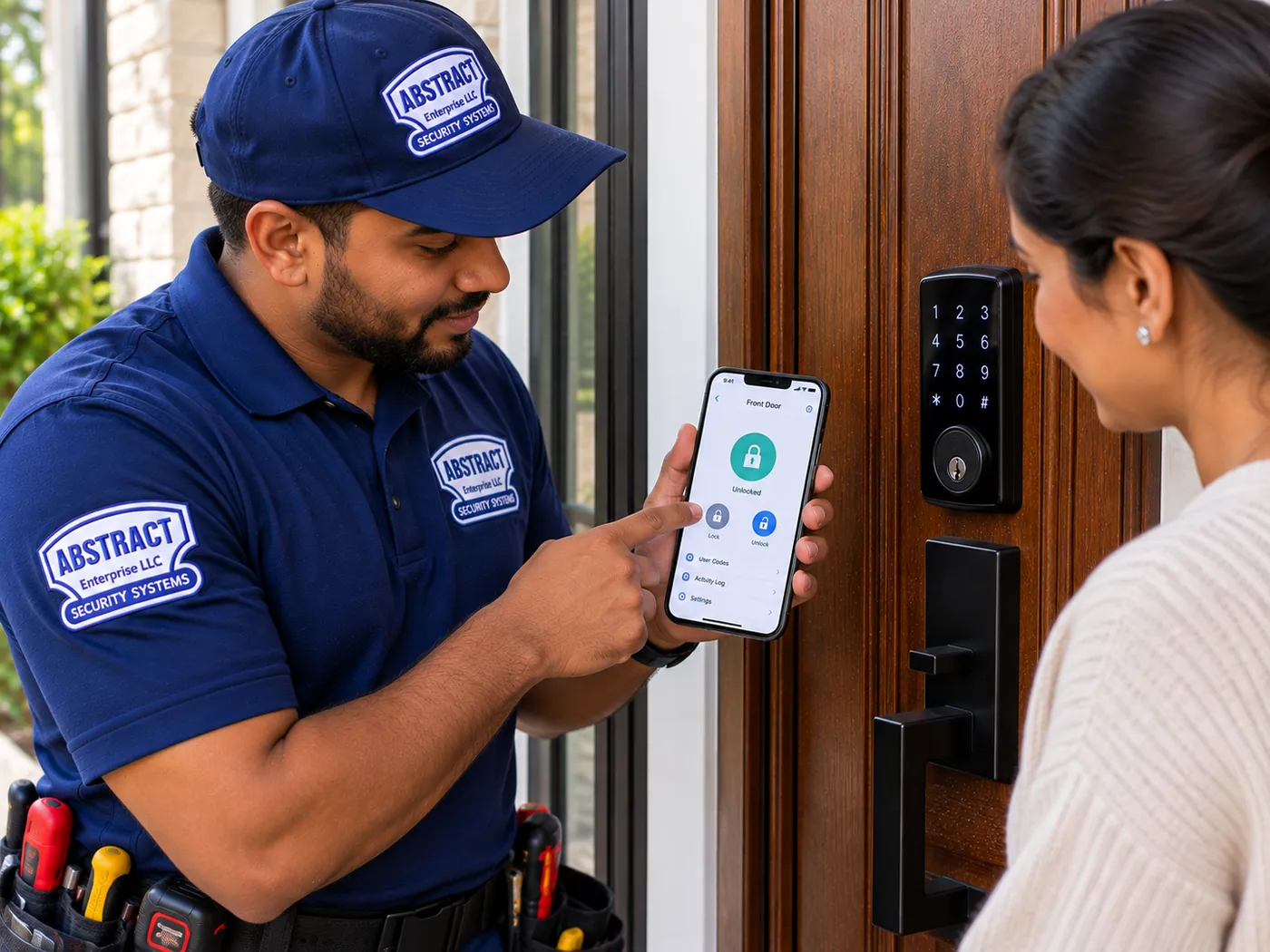
Each household, tenant or employee gets their own credential and tries it in front of us, schedules and end dates are set, admin access goes on two phones, and you keep a written record of every door and code holder.
Six places that show how wide the county is and how different its doors are, from the barrier beach to the Gold Coast to the industrial belt.
A 168-foot stone tower that began operating in 1858, just east of Robert Moses State Park inside the Fire Island National Seashore, and now run by the Fire Island Lighthouse Preservation Society. Beyond it lie the car-free communities where every lock arrives by ferry or water taxi.
Built in 1931 by duck farmer Martin Maurer as a shop for ducks and eggs on West Main Street in Riverhead, moved to his Flanders duck ranch in 1937 and returned there in 2007; listed on the National Register in 1997. East of here the county becomes farms, forks and second homes.
William K. Vanderbilt II's Eagle's Nest, a Spanish Revival estate built in stages between 1910 and 1936 on 43 acres above Northport Bay, left to Suffolk County and opened as a museum in 1950. The North Shore of heavy doors and old village houses.
The Department of Energy laboratory formally established in 1947 on the site of the Army's Camp Upton, in the Town of Brookhaven. Around it, the hamlets of Ridge, Yaphank and Manorville, with ranches, long lots and detached garages.
The 53-acre mixed-use development around the Ronkonkoma LIRR station, which the Governor's office described in October 2024 as Suffolk's busiest station, serving 17,000 daily commuters, and planned for 1,450 homes. New apartments with building-run entry and tenants' own unit doors.
The industrial park its business association ranks second in the nation, with about 1,350 companies and 55,000 employees, straddling the towns of Islip and Smithtown near the county's main office complex. Steel man doors, flex bays and Knox-Boxes by the hundred.
We also serve Amityville, Copiague, Lindenhurst, West Babylon, North Babylon, Deer Park, Wyandanch, Babylon Village, West Islip, Bay Shore, Brightwaters, Islip, East Islip, Central Islip, Brentwood, Islandia, Sayville, Oakdale, Bohemia, Holbrook, Ronkonkoma, Lake Grove, Centereach, Selden, Coram, Medford, Patchogue, Bellport, Shirley, Mastic, Mastic Beach, Moriches, Port Jefferson, Port Jefferson Station, Setauket, Stony Brook, Miller Place, Rocky Point, Wading River, Ridge, Yaphank, Manorville, Huntington, Huntington Station, Melville, Dix Hills, Commack, Elwood, Northport, East Northport, Centerport, Cold Spring Harbor, Smithtown, Kings Park, St. James, Nesconset, Hauppauge, Riverhead, Calverton, Jamesport, Mattituck, Cutchogue, Southold, Greenport, Orient, Hampton Bays, Westhampton Beach, Quogue, Southampton, Bridgehampton, Sag Harbor, East Hampton, Amagansett, Montauk, Shelter Island and the Fire Island communities.

We publish the figures we have actually priced and say plainly when a job is quoted after we see it. Entrance and business-door work — keypads, readers and electric strikes — carries published AESS prices at a Brooklyn base, and Suffolk carries our standard 1.20 area multiplier, so those lines appear below at the Suffolk rate, rounded half-up. A smart lock on a house, rental or cottage door has no published AESS price yet, because the setting decides the work: one keypad on a sound side door is a short visit, while a raised house with an enclosure door, a pool slider that needs an alarm and three tenants to enrol is a long one. Those jobs are quoted flat, in writing, after a free walkthrough or photo survey, and the figure you are given is the figure you pay.
| Item | Suffolk price | Scope and source |
|---|---|---|
| Smart lock on a house, rental, accessory-apartment or cottage door | Quoted flat at free walkthrough | No published AESS figure; set after we see each door, its setting and the people who will use it |
| Single-door keypad or fob reader with electric strike | $1,800–$3,000 installed | Office front, practice entrance, congregation side door or man door; published $1,500–$2,500 Brooklyn base × 1.20 |
| New electric strike on an entrance door | $300–$540 | Fitted during entrance work; published $250–$450 × 1.20 |
| Failed electric strike repair | $354–$582 | Entrance door that buzzes but won't release; published $295–$485 × 1.20 |
| Setup-only visit (codes, schedules, app, bridge; no hardware change) | $250 first hour, then 30-minute blocks | Our published Suffolk setup-only rate |
| Service and callback rate | $195/hr, 3-hour minimum ($585) | After-install service calls; not charged on the initial installation |
National cost guides for comparison. Cost-guide sites publish national averages for a single smart lock installed on an ordinary house door; Fixr's January 2025 figure is $250–$400. That is national third-party data, not an AESS price, and it assumes one door, one owner and none of the pool, flood, rental or fire-marshal questions a Suffolk door often brings.

Three ways Suffolk customers usually buy keyless entry. Two carry published county prices; the property plan is priced once we have walked the doors, because no two Suffolk properties share the same mix of doors, rules and water.
Quoted flat at walkthrough
Smart locks on the doors that deserve them, battery-free keypads or keyed kits on the ones that don't, sensors on bulkheads, bay doors and enclosures, pool-door alarms where the code expects them, rented units set up separately, every exit tested by hand, and a written door record.
$300–$540
For an office front, a practice entrance or the shared door of a small building, the strike is supplied and fitted with the entry work at the county rate. A strike that has simply failed is repaired instead, at $354–$582.
$1,800–$3,000
A keypad or fob reader on the frame, an electric strike in it and a push-to-exit button inside, installed for one door at the Suffolk rate, with each employee or volunteer given a scheduled credential and a key set prepared for the Knox-Box.
Already bought a smart lock? We fit it, quoted flat as labour only after the walkthrough. Before the box is opened we confirm it suits the door and the setting: thickness, backset, a full one-inch throw on a rented door, an outdoor rating for a stair-top or cottage door, and a mechanical key. We won't fit a lock that needs a key or code to get out, and we won't put a powered lock on a door below the flood line. A lock you supply carries its manufacturer's warranty rather than ours. If it won't suit the door, we tell you before anything is drilled.

Send a photo of each door from outside and one of what lies beyond it — the deck, the stair, the bay, the boardwalk. We will tell you what the walkthrough will cover and what it is likely to recommend.
Ten towns, each with its own code book, fire marshal and housing stock. This is how a smart lock job tends to look in each.
The western South Shore: Amityville, Copiague, Lindenhurst, West Babylon and Babylon Village, with canal streets running down to the Great South Bay. Nearer the bay, raised houses with stair-top front doors and enclosures below; further inland, post-war ranches and capes with side doors and sliders. Owners renting a second unit should read the town's rental permit rules before choosing a lock.
From Bay Shore, Brentwood and Central Islip to Sayville and Bohemia, plus the Fire Island villages of Ocean Beach and Saltaire, which the state lists as part of the town. Islip's rental occupancy permits and its fire marshal's Knox-Box program are the two town rules most likely to touch a lock job here, alongside Islandia's offices and the industrial streets around MacArthur Airport.
The largest town, running from the North Shore to the South Shore: Port Jefferson, Setauket and Stony Brook in the north, Centereach, Selden and Medford in the middle, Patchogue, Bellport and the Mastic peninsula in the south, and Ridge, Yaphank and Manorville to the east. Accessory apartments licensed under the town code, Sandy-raised houses along the bay, and houses on long lots with detached garages all come up.
Huntington village and Station, Northport, Centerport, Cold Spring Harbor, Dix Hills and the Route 110 offices of Melville. North Shore colonials with sidelights and handlesets, waterfront houses on the harbours, and suite doors in multi-tenant office buildings where the landlord runs the lobby.
Smithtown, Kings Park, St. James, Nesconset and the villages of Head of the Harbor, Nissequogue and the Branch, plus part of Hauppauge. Larger houses on bigger lots, pool decks, and the Smithtown side of the industrial park.
The county seat and the gateway to both forks: Route 58's retail and service businesses, the Riverhead County Center's offices, and farmhouses on the roads heading east. Business doors with seasonal staff, and farmhouse doors that predate standard hardware.
The North Fork from Mattituck to Orient, with the village of Greenport. Older farmhouses and cottages, second homes used on weekends, and shops and restaurants on Greenport's streets. Offline-code locks and battery-free keypads earn their place where houses sit empty for weeks.
Hampton Bays to Bridgehampton, and the villages of Southampton, Westhampton Beach, Quogue, Sagaponack, North Haven and West Hampton Dunes. Large houses with many doors, house managers and caretakers who need codes, pool houses and pool decks, and barrier-beach houses on the dunes.
East Hampton village, Amagansett, Springs and Montauk, and the town's share of Sag Harbor. Estates and cottages alike, salt exposure on the ocean side, and staff, guests and contractors who all need access on different terms.
An island town with the village of Dering Harbor, where every visit includes a ferry crossing. Cottages and houses that are closed for part of the year, where a job is planned to finish in a single crossing.

On the South Shore and the barrier beaches, the most important measurement on a lock job isn't the backset; it is the height above the flood line. This is what we go through before recommending hardware for a house that has been raised or sits near the water.
Owners who raised their houses with state or federal help may have conditions attached to the work. Read them, or ask the program, before adding equipment below the elevated floor.

The lock is a morning's work. The handover is what keeps the building open, the fire department able to get in, and former employees out. This is the plan we leave with every Suffolk business we convert.
| Item | What we set up | Why it matters |
|---|---|---|
| Knox-Box keys | New key set cut, labelled and handed over for the fire marshal's appointment; old keys kept working until it is done | Islip's bulletin warns that stale keys can mean forced entry and costly repairs |
| Owner and managers | Administrator access on two phones, plus a mechanical key each | A lost phone or a departing manager never locks the business out of its own doors |
| Employees | Individual codes or fobs with schedules matched to shifts | The log shows who opened up, and one person's departure means deleting one credential |
| Cleaners and contractors | Time-limited codes with an end date | Access that expires on its own instead of relying on someone to remember |
| Bay and loading doors | Door contacts reporting to the same timeline as the man door | After-hours openings of the larger door are seen, not discovered the next morning |
| Exit doors | Inside release tested with power off; push-to-exit or lever on every electrified door | The way out never depends on a code, a card or the network |
Review the user list every quarter and after every departure. If something changes and you would rather not do it yourself, our Suffolk setup-only visit is $250 for the first hour.

A lock on a rented door changes hands with every lease. Whether it is a basement unit in Babylon, an accessory apartment in Brookhaven or a whole house in Islip, the same routine keeps the door secure, keeps the tenant in control of their own home and keeps the owner on the right side of the town's paperwork.
Owners who manage several rented doors across Suffolk often ask us to handle the change-over visit. Without new hardware, that is our setup-only rate of $250 for the first hour; where a cylinder needs replacing or a strike needs re-setting, we quote it before we start.

A Suffolk lock job often grows into one of these. They are the county services that most often share a work order with a smart lock.
Readers, controllers and schedules for plants, offices, practices and multi-door buildings.
See who is at the stair-top door before you unlock it from the city.
Pool-door alarms, door contacts, flood sensors and monitoring for houses and businesses.
Door stations for accessory apartments, two-family entrances and office lobbies.
Dead stations, failed releases and wiring faults on intercoms already in place.
Strikes that hum but won't release and buzzers that have stopped answering.
Cameras, alarms, access and panic buttons planned as one system for Suffolk businesses.
Hubs and scenes that bring locks, lights, sensors and thermostats together.
Access points and cabling so the lock at the far door stays online.
Door wiring, data, cameras and sound from one licensed Suffolk crew.
One form for any combination of the services above.
The order our installers work through a Suffolk property — a routine we follow everywhere in the county, not the story of a single visit
We start outside, at the back, because that is where Suffolk doors get complicated. Is there a pool, and does a door open straight onto it? Is there a bulkhead, and does anybody sleep in the basement? Is the house raised, and what is behind the door under it? Those answers rule some doors out before we have looked at a single lock.
Then the doors that people actually use. On a ranch it is usually the side door from the driveway; on a raised house, the door at the top of the stair; in a plant, the man door by the time clock. We open each from inside with the lights off and check the bolt goes fully home into its strike.
Then the paperwork. If a door is rented, we ask for the permit or licence and read what it covers. If it is a business, we look for the Knox-Box and ask when the fire marshal last updated it.
Last, the people: who holds the administrator account, who gets a code, who keeps a key, and who gets the alert when a door opens at 3 a.m. A smart lock is only as good as that list.

A single-door keypad or fob reader with an electric strike is $1,800 to $3,000 installed at our Suffolk County rate, which is our published Brooklyn base multiplied by 1.20. A new electric strike on an entrance door is $300 to $540, a failed strike repair is $354 to $582, and a visit to change codes or schedules without new hardware is $250 for the first hour. Smart locks on house, rental and cottage doors are quoted flat after a free walkthrough.
After the exterior doors are hung, trimmed and weatherstripped, and once the house can be secured, but before you move furniture in. By then the doors have settled in their frames, the builder's construction cylinders can be retired, and the Wi-Fi the locks will use is usually working. If you want a doorbell camera or door contacts as well, tell the builder early so a power supply or cable can be left at the door.
Yes. Most fibreglass and steel entry doors sold for houses arrive bored for a standard deadbolt, which is what most smart deadbolts need. We check the door's thickness and backset against the lock, and we use the maker's reinforcement or a backing plate where the skin is thin, so the lock body is held firmly rather than by the outer skin alone. We avoid cutting new holes in a door's foam core unless the maker allows it.
Usually, with the right hardware. Narrow-stile aluminium storefront doors use a slim deadlock in the stile rather than a household deadbolt, so they need a keypad or reader made for that preparation, or a reader on the wall with an electric strike in the frame. We confirm the stile width, the existing lock and the landlord's rules for the storefront before quoting, and the door always opens from inside without a key.
In most cases. A deadbolt works the same way whichever way the door swings, but on an out-swinging door the hinges are often on the outside and the keypad side of the lock faces the weather more directly. We check that the hinge pins can't simply be lifted out, add security hinge studs where needed, and choose a lock whose maker publishes an outdoor rating for the exposed side.
Choose a lock the maker rates for exterior doors and read what its warranty says about coastal or salt-air exposure before you buy. Finishes that already resist corrosion on your other hardware are a sensible guide, and a keyed override matters more on the water, where a corroded keypad or a flat battery should never leave you locked out. We favour models with sealed keypads, mount any bridge or hub indoors, and suggest rinsing and checking the outside escutcheon each spring.
Partly. Very few genuine smart locks are made for sliders, so we usually fit a strong keyed slider lock or a foot bolt to do the locking, and a door sensor that reports open and closed to the same app as your other locks. You can then see from your phone whether the slider is shut, and set an alert if it opens late at night, without relying on a lock that wasn't designed for that door.
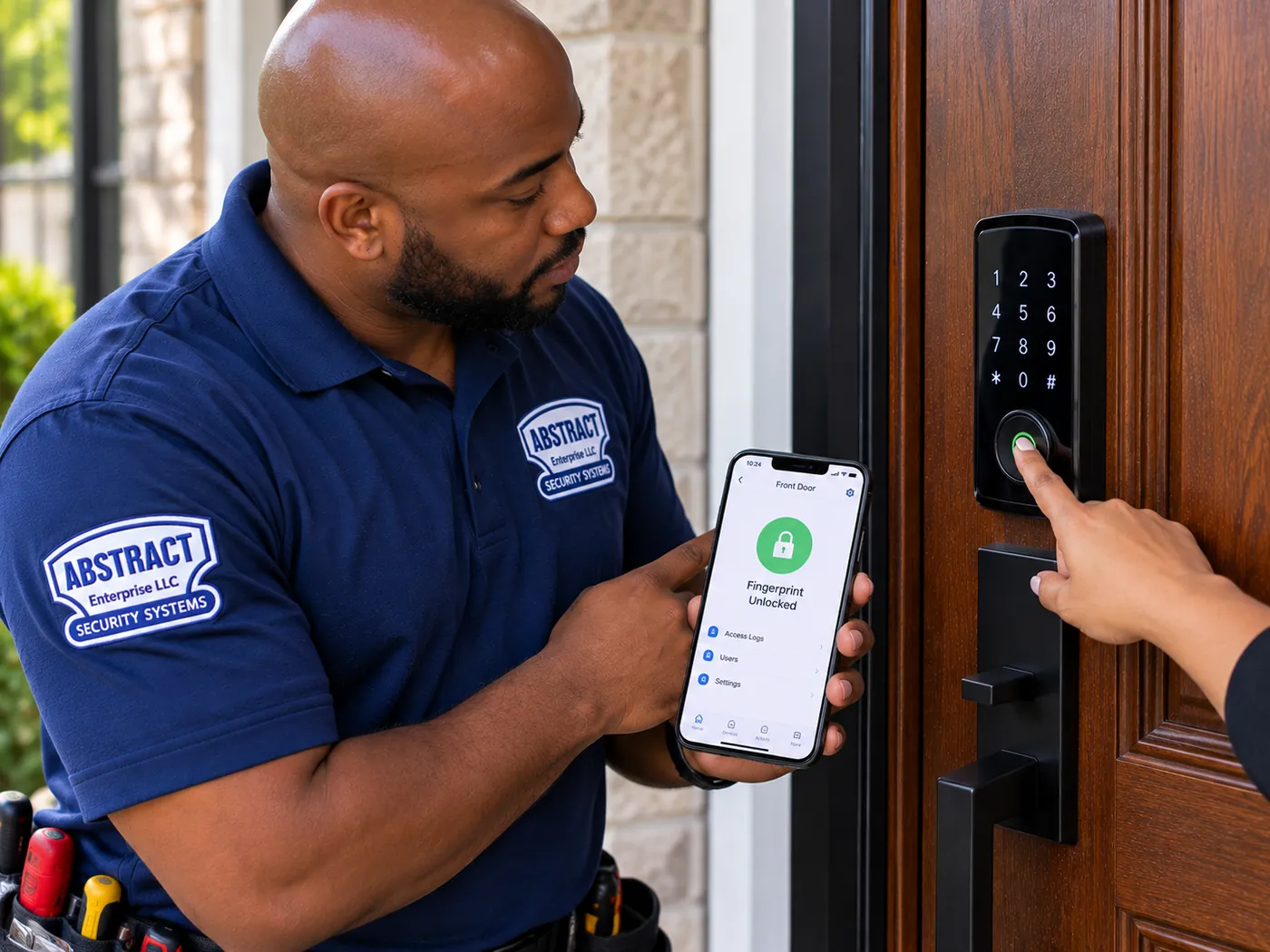
Yes, if each employee has their own code, fob or phone credential. The lock or system records each unlock against the person's name, and the owner can view that history in the app or have it sent as a notification. Shared codes defeat the purpose, so we set up one credential per person and show the owner how to delete it when someone leaves.
Check that the batteries are fresh, make sure everyone who may need to get in has a mechanical key, and charge the phones that run the app. If you have a hub or bridge, it should already be above the flood line; don't move electronics into an enclosure or garage below it. After the storm, test each lock by hand before relying on the keypad, because wind-driven rain and salt can affect keypads even on doors above the water.
We put down drop cloths at each door, tape the door face around the lock while drilling or re-fitting, and vacuum the shavings before we leave. Old locks are removed carefully so the paint around them isn't torn, and if old screw holes or bore holes are left exposed we tell you before we start and fill what can be filled.
This is our Suffolk County page. It sits under the Long Island smart lock installation hub, which covers whole-house code plans, garage doors, alarm pairing and seasonal homes across both counties. The Nassau County link opens our quote form for now; the same crews already work there. New York City, the Hudson Valley and its Westchester and Rockland counties have their own pages.
Long Island smart lock installation · Nassau County · Suffolk County (this page)
Smart lock installation in NYC · Manhattan smart locks · Brooklyn smart lock installation · Queens smart locks · Bronx smart lock installation · Staten Island smart locks
Smart lock installation in the Hudson Valley · Westchester County smart locks · Rockland County smart lock installation — with county pages for Orange, Putnam and Dutchess, and Ulster served from the regional page.
For cameras, alarms, intercoms and cabling across both counties, start at the Abstract Enterprises Security Systems home page, and meet the licensed team on our about page.

If a keypad has gone dark, the app can't reach the lock, or a bolt won't throw on a stair-top, side or man door, call our Suffolk line at (631) 407-2884. We book the next open 2-hour window, and most battery, pairing and alignment faults are cleared in one to two hours once a technician is at the door. Keep the mechanical key within reach meanwhile — it is the one credential that needs no battery, no network and no app.

Suffolk customers call (631) 407-2884 or message WhatsApp (718) 679-0359 through wa.me. Abstract Enterprises Security Systems, 1282 Troy Ave, Brooklyn, NY 11203.
NYS Low-Voltage Licence #12000287431 · 100% Licensed & Insured · Same-Day Estimates · Rated 4.7★ from 201 Google Reviews
Locks you supply carry their manufacturer's warranty. Full terms — including 50% deposit, one-year parts-only warranty on AESS-supplied products, and the late-fee schedule — are set out in the service agreement. See our warranty page.
Town codes, flood rules, pool requirements and fire-marshal programs are summarised here for planning only and are not legal advice; check the current text with the issuing office. Page reviewed and updated October 17, 2026. Changelog: first publication of the Suffolk County smart lock installation page.