Same-Day Service · All Brands · Wiring Repair · Panel Replacement · All Suffolk Communities
Professional door buzzer repair throughout Suffolk County. Babylon, Islip, Huntington, Brookhaven, Smithtown, Riverhead, and all Suffolk communities. Licensed and insured.
Component-level diagnosis. We isolate the failed part before quoting a replacement.
Certificates of insurance issued to owners, boards, and managing agents before work starts.
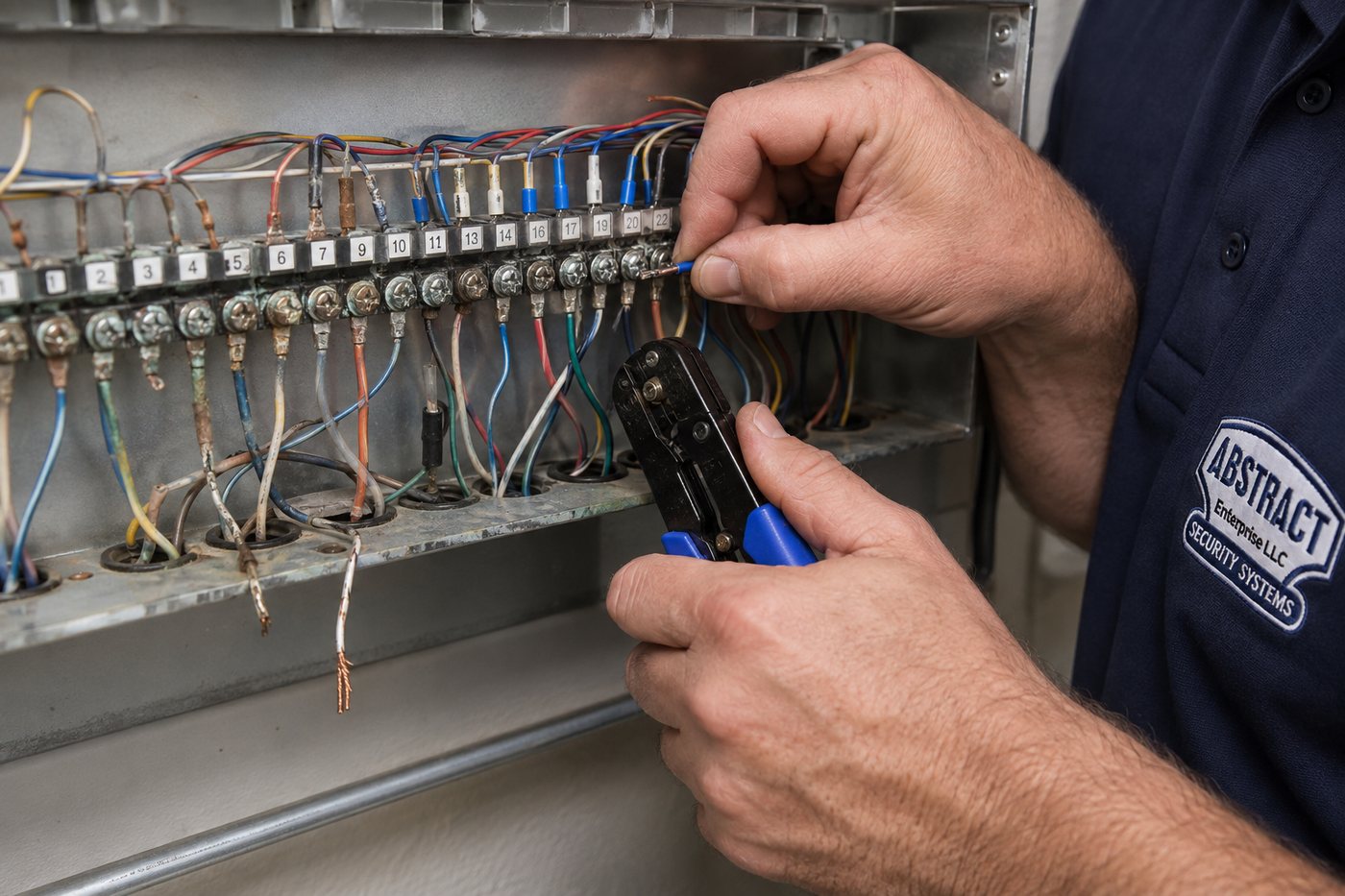
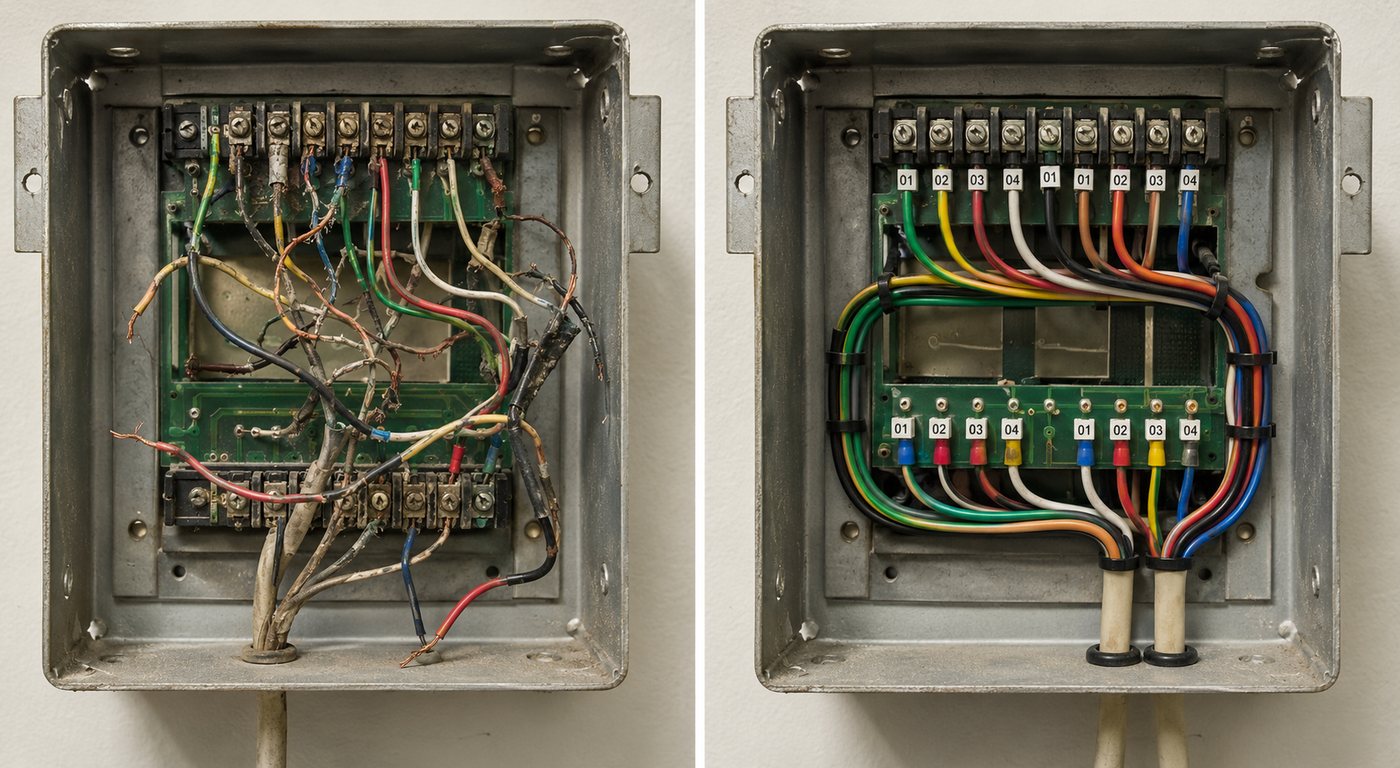
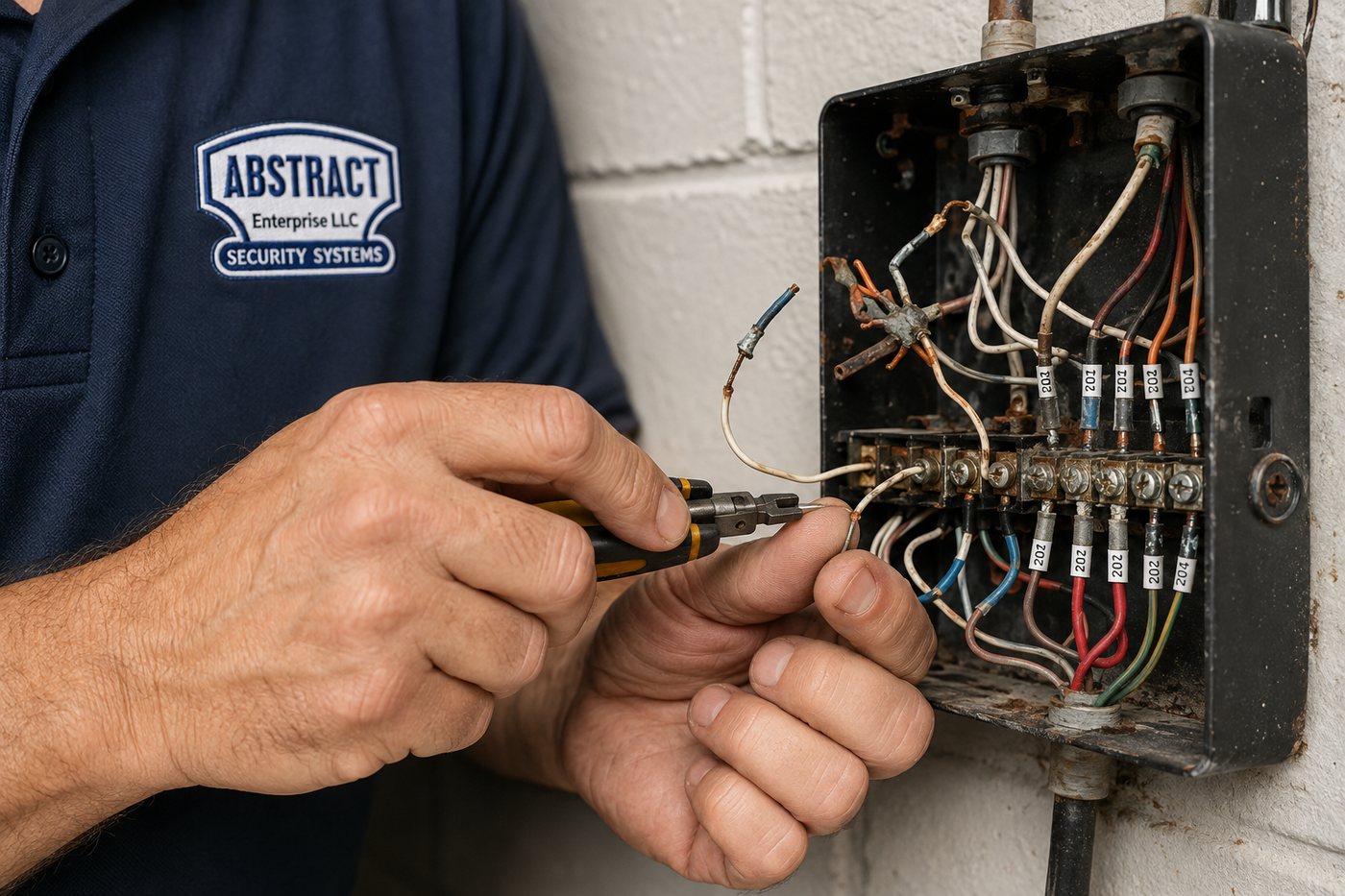
Re-terminating a labelled block rather than rewiring the riser.
Need Buzzer Repair in Suffolk County Today?
Suffolk covers more ground than the rest of our service area combined, and the buzzer work splits between village multi-family, commercial corridors, and East End property where the entry is a gate at the end of a drive. A dead entry door is an access and life-safety problem, not a maintenance ticket — tenants get locked out, deliveries stop, and the front door ends up propped, which defeats the system entirely.
Every entry fault sorts into three layers: the talk path to wherever you answer, the release path to the door or gate hardware, and the mechanical layer of the door itself. Suffolk's defining variable is distance. Runs here are the longest on Long Island, and that single fact reorders which faults are likely.
If the buzzer rings and you can speak, the talk path is intact and the fault is downstream. If nothing rings, the fault is upstream. That single distinction narrows a whole-building mystery to a handful of components, and it is why a proper diagnostic beats a blind replacement quote.
Layer 1 — the talk path
Village apartment and co-op stock through Huntington Station, Bay Shore, Patchogue and Riverhead runs conventional riser architecture. Detached property runs a transformer, chime and button — often extended once or twice as the house grew. On East End property the talk path may be a gate station several hundred feet from the house.
Directory panel service on a large multi-unit entrance.
Layer 2 — the release path
Voltage drop dominates. A strike or gate operator at the end of a long run reads perfectly on an idle meter and collapses when the coil pulls. It works in summer and fails in January as coils draw harder against cold.
Layer 3 — the mechanical layer
Wood and vinyl-clad exterior doors and gate posts both move with frost and humidity. A strike or latch aligned in October binds by February, and that reads as an electrical failure when it is purely mechanical.
The Buzzer Works But the Door Stays Locked
Suffolk has the longest release paths on Long Island, and voltage drop is the diagnosis more often than everything else combined. A strike or gate operator at the end of a hundred-and-fifty-foot run reads perfectly at rest and collapses the moment the coil pulls.
The signature is seasonal. Fine in September, unreliable in January. Cold thickens gate gearbox grease and increases coil draw, and a supply that was always marginal finally gives out. Owners describe the system as dying over the winter.
Preload still appears on village apartment vestibules and on aluminium storefront doors, which swell and settle with humidity. The slack-door test separates the two in ten seconds and costs nothing.
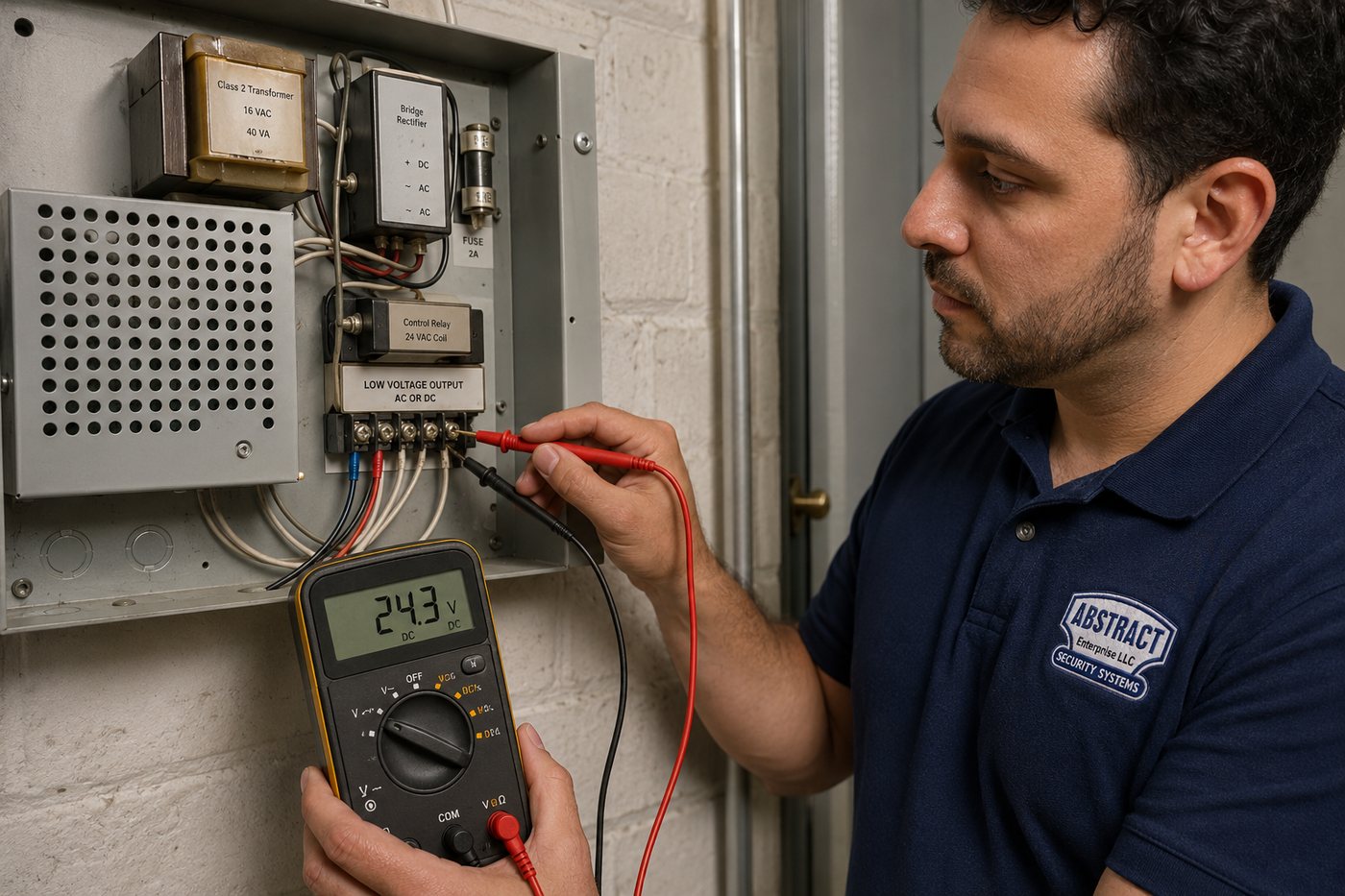
Transformer output measured under load. Below six volts means replace.
Not sure whether yours is a part swap or a wiring job? The diagnostic answers that, and the fee applies either way.
Junction box before and after re-termination and labelling.
No Sound, No Power, or a Buzzer That Will Not Stop
On detached property whole-system silence usually means the transformer or the buried conductor rather than the stations. Direct-burial cable installed with the driveway fails where water pools, and the fault tracks the weather.
That intermittency is the single most useful thing a customer can tell us. Fine in a dry week and dead after rain is a wiring fault. Constant is more likely a transformer or a controller.
In Huntington Station, Bay Shore, Patchogue and Riverhead apartment buildings the picture reverts to the familiar one — transformer sag producing weak buzz, dropped calls and inconsistent release together, all explained by one reading on the secondary.
Only One Apartment Is Dead
In a village apartment building one dead line means the shared equipment is working and the fault is that unit's circuit.
On detached property the equivalent is one station dead out of several — house, garage apartment, pool house, gate. Those are usually daisy-chained rather than home-run, so a break at one point kills everything downstream while everything upstream still works.
That distinction changes the price materially, which is why we ask what has been added to the property and when before quoting anything.
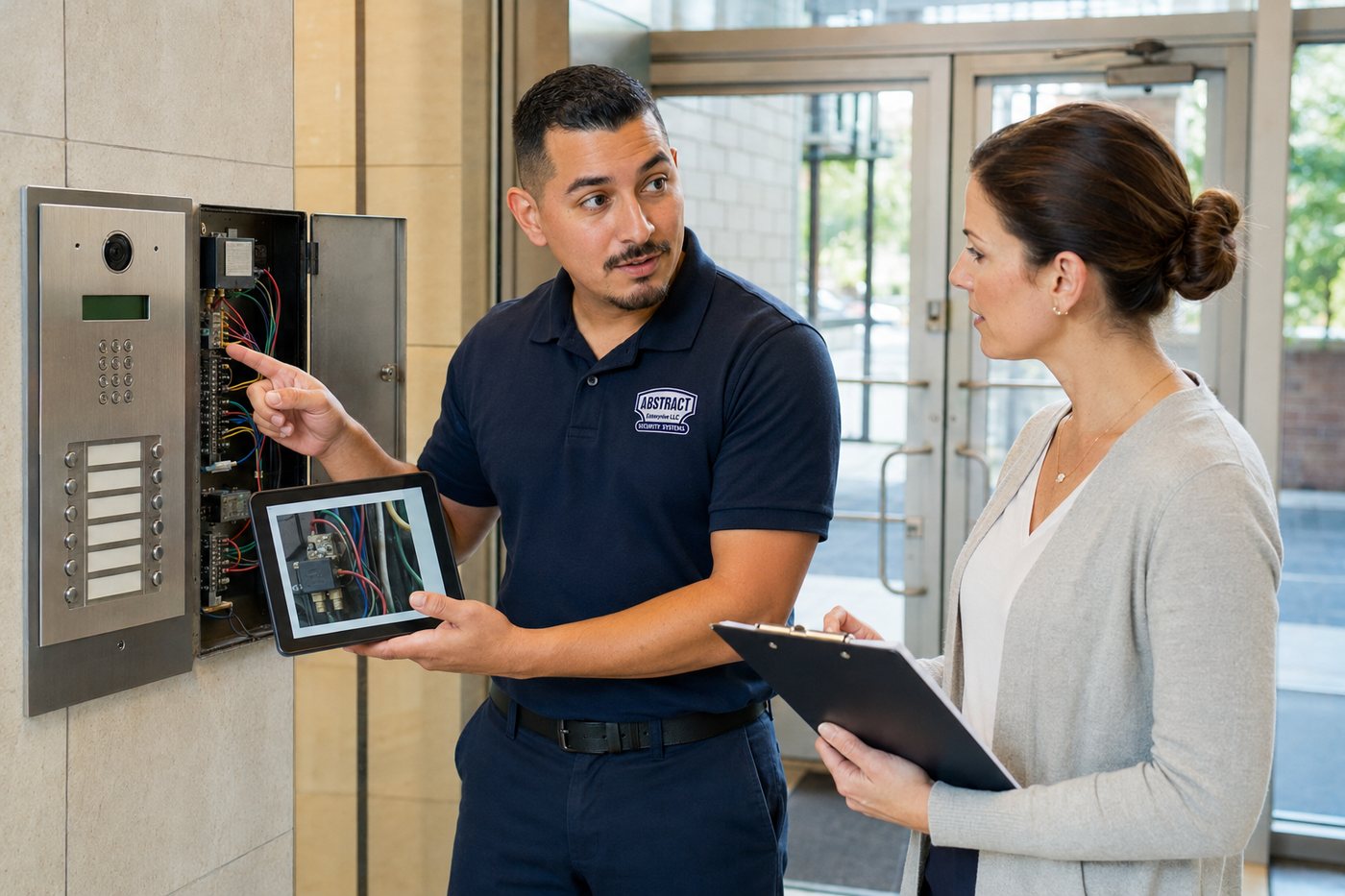
Walking an owner through the diagnostic findings on site.
What We Actually Replace
Buzzer repair is component work. Below is the hardware behind the terms you will see on an invoice, so you can read a quote and tell a genuine part swap from a padded one.
24V transformer
Low-voltage supply for the whole system. Fails gradually — weak buzz, dropped calls, then silence.
Door release relay
Switches power to the strike when you press release. Contacts weld shut or stop making altogether.
Electric strike
The powered keeper in the frame. Fail-secure locks on power loss; fail-safe unlocks.
Magnetic lock
Holds by electromagnet, always fail-safe. Needs alarm integration and a manual release to be compliant.
Riser wiring
The vertical pairs from the basement to each unit. Corrosion here causes static and dead lines.
Apartment station
The in-unit handset. Cord conductors, hookswitch and speaker all wear out.
Lobby panel
Buttons, directory, speaker and microphone at the entrance. Weather and vandalism take these first.
Request-to-exit
Interior release button or sensor. On a maglock this is life-safety hardware, not a convenience.
We service legacy analog hardware including Lee Dan, TekTone and Alpha Communications and keep common stations and transformers for those platforms on the truck. System-wide video, gate and driveway entry and brand-specific catalogs are covered on our intercom pages.
Who Is Responsible in Suffolk County?
It depends on the building, and Suffolk's mix means the answer varies more than anywhere else we serve.
New York State Multiple Dwelling Law requires buildings built or converted after 1968 with eight or more units to provide a two-way voice intercom linking the entrance to each apartment. That reaches Suffolk the same as anywhere in the state and covers the rental and co-op stock in Huntington Station, Brentwood, Bay Shore, Patchogue and Riverhead.
What does not apply is the New York City Housing Maintenance Code and the HPD violation process. Nearly every article on this subject is written for the city and points readers at 311, which has no authority in Suffolk. Enforcement runs through your town or village building department — Babylon, Islip, Brookhaven, Huntington, Smithtown, Riverhead, Southampton, East Hampton, Southold and the incorporated villages each maintain their own — and escalation goes to Suffolk County District Court.
For owner-occupied single-family, which is most of the county, the entry system is the owner's responsibility outright. Courts have still treated a working intercom as an essential service in covered rental housing. General information, not legal advice.
Long Runs, Gates and Seasonal Property
Three things drive most Suffolk repeat failures, and only one of them is electronic.
Conductor sizing. A gate or a strike a hundred and fifty feet from its supply needs wire sized for the device's inrush current, not its holding current. Undersized wire is the most common installation defect we find out here, and it usually surfaces in cold weather when the draw increases.
Buried cable. Direct-burial conductors installed with the driveway decades ago develop insulation faults where water pools. The signature is intermittency that tracks the weather — fine in a dry week, dead after rain. Tracing that is slower than lobby work and worth quoting honestly up front.
Seasonal use. A meaningful share of East End property sits unused for months and then has to work the week the owner arrives. Parts for older gate platforms are not always same-day, so looking at a system before the season is materially cheaper than during it.
Entry panel service on a brick facade.
What Buzzer Repair Costs in Suffolk County
Our service call is $250 and includes on-site diagnosis: we identify the failed component and give you the repair number before parts work begins. Most single-fault repairs finish in that visit.
Service call + on-site diagnostic$250
Apartment station replacement$250 – $525
Door release relay or button$250 – $475
24V transformer replacement$325 – $650
Electric strike replacement + alignment$450 – $950
Lobby panel repair or faceplate$650 – $1,800
Riser pair repair / re-termination$850 – $2,400
Aggregator sites quote a national average with no idea whether your fault is a $250 button or a $2,400 riser. The number only means something after someone has looked at the panel.
Repair or Replace?
Suffolk's decision is dominated by trenching and drive time, not by hardware.
Repair when the conductor is intact. Operators, controllers, transformers, gate stations, strikes and buttons are all replaceable in place.
Replace the wire when the wire is undersized or water-damaged — and if the driveway is being resurfaced or a trench is already open, that is the moment. As a standalone excavation it costs several times more for the same outcome.
Cellular gate intercom deserves consideration on East End property specifically. Converting the gate station to cellular removes the buried run to the house entirely. It carries a monthly fee, but against a two-hundred-foot trenching quote the arithmetic usually works.
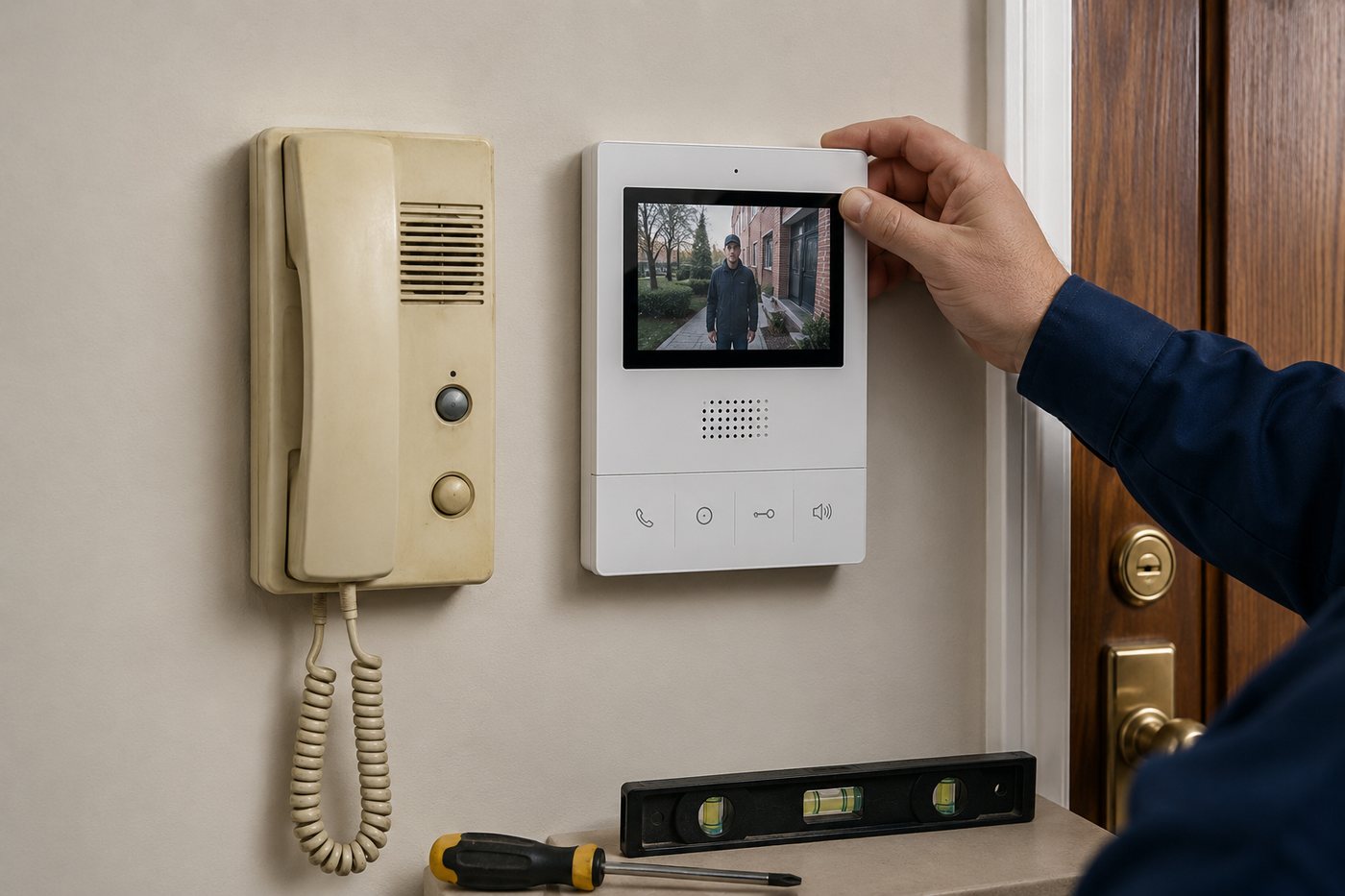
Strike plate alignment — preload reads as an electrical fault and is not one.
Where We Work Across Suffolk County
Western Suffolk
Huntington, Huntington Station, Melville, Commack, Deer Park, Babylon, West Islip and Amityville. Village commercial along Main Street and New York Avenue, professional and medical buildings through the Route 110 corridor, and the county's densest garden-apartment stock.
The Islip and Brookhaven corridor
Bay Shore, Islip, Sayville, Bohemia, Holbrook, Ronkonkoma, Patchogue and Medford. Office parks and light-industrial entries around Veterans Highway and the MacArthur Airport corridor alongside village residential and multi-unit rental.
Two-point verification: visitor at the panel, technician on the station.
Smithtown and the north shore
Smithtown, Hauppauge, Kings Park, Northport, Stony Brook and Port Jefferson. Harbour exposure on the shorefront, larger lots inland, and a substantial professional-building presence around Hauppauge industrial park.
Central and eastern Brookhaven
Coram, Middle Island, Shirley, Mastic, Center Moriches and Manorville. Predominantly detached with longer driveways and more gate work than western Suffolk.
The East End
Riverhead, Southampton, East Hampton, Bridgehampton, Sag Harbor, Southold, Greenport and Shelter Island. The longest runs and the highest proportion of gate and driveway intercom we handle anywhere, plus a heavy seasonal-property component.
Licensed low-voltage service call at a multi-unit entrance.
Field Notes
Three findings cover most Suffolk callouts.
First: undersized wire showing up in January. A gate or strike that has been fine for years starts failing in the cold because the coil draws harder and a marginal supply finally collapses. The meter reading has to be taken while the device is energised or it tells you nothing.
Second: buried cable with a water fault. If the system is fine in a dry week and dead after rain, that is the conductor, not the intercom. Worth agreeing the tracing approach before we start rather than discovering it mid-visit.
Third: the extension nobody documented. Detached houses grow — a garage apartment, a pool house, a rear unit — and each addition gets tapped off the original run. The unit that fails is almost always the one added last.
Door Buzzer Repair Suffolk County — Questions
How much does buzzer or gate intercom repair cost in Suffolk?
Service call $250 with diagnosis. Village apartment work prices conventionally — station $250–$525, transformer $325–$650, strike with alignment $450–$950. Gate and long-run work is quoted separately because conductor length and whether a buried run needs tracing drive the number.
Lobby panel diagnostics — isolating the fault before any quote.
The gate works in autumn and fails in January.
Cold thickens gearbox grease so the operator draws harder on start, and a supply sized for holding current rather than inrush collapses. The wire was marginal all along; the cold exposed it. Frost heave moving the posts compounds it.
It's fine in a dry week and dead after rain.
That is a buried conductor with a water fault, and it is the most useful clue you can give us. Direct-burial cable run with the driveway decades ago fails where water pools.
Is my Suffolk landlord required to fix the buzzer?
For covered buildings, yes. State MDL requires post-1968 buildings with eight or more units to have a two-way voice intercom, covering rental stock in Huntington Station, Brentwood, Bay Shore, Patchogue and Riverhead. NYC's HPD process does not apply — enforcement is your town or village building department, escalation is Suffolk County District Court. General information, not legal advice.
The complaint we hear most: the buzzer sounds and the door stays shut.
Can you avoid digging up the driveway?
Often. Converting a gate station to cellular removes the buried run to the house entirely. It carries a monthly fee, but against a two-hundred-foot trenching quote the arithmetic usually works. If the driveway is already being resurfaced, run proper wire instead.
Our house, garage apartment and pool house are all on one system.
Those are usually daisy-chained rather than home-run, so a break at one point kills everything downstream while everything upstream still works. We trace the chain rather than testing one circuit, and it is worth agreeing that approach before we start.
Do you cover the East End?
Yes — Riverhead, Southampton, East Hampton, Bridgehampton, Sag Harbor, Southold, Greenport and Shelter Island. Drive times are real, so we book firm windows rather than leaving you waiting.
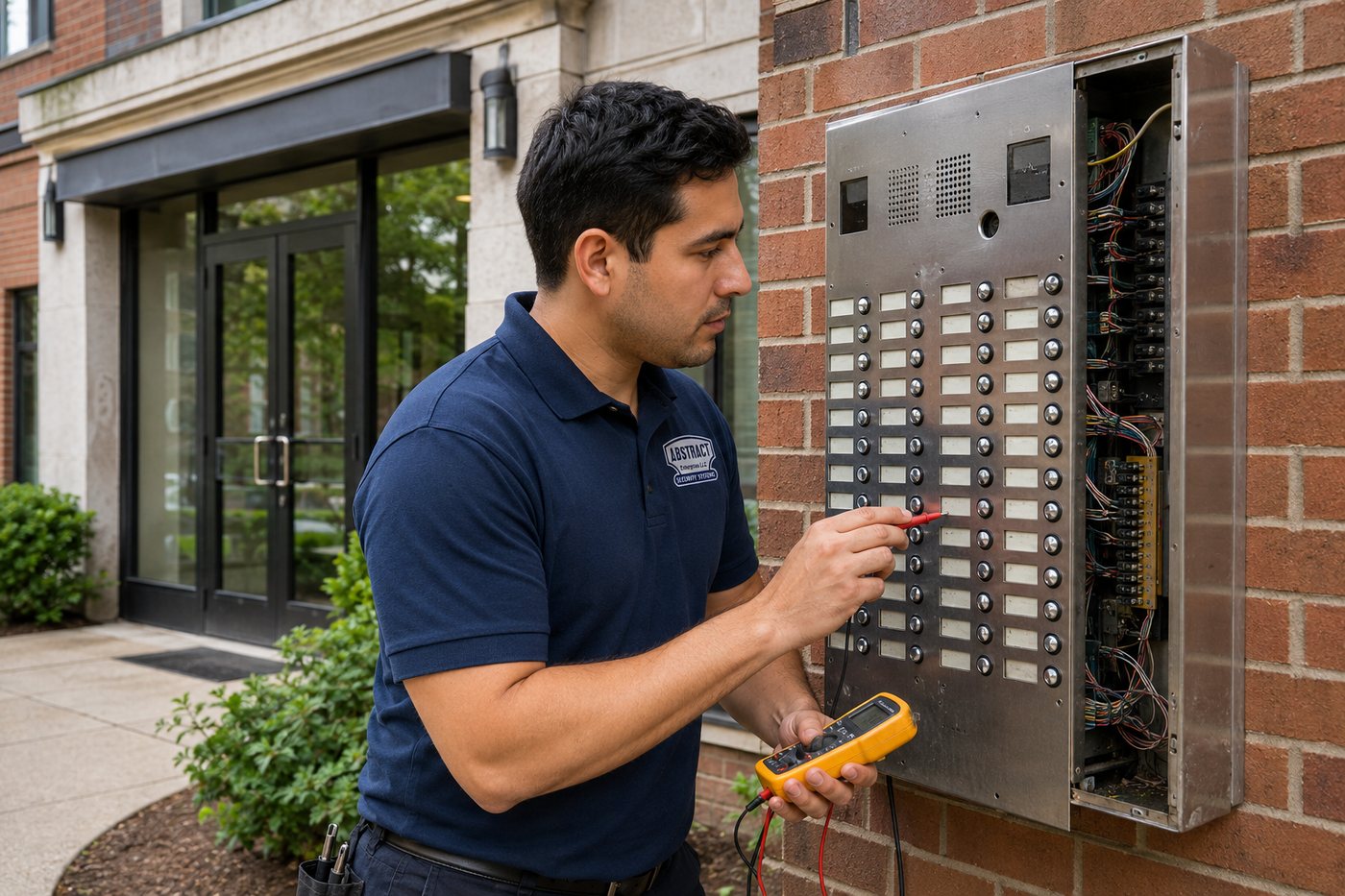
Terminal testing behind a stainless lobby panel.
We only use the house seasonally.
Then look at the system before the season, not during it. Parts for older gate platforms are not always same-day, and a system that sat unused for months frequently needs attention the week you arrive.
One apartment in our Patchogue building is dead.
Shared equipment is fine and the fault is that unit's station, terminals or pair. It is the cheapest repair in the category.
How fast can you get to us?
Western Suffolk is usually same or next day on morning calls. Central Suffolk is typically next day. The East End is scheduled, because the drive is substantial and we would rather commit to a window.
Does salt air matter on the South Shore?
Yes. Babylon, Bay Shore, Patchogue and the south-shore waterfront corrode standard outdoor hardware within roughly five to eight years. Marine-grade enclosures stop the cycle rather than restarting it.
Do you handle warehouse and office-park entries?
Yes. The Veterans Highway and MacArthur Airport corridors and the Route 110 corridor are steady commercial work — multi-door access control, request-to-exit hardware, and maglocks that need alarm integration and free egress to be compliant.
Reviewed and updated September 2026.
Get the Buzzer Fixed
Component-level diagnosis across Suffolk County. We identify the failed part and quote the repair before touching anything — no system-replacement pitch on a $250 fault.