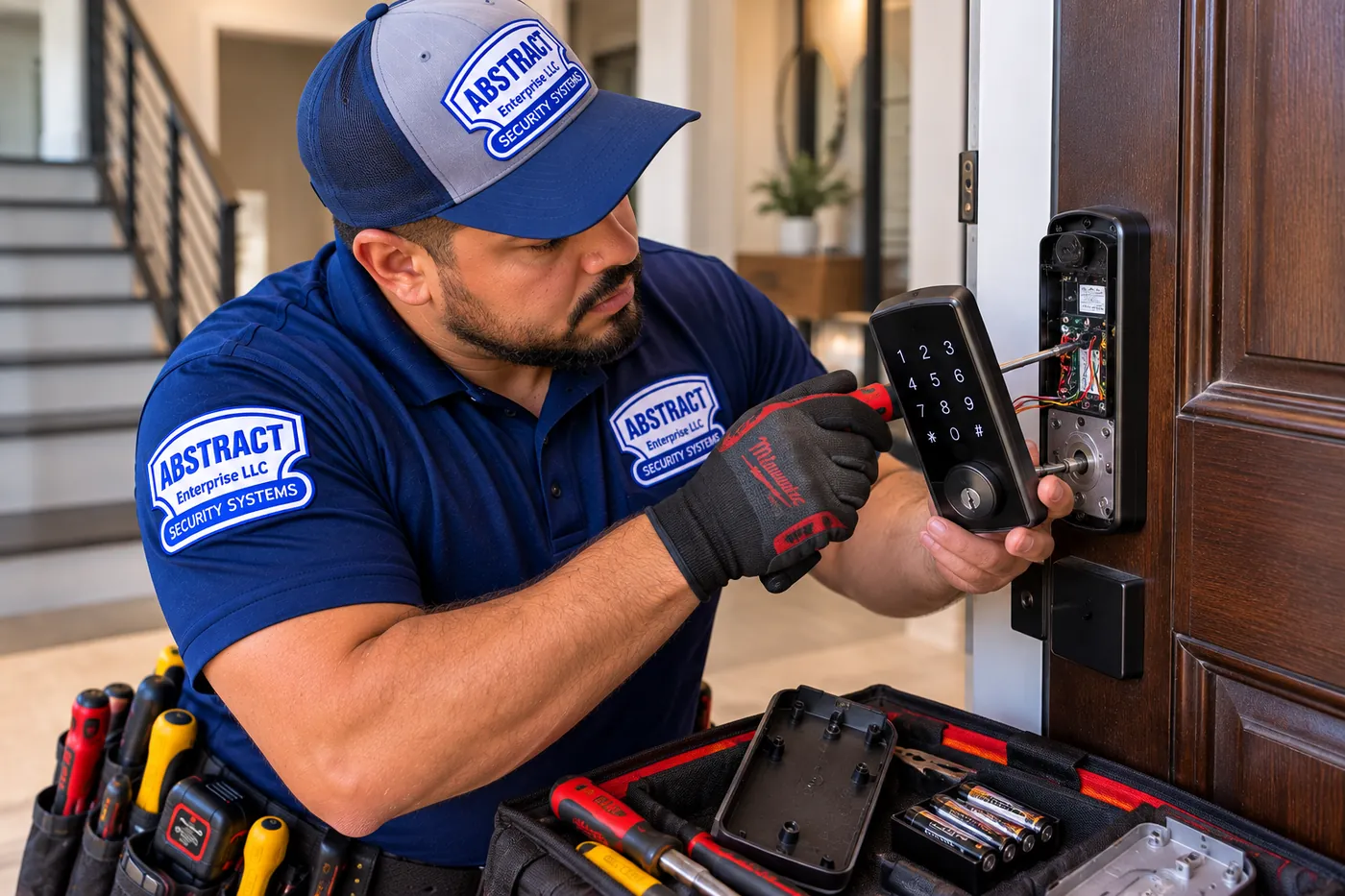
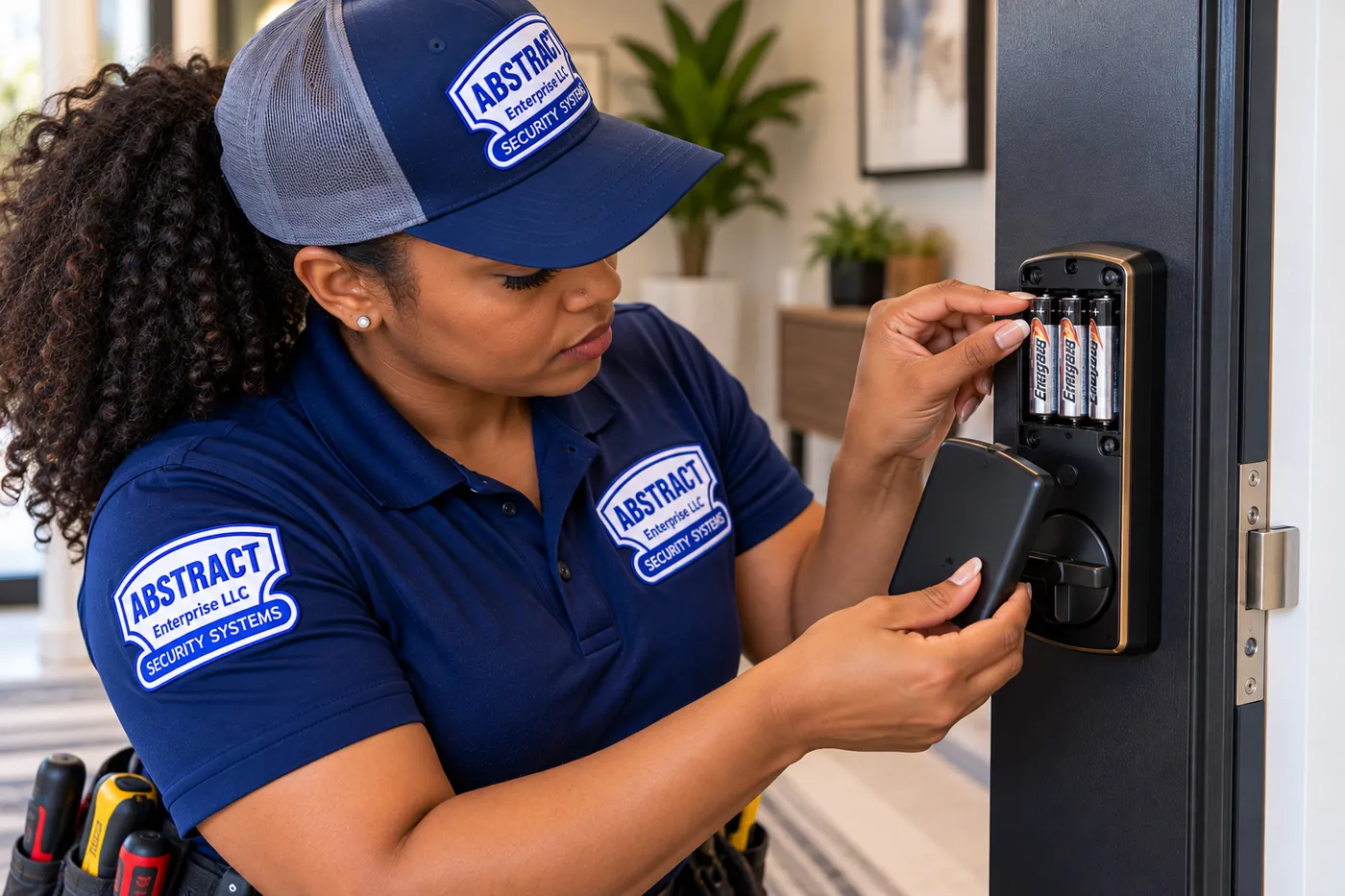
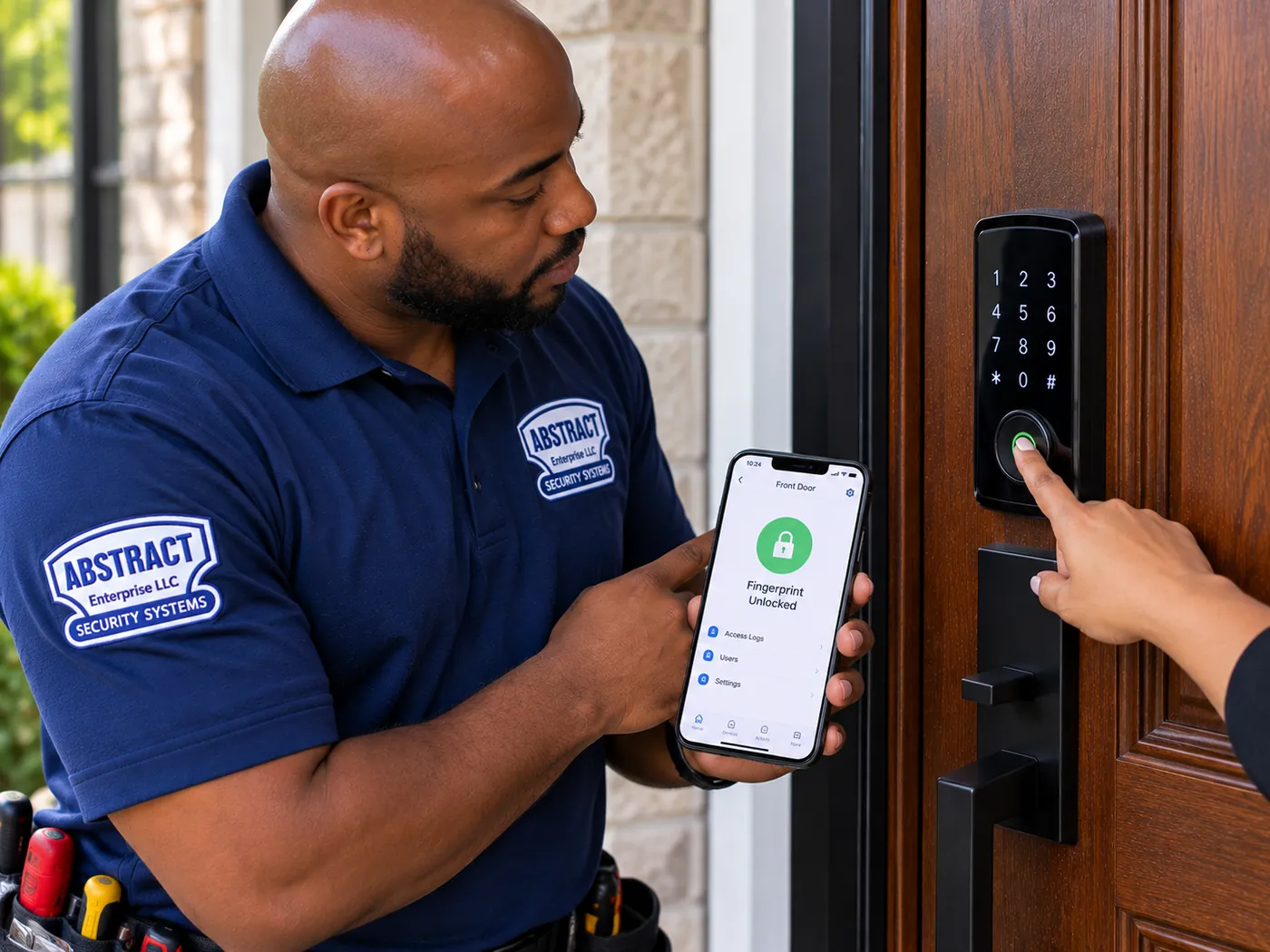
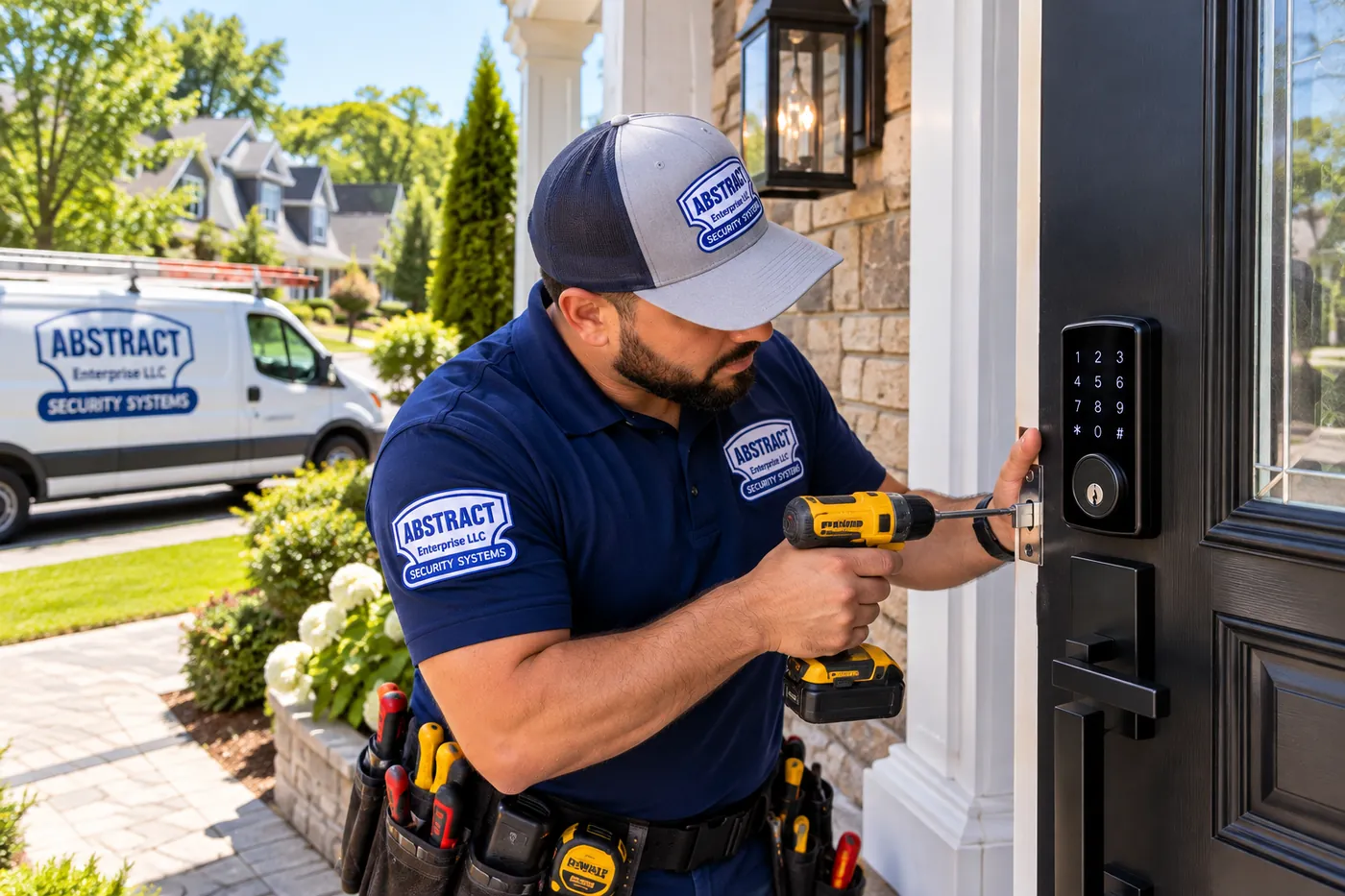
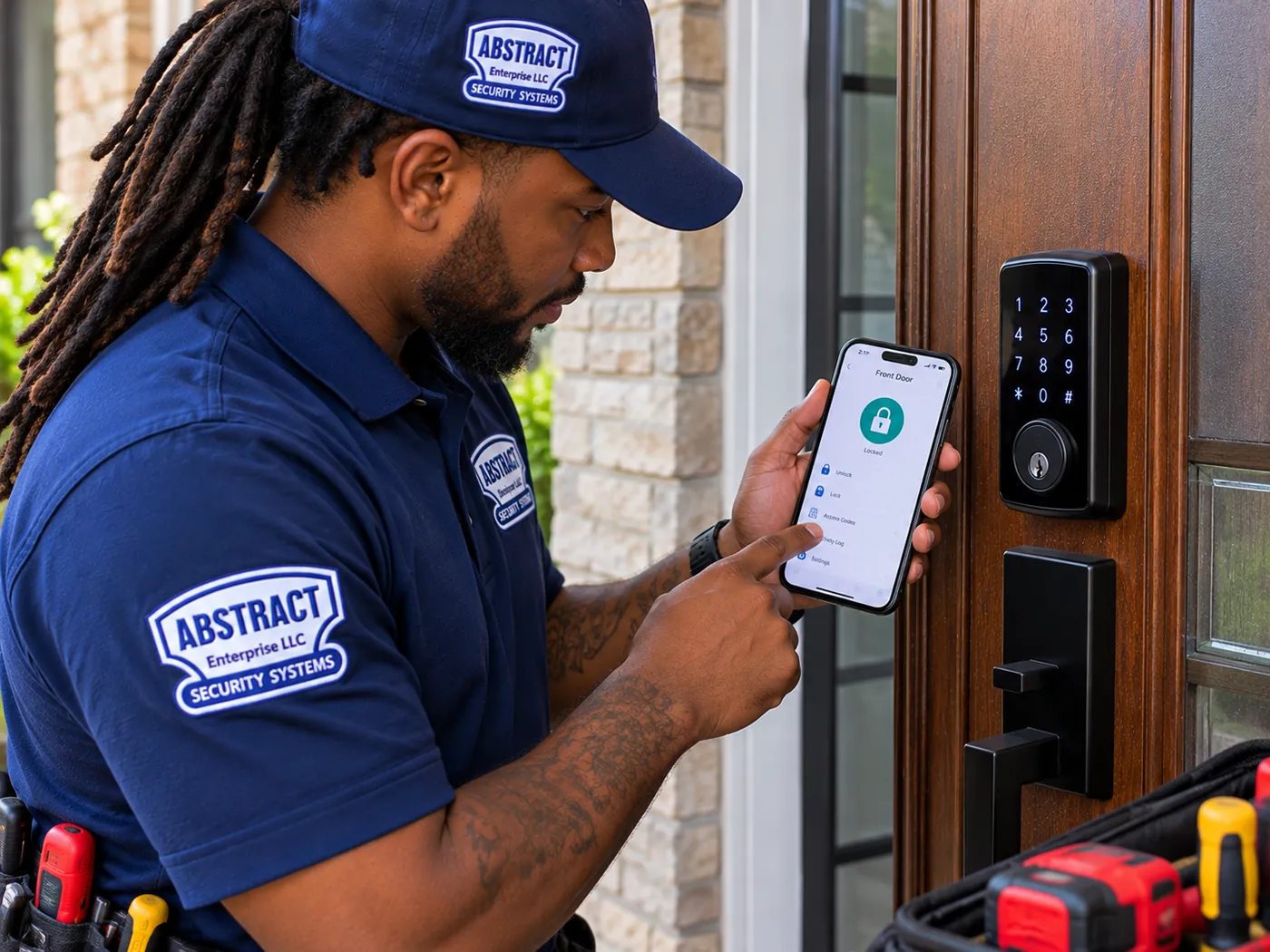
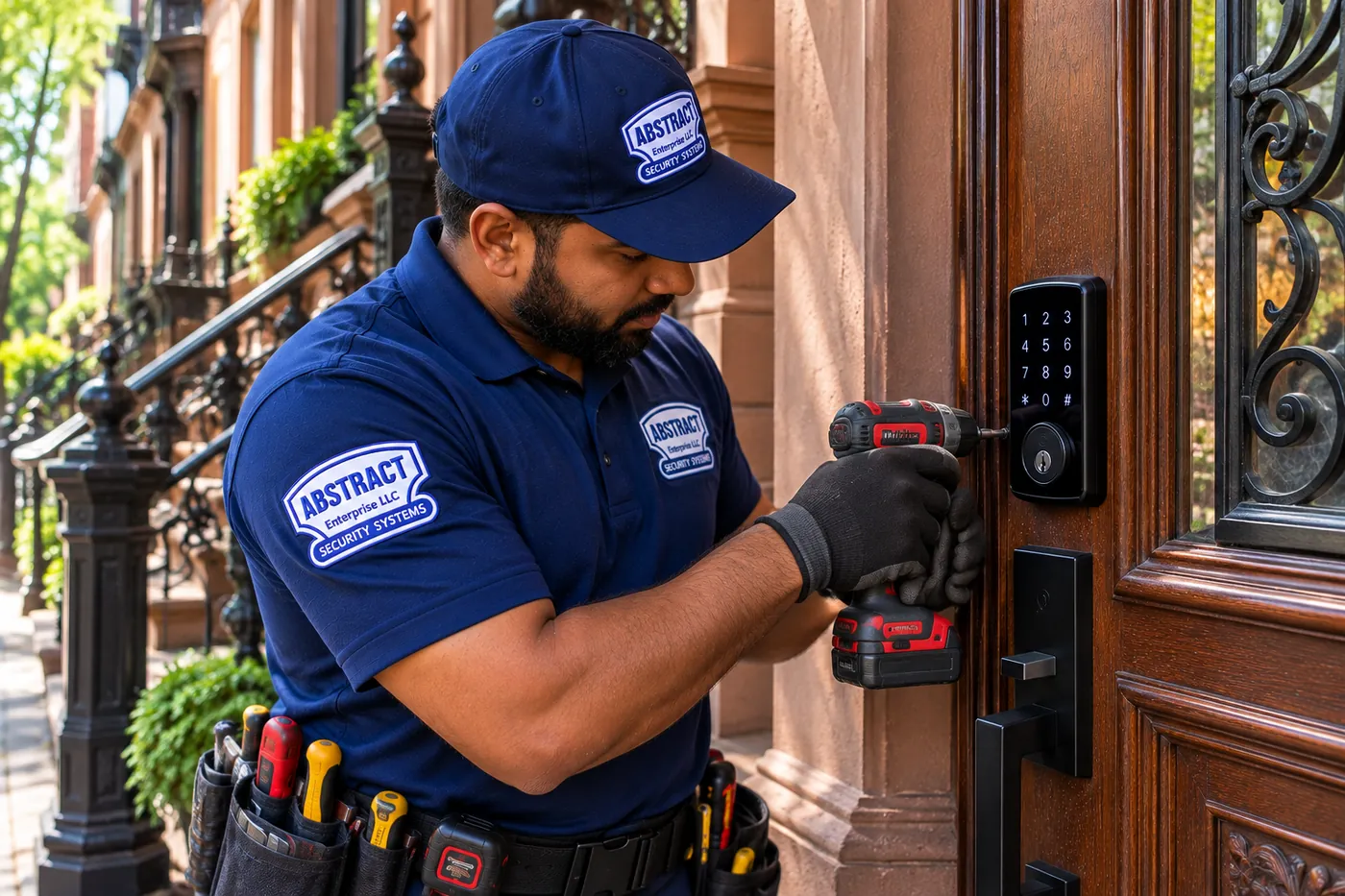
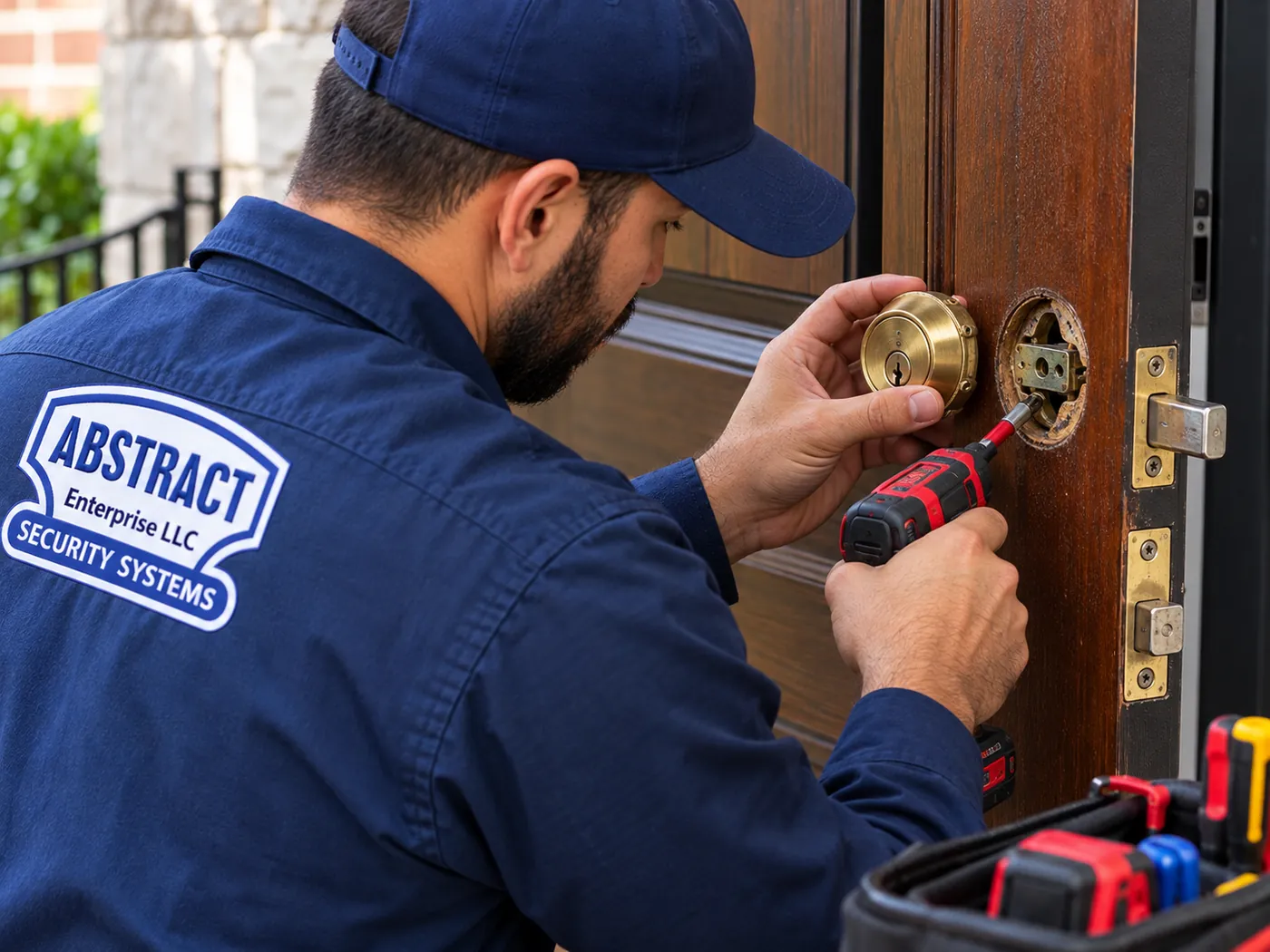
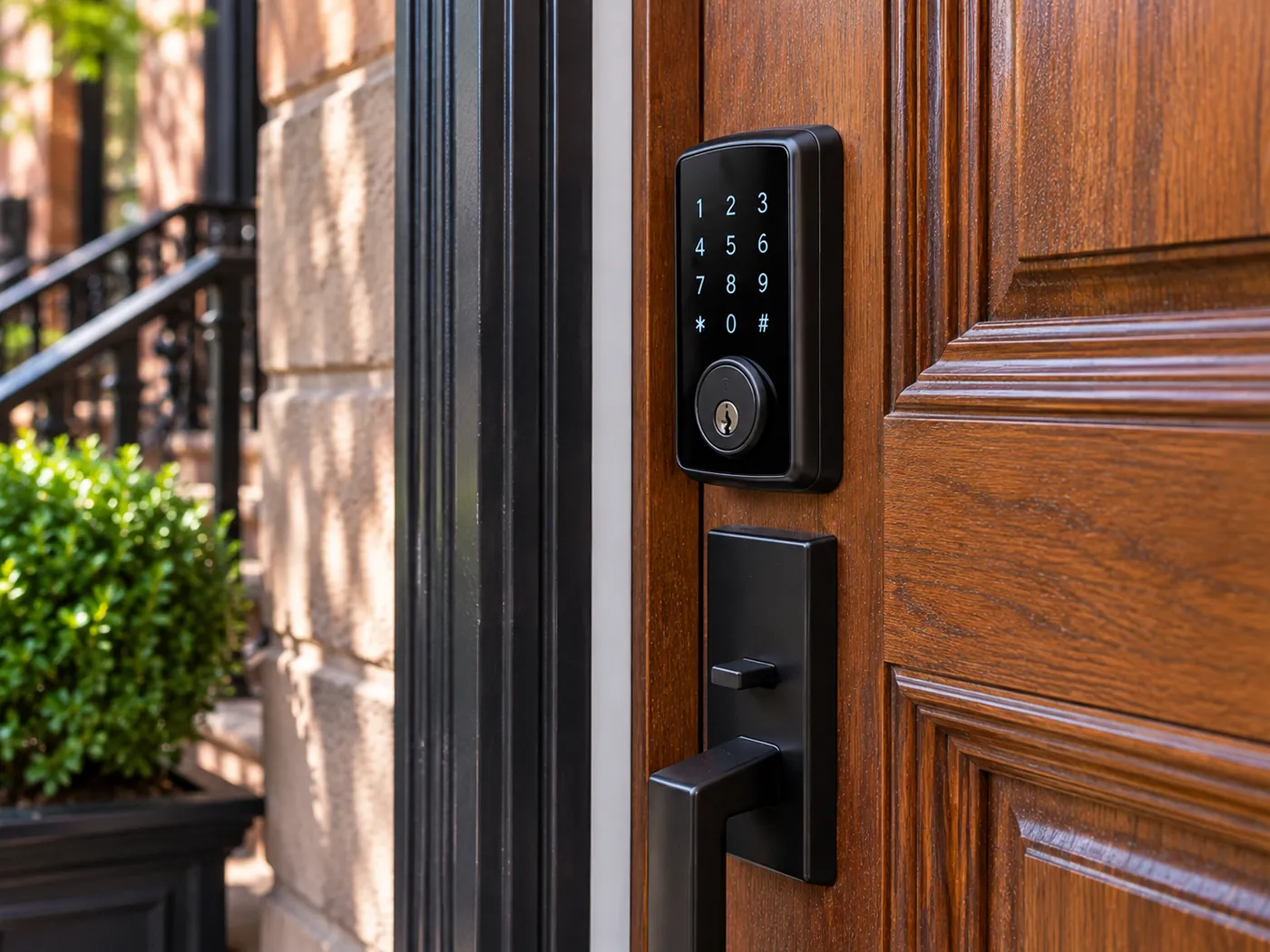
Front, Rear & Upstairs Doors · Away-All-Day Door Plans · Emergency Access for Owners Living Alone · Pool Gates · Medical & Worship Doors
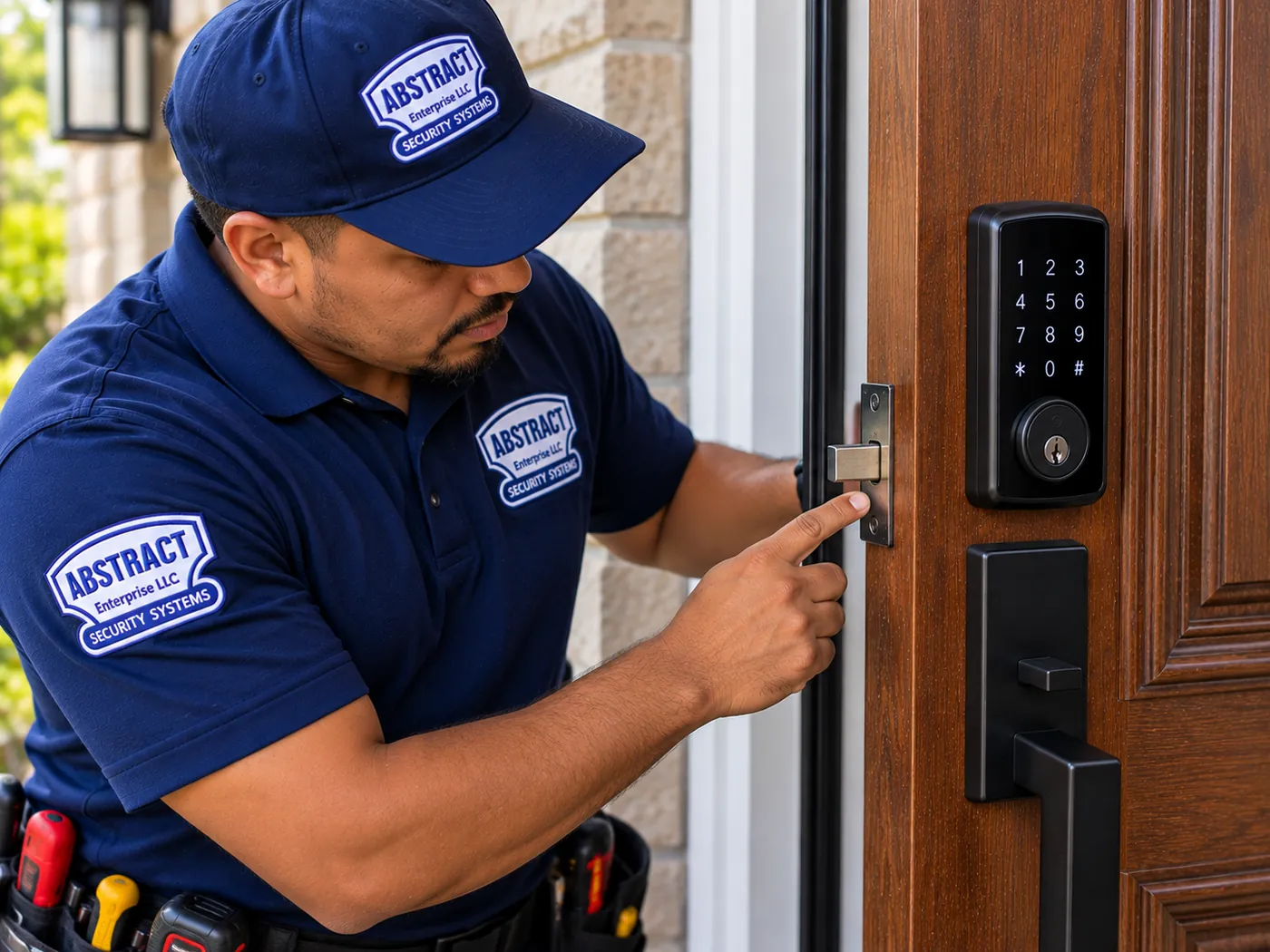
Most Westchester houses stand empty from the morning train until well after dark, and the people who come and go in between — a cleaner, a dog walker, the pool crew, a contractor, a child off the school bus — outnumber the family. We fit smart locks that close the house up properly on their own, tell you who opened which door and when, let a paramedic in if a parent who lives alone can't reach the hall, and still open from inside with one plain turn. For practices, offices and congregations we fit keyless doors that meet the state code that took effect at the end of 2025.
Reviewed and updated October 17, 2026 · Written by Anwar Timothy, NYS licence #12000287431

Thinking about keyless doors for a house you leave empty every weekday, or for a parent who now lives alone? Call our Westchester line, (914) 877-2578, or use the 60-second form. A licensed installer reads every request and will tell you, before anyone drives out, which doors matter most on your house and what each one needs.

In Westchester the question is rarely "how do we get in?" It is "who gets in while we're gone?" A typical house in Scarsdale, Larchmont, Chappaqua, Irvington or Pelham sits locked, or is supposed to, from the time the household leaves for the train, the office or school until the evening. In those hours the doors are opened by a surprising number of people who are not family: the cleaner on Tuesdays, the dog walker at noon, the nanny collecting a child at three, the landscaper who needs the garage, the pool company in summer, a plumber or painter during a renovation. Each of them has, in the old way of doing things, a key, a hidden spare or the garage keypad code. A smart lock project here is mostly about replacing that loose web of keys and shared codes with individual credentials you can see, schedule and cancel.
The county's housing stock explains why. The Census Bureau's QuickFacts table for Westchester counts roughly 399,600 housing units and about 1.02 million residents, and puts the owner-occupied rate for 2020–2024 at 61.8 percent, with a median owner-occupied home value of $663,200. These are, in the main, houses their owners intend to stay in, often for decades, and they were built over a century: Tudors and colonials in the old railroad suburbs, post-war capes and split-levels further out, and newer houses on larger lots in the north of the county. Each generation brought its own doors — heavy oak front doors with separate handlesets, French doors to a terrace, aluminium sliders onto a deck, and second-floor doors onto balconies and porch roofs.
Those back and upper doors are where local police keep pointing. When Scarsdale police reported a run of burglaries in November 2015, they described one group climbing to and forcing a second-floor window and another breaking a rear window or sliding glass door; the same report noted that police were looking into everyone who knew the code to a garage keypad, because a ladder kept behind that keypad had been used in an attempt on a house. In April 2023, Patch reported that Greenwich police had obtained arrest warrants for burglary crews working Fairfield and Westchester County towns, and that those crews struck high-end homes in the evening while residents were out, entering through a second-floor window or door and fleeing when an alarm sounded. In January 2025 the State Police alerted residents of Dutchess, Westchester and Putnam counties to a series of targeted burglaries and asked them to lock every door and window, "including second-floor entry points." And in September 2024 News 12 Westchester showed security video of two men forcing a back sliding door with a crowbar before dawn in Pelham Manor.
None of that is a reason to think a smart lock is a force field. It is a reason to fit the right lock on the right door, to make sure the doors nobody thinks about — the slider, the balcony door, the door from the garage — are actually locked when the house is empty, and to know about it at once when they are not. That is the job a connected lock does well, and it is the part of the work we spend the most time on in Westchester.
The other half of the county's story is age. QuickFacts puts the share of Westchester residents aged 65 and over at 19.7 percent. Many of them live in the same house they raised a family in, now alone or as a couple, with adult children in Brooklyn, Connecticut or further away. For them the smart lock question turns around: not keeping people out, but making sure the right people can get in — a neighbour, an aide, a son who drives up on Sundays, and above all a paramedic if the person inside has fallen and can't get to the door. We plan that access deliberately, with the local fire department's options in mind, rather than leaving it to whoever happens to have a spare key.
Finally, Westchester is not one housing market. Cooperator News, citing county planning figures, counts close to 42,000 co-ops and 25,000 condominiums in the county, spread with its rental housing across six cities, 14 towns and 22 villages. Downtown New Rochelle alone has added more than 4,500 new apartments since its 2015 rezoning, Governing reported in 2025. Yonkers, Mount Vernon and New Rochelle have blocks of pre-war elevator co-ops and two- and three-family houses, and they sit just over the city line — which means New York City's apartment-lock rules do not apply there, while state rules do.
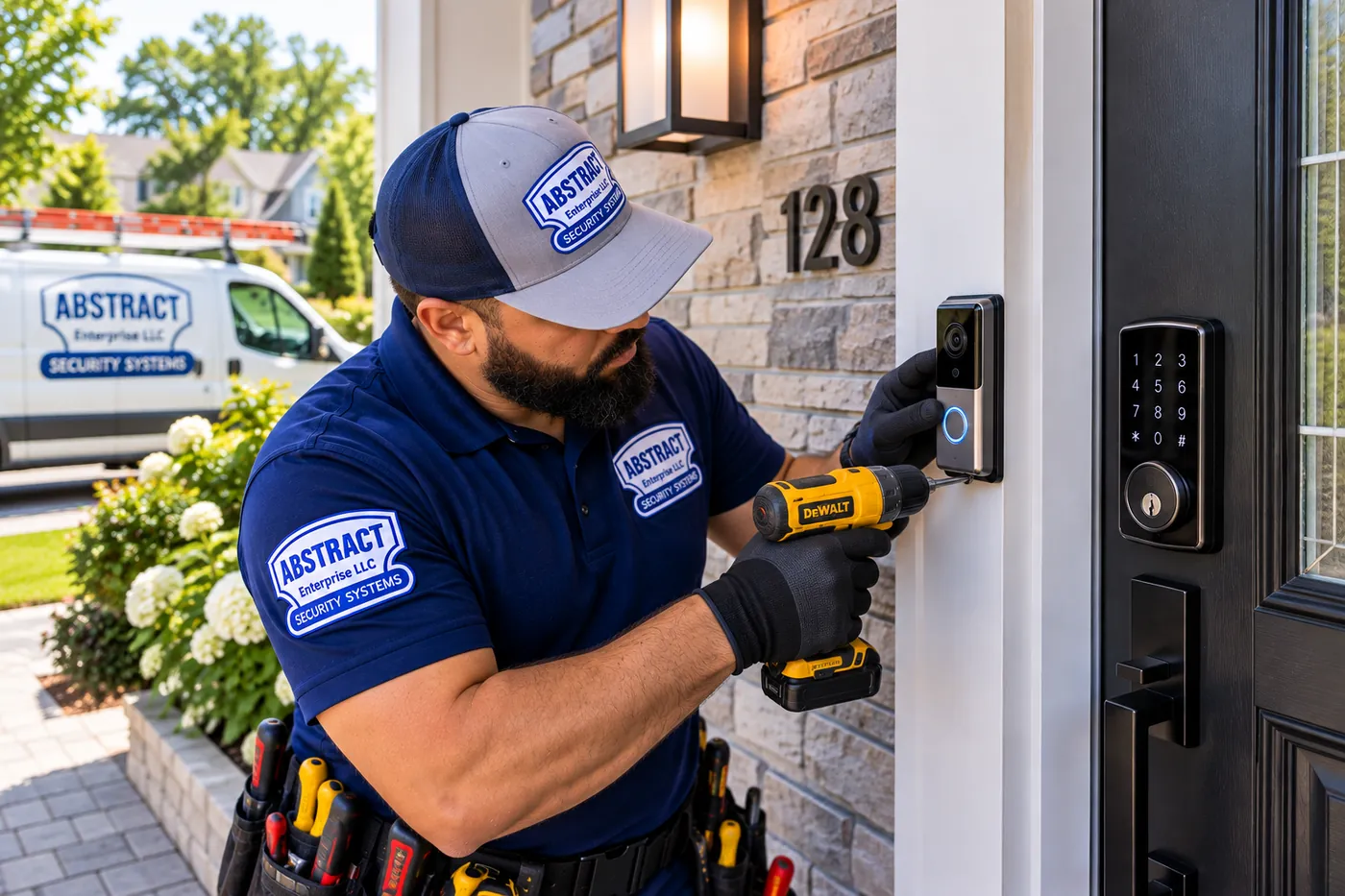
Most Westchester owners who add smart locks also want an alarm that sounds when a door or window is forced. The AESS alarm installers in Westchester County often fit contacts on the same upstairs doors and sliders we put locks on, and our doorbell camera installation in Westchester County puts a picture beside every remote unlock.

A keypad that stopped lighting up after a cold snap, a deadbolt that grinds on the strike because the back door has swollen over the summer, an app that shows the front door "unavailable" since the router was replaced, a lock that auto-locks while the bolt hits the frame, or an office keypad that won't accept the morning code — those are service calls and we treat them as such. We book them into the next open 2-hour window, and once a technician is at the door most pairing, power and alignment faults are fixed in one to two hours. If the problem is an electric strike on a building entrance, a failed strike repair runs $369–$606 at our Westchester rate. Call (914) 877-2578 and say it is a smart lock, or see door buzzer repair in Westchester County for entrance buzzers and strikes.

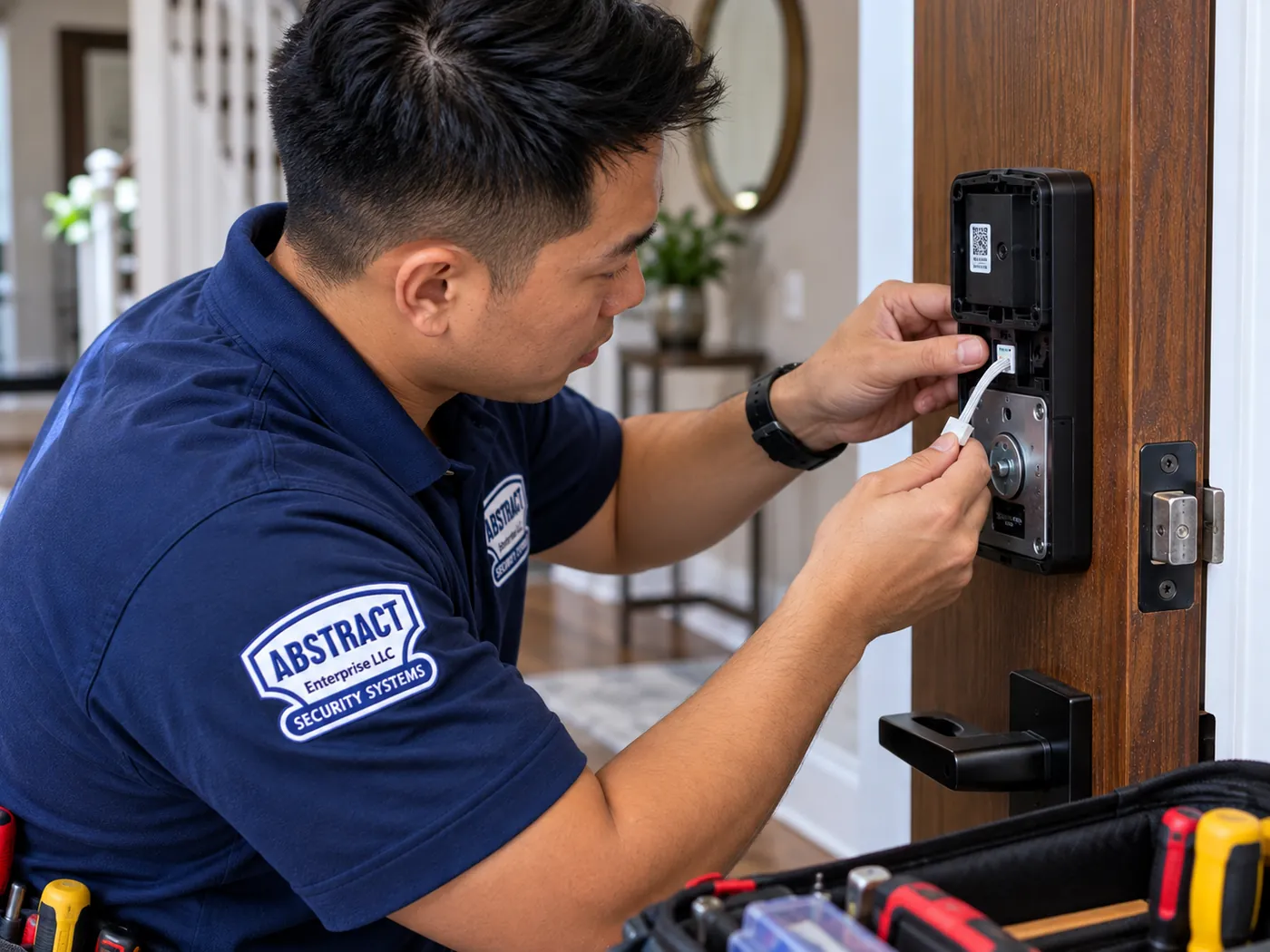
Nine kinds of work make up most of our Westchester smart lock calls. Whatever the job, we don't leave until the door pulls shut and latches on its own, lets anyone out with a single easy movement, still takes a mechanical key, and has been opened by each new user while we watched.
For houses empty from the morning train to evening: auto-lock on every door that has a smart lock, alerts for any door left unlocked, and individual, scheduled codes for the cleaner, sitter, walker and contractors.
The doors police reports keep mentioning. Keyless hardware where the door type allows it, a proper secondary lock and bar where it doesn't, and a contact so you know the moment the door opens.
Second-floor doors that rarely get used and are rarely checked. We fit a deadbolt that reports its state, or a keyed lock and alarm contact where a smart lock would be overkill.
The door the family actually uses. A smart deadbolt here, plus a hard look at who knows the garage keypad code and whether it has changed since the last landscaper or contractor.
A credential plan for a parent on their own: phone-free entry for them, codes for a neighbour and aide, and a way for first responders to get in without breaking the door.
Keypad and combination locks on pool-barrier gates that keep the gate self-closing and self-latching, and smart or keypad locks on cabana and pool-house doors.
Unit-door locks in Yonkers, New Rochelle and Mount Vernon co-ops, and separate doors and codes for owners and tenants in two- and three-family houses, under state rather than city rules.
Keypads and readers with electric strikes for medical and dental suites, professional offices, schools of religion and houses of worship, with a door log and exit hardware that meet the 2025 state code.
Dead batteries, swollen doors, lost admin accounts, bridges orphaned by a new router, and the long-overdue job of deleting every code that belongs to someone who no longer comes to the house.
Westchester was built along its railroad lines, then filled in by car, and every era left a different set of doors behind. These are the property types we work on most across the county, and what each one asks of a smart lock.
Bronxville, Scarsdale, Larchmont, Pelham and Rye: 1910s–1930s houses with heavy front doors, a handleset with a thumb-latch and a separate deadbolt, side lights of leaded or plain glass, and a back door to a terrace. The front door usually needs care; the back doors usually need attention.
Yorktown, Cortlandt, Greenburgh, Eastchester and much of the mid-county: standard bored doors that take a smart deadbolt easily, plus a garage entry and a slider onto the deck. The challenge is usually signal to the far doors, not the doors themselves.
Armonk, Bedford, Pound Ridge, North Salem and parts of Chappaqua: several entrances, French doors across the back, second-floor balconies, a detached garage or pool house, and long distances from the router. A whole-property plan beats door-by-door buying.
Irvington, Dobbs Ferry, Hastings-on-Hudson, Tarrytown and Ossining: older frame houses with porches, tall narrow doors and frames that have moved with a century of humid summers. Strikes are realigned and reinforced on nearly every job.
Yonkers, Bronxville, New Rochelle, Mount Vernon and White Plains: brick buildings with steel or wood unit doors on interior corridors, managed by boards and agents who set the rules for what goes on a door. Retrofit units and finish-matched hardware are common requests.
Yonkers, Mount Vernon, New Rochelle and Port Chester: owner downstairs, tenant upstairs, often a shared front hall. Separate credentials for each household, and lock changes that respect the tenant's rights under state law.
New Rochelle and White Plains: new buildings near the Metro-North stations with building-run entry systems in the lobby. Work inside the unit is usually a retrofit and a connectivity plan rather than new hardware in the door.
Heritage Hills in Somers, which describes itself as 2,600 condos in 30 condo groups on more than 1,100 acres, and smaller communities across the county: uniform exteriors, association rules about what can change, and owners who want simple, phone-free entry.
Handlesets with a separate deadbolt. Many older Westchester front doors have two pieces of hardware: a decorative handleset with a thumb-latch on the outside and a lever or knob inside, and a deadbolt a few inches above it. A smart deadbolt replaces only the upper lock, so the handleset can stay — and should, if it matches the house. We check that the two finishes will sit happily together and that the handleset latch actually holds the door closed, because a smart deadbolt can only throw into a frame the door is resting against.
Sliders and French doors. Aluminium and vinyl sliding doors have a narrow stile and a hook latch rather than a bored deadbolt. Some can take a keyless mortise or surface lock designed for sliders; many are better served by a quality secondary lock or a bar in the track, with a door contact that reports when the door opens. French doors to a terrace may have a multipoint lock that throws hooks or bolts top and bottom when the handle is lifted; those need a lock made for that gearbox, or a keypad unit that leaves the multipoint mechanism in charge.
Balcony and porch-roof doors upstairs. Second-floor doors are often lightweight, half-glazed and fitted with the cheapest lock in the house, because nobody imagines anyone coming in that way. Police in Westchester and Greenwich have been describing exactly that for years. We look at these doors from inside and out, and at what a person could stand on to reach them.
Frames that move with the seasons. Wood doors in older houses swell in July and shrink in January. A motorised bolt is less tolerant of a tight strike than a hand-turned one: if the bolt drags, the motor strains, the batteries drain and the app reports a jam. We test each door shut by hand and by its own weight, move or enlarge the strike where needed, and come back to a door that we know will change with the season.
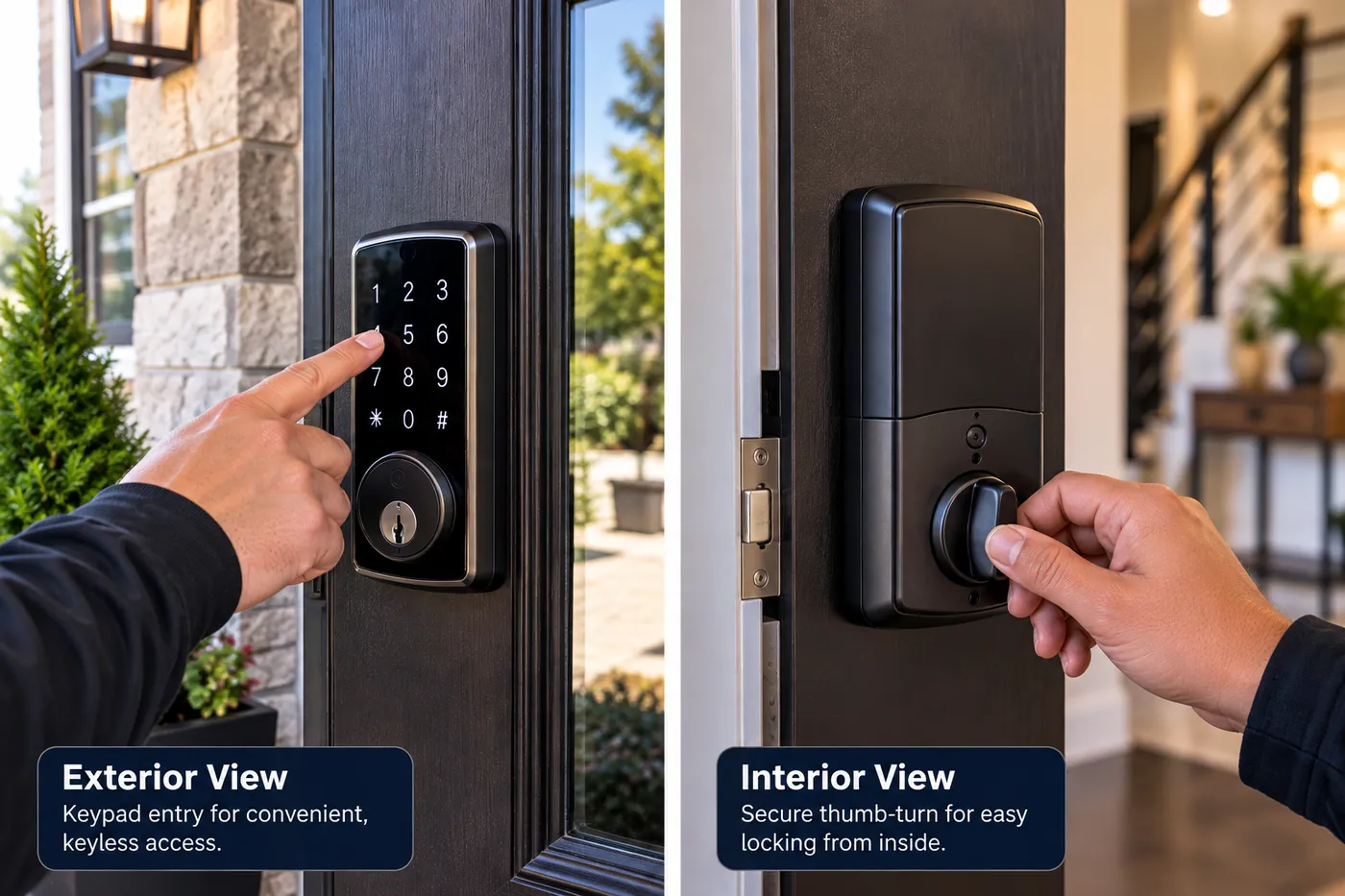
One turn to get out. Every lock we fit on a residential door opens from inside with a thumb-turn or lever — no key, no code, no phone. The state's model residential code text calls for egress doors to be readily openable from inside without a key or special knowledge, and that is the standard we hold to on every house door, whatever else the lock does.
A driveway gate or a shared two-family entrance is often the next thing on the list once the house doors are done. For those, see our intercom installation in Westchester County, and for small apartment buildings whose buzzer has given up, the AESS door buzzer installers in Westchester.

Westchester's business doors are mostly small: a practice, an office suite, a shop, a congregation's side entrance. What sets them apart from city storefronts is who checks the work. A medical practice answers to its compliance officer, a congregation to the agency that funded its security grant, an office tenant to a landlord and a building department working from the 2025 state code. The keyless question is therefore half hardware and half paperwork, and we deliver both. These are the corridors where our commercial calls cluster.
The office corridor through Harrison, Rye Brook and Purchase, which 914INC has described as repositioning toward medical use, with practices such as Westmed's building at 3030 Westchester Avenue. Records rooms, medication storage and staff-only corridors are the usual doors.
Mamaroneck Avenue's restaurants and bars, the law and accounting offices around the courthouses, and upper-floor suites reached by a shared stair. Per-employee codes on the staff door and a reader on the suite entrance are common requests.
The long retail strip through Yonkers, Greenburgh, Hartsdale and Scarsdale: shopping plazas, gyms, clinics and service businesses with a front door for customers and a back door for deliveries and staff.
Shops and restaurants near the Capitol Theatre, which opened in 1926 and now runs as a concert hall. Family businesses with several relatives opening on different days, and rear doors onto lots and alleys.
Small shops, galleries and offices in older masonry buildings, where the door hardware has to suit the building and the owner often lives upstairs.
Ground-floor commercial space in the new towers around the station and on Main Street, where the landlord runs the building's entry system and a tenant wants its own door on its own credentials.
Houses of worship and religious schools are a category of their own in Westchester. Many have applied to New York State's Securing Communities Against Hate Crimes program, which the Division of Criminal Justice Services runs for nonprofits at risk because of their ideology, beliefs or mission. Keyless side doors, controlled entrances to school wings and logs of who opened which door during the week are among the projects congregations bring to us.
Once a practice or office wants several doors on one schedule, a lift on credentials, or video tied to each opening, it has moved past smart locks into access control. Our access control installation in Westchester County picks it up there, and commercial security cameras for Westchester businesses put a picture beside the log.

These are the questions Westchester homeowners, landlords, practice managers and congregations ask before a smart lock goes on a door, grouped by situation: houses that sit empty all day, the back and upper doors burglars favour, owners who live alone, co-ops and two-families on the city line, pools, and business doors. Price and scheduling questions are in the FAQ further down. Nothing here is legal advice; where a law, a code or a police report is mentioned we name it so you can read it yourself.
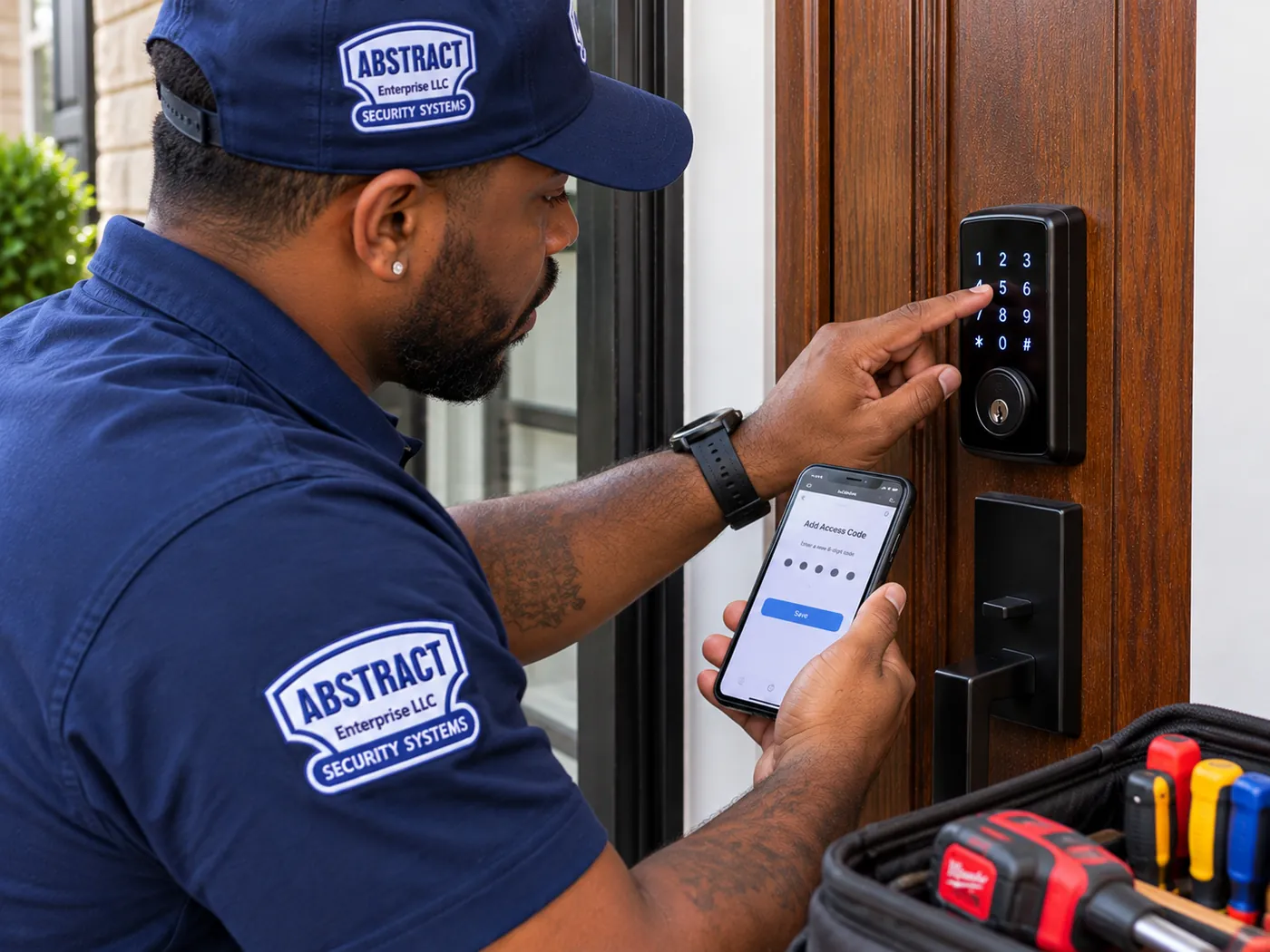
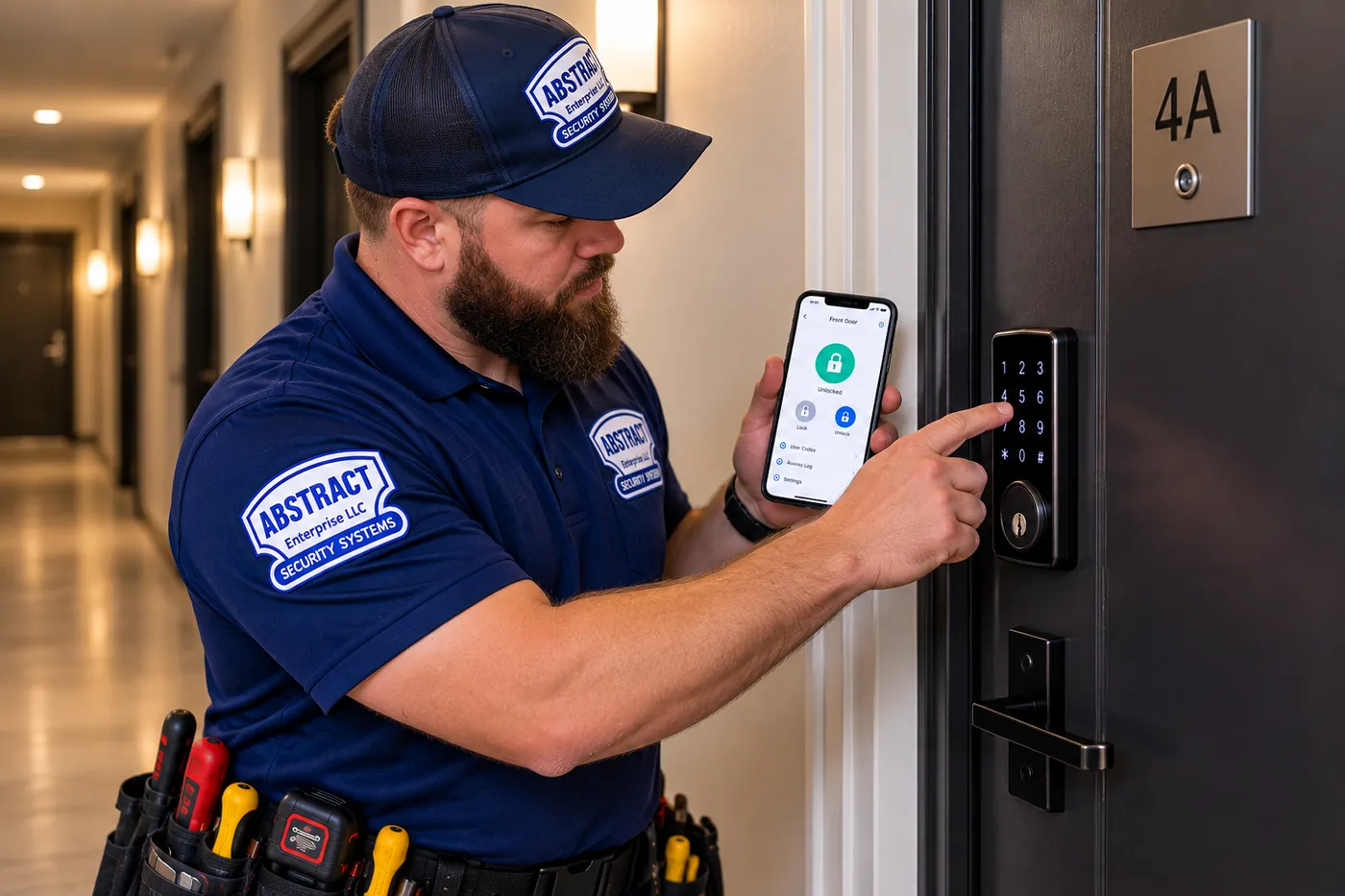
Three things, without anyone touching a phone. First, locking themselves: every smart deadbolt should be set to auto-lock a minute or two after its door closes, so the door the last person forgot is locked anyway. Second, reporting: the app should send an alert if any smart-locked door is unlocked, or is opened, during hours when nobody is expected, and a daily "all locked" check is easy to set. Third, letting in only who is scheduled: the cleaner's code works on Tuesday between nine and one, the dog walker's at midday on weekdays, and nobody else's at all.
The police advice that accompanies most Westchester burglary reports adds one more job: make the house look occupied. Scarsdale police asked residents to put lights on timers and keep all exterior doors locked with deadbolts; the State Police alert of January 2025 suggested timed interior lights when away. Many lock apps and hubs can tie a "house empty" routine to lights as well as locks, so the same tap that confirms the doors are locked switches the evening lamps on at dusk.
What the locks can't do is cover the doors that don't have them. If the slider at the back and the door from the garage are on a key, the app knows nothing about them. That's why we walk every door first and decide, with you, which ones need a smart lock, which need a contact, and which just need a proper deadbolt that somebody remembers to throw.
It should get attention, and sometimes a smart lock is the right answer. The pattern described by Greenwich police in 2023, and reported by Patch for Westchester and Fairfield towns, was crews entering high-end homes in the evening through a second-floor window or door while the family was out. The State Police alert in January 2025 asked residents of Westchester, Dutchess and Putnam to lock "second-floor entry points." Upstairs doors are often the weakest in the house: a light half-glazed door onto a balcony or porch roof, a cheap knob lock, and nobody in the habit of checking it.
If the upstairs door is used regularly — a bedroom balcony that people step out onto in summer — a smart deadbolt makes sense, because it can lock itself and tell you if it hasn't. If it is opened twice a year, a solid keyed deadbolt plus an alarm contact is usually better value; the contact reports the door opening whether or not anyone locked it, and the Patch report noted that the crews tended to flee when an alarm sounded. Either way we check the door itself: a deadbolt only holds as well as the frame and strike behind it.
Look up as well as at the door. A porch roof, a trellis, a stack of patio furniture or a ladder left in the yard is how people reach those doors. Scarsdale police described a burglar piling up lawn furniture to reach a second-storey window in 2015.
Yes, if the garage leads into the house or holds what someone would need to get in. In the Scarsdale police report of November 2015, a ladder kept in a garage that could only be reached with the door keypad code was found next to a house's damaged second-floor windows, and police said they were looking into the people who had access to that code. A garage keypad code that has been the same for years, shared with every crew who ever worked on the property, is effectively a key that you can't take back.
The fix has two halves. Change the garage keypad code now, and from then on give it only to people who need the garage, changing it whenever a crew finishes. Then make the door from the garage into the house a real lock: a smart deadbolt there gives each person their own code and a record of when it was used, so the landscaper can get to the mower without being able to walk into the kitchen.
Where the garage opener itself is app-connected, check what it can and can't talk to before planning around it. Chamberlain, for instance, moved in 2023 to block unauthorised third-party apps from its myQ system, which ended some home-automation links owners had relied on. We plan the house door so that it doesn't depend on the garage system at all.
Yes, and it's one of the most popular reasons Westchester parents give us for going keyless. Give each child their own code or fingerprint, and the app can send a notification naming who unlocked the door and when. Most apps let you choose which users trigger an alert, so you hear about the children and not about yourself coming home.
Make sure the door they use is the one with the lock. Children tend to come in through the garage or a side door rather than the formal front door, so that's often where the keypad belongs. A keypad with physical buttons is easier for small fingers and gloved winter hands than a touchscreen, and a fingerprint can't be left at a friend's house. Auto-lock behind them matters as much as the notification: a child coming in with a backpack, a scooter and a friend will not always turn round to lock up.
Two cautions. Don't use a child's code to unlock for someone else — give the sitter or a neighbour their own. And keep a physical key somewhere a child can reach in an emergency, such as with a trusted neighbour, because a lock with flat batteries or a door that has swollen shut is rare but possible.
Sometimes, but with caution. A sliding door has a narrow frame and a hook latch that grips the jamb, not the bored hole a standard smart deadbolt needs. Keyless locks made specifically for sliders exist, as do keypad units designed to mount on a patio door, and on some doors they work well. On others the frame is too thin, the door rattles in its track, or the existing latch is too worn to hold anything.
Sliders are also a known way in. Scarsdale police described burglars entering through a rear window or sliding glass door in their 2015 report, and in September 2024 News 12 Westchester showed video of two men prying open a back sliding door with a crowbar in Pelham Manor before dawn, then leaving with a handbag, car keys and the family's car. A smart lock on a weak slider does not change that. So we look first at the basics: an auxiliary lock that pins the moving panel, a bar or block in the track, and an alarm contact that reports the door opening.
If the family really does use the slider as the main door, there are two routes. Fit a slider-specific keyless lock where the frame can carry one, or move the daily keyless entry to an adjacent hinged door — a mudroom or garage door — and keep the slider locked and alarmed. The second route is usually the more secure.
Plan it before anyone needs it. There are three common routes, and the best arrangements use two. The first is a residential key box: the Elmsford Fire Department, for one, describes a Residential Knox-Box that lets first responders "let themselves in" with a high-security master key held by the department, aimed at seniors living at home who may not be able to reach the door. You buy the box through the fire department's programme; we can mount it and make sure the key inside works the door it is meant for. Ask your own department whether it takes part.
The second route is a person nearby with their own credential: a neighbour or relative who has a code, kept for emergencies and deleted if they move. The third is remote unlocking by a family member, which only works if someone answers the call, is near their phone and knows who is at the door — a doorbell camera makes that last part much safer. What doesn't work is relying on the lock's app alone, held on a phone that belongs to the person who has fallen.
Make sure the lock itself suits him too. A keypad with large physical buttons, a fingerprint enrolled on two fingers, or a fob on his keyring all spare him a phone. And keep the inside dead simple — one turn to open, nothing to remember — because the most likely person to need that door in a hurry is him.
Not directly. The city's rules on extra locks and duplicate keys come largely from the state Multiple Dwelling Law and the city's own Housing Maintenance Code. The New York Attorney General's office explains that the Multiple Dwelling Law applies to cities with a population of 325,000 or more, while the Multiple Residence Law applies to cities with fewer than 325,000 people and to all towns and villages. By that population test, every city in Westchester, Yonkers included, falls on the Multiple Residence Law side of the line, and the city's Housing Maintenance Code doesn't apply here at all.
Some state rules do follow you over the line. The Real Property Actions and Proceedings Law, section 768, makes it unlawful for anyone to evict an occupant by, among other things, changing the lock on the entrance door without giving the occupant a key, and the Attorney General's guidance says this is a class A misdemeanour statewide. Beyond that, what you may put on a co-op or rental door in Westchester is decided mostly by your lease or proprietary lease, the house rules, and your city's or village's code.
So the practical route is the same in Yonkers as anywhere: read the lease and house rules, ask the managing agent in writing, and choose hardware that can be removed cleanly if the board or landlord objects. If you need a firm answer for your building, that's a question for a tenant advocate or a lawyer who practises in Westchester, not for a lock installer.
Usually, if the keypad is added to a gate that already does what the code requires rather than replacing any part of it. The New York Department of State's technical bulletin summarising residential pool rules, written for the 2020 Uniform Code, says all gates must be self-closing, pedestrian gates must open outward away from the pool, and gates must be self-latching with the latch handle on the pool side at least 40 inches above grade — with extra conditions if it is lower than 54 inches. It also says gates must be securely locked "with a key, combination, or another child-proof lock" when the pool isn't in use or supervised.
A keypad or combination lock can be that lock. What it must not do is defeat the self-closing hinge or the self-latching latch: a keypad that holds the gate open, a latch that only catches when someone pushes it, or a lock mounted where a child can reach the release from outside all undo the barrier. We fit gate-rated, weather-resistant keypad locks that work alongside the existing hinges and latch, and we test the gate swinging shut from fully open.
The 2025 Uniform Code is now in force, and your town's building department inspects pool barriers, so confirm current requirements there before changing a gate. And give the pool gate its own code, separate from the house: the pool service needs the gate, not the kitchen.
HIPAA's Security Rule doesn't name a lock, but it does ask for physical safeguards you can show. Under 45 CFR 164.310, a covered entity must have policies and procedures that limit physical access to its electronic information systems and the facility they're housed in, while letting properly authorised people in. The rule's addressable specifications include controlling and validating each person's access based on their role, including visitors, and documenting repairs and changes to the physical security of the facility — "for example, hardware, walls, doors, and locks."
A keypad or reader with individual credentials fits that well. Front-desk staff can open the reception door; only clinical and IT staff can open the server closet or records room; the cleaning company's code works after hours and nowhere near the medication store. The lock's log then becomes part of your evidence that access is controlled by role. HHS's own guidance on physical safeguards mentions door locks that rely on a card or badge reader as one common control.
We hand over what your compliance file needs from us: a list of each door, the hardware fitted, who holds which credential, and the date of the work. Your privacy officer decides the policy; we make the doors able to enforce it.
Possibly, but the grant's own documents decide. New York's Securing Communities Against Hate Crimes programme, run by the Division of Criminal Justice Services, funds safety and security projects at nonprofits at risk of hate crimes because of their ideology, beliefs or mission. The Governor's office describes it as covering interior or exterior security improvements such as alarms, panic buttons, fences, shatter-resistant glass and public address systems, "among other items," plus training and cybersecurity. Whether access control or keyless locks fall within your award depends on the request for proposals you applied under and the budget DCJS approved.
Before we start, check that the doors and hardware in our quote match the line items in your approved budget; changing scope after an award usually needs the funder's agreement. We provide an itemised quote naming each door, the hardware and the labour, an invoice that matches it, and photographs of the finished doors if your grant administrator asks.
For the doors themselves, the usual plan is one or two controlled entrances with readers or keypads, push-to-exit hardware inside that never needs a credential to leave, and the other doors kept locked from outside with panic hardware for exit. Schedules let the office door open during weekday hours and stay locked during services when ushers manage the main entrance.
It may change the details, and it confirms the principle. The 2025 Uniform Code took effect statewide on December 31, 2025, and the 2025 Building Code of New York State is based on the 2024 International Building Code. For electrified locks on egress doors, the model code's door-hardware-release rules require that operating the door's inside hardware directly cuts power to the lock and unlocks it immediately, and that losing power unlocks the door. Sensor-release doors need a sensor on the inside that detects someone approaching, plus a "PUSH TO EXIT" button 40 to 48 inches above the floor within five feet of the door that keeps the lock released for at least 30 seconds, and they unlock when the fire alarm activates.
In practice that means a keypad or reader outside, an electric strike or a lock built into the lever, and an inside release that needs no knowledge or credential. A battery-powered keypad deadbolt on a suite door is a different kind of device; whether it is acceptable on your particular door depends on your occupancy, the number of people the room serves, and the code official's view. That's a question for the building department, through your landlord.
Bring us the landlord's tenant-work rules and any letter from the building department, and we will quote hardware and wiring that fits both. If a permit or filing is needed, your landlord or architect usually holds that process; we supply the product data sheets and wiring details they ask for.
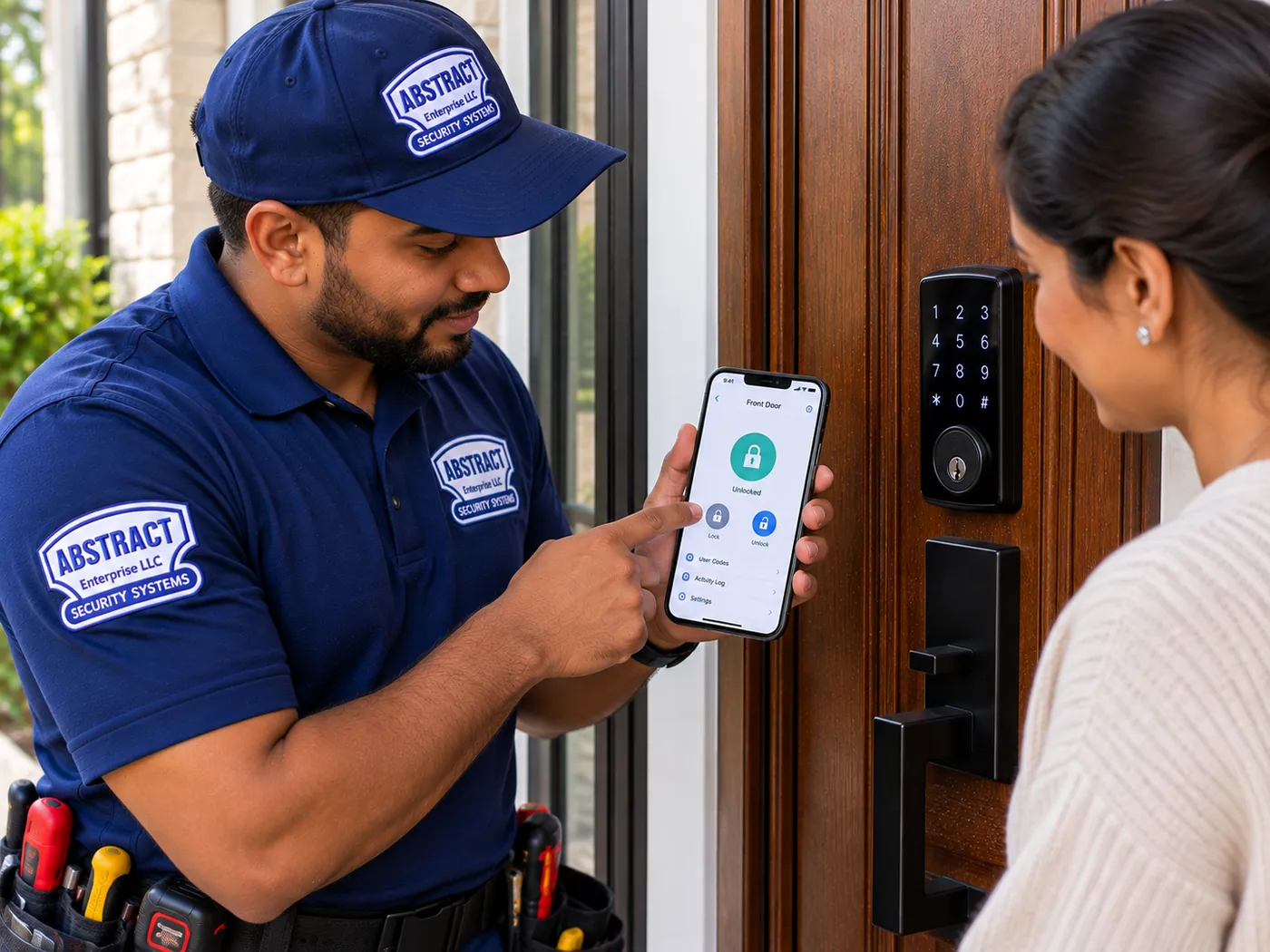
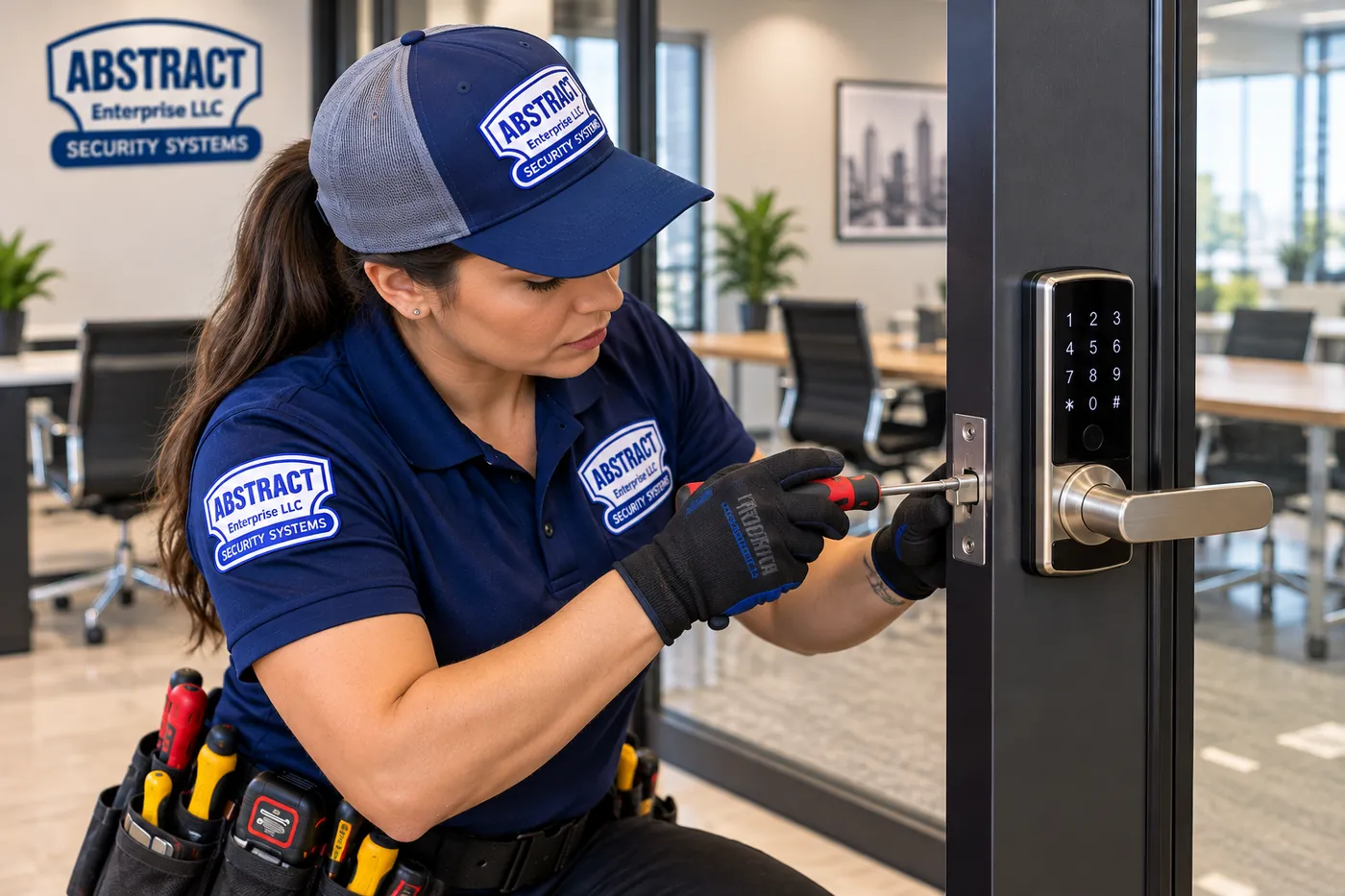
On a Westchester house the right lock depends on which door it goes on and who will use it while you're out. You can buy your own and have us fit it, or let us recommend models after the walkthrough. These are the categories we install across the county.
Built-in Wi-Fi for remote alerts and scheduling without a separate hub. Schlage's Encode, for example, needs a 2.4 GHz network and is rated by its maker for outside temperatures from −31°F to 150.8°F. Best on doors where the signal is strong.
Low-power radios that talk to a hub or alarm panel. Kwikset's Z-Wave 700 models hold up to 250 user codes; Yale's Matter-over-Thread locks need a Thread border router first. Useful where the house already runs an alarm or home system.
These clamp onto the thumb-turn side of a deadbolt you already own, so the hallway face and every existing key stay as they were. We fit them on co-op unit doors and rented apartments where the board or landlord controls the outside of the door.
For doors where a lever or handleset is the only lock, such as office suites, mudroom doors and pool-house doors. Codes per person, and a lever that is easier on stiff hands than a knob.
Keyless locks built for sliding patio doors where the frame allows, keypad units for multipoint French doors, and, where neither suits, auxiliary locks, track bars and contacts that make the door secure and reportable.
Weather-resistant keypad and mechanical combination locks for pool gates and side-yard gates, mounted so the self-closing hinge and self-latching latch keep doing their job.
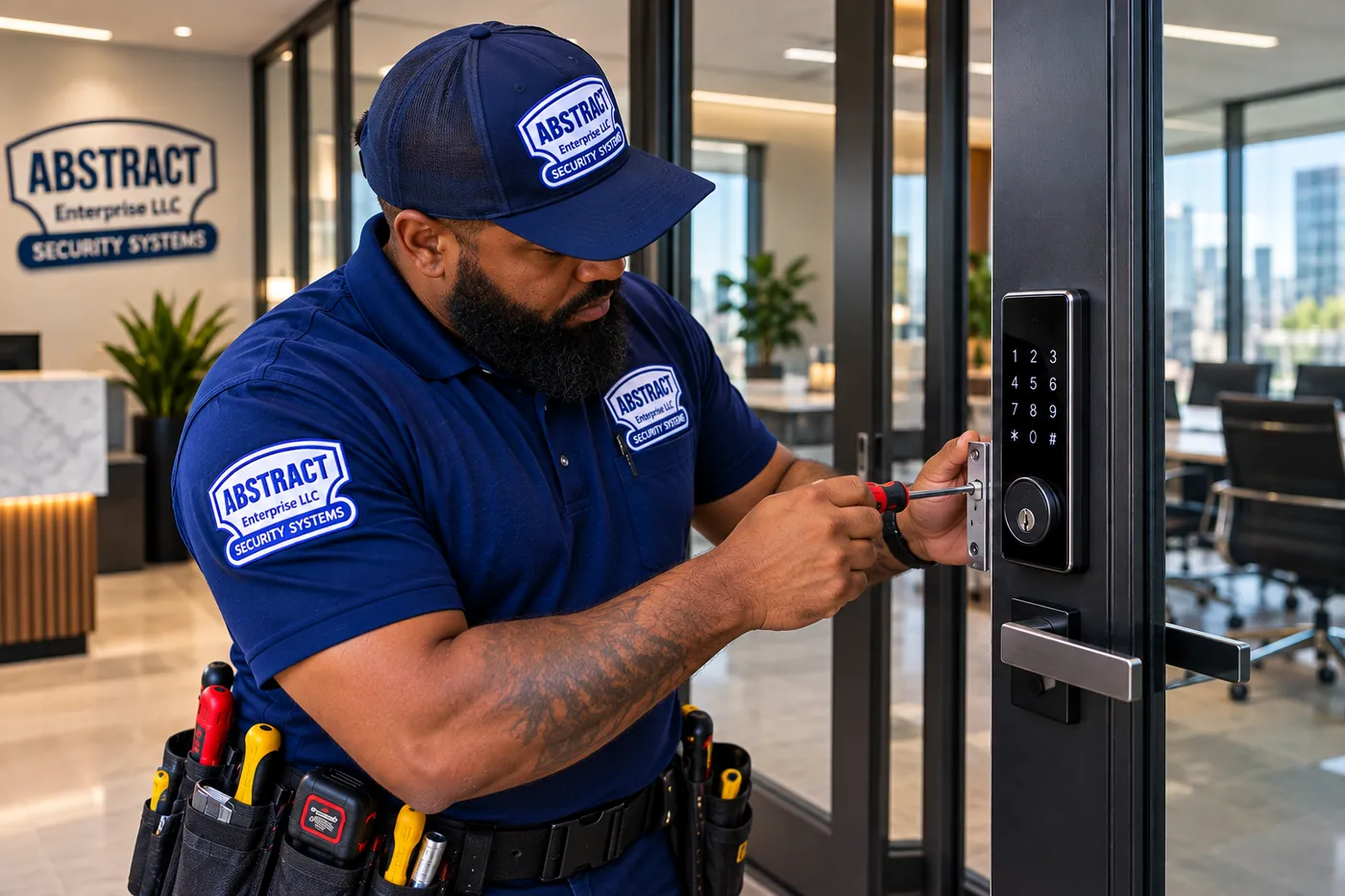
For practices, offices, shops and congregations: a reader or keypad outside, a strike in the frame, a push-to-exit or request-to-exit device inside, and a log of every opening by person.
Contacts that report a door opening whether or not it was locked, and residential key boxes, bought through a fire department's programme, mounted so first responders can reach a key without forcing the door.
National brands versus a Westchester installer. National alarm companies and the big home-improvement chains will sell you a lock in a plan or a box. Neither will walk to the back of the house to look at the slider, climb the stairs to the balcony door, ask who still knows the garage code, or sit with your mother to choose between a fingerprint and a fob. Those conversations are the work, and they are why a licensed local installer is worth calling.

Be clear about where these come from: Google's AI Overview was out of reach while this page was researched, so none of the seven lines below is quoted from it. Each is a claim we keep meeting in cost guides, lock advertising and how-to pieces — the material answer engines summarise — followed by what Westchester doors actually show us.
National cost guides publish a tidy figure. Fixr's guide, updated in January 2025, puts a smart lock installed at $250 to $400 nationally, averaging $300; Homewyse's January 2026 estimate works out at roughly $95 to $227 per lock before contractor markup. Those numbers assume one ordinary door, already bored, with a strong Wi-Fi signal.
Westchester jobs rarely look like that. A resident on the r/Westchester forum, describing household costs, put a single deadbolt-and-camera lock at "$400ish" for the hardware alone. Then come a Tudor's two-piece front hardware, a slider that needs a different solution, a garage entry at the far end of the house, and six people to enrol.
We publish the Westchester figures we can price in advance — strikes, keypads with strikes, setup visits — and quote house doors flat after seeing them. Use the national figure as a floor for one easy door, not as a budget for a house.
On a modern, pre-bored door in a square frame, a replacement smart deadbolt really is a screwdriver job. Plenty of Westchester owners do exactly that and it works.
The trouble is the doors that aren't like that: a 1920s front door whose frame has moved, a French door with a multipoint gearbox, a slider, an upstairs door no one has opened since the house was painted, or an office door where an electric strike, a power supply and an exit device all have to work together under the state code.
If you do hire someone for the harder doors, check them. Westchester's Department of Consumer Protection says county law requires home improvement contractors to be licensed and runs an online licence search, and Yonkers issues its own home improvement licence.
A good deadbolt that is actually thrown is excellent protection for the door it's on. But the Westchester reports we've read describe burglars avoiding the front door altogether: a second-floor window reached from stacked lawn furniture and a rear sliding door in Scarsdale in 2015, second-floor windows and doors in the 2023 crews Patch reported on, a crowbar on a back slider in Pelham Manor in 2024.
None of those is solved by a better front-door lock. What helps is every door actually being locked when the house is empty, upstairs doors that are as solid as the downstairs ones, and an alarm that sounds — Patch reported the 2023 crews fled when one did.
So our door plans in Westchester start at the back and the top of the house, not the front, and smart locks go where they make "locked" the default rather than where they look best.
Remote unlock is useful when a person with the app is awake, has signal, sees the call and can confirm who is at the door. In a medical emergency at the house of someone who lives alone, often none of that is true.
Fire departments have long had another tool for this. The Elmsford Fire Department, for example, describes residential key boxes that let first responders let themselves in with a master key the department controls, aimed at seniors who may not be able to reach the door.
A sound plan uses the key box or a nearby neighbour's code as the main route, with remote unlock as a backup. The lock should also open from inside with one plain turn, so the person can let help in if they can reach the door.
Articles about tenants' rights to add a lock usually describe New York City, where the Multiple Dwelling Law and the city's Housing Maintenance Code set the rules. The Attorney General's office explains that the Multiple Dwelling Law covers cities of 325,000 people or more; smaller cities, towns and villages fall under the Multiple Residence Law.
That puts Yonkers, New Rochelle, Mount Vernon, White Plains, Rye and Peekskill outside the city framework. One state rule that does apply everywhere is RPAPL 768: changing an occupant's entrance lock without giving them a key is an unlawful eviction.
For a Westchester co-op or rental, read the lease and house rules and ask in writing before changing hardware.
Lock listings rarely mention egress. On a business door they matter more than any feature. The 2025 Building Code of New York State, effective December 31, 2025, is based on the 2024 International Building Code, whose rules for electrically locked egress doors require that inside hardware cuts lock power directly and that a power failure unlocks the door.
Magnetic locks and some strikes are fail-safe by design; some battery locks and fail-secure strikes are not, and whether they're acceptable depends on the door's role in the exit route and the occupancy.
We specify every commercial door with that in mind, put a push-to-exit or request-to-exit device inside where the code calls for it, and leave the decisions about specific doors to the building department.
It doesn't. The Department of State's summary of residential pool rules separates the two: gates must be self-closing and self-latching, with the latch on the pool side at a set height, and separately must be locked with a key, combination or other child-proof lock when the pool isn't in use or supervised.
A keypad that replaces the latch, or that holds the gate open after use, can leave a gate unlatched that looks locked. That is the opposite of what a pool barrier is for.
We add keypads alongside the latch and hinges, test that the gate swings shut and latches from fully open, and recommend confirming current rules with your town's building department under the 2025 code.

Tell us which doors you use, which ones you never check, and who comes in while you're at work. We will tell you which doors should go keyless and what it will cost.
List the doors — front, back, slider, garage, upstairs, gate — and who needs to get through them while you're out, and you'll have a written reply the same business day. Rather talk? Our Westchester number is (914) 877-2578.
Thank you — a licensed installer will call before the end of the business day. Something urgent? Ring (914) 877-2578.
The same six steps whether it's one keypad on a mudroom door in Yorktown or every door of a house and its pool gate in Rye.
On the phone we list every person who opens your doors in a normal week, family and visitors, with the days and hours each one needs. That list drives the plan.
At the free walkthrough we check the front, garage entry, side, slider, French doors, upstairs balcony doors, gates and the garage keypad, and test signal where each lock will sit.
You get a written plan for each door, smart lock, contact or proper deadbolt, and a flat price. Business doors are priced from our published Westchester rates.
Strikes are aligned or reinforced, sliders and French doors given the right hardware, and frames adjusted so every door latches with a light push before any motorised bolt goes in.
Locks are fitted, paired and set to auto-lock, bridges or hubs placed and tested, and every door is opened from inside by hand in the dark to prove exit never depends on power.
Each person enrols and tries their own credential, visitor schedules and alerts are set on two phones, old codes are deleted, and you keep a printed plan for each door.
Six places that between them span the county's three centuries of building, from colonial manors to a 1,100-acre condominium community.
A state historic site in Getty Square at 29 Warburton Avenue, whose oldest section dates to about 1682 and which was named a National Historic Landmark in 1961. Around it, downtown Yonkers' apartment buildings and two-families raise the co-op and landlord questions covered on this page.
A 23-acre park and historic site on the Boston Post Road with the 1838 Peter Augustus Jay House at its centre. The Sound Shore houses nearby — Rye, Harrison, Mamaroneck — bring French doors, terraces and the back-of-house questions this page keeps returning to.
A county park beneath the Kensico Dam, which Westchester County Parks gives as 307 feet high and 1,843 feet long, completed in 1917. The mid-county towns around it, from North Castle to Mount Pleasant, are ranch-and-colonial country with garage entries and decks.
The walled gardens that the Untermyer Gardens Conservancy has been restoring in partnership with the City of Yonkers. The Yonkers neighbourhoods around them mix large older houses with apartment buildings, and both appear in our work.
The author's riverside home, run by Historic Hudson Valley and restored to look much as it did in the 1850s. The river towns from Hastings to Sleepy Hollow are where tall Victorian doors and moving frames make up most of our house work.
A 55-plus condominium community that describes itself as 2,600 condos in 30 condo groups across more than 1,100 acres. Uniform exteriors, association rules, and owners who want simple entry and a dependable emergency-access plan.
We also serve Yonkers, Mount Vernon, New Rochelle, White Plains, Rye, Peekskill, Bronxville, Tuckahoe, Eastchester, Scarsdale, Hartsdale, Ardsley, Dobbs Ferry, Hastings-on-Hudson, Irvington, Tarrytown, Sleepy Hollow, Elmsford, Valhalla, Hawthorne, Pleasantville, Briarcliff Manor, Ossining, Croton-on-Hudson, Cortlandt, Yorktown, Somers, Mount Kisco, Bedford, Katonah, Pound Ridge, Lewisboro, North Salem, Armonk, Chappaqua, Harrison, Purchase, Rye Brook, Port Chester, Mamaroneck, Larchmont, Pelham and Pelham Manor.

We publish what we can price before seeing the door, and quote the rest flat after we have. Entrance and business-door work — keypads and readers with electric strikes, new strikes and strike repairs — is published on our access-control and door-buzzer pages at a Brooklyn base, and Westchester carries our 1.25 area multiplier, so those lines appear below at the county rate, rounded half-up. A smart lock on a house door has no published AESS price, because the house decides the work: a single pre-bored mudroom door is a short visit, while a Tudor's front door, a slider that needs a different answer, an upstairs balcony door and a household of visitors to enrol is a long one. Those jobs are quoted flat, in writing, after a free walkthrough, and the quote is the price.
| Item | Westchester price | Scope and source |
|---|---|---|
| Smart lock on a house, co-op, slider, balcony or pool-house door | Quoted flat at free walkthrough | No published AESS figure; set after we see each door and agree who will use it |
| Single-door keypad or fob reader with electric strike | $1,875–$3,125 installed | Practice, office, shop or congregation door; published $1,500–$2,500 Brooklyn base × 1.25 |
| New electric strike on an entrance door | $313–$563 | Fitted as part of entrance work; published $250–$450 × 1.25, rounded half-up |
| Failed electric strike repair | $369–$606 | Entrance that buzzes or reads but won't release; published $295–$485 × 1.25, rounded half-up |
| Setup-only visit (app, codes, schedules, alerts, bridge; no hardware change) | $235 first hour, then 30-minute blocks | Our published Westchester setup-only rate |
| Service and callback rate | $195/hr, 3-hour minimum ($585) | Service calls after the installation; not charged on the initial install |
National figures for comparison. Fixr's January 2025 guide gives $250–$400 for a single smart lock installed, nationally; Homewyse's January 2026 estimate is lower, per lock, before markup. Both are national third-party data, not AESS prices, and both describe one easy door with one user.

Three ways Westchester customers usually buy keyless entry. The setup visit and the business door carry published county prices; the house plan is priced once we've walked the doors.
$235 first hour
For a smart lock that's already on the door but was never set up properly: auto-lock on, alerts to two phones, individual scheduled codes for every visitor, old codes deleted, bridge placed and tested. Then 30-minute blocks if there's more to do.
Quoted flat at walkthrough
Smart locks on the doors that earn them, contacts or proper deadbolts on the rest, the slider and upstairs doors dealt with, the garage code changed, every visitor on their own schedule, and an emergency-access plan if anyone lives alone.
$1,875–$3,125
A keypad or reader outside, an electric strike in the frame and a push-to-exit device inside, for one door at the Westchester rate. Each staff member or volunteer gets a credential, and you get the door list and log your compliance file needs.
Already bought a lock? We'll fit it, quoted flat as labour only after the walkthrough. Before it's unboxed we check it against the door — thickness, backset, a separate handleset, a multipoint gearbox, a slider frame — and against how you'll use it: Wi-Fi or a hub, how many codes, scheduling. We won't fit a model that needs a key or code to get out. A lock you supply carries its maker's warranty rather than ours, and if it won't suit the door we'll say so before anything is drilled.

Photograph every outside door — slider and balcony door included — and jot down the weekly visitors. From that we can tell you before the visit which doors are likely to change and roughly how long it will take.
The lock we fit in a Mount Vernon two-family may be the very model we fit on a Pound Ridge farmhouse door. What changes from one end of the county to the other is the building, the household's week and the doors burglars favour there.
Pre-war elevator co-ops, two- and three-family houses, and blocks of apartments in Getty Square and along the main avenues. Unit-door retrofits, separate credentials for owner and tenant floors, and the question of which state rules apply on the city line are the usual conversations. Yonkers also issues its own home improvement licence, separate from the county's.
Downtown New Rochelle's new towers, where the building's system runs the lobby, beside the older single-family streets of the Pelhams and Larchmont. In Pelham Manor, News 12 reported a run of break-ins in September 2024, one through a back slider; back doors and auto-lock come up often on this stretch of the Sound Shore.
Railroad-suburb Tudors and colonials with heavy front doors and two-piece hardware, garden apartment and co-op buildings near the stations, and a long record of local police reports on second-floor and rear-door entries. Whole-house door plans and garage-code clean-ups are typical.
Larger houses on the Sound with French doors and terraces, the medical and office buildings of the Platinum Mile, and Port Chester's shops and two-families. The 2023 Patch report on crews working Westchester and Fairfield towns ran in its Rye edition and noted an earlier arrest in which Harrison police took part.
Downtown offices and restaurants, the Central Park Avenue retail strip, and the post-war neighbourhoods of Hartsdale, Ardsley, Elmsford and Valhalla. Business doors under the 2025 state code, plus houses where the slider onto the deck is the door everyone uses.
Victorian and early twentieth-century houses on steep streets above the Hudson in Hastings-on-Hudson, Dobbs Ferry, Irvington, Tarrytown, Sleepy Hollow, Ossining and Croton. Tall doors, moving frames and porches with doors above them; strike work is part of almost every job.
Big lots, several outbuildings and long driveways. The questions here are distance from the router to the garage or pool house, French doors across the back of the house, and pool gates, along with remote alerts for houses that are empty during long working days.
Capes, ranches and raised ranches with straightforward doors, Peekskill's older streets, and 55-plus communities such as Heritage Hills. Simple, phone-free entry for older owners and a dependable emergency-access route are the priorities.

The hardware is a morning's work. The list of who can open what, and when, is what keeps the house secure for years. This is the plan we write down with Westchester households before we leave.
| Who | Which doors | What we set up |
|---|---|---|
| The two adults who run the house | All | Administrator access on both phones, alerts for any door unlocked outside expected hours, and a nightly "all locked" check |
| Children coming home from school | The door they actually use | Their own code or fingerprint, an arrival notification naming each child, and auto-lock behind them |
| Cleaner, sitter or dog walker | One door | A personal code active only on their days and hours, deleted the day they stop working for you |
| Landscaper and pool service | Garage or pool gate only | A separate garage or gate code, never a house-door code, changed at the end of each season or contract |
| Contractors during a renovation | One door | A code with an end date, so access stops when the job does even if nobody remembers to delete it |
| A neighbour or relative nearby | Front door | An emergency code they keep to themselves, plus a physical key for the day a battery or motor fails |
Two habits keep it honest. Every few months, open the user list and delete anyone who no longer comes to the house; old codes are the commonest weak point we find. And change the garage keypad code when a crew finishes, because that keypad is the one lock in most houses with no log at all. If you'd rather we did the clean-up, a setup-only visit in Westchester is $235 for the first hour.

With nearly one in five Westchester residents aged 65 or over, this is the checklist we go through most often with families. It is about letting the right people in fast, not keeping people out.
Write the plan down and leave a copy on the refrigerator, where a paramedic or a visiting relative would look. We'll give you a one-page version for each door before we leave.

Many smart lock calls from the southern cities come from owners who live in one half of a two- or three-family house and rent the rest. A keyless street door is a genuine convenience for everyone in that arrangement, but it changes how lock changes and tenant access work, so it's worth setting up carefully.
Keep the tenant's access independent of your account. A tenant whose only way in is a code that lives in your app is one lapsed subscription or dead battery away from being locked out. Give them their own code and a physical key for both the shared door and their own apartment door, and don't put your apartment on any lock they need.
Never use the lock to resolve a dispute. RPAPL 768 makes it unlawful for any person to evict an occupant by changing the lock on the entrance door without supplying a key, and the Attorney General's guidance calls it a class A misdemeanour that applies statewide. Deleting a code has the same effect as changing a lock. The Scarsdale police log from November 2015 describes officers telling a landlord who had changed the locks on her tenants that there is an eviction process, and standing by while the tenants were let back in.
When a tenancy ends properly, remove the departing tenant's credentials and issue new ones to the next tenant on the day the keys change hands, and re-key or replace any mechanical cylinder they held. Our intercom repair service in Westchester handles the buzzer and release side of small-building entrances if that's where the trouble is.
Alerts and schedules are only as good as the link between the lock and your network. In a Westchester house the router usually sits in a study or family room, while the doors that matter most — the garage entry, the mudroom, the slider, the pool house — are at the far ends of the building or across the yard.
Whichever method suits the house, we finish the same way: with a phone on mobile data at the end of the driveway, we lock and unlock each door remotely and confirm every alert arrives. Where the signal won't reach, structured cabling in Westchester County and our network crews put a wired access point where it's needed.

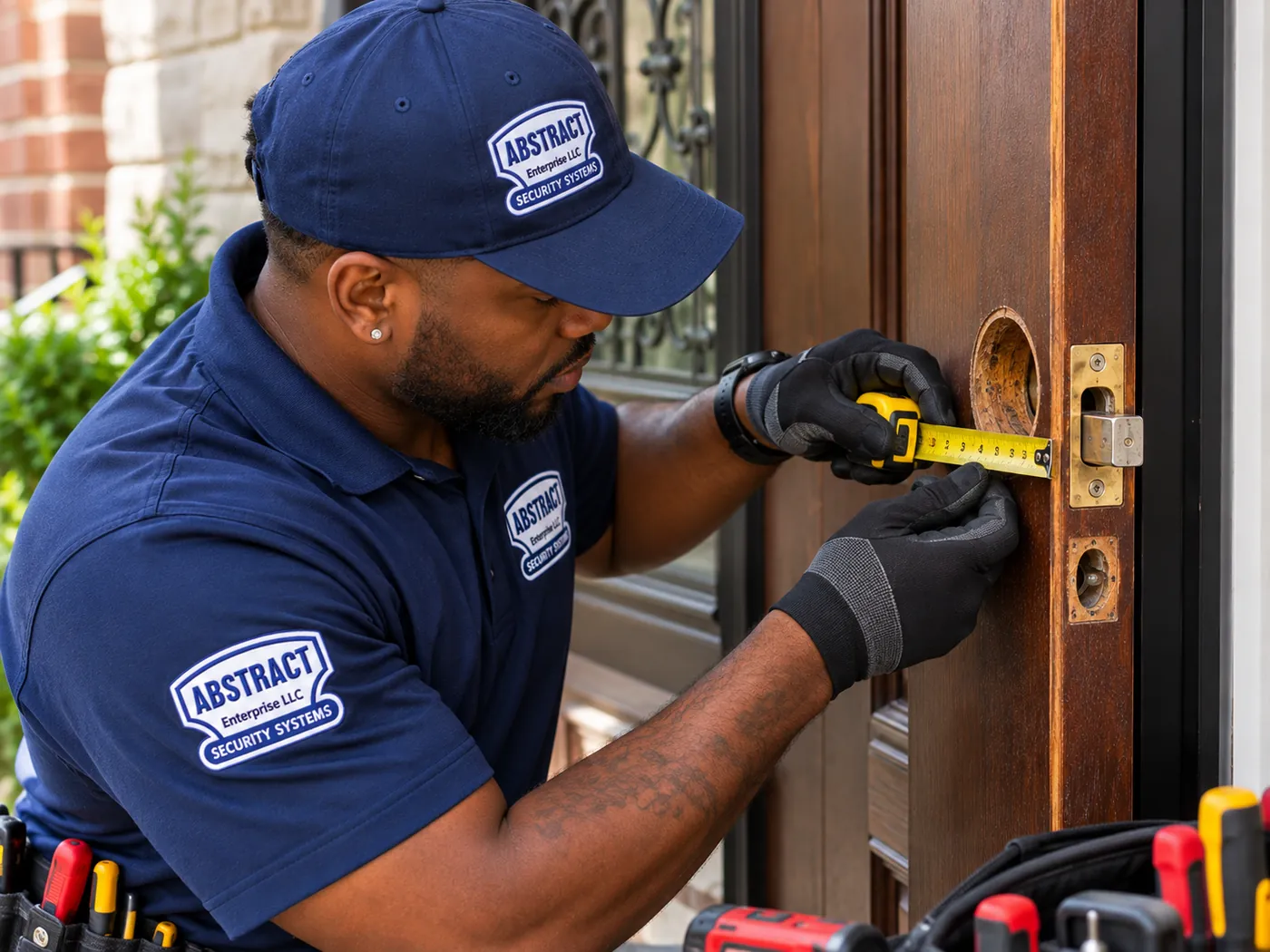
Most returned smart locks were bought for the door the owner imagined rather than the one they have. Five minutes with a tape measure saves a trip back to the store, and on older Westchester doors the numbers are often not the standard ones.
| Check | What it means | Typical published range |
|---|---|---|
| Door thickness | Measured on the edge of the door; heavy period doors often run thick | Allegion's preparation sheet for Schlage's Arrive lists 1-3/8″ to 2″; Yale's Assure Lock 2 sheet lists 1-3/8″ to 2-1/4″ |
| Backset | From the door edge to the centre of the deadbolt hole | 2-3/8″ or 2-3/4″ on the same Schlage and Yale sheets |
| Cross bore | The diameter of the big hole through the face of the door | Schlage lists 1-1/2″ or 2-1/8″ |
| Bolt throw and strike | Whether the bolt can travel its full length into the frame without rubbing | Schlage lists a 1″ deadbolt throw; a swollen frame often stops it short |
| Separate handleset | A thumb-latch handleset below the deadbolt that stays in place | Check the handleset's finish and the gap between the two pieces of hardware |
Note the radio as well as the door. A lock that needs a 2.4 GHz Wi-Fi network will struggle at a mudroom door two rooms away from a router that only reaches it faintly, and a Thread or Z-Wave lock needs the matching hub or border router in the house. Look, too, at what the lock does with codes: some hold a few dozen users, others well over a hundred, and only some allow schedules by day and hour, which matters a great deal in a house with a weekly cleaner, a sitter and a seasonal pool service.
Finally, think about the finish. Westchester front doors often carry aged brass or oil-rubbed bronze hardware that has been on the house for decades. Most smart lock lines come in a handful of finishes, and the inside housing is larger than an ordinary thumb-turn, so hold the box up to the door before you open it.
If any number falls outside a lock's listed range, or the door is a slider, a multipoint French door or a gate, send us a photo before buying. We'll tell you which models fit, or fit the right one at the walkthrough.

Westchester customers rarely stop at the lock. These county services most often end up on the same work order.
Readers, keypads and controllers for practices, offices and congregations with several doors.
See who is on the step before any remote unlock.
Contacts on sliders and upstairs doors, and a siren that sends intruders on their way.
Cameras on the back of the house, driveways and pool areas.
Gate and two-family entrance stations with remote release.
Strikes that hum but won't release, and dead buzzers on small buildings.
Hubs and routines that tie locks, lights and sensors into one "house empty" scene.
Access points and wired backhaul so the far doors stay online.
Strike wiring, power supplies and cabling for business doors.
One form for any combination of the above.
How our installers walk a Westchester house — the routine we follow on every visit, not the story of one job
We don't start at the front door. We ask which door the family used this morning and which the cleaner, the walker and the children use, and we go there first. Often it's the garage entry or a mudroom door rather than the front, and whichever it is will be opened far more than the rest.
Then we go round the back. We slide the patio door, lift its latch, and see how much the panel moves in the track. We open the French doors and look at what holds the passive leaf. Then we go upstairs and open every door onto a balcony or porch roof, check its lock, and look down at what is underneath it.
Then the garage keypad. We ask how long the code has been the same and who knows it. If the answer is "years" and "everyone," a new code goes on the list before we leave.
Last, the people. We sit down with whoever will use each door, including anyone who lives alone or will be managing a parent's house from a distance, and agree a method and a schedule for each of them. Only then do we talk about which lock.
Yes. House doors are quoted flat, in writing, after the free walkthrough, and that figure is what you pay for the work described. If you add a door or a gate on the day, we price the addition before doing it. Business-door work follows our published Westchester rates, such as $1,875 to $3,125 for a single-door keypad or reader with an electric strike.
We usually advise against it on the front door of a house that sits empty all day. Auto-unlock relies on your phone's location and Bluetooth, and location is not precise, so the door can unlock while you are still parked in the drive, unloading the car or walking the dog nearby. Most households are better served by auto-lock, an alert for any door left unlocked, and a one-touch or keypad unlock at the door itself. If you do want auto-unlock, we set it on one door only and pair it with a short auto-lock timer.
Often, but not with an ordinary smart deadbolt. Multipoint doors need either a keyless unit made to work with that brand's gearbox or a keypad and motor kit designed for multipoint doors, and some models have no compatible option. We identify the gearbox at the walkthrough and tell you which route, if any, suits that door before you buy anything.
Usually. Most connected locks keep an activity log in the app showing which code, fob or phone opened the door and when, and many apps let you export it or take screenshots. How long the log is kept depends on the brand and plan, so after any incident save it straight away. A log will not show a forced slider or window, which is why we pair locks with alarm contacts and cameras.
Yes. Most smart locks have a mode that keeps auto-lock off, or a passage setting that holds the bolt back, until you turn it off again. The risk is forgetting to switch it back, so we show you where the setting is and set an alert or a scheduled re-lock for the end of the evening. Leave the upstairs and back doors locked while guests use the front.
The lock account's own security. Use a unique password for the lock app, turn on two-factor sign-in where the app offers it, and keep administrator access to two trusted people. Review the user list now and then for anyone you don't recognise. The lock's physical key and keypad keep working independently of the account, so you are never locked out of your own house by an account problem.
They can, if your agent agrees. A code that works only during a showing window, or one per agent with an end date, gives you a record of each visit and nothing to steal from a box on the railing. Some brokerages have their own lockbox rules, so check with your agent first, and delete the showing codes on the day the house goes under contract.
Usually, if both houses use the same brand. Most lock apps let one account manage several homes, each with its own lock list, users and alerts, so your mother's neighbour can have a code for her door without appearing on yours. Make sure someone at or near her house is also an administrator, and keep her emergency-access plan separate from your own household's codes.
Some will. Smart deadbolts carry their batteries and motor in the inside housing, which is larger than a plain thumb-turn, and retrofit units are larger still. On a Tudor or Victorian door with narrow stiles or detailed trim we measure the space, show you the housing size of the models that fit, and point out slimmer options where they exist.
This is our Westchester County page. It sits under the Hudson Valley smart lock installation hub, which covers second homes, rentals, cold-weather doors and outbuildings across all six valley counties and compares prices county by county. Rockland, Orange, Putnam and Dutchess have their own pages; Ulster uses the hub for now, and the same crews work there. New York City and Long Island have smart lock pages of their own.
Smart lock installation in the Hudson Valley · Westchester County (this page) · Rockland County smart locks · Orange County smart locks · Putnam County smart locks · Dutchess County smart locks · Ulster
Cameras, alarms, intercoms, cabling and the rest of what our crews fit are listed on the Abstract Enterprises Security Systems home page; who we are and how we work is set out on the about page.

Dead keypad on the mudroom door, an app that says "lock unavailable," a deadbolt jammed against a swollen back-door strike, or a practice keypad refusing the morning code — ring (914) 877-2578. You'll be offered the first free 2-hour arrival window, and once a technician reaches the door most power, pairing and strike faults take one to two hours to put right. Until then, the spare key you left with a neighbour is your way in: it is the only credential with no battery to run flat.
Westchester customers call (914) 877-2578 or message WhatsApp (718) 679-0359 through wa.me. Abstract Enterprises Security Systems, 460 E Fordham Rd, Bronx, NY 10458.
NYS Low-Voltage Licence #12000287431 · 100% Licensed & Insured · Same-Day Estimates · Rated 4.7★ from 201 Google Reviews
Locks you supply carry their manufacturer's warranty. Full terms — including 50% deposit, one-year parts-only warranty on AESS-supplied products, and the late-fee schedule — are set out in the service agreement. See our warranty page.
Nothing here is legal advice: the page describes how Westchester housing, state law and published police reports shape the way we fit smart locks. Page reviewed and updated October 17, 2026. Changelog: first publication of the Westchester County smart lock installation page.