Apartment Doors · Retrofit Over Your Deadbolt · Pre-War Mortise Doors · Lobby Keypads & Fob Readers · Storefront Entry
Keyless entry fitted to the way New York actually lives: a renter adding a lock the lease allows, a co-op shareholder whose board wants a working key on file, a small landlord tired of copying keys for every turnover, and a shop owner who wants staff codes instead of a key ring. We work out what your door, your building and the law allow first, then install a lock that still opens from inside with one hand, keeps a key path for the people entitled to one, and stays connected through brick and concrete.
Reviewed and updated October 17, 2026 · Written by Anwar Timothy, NYS licence #12000287431
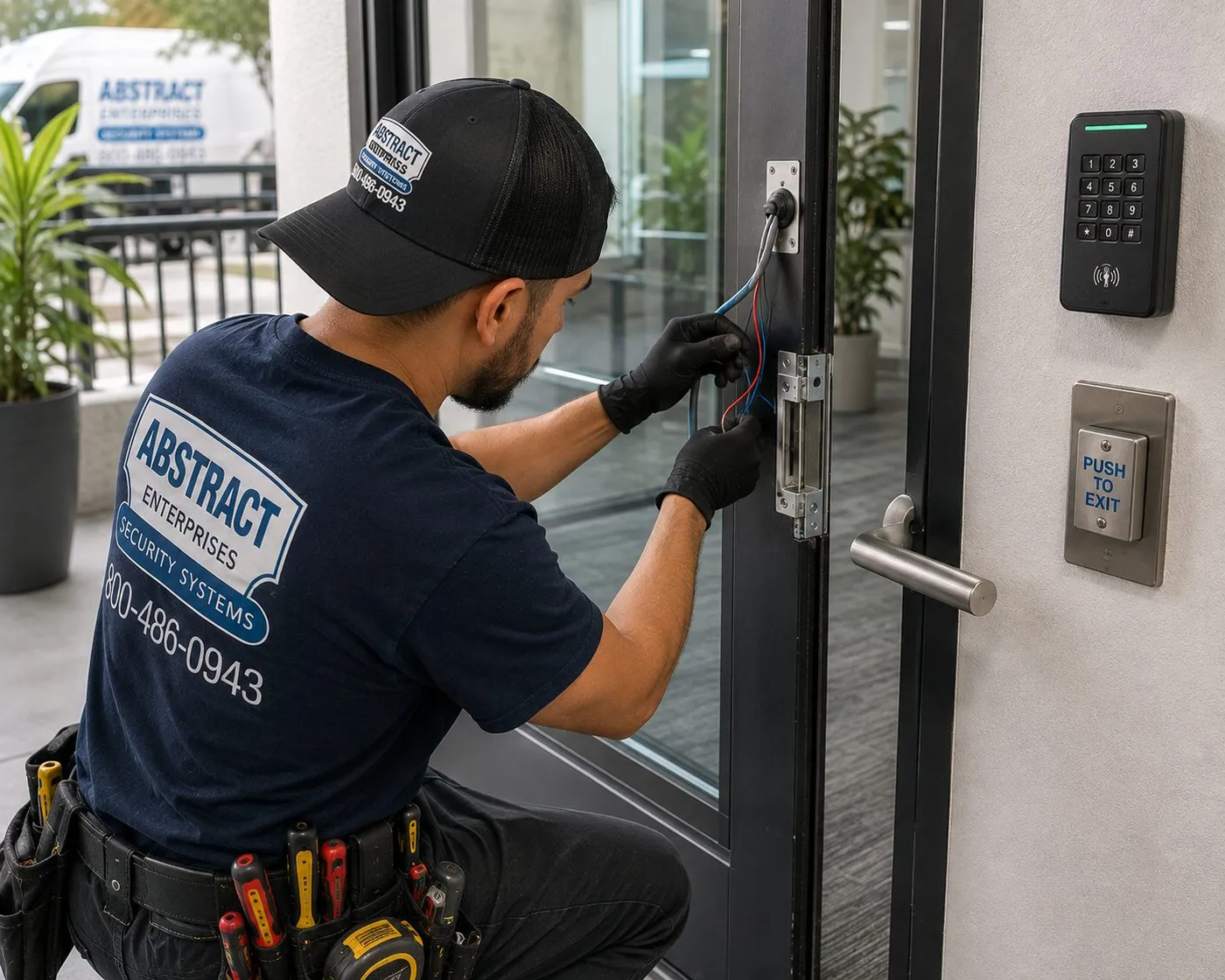
A kneeling AESS technician feeds red and blue conductors into an electric strike on a dark-framed glass door, with a backlit keypad and a stainless push-to-exit plate on the wall beside it.
Get a Free Smart Lock Quote
Tell us the door, the building and whether you rent or own — we call back the same business day
✅
Request Sent!
We'll call you back the same business day.
25+
Years Experience
✓
Same-Day Estimates
100%
Licensed & Insured
4.7★
201 Google Reviews
Locked out of your own app, or planning a keyless door? Call (800) 486-0943 or use the 60-second form. A licensed installer reads every request and tells you, before anyone visits, whether your door and your building can take the lock you have in mind.
Your apartment door looked at in person before any price is set, and the price you are given is the price you pay
Lobby doors priced from the access-control figures already published on this site
NYS licence #12000287431 · insured · certificate of insurance sent to your managing agent on request
Why New York City Apartments Need Smart Lock Installation Done Properly
Most smart-lock advice is written for a house with one owner, one front door and nobody else holding a key. New York is the opposite. The typical front door here belongs to an apartment in a building of dozens or hundreds of units. Someone other than the occupant usually owns it. A managing agent, a superintendent or a co-op board has rules about who can change it, and state and city law say what must stay on it. The lobby door downstairs is a separate system run by the building, and the person who wants the smart lock may be a renter whose lease runs out in eleven months.
That is why so many keyless projects in the city go wrong in ways that have nothing to do with the lock itself. A tenant swaps the landlord's deadbolt for a keypad model and gets a letter from management. A landlord installs app-only entry and finds out the city now says tenants cannot be forced to use it to get into their own apartment. A shareholder goes keyless and then learns the proprietary lease requires the board to hold a working duplicate. A shop owner fits a slick touchscreen lock on a door that a fire inspector expects to open from the inside with a single, simple motion. Each of those is a rules problem first and a hardware problem second.
The rules are not obscure once you know where to look. New York's Multiple Dwelling Law, section 51-c, gives a tenant in a multiple dwelling the right to install and maintain a lock of their own on the unit's entrance door, in addition to the owner's lock, so long as it is no bigger than three inches in circumference and the tenant hands the landlord a duplicate key on request; a lease clause charging extra for that right is void. The city's Housing Maintenance Code, section 27-2043, puts the duty to provide the key lock on the owner, and in class A buildings that means a heavy-duty latch set and a heavy-duty deadbolt operable by key from outside and by thumb-turn inside, plus a chain door guard. HPD's fire-safety guidance says plainly that double-cylinder locks — the kind that need a key on the inside — are illegal on apartment doors.
Then there is the newer layer that applies directly to keyless entry. The Tenant Data Privacy Act, Local Law 63 of 2021, covers owners of multiple dwellings that use smart access systems: key fobs, cards, phone apps or biometrics. Among other things it bars an owner from requiring a tenant to use a smart access system to get into their own unit, requires express consent before collecting tenants' data, limits what may be collected, and requires authentication data to be destroyed within 90 days unless it is anonymised. It followed fights that played out in public. In 2019 tenants in a Hell's Kitchen building sued their landlord for a physical key after a Latch system went in; the case settled privately. The same year, tenants at Atlantic Plaza Towers, a 700-unit rent-stabilised complex in Brownsville, objected to state regulators over their owner's plan for facial-recognition entry.
The buildings themselves add the physical complications. A large share of the city's apartments sit in pre-war construction, where entrance doors are often heavy, steel-clad or fire-rated, and fitted with mortise locks set into a pocket inside the door rather than the bored cylindrical deadbolts that most consumer smart locks are designed around. Post-war towers swap that problem for concrete walls and long corridors that swallow Wi-Fi and Bluetooth. New condos often come with their own access platform already chosen by the developer. None of this rules out a smart lock; it decides which kind fits and how it is fitted.
New York City figures that shape a smart lock job
3.7 million: housing units in New York City in 2023, according to HPD's testimony on the New York City Housing and Vacancy Survey — overwhelmingly in multi-family buildings with shared entrances.
1.41 percent: the citywide net rental vacancy rate in the 2023 survey. Renters stay put, so the lock you add may need to come off cleanly years later.
About 1 million: apartments covered by rent stabilisation, per the same HPD testimony — tenancies where lock changes, keys and services are closely regulated.
54 percent: share of units in buildings constructed before 1947, per the Rent Guidelines Board's 2025 Housing Supply Report — the stock where mortise locks and heavy doors are common.
3 inches: the maximum circumference of a tenant-installed lock under Multiple Dwelling Law § 51-c, with a duplicate key owed to the landlord on request.
90 days: how long a building owner may keep smart-access authentication data under Local Law 63 of 2021 before it must be destroyed or anonymised.
Put together, those facts describe the job. A smart lock in New York has to respect a landlord's right to a key, a tenant's right not to be locked into an app, a fire code that wants one-motion exit, and a door that may be eighty years old. We install to all four, and we tell you up front when the lock you bought cannot meet one of them on your door.
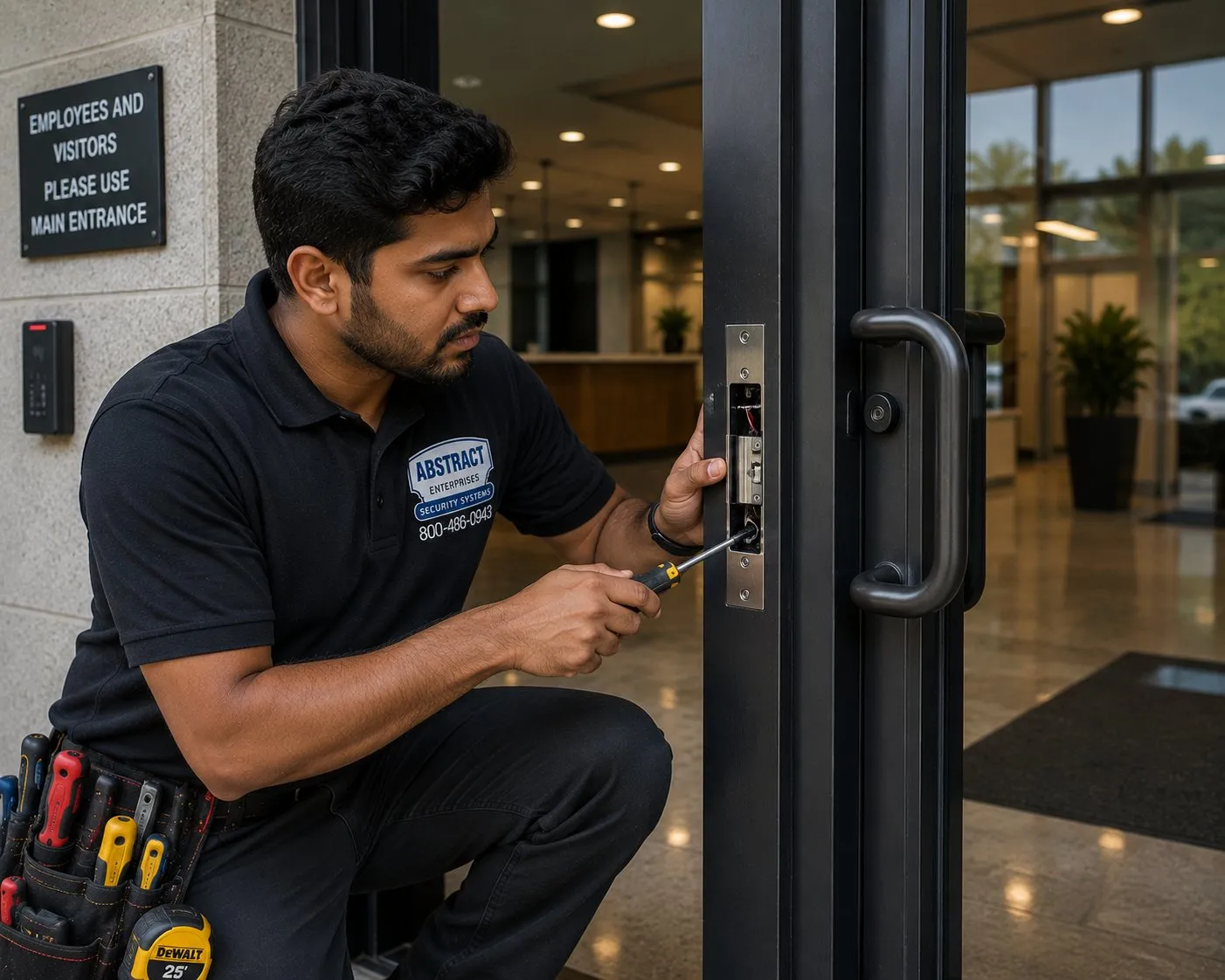
A technician in a black AESS polo kneels at a dark aluminium door frame, tightening an electric strike keeper with a screwdriver, a keypad reader mounted on the stone wall beside the door.
Repair Capture
Smart Lock Not Working in NYC?
A keypad that went dark, a bridge that dropped offline after a router swap, a motor that strains against a door that has swollen in the summer humidity, codes that stopped syncing, or a lobby strike that buzzes but no longer lets anyone in — those are service calls, not new installs. We book them into the next open 2-hour window where we can, and most alignment, power and pairing faults are fixed in one to two hours once a tech is at the door. For a lobby door that hums but won't release, a failed electric strike repair runs $295–$485 on our published door-buzzer pages. Call (800) 486-0943 and say it is a smart lock problem, or see our door buzzer repair service in NYC if the fault is on the building entrance.
What We Install
Smart Lock Installation Services in NYC
Every keyless job we take on in the five boroughs is one of these, or a combination. Each ends the same way: the door closes and latches on its own, the lock opens from inside with one simple motion, the people entitled to a key still have one, and every code, fob or phone credential has been tested in front of you.
Retrofit Smart Locks Over Your Existing Deadbolt
The renter's favourite. A retrofit unit replaces only the interior thumb-turn of a single-cylinder deadbolt; the outside of the door and the existing key stay exactly as they were, so the landlord's key still works and nothing visible changes in the hallway.
Full Smart Deadbolt Replacement
For owners and for landlords upgrading a unit: the bored deadbolt comes out and a keypad, fingerprint or app deadbolt goes in, with a keyed override retained wherever the building or the law expects a key path.
Pre-War Mortise Door Solutions
Mortise locks sit inside a pocket in the door and don't take a standard smart deadbolt. We assess whether a mortise-format smart lock, a cylinder-and-trim change or an added secondary lock is right, and we don't cut a heavy old door until that choice is agreed.
Second Lock Added by a Tenant
Where a renter wants their own smart lock alongside the landlord's, we fit it within the Multiple Dwelling Law limits, keep the owner's lock working, and make sure a duplicate key can be handed over as the law requires.
Lobby and Vestibule Keyless Entry
Keypad or fob reader with an electric strike on the building door, wired back to a power supply and controller. On our published access-control pages a single-door keypad or fob reader with electric strike runs $1,500–$2,500 installed at the Brooklyn base.
Small-Building Credential Setup
Codes, fobs and phone credentials enrolled per unit for two-family houses, brownstone rentals and walk-ups, with a written list of who holds what and a turnover routine so a departing tenant's access is removed on the right day.
Wi-Fi Bridges and Thread Border Routers
Getting the lock online from a door at the end of a concrete corridor: bridge placement, Matter-over-Thread pairing to a border router, and checking signal at the door rather than at the router.
Storefront and Office Door Locks
Keypad deadbolts, electric strikes and readers on shop and office doors, set so the door opens from inside without a key and staff codes can be cancelled the day someone leaves.
Smart Lock Repair, Re-Pairing and Alignment
Motors labouring against a misaligned strike, drained batteries, lost admin access after a phone change, bridges that dropped off a new router, and lobby strikes that no longer release.
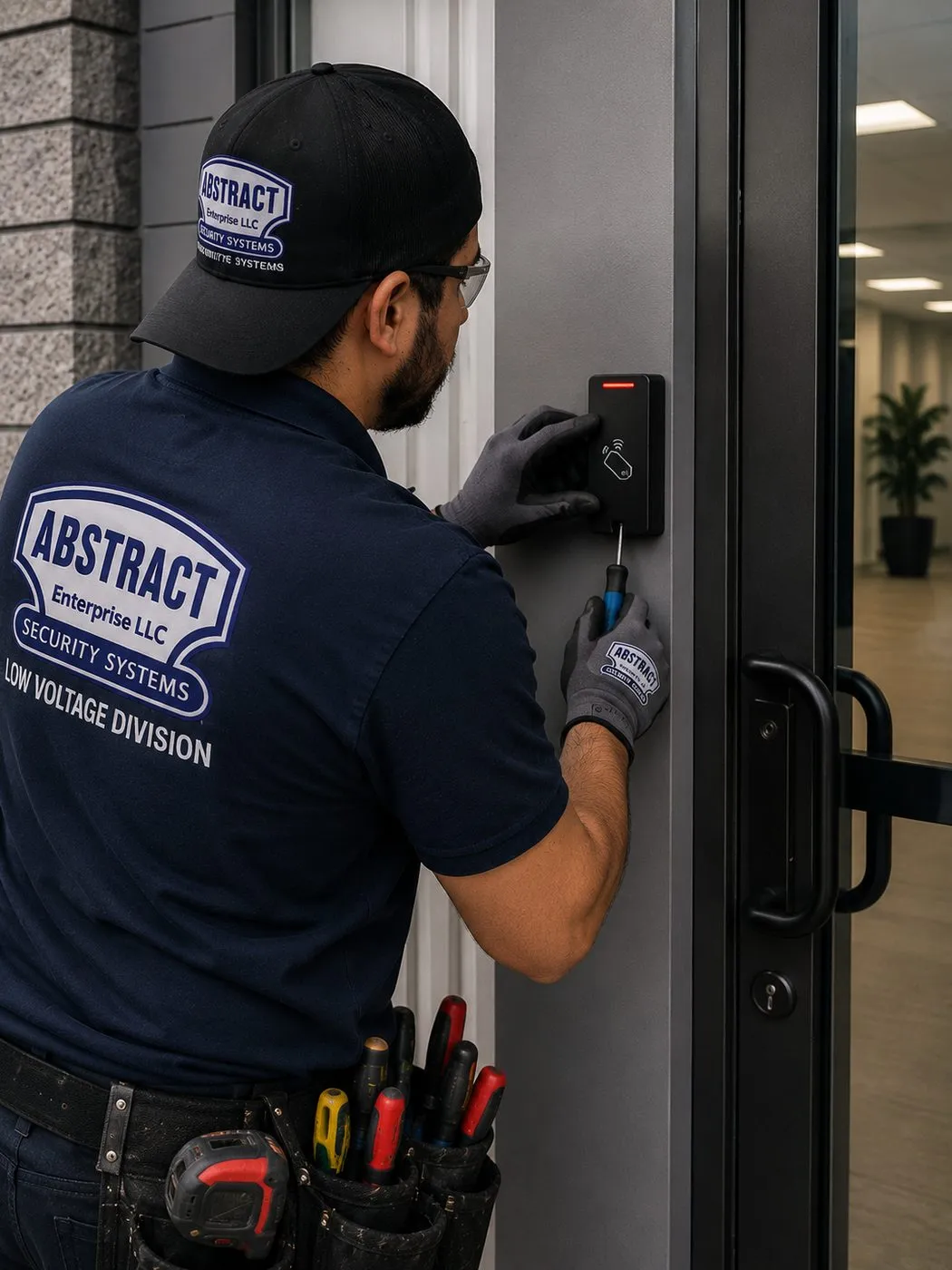
An AESS low-voltage technician in a cap and safety glasses holds a slim black proximity reader against a grey door frame and drives its mounting screw, a glass entrance door with a pull handle to his right.
Building Specialists
Smart Lock Installation for New York City's Architecture
The door you have decides the lock you can fit. These are the building types we see most across the five boroughs and what each means for a keyless install.
Pre-War Elevator Buildings
Heavy entrance doors, often steel-clad or fire-rated, with mortise locks, deep backsets and decades of paint on the frame. Smart options exist, but they are chosen around the mortise pocket, and any change to a rated door has to keep it rated and self-closing.
Walk-Up Tenements
Older five- and six-storey walk-ups with apartment doors that have been re-drilled several times over the decades. We check what is left of the door edge and the frame before promising a deadbolt will sit cleanly, and we plan around a building entrance that may still be a plain key or a buzzer.
Brownstones and Row-House Rentals
An owner on the parlour floor and tenants above, a shared stoop door and individual unit doors. This is where small-landlord credential management pays off: one system for the street door, separate codes per unit, and a clean way to retire a code at turnover.
Post-War Co-op Towers
Uniform metal doors and frames, concrete walls, and a board with house rules and a managing agent who wants paperwork before any contractor arrives. Signal through concrete is the main technical question; the proprietary lease's duplicate-key clause is the main rules question.
New Condominiums
Often delivered with a developer-chosen access platform on the lobby, amenity and sometimes unit doors. Before adding anything to a unit door we find out what the building's system already does, so you don't end up with two apps for one door.
Two- and Three-Family Houses
Common in Queens, Brooklyn, the Bronx and Staten Island: an owner-occupied unit plus one or two rentals. Each unit door, the shared entrance and sometimes a basement door all need their own credentials, and the owner wants to manage them from one phone.
Rent-Stabilised Buildings
Tenancies with long histories and regulated services. An owner modernising entry here works within the Tenant Data Privacy Act's consent and key-alternative rules and with the state housing regulator's processes, not just the hardware catalogue.
Mixed-Use Buildings Over Shops
A storefront at street level, apartments above and a separate residential door beside the shop. We keep the commercial and residential credentials apart so a shop employee's code never opens the residents' hallway.
Door and lock specifics we check on every New York job
Mortise or cylindrical? A bored cylindrical deadbolt sits in a round hole through the face of the door with a short latch into the edge. A mortise lock is a rectangular box sunk into a pocket cut into the edge of the door, with the cylinder screwed into it from outside. Most consumer smart deadbolts and most retrofit units are designed for the first. On a mortise door the choices are a smart lock made in mortise format, keeping the mortise body and changing only the cylinder and trim where the products allow it, or adding a separate smart deadbolt where the door has room and the building permits it. A 2014 thread on the SmartThings community that is still being added to opens with a New Yorker's question — “I have metal Brownstone doors with mortise-type locks. Are there any smart locks for this type?” — and more than a decade of replies never settles on a simple drop-in answer. That matches what we see: mortise doors need a decision, not a default.
Steel-clad and kalamein doors. Many older apartment and stair doors are fire-rated slab doors with a gypsum core, sometimes clad in steel — the type the trade calls kalamein. Fire-safety writing notes that older examples sometimes had an asbestos-cement core and that many are still in buildings put up before 1980. We don't core or rout an older rated door blind. Where a lock change needs new holes in a door that might be original, we stop, tell you, and work with the building on whether the door can be prepared or whether a surface-applied or cylinder-swap approach is the safer route.
Door thickness and backset. Heavy pre-war doors are often thicker than the range a consumer lock's tailpiece is built for, and the backset — the distance from the door edge to the centre of the lock — may not match. We measure both before you buy, or before we open the box if you already have.
Self-closing hardware. City law requires doors opening onto interior corridors and stairs in residential buildings to be self-closing, and HPD can write a class C immediately hazardous violation when they aren't maintained. A smart lock that drags, or a motor-driven bolt that can't throw because the door no longer pulls fully shut, turns into a self-closing problem. We adjust the strike and closer so the door latches on its own before we call the job finished.
One-motion exit from inside. Every lock we fit on a dwelling-unit door opens from the inside without a key, a code or a phone. HPD says double-cylinder locks are illegal on apartment doors. Keypad models with a keyed or coded inside are not something we install on a residential entrance.
Most building owners who modernise the unit doors also pair the job with the street door. See our NYC door buzzer installation service if the entrance still runs on an older buzzer and strike.
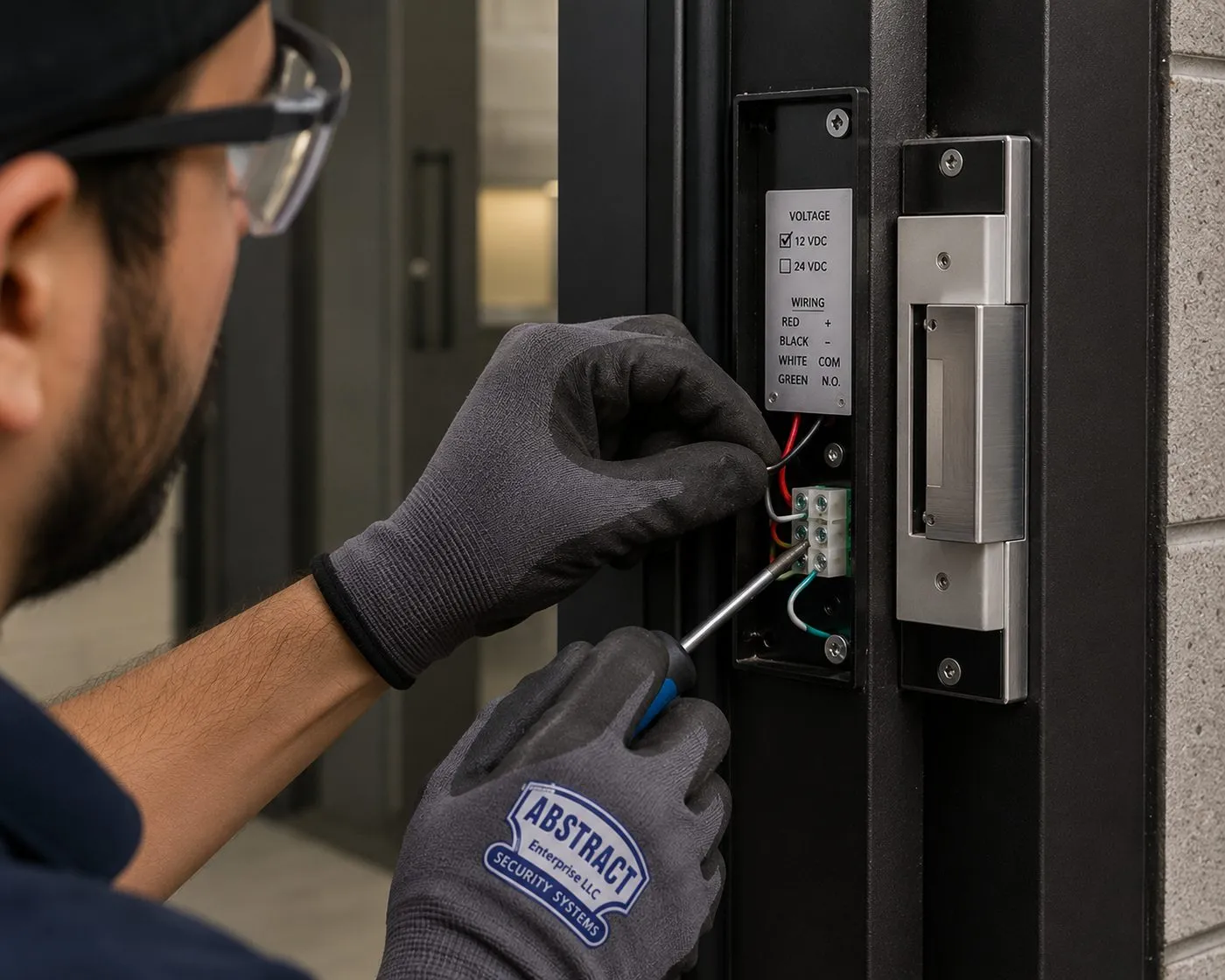
Close-up of a technician's gloved hands landing red, black, white and green conductors on a terminal block inside a black metal frame, beside a stainless electric strike and a 12/24 VDC wiring label.
Commercial Smart Locks
Business Smart Lock Installation in NYC
New York's small businesses mostly operate from narrow storefronts on commercial strips, often under apartments and behind a roll-down gate. The keyless question for a shop is simple to state: how do several people open the door at different times without a ring of copied keys, and how do you stop a former employee getting in? The answer is usually a keypad deadbolt or a reader and electric strike, chosen for the door and the hours. These are corridors the city's Department of Small Business Services lists as business improvement districts, and the kind of door each tends to have.
Fordham Road, the Bronx
A Bronx shopping street with its own business improvement district. Typical calls here involve aluminium storefront doors, high staff turnover in retail, and early opening shifts make cancellable staff codes the practical choice.
125th Street, Manhattan
Harlem's BID-managed corridor, where many buildings have shops at street level and offices or apartments above. Separate credentials for the shop door and the upstairs residential or office door keep the two groups of users apart.
Fulton Mall, Downtown Brooklyn
The Fulton Mall Improvement Association's district in Downtown Brooklyn. On busy shop doors like these, hardware duty rating and a strike that won't wear out of alignment matter more than app features.
Steinway Street, Astoria
Astoria's BID-managed shopping street. Restaurant, salon and small-shop owners on strips like this usually want a keypad that the closing manager can use and a log of who opened and when.
Downtown Jamaica, Queens
The Downtown Jamaica Partnership's district. In mixed-use buildings like the ones here, a typical request is a reader on a second-floor office door at the top of a shared stair.
Forest Avenue, Staten Island
Staten Island's Forest Avenue BID. Storefronts and small offices with a rear service door raise the back-door question we answer on every commercial walkthrough.
Pitkin Avenue in Brownsville and 86th Street in Bay Ridge, both also on the city's BID list, bring the same storefront pattern to their own neighbourhoods.
Compliance callouts for business doors
Free egress from inside. Exit doors must open from the egress side without a key or special knowledge. A keypad on the outside is fine; a keypad or key on the inside of a public exit is not. Electrified locks have to release for exit, which is why many of our installs include a push-to-exit button or motion request-to-exit sensor.
Fail-safe versus fail-secure. An electric strike or magnetic lock either unlocks or stays locked when power fails. The choice depends on whether the door is part of a required exit route and on what the building and the fire code expect; we specify it per door, not per catalogue.
Roll-down gates. A 2009 city law required many storefront gates to be at least 70 percent transparent by July 1, 2026. In July 2026 the City Council unanimously passed Int. 910 repealing that deadline so a compliant gate is needed only when a gate is replaced for other reasons, with Department of Buildings permit rules unchanged. Your door lock and your gate are separate decisions, but we plan them together so the keypad is reachable and protected.
Mixed-use buildings. Where a shop shares an entrance with apartments above, the residential side carries the Housing Maintenance Code and, if smart access is used for tenants, the Tenant Data Privacy Act.
For larger commercial sites — multiple doors, schedules, elevator readers — the work moves into full access control. Our commercial security camera installation in NYC is often paired with it so a door event and the camera view sit on the same timeline.
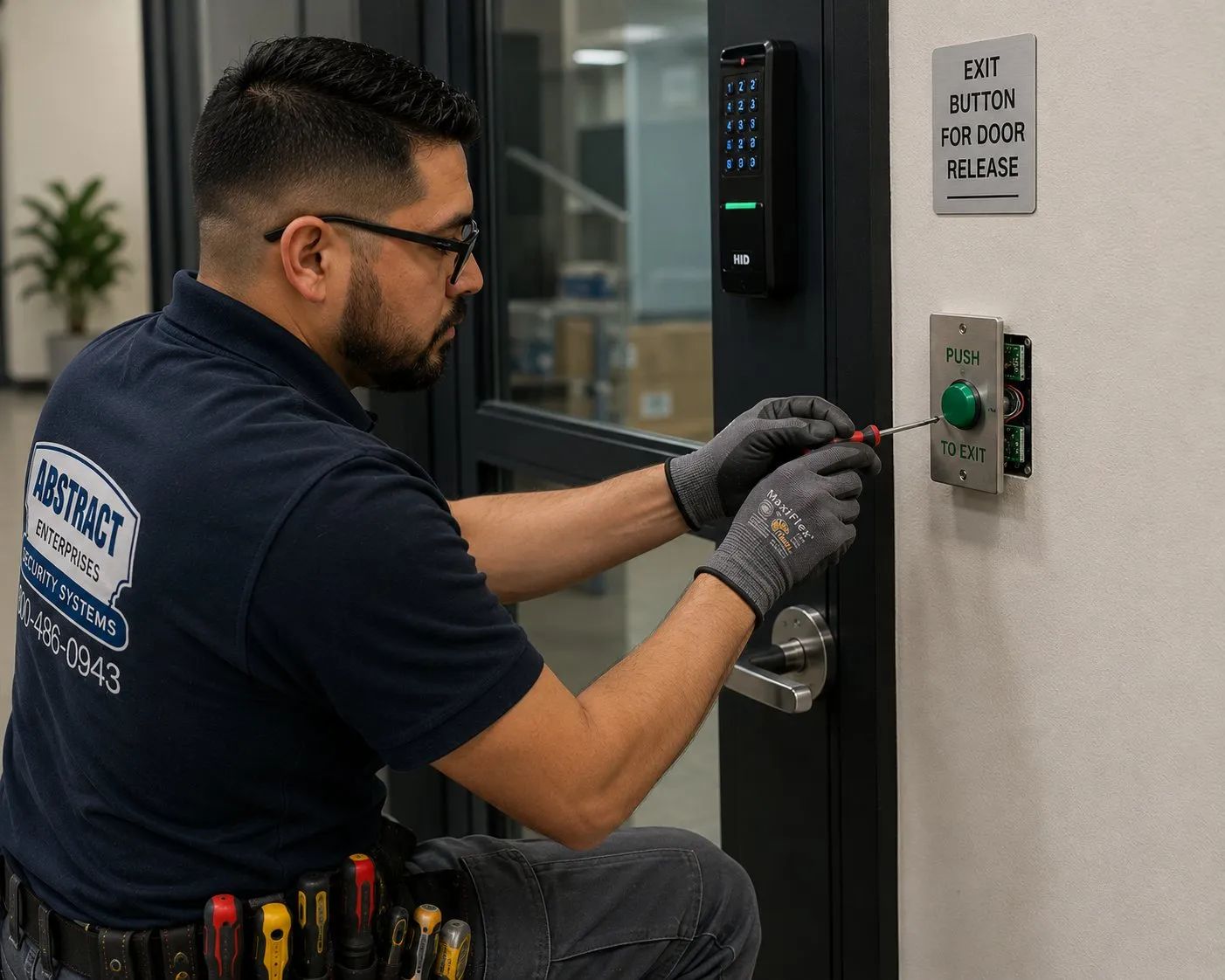
An AESS technician in glasses and grey gloves works on a stainless push-to-exit station with a green button, beneath a sign reading “Exit button for door release”, with a keypad reader on the glass door frame behind him.
Your Questions Answered
Smart Lock Installation in NYC: Questions Answered
These are the questions New Yorkers ask before a smart lock goes on a door, grouped by who is asking: renters, co-op and condo owners, anyone dealing with fire-safety rules and old doors, building owners managing several units, and shop owners. Cost, scheduling and warranty questions are in the FAQ further down. None of this is legal advice; where a statute or city rule is mentioned, we name it so you can read it yourself or ask your own lawyer.
Renting in New York
Can a New York City renter put a smart lock on the apartment door without asking the landlord?
Partly. Multiple Dwelling Law § 51-c gives a tenant in a multiple dwelling the right to install and maintain their own lock on the apartment's entrance door in addition to the lock the owner provides. The lock can be no more than three inches in circumference, and the tenant must give the landlord or the landlord's agent a duplicate key when asked. Any lease clause that charges extra rent or a fee for exercising that right is void. The section does not cover apartments in a municipal housing authority building, or units used as a hotel, motel or dormitory.
What the law describes is an additional lock, not a replacement. Taking out the owner's deadbolt and putting a keypad model in its place is a different act, and most leases treat it as an alteration that needs consent. The two routes that stay comfortably inside a tenant's rights are a retrofit unit that replaces only the inside thumb-turn of the existing deadbolt — the outside of the door and the landlord's key are unchanged — or a separate, modest secondary lock where the door has room for one. We will tell you which applies to your door before we start, and we keep the job reversible.
Our honest advice is still to send management a short note. It costs nothing, it heads off a letter from the managing agent, and it gives you a paper trail if anyone later says the lock was not allowed.
Does the landlord get a code or a key to a tenant-installed smart lock?
The law speaks of a duplicate key, so the safe assumption is that the owner is entitled to a working mechanical means of opening the lock you add, on request. With a retrofit unit that sits over the existing deadbolt, that is already taken care of: the landlord's key opens the door exactly as before. With a separate keypad deadbolt, choose a model with a keyed cylinder so a physical key can be handed over. A temporary PIN code is a courtesy you can also offer, but it is not a substitute for what the statute describes.
The reason buildings insist is emergency access — a burst pipe, a fire, a medical emergency when you are away. A New York court ordered a Manhattan co-op shareholder in the 1990s to surrender a duplicate key without conditions after she tried to limit when the building could use it, according to the Cooperator's account of 111 Tenants Corp. v. Stromberg. Plan for the key, not around it.
Can my landlord make a phone app the only way into my apartment?
Not under the Tenant Data Privacy Act. Local Law 63 of 2021 applies to owners of multiple dwellings that use smart access systems — key fobs, cards, apps or biometric readers — and HPD's summary says an owner may not require use of a smart access system to gain entry to the tenant's own dwelling unit. The law also requires express consent, in writing or through the app, before the owner collects tenants' reference data, limits what may be collected, bars selling it, and says the data cannot be used to harass or evict.
In practice that means a unit door that a landlord converts to keyless still needs a non-smart way in for a tenant who wants one, usually a key. The 2019 Hell's Kitchen case, where tenants sued for a physical key after app-based locks went in and an elderly resident couldn't operate the new lock, is the situation the rule was written to prevent.
What happens to my smart lock when I move out of a rental?
If you installed it, it is generally yours to take, and the door should go back to the way you found it. That is the strongest argument for a retrofit unit: we remove it, refit the original thumb-turn, and the door looks untouched. A separate secondary lock leaves holes, so either agree with the landlord that it stays, or budget for the door to be patched and the lock removed.
Before you hand back the keys, delete the lock from your account, remove any guest codes and factory-reset it, so the next tenant isn't living behind a lock that still answers to your phone. If the landlord is keeping it, transfer ownership in the app rather than leaving your account attached.
Co-op and condo boards
Does a co-op board or condo board have to approve a smart lock on my unit door?
It depends on the building's rules and on what is being changed. Co-op and condo alteration agreements are written mainly for renovation work — walls, plumbing, electrical, windows — and the Cooperator notes that the line for small cosmetic jobs varies from building to building. The unit entrance door is a particular case, though: in many buildings its exterior face, its fire rating and its closer are treated as building elements, and the hallway side is common space.
A retrofit lock that changes nothing on the corridor side is the least likely to need approval. A full deadbolt swap, a new hole in the door, a change of hardware finish visible from the hall, or anything that touches a fire-rated door is more likely to. Ask the managing agent one specific question — “Does replacing the deadbolt on my unit door need board approval or an alteration agreement?” — and send us the answer. Boards also routinely ask for proof that the contractor is licensed and insured; we send the certificate of insurance to the agent before the visit.
Can a co-op board insist on a working key when the shareholder goes keyless?
Usually yes. Proprietary leases commonly give the corporation the right to enter at reasonable times on notice and at any time in an emergency, and require a shareholder who changes a lock to deliver a duplicate of the new key. That is on top of the Multiple Dwelling Law's duplicate-key provision. Keyless entry does not change the obligation; it changes how you meet it.
The cleanest way is a smart deadbolt with a keyed override and a key lodged with management, or a retrofit unit that leaves the building's key working. A code given to the superintendent can be added as well, but keep in mind that codes can be changed or deleted from a phone without anyone noticing, which is exactly why boards prefer a mechanical key they can rely on.
Fire rules and old doors
Is a keypad deadbolt that needs a key on the inside legal on a New York apartment door?
No. HPD's fire-safety guidance says it is illegal to install double-cylinder locks on apartment doors because they can trap people inside during a fire, and that apartment doors should open from inside without a key. Some keypad and decorative models are sold with a key cylinder on both faces or a code required to exit; neither belongs on a New York dwelling-unit entrance.
The model-code commentary that most American building codes follow allows a dwelling-unit door to have a second releasing motion for a deadbolt, night latch or chain, provided it opens from the inside without a key or tool; NYC's own code and the authority having jurisdiction have the final word on any specific door. Our rule on residential doors is simple: thumb-turn or lever inside, nothing that needs a code, a phone or a key to get out.
Will a smart lock interfere with the self-closing door the city requires?
It can, if it is fitted carelessly. Local Law 111 of 2018 requires doors that open onto interior corridors or stairs in residential occupancies to be self-closing, and HPD treats an unmaintained self-closing door as a class C immediately hazardous violation with 21 days to correct. HPD's fire-safety page puts it as buildings with three or more apartments needing self-closing doors and residents not tampering with them.
A motorised smart deadbolt does not close a door, and it cannot throw its bolt if the door hasn't fully latched. If the strike is slightly out of line, the closer gets blamed for a door that won't lock, and someone props it or loosens the closer. We set the strike so the latch catches on the closer's swing alone, check that the bolt throws without the door being pushed, and leave the closer as we found it unless you ask us to adjust it. On a new install that is part of the job; on an existing problem it is a short service call.
Can a smart lock go on a steel-clad fire door in a pre-war building?
Often, but carefully. Many older apartment and stair doors are fire-rated assemblies — some with a gypsum core under wood or steel skins, the type known as kalamein — and fire-safety writing notes that some older ones had an asbestos-cement core. Cutting a new bore or enlarging an existing one changes the door, and on a rated door that is not a casual decision.
Our approach on these doors is to use what is already there. A retrofit unit on an existing single-cylinder deadbolt needs no new holes. A smart lock that fits the existing mortise pocket or uses the existing bore is next best. Where a lock you want would need new preparation on a rated or possibly original door, we stop, explain the options and, in a co-op or condo, let the building weigh in before anything is drilled.
Can a mortise lock on a co-op unit door go smart when the hallway side has to match the building?
Yes, and in many pre-war co-ops that matching requirement is the real design constraint. Some buildings that have kept uniform corridor hardware — the same lever or knob, escutcheon and finish on every unit door — expect the hallway face to stay that way, while what happens inside the apartment is the shareholder's business. That points toward solutions that leave the outside alone: a retrofit unit on a separate single-cylinder deadbolt where the door has one, or a smart conversion that changes only the inside trim of the lock.
Where a shareholder wants a keypad on the hallway side, we bring the managing agent a photo of the proposed trim in the building's finish and the lock's specification before anything is ordered. Mortise-format smart locks replace the lock body in the existing pocket, which avoids new holes in a heavy door, but they do change what the corridor sees. We measure the pocket, the backset and the door thickness first, and we would rather tell you the board is likely to say no than install something that has to come off.
Can the Wi-Fi bridge or hub go in the public hallway outside my apartment?
Usually not, and it rarely needs to. The corridor, its outlets and its ceiling belong to the building, not to the unit, so plugging your own equipment into a hallway outlet or fixing anything to a corridor wall is the kind of thing house rules and managing agents object to, and a device left in a common area can simply walk away. Bridges and border routers belong inside the apartment, as close to the entrance as an outlet allows.
That is normally close enough. August, for example, recommends keeping its Connect bridge within 10 to 15 feet of the lock with full Wi-Fi bars where the bridge sits, which in most apartments means a foyer, coat-closet or hall outlet on your side of the door. If the only nearby outlet is in the corridor, the answer is a lock with Wi-Fi built in, a mesh node inside the unit, or a Matter-over-Thread lock paired to a border router in the front room — not a box in the hallway.
Building owners and small landlords
Should the lobby door and the apartment doors be on the same keyless system?
Sometimes, but not by default. The building entrance is the owner's responsibility and, in class A buildings of eight or more units, usually tied to an intercom with remote door release under the Multiple Dwelling Law. The unit doors are where tenants' rights and the Tenant Data Privacy Act bite hardest. One platform for both is convenient for a small owner, but it also means every tenant's unit access sits in the same database as their lobby entries, with the consent, data-minimisation and 90-day retention rules attached.
For two- to six-family buildings, a common and sensible split is a keypad or fob reader with an electric strike on the street door, run by the owner, and individual unit locks that remain keyed, with smart features only where the tenant opts in. Larger buildings with a managing agent usually want the lobby, package room and amenity doors on one access-control platform and unit doors left out of it.
As a small landlord, how do I cut off a former tenant's code without breaking the lockout law?
Timing is everything. New York City's unlawful-eviction law, Administrative Code § 26-521, makes it unlawful to remove, plug or disable the lock on the entrance door, or to change it without giving the occupant a key, for anyone who has lawfully occupied the unit for thirty consecutive days or more, unless there is a court warrant or a government vacate order. Section 26-523 makes a violation a class A misdemeanour with civil penalties of $1,000 to $10,000 per violation. Deleting a sitting occupant's code is functionally the same as changing the lock on them.
So deactivate a credential only after possession has actually and lawfully passed back to you: keys returned, the unit surrendered, or the marshal's eviction carried out. Keep a written log of who holds which code or fob and when each was issued and removed. We set up the system so that removing one tenant's access is one action that doesn't affect anyone else, and we can do the re-keying or re-enrolment on the day you take the unit back.
What does the Tenant Data Privacy Act change for an owner adding fob or app entry?
It turns a hardware purchase into a policy decision. HPD's summary of Local Law 63 of 2021 lists the main duties: get express consent before collecting reference data; collect only the listed categories (name, unit and doors, contact preference, biometric data if used, device identifiers, credentials, lease dates, and time and method of access, the last solely for security); destroy authentication data within 90 days unless anonymised; don't sell, lease or disclose it except as the law requires or with consent; keep the system secure; don't track people outside the building; and don't use the data to harass or evict. Tenants get a private right of action over unlawful data sales.
When we install a system for an owner, we pick settings that make those duties easier: log retention set to the shortest period the platform allows, no location tracking, credentials issued per unit rather than per guessable code, and a non-smart way into each apartment for any tenant who doesn't consent. The legal responsibility stays with the owner, so have your own counsel review the consent form you give tenants.
Shops and storefronts
What smart lock works on a storefront door behind a roll-down gate?
Narrow aluminium storefront doors rarely have room for a residential smart deadbolt; their stiles are thin and the locks are usually narrow-backset deadlocks. The practical keyless options are a keypad or reader on the wall or frame driving an electric strike, or a keyless narrow-stile lock made for that door type. Either way, the door has to open from inside without a key when the shop is occupied, and the keypad has to be reachable once the gate is up but protected when it is down.
The gate itself is its own question. A 2009 city law set July 1, 2026 as the deadline for many storefront gates to be at least 70 percent transparent; in July 2026 the City Council unanimously passed Int. 910 to repeal that deadline so a compliant gate is needed only when you replace the gate for other reasons, with Department of Buildings permit rules unchanged. If a gate replacement is on your list anyway, tell us at the walkthrough so the reader position and cable route suit the new gate. On our published access-control pages, a single-door keypad or fob reader with electric strike runs $1,500–$2,500 installed at the Brooklyn base.
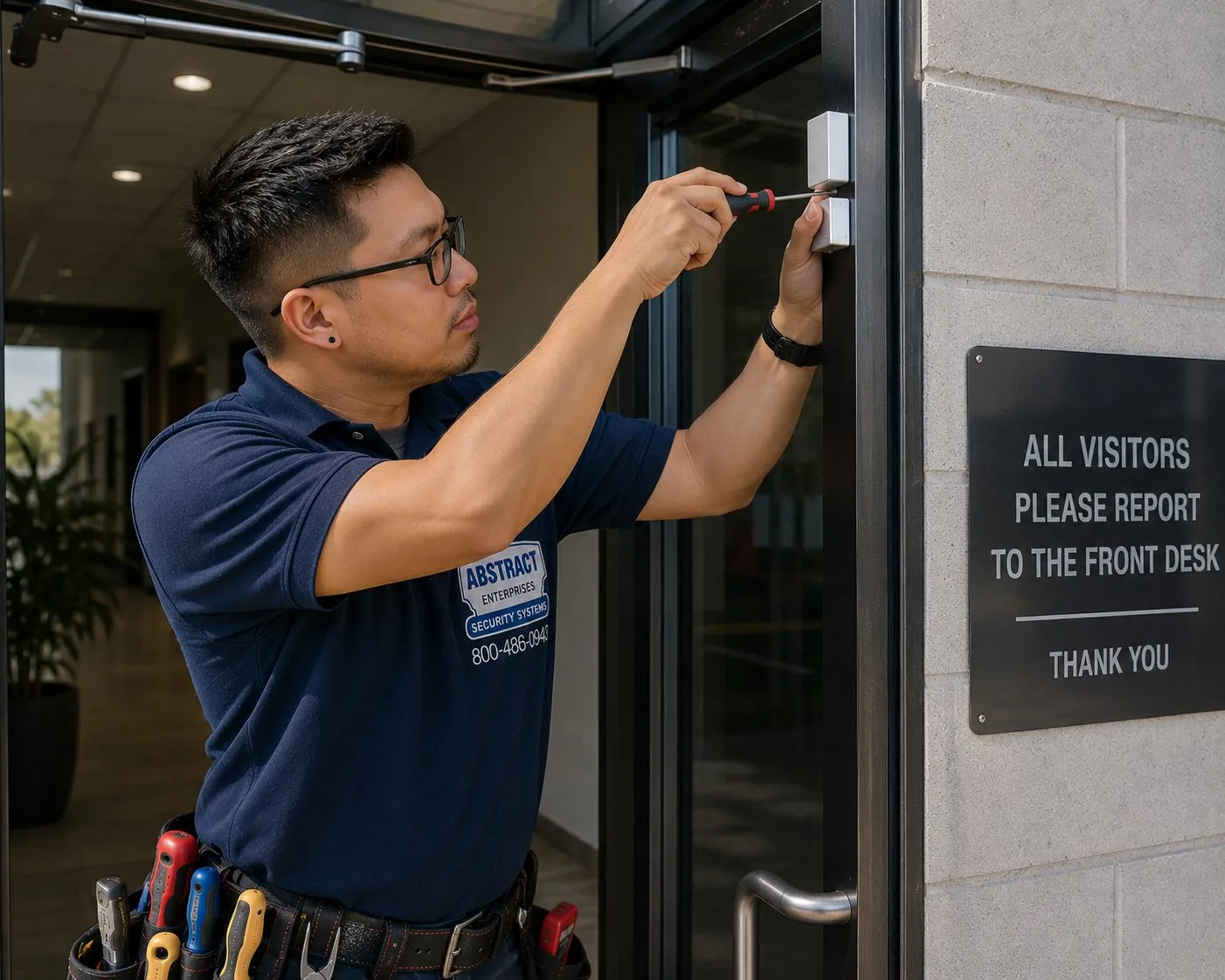
A technician in a navy AESS polo reaches up to screw a two-part door position contact onto the top of a glass entrance door; a sign on the block wall beside him asks visitors to report to the front desk.
Equipment
Types of Smart Locks We Install
We install the lock that suits the door and the tenancy, not the one with the loudest advertising. You can buy your own and have us fit it, or ask us to recommend one at the walkthrough. These are the categories we work with in New York apartments, buildings and shops.
Retrofit Interior Units
Fit over an existing single-cylinder deadbolt on the inside of the door only. August's own page says its locks attach to your existing deadbolt “leaving the outside untouched” and work only with single-cylinder deadbolts. Best for renters and for doors you don't want to drill.
Keypad Smart Deadbolts
Replace the whole deadbolt with a keypad outside and a thumb-turn inside, usually with a keyed override. For owners, for landlords turning over a unit, and for second doors in two-family houses.
Fingerprint and Touchscreen Deadbolts
Same format with a fingerprint reader or touchscreen. Good where codes get shared too freely between household members, and for anyone who would rather not carry a phone to the door.
Mortise-Format Smart Locks
Lock bodies built to fit a mortise pocket, with lever trim and keypad or reader faces. The usual answer for owners upgrading heavy pre-war doors without replacing them.
Matter-over-Thread Locks
Locks that join a Thread mesh through a border router and can be shared across several smart-home ecosystems; one manufacturer's guide says its lock can join up to five at once. Useful in concrete buildings where Wi-Fi at the door is weak.
Wi-Fi Locks and Bridges
Locks with Wi-Fi built in, or Bluetooth locks with a plug-in bridge near the door, for remote access, notifications and voice-assistant control.
Keypads and Fob Readers With Electric Strikes
For lobby, vestibule, storefront and office doors. The reader sits on the wall or frame, the strike in the frame releases the latch, and a power supply and controller sit somewhere secure.
Request-to-Exit Buttons and Sensors
Push-to-exit buttons and motion sensors that release an electrified door from inside, so egress never depends on a code or a card.
Video Intercom Entry Panels
Lobby panels that combine a camera, keypad and call buttons with door release, for buildings replacing an old buzzer as part of a keyless upgrade.
National brands versus a local installer. Smart-lock makers and big-box retailers sell a box and an app. What they don't sell is the judgement about whether your particular door can take it, whether your lease or your co-op's proprietary lease allows it, and whether the result still meets the city's rules on self-closing doors and keyless exit. A locally licensed installer who has worked on mortise doors, concrete corridors and rent-stabilised buildings can tell you that before the box is opened, and answers to you afterwards.
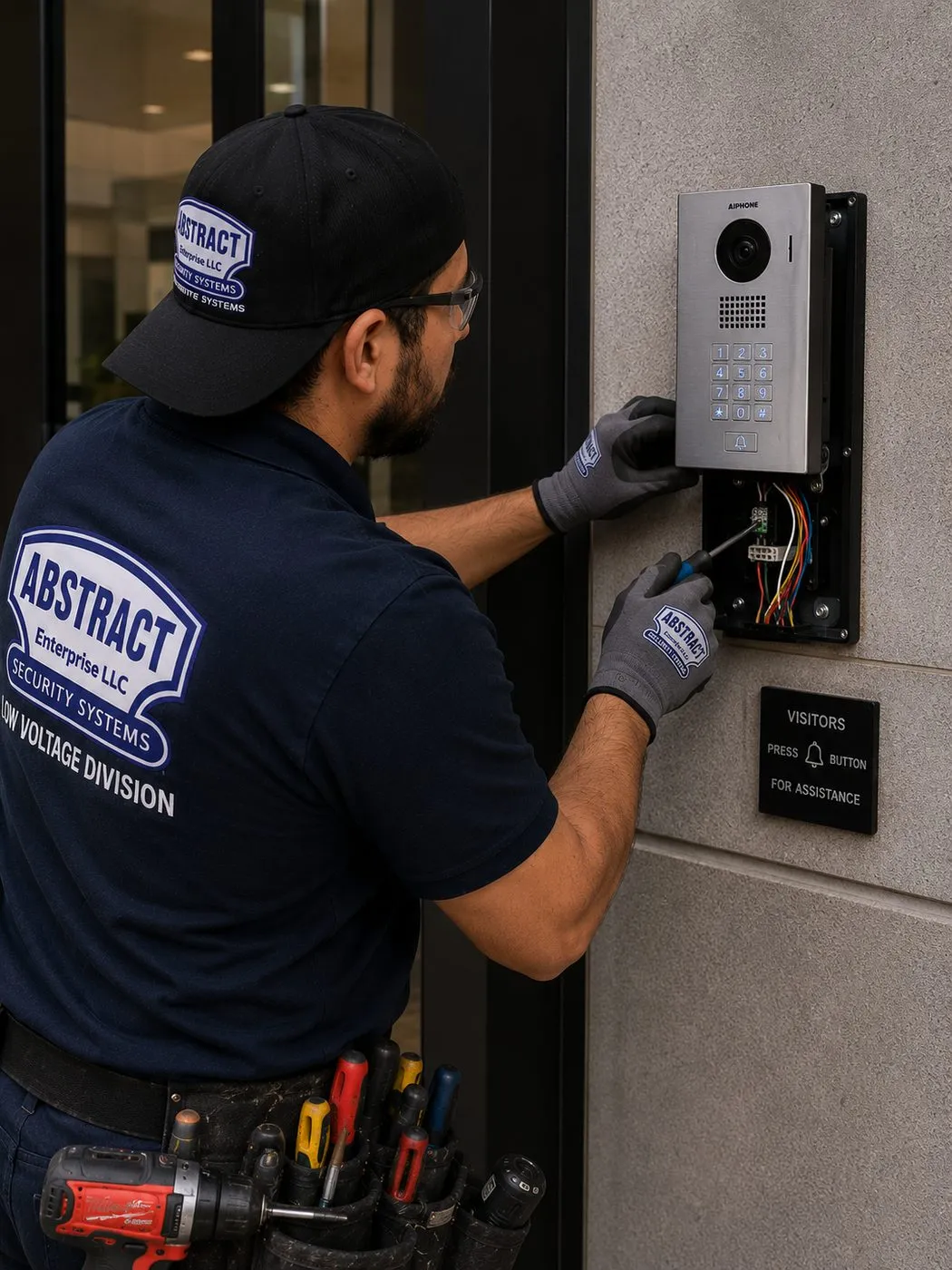
An AESS low-voltage technician in a cap and safety glasses lands conductors in the open back box beneath a stainless Aiphone video entry panel with a numeric keypad, a “Visitors press button for assistance” sign below.
AI Overview Reality Check
What AI Gets Wrong About Smart Lock Installation in NYC
A note on method: Google's AI Overview could not be viewed from the tools used to research this page, so nothing below is presented as its exact words. Each heading is a claim that cost sites, manufacturers or general guides publish, and that answer engines tend to repeat. Under each is what changes when the door is in a New York apartment building.
“Smart lock installation costs about $250 to $400”
That range is Fixr's national figure, updated in January 2025, with an average of $300 for a Wi-Fi lock and one accessory and handyman labour at $50 to $100 an hour. As a national average for a bored deadbolt on a wood door in a house, it is a fair starting point.
It says nothing about a mortise lock in an eighty-year-old steel door, a fire-rated door that shouldn't be drilled, a managing agent who wants a certificate of insurance before you arrive, or a fifth-floor walk-up. Those are the conditions that decide the real price in this city.
That is why we quote apartment-door installs flat after a free walkthrough rather than repeating a national range, and why lobby and storefront work is priced from the access-control figures already published on this site.
“Any homeowner can install a smart lock in 30 minutes with a screwdriver”
Product testers do report that a retrofit or a like-for-like deadbolt swap takes little more than a Phillips screwdriver and half an hour. On the right door, that is true, and we tell renters with a standard single-cylinder deadbolt that they may not need us at all.
Most New Yorkers are not homeowners, though, and many doors are not the right door. A tenant who swaps the landlord's lock is doing something different from a homeowner doing the same thing. A mortise door won't accept a bored deadbolt without new preparation, and a heavy door may be thicker than the tailpiece allows.
The screwdriver is the easy part. Knowing whether you are allowed to make the change, and whether your door can take it without being cut, is the part a quick DIY video doesn't cover.
“Renters can't install smart locks”
General renter guides often say a tenant needs the landlord's permission for any lock change and leave it there. In New York that is incomplete. Multiple Dwelling Law § 51-c gives tenants in multiple dwellings the right to add their own lock, within a three-inch circumference limit, provided they give the landlord a duplicate key on request.
The right is to an additional lock, not to remove the owner's. That distinction is why a retrofit unit over the landlord's existing deadbolt, which leaves the outside and the key unchanged, is such a good fit for renters here.
The honest summary for a New York renter is: you can usually add keyless convenience; you usually shouldn't remove the owner's hardware; and the landlord keeps a way in.
“Smart locks fit any standard door”
Manufacturers' compatibility checkers assume a bored cylindrical deadbolt with a standard backset in a door of standard thickness. August's own page is explicit that its retrofit locks are compatible only with single-cylinder deadbolts and that some models need extra clearance.
A large part of New York's pre-war stock uses mortise locks, and a community thread that began with a New Yorker's question about smart locks for metal brownstone doors with mortise locks has run for more than a decade without a simple drop-in answer.
There are good smart options for mortise doors, but they are chosen per door. Measure first, buy second.
“Going fully keyless is more secure”
Removing the key removes one attack, picking, and adds others: dead batteries, lost phones, deleted admin accounts and cloud outages. That trade can be worth it in a house. In a New York apartment building it runs into rules.
Owners of multiple dwellings may not require tenants to use a smart access system to get into their own units under the Tenant Data Privacy Act, and co-op proprietary leases usually require a duplicate key to be held by the building. A fully keyless unit door can put a landlord or a shareholder on the wrong side of either.
The better design in this city is a smart lock with a mechanical override, a key lodged where the law or the lease expects one, and smart features layered on top.
“Matter makes every smart lock work with everything”
Matter is a real improvement: a lock certified for it can be shared across several ecosystems, and one manufacturer's guide says its lock can join up to five at once. But a Matter-over-Thread lock needs a Thread border router, and Yale's own setup guide says the router must be the same brand as the app you plan to use.
In a concrete building the border router also has to be close enough to the door to hold the Thread connection, which may mean a smart speaker or hub near the entrance rather than in the living room.
So before a Matter lock goes on your door, the question we ask is not which lock is newest but which app runs your home today and whether a compatible hub can live within reach of the entrance.
“A landlord can just change the code when a tenant leaves”
Property-management software makes deleting a credential a one-click job, and guides for landlords treat it as routine turnover. Mechanically it is. Legally, in New York City, the timing matters.
Administrative Code § 26-521 makes it unlawful to change or disable the entrance-door lock of an occupant of thirty days or more without supplying a key, outside a court warrant or vacate order; violations are a class A misdemeanour with civil penalties of $1,000 to $10,000 each. Deleting a code early is the digital version of changing the lock.
We set systems up so access can be removed in one step on the day possession lawfully returns, and we recommend a written log of every credential issued and removed.
A Smart Lock That Fits the Door, the Lease and the Law
Tell us the door, the building and whether you rent or own. We will tell you which lock fits, what the building needs from us, and the price.
Rental, co-op, condo, brownstone or storefront — give us the door and the building and a written answer comes back the same business day. Prefer to talk? Dial (800) 486-0943.
✅
We Got Your Request!
We'll call you back the same business day. If it's urgent, call us now at (800) 486-0943.
How It Works
Our Installation Process
Six steps, whether it is a retrofit on a renter's deadbolt in Astoria or a fob reader on a brownstone's street door in Bed-Stuy.
1. Photos and a phone triage
You send photos of both sides of the door and its edge, the lock you have or want, and whether you rent or own. We tell you which lock formats can fit and whether the building is likely to need anything from us.
2. Building paperwork
We send the certificate of insurance your managing agent asks for and confirm contractor hours, and for co-ops and condos we tell you exactly what to ask the board before the visit.
3. Free walkthrough and flat quote
At the door we measure thickness, backset and the lock pocket, check the closer and the signal, and give you a flat written price. Building-door work is priced from our published access-control figures.
4. Prepare the door
We correct the swing and strike so the door self-closes and latches on its own, and we only drill or cut where the door and the building allow it.
5. Install, pair and connect
The lock is fitted, the inside exit is checked for one-motion release without a key, and the bridge or Thread border router is placed so remote control works from mobile data.
6. Credentials, handover and key path
Codes, fobs and phones are enrolled and tested with you, admin access is set on two devices, and the duplicate key the landlord or board is entitled to is accounted for before we leave.
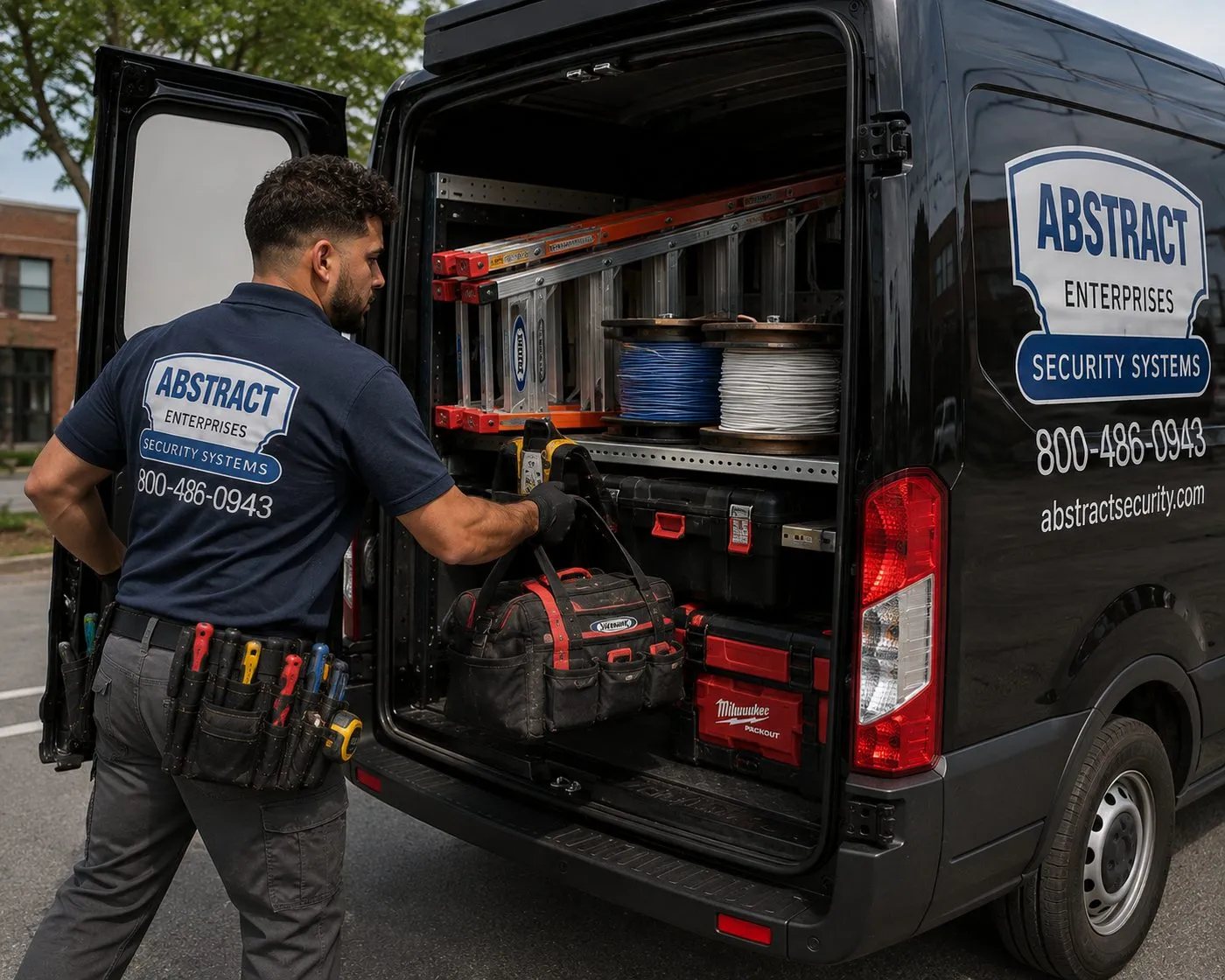
A technician lifts a red-and-black tool bag from the back of a black AESS van fitted with ladder racks, spools of blue and white cable and stacked tool cases, parked beside a brick building.
Coverage Area
Smart Lock Installation Near NYC's Landmarks
These six places tell the story of keyless entry in New York better than any product page: where the fights over smart access happened, and the kinds of buildings where doors are hardest to get right.
Atlantic Plaza Towers, Brownsville, Brooklyn
A 700-unit rent-stabilised complex of two buildings on Thomas S. Boyland Street and Rockaway Avenue, where tenants objected in 2019 to their owner's plan for facial-recognition entry. A reminder that entry systems in rental buildings are as much about tenants' rights as technology.
Hell's Kitchen, Manhattan
Where tenants in an apartment building sued their landlord in 2019 for a physical key after a Latch smart lock system went in, citing privacy and an elderly resident who couldn't use the new lock. The case settled privately.
Co-op City, the Bronx
A Mitchell-Lama cooperative of 15,372 apartments in 35 high-rise buildings and seven townhouse clusters — concrete construction, long corridors and a cooperative with its own procedures for anything done to a unit door.
Jackson Heights, Queens
Where the Queensboro Corporation built its Garden Apartments in 1917 and coined the term. Pre-war co-ops with heavy doors, older lock hardware and boards with house rules.
Park Slope Historic District, Brooklyn
Designated in 1973 and extended in 2016: brownstones and brick row houses, many divided into rentals with a shared stoop door and separate unit doors, often with original mortise hardware.
St. George, Staten Island
The North Shore neighbourhood around the ferry terminal, with older houses alongside mid-rise and high-rise apartment buildings — a mix of single-owner doors and building-managed entrances in a few blocks.
We also serve Harlem, Washington Heights, Inwood, the Upper West and Upper East Sides, Chelsea, the Lower East Side, Astoria, Sunnyside, Flushing, Forest Hills, Kew Gardens, Bay Ridge, Bushwick, Crown Heights, Flatbush, Sunset Park, Riverdale, Parkchester, Mott Haven, Tottenville and every neighbourhood between them, plus Nassau and Suffolk counties and the six Hudson Valley counties from Westchester to Ulster.
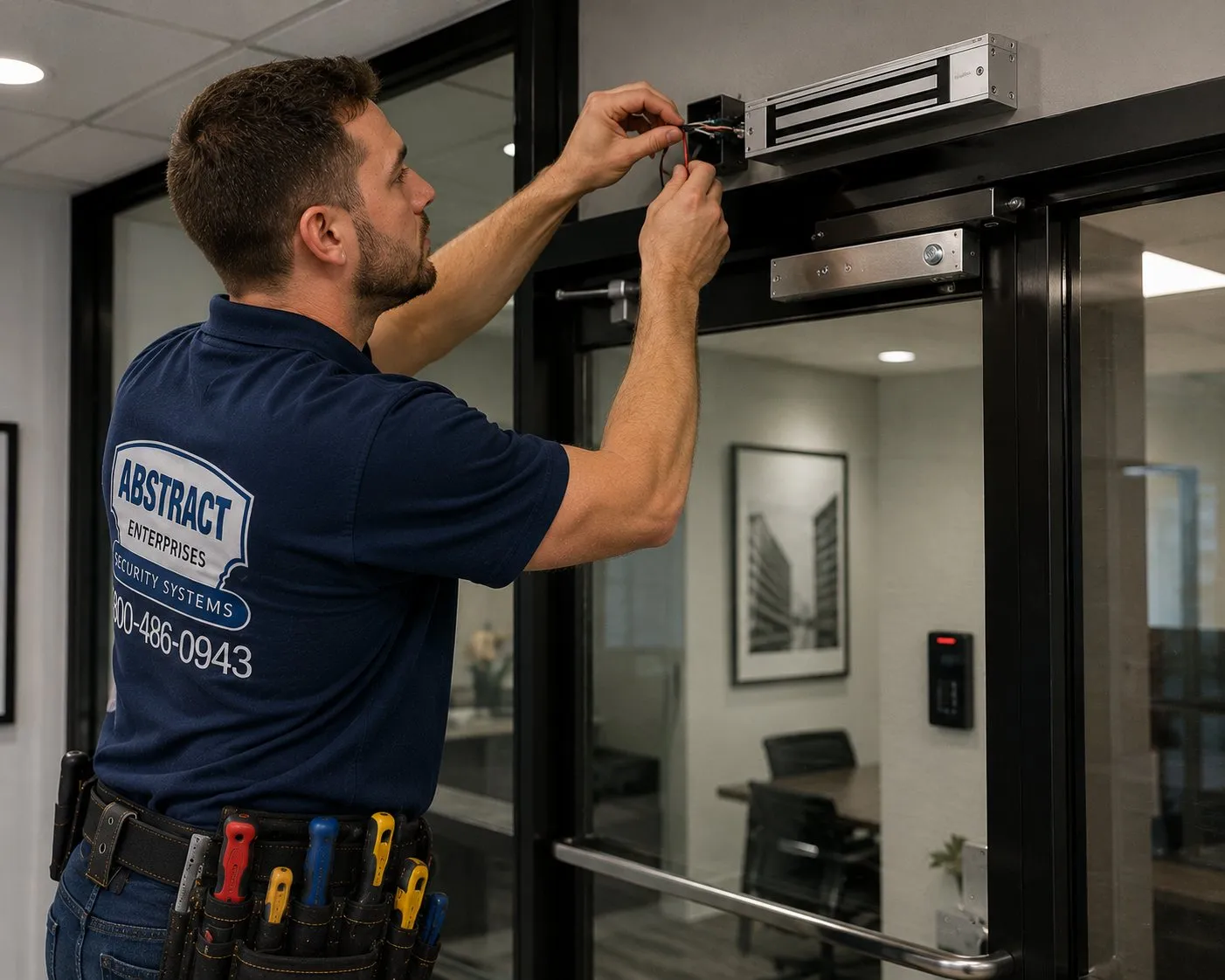
A technician in a navy AESS polo connects conductors at a junction box on a magnetic lock mounted over a glass office door, with its armature plate on the door and a card reader on the frame inside.
Pricing
Smart Lock Installation Cost in NYC
We publish what we have actually priced, and we say plainly where a job is quoted at the walkthrough instead. Building-door work — keypads, fob readers and electric strikes — is already priced on our access-control and door-buzzer pages, so those figures appear below with their scope. A smart lock on an individual apartment door has no published AESS price yet, because the door decides the work: a retrofit on a standard deadbolt and a mortise-format lock in a heavy pre-war door are very different jobs. Those are quoted flat, in writing, after a free walkthrough, and the quote is what you pay.
Item
Price
Scope and source
Smart lock on an apartment or house door (retrofit, deadbolt swap or mortise solution)
Quoted flat at free walkthrough
No published AESS figure; price set after we see the door, the lock and the building rules
Single-door keypad or fob reader with electric strike
$1,500–$2,500 installed (Brooklyn and Bronx base)
Building entrance, vestibule, storefront or office door; from our published access-control pages
New electric strike on a lobby door
$250–$450
Strike supplied and fitted as part of an entry upgrade; from our published door-buzzer pages
Failed electric strike repair
$295–$485
Lobby door that buzzes but won't release; from our published door-buzzer repair pages
Setup-only visit (app, bridge, codes; no hardware change)
First hour $195 Brooklyn and Queens; $225 the Bronx and Staten Island; $265 Manhattan; then 30-minute blocks
Our published setup-only visit rates
Service and callback rate
$195/hr, 3-hour minimum ($585)
After-install service calls; not charged on the initial installation
The single-door entry figure by borough
Our published single-door keypad or fob-reader figure is set at the Brooklyn base. Across the five boroughs we apply the same area multipliers we use on every service: Brooklyn and the Bronx at 1.00, Queens at 1.05, Staten Island at 1.10 and Manhattan at 1.25.
Borough
Multiplier
Single-door keypad or fob reader with electric strike
Brooklyn
1.00
$1,500–$2,500
The Bronx
1.00
$1,500–$2,500
Queens
1.05
$1,575–$2,625
Staten Island
1.10
$1,650–$2,750
Manhattan
1.25
$1,875–$3,125
What moves an apartment-door quote
Lock format: a retrofit over an existing single-cylinder deadbolt is the lightest job; a full smart deadbolt swap is next; a mortise-format lock or a change on a heavy steel or fire-rated door is the most involved.
Door condition: old bores, filled holes, worn strikes and frames that have moved all add alignment work so the door self-closes and the bolt throws cleanly.
Connectivity: a bridge or border router, and getting a usable signal to a door at the end of a concrete hallway.
Credentials: one household's codes are quick; enrolling codes, fobs and phones for every unit of a small building takes longer and is worth doing properly.
Building logistics: certificate of insurance, contractor hours, and walk-up access.
National cost guides for comparison. Fixr's national figure, updated January 2025, puts smart lock installation at $250–$400 with a $300 average and handyman labour at $50–$100 an hour. That is national third-party data, not an AESS price, and it assumes an ordinary door in a house.
Full terms for every job — deposit, warranty and late fees — are in the service agreement you sign before work starts; the short version is in the FAQ below.
Shop Our Systems
Smart Lock Installation Packages & Pricing
Most New York keyless jobs fit one of these three. Only the building-door figures are published prices; the apartment-door package is quoted flat at the walkthrough because no two pre-war doors are the same.
Starter — Apartment Door
Quoted flat at walkthrough
Retrofit over your deadbolt, smart deadbolt swap or mortise-format lock, chosen for the door and the tenancy. Strike and closer checked so the door self-closes and latches, inside exit without a key confirmed, codes and app set up, bridge placed and tested remotely, key path kept for the landlord or board.
Standard — New Lobby Strike
$250–$450
A new electric strike on the building's front or vestibule door as part of an entry upgrade — the published figure for that line on our door-buzzer pages. Where the strike has failed rather than needing replacement, the repair line is $295–$485.
Premium — Keyless Building Door
$1,500–$2,500
Single-door keypad or fob reader with electric strike, installed at the Brooklyn base (Queens $1,575–$2,625, Staten Island $1,650–$2,750, Manhattan $1,875–$3,125). Per-unit credentials, exit release inside, and the owner shown how to add and remove users.
Bring Your Own Lock — Labour Only
Already bought a smart lock? We install it, quoted flat at the walkthrough as labour only. Before we open the box we confirm it suits the door — single-cylinder or mortise, thickness, backset — and the rules: no double-cylinder or keyed-inside models on a residential entrance, and a key path kept where the lease or the law expects one. A customer-supplied lock carries its manufacturer's warranty rather than ours. If it won't fit properly, we tell you before anything is drilled.
Ready to Go Keyless?
Send a photo of both sides of the door and the lock's edge plate. We will tell you which lock fits and what the walkthrough will cover.
A retrofit lock in Riverdale and one in Red Hook are the same box. The buildings, tenancies and doors around them are what change the job. As each borough gets its own page the detail will live there; for now each link below opens our quote form.
Manhattan is a borough of managed buildings: doorman co-ops, rental towers, pre-war elevator buildings and walk-ups, almost all with a managing agent between the occupant and the door. That makes paperwork the first step — a certificate of insurance, contractor hours and often a question to the board about the unit door. Doors in the pre-war stock of the Upper West Side, Morningside Heights and Washington Heights are frequently heavy with mortise locks; post-war towers bring concrete corridors and the Wi-Fi questions that come with them. Lobby keyless work here is priced at the 1.25 multiplier, so the single-door figure becomes $1,875–$3,125.
Brooklyn is where small landlords live with their tenants. Brownstones and row houses in Park Slope, Bed-Stuy, Crown Heights and Bay Ridge are often owner-occupied with one to four rental units, a shared stoop door and original hardware. That makes per-unit credentials, a keyless street door and a clean turnover routine the common request. Brooklyn also has large rental complexes, like the Brownsville towers where tenants contested facial-recognition entry, where owners are thinking hard about the Tenant Data Privacy Act. Building-door work is at the 1.00 base.
Queens mixes the garden co-ops of Jackson Heights, Forest Hills and Kew Gardens with the high-rises of Long Island City and the two-family houses that fill much of the borough. Co-op jobs bring board rules and duplicate-key clauses; two-family houses bring an owner who wants to manage the tenant's door, the shared entrance and a basement door from one phone. Single-door keyless entry is priced at 1.05, or $1,575–$2,625.
The Bronx has some of the city's biggest residential complexes, including Co-op City's 35 towers, along with the pre-war apartment buildings of the Grand Concourse and houses in Riverdale and Throgs Neck. Concrete and block walls are common, so bridge and border-router placement is often the decisive part of an apartment install. Building-door keyless work is at the 1.00 base.
Staten Island's smart-lock work is weighted toward one- and two-family houses, where the owner controls the door and the rules are simpler, plus the apartment buildings of the North Shore around St. George, where they are not. Two-family owners often want a tenant's door and a shared side entrance on separate codes. Single-door keyless entry is priced at 1.10, or $1,650–$2,750.
Renter's Guide
A Renter's Checklist Before Adding a Smart Lock
Most of our apartment-door calls come from tenants. This is the checklist we walk through on the phone so the lock you add is legal, reversible and doesn't start an argument with management.
Look at what's on the door now. Is there a separate deadbolt with a thumb-turn inside, or only a mortise lock with a lever and a cylinder? Is the deadbolt single-cylinder (thumb-turn inside) or keyed on both sides? A photo of the inside and the edge of the door tells us most of what we need.
Read the lease clause on locks and alterations. Many New York leases repeat the Multiple Dwelling Law's duplicate-key requirement and add a clause about alterations. Knowing the wording lets you choose a lock that stays within it.
Prefer additions to replacements. The statute protects your right to add a lock; it doesn't give you the owner's lock to remove. A retrofit over the existing deadbolt, or a modest second lock, keeps you on firm ground.
Plan the duplicate key. With a retrofit, the landlord's key still works. With a separate keypad lock, choose one with a key cylinder so a duplicate can be handed over on request.
Keep exit simple. Inside, the lock must open with a thumb-turn or lever, not a key or code. HPD says double-cylinder locks are illegal on apartment doors.
Check the closer. If the door already struggles to latch on its own, fix that first or have us do it as part of the install; a smart lock can't throw its bolt into a door that isn't closed.
Tell management. A two-line note naming the lock and confirming a key will be provided avoids most disputes.
Plan your exit. Keep the original thumb-turn and screws in a labelled bag. When you leave, we refit them and remove the smart unit.
If your building already uses fobs, cards or an app for the lobby or your unit, the Tenant Data Privacy Act gives you rights over that system too: consent before your data is collected, limits on what is kept and for how long, and the right not to be required to use the smart system to get into your own apartment. Ask management for their written policy if you haven't seen one.
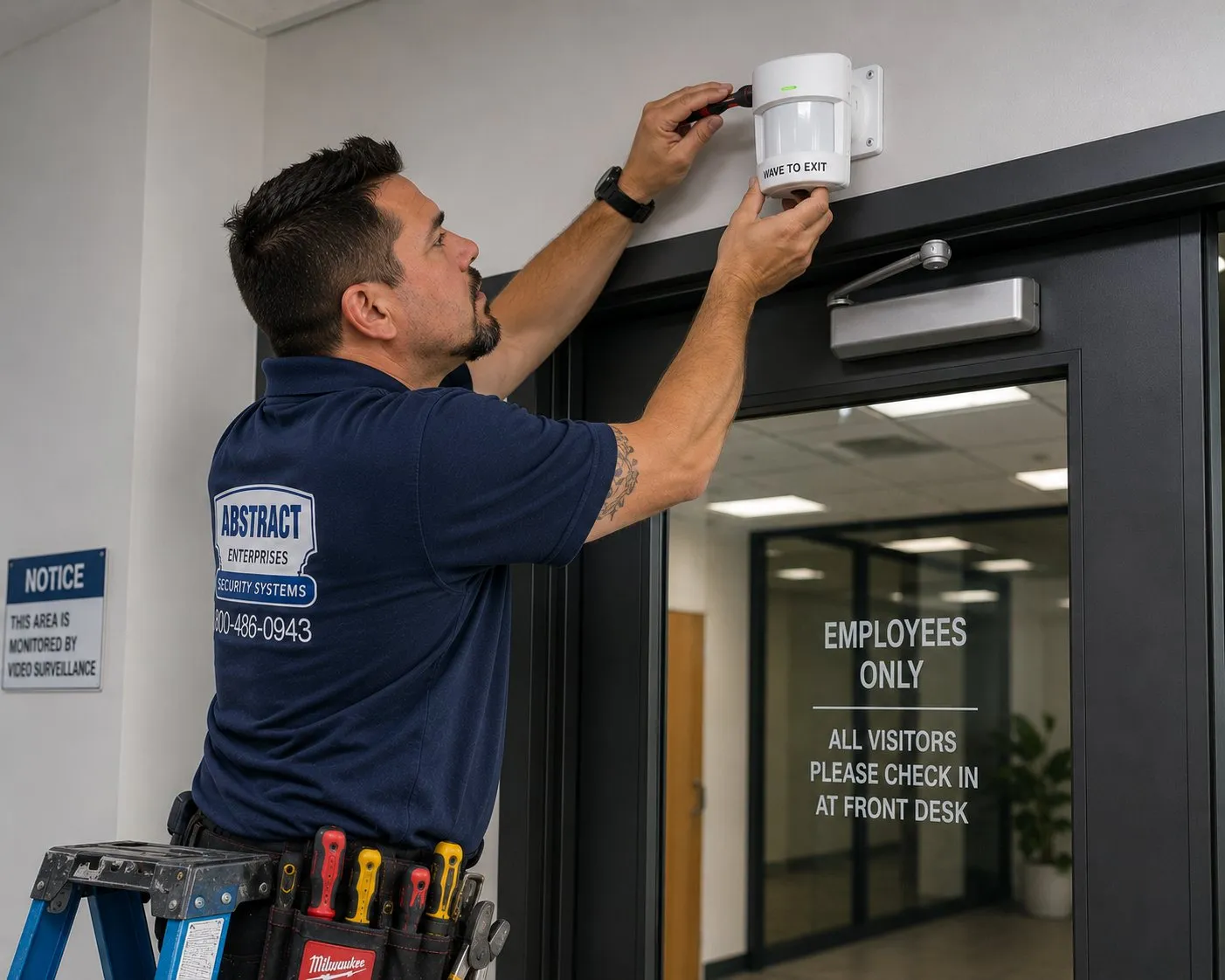
An AESS technician on a blue stepladder tightens a white “Wave to exit” sensor on the wall above a dark door frame with an overhead closer, beside a glass door marked “Employees only”.
For Building Owners
Managing Codes, Fobs and Phones Across Several Units
For an owner of a two- to twenty-unit building, the hardware is the easy part. The routine around it is what keeps you out of trouble. These are the practices we set up with small landlords in brownstones, walk-ups and two-family houses across the city.
Moment
What we set up
Why it matters in New York
New tenant moves in
Unique code, fob or phone credential per adult occupant; written consent form if any smart data is collected; a working key for the unit door
Local Law 63 of 2021 requires express consent and bars making the smart system the only way into the unit
Guests, cleaners, contractors
Time-limited codes that expire on their own; no sharing of a tenant's permanent code
Keeps the access log meaningful and limits data collected about non-tenants
Lost fob or phone
One-step removal of that credential only, replacement issued the same day
Nobody else's access is disturbed
Tenant gives notice
Nothing changes until possession lawfully returns
Administrative Code § 26-521: disabling an occupant's lock without a key is unlawful eviction
Unit surrendered
Credentials removed, unit cylinder re-keyed or swapped, log closed
The next tenant starts with a lock nobody else can open
Ongoing
Shortest log retention the platform allows, no location features, admin access on two owner devices
Authentication data must be destroyed within 90 days unless anonymised; avoids a lockout of the owner
Keep the duty that the Housing Maintenance Code puts on you in view while you modernise. Section 27-2043 says the owner provides the key lock on each unit entrance door and at least one key, and in class A buildings a heavy-duty latch set, a heavy-duty deadbolt operable by key from outside and by thumb-turn inside, and a chain door guard. Section 27-2041 requires a peephole. A smart lock can sit alongside that equipment or replace the deadbolt with a smart deadbolt that keeps a keyed cylinder; it should not leave a class A unit without the hardware the code lists.
For the building entrance, owners of class A buildings with eight or more units are generally expected to provide an intercom with two-way communication and remote door release under the Multiple Dwelling Law. A keypad or fob reader added to the street door should work alongside that, not replace the ability of a tenant to buzz a visitor in. Our intercom repair crews in NYC can bring an old system back into service while the keyless upgrade is planned.
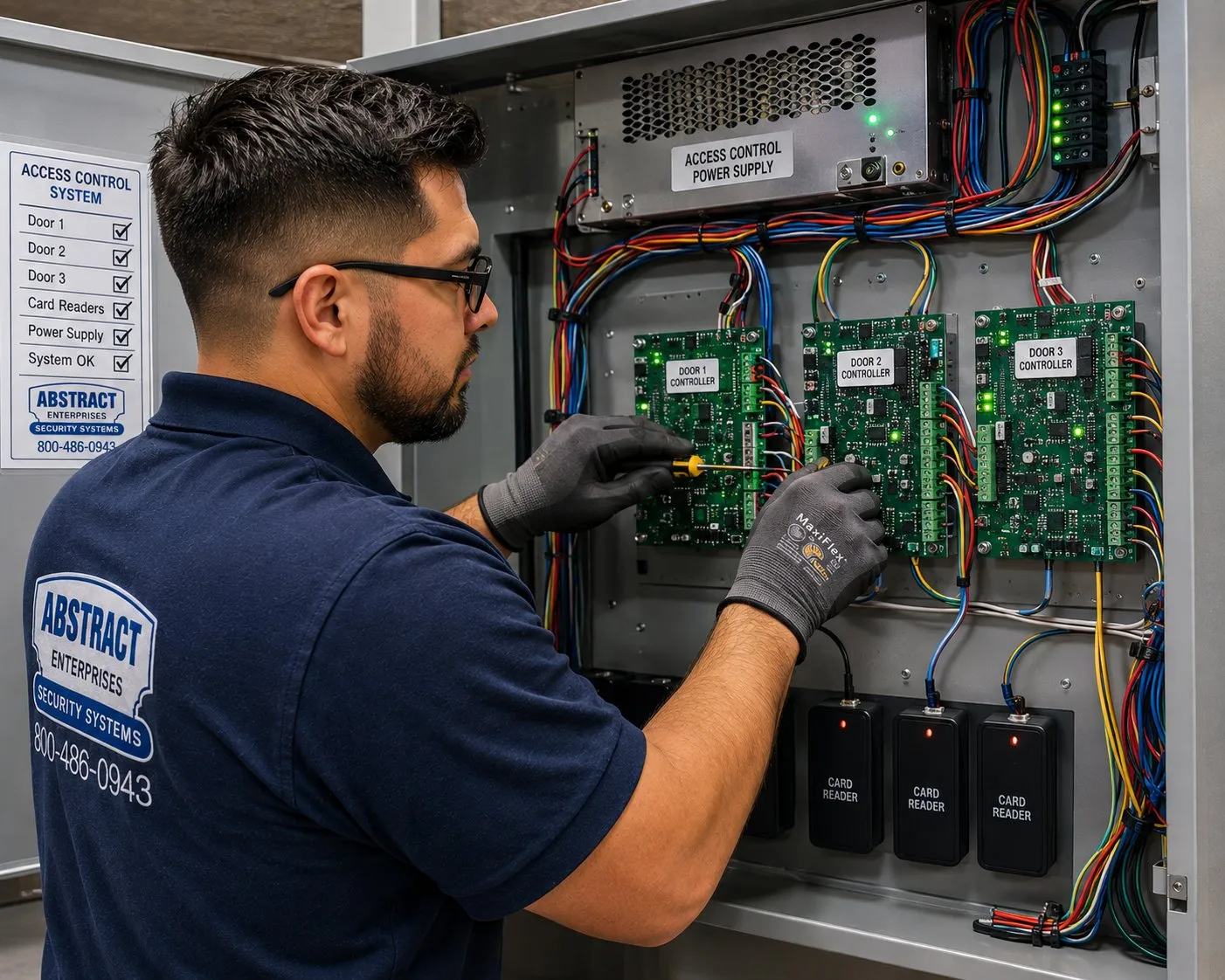
A technician in glasses and grey gloves works inside an open grey enclosure with an access-control power supply and three circuit boards labelled Door 1, Door 2 and Door 3 Controller, three card readers lined up below and a completed checklist on the wall.
Connectivity
Keeping a Smart Lock Online Through Brick and Concrete
An apartment door is usually the worst place in the home for a radio signal. It sits at the end of a hallway, often in a masonry or concrete wall, as far from the router as the apartment allows, and next to a public corridor full of neighbours' networks. That is why so many smart locks in New York work perfectly by Bluetooth when you are standing at the door and fail the moment you try to open it from the office.
How we choose the connection
Bluetooth only: fine for a renter who just wants to open the door with a phone or keypad at the door and doesn't need remote access. Nothing to place, nothing to fail.
Bluetooth with a Wi-Fi bridge: the bridge plugs into an outlet near the door and relays to your router. August recommends its bridge within 10 to 15 feet of the lock, with full Wi-Fi bars at the bridge. In many apartments the closest outlet on your side of the door is in the foyer or a coat closet, and we check it before you buy.
Wi-Fi built into the lock: no bridge, but the lock itself needs a solid signal at the door. In concrete buildings that often means a mesh node closer to the entrance.
Matter over Thread: the lock joins a low-power mesh through a Thread border router — examples manufacturers list include a Nest Hub (2nd generation) and an Apple HomePod mini. Yale's guide says the border router must match the brand of the app you plan to use. Once paired, Matter locks can be shared with several smart-home apps.
Whichever we choose, the test is the same: we switch the phone to mobile data, step away from the apartment, lock and unlock remotely, and confirm the notification arrives. If it doesn't work from the street, it isn't finished.
A smart lock rarely arrives alone. A new tenancy, a building upgrade or a shop fit-out usually brings a few of these city services into the same visit.
One form for any combination of the services above.
Field Notes
Field Notes on New York Apartment Doors
How our installers read an apartment door before recommending a lock — working practice, not a single job
The first thing we do at a New York apartment door is close it and let go. If the closer pulls it shut and the latch catches on its own, the door is ready for a smart lock. If it stops an inch short, or bounces off the strike, the lock will be blamed for a problem that belongs to the closer, the hinges or a frame that has moved over the years. We fix the swing before we fit anything.
The second is the edge of the door. A plain round bore with a short latch means a bored deadbolt and most smart options. A long rectangular faceplate with a lever and a cylinder near it means a mortise lock, and a different conversation. Several filled or abandoned holes tell us the door has been re-drilled before, and that any new hole needs to land in solid material.
The third is the door itself. We tap it, look at the hinge edge and check for a fire-rating label. A heavy, cold, solid-sounding slab in a pre-war building may be steel-clad or have a mineral core, and we treat it as a door that should not be cut casually.
Last, we stand at the door with a phone and check the signal before anyone chooses between Bluetooth, a bridge or Thread.
FAQ
NYC Smart Lock Installation FAQ
How much does smart lock installation cost in New York City?
+
A smart lock on an apartment or house door is quoted flat after a free walkthrough, because a retrofit on a standard deadbolt and a mortise-format lock in a pre-war door are very different jobs. Building doors use our published figures: a single-door keypad or fob reader with electric strike is $1,500 to $2,500 installed at the Brooklyn base, a new lobby electric strike is $250 to $450, and a failed strike repair is $295 to $485.
Do you work on apartment doors in NYCHA developments?
+
Only with the housing authority's permission. The Multiple Dwelling Law section that lets tenants add their own lock does not apply to buildings run by a municipal housing authority, so locks and doors in NYCHA developments follow NYCHA's own rules. If you live in public housing, ask your development's management office what is allowed before buying a smart lock, and we can work to whatever they approve in writing.
Which smart lock brands do you install in NYC apartments?
+
We install the major consumer and commercial brands rather than one house brand, including retrofit units, keypad and fingerprint deadbolts, mortise-format smart locks and Matter-over-Thread models. The deciding factors are the door format, the building rules and how you want to connect, so we choose the category first and the brand second.
Do you send a certificate of insurance to the managing agent before the visit?
+
Yes. Send us the managing agent's name and email when you book and we send the certificate of insurance directly, naming the building and the agent as the building requires, so the front desk has it before we arrive.
Can you work within my building's contractor hours and elevator rules?
+
Yes. Many New York buildings only allow contractors on weekdays within set hours and require the service elevator. Tell us the rules when you book and we choose a 2-hour arrival window inside them, between 8 AM and 8 PM, and confirm the booking with the front desk or superintendent if you ask us to.
Can you swap the keyed cylinder on a smart deadbolt when a new tenant moves in?
+
Yes. When we fit smart deadbolts with a keyed override for landlords, we can change the cylinder at turnover so old keys stop working, and remove the previous tenant's codes and fobs at the same visit once the unit has been surrendered. It is priced with the turnover work; after-install service calls otherwise run $195 an hour with a 3-hour minimum.
Do you program codes, fobs and phone access for every unit in a small building?
+
Yes. For two-family houses, brownstone rentals and walk-ups we enrol a credential per occupant, set time-limited codes for cleaners and contractors, give the owner admin access on two devices, and leave a written list of who holds what so access can be removed cleanly at turnover.
What warranty comes with a smart lock installation?
+
Locks you supply carry their manufacturer's warranty. Full terms — including 50% deposit, one-year parts-only warranty on AESS-supplied products, and the late-fee schedule — are set out in the service agreement.
Does a smart deadbolt still satisfy the city's deadbolt and chain-guard rule for class A apartments?
+
It can. Housing Maintenance Code section 27-2043 requires the owner of a class A multiple dwelling to provide a heavy-duty latch set, a heavy-duty deadbolt operable by key from outside and by thumb-turn inside, and a chain door guard on each unit entrance door. A heavy-duty smart deadbolt that keeps a keyed cylinder and an inside thumb-turn fits that description, and the chain guard and peephole stay where they are.
Do you install smart locks on Long Island and in the Hudson Valley too?
+
Yes. The same crews cover Nassau and Suffolk counties on Long Island and Westchester, Rockland, Orange, Putnam, Dutchess and Ulster counties in the Hudson Valley, and each region has its own smart lock page.
All Areas Served
Smart Lock Installation Across New York
You are on the five-borough page. Separate pages for Manhattan, Brooklyn, Queens, the Bronx and Staten Island are on the way; for now each borough link opens our quote form, and the installers who would serve it already work there. Long Island and the Hudson Valley each have a smart lock hub of their own, written for suburban houses and county rules rather than city apartment buildings.
If the keypad is dead, the app has lost the lock, or the lobby strike has stopped releasing, call (800) 486-0943. We book the next open 2-hour window, and most power, pairing and alignment faults are fixed in one to two hours once we are at the door.
Abstract Enterprises Security Systems · 1282 Troy Ave, Brooklyn, NY 11203 · (800) 486-0943 · WhatsApp (718) 679-0359 via wa.me
NYS Low-Voltage Licence #12000287431 · 100% Licensed & Insured · Same-Day Estimates · Rated 4.7★ from 201 Google Reviews
Locks you supply carry their manufacturer's warranty. Full terms — including 50% deposit, one-year parts-only warranty on AESS-supplied products, and the late-fee schedule — are set out in the service agreement. See our warranty page.
This page explains how New York rules affect smart lock installation; it is not legal advice. Page reviewed and updated October 17, 2026. Changelog: first publication of the New York City smart lock installation hub.