What are you looking for?
About Us Contact Us Careers Get a Free Quote (800) 486-0943
Pick a service
✅ Got Your Own System?
🎬 Home TheatreQuote 🎶 AV SoundQuote 🔑 Access ControlQuote
Now pick your area
Pick your area
Long Island
Hudson Valley
Services available
Pricing & Tools
Pick a service for pricing
🚪 Intercom Pricing 🔔 Buzzer Repair Pricing
Calculators
📹 Camera System Calculator 🚨 Alarm Calculator ⚡ Cabling Quote Builder ✅ Got Your Own System?
Select your area
Licensed Low-Voltage Contractor · North Shore to Tottenville · One- and Two-Family Houses

Smart Lock
Installation in
Staten Island

Front Door · Side Door · Garage Entry · Basement Unit · Caregiver Codes · Two-Family Setups

On Staten Island the house is the building. Nobody manages your front door but you, and most homes here have more ways in than one: a front door up the stoop, a side door off the driveway, a door from the garage into the kitchen, and often a separate door for the downstairs or upstairs tenant. We plan keyless entry for the whole house at once, so every door locks the same way, the people who need in get their own codes, the doors facing the water get hardware built for weather, and nobody inside ever needs a key to get out.

Reviewed and updated October 17, 2026 · Written by Anwar Timothy, NYS licence #12000287431

AESS technician drilling to mount a keypad smart lock on a brownstone stoop door in Staten Island
A technician in a black cap and gloves works at the metal frame of a glass door, wires running into the strike pocket, with a backlit keypad and a square exit button mounted on the wall beside him.
Get a Free Staten Island Smart Lock Quote
Tell us how many doors and who needs access — we call back the same business day

✅
Request Sent!
We'll call you back the same business day.
25+
Years Experience
✓
Same-Day Estimates
100%
Licensed & Insured
4.7★
201 Google Reviews

Planning keyless entry for the whole house, or stuck with a lock that stopped answering? Call (347) 934-8335 or send the 60-second form. A licensed installer reads it and calls you back with what the doors are likely to need before anyone drives out.

  • Every door on the house looked at on one free walkthrough, with one written price for the lot
  • Codes set up for the people who actually come and go: family, tenant, aide, dog walker
  • Inside release by thumb-turn or lever on every door we touch — never a key to get out
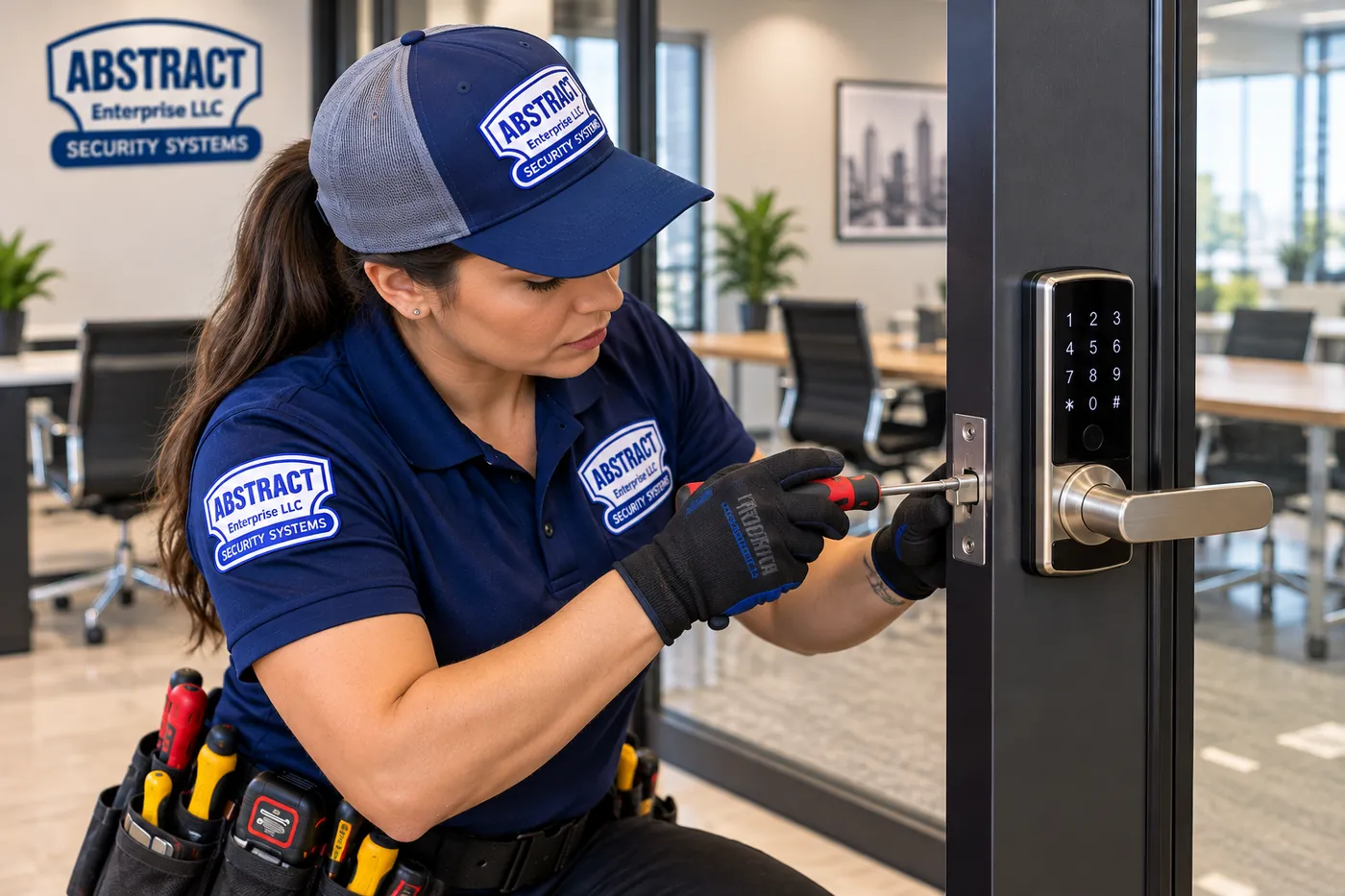
AESS technician installing a keypad lever smart lock on an office suite door in Staten Island
Keypad lever lock on an interior office door — good for suites, supply rooms and server closets.
The Neighborhood

Why Staten Island Homes Need Smart Lock Installation Planned Door by Door

Most of the keyless-entry advice written about New York City assumes an apartment: one door, a landlord, a board, a lobby. Staten Island mostly isn't that. The Citizens Housing and Planning Council's 2024 look at the city's housing typologies found that 83 percent of the island's homes are in one- or two-family buildings. Census QuickFacts puts the owner-occupied rate for Richmond County at 67.7 percent for 2020–2024. In practice that means the person deciding what goes on the front door is usually the person who lives behind it, and the person who pays when a lock is fitted badly is the same person.

It also means the house has several doors, and they are not equal. A detached colonial on a Mid-Island street may have a front door that guests use twice a month, a side door off the driveway that the family uses every day, and a door from the attached garage straight into the kitchen. A semi-attached two-family built after the Verrazzano-Narrows Bridge opened in 1964 often has a garage under the house, an outside door to the lower unit, and a separate stair door for the upper unit. A house on the East Shore rebuilt after Hurricane Sandy may have its main entrance at the top of a long run of steps, with the old ground-floor door now opening into flood-vented storage. Putting one smart lock on the front door and calling the house keyless rarely matches how anyone in these homes actually comes and goes.

So we start with a question most installers skip: which doors does each person in the household really use, and when? The answer decides where the smart locks go, which door gets a keypad you can read in the dark, which door locks itself every time it closes, and which door keeps an ordinary key because nobody should be opening it remotely. It also decides how the locks connect. A router in the upstairs hallway of a brick-faced two-family may reach the front door easily and the door at the back of an attached garage not at all, and a detached garage at the end of a driveway is a different radio problem again.

Then there is the weather. A good part of the island faces open water — the Lower Bay along the East Shore, Raritan Bay at the southern tip near Tottenville, the Kill Van Kull on the North Shore and the Arthur Kill to the west. Exterior hardware here lives with wind-driven rain and, close to the shore, salt in the air. One commercial lock maker, dormakaba, defines an “ocean front” application in its lock-finish guide as an exterior lock on a property within 3 miles of a saltwater body, and states that using a lighter finish there voids the lock's warranty. Residential brands set their own terms, so we check the paperwork for the exact lock you choose, but the point stands: on this island the outside face of the lock deserves as much thought as the app.

Finally, many Staten Island homes are shared across generations, or split between an owner and a tenant. A parent who doesn't use a smartphone, a home health aide who comes on weekdays, a tenant in the basement unit who needs their own door and their own privacy, a teenager who forgets to lock up — each of those is a code-planning decision, not a hardware decision, and getting it right on day one is what makes a smart lock feel like an improvement instead of a new chore.

Staten Island figures that shape a smart lock job

  • 83 percent: share of Staten Island housing units in one- or two-family homes, per the Citizens Housing and Planning Council's October 2024 housing typologies visualisation. Many doors per household, and the owner decides what goes on them.
  • 67.7 percent: owner-occupied housing unit rate for Richmond County, 2020–2024 (U.S. Census QuickFacts).
  • 186,310: housing units in Richmond County as of July 1, 2025, for an estimated population of 501,290 (QuickFacts, V2025), with 2.85 persons per household — several people, several schedules, several codes.
  • 1964: the year the Verrazzano-Narrows Bridge opened. A CUNY Macaulay study of the borough's census history records the population growing from 191,555 in 1950 to 443,728 in 2000, with the largest single-decade jump, about 73,000, between 1960 and 1970 — the era that produced much of the island's attached and semi-attached housing with built-in garages.
  • 23 of 43: Hurricane Sandy deaths in New York City that occurred on Staten Island, as reported by CBS New York from NYPD figures on November 11, 2012. Many East and South Shore houses were rebuilt or raised afterward, changing where their doors are.
  • 91.1 percent: Richmond County households with a broadband subscription, 2020–2024 (QuickFacts). Most houses can run a connected lock; the question is whether the signal reaches each door.
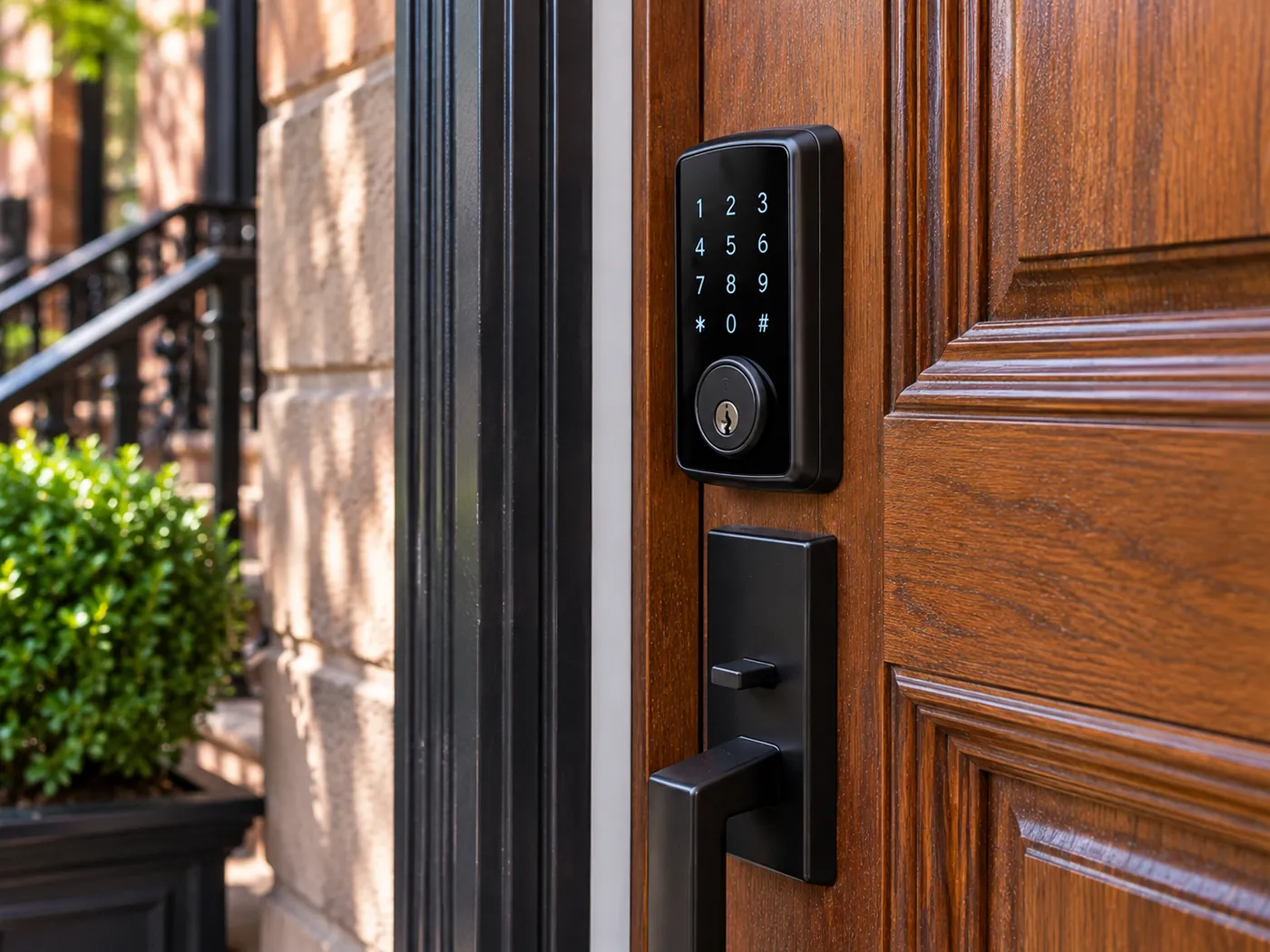
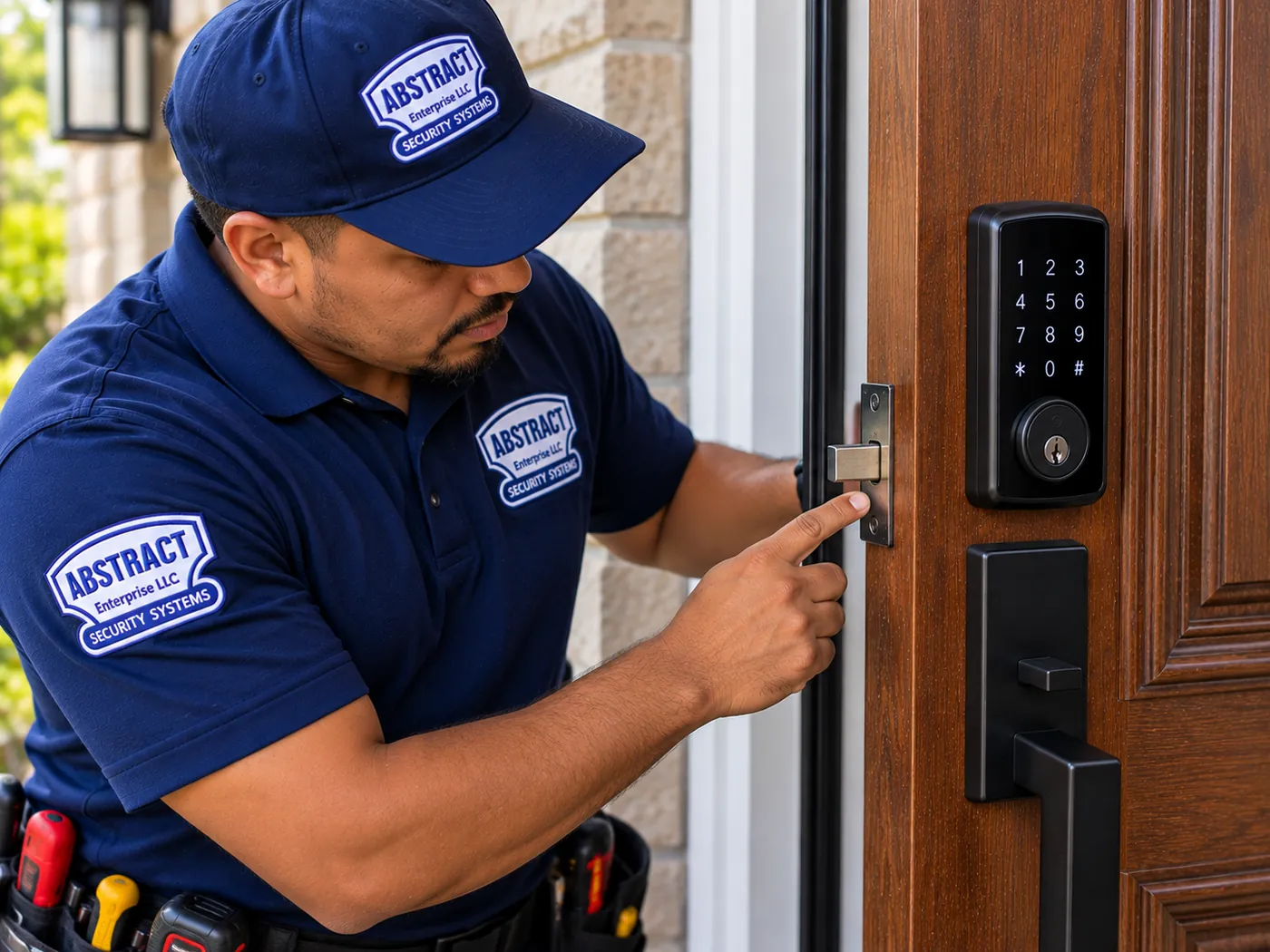
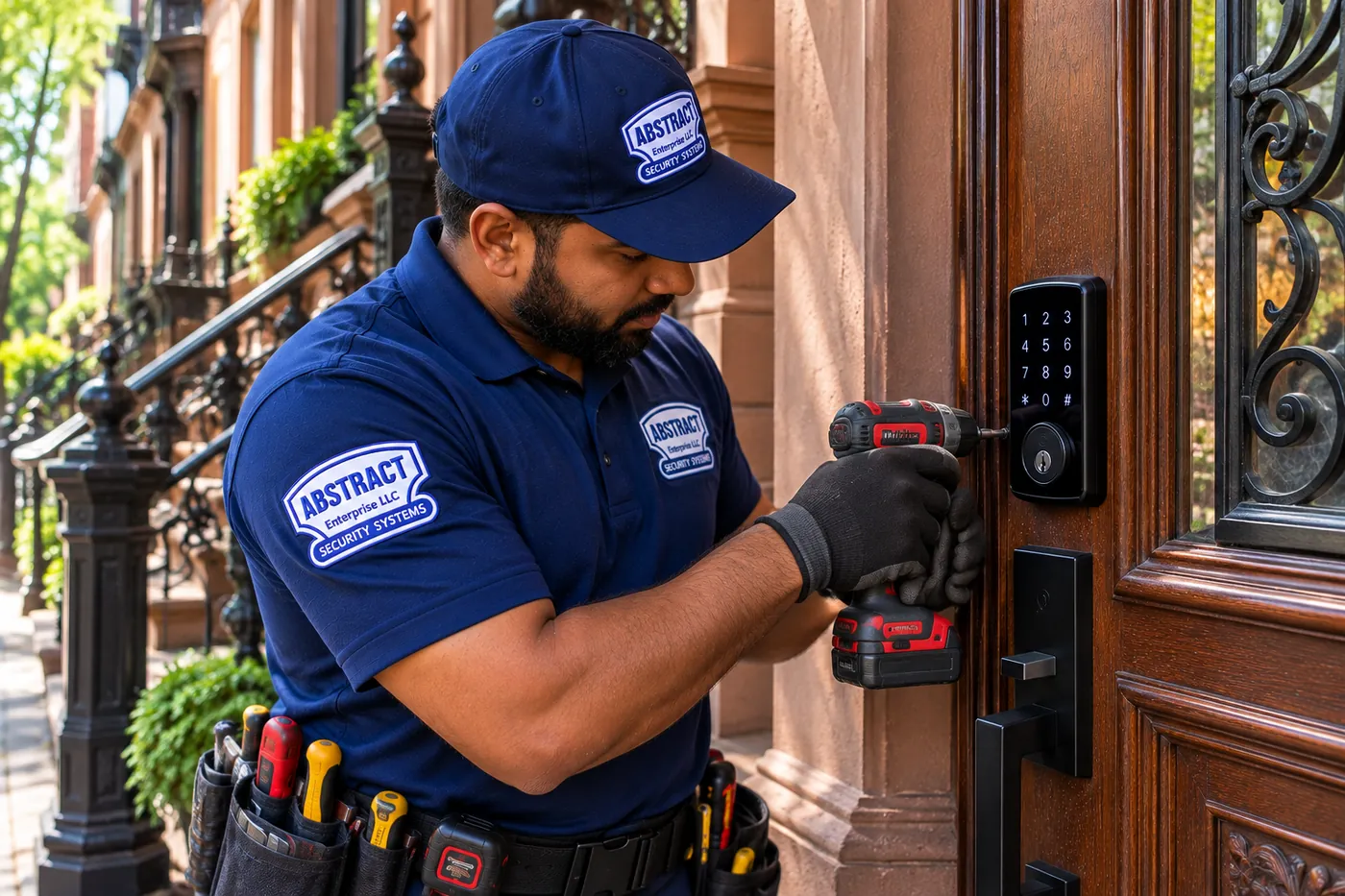
Finished black keypad smart deadbolt and handle on a wood brownstone front door after smart lock installation in Staten Island
A finished keypad deadbolt on a brownstone front door — keyless entry with a key backup.
Repair Capture

Smart Lock Acting Up on Staten Island?

A keypad that stopped lighting after a cold, wet week. A side-door lock that drops off the app every time the garage door opens. A deadbolt motor that grinds because the door has dropped on its hinges. These are usually same-day fixes. Call (347) 934-8335 and we book the next open 2-hour window; most battery, pairing and alignment faults are sorted in one to two hours once we are at the door. If the job turns out to be app or code setup only, with no hardware change, it is billed at the Staten Island setup-only rate of $225 for the first hour.

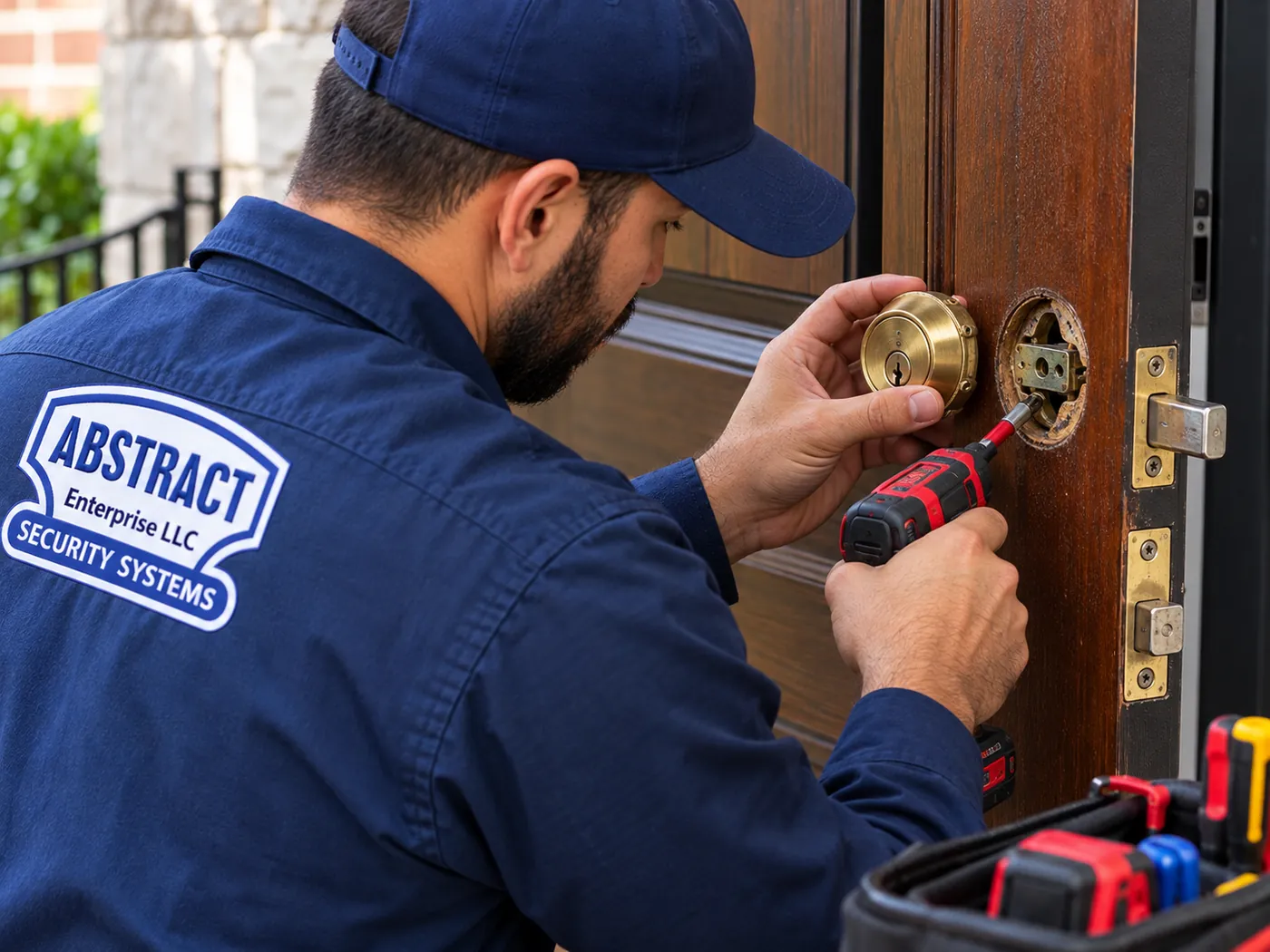
AESS technician removing an old brass deadbolt with a drill to prepare the door for a smart lock in Staten Island
Old brass deadbolt coming out — the first step of a smart lock swap on a wood entry door.
What We Install

Smart Lock Installation Services in Staten Island

Whole-House Keyless Plans

Front, side, garage-entry and back doors planned together on one visit: one brand family where it makes sense, one app, one set of codes that works on every door each person is allowed to use, and one written list of who holds what.

Garage-to-House Door Locks

The door most families use most often. We fit a keypad deadbolt or touch-to-open lock that suits a door which must also close and latch by itself, and set auto-lock so the house is never left open to a garage someone forgot to shut.

Side and Driveway Door Locks

Keypads that light up so they can be read at night, set at a height that works with the steps, and placed where the code can be entered with a bag of groceries in the other hand.

Basement and Lower-Unit Doors

Separate locks for a basement apartment or lower unit, with codes that belong to the occupant and an exit that opens with one turn from inside, down a stairwell where water and leaves collect.

Two-Family Owner and Tenant Setups

Each household gets its own door and its own codes. A shared hallway or yard door gets a lock both can open. The owner keeps admin control of the shared door only, not the tenant's private one.

Family, Aide and Helper Codes

Schedules for a home health aide, a cleaner, a dog walker or a contractor; a simple keypad code for a grandparent who doesn't use an app; and notifications when a child gets home from school.

Weather-Exposed and Waterfront Doors

Lock models and finishes chosen for doors with no overhang or within sight of the bay, gaskets fitted as the maker specifies, and keypads protected from water that runs down the face of the door.

Wi-Fi, Bridge and Thread Placement

Getting every door online, including the one at the back of the garage: bridge placement, a Thread border router, or a mesh access point where the house really needs one, tested door by door from mobile data.

Repairs, Re-Pairing and Realignment

Doors that have sagged, strikes that have moved with the seasons, locks orphaned by a router change or a lost admin phone, and keypads that stopped working after water got behind them.

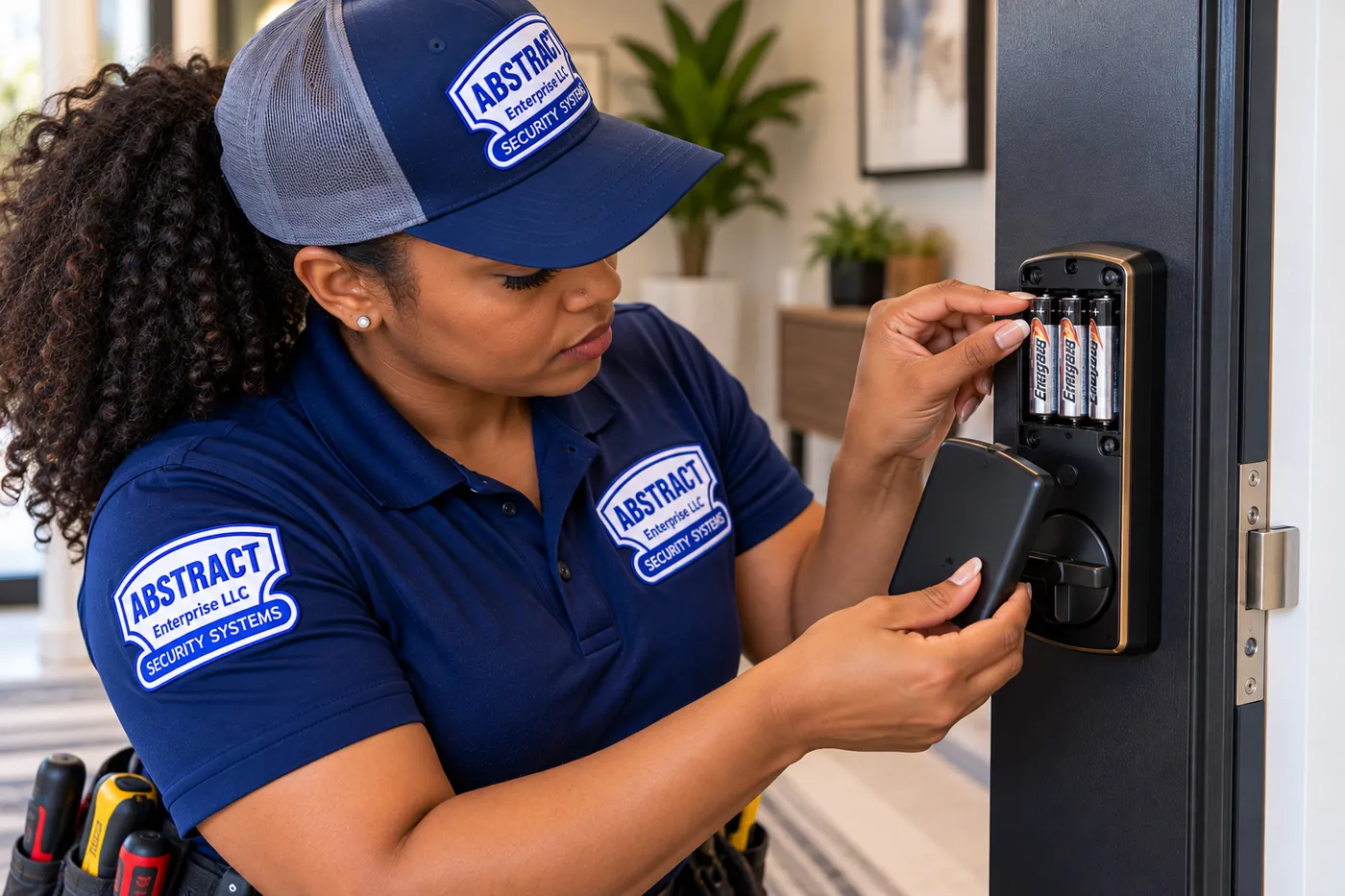
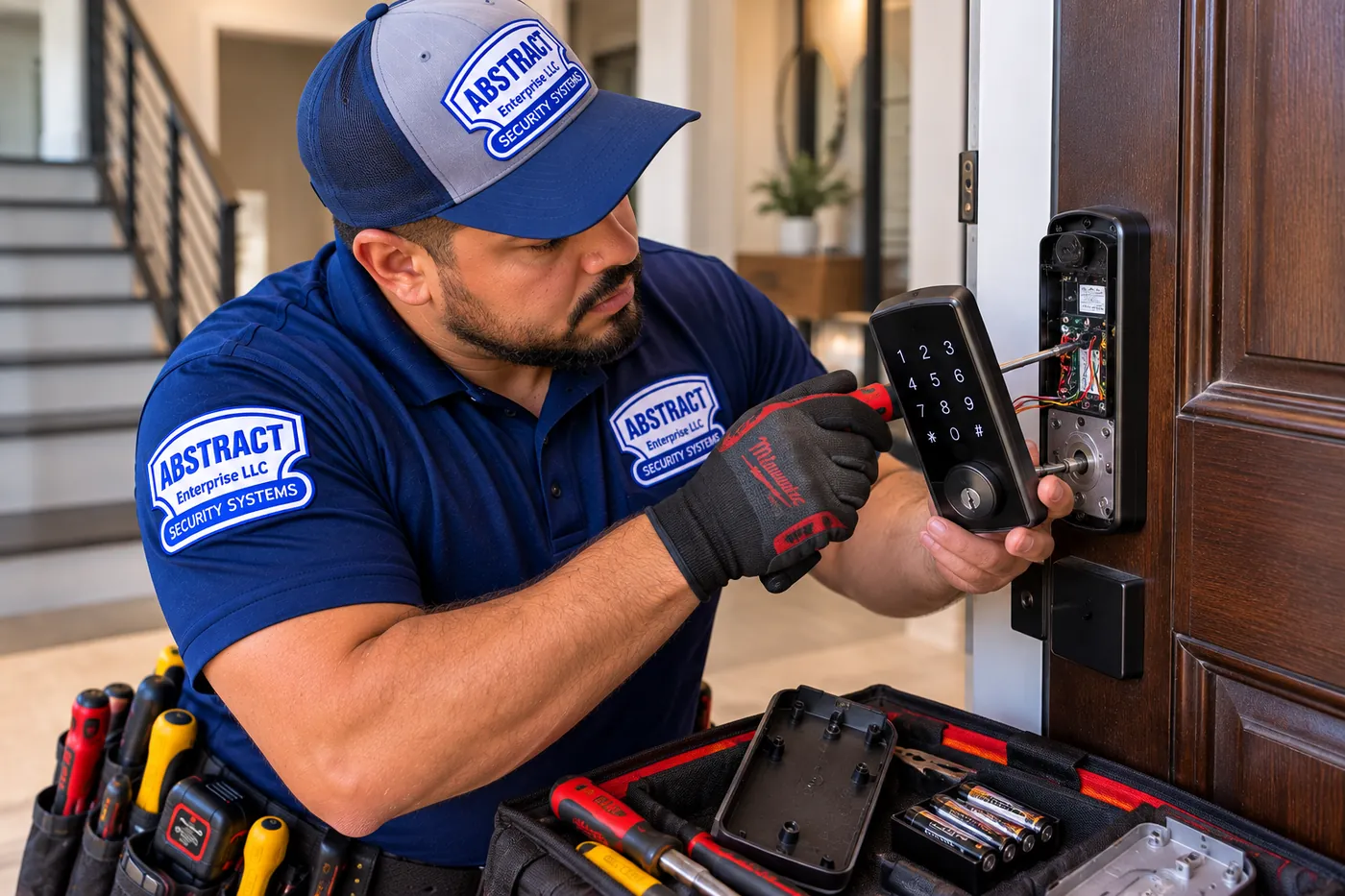
AESS technician replacing the batteries in a smart lock interior unit during a service visit in Staten Island
Fresh batteries and a check of the motor — the fix for most locks that start acting up.
Building Specialists

Smart Lock Installation for Staten Island's Architecture

Detached Colonials and High Ranches

Common through the Mid-Island and South Shore. A formal front door, a side or kitchen door, an attached garage, often a back slider to the yard. Usually wood or insulated steel doors with standard deadbolt bores — the easiest doors on the island to make keyless, and the most doors per house.

Semi-Attached and Attached Two-Families

Built in large numbers in the decades after the bridge opened. Garage at grade, a lower unit behind or beside it, and an upper unit reached by its own stair door. Several households, several doors, and a garage door that often shares a wall with someone's bedroom.

Townhouse Rows With Garages Underneath

Rows with a garage at street level and living space above, sometimes in a complex with a homeowners' association. The interior door from the garage is the daily entrance; the front door at the top of the steps may barely be used.

Raised and Rebuilt Shore Houses

East and South Shore homes lifted or rebuilt after Sandy. The main door sits a full storey up, steps are exposed to weather on all sides, and the ground level is often storage with its own door that floods by design.

Older North Shore Frame Houses

Older frame houses in neighbourhoods near the ferry and along the Kill Van Kull. Thick original doors, glass panels, old mortise locks and frames that have moved over a century — the doors where measuring first matters most.

Newer South Shore Construction

More recent detached homes further south, often with fibreglass or steel entry doors, sidelights, and pre-wired doorbells. Standard hardware preps, but sidelights change where a keypad and a thumb-turn can safely sit.

Houses With a Basement Unit

A separate outside door down a short stairwell, often steel, sometimes with a storm door. The tenant's front door is the owner's basement door, and both need treating as a real entrance.

Mixed-Use Buildings on the Avenues

A shop at street level with an apartment above on Forest Avenue, Victory Boulevard or New Dorp Lane: a commercial door, a residential door and sometimes a rear door to a shared yard, each with different rules.

Door and lock details we check on every Staten Island house

  • Door thickness and bore. Most smart deadbolts are listed for doors around 1-3/8 to 1-3/4 inches thick with a 2-3/8 or 2-3/4 inch backset; Schlage's published door-prep figures, for example, run from 1-3/8 to 2 inches. Older North Shore doors can be thicker, and doors that have had three different locks over the years may have bores that need filling before anything new goes in.
  • Swing direction. Side and basement doors on the island often swing outward over steps. Outswing doors expose hinge pins to the outside and change which smart locks fit; we check before you buy.
  • Glass near the lock. Sidelights and glass panels within reach of the thumb-turn affect both lock choice and placement. A double-cylinder deadbolt is not the answer on a required exit door (more on that below).
  • Self-closing garage-entry doors. The door between an attached garage and the house is a fire separation in the model residential code — solid wood or steel at least 1-3/8 inches thick, or a 20-minute rated door, with a self-closing device. A smart lock on that door has to let it close and latch on its own.
  • Storm doors and screens. The gap between a storm door and the entry door decides whether a bulky interior or exterior escutcheon fits at all.
  • Exposure. Which way the door faces, whether there is an overhang, and how close the house is to open water decide the finish and whether the keypad needs extra protection.
  • Signal at the door. We test Wi-Fi and Bluetooth at every door with a phone before recommending a connection method, especially in garages and basements.
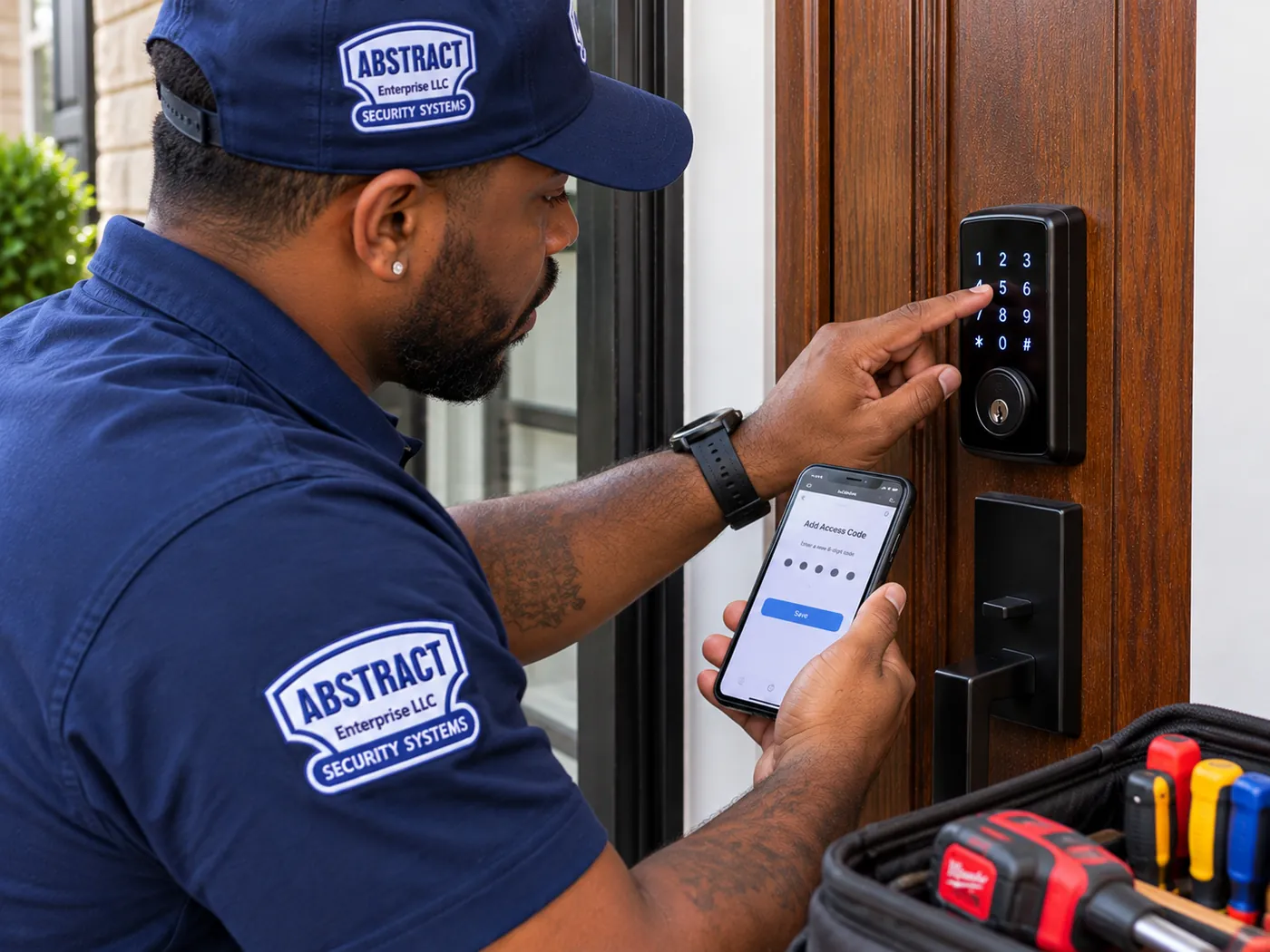
AESS technician programming a new user access code in the smart lock app at the front door in Staten Island
Adding user codes in the app at the door, so every code is tested before we leave.
Door by Door

Every Door of a Staten Island House, and What It Should Get

This is the map we work from on a walkthrough. Not every house has every door, and not every door needs to be smart. The aim is that each door is locked in the way that suits how often it is used, who uses it, and what happens if the power, the Wi-Fi or a phone fails.

DoorHow it is usually usedWhat we usually recommend
Front door at the top of the stoopGuests, deliveries, the occasional formal arrival; sometimes rarely opened at allKeypad smart deadbolt with a keyed override, matched in finish to the house; auto-lock on; video doorbell alongside if remote unlocking is wanted
Side or driveway doorThe family's everyday entrance, often in the dark, often with hands fullBacklit keypad at a comfortable height; individual codes per person; notifications for arrivals if the household wants them
Garage-to-house doorDaily entrance for anyone who drives; often left unlocked because the garage feels “inside”Smart deadbolt or keypad lock that works with a self-closing door; auto-lock after a short delay; signal tested inside the garage
Overhead garage doorCars, bikes, bins; opened by remotes kept in carsLeft to the garage-door opener and its own app; the interior door is where the smart lock belongs
Basement or lower-unit doorA tenant's front door, or a utility entrance down a stairwellIts own lock with codes the occupant controls; thumb-turn exit; hardware chosen for a wet, low location
Upper-unit stair doorSecond household's entrance in a two-familyIts own lock and admin; the owner only holds a code or key on the terms agreed with the tenant
Back slider or patio doorSummer use, the dog, the yardUsually a secondary lock or bar plus a contact sensor rather than a smart lock; most sliders don't take a standard smart deadbolt
Shed or detached garageTools, bikes, lawn equipment; often far from the routerA keypad lock that works offline or a battery lock on a Bluetooth or long-range radio, chosen after a signal test

Two doors deserve special mention. The first is the garage-to-house door. Police in other parts of the region have warned for years about thieves who take garage-door remotes out of unlocked cars, open the garage, and walk straight into the house through an unlocked interior door. A smart lock that locks itself thirty seconds after that door closes removes the most common reason it is left open: somebody forgot. The second is the back door with glass. When thieves broke into a Todt Hill home in June 2022, CBS New York reported, they threw a large stone through the glass of the back door and rushed inside while the family slept. No keypad stops a stone. On a door like that, a smart lock is about convenience and knowing who has come and gone; real protection comes from the glass, the lighting, cameras and an alarm, and we will say so on the walkthrough rather than oversell the lock.

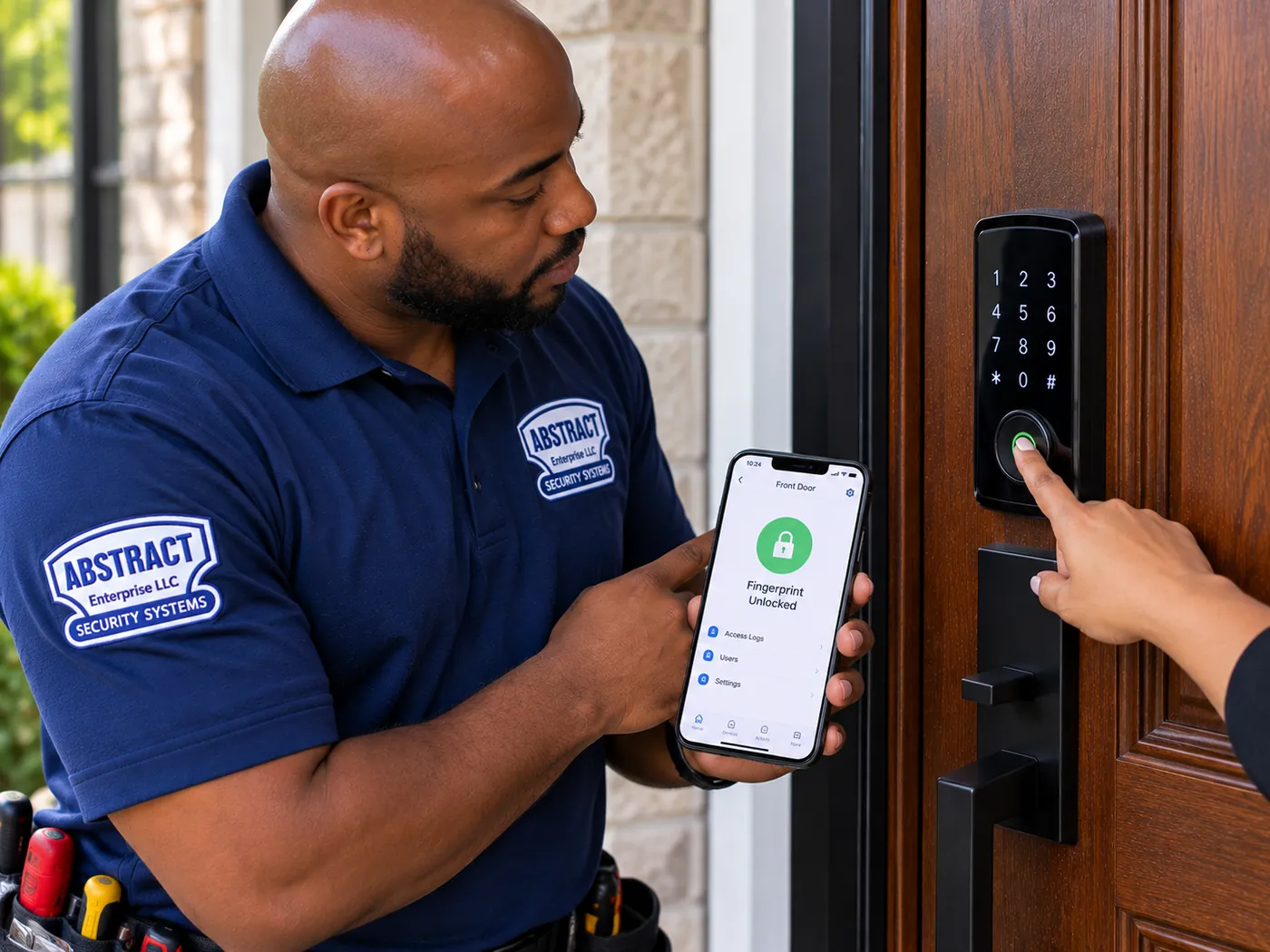
AESS technician showing a homeowner a fingerprint unlock on a new smart lock with the app confirming access in Staten Island
Enrolling and testing a fingerprint with the owner — the app logs every unlock.
Commercial Smart Locks

Business Smart Lock Installation in Staten Island

Forest Avenue, North Shore

Staten Island's entry in the city's business improvement district directory, the Forest Avenue BID. Shops and small offices along the avenue usually have a front customer door and a rear or side door to parking or a yard; owners ask for staff codes on the back door so the key ring can go.

New Dorp Lane

The New Dorp BID, approved 50–0 by the City Council in April 2017, covers 146 properties and 180 businesses on New Dorp Lane and nearby streets between Hylan Boulevard and Richmond Road. Restaurants and salons here want codes for opening and closing staff that change when staff change.

Richmond Avenue and the Mall

The Staten Island Mall opened in New Springville in August 1973, and the Richmond Avenue corridor around it is lined with plazas and pad sites. Tenant spaces in strip centres have a front door governed by the landlord's lease and a rear service door the tenant controls.

Hylan Boulevard

About 13.86 miles from Rosebank to Tottenville, the longest street in any single borough. Medical offices, professional suites and storefronts in converted houses along it often need one keyless door without the cost of a full access-control system.

Victory Boulevard

One of the neighbourhood corridors the Staten Island Economic Development Corporation works with. Mixed-use buildings with a shop below and a flat above need the residential door kept separate from the commercial one.

West Shore Industrial and Office Space

Another SIEDC focus area. Contractors' yards, small warehouses and offices want keypads on personnel doors with a log of who opened them, and locks that keep working when the internet in a metal building is patchy.

Compliance callouts for business doors

  • Free egress. The 2022 New York City Building Code, section 1010.1.9, requires egress doors to be “readily openable from the egress side without the use of a key or special knowledge or effort.” A keypad outside is fine; a code or key needed to get out is not.
  • Main-entrance key locking. Section 1010.1.9.3 lets certain main entrance doors in business, mercantile and storage occupancies be key-locked under the conditions in section 1010.1.4.4. Where a shop relies on that, the smart lock has to fit the same conditions, and we leave that call to the code and your landlord's requirements rather than guess.
  • One motion to open. Section 1010.1.9.5 says unlatching a door shall not require more than one operation, outside the listed exceptions. A smart deadbolt plus a separate latch that both need turning can fail that test on a business exit.
  • Fail-safe or fail-secure. Electric strikes and magnetic locks either release or stay locked when power is lost. We match that choice to the door's role and confirm free egress either way.
  • Mixed-use buildings. Where a shop and a home share a building, the residential door and the commercial door are planned separately so staff codes never open the family's entrance.
Your Questions Answered

Smart Lock Installation in Staten Island: Questions Answered

These are the questions Staten Island homeowners bring to a walkthrough that the generic guides don't cover. They are grouped by the part of the house, and by the people in it, that the question is really about.

Garage, side and basement doors

Should the door from our garage into the house lock itself every time it shuts?

For most families, yes. That door is the one people treat as an inside door, because the garage feels like part of the house, and it is the one most often found unlocked at night. A smart deadbolt or keypad lock with auto-lock throws the bolt a set time after the door closes — we usually start at around thirty seconds so someone carrying shopping in two trips isn't locked out between them, then adjust it after a week of real use.

Two conditions have to be met first. The door must close and latch fully on its own, because in the model residential code the door between an attached garage and the living space is a fire separation with a self-closing device, and a bolt that fires against a door resting half an inch open will jam or strain the motor. And the lock needs a door-position sensor or a lock that can tell the door is actually shut; better models will refuse to throw the bolt into thin air. We adjust the closer and strike as part of the install so both are true.

If the garage is where the household's cars are charged or where a teenager parks a bike at 11 p.m., we also look at whether the keypad side should face the garage at all. Some families prefer the keypad inside the garage and only a thumb-turn on the kitchen side; others want the keypad hidden and rely on phones. Either works; what matters is that the door can't be left open by accident.

Our basement apartment has its own door down a stairwell — how do we lock it securely without anyone getting trapped?

Start with the exit. The New York City Building Code's egress chapter requires doors that people leave by to be readily openable from the inside without a key or special knowledge or effort, and the exception for dwelling-unit doors allows a deadbolt, night latch or chain only if it opens from the inside without a key or tool. For a basement unit, that door may be the occupant's main way out in a fire. So the inside is always a thumb-turn or lever, never a second keypad, never a key cylinder.

The outside is where the smart part goes. A keypad deadbolt rated for exterior use, with a keyed override as a backup, gives the occupant their own codes and means the owner never has to hand out copies. Stairwell doors get rain, snowmelt and leaves pooling at the threshold, so we favour models whose electronics sit on the inside of the door and whose outside face has a gasket, and we check that water drains away from the threshold rather than toward the lock.

Finally, think about who controls it. If the unit is rented, the tenant should hold the admin role for their own door, and the owner should have whatever key or code the lease provides for, not a live view of every entry. We set that up explicitly so there is no argument later about who can see what.

Our side door's hinges are on the outside — is a smart lock on it worth having?

Only once the hinges are dealt with. Many side and basement doors on the island open outward because the landing inside is too small for the door to swing in, and that puts the hinge pins on the outside. If those pins can be tapped out, the door can be lifted off its frame with the bolt still thrown, and the best lock in the world won't matter.

The fix is cheap and quick: non-removable hinge pins, or security studs on the hinge edge that hold the door in the frame even with the pins removed, plus longer screws through the hinge leaves into the framing. We do this as part of the door work before fitting the lock. We also confirm the strike suits an outward-swinging door, since some smart deadbolts list a different strike or limited support for that arrangement.

Placement matters on these doors too. The keypad shouldn't sit where someone standing on a narrow step has to lean over a drop or around a railing to reach it, so we check the approach before deciding which side of the stile it goes on.

Weather and the waterfront

We raised the house after Sandy and the front door is now at the top of a long stair — does that change which lock we should choose?

It changes several things. The door is now fully exposed: wind-driven rain reaches it from every direction, often with no overhang, and on the East Shore it faces open water. That pushes us toward locks whose outside face is sealed and whose finish is meant for exterior use, and toward placing the keypad where water running down the door won't sit on it. The dormakaba finish guide's three-mile rule is one maker's definition, but it's a useful reminder of how close “waterfront” really is on this island.

It also changes how the door is used. With the main entrance a full storey up, families often start using the ground-level door into the storage area, or the garage, as their everyday way in. Those doors then need locks too, and a ground level designed to flood needs hardware that can be wiped down or replaced without drama. We usually recommend keeping the smart lock upstairs, where the electronics stay dry, and a robust keyed or mechanical keypad lock below.

And it changes deliveries and visitors. A long stair means you don't want to run down to let someone in, so a video doorbell at the top, with remote unlock limited to people you can see, becomes more valuable than it would be on a door at street level.

Our front door faces south with no overhang — does direct sun and rain matter for a keypad?

It matters more than most spec sheets suggest. Published operating ranges are generous — Schlage lists its Encode keypad deadbolts for outside temperatures from about −31°F to 150.8°F — but a dark-finished keypad on a south-facing door in July, or one that sits in a sheet of rain every storm, ages faster than one under a porch roof. Touchscreen keypads can also be harder to read in direct sunlight.

On fully exposed doors we lean toward keypads with physical buttons or good contrast, lighter or weather-rated finishes, and installation that respects the maker's gasket and drain details. Where the storm door allows it, closing the storm door over the lock is the simplest protection of all.

If you already own a lock that is mostly black glass and plan to put it on an exposed door, we will still install it, but we will tell you what to expect and where to watch for water ingress, so a slow failure doesn't become a lockout.

Should a smart lock that faces the water get regular maintenance, and what does that involve?

A little, and it's worth doing. Commercial hotel-lock guidance for salt-mist areas goes as far as wiping salt off the lock weekly with a damp cloth; a homeowner doesn't need to be that strict, but a wipe of the keypad face and the bolt every few weeks during the windy months, and a check that the bolt throws smoothly, catches most problems early.

Twice a year we suggest a slightly fuller check: replace batteries before they reach the low-battery warning rather than after, test the keyed override so the cylinder hasn't seized from never being used, and look at the strike for corrosion or for the door having shifted. A key that has never been turned in three years is often the thing that fails on the one night it's needed.

If you'd rather not think about it, a combined visit for all the doors on the house can be booked at the setup-only rate, and doors that need hardware work are quoted before anything is replaced.

Family, caregivers and everyday codes

What should happen to the codes when a grown child moves out or a relative stops visiting?

Remove them, the same week. Households change: a grown child moves into their own place, a relative who used to stay over stops coming, a former partner still knows the side-door code. A smart lock only stays secure if the code list matches the people who should still be coming in.

Because each person should have their own code, removing one is a few seconds in the app and nobody else is affected. If the household has been sharing a single family code, this is the moment to switch to individual ones and retire the shared code. Phone credentials work the same way: remove the person from the lock's account, not just the code.

Do the keys as well. If the person had a key to the override cylinder, either get it back or rekey the cylinders. We include a written code-and-key list with every installation precisely so that this clean-up is easy years later.

Does everyone in the house need the app, or can some people just use a code?

Only one or two people need the app. Everyone else can live entirely with a keypad code and, if they want one, a key. Most keypad smart locks are designed so the app is for the administrator — adding and removing codes, setting schedules, reading history — and the code is for everybody.

That suits Staten Island households where a grandparent, a younger child or a tenant has no interest in another app. Each of them gets a personal code that works on the doors they use. The administrator handles the rest, ideally with a second admin on another phone so the house is never dependent on one device.

When choosing locks, favour real buttons or large, high-contrast digits with a backlight, and a simple wake-up. We test each person's code at their own door before we leave, with them standing there, so nobody discovers a problem the first night they come home late.

Our teenager keeps leaving the side door unlocked — what can the lock actually do about it?

Quite a lot. Auto-lock will throw the bolt a set time after the door closes, so “forgot to lock it” stops being possible on that door. Many locks can also send a notification when a particular person's code is used, so a parent at work knows when someone got home, without anyone having to text.

Give the teenager their own code rather than sharing the family one. If friends start turning up at odd hours or the code gets passed around, you can change one code without changing everybody's, and the history shows exactly which code opened the door.

Some families also set an evening check in the app: if any door is unlocked at, say, 11 p.m., the phone says so and the door can be locked remotely. That needs the lock to be online, so we confirm the signal at that door during installation.

If an elderly parent lives alone, how do we plan for emergency entry around a smart lock?

Think it through before it's needed. A smart lock can make emergency entry easier — a family member can unlock the door remotely for a neighbour or a responder, or read out a temporary code over the phone — but only if the lock is online, the person with admin access is reachable, and the code works on the door that can actually be reached quickly.

We suggest at least two people with admin access, a spare code kept by a trusted neighbour, and a key that still works in the cylinder. Where a medical alert service is involved, ask the service how they want entry handled; some keep a code or key on file. Avoid chain guards or secondary bolts that can only be released from inside, since they defeat every remote option.

The inside of the door should be as simple as possible for the parent: one motion to open, no key, no code. Rapid exit and easy entry by helpers are the two halves of the same plan.

Two-family houses

In a two-family with one shared side door, should owner and tenant share a code or have separate ones?

Separate ones, always. Many Staten Island two-families have a shared vestibule or side door that leads to each unit's own door. That shared door is the owner's to manage, like a small lobby, but the tenant's code on it should belong to the tenant: personal, permanent, working at all hours, and never changed without notice.

The tenant's own unit door is a different matter. That is their home, and they should control codes for their guests. If you want a key or code for emergencies or agreed access, put it in the lease and keep it sealed or unused day to day. Under New York City's Administrative Code section 26-521, disabling or changing the lock on someone's home without giving them a key is an unlawful eviction once they have occupied it for 30 consecutive days, and the section is written for dwelling units generally, not only apartment buildings — so a code deleted in anger is a legal problem, not a technical one.

A two-family house is a “private dwelling” under the state Multiple Dwelling Law's definitions — the law's multiple-dwelling rules start at three families — so many lock rules written for apartment buildings don't apply in the same way. The lease and the city's eviction protections do the work instead. We set up the locks so the arrangement you agree with your tenant is what the system actually enforces.

Is it fair to keep entry logs on the door my tenant uses?

Be careful with it. A shared door's log tells you every time your tenant came and went, and many locks keep that history by default. For a shared vestibule door in an owner-occupied house, a short log helps if there is ever a question about a stranger getting in, but there is a difference between having a record and reading it every day.

Our recommendation is to keep logging on the shared door to the shortest retention the app allows, turn off per-person arrival notifications for the tenant's code, and tell the tenant plainly in writing what is recorded. On the tenant's own unit door, the owner shouldn't receive logs at all.

The city's Tenant Data Privacy Act is written for multiple dwellings rather than two-family houses, but its principles — collect only what you need, delete it on a schedule, don't use it against the tenant — are a sensible standard for any landlord, and they keep a good tenancy good.

Guests, buying and renovating

Can I put smart locks on bedroom doors if I host short-term guests in my house?

Not key locks that let guests lock their room behind them. The city's Office of Special Enforcement says in its guidance for hosts that internal doors “cannot have key locks that allow guests to leave and lock their room behind them,” because those locks create barriers to escape in an emergency, and that every guest must have free and unobstructed access to every room and exit. Under Local Law 18, adopted January 9, 2022, a host must register with the office, must be present during stays of under 30 days, and may have up to two paying guests at a time.

So a smart lock on the front or side door, with a time-limited code for each registered guest, is fine and useful. Smart locks or keyed locks on internal bedroom doors for guests are not. Privacy latches that open freely from both sides in an emergency are a different product, and you should check the current rules with the Office of Special Enforcement before relying on anything on an interior door.

A smart lock is not a way around the registration law. If the setup you want is renting the whole house without being there, that is a legal question about short-term rentals, not a hardware one, and we won't configure locks for an arrangement the rules don't allow.

We just bought a house on the South Shore — how do we make sure the previous owners can't still open the doors?

Assume every lock is still enrolled to someone else until proven otherwise. Smart locks keep codes, phone credentials and an admin account; garage-door openers keep remotes; and mechanical cylinders open to whatever keys were cut over the years. Start by factory-resetting every smart lock and enrolling it to your own account, which removes old codes and phones in one step.

Then deal with the keys. Rekey or replace every keyed cylinder, including the override on each smart lock, the door from the garage, and any basement or shed door. Reprogram the garage-door opener and any keypad on the garage, and ask whether an alarm company account or a video doorbell is still registered to the seller.

This is one of the jobs we do most often as a single visit: walk every door, reset what can be reset, rekey what can't, and leave you a written list of every lock, every code and who holds it. It is also the right moment to decide whether the house should move to a single keyless system across all its doors.

We're replacing the front door itself — should the new door and the smart lock be chosen together?

Yes, and before the door is ordered. Pre-hung doors come with their bores and backset already cut, and fibreglass and steel doors in particular are hard to re-drill cleanly afterwards. If the door arrives prepared for a lock format the smart lock you want doesn't fit, the choice is a compromise lock or a damaged new door.

Tell your door supplier the lock you plan to use, or ask us to check its door-prep requirements first: thickness, cross-bore and edge-bore sizes, backset, and whether a handleset and deadbolt are drilled at the spacing the lock needs. Sidelights and glass inserts change where a thumb-turn can safely sit, so settle those at the same time.

If a doorbell camera or a powered device is part of the plan, the new frame is also the moment to run a low-voltage cable to it. Once the door is hung and trimmed, we fit the lock and adjust the strike to the new frame.
Equipment

Types of Smart Locks We Install

Keypad Smart Deadbolts

The workhorse for Staten Island houses: a keypad outside, a thumb-turn inside, usually a keyed override. Individual and scheduled codes, auto-lock, and a history of which code was used. Choose physical buttons for exposed doors.

Touchscreen and Fingerprint Locks

Same deadbolt format with a touchscreen or fingerprint reader. Good for families who'd rather not remember codes; less good on doors that sit in direct sun or get soaked, where we prefer buttons.

Retrofit Interior Units

Fit over an existing single-cylinder deadbolt on the inside only, keeping your outside hardware and keys. Useful on a front door where the existing handleset matches the house and you don't want to change it.

Keypad Lever Locks

A keypad in a lever set rather than a deadbolt. Suited to interior doors from a garage to a utility area, to outswing doors that won't take a good deadbolt, and to small-office doors used all day.

Matter-over-Thread Locks

Locks that join a Thread mesh through a border router and can be shared across more than one smart-home app. Manufacturers note the border router must be set up first, and features can differ between apps.

Wi-Fi Locks and Bluetooth Bridges

Built-in Wi-Fi for doors with a strong signal, or a small plug-in bridge near the door; August, for example, asks for its bridge to be within 10 to 15 feet of the lock. Most need a 2.4 GHz network.

Z-Wave Locks for Alarm Systems

For houses with an alarm panel or hub that speaks Z-Wave, so locking the door and arming the system can be linked. We confirm compatibility with your panel and provider before you buy.

Keypads and Strikes for Gates and Shops

Weather-rated keypads with an electric strike or maglock for a side-yard gate, a shop's rear door or a small office, wired back to a power supply with a battery backup and a free-exit device inside.

Video Doorbells and Door Sensors

Not locks, but the reason remote unlocking is safe: see who is at the door before letting them in, and know when a door you didn't unlock has opened.

AESS technician servicing the keypad wiring of a smart lock during a repair visit in Staten Island
Repair visit — opening the keypad to check the harness and contacts on a lock that stopped responding.
AI Overview Reality Check

What AI Gets Wrong About Smart Lock Installation in Staten Island

We couldn't capture Google's AI Overview text from our build environment, so the claims below are the ones published by national cost sites and manufacturers that AI summaries tend to repeat. Each is followed by what we actually find at Staten Island doors.

“Expect to pay about $300 to have a smart lock installed”

That figure comes from national cost guides. Fixr's page, updated in January 2025, gives a national range of $250 to $400 with an average of $300, for a Wi-Fi lock and one accessory, and other guides publish similar per-lock numbers. Those are honest national averages for one lock on one ready door.

A Staten Island house rarely needs one lock on one ready door. The realistic job is three or four doors, at least one of them a self-closing garage-entry door that needs its closer and strike adjusted, a side door that swings out, and codes for five or six people. The number that matters is the price for the whole house, quoted after someone has looked at every door.

That is how we price residential locks: flat, after a free walkthrough, with every door on one quote. Where AESS does publish figures — keypad or fob readers with electric strikes, strike work, setup-only visits — they are in the pricing table below with the Staten Island adjustment already applied.

“It's a 30-minute job with a screwdriver”

For a retrofit on a perfect, modern door, close to true. Bob Vila's testers, for example, reported needing only a Phillips screwdriver and about 30 minutes for a DIY install. That is the best case, and it is real.

The worst case is also real on this island: a garage-entry door that doesn't latch on its own, a North Shore door thicker than the lock is listed for, a side door with an old bore that has been drilled out three times, a storm door that leaves no room for the escutcheon. Each of those turns thirty minutes into an afternoon of door work before the lock goes on.

Our time is mostly spent on that door work and on making sure every lock is online and every person's code works. The screwdriver part is the short part.

“Wi-Fi reaches every door in a normal house”

In a compact one-storey house, often. In a Staten Island two-family with the router upstairs, a brick or block garage under the house and a basement unit below grade, often not. Garages are full of metal — the door, the opener, the shelving, the car — and basements sit behind foundation walls.

Manufacturers are clear about this in their own support pages. August asks for its Wi-Fi bridge to be within 10 to 15 feet of the lock and checks for full Wi-Fi bars at the bridge's location; Yale's Matter-over-Thread locks need a Thread border router set up before they will join. Neither instruction assumes the router will reach the garage on its own.

So we test the signal at every door with a phone before recommending a connection method, and if a door can't be reached, we say so and solve it — a bridge, a border router closer to the door, or a properly placed mesh point — instead of leaving a lock that only works when you are standing next to it.

“Any exterior finish is fine for a front-door lock”

Not near salt water. dormakaba's lock-finish guide treats any exterior lock on a property within 3 miles of a saltwater body as an ocean-front application, recommends specific heavy or ocean-front finishes there, says gaskets must be fitted at installation or the warranty is invalidated, and states that using a lighter finish in an ocean environment voids the warranty.

That guide is for a commercial hotel-lock range, and residential brands write their own terms. But a large share of Staten Island homes sit within a few miles of the Lower Bay, Raritan Bay, the Arthur Kill or the Kill Van Kull, so the question is worth asking before you buy.

We read the warranty and finish notes for the lock you are considering, fit every gasket and seal the maker supplies, and tell you plainly if a door is exposed enough that a different model or finish would last longer.

“A smart lock makes a house much harder to break into”

A smart lock is a good lock that is never left unlocked by accident and that tells you who opened it. That is valuable. It is not a wall. In June 2022, CBS New York reported a Todt Hill break-in where the suspects threw a large stone through the glass of a back door and rushed in while the family slept, part of a pattern police linked to Tottenville, Prince's Bay and Lighthouse Hill.

No lock, smart or otherwise, stops glass from breaking. What helps on doors like that is lighting, cameras, an alarm with glass-break or contact sensors, and sometimes laminated glass — and, on the lock side, a strong strike with long screws into the framing.

We install smart locks for convenience, control and accountability, and we fit them with reinforced strikes. If the walkthrough shows a door whose weak point is the glass, we will say so rather than sell you the lock as the fix.

“A double-cylinder deadbolt is safer next to glass”

Older security advice often says to use a key on both sides of a deadbolt near glass, so a burglar can't reach in and turn the thumb-turn. Some smart locks are even sold with a keyed or coded inside.

On a door people need to escape through, it's the wrong trade. The 2022 New York City Building Code requires egress doors to open from the inside without a key or special knowledge or effort, and allows a deadbolt on a dwelling-unit door only if it opens from the inside without a key or tool. A key that has to be found in a smoky hallway is the problem the rule exists to prevent.

The better answers are to move the lock away from the glass where the door allows, use glass that is harder to break, add sensors, or choose a lock whose inside turn can't be reached through a broken pane — and keep exit simple.

“Put locks on every room and run it as a rental”

Smart-lock marketing aimed at hosts often shows a keypad on every bedroom door. In New York City that runs straight into the short-term rental rules.

The Office of Special Enforcement's guidance for hosts says internal doors cannot have key locks that let guests lock their room behind them, and that guests must have free and unobstructed access to every room and exit. Local Law 18 requires hosts to register, to be present for stays under 30 days, and to keep to two paying guests.

A smart lock on the entrance, with a time-limited code per registered guest, fits the rules. A keypad on each bedroom door for guests doesn't, and we won't fit one for that purpose.

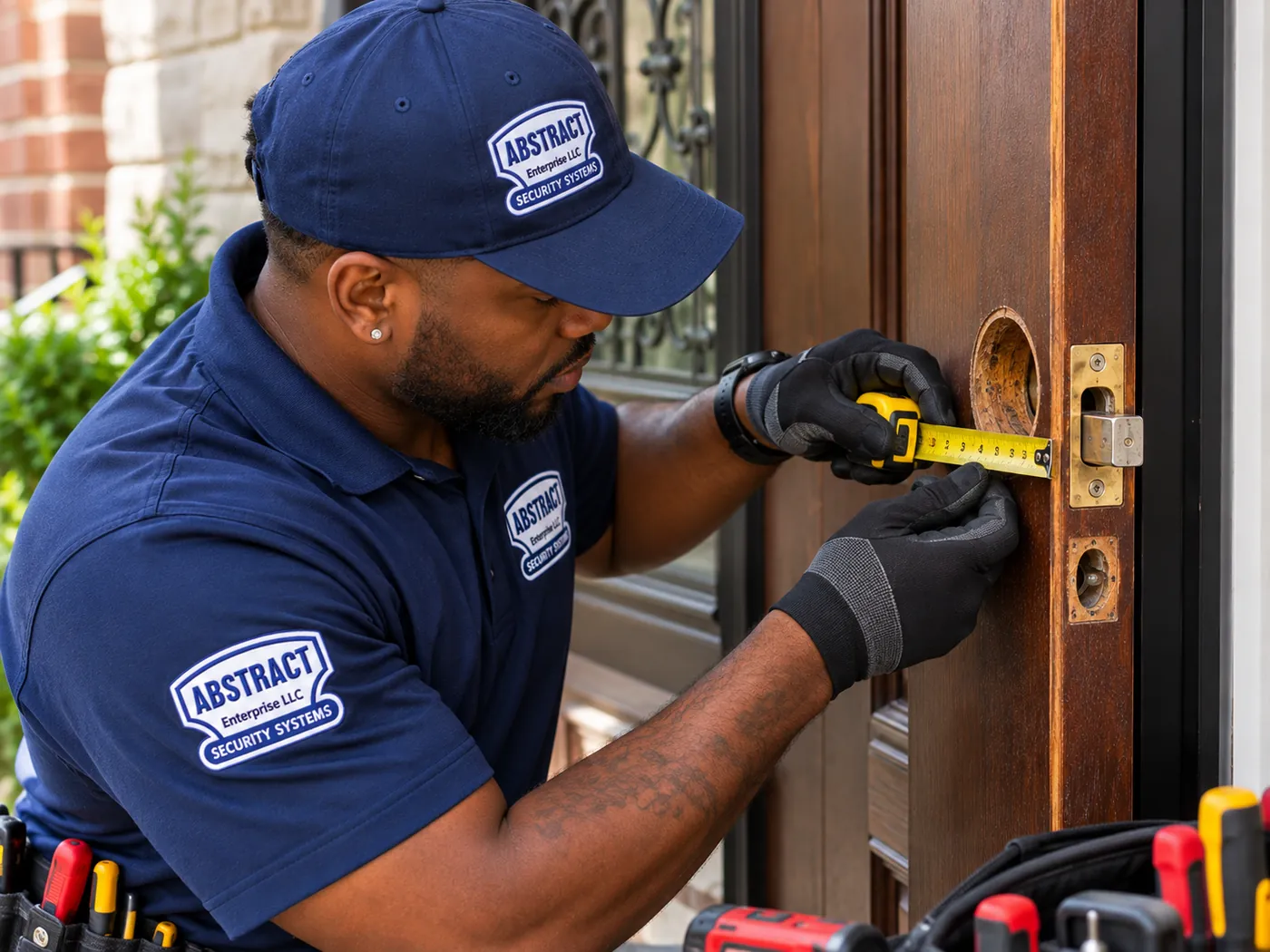
AESS technician measuring the door bore with a tape measure before a smart lock installation in Staten Island
Measuring the bore and backset first, so the new smart deadbolt fits the existing door without re-drilling.

One Walkthrough, Every Door, One Price

Tell us how many doors the house has and who needs to come and go. We'll look at all of them on one visit and give you a single written price for the lot.

Get In Touch

Request a Free Quote

Detached house, two-family, townhouse or shop — tell us the doors and the people, and we'll call back the same business day.

✅

We Got Your Request!

We'll call you back the same business day. If it's urgent, call us now at (347) 934-8335.

How It Works

Our Installation Process

Six steps, whether it's one front door in Westerleigh or every door of a two-family in Great Kills.

1. Map the household

On the phone we list the doors, who uses each one and when, and who should have their own code: family, tenant, aide, cleaner, dog walker.

2. Free walkthrough of every door

We measure thickness, backset and swing, check closers, storm doors and glass, note exposure to weather, and test Wi-Fi and Bluetooth at each door.

3. One written price

A flat quote for the whole house, with the lock recommended for each door and the connection plan. Published AESS figures carry the Staten Island adjustment.

4. Door work first

Closers, hinges and strikes are adjusted so every door closes and latches on its own; old bores are filled and strikes reinforced before a lock goes on.

5. Install, seal and connect

Locks are fitted with the maker's gaskets, inside exit is checked for one-motion release, and bridges or border routers are placed and tested from mobile data.

6. Codes, handover and written list

Every person's code is enrolled and tested at their door, admin access is set on two phones, and you get a written list of locks, codes and keys.

Coverage Area

Smart Lock Installation Near Staten Island's Landmarks

Snug Harbor, Randall Manor

The 83-acre former Sailors' Snug Harbor campus on the Kill Van Kull, founded through Captain Robert Randall's 1801 bequest and a National Historic Landmark district since 1976. The surrounding North Shore streets mix older frame houses with later two-families, and many doors here face the water.

Historic Richmond Town

The Staten Island Historical Society's village near the geographic centre of the island, on a 100-acre site with a 25-acre main campus. Around it, Mid-Island streets of detached houses with side doors and attached garages are classic whole-house keyless jobs.

Conference House, Tottenville

Built around 1675 near Ward's Point, the southernmost tip of New York State, where Franklin, Adams and Rutledge met Lord Howe on September 11, 1776. The South Shore houses near Raritan Bay are where we pay the most attention to exterior finishes.

The Greenbelt and Todt Hill

About 2,800 acres of parkland across the island's central hills, with Todt Hill rising to 410 feet. Larger detached homes on the hills often have long driveways and detached garages, which makes signal planning the main event.

Staten Island Mall, New Springville

Opened in August 1973 with about 1.37 million square feet of floor area. The Richmond Avenue corridor around it is where most of our small-business door calls on the West and Mid-Island come from.

Oakwood Beach and the East Shore

Where the state's post-Sandy buyouts returned land to nature — NY1 reported 513 buyout offers on the island by October 2015. Nearby, many houses that stayed were raised or rebuilt, with entrances now a storey up.

We also serve St. George, Stapleton, Tompkinsville, Rosebank, Port Richmond, West Brighton, Westerleigh, Mariners Harbor, Graniteville, Bulls Head, Willowbrook, Grymes Hill, Emerson Hill, Lighthouse Hill, Dongan Hills, Grant City, Midland Beach, New Dorp, Oakwood, Bay Terrace, Great Kills, Eltingville, Annadale, Huguenot, Prince's Bay, Arden Heights, Rossville, Charleston and Tottenville — and over the bridge, the rest of New York City.

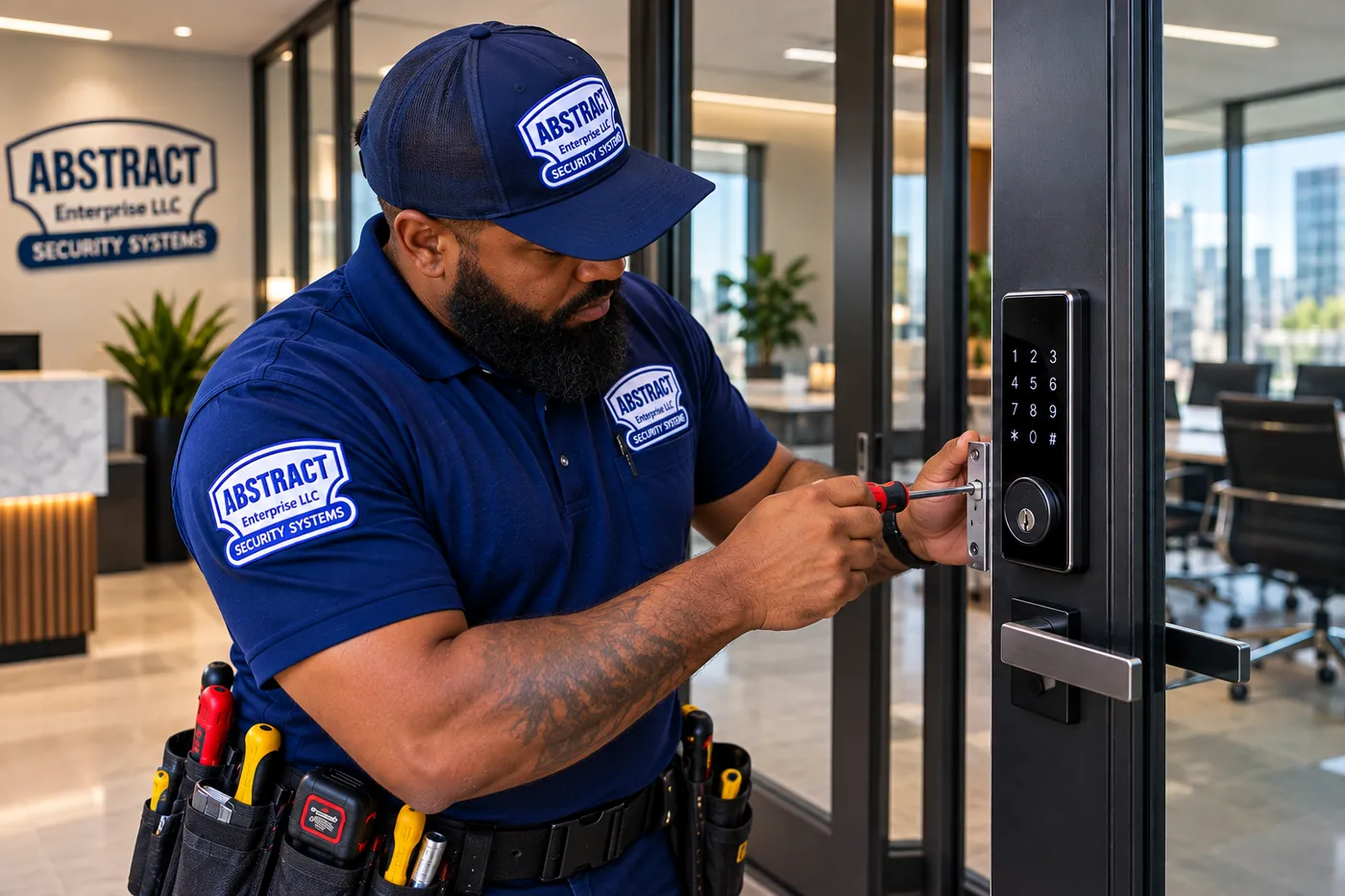
AESS technician fastening the strike for a keypad smart lock on an office glass-frame door in Staten Island
Business smart lock on an aluminum office door — codes per employee, no keys to collect.
Pricing

Smart Lock Installation Cost in Staten Island

Staten Island work is priced at 1.10 times the Brooklyn base, the area multiplier AESS applies across its services. Residential smart locks have no published AESS figure, because the door work varies too much from house to house; those are quoted flat after the free walkthrough. Everything with a published figure is shown below with the adjustment already applied.

ItemStaten Island priceScope and source
Smart locks on house doors (one door or the whole house)Quoted flat at free walkthroughIncludes door adjustment, fitting, connection and code setup for every door on the quote
Single-door keypad or fob reader with electric strike$1,650–$2,750 installedShop, office, gate or shared-entry door; AESS access-control figure of $1,500–$2,500 at the Brooklyn base, ×1.10
New electric strike on an entry door$275–$495Strike supplied and fitted as part of an entry upgrade; AESS figure $250–$450 at base, ×1.10
Failed electric strike repair$325–$534Door that buzzes but won't release; AESS figure $295–$485 at base, ×1.10, rounded half-up
Setup-only visit (app, bridge, codes; no hardware change)$225 first hour, then 30-minute blocksStaten Island setup-only rate
Service and callback rate$195/hr, 3-hour minimum ($585)After-install service calls; not charged on the initial installation

What moves a whole-house quote

  • Number of doors and how alike they are. Four doors that take the same lock are quicker than three doors that each need something different.
  • Door condition. Self-closers that don't latch, sagging hinges, old bores, outswing doors and doors thicker than the lock is listed for all add door work.
  • Exposure. Waterfront or no-overhang doors may call for a different model or finish and extra sealing.
  • Connectivity. A bridge, a Thread border router or a mesh access point to reach the garage, the basement or a detached building.
  • People and codes. One household is quick; a two-family with a shared door, a tenant, an aide and scheduled helpers takes longer to set up properly.

For comparison only, national third-party data from Fixr (updated January 2025) puts a single smart lock installation at $250 to $400, average $300. That is a national average for one lock, not an AESS price.

Full terms — including 50% deposit, one-year parts-only warranty on AESS-supplied products, and the late-fee schedule — are set out in the service agreement.

AESS technician checking latch and bolt alignment at the door edge during a smart lock installation in Staten Island
Checking bolt throw and strike alignment — a bolt that binds drains batteries and jams motors.
Shop Our Systems

Smart Lock Installation Packages & Pricing

Starter — The Everyday Door

Quoted flat at walkthrough

One smart lock on the door your household uses most — usually the side or garage-entry door — with door adjustment, auto-lock, codes for everyone and a signal test. The right first step for most houses.

Standard — The Whole House

Quoted flat at walkthrough

Every regularly used door on the house on one system: front, side, garage entry and a basement or tenant door, one app, individual and scheduled codes, connection planned for each door, and a written access list.

Premium — Keyless Gate or Shop Door

$1,650–$2,750

A weather-rated keypad or fob reader with an electric strike on a side-yard gate, a shared entry, a shop or an office door, wired to a power supply with backup and a free-exit device inside. Staten Island pricing.

Bring Your Own Lock — Labour Only

Already bought the locks? We install them, adjust the doors, connect them and set up the codes. Labour is quoted flat at the walkthrough. If the lock turns out not to suit the door, we tell you before we drill. If the job is only app, bridge or code setup with no hardware, it's the $225 first-hour setup-only rate.

Speak to a Tech About Your Doors

Send a photo of each door from inside and out, and its edge. We'll tell you which locks are likely to fit and what door work to expect before we visit.

Connectivity

Getting Every Door Online: Garages, Basements and Detached Buildings

The most common complaint we hear about smart locks on Staten Island is not about the lock. It's that the lock on the garage door or the basement door “keeps going offline.” Almost always, the router is on the opposite side of the house, a floor away, behind a block wall or a steel garage door, and the lock is sitting at the edge of what its radio can reach.

How we pick the connection for each door

  • Bluetooth only: fine for a door you only ever open while standing at it, by keypad or phone. No remote control, no away-from-home alerts. Often the right answer for a shed.
  • Bluetooth with a Wi-Fi bridge: the bridge plugs in near the door and relays to your router. August's guidance is to place it within 10 to 15 feet of the lock and check for full Wi-Fi bars where it sits. Good for a garage-entry door with an outlet nearby.
  • Wi-Fi built into the lock: no bridge, but the lock itself needs a strong 2.4 GHz signal at the door, and Wi-Fi locks tend to use batteries faster. Best on front and side doors near the router.
  • Matter over Thread: the lock joins a low-power mesh through a Thread border router, such as the smart speakers and hubs manufacturers list. Mains-powered Thread devices around the house can strengthen the mesh toward a far door.
  • Z-Wave: where the house already has an alarm panel or hub that speaks Z-Wave, the lock can join that network instead, and locking can be tied to arming.

The detached garage problem

A detached garage at the end of a South Shore driveway, or a workshop at the back of a Todt Hill lot, can sit well beyond the reach of a router inside the house. Three approaches work: a lock that simply runs offline by keypad, with no remote features; an outdoor-rated access point or mesh node that brings real Wi-Fi to the garage, which also helps any camera there; or, where there is already a cable to the garage, a wired access point inside it. We test before recommending, and we don't sell a mesh system to a house that doesn't need one.

Whatever the method, we finish by testing remote lock and unlock from mobile data, not the home Wi-Fi, so you know it works when you're actually away.

AESS technician testing a keypad smart lock on an apartment unit door with the mobile app in Staten Island
Apartment unit door, tested from the keypad and the app — handy for owners renting out units.
Owner and Tenant

Running the Locks on a Two-Family House You Live In

A two-family where the owner lives in one unit and rents the other is the most common multi-household arrangement we see on the island. It works best when the locks mirror the deal you have with your tenant: shared doors are shared, private doors are private, and nobody's access changes without notice.

MomentWhat we set upWhy
Tenant moves inTenant becomes admin of their own unit door; gets a permanent personal code on any shared door; owner keeps admin of shared doors onlyTheir home, their guests; the shared door works like a small lobby
Tenant's guests and helpersTenant issues their own scheduled codes on their door; a guest code on the shared door if agreedNo need for the owner to manage another household's visitors
Emergency accessA sealed key or an emergency code on the tenant's door, as the lease providesAccess on agreed terms, not a daily back door
Logs and alertsShortest history on shared doors; no owner alerts for the tenant's code; no owner logs on the tenant's doorRespect privacy; keep only what helps if there's ever a problem
Tenant gives noticeNothing changes until the unit is lawfully handed backChanging or disabling access to an occupied home without a key is an unlawful eviction under Administrative Code § 26-521
Unit handed backTenant's codes removed, lock reset to the owner, keyed cylinder rekeyedThe next tenant starts clean

If the house also has a basement unit or rooms rented to guests, the short-term rental rules described above apply on top of this, and interior doors must stay free for guests to pass through.

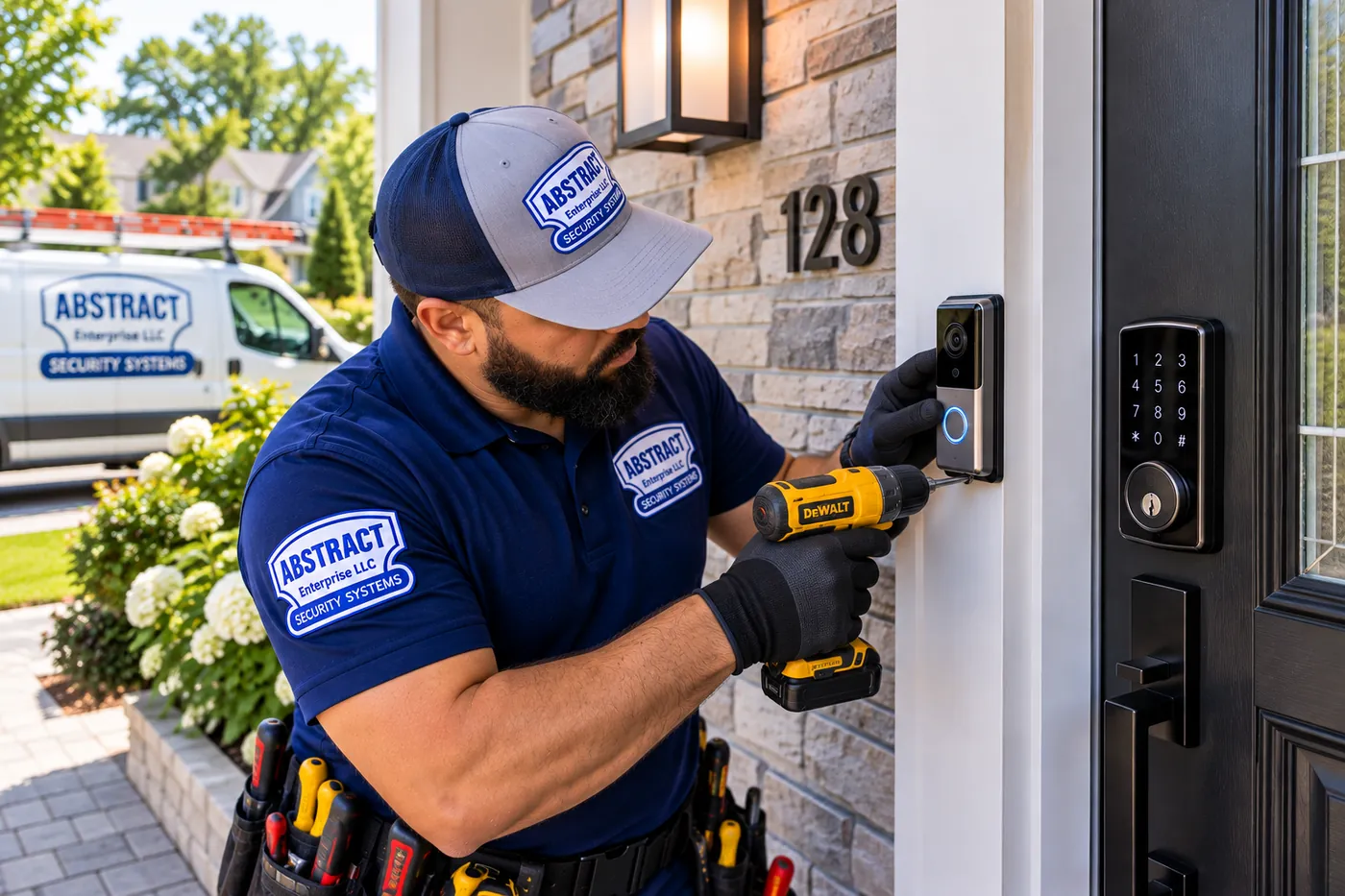
AESS technician mounting a video doorbell beside a newly installed keypad smart lock in Staten Island
Video doorbell and smart lock at the same visit — see who is there, then let them in.
Before You Buy

A Homeowner's Checklist Before Ordering Smart Locks

Plenty of Staten Island homeowners buy the locks first and call us second. That works fine if a few things are checked before the boxes are opened, because most locks can't be returned once they've been fitted and enrolled.

  • Count the doors you actually use. Walk the house for a week and notice which doors open every day. Those are the doors worth making smart; a front door that opens twice a month may be fine with a matching keyed deadbolt.
  • Measure each door. Thickness at the lock, the backset (edge of door to centre of the bore), and the bore size. Write down which way each door swings and whether a storm door sits in front of it.
  • Look at the latch on its own. Close each door gently without turning anything. If it doesn't latch every time, it needs adjusting before any smart deadbolt will behave.
  • Check the signal at each door. Stand at the garage-entry door and the basement door with your phone on Wi-Fi only. If a video call drops there, the lock will struggle too.
  • Choose one family of locks. Locks from the same maker usually share one app, one code list and one bridge or hub. Mixing brands means mixing apps.
  • Decide who gets codes. List everyone who comes and goes, and whether their access should be permanent, scheduled or one-off. That list shapes which lock features you actually need.
  • Read the finish and warranty notes. For a door facing the water or standing in the rain, look for the maker's guidance on exterior and coastal use, and keep the gaskets and seals that come in the box.
  • Keep a key. Pick models with a keyed override, and test that key twice a year. It's the only way in when batteries, motors or apps fail together.

If you're unsure, send photos of each door, inside, outside and edge-on, before ordering. We'll tell you which formats fit and which doors need work first, and that advice costs nothing.

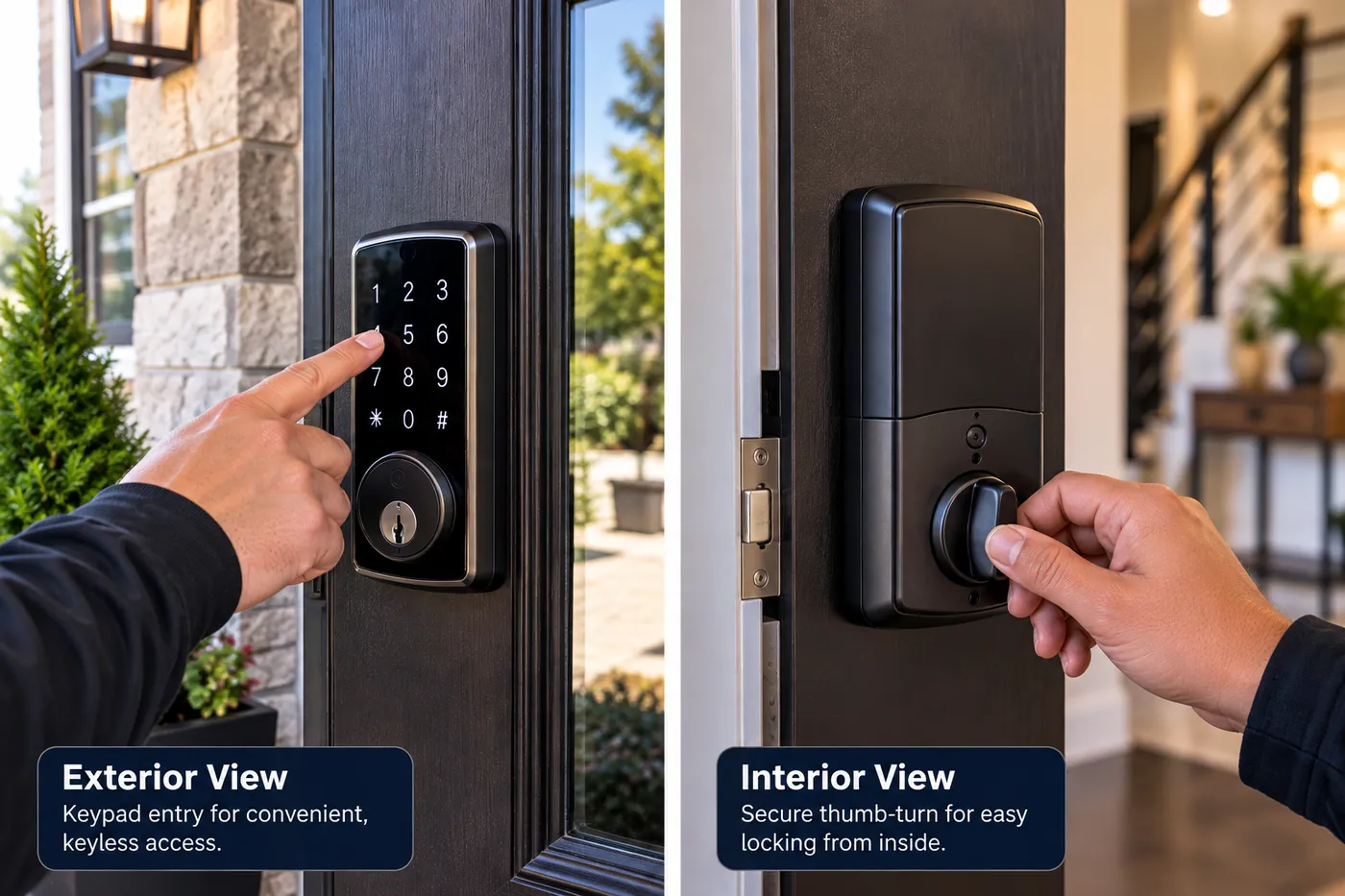
Exterior keypad and interior thumb-turn views of a smart deadbolt installed in Staten Island
Outside: keypad entry with a key override. Inside: a thumb-turn so nobody gets locked in.
Complete Services

Every Smart Lock Installation Service in Staten Island

Keyless doors usually arrive with other work: a doorbell camera at the top of the new stair, an alarm that should arm when the door locks, Wi-Fi that finally reaches the garage. Most Staten Island houses pair smart locks with a video doorbell; most shops pair them with access control. These are the related services we offer on the island.

Access Control Installation Staten Island

Keypads, fob readers and controllers for shops, offices and shared entries.

Doorbell Camera Installation

A camera at the top of the stoop or the side door, so a remote unlock is for a face you recognise.

AESS Alarm Installation on Staten Island

Contact and glass-break sensors, and locks that arm the system.

Home Automation Installation

Locks, lights and hubs set up to work together.

Residential Security Cameras

Cameras on the side door, the driveway and the yard.

Intercom Installation

A call button for each unit at a shared front door, with release from upstairs or downstairs.

Door Buzzer Repair

Fixes for the buzzer and strike on a two-family's shared entrance when the door stops releasing.

Network Installation Staten Island

Access points placed so the garage, the basement and the yard all get a usable signal.

Abstract Enterprises Low-Voltage Work

Doorbell wiring, lock power supplies and the cable behind them, under one NYS licence.

Field Notes

Field Notes on Staten Island House Doors

How our installers read a house before recommending locks — general working practice, not a story about any particular customer.

We don't start at the front door. We start at the door with the most wear on its threshold, because that's the one the family really uses, and on most Staten Island houses it's the side door or the door from the garage. We open and close it ten times without touching the handle on the way shut. If it doesn't latch on its own every time, no smart lock will work well on it, so the closer and strike come first.

Then we stand at each door with a phone and look at the Wi-Fi bars, because the garage door and the basement door are where locks go offline. We look at which way each door faces, whether rain hits it directly, and how far the house is from the water. We look for glass within an arm's reach of the thumb-turn, for storm doors that leave no room, for outswing doors with exposed hinge pins.

And we ask who lives here and who visits. The best smart lock plan for a house is usually less about which brand and more about who gets which code on which door — and making sure that, on every one of those doors, getting out takes one turn of the hand and nothing else.

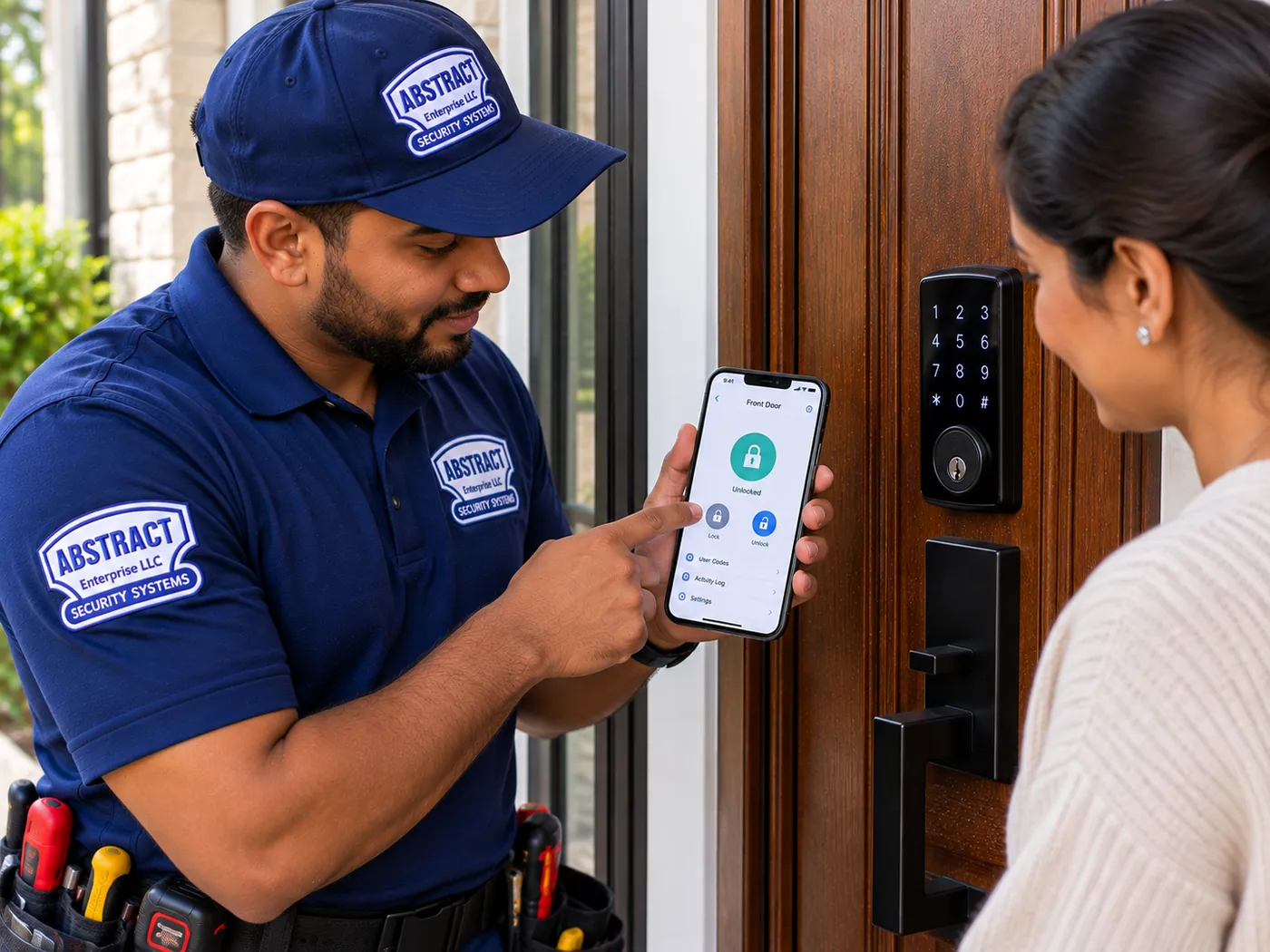
AESS technician walking a customer through locking and unlocking her new smart lock from the app in Staten Island
Walking the owner through the app before we pack up — lock, unlock, codes and history.
FAQ

Staten Island Smart Lock Installation FAQ

Why are Staten Island prices 10 percent above the Brooklyn base?
+

AESS prices each area from a Brooklyn base using a fixed multiplier, and Staten Island's is 1.10. It applies to our published figures, such as the single-door keypad or fob reader with electric strike at $1,650 to $2,750 here, and it is already built into any flat quote we give you after a walkthrough.

Will drilling for a new lock damage a fibreglass or steel door?
+

Not if the door is prepared properly. Fibreglass and steel doors need sharp hole saws, slow speeds and support behind the cut so the skin doesn't chip or dent, and some steel doors have reinforcement plates that change where a bolt can go. Where a door is already drilled for a standard deadbolt we use the existing holes; we only cut new ones after confirming the lock's door-prep figures.

Will the lock still work properly if the door has dropped on its hinges?
+

Not for long. A sagging door makes the bolt rub the strike, which drains batteries and can stall the motor. We tighten or replace hinge screws, add longer screws into the framing where needed, and adjust the strike so the bolt throws freely before the lock goes on.

Can the new smart lock match the brushed nickel or bronze hardware already on the house?
+

Most major brands offer their smart deadbolts in several finishes, and some sell matching handlesets. We note your existing finish at the walkthrough and suggest models that come in it. On exposed or waterfront doors we may recommend a more durable finish over an exact match, and we'll explain why.

Do you fit keypads on side-yard gates as well as house doors?
+

Yes. A gate usually needs a weather-rated keypad or reader with an electric strike or magnetic lock, a power supply with battery backup, and a free-exit button or handle on the inside. That is priced from our published single-door figure, $1,650 to $2,750 on Staten Island, rather than as a residential lock.

Do smart locks need a monthly subscription?
+

Most don't. Codes, auto-lock, history and remote control through the maker's app are generally included. Subscriptions usually come from linking the lock to a monitored alarm or a camera service, where the alarm or camera company charges for its own features. We tell you before installation if anything you want depends on a paid plan.

Can our house and our parents' house nearby use the same codes?
+

Yes, if both houses use locks from the same family and you want them to. Each lock is enrolled separately, so you can give one person the same code at both houses while keeping other codes house-specific. Many apps let one administrator manage two homes from one account, which suits families who look after a relative's house down the street.

How long does a whole-house smart lock installation take?
+

It depends far more on the doors than the locks. A door that already latches well and takes the lock as drilled is quick; a garage-entry door that needs its closer reset, or a door with an old bore to fill, takes longer. After the walkthrough we give you a time estimate with the written quote, so you know whether to plan for a morning or a full day.

Can you set the locks up before we move in, while the house is still empty?
+

Yes. An empty house is the easiest time: doors can be adjusted without working around furniture, and we can reset old locks, rekey cylinders and enrol your own account before the first box arrives. We leave temporary codes for movers or contractors that you can delete with one tap once you are in.

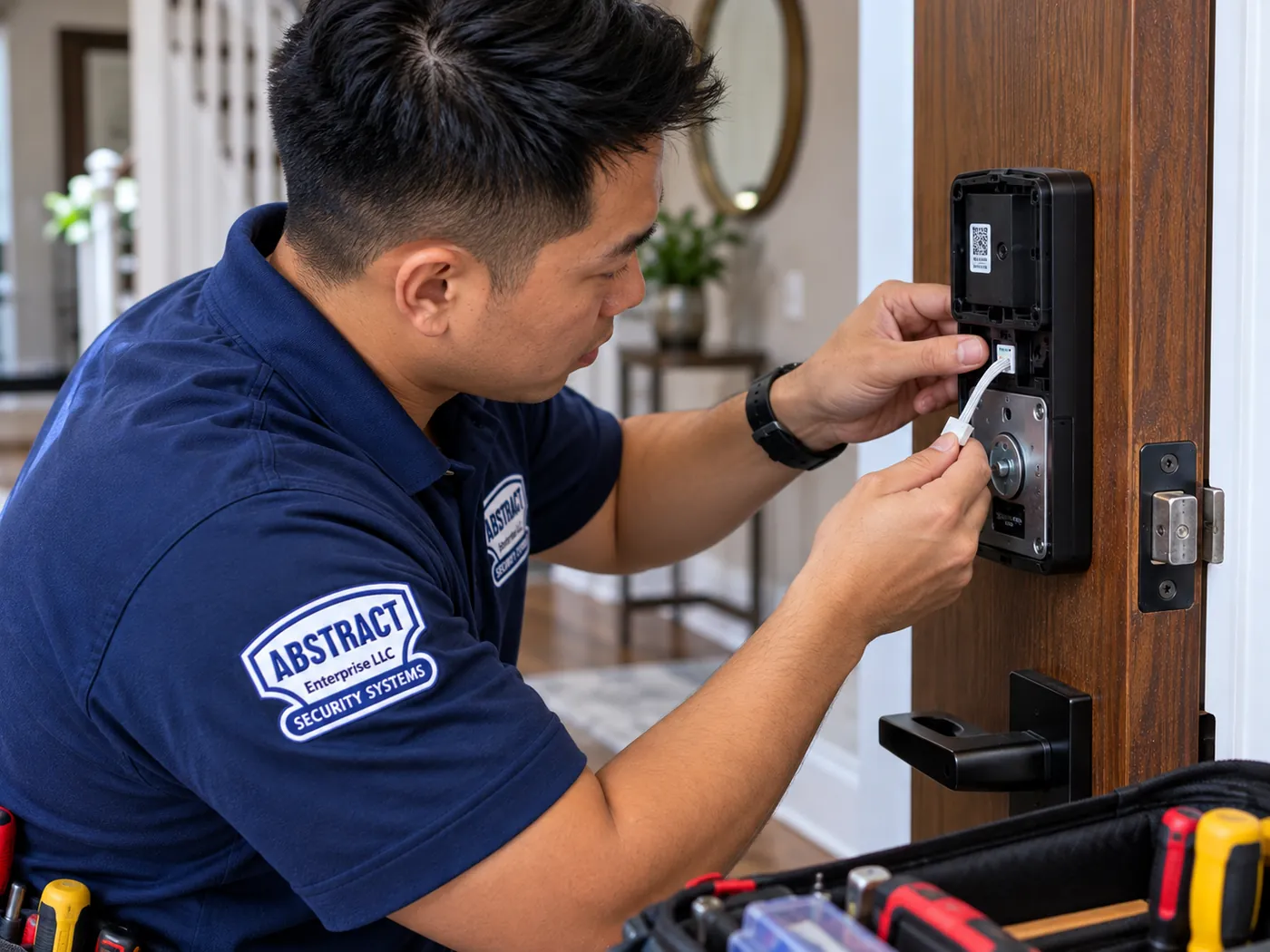
AESS technician connecting the ribbon cable on the interior unit of a keypad smart lock during installation in Staten Island
Seating the ribbon cable between the outside keypad and the inside unit — a loose connector is the top cause of dead keypads.
All Areas Served

Smart Lock Installation Across New York

New York City

Smart lock installation in NYC — renters, co-ops, condos and multi-unit buildings across the five boroughs.

Staten Island

Smart lock installation on Staten Island (this page) — one- and two-family houses, many doors, exposed to the weather.

The Bronx

Bronx smart lock installation by Abstract Enterprises.

Manhattan, Brooklyn and Queens

Manhattan smart locks · Brooklyn · Queens

Back to the Abstract Enterprises Security Systems home page, or read about our company.

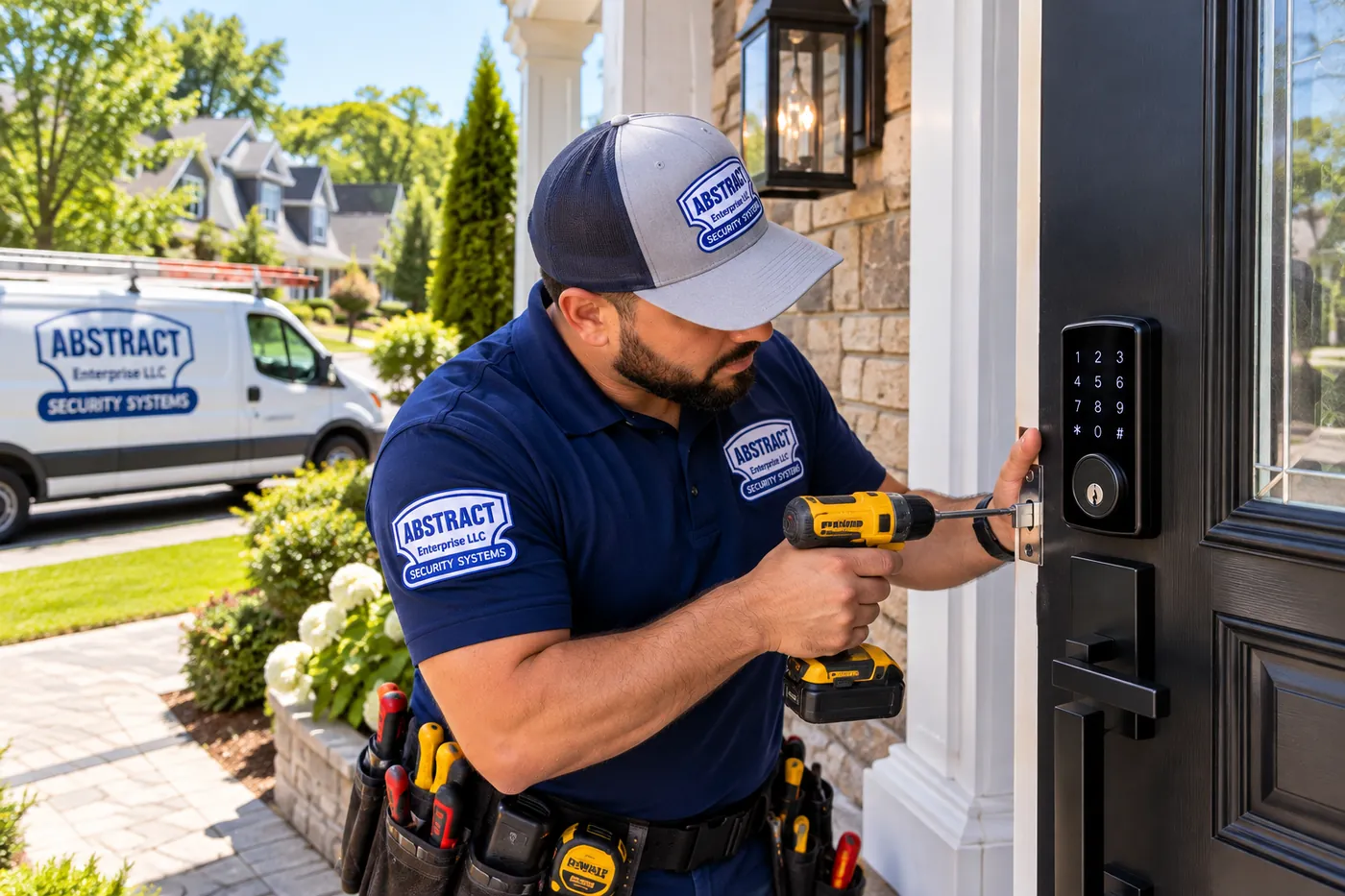
AESS technician installing a keypad smart deadbolt on a suburban home front door with the AESS van outside in Staten Island
Single-family front door, keypad deadbolt going in — one visit, about an hour on a standard door.

Can't Get In Through Your Own Door on Staten Island?

Keypad dark, app lost the lock, bolt jammed against a swollen frame? Call (347) 934-8335. We book the next open 2-hour window, and most power, pairing and alignment faults are fixed in one to two hours once we are at the door. Try the keyed override first if the lock has one — it's the reason we always leave one.

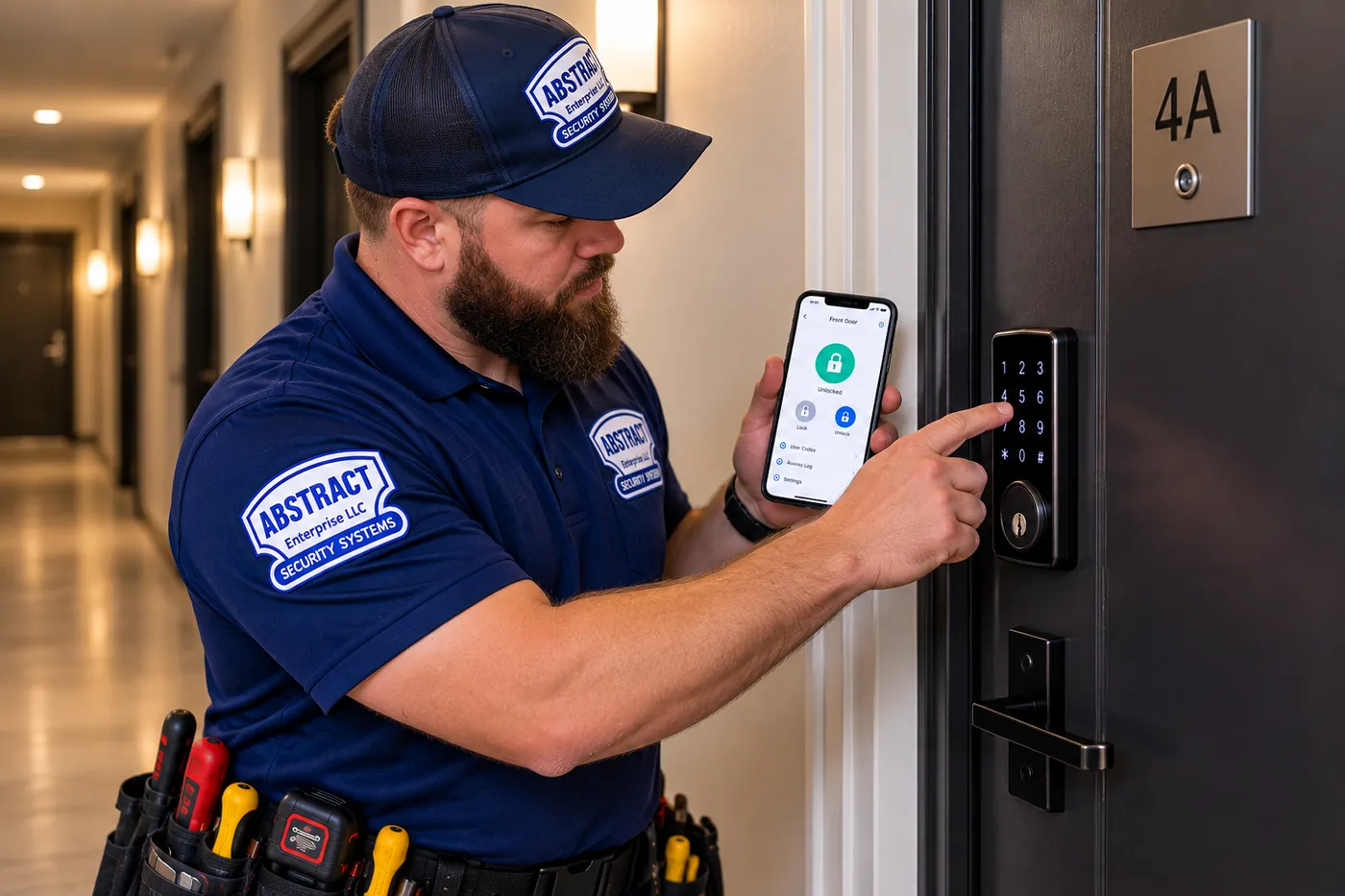
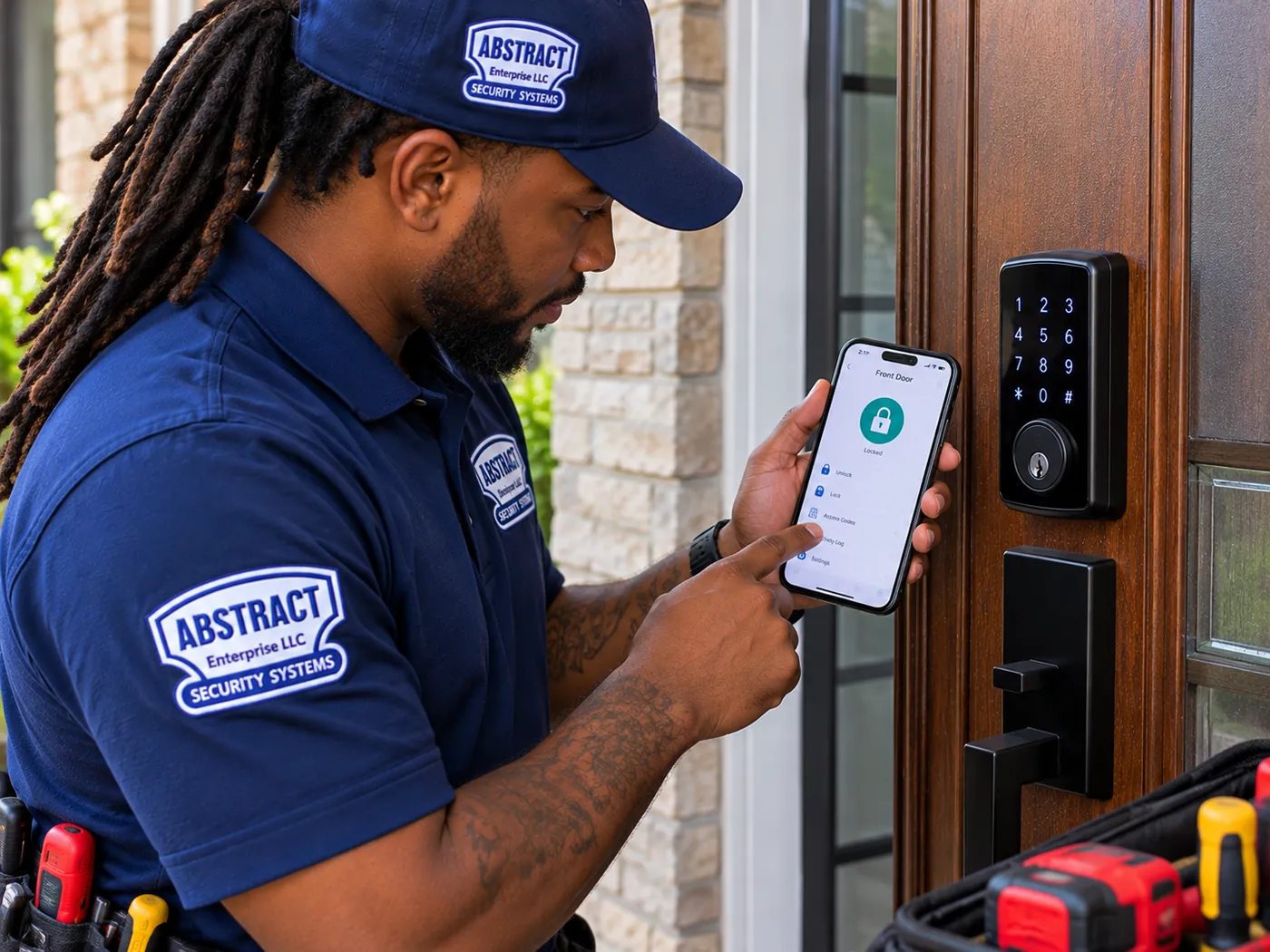
AESS technician checking the locked status of a keypad smart lock in the mobile app after installation in Staten Island
Confirming lock status, access codes and the activity log from the phone.

Smart Lock Installation Staten Island — Licensed, Insured, Door by Door

Abstract Enterprises Security Systems · 1282 Troy Ave, Brooklyn, NY 11203 · (347) 934-8335 · WhatsApp (718) 679-0359 via wa.me

NYS Low-Voltage Licence #12000287431 · 100% Licensed & Insured · Same-Day Estimates · Rated 4.7★ from 201 Google Reviews

Locks you supply carry their manufacturer's warranty; see our warranty page for how AESS-supplied products are covered.

This page explains how New York City rules affect smart lock installation on houses; it is not legal advice. Page reviewed and updated October 17, 2026. Changelog: first publication of the Staten Island smart lock installation page.