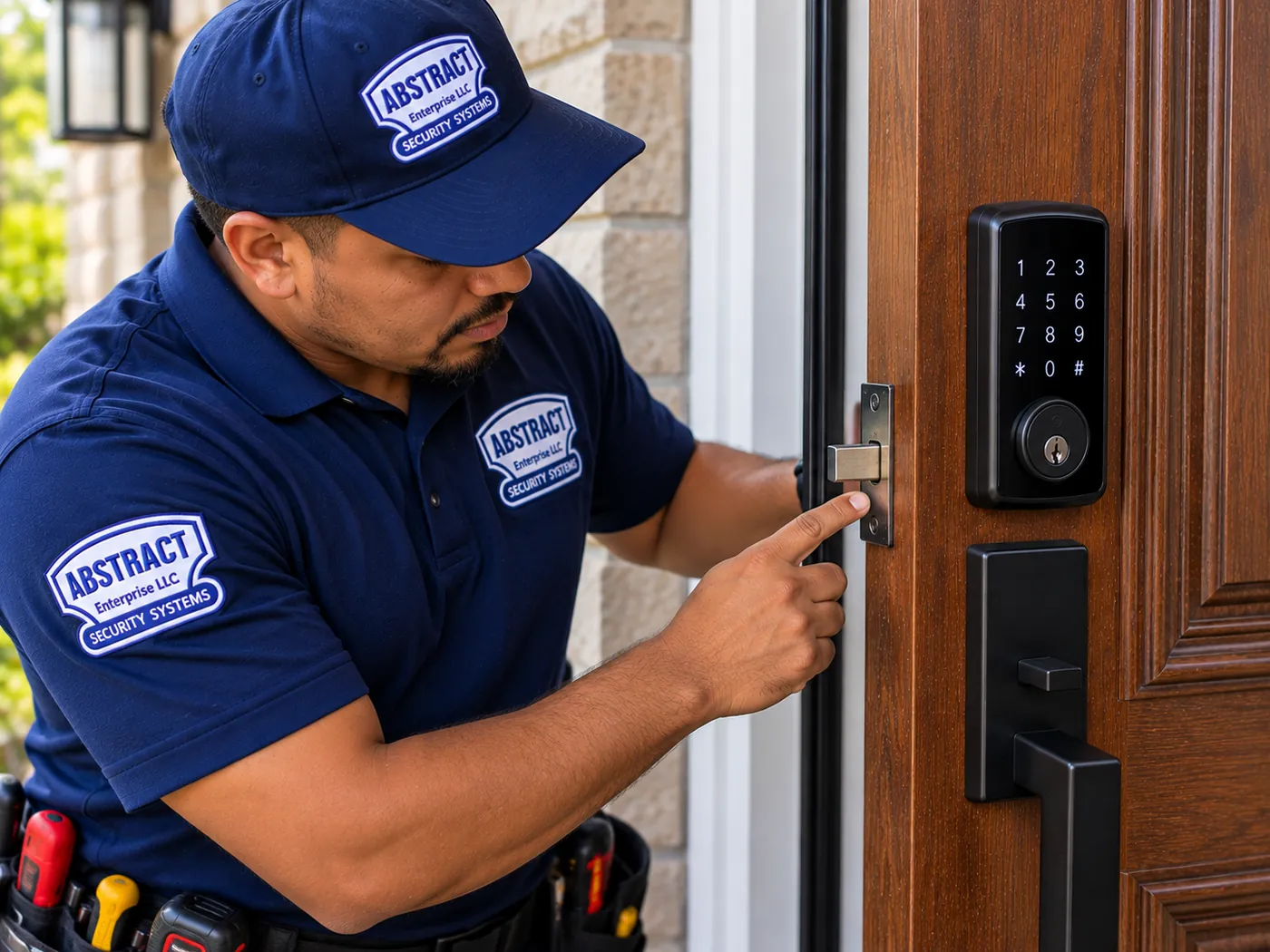
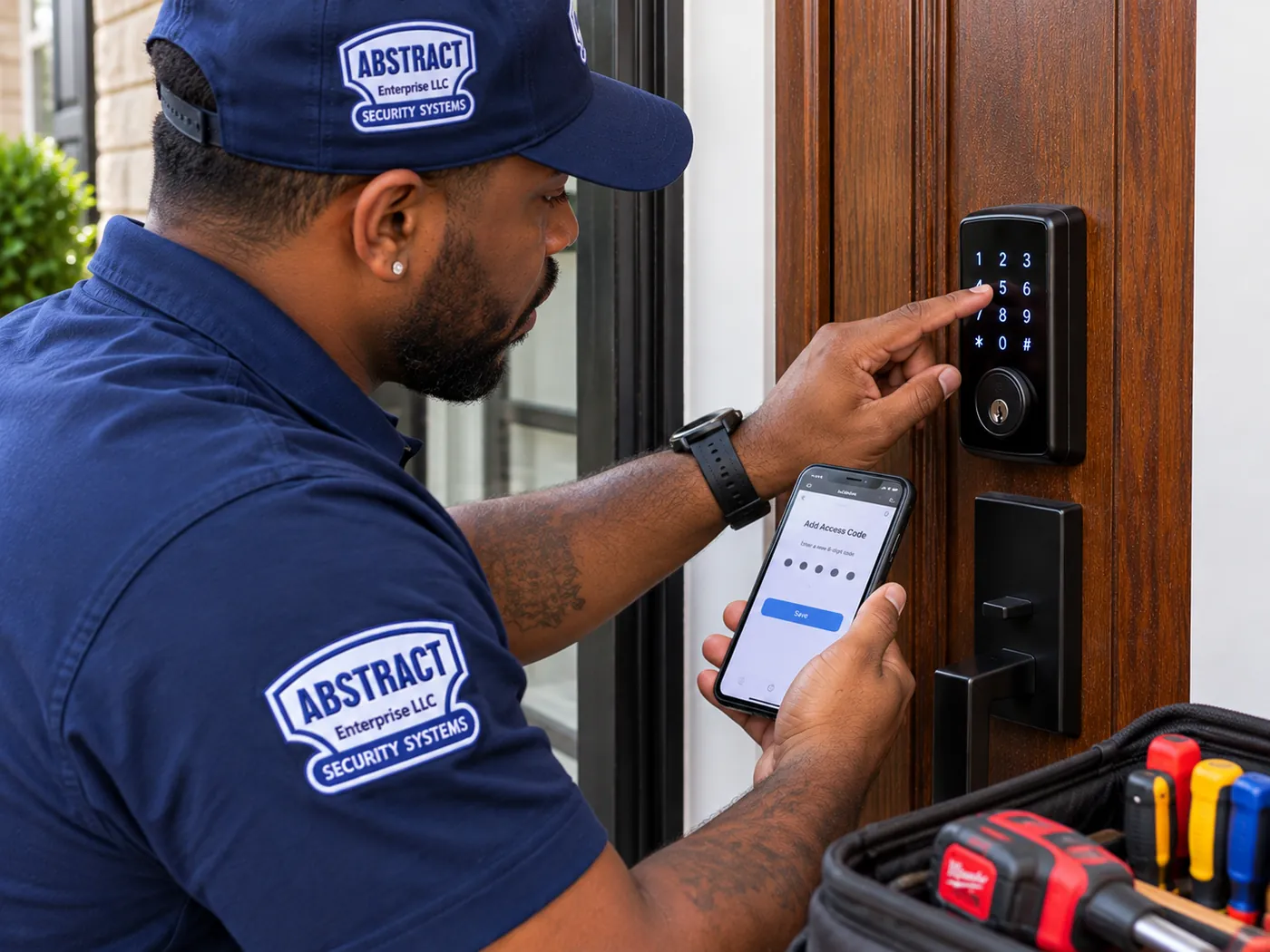
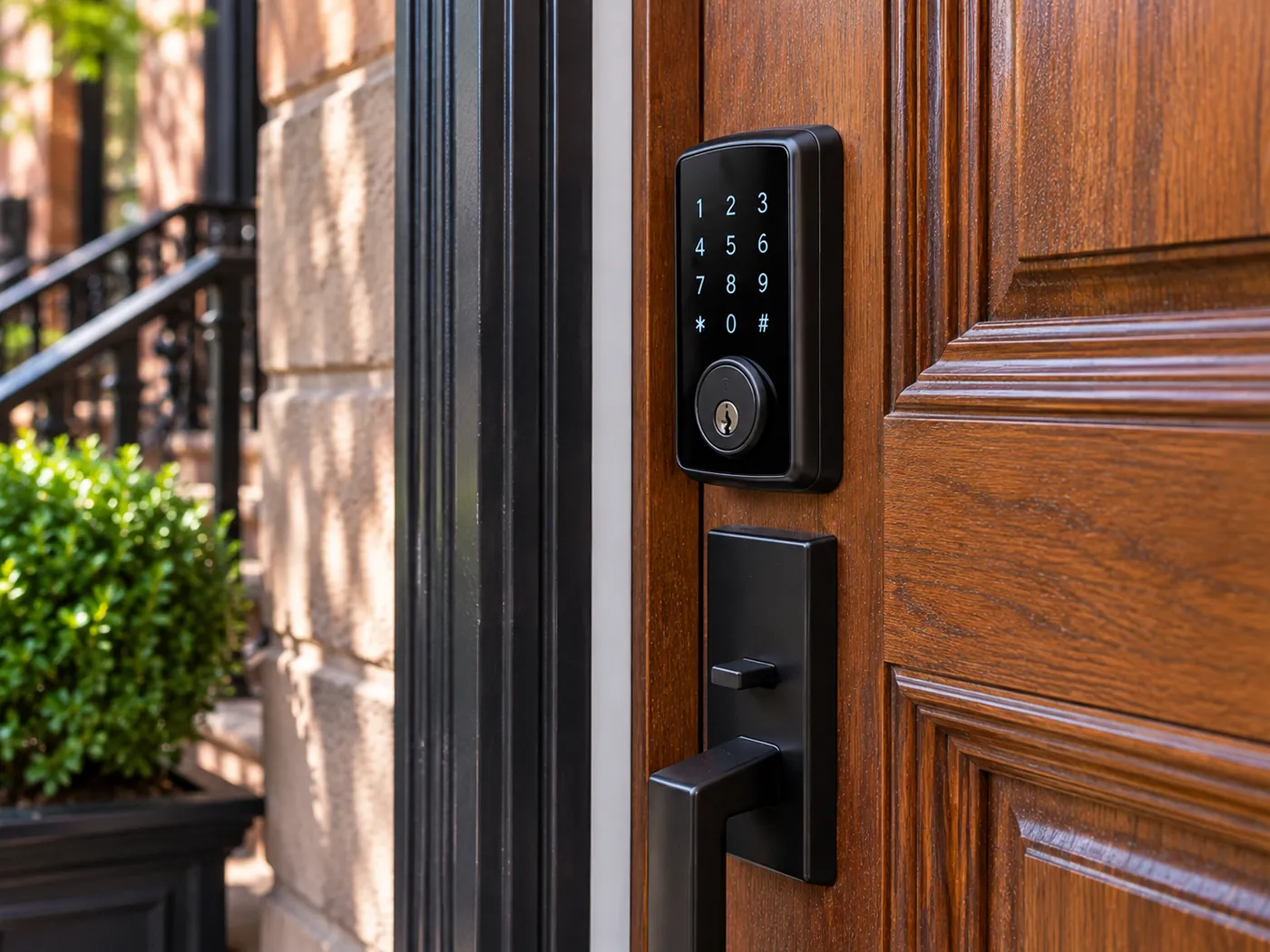
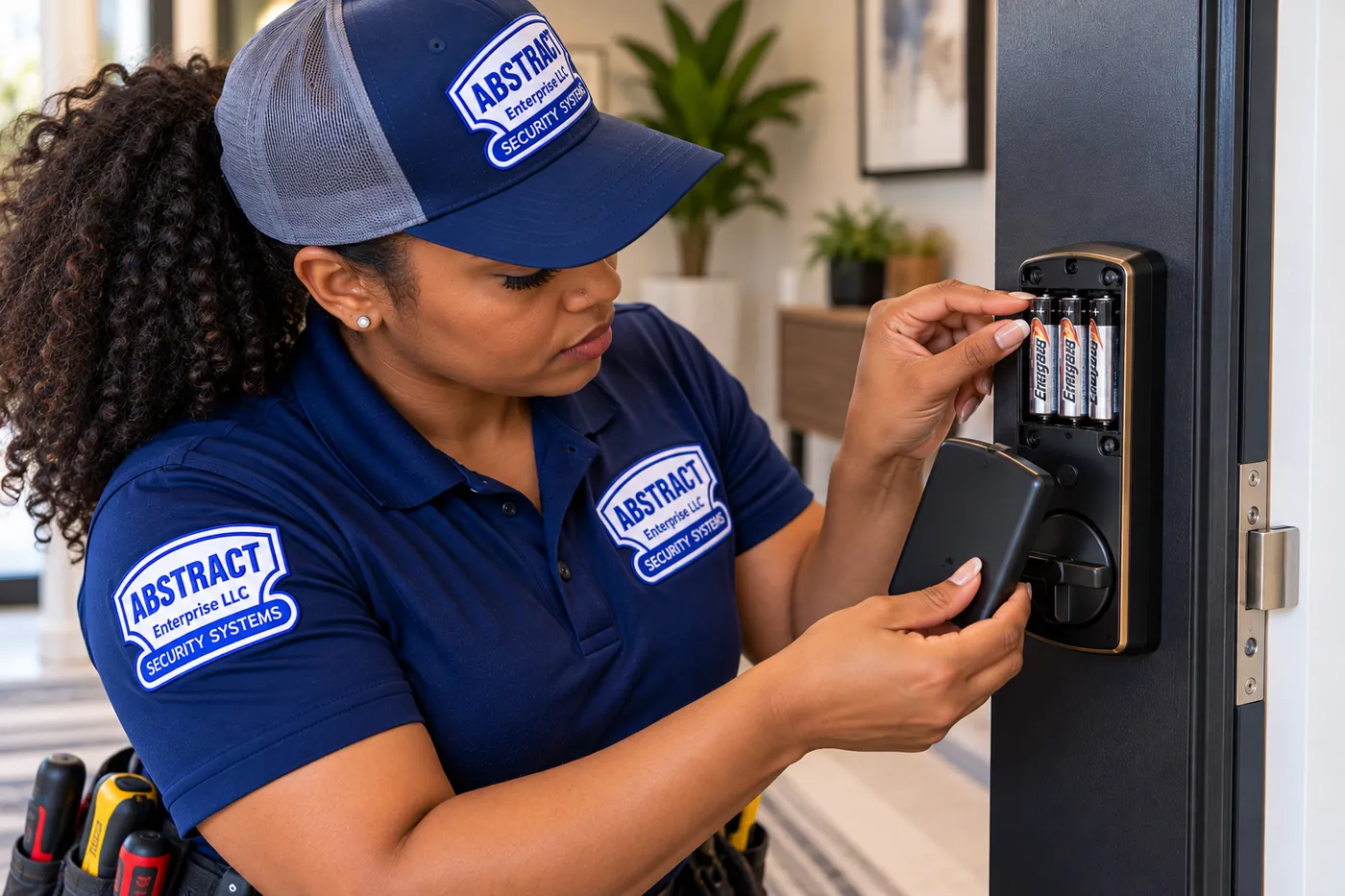
Converted Lake Bungalows · Lake-Side Sliders · Bulkhead Cellar Doors · Driveway Gate Keypads · Responder Access · Church, Office & Shop Doors
Putnam is a county of commuters who leave before dawn for the Harlem and Hudson lines, of 1930s lake bungalows around Lake Carmel, Putnam Lake and Lake Peekskill that were never meant for winter, and of hillside farmhouses in Philipstown and Putnam Valley reached by long gravel driveways through reservoir land. The doors that matter here are the thin cottage door, the slider facing the water, the cellar bulkhead the oil man uses, the gate at the bottom of the drive, and the door the volunteer ambulance crew will need at three in the morning. We fit smart locks that suit those doors and the people who come through them, and every one still opens from inside with one plain turn.
Reviewed and updated October 17, 2026 · Written by Anwar Timothy, NYS licence #12000287431

Weighing a keyless door for a Putnam house, cottage, church or shop — or locked out by one that stopped answering? Ring our Hudson Valley line, (845) 640-3835, or send the 60-second form. A licensed installer reads every request and will tell you, before anyone drives out, whether your door, your gate or your cellar hatch is a good candidate and what the visit will involve.

Putnam is small on the map and long on the drive. The county's own hazard mitigation plan describes nine municipalities — the towns of Carmel, Kent, Patterson, Philipstown, Putnam Valley and Southeast, and the villages of Brewster, Cold Spring and Nelsonville — spread over a little more than 240 square miles, with the most rugged ground in Philipstown, Putnam Valley and western Kent, where many peaks rise above 1,000 feet. The Census Bureau counts about 99,000 residents in roughly 38,700 housing units, and 83.8 percent of occupied homes are lived in by the people who own them. That combination — owner-occupied houses scattered across hills, lakes and reservoir land — is what shapes a smart lock job here. The owner decides everything, the doors are many and varied, and the nearest help can be a long way off.
The lake communities are the first thing that sets Putnam apart. According to the Town of Patterson's history site, New York City developers Warren and Arthur Smadbeck, working with McGolrick Realty and the New York Daily Mirror, began building three recreational communities around man-made lakes in 1928: Lake Carmel in Kent, Lake Peekskill in Putnam Valley and Putnam Lake in Patterson. They were sold to city families as summer bungalow colonies. At Putnam Lake, the same history records, building lots were laid out at 20 by 100 feet and sold for $50, with room for little more than a bungalow and an outhouse, and the community was largely deserted after Labor Day. Nearly a century later many of those cottages are year-round homes, winterized and extended one project at a time. Their doors tell the story: thin, light slabs intended for July, re-hung in frames that have been patched and re-trimmed, and side or lake-facing doors that have become the main entrance. A modern motorized deadbolt has to be matched to that door, not the other way round.
The second is the water supply. Much of Putnam lies within the Croton watershed, part of the New York City water system. West Branch Reservoir in Kent and Carmel, in service since 1895, holds 8 billion gallons in two basins separated by Route 301; Croton Falls Reservoir in Carmel and Southeast holds 5.2 billion; Boyds Corner sits in Kent, and Lake Gleneida beside Route 52 and Kirk Lake in Kent are controlled lakes that feed the city. A great deal of land along the county's roads is regulated with that water in mind, and wetlands alone covered about six percent of the county in the plan's 2011 land-use figures. For a lock installer that matters at the bottom of the driveway rather than at the front door: a keypad on a gate a few hundred feet from the house may mean a trench, and a trench near a stream, a wetland or a reservoir is not a weekend decision.
The third is the commute. The Census Bureau puts the mean travel time to work for Putnam residents at 39.3 minutes, and the county plan lists seven Metro-North stops on the Harlem Line in the east and the Hudson Line in the west, with Brewster, Southeast, Cold Spring and Garrison the busiest. In practice that means houses that are empty from before seven until after seven, children who come home from the school bus before their parents are off the train, and service visits — oil, propane, well pumps, septic — that happen while nobody is there to open the door. A smart lock in Putnam is often less about convenience at the front step and more about letting the right person in, on the right day, while the owners are fifty miles away.
And there is distance from help. Putnam is protected by volunteer fire departments and ambulance corps — Mahopac, Carmel, Lake Carmel, Kent, Patterson, Putnam Lake, Brewster, Putnam Valley, Continental Village, Garrison and North Highlands among them. The Kent Volunteer Fire Department, for one, reports 359 incidents in 2024, 250 of them EMS calls, and uses the Knox Box system so crews can open a property without forcing a door, with the code to release a key sent by the Putnam County 911 dispatch center. With 21.3 percent of county residents aged 65 or over, a lock plan that ignores how responders get in is incomplete. Every plan we write for a Putnam house answers that question alongside the everyday ones.
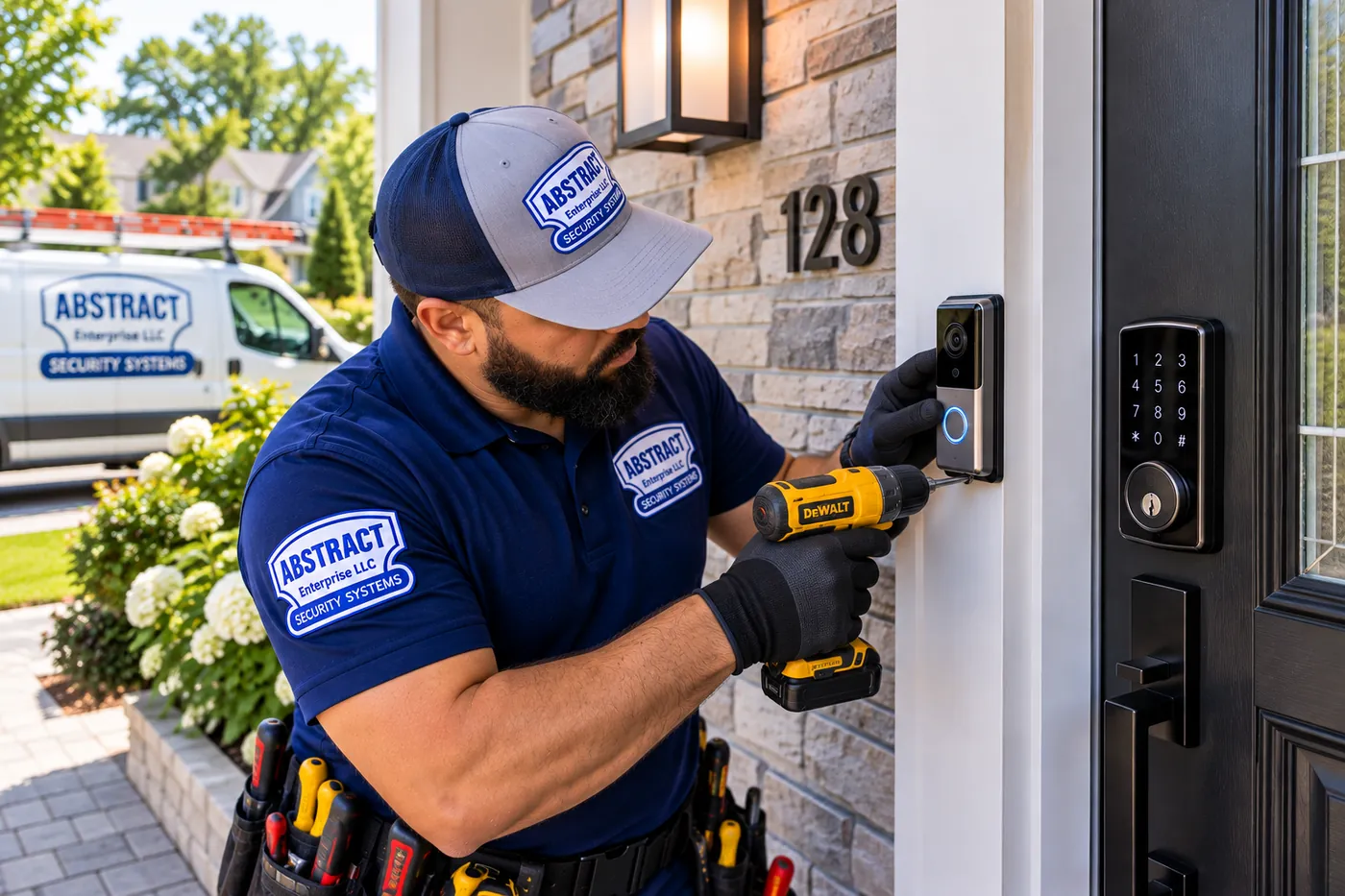
Most Putnam owners who call about a smart lock are also thinking about the rest of the property. Our doorbell camera installation in Putnam County puts a picture at the door before you unlock it from the train, and the AESS alarm installers in Putnam County can add door contacts and cellar sensors to the same plan.

A keypad that stopped lighting up on a cottage door after a damp spring, a deadbolt that jams because the bungalow's frame has shifted again, a slider lock that lost its pairing when the router was replaced, a gate keypad at the bottom of the drive that went dark after a thunderstorm, or a church office lock that nobody remembers the admin password for — those are service calls, and we book them that way. They go into the next open 2-hour window, and most battery, pairing and alignment faults are fixed in one to two hours once a technician is at the door. If the trouble is an electric strike on a business or building entrance, a failed strike repair runs $428–$703 at our Putnam rate. Call (845) 640-3835 and say it is a smart lock, or see our door buzzer repair service in Putnam County for entrance buzzers and strikes.
These are the jobs Putnam owners, associations and businesses actually ask for. Each ends the same way: the door closes and latches by itself, the inside opens with a single plain motion, a mechanical key still works, and each person who needs a credential has tried it in front of us.
Smart deadbolts on the thin, light doors of winterized bungalows around Lake Carmel, Putnam Lake, Lake Peekskill and Lake Mahopac, with the frame and the door reinforced first so the bolt has something solid to throw into.
Keyless options for the sliding glass door or French door that faces the deck and the water — the door a lake household uses most in summer and forgets to lock most often.
Planned access for the oil and propane drivers, well-pump technicians and septic crews who need the basement while you are at work, whether through the outside hatch or the stairwell door at the bottom of it.
Weather-rated keypads and readers at gates on long driveways, with the power and cable route chosen around the ground the line has to cross, and a manual release that never depends on the electronics.
Lock plans for older owners and anyone living alone that take into account how a volunteer ambulance or fire crew gets in, including mounting a fire-department key box where your district uses them.
Individual codes for children, sitters and service people, with arrival notifications to parents on the train, and auto-lock set so the door is locked behind whoever came in last.
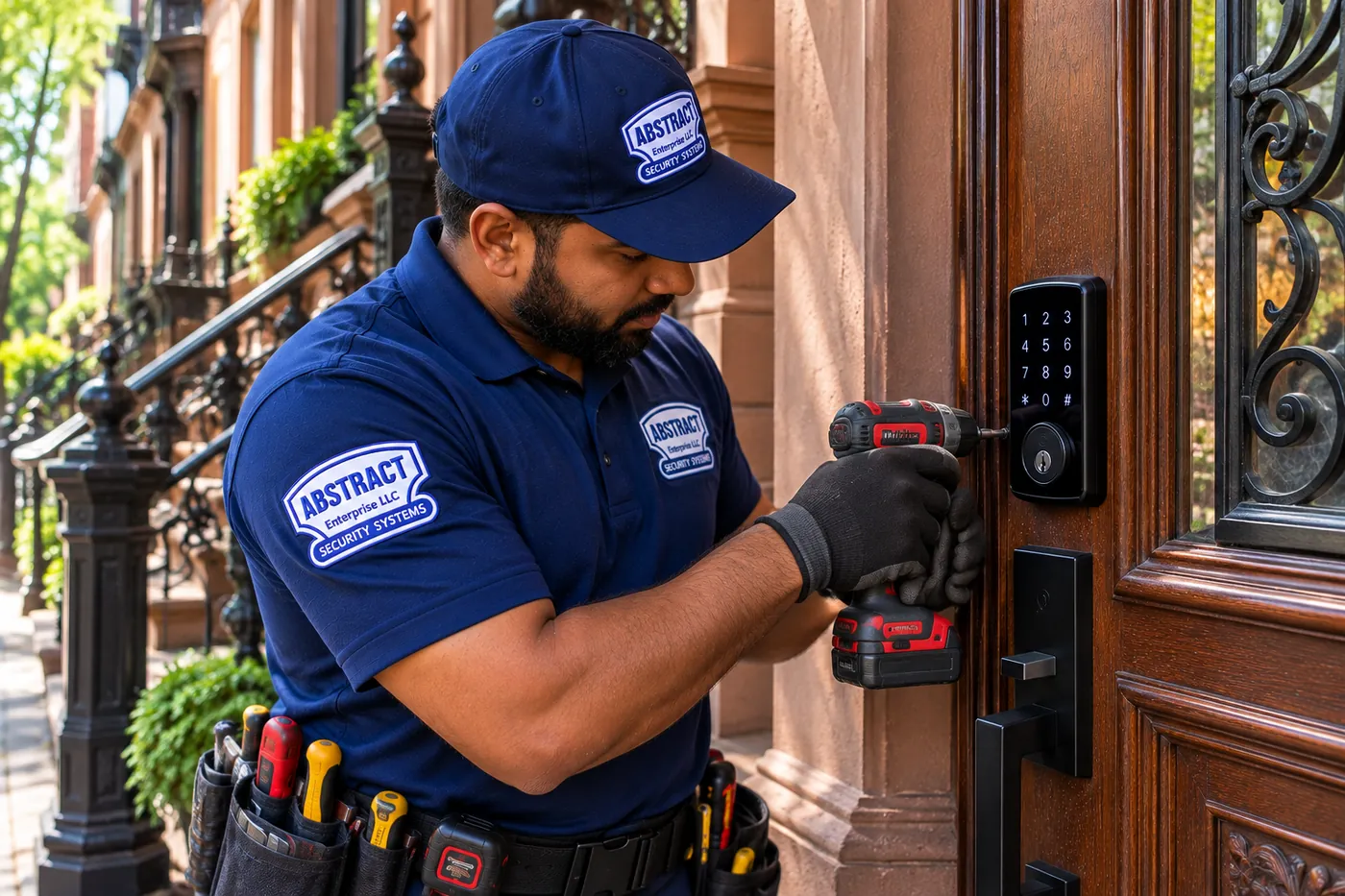
Smart locks on older Philipstown, Patterson and Southeast doors that keep antique hardware in place, and on Cold Spring and Nelsonville houses where the outside of the door is part of a historic streetscape.
Keypads, fob readers and electric strikes for churches, medical and professional offices and shops along Routes 6, 9, 22 and 52, set up so exit never needs a code and a lost key never means changing every lock.
Seasonal frame movement, dead batteries, lost admin accounts, storm-damaged gate keypads and bridges that dropped off a new router — diagnosed and fixed on the visit wherever the parts allow.

Putnam's houses were built for very different lives — summer swimming, dairy farming, river trade, and since the 1960s, commuting. Each left its own kind of door. These are the property types we see most often across the six towns and three villages, and what each means for a keyless install.
Lake Carmel, Putnam Lake, Lake Peekskill and the smaller lake colonies: small houses on narrow lots, many extended over the decades, with light exterior doors, re-trimmed frames and a lake-side door that has become the everyday entrance. Door thickness and frame strength come first.
Larger lakefront and lake-view homes with decks, sliders, boathouses and walk-out basements. Several doors face the water and the weather, and the slider is usually the weak point.
Philipstown, Patterson, Southeast and the Putnam Valley hollows: nineteenth-century farmhouses with heavy wooden doors, antique rim locks, stone or rubble foundations and outside bulkhead doors to the cellar.
Carmel, Mahopac, Kent and Southeast neighbourhoods of colonials, splits and raised ranches from the 1960s onward, each with a front door, an attached-garage entry and often a slider to the yard. Standard bores, but a household that is out all day.
Larger properties in Garrison, Putnam Valley and northern Kent where the house sits far back from the road behind a gate, and where the gate keypad, its power and its cable route are the main design question.
Closely set nineteenth-century houses on Main Street and the side streets above the river. Many sit in Cold Spring's historic district, where the village reviews exterior changes, so the outside of the door needs care.
Older two- and three-storey buildings near the Harlem Line station with shops below and apartments above, where shop credentials and residents' access must never overlap.
Congregations, lodges, volunteer halls and professional offices along the state routes: buildings with a front entrance, a side door used by volunteers and a back office, and dozens of keys in circulation.
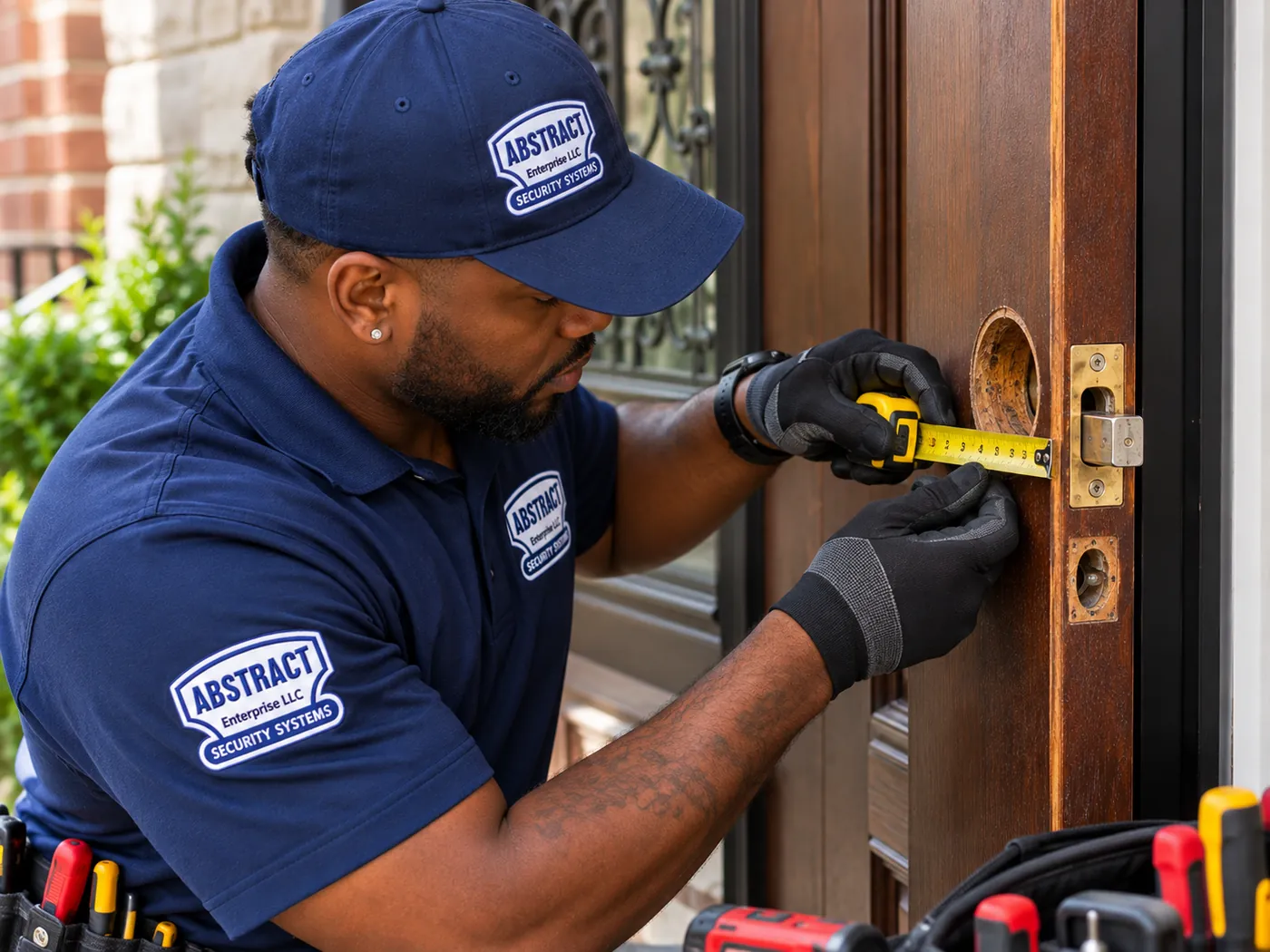
Thickness and core. Smart deadbolts list the door thicknesses they fit, and the common minimum is 1-3/8 inches; Allegion's preparation sheet for one current Schlage model, for example, lists 1-3/8 to 2 inches with a 2-3/8 or 2-3/4 inch backset. Plenty of converted lake-cottage doors meet the number but are hollow or lightly cored, which means the lock's through-bolts have little to clamp and the bolt hole has little wood around it. We check by weight, by tapping and, where needed, by looking inside the existing bore before recommending anything. A hollow door gets a solid replacement or a reinforcing kit first; a lock on a door that can be kicked through is a false economy.
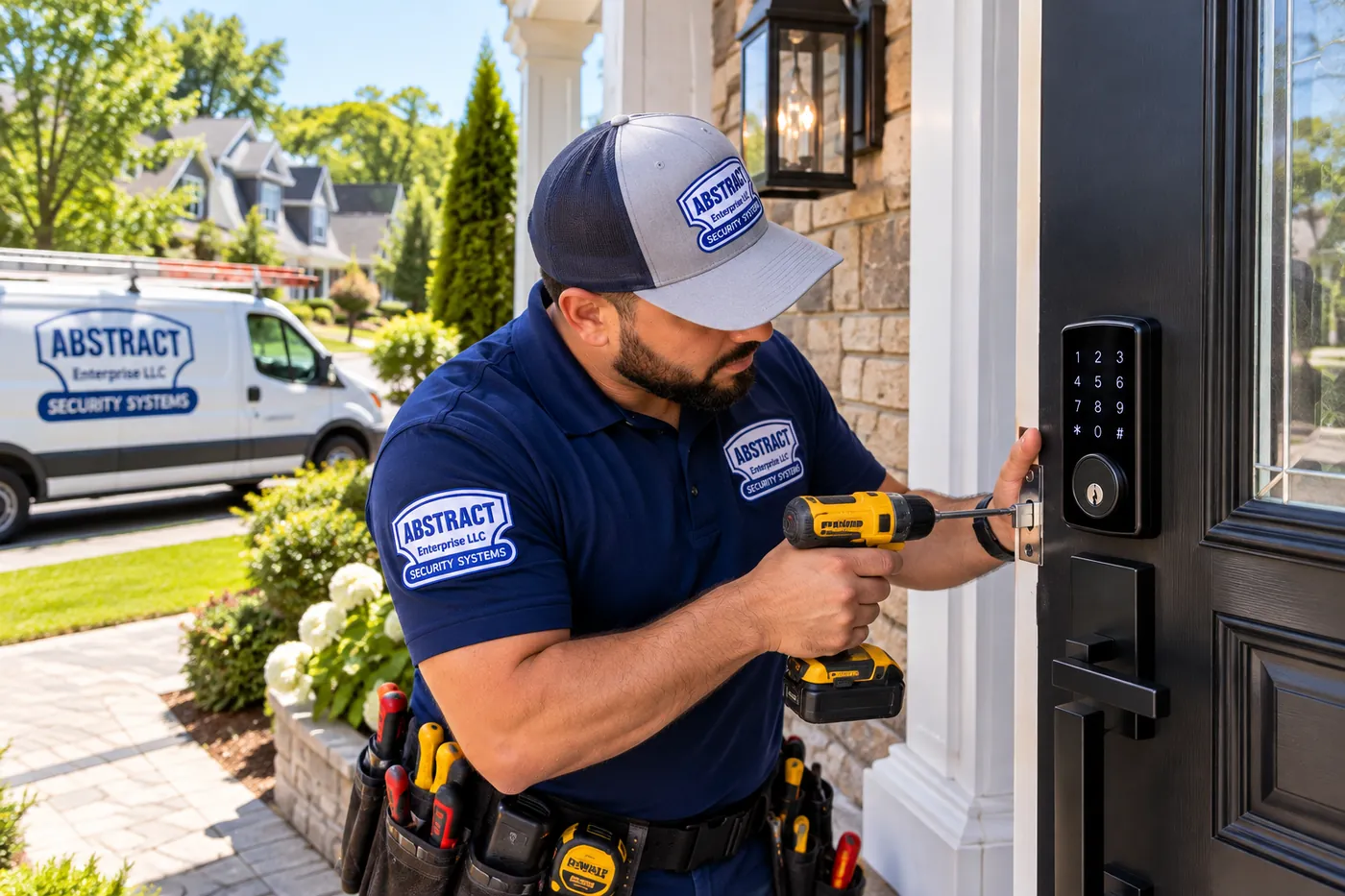
Frames that move with the seasons. Bungalow frames sit on old sills and post foundations close to the water table, and many have been shimmed, re-trimmed and re-hung more than once. They move between a dry January and a humid August. A motorized bolt is less forgiving than a hand-thrown one: if it scrapes the strike, the motor strains, the batteries drain and the lock reports a jam. We test the bolt with the door pushed shut by hand and by its own weight, deepen and realign the strike so the bolt throws clear in both seasons, and run long screws through the strike into the framing rather than the trim.
Exposure on the lake side. A door that faces open water takes wind-driven rain, low winter sun and summer humidity that an inland door never sees. We choose exterior keypads that their makers rate for outdoor use, keep the lock body and any bridge on the inside, and favour finishes and seals that will tolerate the conditions on the specific door rather than the one in the brochure.
One turn to get out — always. Every lock we put on a Putnam house door opens from inside with a thumb-turn or lever, no key, code or phone required. That matters even more where a door is the only route from a bedroom wing or a walk-out basement, and where help can be twenty minutes away. On outbuildings and gates, we make sure a person can never be shut in by the hardware we fitted.
Most Putnam owners who rework their doors also look at the front of the property. Our Putnam County intercom installation service handles gate and front-door stations on long driveways, and the AESS door buzzer installers in Putnam County fit buzzer and release systems for small buildings and offices.

Putnam's commerce sits along a handful of roads. The county's hazard mitigation plan places commercial and industrial land in and around the three villages and along State Routes 6, 9, 22 and 52, with more at the Interstate 84 interchanges with Route 312 and Ludingtonville Road. The businesses on those roads are mostly small and owner-run — delis, pizzerias and salons, contractors' offices, medical and dental practices, insurance and law offices, and churches and halls that double as community centres. Their keyless questions are about trust and turnover: who opens up at six, how a part-time employee's access ends the day they leave, and how a building that has handed out keys for forty years gets control back.
The main commercial road through the town of Carmel, running past Lake Mahopac and through Carmel toward Brewster: plazas, restaurants, fitness studios and professional suites, many with a rear service door that matters as much as the front.
The county seat beside Lake Gleneida, with the historic courthouse, county offices and the law, title and professional offices that cluster near them. Suite doors, records rooms and after-hours access are the usual requests.
Putnam Hospital, now part of Northwell, stands at 670 Stoneleigh Avenue, and medical and rehabilitation practices surround it. Records rooms, medication storage and staff-only corridors call for locks that log who opened them.
The village's older commercial street near the Harlem Line station, with shops at street level, apartments upstairs and narrow side doors. Separate credentials for the shop and the residents come first.
Contractors' yards, service businesses, flex buildings and retail near the interchanges and the New York State Police barracks on Route 22. Early starts, seasonal crews and equipment storage drive the requests.
Shops, galleries and restaurants in Cold Spring's historic village and along Route 9 in Philipstown, busy with weekend visitors. Front doors that can't change much on the outside, and back doors that need to work for staff on changing shifts.
When a business needs several doors on one system, schedules, a camera beside every entrance or a reader at a gate, the job becomes access control. Our access control installation in Putnam County takes it from there, and commercial security cameras for Putnam businesses put a picture next to every door event.

These are the questions Putnam owners, lake associations, congregations and businesses put to us before a smart lock goes on a door or a gate. They are grouped by situation: lake cottages, rural service and emergency access, commuter households, gates and long driveways, old farmhouses, and community and professional buildings. Price, scheduling and coverage questions are in the FAQ further down. Nothing here is legal advice; where a law, a code or an agency is mentioned we name it so you can read it yourself.
Sometimes, and only after we have looked inside the door. Most smart deadbolts list a minimum door thickness of 1-3/8 inches, and many bungalow doors in Lake Carmel, Putnam Lake and Lake Peekskill do reach that number. The trouble is what is inside. Doors bought for a summer colony in the late 1920s and 1930s, or replaced cheaply in the decades since, are often hollow or lightly cored, sometimes with a veneer face that has delaminated near the knob. A deadbolt clamped through that kind of door has little to grip, and the bolt hole has almost no wood around it.
We check three things: the actual thickness at the lock edge, what the existing bore shows of the core, and how the door hangs in a frame that may have been re-trimmed several times. If the door is solid enough, we fit the lock with a reinforcing plate around the bore and a strengthened strike. If it is hollow, the honest answer is a new solid or steel-skinned door first. That door can be ordered pre-bored for the lock you choose, which saves time and makes the finished job neater.
Very thin interior-grade doors pressed into exterior service — and we still find them on porches and side entrances around the lakes — are below every smart lock's listed range. Those doors should be replaced whether or not the lock changes, because they are a weak point on their own.
Usually, yes. Lake communities built on narrow cottage lots are close-knit, and the habit of a spare key under a planter, on a nail in the shed or with the neighbour two doors down runs deep. The trouble with a hidden key is that anyone who watches long enough can find it, and a key handed to a neighbour years ago may since have been lent to a contractor or a nephew. Nobody knows how many copies exist.
A personal code for the neighbour who checks on the house does the same job without those weaknesses. It can be changed or deleted at any time, it shows in the log when it is used, and it doesn't vanish when the planter is moved. If the neighbour also needs to get in during a power cut or with a dead lock battery, the mechanical key can stay with them, but the hidden one should go.
For cottages that are empty for part of the year, we suggest one neighbour code, one family code per adult, and nothing hidden outside. If the lock is connected, the family gets a notification each time the neighbour's code is used, which tends to be reassuring rather than intrusive.
Plan the codes around the membership list and the calendar, not around the lock. Putnam's lake communities are run in different ways: the Putnam Lake Park District, for example, is a special district of the Town of Patterson created after a 2011 community petition, with its beaches and facilities reserved for residents who own or rent homes within the district, and boats allowed on parkland only between March 1 and December 1. Other lakes are run by private associations or clubs. Whoever administers the gate needs a code policy that matches its own rules.
The practical choices are individual codes per household, which can be deleted one at a time when a house is sold or a renter leaves, or a seasonal code changed every year, which is simpler but impossible to take back from one household mid-season. For a clubhouse or boat-storage gate with more than a few dozen users, a fob or card system with expiry dates is usually easier to administer than codes, and leaves a log the board can review. We also check that anyone inside a fenced beach or storage area can always get out without a code.
Power and weather decide the hardware. A clubhouse door with electricity can take a keypad and electric strike; a remote beach gate is often better served by a battery or solar keypad lock built for outdoor gates. Ask us to walk the site with a board member before the association votes on anything.
Mostly, the key inside the box. Several Putnam departments use the Knox system. The Kent Volunteer Fire Department, for example, explains on its website that the key to a property is kept in a Knox Box mounted at the building; the department's responding vehicle carries a secured key safe that the Putnam County 911 dispatch center unlocks with a code sent wirelessly only during an emergency, and each access is recorded with the date, time and who asked for it. That arrangement only works if the key in your box still opens your door.
A new smart deadbolt arrives with its own keys. Either we re-key its cylinder to the key already in the box, where the lock's cylinder allows it, or the department is asked to place the new key in the box — the box belongs to the fire department's system, so the owner arranges that with them rather than opening it. Either way, we test the key from the box position before we leave. We also make sure the smart lock has no setting, such as an inside privacy lockout, that would stop the key from opening the door.
Remote unlocking by a family member through the app is a useful second route when crews arrive, but never the only one; cellular signal and Wi-Fi fail at the worst moments. Avoid extra chains and slide bolts on that door; they stop a crew as surely as they stop a burglar.
Usually the better answer is a keyless door at the bottom of the bulkhead stairs rather than on the hatch itself. Steel bulkhead doors, the kind many Putnam farmhouses and older capes have over their cellar steps, are normally secured by a slide bar on the inside. Bilco, the best-known maker, sells a keyed lock kit for its Classic Series doors so the hatch can be locked and unlocked from outside with a key. That suits an owner who wants to carry a key, but it doesn't give a delivery driver a code, and the hatch itself is exposed to snow, ice and standing water.
So we look at the stairwell door at the foot of the steps, or the basement door from the garage. A keypad deadbolt there, with a separate scheduled code for the oil or propane company and another for the well or septic contractor, lets each one in on the days you expect them and tells you when they arrive and leave. The bulkhead stays secured with its inside bar or keyed kit, and the family's own codes never have to be shared.
Two cautions. If anyone sleeps or works in the basement, the stairwell door is an escape route, so it opens from inside with one turn and never needs a code to leave. And many oil companies fill from an outside pipe and never need the house at all — check before creating a code nobody uses.
It helps in one specific way: a door that locks itself. Black bears are regularly reported in Putnam — the Carmel Police Department has posted sighting warnings for residents, and Lohud reported a bear in Mahopac in 2017 — and Connecticut's Department of Energy and Environmental Protection, which borders Patterson and Southeast, warns that open or unlocked doors and windows let bears get into homes, that locking screen doors does little because a bear can break through a screen, and that bears can easily open most unlocked car doors. Wildlife agencies in western bear country go further and advise replacing exterior lever handles with round knobs that a bear can't push down.
A smart deadbolt with auto-lock throws the bolt a set time after the door closes, so a door left unlocked by a child or a guest doesn't stay that way. A bolted door can't be opened by pressure on the handle, lever or not. On doors where bears have already tried the handle, we often pair the lock with a knob-style or fixed pull handle outside, and keep the lever inside where it helps people get out quickly.
The lock won't help with a screened porch, a flimsy garage panel door or food left near the house; those are matters of storage and housekeeping. But for the kitchen and mudroom doors that face the woods, auto-lock removes the human error that bears take advantage of.
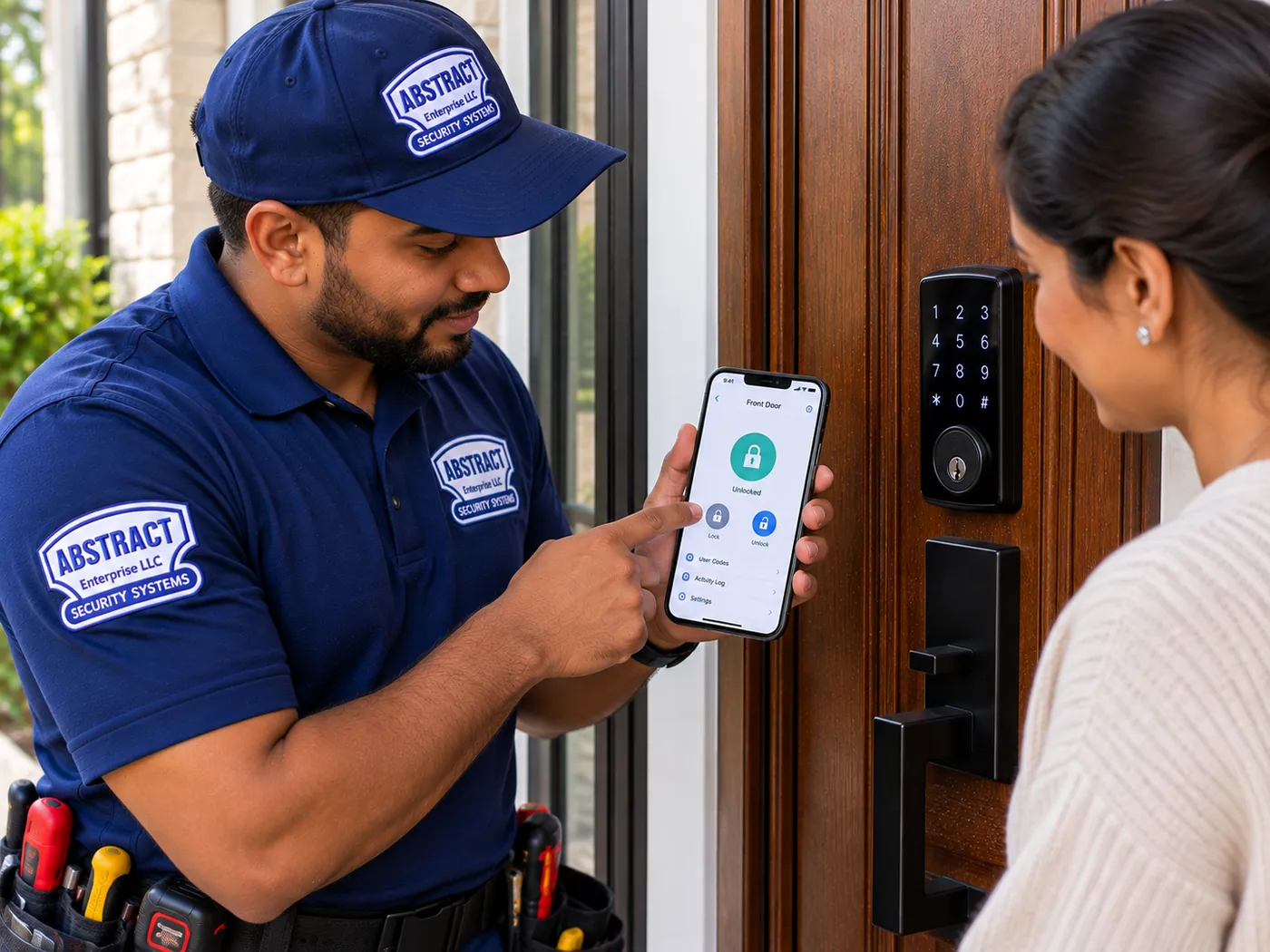
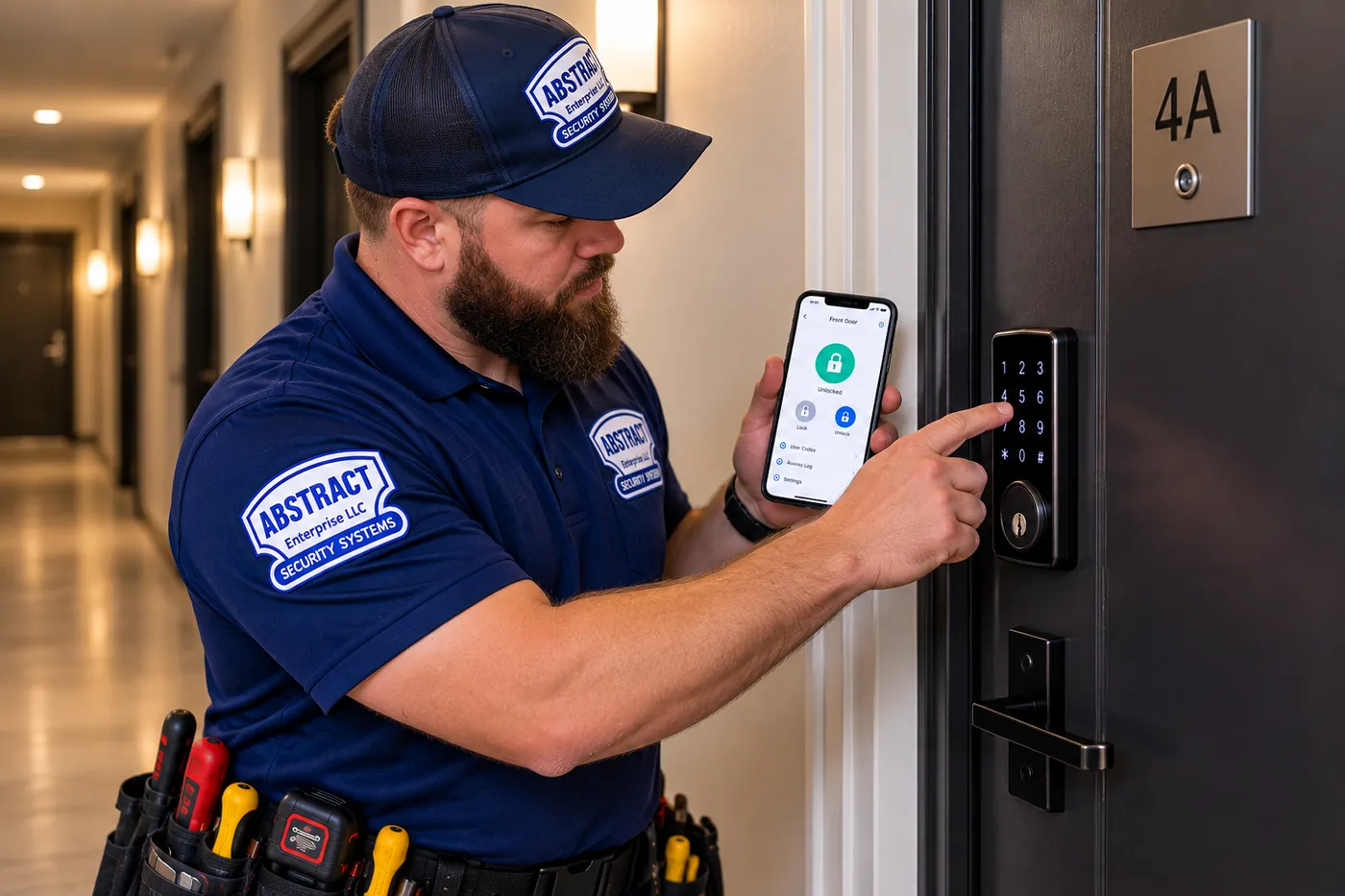
The same way you did before the phone was involved — which is why the phone should never be your only credential. We set up every Putnam lock so that each adult has at least two ways in that don't depend on one another: a code or fingerprint at the keypad, and either a fob or a mechanical key kept on the keyring or in the car. The phone app is for administration and remote access, not for being the only way through your own front door.
Commuters who park at Brewster, Southeast, Croton Falls or Cold Spring all day sometimes rely on the phone's Bluetooth unlock as they walk up from the driveway. That works well until the battery is at two percent after a delayed train. A keypad you can use in the dark with gloves on, or a fingerprint reader, removes the problem entirely.
It's also worth keeping one spare mechanical key with a neighbour or relative nearby. A dead lock battery, a jammed motor after a hard freeze or a lost phone are rare, but a key never needs a charge.
They can, which is why we look at the route before we price a wired gate keypad. Much of Putnam drains to New York City reservoirs in the Croton system, and the city's Department of Environmental Protection has watershed regulations covering stormwater, stream protection and similar matters for communities in Putnam, Westchester, Orange and Ulster. Towns also regulate work in and near wetlands and watercourses. A trench that crosses a stream, a wet swale or the edge of a wetland may need permission from the town, the state or the city before anyone digs, and some routes are simply not worth it.
That leaves three practical options. Where an existing conduit or a power feed already runs to the gate, we use it. Where a trench is reasonable and stays out of regulated areas, we lay conduit and run low-voltage cable for the keypad and its controller, with the dig marked through 811 first. Where neither works, a battery or solar-powered keypad lock built for gates, or a wireless link from the house, avoids digging entirely, at the cost of more maintenance.
Whatever powers the keypad, the gate must have a manual release that anyone inside the property can use without a code, and a way for emergency crews to get through. Ask your fire department whether it uses a key switch or key box at gates in your district.
Yes. A long cable run from the house to a gate on an exposed Putnam ridge behaves like an antenna during a nearby strike, and the surge it picks up arrives at both ends — at the keypad and at the controller or network switch in the house. We put surge protection on the low-voltage lines at the building entry, bond the protectors to a proper ground, and keep the gate electronics on their own circuit so a hit at the gate doesn't travel into the rest of the system.
Fibre between the house and the gate removes the conductive path entirely and is worth considering on long, exposed runs, especially where a camera or intercom shares the trench. Where the run is short or already buried, protectors and grounding are usually enough.
Battery and solar gate keypads aren't immune — a direct or very close strike damages anything — but with no long wire back to the house they don't carry the surge indoors. Whatever we fit, we leave you with the part numbers so a damaged keypad can be replaced quickly.
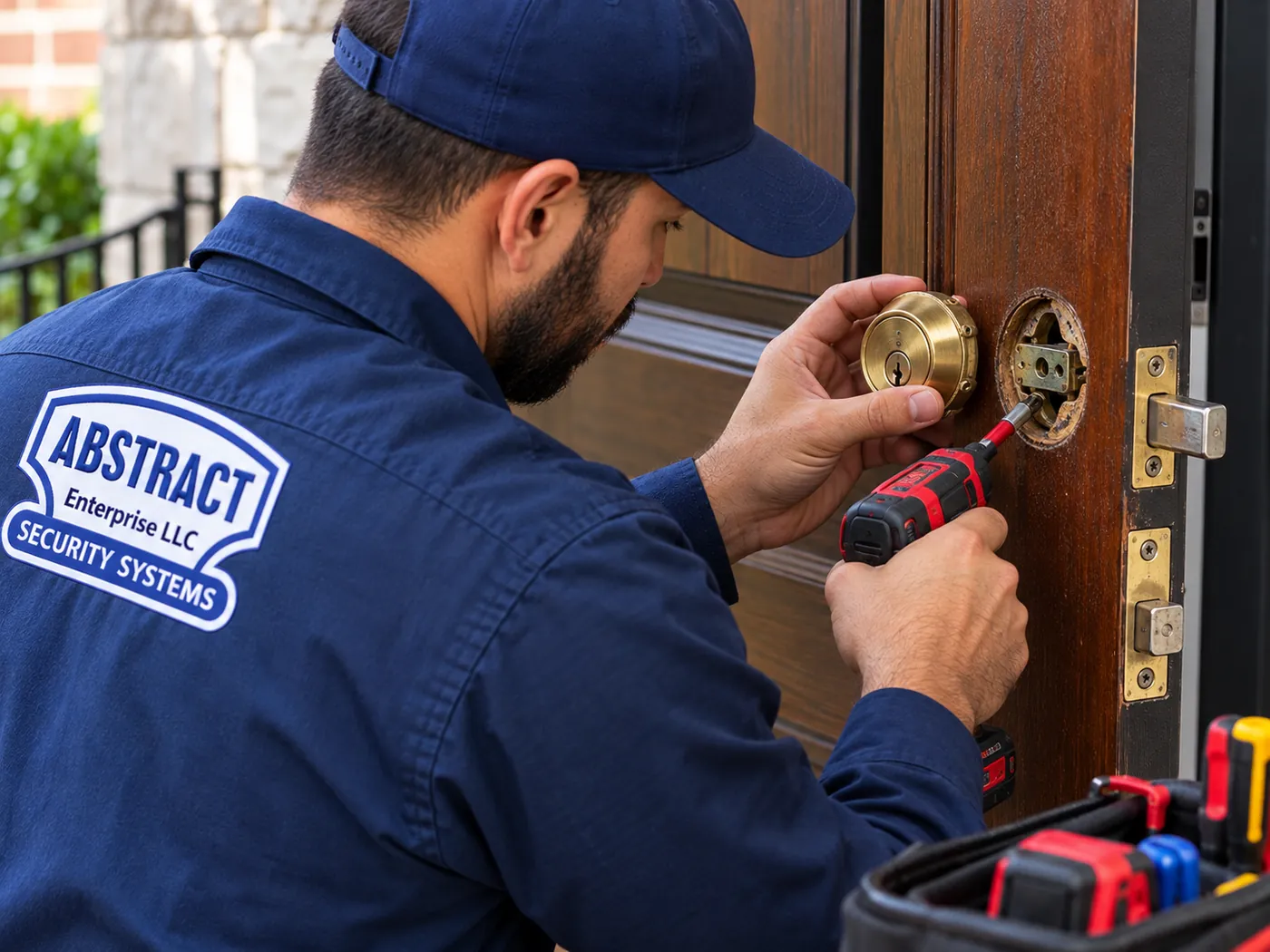
Often, yes. A rim lock is the box lock mounted on the inside face of the door rather than set into its edge, common on nineteenth-century houses in Philipstown and across the county. Many owners want to keep it for the look and the history, and the door around it is frequently thick and solid. The usual approach is to leave the rim lock working as a latch and add a separate smart deadbolt a short distance above or below it, bored through the door where the wood is sound and clear of the old hardware's screw holes.
Before drilling we check the door's thickness against the lock's listed range, the condition of the stile where the new bore would go, and how the new bolt meets the frame — old frames are often out of square and need a new strike set into fresh wood. Where the door is thicker than standard locks allow, we look at models listed for thicker doors or at a retrofit unit over a new deadbolt.
The old lock's key, if you still have it, usually stops mattering once the deadbolt is in. We leave the rim lock exactly as we found it, and if the house is in Cold Spring's historic district we keep the outside of the new lock as plain and low-profile as possible.
Yes, and that is one of the clearest wins for a congregation. A keypad deadbolt or a fob reader on the side door can carry a separate credential for each group and each leader, each with its own schedule: the youth leaders on Tuesday evenings, pantry volunteers on Thursday and Saturday mornings, the evening meeting's organiser on its night only. Outside those windows the door stays locked to them, and the church office keeps full access.
Because every credential is individual, a leader who steps down is removed in seconds without touching anyone else's access, and the log shows which group opened the building before the boiler was found running all weekend — without anyone being accused. It also lets the church re-key the old mechanical locks once and keep the new keys to two or three people, instead of chasing copies handed out over the years.
Exit rules apply as for any assembly space: every door that is a way out opens from inside without a code. Groups that use the kitchen or a storage room get those doors added to their schedule only if they need them.
Give each booking its own code that starts and ends with the rental. Halls run by lodges, veterans' posts, fire companies and civic groups across the county are often rented out for birthdays, showers and meetings, and the traditional method — a key collected from a volunteer on Friday and returned on Monday, or not — is exactly how keys multiply. A keypad deadbolt or a keypad with an electric strike on the hall entrance lets the booking secretary create a code valid from, say, noon Saturday to 1 a.m. Sunday, send it to the renter, and know it will stop working on its own.
The log shows when the renter actually arrived and left, which settles disputes about the deposit and the lights left on. Kitchen, bar storage and the office stay on separate locks or separate credentials, so a renter's code opens the hall and the restrooms and nothing else. Volunteers who set up and clean keep their own permanent codes.
Assembly rules still apply: every exit door opens from inside without a code, panic hardware stays exactly as the fire marshal approved it, and nothing we fit changes the way out. Where the hall has no reliable internet, we choose a lock that can generate time-limited codes offline.
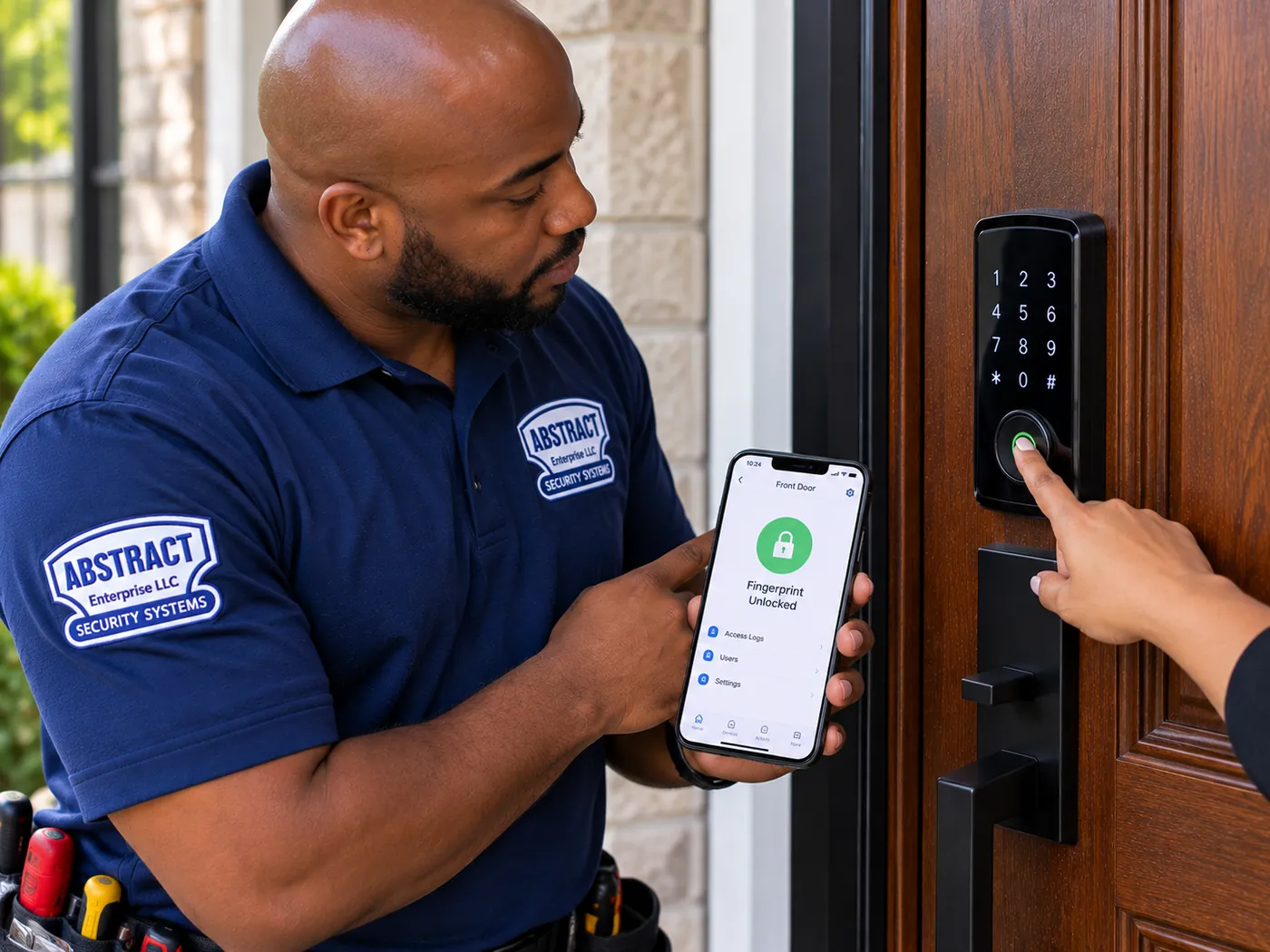
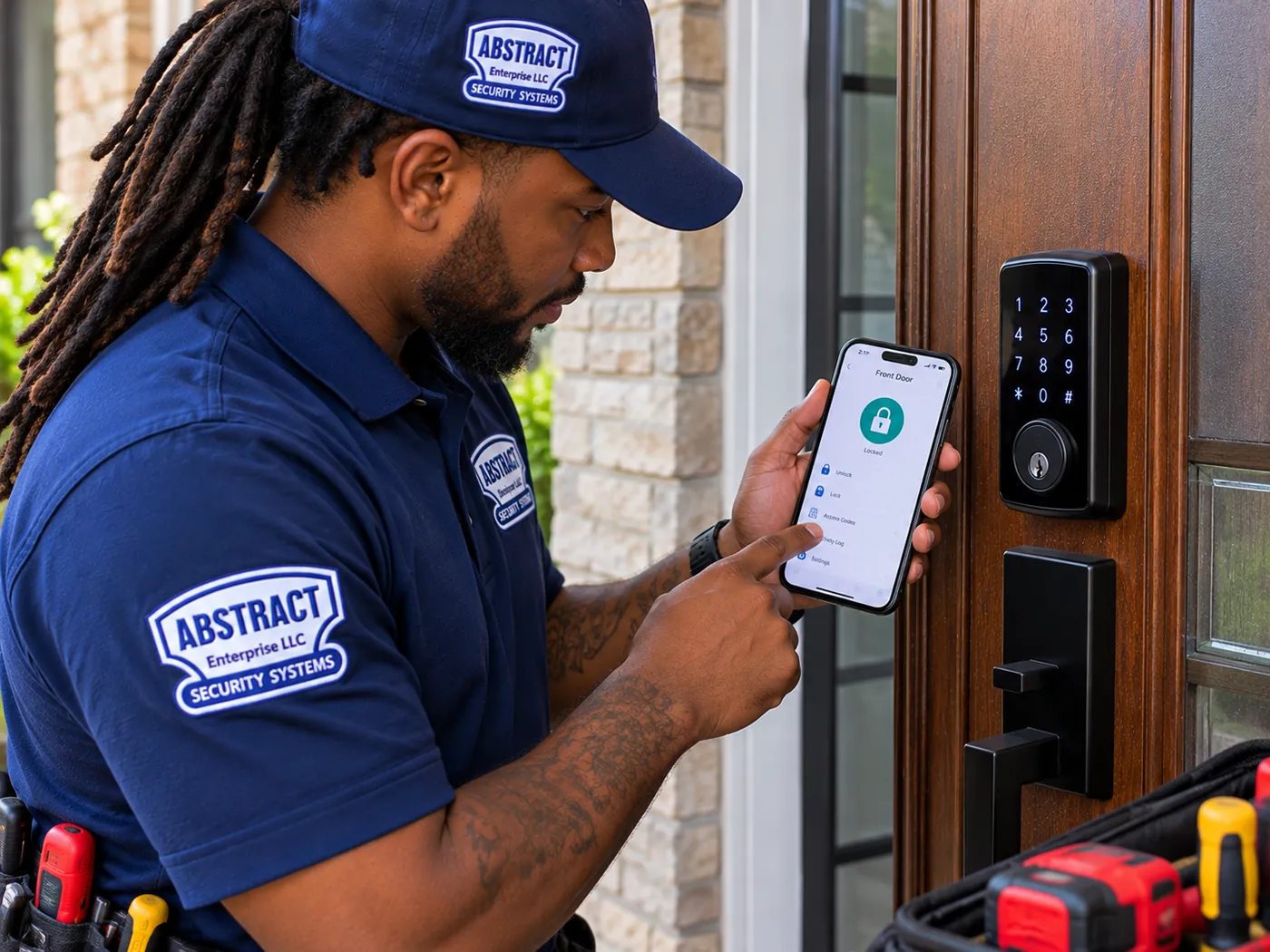
In Putnam, the door and the distance decide the lock. A slider on Lake Mahopac, a gate at the end of a Garrison drive and a church side door in Brewster need different hardware. You can buy your own lock and have us fit it, or let us recommend one after the walkthrough. These are the categories we install across the county.
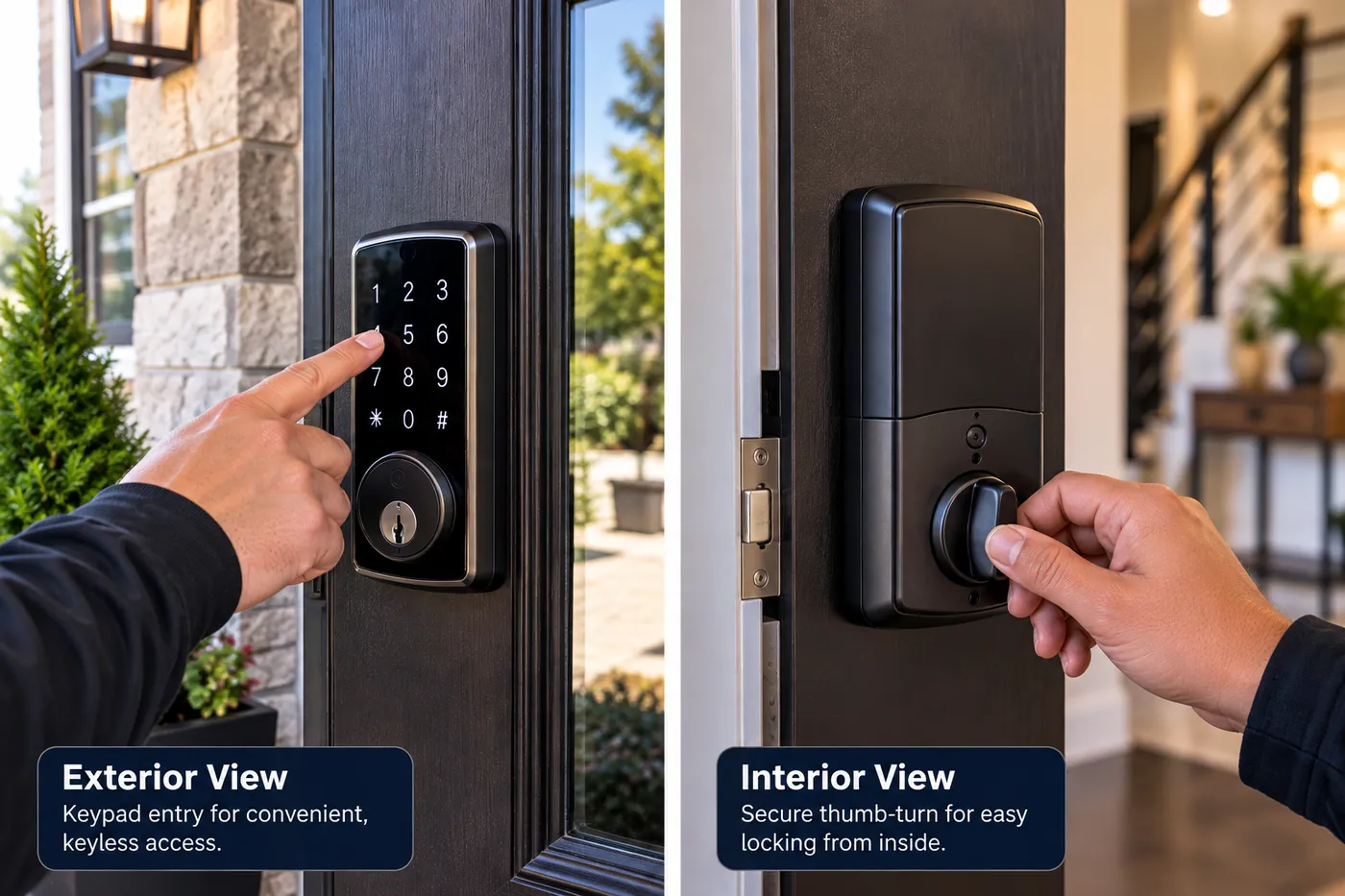
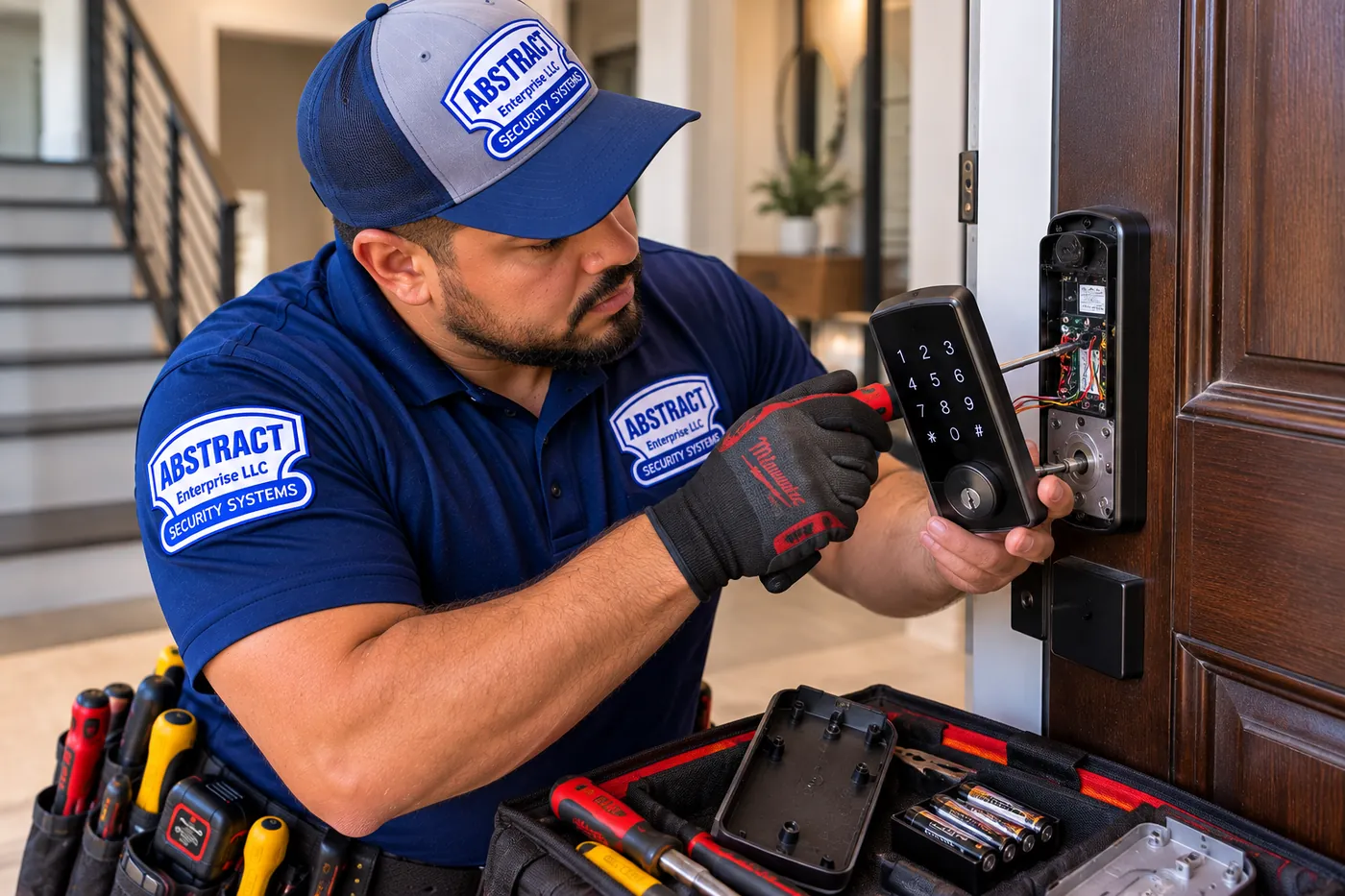
The standard choice for a front or mudroom door of sound construction. Physical buttons are easier with cold or gloved hands; touchscreens wipe clean but need a deliberate press. A keyed cylinder stays for the fire department's key box and for the day the batteries die.
For children coming home from the bus, older parents who forget codes and anyone who doesn't want to type at a dark door. We enrol two fingers per person so a cut or a bandage never means a lockout.
Keypad or fingerprint handles made for sliding doors, mechanical hook-bolt keypad locks, and frame-mounted keyless locks, chosen to fit the slider's maker and stile. Paired with a security bar and a door contact on lake-side sliders.
A motor housing that replaces only the indoor thumb-turn of a single-cylinder deadbolt, so the street side and everyone's existing keys stay as they were. Handy on Cold Spring and Nelsonville houses whose front doors face a reviewed streetscape.
Weather-rated keypads, fob readers and gate-rated electric locks for pedestrian and driveway gates, hard-wired where a cable route makes sense and battery or solar-powered where it doesn't, always with a manual release on the inside.
No batteries, no radio and nothing to reset after a storm. A sensible choice for boathouses, beach-gate sheds, pump houses and outbuildings where nobody needs alerts but several people need a code.
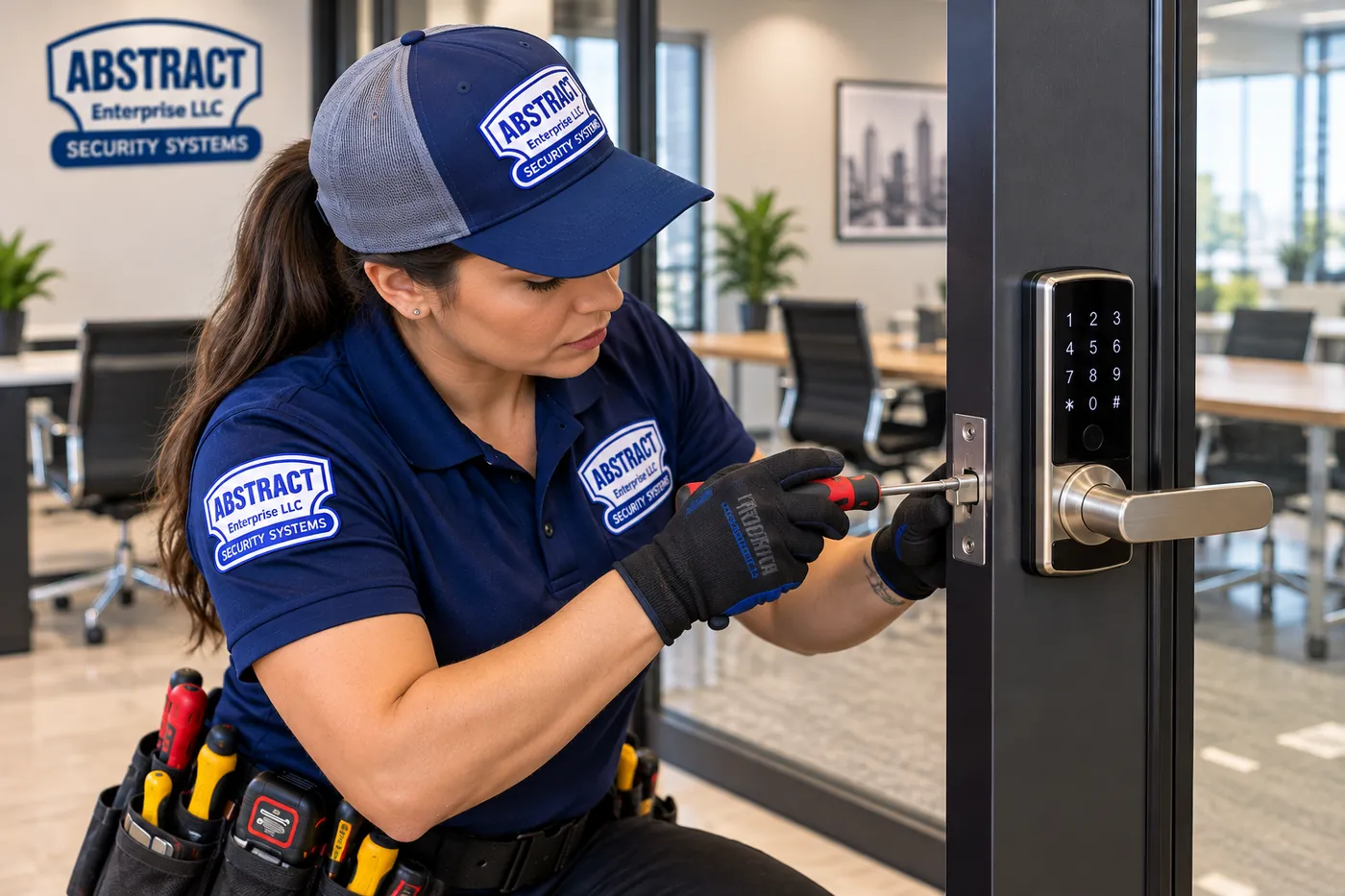
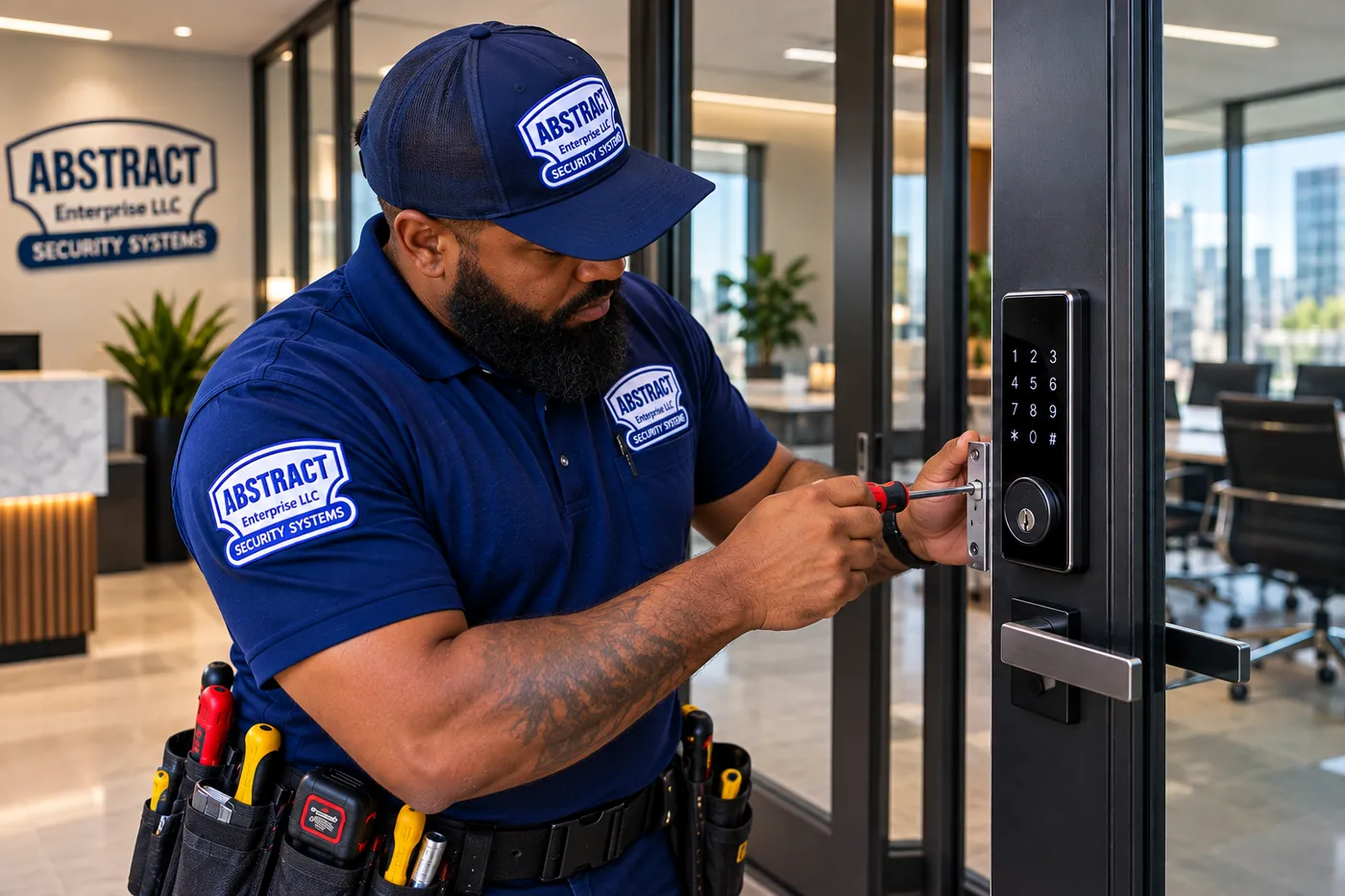
The usual answer for a parish hall, a dental suite or a Route 6 storefront: a strike set into the frame releases the latch when a valid code or fob is presented at the wall unit, while staff and visitors leave through an inside release that the electronics cannot block.
The add-ons that make a lock useful at a distance: contacts that report a door left open, Wi-Fi bridges or hubs that carry the lock's signal across a big house, and fire-department key boxes mounted where your district wants them.
ADT, Ring and SimpliSafe versus a Putnam installer. National security companies sell a smart lock as an add-on to a monitoring plan, and Ring and SimpliSafe sell locks and keypads that link to their own apps, some of which need a subscription for the features owners care about most. They are reasonable products. What none of them does is stand on your lake-side deck and tell you the slider needs a bar before it needs a code, walk your driveway to see whether the gate cable crosses a wet swale, or check whether the bungalow's front door is hollow. That is the part of the job a local, licensed installer is for, and we are happy to fit and integrate a lock from any of those ecosystems if you already use one.
A note on sources: the tools used to research this page could not open Google's AI Overview, so the seven headings below are not its words. They are claims that turn up again and again in lock marketing, cost guides from Angi, HomeAdvisor and Fixr, and how-to articles, which answer engines then repeat. Each is followed by what we see on real Putnam doors and gates.
Review sites like to say a smart lock goes on with a screwdriver in half an hour, and on a modern steel door in a square frame that is roughly true. It assumes a solid door of standard thickness, an existing bore at the right backset, and a strike that already lines up.
Around Putnam's lakes, a surprising number of doors fail one of those assumptions. Bungalow doors from a summer colony are often hollow or thin, frames have been shimmed and re-trimmed, and strikes sit in soft wood that has been drilled three times before.
The installation itself still doesn't take long. What takes time is making the door worth locking, and on a converted cottage that is where most of the visit goes.
Fixr's national cost guide, updated in January 2025, puts a typical smart lock installation at $250 to $400, and Angi and HomeAdvisor publish similar national figures. Those numbers describe one lock on one ordinary door with the hardware included.
A Putnam job is rarely one ordinary door. It may be a slider, a stairwell door below a bulkhead, a gate a few hundred feet from the house, or a door that needs replacing before any lock goes on. A gate keypad with a cable run is a different job from a deadbolt swap.
That is why our Putnam house work is quoted flat after a walkthrough, and our published Putnam figures cover the entrance and gate work that can be priced in advance.
Remote unlocking is a real convenience, and for a family on the Harlem Line it is often the reason to buy a connected lock. But it depends on the lock's radio, a bridge or hub, home Wi-Fi, the internet connection and a charged phone, all working at once.
The crews who matter most in an emergency — volunteer firefighters and ambulance members — work with physical keys. Kent's fire department describes a Knox system in which the property key is released from a secured safe through Putnam County 911 dispatch, not an app.
So every lock we fit keeps a working key cylinder, and every adult has two credentials that don't depend on each other.
Gate-opener marketing makes a keypad on a driveway gate look like a quick upgrade. The keypad is simple; the cable to it, or the power for it, often isn't.
In Putnam the route from the house to the gate can cross ground near streams, wetlands or reservoir land that the town, the state or New York City's watershed rules care about, and lightning on exposed ridges makes a long copper run a liability without surge protection.
We price a gate only after walking the route, and we offer battery or solar options when a trench isn't worth the approvals or the risk.
A locked deadbolt is excellent protection for the door it is on, and auto-lock fixes the most common failure, which is the door nobody locked. That is genuinely valuable: after two burglaries in Philipstown in September 2024, The Highlands Current reported, the Putnam County Sheriff's Office reminded residents to keep doors and windows locked and not to post on social media when they would be away.
But a lock protects only its door. A lake-side slider without a bar, a bulkhead with its slide bar left open, a garage side door and ground-floor windows are separate problems.
That is why our Putnam plans list every opening, and why we often pair locks with door contacts and a camera at the most-used entrance.
Product pages show a smart deadbolt on a front door and leave the impression that the same lock suits the back door, the slider and the cellar. Sliding doors have no bore for a deadbolt, bulkhead hatches are secured from inside, and an old farmhouse door may carry a rim lock nobody wants removed.
Each of those openings needs its own hardware, and some need none at all — a mechanical lock and a contact can be the right answer on a door that is opened a few times a year.
We plan door by door, and the cheapest good plan often puts one or two smart locks on the doors that matter and leaves the rest mechanical.
Plenty of owners fit their own deadbolts, and there is nothing wrong with that on their own door. Paid work is different. Putnam County's code says no one may run a home improvement business in the county without registering under Chapter 135, and Cold Spring asks permit applicants to list their contractors' Putnam County licence numbers.
Wired work — electric strikes, gate keypads, controllers — adds low-voltage wiring and, sometimes, electrical and fire-code questions. AESS holds NYS Low-Voltage License #12000287431.
Ask any installer for their county registration and insurance before they start, ours included.

Tell us the town, the doors, the gate and who comes and goes while you're at work. We'll tell you which openings deserve a smart lock, which don't, and what it will cost.
List the doors and gates you want converted and the people who use them — children, an older parent, service companies, volunteers, staff — and you will hear back in writing the same business day. Prefer to talk? Our Putnam line is (845) 640-3835.
Thanks — a licensed installer will phone you before the end of the business day. Something urgent? Ring (845) 640-3835.
Six steps, whether it's a single keypad on a Putnam Lake cottage or every door, the slider and the gate of a farmhouse above Garrison.
On the phone we list every door, slider, hatch and gate, and everyone who needs to get in — family, children, service companies, volunteers or staff — and ask which fire department covers the address.
At the free walkthrough we check each door's thickness and core, the frames and strikes, the slider and bulkhead, the signal at each opening, and the route to any gate, noting streams, wet ground and existing conduit.
You get a plan naming the hardware for each opening and why, any door that should be replaced first, and a flat figure. Entrance and gate work is priced from our published Putnam rates.
Before any electronics, each opening is put right: hollow bungalow doors reinforced or swapped, strike plates moved and screwed deep into the studs, sagging hinges shimmed, slider tracks cleaned and barred, so every door latches with a gentle push.
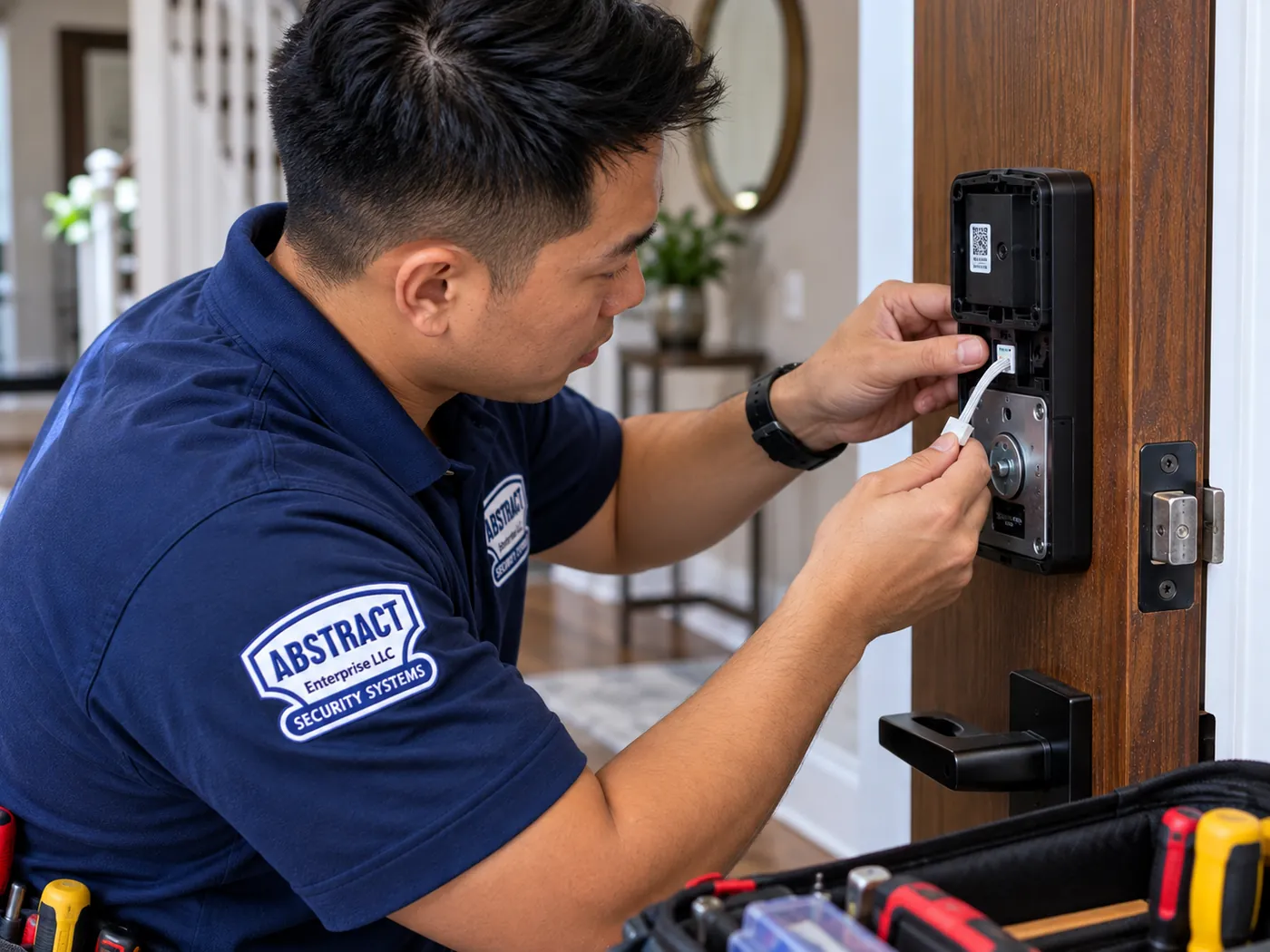
Hardware goes on and is paired to its app or hub, a bridge is placed where the signal needs help, gate lines get surge protection, and then the lights go off and the breaker is opened while we let ourselves out of every door by hand.
Each person tries their own credential while we watch, service and after-school codes get schedules and alerts, admin goes on two phones, and you keep a printed sheet plus the key for the fire department's box.
Six places that explain why Putnam's doors are so varied: a courthouse in use since 1814, farms turned public land, mid-century design in the woods, an industrial ruin on the river, and the parkland and religious sites that bring visitors from far away.
Built in 1814 and renovated in 1847, with a jail added in 1855 according to its historical marker, which also calls it the second-oldest working courthouse in New York. The professional offices around Gleneida Avenue are some of our most regular commercial calls.
A Buddhist monastery whose Great Buddha Hall, Wikipedia notes, houses the largest indoor Buddha statue in the Western Hemisphere. It draws visitors from around the world to a district of quiet residential roads, reservoirs and woods.
A state park the Kent Volunteer Fire Department puts at 14,086 acres, part of which lies in its Kent district. Houses on its edges sit on long drives in deep woods, where gate keypads and responder access matter.
The house, studio and 75-acre woodland garden of designer Russel Wright, a National Historic Landmark; Wright hired architect David Leavitt in 1958 to help realize the Dragon Rock house and studio. A reminder of how many Philipstown homes are one-off designs with doors to match.
Scenic Hudson's 90-acre preserve at the site of the ironworks that made Parrott guns during the Civil War; the West Point Foundry Archeological Site was named a National Historic Landmark in 2021. It sits just below Cold Spring's historic village streets.
A farm of about 199 acres in Southeast, once a dairy and later a horse-breeding operation, bought by Putnam County in 2002 according to a county presentation. Its barns and outbuildings are typical of the older farm properties we see across the eastern towns.
We also serve Mahopac, Mahopac Falls, Carmel Hamlet, Lake Carmel, Kent Cliffs, Kent Lakes, Holmes, Patterson, Putnam Lake, Brewster, Southeast, Sears Corners, Putnam Valley, Lake Peekskill, Lake Oscawana, Oregon Corners, Continental Village, Garrison, Cold Spring, Nelsonville and the North Highlands — and, across the county lines, northern Westchester and southern Dutchess.
We publish the figures we have actually priced and say plainly when a job is quoted after we see it. Entrance and business-door work — keypads, fob readers and electric strikes — carries the Putnam rates already published on our Hudson Valley smart lock installation page, which applies our standard Putnam area rate to the base figures from our access-control and door-buzzer pages. A smart lock on a house door has no published AESS price, because the door and the household decide the work: a keypad deadbolt on a sound colonial door is a short visit, while a hollow bungalow door that needs replacing, a slider, a stairwell door below a bulkhead and a houseful of enrolments is a long one. Those jobs are quoted flat, in writing, after a free walkthrough, and the figure you are given is the figure you pay.
| Item | Putnam price | Scope and source |
|---|---|---|
| Keyless hardware for a home: cottage or farmhouse door, slider, cellar stairwell door (any lock type) | Quoted flat at free walkthrough | We have not published a house-door figure; the flat price follows the walkthrough of your doors and household |
| Single-door keypad or fob reader with electric strike | $2,175–$3,625 installed | Church hall, office suite, clinic, shop or building entrance; Putnam rate as published on our Hudson Valley smart lock page |
| New electric strike on an existing door | $363–$653 | Supplied with entrance or office-door work; the Putnam figure shown on our Hudson Valley smart lock page |
| Failed electric strike repair | $428–$703 | For a strike that hums or a reader that beeps yet the door stays shut; Putnam rate from our Hudson Valley smart lock page |
| Pedestrian gate keypad | $1,500–$2,000 | As published on our Putnam County access-control page; vehicle gates and long cable runs quoted after a site walk |
| Setup-only visit (codes, schedules, app, bridge; no hardware change) | $250 first hour, then 30-minute blocks | Our published Putnam setup-only rate |
| Service and callback rate | $195/hr, 3-hour minimum ($585) | After-install service calls; not charged on the initial installation |
About the national numbers you'll see online. Fixr's cost guide, updated January 2025, gives $250–$400 for a typical smart lock installation in the United States. Treat that as outside data, not our price: it pictures one sound door in a square frame, with no hollow cottage slab, slider, cellar hatch or driveway gate in the job.

Most Putnam orders fall into one of these three shapes. The entrance and business options carry published county figures; the household plan gets its price only once we have seen the doors, gates and outbuildings, since lake cottages, farmhouses and commuter colonials differ so widely.
Quoted flat at walkthrough
Smart locks on the openings that deserve them — front or mudroom door, slider, stairwell below the bulkhead — with doors reinforced or replaced where needed, strikes aligned, inside exit checked by hand in the dark, codes and schedules set, admin on two phones and a key prepared for the fire department's box.
$363–$653
A new electric strike on an existing church, office or shop entrance at the Putnam rate, or a failed strike repaired at $428–$703. A pedestrian gate keypad is $1,500–$2,000 as published on our Putnam access-control page.
$2,175–$3,625
A keypad or fob reader on the frame, an electric strike in it and a push-to-exit device inside, installed on one door at the Putnam rate. Each volunteer, employee or tenant gets a scheduled credential, and we show the administrator how to add and remove them.
Already bought a smart lock? We fit it, quoted flat as labour only after the walkthrough. Before the box is opened we check that it suits the door — thickness, core, backset, exposure on the lake side — and the household: a keypad usable with gloves, a fingerprint for children, a key cylinder for the fire department's box. We won't fit a model that needs a key or code to get out. A lock you supply carries its manufacturer's warranty rather than ours, and if it won't suit the door, we tell you before anything is drilled.

Text or email pictures of the doors you're thinking about, inside and out, plus the gate and the cellar hatch, and a line on who uses them on a weekday. You'll get back a short note on what we'd look at and how long the visit runs.
The hardware barely changes from one end of the county to the other. What changes is the ground it sits on: lake colonies in the east, reservoir country in the middle, and the Highlands above the Hudson in the west.
The county's most populous town, with the county seat on Lake Gleneida, Lake Mahopac to the west and the commercial strip of Route 6 between them. Commuter subdivisions dominate, alongside lakefront houses with sliders and docks and the offices and practices around the courthouse and Putnam Hospital on Stoneleigh Avenue. West Branch and Croton Falls reservoirs both reach into the town, so gate and outbuilding wiring often meets regulated ground. Typical calls: after-school codes for commuter families, lake-side sliders, and records-room and suite doors for professional offices.
Lake Carmel's bungalow streets in the east, Kent Cliffs, Boyds Corner and the Fahnestock woods in the west, and the Chuang Yen Monastery on Route 301. The Lake Carmel cottages bring thin doors and moving frames; the western hills bring long drives, gates and houses where the Kent Volunteer Fire Department's Knox program is the first thing we mention to an owner living alone.
Putnam Lake's dense grid of winterized bungalows on the Connecticut line, the Park District's beaches and boat storage, and farmland and newer subdivisions along Route 22 and Route 311. Cottage doors and lake association access are the usual questions, along with barns and equipment sheds on the larger parcels.
The Village of Brewster's older buildings by the Harlem Line station, the Southeast station and its commuter lots, the I-84 and Route 22 business corridor, and farms such as Tilly Foster. Mixed-use shop-and-apartment doors in the village, commuter households outside it, and contractors' yards with early-morning crews.
A wooded, hilly town with Lake Peekskill's bungalow community, Lake Oscawana's lake houses and many homes on long, steep drives off the Taconic and Peekskill Hollow Road. Bear-aware auto-lock on the doors that face the woods, cottage doors, sliders and responder access are the common threads.
The river side of the county: Cold Spring's historic village and Main Street, Nelsonville just uphill, Garrison's estates and farmhouses, Continental Village in the south and the North Highlands above Route 9. Antique hardware and rim locks, historic-district review for street-facing changes, gates on long drives, and shops that serve weekend visitors from the Hudson Line.

A bungalow that started life as a summer cottage deserves a few checks before it gets a motorized deadbolt. This is what we go through at Lake Carmel, Putnam Lake, Lake Peekskill and the smaller lake colonies.
Every cottage we work on ends with the same test: the door pulled shut by its own weight, the bolt thrown by the motor, and the door opened from inside in the dark by someone who has never seen it before.

In a county served by volunteer fire departments and ambulance corps, the question "how do they get in?" belongs in every lock plan. This is the plan we draw up with owners who live alone, older parents and anyone with a medical condition.
| Who | How they get in | What we set up |
|---|---|---|
| Fire department and ambulance crew | Physical key | A working key cylinder on the main door, and a key ready for a residential key box where the district uses one, mounted where the department prefers |
| Family member nearby | Own code or fingerprint, plus app | Admin access, alerts when the door opens at unusual hours, and the ability to unlock remotely as a back-up route |
| Neighbour who checks in | Own code | A personal code that can be removed without affecting anyone else |
| Home health aide or visiting nurse | Scheduled code | A code active only on visit days, with the log available to the family |
| The owner | Keypad or fingerprint, plus key | A method that needs no phone, an inside thumb-turn that is easy to grip, and no chains or slide bolts that would stop a crew |
Ask the fire department that covers the address what it uses — the Kent Volunteer Fire Department, for example, explains its Knox Box procedure on its website and gives a non-emergency number for questions. Then keep the key in the box current whenever the lock or cylinder changes. A key that no longer fits is worse than no key at all.

When both adults are on the Harlem or Hudson line, the house runs on codes from seven to seven. This is the plan we set up most often in Carmel, Mahopac, Kent and Southeast.
| Person or service | Credential | Schedule and alerts |
|---|---|---|
| Parents | Code or fingerprint, fob or key, app | Both are administrators; both receive arrival alerts |
| Children | Fingerprint or personal code | Alert to both parents on first entry after school; auto-lock after a short delay |
| Sitter or after-school help | Personal code | Weekdays, afternoon hours only; removed when the arrangement ends |
| Dog walker or pet sitter | Personal code | Set days and a time window, with an alert on entry |
| Oil, propane, well or septic service | Scheduled code on the stairwell or garage door | Active only on the booked day; alert on entry and exit |
| Contractors | Temporary code | End date set so nobody has to remember to remove it |
Review the user list twice a year and delete anyone who no longer needs access. If something needs adjusting after we leave, our setup-only visit in Putnam is $250 for the first hour, then 30-minute blocks.

A lock job in Putnam often grows into a gate, a camera at the drive or a network link to the barn. These are the related county pages people move to next.
When one keypad becomes five doors and a driveway gate: controllers, readers and schedules for estates, parishes and practices.
A live picture of whoever is on the porch, so a remote unlock from Metro-North is never a guess.
Gate and front-door stations for long driveways and small buildings.
Dead gate stations, failed releases and wiring faults on existing systems.
Dead release buttons, worn strikes and silent bells on existing entry systems around the county.
Contacts on sliders and bulkheads, cellar water sensors and monitoring.
Cameras on gates, driveways, docks and storefronts across the county.
Hubs and automations that tie locks, lights and sensors together.
Wi-Fi and wired links that carry a lock's signal to the far end of the house, the barn or the gate.
Door wiring, data, cameras and sound, handled by one licensed crew.
One form for any mix of the services above.
Words you will hear at a Putnam walkthrough, in plain language.
| Term | What it means on a Putnam job |
|---|---|
| Backset | How far the lock hole sits in from the door edge — on most American doors either 2-3/8 or 2-3/4 inches. Old cottage and farmhouse doors sometimes differ, which means a new bore or a filler plate. |
| Bulkhead | The angled steel hatch over outside cellar steps, normally secured by a bar inside. Keyless access usually goes on the stairwell door below it. |
| Rim lock | An old box lock mounted on the inside face of a door. Common on farmhouses; it can usually stay while a separate deadbolt is added. |
| Hollow-core door | A light door with a cardboard or honeycomb interior. Found on some converted lake cottages; too weak to anchor a deadbolt without reinforcement or replacement. |
| Key box | A high-security box at the door holding a key that only the local fire department can open in an emergency. Where your district uses one, your smart lock must keep a working key. |
| Auto-lock | The lock re-bolts itself a chosen number of seconds or minutes after the door shuts — the cure for the mudroom door a teenager leaves open on the way to the bus. |
| Surge protector | A device on the low-voltage line that diverts lightning-induced surges to ground before they reach the keypad or the equipment indoors. |
| Fail-safe / fail-secure | Whether an electrified lock releases or stays locked when power is lost. Chosen per door, depending on whether it is an exit. |
How a walkthrough runs on a Putnam lot — our standing routine, described in general terms rather than as one customer's story
We start at the bottom of the driveway, not the front door. If there is a gate, we look at how it opens by hand, where power could come from, and what the ground looks like between the gate and the house: a stream, a wet dip, a stone wall, an old conduit stub. That decides whether a gate keypad is a wiring job, a battery job or not worth doing at all.
Then the door the family actually uses. On a lake house that is often the side door or the slider; on a farmhouse it is the mudroom. We lift the door, tap it, look inside the bore and pull it shut by its own weight to see whether the bolt would meet the strike.
Then the cellar. We open the bulkhead, check its inside bar, walk down to the stairwell door and open it from inside with the lights off. If anyone could ever be down there in an emergency, that door stays one turn from open.
Last, the people: who comes home first, who services the house while it is empty, which fire department covers the road, and who will hold the admin account. The lock gets chosen after that conversation, not before it.

A single-door keypad or fob reader with an electric strike is $2,175 to $3,625 installed at our Putnam rate. A new electric strike on an existing door is $363 to $653, a failed strike repair is $428 to $703, and a pedestrian gate keypad is $1,500 to $2,000 as published on our Putnam access-control page. Smart locks on house, cottage, slider and cellar doors are quoted flat after a free walkthrough.
Physical push-button keypads work with most thin and medium gloves; touchscreen keypads and fingerprint readers generally need a bare finger. If the household spends winter mornings scraping cars and carrying firewood, we suggest a keypad with raised buttons, or a fob that can be held against the reader through a glove.
Often, yes, but it needs checking first. On an outswing door the hinges face outside, so we fit security hinge pins or studs to stop the door being lifted off, confirm the lock is listed for the door's handing, and make sure the deadbolt throws into a strike that sits in the frame rather than the trim. Some outswing patio doors use multipoint locks, which need a compatible smart handle instead.
Everything you want considered. On Putnam properties we usually walk the gate and the route to it, any detached garage, shed or boathouse, the bulkhead and the house doors in one visit, so the plan can tell you which openings deserve a smart lock, which are better with a mechanical lock and a contact, and which can be left as they are.
Choose the lock first, then order the doors bored to its specification, usually a standard cross bore and edge bore at a 2-3/8 or 2-3/4 inch backset. Ask for a solid or reinforced lock area and a strike prep in the frame. If the door is going in before the lock is chosen, standard deadbolt prep keeps your options open.
All of it. The six towns and three villages are one service area for us, Nelsonville and Garrison as much as Mahopac and Brewster, and the Connecticut-line streets of Putnam Lake as much as the river villages. Visits are offered every day in 2-hour arrival windows from 8 AM to 8 PM.
That is up to your insurer, and practice varies. Some insurers offer discounts for monitored alarms or certain protective devices; a lock on its own is less commonly listed. Ask your agent before you buy, and we will give you an itemised invoice describing what was installed in case it helps.
Yes. Most connected locks let the owner add a second user with notification rights but no administrator powers, so a neighbour or caretaker can be told when a door is unlocked or left open without being able to add codes. We set it up that way, and show you how to remove them later.
Usually that is the better place. A keypad on a separate post at window height, a few feet before the gate, can be reached from the driver's seat, stays out of the gate's swing and doesn't flex with the gate leaf. We set the post's height and distance at the walkthrough, and run the cable to it in conduit.

This is our Putnam County page. It sits under the Hudson Valley smart lock installation hub, which covers weekend houses, cold-weather batteries and county pricing across all six valley counties. Westchester, Rockland, Orange and Dutchess have pages of their own; the Ulster link opens our quote form for now, and the same crews already work there. New York City and Long Island each have a regional page, with dedicated pages for all five boroughs and both Long Island counties.
Smart lock installation in the Hudson Valley · Putnam County (this page) · Orange County smart locks · Dutchess County smart lock installation · Westchester · Rockland · Ulster
Smart lock installation in NYC · Manhattan smart locks · Brooklyn smart lock installation · Queens smart lock installers · the Bronx · Staten Island
Long Island smart lock installation — Nassau and Suffolk counties.
Locks are one trade among several here; the Abstract Enterprises Security Systems home page lists the cameras, alarms, intercoms and cabling work as well, and the about page introduces the licensed crew who do it.

Cottage keypad blank, gate unit fried by last night's storm, app saying the lock is offline, or a bolt that grinds since the frame swelled? Phone the Putnam line, (845) 640-3835, and ask for the first free 2-hour slot. Once someone is standing at the door, a dead battery, a dropped pairing or a misaligned strike is normally sorted within an hour or two. Until then, the brass key on your ring still works — it doesn't care about batteries, routers or weather.

Putnam County customers call (845) 640-3835 or message WhatsApp (718) 679-0359 through wa.me. Abstract Enterprises Security Systems, 460 E Fordham Rd, Bronx, NY 10458.
NYS Low-Voltage Licence #12000287431 · 100% Licensed & Insured · Same-Day Estimates · Rated 4.7★ from 201 Google Reviews
Locks you supply carry their manufacturer's warranty. Full terms — including 50% deposit, one-year parts-only warranty on AESS-supplied products, and the late-fee schedule — are set out in the service agreement. See our warranty page.
Written to explain smart lock choices for Putnam lake bungalows, highland farmhouses, gates and village buildings; references to codes, watershed rules and agencies are for orientation only and are not legal advice. Page reviewed and updated October 17, 2026. Changelog: first publication of the Putnam County smart lock installation page.