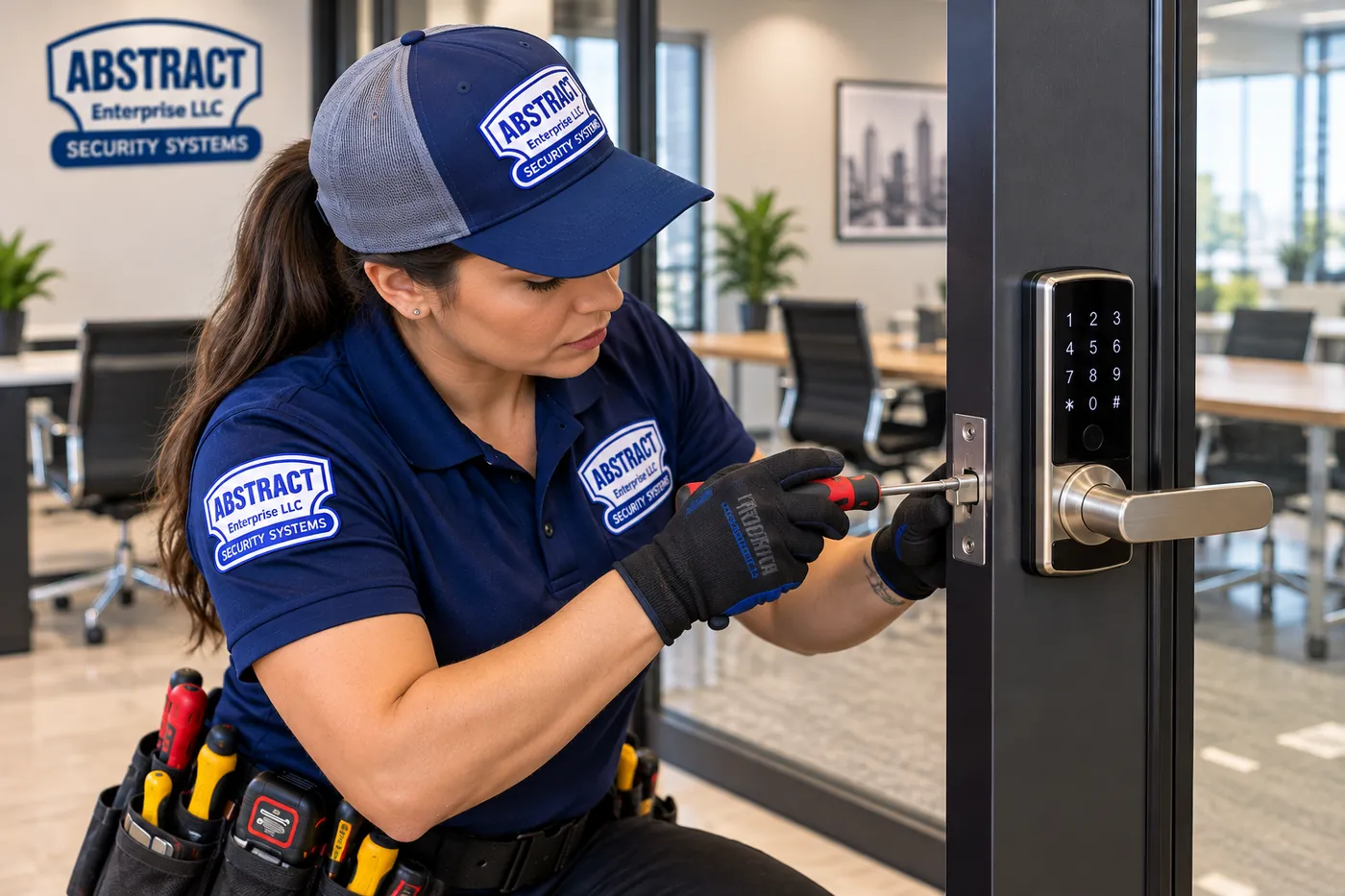
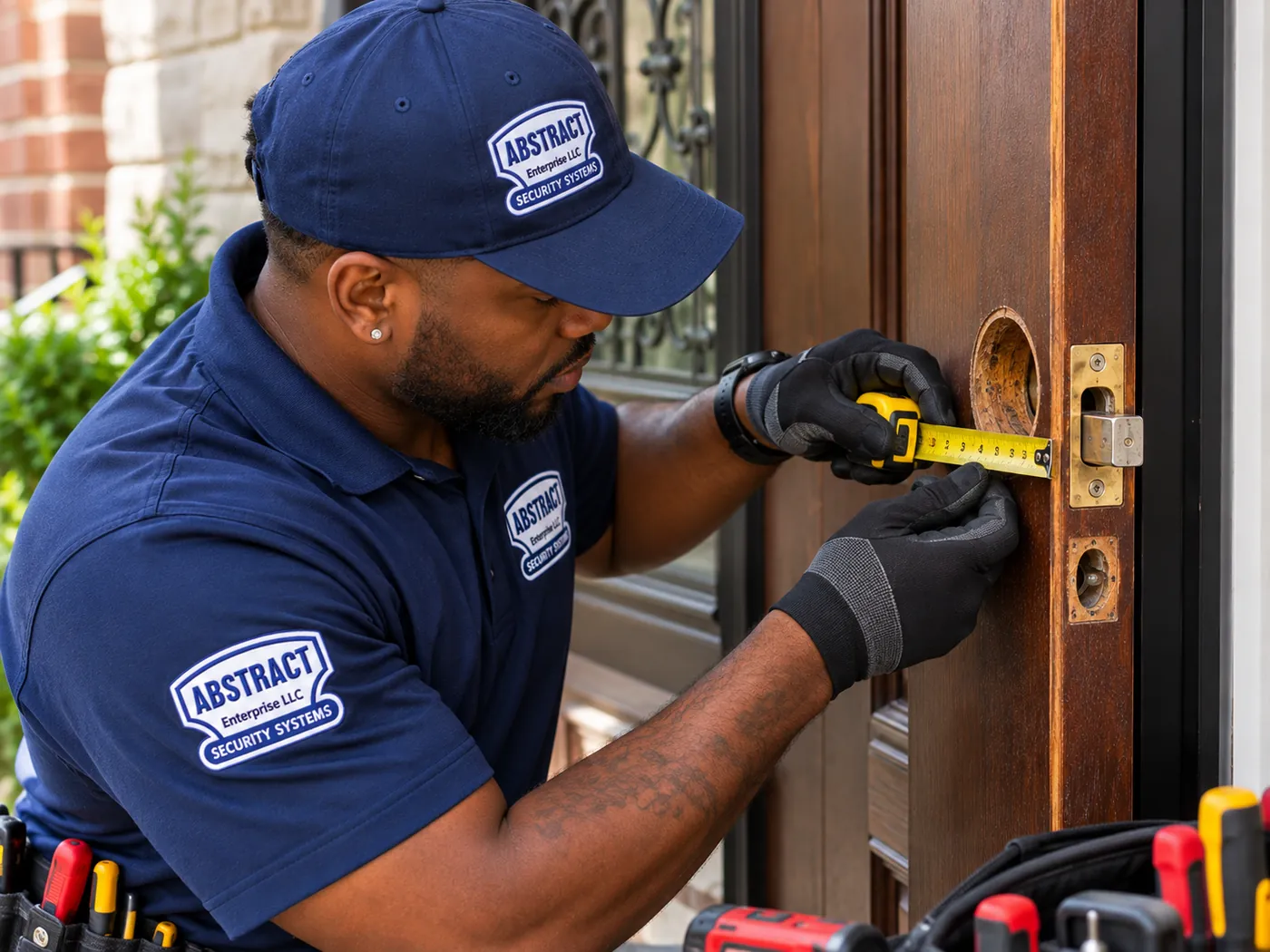
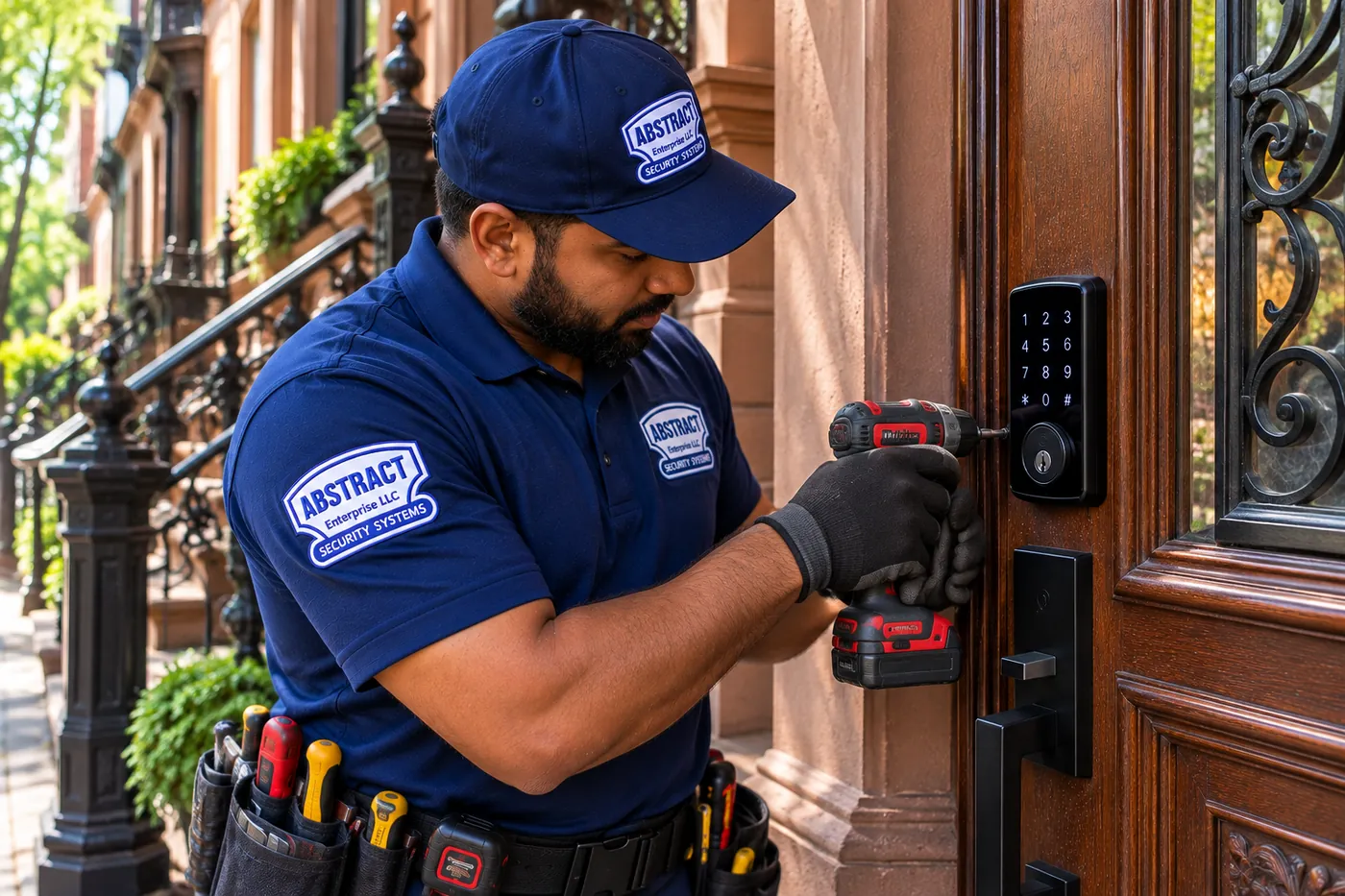
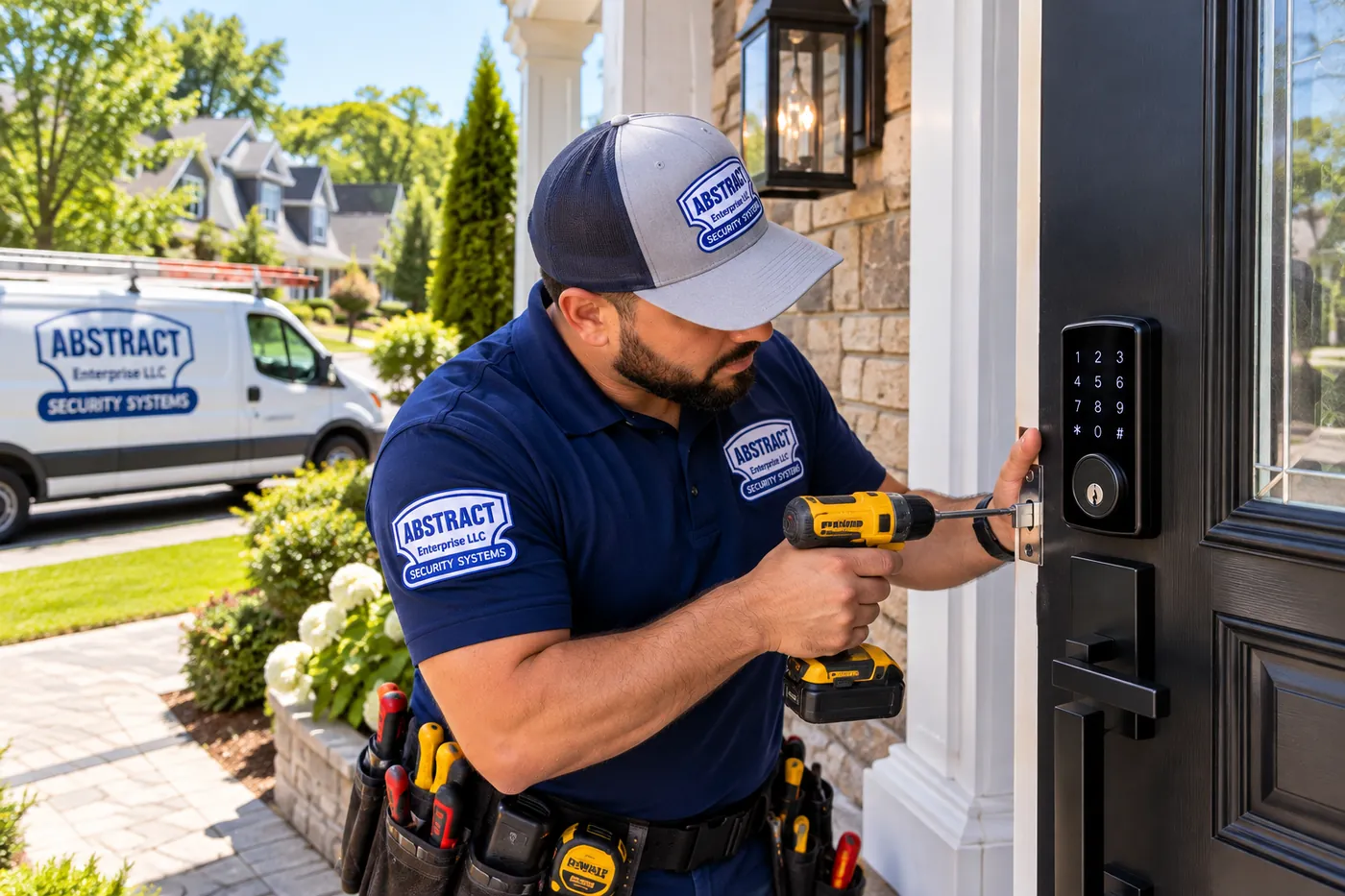
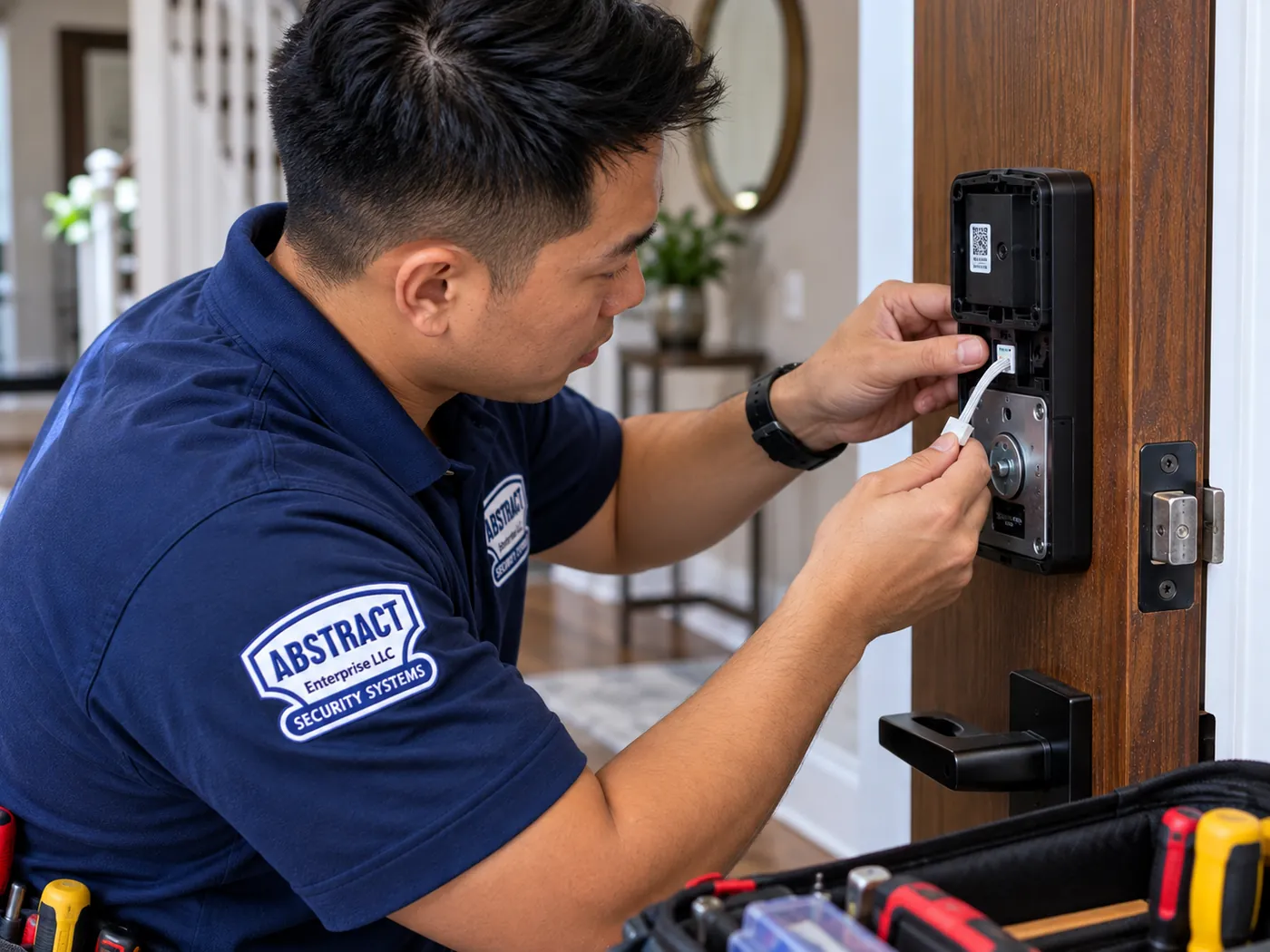
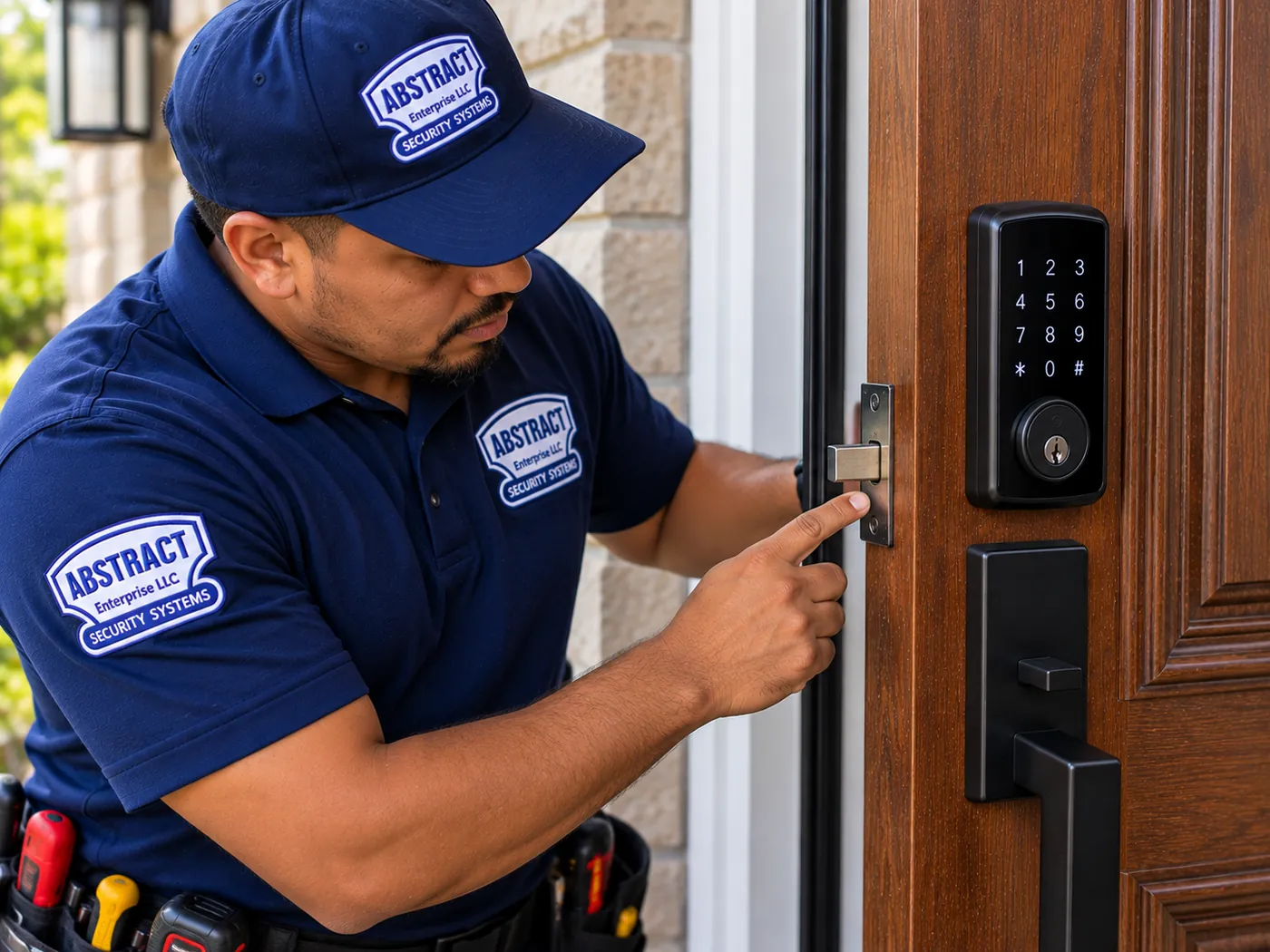
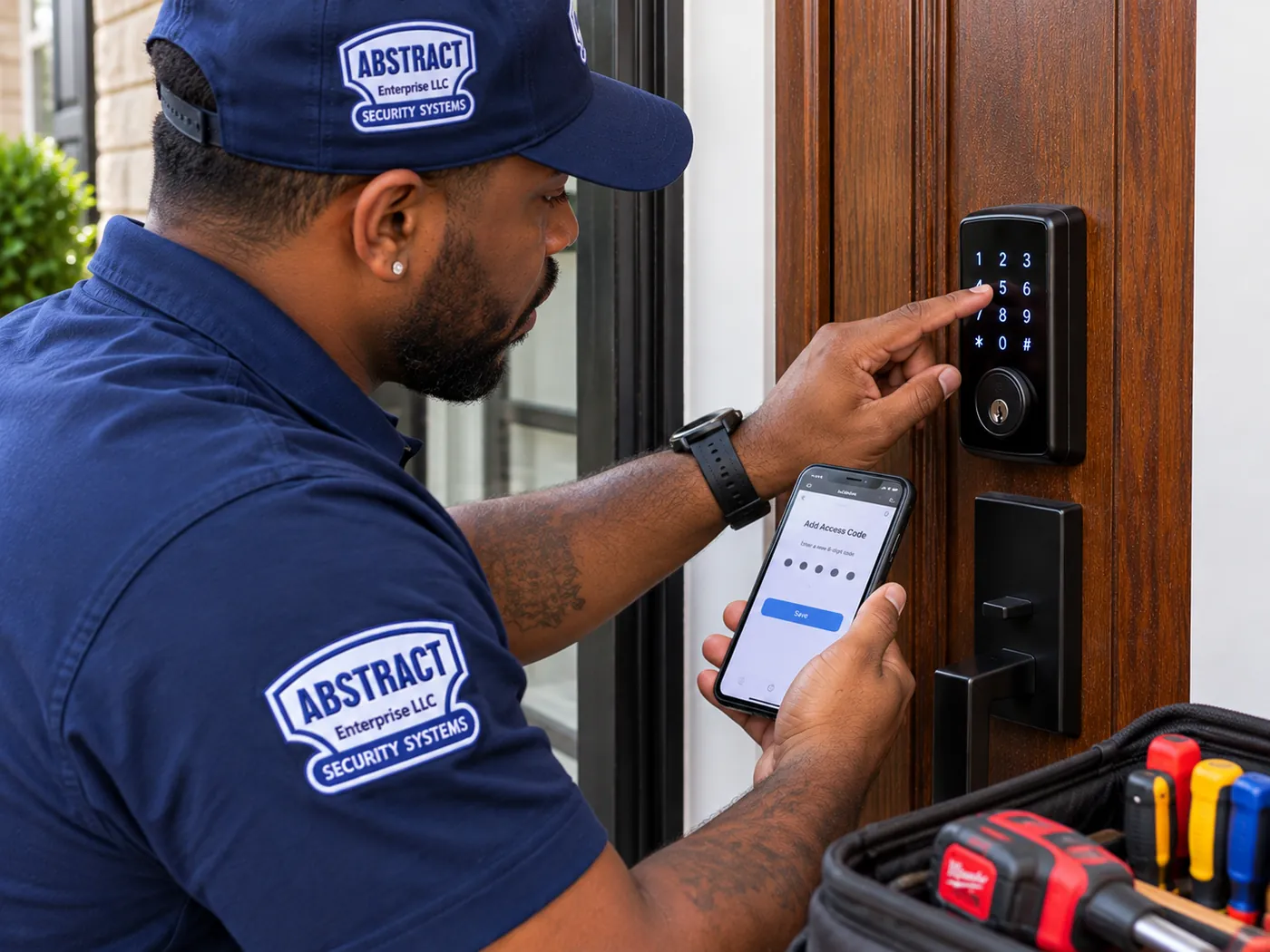
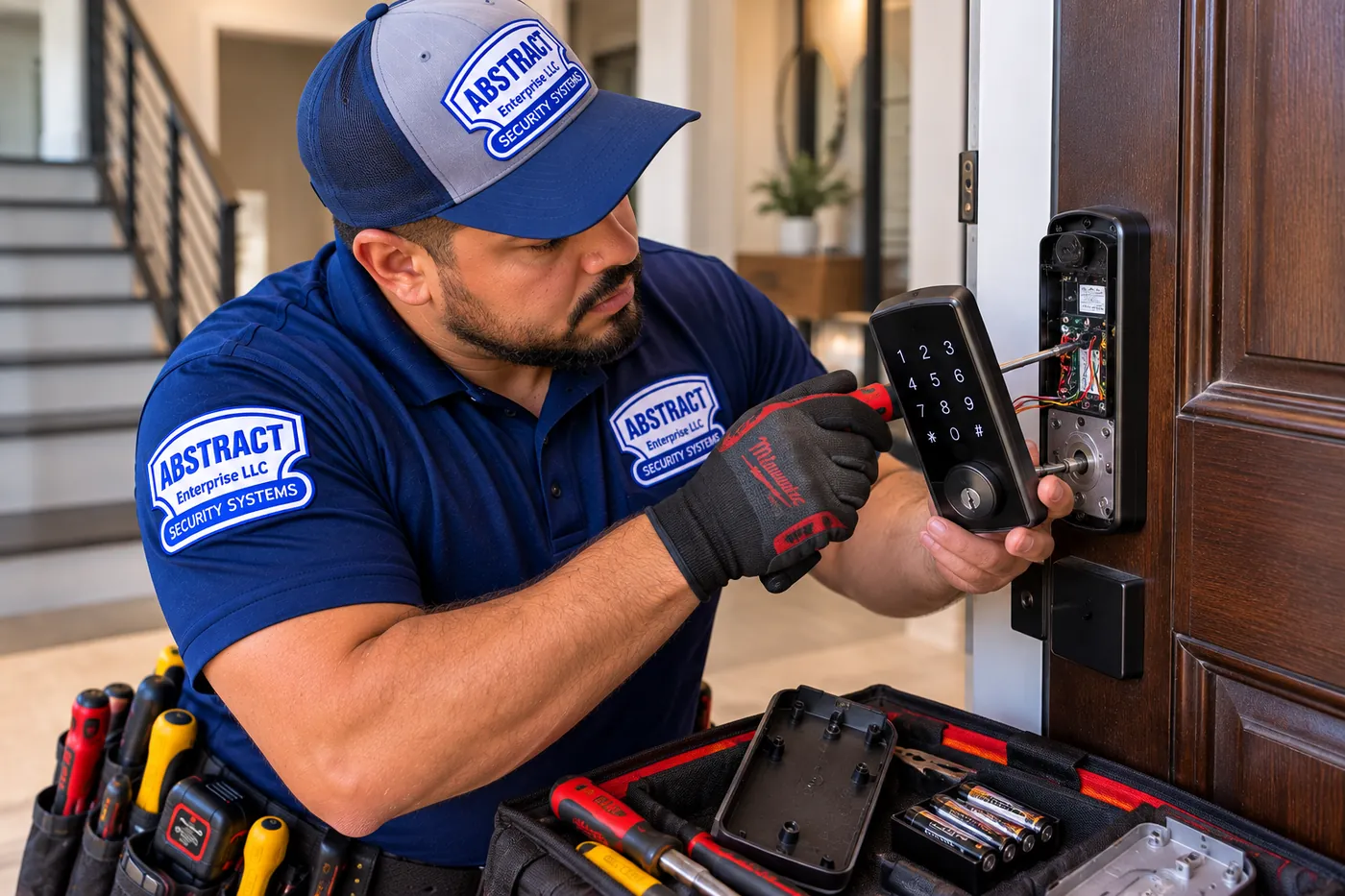
Plank & Dutch Doors · Keypads That Work Without a Phone Signal · Rental Cottages & Family Camps · Kingston, New Paltz & Woodstock Storefronts
Ulster County asks more of a door lock than most places. A Hurley or Stone Ridge house may still hang an eighteenth-century plank door in two feet of fieldstone. A cabin off Route 28 may have no phone signal on the porch, so a guest's app key is useless the moment they arrive. A Kingston, Woodstock or New Paltz rental may answer to its own town's permit rules. We fit smart locks that respect the old door, open with a code when the phone can't help, and leave the inside of every door working with one plain hand motion.
Reviewed and updated October 17, 2026 · Written by Anwar Timothy, NYS licence #12000287431

Weighing a keyless front door for a Kingston house, a Gardiner farmhouse or a cabin up the Esopus valley? Call our Hudson Valley line, (845) 640-3835, or send the 60-second form. A licensed installer reads every request and will tell you, before anyone drives out, whether your door can take a smart lock as it stands and what the visit should cover.

Ulster County's doors are older than almost anywhere else in the valley, and some of them are older than the country. The Kingston Stockade District keeps colonial Dutch stone houses on all four corners of Crown and John Streets, and the Senate House on Fair Street began as a one-storey stone dwelling in 1676. Hurley's Main Street is lined with private stone houses dating from the late 1600s onward, and the Hurley Heritage Society's self-guided tour map lists 27 historic sites in and around the village. Further out, in towns such as Marbletown and Rosendale, early houses of stone and timber are still lived in. Census figures collected by Stacker put about a quarter of Ulster's homes — 21,829 of them — in buildings put up in 1939 or earlier. For a smart lock installer that means thick, hand-made doors, surface-mounted box locks, strap hinges, Dutch doors split in two, and owners who would rather not drill a new hole in anything original.
The second thing that shapes the work here is the mountains. West of the Thruway the county climbs into the Catskills, and the towns of Shandaken, Olive, Denning, Hardenburgh and Woodstock sit among ridges that block radio signals. Hudson Valley One's 2016 review of carrier coverage maps found gaps along Routes 212 and 28 "where mountains block cellular access," and named the Phoenicia, Lexington–Shandaken, Saugerties and West Hurley ZIP codes among the worst for dead zones. Broadband is still arriving: in September 2025 the county announced a $20.8 million ConnectALL award to reach nearly 1,300 unserved homes, businesses and community buildings. A smart lock that depends on a guest's phone talking to the cloud at the front step will, sooner or later, leave someone standing on a porch with no bars. On these properties we design the lock to work fully from its own keypad, and we treat remote features as a convenience layered on top.
Third is the short-term rental economy that fills those cabins and farmhouses. The Ulster County Comptroller's 2025 report counted 2,827 housing units operating as short-term rentals in May 2025, and Radio Catskill's coverage of the same report described growth of about 220 percent across the decade, from 942 in 2015 to a peak of 3,310. In Shandaken nearly one home in ten is a short-term rental. The rules are local and they differ: the City of Kingston caps full-time rental permits at one percent of its housing units and stopped issuing new ones in March 2024; the Town of Woodstock requires a non-resident owner to name a local host living within ten miles; the Village of New Paltz registers and inspects rental homes, short-term ones included. A smart lock does not satisfy any of those rules on its own, but it decides how easily an owner can prove who had access to the house, and when.
And Ulster is still a place where people live year-round in the house they own. QuickFacts shows an owner-occupancy rate of 69.9 percent and almost a quarter of residents aged 65 or older. Year-round owners call us about the doors they actually use — usually a mudroom or kitchen door rather than the front — about a caretaker or neighbour who checks the house while they winter elsewhere, and about locks that keep working through the summer thunderstorms and winter outages that Central Hudson customers know well. The answer is different on a Rondout rowhouse, a ranch in Lake Katrine and a timber-frame house on a dirt road above the Ashokan Reservoir, and that is why we walk each property before quoting it.
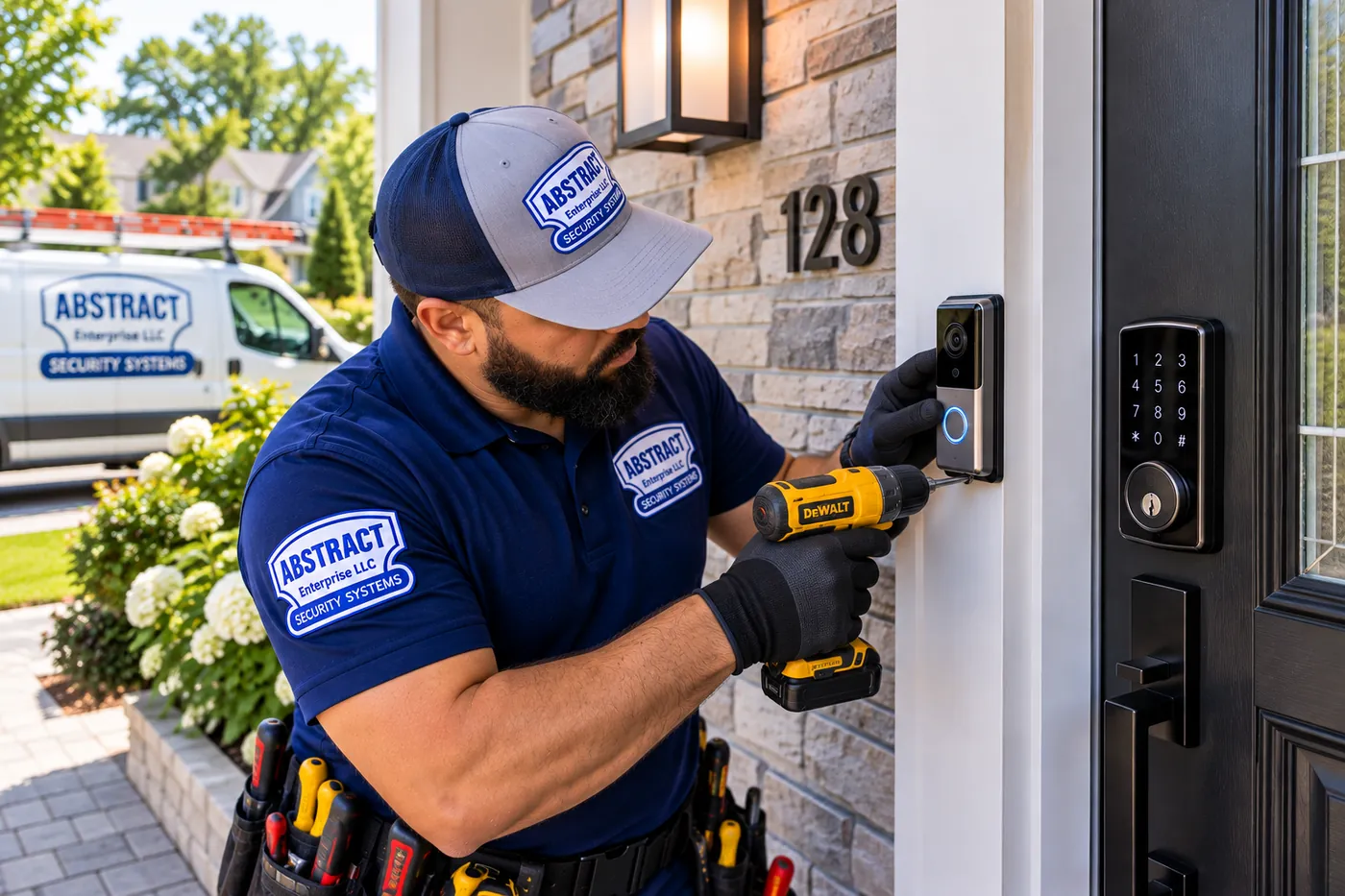
Owners who rethink the front door usually rethink the rest of the entry too. Our doorbell camera installation in Ulster County puts a picture next to every unlock, and AESS alarm installation for Ulster County homes ties door contacts into the same plan.

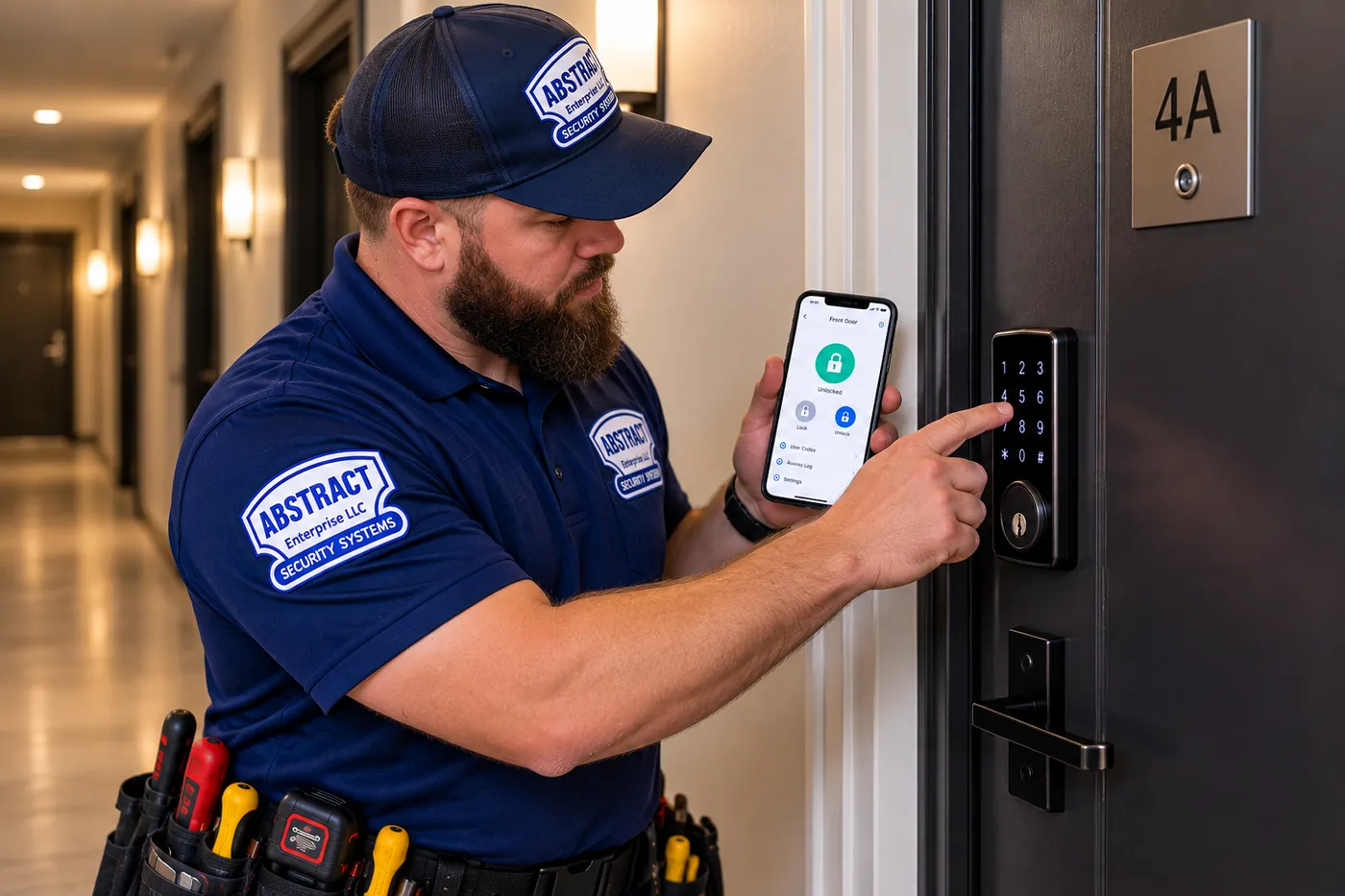
A lock that froze up after a February ice storm, a bolt that no longer reaches the strike because an old frame shifted with the seasons, a bridge that dropped off the network when the router was swapped after a lightning strike, a guest code that never arrived because the rental's internet was down, or a shop keypad in Uptown Kingston that stopped taking an employee's code — those are repair calls, and we book them as such. We schedule the next open 2-hour window, and most power, pairing and alignment faults are fixed in one to two hours once a technician is at the door. When the trouble is a building entrance that buzzes but won't release, a failed electric strike repair is $451–$742 at our Ulster County rate. Call (845) 640-3835, or use our door buzzer repair service in Ulster County for entrance strikes and buzzers.

Nine kinds of work make up most of our Ulster calendar. On all of them the finished door latches in any season, leaves by hand from inside, still takes a key, and has been opened by every person given a code before we pack up.
Interior retrofit units, surface-mounted solutions and secondary-door strategies for plank doors, box locks and thick masonry openings, chosen so the original door and its hardware stay intact.
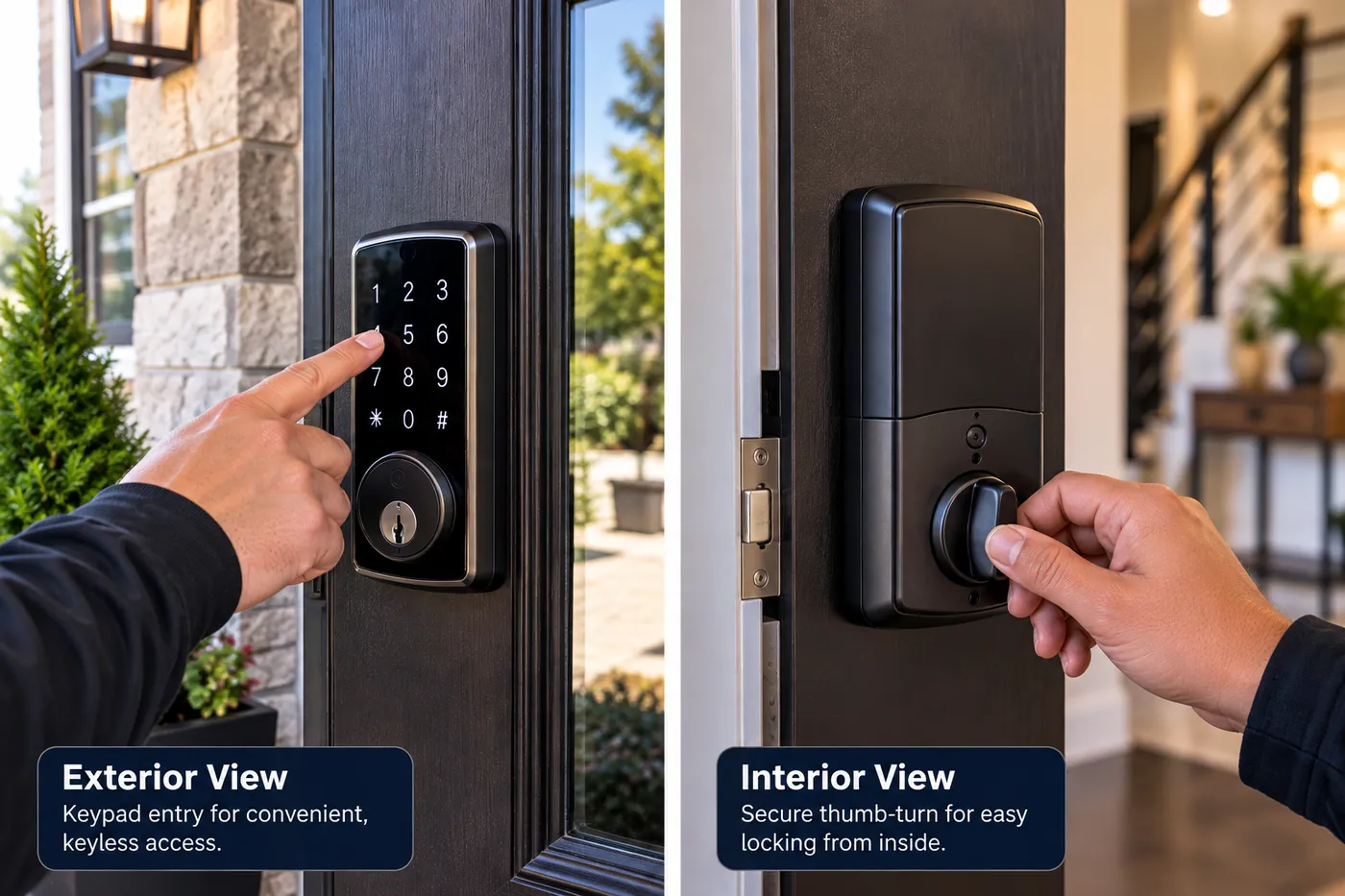
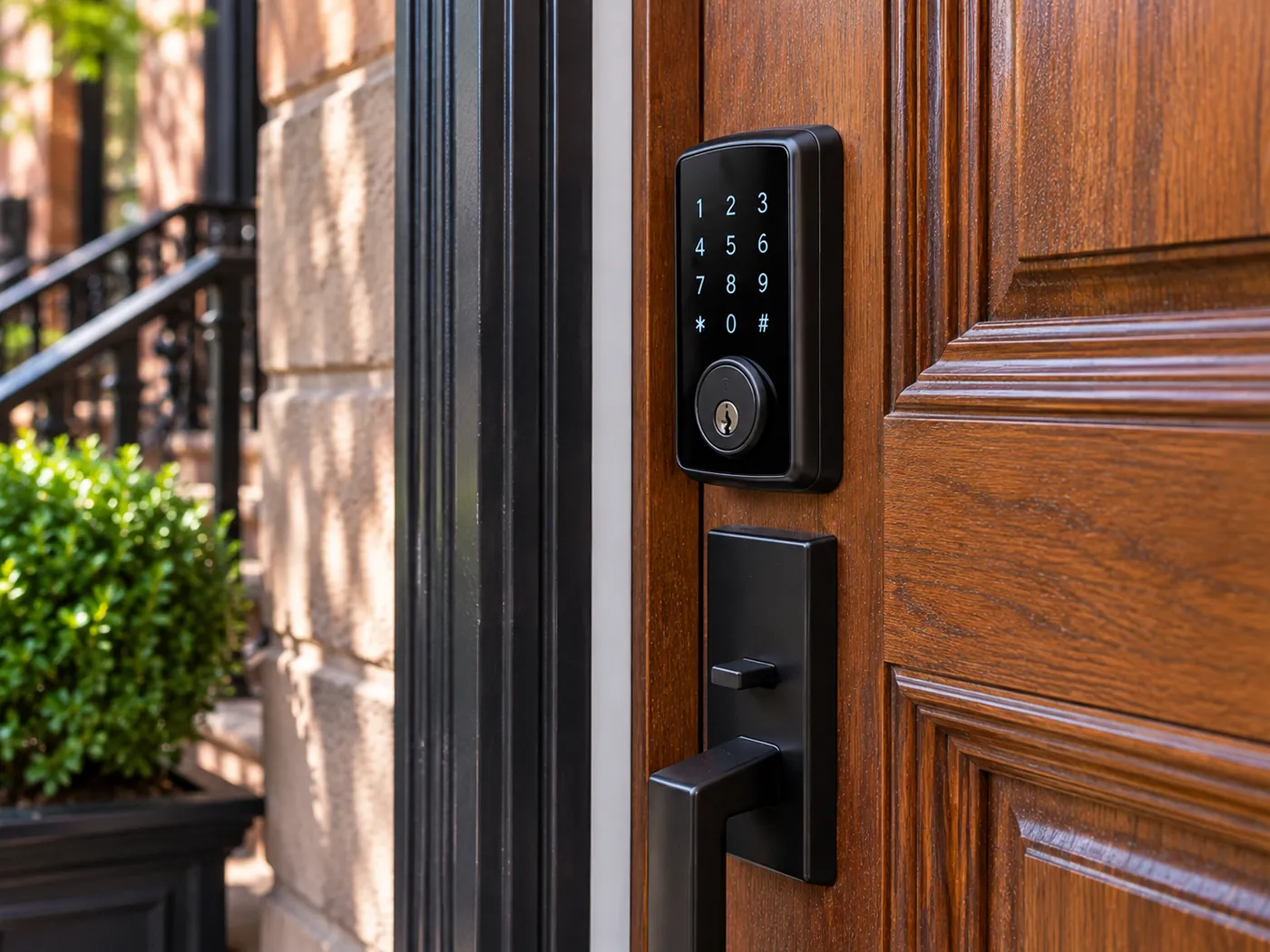
Keypad deadbolts that store codes in the lock itself, so a guest, plumber or caretaker can get in on a porch with no mobile signal and no working internet behind the door.
Per-stay codes, cleaner and host codes, entry logs an owner can show a town inspector or a platform, and a key-based fallback the local host controls.
Locks with enough user slots and administrator roles for several households sharing one property, so each family manages its own codes without seeing the others'.
The door a year-round household really uses, fitted with the sturdiest lock on the property and placed where the keypad is out of the drifting snow.
Keyless options for glass sliders onto decks and porches, from purpose-built sliding-door locks to mechanical push-button units that need no batteries.
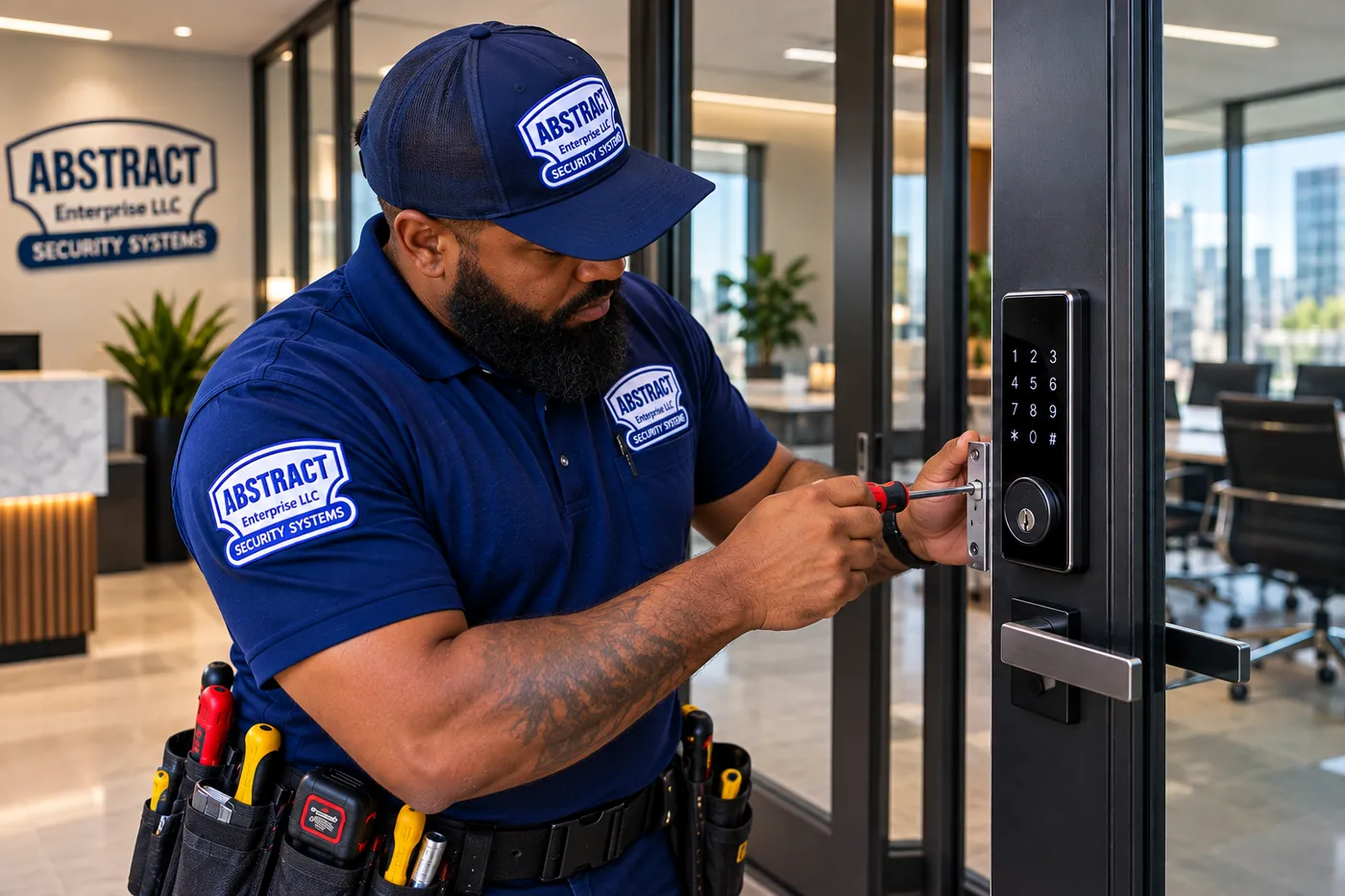
Keypads, fob readers and electric strikes for storefronts on Wall Street and North Front Street, studios in Woodstock, Main Street shops in New Paltz and offices at the former IBM campus.
A route in for fire and ambulance crews when nobody is home: a fire-department key box where the local company supports one, a responder code, and a plan written down for the caretaker.
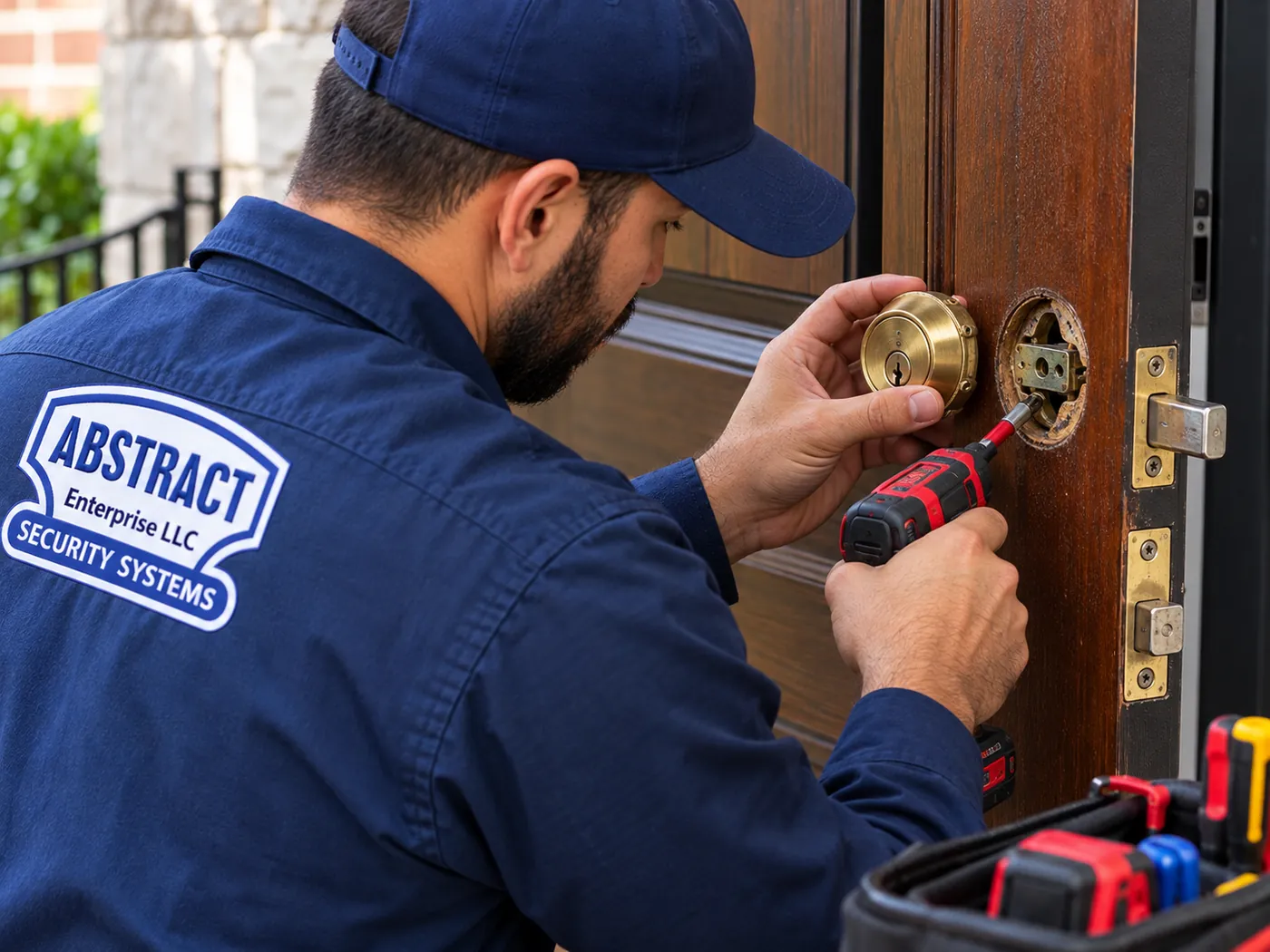
Re-aligning bolts on shifted frames, replacing surge-damaged bridges, re-pairing locks after a router change and restoring admin access after a phone is lost.

Three centuries of building sit side by side in Ulster, sometimes on the same road. Each era left its own kind of door, and each asks for a different approach before any electronics go near it.
Kingston's Stockade, Hurley's Main Street, New Paltz's Huguenot Street and the farm roads of Marbletown: thick fieldstone walls, deep door reveals, plank or batten doors on strap hinges, and often a box lock fixed to the inside face rather than a bored deadbolt.
Brick and frame rowhouses and storefront buildings in the Rondout, Uptown Kingston and the villages of Saugerties and Ellenville. Panelled doors that have been re-bored for several generations of locks, and frames that move with the seasons.
Woodstock and the Byrdcliffe hillside, Bearsville and Lake Hill: early-twentieth-century cottages, studios and board-and-batten houses with lighter doors, porches and screen doors that change how a keypad is reached.
Phoenicia, Pine Hill, Big Indian, Olive and Denning: cabins, camps and A-frames, often with a deck slider, a long drive and, in the dead-zone ZIP codes, a weak or absent phone signal.
Lake Katrine, Town of Ulster, Highland and the suburban edges of Kingston and New Paltz: standard bored doors, attached garages and side doors that take a smart deadbolt without fuss once the strike is set right.
Gardiner, Shawangunk, Wallkill, Marlborough and Esopus: farmhouses with several additions, each with its own door, and barns or farm stands where a keypad on a service door replaces a hidden key.
Houses split into rooms near SUNY New Paltz and two- to four-family buildings in Midtown Kingston, where the owner manages entry for tenants who change every year.
Where we meet them, these often have lighter outswing entry doors and thin frames that need reinforcement before a motorised bolt is worth fitting.
Leave the historic face alone. On a plank door with a box lock, we look first at an interior retrofit unit that turns an existing deadbolt, or at fitting a modern deadbolt to a less important door and keeping the original lock as it is. If a new bore is truly the only option, we say so in writing and you decide. Nothing on the street side of a door in Kingston's local landmark districts is changed until you have checked with the city's preservation commission.
Respect the masonry. Deep stone reveals put the door's outer face several inches behind the wall, which affects where a keypad can be read and whether a bridge inside can hear the lock. Where a keypad or bridge has to be fixed to stone, we fasten into mortar joints or onto a wooden backer, never into the face of an old stone, and we use fixings that can come out without leaving a scar.
Square the frame before anything motorised. Old frames rack, swell in humid summers and shrink in dry heated winters. A motorised bolt that rubs the strike strains its motor and drains batteries. We test the throw with the door pulled by hand, pushed by wind and closed hard, and we move, file or reinforce the strike so it clears in July and in January.
Plan for no signal. In the mountain towns we decide early whether a lock will ever have internet. If not, codes live in the lock, schedules are kept simple, and remote features are skipped rather than half-working. Where there is Wi-Fi in the house but not on the porch, the bridge or hub goes within the distance its maker specifies — August, for example, asks for its Connect bridge to be within 10 to 15 feet of the lock.
Owners who rework an old front door often add a way to see who is at it. Our residential security cameras in Ulster County cover the porch and drive, and home automation for Ulster County properties links the lock, lights and thermostat for houses that sit empty midweek.
Ulster's businesses are mostly small, owner-run and tied to visitors and students. A gallery that opens Thursday to Sunday, a bakery with a 5 a.m. start, a brewery whose tasting room shares a wall with the stockroom, a shop on New Paltz's Main Street staffed by students who change every semester. The keyless question is usually about people rather than doors: who opens up, who closes, and how to take a key away without changing the lock. These are the places our commercial calls come from.
Shops, restaurants and wine bars along Wall Street and North Front Street in the old Stockade grid, some in buildings with apartments upstairs reached by a door beside the shop.
The waterfront district along the Rondout Creek and the Broadway corridor that runs up to Midtown: restaurants, studios and offices in brick buildings where rear and side doors matter as much as the front.
The village's main street of cafés, bars, bookshops and service businesses below the Shawangunk Ridge, busy with SUNY New Paltz students during term and with climbers and visitors on weekends.
Woodstock's main street, with Mill Hill Road, is lined with locally owned shops, restaurants and galleries — many seasonal, some staffed by rotating part-timers, nearly all in older wood buildings.
The village centre near the mouth of the Esopus Creek, where shop, restaurant and office doors share older blocks and the storefront door is often only one of several on the building.
The former IBM Kingston manufacturing campus off Enterprise Drive, where the east campus houses the Ulster BOCES center and Archtop Fiber — large buildings where suite doors and service entrances are the usual requests.
The county's farm businesses — 486 farms in the USDA's 2022 Census of Agriculture — and the camps and retreat centres in the mountain towns bring the same pattern: a public door, a staff door and a back room that should only open on a schedule.
Two keypads is about the limit before a shop or studio is better served by a proper system with one controller, group schedules and a shared log. At that point our access control installation in Ulster County is the right next step, and commercial security cameras for Ulster County businesses let an owner match each entry in the log to a face at the door.
Grouped by property type — old stone and timber houses, mountain cabins and rentals, then city and village buildings by the river. Costs and scheduling sit in the FAQ below. Town rules are named so you can check them; none of this is legal advice.
Often, yes, though not with the lock you have. A box lock, also called a rim lock, is a metal case fastened to the inside surface of the door with a bolt that shoots into a keeper on the frame. Smart deadbolts are designed for a round bore through the door and a hole in the edge, which a plank door with a box lock doesn't have. So the choice is between three routes, and only one of them involves a drill.
The first is to add a modern single-cylinder deadbolt to a secondary door and leave the historic one exactly as it is, used only with its key. The second, where the door already has a later deadbolt somewhere on it, is an interior retrofit unit that clamps over that deadbolt's thumb-turn and turns it by motor, with nothing new on the outside. The third is a surface-mounted electrified lock or keypad on the frame, which suits some doors but needs power and careful placement. Boring a new hole through original planks is the last resort, and we would rather tell you a door isn't a good candidate than cut it.
Whichever route you take, keep the box lock working. It is the one lock on the house that needs no batteries, and on a door that has survived a few hundred winters it is worth preserving as a key-operated backup.
In many Ulster stone houses that is exactly what we recommend. These houses were usually extended: a frame kitchen wing in the nineteenth century, a mudroom or a back porch in the twentieth. The door in the newer part is typically a standard thickness, already bored for a deadbolt, closer to the driveway and the door the family really uses. Fitting the smart lock there gives you every convenience without touching the oldest fabric of the house.
The front door then becomes the formal door, locked from inside and opened with its key on the rare occasions it is used. That arrangement is common in houses where the front door faces a road that has grown busier than the builders imagined, and it keeps the historic face of the house unchanged for anyone walking past.
Just make sure the wing door is solid, with a strike screwed into framing and a light outside; a smart lock on a hollow-core back door is a poor trade.
By not fastening into the stone itself. Old fieldstone and early brick are irregular and often soft, and a hole in the face of a stone is permanent. Where something has to be mounted on masonry — a remote keypad beside a recessed door, a weatherproof box, a bridge on an inside wall — we fix into the mortar joints, which can be repointed later, or onto a small wooden or composite backer that is itself held by a few joint fixings. Removing it later leaves a joint to point, not a scarred stone.
Inside, the better answer is often to avoid the wall altogether. A plug-in bridge can sit on a shelf or a window reveal near the door, and a hub can go in an adjacent frame partition instead of the stone gable. We test the signal at the spot before choosing it, because a two-foot stone wall can weaken a radio link more than the distance alone suggests.
If any wiring is needed, it runs along mouldings or through the frame of a later partition, not chased into the masonry. Lime mortar and old stone are not materials to experiment on with a hammer drill.
Yes, if the two halves are dealt with as one door. A Dutch door is cut across the middle so the top can open for light and air while the bottom stays shut — Philipse Manor Hall's guide describes them as keeping children in and farm animals out. Most have a bolt or latch that locks the top leaf to the bottom one, and a lock only on the bottom half. A smart lock usually goes on the bottom leaf, where the original lock or latch sits.
The weak spot is the top half. If it can be opened from outside while the bottom is locked, the smart lock protects nothing. So we check that the top leaf has a secure bolt to the bottom leaf or to the frame, operated from inside, and we show you the routine for closing up: top bolted first, then the bottom locked by keypad or app. A door sensor on the top leaf can tell you if it is left open.
Hudson Valley owners are rightly proud of their Dutch doors and their black-painted iron hardware. On an original one we would use an interior retrofit or a secondary door before boring the leaf, just as with a plank door.
A keypad code they were given before they left home. Many smart locks can open with a phone app over Bluetooth, but the app often needs a data connection to download or confirm the guest's digital key, and in the Phoenicia and Shandaken ZIP codes that Hudson Valley One flagged for dead zones, the guest's phone may have nothing at the porch. A numeric code stored in the lock needs no signal at all. It is the credential every cabin should rely on.
How the code gets to the lock depends on whether the cabin has internet. With Wi-Fi in the house, the owner creates a per-stay code in the app from anywhere and it syncs to the lock. With no internet, some locks generate time-limited codes offline from a shared formula, so the app can issue a guest a code valid for their dates without the lock ever going online; the alternative is to programme a rotating set of codes in person and change them on a schedule. Send the code and the arrival instructions by email or text before the guest leaves an area with coverage.
Hosts on the national forums often keep a lockbox with a physical key as a backup in case a keypad fails. If you do, put it somewhere out of sight, change its combination between stays, and tell the local host where it is. A dead keypad in a valley with no signal is the one situation where a key really matters.
Yes, and it avoids a lot of friction. Most current smart lock apps let one owner invite others with different roles: full administrators, who can add and remove users, and ordinary users or guests, who can only open the door. For a camp shared among siblings, the cleanest setup is one administrator per household, each managing codes for their own children, friends and guests, plus a short written agreement on who removes access when someone stops using the place.
Check how a given app handles visibility before buying. In some, every administrator sees every code and the full entry log; in others, codes are hidden once created. If privacy between families matters, choose a lock whose app lets each person see only what they created, or use a lock with enough user slots to give each household a block of codes they manage themselves.
We set the roles up with everyone present, or by video call for whoever can't make the drive.
Everything you could do if you were there. The Town of Woodstock's 2019 short-term rental law requires a non-owner-occupied rental to name a designated host — an adult living within ten miles who can deal promptly with emergencies and renter issues in the owner's absence — and it makes the owner and the host responsible for addressing renter issues within 24 hours. A host who can't get through the door can't do any of that.
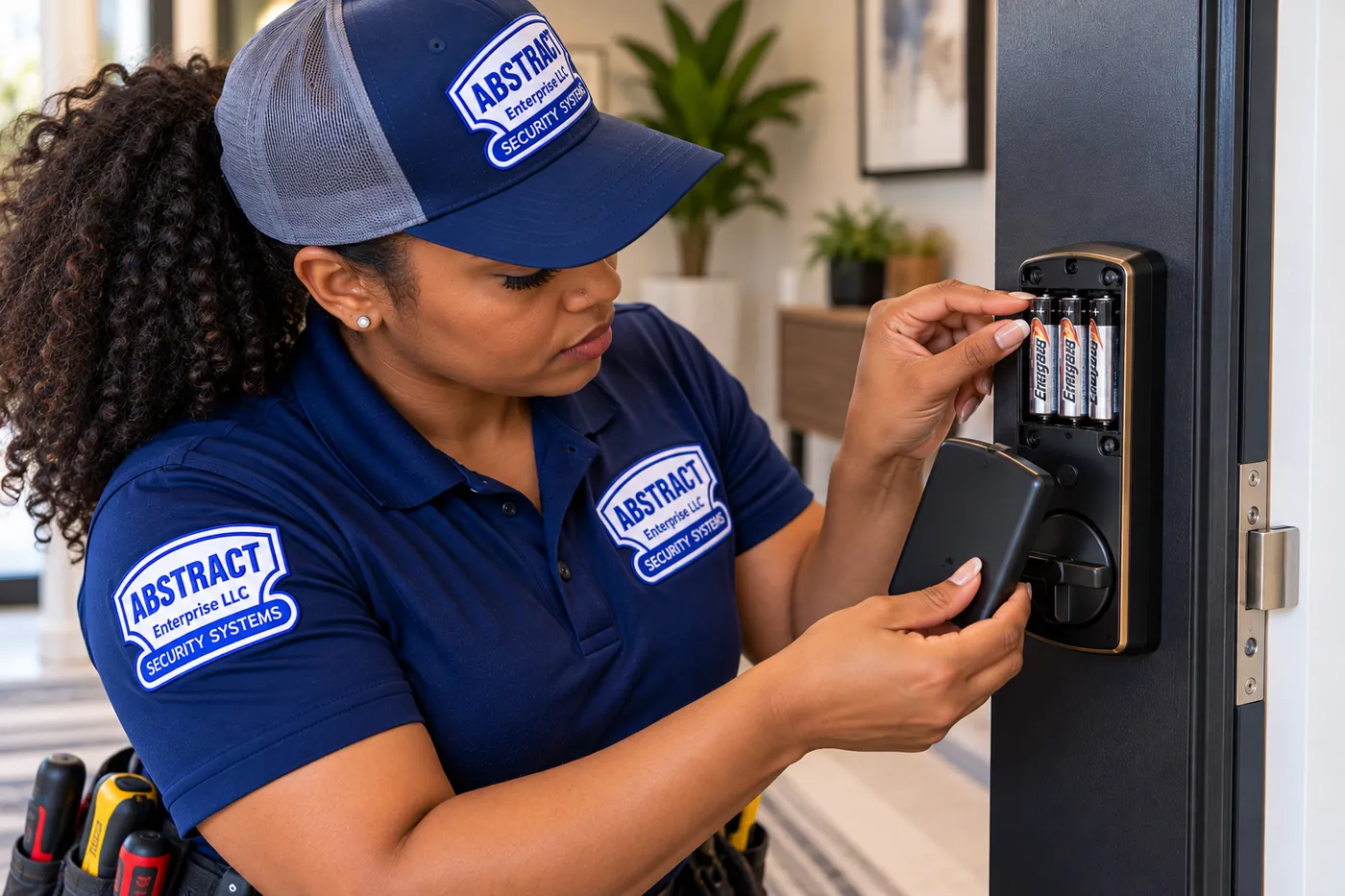
In practice the host should have their own permanent code, not a shared one, so their visits are logged separately from guests and cleaners. They should know how to open the lock with its key if the electronics fail, where the spare batteries are, and how to reset the lock or swap its batteries. If the lock is connected, give them a user account in the app so they can issue or cancel a code when a guest is stuck, but keep administrator rights with the owner.
The same law asks for a safety and egress plan posted in the unit and on the back of each bedroom door. Make sure the plan's route out matches how the locks actually work: every door on the way out should open from inside by hand, with no code, which is how we fit them.
Sometimes, but sliders are their own category. Smart deadbolts are made for hinged doors, and most patio sliders have a thin mortise latch in the edge of the panel with no room for one. People do try retrofit gadgets on the inside handle; a thread on a home-automation forum described one that was strong enough to unlock but not strong enough to lock, which is the wrong way round for a door that faces the woods.
The dependable options are a purpose-built keyless lock for sliding doors from a maker that lists your door type, a mechanical push-button lock with no batteries, or simply treating the slider as an exit-only door: locked from inside with its own latch plus a secondary bar or foot bolt, and never used for entry. For most cabins we recommend the last, with the smart lock on a hinged door nearby.
If you want to know when the slider is open, a contact sensor on the panel will tell you, and it can tie into the same app as the main lock. That gives you the alert without asking a sliding latch to do a deadbolt's job.
The same way they would through any locked door, unless you plan otherwise — and in a rural house that can mean forcing the door. Two plans avoid that. The first is a fire-department key box. Knox's residential HomeBox holds a single key, and the master keys are controlled by the local fire department, so only authorised crews can open it. Ask your fire company whether it runs a Knox program before buying one; not every volunteer department does.
The second is a responder code: a dedicated code you give to your alarm monitoring company or your caretaker to pass on in an emergency, which you change afterwards. It works only if someone can relay it, so it complements the key box rather than replacing it.
Either way, write the plan down where your caretaker and alarm company can find it, and keep the physical key that matches your smart lock. A key in a fire department box is useless if it is the key to the lock you replaced last summer.
The lock itself rarely, its connection more often. A battery-powered deadbolt on a door has no wire to the house, so a surge has no easy path into it. What does get hit is everything plugged into the wall: the router, the modem, a plug-in bridge or a hub. Earth Networks' lightning report for 2020 counted 182,760 lightning pulses in Ulster County and 49 thunder days, so this isn't hypothetical, and in June 2024 the Times Union reported more than 35,000 Central Hudson customers in Ulster, Dutchess and northeastern Orange reporting outages after one round of storms.
When a surge or an outage takes out the network, a well-chosen lock keeps working at the door: codes, keys and fingerprints all operate locally. What you lose is remote control and notifications until the network comes back. Plug the router and any bridge into a surge-protected strip or a small battery backup, and expect to re-pair a bridge after a replacement router is installed, because a new router usually means a new network name or password.
If a storm has knocked out your lock's connection and you're out of the area, our setup-only visit reconnects bridges, re-pairs locks and checks every code without changing any hardware.
They can share hardware, but never credentials. In many Stockade-area buildings the shop door opens straight onto Wall Street or North Front Street while the residential door sits beside it and leads up a shared stair. The shop needs codes for employees that work during trading hours and change when staff leave; the tenants need codes that work at all hours and are theirs alone. Putting both on one keypad or one list invites mistakes — a former shop employee who can still open the residential stair is the classic one.
The cleaner design is two doors, two locks and two user lists, even if both use the same brand and app so the owner manages them in one place. If both doors are on a small access control system, the shop group and the residents' group are set up separately, with schedules on the shop side only.
Remember too that Kingston's rental registration rules apply to the apartments: the city requires owners to register rental units and obtain a rental permit, and an owner who does not live in Ulster County must name a managing agent. That agent should hold the administrator role for the residential door.
Usually, over a few years. SUNY New Paltz lists more than 6,100 undergraduates and about 1,000 graduate students, and a good share of them live off campus in houses let by the room or as a group. Every June, keys walk away with departing tenants, get copied, or are never returned. Re-keying or replacing cylinders each year is a recurring cost, and it relies on the landlord remembering to do it before the new group moves in.
With a keypad lock, each tenant gets their own code that ends on the last day of the lease. When the lease ends, those codes stop working without anyone touching the lock, and the incoming group's codes start on their move-in date. You still keep a mechanical key for the lock, held by you, and you still give tenants the access the law and the lease entitle them to.
Two cautions. The Village of New Paltz registers and inspects rental homes, so check that the doors and locks you choose will satisfy the inspector, especially on bedroom doors and exits. And individual codes are only private if tenants keep them that way; remind them that their code is theirs, not the house's.
Give every employee their own code with an end date, and do the paperwork at hiring rather than at departure. When a student starts in September, create their code with an expiry just after the end of the spring term; if they stay on for summer, extend it. Nobody has to remember to delete anyone in May, because the codes simply stop.
Set opening and closing staff on schedules that match your hours, so a code that worked at 7 a.m. for the opening shift doesn't open the door at midnight. A lock or keypad with an audit trail shows you which code opened the door and when, which helps with cash discrepancies and with that one shift nobody remembers working.
If you have more than a handful of staff or more than one door, a small access control system with fobs may be quicker to manage than a keypad lock, because fobs can be collected and reissued. We can price both for the same storefront.
Usually, with some care. Many manufactured homes have outswing entry doors, which open toward you as you stand outside. A standard smart deadbolt can be fitted to an outswing door as long as the door is thick enough and has room for the bore, but the hinge pins are on the outside, so the door's security depends partly on non-removable or security hinge pins, which we check and can fit.
The frame is the bigger question. Manufactured-home door frames are often light, and a deadbolt is only as strong as what its strike screws into. We reinforce the strike, use long screws into whatever framing is behind it, and make sure the door closes fully against its weatherstrip so the bolt lines up without straining the motor.
Some owners choose a keypad lever or a keypad deadbolt designed for thinner doors instead. We measure the door's thickness and backset at the walkthrough and recommend a model that is listed for it, rather than forcing one that isn't.
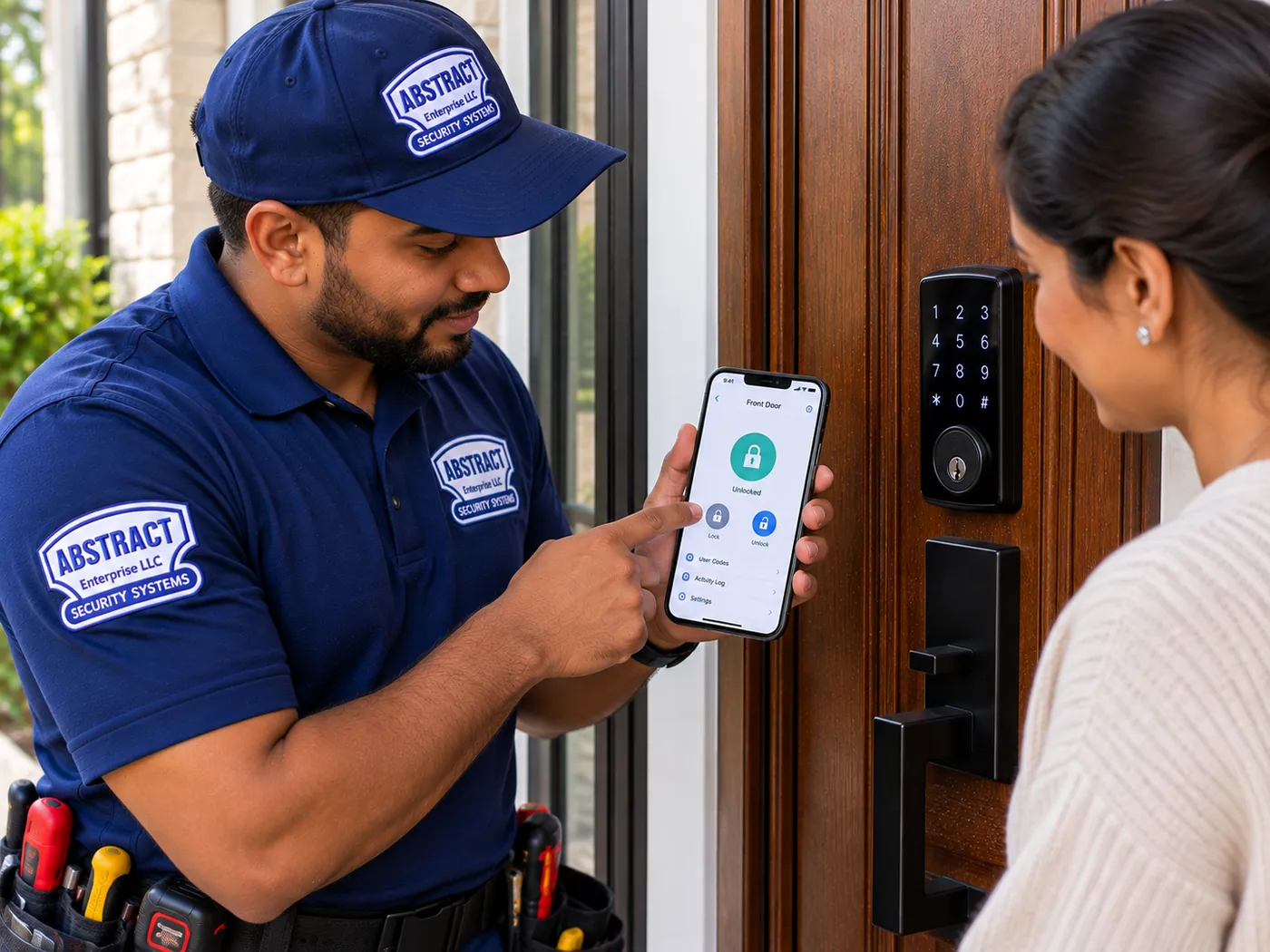
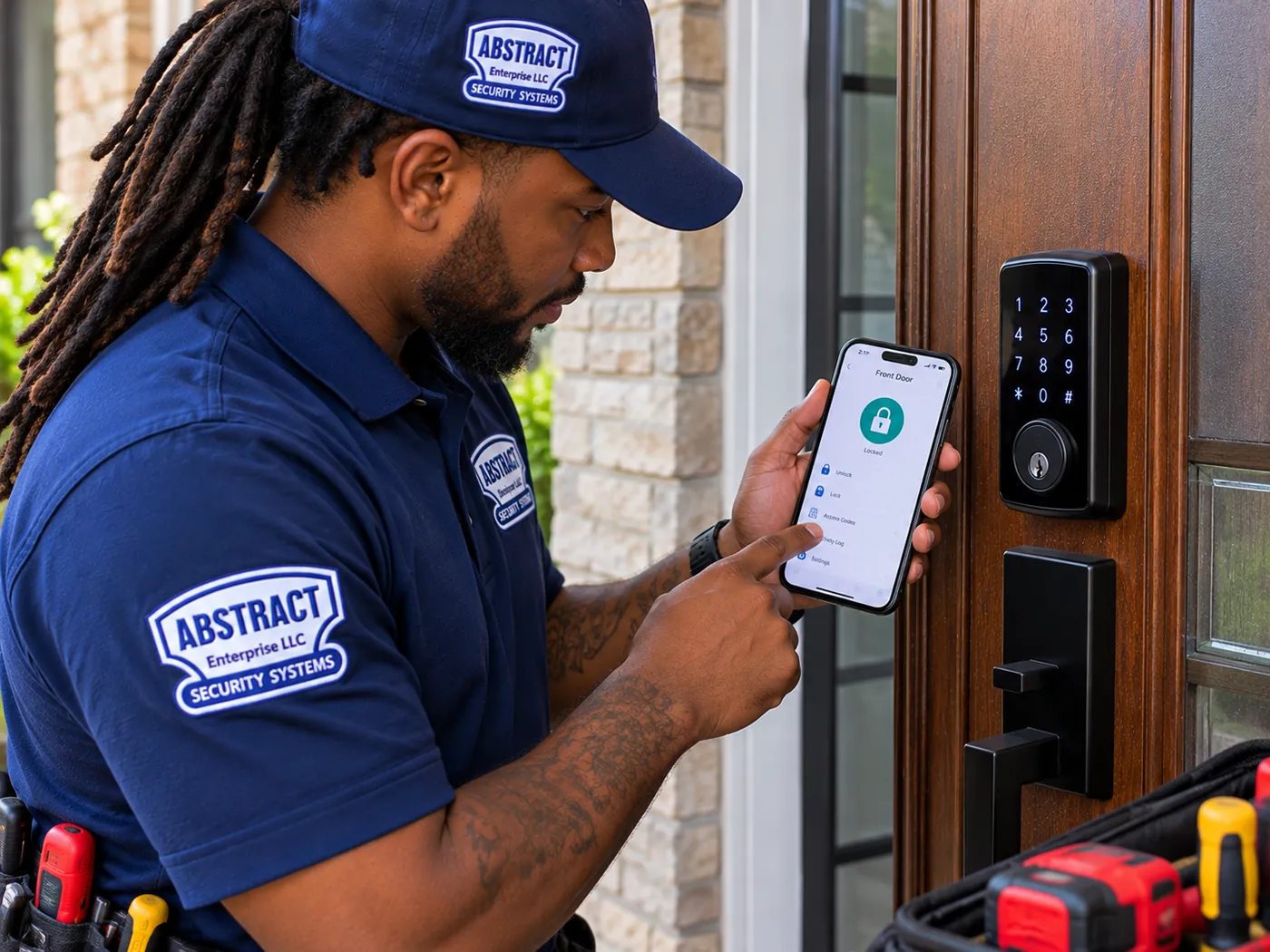
Start from the porch: is there signal, is there internet, how old is the door? Those three answers rule out most models before brand even comes up.
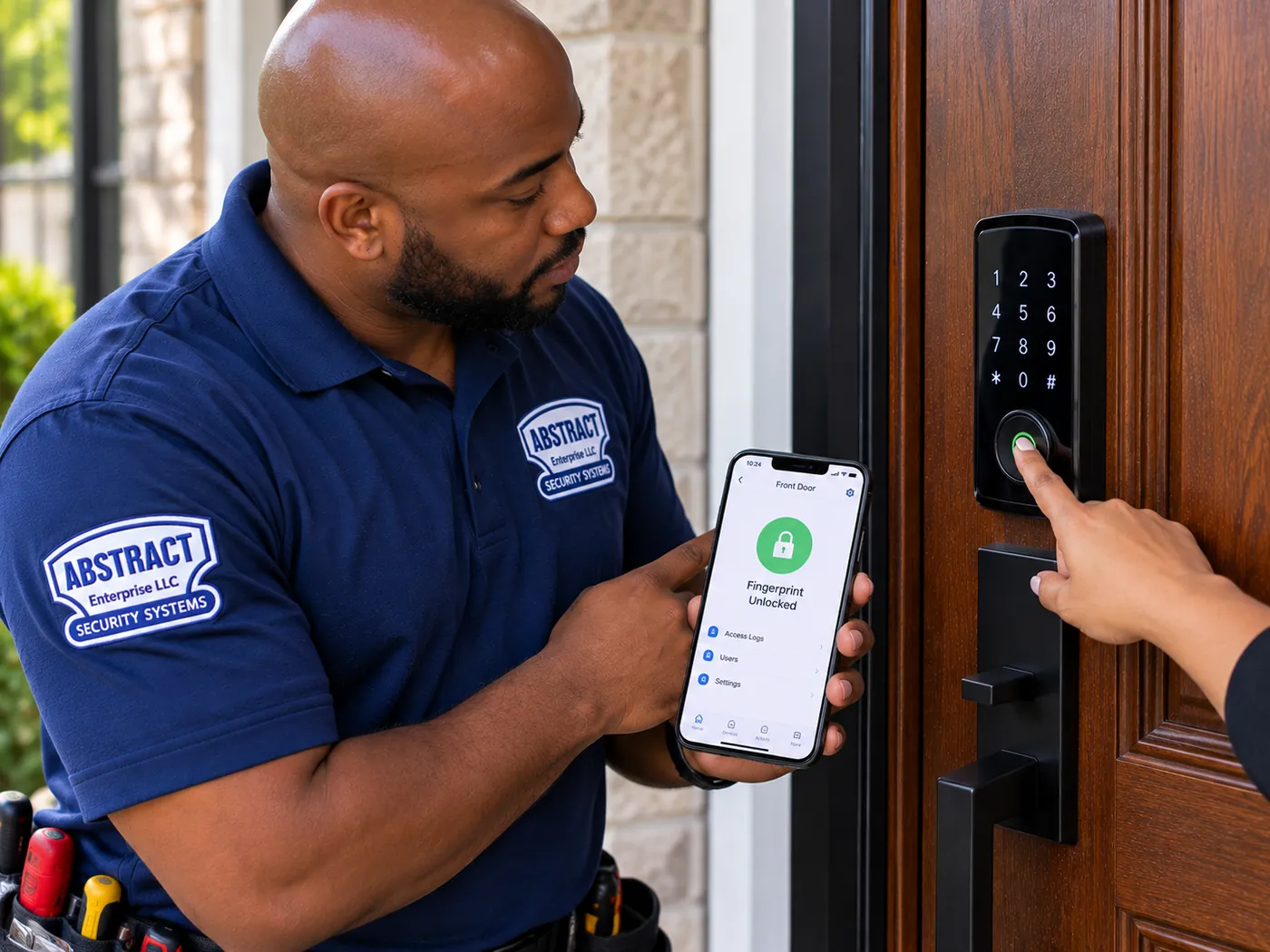
Codes kept in the lock itself, so the door opens with no internet and no phone signal. Our standard choice for cabins, camps and rentals in the mountain towns.
Remote codes, alerts and logs for houses with dependable internet, such as most of Kingston, New Paltz and Saugerties. Thread models need a compatible border router in the house.
Mount over an existing deadbolt's thumb-turn and leave the outside of the door unchanged. The usual answer for historic doors that already carry a later deadbolt.
No batteries and no electronics at all. Sensible for a barn, a pump house, a slider or a camp that sits unheated all winter.
For interior doors, studios and shop back rooms, and for users who find a round knob hard to turn. Often paired with a separate deadbolt on exterior doors.
Wall- or frame-mounted entry for galleries, tasting rooms and suites at iPark 87, releasing a strike in the jamb while an inside button or sensor lets people leave freely.
The link between a Bluetooth or Thread lock and the house network, placed within the distance its maker specifies and tested at that exact spot.
Contacts that report when a slider, a Dutch door's top leaf or a cellar door is open, and fire-department key boxes where the local company supports them.
National brands versus a local installer. National alarm companies and smart-home retailers will happily sell a smart lock as part of a monitoring plan or in a box at the register. Neither will stand on a porch in Big Indian, check the bars on your phone, measure a plank door in Hurley or read Woodstock's host rule with you. Choosing the lock to fit the signal, the door and the town's rules is the part of the job a licensed local installer is for, and it is what we charge for.

Google's AI Overview was out of reach for the research behind this page, so none of the seven headings below is quoted from it. Each is a claim we keep meeting in lock advertising, cost guides like Fixr and roundups on Angi-type sites, which answer engines then repeat — followed by how it holds up on Ulster County doors.
Lock makers lead with the phone, and for a city apartment with full signal that's fair. Phone keys often depend on the app reaching the internet to fetch or confirm a credential, and on the phone having power and signal at the door.
Large parts of western Ulster have patchy coverage or none, particularly along the Route 28 and Route 212 corridors that local reporting has singled out. A guest arriving at night with a phone key and no bars is locked out.
On mountain properties the keypad code is the primary key and the phone is an extra. We choose locks that keep working fully without either a signal or the cloud.
Product reviews often time an install on a modern pre-bored door, and on that door the claim is roughly right. Fixr's national cost guide, updated in January 2025, puts a typical installed smart lock at $250 to $400.
An Ulster stone house's front door has no bore, a box lock on its face and a frame set in a two-foot wall. A 1940s cabin door may be out of square by a quarter-inch. Those doors take longer, and some should not be bored at all.
The national figure is a fair guide to a simple door. It is not a price for a historic one, and we tell owners which kind they have before quoting.
Short-term rental guides sometimes present keyless entry as part of being a "legal" or "professional" host. Locks are useful to a host, but in Ulster the rules that decide whether a rental is legal are municipal.
Kingston caps full-time permits and inspects every two years; Woodstock wants a local host within ten miles, a posted egress plan and an annual fire-safety inspection; New Paltz registers and inspects rental homes; the county requires registration with its Department of Finance.
A smart lock helps you meet operating obligations — prompt access for your host, a record of entries — but no lock replaces a permit, a registration or an inspection.
Spec sheets list door thickness and backset ranges that cover most modern doors. Schlage, for example, lists its Encode for doors 1-3/8 to 1-3/4 inches thick with a 2-3/8 or 2-3/4 inch backset.
Old Ulster doors fall outside those ranges as often as inside them: plank doors thicker than two inches, Dutch doors with a lock on one leaf only, outswing doors on manufactured homes, sliders with no room for a deadbolt at all.
We measure before recommending a model, and we keep to the maker's listed range rather than shimming a lock onto a door it was never designed for.
Outdoor ratings are real; Schlage lists the outside of its Encode for temperatures from −31°F to 150.8°F. Ratings describe the lock's electronics in still air, though, not a bolt trying to throw against a frame that has swollen or iced.
On an unheated camp door, the problem in February is usually mechanical: a frame that moved, a strike packed with ice, a weatherstrip that froze to the door. Batteries also lose capacity in deep cold, which is why many owners switch to lithium cells.
We set strikes with seasonal movement in mind and recommend a mechanical lock for buildings that are left unheated all winter.
Security research on connected locks gets wide coverage, and online summaries sometimes conclude that a keyed deadbolt is always the safer choice.
Most break-ins still start with an unlocked side door, a key under the mat or a lockbox code nobody changed. A lock that relocks itself and reports an open door closes more gaps than it opens.
Keep the lock's firmware updated, use unique codes, protect the app account with a strong password and two-step login, and keep a mechanical key. Those habits matter more than the radio protocol.
Smart-home marketing aimed at second-home owners can imply that cameras and remote locks mean nobody needs to check the house. Remote tools are excellent for seeing who came and went.
They don't notice a frozen pipe, a fallen limb on the roof or a mouse in the pantry, and they can't let a fire crew in if the internet is down. In Woodstock, a non-resident short-term rental owner is required to have a local host in any case.
We set locks up so a caretaker or host has their own code and a key, and so the owner sees every visit in the log. The lock supports the caretaker; it doesn't replace them.

A town name, a few door photos and the bar count on your phone at the porch are enough for us to suggest a lock for each entrance and a price range before anyone drives out.
The more we know about the doors and the signal, the fewer trips the job takes. A written reply follows the same business day, or ring (845) 640-3835.
A licensed installer will look over your doors and call you back today during business hours. Locked out right now? Dial (845) 640-3835.
The sequence never changes; only the time spent testing signal and squaring old frames does.
We ask which town the property is in, which doors you want converted, whether there is internet in the house and phone signal at the porch, and who needs access. Photos of each door from inside and out help us bring the right parts.
At the free walkthrough we test mobile data and Wi-Fi at every door, measure each door and frame, look at masonry, sliders, Dutch doors and outbuildings, and note anything original that should be left alone.
The plan lists each entrance, the model chosen for it, the reason, and how codes will be issued whether or not the property has internet, with one flat figure at the bottom. Storefront and entry doors follow our published county access-control prices.
Before any motor goes on a door, the keeper or strike is repositioned or backed with screws that reach the studs, loose hinges are snugged and the weatherstrip is set, so the bolt clears in August damp and January frost alike.
Locks are fitted, bridges placed only where the signal tests well, surge protection added to plug-in parts, and every door opened from inside by hand with the lights off to show the way out never needs a code or power.
Owner, host, caretaker, cleaner, family members and staff each get their own code or role and try it while we watch. You receive written recovery steps for dead batteries and router changes, and you keep the mechanical keys.
Six places that show why Ulster's doors are so varied: Dutch stone, a reservoir that reshaped a valley, an arts colony, a river lighthouse and a quarry turned into sculpture.
The Fair Street stone house where New York's first Senate met in 1777, in the home of merchant Abraham Van Gaasbeek; it began as a single-storey Dutch stone dwelling in 1676. The Stockade streets around it are full of stone houses with deep-set doors.
A street of private stone houses dating from the late 1600s to the late 1800s, shown on guided walking tours; the Hurley Heritage Society's map lists 27 historic sites in and around the village. Plank doors, box locks and owners who want them kept.
Created in 1915 by 5½ miles of dams and dikes in the Esopus Creek drainage, about 14 miles west of Kingston, according to the state DEC. The hamlets and cabins around it are where phone signal starts to thin.
The arts colony founded in 1902 by Ralph Radcliffe Whitehead on land assembled from seven farms, about 1,500 acres. Its hillside cottages and studios set the pattern for Woodstock's light, porch-fronted buildings.
Built in 1869 at the mouth of the Esopus Creek on the Hudson as an aid to navigation. A reminder that the river villages here are as old as the mountain towns are remote.
Harvey Fite's 6.5-acre bluestone earthwork sculpture, built in an abandoned quarry at the foot of Overlook Mountain. Bluestone and fieldstone are everywhere in Ulster, in walls, steps and the reveals around doors.
We also serve Kingston and the Rondout, Town of Ulster and Lake Katrine, Saugerties and Malden, Woodstock, Bearsville and Lake Hill, Phoenicia, Mount Tremper, Shandaken, Pine Hill and Big Indian, Olive, Boiceville and West Shokan, Hurley and West Hurley, Marbletown and Stone Ridge, Rosendale and Tillson, New Paltz, Gardiner, Shawangunk and Wallkill, Esopus and Port Ewen, Lloyd and Highland, Marlborough and Milton, Rochester and Accord, Wawarsing and Ellenville, Denning and Hardenburgh.

Only prices that already appear on our own pages are listed here; everything else is quoted once we have stood at the door. Entrance and storefront work — keypads, fob readers and electric strikes — is priced on our access-control and door-buzzer pages at a Brooklyn base, and Ulster County carries our 1.53 area multiplier, the same factor we use for Dutchess. Those lines appear below at the Ulster rate. A smart lock on a house, cabin or cottage door has no published AESS price, because the door decides the work: a keypad deadbolt on a pre-bored mudroom door is a short job, while a plank door with a box lock, a stone reveal and no signal at the porch is a different one.
| Item | Ulster County price | Scope and source |
|---|---|---|
| Residential smart lock: farmhouse, camp, rental cottage or flat | Flat quote after the free visit | We have no published residential figure; the door, its frame and the signal set the work |
| Single-door keypad or fob reader with electric strike | $2,295–$3,825 installed | Commercial entry; $1,500–$2,500 base × 1.53 |
| New electric strike on an entrance door | $383–$689 | Supplied and fitted as part of storefront or entry work; $250–$450 base × 1.53, half-up rounding |
| Failed electric strike repair | $451–$742 | Strike that hums or clicks without freeing the door; $295–$485 base × 1.53, half-up rounding |
| Setup-only visit (codes, schedules, bridge, re-pairing; no hardware change) | $275 first hour, then 30-minute blocks | Our published Dutchess/Ulster setup-only rate |
| Service and callback rate | $195/hr, 3-hour minimum ($585) | After-install service calls; not charged on the initial installation |
Outside benchmarks. Fixr's January 2025 cost guide gives $250–$400 nationally, about $300 on average, for one lock on an everyday door. Treat that as a third-party yardstick for a pre-drilled door near the router, not as our price for a stone-house door or a cabin past Boiceville.

Most Ulster jobs fall into one of these. The middle option has no fixed price because no two old doors are alike.
$275 first hour
A setup-only visit for a lock already on the door: new codes and schedules, a bridge placed and tested, a lock re-paired after a router change, admin access moved to the right people, and a short written guide for the host or caretaker. Further time in 30-minute blocks.
Quoted flat at walkthrough
Smart locks on the doors that warrant them, chosen for the door and the signal: offline keypad, retrofit or Wi-Fi model. Strikes set and reinforced, inside exit checked by hand, codes and roles for family, guests, host and cleaner, and a key-based fallback agreed.
$2,295–$3,825
One storefront or studio entrance made keyless at the county rate: reader or keypad, strike in the jamb, free-exit device on the inside, staff codes that expire on schedule and a log the owner can read. A strike alone is $383–$689.
Ordered a lock online for the cabin or the farmhouse? Labour-only fitting is priced flat once we have seen the door. Leave it boxed until we confirm the fit: door thickness and backset, which way it swings, the state of the frame, and whether the lock keeps codes on board for a place with no signal. Models that require a key or code to exit are refused. Your own lock is covered by its maker's warranty, not ours, and if it is wrong for the door you hear that before any hole is cut.

Two photos per door and a word on the internet at the property let us plan the visit, so a single trip to the county covers everything.
Ulster runs from a river city to high Catskill hamlets in under an hour's drive, and the lock work changes with the terrain.
The county's only city has three distinct districts. Uptown, the Stockade grid around Wall Street, North Front Street and Fair Street keeps stone houses and nineteenth-century commercial buildings, many with apartments above shops. Midtown along Broadway is a mix of frame houses and two- to four-family buildings. Down at the Rondout, brick buildings line the creek. Kingston adds its own paperwork: rental registration and permits for long-term rentals, and a short-term rental permit system whose full-time permits reached their cap in March 2024. Our Kingston jobs are a blend of storefront strikes, multi-unit entry doors and careful retrofits on historic houses.
New Paltz combines a college town, Huguenot Street's stone houses and new homes on the edges of the village. Student rentals, Main Street shops and the Village's rental registration and inspection program shape the work. South and west, Gardiner, Shawangunk and Wallkill bring farmhouses, barns and some of the highest shares of short-term rentals in the county — the Comptroller lists Gardiner among the towns above seven percent.
Many Woodstock houses are wood-framed and set among trees, and the town's 2019 law shapes how rentals are run, with a local host within ten miles and yearly fire-safety inspections. Saugerties pairs a historic village on the river and the Esopus with rural roads running up toward the Catskills, where the 12477 ZIP code shows up in dead-zone reporting. Here we fit a lot of offline-ready keypads and host codes.
The mountain towns are where signal and internet decide the lock. Shandaken has the county's highest share of short-term rentals at almost one home in ten, and Olive's hamlets ring the Ashokan Reservoir. Cabins with decks and sliders, camps closed for the winter and A-frames on steep driveways are typical. Locks store their own codes, bridges are installed only where there is reliable internet, and hosts and caretakers get keys and their own codes.
The heart of Ulster's stone-house country along Routes 209 and 213. Many front doors here are original, and owners often prefer a smart lock on a later kitchen or mudroom door. Masonry mounting, interior retrofits and preserving box locks come up on almost every visit.
The river towns south of Kingston along 9W, with suburban houses in Port Ewen and Highland, orchards and farm stands, and breweries and wineries along the ridge. Year-round houses with attached garages and side doors, plus farm-business doors that open on a schedule, are the usual mix.
The southwestern corner, along Route 209 toward Sullivan County: a village centre with older commercial buildings and rural houses and camps in the hills. Reinforced frames and keypads with on-lock codes are frequent requests.

No town in Ulster tells a host which lock to buy, but several decide who must be able to get in and how fast. This is a summary of what we read in each source, for planning a lock setup — not legal advice, and rules change, so check the current law with the town before you rely on it.
| Where | What the rule says | What it means for the lock |
|---|---|---|
| Ulster County | Operators of hotels, motels and short-term rentals must register with the county Department of Finance (occupancy tax). | Nothing about locks, but the registration is what towns like Woodstock ask to see first. |
| City of Kingston | Three permit types (full, resident-occupied, limited); full permits capped at one percent of housing units, 112 as of September 2026, with the cap reached March 4, 2024; one rental per property; inspection before the permit and every two years after. | An inspector will visit; exits must open by hand from inside, and the host should be able to let the inspector in. |
| Town of Woodstock | Local Law No. 1 of 2019: non-owner-occupied rentals need a designated host living within ten miles; owner and host address renter issues within 24 hours; safety and egress plan posted in the unit and on each bedroom door; yearly fire and safety inspection. | The host needs a personal code, a key and enough app rights to help a stuck guest; the egress plan must match how the doors open. |
| Village of New Paltz | Rental properties, short-term rentals included, must register and pass inspection within 30 days of applying; the village describes registered homes as examined by a codes official within the previous 12 months. | Expect bedroom and exit doors to be looked at; keep inside releases simple and code-free. |
| Other towns | Radio Catskill, reporting the Comptroller's 2025 study, said at least six towns and villages either cap rentals or require owner-occupancy. | Ask the town building department before setting up a rental lock plan. |
Whatever the town, we set up rental locks the same way: unique codes per stay that expire at checkout, separate permanent codes for the host and cleaner, an entry log the owner can export, a key held by the host, and no door that needs a code to leave.

Between summer lightning, winter ice and the mountains themselves, an Ulster lock has to be planned for the day the network isn't there. This is the checklist we use before handing over a lock outside the river towns.
Where the house has internet but the door doesn't, the fix is usually network work rather than a different lock. Our network installation in Ulster County adds access points and mesh nodes, and structured cabling for Ulster County buildings runs a cable to where the signal is needed.

A lock job in Ulster often grows into a camera on the porch, an alarm contact on the slider or a better network to the door. These are the county pages for that related work.
Multi-door systems with one controller and a shared entry log.
Porch video for owners who live two hours south.
Audio and video intercoms for multi-unit doors in Kingston and the villages.
New buzzer and strike systems for shared entrances.
Door contacts and monitoring for houses that sit empty midweek.
Cameras on driveways, porches and outbuildings across the county.
Locks, lights and thermostats working together for second homes.
Door wiring, data and devices handled by one licensed crew.
Fire alarm systems for rentals, shops and small commercial buildings.
One form for any combination of the services above.
Working habits rather than a single job story: the sequence a crew runs through at every Ulster address
Before we touch a tool, we check the signal. One of us walks to every door with a phone in hand and notes the bars on each carrier, then checks the house Wi-Fi at the same spots. That five-minute walk decides more about the job than any spec sheet.
Then we look at the oldest door on the property, even if nobody wants a smart lock on it. If it has a box lock, strap hinges or a Dutch split, we tell the owner what we'd leave alone and why, and we look for a later door that can carry the lock instead.
Next comes the way out. We go inside, turn off the lights and open every door by hand, as a guest would after midnight on their first night. A door that sticks, has a slide bolt out of reach or needs a key from inside is sorted before anything electronic goes on it.
Last, the people. We ask who will be the administrator, who the host or caretaker is, who cleans, and who in the family least wants to use an app. Their answers decide whether we leave behind a Wi-Fi lock or a keypad that never needs the internet at all.

Installed, it runs $2,295 to $3,825 in Ulster County. That is the $1,500 to $2,500 base we publish for one keypad or fob reader with an electric strike, times our 1.53 county factor. A strike on its own is $383 to $689 new, or $451 to $742 to repair. Residential smart locks have no list price; we quote them flat after seeing the door.
They do. The whole county is on our Hudson Valley schedule, the Catskill hamlets and the Route 209 towns included. Far-county visits are grouped by day to keep travel sensible, and each one still gets a 2-hour arrival window somewhere between 8 AM and 8 PM, any day of the week.
Please do, and clear the area in front of each door we will be working on, including any deck or porch door. A technician needs safe footing to carry tools and stand at the door for an hour or more. If a long driveway is not plowed, let us know beforehand so we can reschedule rather than get stuck halfway up.
Often. Many smart deadbolts take a standard keyed cylinder that a locksmith can re-pin to match your other locks, and some brands sell their own re-keying systems. We check at the walkthrough whether the smart lock you want can share a key with the rest of the house and arrange the keying so you carry one key for every door.
Sometimes, but only your insurer can say. Some carriers offer discounts for deadbolts, monitored alarms or connected devices, and others offer nothing for a lock alone. Ask your agent before buying, and if a discount is available we can give you the make and model and a dated invoice to send them.
No minimum for an installation; a single keypad on one door is a normal job. For a visit where nothing new is installed, our setup-only rate applies, which is $275 for the first hour in Ulster County and then 30-minute blocks. After-install service calls are billed at $195 an hour with a three-hour minimum.
Yes, and that is the most common setup. The smart deadbolt replaces the existing deadbolt, and the knob or lever below stays as a latch. We usually suggest swapping the keyed knob for a passage knob with no lock, so nobody gets shut out because the knob was locked while the smart deadbolt was open.
Yes. Older doors are rarely flat, so an exterior keypad can sit with a gap that lets wind-driven rain behind it. We fit the lock's gasket properly, shim or plane the mounting area where needed, and keep the keypad clear of drip paths from the head of the door, without sealing anything in a way that blocks battery changes later.

Up one level, the Hudson Valley smart lock installation hub puts all six valley counties on one page. Each county below has its own page; the crews serving them are the same. New York City and Long Island are covered by their own smart lock pages.
all six valley counties · Westchester · Rockland · Orange · Putnam · Dutchess · Ulster (this page)
AESS smart locks across the five boroughs · Manhattan · Brooklyn keyless entry · Queens smart lock installers · the Bronx · Staten Island
Long Island smart lock installation — Nassau and Suffolk, for owners whose primary home is on the Island and whose second home is up here.
For the full list of what our crews fit across New York, start at the Abstract Enterprises Security Systems home page, and read who we are on the about page.

Dead keypad on a winter night, a bolt frozen short of its strike, a rental guest whose code never synced? Ring (845) 640-3835 and we will put you in the next open 2-hour window; most faults of that kind take one to two hours to clear on site. Meanwhile use the mechanical key, or have your local host bring theirs.

Abstract Enterprises Security Systems · 460 E Fordham Rd, Bronx, NY 10458. Ulster work is booked through (845) 640-3835; door photos are welcome on WhatsApp (718) 679-0359 at wa.me.
NYS Low-Voltage Licence #12000287431 · 100% Licensed & Insured · Same-Day Estimates · Rated 4.7★ from 201 Google Reviews
Locks you supply carry their manufacturer's warranty. Full terms — including 50% deposit, one-year parts-only warranty on AESS-supplied products, and the late-fee schedule — are set out in the service agreement. See our warranty page.
Town rules quoted here are summaries for planning a lock, not legal advice; confirm them with the town or city before relying on them. Reviewed and updated October 17, 2026. Changelog: Ulster County smart lock installation page first published.