Five-Story Walk-Ups · Six-Story Elevator Lobbies · Fordham Road Storefronts · New Towers by Webster Avenue
Door Buzzer Repair in Fordham
Count the Floors First · Walk-Up or Lobby · One Bronx Price List
Stand on Creston, Morris, Valentine or Marion Avenue a block off Fordham Road and count the rows of windows. Five usually means a walk-up: a stoop or a flush street door, a stair hall, two dozen or so apartments and a buzzer system that runs up the stairwell. Six usually means an elevator building: a vestibule, a lobby, fifty or more apartments and a bigger system spread along corridors. City tax-lot records for the blocks around Fordham Road show 189 five-story walk-ups holding 5,203 apartments and 70 six-story elevator buildings holding 3,784, often on the same block, and the city's intercom violation records treat them very differently: about 11 for every 100 walk-up apartments, about 6 for every 100 in the six-story elevator buildings. This page explains why the floor count changes the repair, and what each kind of building needs when its buzzer stops working.
Call or text, or use the quote form: the address or cross street and the number of floors is enough to start
The $250 service call includes the testing; you approve a written price before any part goes in
4.6★ across 390+ Google reviews
Reviewed and updated October 22, 2026, against NYC Department of City Planning PLUTO tax-lot records for eight census tracts around Fordham Road, HPD housing maintenance code violations and 311 service requests from NYC Open Data, Wikipedia's Fordham, Dollar Savings Bank Building and Paradise Theater articles, NYC Parks on Poe Park, Norwood News on Fordham Plaza and on the Twin Parks fire, News 12 Bronx, NYC Tourism on the Fordham Road BID, and the Multiple Dwelling Law · Abstract Enterprises Security Systems, NYS license #12000287431 · dispatched from 460 E Fordham Rd
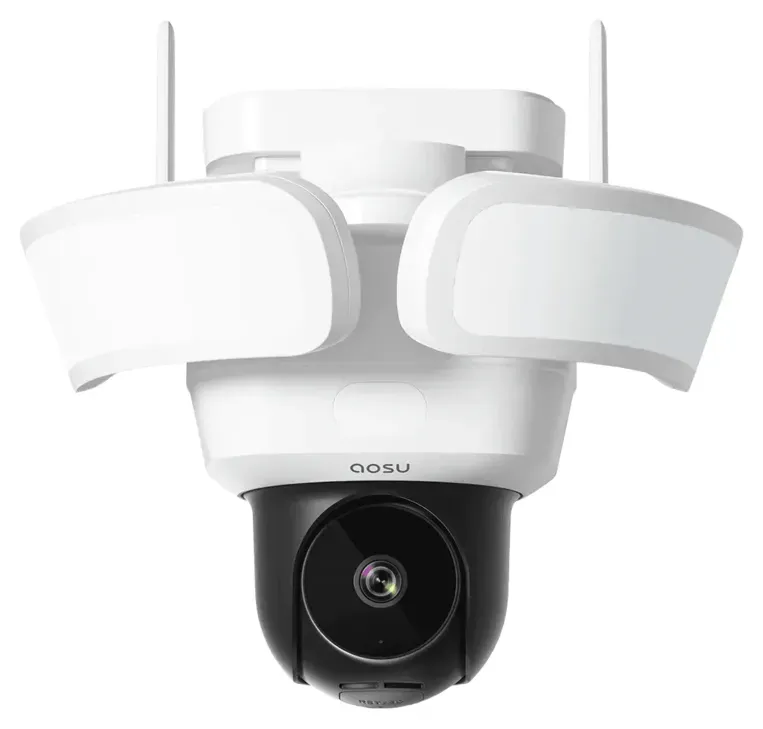
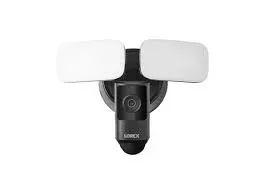
Manufacturer product photo, not taken in Fordham: a twin-panel floodlight above a pan-tilt camera. Light over an entrance matters to a buzzer repair because the camera in a video door panel cannot show a visitor's face in a dark vestibule.
Fordham Buzzer Repair Request
Walk-up, elevator building, store, office, school or house
✅
Request Sent!
A technician will call about the Fordham address before the end of the working day.
25+
Years Experience
✓
Same-Day Estimates
100%
Licensed & Insured
4.6★
390+ Google Reviews
The quickest first call from Fordham answers three questions. How many floors does the building have above the street? Is there an elevator? Does the buzzer open one door or two, meaning a street door and then a lobby door behind it? With those answers, a photo of the panel by the door and a photo of the lock side of the door from inside, a technician can usually tell you on the phone which part of the system has most likely failed, which line of our Bronx price list it falls under, and whether the work should finish in one visit. Text the photos to (646) 490-0629 with the address.
Looking at your photos costs nothing; on site, testing is part of the $250 service call
Every quote is written, shows tax separately and carries license #12000287431
A tenant, the super, a managing agent or a shop owner can make the first call; the person who pays approves the price
Lobby Door Won't Lock or Half the Building Can't Buzz In? Same-Day Buzzer Repair in Fordham
Calls from Fordham fall into a handful of patterns, and the pattern tells us a lot before anyone arrives. In a five-story walk-up: one apartment hears nothing; the top floor buzzes but the bottom two do not; the release clicks and the street door still has to be pulled hard; the panel's buttons work only when pressed at an angle. In a six-story elevator building: the lobby panel is dark; an entire vertical line of apartments, every C apartment from the second floor up, has gone quiet; the inner lobby door opens on a buzz but the street door in front of it does not; the panel calls tenants' phones only some of the time. On Fordham Road itself: the residential door between two shops will not latch, or the office buzzer upstairs rings but nobody downstairs can hear the visitor.
Ring (646) 490-0629, say how many floors and whether there is an elevator, and describe what the door does. We dispatch from 460 E Fordham Rd, which puts most of Fordham within a few minutes of the van, and a call that comes in during the morning is usually answered with a visit the same day. That visit is the $250 service call, with the testing included. A loose terminal, a worn button or a release that needs adjusting is usually dealt with inside it; a bigger repair gets the $250 credited against the written price you approve. Long tracing jobs that do not fit a listed line are billed at $195/hr with a 3-hr minimum ($585), and you hear which applies before the tracing starts.
If the street door will not lock, close it and use the key cylinder until we arrive rather than wedging it; a wedged door in a building of this size is the start of a self-closing door violation as well as an intercom one. If the lobby panel is sparking, humming loudly or hot, ask the super to switch off its supply in the cellar if it is labelled, and leave the panel alone.
The Neighborhood
Why Fordham Properties Need Door Buzzer Repair
Wikipedia describes Fordham as "dominated by 5- and 6-story apartment buildings, often set flush to the sidewalk", with taller apartment houses along the Grand Concourse. The city's tax-lot records bear that out, and they add the detail that matters for a buzzer: the five-story buildings and the six-story buildings are, for the most part, two different kinds of building. To count them we drew a study area of eight census tracts on both sides of Fordham Road, from about East 183rd Street north to East 198th Street and from Jerome Avenue east to Southern Boulevard and the Fordham University campus. It takes in the core of what Wikipedia calls Old Fordham Village around the Grand Concourse and Fordham Road, parts of Community Districts 5 and 7, and a short strip on the south side of Fordham Road east of Webster Avenue that falls in District 6.
Inside those tracts PLUTO lists 899 tax lots, 681 of them with homes, holding 12,845 apartments. Almost all of the homes sit in buildings of eight apartments or more, and almost all of those buildings went up in two bursts: the walk-ups between about 1910 and 1929, when, as Wikipedia puts it, families from Manhattan came north for then-modern apartments and subway access, and the six-story elevator buildings from the mid-1920s into the early 1940s, on lots along Creston, Morris and Marion Avenues and the Grand Concourse. A third, smaller group has appeared since 2005: 38 buildings with 1,867 apartments between them. Eighteen of the study area's 22 buildings of seven to thirteen floors date from 2007 or later, and several were built by nonprofit housing development fund companies.
Each of those groups has a different buzzer. The walk-ups were wired as simple bell-and-buzzer or audio systems running up a stair hall. The elevator buildings were wired for more apartments per floor, a vestibule with two doors, and longer runs. The new buildings carry networked panels and fobs. Add the stores along Fordham Road and Webster Avenue, the offices in the Dollar Savings Bank tower and Fordham Plaza, the campus doors of Fordham University and Monroe College, and 248 lots of one- and two-family houses, most of them from the 1900s to the 1930s, on Marion, Bainbridge and Decatur Avenues, Pond Place and East 198th Street, and Fordham has nearly every door system the Bronx has, within a ten-minute walk of the Concourse.
What the residents feel, though, is simpler. A dead buzzer in a walk-up means walking down as many as four flights of stairs to let a visitor in. In an elevator building it means riding down to the lobby, which works until the elevator is out too: in June 2025 News 12 reported that tenants of a six-story building on the Grand Concourse north of Fordham Road had been living with a broken elevator for over a month, with many unable to leave their apartments easily. In a building like that, the intercom is the only way anyone upstairs can open the door, and it is worth keeping it in better shape than the city's minimum.
Fordham facts that shape a buzzer repair
12,845 apartments on 681 residential lots in the eight-tract study area; 11,080 of them, more than four in five, sit in buildings of 20 apartments or more.
The median five-story walk-up has 26 apartments; the median six-story elevator building has 54 or 55, roughly twice as many households on one panel.
928 HPD violations for broken intercom or bell-and-buzzer systems have been written at 210 buildings in the study area since the 1980s, 385 of them since January 2021; 209 were still open on October 22, 2026.
823 complaints about bells, buzzers and intercoms reached 311 from 177 addresses in the study area between 2020 and October 22, 2026.
The area spans three ZIP codes (10458, 10468 and, for one lot, 10453) and two police precincts, the 46th at 2120 Ryer Avenue south of Fordham Road and the 52nd at 3016 Webster Avenue to the north.
Five individual landmarks sit inside it: Poe Cottage (1812), St. James' Episcopal Church on Jerome Avenue (1864–65), a Fordham University building on the Rose Hill campus, the Paradise Theater (1929) and the Dollar Savings Bank building of the 1930s.
Manufacturer product photo, not taken in Fordham: a fisheye ceiling camera of the kind sometimes fitted in a lobby. The lobby ceiling of a six-story building is also where intercom cable often crosses from the vestibule toward the risers.
Five Floors or Six
Read the Building From the Sidewalk Before the Buzzer
The floor count matters because, in Fordham, it is a reliable clue to whether a building has an elevator, and the elevator is a reliable clue to how the buzzer system was laid out. Of the 199 study-area buildings with eight or more apartments and five floors, 189 are walk-ups. Of the 84 six-story buildings, 70 have elevators. The walk-ups are mostly older, put up between 1910 and 1929; the six-story elevator buildings mostly date from 1925 to 1944, with a handful from the 1950s and a few new ones. Walk the length of Creston Avenue and you pass 27 five-story walk-ups and 10 six-story elevator buildings; Marion Avenue has 15 and 11; Morris Avenue 18 and 9.
A five-story walk-up in Fordham has a median of 26 apartments, typically four to six on a floor, reached by one stair. Its buzzer system is usually a single column: a panel at the street door, a cable that climbs the stair hall with a junction or terminal block on each landing, and short runs from the landing into each apartment's foyer or kitchen. One supply and, on the older audio systems, one amplifier sit in the cellar near the electric meters. Because everything passes up one stair, a fault in the stair hall can silence every floor above it, and a fault in a branch silences only one apartment.
A six-story elevator building has a median of about 54 apartments, often eight to twelve on a floor along a corridor, sometimes around a courtyard with two wings. Its system is wider than it is tall. The panel stands in a vestibule between an outer street door and an inner lobby door; the cable runs from the panel to an equipment box in the cellar, out to several risers that climb through the building in different places, and along each corridor to the apartments. Apartments that share a letter often share a riser, so a single break can silence 2C, 3C, 4C, 5C and 6C together while the rest of the building works. And there are two doors, either or both of which may carry an electric release.
That is the reason we ask how many floors and whether there is an elevator before we ask what is broken. In a walk-up the first test is usually at the landing below the first silent floor. In an elevator building it is usually in the cellar equipment box, where the risers can be tested one by one, or at the vestibule, where the two doors are checked separately. The parts we bring are different too: stair-hall terminal blocks and handsets for the walk-ups, riser distribution parts, amplifiers and two door releases for the elevator buildings.
Fourteen buildings break the rule: six floors and no elevator. Four are on Creston Avenue, two each on East 188th and East 194th Streets and one on the Concourse, and they include the largest walk-up in the study area, a 1927 six-story building with stores on the ground floor and 136 apartments. Their buzzer systems behave like tall walk-ups, with one or two stairs carrying everything, and they collect violations at the highest rate of any group. The reverse also exists: ten five-story buildings with elevators. So the floor count is a starting point, not a substitute for looking; the elevator door in the lobby is the deciding clue.
The taller buildings put up since 2007, from seven to thirteen floors, are a third pattern entirely. Their panels are usually networked, calling apartments over the building's own network or residents' phones, with fobs at the door and an elevator that may be tied to the access system. Their failures tend to be power supplies, network switches, software accounts and directory settings rather than broken wire, and in the data below they barely appear, partly because they are new and partly because several are owned by nonprofit housing development fund companies with their own management.
Why would a walk-up apartment be cited nearly twice as often as an apartment in an elevator building next door? The records cannot say, and we will not pretend they can. Several explanations fit what we see in the field: walk-ups are on average a decade or more older; their stair-hall wiring is shared by every tenant who carries a stroller or a bicycle up the stairs; a six-story elevator building of fifty-plus apartments is more likely to have a resident super who notices a dead line early; and tenants in a building with an elevator can at least ride down to answer the door, so a dead handset is less of an emergency. What the numbers do say is that the walk-ups produce most of the repair calls, and that when an elevator building fails, it often fails for a whole line or a whole lobby at once.
Stores at street level do not, on the city's figures, make a building's buzzer worse. In the study area the walk-ups with shops downstairs are cited 8.3 times per 100 apartments, against 11.7 for walk-ups without them; among elevator buildings the two groups are close, 6.7 with stores and 5.7 without. Owners of mixed buildings tend to have the street door in constant use and in plain view of the shopkeepers, which may be part of the reason. What stores do change is access, as the methods section explains.
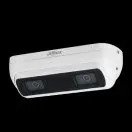
Manufacturer product photo, not taken in Fordham: a two-lens ceiling camera built to watch two directions from one spot, such as both wings of a corridor. Buildings with two wings usually have intercom risers in each wing as well.
In the Records
What Fordham's HPD and 311 Records Say About Its Buzzers
Two city datasets track broken buzzers. HPD inspectors write a violation under section 27-2005 of the Housing Maintenance Code when they find a broken or defective "bell buzzer intercom system", usually naming the apartment where the handset does not work. 311 logs every complaint a tenant files about a bell, buzzer or intercom, and records what happened when HPD tried to inspect. Neither covers one- and two-family houses in any meaningful way, and neither covers the stores, offices and schools along Fordham Road, so everything below is about apartment buildings.
The study area's 928 intercom violations date back to the 1980s, but most are recent: 45 in 2019, 45 in 2020, 46 in 2021, then 64 in 2022, 59 in 2023, 80 in 2024, 74 in 2025 and 62 in 2026 up to October 22. Most are class B, the city's middle category (719), with 197 class A and 12 class C. On October 22, 2026, 209 were still open. Almost all were written at a specific apartment rather than at the lobby: 840 of the 928 name an apartment, and the descriptions most often place the broken unit in the foyer (231 mentions), the kitchen (128) or the hall (126), or describe the whole apartment as without service (169). 163 mention the "return" system, the button inside the apartment that opens the street door, and 106 name the entrance door; 77 mention a vestibule.
The violations by floor tell the walk-up story clearly. In the five-story walk-ups, HPD found broken units on every floor at roughly the same rate: 107 violations on the first story, 96 on the second, 109 on the third, 88 on the fourth and 114 on the fifth. That flat pattern is what you expect when the faults are mostly in each apartment's own handset and branch, with the stair-hall riser failing less often than the handsets it feeds. In the six-story elevator buildings the spread is lumpier, 47 on the first story, 33 on the second and third, 44 on the fourth, 29 on the fifth and 37 on the sixth, which fits a building where whole lines sometimes go and come back together.
311 adds the tenant's side. Between 2020 and October 22, 2026, the study area produced 823 bell, buzzer and intercom complaints from 177 addresses: 54 in 2020, when the category was new, then 102, 157, 137, 140 and 132 a year, and 101 so far in 2026. Across the three ZIP codes the study area sits in, the total was 4,537. Complaints come in on weekdays far more than at weekends (151 on Mondays, 163 on Tuesdays, against 51 on Saturdays) and peak between 10 a.m. and 3 p.m.
What happened next is worth knowing if you are a tenant or an owner. Of the 823 complaints, HPD issued a violation in 226 cases, found no violation in 301, noted that the condition had been corrected or was already cited in 66, and in 212 could not get in or could not finish the inspection. A broken buzzer is one reason an inspector cannot get in; the inspector rings like anyone else. For owners, the practical point is that a complaint which ends in "no access" is not closed for good: HPD tries again. For tenants, it is worth arranging to be home, or leaving a number, when an inspection is due.
What We Repair
Door Buzzer Repair Services in Fordham
Everything here is repair work on systems already installed. When a system is beyond repair we say so, explain why, and quote a replacement separately; nothing is swapped out on a hunch.
🪜
Stair-hall riser repair in walk-ups
Terminal blocks on the landings, the riser cable between floors and the branches into each apartment of a five- or six-story walk-up, tested floor by floor from the first silent apartment down.
🏢
Line and riser repair in elevator buildings
The cellar distribution box and the separate risers that feed each line of apartments in a six-story elevator building, isolated one at a time so a dead line can be traced without shutting off the rest.
🚪
Vestibule door releases, inner and outer
Electric strikes and releases on both doors of a two-door vestibule, each tested on its own, with the closer and latch checked so the door can actually swing when it is released.
📟
Lobby and street panels
Directory panels, push-button plates, keypad and video panels on the street or in the vestibule: buttons, speakers, faceplates, name strips and the panel's own power.
☎️
Apartment handsets and stations
Audio handsets and video monitors in foyers and kitchens, including the talk, listen and door-open buttons HPD calls the "return" system.
🔌
Power supplies, transformers and amplifiers
The cellar supply, transformer and, in audio systems, the amplifier, measured at rest and under load before anything is replaced.
🌐
Networked panels and controllers
Panels that call residents' phones or apartment screens over a network, with their power, switch, account and directory checked before the hardware.
🛍️
Store, office and campus entrances
Buzzers on the residential door between storefronts, upstairs office doors, school and church entrances and back doors, kept separate from the apartments' circuit where they share a building.
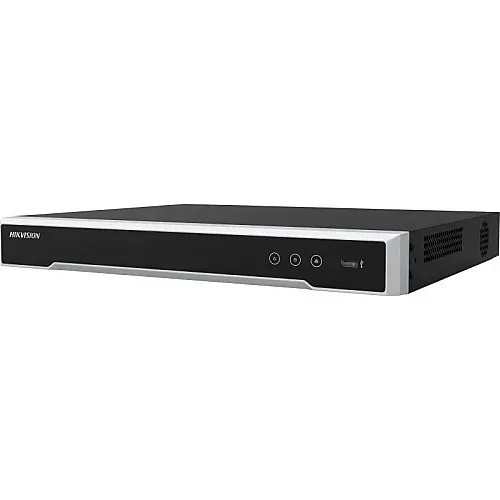
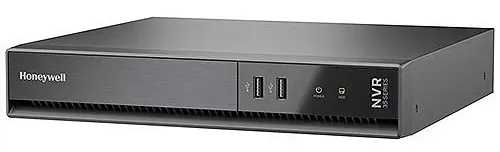
Manufacturer product photo, not taken in Fordham: a network video recorder. In many apartment buildings the recorder, the intercom power supply and the door controller share one cellar shelf and one outlet, which is why we check the shared power first.
Building Specialists
Door Buzzer Repair for Fordham's Architecture
Six building types account for nearly every buzzer call in Fordham. The counts are from PLUTO for the eight-tract study area described above.
5️⃣
Five-story walk-ups
189 buildings, 5,203 apartments, mostly 1910 to 1929; 41 of the class C walk-ups have stores at street level. One stair, one riser column and a panel at the street door.
6️⃣
Six-story elevator buildings
70 buildings, 3,784 apartments, mostly 1925 to 1944, on Creston, Morris and Marion Avenues and the Concourse. Vestibule with two doors, several risers, corridors on each floor.
⚠️
Six-story walk-ups
14 buildings, 712 apartments, the most-cited group per apartment. Six flights of stair-hall riser and no elevator; the 136-apartment building on East 187th Street is one of them.
🏙️
Buildings of seven floors and up
22 elevator buildings with 1,717 apartments; 18 date from 2007 or later. Networked panels, fobs and elevators that may answer to the access system.
🤝
Co-ops
Twelve co-op buildings, five walk-ups and seven with elevators, 555 apartments between them on Morris, Creston, Marion and Decatur Avenues and East 190th and East 194th Streets.
🏠
One- and two-family houses
248 lots, most from the 1900s to the 1930s, on Marion, Bainbridge and Decatur Avenues, Pond Place and East 198th Street, with a row of two-family houses from 2006 to 2008.
Manufacturer product photo, not taken in Fordham: a two-lens camera made to hang over a doorway and look straight down. Mounted over a vestibule, it shares the head jamb with the cable to the electric strike.
Methods and Materials
How We Repair Each Kind of Fordham Building
Five-story walk-ups: work up the stair
In a walk-up we start with the floor map the caller gave us: which apartments are silent and which still work. If the silent ones are all above a certain landing, the fault is very likely on the riser between the last working floor and the first dead one, and that is where the technician opens the junction or terminal block first. If the silent apartments are scattered, the riser is probably fine and the faults are in individual branches or handsets, which is the pattern HPD's violation records point to in Fordham: violations spread almost evenly across all five floors.
The stair hall is where most of the damage happens. Terminal blocks get painted shut, covers go missing, a run gets stapled through when somebody fixes a handrail or hangs a light, and a century of tenants carrying furniture up the stairs scuffs anything exposed at shoulder height. We repair the riser at the damaged section rather than replacing it whole when the cable either side tests sound, re-terminate on a fresh block, and label the block with the apartments it feeds so the next repair starts faster.
Six-story elevator buildings: cellar box first, then the vestibule
In an elevator building the first stop is usually the cellar, where the cable from the vestibule panel meets the cables that climb to each line of apartments. With the lines separated at that box, each can be tested on its own. A whole line that tests open tells us to climb that riser; a box that tests dead tells us the supply or the panel is the problem, not the apartments. The super's knowledge matters here: which line serves which apartments, and where the riser passes through each floor, is rarely written down.
The vestibule gets its own test. Many Fordham elevator buildings have a street door and a lobby door a few feet apart, and the buzzer may release one, the other or both. When visitors can get through one and not the other, we test each release separately at the door, check the voltage that reaches it while someone presses the button upstairs, and look at the closer and the latch, because a door that drags or a strike that has slipped out of line will refuse to open even with a healthy release.
Six-story walk-ups and the biggest buildings
The fourteen six-story walk-ups behave like tall versions of the five-story ones. The repair method is the same as in a walk-up, worked up the stair, but there is an extra floor of riser to test and, in the largest, many more apartments on each landing, and in these buildings we are more likely to find an amplifier or supply that is simply too small for the number of apartments that have been added or subdivided over the years.
Buildings with stores at street level
41 of the class C walk-ups and 14 of the six-story elevator buildings in the study area have stores on the ground floor. In these, the residential entrance is often a narrow door between two shopfronts, and the buzzer cable passes through space that belongs to a tenant shop: a ceiling, a back room or a basement. Before we trace, we find out who can open those spaces and when. We also make sure a shop's own door bell or back-door buzzer is on its own circuit and not tapped off the building's supply, because a store's renovation should not be able to silence forty apartments.
For panels installed since the 2000s, the order is reversed. Is the panel powered and is its network switch up? Is the building's internet connection live? Is the management account current, and is the directory correct? Only after those checks do we open the panel or replace a part. A surprising share of "broken buzzer" calls in newer buildings end at a settings screen.
Co-ops and houses
In a co-op the repair is ordered by the board or the managing agent, and the quote goes to them; shareholders can call us, but the building decides. In the one- and two-family houses on Marion, Bainbridge and Decatur Avenues, the system is a button, a chime or buzzer, a small transformer and sometimes a release on the front door; the work is short, and it is priced on the same Bronx list.
Manufacturer product photo, not taken in Fordham: a dark grey recorder. Equipment like this is often added beside an old intercom in the cellar, sometimes on the same circuit, and a power fault in one can take out the other.
Commercial Buzzer Repair
Business Door Buzzer Repair in Fordham
Fordham is also the Bronx's biggest shopping street and one of its busiest transit points, and many of the doors we repair there are not apartment doors at all.
🛒
Fordham Road
The Fordham Road Business Improvement District runs along Fordham Road between Jerome Avenue and Webster Avenue, according to CityLand, with nearly 300 stores by NYC Tourism's count. Stores' back doors, upstairs offices and the residential doors between shops.
🏛️
Grand Concourse at Fordham Road
The Dollar Savings Bank building at 2516–2530 Grand Concourse, with its clock tower and ten-story office wing, and the Paradise Theater at 2403 Grand Concourse, a 1929 movie palace; both are city landmarks.
🚆
Webster Avenue and Fordham Plaza
Norwood News called the $34 million redesigned Fordham Plaza the largest transit hub in the Bronx, with a bus depot and access to Metro-North's Fordham station. Offices, clinics and newer apartment buildings line Webster Avenue.
📚
East Kingsbridge Road
The Bronx Library Center at 310 East Kingsbridge Road, the borough's largest public library branch, opened in 2006, and Poe Park at the Grand Concourse with the 1812 Poe Cottage.
🚇
Jerome Avenue
The 4 train's Fordham Road and Kingsbridge Road stations, St. James' Episcopal Church at 2500 Jerome Avenue, and some of the newest buildings in the study area, of nine and thirteen floors.
🎓
Campuses
Fordham University's Rose Hill campus between Webster Avenue and Southern Boulevard and Monroe College, in Fordham since 1967; dormitory, office and classroom doors with their own entry rules.
For a business the questions are different from an apartment building's. Who needs to be able to buzz the door, and from where: a front counter, an office upstairs, a security desk? Does the door have to unlock automatically in a fire alarm, or for people leaving? Is the business a tenant whose landlord owns the door hardware? We answer those before quoting, because the cheapest repair on the wrong door is still the wrong repair.
Stores on Fordham Road can usually be worked on during opening hours without closing the entrance: a release or a button is changed with the door held, and wiring is traced from the back of the shop. Tell us when the store's quietest hour is and we will try to arrive then. For offices in multi-tenant buildings, the building's management usually needs to approve work on the street door; we can send the quote and our certificate of insurance straight to them. Call (646) 490-0629.
Manufacturer product photo, not taken in Fordham: a floodlight camera of the kind shops fit over a rear or side door. On Fordham Road the residential door between stores often shares its wall with fittings like this.
Compliance
Rules That Apply at a Fordham Front Door
Multiple Dwelling Law § 50-a. Apartment buildings built or converted after January 1, 1968 must have self-closing, self-locking doors at all entrances, and those with eight or more apartments a two-way voice intercom that can buzz the door open. Older buildings must have self-locking doors and an intercom if a majority of the apartments ask for one, and the owner may recover the cost. In the study area, 291 of the 330 buildings with eight or more apartments, holding 10,144 apartments, were built before 1968, so it is the second rule that governs most Fordham buildings.
Housing Maintenance Code § 27-2005. The general duty to keep a building in good repair, under which HPD writes Fordham's intercom violations, almost all at a named apartment. Our written report states what was repaired, which an owner can use when certifying a correction.
Self-closing doors. HPD treats a defective self-closing apartment or public-hall door as an immediately hazardous class C violation to be corrected within 14 days. The rule took on new weight after the Twin Parks North West fire of January 9, 2022 at 333 East 181st Street, in the Fordham Heights section just south of our study area, where 17 people died; Norwood News reported that the FDNY identified malfunctioning self-closing doors as a key factor, and that the City Council then passed a package of bills sponsored by Councilmember Oswald Feliz that defined a self-closing door and modified Local Law 111. A street door that will not close behind a buzzed-in visitor is a closer problem as much as a buzzer problem, and we check both.
Line-voltage work. Low-voltage intercom work is ours; anything on the 120-volt side, such as a new outlet or circuit for a supply, needs a licensed electrician and, under Department of Buildings rules, a permit.
Locked egress doors. Where a store, office or campus door uses a magnetic lock, building code conditions for electrically locked egress doors apply, including release for people leaving and on fire alarm.
Reach and accessibility. For businesses and public buildings, 2010 ADA standards set a 48-inch maximum high forward reach for operable parts, which affects where a replacement panel or button goes.
Landmarks. The Paradise Theater and the Dollar Savings Bank building are designated individual and interior landmarks, and Poe Cottage, St. James' Church and a Fordham University building are individual landmarks. Ordinary repair and maintenance needs no Landmarks Preservation Commission permit, but a new or relocated panel on a designated facade needs Commission approval, which its staff can grant for a panel within or next to the door opening.
This is general information about the rules, not legal advice; an owner facing a violation or a lawsuit should talk to a lawyer.
Your Questions Answered
Door Buzzer Repair in Fordham: Questions Answered
These are questions that come from the way Fordham is built: its walk-ups, its six-story elevator buildings, its storefront entrances and its newer towers. Questions about prices, timing and visits in general are in the FAQ further down.
Walk-ups and their stair halls
In our five-story walk-up, everyone from the fourth floor up has lost the buzzer, but the first three floors still work. Where does the search start?
On the stair, between the third and fourth floors. When every apartment above a certain landing goes quiet at once and every apartment below still works, the fault is almost always on the riser cable or at the junction where the third-floor branches leave it. A handset fault would not take out two floors together, and a cellar fault would take out the first three floors too.
The technician opens the terminal block or junction on the third-floor landing first, tests whether the signal leaves it, and then checks the stretch of riser between there and the fourth floor. Painted-over blocks, a staple driven through the cable during a handrail repair, and a splice that has corroded in a damp corner are the usual finds. Once the break is found, the section is repaired or replaced with matching cable, re-terminated, labelled, and every apartment above it is tested from the street panel before we leave.
The landlord had the stair hall painted last month, and since then two floors can't buzz anyone in. Could the painting have done it?
It is one of the more common causes we see in walk-ups. Painters take covers off terminal and junction boxes to paint around them and do not always put them back, or they paint straight over open terminals; paint is an insulator and, when it creeps between a screw and a wire, it can break the connection. Cables run along the wall or ceiling get scraped, pulled off their clips or cut where a ladder rubbed.
The repair is usually simple once the damaged box is found: clean or replace the terminal block, re-make the connections and close the box. What we cannot do is say who should pay; that is between the owner and the painting contractor. We can write down exactly what we found and where, with photos, which gives the owner what they need to raise it with the contractor.
Our building is six stories with no elevator. Is it repaired the same way as a five-story walk-up?
Mostly, yes, with two differences. The riser is a floor longer, so there is more cable and more junctions to test between the cellar and the top floor, and a voltage drop that would not matter in a five-story building can matter in a six-story one. And six-story walk-ups in Fordham tend to be larger: the fourteen in our study area hold 712 apartments, about 51 each, against a median of 26 in the five-story walk-ups.
More apartments on one supply means more load, and over the decades many of these buildings have had handsets replaced with models that draw more current than the originals. So in a six-story walk-up we measure the supply under load with several handsets in use, not just at rest. If the supply is undersized for the building as it is now, replacing it is often the repair that stops a cycle of apartments going quiet one after another. These buildings have the highest rate of HPD intercom violations of any group in the study area, 11.7 per 100 apartments.
Elevator buildings: lines, vestibules and lobbies
Five apartments stacked one above another have all lost the intercom. Is it cheaper to fix the riser that feeds them or to replace the five handsets?
Almost always the riser, if the testing points there. In a six-story elevator building the apartments that share a letter usually sit one above another and are fed by one riser cable, so when 2C through 6C go quiet together while the A, B and D lines carry on, the handsets are rarely the problem. Replacing five handsets at $250 to $525 each would cost more than a riser repair and still leave the line dead.
We start at the cellar equipment box, separate the C riser and test it. If it is open, we follow it up from the cellar toward the second floor first, because the lowest stretch is where water, renovation work and cellar storage most often reach a riser. The repair is priced as a riser repair on our Bronx list, $850 to $2,400 depending on length and access, and it restores the whole line at once. If testing shows the handsets themselves have failed, the quote says so and lists them instead.
Can one press of the door button release both the street door and the lobby door, and still have both lock again behind the visitor?
Usually, yes, and in many Fordham elevator buildings that is how the system was meant to work. When visitors get through one door and are stuck at the other, either that door has no electric release and depends on a key, or its release has failed or is no longer being driven. Many Fordham elevator buildings were built with a vestibule where the buzzer released only the inner door and the outer door stayed unlocked during the day; over the years, owners have added locks and releases to the outer door, sometimes on a separate circuit or a separate button.
For both doors to open on one press, each needs a working release fed from the same door-open circuit, and each needs a closer and latch that pull it shut again. On site we test each door on its own. We check whether the street door has a release, whether voltage reaches it when someone presses the door button upstairs, and whether the door itself can swing when the latch is freed. If the release is there and dead, it is replaced; if it is missing, adding one is quoted separately. Each release is its own line on the price list, so a two-door vestibule is quoted door by door, with the closer and latch adjustment included in the release line.
The elevator in our six-story building is out of service, and tenants upstairs rely on the intercom to let home aides and deliveries in. Can that make the buzzer repair more urgent?
Yes, and you should say so when you call. When the elevator works, a tenant with a dead handset can ride down to the lobby; when it does not, an elderly or disabled tenant on the fifth or sixth floor may have no practical way to open the street door for an aide, a nurse or a pharmacy delivery. In June 2025 News 12 reported tenants of a six-story building on the Grand Concourse north of Fordham Road living with a broken elevator for over a month, with many saying they were stuck in their apartments.
Tell us which apartments are affected and whether anyone in them depends on visitors for care; calls like that are put at the front of the day's list. We cannot repair the elevator, but we can usually get the intercom and the door release to those apartments working in one visit, or set up a temporary arrangement with the super while a part is ordered. (646) 490-0629.
Our building has two wings around a courtyard, each with its own entrance. Are both entrances on the same buzzer system?
Sometimes, and it matters for the repair. In some courtyard buildings each wing has its own panel, supply and risers, so a fault in one never touches the other. In others, both entrance panels feed one equipment box in the cellar, and a supply failure silences both entrances at once, or a fault at one panel puts noise on the whole system.
The first thing we establish is which arrangement your building has: we test each entrance panel, follow its cable to the cellar and note what it shares. If both wings fail together, the shared box or supply is the first suspect; if one wing fails alone, we work on that wing only. When we leave, the building gets a short written note of which entrance feeds which lines, which is often the first time anyone has written it down.
Storefront entrances, newer towers and co-ops
Our store on Fordham Road has a delivery bell at the back door, wired years ago into the building's intercom. Should the two be separated?
In most cases, yes. A store's back-door bell or buzzer that has been tapped off the apartments' supply or riser shares its faults with forty or fifty households: a short in the store's bell, a renovation of the stockroom or a delivery cart that crushes the button can take the whole building's intercom down, and a fault upstairs can leave the store unable to hear its deliveries.
Separating them usually means giving the store its own small transformer and bell circuit, run from the store's own space, and disconnecting the old tap at the riser. The work is quoted on the transformer and button lines of the Bronx list. Because the landlord normally owns the building's system, we need the owner's or managing agent's agreement before disconnecting anything from it, and we send them the quote.
Calls from the lobby panel in our newer building reach some residents' phones and not others. Is the panel broken?
Probably not. When a networked panel reaches some residents and not others, the hardware that makes the call is evidently working. The usual causes are on the residents' side or in the account: an app that has been logged out, notifications switched off on a phone, a resident who changed phone numbers without updating the building's directory, or a directory entry that still points at a former tenant.
We check the panel's own call log first, which shows whether a call was placed and where it went, then the directory in the management account, and only then the hardware. If the panel shows calls failing for every resident on one floor or one line, that points to a network switch or a cable in the building, which we then trace like any other line fault. Settings work of this kind usually fits inside the $250 service call.
Our co-op on Marion Avenue has never had an HPD intercom violation. Does that mean our system is in good shape?
Not necessarily. Co-ops in Fordham rarely appear in HPD's intercom records: the study area's twelve co-op buildings, with 555 apartments, have 18 intercom violations between them across all the years on file, against 561 in the five-story walk-ups. Violations follow complaints, and shareholders usually take a broken buzzer to the managing agent or the board, not to 311.
So the absence of violations tells you little about the age or condition of the system. The more useful checks are practical: how many handsets are original, whether the cellar supply runs hot, whether any lines have been patched more than once, and whether the board has a record of past repairs. We can test every line in one visit and give the board a written list of what is sound and what is near the end of its life, so repairs can be planned rather than reacted to.
HPD cited two apartments on different floors of our walk-up on the same day. Should we book them as two separate repairs?
Book them as one visit and let the testing decide. Two citations on different floors can be two unrelated handset faults, in which case each is its own line on the price list, or they can be two symptoms of one riser problem, in which case one repair fixes both. Separate bookings risk paying twice for the diagnosis.
On site we test both apartments and the riser between them before quoting. If the cause is shared, the quote covers one repair; if not, it lists both handsets or branches separately. Either way, the written report names both apartments and what was done in each, which is what an owner needs when certifying the corrections to HPD.
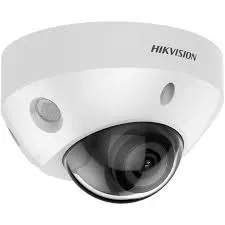
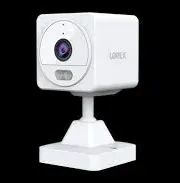
Manufacturer product photo, not taken in Fordham: a compact dome camera. Small cameras like this are often fitted inside a vestibule next to the intercom panel, and their cable runs are traced separately from the buzzer's.
Equipment
Types of Door Buzzer Equipment We Repair in Fordham
Street and vestibule panels
Push-button and directory panels in vestibules and at street doors, from the original brass plates to keypad and video panels; buttons, speakers, name strips and faceplates.
Apartment handsets and monitors
Wall handsets in foyers and kitchens, desk and wall video monitors, and the talk, listen and door-open buttons on each.
Riser cable and terminal blocks
The vertical runs in stair halls and pipe chases, and the terminal or junction blocks on landings and in the cellar.
Electric strikes and releases
Fail-secure and fail-safe strikes and releases on street, vestibule and lobby doors, with keepers, closers and latches.
Supplies, transformers and amplifiers
Cellar power supplies, bell transformers and audio amplifiers sized for buildings of 8 to 136 apartments.
Magnetic locks and exit devices
Maglocks, request-to-exit sensors and push bars on store, office and campus doors.
Network panels and controllers
IP door stations, door controllers, network switches and the accounts that run them in newer buildings.
House bells and chimes
Buttons, chimes, buzzers and small transformers in one- and two-family houses.
When a repair stops making sense
A single failed handset, release or supply in an otherwise sound system is a repair. Replacement starts to make sense when the same building calls about different apartments every few months, when parts for the installed system are no longer made, or when a riser has been patched so often that the next break is a matter of time. Even then, the riser cable in a 1920s Fordham walk-up is often good enough to carry a new system, which keeps the cost of replacement down. We say which situation you are in, with reasons, and quote both options when both are reasonable.
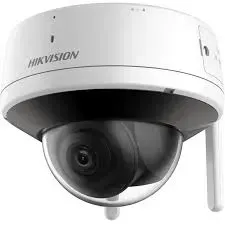
Manufacturer product photo, not taken in Fordham: a Wi-Fi dome camera. Wireless devices still need power at the door, and a wireless intercom panel still needs a wired release, a point the reality-check section returns to.
AI Overview Reality Check
What AI Gets Wrong About Door Buzzer Repair in Fordham
We cannot open Google's AI Overview or the AI assistants from where this page is built, so we do not quote what they say about Fordham today. We can test the statements that cost guides, vendor pages and reference articles make, which are the sources AI summaries tend to repeat, against Fordham's city records and against the work.
"Fordham is dominated by 5- and 6-story apartment buildings"
This is Wikipedia's description of the neighborhood, and it is accurate as far as it goes. In our eight-tract study area, 283 of the 330 buildings with eight or more apartments have five or six floors.
What it leaves out is the difference between them. Five floors almost always means a walk-up and six usually means an elevator building, and the two have different systems, different failure patterns and, in HPD's records, different violation rates: 10.8 per 100 apartments in the five-story walk-ups and 6.3 in the six-story elevator buildings.
It also leaves out the 248 lots of one- and two-family houses on Marion, Bainbridge and Decatur Avenues, Pond Place and East 198th Street, which no description of Fordham as an apartment district mentions, and the newer buildings of seven to thirteen floors near Webster and Jerome Avenues. A summary that treats Fordham as one kind of building will give one kind of advice.
"Many common apartment intercom and buzzer repairs fall within a $150–$250 flat-rate range"
That claim appears on an NYC intercom repair company's cost page, which also mentions a 30-day repair warranty. It is a reasonable description of some single-fault visits, but the range only covers what that company calls qualifying, accessible repairs.
In a Fordham six-story elevator building, the common failures are not always accessible: a dead line means a riser, and a vestibule fault can mean two releases. Our Bronx list starts at the $250 service call, with the testing included and simple fixes done inside it, and runs up to $2,400 for riser work.
The useful question for any quote, ours included, is what happens when the fault turns out not to be simple. We write that down before we start: which line of the list applies, and when the $195/hr rate with its 3-hr minimum ($585) would apply instead.
"Replacement often starts around $2,200 to $5,000 for a small building"
Swiftlane's 2026 guide gives that range for replacing an apartment intercom in a small building, and says minor repairs typically run $150 to $400.
Whether a Fordham building is small depends on which kind it is. The median five-story walk-up here has 26 apartments and the median six-story elevator building about 54; the largest buildings have more than 100. A replacement price that fits an eight-unit building does not stretch to those.
More to the point, many Fordham calls never need a replacement. A line fault or a dead release is a repair, and our list prices those individually. Replacement is quoted when the system is past repair, not as the first answer.
"The intercom rule generally applies to buildings with eight or more units built after January 1, 1968"
ButterflyMX's summary of New York City's intercom law says the requirement "generally applies" to class A multiple dwellings of eight or more units built or converted after 1968, and that older buildings need closer review.
In Fordham that older-building review is the whole story. 291 of the study area's 330 buildings with eight or more apartments were built before 1968; only 39 were built later, nearly all since 2005. For the older buildings, the Multiple Dwelling Law requires self-locking doors and an intercom if a majority of the apartments request one, and lets the owner recover the cost.
In practice, almost every Fordham apartment building already has a system, and HPD cites owners when it breaks under the general repair duty in the Housing Maintenance Code. A summary that stops at the 1968 line misses how the rules actually work on these blocks.
"Typical intercom upgrades range from about $1,500 to $15,000+ per door"
Vertex Security's 2026 New York City pricing guide gives that per-door range for upgrades, with basic audio buzzers at the entry level.
Per door is an important phrase in Fordham, where many elevator buildings have two entrance doors in one vestibule and courtyard buildings can have two entrances besides. A per-door upgrade price can double or quadruple before anything inside the building is counted.
That is one more reason to price the repair first. A failed release on one of those doors is $450 to $950 on our Bronx list, with alignment included; a new panel is $650 to $1,800. Knowing those numbers makes it easier to judge whether an upgrade is worth it.
"A modern intercom requires no building wiring"
ButterflyMX makes that point about its cloud-based call box, which calls residents' phones instead of apartment handsets, so no wire needs to run to each apartment.
It is true that the apartment handsets disappear. It is not true that the building's wiring stops mattering. The panel needs power at the door; the electric release on each door still needs a wired circuit; and the panel needs a network or cellular connection that works inside a vestibule with steel doors.
In a Fordham walk-up whose riser is sound and whose problem is two dead handsets, the cheapest fix may be the two handsets. In a building whose risers are failing everywhere, a phone-based panel can be a sensible replacement. The decision depends on the building, not the brochure.
"Installing an intercom system costs about $2,500 on average"
HomeAdvisor's national cost page puts the average intercom installation near $2,500, with a wide range around it.
A national average blends houses, offices and apartment buildings of every size. A Fordham elevator building with 54 apartments, two doors and four risers is not the average job, and neither is a one-family house on Pond Place with a single button.
We do not use averages to quote. Each Fordham job is priced from the Bronx list after testing, with the failed part named and the price on paper before work begins.
Manufacturer product photo, not taken in Fordham: a small indoor camera. Some tenants add one by the apartment door when the handset is dead; it does not open the street door, which still needs the building's system repaired.
Tell Us the Floors, the Elevator and the Doors
A line like "five-story walk-up on Creston, fourth floor and up silent", "six-story with elevator on Marion, every C apartment dead" or "vestibule on the Concourse, inner door opens, street door doesn't" tells us where to start. Add a photo of the panel and one of the door's lock side. Text it to (646) 490-0629 or use the form, and a technician will call back with a first read the same day.
A walk-up on Creston or Valentine, an elevator building on Marion or Morris, a store or office on Fordham Road, or a house on Pond Place: tell us which, how many floors, and what the buzzer is doing. Prefer the phone? (646) 490-0629.
✅
Request Received
Thank you. If the street door of an apartment building is stuck unlocked right now, or tenants who cannot use the stairs are cut off, call directly rather than waiting for the callback: (646) 490-0629.
How It Works
Our Door Buzzer Repair Process
A single handset or release usually takes an hour or two. A riser in a six-story elevator building, or a supply in a large walk-up, can take most of a day. The order of work is the same either way.
1. Count the floors and name the doors
Tell us the address, how many floors the building has, whether it has an elevator, and whether the buzzer opens a street door, a lobby door or both; send a photo of the panel and one of the door's lock side.
2. Map the silence
Before the visit we ask which apartments or lines are silent and which still work, because a stack of silent apartments, a single floor and a scattered few point to different parts of the system.
3. Check the doors before the wiring
On site the technician tests each door: whether it closes and latches, whether the strike lines up, and whether the release gets power when someone presses the door button upstairs.
4. Test at the cellar and the landings
In an elevator building the lines are separated at the cellar box and tested one by one; in a walk-up the riser is tested landing by landing, starting below the first silent floor.
5. Measure the power under load
The supply, transformer or amplifier is measured with several handsets in use, not only at rest, since many Fordham systems now carry more load than they were built for.
6. Approve a written price
The quote names the failed part or section, the Bronx-list line and the price, adds tax, carries license #12000287431, and nothing is fitted until you say yes.
7. Repair, label and retest every line
The repair is made, every block and box we touched is labelled with the apartments it feeds, and each affected apartment rings the panel and releases each door while we watch.
What the building has when we leave
A written note of what failed, what was repaired and which apartments were tested; labels on every terminal block and box we opened; the old part if you want it; and, for an owner answering an HPD violation, a report that names each cited apartment and the work done there.
Coverage Area
Door Buzzer Repair Near Fordham's Landmarks
Naming the nearest of these when you call saves a minute of directions. Each comes from the sources listed at the bottom of this page.
🕰️
Dollar Savings Bank clock tower
2516–2530 Grand Concourse at Fordham Road, with its four-faced clock tower and ten-story office wing; the bank building and its interior are city landmarks.
🎭
Paradise Theater
2403 Grand Concourse, the movie palace John Eberson designed, which opened as Loew's Paradise in 1929; an individual and interior landmark.
📖
Poe Park and Poe Cottage
Grand Concourse and East Kingsbridge Road; NYC Parks dates the cottage to 1812 and says Poe wrote "The Bells" and "Annabel Lee" there.
⛪
St. James' Episcopal Church
2500 Jerome Avenue at East 190th Street, built 1864–65 to a design by Henry Dudley, with a parish house added in 1891–92.
🚉
Fordham Plaza and Metro-North
Webster Avenue at Fordham Road, the redesigned plaza over Fordham station that Norwood News called the largest transit hub in the Bronx.
🎓
Fordham University, Rose Hill
The university's original campus on the former Rose Hill estate, where its predecessor college opened in 1841, between Webster Avenue and Southern Boulevard.
Fordham is priced on our Bronx list, and the Bronx multiplier is 1.00, the same as the Brooklyn base, so there is no neighborhood surcharge. Every visit opens with the $250 service call, which includes the testing. Small faults are fixed inside it; for bigger repairs the $250 is credited against the price you approve. With New York City sales tax of 8.875 percent, the service call comes to $272.19 on the written quote.
The lines below are our Bronx door buzzer repair list. Which line applies depends on what failed, and in Fordham that depends a great deal on the kind of building: walk-up calls mostly land on the handset, button and riser lines, elevator-building calls more often on the riser, strike and panel lines.
Repair
Bronx list
Typical Fordham symptom
Service call with on-site diagnostic
$250
Every visit; credited toward a larger repair
Apartment station or handset replacement
$250 – $525
One silent apartment in a walk-up, scattered silent handsets
Door release relay or push button
$250 – $475
A door button upstairs that no longer opens anything
24V transformer replacement
$325 – $650
Everything weak or dead at once; a house bell
Intercom amplifier replacement
$450 – $900
Audio gone across a whole walk-up or elevator building
Electric strike replacement and alignment
$450 – $950
One door of a two-door vestibule that will not release
Lobby panel repair or faceplate
$650 – $1,800
A dark or damaged panel in a vestibule or at the street
Riser pair repair or re-termination
$850 – $2,400
A whole line, like every C apartment, or every floor above a landing
Work that does not fit a listed line, such as a long search for a riser that runs through finished walls in a building with no record of where it goes, is billed at our service rate of $195/hr with a 3-hr minimum ($585). You are told before the tracing begins whether a job is on a list line or on the hourly rate.
What moves a Fordham price up or down
Three things. First, how many apartments the fault touches: a single handset is a small line; a whole line of apartments is a riser repair, but one riser repair restores five or six apartments at once, which usually makes it cheaper per apartment than replacing handsets one by one. Second, the doors: a two-door vestibule has two releases, each a separate line, and a release that fails because the door has sagged needs the door put right too. Third, access: a riser that can be reached from a stair hall or a cellar is quicker than one hidden behind a shop's ceiling or a finished apartment wall.
Get the Bronx-List Price in Writing Before Any Part Goes In
The address, the number of floors, whether there is an elevator, and a photo of the panel are enough for a first estimate: the list line we expect and the one or two things that could change it. (646) 490-0629.
Three common Fordham repairs, each priced from a line of the Bronx list. The figure you pay is the one on the written quote after testing.
One apartment back
$250 – $525
station or handset replacement
The silent apartment tested from the panel and from the riser
Handset or monitor replaced to match the building's system
Talk, listen and door-open buttons all checked
Written note naming the apartment, for an HPD certification
A door that opens
$450 – $950
strike replacement and alignment
Release chosen for the door's frame and the building's voltage
Closer and latch adjusted so the door swings when released
Each door of a two-door vestibule tested on its own
Old strike left with you on request
A working lobby panel
$650 – $1,800
lobby panel repair or faceplate
Buttons, speaker, faceplate and name strips repaired or replaced
Directory updated so names match the apartments
Panel power and cellar connection tested
Every line rung from the repaired panel
Bring your own equipment. If you have already bought a handset, a panel or a release, we can fit customer-supplied equipment. We check first that it will work with the building's system, voltage and door, and tell you before the visit if it will not. Labor is quoted in writing like any other job; if it runs beyond the listed lines it is billed at $195/hr, 3-hr minimum ($585). The 30-day warranty and optional paid extended plans cover products we supply.
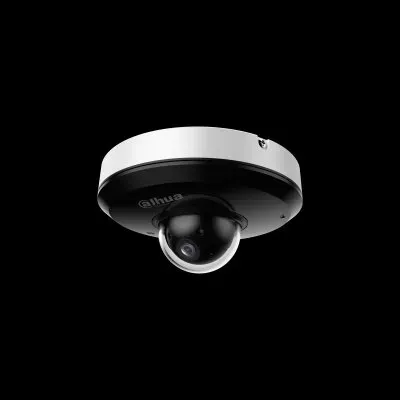
Manufacturer product photo, not taken in Fordham: a mini pan-tilt dome. Any camera mounted in a lobby or vestibule is noted on our repair sheet, because its cable and power often run beside the intercom's.
A camera inside a vestibule or over a storefront door shows who is there before anyone buzzes; see camera installation in Fordham.
Access control
Fobs for residents, codes for staff and schedules for deliveries in the newer buildings: Fordham access control.
Alarm installation
For a store on Fordham Road or a house on Pond Place, an alarm watches the doors no buzzer covers; see alarm installation in Fordham.
Fire alarm systems
A door held by a magnetic lock has to release on fire alarm; that connection is covered on fire alarm work in Fordham.
Structured cabling
If a riser is being replaced anyway, network cable can go up the same route; see Fordham structured cabling.
Field Notes
Field Notes: Count Before You Climb
This describes how we approach a Fordham buzzer call in general, not the story of a single job. Before the technician climbs a stair or opens a cellar door, he stands on the sidewalk and counts: floors, entrances, doors in the vestibule, and whether there is an elevator door visible through the glass. That count decides where the test kit goes first.
Then he asks the super, or whoever let him in, for the map of the silence: which apartments still ring and which do not. Written as a grid of floors and line letters, it usually shows one of three shapes. A column means a riser. A block of floors above a landing means the riser in a walk-up. A scatter means handsets and branches. Each shape sends him somewhere different, and none of them starts with replacing the panel.
Before leaving, he fills in the same grid again, this time with every apartment ringing and releasing, and labels each box he opened. In most of these buildings, that grid and those labels are the only record of how the system is laid out.
FAQ
Fordham Door Buzzer Repair FAQ
Is the $250 service call the same for a 26-apartment walk-up and a 100-apartment elevator building?
+
Yes. The service call is $250 whatever the size of the building, and it includes the on-site testing. What changes with size is the repair that follows: a large elevator building is more likely to need riser or panel work, which sits higher on the Bronx list, while a walk-up call often ends with a handset or a button. The quote after testing names the line and the price before any work starts.
Do tenants on a dead line need to be home while the riser is repaired?
+
Usually not for the repair itself, which is done from the cellar, the stair hall or the public corridor. We do need someone in each affected apartment, or a key held by the super, at the end, because every apartment on the line is tested by ringing it from the panel and pressing its door button. If the riser turns out to pass through an apartment wall, we arrange that part with the tenant before we start.
Can a store on Fordham Road stay open while its door buzzer is repaired?
+
In most cases, yes. A button, a release or a chime is changed in minutes with the door held, and wiring is traced from the back of the store or the basement rather than across the sales floor. Tell us the store's quietest hour when you book and we will aim to arrive then.
Will the names on the lobby directory be correct after a repair?
+
If the panel has a directory, we check it against the apartments as part of a panel repair and update name strips or the electronic directory where they are wrong. Owners who want codes or apartment numbers shown instead of names can ask, and we set it up that way.
Do you charge separately for each door in a two-door vestibule?
+
Each electric release is its own line on the Bronx list, so if both the street door and the lobby door need new releases, the quote shows both. If only one door has failed, only that door is repaired. Testing both doors is part of the service call either way.
Can you repair a building owned by a housing development fund company or managed by a nonprofit?
+
Yes. We quote and invoice the owner or its managing agent, send a certificate of insurance before the visit when it is requested, and follow the building's own rules about who may authorize work. Several of the newer buildings around Fordham are owned this way.
What will the written quote show?
+
The building address, the part or section that failed, the line of the Bronx list it falls under and its price, sales tax at 8.875 percent on its own line, our license number #12000287431, and our Bronx office address at 460 E Fordham Rd. Nothing is fitted until the person paying approves it.
Do you work on buzzers in the one- and two-family houses on Marion, Bainbridge and Decatur Avenues?
+
Yes. A house bell or buzzer is a small system: a button, a chime or buzzer, a transformer and sometimes a release on the front door. Most house calls are short, and they are priced on the same Bronx list as any apartment building, starting with the $250 service call.
Is the repair covered by a warranty?
+
Parts we supply carry our 30-day warranty, as set out in the service agreement along with the deposit and late-fee terms. Customer-supplied parts are fitted as a labor job and are covered only by their own manufacturer's terms.
What hours do you take calls and send technicians?
+
We take calls and send technicians from 8 a.m. to 8 p.m., seven days a week. Calls about a street door that will not lock, or about tenants who cannot get to the door, are given priority that day.
All Areas Served
Door Buzzer Repair Across the Bronx, New York City, Long Island and the Hudson Valley
Everything local on this page comes from the sources below, each read on October 22, 2026. What is not listed is ours: the Bronx price list and the way we test and repair. Where our study area differs from other definitions of Fordham, the page says so.
NYC Department of City Planning, PLUTO (NYC Open Data 64uk-42ks): all tax lots in 2020 census tracts 237.02, 237.03, 397, 399.01, 399.02, 401, 403.04 and 405.02 in the Bronx (899 lots, 681 with homes, 12,845 apartments) — building class, residential units, floors, year built, owner name and landmark flag. Our study area is these eight tracts; it is not an official neighborhood boundary, and it includes 70 lots on the south side of Fordham Road east of Webster Avenue that are in Community District 6.
HPD Housing Maintenance Code Violations (NYC Open Data wvxf-dwi5): violations in ZIP codes 10458, 10468 and 10453 whose description contains "INTERCOM" (5,211), joined by tax lot to the study area (928 at 210 buildings), by year, class, status, story and description text.
311 Service Requests (NYC Open Data erm2-nwe9): descriptor "BELL/BUZZER/INTERCOM" in ZIP codes 10458, 10468 and 10453, 2020 to October 22, 2026 (4,537), joined by tax lot to the study area (823 from 177 addresses), by year, day, hour and resolution.
Wikipedia, "Fordham, Bronx" — Old Fordham Village, community districts 5 and 7, ZIP codes, the 46th and 52nd Precincts, the description of 5- and 6-story buildings flush to the sidewalk, the 1920s growth, Fordham University's Rose Hill campus and the college founded there in 1841, Monroe College since 1967, the Bronx Library Center, subway and Metro-North stations.
Wikipedia, "Dollar Savings Bank Building" and the NYC Landmarks Preservation Commission designation report LP-1889 — 2516–2530 Grand Concourse, the clock tower and office wing.
Wikipedia, "Paradise Theater (Bronx)" and paradisepac.org — 2403 Grand Concourse, opened 1929, architect John Eberson.
NYC Parks, Poe Park — Poe Cottage built 1812, the poems written there.
Wikipedia, "St. James' Episcopal Church and Parish House" and stjamesfordham.org — 2500 Jerome Avenue, built 1864–65, architect Henry Dudley.
Norwood News, "Redesigned Fordham Plaza Open, But Vendors Still a Year Away" — the $34 million plaza, the largest transit hub in the Bronx; and "A Look Back on Legislative Actions Taken on the 2nd Anniversary of the Twin Parks Fire" (January 27, 2024) — 333 East 181st Street in Fordham Heights, 17 deaths, self-closing doors, the Council's bill package.
News 12 Bronx, "Fordham tenants stuck inside units for over a month due to broken elevator" (June 30, 2025).
CityLand, "Fordham Road BID Secures Expansion Approval", and NYC Tourism, Fordham Road Business Improvement District — the BID between Jerome and Webster Avenues and nearly 300 stores.
Multiple Dwelling Law § 50-a (NY Senate) and the NY Attorney General's Tenants' Rights Guide; HPD, Self-Closing Doors; NYC Administrative Code § 27-2005; NYC Department of Buildings electrical permit requirements; the LPC Permit Guidebook chapter on health and safety work; the 2010 ADA Standards.
Cost and vendor claims tested in the reality check: uasecurity.com's NYC intercom repair cost page, Swiftlane's 2026 apartment intercom repair vs replacement guide, ButterflyMX on the NYC intercom law and on its call box, Vertex Security's 2026 NYC intercom upgrade pricing guide, and HomeAdvisor's intercom installation cost page.
Not reachable from where this page was built: Google's People Also Ask, related searches and AI Overview, Answer the Public, Bing and DuckDuckGo suggestions, and Yelp reviews. No Fordham-specific Reddit discussion of buzzers was found.
Street Door Won't Lock or a Whole Line Is Silent? Call the Bronx Line
If the street door will not lock, close it and use the key cylinder rather than wedging it open. If a whole line or the whole building is silent, tell the tenants who are affected that a repair is booked so nobody waits by a dead handset. Then call (646) 490-0629 with the address, the number of floors, whether there is an elevator and what the door is doing now. A technician will usually arrive with the parts the description points to.
Fordham Door Buzzer Repair From a Licensed, Insured Bronx Company
A five-story walk-up on Creston or Valentine Avenue, a six-story elevator building on Marion or Morris Avenue, a store on Fordham Road, an office by Fordham Plaza or a house on Pond Place: one number reaches the technicians, (646) 490-0629. Photos of the panel and the door are easiest to send over WhatsApp. Our legal name, Abstract Enterprises Security Systems, and our Bronx office address, 460 E Fordham Rd, Bronx, NY 10458, appear on every quote and invoice.
Customers have rated us 4.6★ across 390+ Google reviews. Each Fordham job is done under New York State license #12000287431, and a certificate of insurance goes ahead of the visit to any owner, managing agent, co-op board, nonprofit or business that needs one on file.
Full terms — including 50% deposit, the 30-day warranty and optional paid extended warranty, and the late-fee schedule — are set out in the service agreement. See our warranty page.
Revision log, October 22, 2026: this page was rebuilt from new research on Fordham's buildings: city tax-lot records for eight census tracts around Fordham Road showing the split between five-story walk-ups and six-story elevator buildings, HPD intercom violations and 311 complaints for those buildings, the newer buildings since 2005, the co-ops and houses, the Fordham Road business district, the landmarks around the Grand Concourse, and the rules that apply. Prices are from the Bronx list.