Same-Day Service · All Brands · Intercom Repair · Buzzer Repair · All Dutchess County Communities
Professional door buzzer repair and intercom repair across all Dutchess County communities. From Mott Haven walk-ups to Fordham apartment buildings to Riverdale co-ops — if your apartment buzzer is not working or your intercom system stopped working, we fix it same day. Most repairs completed in a single visit.
Component-level diagnosis. We isolate the failed part before quoting a replacement.
Certificates of insurance issued to owners, boards, and managing agents before work starts.
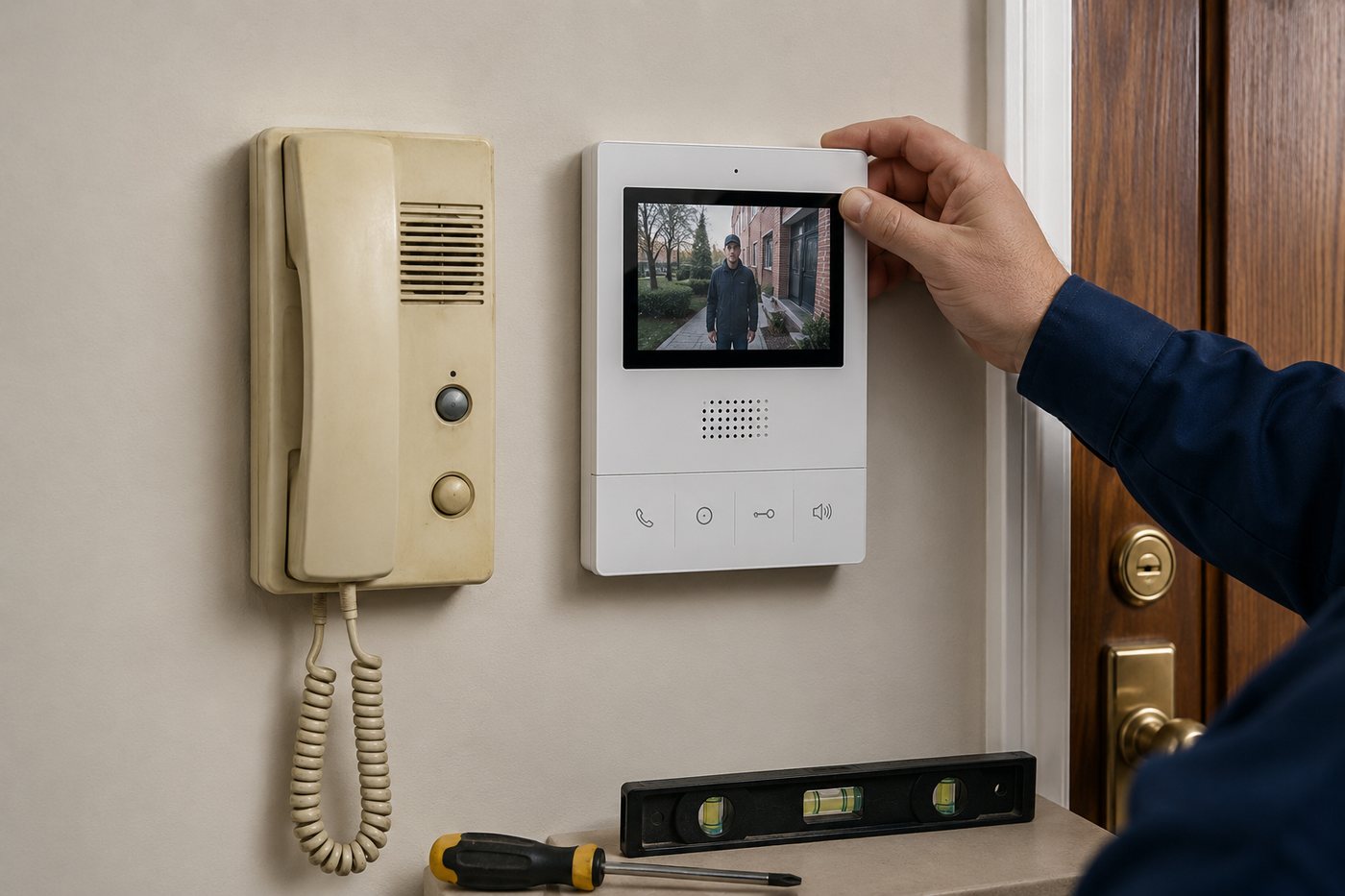
Audio station replaced with a video monitor on the existing pair.
Need Buzzer Repair in Dutchess County Today?
Dutchess holds the Hudson Valley's largest concentration of pre-war city apartment stock in Poughkeepsie and Beacon, and some of its largest estate property in the north. Both are buzzer work and neither resembles the other. A dead entry door is an access and life-safety problem, not a maintenance ticket — tenants get locked out, deliveries stop, and the front door ends up propped, which defeats the system entirely.
Faults sort into three layers: the talk path to wherever you answer, the release path to the door or gate hardware, and the mechanical layer of the hardware. In Dutchess the first question is always which half of the county you are in, because a Poughkeepsie apartment building and a Millbrook estate share almost nothing.
If the buzzer rings and you can speak, the talk path is intact and the fault is downstream. If nothing rings, the fault is upstream. That single distinction narrows a whole-building mystery to a handful of components, and it is why a proper diagnostic beats a blind replacement quote.
Layer 1 — the talk path
Poughkeepsie, Beacon and Fishkill apartment buildings run conventional riser architecture, much of it original and old enough that the conductor itself is the leading suspect. Estate and rural property runs gate stations, outbuilding stations and long buried conductor.
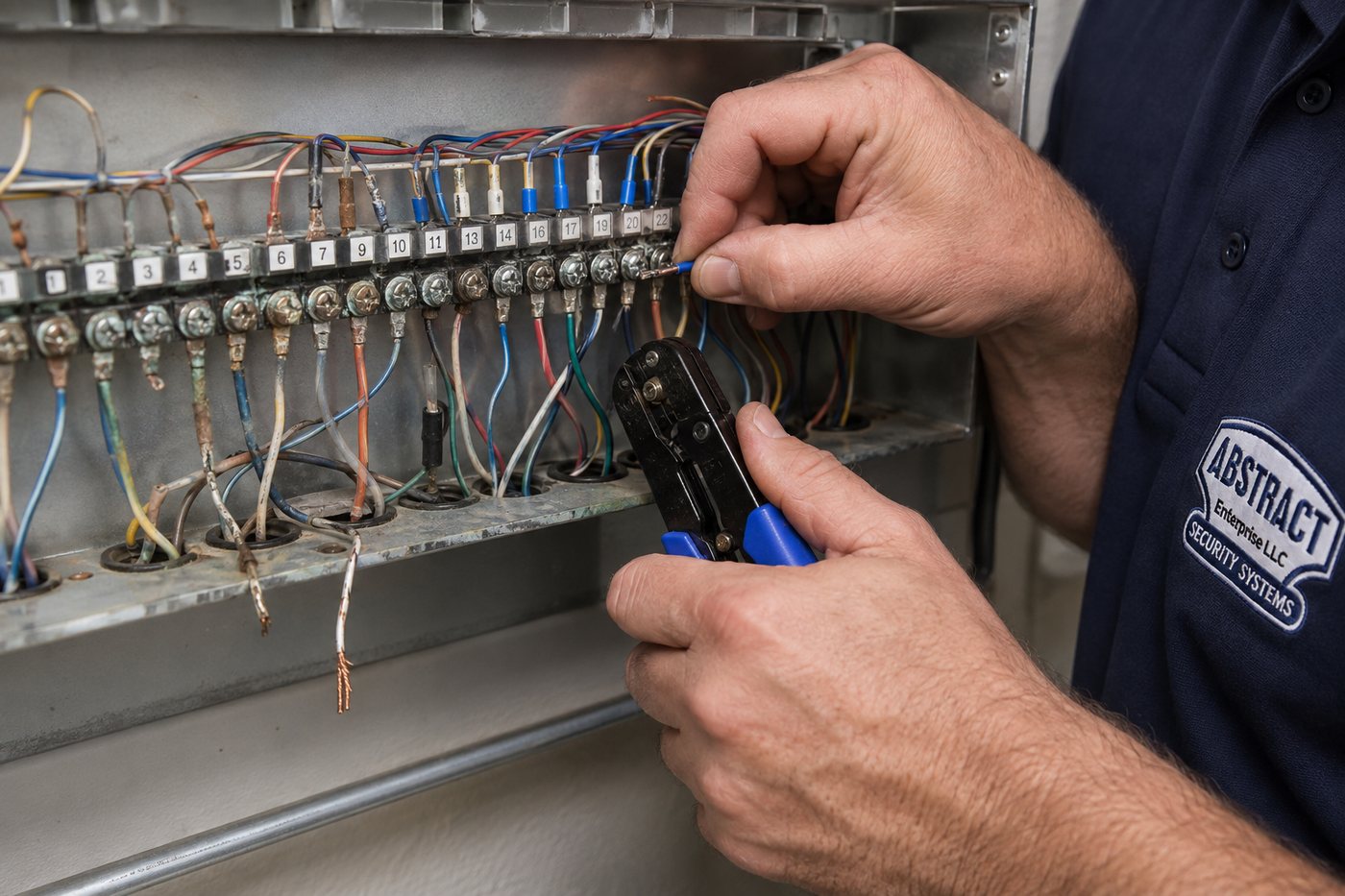
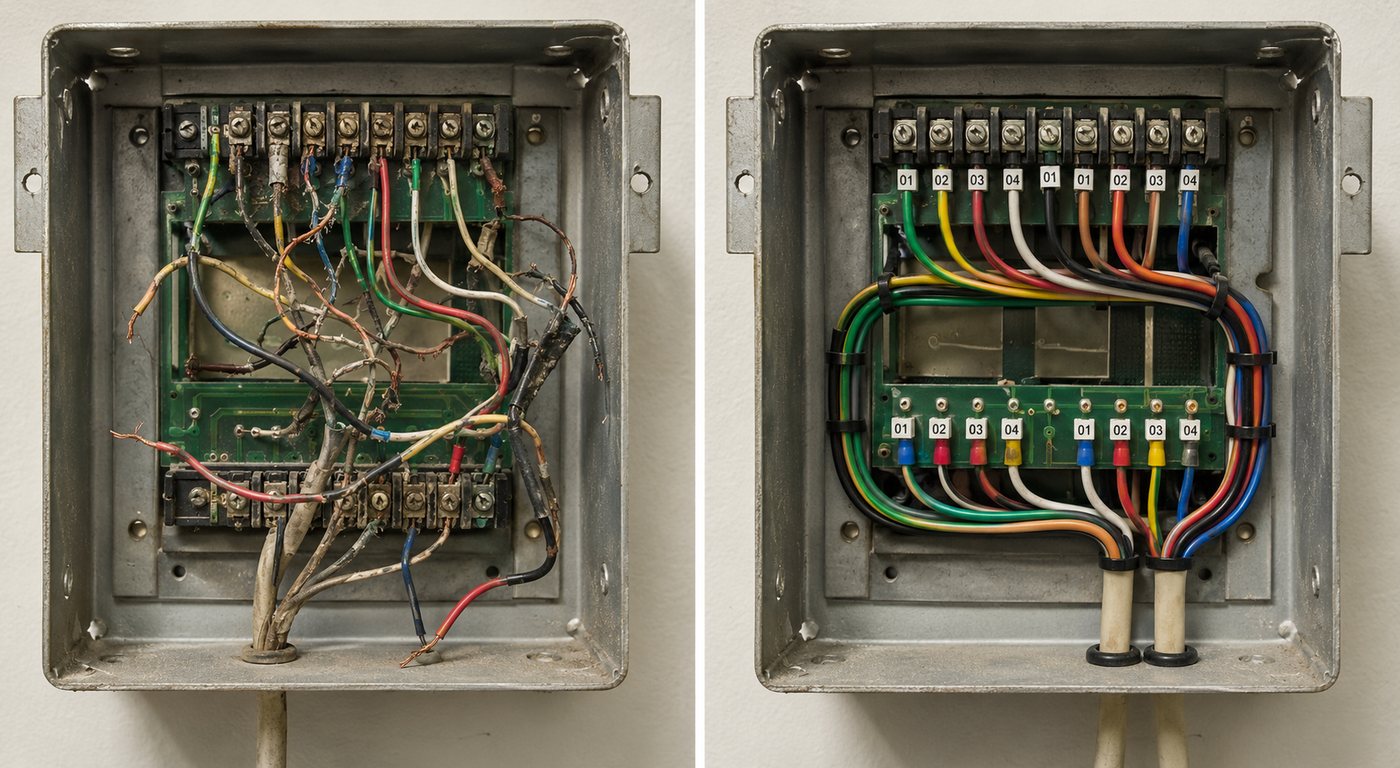
Re-terminating a labelled block rather than rewiring the riser.
Layer 2 — the release path
City buildings preload their strikes on heavy entrance doors. Rural property loses voltage over distance. The two produce identical complaints and require different measurements to separate.
Layer 3 — the mechanical layer
Frost heave through the winter moves both door frames and gate posts. In river-city buildings the added factor is a century of settlement putting the latch somewhere the strike no longer expects.
The Buzzer Works But the Door Stays Locked
Dutchess splits its release-path failures cleanly along the county's own geography. Poughkeepsie and Beacon apartment buildings preload their strikes; Millbrook and Rhinebeck estates lose voltage over distance.
In the river cities the cause is force and settlement. Heavy entrance doors with closers tightened over decades, in buildings that have settled for a century, drive the latch into the keeper hard enough that the strike cannot pivot.
On estate property the cause is length. A gate several hundred feet from its supply reads perfectly at rest and collapses under start current, and only a reading taken while the device is energised will show it.
Directory panel service on a large multi-unit entrance.
Not sure whether yours is a part swap or a wiring job? The diagnostic answers that, and the fee applies either way.
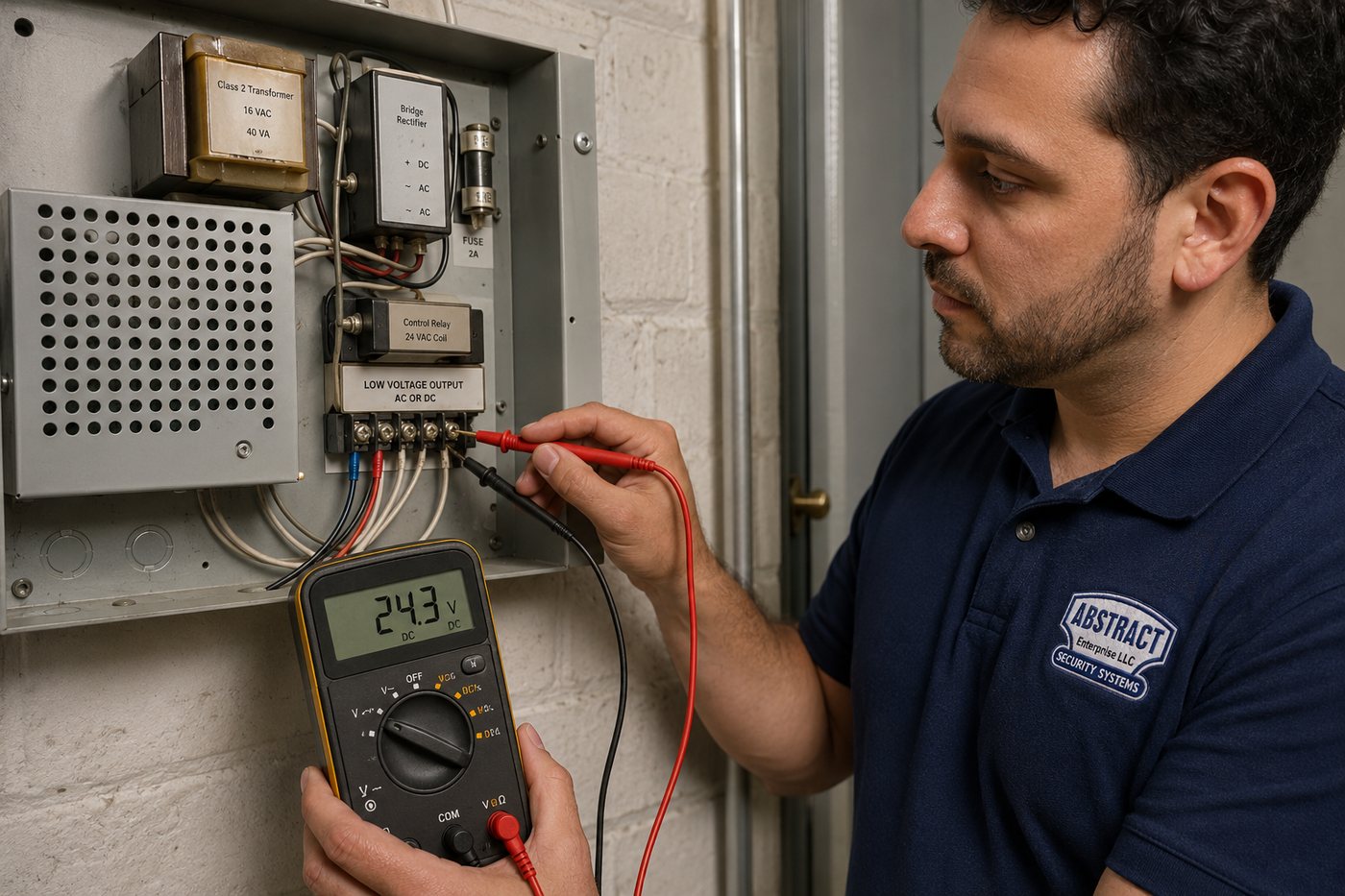
Transformer output measured under load. Below six volts means replace.
No Sound, No Power, or a Buzzer That Will Not Stop
In Poughkeepsie and Beacon apartment buildings whole-building silence is usually the amplifier or the transformer in a basement equipment room — one component, not a dead system.
Static across several apartments rather than one is the more serious finding. That is the trunk conductor going, and in stock that predates the war it is a realistic diagnosis rather than a remote one.
On estate property silence usually means the buried run. Direct-burial conductor installed decades ago fails where water pools, and the symptom tracks the weather rather than failing cleanly.
Only One Apartment Is Dead
In a river-city apartment building one dead line proves the panel, transformer and amplifier are all working, and the fault is that unit's station, terminals or pair.
On estate property the same symptom means something different: one station out of several, on a circuit that links the gate, the barn, the guest house and the residence in series. The break is upstream of whatever stopped working.
Establishing which of the two you have is the first thing we do, because the tracing effort differs by hours.
Junction box before and after re-termination and labelling.
What We Actually Replace
Buzzer repair is component work. Below is the hardware behind the terms you will see on an invoice, so you can read a quote and tell a genuine part swap from a padded one.
24V transformer
Low-voltage supply for the whole system. Fails gradually — weak buzz, dropped calls, then silence.
Door release relay
Switches power to the strike when you press release. Contacts weld shut or stop making altogether.
Electric strike
The powered keeper in the frame. Fail-secure locks on power loss; fail-safe unlocks.
Magnetic lock
Holds by electromagnet, always fail-safe. Needs alarm integration and a manual release to be compliant.
Riser wiring
The vertical pairs from the basement to each unit. Corrosion here causes static and dead lines.
Apartment station
The in-unit handset. Cord conductors, hookswitch and speaker all wear out.
Lobby panel
Buttons, directory, speaker and microphone at the entrance. Weather and vandalism take these first.
Request-to-exit
Interior release button or sensor. On a maglock this is life-safety hardware, not a convenience.
We service legacy analog hardware including Lee Dan, TekTone and Alpha Communications and keep common stations and transformers for those platforms on the truck. System-wide video, gate and driveway entry and brand-specific catalogs are covered on our intercom pages.
Landlord Responsibility in Dutchess County
For covered rental property, yes, and Poughkeepsie and Beacon hold most of it.
New York State Multiple Dwelling Law requires buildings built or converted after 1968 with eight or more units to provide a two-way voice intercom linking the entrance to each apartment. That state requirement reaches Dutchess directly, and courts have treated a working intercom as an essential service, so failing to maintain one breaches the warranty of habitability.
The New York City Housing Maintenance Code and the HPD process do not apply. Enforcement runs through your city, town or village building department — the City of Poughkeepsie, City of Beacon and the surrounding towns each operate their own code enforcement — and escalation goes to the local city or justice court.
For owner-occupied single-family, which is most of the county by parcel, the entry system is the owner's responsibility. General information, not legal advice.
Pre-War Risers, Estates and Historic Districts
Three conditions shape most Dutchess work.
Riser age in the river cities. Poughkeepsie and Beacon apartment buildings carry conductor that in places predates the war. It corrodes at terminal blocks and degrades inside walls, and the practical question is whether one pair has failed or the trunk is going. Those look identical from an apartment and price an order of magnitude apart, which is why toning comes before quoting.
Estate topology in the north. Millbrook, Rhinebeck, Red Hook and Amenia property routinely puts a gate, a barn, a guest house and the main residence on one aging circuit, usually daisy-chained rather than home-run. A single break takes out everything past it.
Historic districts. Rhinebeck, Hyde Park and parts of Beacon and Poughkeepsie carry review requirements for visible exterior hardware. Interior work is unaffected, but a street-facing panel replacement is worth confirming before ordering.
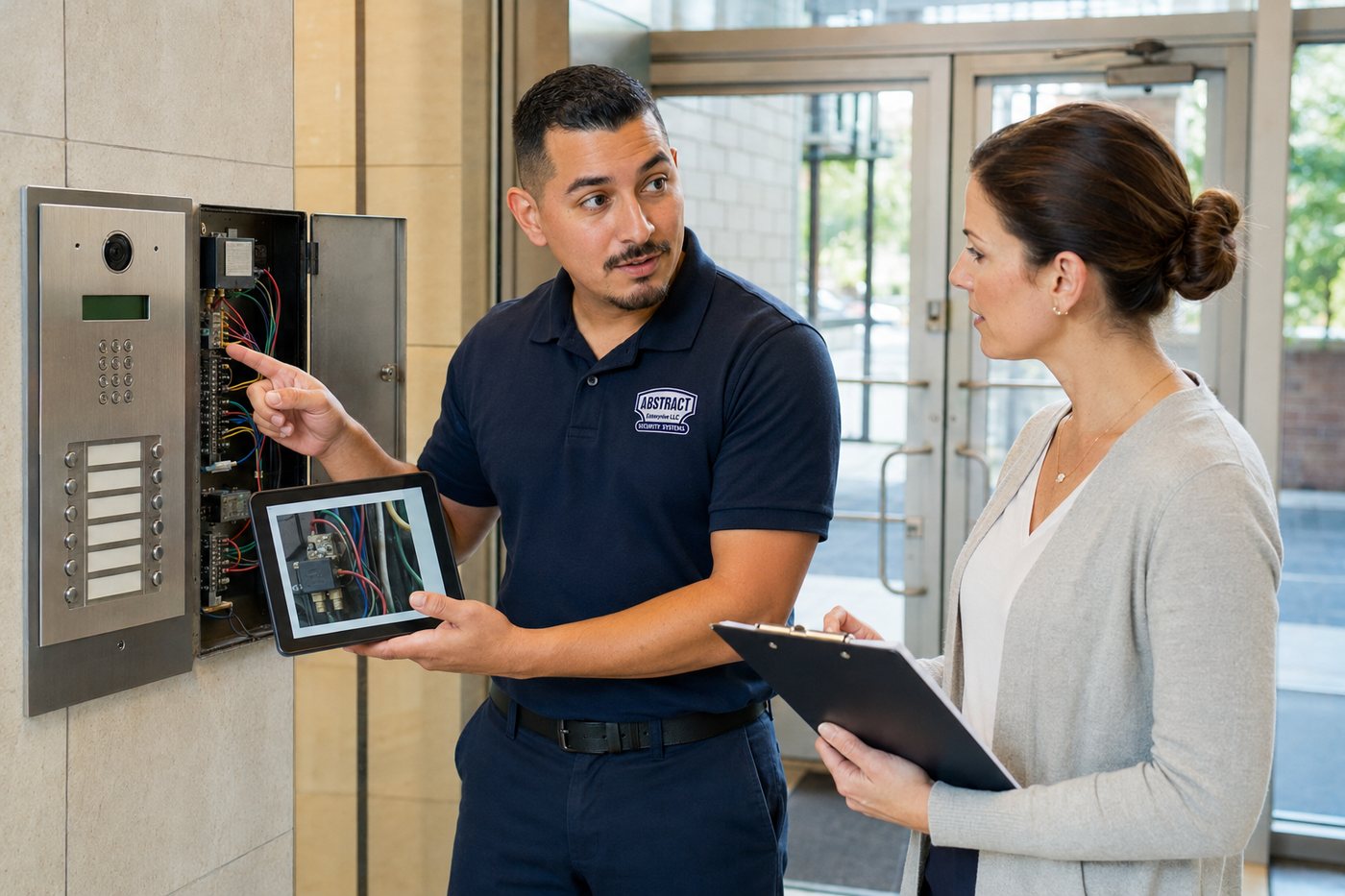
Walking an owner through the diagnostic findings on site.
What Buzzer Repair Costs in Dutchess County
Our service call is $250 and includes on-site diagnosis: we identify the failed component and give you the repair number before parts work begins. Most single-fault repairs finish in that visit.
Service call + on-site diagnostic$250
Apartment station replacement$250 – $525
Door release relay or button$250 – $475
24V transformer replacement$325 – $650
Electric strike replacement + alignment$450 – $950
Lobby panel repair or faceplate$650 – $1,800
Riser pair repair / re-termination$850 – $2,400
Aggregator sites quote a national average with no idea whether your fault is a $250 button or a $2,400 riser. The number only means something after someone has looked at the panel.
Repair or Replace?
The Dutchess decision depends entirely on which half of the county the property sits in.
In Poughkeepsie and Beacon, repair the component and replace the trunk only when static appears across multiple units and dropouts will not stay fixed. Toning the conductor first is what separates a two-hour repair from a building rewire.
On estate property, repair the station or operator and replace the buried run only when water damage is confirmed. Time any excavation to work that is already happening.
In both cases the honest test is total cost of ownership. Repeated service calls on failing infrastructure are not repairs, and a contractor who has not measured cannot tell you which situation you are in.
Entry panel service on a brick facade.
Where We Work Across Dutchess County
Poughkeepsie
City and town. The county's largest multi-family concentration, much of it pre-war with original risers, plus Vassar-area rental housing and commercial along Main Street and Route 9.
Beacon and southern Dutchess
Beacon, Fishkill, Wappingers Falls and Hopewell Junction. Beacon's converted industrial buildings and Main Street commercial alongside newer residential development along the Route 9 corridor.
Two-point verification: visitor at the panel, technician on the station.
The river towns
Rhinebeck, Hyde Park, Staatsburg and Red Hook. Historic-district constraints on visible hardware, village commercial, and riverfront estate property with gated approaches.
Eastern Dutchess
Millbrook, Amenia, Dover Plains, Pawling and Wingdale. Estate and agricultural parcels with the longest runs in the county — gates, barns and guest houses commonly sharing a single circuit.
Northern Dutchess
Tivoli, Germantown border, Pine Plains and Stanfordville. Rural residential with substantial drive times, best handled on scheduled windows.
Licensed low-voltage service call at a multi-unit entrance.
Field Notes
Three patterns cover most Dutchess callouts.
First: trunk corrosion in the river cities. When several apartments have static rather than one, the trunk conductor is going and that is a different job from a pair repair. Toning first is what separates a two-hour visit from a rewire.
Second: the estate daisy chain. Gate, barn and guest house wired in series means one break kills everything downstream. We ask what is on the circuit and when it was added before quoting a tracing job.
Third: winter collapse on long runs. Cold thickens gate gearbox grease and raises coil draw, so a marginal supply that coped all summer fails in January. It looks like a dead operator and is not.
Door Buzzer Repair Dutchess County — Questions
How much does door buzzer repair cost in Dutchess County?
Service call $250 with diagnosis. Poughkeepsie and Beacon apartment work prices conventionally — station $250–$525, transformer $325–$650, amplifier $450–$900, strike $450–$950. Estate and gate work is quoted separately based on run length.
Lobby panel diagnostics — isolating the fault before any quote.
Is my Dutchess landlord required to fix the buzzer?
For covered buildings, yes. State MDL requires post-1968 buildings with eight or more units to have a two-way voice intercom, and Poughkeepsie and Beacon hold most of that stock. NYC's HPD process does not apply — enforcement is your city, town or village building department, escalation is the local court. General information, not legal advice.
Several apartments in our Poughkeepsie building have static.
That points at the trunk conductor rather than one failed pair, and in pre-war stock it is a realistic finding. It prices an order of magnitude apart from a pair repair, which is why we tone before recommending anything.
Our whole Beacon building went silent at once.
Check the basement amplifier and transformer first. One component takes out every apartment while every station and pair stays good, and it gets mistaken for a dead system regularly.
The complaint we hear most: the buzzer sounds and the door stays shut.
Our estate has a gate, a barn and a guest house on one circuit.
Those are usually daisy-chained rather than home-run, so a single break silences everything downstream while everything upstream keeps working. Establishing the topology first is what keeps the tracing predictable.
The gate fails in winter.
Cold raises the operator's draw and frost heave moves the posts. A supply that coped all summer collapses, and the controller reports a fault that is really mechanical or electrical supply. Neither is fixed by replacing the intercom.
We're in the Rhinebeck historic district.
Interior work is unaffected. A visible street-facing panel replacement can require review, so we confirm before ordering rather than installing and appealing.
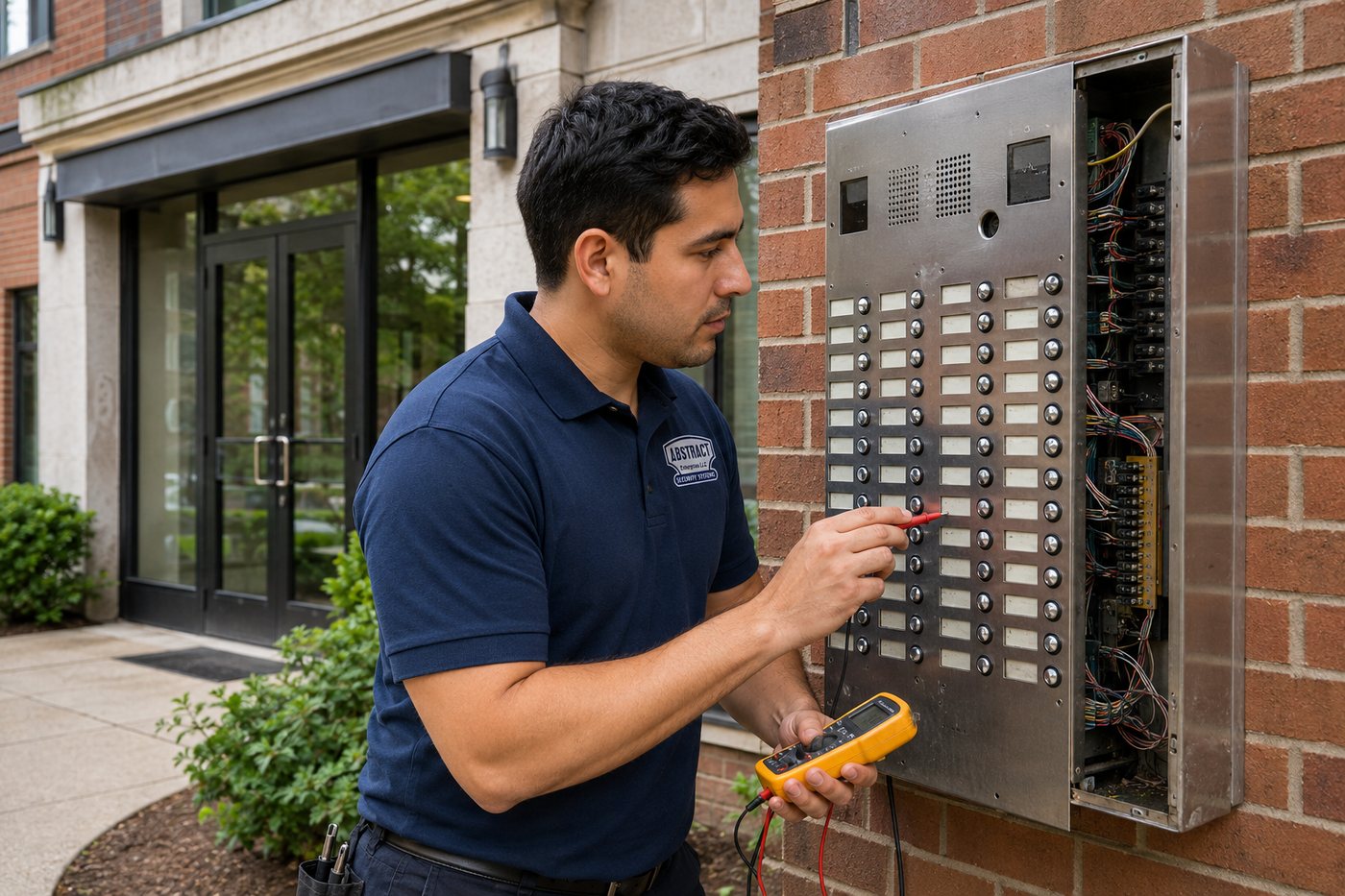
Terminal testing behind a stainless lobby panel.
The buzzer sounds but the lobby door will not open.
Release-path fault. In a river-city building it is usually preload from a heavy door and an over-tightened closer. Hold the door slack while someone triggers release — if it opens, the electronics are fine.
How fast can you reach Millbrook or Pine Plains?
Scheduled rather than same-day. Poughkeepsie, Beacon, Fishkill and Wappingers are usually next day. Northern and eastern Dutchess we book firm windows for.
One apartment is dead and we were quoted a full replacement.
Get a second diagnostic. One dead line proves every shared component is working — that is a quoting decision, not a technical one.
Our building has a maglock.
Then it needs alarm integration so it drops on alarm, a manual interior release, fail-safe power and correct signage. Free egress is not negotiable in any municipality.
Can I replace the transformer myself?
No — the primary side is line voltage and that is licensed work. Safe to check: whether other units are affected and whether the fault tracks the weather.
Reviewed and updated September 2026.
Get the Buzzer Fixed
Component-level diagnosis across Dutchess County. We identify the failed part and quote the repair before touching anything — no system-replacement pitch on a $250 fault.