Same-Day Service · All Brands · Intercom Repair · Buzzer Repair · All Bronx Neighborhoods
Professional door buzzer repair and intercom repair across all Bronx neighborhoods. From Mott Haven walk-ups to Fordham apartment buildings to Riverdale co-ops — if your apartment buzzer is not working or your intercom system stopped working, we fix it same day. Most repairs completed in a single visit.
Component-level diagnosis. We isolate the failed part before quoting a replacement.
Certificates of insurance issued to owners, boards, and managing agents before work starts.
Verifying the talk path with the resident before closing the call.
Need Buzzer Repair in the Bronx Today?
The Bronx has the densest concentration of large pre-war apartment buildings in the city, and that means most buzzer faults here are building infrastructure rather than single-apartment hardware. A dead entry door is an access and life-safety problem, not a maintenance ticket — tenants get locked out, deliveries stop, and the front door ends up propped, which defeats the system entirely.
Bronx buzzer faults sort into three layers. The talk path carries the visitor's call up the riser to your apartment. The release path carries your unlock signal down to the door hardware. The mechanical layer is the door itself. Scale is the borough's defining variable: a Grand Concourse building may have eighty apartments on one trunk, so a single shared component failing takes everyone out at once.
If the buzzer rings and you can speak, the talk path is intact and the fault is downstream. If nothing rings, the fault is upstream. That single distinction narrows a whole-building mystery to a handful of components, and it is why a proper diagnostic beats a blind replacement quote.
Layer 1 — the talk path
Large pre-war buildings run a basement amplifier feeding a trunk with branch risers. That architecture means one failed amplifier silences the whole building while every station and every pair remains perfectly good. It is the most common whole-building fault in the borough.
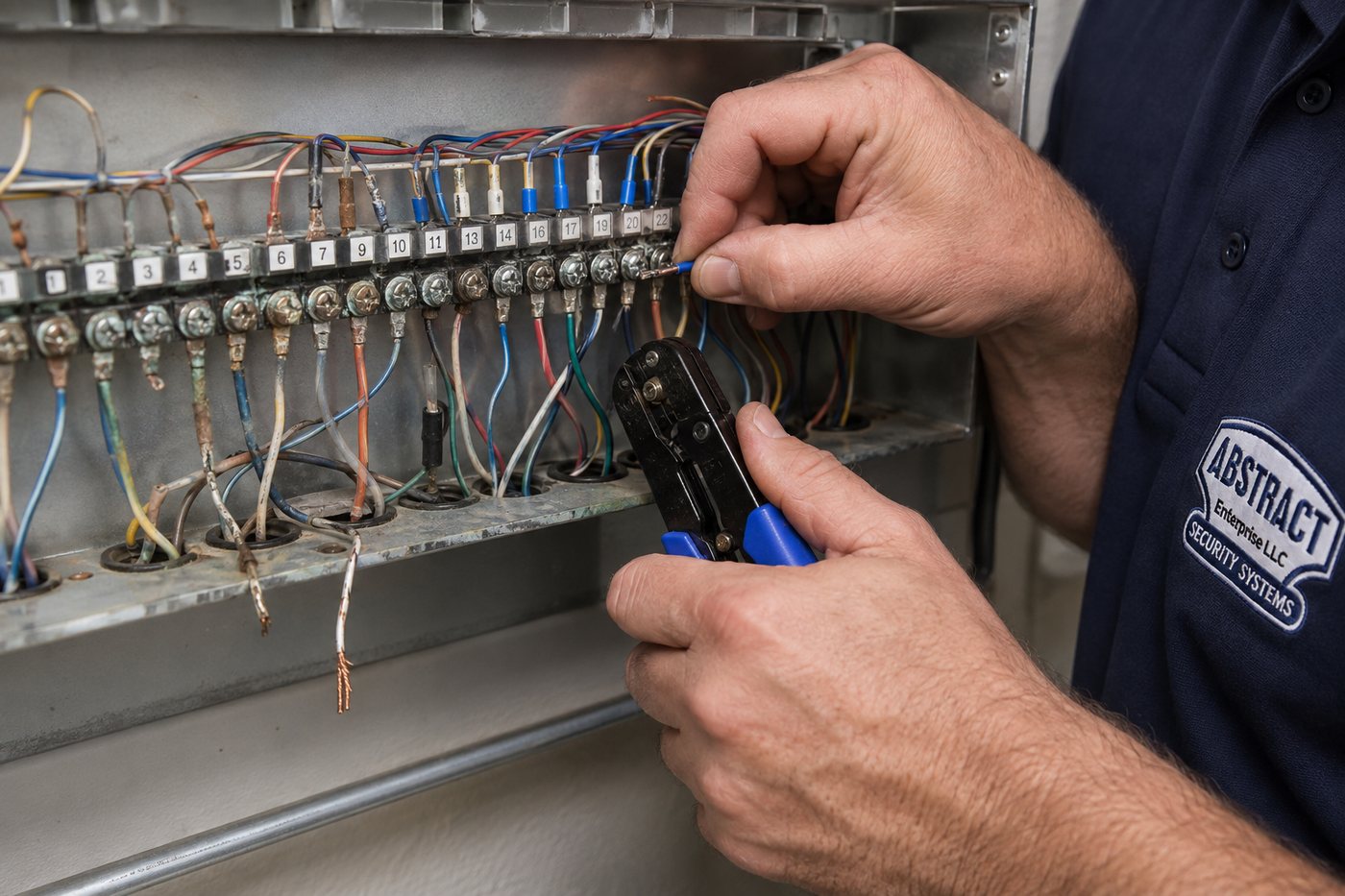
Corroded terminals — the usual cause of static and dead lines.
Layer 2 — the release path
High-traffic lobby doors with commercial closers preload strikes hard, and eighty-unit buildings run high release counts that shorten coil life. Both are common on the Concourse and through Fordham and Tremont.
Layer 3 — the mechanical layer
Heavy lobby doors in buildings that have settled for ninety years. The strike is where it was installed; the latch is no longer where it started.
The Buzzer Works But the Door Stays Locked
In an eighty-unit Bronx building the strike sits feet from the panel, so voltage drop is rare. What is not rare is coil wear: high release counts on a large building shorten strike life dramatically compared with a six-unit walk-up.
Preload is the other half. Heavy lobby doors with commercial closers exert far more force than a residential closer, and after ninety years of settlement the latch is no longer aligned with the keeper the installer set.
The ten-second test still applies. Hold the door slack, trigger the release. Opens under slack and jams under tension means alignment, and no intercom work will change it.
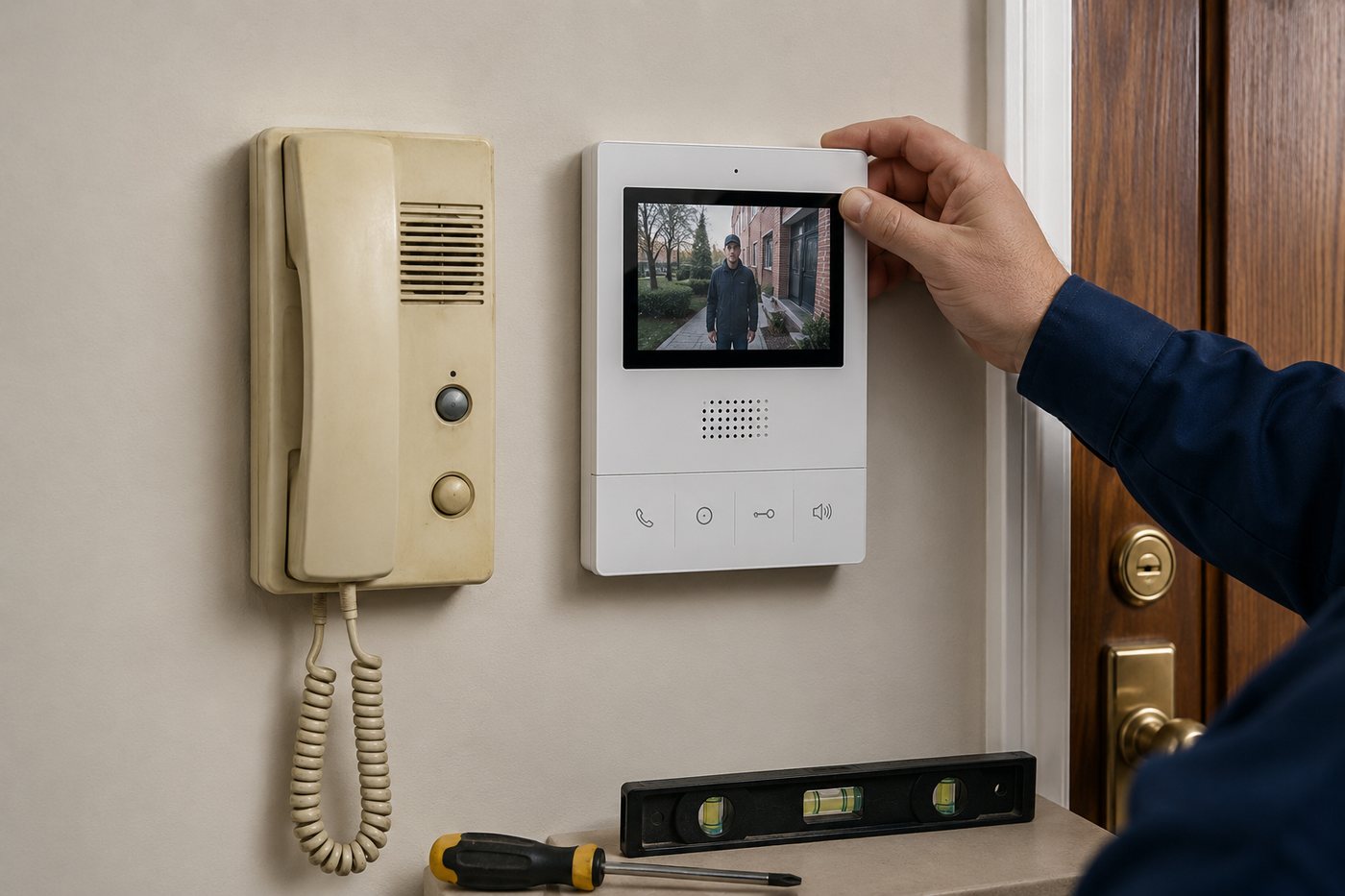
Audio station replaced with a video monitor on the existing pair.
Not sure whether yours is a part swap or a wiring job? The diagnostic answers that, and the fee applies either way.
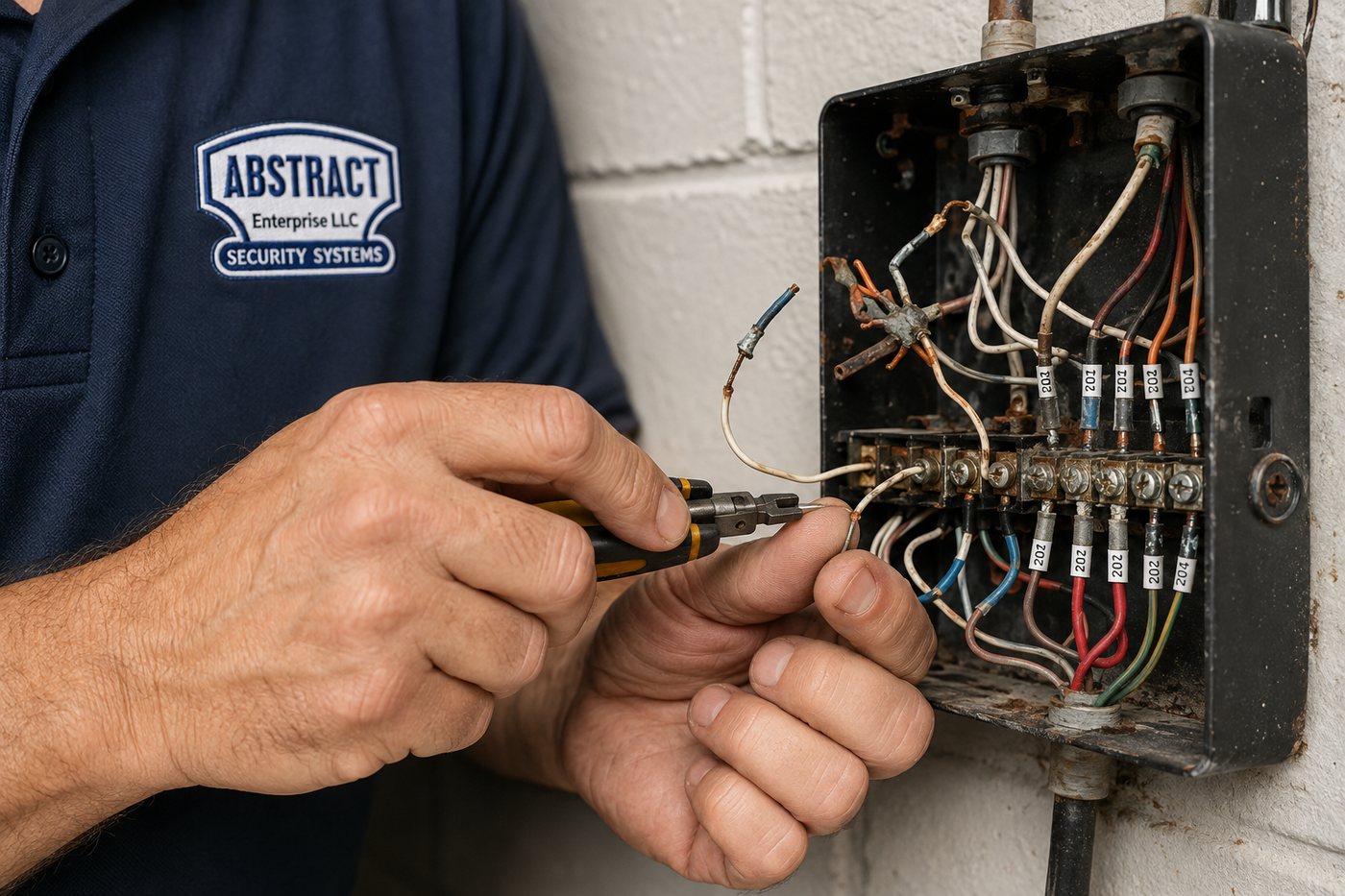
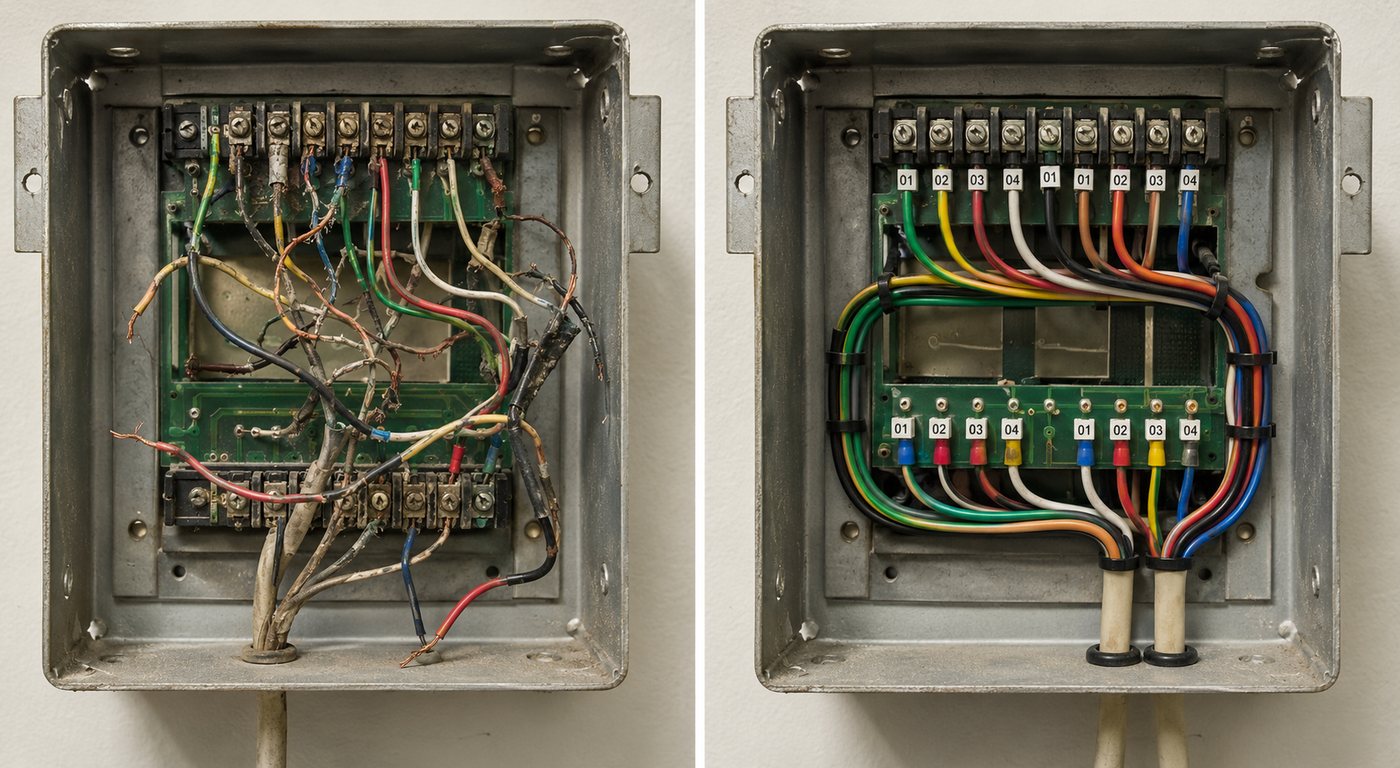
Re-terminating a labelled block rather than rewiring the riser.
No Sound, No Power, or a Buzzer That Will Not Stop
When a whole Bronx building goes silent, check the basement amplifier before anything else. In trunk-and-riser architecture one component failing takes every apartment out at once while every station and pair remains good.
That single fact is the most over-quoted situation in the borough. A total outage looks like a dead system and is usually a $400 part.
Partial silence points elsewhere. One stack dead means that branch riser. The whole building weak rather than dead means the transformer sagging under a load it was sized for decades ago.
Only One Apartment Is Dead
One dead apartment in an eighty-unit building proves the amplifier, transformer, trunk and panel are all working. The fault is that unit's station, its terminals, or its branch pair.
Bronx buildings make this easy to isolate because the equipment room gives you a clean starting point: tone the pair from the basement rather than guessing from the apartment.
If a managing agent has been quoted a building-wide replacement for one dead line, that is a sales decision rather than a technical one. Get a second diagnostic.
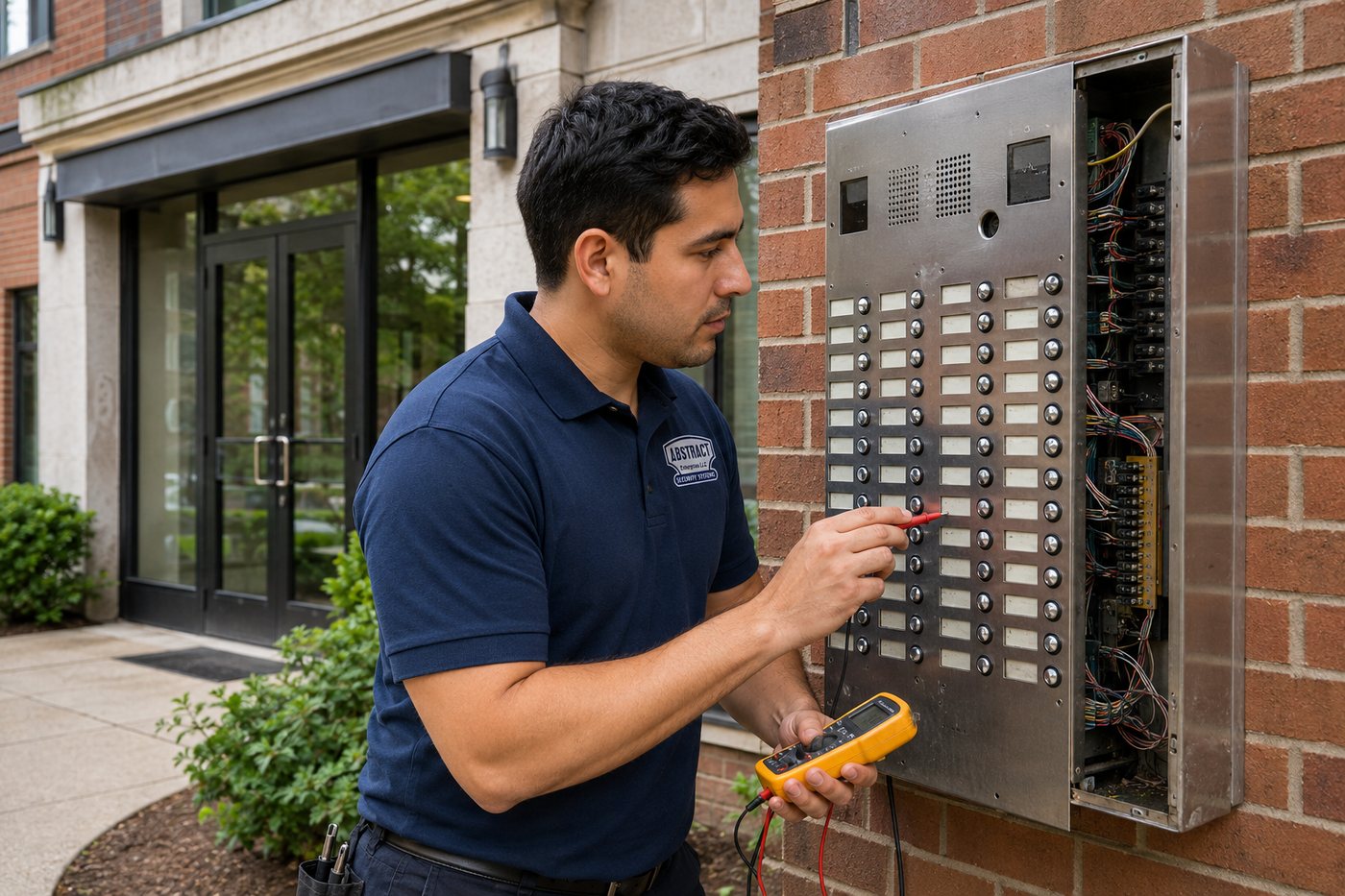
Directory panel service on a large multi-unit entrance.
What We Actually Replace
Buzzer repair is component work. Below is the hardware behind the terms you will see on an invoice, so you can read a quote and tell a genuine part swap from a padded one.
24V transformer
Low-voltage supply for the whole system. Fails gradually — weak buzz, dropped calls, then silence.
Door release relay
Switches power to the strike when you press release. Contacts weld shut or stop making altogether.
Electric strike
The powered keeper in the frame. Fail-secure locks on power loss; fail-safe unlocks.
Magnetic lock
Holds by electromagnet, always fail-safe. Needs alarm integration and a manual release to be compliant.
Riser wiring
The vertical pairs from the basement to each unit. Corrosion here causes static and dead lines.
Apartment station
The in-unit handset. Cord conductors, hookswitch and speaker all wear out.
Lobby panel
Buttons, directory, speaker and microphone at the entrance. Weather and vandalism take these first.
Request-to-exit
Interior release button or sensor. On a maglock this is life-safety hardware, not a convenience.
We service legacy analog hardware including Lee Dan, TekTone and Alpha Communications and keep common stations and transformers for those platforms on the truck. System-wide video, gate and driveway entry and brand-specific catalogs are covered on our intercom pages.
Is Your Bronx Landlord Required to Fix It?
Yes, and the Bronx has the city's highest concentration of buildings that clearly fall under the requirement.
State Multiple Dwelling Law covers buildings built or converted after 1968 with eight or more units, and the NYC Housing Maintenance Code requires a functioning intercom on top of that. HPD treats a dead intercom as a Class B hazardous violation with penalties in the range of $250 to $500 per day until corrected. Continuous functionality is the standard, so a building where half the lines work is still in violation.
The route is written notice to management, then 311 or HPD, which sends an inspector. Beyond that a tenant can file an HP proceeding in Housing Court without a lawyer. Courts treat a working intercom as an essential service.
Large Mitchell-Lama and NYCHA developments have their own management structures but the underlying obligation is the same. For co-ops including Co-op City, building-wide equipment belongs to the corporation. General information, not legal advice.
Amplifiers, Trunks and Eighty-Unit Buildings
Understanding how a large Bronx building is wired explains most of what goes wrong and most of what gets over-quoted.
A basement amplifier feeds a trunk. The trunk feeds branch risers. Each riser feeds a stack of apartments. Everything downstream depends on the amplifier, which means one $400 component can silence eighty units and produce a quote for a system replacement.
That topology also explains partial failures. If one stack is dead and the rest of the building is fine, the fault is that branch riser, not the amplifier and not the panel. If the whole building is weak rather than dead, it is usually the transformer sagging under a load it was sized for forty years ago.
Before accepting any building-wide quote, ask which of those three the contractor has actually measured. The difference between an amplifier swap and a rewire is the difference between a day and a season.
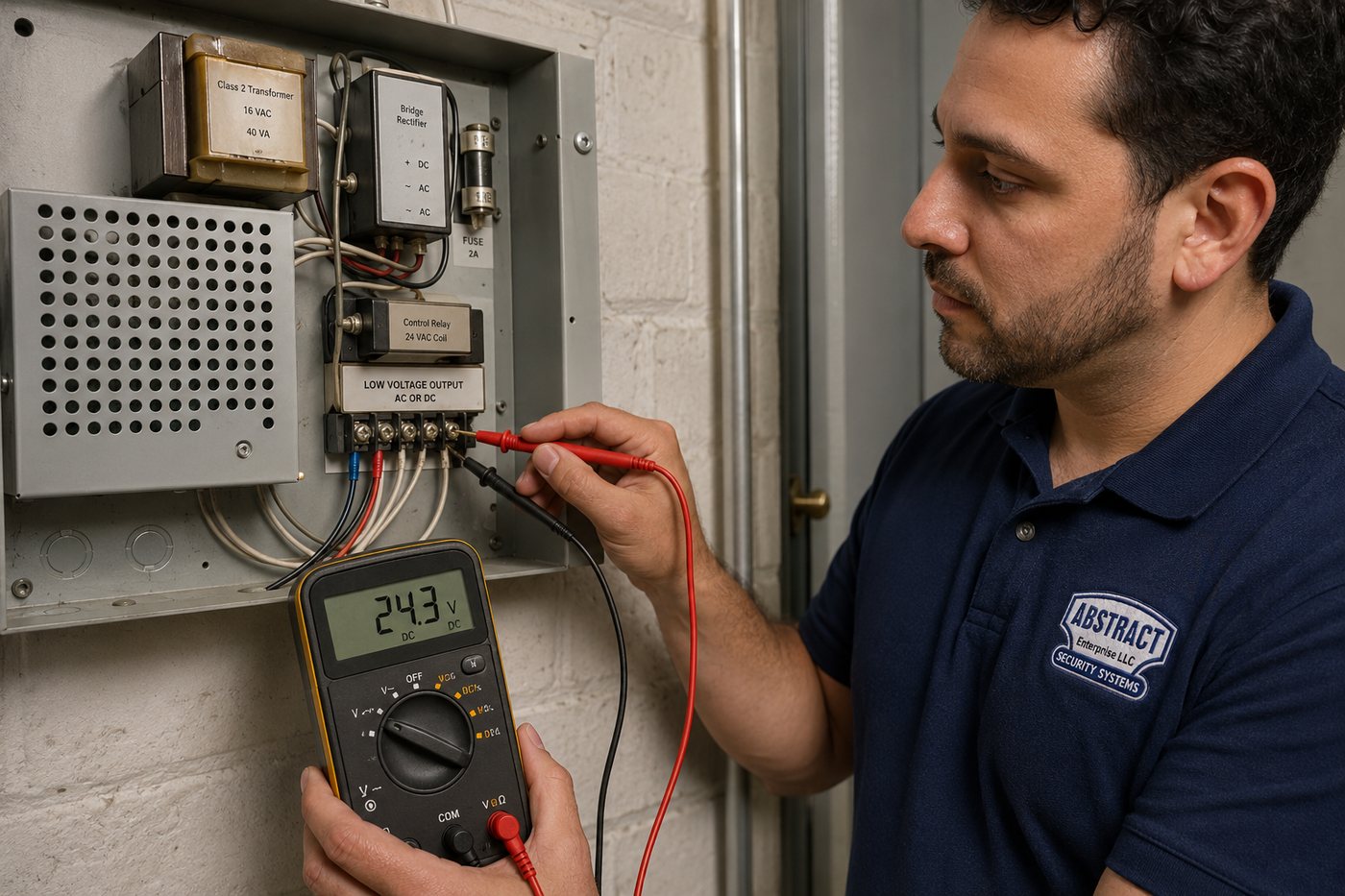
Transformer output measured under load. Below six volts means replace.
What Buzzer Repair Costs in the Bronx
Our service call is $250 and includes on-site diagnosis: we identify the failed component and give you the repair number before parts work begins. Most single-fault repairs finish in that visit.
Service call + on-site diagnostic$250
Apartment station replacement$250 – $525
Door release relay or button$250 – $475
24V transformer replacement$325 – $650
Electric strike replacement + alignment$450 – $950
Lobby panel repair or faceplate$650 – $1,800
Riser pair repair / re-termination$850 – $2,400
Aggregator sites quote a national average with no idea whether your fault is a $250 button or a $2,400 riser. The number only means something after someone has looked at the panel.
Repair or Replace?
The Bronx calculation turns on which layer failed, and the three answers are separated by an order of magnitude each.
Repair the amplifier, transformer, relay or strike. All are component swaps in an accessible basement room.
Repair the branch riser when one stack is out. That is targeted work in a single chase, not a building rewire.
Replace only when the trunk itself is corroded — constant static across multiple stacks, ghost ringing, dropouts that never stay fixed. Ask which of the three has been measured before agreeing to anything building-wide.
Junction box before and after re-termination and labelling.
Where We Work Across the Bronx
The Grand Concourse and the west
Concourse, Highbridge, Morris Heights, University Heights and Fordham. The largest pre-war apartment buildings in the borough, many on original trunk-and-riser architecture with basement equipment rooms.
Central Bronx
Tremont, Belmont, Bathgate, Claremont, Morrisania and Crotona. Dense walk-up and mid-rise stock, heavy renovation history, and a lot of supportable legacy platforms.
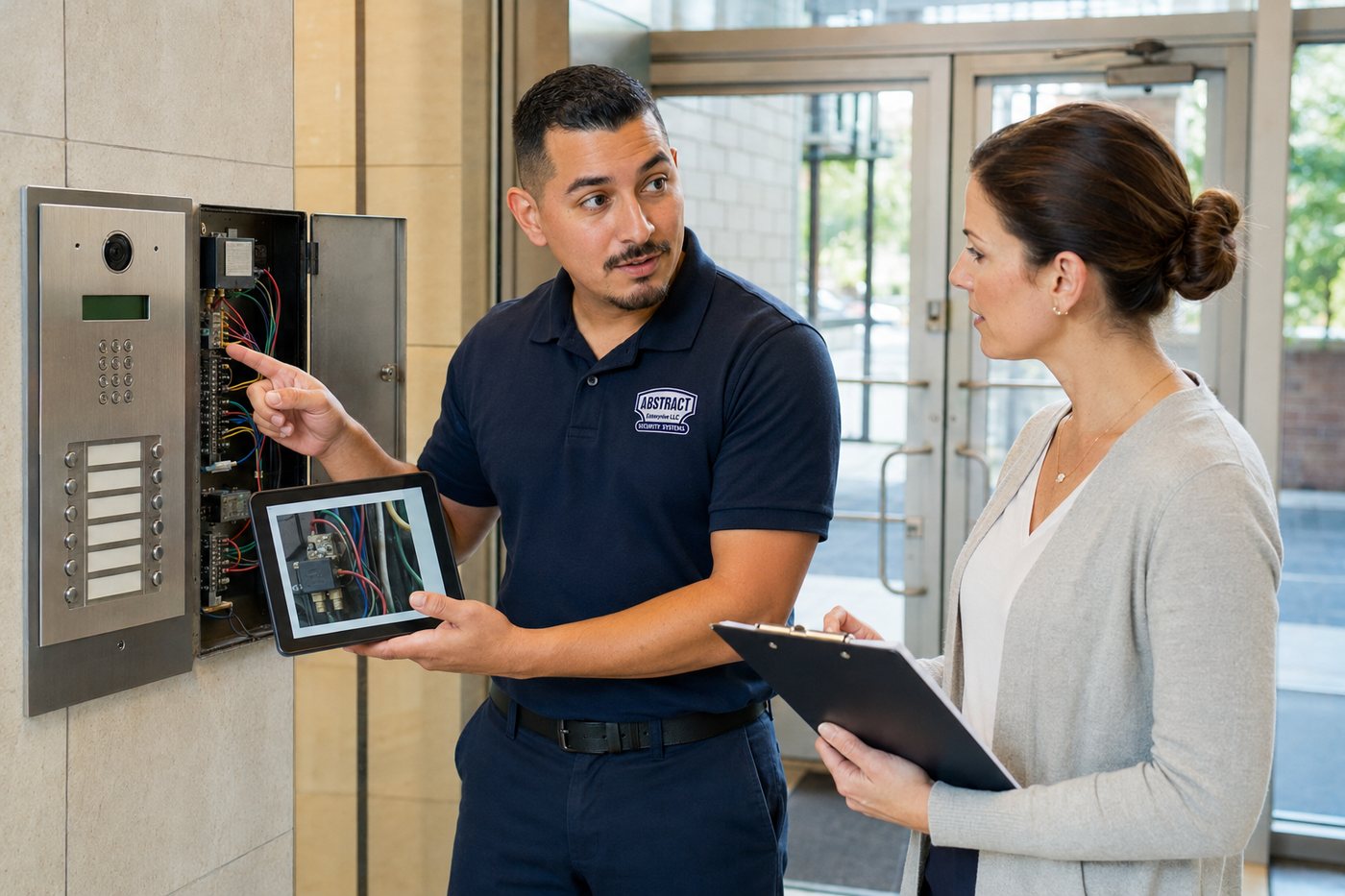
Walking an owner through the diagnostic findings on site.
North Bronx
Norwood, Bedford Park, Kingsbridge, Riverdale, Woodlawn and Wakefield. Riverdale runs larger co-op and condo buildings with more modern equipment; the rest is a mix of pre-war and post-war multi-family.
East Bronx
Parkchester, Castle Hill, Soundview, Throggs Neck, Pelham Bay and Co-op City. Parkchester and Co-op City operate at development scale, where a single shared component affects thousands of units.
Waterfront pockets
City Island, Country Club, Silver Beach, Edgewater Park and Throggs Neck shorefront. Salt exposure makes outdoor-rated panel hardware the sensible default rather than an upgrade.
Entry panel service on a brick facade.
Field Notes
Three findings account for most Bronx callouts.
First: the amplifier. A whole building goes silent, everyone assumes the system is finished, and the fault is one component in the basement. We check it before anything else because it is the highest-probability cause of a total outage in a large building.
Second: one dead stack. When a single line of apartments is out and the rest of the building is fine, the branch riser is the fault. That is a targeted repair, not a rewire, and it should never produce a building-wide quote.
Third: an under-sized transformer carrying a building it was never meant to. Output sags, the whole building gets weak, and the symptoms look like several unrelated faults. One reading on the secondary explains all of them.
Door Buzzer Repair the Bronx — Questions
How much does door buzzer repair cost in the Bronx?
Service call $250 with diagnosis. Amplifier replacement $450–$900, transformer $325–$650, strike with alignment $450–$950, station $250–$525. Branch riser repair $850–$2,400 depending on chase access.
Strike plate alignment — preload reads as an electrical fault and is not one.
Our whole building went silent at once.
Check the basement amplifier first. In trunk-and-riser buildings one component silences every apartment while every station and pair stays good. It is the single most over-quoted situation in the borough.
One line of apartments is dead and the rest work.
That is the branch riser for that stack, not the amplifier and not the panel. Targeted repair in one chase — not a building rewire.
Is my Bronx landlord required to fix it?
Yes for covered buildings. State MDL covers post-1968 buildings with eight or more units and the NYC Housing Maintenance Code requires a functioning intercom. HPD treats failure as a Class B hazardous violation at roughly $250–$500 per day. Route: written notice, 311 or HPD, then an HP proceeding. General information, not legal advice.
Two-point verification: visitor at the panel, technician on the station.
We are in Co-op City / Parkchester.
Development-scale properties have their own management structure but the underlying obligation is the same, and the equipment is the corporation's. The practical difference is that one shared component can affect thousands of units, so diagnosis before quoting matters even more.
Why do our strikes wear out so fast?
Release count. An eighty-unit building triggers the strike far more often than a small walk-up, and AC coils are rated for intermittent duty. The fix is a strike rated for the traffic, not a bigger system.
The buzzer sounds but the lobby door will not open.
Release-path fault. Hold the door slack while someone triggers the release — if it opens, the heavy lobby door is preloading the strike and the electronics are fine.
Licensed low-voltage service call at a multi-unit entrance.
Do you service Mitchell-Lama and NYCHA buildings?
Yes. We issue certificates of insurance to management before work starts and provide dated diagnostic reports identifying the failed component.
Do you offer same-day repair in the Bronx?
Usually, on calls before 10 AM. Our shop is at 460 E Fordham Road, so the Bronx is our fastest response area.
Panels near City Island keep corroding.
Salt. City Island, Country Club, Silver Beach, Edgewater Park and the Throggs Neck shorefront need outdoor-rated hardware. Replacing like-for-like just restarts the clock.
The buzzer will not stop buzzing.
Stuck button or welded relay. A welded relay holding the strike open leaves an eighty-unit lobby unlocked, so it needs attention quickly. Disconnect the panel rather than forcing the button.
Can I check anything myself?
Whether neighbours are affected and whether your handset cord is seated. Not the lobby panel or the basement equipment room — one shorted pair there takes the whole building down.
Reviewed and updated September 2026.
Get the Buzzer Fixed
Component-level diagnosis across the Bronx. We identify the failed part and quote the repair before touching anything — no system-replacement pitch on a $250 fault.