Fast, honest repair for the entry systems that keep Belmont’s tenements and mixed-use blocks working — buzzers, audio and video intercoms, entry panels, electric strikes and in-unit stations across Arthur Avenue, East 187th Street, Crescent Avenue and the residential streets between the Zoo and Fordham Road. Our Bronx shop is minutes away at 460 E Fordham Rd, the rate is published, and the diagnosis happens at the open panel, not on a sales sheet.
Belmont’s buildings are older than almost anything they compete with, and their entry systems show it. Four- and five-story tenements line the blocks off Arthur Avenue and 187th — apartments stacked over bakeries, butchers, pasta shops and salumerias — and most of them still run intercoms installed generations of tenants ago. The hardware has survived paint, grease, renovations and a thousand deliveries a week; when it finally acts up, the failure is usually one tired component in an otherwise sturdy system, which is exactly the kind of problem a repair-first shop is built for.
We service what the neighborhood actually has: original buzz-and-release panels, wired audio intercoms, telephone-entry directories, video systems on the newer renovations, plus the strikes, transformers, amplifiers and riser wiring underneath all of them. Replacement gets recommended only when the platform is truly finished — and the upgrade quote shows which of the building’s existing wires the new system rides on.
30-second triage — the symptom tells us what to load on the truck.
WHY BELMONT
Belmont concentrates two hard conditions in one square half-mile. The first is age: this is tenement country, and the intercom risers threading those buildings have carried voltage since long before anyone alive signed the lease. Cloth insulation dries out, splices from three renovations ago let go, and the panel by the stoop has been painted more times than the fire escape. The second is traffic: Arthur Avenue and East 187th run one of the densest food corridors in the city, and the apartments above those storefronts absorb it — deliveries at all hours, weekend visitor crowds heading for the Retail Market and the restaurants, Fordham students cycling through the rentals every academic year. Buttons get leaned on, doors get propped, hardware gets grease and flour worked into it from the businesses below.
The resulting failures are almost boringly consistent, which is good news: a strike that no longer throws, a transformer that finally hums out in a cellar, one riser pair broken where it passes a kitchen exhaust chase, a handset dead in apartment 3R while the rest of the line rings fine. Every one of those is a component repair on a platform built to outlive its parts. The systems in these buildings were made to be serviced — and unlike a lot of what gets sold today, they still can be.
Our rule on every Belmont call: fix the component, respect the building, and only talk replacement when the platform itself — not one tired part — has genuinely quit.
WHAT WE REPAIR
Component-level diagnosis on everything between the stoop and the apartment wall.
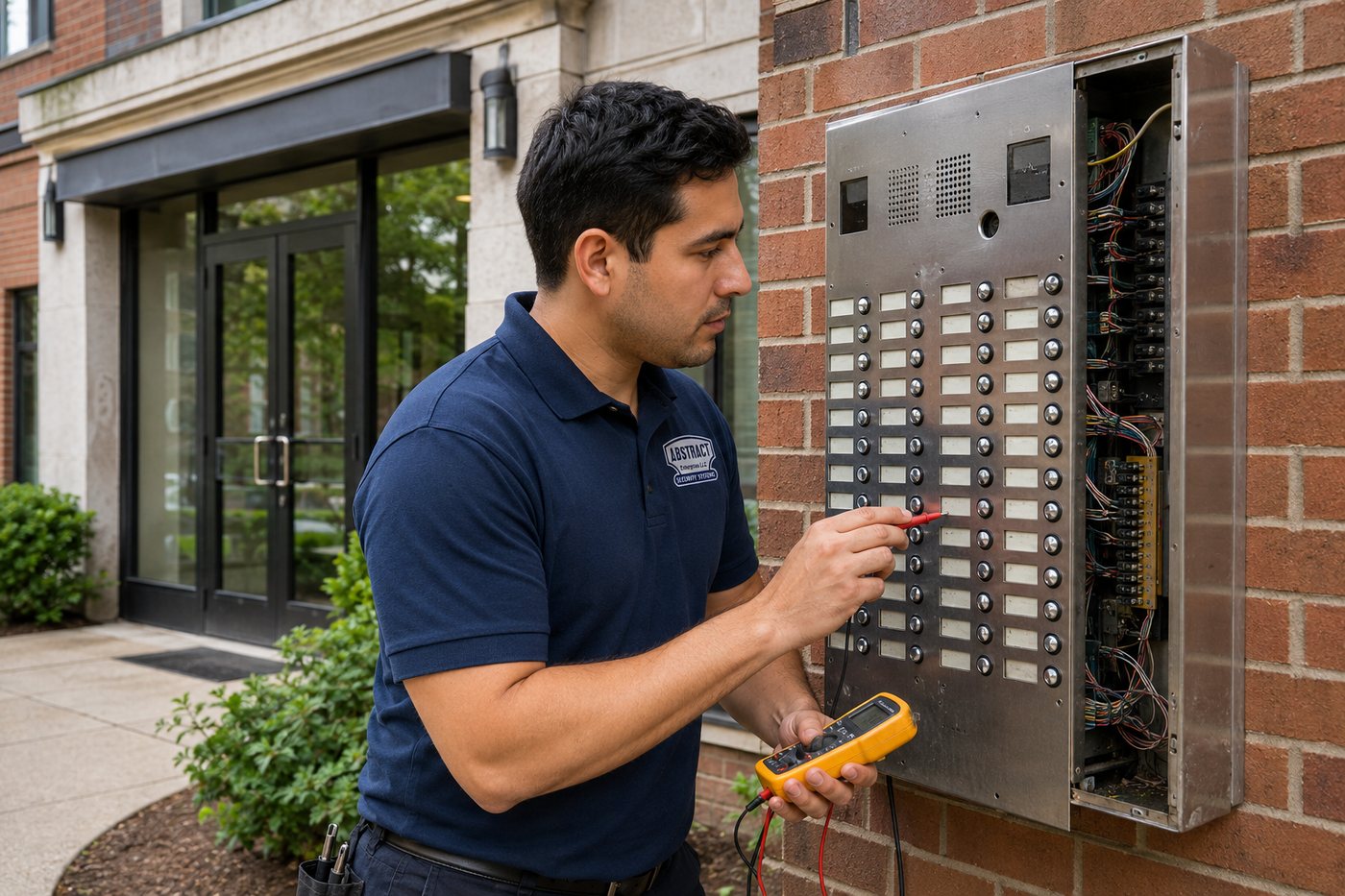
The press-to-buzz panels that came with the building: seized buttons, corroded contacts, dead lines and cellar transformers past their prime — serviced in place, on the wiring the building already owns.
Talk-listen-release systems across the walkup stock. We chase one-way voice, crackle, silent handsets and lines that ring without releasing — and we fix the line, not the whole building.
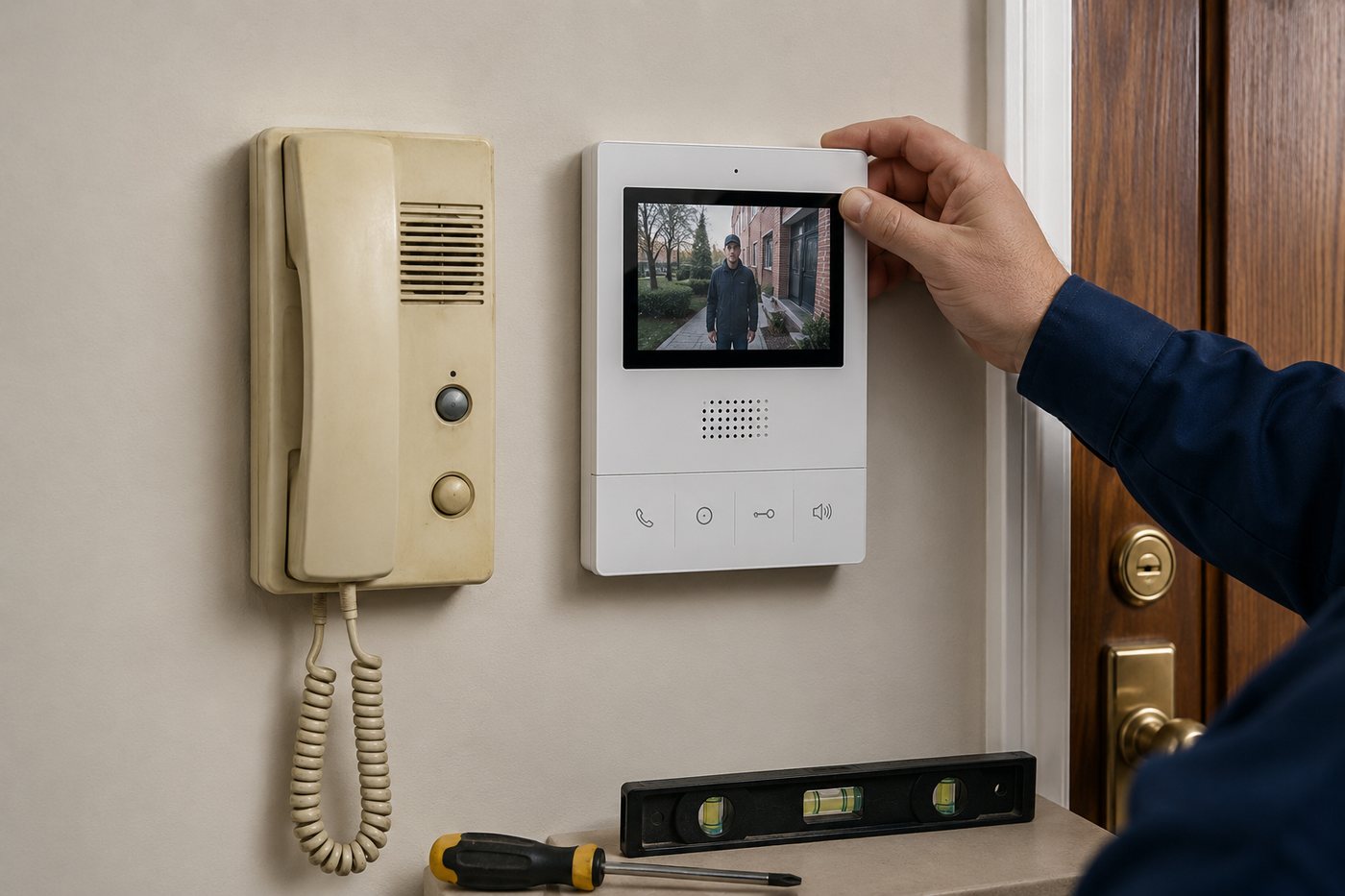
The newer renovations’ door stations and monitors: blank screens, frozen cameras, releases that ignore the button. Serviced across the major brands with the riser reused wherever it tests clean.
Call-a-phone systems whose directories drift out of date every leasing season. Reprogramming, tenant updates and call rerouting — software problems solved without hardware invoices.
The part that actually opens the door, and the part most often misdiagnosed as “the intercom is broken.” Replaced and matched to the door, front entrance or rear service door alike.
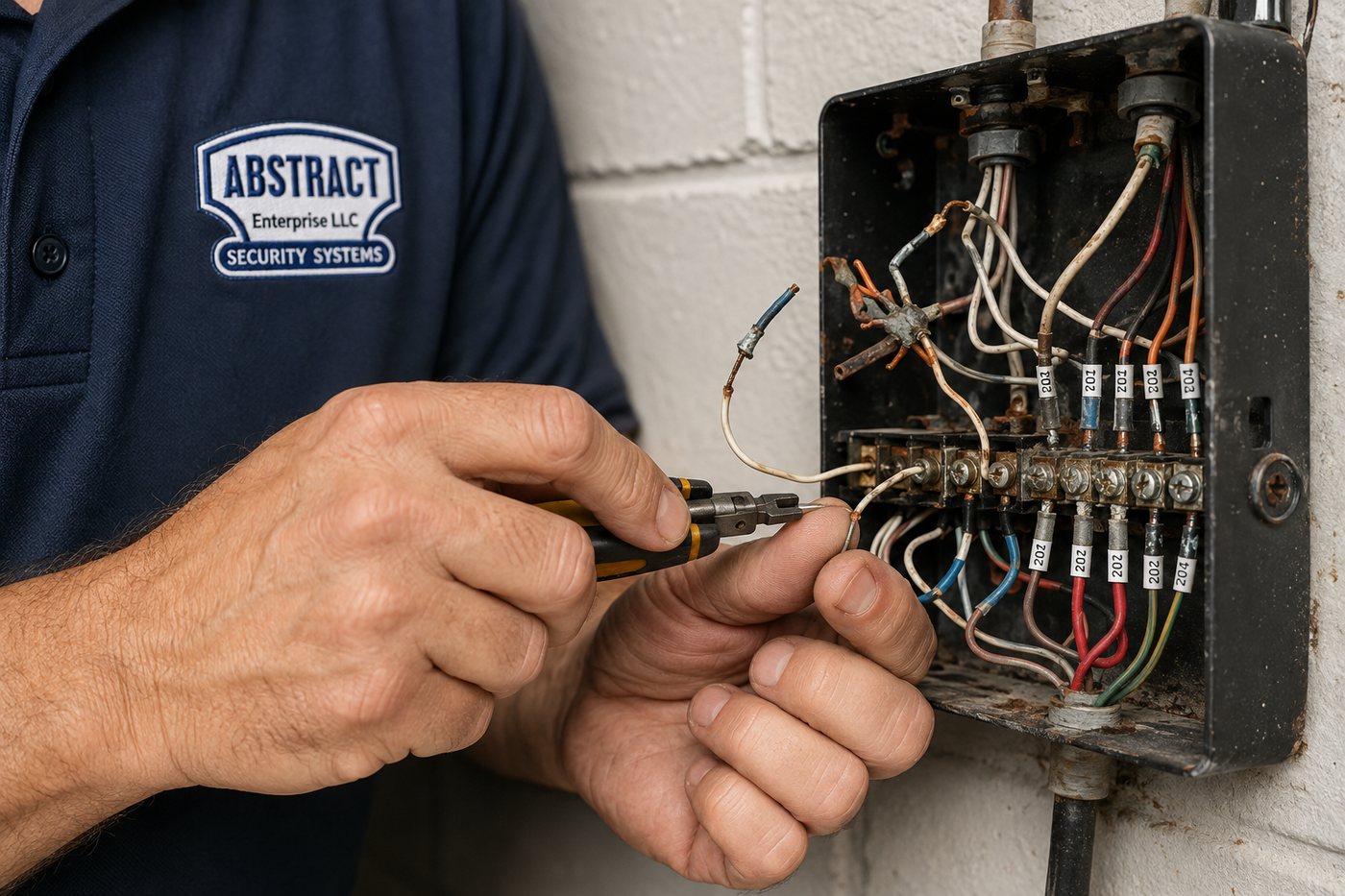
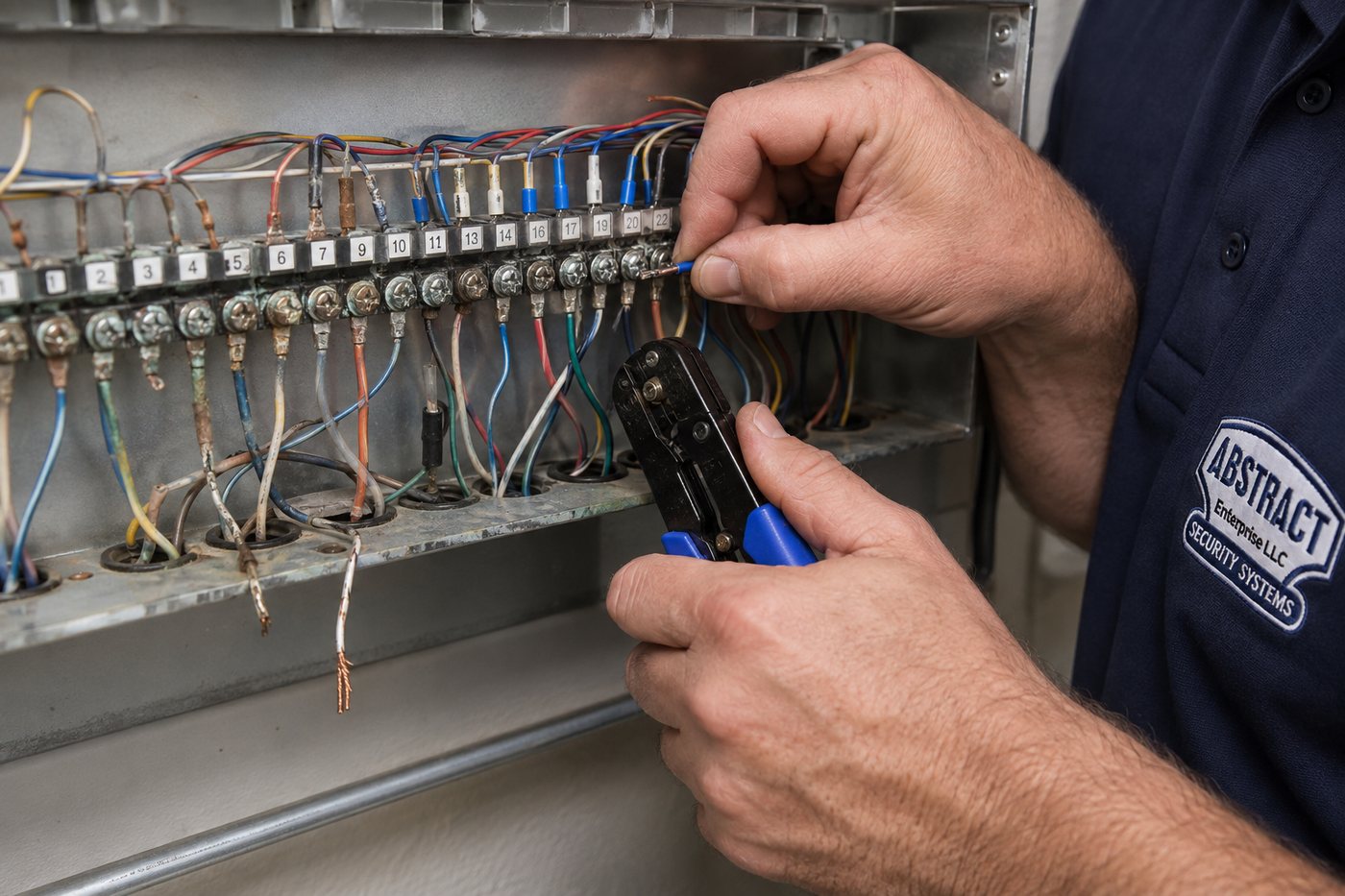
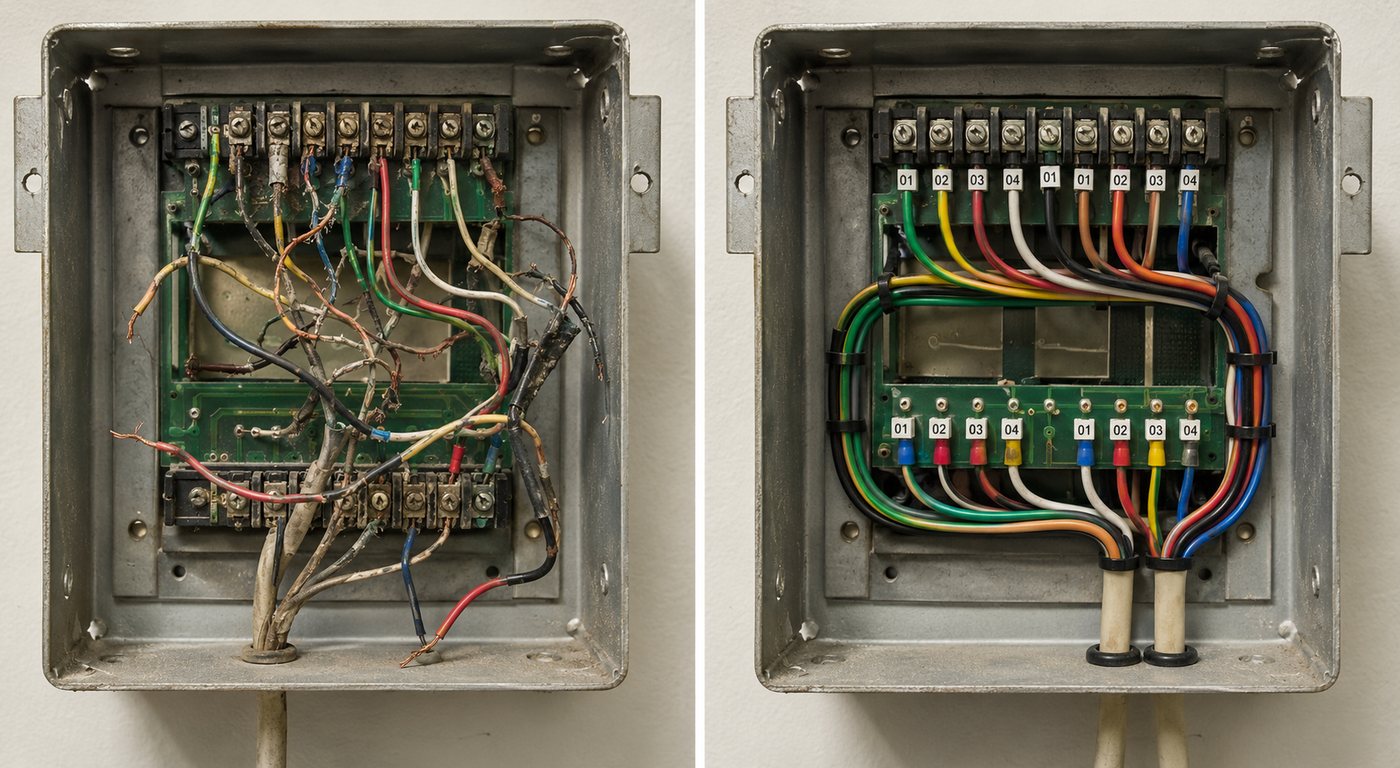
Tracing broken pairs through old chases, swapping tired transformers and shared amplifiers, cleaning up the splice archaeology of past repairs — the fixes that revive several apartments at once.
Search it however the moment demands — door buzzer repair near me from a stoop on Hughes, a licensed door buzzer repair company for a management office, an emergency door buzzer repair before the Saturday rush — the local door buzzer repair answer on these blocks is the same door buzzer repair service, the same door buzzer repair technician, and a free door buzzer repair estimate by phone before anyone rolls.
SYMPTOMS
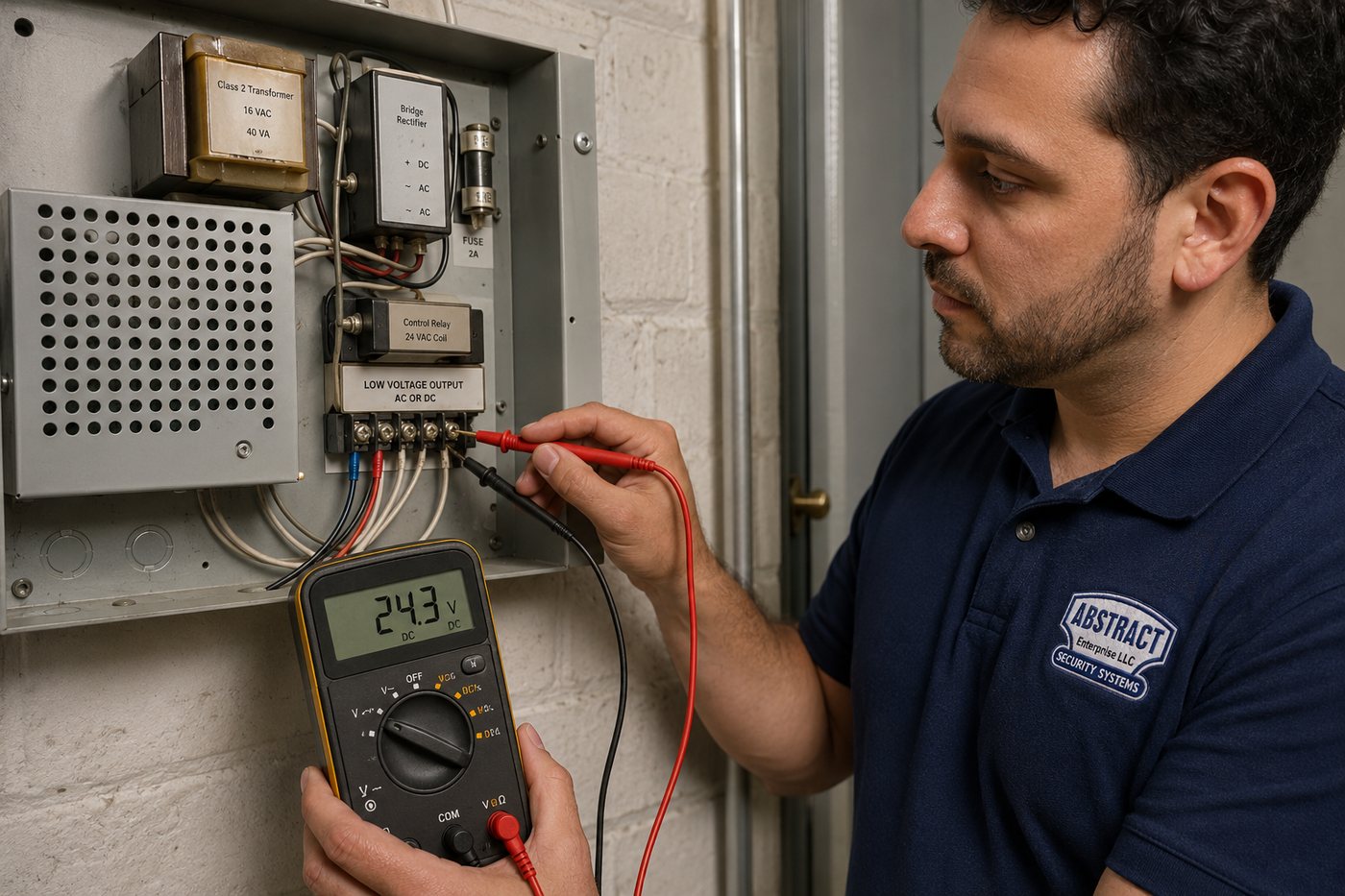
When no apartment rings and no button lights, suspect the one thing every line shares: power. Cellar transformers in buildings this age fail suddenly and completely — and swap out just as fast.
Working audio with a dead release means the fault lives at the door: a worn strike, a broken release conductor, a button contact gone flat. A door-frame repair, not an intercom replacement.
Scattered dead lines with the rest healthy is riser arithmetic — a damaged pair or failed stations on those runs. We trace, splice or swap the affected lines and leave the working ones alone.
A jammed button, a shorted conductor or a strike stuck open — and until it’s isolated, the front door isn’t really locked. Treated as a same-day security call, not a nuisance ticket.
The Belmont symptom sheet, verbatim: door buzzer not working · apartment buzzer not working · building buzzer not working · apartment buzzer stopped working · buzzer works but door won’t open · door buzzer rings but does not unlock · door buzzer rings but electric strike will not unlock · electric door lock not releasing · buzzing sound but door won’t open · door release button not working · buzzer button not working · door buzzer has no sound · intermittent door buzzer problem · door buzzer wiring problem · door buzzer power supply problem · broken door buzzer system. Door buzzer troubleshooting is the visit’s first act — and door buzzer and electric strike troubleshooting together, because on these blocks they fail as a pair.
ACROSS BELMONT
The coverage map is the neighborhood itself. Arthur Avenue’s spine — the Retail Market block, the restaurants and the apartments over every storefront — and East 187th Street’s parallel run of bakeries and butchers with walkups above. The tenement streets that connect them: Hughes, Hoffman, Belmont, Cambreleng and Prospect Avenues, Crescent Avenue’s angled blocks, and the stretch up to East Fordham Road where the corridor traffic spills over. Southern Boulevard along the Zoo and Botanical Garden edge, where visitor parking pressure meets residential doors. The blocks around Our Lady of Mount Carmel and Ciccarone Park, where family-owned buildings have run the same intercom since the seventies and want it kept alive, not replaced. If the building is in Belmont — or on a border block that argues about it — it books through this page, usually for the same day.
BUILDING TYPES
Walkup tenements — the neighborhood’s backbone — get careful work on fragile plaster and original risers, with parts matched to systems that predate the paperwork. Food-corridor mixed-use buildings get the residential entrance protected from the business’s wear: separated releases, commercial-grade hardware on the service door, grease-resistant treatment where the kitchen chase runs hot. Small family-owned buildings get right-sized answers — a four-button panel repaired or replaced in kind, never a telephone-entry system sold to a building with one landing. Renovated and combined buildings get their spliced-together systems untangled, so the 2005 video half and the 1965 audio half stop fighting. Student-heavy rentals near the Fordham edge get seasonal directory and code maintenance built around the academic calendar. And owners with a few buildings on the same blocks get one service history, kept straight per address.
And the businesses themselves call here too: a door buzzer specialist for the offices tucked over the markets, a multifamily building door buzzer technician for the floors above, commercial-grade door buzzer repair service for the storefronts, the parish school doors and the delivery entrances that take the corridor’s weight.
OWNERS AND TENANTS
The working rule in New York multiple dwellings: the locking entrance and the buzzer or intercom that controls it are the owner’s systems to keep running, and a dead one is the sort of condition tenants can and do report to 311. In a neighborhood where many landlords live in the building or around the corner, that rarely becomes a fight — it becomes a phone call, and the repair usually costs less than a week of tenants propping the front door. We take that call from owners, managers and supers directly, and from tenants who bring the owner’s okay; when a tenant needs the estimate sent upstairs, we send it. Billing stays simple at $195/hr with a three-hour minimum, findings in plain language, receipts a family bookkeeper or a management office can file identically. What’s written here about obligations is general information, not legal advice — current rules sit with the city, and real disputes belong with HPD or a lawyer.
TERMINOLOGY
Thirteen words that decide what a repair visit finds — and what a quote should say. One clarification first: entry buzzer, apartment entry system, building entrance system, visitor entry system, door release system, building access system — on a Belmont tenement these are all the same front vestibule buzzer or lobby entrance buzzer by different names, and the anatomy underneath never changes: door release button, electric strike, buzzer transformer, buzzer power supply, the entry system wiring between them, and a remote door release on the platforms that added phones.
Panel. The button unit at the stoop. In Belmont it is frequently original to the building — and frequently still worth saving under the paint.
Strike. The electrically released latch in the frame. Worn strikes explain more “broken intercom” calls on these blocks than every other part combined.
Transformer. The cellar-mounted voltage supply. Decades of quiet service, then a sudden total blackout of the whole system — and a fast, cheap swap.
Riser. The vertical wiring spine to the apartments. Belmont risers thread old chases past kitchen exhausts and past renovations, which is where the breaks hide.
Line. One apartment’s run off the riser. Lines fail one at a time; systems get blamed all at once. Diagnosis keeps those straight.
Station / handset. The wall unit inside the apartment. Individually replaceable on the common platforms — a fifteen-minute fix framed too often as a building project.
Amplifier. The shared audio unit behind many older systems. Hum, crackle or one-way talk in every apartment at once points here first.
Release circuit. The path from button to strike. When the buzz sounds but nothing unlocks, this circuit — not the audio system — is where the money should go.
Phone-entry board. The directory brain on call-a-phone systems. Most of its failures are programming and stale numbers — solved without a parts invoice.
Door station. The camera-and-speaker unit on video systems. Blank monitors upstairs are tested here before anything gets replaced.
Splice archaeology. Our name for the layered handiwork of fifty years of past repairs. Untangling it is half the craft of servicing tenement systems.
In kind. Replacing like with like — a four-button panel with a four-button panel. The honest option Belmont’s small buildings deserve to hear priced.
HOW IT WORKS
YOUR QUESTIONS ANSWERED
Most of the neighborhood’s repairs resolve inside the service minimum — $195/hr, three hours, $585 — because most of them are single components: a strike, a transformer, a button bank, one station, one traced break. Parts bill separately at street-honest prices. When the finding is bigger — a compromised riser, a shared amplifier serving the whole building, a panel past saving — the work stops and a written number appears before anything continues. What never happens is a whole-system quote for a one-part problem.
Fast — the shop is at 460 E Fordham Rd, a few minutes from any Belmont address. Weekday calls before early afternoon usually land a same-day slot; a building fully locked out or a door stuck unlocked goes to the front of the line; evening calls take the first slot next morning. You get an arrival window you can plan a super’s day around, not an all-day maybe.
Almost certainly, and that age is often an argument for repair rather than against it. The mid-century audio platforms in Belmont’s tenements were built to be serviced: discrete components, standard voltages, parts and compatible replacements still available. We keep systems of exactly this vintage alive across these blocks every week. The genuine end of the road — a corroded board with no compatible parts — exists, but it is the exception, and when we hit it you see it with the panel open.
Very possibly. On the food corridor, mixed-use buildings often share hardware between the business and the apartments, and the residential-grade strike ends up cycling on commercial traffic — deliveries, staff, trash runs — until it quits. The fix is separation: independent release circuits, a commercial-duty strike on the service door, and the apartment system left to carry only apartment traffic. After that, the two doors stop wearing out on each other’s schedule.
Small job. A single silent station with a healthy building points at that line or that unit: a broken pair on its riser run or a failed handset. We test the line, then swap or splice accordingly — compatible stations exist for the common Belmont platforms, and nothing about the fix touches the other apartments. If you are the tenant in 3R, loop in the owner first; the system is the building’s even when the dead handset is on your wall.
As a general matter in NYC multiple dwellings, yes — the secured entrance and the system that operates it are the owner’s responsibility, and non-working ones are reportable to 311. In this neighborhood the more common reality is a resident owner who wants it fixed yesterday, which suits us fine. We bill whoever authorizes the work, send estimates to owners on a tenant’s behalf, and put the finding in writing either way. General information, not legal advice — current rules and enforcement live with the city.
There is a rhythm fix, if not a permanent one: student and seasonal turnover near the Fordham edge means phone-entry directories drift stale on a schedule. We reprogram entries, point calls at current numbers, purge the ghosts of tenants past, and set a management entry that always answers. Owners with heavy turnover put us on a standing early-summer visit and the “broken buzzer” calls that were really directory calls disappear. Bring the current tenant list; it is one appointment.
Usually no — usually the transformer or a surge-clipped board took the hit for everything else, and both are quick, contained fixes. All-dark-at-once is actually the friendliest failure a building can have, because it points at the one shared component rather than forty individual ones. We check the power side first on every dead-building call and carry replacement transformers as a matter of course. It is a repair visit, not an insurance event.
Yes — that is a modernization rather than a repair, and it is often lighter than owners expect. Where the building’s riser tests clean, a directory or video door station can replace the street panel and route calls to tenants’ phones, reusing the existing wiring instead of opening walls. The quote states which runs survive and which get replaced. We only steer a building here after the repair math has honestly lost — and in Belmont, it often hasn’t.
Bad enough to move the repair to today. A propped tenement door erases every other security decision the building ever made — packages, mailboxes, cellars and stairwells all inherit the street. That is why stuck-open strikes, dead release circuits and fully dead panels get same-day priority here: the cheapest security upgrade in Belmont is a front door that locks behind people again. Call it in as an emergency and we treat it like one.
No — and the pricing structure is built so we have no reason to. Repair work bills at the published rate whether we fix a fifty-dollar part or install a new panel, so the honest answer costs us nothing. When replacement genuinely wins — unsupported platform, corroded board, riser cheaper to rerun than to chase — you see the failed component, get both paths priced in writing, and make the call yourself. Products we supply carry a three-year warranty either way.
PEOPLE ALSO ASK
Buzzer and intercom work is low-voltage electrical work, handled by licensed contractors rather than locksmiths. Abstract Enterprises covers Belmont from its shop at 460 E Fordham Rd under NYS License #12000287431 — same-day on most weekday calls, $195/hr with a three-hour minimum, license verifiable with the Department of State.
Single-component fixes — the strike, the transformer, a button bank, one station, one traced wiring break — typically land at the $585 service minimum plus parts. Shared-component work like amplifiers runs higher on a written quote, and full panel modernizations are their own priced project. The building’s age matters less to the price than which component failed.
Moisture and surges find the weak points: a street panel whose seal gave up years ago, a cellar transformer at the end of its life, a splice in a damp chase. Storm failures usually strike the shared power side, which makes them contained, diagnosable and quick to fix — not evidence the whole system drowned.
Yes — a non-working entrance security system in a multiple dwelling is reportable to 311, and it is the kind of condition HPD cites because the locking entrance is a required service. Details and enforcement change over time, so treat that as general information; for owners, the practical version is that the repair is cheaper than the complaint.
Yes — that is the normal repair, not the exception. Each apartment rides its own line off the riser, so a break or a failed station on one run is traced and fixed on that run alone. Whole-building rewiring only enters the conversation when the shared riser itself has failed, and that finding gets shown, not asserted.
The good ones do, because storefront-below buildings fail in their own way: shared doors, shared releases, residential hardware worn out on commercial traffic. The standard fix separates the circuits and puts commercial-duty hardware on the business side — routine work on Belmont’s food blocks.
Listen at the door: if apartments still ring and voices carry but the latch never gives, the release side — strike, wiring or button contact — failed while the intercom stayed healthy. If nothing sounds anywhere, look upstream at power. That one distinction correctly sorts most calls before a technician arrives.
The legacy wired audio platforms common in prewar stock are broadly repairable with available and compatible parts, and modern brands — Aiphone, ButterflyMX, 2N, Akuvox, Comelit, DoorBird among them — are serviced at the component level. Replacement becomes the answer when a specific board is corroded past saving or parts truly no longer exist, which is rarer than its reputation.
Dead panel, stuck strike, front door that won’t latch — on the food blocks a broken entrance is a today problem, and it gets treated like one. Minutes from the shop, parts on the truck, $195/hr with a three-hour minimum.
PRICING
One rate, printed everywhere we publish: $195/hr with a three-hour minimum ($585). In Belmont that minimum absorbs the diagnosis plus the overwhelming majority of real-world fixes — strike swaps, transformer replacements, button and contact service, single stations, traced splice repairs, directory reprogramming — with parts billed separately and honestly. No trip charges layered on top, no mystery line items, no rate that changes because the building is old.
Bigger findings get written before they get billed: shared amplifiers and boards typically run mid hundreds to low four figures installed; riser tracing across floors is priced by what the chase actually demands; and when a panel has honestly reached the end, in-kind replacements on small buildings start in the low four figures while directory and video modernizations scale with unit count — each quote naming which existing wires the new system rides on. Three-year warranty on products we supply, no monthly fees, no contracts, and the repair path always priced first.
Translating that into the phrases people actually price with: the door buzzer repair cost here is the rate above — door buzzer technician rates do not float, the door buzzer repair price is printed before the visit, and apartment buzzer repair cost questions get answered on the phone with a free door buzzer repair estimate. The cost to fix apartment buzzer faults almost always beats the cost to replace door buzzer hardware, which is why old door buzzer system repair is the house default and door buzzer replacement or a door buzzer system upgrade only enters when the platform is finished — apartment entry buzzer replacement quoted in kind, in writing. Commercial buzzer repair cost and emergency door buzzer repair cost ride the same published number. Bigger scopes — repair building buzzer system faults floor to floor, repair old apartment building buzzer system platforms whole — get project pricing on paper. Does an electrician repair door buzzers? A licensed low-voltage one does; who is responsible for apartment buzzer repair sits with the owner, as covered above.
LOCAL PROBLEMS
The kitchen-chase break. Risers that pass the exhaust runs of the food businesses below cook slowly for decades until a pair lets go — the anatomy behind scattered dead lines on the corridor blocks. Traced, spliced, done.
The shared service door. One release wired to serve both the business and the apartments means the residential hardware retires on commercial mileage. Circuit separation and a commercial-duty strike end the cycle for good.
The leasing-season directory. Turnover on the student-adjacent blocks leaves phone-entry boards calling people who moved out in May. An annual reprogramming visit converts a hardware complaint into a ten-minute software fix.
The weekend visitor lean. Retail Market Saturdays put a thousand extra hands near residential panels, and buttons pay for it. Contact service and button-bank replacement keep the panel original and working.
The propped tenement door. When the buzzer dies, someone wedges the door — and the building’s whole security posture goes with it. Dead panels and stuck strikes get same-day priority here for exactly that reason.
REVIEWS
The record is public: a 4.7-star average across 201 Google reviews between our two locations, with the Bronx profile anchored at 460 E Fordham Rd — close enough to Belmont that the reviews include its blocks. Read them unfiltered on Google Maps, and see the day-to-day open-panel work on Instagram and YouTube. Neighborhood work travels by word of mouth here; the reviews just write it down.
FIELD NOTES
Belmont teaches patience with old systems and suspicion of quick replacement quotes. A Hughes Avenue owner shows us a competitor’s number for a full new intercom; the actual fault is a transformer older than the owner, and the building is buzzing again before lunch. Over a 187th Street bakery, apartments 2 and 4 have been dead for months — the riser pair let go where it passes the oven exhaust chase, a splice reachable through one access panel. On Arthur Avenue a strike has been cycling on the restaurant’s delivery traffic for years; we separate the circuits and both doors stop dying. The panels here are older than most companies that quote on them, and that is precisely why they can be fixed: they were built for it. Respect the building, test in order, and the neighborhood’s systems keep doing what they have done since the paint was fresh. — Anwar Timothy, NYS Lic. #12000287431
REPAIR VS REPLACE
The neighborhood default, and usually the right one. Tenement-era platforms are serviceable by design, parts remain available, and component repairs at the published rate beat replacement economics by multiples. The honest exceptions — corroded boards, orphaned parts, risers cheaper to rerun than to chase — are real but rare, and they get demonstrated at the open panel, never just asserted on a quote.
Right when the platform is finished or the building wants what the old system cannot give — phone-app release, video, a directory that survives turnover. The honest version reuses every riser that tests clean and says so in writing; the dishonest version rewires a building that needed one strike. In Belmont, modernization earns its price most often on renovated buildings and heavy-turnover rentals — and we will say when yours isn’t one of them.
Real, but narrow: relabeling a directory, tightening a loose station, swapping a battery chime in a building you own. It closes where the building’s wiring, the door hardware and the neighbors’ apartments begin — a mis-wired release can leave a tenement entrance unlocked for everyone above it, and occupied multiple dwellings are licensed territory for good reason. The diagnosis visit is the cheap way to find out which side of the line your problem lives on.
RELATED SERVICES
GET IN TOUCH
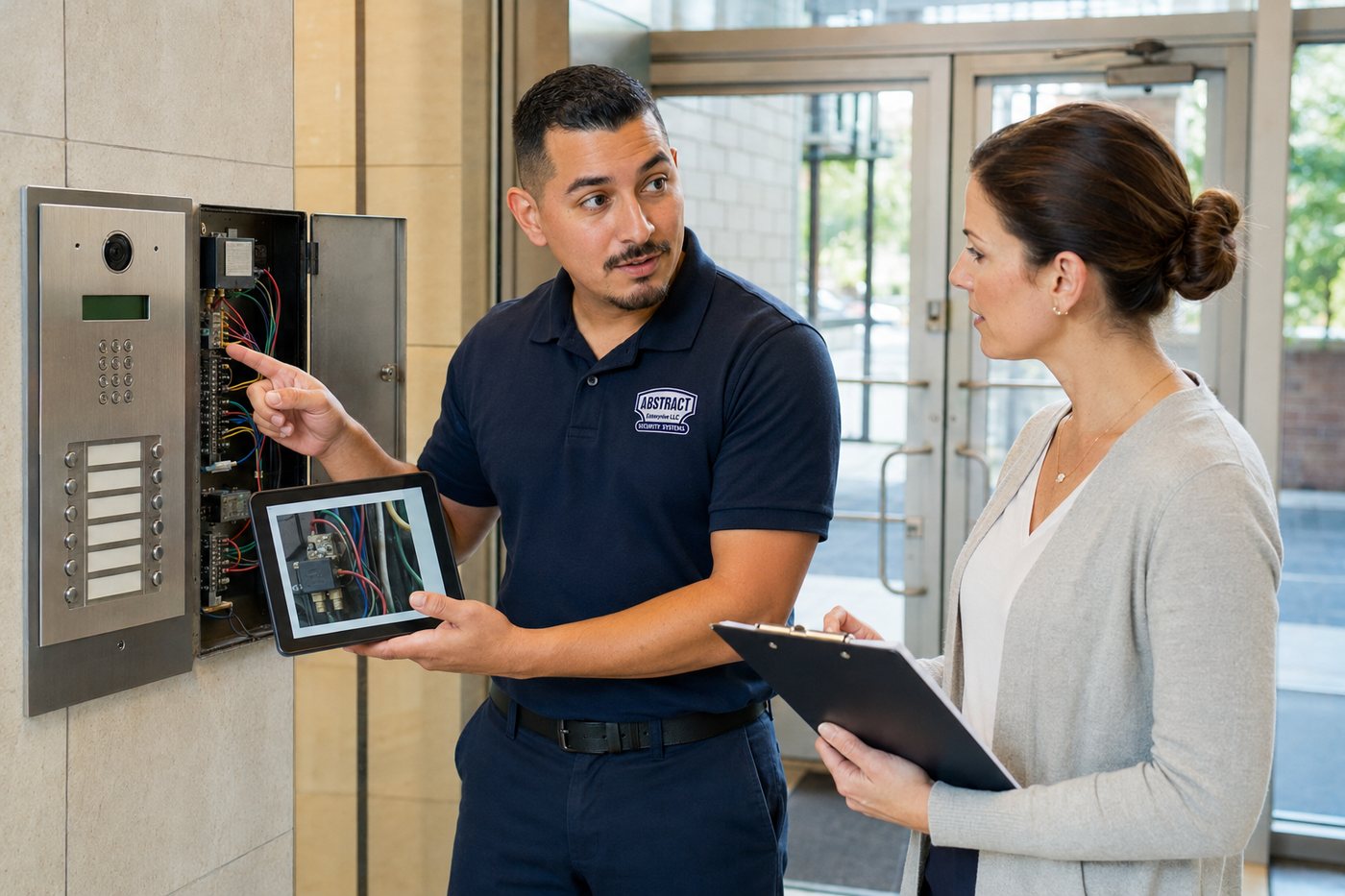
Call with the address and what the system is doing, or use the form — either way the visit comes with an arrival window a super can plan around, component-level testing, parts for the classic failures already on the truck, and a written finding for the folder. The shop is minutes away on Fordham Road, which is why “same-day” on these blocks is a schedule, not a slogan.
We keep Belmont’s original entry systems alive — and we answer the phone next time, too.
Reviewed and updated August 15, 2026.
FAQ
On most weekday calls, yes. The shop sits minutes away at 460 E Fordham Rd, so a morning or early-afternoon call with the address and symptom usually lands a same-day slot; buildings fully locked out or standing open jump the queue; later calls take the first window next morning. Every booking comes with an actual arrival window.
$195/hr with a three-hour minimum ($585), parts separate — and that minimum covers the diagnosis plus most single-component fixes: strikes, transformers, buttons, one station, one traced break, directory reprogramming. Shared components and modernizations get written quotes first, and full panel work is priced as its own project after a site look.
Yes — keeping the tenement-era platforms alive is most of what this page is about. Those systems were built serviceable: standard voltages, discrete parts, compatible replacements still made. We repair them in place on the building’s own wiring, and we only call one finished when a specific component is demonstrably past saving with no compatible part — shown to you at the open panel.
Almost always the small version: working audio with a dead release points at the strike, its wiring at the frame, or a flattened button contact — door-side repairs that typically finish inside the service minimum plus a modestly priced part. The larger version, a release conductor failed inside a wall, is traced before anyone discusses it — and even then it is a wiring repair, not an intercom replacement.
Yes. Stations fail and get replaced one at a time; compatible units exist for the platforms common in Belmont walkups, and the swap leaves every other apartment untouched. Renters should bring the owner’s approval — the entry system is a building system even at your wall — and we will send the owner the estimate directly when that is easier.
Generally yes: in New York multiple dwellings the locking entrance and its buzzer or intercom are building services the owner maintains, and dead ones are reportable to 311. We take authorization from owners, managers, supers, or tenants carrying the owner’s okay, and the paperwork works the same for a family owner as for a management office. This is general information, not legal advice; specifics belong with the city or counsel.
It changes the diagnosis more than the repair. Storefront-below buildings on the food corridor often share doors and releases between the business and the apartments, so residential hardware fails on commercial mileage. We repair the failure, then fix the cause: separated circuits, commercial-duty hardware on the service side, apartment system carrying only apartment traffic.
Software problem, and a quick one: directory boards hold programming, and turnover makes it stale. We update entries, point calls at current numbers, remove departed tenants and add a management fallback — one visit with the current tenant list in hand. Heavy-turnover buildings near the campus edge put this on an annual early-summer schedule and stop mistaking it for a broken system.
Probably not. All-dead-at-once points to the shared power side — a transformer at end of life or a surge-hit board — which is the most contained failure a system can have. We test power first on every dead-building call, carry transformers on the truck, and reprogram boards that lost their memory. Most storm calls end as one-visit repairs.
Usually, and the existing repair work protects that option: where the building’s riser tests clean, modern door stations and directory systems can ride it, turning a future upgrade into a panel-and-stations job instead of a rewire. Upgrade quotes here always state which runs survive. Repair-first is still the rule — modernization is offered when the math wins, not as the default answer.
Search Abstract Enterprises Security Systems with the New York Department of State — License #12000287431 — and read the 4.7-star, 201-review record on Google Maps, where the Bronx profile shows the shop at 460 E Fordham Rd, minutes from Belmont. Both checks take five minutes and any contractor working entry wiring should pass them.
Yes, and they go first. A tenement door that will not latch — jammed strike, shorted release, failed lockset — is an open building, and everything else on the schedule moves. We isolate the fault, get the door locking behind people the same visit wherever hardware allows, and complete the underlying repair on the spot or with a dated follow-up in writing.
ALL AREAS SERVED
Belmont’s buzzer work runs through the Bronx door buzzer repair page under the citywide NYC door buzzer repair hub. Neighboring blocks with their own pages: Fordham across Fordham Road, Tremont and East Tremont to the south, West Farms past the Zoo edge, and Bathgate to the west — one shop, one rate, one truck already in the area. Home.
Reviewed and updated August 15, 2026 by Anwar Timothy of Abstract Enterprises Security Systems, NYS Low-Voltage Electrical Contractor License #12000287431.
Changelog — Aug 2026: page rebuilt to the current permanent blueprint with fully original Belmont-specific content — tenement and food-corridor failure patterns, correct Bronx phone routing, modern schema stack — replacing duplicated template copy and placeholder numbers.