Door Buzzer & Intercom Service in Mount Hope, Bronx — Every System Type
Looking for door buzzer repair or intercom installation in Mount Hope? Looking for door buzzer repair or intercom installation in Mount Hope (the central-west Bronx neighborhood that is one of the THREE HILLS OF TREMONT, named in 1856 by Postmaster Hiram Tarbox along with Fairmount and Mount Eden)? Our technicians service every part of the Mount Hope footprint: the 1900-1940 five- and six-story Art Deco / neo-Renaissance / Tudor Revival apartment houses along Tremont Avenue, Burnside Avenue, and Mount Hope Place; the Morris Avenue Historic District barrel-fronted brick row houses (the August Jacob / John Hauser 1906-1910 uniformly planned streetscape extending from Morris Heights); the low-rise brownstone co-ops along Grand Concourse; the post-1980s rehabilitated tenement conversions; the small commercial frontage along East Tremont Avenue (the commercial spine, with Valencia Bakery established 1948 famous for guava paste-filled pastries, Liberato Restaurant for Latin American, Raices del Valle for Dominican mofongo, Jimbo’s Hamburger Palace, CTown Supermarket); the Jerome Avenue corridor (Las Sirenas burritos and tacos, the 4 train elevated structure at the Burnside Avenue and 176th Street stations); the Grand Concourse small commercial corridor (Food Universe Marketplace, the BronxCare Hospital Center along Grand Concourse just south of I-95); the parks system (Cleopatra Playground, Mount Hope Garden, JENNIE JEROME PLAYGROUND named for Winston Churchill’s mother, the Mount Hope Playground, and RICHMAN PARK aka “ECHO PARK” with its well-defined echo between two rock masses); the schools (PS 28 Mount Hope at 1861 Anthony Avenue, I.S. 117 Joseph H. Wade at 1865 Morris Avenue, St. Margaret Mary School at 121 East 177th Street); and the residential blocks served by the 4 train (IRT Jerome Avenue Line) at Burnside Avenue and 176th Street stations, the B/D trains (IND Concourse Line) at the Tremont Avenue station, the Metro-North Hudson Line accessible from East Tremont Avenue, the Bx1 / Bx2 / Bx32 / Bx40 / Bx42 buses, and the Cross Bronx Expressway / I-95 connections. We provide door buzzer installation, door buzzer service, door buzzer system installation, door buzzer system repair, plus licensed intercom installer work and insured buzzer installation company documentation. Same day door buzzer repair and emergency intercom repair across all of Mount Hope, Bronx — ZIP 10453. Best door buzzer repair service. Affordable intercom installation. Door buzzer installer.
Why Mount Hope Buzzer Repair Is Different
Mount Hope is unlike any other Bronx neighborhood we serve because of three combining factors that don’t coexist anywhere else in the city. First: the etymological depth is UNIQUE among Bronx rebuilds. Mount Hope is ONE OF THE THREE HILLS OF TREMONT — the historic ridge that, together with FAIRMOUNT and MOUNT EDEN, gave its name to the broader Tremont area when Postmaster HIRAM TARBOX in 1856 invented the name TREMONT (from “tre” (three) plus “mont” (hill, with a bit of Francophilic flair) honoring the three highest points in the area. Tarbox was a true civic-pioneer renaissance man who also established the Bronx Free Library, the local fire department, and the post office, and uniquely held a patent for an “excrement apron.” UNIQUE among rebuilds. Second: BURNSIDE AVENUE, the Mount Hope northern boundary, is named for Civil War General AMBROSE E. BURNSIDE (1824-1881), whose unique extensive facial hair was the inspiration for the term “SIDEBURNS.” This is one of the most distinctive etymological footnotes in any New York neighborhood. Third: the architectural cohesion is unmatched. Between 1900 and 1940, Mount Hope matured into a quintessential Bronx residential district with five- and six-story apartment houses along Tremont Avenue, Burnside Avenue, and Mount Hope Place rendered in ART DECO, NEO-RENAISSANCE, and TUDOR REVIVAL styles, with ornate lobbies, courtyards, and stoops reflecting the pride of working-and-middle-class Jewish, Irish, and Italian families. The historic MORRIS AVENUE HISTORIC DISTRICT (the August Jacob / John Hauser 1906-1910 uniformly planned barrel-fronted brick row house streetscape) extends here from Morris Heights. Add the dramatic topography (with HIGH STEEP STEPS all over the neighborhood navigating elevation changes between the Cross Bronx Expressway corridor and the Mount Hope ridge), the JENNIE JEROME PLAYGROUND (named for Winston Churchill’s mother — daughter of Leonard Jerome of Jerome Park fame), the “ECHO PARK” nickname for Richman Park (with its well-defined echo between the two rock masses that dominate the park), VALENCIA BAKERY (the 1948 institution famous for guava paste-filled pastries), the predominantly DOMINICAN demographics (49.3%), the BronxCare Hospital Center along Grand Concourse, and Mount Hope produces buzzer-repair calls dominated by Tremont-three-hills-etymology + sideburns-narrative + Hiram-Tarbox-civic-pioneer + Art-Deco-architectural-cohesion + Morris-Avenue-Historic-District + dramatic-stair-street-topography + Dominican-cultural-corridor layered complexity unlike anywhere else.
What Makes Mount Hope Repair Calls Distinctive
The 1900-1940 five- and six-story Art Deco / neo-Renaissance / Tudor Revival apartment houses along Tremont Avenue, Burnside Avenue, and Mount Hope Place dominate much of the daily service workflow. These buildings have ornate lobbies, courtyards, and stoops with original lobby panel hardware (often Lee Dan, M&S, or Nutone) in highly visible architectural settings — requiring careful preservation-conscious work to avoid damaging original architectural detailing. The Morris Avenue Historic District (the August Jacob / John Hauser 1906-1910 uniformly planned barrel-fronted brick row house streetscape extending here from Morris Heights) requires preservation-conscious wiring routes that don’t damage the original architectural detailing. The dramatic topography (with HIGH STEEP STEPS all over the neighborhood navigating elevation changes from the Cross Bronx Expressway corridor up to the Mount Hope ridge) requires technicians to physically navigate elevation changes when carrying parts and equipment between buildings. The Cross Bronx Expressway / I-95 corridor on the south generates continuous highway-corridor noise, vibration, and salt-spray drift on lobby panels along the southern blocks. The 4 train elevated structure on Jerome Avenue (with the Burnside Avenue and 176th Street stations) on the west, the Metro-North Hudson Line on the east, and the B/D trains under the Grand Concourse all generate continuous transit-corridor stress. The BronxCare Hospital Center (along Grand Concourse just south of I-95) requires institutional-grade access control coordination. Schools (PS 28 Mount Hope at 1861 Anthony Avenue, I.S. 117 Joseph H. Wade at 1865 Morris Avenue, St. Margaret Mary School at 121 East 177th Street) require institutional access control with NYC DOE/parochial coordination. The predominantly Dominican community (49.3%) plus growing Sub-Saharan African (12.9%) and Mexican (7.2%) populations mean commercial-corridor work for East Tremont Avenue and Grand Concourse storefronts requires Spanish-language coordination capabilities. The annual Technology Carnival (September) and LGBTQ Pride Festival & Health Fair (June) generate seasonal commercial-corridor pedestrian volumes.
Mount Hope Building Eras We Service
Five distinct construction eras require five distinct repair approaches in Mount Hope. 1870s-1890s Mount Hope Heights freestanding villas and frame houses (the surviving suburban-refuge stock): the houses built when the area was advertised as a quiet suburban refuge for middle-class professionals. Selective survivors. Original wired front-door bell systems with chime modules. 1906-1910 Morris Avenue Historic District barrel-fronted brick row houses: the August Jacob (speculative builder) / John Hauser (architect) uniformly planned streetscape extending here from Morris Heights. Distinctive barrel-fronted brick architectural detailing. Preservation-conscious wiring routes required. 1900-1940 Art Deco / neo-Renaissance / Tudor Revival apartment houses (the dominant interwar stock): the five- and six-story apartment houses along Tremont Avenue, Burnside Avenue, and Mount Hope Place. Ornate lobbies, courtyards, stoops. Original Lee Dan, M&S, or Nutone hardware in highly visible architectural settings. Working-and-middle-class Jewish, Irish, Italian heritage during the interwar years. Low-rise brownstone co-ops along Grand Concourse (1920s-1940s): the lower-rise co-op stock fronting the Grand Concourse boulevard. Often retrofitted with selective late-20th-century intercom upgrades. Post-1980s rehabilitated tenement conversions and post-2010 modern infill: rehabilitated tenement-style buildings designated as low-income housing in the late 1970s-1990s, plus modern affordable and mixed-income development. Modern Comelit, Aiphone, ButterflyMX video intercom systems with smartphone integration. Our technicians know each era and bring the right parts on every truck.
Systems We Install & Repair in Mount Hope
Buzzer & Intercom Systems
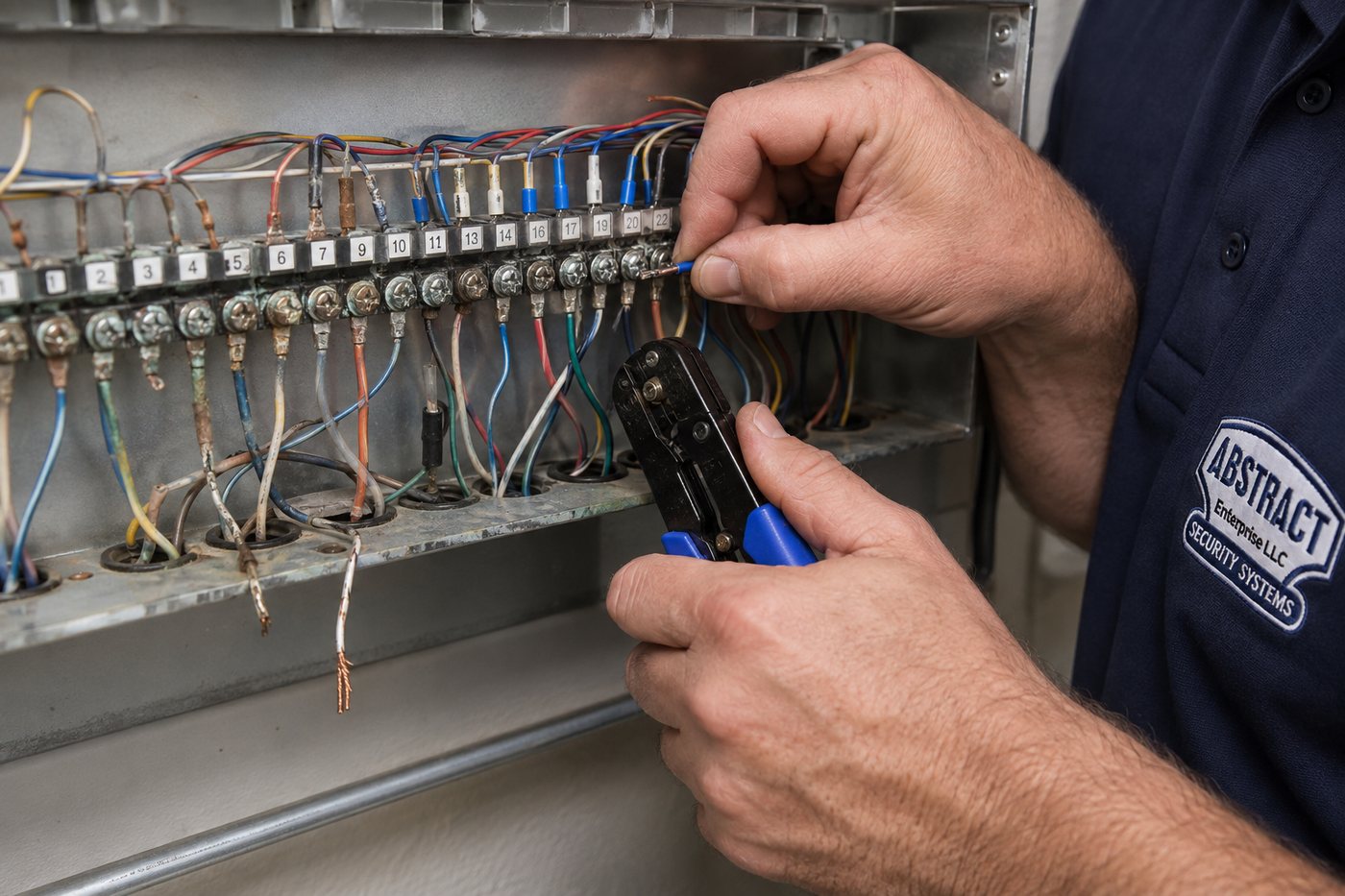
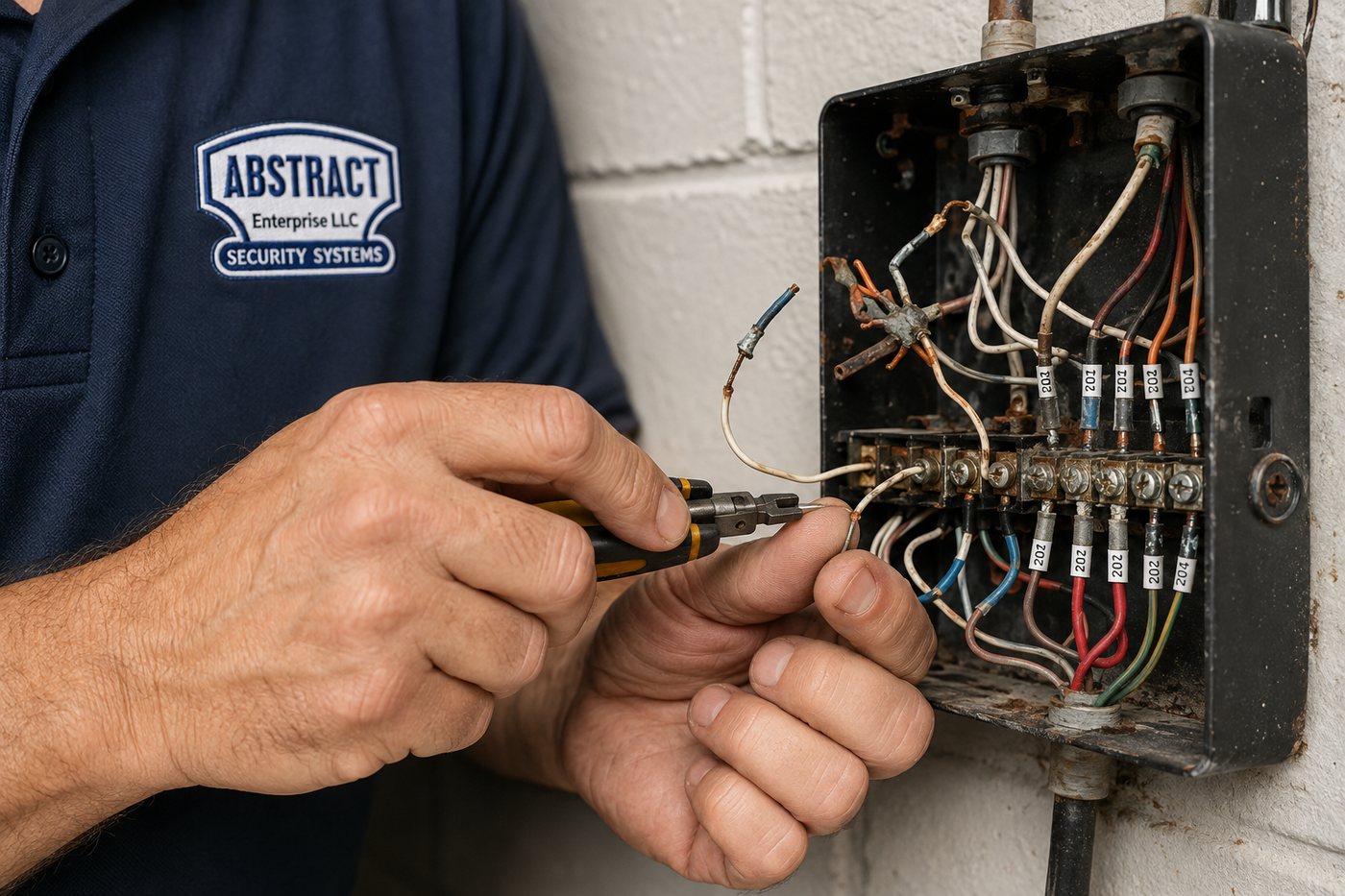
Apartment buzzer installation, apartment buzzer repair, building buzzer system installation, building buzzer system repair. Residential door buzzer installation, commercial door buzzer installation, office buzzer system installation. Multi tenant intercom installation, multi unit buzzer system installation. Intercom installation, intercom repair, intercom system installation, intercom system repair, buzzer system installation, buzzer system repair.
Wireless & Smart
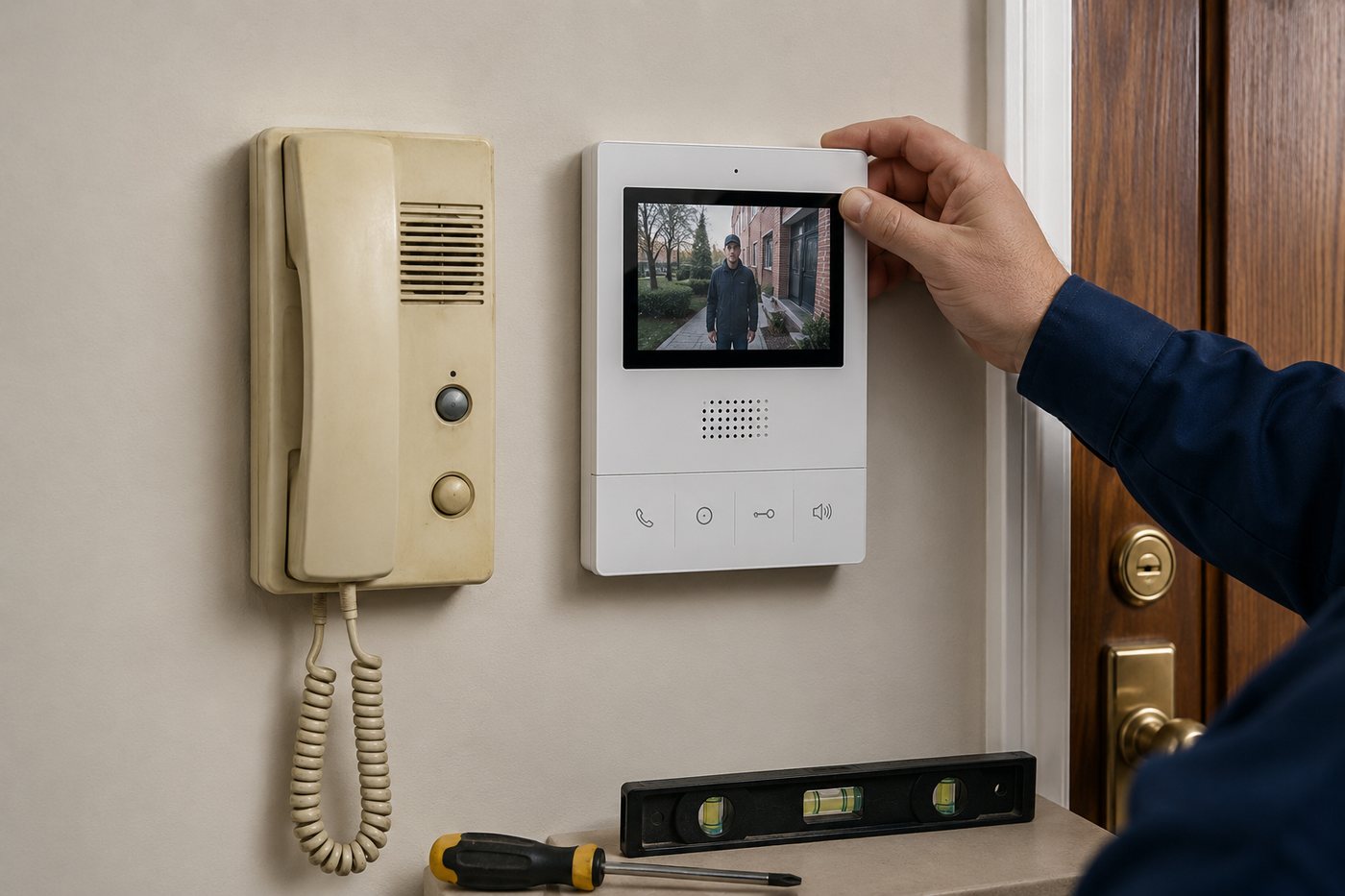
Wireless door buzzer installation, wired door buzzer installation. Smart intercom installation, video intercom installation, audio intercom installation. Smart door buzzer system installation. Door buzzer installation with smartphone access. Mobile app intercom system installation. Cloud based intercom system installation. IP intercom system installation and analog intercom system installation.
Door Hardware Integration
Electric strike buzzer integration, buzzer with electric strike installation, buzzer with mag lock installation. Intercom with access control integration. Video intercom with smartphone access. Key fob buzzer system integration, keypad buzzer system installation. Door entry system installation, door entry system repair, access buzzer system installation, lobby buzzer system installation.
Panels & Hardware
Door buzzer panel installation, intercom panel installation, directory intercom system installation, touchscreen intercom installation. From classic 4-button panels to modern touchscreen directory boards.
Repair, Replacement & Upgrades
Door buzzer replacement, intercom system replacement, buzzer system upgrade, intercom upgrade service. Door buzzer troubleshooting, intercom troubleshooting service. Common issues we fix: door buzzer not working fix, intercom not working fix, buzzer no sound fix, buzzer not ringing fix, intercom static noise fix, intercom volume low fix, door buzzer wiring repair, intercom wiring repair, door buzzer button not working, intercom handset not working, door buzzer stuck open fix, door buzzer keeps buzzing fix, buzzer unlock not working, door release button not working.
Maintenance & Inspection
Door buzzer maintenance service, intercom maintenance service, door buzzer inspection service, intercom system inspection. Annual contracts available for Mount Hope buildings — especially valuable for the prewar 1920s-1930s Art Deco apartment stock.
FAQ — Mount Hope Specific
How does door buzzer system work in a Mount Hope Art Deco apartment? Visitor presses unit button, signal travels to apartment, tenant presses release. How much does door buzzer repair cost in Mount Hope? Basic repairs $150–$350.
Hire door buzzer repair service — book intercom installation service today. Call (646) 490-0629.
Mount Hope Buzzer Repair by Block, Building, and Sub-Area
Mount Hope boundaries: East Burnside Avenue (N), Webster Avenue (E), Cross Bronx Expressway / I-95 (S), Jerome Avenue (W). Grand Concourse runs through the heart of the neighborhood. Bronx Community Board 5. Sits on a steep ridge with HIGH STEEP STEPS throughout the neighborhood navigating elevation changes.
The THREE HILLS OF TREMONT etymology: Mount Hope is one of three hills (along with FAIRMOUNT and MOUNT EDEN) that gave broader Tremont its name when Postmaster Hiram Tarbox in 1856 invented “Tremont” from “tre” (three) plus “mont” (hill, with Francophilic flair). UNIQUE among Bronx etymologies. Tarbox also established the Bronx Free Library, the local fire department, and the post office.
Mount Hope Place (the namesake corridor): The short but symbolic street that crosses the neighborhood’s center between East Burnside Avenue and East 179th Street. Carries the echo of the 19th-century suburb from which the district took its name. Lined with prewar five- and six-story Art Deco / neo-Renaissance / Tudor Revival apartment houses.
East Tremont Avenue (the commercial spine): The major east-west commercial corridor running through Mount Hope. Lined with Latin American/Caribbean/Dominican restaurants, bakeries, and small shops. Valencia Bakery (since 1948) is the longest-standing institution. Other anchors: Liberato Restaurant, Raices del Valle, Jimbo’s Hamburger Palace, CTown Supermarket. Access to the Metro-North Hudson Line at the eastern boundary.
BURNSIDE AVENUE (the northern boundary — the SIDEBURNS street): Named for Civil War General AMBROSE E. BURNSIDE (1824-1881), whose unique extensive facial hair was the inspiration for the term “SIDEBURNS.” UNIQUE etymological footnote among Bronx neighborhoods. The 4 train (IRT Jerome Avenue Line) stops at the Burnside Avenue station.
Jerome Avenue (the western boundary): The IRT Jerome Avenue Line (4 train) elevated structure runs along the western boundary, with stations at Burnside Avenue and 176th Street. During rush hour, express stops on the 4 train offer expedited travel to Manhattan. Las Sirenas (burritos/tacos) is on Jerome Avenue.
Grand Concourse (the heart of Mount Hope): Runs through the heart of the neighborhood. The IND Concourse Line (B and D trains) stops at the Tremont Avenue station. Lined with low-rise brownstone co-ops, the BronxCare Hospital Center (just south of I-95), and Food Universe Marketplace.
Webster Avenue (the eastern boundary): The boundary separating Mount Hope from the broader Tremont/Belmont area to the east.
Cross Bronx Expressway / I-95 (the southern boundary): The Robert Moses-built expressway (central section completed 1960) forms the southern boundary. Robert Caro’s 1974 Pulitzer Prize-winning biography “The Power Broker” documents how the expressway transformed the central Bronx. Mount Hope sits just north of the expressway.
Morris Avenue Historic District: The barrel-fronted brick row houses built in the early 1900s along Morris Avenue. Designed by August Jacob (speculative builder) and John Hauser (architect) 1906-1910 as a uniformly planned streetscape. Notable example of unified Bronx residential architecture — extends here from Morris Heights.
Parks system: RICHMAN PARK aka “ECHO PARK” — nicknamed for the well-defined echo between the two rock masses that dominate it. Includes playgrounds, handball courts, and dog-friendly areas. JENNIE JEROME PLAYGROUND — named for Jennie Jerome (the daughter of Leonard Jerome of Jerome Park fame, and the mother of Winston Churchill). Includes spray showers. Cleopatra Playground — family-friendly playground with spray showers. Mount Hope Garden — community garden anchor. Mount Hope Playground — the namesake playground.
Schools and institutions: PS 28 Mount Hope at 1861 Anthony Avenue; I.S. 117 Joseph H. Wade at 1865 Morris Avenue; St. Margaret Mary School at 121 East 177th Street; BronxCare Hospital Center along Grand Concourse just south of I-95.
Demographics: Predominantly Dominican (49.3%), with significant Sub-Saharan African (12.9%), Puerto Rican (8.5%), African (8.0%), and Mexican (7.2%) populations. 46.4% foreign-born residents. Average rent (May 2025) $1,394 studio / $1,429 1BR / $1,735 2BR / $1,943 3BR — below borough average. Cost of living 10% lower than NYC average. Childhood poverty rate 23.8%.
Annual community events: The Technology Carnival in September (free computer classes and exhibitor tents alongside computer games and family activities). The LGBTQ Pride Festival & Health Fair in June.
Adjacent attractions: Yankee Stadium less than 2 miles south. Edgar Allan Poe Cottage in adjacent Fordham (north). Bronx River Art Center (east). Bronx Museum of the Arts (south).
46th + 48th Precincts + Bronx Community Board 5: The 46th Precinct (at 2120 Ryer Avenue in Fordham) and the 48th Precinct (at 450 Cross Bronx Expressway) anchor public safety. CB5 also includes Morris Heights, University Heights, and Fordham.
Mount Hope Brand-by-Brand Repair Notes
Lee Dan (the dominant brand at Mount Hope’s 1900-1940 Art Deco / neo-Renaissance / Tudor Revival apartment stock): The dominant brand we encounter at the five- and six-story apartment houses along Tremont Avenue, Burnside Avenue, and Mount Hope Place. Most installs are 1980s-1990s NYC HPD-conversion-era retrofits over original 1900-1940 wiring. Common failures: handset speakers in long-tenure households, lobby panel push-buttons stressed by high-density pedestrian traffic, basement transformer relays feeding building-wide systems. Original ornate-lobby aesthetics require preservation-conscious work.
M&S Systems: Common in selective Mount Hope apartment retrofits and the post-1980s rehabilitated tenement conversions.
Nutone: Common in the Morris Avenue Historic District barrel-fronted brick row houses with original wired front-door bell systems and chime modules. Many still in service with selective late-20th-century upgrades. Preservation-conscious work required.
TekTone: Common in mid-size Mount Hope buildings, particularly post-1970s rebuild stock and the Grand Concourse low-rise brownstone co-ops.
Comelit and Aiphone: Standard for any post-2010 Mount Hope construction and selective gut-rehab retrofits in older apartment buildings. Comelit Mini and Maxi panels and Aiphone GT/GH series are reliable platforms.
ButterflyMX: Increasingly common in newest Mount Hope construction. Smartphone-based video intercom platform.
Institutional access control platforms (HID, Genetec, S2 Security): The systems we install and service at the BronxCare Hospital Center (along Grand Concourse just south of I-95), PS 28 Mount Hope (1861 Anthony Avenue), I.S. 117 Joseph H. Wade (1865 Morris Avenue), St. Margaret Mary School (121 East 177th Street), and other institutional buildings throughout Mount Hope. Card-reader systems, faculty/staff entry, after-hours building access, hospital patient/visitor credentialing.
Ring, Nest, Eufy, Arlo (single-family video doorbells): Encountered at selective surviving 1870s-1890s Mount Hope Heights villa stock and at Morris Avenue Historic District barrel-fronted row houses with single-family residential configurations. Many homeowners are upgrading from original wired bells to smart video doorbell platforms.
Urmet, Fermax, Akuvox, DoorBird, 2N, SSS Siedle, Channel Vision: Less common in Mount Hope but encountered in selective imports.