Door Buzzer & Intercom Service in Woodstock, Bronx — Every System Type
Looking for door buzzer repair or intercom installation in Woodstock? Looking for door buzzer repair or intercom installation in Woodstock (the South Bronx village-turned-neighborhood centered on the 1914 Carnegie Library at 761 East 160th Street between Tinton and Forest Avenues, anchored by the Manor-of-Morrisania heritage with Lewis Morris Declaration signer + Gouverneur Morris Constitution penman, the Friedrich Trump barber-on-Westchester-Avenue heritage, and the 1973 Keef-Cowboy-on-Prospect-Avenue hip-hop-coining heritage)? Our technicians service every part of the Woodstock footprint: the dominant 1887-1914 19TH-CENTURY ROWHOUSES + PREWAR APARTMENT BUILDINGS (Art Deco + Streamline Moderne + Beaux Arts) along PROSPECT AVENUE (primary thoroughfare with elevated 2/5 trains), EAST 156TH STREET (the YIMBY-cited 868 between Prospect and Dawson new development), EAST 160TH STREET (where the Carnegie Library sits at 761 between Tinton and Forest), EAST 161ST STREET, EAST 163RD STREET, WESTCHESTER AVENUE (where Friedrich Trump barbered), LONGWOOD AVENUE, SOUTHERN BOULEVARD, ST. ANN’S AVENUE, THIRD AVENUE, TINTON AVENUE, FOREST AVENUE, DAWSON STREET, ROGERS PLACE (Big Pun mural), LYMAN PLACE / ELMO HOPE WAY (Thelonious Monk visited), 149TH STREET, 155TH STREET, FULTON AVENUE, FRANKLIN AVENUE (Morrisania Armory); the post-WWII NYCHA developments + community gardens; the post-1980s Charlotte-Street-style new affordable housing; the post-2010 LEED-certified modern infill (with the 2024-permitted 868 East 156th Street); the WOODSTOCK CARNEGIE LIBRARY at 761 East 160th Street (NYC Landmark April 14, 2009; the 11th of 12 McKim, Mead & White Carnegie libraries; 2017 LEED-Gold renovation by Rice+Lipka Architects); ST. ANN’S CHURCH OF MORRISANIA (Lewis Morris and Gouverneur Morris crypt); MORRIS HIGH SCHOOL (founded 1897, alumni Colin Powell + Milton Berle + Fat Joe); the MORRISANIA ARMORY at 166th Street and Franklin Avenue (where KRS-One was discovered at the homeless shelter); PS 140 THE EAGLE SCHOOL; MOTT HALL CHARTER SCHOOL; ST. MARY’S PARK (the largest neighborhood park in the South Bronx with Olympic-size swimming pool); the GROVE HILL + CAPTAIN RIVIERA + FOUNTAIN OF YOUTH playgrounds; the EL FLAMBOYAN + EAGLE SLOPE community gardens; ENGINE CO. 73 / LADDER CO. 42 at 655 Prospect Avenue; the 42nd Precinct; NYC HEALTH + HOSPITALS / LINCOLN HOSPITAL (~1 mile away); and the residential blocks served by the IRT WHITE PLAINS ROAD LINE (2 train all times, 5 train rush hours) at the JACKSON AVENUE and PROSPECT AVENUE stations + the IRT PELHAM LINE 6 train passing southeast, plus the Bx6 / Bx6 SBS / Bx11 / Bx15 / Bx21 / Bx35 / Bx41 / Bx41 SBS buses. We provide door buzzer installation, door buzzer service, door buzzer system installation, door buzzer system repair, plus licensed intercom installer work and insured buzzer installation company documentation. Same day door buzzer repair and emergency intercom repair across all of Woodstock, Bronx — patrolled by the 42nd Precinct. Best door buzzer repair service. Affordable intercom installation. Door buzzer installer.
Why Woodstock Buzzer Repair Is Different
Woodstock is unlike any other Bronx neighborhood we serve because of three combining factors that don’t coexist anywhere else in the borough. First: WOODSTOCK CARNEGIE LIBRARY at 761 EAST 160TH STREET BETWEEN TINTON AND FOREST AVENUES. OPENED FEBRUARY 17, 1914 as one of the original Andrew Carnegie-funded libraries. DESIGNATED A NEW YORK CITY LANDMARK on APRIL 14, 2009. THE 11TH OF 12 MCKIM, MEAD & WHITE CARNEGIE LIBRARIES (3 in the Bronx, 9 in Manhattan). TOTAL PROJECT COST $130,760 ($14,000 site + $116,760 construction). MASONRY CONSTRUCTION with RUSTICATED INDIANA LIMESTONE CLADDING, three bays wide, offset entrance within rusticated stone base, large round-arched windows on first and second floors, smaller rectangular windows on third floor, classically-inspired palazzo-type facade characteristic of the urban Carnegie library type. RENOVATED IN 2017 to a LEED-GOLD project by Rice+Lipka Architects. UNIQUE McKim-Mead-White-Carnegie-NYC-Landmark anchor — the only Bronx neighborhood whose village-turned-neighborhood identity is anchored almost entirely by a single 1914 Andrew-Carnegie-funded library. Second: THE WOODSTOCK NAME ITSELF. A village-turned-neighborhood whose distinct identity is sometimes contested (some consider it part of Morrisania, some Longwood, some simply The South Bronx), but the 1914 NYPL Woodstock Library predates such confusion, ESTABLISHING THE WOODSTOCK NAME LONG BEFORE 1914. The Woodstock Library is "ONE OF THE FEW MODERN-DAY REMINDERS OF THE VILLAGE-TURNED-NEIGHBORHOOD’S NAME." UNIQUE contested-neighborhood-identity-anchored-by-Carnegie-Library anchor. Third: MORRIS FAMILY MANOR HERITAGE. Originally part of the MANOR OF MORRISANIA, the 2,000-acre estate of LEWIS MORRIS (4th Lord of the Manor and SIGNATORY TO THE U.S. DECLARATION OF INDEPENDENCE) and his nephew GOUVERNEUR MORRIS (1752-1816, the PENMAN OF THE U.S. CONSTITUTION). Both buried in the crypt at ST. ANN’S CHURCH OF MORRISANIA. In 1670, COLONEL LEWIS MORRIS and his brother CAPTAIN RICHARD MORRIS purchased TWELVE SQUARE MILES of land formerly owned by Jonas Bronck’s heirs (Bronck having acquired from the LENAPE). Lewis Morris (the Declaration signer) UNSUCCESSFULLY TRIED TO CONVINCE THE FEDERAL GOVERNMENT TO LOCATE THE NATION’S CAPITAL IN MORRISANIA in 1790. UNIQUE Morris-family-Lewis-Gouverneur-Declaration-Constitution heritage anchor. Add the FRIEDRICH TRUMP BARBER ANCHOR (DONALD TRUMP’S GRANDFATHER lived as a barber on WESTCHESTER AVENUE here, after being denied naturalization back in Germany for avoiding compulsory military service); the 1973 HIP-HOP BIRTHPLACE anchor (KEEF COWBOY of Grandmaster Flash & The Furious Five, FROM PROSPECT AVENUE, is CREDITED WITH COINING THE TERM "HIP-HOP"); the JAZZ HERITAGE (SYLVIA’S BLUE MOROCCO + CLUB 845 hosted Nancy Wilson + Dizzy Gillespie + Dexter Gordon + John Coltrane + Charlie Parker; HERBIE HANCOCK slept on Donald Byrd’s hide-a-bed; ELMO HOPE WAY formerly Lyman Place where Thelonious Monk was a frequent visitor); the BIG PUN heritage (raised on 163rd and Rogers Place); the BOOGIE DOWN PRODUCTIONS / KRS-ONE discovery story (at the homeless shelter at the MORRISANIA ARMORY on 166th Street and Franklin Avenue by Scott LaRock who was a social worker there); the MORRIS HIGH SCHOOL alumni (founded 1897, briefly the most integrated high school in the country: COLIN POWELL + MILTON BERLE + FAT JOE); the 1840-1887 Town-of-Morrisania-rail-village development (1840 railroad, 1848 Village of Morrisania, 1855 Town of Morrisania, 1864 separate-town chartering, 1874 NYC annexation with population over 19,000); the 1887 Third Avenue Elevated extension; the 1904 IRT subway under 149th Street; the 1930s "JEWISH BOROUGH" peak (364,000 South Bronx Jews, 57.1% of total population); the post-WWII demographic transition (1950s two-thirds non-Hispanic white → 1960s two-thirds black or Puerto Rican); the 1970s urban-decay arson era; the 1980s-90s Charlotte-Street-style revitalization; the BRONX CB2 (Hunts Point + Longwood) and CB3 (Morrisania) boundary area; the 42ND PRECINCT coverage; the ZIP 10456 + 10455 + 10459 overlap; the IRT WHITE PLAINS ROAD LINE (2 train all times, 5 train rush hours) at JACKSON AVENUE and PROSPECT AVENUE stations; the IRT PELHAM LINE 6 train passing southeast; the Bx6 + Bx6 SBS + Bx11 + Bx15 + Bx21 + Bx35 + Bx41 + Bx41 SBS bus routes; the predominantly LATINO + AFRICAN-AMERICAN + WEST AFRICAN community; the ST. MARY’S PARK (the LARGEST NEIGHBORHOOD PARK IN THE SOUTH BRONX with Olympic-size swimming pool); the GROVE HILL + CAPTAIN RIVIERA + FOUNTAIN OF YOUTH playgrounds; the EL FLAMBOYAN + EAGLE SLOPE community gardens; PS 140 THE EAGLE SCHOOL; MOTT HALL CHARTER SCHOOL; ENGINE CO. 73 / LADDER CO. 42 at 655 PROSPECT AVENUE; NYC HEALTH + HOSPITALS / LINCOLN HOSPITAL ~1 mile west; and Woodstock produces buzzer-repair calls dominated by 1914-Carnegie-Library-McKim-Mead-White-NYC-Landmark + 1670-Colonel-Lewis-Morris-Captain-Richard + 1697-Lewis-Morris-Lord-of-Manor + 1726-1798-Lewis-Morris-Declaration-signer-1790-failed-capital + 1752-1816-Gouverneur-Morris-Constitution-penman + 1840-1855-1864-1874-Town-of-Morrisania-rail-village + 1887-Third-Avenue-Elevated + 1904-IRT-subway-149th-Street + Friedrich-Trump-Westchester-Avenue-barber + 1973-Keef-Cowboy-Prospect-Avenue-hip-hop + Sylvia-Blue-Morocco-Club-845-Coltrane-Parker-Gillespie + Elmo-Hope-Way-Thelonious-Monk + Big-Pun-163rd-Rogers-Place + KRS-One-Morrisania-Armory-Scott-LaRock + Morris-High-School-Colin-Powell-Milton-Berle-Fat-Joe + 1930s-Jewish-Borough-364000 + 2009-NYC-Landmark + 2017-LEED-Gold-Rice-Lipka layered complexity unlike anywhere else in the Bronx.
What Makes Woodstock Repair Calls Distinctive
The dominant 1887-1914 THIRD-AVENUE-ELEVATED-AND-1904-IRT-SUBWAY-DEVELOPMENT-BOOM-ERA stock of 19TH-CENTURY ROWHOUSES + PREWAR APARTMENT BUILDINGS (Art Deco + Streamline Moderne + Beaux Arts styles, with wrought iron fire escape ladders adorning facades) requires preservation-conscious work that respects the post-1887-Third-Avenue-Elevated and post-1904-IRT-subway-extension architecture — multi-tenant buzzer panels with original wired wall-bell systems and chime modules dating to 1887-1914. Most have multi-decade Lee Dan/M&S/Nutone retrofits. Most of the building stock was built BEFORE ZONING LAWS REQUIRED UPPER STORY SETBACKS AND LARGER REAR YARD SPACES, creating unique repair conditions. The WOODSTOCK CARNEGIE LIBRARY at 761 EAST 160TH STREET (NYC Landmark April 14, 2009; the 11th of 12 McKim, Mead & White Carnegie libraries with 3 in the Bronx and 9 in Manhattan; total cost $130,760; rusticated Indiana limestone palazzo facade; 2017 LEED-Gold renovation by Rice+Lipka Architects) requires deep preservation expertise — ANY work in the surrounding blocks (between Tinton and Forest Avenues on East 160th Street) carries Landmark + LEED-Gold preservation expectations. ST. ANN’S CHURCH OF MORRISANIA (where Lewis Morris and Gouverneur Morris are buried in the crypt) requires preservation-conscious religious-institution access control. PS 140 THE EAGLE SCHOOL and MOTT HALL CHARTER SCHOOL require institutional-grade NYC DOE access control. MORRIS HIGH SCHOOL (founded 1897, alumni include Colin Powell + Milton Berle + Fat Joe + Ray Barretto, briefly the most integrated high school in the country) requires similar institutional-grade access control. The MORRISANIA ARMORY (166th Street and Franklin Avenue, where KRS-One was discovered at the homeless shelter by social worker Scott LaRock) requires preservation-conscious institutional access control. ST. MARY’S PARK (the LARGEST NEIGHBORHOOD PARK IN THE SOUTH BRONX with multiple play areas + athletic fields + tennis courts + amphitheater + snack bar + Olympic-size swimming pool on the east side) requires NYC Parks coordination. The pocket parks (GROVE HILL PLAYGROUND, CAPTAIN RIVIERA PLAYGROUND, FOUNTAIN OF YOUTH PLAYGROUND) require NYC Parks coordination. The community gardens (EL FLAMBOYAN COMMUNITY GARDEN, EAGLE SLOPE COMMUNITY GARDEN) require GreenThumb / NYC Parks coordination. ENGINE CO. 73 / LADDER CO. 42 at 655 PROSPECT AVENUE anchors emergency response. The 42ND PRECINCT anchors public safety (Morrisania CB3 patrolling). NYC HEALTH + HOSPITALS / LINCOLN HOSPITAL (~1 mile away) anchors institutional health-care infrastructure. The PROSPECT AVENUE elevated 2/5 train station + the JACKSON AVENUE elevated station (1904 IRT subway extension under 149th Street) generate continuous transit-corridor foot traffic and unique elevated-line-shadowed building maintenance challenges. The IRT PELHAM LINE 6 train passing southeast adds additional transit access. The Bx6 (to Hunts Point or Riverside Drive in Washington Heights via 161st and 163rd Streets), Bx6 SBS, Bx11 (to Parkchester or George Washington Bridge Bus Terminal via 170th Street + Claremont Parkway + 174th Street), Bx15 (to Fordham Plaza or The Hub via Third Avenue), Bx21 (to Westchester Square or Third Avenue-138th Street via Boston Road-Morris Park Avenue), Bx35 (to Crotona Park East or George Washington Bridge Bus Terminal via 167th Street), Bx41 + Bx41 SBS (to Gun Hill Road or Third Avenue-149th Street via Webster Avenue) buses serve commuters. The predominantly LATINO (Puerto Rican + Dominican) + AFRICAN-AMERICAN + WEST AFRICAN community generates multilingual SPANISH + WEST AFRICAN (Yoruba / Igbo / French / Wolof) + JAMAICAN PATOIS coordination needs along the Prospect Avenue + East 160th Street + Westchester Avenue + Longwood Avenue + Southern Boulevard + Third Avenue commercial corridors. The 1973 BIRTHPLACE OF HIP-HOP with KEEF COWBOY on Prospect Avenue coining the term "hip-hop", the BOOGIE DOWN PRODUCTIONS / KRS-ONE Morrisania Armory discovery story, the BIG PUN 163rd-Rogers Place mural, the SYLVIA’S BLUE MOROCCO + CLUB 845 jazz heritage hosting John Coltrane + Charlie Parker, the ELMO HOPE WAY (Lyman Place) heritage with Thelonious Monk visits, and the FRIEDRICH TRUMP Westchester Avenue barber heritage anchor the historic-cultural-music identity. The 1840-1855-1864-1874 Town of Morrisania development heritage and the 1670 Lewis-Morris-Captain-Richard 12-square-mile-Jonas-Bronck-Lenape land purchase form the colonial-foundational layer.
Woodstock Building Eras We Service
Five distinct construction eras require five distinct repair approaches in Woodstock. COLONIAL ERA (1670 Morris-family-purchase-from-Jonas-Bronck-Lenape through 1840s rail-village development): 1670 Colonel Lewis Morris and Captain Richard Morris purchased twelve square miles from Jonas Bronck’s heirs; 1697 second Lewis Morris received patent and became first lord of the manor of Morrisania; 1726-1798 third Lewis Morris (the Declaration signer) and 1752-1816 Gouverneur Morris (the Constitution penman); 1790 Lewis Morris’s failed proposal to locate the federal capital in Morrisania. Almost all colonial residential has been replaced. 1840s-1887 TOWN-OF-MORRISANIA RAIL-VILLAGE ERA: 1840 Gouverneur Morris Jr. allowed a railroad to be built across the property; 1848 sale of line-adjacent land for the Village of Morrisania; 1855 expansion to Town of Morrisania (with own police force); 1864 Westchester County separate-town chartering; 1874 NYC annexation with population over 19,000. Selective brick rowhouses began to dominate. 1887-1914 THIRD-AVENUE-ELEVATED-AND-1904-IRT-SUBWAY-DEVELOPMENT-BOOM ERA (the dominant stock): The 1887 Third Avenue Elevated extension into the Bronx and 1904 IRT subway under 149th Street triggered massive development for German + Irish + later Jewish working-class families. The dominant 19th-c brick rowhouses + prewar Art Deco + Streamline Moderne + Beaux Arts apartment buildings (with wrought iron fire escape ladders adorning facades) filled East 156th Street + East 160th Street + Tinton Avenue + Forest Avenue + Prospect Avenue + Westchester Avenue + Longwood Avenue. FRIEDRICH TRUMP barbered on Westchester Avenue. Built BEFORE zoning laws required upper-story setbacks and larger rear yard spaces. The era’s capstone: the 1914 Woodstock Carnegie Library (the 11th of 12 McKim, Mead & White Carnegie libraries, opened February 17, 1914). Original Lee Dan/M&S/Nutone lobby panels with chime modules. 1914-1950 INTERWAR + EARLY-POSTWAR ERA: Continued Art Deco + Streamline Moderne + Beaux Arts apartment-building infill. By the 1930s the Bronx was the "Jewish Borough" with 364,000 South Bronx Jews (57.1% of total). Second-generation chime modules. 1950s-PRESENT DEMOGRAPHIC-TRANSITION + DECAY-AND-RECOVERY ERA: 1950s-60s shift from two-thirds non-Hispanic-white to two-thirds black or Puerto Rican; 1970s arson and violence epidemic; 1973 hip-hop birthplace with Keef Cowboy on Prospect Avenue coining "hip-hop"; 1980s-90s Charlotte-Street-style revitalization with new affordable housing developments; 2009 Woodstock Carnegie Library NYC Landmark designation; 2017 Library 2017 LEED-Gold renovation by Rice+Lipka Architects; 2010s-2020s post-LEED-certified modern infill including the 2024-permitted 868 East 156th Street between Prospect and Dawson (29 residences, 8 stories, by Boaz M. Golani Architect for Hershy Silberstein of Blue Shine Builders). Modern Comelit/Aiphone/ButterflyMX systems in post-2010 LEED-certified selective infill. Our technicians know each era and bring the right parts on every truck.
Systems We Install & Repair in Woodstock
Buzzer & Intercom Systems
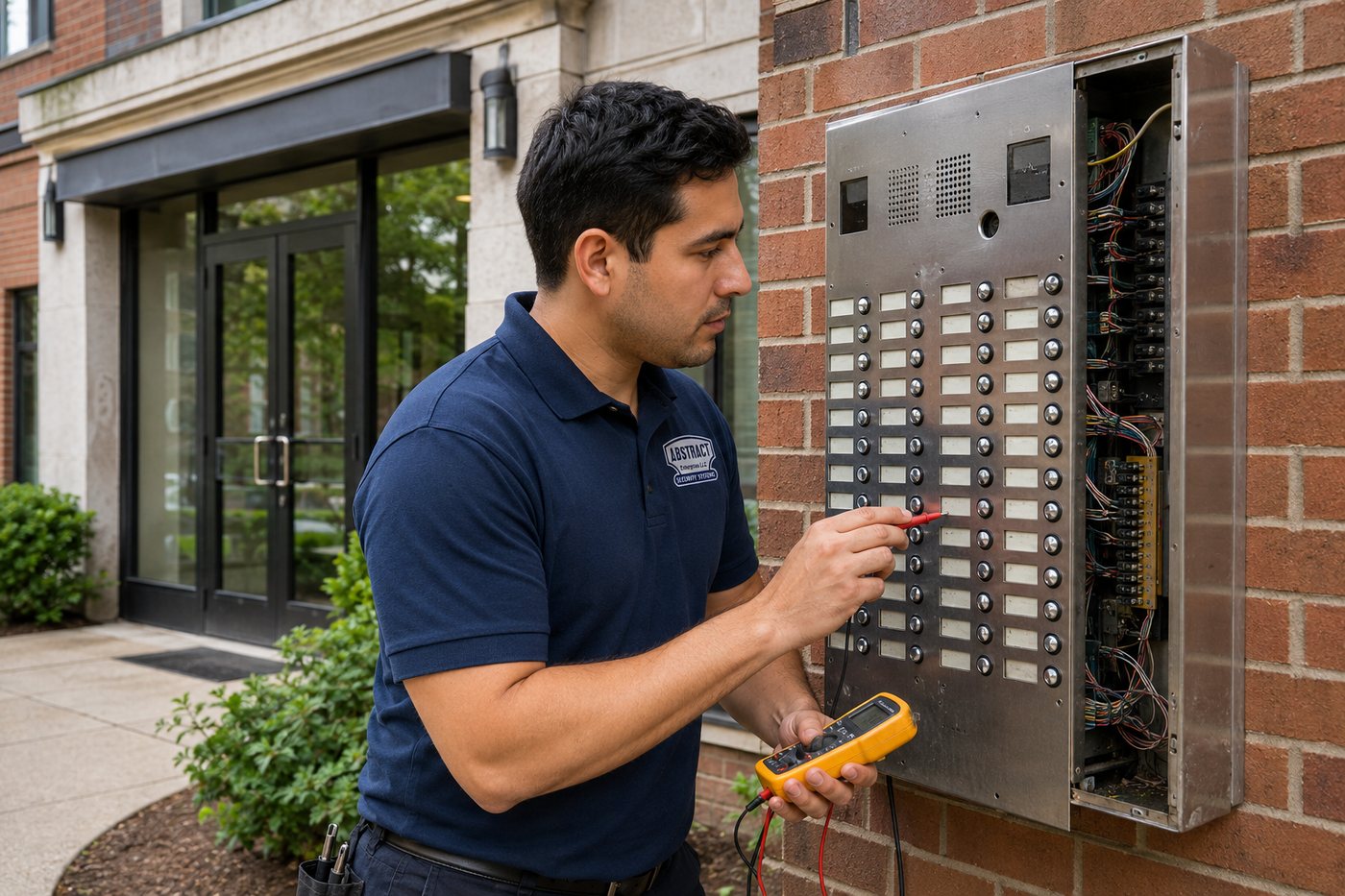
Apartment buzzer installation, apartment buzzer repair, building buzzer system installation, building buzzer system repair. Residential door buzzer installation, commercial door buzzer installation, office buzzer system installation. Multi tenant intercom installation, multi unit buzzer system installation. Intercom installation, intercom repair, intercom system installation, intercom system repair, buzzer system installation, buzzer system repair.
Wireless & Smart
Wireless door buzzer installation, wired door buzzer installation. Smart intercom installation, video intercom installation, audio intercom installation. Smart door buzzer system installation. Door buzzer installation with smartphone access. Mobile app intercom system installation. Cloud based intercom system installation. IP intercom system installation and analog intercom system installation.
Door Hardware Integration
Electric strike buzzer integration, buzzer with electric strike installation, buzzer with mag lock installation. Intercom with access control integration. Video intercom with smartphone access. Key fob buzzer system integration, keypad buzzer system installation. Door entry system installation, door entry system repair, access buzzer system installation, lobby buzzer system installation.
Panels & Hardware
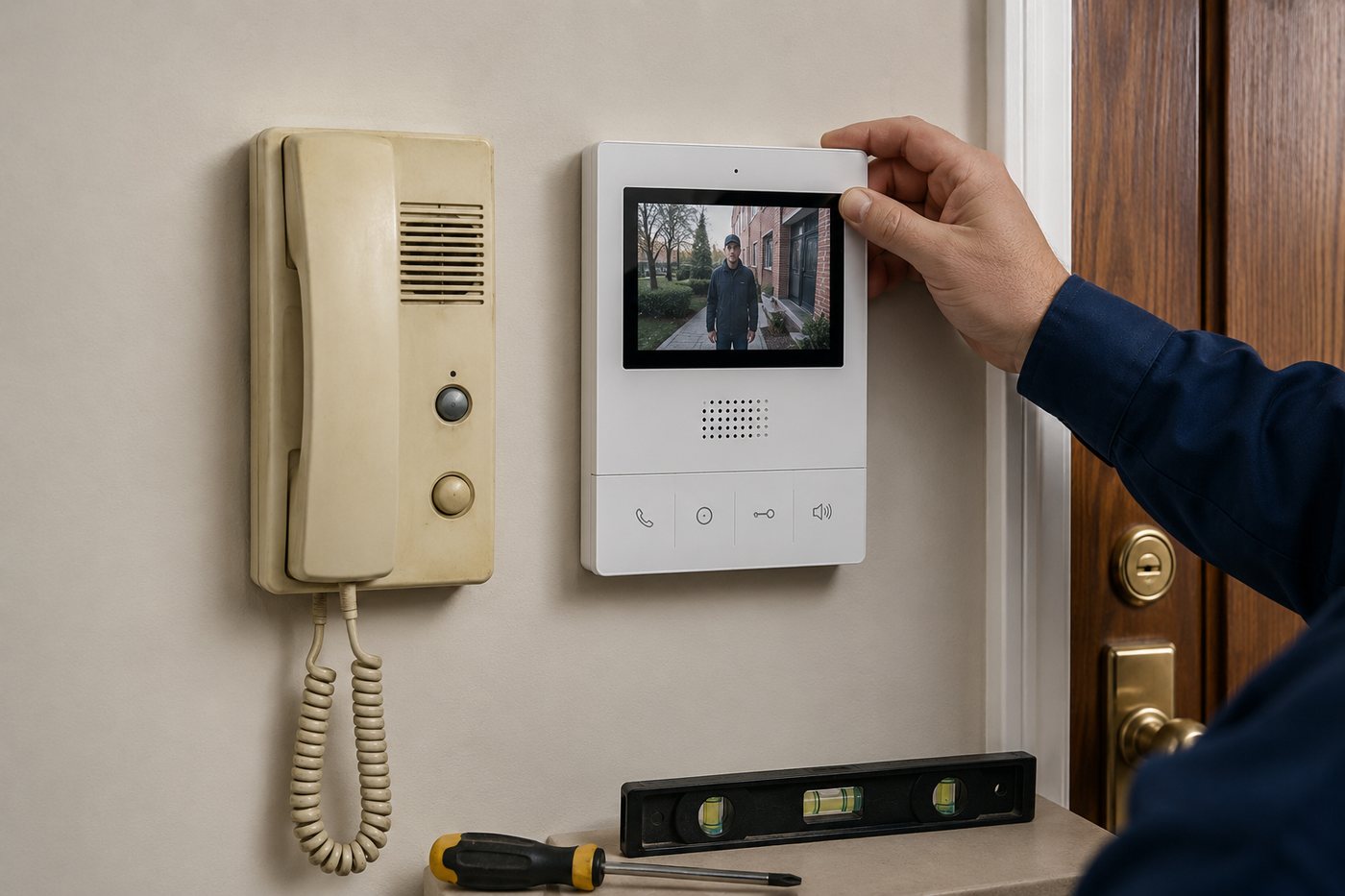
Door buzzer panel installation, intercom panel installation, directory intercom system installation, touchscreen intercom installation. From classic 4-button panels to modern touchscreen directory boards.
Repair, Replacement & Upgrades
Door buzzer replacement, intercom system replacement, buzzer system upgrade, intercom upgrade service. Door buzzer troubleshooting, intercom troubleshooting service. Common issues we fix: door buzzer not working fix, intercom not working fix, buzzer no sound fix, buzzer not ringing fix, intercom static noise fix, intercom volume low fix, door buzzer wiring repair, intercom wiring repair, door buzzer button not working, intercom handset not working, door buzzer stuck open fix, door buzzer keeps buzzing fix, buzzer unlock not working, door release button not working.
Maintenance & Inspection
Door buzzer maintenance service, intercom maintenance service, door buzzer inspection service, intercom system inspection. Annual contracts available for Woodstock buildings — especially valuable for the older Woodstock building stock where preventive wiring inspection extends the life of decades-old systems. We coordinate with Woodstock property managers and with the small commercial owners along Boston Road, Westchester Avenue, East 163rd Street, East 165th Street, Prospect Avenue.
FAQ — Woodstock Specific
How does door buzzer system work in a Woodstock building? Visitor presses unit button at the lobby panel, signal travels to apartment, tenant presses release. How much does door buzzer repair cost in Woodstock? Basic repairs $150–$350; full system replacements vary by building era. How much does intercom installation cost in Woodstock? Single-family from $400; small walk-up installs from $1,500; mid-size apartment buildings $3,500–$10,000+. Best intercom system for Woodstock apartment: video intercom with smartphone answering for the post-2010 stock; durable lobby panel + handset systems for the older stock.
Hire door buzzer repair service — book intercom installation service today. Call (646) 490-0629.
Woodstock Buzzer Repair by Block, Building, and Sub-Area
Woodstock boundaries (contested): Woodstock is generally considered to span the area around East 156th Street + East 160th Street + Prospect Avenue, west of Prospect Avenue, in the Bronx CB2 (Hunts Point + Longwood) and CB3 (Morrisania) boundary area. Some sources consider it part of Morrisania, some Longwood, some simply The South Bronx — but the 1914 NYPL Woodstock Carnegie Library predates such confusion. ZIP 10456 with overlapping 10455 + 10459. Patrolled by the 42ND PRECINCT (Morrisania CB3 coverage). Median home sale price $411,000 (up 17%).
The 1914 WOODSTOCK CARNEGIE LIBRARY at 761 EAST 160TH STREET BETWEEN TINTON AND FOREST AVENUES: Officially opened FEBRUARY 17, 1914 as one of the original Andrew Carnegie-funded libraries. The site cost $14,000; the cost of erecting the building (including all related construction equipment) was $116,760; the entire project cost $130,760. THE 11TH OF 12 MCKIM, MEAD & WHITE CARNEGIE LIBRARIES (3 in the Bronx, 9 in Manhattan). Built with funds given to NYC by ANDREW CARNEGIE. MASONRY CONSTRUCTION with RUSTICATED INDIANA LIMESTONE CLADDING. Three bays wide with an offset entrance within a rusticated stone base. Large round-arched window openings characterize the first and second floors with smaller rectangular windows on the third floor. The library’s classically-inspired style with its characteristic vertical plan, offset entrance, carved stone ornament, and tall arched first-floor windows is characteristic of the URBAN CARNEGIE LIBRARY TYPE. The Woodstock Branch FOLLOWED THE URBAN BRANCH MODEL. WOODSTOCK BRANCH WAS DESIGNATED AN INDIVIDUAL NEW YORK CITY LANDMARK ON APRIL 14, 2009. RENOVATED IN 2017 to a LEED-GOLD project by RICE+LIPKA ARCHITECTS, providing modern amenities in the footprint of the historic building — new open floor plates and simple architectural elements provide expanded functionality and technology. Currently houses robust collections for children, teens, and adults, plus programming spaces.
The contested WOODSTOCK NAME: A village-turned-neighborhood whose distinct identity is sometimes contested. The Woodstock Library is "ONE OF THE FEW MODERN-DAY REMINDERS OF THE VILLAGE-TURNED-NEIGHBORHOOD’S NAME."
The MORRIS FAMILY MANOR HERITAGE: Originally part of the MANOR OF MORRISANIA, the 2,000-acre estate of the Morris family. In 1670, COLONEL LEWIS MORRIS and his brother CAPTAIN RICHARD MORRIS purchased TWELVE SQUARE MILES of land formerly owned by JONAS BRONCK’s heirs (Bronck having acquired from the LENAPE). The second Lewis Morris received a patent in 1697 and became the FIRST LORD OF THE MANOR OF MORRISANIA. The third Lewis Morris (1726-1798), Chief Justice of New York and British Governor of New Jersey, was the SIGNATORY TO THE U.S. DECLARATION OF INDEPENDENCE; in 1790 he UNSUCCESSFULLY TRIED TO CONVINCE THE FEDERAL GOVERNMENT TO LOCATE THE NATION’S CAPITAL IN MORRISANIA. His nephew GOUVERNEUR MORRIS (1752-1816) was the PENMAN OF THE U.S. CONSTITUTION. Both are buried in the crypt at ST. ANN’S CHURCH OF MORRISANIA.
FRIEDRICH TRUMP (DONALD TRUMP’S GRANDFATHER): Lived as a BARBER on WESTCHESTER AVENUE in the late 19th/early 20th century. Trump (formerly Drumpf) had tried to return to Germany but was denied his request for naturalization as he was seen to have avoided the country’s compulsory military service requirement.
The 1973 HIP-HOP BIRTHPLACE: KEEF COWBOY (member of GRANDMASTER FLASH & THE FURIOUS FIVE, dancer and hypeman) FROM PROSPECT AVENUE is CREDITED WITH COINING THE TERM "HIP-HOP."
JAZZ HERITAGE: Music clubs SYLVIA’S BLUE MOROCCO and CLUB 845 hosted NANCY WILSON, DIZZY GILLESPIE, DEXTER GORDON, JOHN COLTRANE, and CHARLIE PARKER. HERBIE HANCOCK used to sleep on DONALD BYRD’s hide-a-bed in his Morrisania apartment. ELMO HOPE WAY (formerly LYMAN PLACE) is named for jazz pianist Elmo Hope, where THELONIOUS MONK was a frequent visitor.
BIG PUN (1971-2000): The rapper was raised on 163RD AND ROGERS PLACE. A mural in his honor still stands on the street.
BOOGIE DOWN PRODUCTIONS / KRS-ONE: KRS-One was discovered at the homeless shelter at the MORRISANIA ARMORY on 166TH STREET AND FRANKLIN AVENUE by Scott LaRock who was a social worker there.
MORRIS HIGH SCHOOL: Founded 1897, one of the Bronx’s oldest. Was for a while THE MOST INTEGRATED HIGH SCHOOL IN THE COUNTRY. Alumni include COLIN POWELL (1937-2021, 65th U.S. Secretary of State 2001-2005), MILTON BERLE, FAT JOE, RAY BARRETTO.
The 1840-1874 RAILROAD-VILLAGE-DEVELOPMENT TIMELINE: 1840 Gouverneur Morris Jr. allowed railroad across the property; 1848 sale of land for the Village of Morrisania; 1855 Town of Morrisania (with own police force); 1864 chartering as separate town in Westchester County; 1874 annexation to NYC with population over 19,000.
The 1887 THIRD AVENUE ELEVATED LINE EXTENSION: Precipitated a flurry of development.
The 1904 IRT SUBWAY EXTENSION: Under 149th Street, providing cheap rapid transit that with the 3rd Avenue elevated line persuaded hundreds of thousands during the first third of the 20th century to leave Manhattan tenements for spacious new Bronx apartments.
The 1930s "JEWISH BOROUGH" PEAK: Nearly half the Bronx population was Jewish. In the South Bronx specifically, JEWS NUMBERED 364,000 (57.1% OF TOTAL POPULATION).
SUBWAY: IRT WHITE PLAINS ROAD LINE (2 train all times, 5 train rush hours) at the JACKSON AVENUE station and PROSPECT AVENUE station. The IRT PELHAM LINE 6 train passes by to the southeast.
BUSES: Bx6 + Bx6 SBS (to Hunts Point or Riverside Drive in Washington Heights via 161st and 163rd Streets); Bx11 (to Parkchester station or George Washington Bridge Bus Terminal via 170th Street, Claremont Parkway, 174th Street); Bx15 (to Fordham Plaza or The Hub via Third Avenue); Bx21 (to Westchester Square or Third Avenue-138th Street via Boston Road-Morris Park Avenue); Bx35 (to Crotona Park East or George Washington Bridge Bus Terminal via 167th Street); Bx41 + Bx41 SBS (to Gun Hill Road or Third Avenue-149th Street via Webster Avenue).
NYC HEALTH + HOSPITALS / LINCOLN HOSPITAL: The closest hospital, ~1 mile away.
ST. MARY’S PARK: The LARGEST NEIGHBORHOOD PARK IN THE SOUTH BRONX. Has multiple play areas, large athletic fields, tennis courts, an amphitheater, snack bar, and a public OLYMPIC-SIZE SWIMMING POOL on the park’s east side.
POCKET PARKS: GROVE HILL PLAYGROUND, CAPTAIN RIVIERA PLAYGROUND, FOUNTAIN OF YOUTH PLAYGROUND.
COMMUNITY GARDENS: EL FLAMBOYAN COMMUNITY GARDEN, EAGLE SLOPE COMMUNITY GARDEN.
SCHOOLS: PS 140 THE EAGLE SCHOOL; MOTT HALL CHARTER SCHOOL (entrance located in Morrisania).
ENGINE CO. 73 / LADDER CO. 42: FDNY firehouse at 655 PROSPECT AVENUE.
The 2024 NEW DEVELOPMENT: 8-story residential building permitted at 868 EAST 156TH STREET between Prospect Avenue and Dawson Street. 29 RESIDENCES, 70 feet tall, 19,919 square feet, 9 open parking spaces. Owner: Hershy Silberstein of Blue Shine Builders Inc. DBA Blue Sky. Architect: Boaz M. Golani Architect.
KEY STREETS: PROSPECT AVENUE (primary north-south thoroughfare with elevated 2/5 trains, where Keef Cowboy coined "hip-hop"); EAST 160TH STREET (where the Carnegie Library sits at 761 between Tinton and Forest); EAST 156TH STREET (where new 8-story development is occurring at 868 between Prospect and Dawson); EAST 161ST STREET; EAST 163RD STREET (Big Pun mural at Rogers Place); WESTCHESTER AVENUE (where Friedrich Trump barbered); LONGWOOD AVENUE; SOUTHERN BOULEVARD; ST. ANN’S AVENUE; THIRD AVENUE; TINTON AVENUE (Carnegie Library west); FOREST AVENUE (Carnegie Library east); DAWSON STREET; ROGERS PLACE (Big Pun); LYMAN PLACE / ELMO HOPE WAY (Thelonious Monk); 149TH STREET (1904 IRT subway); 155TH STREET; 167TH STREET; FULTON AVENUE; FRANKLIN AVENUE (Morrisania Armory at 166th Street); CAULDWELL AVENUE.
Adjacent neighborhoods: Morrisania (W/N, with its own deep-rebuild buzzer-repair page on this site, the broader original Morris-family-manor neighborhood); Longwood (E, with its own deep-rebuild page); Melrose (W, with its own deep-rebuild page, the Hub commercial center); Crotona Park East (N, with its own deep-rebuild page); Mott Haven (S, with its own deep-rebuild page, south of 149th Street); Hunts Point (SE, with its own non-standard page); Foxhurst (E/N, with its own non-standard page); The Hub (W, with its own deep-rebuild page).
Woodstock Brand-by-Brand Repair Notes
Lee Dan (the dominant brand at Woodstock’s 1887-1914 Third-Avenue-Elevated-and-1904-IRT-subway-development-boom-era 19th-c brick rowhouse + prewar Art Deco / Streamline Moderne / Beaux Arts apartment building stock): The DOMINANT brand we encounter in the 1887-1914 housing-boom-era stock that defines the post-1887-Third-Avenue-Elevated and post-1904-IRT-subway-extension era. Most installs are 1980s-1990s NYC HPD-conversion-era retrofits over original early-20th-century low-voltage copper wiring. Common failures: handset speakers in long-tenure households, lobby panel push-buttons stressed by century of pedestrian traffic, basement transformer relays in century-old buildings.
M&S Systems: Common in selective Woodstock apartment retrofits and the post-WWII NYCHA-development-era stock.
Nutone: Common in the dominant rowhouse + small apartment stock. Original wired front-door bell systems with chime modules. Many still in service after multi-decade German + Irish + Jewish + Latino + African-American + West African family ownership on East 156th + East 160th + Tinton Avenue + Forest Avenue + Prospect Avenue + Westchester Avenue.
TekTone: Common in mid-size Woodstock buildings, particularly the post-1990s Charlotte-Street-style + new affordable housing developments.
Comelit and Aiphone: Standard for the post-1990s Charlotte-Street-style new construction and selective gut-rehab retrofits in the dominant 1887-1914 19th-c brick rowhouse + prewar Art Deco / Streamline Moderne / Beaux Arts apartment building stock plus the 2017 Carnegie Library LEED-Gold renovation surrounding modernization. Comelit Mini and Maxi panels and Aiphone GT/GH series are reliable platforms.
ButterflyMX: Increasingly common in newest Woodstock construction (the post-2015 LEED-certified selective infill, particularly in the post-2017-Carnegie-Library-LEED-Gold-renovation surrounding-blocks new development and the 2024-permitted 868 East 156th Street). Smartphone-based video intercom platform.
Institutional access control platforms (HID, Genetec, S2 Security): The systems we install and service at the WOODSTOCK CARNEGIE LIBRARY at 761 East 160th Street between Tinton and Forest Avenues (the 11th of 12 McKim, Mead & White Carnegie libraries, NYC Landmark April 14, 2009, 2017 LEED-Gold renovation by Rice+Lipka Architects — preservation-conscious institutional library access control with NYC LPC + LEED-Gold coordination), ST. ANN’S CHURCH OF MORRISANIA (where Lewis Morris and Gouverneur Morris are buried in the crypt — preservation-conscious religious-institution access control), MORRIS HIGH SCHOOL (founded 1897, alumni Colin Powell + Milton Berle + Fat Joe — institutional-grade NYC DOE access control with the most-integrated-high-school-in-the-country heritage), the MORRISANIA ARMORY at 166th Street and Franklin Avenue (where KRS-One was discovered at the homeless shelter), PS 140 THE EAGLE SCHOOL, MOTT HALL CHARTER SCHOOL, ST. MARY’S PARK (the largest neighborhood park in the South Bronx with Olympic-size swimming pool — NYC Parks coordination), the GROVE HILL + CAPTAIN RIVIERA + FOUNTAIN OF YOUTH playgrounds, the EL FLAMBOYAN + EAGLE SLOPE community gardens (NYC Parks GreenThumb coordination), ENGINE CO. 73 / LADDER CO. 42 at 655 Prospect Avenue, NYC HEALTH + HOSPITALS / LINCOLN HOSPITAL (~1 mile away), the IRT WHITE PLAINS ROAD LINE elevated 2/5 train Jackson Avenue and Prospect Avenue stations + the IRT PELHAM LINE 6 train station southeast (MTA institutional procurement scale), and the 42nd Precinct. Card-reader systems, faculty/staff/student/visitor entry, after-hours building access, and 1914-Carnegie-Library-McKim-Mead-White + Lewis-Morris-Declaration + Gouverneur-Morris-Constitution + Friedrich-Trump-barber + 1973-Keef-Cowboy-hip-hop + Sylvia-Blue-Morocco-Coltrane-Parker + Elmo-Hope-Way-Monk + Big-Pun-163rd-Rogers + KRS-One-Morrisania-Armory + Morris-High-School-Powell-Berle preservation-conscious institutional work.
Ring, Nest, Eufy, Arlo (single-family video doorbells): The DOMINANT MODERN UPGRADE for Woodstock given the strong concentration of 19th-c brick rowhouses + small apartment buildings now home to LATINO + AFRICAN-AMERICAN + WEST AFRICAN homeowners. Many are upgrading from original 1887-1914 wired Nutone bells to smart video doorbell platforms with Wi-Fi connectivity, motion detection, and integration with smart locks — particularly common in the post-1980s Charlotte-Street-style new affordable housing.
Urmet, Fermax, Akuvox, DoorBird, 2N, SSS Siedle, Channel Vision: Less common in Woodstock but encountered in selective imports.