Door Buzzer & Intercom Service in Van Cortlandt Village, Bronx — Every System Type
Looking for door buzzer repair or intercom installation in Van Cortlandt Village? Looking for door buzzer repair or intercom installation in Van Cortlandt Village (the northwest Bronx neighborhood whose identity was established in 1975 when the local community board proposed renaming the area, sitting atop Revolutionary War FORT INDEPENDENCE ruins, retaining the FREDERICK LAW OLMSTED 1875 STREET PLAN, anchored by the AMALGAMATED HOUSING COOPERATIVE 1927 and the SHALOM ALEICHEM HOUSES 1926-1927)? Our technicians service every part of the Van Cortlandt Village footprint: the dominant 1915-1930 NEO-TUDOR + NEO-GEORGIAN + NEO-FEDERAL modest two- and three-story, one- and two-family houses (some accented by MEDITERRANEAN TILED ROOFS and intricate brick and stonework, including the MATTHEW W. DEL GAUDIO 1915-16 row of 8 houses + CAPTAIN LAWRENCE V. MEEHAN 1921 + CHARLES A. NEWBURGH 1922 + JAMES F. DELANEY 1926 + SEARS ROEBUCK MAIL-ORDER HOUSE at 3336 with twins at 3338+3340 + GILES MANSION) along SEDGWICK AVENUE + HILLMAN AVENUE (renamed 1950 for Sidney Hillman ACWU head) + SAXON AVENUE + GILES PLACE + CANNON PLACE + GALE PLACE + VAN CORTLANDT AVENUE WEST + HEATH AVENUE + FORT INDEPENDENCE STREET + ORLOFF AVENUE + ALBANY CRESCENT + KINGSBRIDGE TERRACE + WEST 231ST STREET + WEST 238TH STREET + MOSHOLU PARKWAY; the AMALGAMATED HOUSING COOPERATIVE (the 1927 Amalgamated Clothing Workers of America "proletarian paradise" with nearly 1,500 units in 11 buildings designed by SPRINGSTEEN AND GOLDHAMMER, with original $500-a-room purchase prices, with the WORKMEN’S CIRCLE BUILDING named for the Jewish fraternal organization founded 1900); the SHALOM ALEICHEM HOUSES (the 1926-1927 Yiddish Cooperative Heimgesellschaft, the 15-building NEO-TUDOR FORTRESS-LIKE STRUCTURE with 229 APARTMENTS named for SHOLEM ALEICHEM — pen name of SOLOMON NAUMOVICH RABINOVICH 1859-1916, Ukrainian Yiddish writer behind "Tevye the Milkman" / "Fiddler on the Roof", historically housing 2 Jewish schools (one for socialists, one for communists), 3 ART STUDIOS, NURSERY SCHOOL, AUDITORIUM, home to AARON GOODELMAN + ABRAHAM MANIEVICH + MARC CHAGALL + BESS MYERSON Miss America 1945); the TRACEY TOWERS (PAUL RUDOLPH 1972, the TALLEST BUILDINGS IN THE BRONX, at Mosholu Parkway and Jerome Avenue); the prewar apartment houses along Van Cortlandt Avenue West (with brick façades, decorative cornices, and courtyards); the post-WWII selective rebuilds; the post-2010 modern infill; the VAN CORTLANDT JEWISH & SENIOR CENTERS (JASA) on Sedgwick Avenue; the FORT INDEPENDENCE PARK NEIGHBORHOOD ASSOCIATION; the AMALGAMATED HOUSING CO-OP COUNCIL; the DENISHAWN HOUSE (the little-known site associated with the early creation of modern dance in America); PS 95; ST. JOHN’S ROMAN CATHOLIC CHURCH; the FDNY ENGINE CO. firehouse; the 50TH PRECINCT at 3450 Kingsbridge Avenue; and the residential blocks served by the BROADWAY IRT (1 train) at the 238th Street station (opened 1908) and the IRT Jerome Avenue Line (4 train) at the Mosholu Parkway and Bedford Park Boulevard / Lehman College stations, plus the Bx9 / Bx10 / Bx22 / Bx26 / Bx28 buses. We provide door buzzer installation, door buzzer service, door buzzer system installation, door buzzer system repair, plus licensed intercom installer work and insured buzzer installation company documentation. Same day door buzzer repair and emergency intercom repair across all of Van Cortlandt Village, Bronx — patrolled by the 50th Precinct. Best door buzzer repair service. Affordable intercom installation. Door buzzer installer.
Why Van Cortlandt Village Buzzer Repair Is Different
Van Cortlandt Village is unlike any other Bronx neighborhood we serve because of three combining factors that don’t coexist anywhere else in the borough. First: the 1975 NEIGHBORHOOD-RENAMING + 1875 OLMSTED STREET PLAN. In 1975 a member of the local community board proposed that the Amalgamated and its surroundings be renamed, and a sign was unveiled designating the area Van Cortlandt Village (UNIQUE recent-creation neighborhood identity). The neighborhood retained its 1875 OLMSTED-DESIGNED STREET PLAN, drawn by FREDERICK LAW OLMSTED for Bronx Park Board president WILLIAM R. MARTIN. Olmsted was discharged in 1878. Van Cortlandt Village is one of the only Bronx neighborhoods that retained its Olmsted-designed street plan. UNIQUE Olmsted-street-plan retention. Second: the WORKER-COOPERATIVE HOUSING ANCHORS. The AMALGAMATED HOUSING COOPERATIVE (1927, founded by leaders of the AMALGAMATED CLOTHING WORKERS OF AMERICA union as a "proletarian paradise"; designed by SPRINGSTEEN AND GOLDHAMMER for 308 families with apartments at $500 A ROOM, expanded to nearly 1,500 UNITS IN 11 BUILDINGS along HILLMAN AVENUE renamed 1950 for SIDNEY HILLMAN ACWU head and SAXON AVENUE; one of the FIRST LIMITED-EQUITY COOPERATIVES in the United States; includes the WORKMEN’S CIRCLE BUILDING named for the Jewish fraternal organization founded 1900) plus the SHALOM ALEICHEM HOUSES (1926-1927, originally the YIDDISH COOPERATIVE HEIMGESELLSCHAFT, founded by socialist Yiddish members of the Socialist and Communist Parties / driven by the WORKMEN’S CIRCLE; a 15-BUILDING NEO-TUDOR FORTRESS-LIKE STRUCTURE with 229 APARTMENTS plus 3 ART STUDIOS + nursery school + auditorium for lectures and recitals; named for SHOLEM ALEICHEM — the pen name of SOLOMON NAUMOVICH RABINOVICH 1859-1916, Ukrainian Yiddish writer whose works included "TEVYE THE MILKMAN" the SOURCE TEXT FOR "FIDDLER ON THE ROOF"; housed TWO JEWISH SCHOOLS one for socialists and one for communists; home to sculptor AARON GOODELMAN, painter ABRAHAM MANIEVICH, and MARC CHAGALL who stayed for a few months after fleeing the Nazi invasion of Paris; where Miss America 1945 BESS MYERSON grew up). UNIQUE worker-cooperative + Yiddish-literary anchor. Third: the REVOLUTIONARY WAR FORT INDEPENDENCE ruins. The community sits atop the ruins of FORT INDEPENDENCE, one of a series of major fortifications constructed during the American Revolution to control passage between New York City and the mainland. The fort stood roughly between GILES PLACE and CANNON PLACE south of West 238th Street. In 1915 some neighborhood boys playing war on Giles Place dug trenches and FOUND CANNONBALLS left over from Fort Independence — distributed to the New-York Historical Society + Dyckman House + Van Cortlandt Mansion museum. UNIQUE Revolutionary War archaeological anchor. Add the 2004 REZONING (NYC Department of City Planning approved September 28, 2004 rezoning of 15 BLOCKS) + 2011 NRHP eligibility + 2012 HISTORIC DISTRICTS COUNCIL recognition; the 1908 BROADWAY IRT 238TH STREET STATION OPENING that pushed development northward; the BRONX COMMUNITY DISTRICT 8 + 50TH PRECINCT at 3450 Kingsbridge Avenue (ranked 13th safest of 69 patrol areas in 2010, 69.9% crime decrease 1990-2022); the dominant NEO-TUDOR + NEO-GEORGIAN + NEO-FEDERAL housing stock with MEDITERRANEAN TILED ROOFS; the 1972 PAUL RUDOLPH TRACEY TOWERS at Mosholu Parkway and Jerome Avenue (the TALLEST BUILDINGS IN THE BRONX); the DENISHAWN HOUSE (early creation of modern dance in America); the historic Matthew W. Del Gaudio 1915-16 row of 8 houses (earliest extant); James F. Delaney 1926 + Charles A. Newburgh 1922 + Captain Lawrence V. Meehan 1921 + Sears Roebuck mail-order house at 3336 with twins at 3338+3340 + Giles Mansion; the predominantly multi-class multi-racial multi-cultural community; LLOYD ULTAN (Bronx Borough Historian) + ANTHONY PEREZ CASSINO (former CB8 chairman) testimony; the FORT INDEPENDENCE PARK NEIGHBORHOOD ASSOCIATION + AMALGAMATED HOUSING CO-OP COUNCIL civic organizations; and Van Cortlandt Village produces buzzer-repair calls dominated by Olmsted-1875-curvilinear-street-plan + Fort-Independence-1776-cannonballs-Giles-Place-1915 + Amalgamated-1927-Springsteen-Goldhammer-Hillman-Avenue + Shalom-Aleichem-1926-Yiddish-Tevye-Fiddler + Bess-Myerson-Marc-Chagall + Tracey-Towers-Paul-Rudolph-1972-tallest-Bronx + Sears-Roebuck-mail-order-3336 + 1975-renaming-community-board + 2004-rezoning-15-blocks + Denishawn-modern-dance layered complexity unlike anywhere else in the Bronx.
What Makes Van Cortlandt Village Repair Calls Distinctive
The dominant 1915-1930 OLMSTED-STREET-PLAN-CONFORMING NEO-TUDOR + NEO-GEORGIAN + NEO-FEDERAL housing-boom-era stock requires preservation-conscious work that respects the modest two- and three-story, one- and two-family architecture — some accented by MEDITERRANEAN TILED ROOFS and intricate brick and stonework — built for the Irish-immigrant + Eastern-European-Jewish modest-income families. Most of these homes have ORIGINAL WIRED FRONT-DOOR BELL SYSTEMS WITH CHIME MODULES still in service. The MATTHEW W. DEL GAUDIO 1915-16 ROW OF EIGHT HOUSES (the earliest extant housing in the neighborhood) requires preservation-conscious work. The CAPTAIN LAWRENCE V. MEEHAN 1921 + CHARLES A. NEWBURGH 1922 + JAMES F. DELANEY 1926 historic homes require similar preservation. The SEARS ROEBUCK MAIL-ORDER HOUSE at No. 3336 (with identical twins at 3338 and 3340) and the GILES MANSION (with its large central tower) are unique catalog-architecture and tower-architecture anchors. The AMALGAMATED HOUSING COOPERATIVE (1927, the 308-original-family Springsteen-and-Goldhammer-designed proletarian paradise that expanded to nearly 1,500 UNITS IN 11 BUILDINGS along HILLMAN AVENUE and SAXON AVENUE) requires institutional-grade procurement scale work for the multi-building cooperative complex. The SHALOM ALEICHEM HOUSES (1926-1927, the 15-building Neo-Tudor fortress with 229 apartments) requires preservation-conscious work for the Yiddish Cooperative Heimgesellschaft 5-story red-brick fortress structure with its 3 art studios + nursery school + auditorium for lectures and recitals. The 1972 PAUL RUDOLPH TRACEY TOWERS at Mosholu Parkway and Jerome Avenue (the TALLEST BUILDINGS IN THE BRONX) require modernist high-rise preservation expertise. The WORKMEN’S CIRCLE BUILDING (the Amalgamated’s newer building, named for the Jewish fraternal organization founded 1900) requires Jewish-fraternal-institution access control. The VAN CORTLANDT JEWISH & SENIOR CENTERS (JASA) on Sedgwick Avenue requires senior-center access control. PS 95 requires institutional-grade NYC DOE access control. ST. JOHN’S ROMAN CATHOLIC CHURCH requires religious-institution access control. The FDNY ENGINE CO. firehouse and the 50TH PRECINCT at 3450 Kingsbridge Avenue (ranked 13th safest of 69 patrol areas in 2010, 69.9% crime decrease 1990-2022) anchor emergency response. The FORT INDEPENDENCE PARK NEIGHBORHOOD ASSOCIATION + AMALGAMATED HOUSING CO-OP COUNCIL civic organizations advocate for park maintenance + historic preservation + affordable housing. The DENISHAWN HOUSE (the little-known site associated with the early creation of modern dance in America) is a unique cultural anchor. The OLMSTED 1875 CURVILINEAR STREET PLAN means buildings are often at unusual angles to the street, with twisting hilly streets like GILES PLACE and CANNON PLACE featuring elegant brick homes with porticos and manicured hedges. The SUBWAY at the Broadway IRT 238th Street station (1 train, opened 1908) is just west of the neighborhood; the IRT Jerome Avenue Line (4 train) Mosholu Parkway and Bedford Park Boulevard / Lehman College stations to the east. The Bx9, Bx10, Bx22, Bx26, Bx28 buses serve commuters. The multi-class multi-racial multi-cultural community generates language-flexible coordination needs along Sedgwick Avenue + Broadway. The 2004 rezoning of 15 blocks + 2011 NRHP eligibility + 2012 HISTORIC DISTRICTS COUNCIL recognition mean preservation-conscious work is the default expectation.
Van Cortlandt Village Building Eras We Service
Five distinct construction eras require five distinct repair approaches in Van Cortlandt Village. 1875-1898 PRE-CONSOLIDATION OLMSTED-STREET-PLAN ERA (the foundational layout): when FREDERICK LAW OLMSTED designed the curvilinear street plan in 1875 (hired by Bronx Park Board president WILLIAM R. MARTIN, discharged 1878 when political management of the Parks Board changed). Most residential of this era has been replaced. 1908-1930 IRT-238TH-STREET-OPENING DEVELOPMENT-BOOM ERA (the dominant stock): the 1908 Broadway IRT 238th Street station opening pushed development northward into the upper reaches of the Bronx. NEO-TUDOR + NEO-GEORGIAN + NEO-FEDERAL modest two- and three-story, one- and two-family houses filled the Olmsted street plan. The MATTHEW W. DEL GAUDIO 1915-16 row of 8 houses (earliest extant); the CAPTAIN LAWRENCE V. MEEHAN 1921; the CHARLES A. NEWBURGH 1922; the JAMES F. DELANEY 1926; the SEARS ROEBUCK MAIL-ORDER HOUSE at 3336 with twins at 3338+3340; the GILES MANSION. The era’s historic peak: the SHALOM ALEICHEM HOUSES 1926-1927 (the 15-building Neo-Tudor fortress with 229 apartments) and the AMALGAMATED HOUSING COOPERATIVE 1927 (the 308-original-family Springsteen-and-Goldhammer "proletarian paradise" that expanded to 1,500 units in 11 buildings). Original Lee Dan/M&S/Nutone lobby panels with chime modules. 1930s-1960s POST-DEPRESSION + POST-WWII SELECTIVE REBUILD ERA: The Shalom Aleichem Houses failed during the Depression and became a rental complex while the Amalgamated continued. Selective infill in the still-mature neighborhood. Hillman Avenue renamed 1950 for Sidney Hillman ACWU head. Second-generation chime modules and lobby panels. 1970s LATE-AMALGAMATED + TRACEY-TOWERS-MODERNIST ERA: The Amalgamated complex was completed (final buildings finished 1970s), and Paul Rudolph’s 1972 TRACEY TOWERS at Mosholu Parkway and Jerome Avenue rose as the TALLEST BUILDINGS IN THE BRONX. In 1975 the local community board renamed the area Van Cortlandt Village. Third-generation Lee Dan/M&S/Nutone hardware. 1990s-PRESENT RECOVERY + selective modern infill: The 2004 rezoning of 15 blocks; 2011 NRHP eligibility; 2012 HDC recognition; 2013 Shalom Aleichem ownership change to restore. Modern Comelit/Aiphone/ButterflyMX video intercom systems. New development controversy 2026 at 3870 and 3874 Sedgwick Avenue by Innovative Development Construction. Our technicians know each era and bring the right parts on every truck.
Systems We Install & Repair in Van Cortlandt Village
Buzzer & Intercom Systems
Apartment buzzer installation, apartment buzzer repair, building buzzer system installation, building buzzer system repair. Residential door buzzer installation, commercial door buzzer installation, office buzzer system installation. Multi tenant intercom installation, multi unit buzzer system installation. Intercom installation, intercom repair, intercom system installation, intercom system repair, buzzer system installation, buzzer system repair.
Wireless & Smart
Wireless door buzzer installation, wired door buzzer installation. Smart intercom installation, video intercom installation, audio intercom installation. Smart door buzzer system installation. Door buzzer installation with smartphone access. Mobile app intercom system installation. Cloud based intercom system installation. IP intercom system installation and analog intercom system installation.
Door Hardware Integration
Electric strike buzzer integration, buzzer with electric strike installation, buzzer with mag lock installation. Intercom with access control integration. Video intercom with smartphone access. Key fob buzzer system integration, keypad buzzer system installation. Door entry system installation, door entry system repair, access buzzer system installation, lobby buzzer system installation.
Panels & Hardware
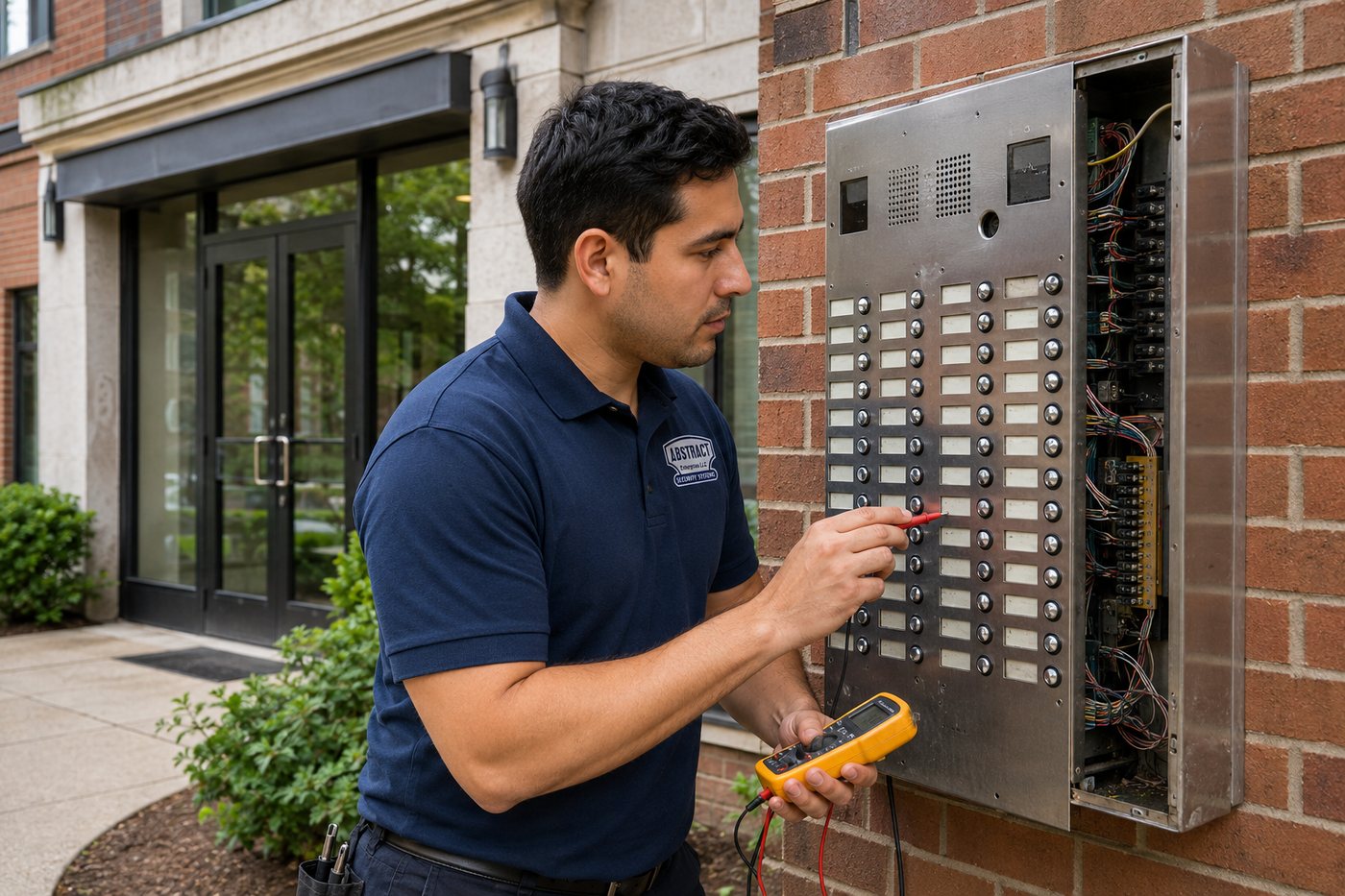
Door buzzer panel installation, intercom panel installation, directory intercom system installation, touchscreen intercom installation. From classic 4-button panels to modern touchscreen directory boards.
Repair, Replacement & Upgrades
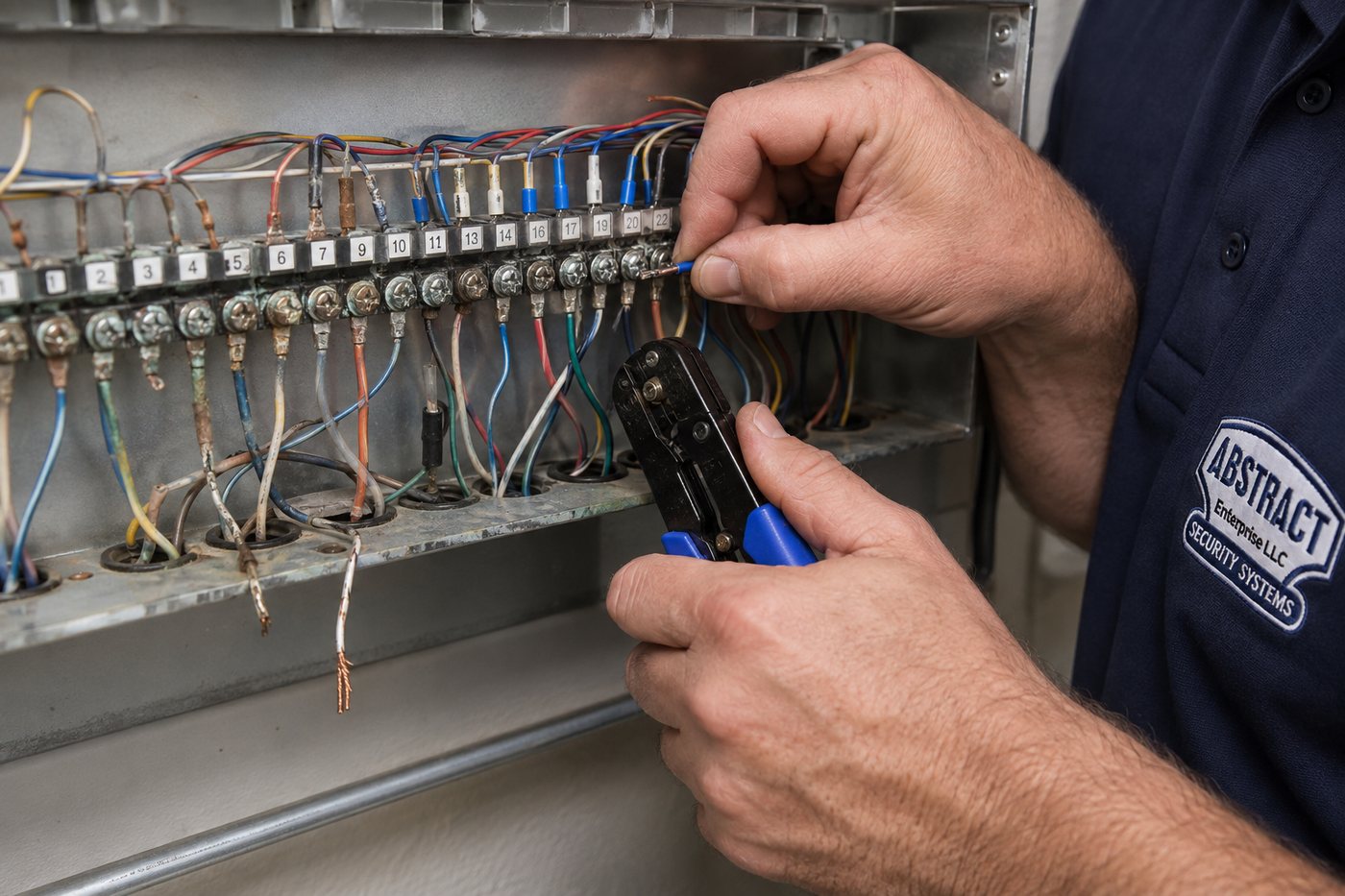
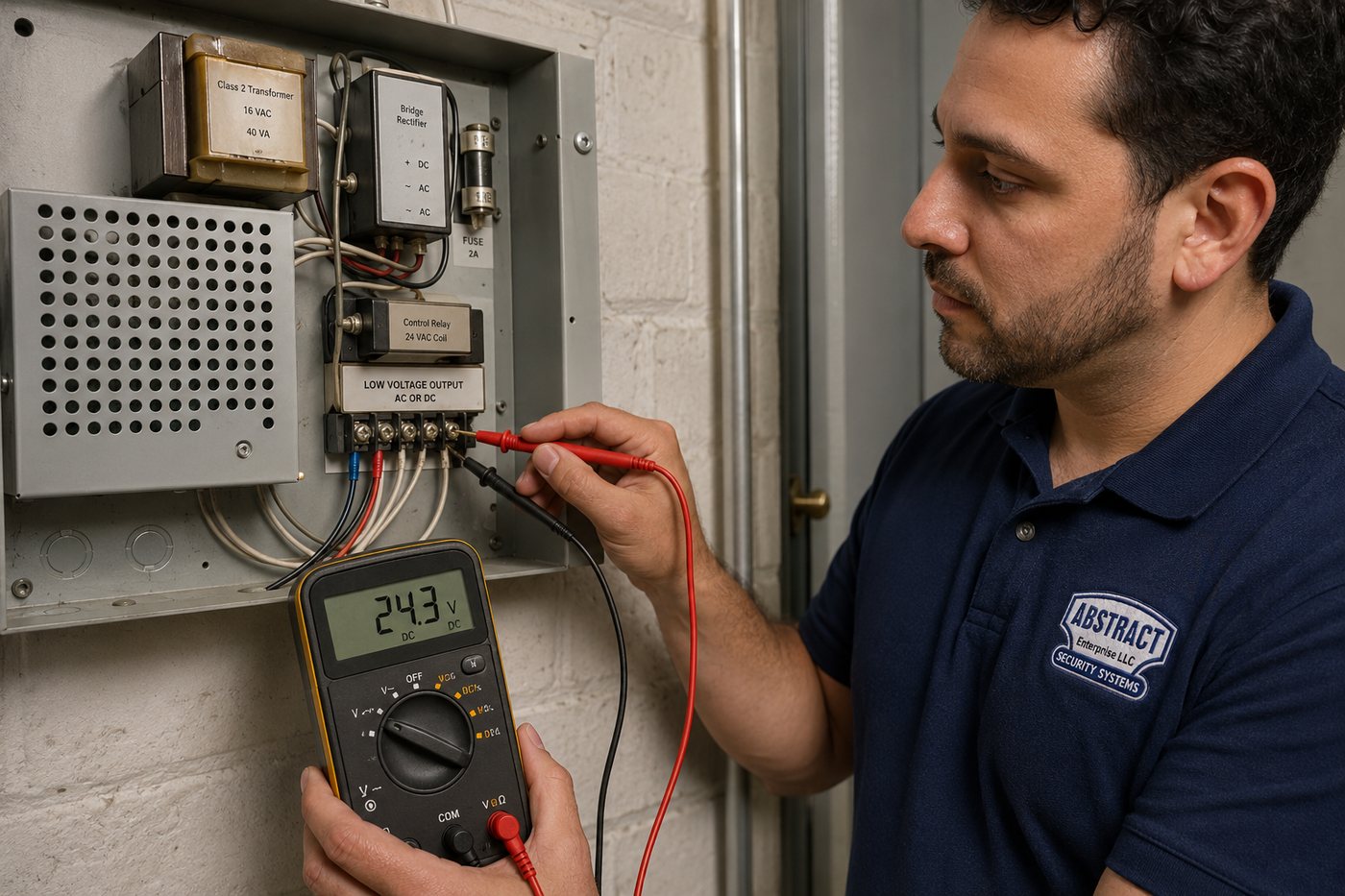
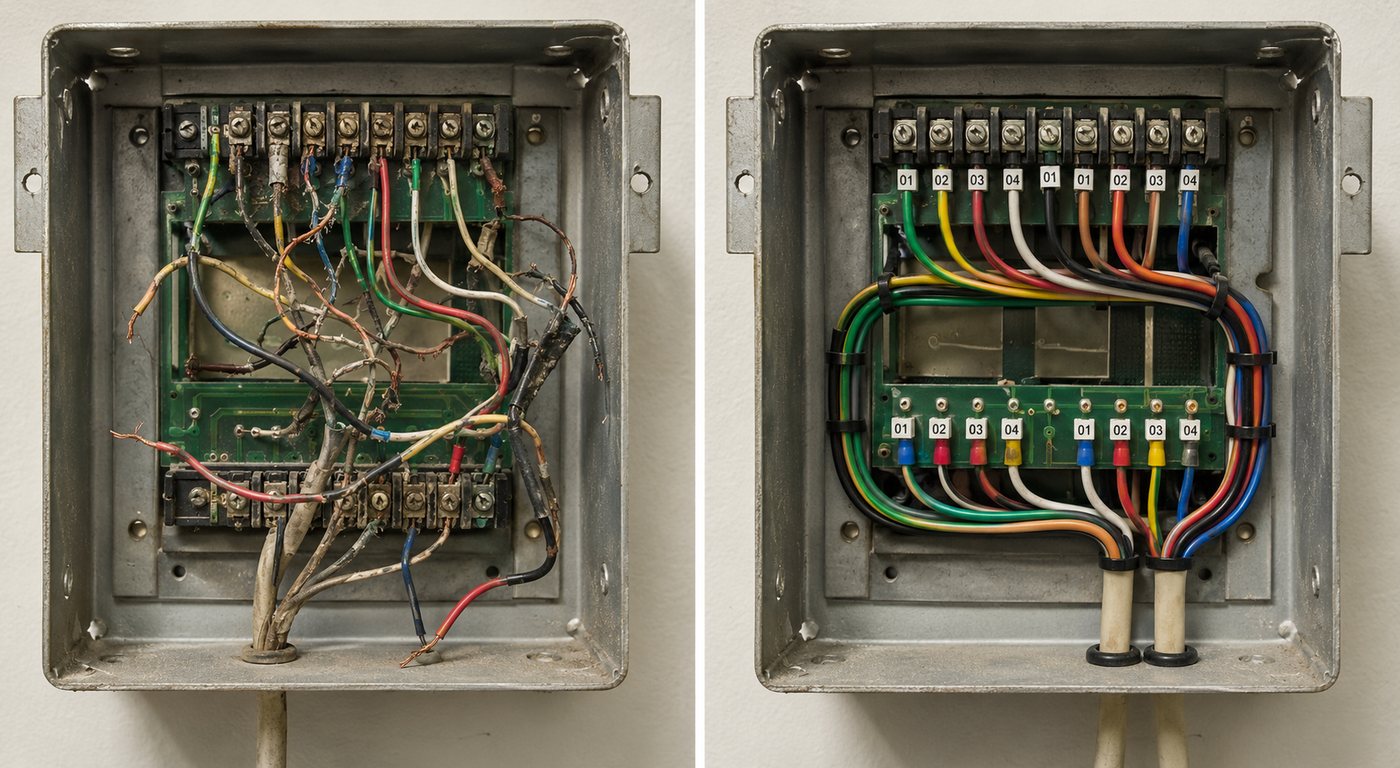
Door buzzer replacement, intercom system replacement, buzzer system upgrade, intercom upgrade service. Door buzzer troubleshooting, intercom troubleshooting service. Common issues we fix: door buzzer not working fix, intercom not working fix, buzzer no sound fix, buzzer not ringing fix, intercom static noise fix, intercom volume low fix, door buzzer wiring repair, intercom wiring repair, door buzzer button not working, intercom handset not working, door buzzer stuck open fix, door buzzer keeps buzzing fix, buzzer unlock not working, door release button not working.
Maintenance & Inspection
Door buzzer maintenance service, intercom maintenance service, door buzzer inspection service, intercom system inspection. Annual contracts available for Van Cortlandt Village buildings — especially valuable for the older Van Cortlandt Village building stock where preventive wiring inspection extends the life of decades-old systems. We coordinate with Van Cortlandt Village property managers and with the small commercial owners along Sedgwick Avenue, Van Cortlandt Park South, Bailey Avenue, West 238th Street, West 240th Street.
FAQ — Van Cortlandt Village Specific
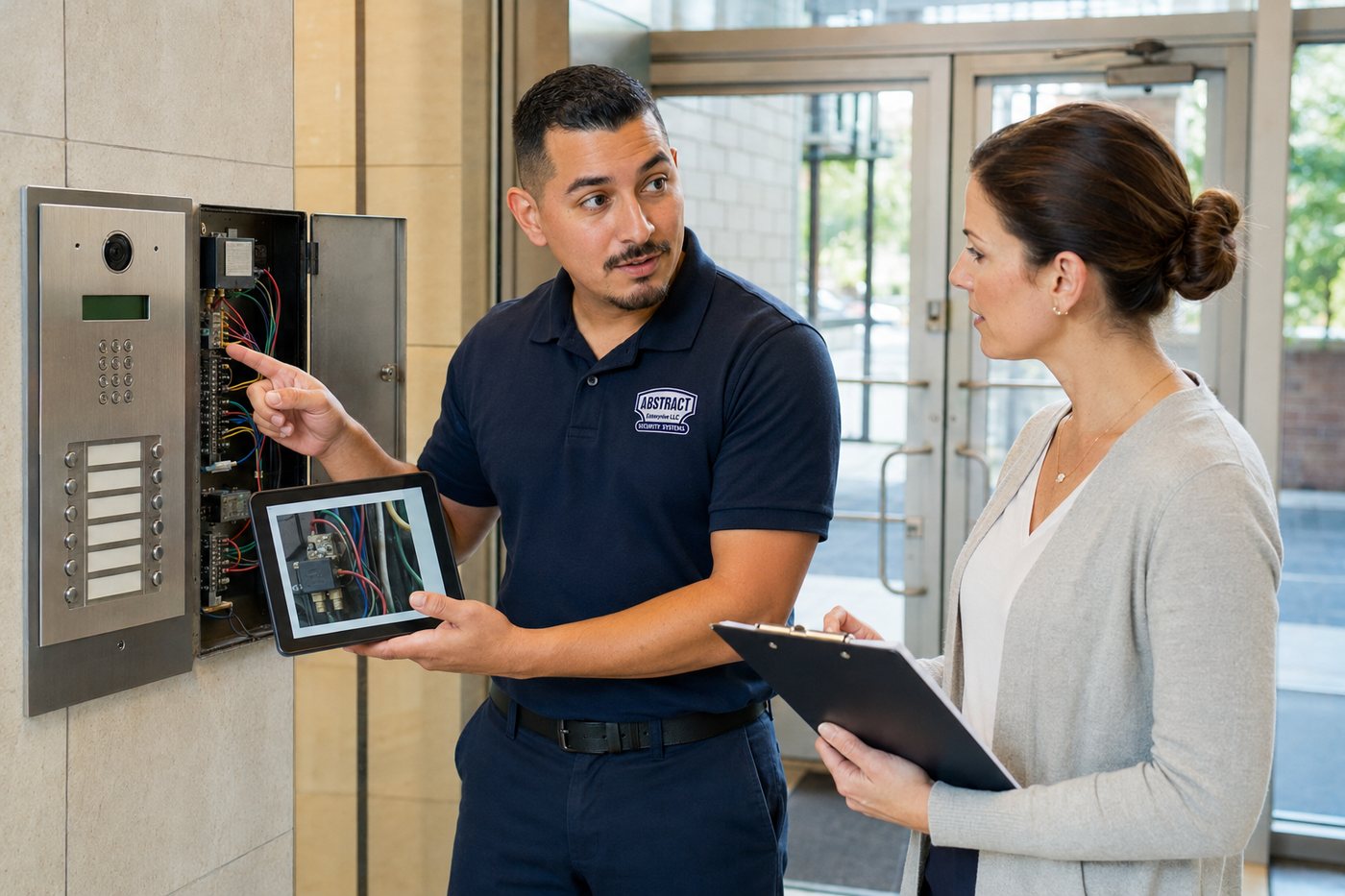
How does door buzzer system work in a Van Cortlandt Village building? Visitor presses unit button at the lobby panel, signal travels to apartment, tenant presses release. How much does door buzzer repair cost in Van Cortlandt Village? Basic repairs $150–$350; full system replacements vary by building era. How much does intercom installation cost in Van Cortlandt Village? Single-family from $400; small walk-up installs from $1,500; mid-size apartment buildings $3,500–$10,000+. Best intercom system for Van Cortlandt Village apartment: video intercom with smartphone answering for the post-2010 stock; durable lobby panel + handset systems for the older stock.
Hire door buzzer repair service — book intercom installation service today. Call (646) 490-0629.
Van Cortlandt Village Buzzer Repair by Block, Building, and Sub-Area
Van Cortlandt Village boundaries (per the 2004 rezoning): Van Cortlandt Park South (N), Fort Independence Park and Sedgwick Avenue (E), West 231st Street and Albany Crescent (S), Heath Avenue + Fort Independence Street + Orloff Avenue (W). Bronx Community District 8. Patrolled by the 50th Precinct at 3450 Kingsbridge Avenue (UNIQUE — ranked 13th safest out of 69 patrol areas for per-capita crime in 2010, with crimes decreased 69.9% between 1990 and 2022).
The 1975 NEIGHBORHOOD-RENAMING: In 1975, a member of the local community board proposed that the AMALGAMATED HOUSING COOPERATIVE and its surroundings be renamed, and a SIGN WAS UNVEILED designating the area VAN CORTLANDT VILLAGE. Bronx Borough Historian LLOYD ULTAN said the still-thriving Amalgamated — because of its distinctive culture and high population density — came to define its corner of Kingsbridge Heights as a distinct area.
The 1875 OLMSTED STREET PLAN: Originally designed by legendary landscape architect FREDERICK LAW OLMSTED in 1875. Olmsted was hired by Bronx Park Board president WILLIAM R. MARTIN to draw a system of streets that would correspond better to the Bronx’s hilly terrain (rather than the imposed Manhattan grid). Olmsted drew plans on a neighborhood scale consisting of business districts, suburbs, compact housing, parks, parkways, and transit routes. While construction was underway, political management of the Parks Board changed and Olmsted was DISCHARGED IN 1878. Van Cortlandt Village is one of the only Bronx neighborhoods that retained its Olmsted-designed street plan, of which very little survives throughout the rest of the borough.
REVOLUTIONARY WAR FORT INDEPENDENCE: The community sits atop the ruins of FORT INDEPENDENCE, one of a series of major fortifications constructed during the American Revolution to control passage between New York City and the mainland. The fort stood roughly between GILES PLACE and CANNON PLACE south of West 238th Street. The fort was surrounded by an entrenchment. In 1915 some neighborhood boys playing war on Giles Place dug trenches using borrowed picks and trowels and HIT SOMETHING HARD UNDER THE SOIL — they had found several CANNONBALLS that were left over from Fort Independence. The cannonballs were subsequently distributed to the NEW-YORK HISTORICAL SOCIETY, DYCKMAN HOUSE in Inwood, and the VAN CORTLANDT MANSION MUSEUM in Van Cortlandt Park.
The AMALGAMATED HOUSING COOPERATIVE (1927): Founded by leaders of the AMALGAMATED CLOTHING WORKERS OF AMERICA union as a "proletarian paradise." Designed by SPRINGSTEEN AND GOLDHAMMER for 308 families with an elaborate formal garden. Tenants could purchase apartments for $500 A ROOM and finance most of the cost through a special fund set up to assist workers. The complex eventually expanded to nearly 1,500 UNITS IN 11 BUILDINGS (final buildings completed 1970s). One of the FIRST LIMITED-EQUITY COOPERATIVES in the United States. Located along HILLMAN AVENUE (renamed from Norman Avenue IN 1950 for SIDNEY HILLMAN, ACWU head and major figure in the early-20th-century labor movement) and SAXON AVENUE. Includes the WORKMEN’S CIRCLE BUILDING (named for the Jewish fraternal organization founded 1900). Tenants at the beginning were mostly Jewish union members; today, tenants are a mixed bag nationally like the rest of the borough, and there are union and nonunion tenants. In the early days, the houses were divided between those with Socialist or Communist leanings.
The SHALOM ALEICHEM HOUSES (1926-1927): Originally the YIDDISH COOPERATIVE HEIMGESELLSCHAFT, founded by socialist Yiddish members of the Socialist and Communist Parties / driven by the vision of the WORKMEN’S CIRCLE. A 15-BUILDING NEO-TUDOR FORTRESS-LIKE STRUCTURE with 229 APARTMENTS plus several common spaces dedicated to education and the arts (including 3 ART STUDIOS, a NURSERY SCHOOL, and an AUDITORIUM for lectures and recitals). Housed TWO JEWISH SCHOOLS — one for the SOCIALISTS and one for the COMMUNISTS — owing to the discordant politics of the place. Named for SHOLEM ALEICHEM — the pen name of SOLOMON NAUMOVICH RABINOVICH (1859-1916), the legendary UKRAINIAN YIDDISH WRITER whose works included "TEVYE THE MILKMAN" — the SOURCE TEXT FOR "FIDDLER ON THE ROOF." Failed during the Great Depression and became a rental complex; in spring 2013 acquired by an owner to restore it to its original grandeur and renamed the Shalom Aleichem Houses. Home to the sculptor AARON GOODELMAN and the painter ABRAHAM MANIEVICH. MARC CHAGALL stayed for a few months after fleeing the Nazi invasion of Paris. BESS MYERSON, who became Miss America in 1945, grew up at the Sholem Aleichem houses.
The TRACEY TOWERS: At Mosholu Parkway and Jerome Avenue. Built by eclectic architect PAUL RUDOLPH in 1972. THE TALLEST BUILDINGS IN THE BRONX.
The DENISHAWN HOUSE: Little-known site associated with the EARLY CREATION OF MODERN DANCE IN AMERICA.
The 2004 REZONING: On September 28, 2004, the NYC Department of City Planning approved the rezoning of all or portions of 15 BLOCKS in this northwestern Bronx neighborhood (within Community District 8). The zoning changes aimed to preserve the community’s low-rise / low-density character.
The 2011 NRHP eligibility + 2012 HISTORIC DISTRICTS COUNCIL recognition: In 2011, the neighborhood was deemed eligible for listing on the State and National Registers of Historic Places. In early January 2012, the Historic Districts Council recognized Van Cortlandt Village as a NYC neighborhood in need of preservation.
SEDGWICK AVENUE (key spine, with the Amalgamated and JASA, plus the new development controversy at 3870 and 3874 Sedgwick Avenue): The principal residential and commercial spine running north-south.
HILLMAN AVENUE (renamed 1950 for Sidney Hillman): The Amalgamated Clothing Workers Union head was a major figure in the early-20th-century labor movement.
SAXON AVENUE: Where Amalgamated Houses are also located.
GILES PLACE: Where the 1915 cannonballs from Fort Independence were found by neighborhood boys playing war.
CANNON PLACE: Named for the cannons of Fort Independence. Twisting hilly street with elegant brick homes featuring porticos and manicured hedges.
GALE PLACE + VAN CORTLANDT AVENUE WEST: Other Olmsted-curvilinear-street-plan residential blocks. Van Cortlandt Avenue West has prewar apartment houses with brick façades, decorative cornices, and courtyards.
HEATH AVENUE + FORT INDEPENDENCE STREET + ORLOFF AVENUE (western boundary): Where the western edge of the 2004 rezoning sits.
ALBANY CRESCENT + WEST 231ST STREET (southern boundary): Where the southern edge of the 2004 rezoning sits.
WEST 238TH STREET (north of the Fort Independence ruins): The boundary line for the historic fort between Giles Place and Cannon Place.
KINGSBRIDGE TERRACE (southeast): Adjacent to Kingsbridge Heights.
MOSHOLU PARKWAY (northeast): Where the Tracey Towers (1972 Paul Rudolph) sit at the corner with Jerome Avenue.
The 1908 BROADWAY IRT 238TH STREET STATION OPENING: Pushed development northward into the upper reaches of the Bronx during the early 20th century.
The MATTHEW W. DEL GAUDIO 1915-16 ROW OF 8 HOUSES: The EARLIEST EXTANT HOUSING in the neighborhood.
CAPTAIN LAWRENCE V. MEEHAN 1921, CHARLES A. NEWBURGH 1922, JAMES F. DELANEY 1926: Three of the historic builders/architects whose homes anchor the residential streets.
The SEARS ROEBUCK MAIL-ORDER HOUSE at No. 3336 (with identical twins at 3338 and 3340): Unique catalog-architecture anchor.
The GILES MANSION: Magnificent structure with a large central tower (architect unknown).
VAN CORTLANDT JEWISH & SENIOR CENTERS (JASA): On Sedgwick Avenue.
FORT INDEPENDENCE PARK NEIGHBORHOOD ASSOCIATION: Active civic organization fighting against land grabs and new housing projects.
AMALGAMATED HOUSING CO-OP COUNCIL: Active civic organization advocating for park maintenance, historic preservation, and affordable housing.
PS 95: Anchor elementary school.
ST. JOHN’S ROMAN CATHOLIC CHURCH: Religious anchor.
FDNY ENGINE CO. firehouse: Emergency response.
The CULTURAL AMENITIES: Amalgamated Co-op offers various social activities — ceramics classes, writers’ workshops, and art exhibits. Many of the Bronx’s cultural amenities are a short distance away, including the New York Botanical Garden and Wave Hill.
SUBWAY: 238th Street station on the BROADWAY IRT (1 TRAIN), opened 1908, west of the neighborhood. The IRT Jerome Avenue Line (4 train) Mosholu Parkway and Bedford Park Boulevard / Lehman College stations to the east.
BUSES: Bx9, Bx10, Bx22, Bx26, Bx28.
NEW DEVELOPMENT CONTROVERSY 2026: 3870 and 3874 Sedgwick Avenue development by INNOVATIVE DEVELOPMENT CONSTRUCTION. The community is fighting against "Manhattanization" of the neighborhood. Anthony Perez Cassino, a former chairman of Bronx Community Board 8 who helped to rezone the neighborhood, described Van Cortlandt Village as a "vulnerable" area as it is more affordable than nearby Riverdale.
The NEW YORK TIMES described the area as a "SERENE ENCLAVE OF QUAINT HOMES, WINDING STREETS AND ABUNDANT TREES": A garland of greenery wends through the neighborhood. In the heart of the area, on twisting hilly streets like Giles Place and Cannon Place, are elegant brick homes with porticos and manicured hedges.
Adjacent neighborhoods: Riverdale (N across Van Cortlandt Park, with its own deep-rebuild buzzer-repair page on this site); North Riverdale; Fieldston (with its own deep-rebuild page); Hudson Hill (with its own deep-rebuild page); Central Riverdale (with its own deep-rebuild page); Norwood (NE, with its own deep-rebuild page); Bedford Park (E); Kingsbridge Heights (S); Kingsbridge (S/SW); Marble Hill (S/SW).
Van Cortlandt Village Brand-by-Brand Repair Notes
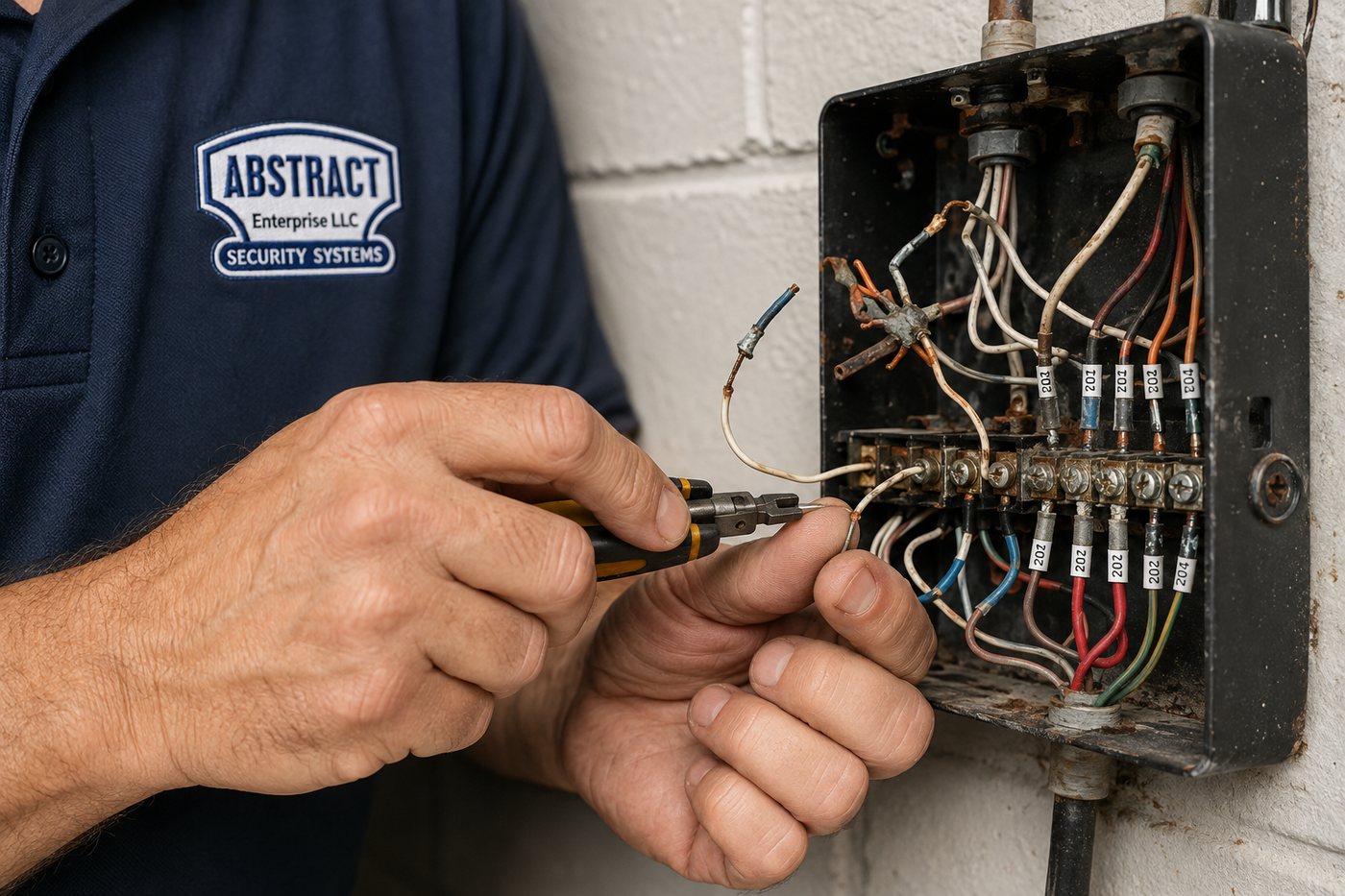
Lee Dan (the dominant brand at Van Cortlandt Village’s 1915-1930 housing-boom-era prewar housing stock + 1927 Amalgamated Housing Cooperative + 1926-1927 Shalom Aleichem Houses): The DOMINANT brand we encounter in the 1915-1930 housing-boom-era stock that defines Van Cortlandt Village. Most installs are 1980s-1990s NYC HPD-conversion-era retrofits over original early-20th-century low-voltage copper wiring. Common failures: handset speakers in long-tenure households, lobby panel push-buttons stressed by century of pedestrian traffic, basement transformer relays in century-old buildings.
M&S Systems: Common in selective Van Cortlandt Village apartment retrofits and the post-WWII selective rebuild stock.
Nutone: Common in the dominant single-family rowhouse + neo-Tudor + neo-Georgian + neo-Federal stock that defines Van Cortlandt Village. Original wired front-door bell systems with chime modules. Many still in service after multi-decade Irish-American + Jewish-American + multi-class multi-racial multi-cultural family ownership.
TekTone: Common in mid-size Van Cortlandt Village buildings, particularly the post-1990s recovery-era selective rebuilds.
Comelit and Aiphone: Standard for the post-1990s recovery-era selective new construction (relatively rare given Van Cortlandt Village’s 1915-1930 housing-boom-era completion) and selective gut-rehab retrofits in the 1915-1930 prewar housing stock plus the AMALGAMATED HOUSING COOPERATIVE 1927 (the 11-building complex with 1,500 units) and the SHALOM ALEICHEM HOUSES 1926-1927 (the 15-building Neo-Tudor fortress with 229 apartments, with the 2013 ownership change bringing selective modernization). Comelit Mini and Maxi panels and Aiphone GT/GH series are reliable platforms.
ButterflyMX: Increasingly common in newest Van Cortlandt Village construction (the post-2015 recovery-era selective infill including the 2026 controversial 3870 and 3874 Sedgwick Avenue Innovative Development Construction project). Smartphone-based video intercom platform.
Institutional access control platforms (HID, Genetec, S2 Security): The systems we install and service at the AMALGAMATED HOUSING COOPERATIVE (the 1927 Springsteen-and-Goldhammer-designed 11-building complex with 1,500 units along Hillman Avenue and Saxon Avenue), the WORKMEN’S CIRCLE BUILDING (the Amalgamated’s newer building, named for the Jewish fraternal organization founded 1900), the SHALOM ALEICHEM HOUSES (the 1926-1927 Yiddish Cooperative Heimgesellschaft 15-building Neo-Tudor fortress with 229 apartments, the 5-story red-brick complex with 3 art studios + nursery school + auditorium — preservation-conscious institutional access control), the VAN CORTLANDT JEWISH & SENIOR CENTERS (JASA) on Sedgwick Avenue, the AMALGAMATED HOUSING CO-OP COUNCIL, the FORT INDEPENDENCE PARK NEIGHBORHOOD ASSOCIATION, the DENISHAWN HOUSE (the early creation of modern dance in America anchor), PS 95, ST. JOHN’S ROMAN CATHOLIC CHURCH, the FDNY ENGINE CO. firehouse, and the 50TH PRECINCT at 3450 Kingsbridge Avenue. Card-reader systems, faculty/staff/student/visitor entry, after-hours building access, and 1927-Amalgamated + 1926-Shalom-Aleichem + 1875-Olmsted-street-plan + 1776-Fort-Independence-cannonballs preservation-conscious institutional work.
Ring, Nest, Eufy, Arlo (single-family video doorbells): The DOMINANT MODERN UPGRADE for Van Cortlandt Village given the strong concentration of single-family and two-family neo-Tudor/neo-Georgian/neo-Federal homes on the Olmsted curvilinear streets. Many homeowners are upgrading from original 1915-1930 wired Nutone bells to smart video doorbell platforms.
Urmet, Fermax, Akuvox, DoorBird, 2N, SSS Siedle, Channel Vision: Less common in Van Cortlandt Village but encountered in selective imports.