Door Buzzer & Intercom Service in Pelham Parkway, Bronx — Every System Type
Looking for door buzzer repair or intercom installation in Pelham Parkway? Looking for door buzzer repair or intercom installation in Pelham Parkway (the central-northeastern Bronx neighborhood named after the Bronx and Pelham Parkway road, anchored by the dense prewar Art Deco co-op apartment buildings and the historic Lydig Avenue commercial spine)? Our technicians service every part of the Pelham Parkway footprint: the dominant 1910s-1930s prewar ART DECO and RENAISSANCE REVIVAL co-op apartment buildings (with terra-cotta facades, geometric patterns, and elegant entryways — including the Charles Kreymborg-designed 1938 six-story co-op at 2160 Bronx Park East); the smaller brick two-family homes and attached rowhouses south of the parkway; the limited Tudor-inspired developments with private courtyards; the 1916 PELHAM PARKWAY STATION at the White Plains Road intersection (the only NYC subway station built over parkland); the underground 5 train Pelham Parkway station at Williamsbridge Road; the JACOBI MEDICAL CENTER and Van Etten Hospital (Bronx Municipal Hospital at the intersection of Pelham Parkway South and Eastchester Road); the BRONX ZOO and NEW YORK BOTANICAL GARDEN (within Bronx Park, separated by Pelham Parkway); the schools (P.S. 89 on Colden Avenue, P.S. 105 on Holland Avenue, NEW YORK INSTITUTE FOR SPECIAL EDUCATION on Colden Avenue, CHRISTOPHER COLUMBUS HIGH SCHOOL on Colden Avenue); the small commercial frontage along LYDIG AVENUE (the historic Jewish-immigrant-era commercial spine, now anchored by Albanian social clubs, food stores, real estate offices, coffee shops, plus Taco El Bronco II authentic tacos, fresh tamarind juice, street tacos, Starbucks, Chinese, Latin American, Italian, Jamaican, and Eastern European spots) and along WHITE PLAINS ROAD (the primary commercial thoroughfare with the 2 and 5 trains express, anchored by the ENGINE CO. 90 / LADDER CO. 41 FDNY fire station at 1843 White Plains Road); the YOUNG ISRAEL OF PELHAM PARKWAY synagogue; the BEN ABRAMS PLAYGROUND (named 1986 at the corner of Lydig Avenue and Bronx Park East); CRUGER AVENUE (co-named REGIS PHILBIN AVENUE, where Regis Philbin grew up between Sagamore Street and Bronxdale Avenue); HOLLAND AVENUE (where Robert Abrams lived near P.S. 105); WALLACE AVENUE (where Ronnie Landfield grew up between Lydig Avenue and Pelham Parkway South); BRADY AVENUE; and the residential blocks served by the BxM10 (Morris Park Avenue route to Manhattan along Fifth Avenue, returns along Madison Avenue) and BxM11 (White Plains Road route) Bronx-Manhattan express buses. We provide door buzzer installation, door buzzer service, door buzzer system installation, door buzzer system repair, plus licensed intercom installer work and insured buzzer installation company documentation. Same day door buzzer repair and emergency intercom repair across all of Pelham Parkway, Bronx — ZIP 10467. Best door buzzer repair service. Affordable intercom installation. Door buzzer installer.
Why Pelham Parkway Buzzer Repair Is Different
Pelham Parkway is unlike any other Bronx neighborhood we serve because of three combining factors that don’t coexist anywhere else in the city. First: Pelham Parkway is anchored by the 1916 PELHAM PARKWAY STATION at the White Plains Road intersection (2 train, IRT White Plains Road Line) — THE ONLY NYC SUBWAY STATION BUILT OVER PARKLAND. The station spans Pelham Parkway’s greenbelt with tile work patterns and banding set into concrete facades, cited by New York State’s Office of Parks, Recreation and Historic Preservation for its unique appearance and siting. UNIQUE among all 472 NYC subway stations. Second: Pelham Parkway raised an extraordinary celebrity-street-map of nationally famous figures: REGIS PHILBIN (1931-2020, talk show host) grew up on CRUGER AVENUE between Sagamore Street and Bronxdale Avenue (the street has been CO-NAMED REGIS PHILBIN AVENUE in his honor); ANDREA MITCHELL (born 1946, NBC News journalist/anchor/commentator) grew up here; ROBERT ABRAMS (born 1938, former NY State Attorney General) lived along HOLLAND AVENUE on the same block as P.S. 105; RONNIE LANDFIELD (born 1947, abstract artist) grew up on WALLACE AVENUE between Lydig Avenue and Pelham Parkway South. UNIQUE celebrity-street-map density. Third: the parkway road itself has an extraordinary recreational-history anchor — before WWII, the center of Pelham Parkway was CLOSED OFF on Sunday mornings for PROFESSIONAL BICYCLE RACING. UNIQUE pre-WWII recreational-history. Add the JOHN MULLALY (1881 New York Park Association founder), the 1884 New Parks Act, the ROBERT MOSES 1935-1937 construction, the 1911 STRICT BUILDING CODE (no construction within 150 feet of center, no railroads crossing over — hence the 5 train tunnel underneath, no bars or hotels alongside), the LT. COL. YEHONATAN NETANYAHU LANE 1977 renaming (Israeli officer killed in 1976 Entebbe raid), the FAMOUS PELHAM HEATH INN (the nightclub at Eastchester Road + Pelham Parkway South where top bands played and were broadcast coast to coast, closed 1952), the 1899 BRONX ZOO and adjacent NY Botanical Garden separated by the parkway within Bronx Park, the LAST OLD-FASHIONED JEWISH IMMIGRANT NEIGHBORHOOD IN THE BRONX status, the LYDIG AVENUE etymology (named for Philip Leidig, a baker who immigrated to America in 1750), the COLDEN AVENUE etymology (Dr. Cadwalader Colden who studied Indian habits and wrote “History of Indian Nations”), the BEN ABRAMS PLAYGROUND (named 1986 for the Holland Avenue luncheonette operator and Pelham Parkway Jewish Council member), the dense prewar ART DECO and RENAISSANCE REVIVAL co-op apartment buildings (with terra-cotta and geometric patterns), the EAST COAST GREENWAY (Maine to Florida) and MOSHOLU-PELHAM GREENWAY route, and Pelham Parkway produces buzzer-repair calls dominated by 1916-Pelham-Parkway-Station-only-subway-built-over-parkland + Regis-Philbin-Avenue-celebrity-street-map + Sunday-morning-bicycle-racing-pre-WWII + John-Mullaly-1884-New-Parks-Act + Robert-Moses-1935-1937-construction + Pelham-Heath-Inn-coast-to-coast-broadcast + Lydig-Avenue-Jewish-immigrant-heart + dense-prewar-Art-Deco-Renaissance-Revival-co-op layered complexity unlike anywhere else in New York City.
What Makes Pelham Parkway Repair Calls Distinctive
The dense PREWAR (1910s-1930s) ART DECO and RENAISSANCE REVIVAL co-op apartment buildings (the dominant building stock with terra-cotta facades, geometric patterns, and elegant entryways comparable to Grand Concourse stock) require co-op-board-by-co-op-board coordination unlike any other Bronx rebuild outside the Concourse. The Charles Kreymborg-designed 1938 six-story co-op at 2160 Bronx Park East is a representative example. Many of these prewar buildings have been converted to cooperative ownership since the 1980s, requiring full co-op board coordination for any access-control hardware change. The 1916 PELHAM PARKWAY STATION at the White Plains Road intersection (the only NYC subway station built over parkland) requires preservation-conscious institutional access control that respects its tile work patterns and banding set into concrete facades. The JACOBI MEDICAL CENTER (Bronx Municipal Hospital + Van Etten Hospital at the intersection of Pelham Parkway South and Eastchester Road) is one of the largest medical institutions in the Bronx and requires institutional-grade access control with HID/Genetec/S2 platforms covering patient/staff/visitor credentialing, after-hours building access, and emergency department coordination. The BRONX ZOO (~4,000 animals on 250+ acres, opened 1899) and the NEW YORK BOTANICAL GARDEN (both within Bronx Park, separated by Pelham Parkway) are world-class institutions requiring institutional access control. The NEW YORK INSTITUTE FOR SPECIAL EDUCATION on Colden Avenue (named for Dr. Cadwalader Colden), CHRISTOPHER COLUMBUS HIGH SCHOOL (also Colden Avenue), P.S. 89 (Colden Avenue), and P.S. 105 (Holland Avenue, the same block where Robert Abrams lived) all require institutional access control. The YOUNG ISRAEL OF PELHAM PARKWAY synagogue requires preservation-conscious religious-and-civic institutional access control. The BEN ABRAMS PLAYGROUND (named 1986 at the corner of Lydig Avenue and Bronx Park East) and the PELHAM PARKWAY GREENWAY RESTORATION PROJECT (completed 2010s with new landscaping, lighting, and bike paths) are key public infrastructure. The historic association with REGIS PHILBIN (Cruger Avenue / co-named Regis Philbin Avenue), Andrea Mitchell, Robert Abrams (Holland Avenue), and Ronnie Landfield (Wallace Avenue) does not change technical requirements but generates occasional cultural-tourism foot traffic. The diverse Jewish, Italian, Albanian (with prominent Lydig Avenue Albanian social clubs and food stores), West Indian, Hispanic, South Asian, and Russian-Jewish demographics generate multilingual coordination needs. The BxM10 (Morris Park Avenue route, Bronx-Manhattan express) and BxM11 (White Plains Road route) buses serve commuters.
Pelham Parkway Building Eras We Service
Five distinct construction eras require five distinct repair approaches in Pelham Parkway. 1910s prewar early apartment houses (the earliest dominant stock): the first wave of mid-rise apartment buildings constructed after the 1917 White Plains Road subway line arrived. Original early-prewar wiring with multiple decades of retrofits. 1920s-1930s ART DECO and RENAISSANCE REVIVAL co-op apartment buildings (the most distinctive stock): the dense mid-rise apartment and co-op buildings with terra-cotta facades, geometric patterns, and elegant entryways — comparable to Grand Concourse Art Deco stock. The most imposing examples line Pelham Parkway North and the side streets. The Charles Kreymborg-designed 1938 six-story co-op at 2160 Bronx Park East is representative. Original ornate-lobby panel hardware (often Lee Dan, M&S, or Nutone) with multi-decade retrofits over corroded 1920s-1930s low-voltage copper wiring. 1930s-1940s smaller brick two-family homes and attached rowhouses (the southern Pelham Parkway stock): south of the parkway, smaller brick two-family homes provided ownership opportunities to upwardly mobile families. Original wired front-door bell systems and chime modules. Post-1960s Tudor-inspired developments with private courtyards (the limited stock): a small number of Tudor-inspired developments with courtyard access control. Post-1980s cooperative-conversion era + modern infill: the 1980s-onward conversion of many prewar Art Deco and Renaissance Revival apartment buildings to COOPERATIVE OWNERSHIP brought standardized but era-specific hardware across the co-op portfolio. Post-2000 modern infill uses Comelit, Aiphone, ButterflyMX video intercom systems with smartphone integration. Our technicians know each era and bring the right parts on every truck.
Systems We Install & Repair in Pelham Parkway
Buzzer & Intercom Systems
Apartment buzzer installation, apartment buzzer repair, building buzzer system installation, building buzzer system repair. Residential door buzzer installation, commercial door buzzer installation, office buzzer system installation. Multi tenant intercom installation, multi unit buzzer system installation. Intercom installation, intercom repair, intercom system installation, intercom system repair, buzzer system installation, buzzer system repair.
Wireless & Smart
Wireless door buzzer installation, wired door buzzer installation. Smart intercom installation, video intercom installation, audio intercom installation. Smart door buzzer system installation. Door buzzer installation with smartphone access. Mobile app intercom system installation. Cloud based intercom system installation. IP intercom system installation and analog intercom system installation.
Door Hardware Integration
Electric strike buzzer integration, buzzer with electric strike installation, buzzer with mag lock installation. Intercom with access control integration. Video intercom with smartphone access. Key fob buzzer system integration, keypad buzzer system installation. Door entry system installation, door entry system repair, access buzzer system installation, lobby buzzer system installation.
Panels & Hardware
Door buzzer panel installation, intercom panel installation, directory intercom system installation, touchscreen intercom installation. From classic 4-button panels to modern touchscreen directory boards.
Repair, Replacement & Upgrades
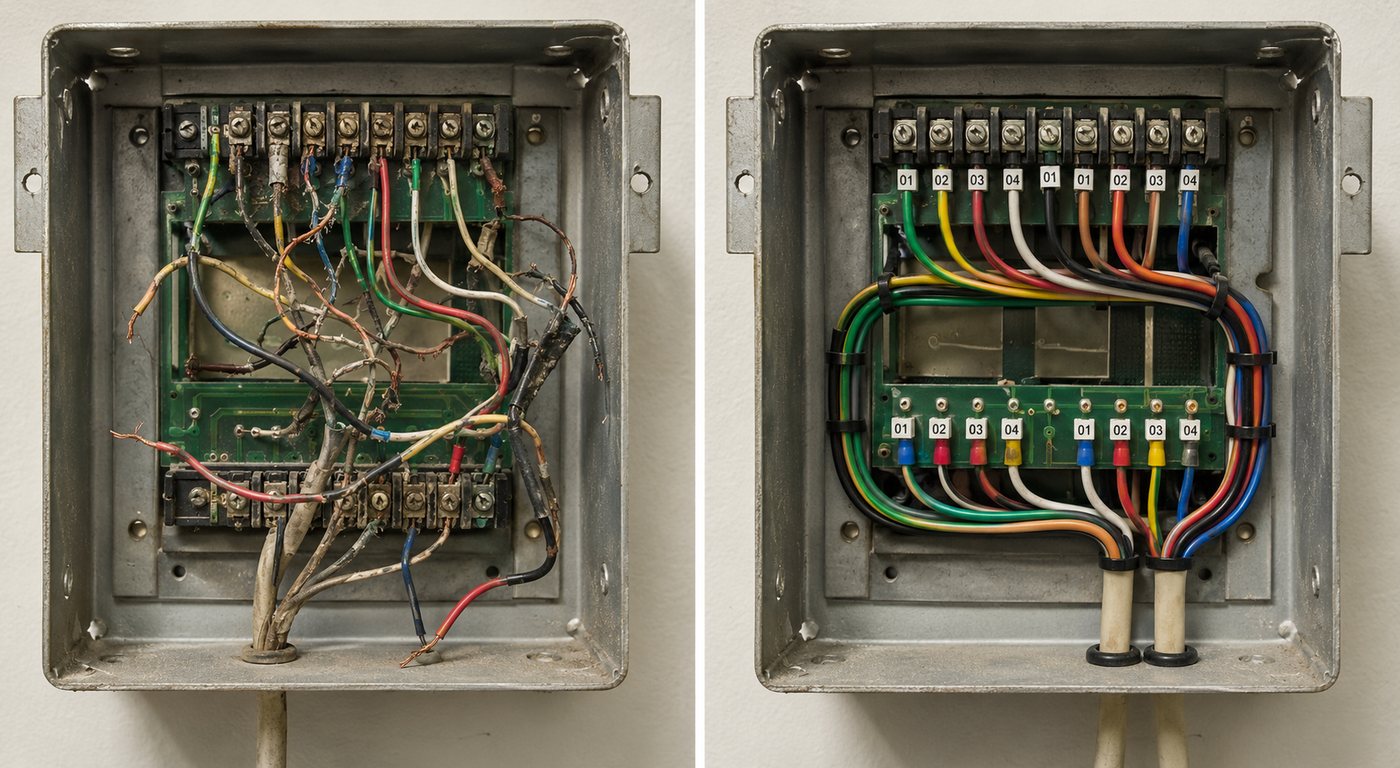
Door buzzer replacement, intercom system replacement, buzzer system upgrade, intercom upgrade service. Door buzzer troubleshooting, intercom troubleshooting service. Common issues we fix: door buzzer not working fix, intercom not working fix, buzzer no sound fix, buzzer not ringing fix, intercom static noise fix, intercom volume low fix, door buzzer wiring repair, intercom wiring repair, door buzzer button not working, intercom handset not working, door buzzer stuck open fix, door buzzer keeps buzzing fix, buzzer unlock not working, door release button not working.
Maintenance & Inspection
Door buzzer maintenance service, intercom maintenance service, door buzzer inspection service, intercom system inspection. Annual contracts available for Pelham Parkway buildings — especially valuable for the prewar 1920s-1930s 6-story apartment stock along Pelham Parkway South and the Albert Einstein College of Medicine campus access control.
FAQ — Pelham Parkway Specific
How does door buzzer system work in a Pelham Parkway prewar apartment? Visitor presses unit button, signal travels to apartment, tenant presses release. How much does door buzzer repair cost in Pelham Parkway? Basic repairs $150–$350.
Hire door buzzer repair service — book intercom installation service today. Call (646) 490-0629.
Pelham Parkway Buzzer Repair by Block, Building, and Sub-Area
Pelham Parkway boundaries (the triangular neighborhood SOUTH of the parkway road): Pelham Parkway South on the north (the parkway road itself); IRT Dyre Avenue Line tracks (5 train) on the east; Bronxdale Avenue on the south; Bronx Park East on the west. ZIPs primarily 10461 (east of Paulding Avenue) and 10462 (west of Paulding Avenue). Bronx Community District 11. 49th Precinct (located at 2121 Eastchester Road in adjacent Morris Park).
The BRONX AND PELHAM PARKWAY road itself (the namesake): Officially named by Act of Legislature on June 14, 1884. 2.25-2.5-mile-long, 400-foot-wide, six-lane divided boulevard with wide expanses of lawn and full canopies of trees (iconic American elm trees). Connects BRONX PARK on the west (with the New York Botanical Garden and the Bronx Zoo) to PELHAM BAY PARK on the east (NYC’s largest park). Part of the MOSHOLU-PELHAM GREENWAY and the EAST COAST GREENWAY (Maine to Florida). The road was established 1911 (originally only ONE LANE — today’s westbound lane), with today’s parkway constructed 1935-1937 under parks commissioner ROBERT MOSES.
STRICT 1911 BUILDING CODE: Nobody allowed to build within 150 feet of the center; bars and hotels prohibited alongside the parkway; no railroads allowed to cross over the parkway (which is why the New Haven Railroad / 5 train had to be laid in a TUNNEL UNDERNEATH the parkway). Land in 1900 cost $3,500-$5,000 per lot.
JOHN MULLALY 1881 NEW YORK PARK ASSOCIATION: Pelham Parkway’s inception traced to 1881 when JOHN MULLALY (1835-1915, former NYC Health Commissioner and former secretary to inventor Samuel F.B. Morse) helped found the New York Park Association. Effort culminated in the 1884 NEW PARKS ACT, which authorized the City’s purchase of lands for VAN CORTLANDT, CLAREMONT, CROTONA, BRONX, ST. MARY’S, and PELHAM BAY PARKS plus the MOSHOLU, CROTONA, and BRONX AND PELHAM PARKWAYS between 1888 and 1890. Modeled after Frederick Law Olmsted and Calvert Vaux’s Eastern Parkway / Ocean Parkway concept.
The 1916 PELHAM PARKWAY STATION (the only NYC subway station built over parkland): 2 train, IRT White Plains Road Line, at the White Plains Road intersection. Decorated with tile work patterns and banding set into concrete facades. Cited by NY State’s Office of Parks, Recreation and Historic Preservation for its unique appearance and siting. UNIQUE among all NYC subway stations.
WHITE PLAINS ROAD (primary commercial thoroughfare): The 2 and 5 trains express. Anchors the dense commercial activity. Engine Co. 90 / Ladder Co. 41 FDNY fire station at 1843 White Plains Road.
LYDIG AVENUE (main east-west commercial spine): Historic Jewish-immigrant-era commercial heart of the neighborhood. Today anchored by Albanian social clubs, food stores, real estate offices, and coffee shops, plus Taco El Bronco II authentic tacos, fresh tamarind juice, street tacos, Starbucks, Chinese, Latin American, Italian, Jamaican, and Eastern European spots. The BEN ABRAMS PLAYGROUND sits at the corner of Lydig Avenue and Bronx Park East. Etymology: named for the LYDIG family, descendants of PHILIP LEIDIG (a baker who immigrated to America in 1750, supplying sea biscuits to the merchant marine; his son David expanded the business by purchasing flour mills near West Farms in 1830; grandson anglicized Leidig to Lydig).
COLDEN AVENUE etymology: Named for DR. CADWALADER COLDEN, who came to the Bronx in the late 1880s to study Indian habits, wrote “History of Indian Nations,” and was an active member of the city council. Colden Avenue passes by P.S. 89, the NEW YORK INSTITUTE FOR SPECIAL EDUCATION, and CHRISTOPHER COLUMBUS HIGH SCHOOL.
CRUGER AVENUE / REGIS PHILBIN AVENUE: The street where talk show host REGIS PHILBIN (1931-2020) grew up between Sagamore Street and Bronxdale Avenue. The street has been CO-NAMED REGIS PHILBIN AVENUE in his honor.
HOLLAND AVENUE: Where former NY Attorney General ROBERT ABRAMS (born 1938) lived “on the same block as P.S. 105.” Also the block where BEN ABRAMS (1907-1984, the Pelham Parkway Jewish Council and Hubert H. Humphrey Democratic Club member) operated his neighborhood luncheonette.
WALLACE AVENUE: Where abstract artist RONNIE LANDFIELD (born 1947) grew up between Lydig Avenue and Pelham Parkway South.
OTHER NOTABLE RESIDENTS: ANDREA MITCHELL (born 1946, NBC News television journalist/anchor/commentator) grew up in Pelham Parkway. The neighborhood also raised numerous Italian-American and Jewish-American business and political leaders.
JACOBI MEDICAL CENTER + Van Etten Hospital: Bronx Municipal Hospital at the intersection of Pelham Parkway South and Eastchester Road. Part of the NYC Health and Hospitals Corporation (HHC). One of the Bronx’s largest medical institutions.
BRONX ZOO (Wildlife Conservation Park): The 1899-opened Bronx Zoo houses ~4,000 animals representing 650 species on 250+ acres of habitat in Bronx Park, with Pelham Parkway serving as the physical boundary between the Zoo’s lands and the New York Botanical Society’s lands.
NEW YORK BOTANICAL GARDEN: Modeled after the Royal Gardens in Kew, England. One of the most distinguished gardens of its kind in the world. North of Pelham Parkway within Bronx Park.
The PELHAM HEATH INN (1952 closure): The famous nightclub at the junction of Eastchester Road and Pelham Parkway South where TOP BANDS PLAYED AND WERE BROADCAST FROM COAST TO COAST. Closed 1952. “Aging in America” now stands on the site.
YOUNG ISRAEL OF PELHAM PARKWAY synagogue: A historic Jewish congregation. Bronx House community center (run by Rose Stockhammer) was a key Jewish-American institution. The PELHAM PARKWAY JEWISH COUNCIL was the major Jewish-community organization (with Ben Abrams as a key member).
The 1977 LT. COL. YEHONATAN NETANYAHU LANE renaming: One lane of the parkway was renamed in 1977 in memory of the Israeli officer killed in the 1976 Entebbe raid. UNIQUE international-history naming.
SUNDAY MORNING PROFESSIONAL BICYCLE RACING (pre-WWII): Before World War II, the center of the parkway was CLOSED OFF on Sunday mornings for professional bicycle racing. UNIQUE pre-WWII recreational-history.
BEN ABRAMS PLAYGROUND (named 1986): Corner of Lydig Avenue and Bronx Park East. Renamed 1986 (formerly informally called Lydig Avenue Playground) for BEN ABRAMS (1907-1984), the Holland Avenue luncheonette operator and Hubert H. Humphrey Democratic Club / Pelham Parkway Jewish Council / B’nai B’rith member. $251,495 renovation funded by Mayor Giuliani in 1997 with new play equipment, safety surfacing, and a spray shower.
2160 BRONX PARK EAST: Six-story co-op building designed by renowned architect CHARLES KREYMBORG, completed 1938. A representative example of the Pelham Parkway prewar co-op stock.
“THE WALL”: The corner of Pelham Parkway and White Plains Road, a historic hippie hangout in the late 1960s.
The PELHAM PARKWAY GREENWAY RESTORATION PROJECT (completed 2010s): Revitalized the central malls of Pelham Parkway with new landscaping, lighting, and bike paths.
Demographics: Today a mosaic of Jewish, Italian, Albanian (with prominent Lydig Avenue Albanian social clubs and food stores), West Indian, Hispanic, South Asian, and Russian-Jewish residents. Was the LAST OLD-FASHIONED JEWISH IMMIGRANT NEIGHBORHOOD IN THE BRONX through the late 20th century.
Co-op apartments: $125,000-$200,000 (one-bedroom) to $300,000 (two/three-bedroom) typical range. Some Art Deco. Single-family homes on the east side: $625,000-$775,000 (semi-detached brick colonial revivals). Multifamily homes: $700,000-$1,200,000.
Bus routes: BxM10 (Morris Park Avenue route, Bronx-Manhattan express to Midtown along Fifth Avenue, returns along Madison Avenue); BxM11 (White Plains Road route, Bronx-Manhattan express).
Adjacent neighborhoods: Pelham Gardens (north of the parkway road, single-family Tudor Revival/Cape Cod); Morris Park (south); Allerton (north); Bronx Park (west); Van Nest (further west).
Pelham Parkway Brand-by-Brand Repair Notes
Lee Dan (the dominant brand at Pelham Parkway’s dense prewar Art Deco / Renaissance Revival co-op apartment buildings): The DOMINANT brand we encounter at the prewar 1920s-1930s Art Deco and Renaissance Revival co-op apartment buildings along Pelham Parkway North, Bronx Park East, Wallace Avenue, Holland Avenue, Cruger Avenue (the co-named Regis Philbin Avenue), Brady Avenue, and the side streets. Most installs are 1980s-1990s NYC HPD-conversion-era retrofits over original 1920s-1930s low-voltage copper wiring, often coordinated by individual co-op boards portfolio-wide. Common failures: handset speakers in long-tenure households (many of the original 1920s-1930s wiring runs still in service), lobby panel push-buttons stressed by 90+ years of high-density pedestrian traffic, basement transformer relays in courtyard buildings (especially in the limited Tudor-inspired developments).
M&S Systems: Common in selective Pelham Parkway apartment retrofits and the post-1980s mid-rise rentals.
Nutone: Common in the smaller brick two-family homes south of the parkway road. Many still in service with selective late-20th-century upgrades.
TekTone: Common in mid-size Pelham Parkway buildings, particularly the post-1980s cooperative-conversion-era stock.
Comelit and Aiphone: Standard for any post-2010 Pelham Parkway construction and selective gut-rehab retrofits in the prewar Art Deco / Renaissance Revival co-op apartment buildings. Comelit Mini and Maxi panels and Aiphone GT/GH series are reliable platforms.
ButterflyMX: Increasingly common in newest Pelham Parkway construction. Smartphone-based video intercom platform standard for post-2015 mixed-income developments.
Institutional access control platforms (HID, Genetec, S2 Security): The systems we install and service at the JACOBI MEDICAL CENTER + Van Etten Hospital (Bronx Municipal Hospital at Pelham Parkway South + Eastchester Road, part of NYC HHC), the BRONX ZOO (~4,000 animals on 250+ acres), the NEW YORK BOTANICAL GARDEN (modeled after Kew Gardens), the 1916 PELHAM PARKWAY STATION (the only NYC subway station built over parkland), the NEW YORK INSTITUTE FOR SPECIAL EDUCATION (Colden Avenue), CHRISTOPHER COLUMBUS HIGH SCHOOL (Colden Avenue), P.S. 89 (Colden Avenue), P.S. 105 (Holland Avenue, the same block where Robert Abrams lived), the YOUNG ISRAEL OF PELHAM PARKWAY synagogue, the ENGINE CO. 90 / LADDER CO. 41 FDNY fire station (1843 White Plains Road), the BEN ABRAMS PLAYGROUND, and the BRONX HOUSE community center. Patient/staff/visitor credentialing for Jacobi Medical Center is the largest single institutional service workflow in the silo.
Ring, Nest, Eufy, Arlo (single-family video doorbells): Encountered at the smaller brick two-family homes and attached rowhouses south of the parkway road, where homeowners are upgrading from original wired bells to smart video doorbell platforms.
Urmet, Fermax, Akuvox, DoorBird, 2N, SSS Siedle, Channel Vision: Less common in Pelham Parkway but encountered in selective imports.