Door Buzzer & Intercom Service in University Heights, Bronx — Every System Type
Looking for door buzzer repair or intercom installation in University Heights? Looking for door buzzer repair or intercom installation in University Heights (the West Bronx neighborhood named for the hill on which NYU’s Bronx campus was built in 1894 by Chancellor Henry Mitchell MacCracken, now home to BRONX COMMUNITY COLLEGE and the HALL OF FAME FOR GREAT AMERICANS)? Our technicians service every part of the University Heights footprint: the dominant 1918-1940 prewar apartment houses + rowhouses + ART DECO BUILDINGS along UNIVERSITY AVENUE (the primary thoroughfare), SEDGWICK AVENUE, ANDREWS AVENUE, DAVIDSON AVENUE, DR. MARTIN L. KING JR. BOULEVARD, CEDAR AVENUE, AQUEDUCT AVENUE, LORING PLACE, plus the boundary streets WEST FORDHAM ROAD (north), JEROME AVENUE (east), WEST BURNSIDE AVENUE (south), and the Harlem River frontage; the post-WWII selective rebuilds; the post-1970s urban-decay-era buildings; the post-1990s recovery-era modern infill; BRONX COMMUNITY COLLEGE (the 50-acre campus at 2155 University Avenue, the FIRST community college campus designated a National Historic Landmark in 2012, with STANFORD WHITE’S BEAUX-ARTS QUADRANGLE: Gould Memorial Library 1899 with iconic dome, Hall of Languages 1894, Gould Residence Hall 1896, Hall of Philosophy 1912; plus MARCEL BREUER 1956 master plan additions including BEGRISCH HALL 1967 with exposed reinforced concrete sloping cantilevers; plus ROBERT A.M. STERN’S 2012 NORTH HALL AND LIBRARY contextual design; plus the adapted MALI MANSION 1859 / Charles Butler Hall); the HALL OF FAME FOR GREAT AMERICANS (the 1901 STANFORD WHITE-designed 630-foot-long, 10-foot-wide open-air COLONNADE on the BRONX’S HIGHEST NATURAL POINT, the FIRST hall of fame in the United States, with 96-98 BRONZE BUSTS, NRHP 1979); HOLY SPIRIT ROMAN CATHOLIC CHURCH (established 1906); the closed HOLY SPIRIT SCHOOL site (Dr. Martin L. King Jr. Boulevard and University Avenue, closed 2013); the closed ST. NICHOLAS OF TOLENTINE ELEMENTARY SCHOOL site (2336 Andrews Avenue, closed 2019); MS 331 The Bronx School of Science Inquiry and Investigation (West Tremont and Davidson Avenue); MS 390 (West Burnside Avenue and Andrews Avenue South); MS 399 ELIZABETH BARRETT BROWNING (East 184th Street and Morris Avenue); DEWITT CLINTON HIGH SCHOOL (relocated nearby 1929); the KIPS BAY BOYS AND GIRLS CLUB at 1835 UNIVERSITY AVENUE (in the former HEBREW INSTITUTE OF UNIVERSITY HEIGHTS building that housed the AKIBA ACADEMY 1947-1970); the USPS Morris Heights Station post office at 2024 Jerome Avenue; the residential blocks served by the IRT Jerome Avenue Line (4 train, opened 1918) Burnside Avenue + 183rd Street + Fordham Road stations; the UNIVERSITY HEIGHTS BRIDGE (1895) crossing to West 207th Street Inwood Manhattan over the Harlem River; the MAJOR DEEGAN EXPRESSWAY (Interstate 87) along the Harlem River riverfront; and the Bx1 / Bx2 / Bx3 / Bx9 / Bx12 / Bx12 SBS / Bx18 / Bx32 / Bx36 / Bx40 / Bx41 / Bx41 SBS / Bx42 bus routes. We provide door buzzer installation, door buzzer service, door buzzer system installation, door buzzer system repair, plus licensed intercom installer work and insured buzzer installation company documentation. Same day door buzzer repair and emergency intercom repair across all of University Heights, Bronx — patrolled by the 46th Precinct. Best door buzzer repair service. Affordable intercom installation. Door buzzer installer.
Why University Heights Buzzer Repair Is Different
University Heights is unlike any other Bronx neighborhood we serve because of three combining factors that don’t coexist anywhere else in the borough. First: NYU’S UNIVERSITY HEIGHTS CAMPUS established 1894 by Chancellor HENRY MITCHELL MACCRACKEN on the 40-45-acre MALI ESTATE ($400,000 purchase) is unique. Architect STANFORD WHITE of McKim, Mead & White designed the Beaux-Arts/American Renaissance buildings 1894-1912 around a quadrangle — GOULD MEMORIAL LIBRARY (1899) with iconic domed rotunda, HALL OF LANGUAGES (first completed 1894), GOULD RESIDENCE HALL (1896), HALL OF PHILOSOPHY (1912 final Stanford White building). The MALI MANSION (1859) was adapted to CHARLES BUTLER HALL. The campus was designated a NATIONAL HISTORIC LANDMARK in 2012 — the FIRST community college campus to receive this designation. UNIQUE Stanford-White-Beaux-Arts academic campus. Second: the HALL OF FAME FOR GREAT AMERICANS (designed by Stanford White, dedicated 1901) is the FIRST HALL OF FAME IN THE UNITED STATES — a 630-FOOT-LONG, 10-FOOT-WIDE open-air COLONNADE in eclectic Roman/neoclassical style on the BRONX’S HIGHEST NATURAL POINT, with sweeping panoramic views from Upper Manhattan to the New Jersey Palisades. The Hall houses 96-98 BRONZE BUSTS of great Americans (authors, educators, architects, inventors, military leaders, judges, theologians, philanthropists, scientists, statesmen, artists, musicians, actors, explorers). NRHP 1979. Confederate generals Robert E. Lee and Stonewall Jackson busts removed 2017 after Charlottesville. Last election 1976. UNIQUE national-monument anchor. Third: NYU SOLD THE CAMPUS TO THE CITY UNIVERSITY OF NEW YORK IN 1973 amid severe NYU financial distress, becoming Bronx Community College’s home (Robert Moses passionately rallied AGAINST the sale; the 1971 Lilian Wald Hall of Fame induction had been relocated to Town Hall on 45th Street in Manhattan as a sign of NYU’s abandonment); the neighborhood NAME WAS RETAINED. UNIQUE college-campus-transition narrative. Add the UNIVERSITY HEIGHTS BRIDGE (1895) crossing to West 207th Street Inwood Manhattan over the Harlem River; the 1918 IRT JEROME AVENUE LINE 4 TRAIN OPENING that triggered the dominant 1920s-30s building boom; the prewar APARTMENT HOUSES + ROWHOUSES + ART DECO BUILDINGS along Sedgwick + Andrews + Davidson + University Avenues; the BRONX’S HIGHEST NATURAL POINT location of the Hall of Fame; the unique ZIP boundary defined by Hall of Fame Terrace (10453 SOUTH, 10468 NORTH); the predominantly Hispanic/Latino (over two-thirds) + African American + recent-immigrant demographic today; the CD5 (UH + Fordham) population 136,151; the 2017 $30,166 median household income; the 2018 34% poverty rate; the 1894-1912 STANFORD WHITE QUADRANGLE plus the 1956 MARCEL BREUER master plan additions including BEGRISCH HALL 1967 with sloping cantilevers; the 2012 ROBERT A.M. STERN NORTH HALL AND LIBRARY contextual design; the AKIBA ACADEMY 1947-1970 in the HEBREW INSTITUTE OF UNIVERSITY HEIGHTS at 1835 University Avenue (now KIPS BAY BOYS AND GIRLS CLUB); HOLY SPIRIT ROMAN CATHOLIC CHURCH 1906; the closed parochial schools (Holy Spirit School 2013, St. Nicholas of Tolentine Elementary 2019); MS 331 / MS 390 / MS 399 / DEWITT CLINTON HS (relocated 1929); the MAJOR DEEGAN EXPRESSWAY along the Harlem River riverfront; the ELEVATED PLATEAU geography rising dramatically from Harlem River to ridge along University Avenue, set OPPOSITE Manhattan’s Washington Heights; Dr. JAMES A. COLSTON the FIRST AFRICAN AMERICAN college president in NEW YORK STATE (BCC 1966); ROSCOE BROWN inducted into the Hall in 1958; CALVERT VAUX 1894 landscape plan + possible OLMSTED BROTHERS 1912-1923 involvement; and University Heights produces buzzer-repair calls dominated by Stanford-White-Beaux-Arts-1894-quadrangle + Hall-of-Fame-First-American-Pantheon-1901 + NYU-sold-to-CUNY-1973 + 1918-IRT-Jerome-Avenue-Line + 1895-University-Heights-Bridge-to-Inwood + Bronx-highest-natural-point + 2012-National-Historic-Landmark + Mali-Estate-1859-Mansion + Marcel-Breuer-1967-Begrisch-Hall + Robert-AM-Stern-2012-North-Hall + Akiba-Academy-Hebrew-Institute-1835-University layered complexity unlike anywhere else in the Bronx.
What Makes University Heights Repair Calls Distinctive
The dominant 1918-1940 PREWAR APARTMENT HOUSE + ROWHOUSE + ART DECO BUILDING stock that climbed sharply along Sedgwick Avenue + Andrews Avenue + Davidson Avenue + University Avenue requires preservation-conscious work that respects the post-1918-IRT-Jerome-Avenue-Line-opening 1920s-30s boom-era architecture — multi-tenant buzzer panels with original wired wall-bell systems and chime modules dating to 1918-1940. Most have multi-decade Lee Dan/M&S/Nutone retrofits over corroded copper wiring. The post-WWII 1940s-1960s selective rebuilds require second-generation chime module + lobby panel hardware. The post-1970s urban-decay-era buildings (when racialized exodus, NYU’s 1973 sale to CUNY, and twenty years of divestment hit) require third-generation hardware. The post-1990s recovery-era modern infill requires Comelit/Aiphone/ButterflyMX expertise. BRONX COMMUNITY COLLEGE (the 50-acre campus at 2155 University Avenue, the FIRST community college campus designated a National Historic Landmark in 2012) requires CUNY-system institutional procurement coordination plus PRESERVATION-CONSCIOUS preservation-of-Stanford-White-1894-1912-Beaux-Arts-buildings work. The HALL OF FAME FOR GREAT AMERICANS (the 1901 Stanford White-designed 630-foot-long open-air colonnade on the BRONX’S HIGHEST NATURAL POINT, listed on NRHP 1979) requires preservation-conscious institutional access control respecting the 96-98 bronze busts and the eclectic Roman/neoclassical style. HOLY SPIRIT ROMAN CATHOLIC CHURCH (established 1906) requires religious-institution access control. MS 331 (West Tremont and Davidson Avenue), MS 390 (West Burnside and Andrews South), MS 399 ELIZABETH BARRETT BROWNING (East 184th and Morris) require institutional-grade NYC DOE access control. DEWITT CLINTON HIGH SCHOOL (relocated nearby 1929) is a major institutional anchor. The KIPS BAY BOYS AND GIRLS CLUB at 1835 UNIVERSITY AVENUE (in the former HEBREW INSTITUTE OF UNIVERSITY HEIGHTS building that housed the AKIBA ACADEMY 1947-1970) is a recreational-facility anchor. The closed parochial schools (HOLY SPIRIT SCHOOL on Dr. Martin L. King Jr. Boulevard and University Avenue, closed 2013; ST. NICHOLAS OF TOLENTINE ELEMENTARY SCHOOL at 2336 Andrews Avenue, closed 2019) leave conversion projects requiring fresh institutional access control. The MARCEL BREUER 1956 master plan additions including BEGRISCH HALL (1967) with exposed reinforced concrete and a pair of sloping cantilevers, plus the ROBERT A.M. STERN ARCHITECTS NORTH HALL AND LIBRARY (2012), require modernist + contextual preservation expertise. The IRT JEROME AVENUE LINE (4 train, opened 1918) at the BURNSIDE AVENUE + 183RD STREET + FORDHAM ROAD stations generates continuous transit-corridor foot traffic. The Bx1, Bx2, Bx3, Bx9, Bx12, Bx12 SBS, Bx18, Bx32, Bx36, Bx40, Bx41, Bx41 SBS, Bx42 buses serve commuters. The UNIVERSITY HEIGHTS BRIDGE (1895) crossing to West 207th Street Inwood Manhattan over the Harlem River and the MAJOR DEEGAN EXPRESSWAY (Interstate 87) along the Harlem River riverfront define the western edge. The predominantly Hispanic/Latino (over two-thirds) + African American + recent-immigrant demographic generates multilingual SPANISH-LANGUAGE coordination along University Avenue + Burnside Avenue + Fordham Road + Jerome Avenue commercial corridors. The unique 10453/10468 ZIP boundary defined by HALL OF FAME TERRACE means coordinating with two USPS routing systems depending on the building’s exact location.
University Heights Building Eras We Service
Five distinct construction eras require five distinct repair approaches in University Heights. 1894-1918 PRE-SUBWAY ERA (the foundational stock): the original buildings from the 1894 NYU campus establishment by Chancellor Henry Mitchell MacCracken on the Mali Estate, plus the earliest residential development drawn to faculty housing and ancillary services. STANFORD WHITE’S QUADRANGLE (Hall of Languages 1894 + Gould Residence Hall 1896 + Gould Memorial Library 1899) plus the Hall of Fame for Great Americans (1901) + Hall of Philosophy (1912) + the adapted Mali Mansion 1859 (Charles Butler Hall) define the era. Most residential of this era has been replaced. 1918-1940 PREWAR APARTMENT HOUSE + ROWHOUSE + ART DECO BUILDING ERA (the dominant stock): the IRT Jerome Avenue Line (4 train) opened in 1918, dramatically improving transit access and triggering the 1920s-30s building boom. PREWAR APARTMENT HOUSES + ROWHOUSES + ART DECO BUILDINGS climbed sharply along Sedgwick Avenue + Andrews Avenue + Davidson Avenue + University Avenue. The Hebrew Institute of University Heights (1835 University Avenue) and Holy Spirit Roman Catholic Church (1906) anchored the era. Original Lee Dan/M&S/Nutone lobby panels with chime modules. 1940s-1960s POST-WWII SELECTIVE REBUILD ERA: Selective infill in the still-mature neighborhood. The Akiba Academy (1947-1970) operated out of the Hebrew Institute building. Second-generation chime modules and lobby panels. 1970s-1990s URBAN-DECAY-ERA-ABANDONMENT-AND-RECOVERY: The 1971 Lilian Wald Hall of Fame induction relocated to Manhattan, the 1973 NYU sale to CUNY (with Robert Moses passionately opposing), twenty years of divestment, racialized exodus, NYU’s "urban blight" fears. Bronx residents formed tenant and neighborhood associations to hold on. The Akiba Academy closed 1970 (Hebrew Institute building eventually became Kips Bay Boys and Girls Club). Third-generation Lee Dan/M&S/Nutone hardware. 1990s-PRESENT RECOVERY + selective modern infill: Modern Comelit/Aiphone/ButterflyMX video intercom systems with smartphone integration to the relatively rare new construction. The 2012 NATIONAL HISTORIC LANDMARK designation of the BCC campus + the 2012 ROBERT A.M. STERN NORTH HALL AND LIBRARY mark the recovery-era civic milestones. The closed parochial schools (Holy Spirit 2013, St. Nicholas of Tolentine 2019) signal continued demographic shift. Our technicians know each era and bring the right parts on every truck.
Systems We Install & Repair in University Heights
Buzzer & Intercom Systems
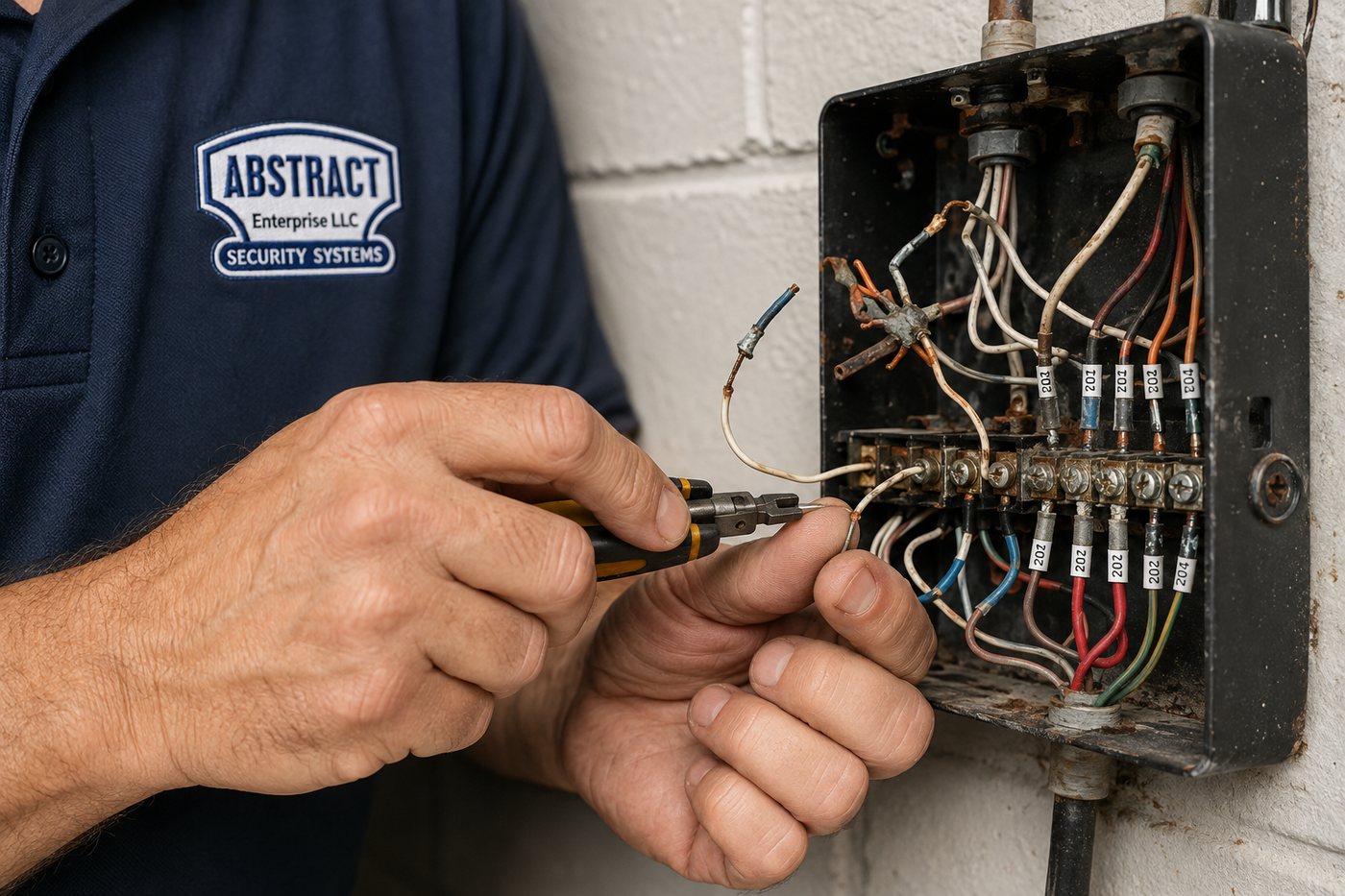
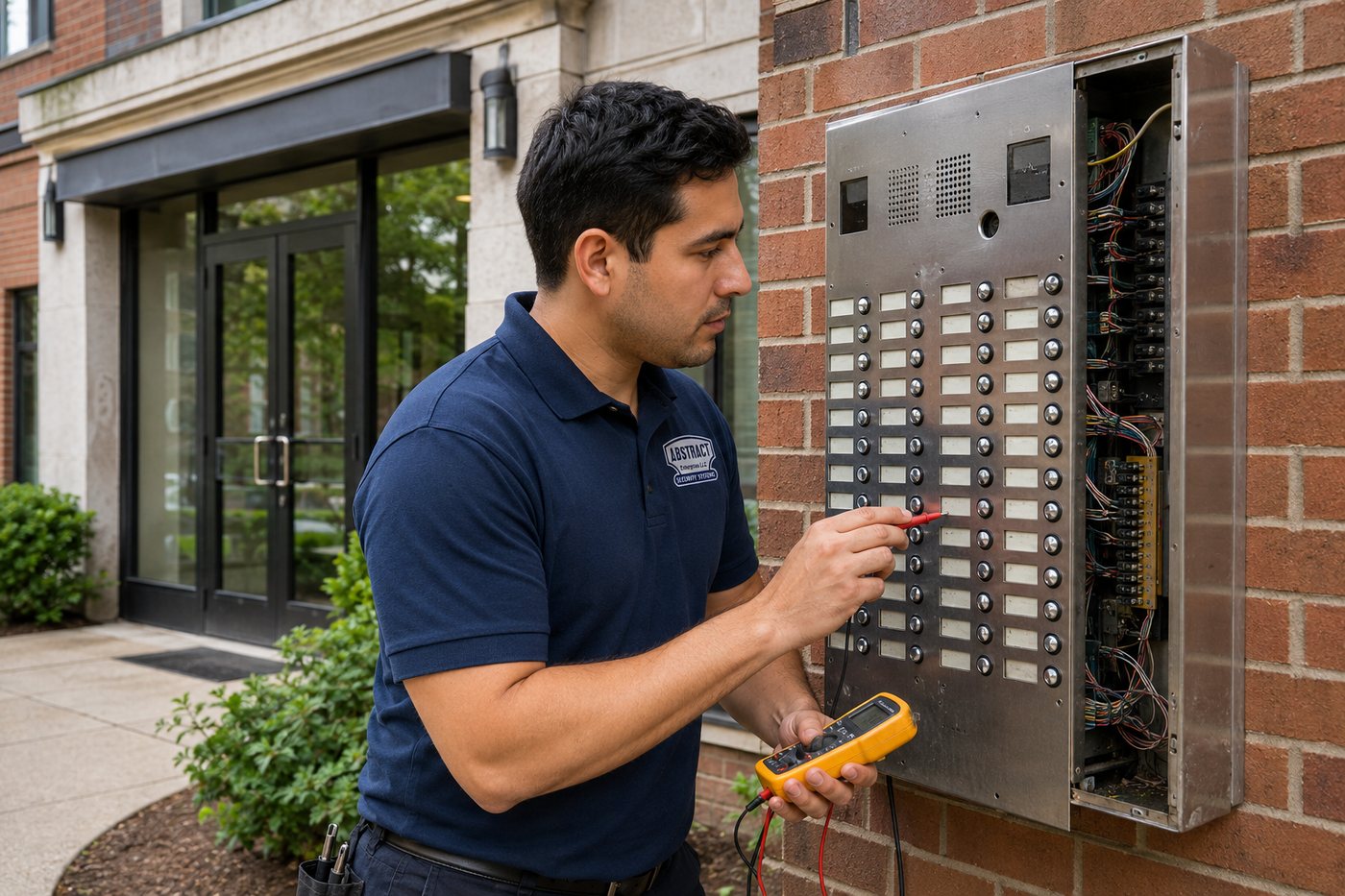
Apartment buzzer installation, apartment buzzer repair, building buzzer system installation, building buzzer system repair. Residential door buzzer installation, commercial door buzzer installation, office buzzer system installation. Multi tenant intercom installation, multi unit buzzer system installation. Intercom installation, intercom repair, intercom system installation, intercom system repair, buzzer system installation, buzzer system repair.
Wireless & Smart
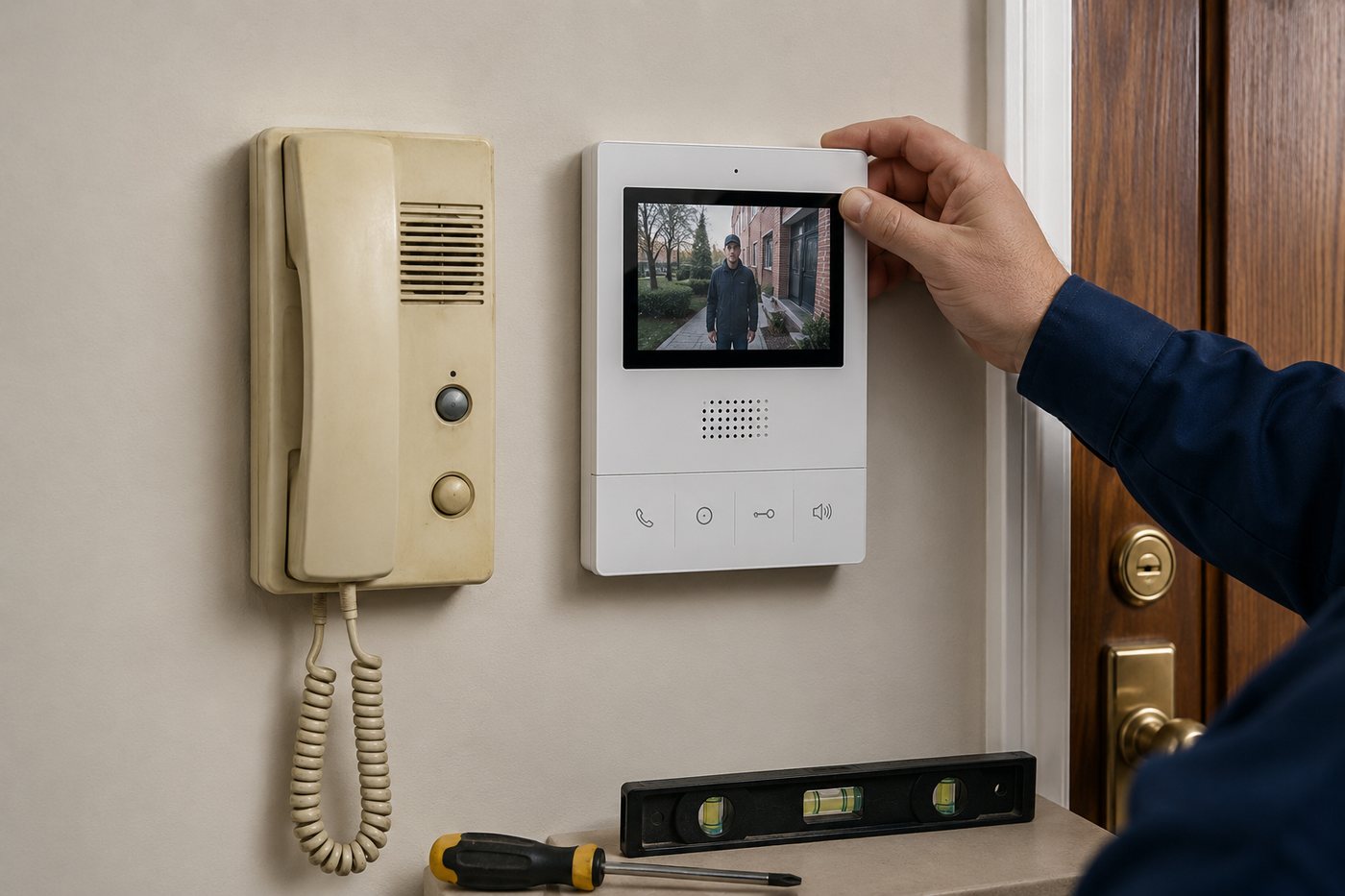
Wireless door buzzer installation, wired door buzzer installation. Smart intercom installation, video intercom installation, audio intercom installation. Smart door buzzer system installation. Door buzzer installation with smartphone access. Mobile app intercom system installation. Cloud based intercom system installation. IP intercom system installation and analog intercom system installation.
Door Hardware Integration
Electric strike buzzer integration, buzzer with electric strike installation, buzzer with mag lock installation. Intercom with access control integration. Video intercom with smartphone access. Key fob buzzer system integration, keypad buzzer system installation. Door entry system installation, door entry system repair, access buzzer system installation, lobby buzzer system installation.
Panels & Hardware
Door buzzer panel installation, intercom panel installation, directory intercom system installation, touchscreen intercom installation. From classic 4-button panels to modern touchscreen directory boards.
Repair, Replacement & Upgrades
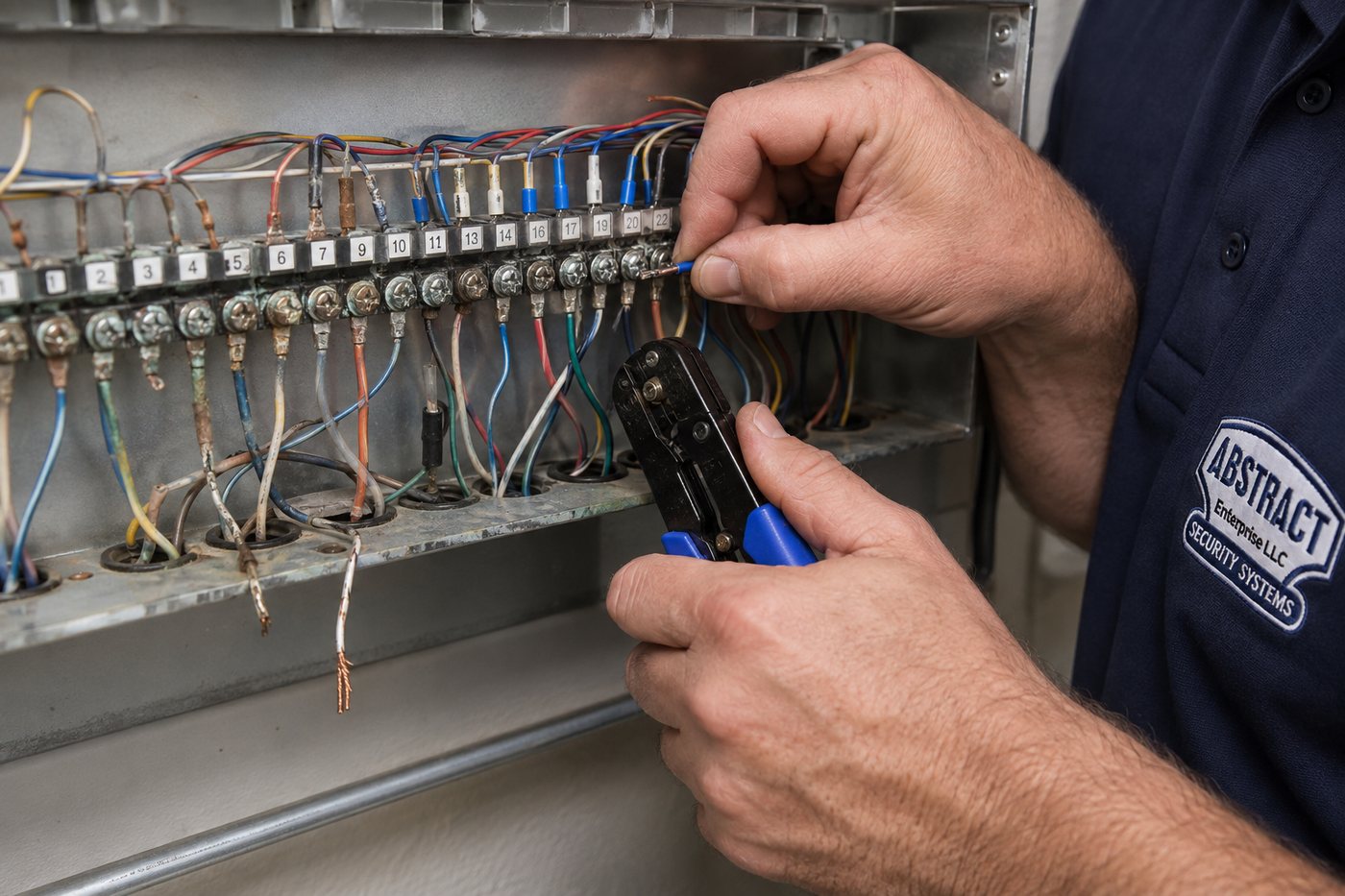
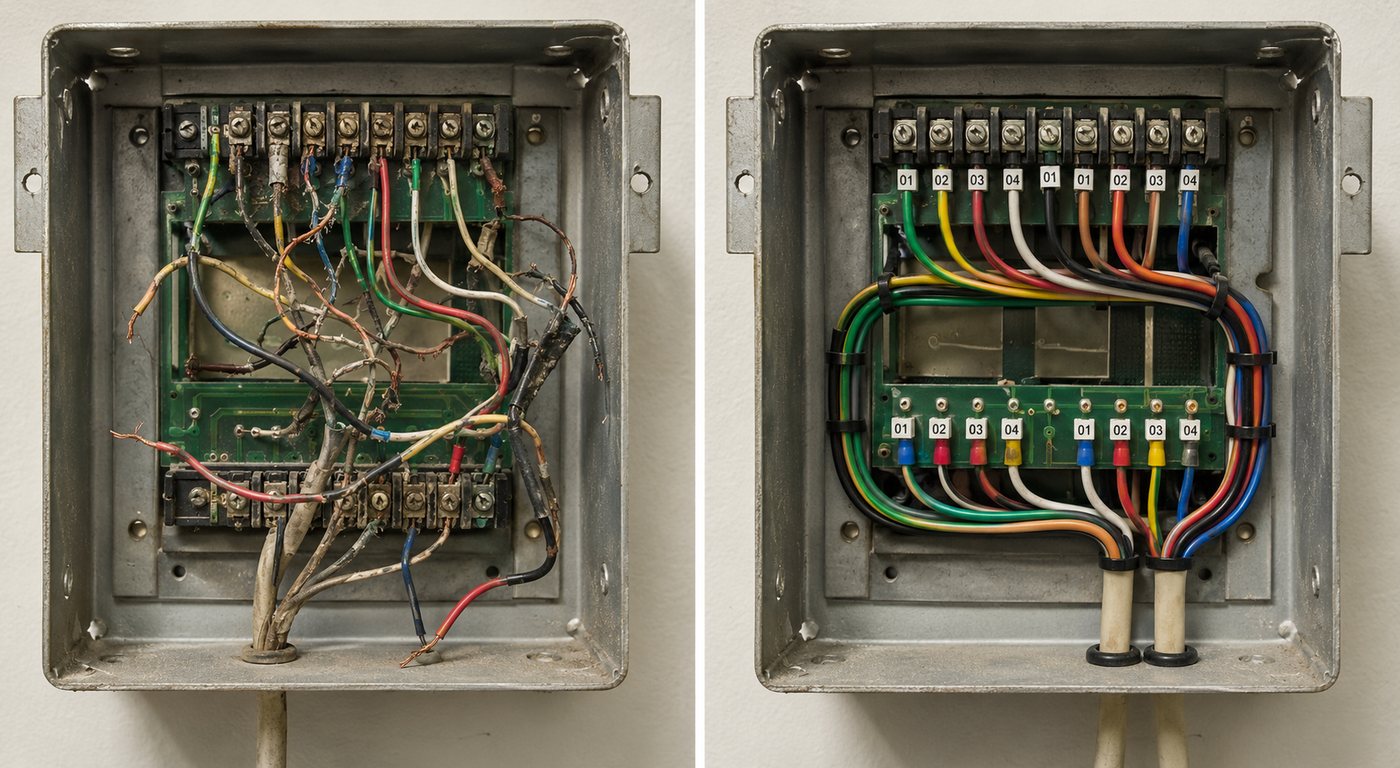
Door buzzer replacement, intercom system replacement, buzzer system upgrade, intercom upgrade service. Door buzzer troubleshooting, intercom troubleshooting service. Common issues we fix: door buzzer not working fix, intercom not working fix, buzzer no sound fix, buzzer not ringing fix, intercom static noise fix, intercom volume low fix, door buzzer wiring repair, intercom wiring repair, door buzzer button not working, intercom handset not working, door buzzer stuck open fix, door buzzer keeps buzzing fix, buzzer unlock not working, door release button not working.
Maintenance & Inspection
Door buzzer maintenance service, intercom maintenance service, door buzzer inspection service, intercom system inspection. Annual contracts available for University Heights buildings — especially valuable for the older University Heights building stock where preventive wiring inspection extends the life of decades-old systems. We coordinate with University Heights property managers and with the small commercial owners along Sedgwick Avenue, University Avenue, West Burnside Avenue, West Tremont Avenue, Cedar Avenue, Andrews Avenue.
FAQ — University Heights Specific
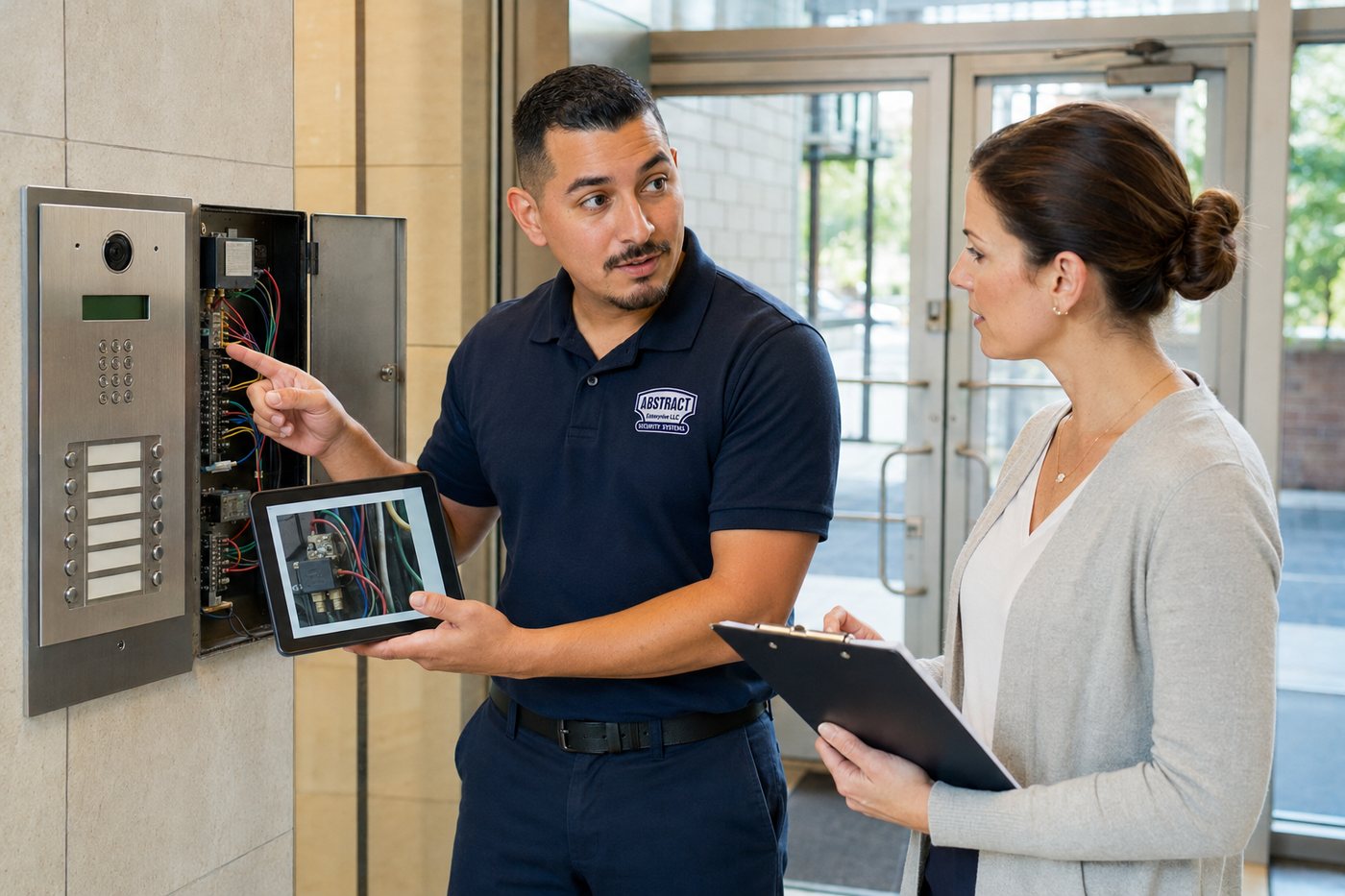
How does door buzzer system work in a University Heights building? Visitor presses unit button at the lobby panel, signal travels to apartment, tenant presses release. How much does door buzzer repair cost in University Heights? Basic repairs $150–$350; full system replacements vary by building era. How much does intercom installation cost in University Heights? Single-family from $400; small walk-up installs from $1,500; mid-size apartment buildings $3,500–$10,000+. Best intercom system for University Heights apartment: video intercom with smartphone answering for the post-2010 stock; durable lobby panel + handset systems for the older stock.
Hire door buzzer repair service — book intercom installation service today. Call (646) 490-0629.
University Heights Buzzer Repair by Block, Building, and Sub-Area
University Heights boundaries: West Fordham Road (N), Jerome Avenue (E), West Burnside Avenue (S), Harlem River (W). UNIVERSITY AVENUE is the primary thoroughfare. Mostly Bronx Community District 5 (with a small portion in CB7). Patrolled by the 46TH PRECINCT (also covers parts of Tremont). NYCHA property patrolled by P.S.A. 7 at 737 Melrose Avenue. ZIPs 10453 SOUTH of HALL OF FAME TERRACE and 10468 NORTH of Hall of Fame Terrace (UNIQUE ZIP boundary defined by the Hall of Fame). Population approximately 34,000. Bronx CD5 (UH + Fordham) population: 136,151 (2018). 2017 median household income $30,166. 2018 poverty rate 34% (vs 25% Bronx, 20% NYC). Predominantly Hispanic/Latino (over two-thirds), with significant African American and recent immigrant populations.
The 1894 NEIGHBORHOOD-NAMING: The neighborhood takes its name from the hill on which NEW YORK UNIVERSITY’s Bronx campus was built in 1894. NYU Chancellor HENRY MITCHELL MACCRACKEN purchased the 40-45-acre MALI ESTATE for $400,000 in the early 1890s and worked diligently to name the surrounding area "University Heights." The elevated terrain (the BRONX’S HIGHEST NATURAL POINT) and the presence of the university lent the area its enduring name — "Heights" for the landform, and "University" for the institution.
STANFORD WHITE BEAUX-ARTS QUADRANGLE (1894-1912): Architect STANFORD WHITE of McKim, Mead & White designed the original Beaux-Arts/American Renaissance buildings around a quadrangle. Centerpiece: GOULD MEMORIAL LIBRARY (1899) with iconic DOMED ROTUNDA. Other Stanford White buildings: HALL OF LANGUAGES (the first completed 1894), GOULD RESIDENCE HALL (1896), HALL OF PHILOSOPHY (1912 — the final Stanford White-designed building). The MALI MANSION (built 1859) was adaptively reused as CHARLES BUTLER HALL. A preliminary landscape plan by CALVERT VAUX in 1894 was likely unimplemented; 1912-1923 plans/correspondences indicate possible involvement of FREDERICK LAW OLMSTED, JR., and the OLMSTED BROTHERS firm. Campus designated a NATIONAL HISTORIC LANDMARK in 2012 — the FIRST community college campus to receive this designation.
HALL OF FAME FOR GREAT AMERICANS (1901): Designed by Stanford White and dedicated 1901. The FIRST HALL OF FAME IN THE UNITED STATES — a 630-FOOT-LONG, 10-FOOT-WIDE open-air COLONNADE in eclectic Roman/neoclassical style. Located on the BRONX’S HIGHEST NATURAL POINT with sweeping panoramic views from Upper Manhattan to the New Jersey Palisades. Houses 96-98 BRONZE BUSTS of great Americans (the busts of Louis Brandeis, Clara Barton, Luther Burbank, and Andrew Carnegie were never sculpted due to lack of funding). Listed on National Register of Historic Places 1979. The Confederate generals Robert E. Lee and Stonewall Jackson busts were REMOVED IN 2017 following the white supremacist Charlottesville rally. Last election 1976. ROSCOE BROWN inducted 1958.
NYU SOLD CAMPUS TO CUNY 1973: Facing severe financial distress, NYU sold the campus to the State Dormitory Authority in 1973, enabling BRONX COMMUNITY COLLEGE to move there from its previously-scattered Fordham Heights buildings. ROBERT MOSES passionately rallied AGAINST the sale. The 1971 LILIAN WALD induction ceremony for the Hall of Fame had been relocated to Town Hall on 45th Street in Manhattan as a sign that NYU was abandoning the borough. BCC and NYU split the cost of running the Hall from 1973 to 1976 (when the last election was held); thereafter BCC became solely responsible. Dr. JAMES A. COLSTON was BCC’s second president (1966) — the FIRST AFRICAN AMERICAN to be named a college president in NEW YORK STATE.
UNIVERSITY HEIGHTS BRIDGE (1895): Connects the neighborhood directly to WEST 207TH STREET in INWOOD, MANHATTAN over the Harlem River. UNIQUE bridge crossing.
HIGH BRIDGE (1848): Older Bronx-to-Manhattan link, still standing south of University Heights.
UNIVERSITY AVENUE (primary thoroughfare): The defining street that runs along the elevated ridge.
SEDGWICK AVENUE: Runs along the Harlem River side. Lined with prewar apartment houses + rowhouses.
ANDREWS AVENUE: Climbs sharply from the Harlem River to the ridge. Lined with prewar apartment houses + rowhouses + art deco buildings.
DAVIDSON AVENUE: Climbs sharply from the Harlem River to the ridge. Lined with prewar apartment houses + art deco buildings.
DR. MARTIN L. KING JR. BOULEVARD: Cross-street running through the neighborhood. The corner of Dr. MLK Jr. Boulevard and University Avenue is where the closed Holy Spirit School operated until 2013.
CEDAR AVENUE + AQUEDUCT AVENUE + LORING PLACE: Additional residential streets.
WEST BURNSIDE AVENUE (southern boundary): Where MS 390 sits at West Burnside Avenue and Andrews Avenue South.
WEST FORDHAM ROAD (northern boundary): Major commercial corridor connecting University Heights to Fordham (E). Served by Bx12 + Bx12 SBS.
JEROME AVENUE (eastern boundary): Where the IRT Jerome Avenue Line (4 train) runs. The Burnside Avenue + 183rd Street + Fordham Road stations serve University Heights.
HARLEM RIVER (western boundary): Where the MAJOR DEEGAN EXPRESSWAY (Interstate 87) runs along the riverfront.
HOLY SPIRIT ROMAN CATHOLIC CHURCH (established 1906): At Dr. Martin L. King Jr. Boulevard and University Avenue. The associated HOLY SPIRIT SCHOOL closed 2013.
HEBREW INSTITUTE OF UNIVERSITY HEIGHTS at 1835 UNIVERSITY AVENUE: Mid-20th-century anchor of the significant Jewish population. Housed the AKIBA ACADEMY (operated 1947-1970). Now houses the KIPS BAY BOYS AND GIRLS CLUB.
ST. NICHOLAS OF TOLENTINE ELEMENTARY SCHOOL (2336 Andrews Avenue): Closed 2019.
MS 331: The Bronx School of Science Inquiry and Investigation: West Tremont Avenue and Davidson Avenue.
MS 390: West Burnside Avenue and Andrews Avenue South.
MS 399 ELIZABETH BARRETT BROWNING: East 184th Street and Morris Avenue (eastern edge of UH near Fordham).
DEWITT CLINTON HIGH SCHOOL: Relocated nearby in 1929. Located just north of University Heights in Bedford Park.
BRONX COMMUNITY COLLEGE (BCC): Established 1957, classes commenced February 2, 1959 at original Creston Avenue + 184th Street site (in Fordham Heights) under founding president MORRIS MEISTER. Moved to current 50-acre 2155 University Avenue campus in 1973, inheriting the Stanford White Beaux-Arts masterpiece. The FIRST community college campus designated a National Historic Landmark in 2012.
MARCEL BREUER 1956 MASTER PLAN ADDITIONS: Five structures including BEGRISCH HALL (1967) with exposed reinforced concrete and a pair of sloping cantilevers that appear to defy gravity. UNIQUE modernist anchor.
ROBERT A.M. STERN ARCHITECTS NORTH HALL AND LIBRARY (2012): The campus’s newest building, in a contextual design facing Stanford White’s Quad.
USPS Morris Heights Station post office: 2024 Jerome Avenue.
NEAREST HOSPITALS: Bronx-Lebanon Hospital Center (Claremont); James J. Peters VA Medical Center (Kingsbridge Heights); St Barnabas Hospital (Belmont).
SUBWAY: IRT Jerome Avenue Line (4 train) along Jerome Avenue — opened 1918, significantly improving transit access. Stations: Burnside Avenue, 183rd Street, Fordham Road.
BUSES: Bx1, Bx2, Bx3 (along University Avenue), Bx9, Bx12, Bx12 SBS (along Fordham Road), Bx18, Bx32, Bx36, Bx40, Bx41, Bx41 SBS, Bx42.
The 1970s URBAN-DECAY-AND-RECOVERY: Racialized exodus from the borough, NYU’s "urban blight" fears that prompted the 1973 sale, twenty years of divestment by city/state/federal governments. Bronx residents formed tenant and neighborhood associations to hold on to their communities. Recovery has been underway since the 1990s.
Adjacent neighborhoods: Kingsbridge Heights (N); Fordham (NE, separated by Jerome Avenue, with its own deep-rebuild buzzer-repair page on this site); Fordham Heights (NE, with its own deep-rebuild page); Bedford Park (NE); Belmont (E across Jerome and beyond Fordham); Mount Hope (SE, with its own deep-rebuild page); Tremont (SE, with its own deep-rebuild page); Morris Heights (S, with its own deep-rebuild page); Highbridge (S/SE, with its own deep-rebuild page).
University Heights Brand-by-Brand Repair Notes
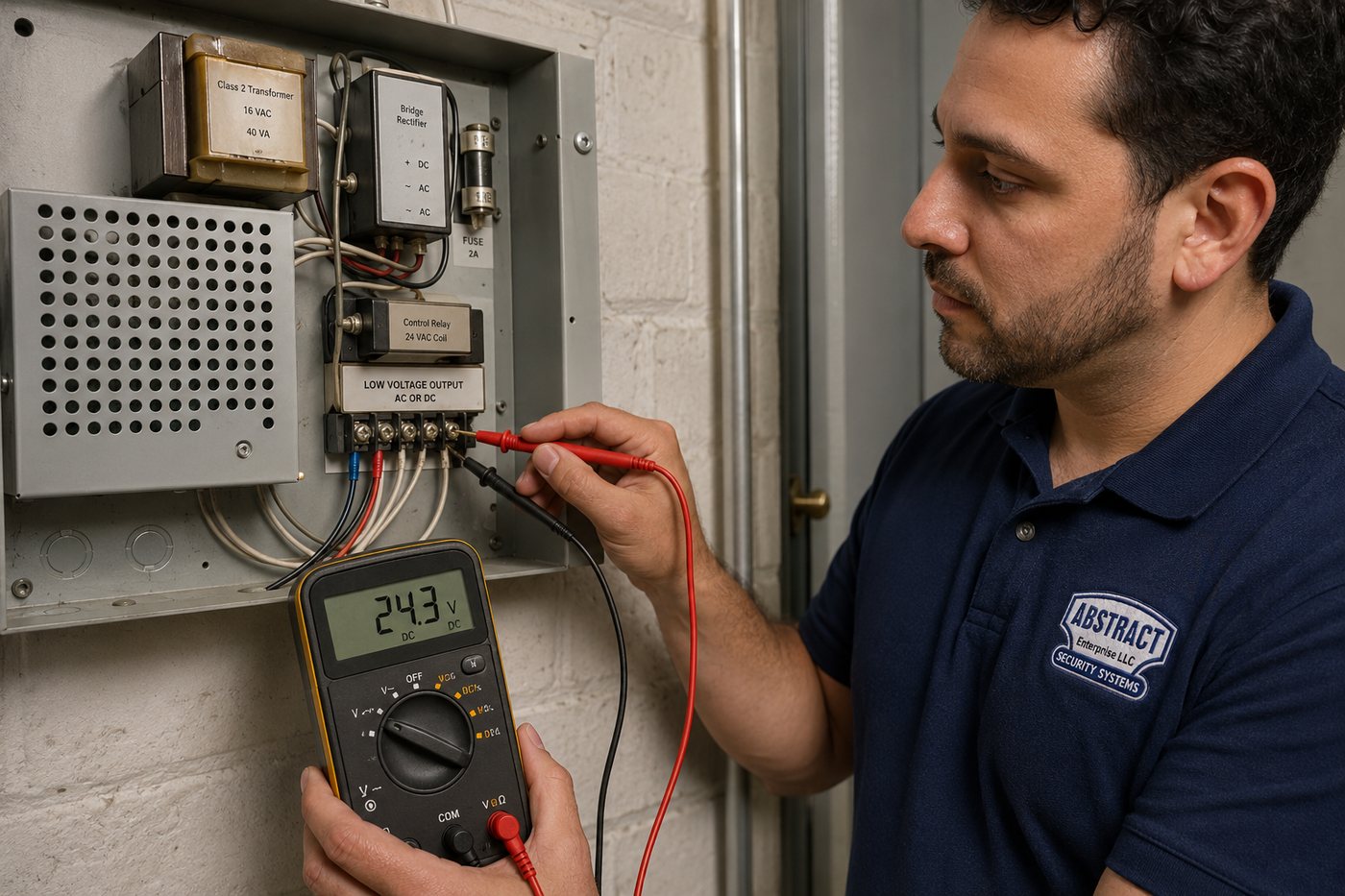
Lee Dan (the dominant brand at University Heights’ 1918-1940 prewar apartment house + art deco building stock): The DOMINANT brand we encounter in the 1918-1940 prewar apartment houses + art deco buildings that climbed sharply along Sedgwick Avenue + Andrews Avenue + Davidson Avenue + University Avenue after the IRT Jerome Avenue Line 4 train opened in 1918. Most installs are 1980s-1990s NYC HPD-conversion-era retrofits over original early-20th-century low-voltage copper wiring. Common failures: handset speakers in long-tenure households, lobby panel push-buttons stressed by century of post-1918-IRT-opening pedestrian traffic, basement transformer relays in century-old buildings.
M&S Systems: Common in selective University Heights apartment retrofits and the post-WWII selective rebuild stock.
Nutone: Common in the rare University Heights single-family rowhouse stock and selective small commercial retrofits along University Avenue + Burnside Avenue + Fordham Road. Original wired front-door bell systems with chime modules.
TekTone: Common in mid-size University Heights buildings, particularly the 1990s-2000s recovery-era selective rebuilds.
Comelit and Aiphone: Standard for the post-1990s recovery-era selective new construction (relatively rare given University Heights’ 1918-1940 build-out completion) and selective gut-rehab retrofits in the dominant 1918-1940 prewar apartment + art deco stock plus the post-1970s urban-decay-era buildings. Comelit Mini and Maxi panels and Aiphone GT/GH series are reliable platforms.
ButterflyMX: Increasingly common in newest University Heights construction (the post-2015 recovery-era selective infill). Smartphone-based video intercom platform.
Institutional access control platforms (HID, Genetec, S2 Security): The systems we install and service at BRONX COMMUNITY COLLEGE (the 50-acre campus at 2155 University Avenue, the FIRST community college campus designated a National Historic Landmark in 2012, with the STANFORD WHITE BEAUX-ARTS BUILDINGS dating to 1894-1912 + the MARCEL BREUER additions including BEGRISCH HALL 1967 + the ROBERT A.M. STERN NORTH HALL AND LIBRARY 2012), the HALL OF FAME FOR GREAT AMERICANS (the 1901 Stanford White-designed 630-foot-long open-air colonnade on the Bronx’s highest natural point, NRHP 1979 — preservation-conscious institutional access control respecting the 96-98 bronze busts and the eclectic Roman/neoclassical style), HOLY SPIRIT ROMAN CATHOLIC CHURCH (1906), the closed parochial school sites (HOLY SPIRIT SCHOOL 2013, ST. NICHOLAS OF TOLENTINE ELEMENTARY 2019), MS 331 / MS 390 / MS 399 (NYC DOE access control), DEWITT CLINTON HIGH SCHOOL (1929 relocation, just north in Bedford Park), and the KIPS BAY BOYS AND GIRLS CLUB at 1835 UNIVERSITY AVENUE (in the former HEBREW INSTITUTE OF UNIVERSITY HEIGHTS / AKIBA ACADEMY 1947-1970 building). Card-reader systems, faculty/staff/student/visitor entry, after-hours building access, and 1894-Stanford-White-Beaux-Arts + 1901-Hall-of-Fame + 1967-Marcel-Breuer + 2012-Robert-AM-Stern-contextual preservation-conscious institutional work.
Ring, Nest, Eufy, Arlo (single-family video doorbells): Less common in University Heights given the predominantly multi-family prewar apartment house stock. Selective use in the rare single-family rowhouses on the residential side streets.
Urmet, Fermax, Akuvox, DoorBird, 2N, SSS Siedle, Channel Vision: Less common in University Heights but encountered in selective imports.