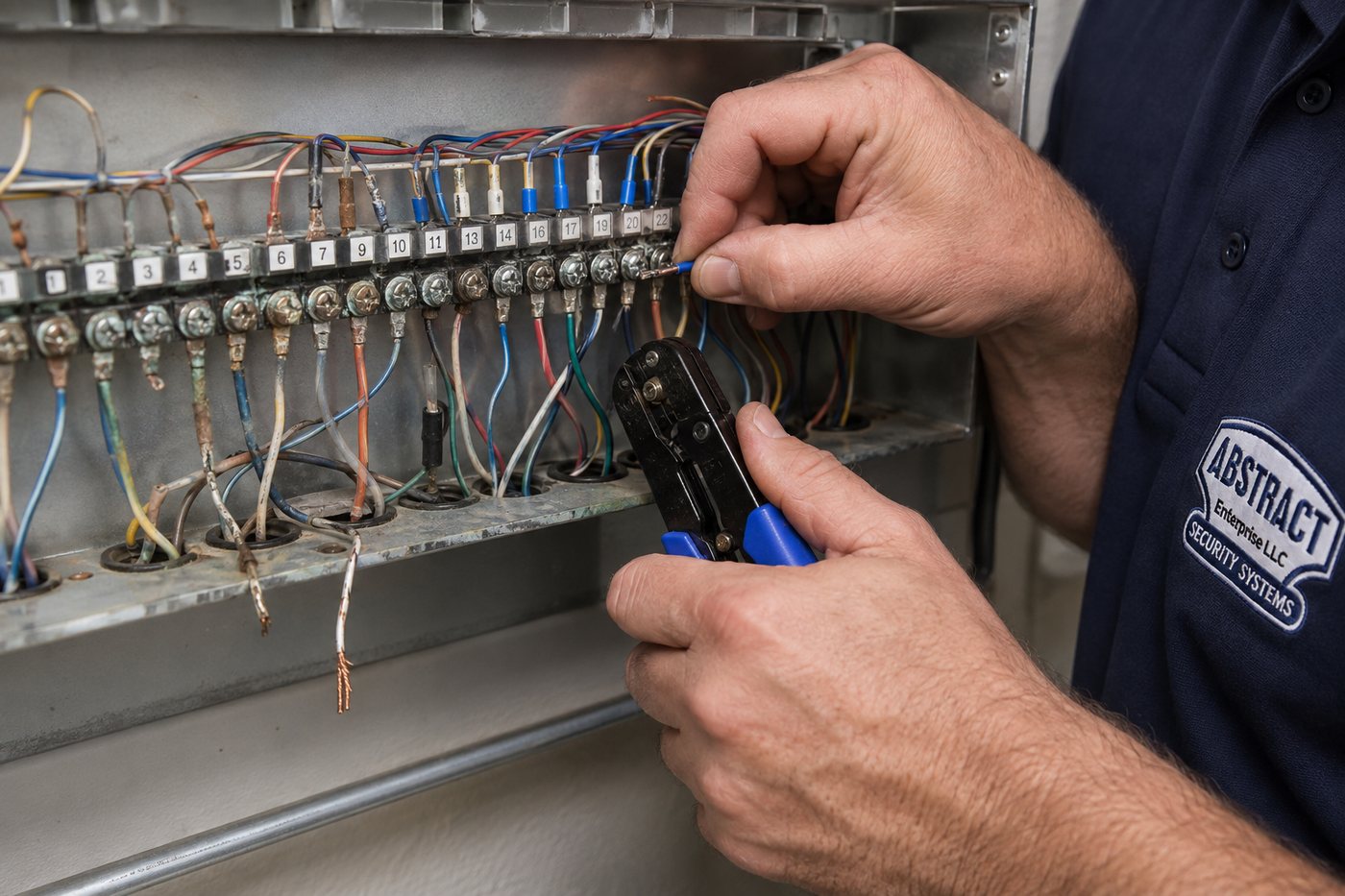
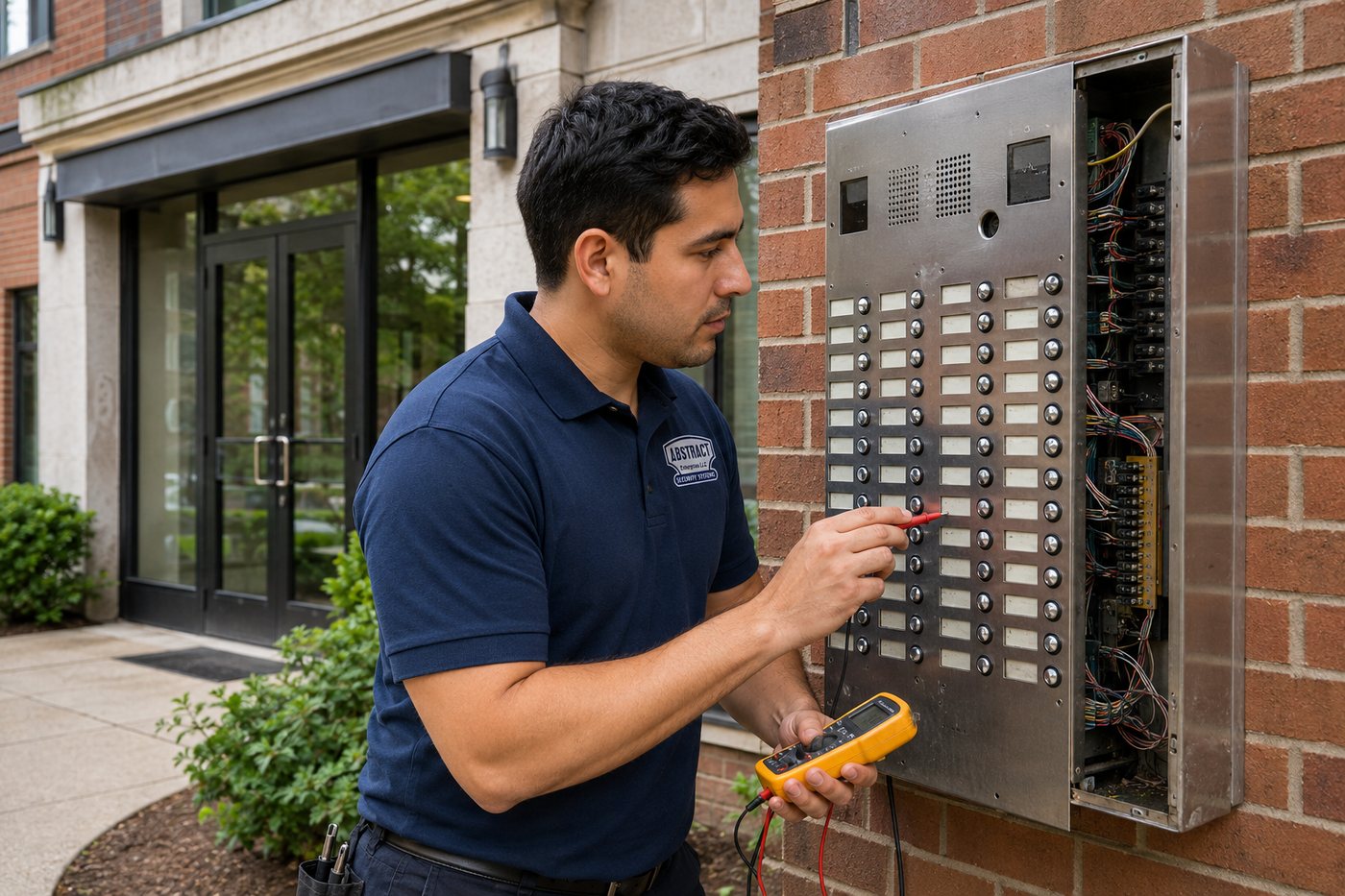
Door Buzzer Repair in Throggs Neck
Professional door buzzer repair and intercom installation for Throggs Neck — the long, tapering peninsula at the southeastern edge of The Bronx where the East River meets Long Island Sound. Boundaries: Cross Bronx Expressway + Bruckner Expressway (north), Throgs Neck Expressway (east), Mullan Place + Shurz Avenue (southeast), East River (south), Westchester Creek (west). Approximately 2 square miles of primarily residential and waterfront terrain extending 1 mile into the water. Name origin: John Throckmorton, an English Puritan settler who established the first European colony here in 1642 with 35 families before the Siwanoy attacks forced temporary evacuation. Spelling has been historically variable — both "Throggs" and "Throgs" persist today (Robert Moses dropped a G when naming the bridge in 1961). The strategic anchor: Fort Schuyler (begun 1833, dedicated 1856, named for Major General Philip Schuyler) at the peninsula's tip — a third-system US fortification built after the War of 1812 to guard the eastern entrance to New York Harbor. In 1932 the fort closed as an active military installation and became home to SUNY Maritime College, which still occupies the site (one of 29 founding SUNY schools, listed on the National Register of Historic Places since 1976). Adjacent civic anchors: Throggs Neck Houses (built 1953 as one of NYC's first low-income public housing projects, later expanded twice), the Throgs Neck Bridge (suspension, opened January 11, 1961, connecting Bronx to Bay Terrace Queens via I-295, $92 million by engineer Othmar Ammann), the Bronx-Whitestone Bridge approach, and the NYC Ferry Soundview route Throgs Neck Landing (opened December 28, 2021). Subsections include Locust Point (small peninsular waterfront enclave bounded by Harding Avenue + Throgs Neck Bridge approach + East River + Hammond Creek, with the Locust Point Yacht Club anchor) and the gated cooperatives at Silver Beach + Edgewater Park. Major arteries: East Tremont Avenue (commercial corridor with delis, bakeries, family businesses, Italian restaurants — including the famous Louie & Ernie's pizzeria established 1959), Throgs Neck Boulevard, and Pennyfield Avenue (named for an estate purchased from the Siwanoy for a penny in the 17th century — also the gated entrance road to Silver Beach). ZIP 10465, Bronx Community District 10. NYPD 45th Precinct at 2877 Barkley Avenue. Demographics: long-established Italian-American + Irish + Albanian families alongside Puerto Rican + Dominican + Caribbean + South Asian. Housing: brick two-family houses, detached single-family homes, waterfront condominiums, and the working-class Throggs Neck Houses. Same-day dispatch from our Fordham office, 20-25 minutes via Bruckner Expressway east. NYS Low-Voltage Electrical Contractor License #12000287431.
Why Throggs Neck Buzzers Are Peninsula Maritime + 1953 NYCHA + Suburban-Feel Scope
Throggs Neck buzzer scope is defined by the peninsula's unique geography — a 1-mile-long finger of land surrounded by East River + Long Island Sound water on three sides, anchored at the tip by Fort Schuyler + SUNY Maritime College. The first scope category: brick two-family + detached single-family residential. The 1984 NYT described Throggs Neck as one of the last middle- and upper-middle-class areas in The Bronx — "seems like a well-kept suburb." Most homes are pre-WWII brick rowhouses or detached two-family + single-family with modest yards. Per-house residential $295-$650 service-call, $1,800-$5,500 full intercom modernization. The second core scope: Throggs Neck Houses NYCHA (built 1953 as one of NYC's first low-income public housing projects, later expanded twice) — sits within the peninsula. Centralized NYCHA procurement scope. The third: waterfront condominium scope — up-market waterfront condominiums (selling for $416,468+ in 2005 dollars even in mid-1980s) along Pennyfield Avenue and the East River shoreline near the Throgs Neck Bridge. Marine-grade hardware + galvanized fittings + NEMA 4X enclosures, +8-12% premium. The fourth: Locust Point subsection scope — small peninsular waterfront enclave with the Locust Point Yacht Club anchor (also called "Pirate Cove"). Marine-grade scope. The fifth: East Tremont Avenue commercial corridor — Italian delis, bakeries, family businesses, Cestra's Pizza, Throggs Neck Shopping Center (Target, Petco, T.J. Maxx). The sixth: SUNY Maritime College + Fort Schuyler at the peninsula tip (institutional scope routes through SUNY centralized procurement).
Italian-American + Irish + Albanian working-class + middle-class peninsula homes. Pre-WWII brick rowhouse + post-war detached single-family. Per-house $295-$650 service-call, $1,800-$5,500 full intercom.
One of NYC's first low-income public housing projects. Centralized NYCHA procurement. Adjacent private buildings handled with standard scope.
East River + Long Island Sound waterfront pricing $416,468+ even in mid-1980s. Pennyfield Avenue + bridge-adjacent. Marine-grade hardware +8-12% premium.
Small peninsular waterfront enclave with Locust Point Yacht Club anchor. Bounded by Harding Avenue + Throgs Neck Bridge approach + Eastchester Bay. Marine-grade scope.
Italian delis + bakeries + family businesses + Louie & Ernie's pizzeria (1959) + Throggs Neck Shopping Center (Target / Petco / T.J. Maxx). Per-shop service-call $295-$650.
Active SUNY college campus at peninsula tip. Fort Schuyler third-system fortification. NRHP listed since 1976. Institutional scope routes through SUNY procurement.

Throggs Neck Anchors & Streets We Work
Fort Schuyler / SUNY Maritime College
Begun 1833, dedicated 1856. Third-system US fortification + active SUNY college campus. NRHP since 1976. Institutional scope.
East Tremont Avenue (commercial)
Primary commercial corridor. Italian delis + bakeries + Louie & Ernie's pizzeria (1959). Throggs Neck Shopping Center (Target, Petco, T.J. Maxx).
Throgs Neck Boulevard
Secondary commercial + residential corridor. Bx40/Bx42 bus route. Connects East Tremont Avenue south toward Pennyfield Avenue.
Pennyfield Avenue
Named for 17th-century estate purchased from Siwanoy for a penny. Main waterfront-cul-de-sac corridor. Gated entrance to Silver Beach.
Throggs Neck Houses NYCHA (1953)
One of NYC's first low-income public housing projects. Later expanded twice. Centralized NYCHA procurement scope.
Throgs Neck Bridge (1961)
$92M suspension bridge by Othmar Ammann. Carries I-295 Bronx-to-Queens. Opened January 11, 1961. Robert Moses dropped a G when naming.
Locust Point subsection
Small peninsular waterfront enclave (Pirate Cove). Bounded by Harding Avenue + Throgs Neck Bridge approach. Locust Point Yacht Club. Marine-grade scope.
Ferry Point Park (Trump Links 2015)
400+ acre park. Trump Links opened 2015. Walking trails + riverfront promenade with Manhattan skyline views. Bronx-Whitestone Bridge approach divides park.
NYC Ferry Throgs Neck Landing
Opened December 28, 2021. Soundview route stop at Ferry Point Park. Connects to Manhattan Wall Street/Pier 11 (45 minutes).
Bicentennial Veterans Memorial Park
Local civic anchor. Veterans memorial. Community gathering space.
NYPD 45th Precinct (2877 Barkley Ave)
Patrols Throggs Neck, Country Club, Pelham Bay, Co-op City, City Island, Westchester Square, Schuylerville, Silver Beach, Edgewater Park. Also patrols our other rebuilt sister neighborhoods.
Throg's Neck NYPL Branch (1954)
3025 Cross Bronx Expressway Extension. Operating since 1954, current building since 1974. Civic anchor.


Deep Throggs Neck History — Colonial Settlement Through Modern Suburb
1631–1643: Throckmorton + Vriedelandt + the Siwanoy Raid
The peninsula was previously inhabited by the SIWANOY LENAPE people (a Munsee-speaking band who occupied Long Island Sound coastal areas from the Bronx to Norwalk, Connecticut, fishing and farming the marshes). The Dutch called it VRIEDELANDT (later spelled Vriedlandt) — “Land of Peace.” Reverend JOHN THROCKMORTON arrived in America in 1631 aboard the ship LYON. After fleeing religious persecution from the rigid Puritans of Massachusetts, he followed Roger Williams to Providence in 1636 (where Williams founded the Rhode Island colony based on religious freedom and church-state separation — ideas that would later influence the U.S. Constitution and Bill of Rights). Fearing Massachusetts might invade Rhode Island, Throckmorton pledged allegiance to the Dutch crown and on March 6, 1642 received a PATENT from Director-General WILLEM KIEFT of New Netherland for the Throggs Neck peninsula. Throckmorton arrived with 35 OTHER FAMILIES to establish a small farming community (the area was also briefly known as MAXSON’S POINT after the Maxson family — Richard, Rebecca, John). Director-General Kieft, who frequently provoked Indigenous anger, may have wanted European settlements as a buffer against Lenape attacks on New Amsterdam 24 miles south. On SEPTEMBER 20, 1643 — during the opening salvos of KIEFT’S WAR — 1,500 Wappinger and Lenape warriors descended upon New Amsterdam. They destroyed the Anne Hutchinson settlement to the north (killing Hutchinson and most of her family) and traveled south to do the same to the Throckmorton settlement. Throckmorton was lucky: he was away when the raid hit, and a passing ship rescued him. He returned to Rhode Island and later New Jersey. The peninsula forever carried his name. By 1668 it appeared on maps as “Frockes Neck.”
1776: General Howe’s FAILED October 12 Landing of 4,000 British Troops
In 1776 George Washington’s headquarters wrote of a potential British landing at “FROGS NECK.” (Someone had pointed out the biological absurdity of the name and Frog’s was changed to Throg(g)s.) On OCTOBER 12, 1776, during the New York campaign, BRITISH GENERAL WILLIAM HOWE attempted a flanking maneuver to trap Washington’s Continental Army by landing approximately 4,000 TROOPS at the bridge over Westchester Creek (today represented by an unobtrusive steel and concrete span at East Tremont Avenue near Westchester Avenue). The peninsula was virtually an island at high tide, and Howe planned to march inland and cut off Washington’s retreat. The landing was UNSUCCESSFUL: American defenders stalled the British advance at the bridge long enough that Washington had time to reposition his army, and Howe abandoned the operation, eventually landing at Pell’s Point further north a few days later — where the Battle of Pell’s Point ensued. The James Ferris house (overlooking Eastchester Bay) was COMMANDEERED BY ADMIRAL RICHARD HOWE as his headquarters in October 1776; James Ferris himself was sent to the British prison hulks in New York Harbor. After the Revolution, the peninsula evolved into an agricultural district under the new American republic. The FERRY POINT area operated as a key crossing point to Queens and Long Island, and the deep natural inlets along Westchester Creek and the East River supported small-scale shipbuilding and trade.
1833–1856: Fort Schuyler Construction + Irish Immigration
Fort Schuyler construction (1833-1856) brought a wave of LABORERS AND CRAFTSMEN to Throggs Neck — many of whom were IMMIGRANTS FROM IRELAND, who settled here with their families and laid the foundation for the neighborhood’s long Irish-American character. The fort was named for Revolutionary War General Philip Schuyler. THROGS NECK PARK (a 0.44-acre public park at the end of Myers Street, facing Throggs Neck from the opposite shore) was acquired as a public place in 1836. The THROGS NECK LIGHTHOUSE formerly stood at the southern tip of the peninsula. By the late 19th century, Throggs Neck had developed into a fashionable but accessible PUBLIC SUMMER RESORT — featuring large GERMAN BEER GARDENS to which the residents of Yorkville (Manhattan’s Upper East Side German neighborhood) arrived by STEAMBOAT SERVICE up the East River. The 19th-century steamboat landing at FERRIS DOCK on Westchester Creek stood at present-day BRUSH AVENUE NORTH OF WENNER PLACE. The road to it bore the name of the steamboat OSSEO. The FERRIS FAMILY were 18th-century residents whose holdings became today’s Ferry Point at the southeast corner of Throggs Neck.
19th-Century Estates: Morris + Huntington + Havemeyer
Around 1848, members of the MORRIS FAMILY purchased land in Throggs Neck and built two large mansions, multiple cottages, and service buildings. The Morris estates featured a PRIVATE DOCK on MORRIS COVE. Following the Civil War, the railroad mogul COLLIS P. HUNTINGTON owned a huge property here. His family kept it for a long time. Earlier, FREDERICK C. HAVEMEYER JR. — son of the SUGAR BARON family that controlled 98% of US sugar production at the start of the 20th century — owned the same property. The HAVEMEYER-HUNTINGTON MANSION is now home to PRESTON HIGH SCHOOL on Schurz Avenue (built 1840 by Havemeyer as “Beau Rivage,” later sold to Huntington). PRESTON HIGH SCHOOL is a Catholic high school for girls, accredited by the Middle States Association of Colleges and Schools and the Board of Regents of the University of New York. The last two of several large 18th-century FERRIS HOUSES survived until the 1960s: the JAMES FERRIS HOUSE (overlooking Eastchester Bay, the same house Admiral Howe commandeered in 1776) was hastily demolished in 1962, and the WATSON FERRIS HOUSE was demolished in 1964 by its occupants, the TREMONT TERRACE MORAVIAN CHURCH. The 19th-century LAYTON ESTATE (after which Layton Avenue is named) hosted the turn-of-the-20th-century WESTCHESTER COUNTRY CLUB facing Eastchester Bay (which had disappeared by the 1920s, and has nothing to do with the modern Westchester Country Club further north).
1898–1932: Bronx Consolidation + Italian Immigration + Fort Schuyler Decommissioning
In 1898 the Bronx was consolidated into the City of Greater New York. In the decades following, the borough’s grid extended eastward, transit lines extended to Throggs Neck, and BRUCKNER BOULEVARD (originally Eastern Boulevard) and the Pelham Bay Parkway system improved access — attracting families seeking suburban life within city limits. This urbanization era brought MANY ITALIAN FARMERS AND TRADESMEN to settle alongside the established Irish community, establishing the long Italian-American character that defines Throggs Neck today. In the 1920s, many of the large 19th-century estates were divided into smaller plots for ROW HOMES AND BUNGALOWS. The PETERS AND SORGENFREL FAMILIES created the SILVER BEACH GARDEN cooperative on the southeastern edge in 1920 (the gated co-op land-lease community of 451 single-family bungalows still operating today). In 1929-39 a pair of plans to extend the SECOND AVENUE SUBWAY with a Throggs Neck branch were proposed but DID NOT COME TO PASS. In 1932 FORT SCHUYLER closed as an active military installation and became the campus for cadets of what became the State University of New York Maritime College (transferred to NY State during the Great Depression, rehabilitated by the WPA, dedicated to the school in 1938; campus listed on National Register of Historic Places since 1976).
1953–Present: NYCHA + Bridge + The Suburban Bronx Anchor
In 1953 the THROGGS NECK HOUSES were built as one of the FIRST LOW-INCOME PUBLIC HOUSING PROJECTS IN NEW YORK CITY (later expanded twice). On JANUARY 11, 1961, the THROGS NECK BRIDGE opened — engineered by OTHMAR AMMANN at $92 million construction cost, a 1,800-foot suspension span connecting the Bronx to BAY TERRACE QUEENS via I-295. Robert Moses, the NYC Parks Commissioner and Triborough Bridge and Tunnel Authority Chairman, may have OFFICIALLY DROPPED THE SECOND “G” when naming the bridge — though references to single-G “Throgs” date to 1860, predating Moses by a century. With the bridge and adjacent parkways, the neighborhood lost its comparative isolation. CRUCIALLY, Throggs Neck was largely EXEMPT FROM THE SEVERE URBAN DECAY that affected much of the Bronx in the 1970s. In 1984 the New York Times described Throggs Neck as “one of the last middle- and upper-middle-class areas in the Bronx” that “seems like a well-kept suburb.” Even in the mid-1980s waterfront condominiums were selling for as much as $416,468 in 2005 dollars. As of the 2000 Census, the median household income for census tracts within the neighborhood ranged from $18,000 in less affluent tracts to well over $100,000 for the waterfront tracts near the Throgs Neck Bridge. The 2010 Census combined Schuylerville + Throgs Neck + Edgewater Park population was 44,167. On DECEMBER 28, 2021, the NYC FERRY THROGS NECK LANDING opened on the Soundview route. In 2024 BALLY’S CORPORATION assumed control of the remaining 11 years of the FERRY POINT GOLF COURSE LEASE (formerly Trump Links 2015-2024). Today Throggs Neck remains one of the Bronx’s most stable middle-class neighborhoods, with diverse Italian-American + Irish-American + Albanian + Filipino + Hispanic communities anchoring a peninsula that has been continuously settled since the early 1640s.

Buzzer / Intercom Systems We Install in Throggs Neck
Brick Two-Family Buzzer Modernization
Most common Throggs Neck residential. Per-unit door release + 4-wire upgrade + audio intercom. ButterflyMX or Aiphone IS-IPMV with optional video panel.
Detached Single-Family Video Doorbell
Suburban-feel detached homes with porches + driveways. Ring Pro 2 / Nest Doorbell wired + chime + 24/7 cloud recording integration.
Marine-Grade Waterfront Condo
East River + Long Island Sound saltwater + nor'easter exposure. Galvanized hardware + NEMA 4X enclosures + sealed conduit. +8-12% premium.
Locust Point Yacht Club / Marina
Marine waterfront commercial scope. Yacht club gate + dock-access reader + member fob system. Marine-grade hardware throughout.
East Tremont Avenue Commercial
Italian delis + bakeries + family businesses. Front-door customer entry + after-hours alarm-integrated entry + cleaning crew + supplier delivery tier.
SUNY Maritime / Fort Schuyler Institutional
Heritage-protected fortification scope. Concealed Cat6 + reader on inside vestibule wall + paint-matched flush-mount. SUNY centralized procurement.

Buzzer Problems Throggs Neck Buildings Face
East River + Long Island Sound saltwater
Peninsula geography exposes most of Throggs Neck to marine atmospheric conditions. Standard plain-steel hardware corrodes 3-5 years. Galvanized + NEMA 4X extends to 15-25 years. +8-12% premium.
1953 Throggs Neck Houses electrical
NYCHA's first-generation 1953 housing project. Pre-1990s aluminum-conductor wiring in some buildings. NYCHA-supervised scope. Lobby panel modernization $4,500-$11,000.
Throgs Neck Bridge 1961 anchorage vibration
Bridge handles 100,000+ vehicles/day at peak. Buildings within 1-3 blocks of anchorage need vibration-rated hardware. +5% on top of marine premium.
Locust Point Yacht Club marine scope
Member-only access + dock entry + commercial galley/restaurant entry. Different access tiers for members vs guests vs vendors. Marine-grade hardware throughout.
Brick two-family knob-and-tube legacy
Pre-WWII brick rowhouses occasionally retain knob-and-tube wiring in basements. Pre-install electrical assessment. Selective replacement during install.
Cross-Bronx + Bruckner expressway noise
Northern Throggs Neck buildings within 1-2 blocks of Cross-Bronx + Bruckner Expressway face truck traffic + diesel particulate. Outdoor reader + camera scope adjusted.
SUNY Maritime / Fort Schuyler heritage
NRHP-listed third-system fortification (since 1976). Adjacent buildings + on-campus institutional scope. Concealed Cat6 + reader on inside vestibule wall + paint-matched flush-mount only.
Italian-American family multi-generational
Long-established Italian-American + Irish + Albanian families with multi-generational ownership. Trust + word-of-mouth referrals matter. We've been the local low-voltage choice for decades.

Throggs Neck Buzzer Repair: Real Questions Answered
"How is Throggs Neck different from Silver Beach + Edgewater Park + Locust Point?"
All four are sub-areas of the broader Throggs Neck peninsula, served by the NYPD 45th Precinct, but with distinct scope priorities. Throggs Neck (the broader neighborhood) is the peninsula itself — bordered north by Cross Bronx + Bruckner Expressways, with East Tremont Avenue as primary commercial corridor, the Throggs Neck Houses NYCHA, SUNY Maritime + Fort Schuyler at the tip, and a mix of brick two-family + detached single-family + waterfront condominiums. Silver Beach (which we serve at /access-control-installation-silver-beach-bronx-ny) is the 1920 land-lease cooperative on the southeastern edge — 350 cottages with a single block-and-lot deed, gated at Pennyfield Avenue. Edgewater Park (which we serve at /door-buzzer-repair-edgewater-park-bronx-ny) is the 1986 cooperative at the northeast tip — 675 homes from Richard Shaw's tent-and-tarp colony. Locust Point (also called Pirate Cove) is the small peninsular subsection bounded by Harding Avenue + Throgs Neck Bridge approach with the Locust Point Yacht Club. Each has its own scope; this Throggs Neck buzzer service handles the broader peninsula scope outside the gated cooperatives.
"Can you do SUNY Maritime / Fort Schuyler heritage scope?"
Yes. SUNY Maritime College has occupied Fort Schuyler since 1934 (transferred to NY State during the Great Depression, rehabilitated by the WPA, dedicated to the school in 1938). Fort Schuyler itself was begun 1833 + dedicated 1856 as a third-system US fortification under the post-War-of-1812 coastal defense program, named for Major General Philip Schuyler. The fort has been listed on the National Register of Historic Places since 1976. Institutional scope routes through SUNY centralized procurement (different from individual SUNY Maritime tenant scope). Heritage-area sensitivity: concealed Cat6 cable runs entirely through existing conduit, reader placement on inside vestibule wall (never on exterior masonry or carved stone), paint-matched flush-mount only when exterior scope is unavoidable. We're familiar with the fort's St. Mary's Pentagon main installation, Battery Gansevoort, and the campus chapel housed within the connecting stone wall.

"Do you handle Throggs Neck Houses NYCHA scope (1953)?"
Yes. Throggs Neck Houses (built 1953 as one of the first low-income public housing projects in NYC, later expanded twice) sits within the peninsula. Standard NYCHA scope: centralized procurement workflow, lobby panel modernization, ButterflyMX or Aiphone IS-IPMV intercom + per-tenant DESFire EV3 fobs + service entrance + side-gate. Per-building $4,500-$11,000. We DO handle Throggs Neck Houses-adjacent private residential and small-commercial buildings on a standard scope basis.
"Can you handle waterfront condominium marine scope?"
Yes. Throggs Neck has up-market waterfront condominiums along Pennyfield Avenue + East River shoreline near the Throgs Neck Bridge — selling for $416,468+ in 2005 dollars even in mid-1980s. Marine scope: galvanized hardware + NEMA 4X enclosures + sealed conduit with marine-grade fittings + gel-filled wire-nut splices in junction boxes + freeze-protected hardware for waterfront docks. +8-12% premium over non-marine pricing, but components last 15-25 years vs 3-5 years for non-marine hardware in this environment.
"Do you handle Locust Point Yacht Club scope?"
Yes. Locust Point (also called Pirate Cove, ZIP 10465, Bronx CD 10) is bounded by Harding Avenue + the Throgs Neck Bridge approach + Eastchester Bay. The Locust Point Yacht Club (founded early 20th century) is its anchor. Marine waterfront commercial scope: yacht club gate + dock-access reader + member fob system + restaurant/galley entry + after-hours alarm-integrated entry. Different access tiers for members vs guests vs vendors. Marine-grade hardware throughout. Per-installation $8,500-$22,000 depending on scope.
"Can you handle Throgs Neck Bridge anchorage vibration scope?"
Yes. Throgs Neck Bridge (opened January 11, 1961, $92M suspension bridge by Othmar Ammann, carries I-295) handles 100,000+ vehicles/day at peak. Buildings within 1-3 blocks of the bridge anchorage experience constant truck-and-bus vibration plus periodic structural-cable harmonics. Standard bridge-anchorage scope: vibration-rated junction boxes, gel-filled marine wire-nut splices (which doubles for the saltwater requirement), reinforced wall-mount hardware, extra cable mounting at every penetration. +5% on top of marine premium. The bridge's Bronx anchorage actually sits in Locust Point — the bridge "flies over" Throgs Neck rather than landing on it.
"Do you handle the East Tremont Avenue commercial corridor?"
Yes — primary commercial corridor of Throggs Neck. East Tremont Avenue is lined with Italian delis + bakeries + family businesses (including the famous Louie & Ernie's pizzeria, established 1959, plus Cestra's Pizza), the Throggs Neck Shopping Center (Target + Petco + T.J. Maxx + Home Depot nearby), and pubs + lounges + waterfront bars for nightlife. Standard commercial scope: front-door customer entry + after-hours alarm-integrated entry + cleaning crew tier + back-of-shop supplier delivery tier. Per-shop $1,800-$5,500 for full alarm-integrated commercial install, $295-$650 for service-call repair.
"How long has Throggs Neck been a tight-knit Italian-American + Irish + Albanian neighborhood?"
Generations. From 1833 to 1856, construction of Fort Schuyler brought Irish laborers and craftsmen who settled with their families. By the late 19th century, the area had become a fashionable summer resort with German beer gardens. The 1898 Bronx incorporation brought transit lines and immigrant settlement. Through the 1950s-1980s, Throggs Neck remained one of the most stable + tight-knit Bronx neighborhoods despite citywide disinvestment elsewhere — homeownership-heavy, supported by the Throggs Neck Homeowners Association. Italian-American families became dominant, joined by Albanian families more recently and now by growing Latino, Caribbean, and South Asian populations. Long-established multi-generational ownership means trust + word-of-mouth referrals matter for any contractor working here.
"What's the deal with the spelling — Throgs vs Throggs?"
Both are correct. The name derives from John Throckmorton, an English Puritan settler who established the first European colony in 1642 with 35 families. Originally "Throckmorton's Neck", the spelling shortened over time. Locals favor the double-G "Throggs", which is also more substantial. Robert Moses dropped a G when officially naming the Throgs Neck Bridge in 1961. Today both spellings appear on official maps and documents. We work all of it.

"How much does buzzer repair cost in Throggs Neck?"
Throggs Neck buzzer pricing depends on building category. Service-call component repair (failed buzzer button, dead amplifier, broken latch): $295-$650. Brick two-family + detached single-family residential modernization: $1,800-$5,500 per house. Tenement-style multi-family lobby panel modernization (4-6 story): $4,500-$11,000 per building. Marine waterfront condominium scope: $2,400-$6,500 per house with +8-12% marine premium. Locust Point Yacht Club / commercial marine: $8,500-$22,000. Throggs Neck Houses NYCHA per-building: $4,500-$11,000. Bridge-anchorage vibration adds +5%. NYC sales tax 8.875%. No travel surcharge — Throggs Neck is 20-25 minutes from our Fordham office via Bruckner Expressway east.
"Can you upgrade legacy 1990s aluminum-conductor wiring?"
Yes. Pre-1990s NYCHA Throggs Neck Houses + some pre-WWII brick rowhouses run aluminum-conductor wiring that's prone to oxidation + connection failure at switches and outlets. Pre-installation electrical assessment (free) identifies aluminum conductor presence. Selective replacement during install, or full electrical-service upgrade by partner licensed electrical contractor ($3,500-$9,500 separate scope). Buzzer install proceeds afterward. Total combined scope $5,300-$16,000 for full modernization.
"What was here before Throckmorton arrived in 1642?"
The peninsula was inhabited by the SIWANOY LENAPE people, a Munsee-speaking band who occupied Long Island Sound coastal areas from the Bronx to Norwalk, Connecticut. They fished, farmed, and shellfished in the region’s marshes. The Dutch called the peninsula VRIEDELANDT — “Land of Peace” — owing to the lush natural beauty of the region. On March 6, 1642, Director-General WILLEM KIEFT of New Netherland granted Throckmorton a patent on the land. Throckmorton arrived with 35 other families. The area was also briefly called MAXSON’S POINT after the Maxson family (Richard, Rebecca, John) who lived there. The settlement was destroyed in the SEPTEMBER 20, 1643 Siwanoy raid that was part of Kieft’s War — the same raid that killed Anne Hutchinson’s family at her settlement north on the Hutchinson River. Throckmorton was away during the raid and survived; a passing ship rescued him. He returned to Rhode Island and later New Jersey, never coming back to the Bronx.
"Did the British actually land at Throggs Neck during the Revolution?"
They tried — and FAILED. On OCTOBER 12, 1776, BRITISH GENERAL WILLIAM HOWE attempted to land approximately 4,000 TROOPS at the bridge over Westchester Creek (today an unobtrusive steel and concrete span at East Tremont Avenue near Westchester Avenue) as a flanking maneuver to trap Washington’s Continental Army. The peninsula was virtually an island at high tide, and Howe planned to march inland and cut off Washington’s retreat. American defenders stalled the British advance at the bridge long enough that Washington repositioned his army, and Howe abandoned the operation. He eventually landed at Pell’s Point further north a few days later — where the Battle of Pell’s Point ensued. The JAMES FERRIS HOUSE overlooking Eastchester Bay was COMMANDEERED BY ADMIRAL RICHARD HOWE as his headquarters in October 1776. James Ferris himself was sent to the British prison hulks in New York Harbor. The James Ferris house was hastily demolished in 1962; the Watson Ferris house was demolished in 1964 by its occupants, the Tremont Terrace Moravian Church.
"Why did the wealthy build estates here in the 1800s?"
Throggs Neck’s scenic East River + Long Island Sound waterfront made it a perfect summer retreat for wealthy New Yorkers in the mid-19th century. Around 1848, the MORRIS FAMILY purchased land and built two large mansions, multiple cottages, and service buildings — with a PRIVATE DOCK on MORRIS COVE. Following the Civil War, railroad mogul COLLIS P. HUNTINGTON owned a huge property here. Earlier, FREDERICK C. HAVEMEYER JR. (of the SUGAR BARON family that controlled 98% of US sugar production at the start of the 20th century) owned the property — building Beau Rivage in 1840 as a summer home. The HAVEMEYER-HUNTINGTON MANSION is now home to PRESTON HIGH SCHOOL on Schurz Avenue. The 19th-century LAYTON ESTATE (after which Layton Avenue is named) hosted the turn-of-the-20th-century WESTCHESTER COUNTRY CLUB facing Eastchester Bay (which had disappeared by the 1920s — and has nothing to do with the modern Westchester Country Club further north). Throggs Neck also operated as a fashionable PUBLIC SUMMER RESORT with large GERMAN BEER GARDENS to which the residents of Yorkville arrived by STEAMBOAT up the East River. The 19th-century steamboat landing at FERRIS DOCK on Westchester Creek stood at present-day Brush Avenue north of Wenner Place; the road to it bore the name of the steamboat OSSEO.
"Why is Throggs Neck the only Bronx neighborhood that escaped 1970s urban decay?"
A combination of GEOGRAPHIC ISOLATION (the peninsula geography limited burnout-spread from the western South Bronx), STRONG CIVIC INSTITUTIONS (St. Frances de Chantal Church, Preston High School, Monsignor Scanlan High School, the Throggs Neck Houses NYCHA tenant patrol, the Locust Point Yacht Club), and the strong INTERGENERATIONAL ITALIAN-AMERICAN + IRISH-AMERICAN OWNERSHIP STOCK kept the neighborhood largely intact through the 1970s arson-and-disinvestment era. In 1984 the NEW YORK TIMES described Throggs Neck as “ONE OF THE LAST MIDDLE- AND UPPER-MIDDLE-CLASS AREAS IN THE BRONX” that “SEEMS LIKE A WELL-KEPT SUBURB.” Even in the mid-1980s, waterfront condominiums were selling for as much as $416,468 in 2005 dollars. As of the 2000 Census, the median household income for census tracts within the neighborhood ranged from $18,000 in less affluent tracts to well over $100,000 for the waterfront tracts near the Throgs Neck Bridge. The 2010 Census combined Schuylerville + Throgs Neck + Edgewater Park population was 44,167. The TRANSIT ISOLATION (the failed 1929-39 Second Avenue Subway extension to Throggs Neck never came to pass) ironically helped — without subway, the neighborhood retained its detached-and-two-family suburban character throughout the 20th century.
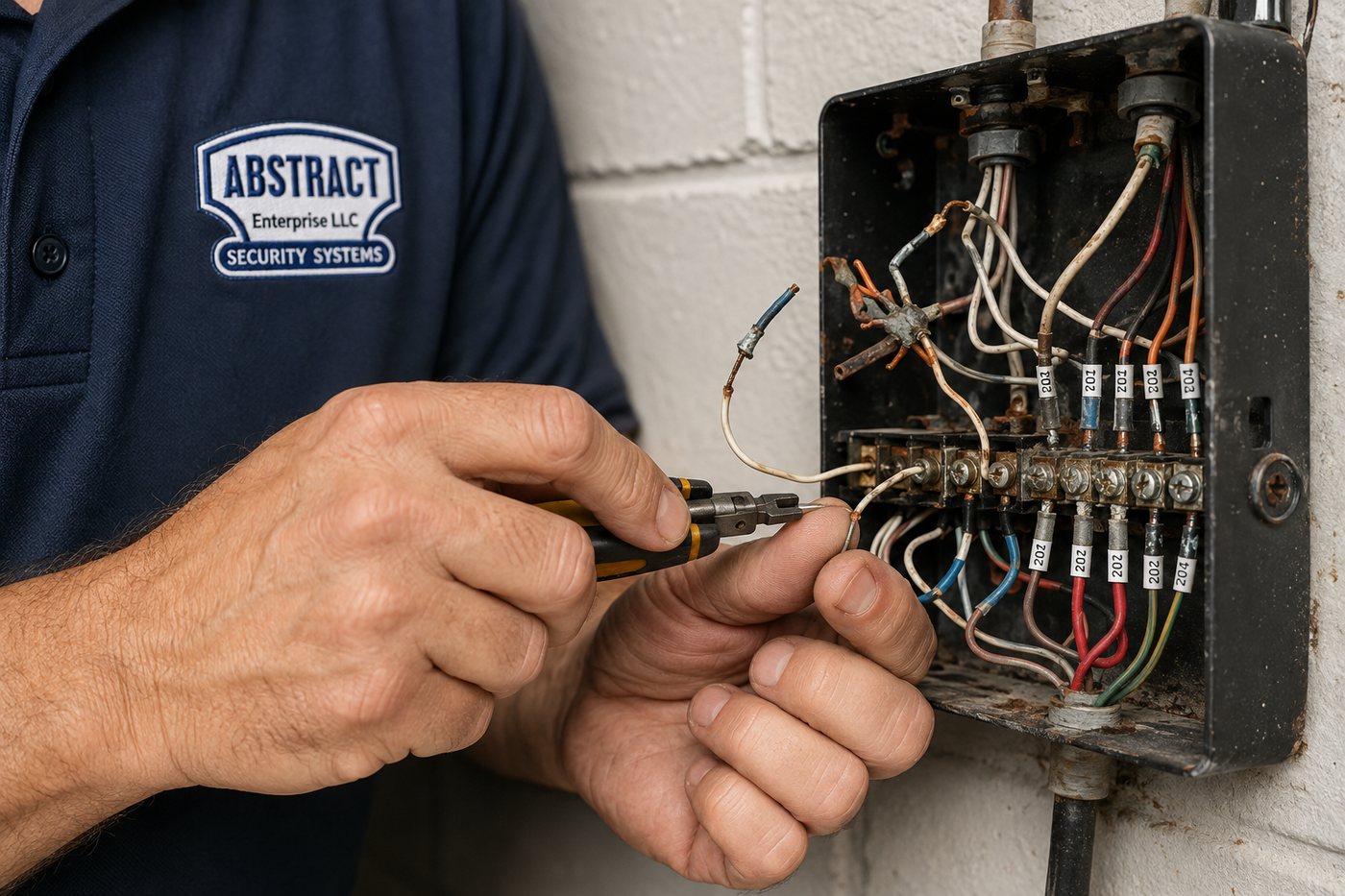
"Are you licensed for Throggs Neck work?"
Yes. NYS Low-Voltage Electrical Contractor License #12000287431. Valid throughout NYC including all of Throggs Neck (ZIP 10465, Bronx Community District 10). General liability and workers compensation insurance carried at all times — we provide certificates of insurance naming the building owner / managing agent / commercial tenant on request before work begins. Our Bronx home office at 460 E Fordham Rd is 20-25 minutes from any Throggs Neck address via Bruckner Expressway east. NYPD 45th Precinct (2877 Barkley Avenue) patrols Throggs Neck plus our other rebuilt sister neighborhoods (Country Club, Pelham Bay, Co-op City, City Island, Westchester Square, Schuylerville, Silver Beach, Edgewater Park).
Throggs Neck Buzzer Cost: What You'll Pay
All Throggs Neck buzzer pricing includes licensed labor, FDNY-listed equipment, professional installation, and 1-year parts-only warranty. NYC sales tax 8.875%. No travel surcharge — Throggs Neck is 20-25 minutes from our Fordham office.
Service-Call Component Repair
Failed buzzer button, dead amplifier, broken latch, app-account routing issues. Standard component repair.
Brick Two-Family Modernization
Per-unit door release + 4-wire upgrade + audio intercom. ButterflyMX or Aiphone IS-IPMV with optional video panel.
Detached Single-Family Doorbell
Suburban-feel detached homes. Ring Pro 2 / Nest Doorbell wired + chime + cloud recording integration.
Marine Waterfront Condominium
Pennyfield Avenue + bridge-adjacent waterfront. +8-12% marine premium for galvanized hardware + NEMA 4X enclosures.
Throggs Neck Houses NYCHA
1953 NYCHA scope + aluminum-conductor selective replacement. Centralized procurement workflow.
Bridge-Anchorage Vibration Add
For buildings within 3 blocks of Throgs Neck Bridge anchorage in Locust Point. On top of marine premium for combined +13-17%.
Locust Point Yacht Club
Member-only access + dock entry + restaurant/galley + alarm-integrated. Marine-grade hardware throughout.
East Tremont Commercial
Italian deli + bakery + family business. Front-door + after-hours alarm + cleaning crew + supplier delivery tier.

Combine Buzzer + Cameras + Access Control + Alarm
Throggs Neck brick two-family rowhouses, detached single-family suburban-feel homes, up-market waterfront condominiums on Pennyfield Avenue + bridge-adjacent, the Locust Point Yacht Club, East Tremont Avenue Italian commercial, and the Throggs Neck Houses NYCHA all benefit from combining buzzer repair with security camera coverage, access control, and alarm panel integration on the same scope. Two-family rowhouse: smart lock + video doorbell + driveway camera + perimeter sensors saves $400-$1,200/house. Waterfront condominium scope: marine intercom + dock access reader + perimeter cameras + marine alarm panel saves $400-$1,200/house. Yacht club commercial scope: member fob + dock access + perimeter cameras + alarm-integrated saves $1,800-$5,500/installation. Our camera installation Bronx, access control installation, and intercom installation teams work alongside the buzzer crew. Sister scopes: Silver Beach AC, Edgewater Park BUZ.
Request Combined Throggs Neck Quote →Fix Your Throggs Neck Buzzer — Schedule Today
Free phone consultation. Same-day Throggs Neck dispatch from our Fordham office, 20-25 minutes via Bruckner Expressway east. Brick two-family + detached single-family residential. Up-market waterfront condominium marine-grade scope. Locust Point Yacht Club commercial scope. East Tremont Avenue Italian commercial corridor. Throggs Neck Houses NYCHA scope. SUNY Maritime + Fort Schuyler 1856 institutional heritage. Sister scopes to our Silver Beach AC and Edgewater Park BUZ. NYS LIC #12000287431.