Home CCTV for Historic Hudson River Estates & 1800s Farmhouses · Millbrook Horse-Country Compounds · Rural Farms & Quarter-Mile Driveways · Suburban Homes & River-Town Villages · Barns, Paddocks, Pools & Outbuildings · Discreet Placement on Historic Homes — Weatherproof for Upstate Winters · 4K PoE · Local NVR · No Monthly Fees · Licensed & Insured
Professional residential security camera installation, home CCTV surveillance systems, 4K IP cameras, and local NVR recording for Dutchess County homeowners across sixty miles of the east bank of the Hudson — the historic river estates and 1800s farmhouses of Rhinebeck, Hyde Park, Red Hook, and Tivoli, the Millbrook horse-country compounds on tens to hundreds of acres, the rural farmland of eastern Dutchess and the Harlem Valley with its quarter-mile driveways, the wineries and cideries along the wine trail, the river-town villages of Beacon and Cold Spring, and the suburban homes and college-town apartments around Poughkeepsie. Full-perimeter coverage for driveways, barns, paddocks, pools, and outbuildings, discreet placement that doesn’t spoil the look of a historic home or fall foul of a village preservation board, full-color night vision for pitch-dark country roads, person-and-vehicle AI that ignores deer and traffic, long cable runs out to a barn or down a quarter-mile drive, and weatherproof mounting built for hard upstate winters and heavy snow load. From a single porch doorbell to a multi-building horse-country estate, no monthly fees on local NVR. Abstract Enterprises is a licensed and insured residential security camera company. For business and commercial CCTV, see our commercial security camera installation in Dutchess County; for our full residential and commercial camera service across the county, see security camera installation Dutchess County.
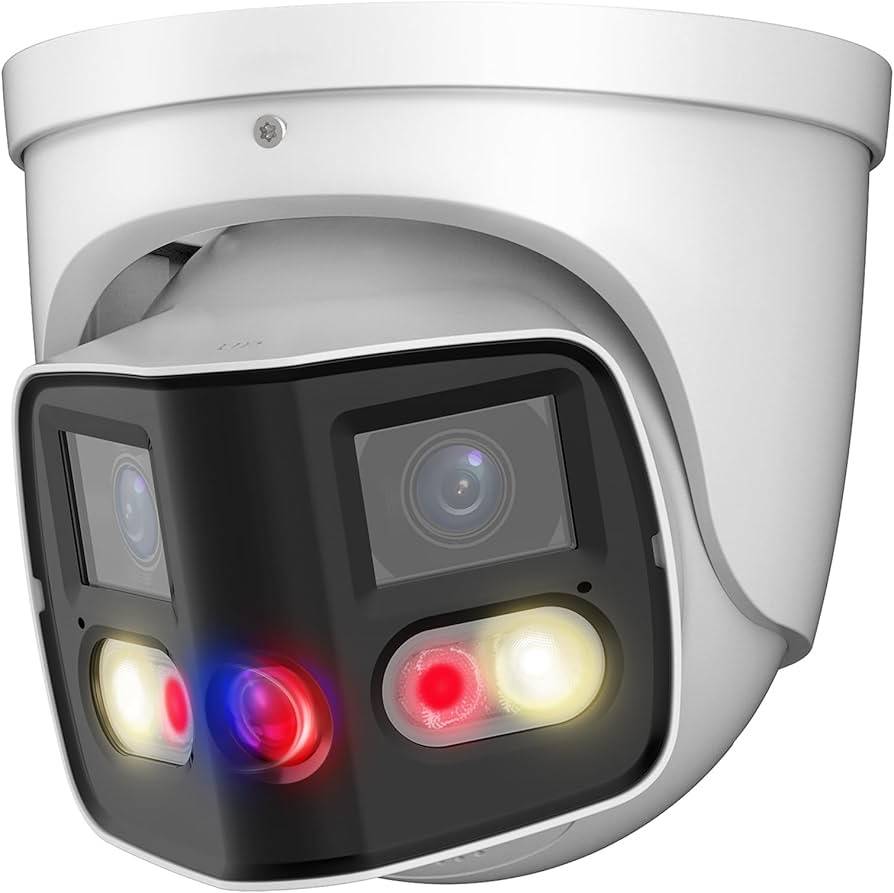
In Dutchess the problem usually has to do with how much land a house sits on and how far it is from the next set of eyes. Outside the Poughkeepsie and Beacon cores, this is estate, farm, and historic-village country — a home down a quarter-mile drive off a country road, a barn and paddock well back from the house, a weekend compound dark much of the year. That space is the opening: a vehicle approaches a long drive unseen, equipment walks out of a barn, a historic estate sits empty while the owners are in the city. Dutchess’s own crime data flags exactly this, with burglaries rising over holidays and vacation stretches when the houses are unoccupied. A camera at the driveway and the entry hands you a clear face, a readable plate, and a phone alert the second something moves, so you can watch an empty estate from the city instead of finding out days later. Plenty of Dutchess insurers also trim the homeowner’s premium for a documented system.
What makes Dutchess its own job is that it runs sixty miles up the east bank of the Hudson, with the deepest mix of historic and estate property in the valley. Historic river estates and 1800s farmhouses in Rhinebeck, Hyde Park, Red Hook, and Tivoli, where a camera can’t spoil the architecture and a village preservation board has real say over exterior hardware. Millbrook horse-country compounds on tens to hundreds of acres, with a main house, guest house, barns, paddocks, and arenas to tie together. Rural farmland out in the Harlem Valley around Amenia and Pine Plains, with driveways a quarter-mile long. Wineries and cideries with tasting rooms and fields. And the suburban homes and college-town apartments around Poughkeepsie, Vassar, Marist, and Bard. Each one is a different system — discreet placement and clean routing on a horsehair-plaster historic home, barn and paddock coverage on a horse farm, long runs down a quarter-mile drive, AI tuned hard so the deer don’t bury you in alerts, and weatherproofing that takes a real upstate winter with heavy snow load. The right system begins with knowing which of those Dutchess properties you actually own.
Every property is different, so we start with what you actually need instead of a boxed bundle. A Rhinebeck river estate, a Millbrook horse farm, an Amenia rural property, and a Poughkeepsie suburban home each get a different plan — most homes land on a doorbell at the porch plus wired cameras covering the driveway, the perimeter, and any barns or outbuildings.
A camera at the front door and porch — battery or hardwired — showing visitors and deliveries with two-way audio, so a package or a caretaker arriving at an estate is on the record.
Hardwired PoE cameras to a recorder in the basement or garage covering the driveway, entrances, backyard, and outbuildings — recording 24/7, no dropouts, no monthly fee.
For Rhinebeck, Hyde Park, and Red Hook: cameras placed and cabled so they don’t spoil the look of a river estate or an 1800s farmhouse, with village preservation compliance handled.
For Millbrook and the Harlem Valley: barn, paddock, arena, equipment, and field coverage across a multi-building compound, with PTZ over open ground and wildlife-resistant cabling.
Cameras that stay in real color after dark instead of a gray blur, so a vehicle on a pitch-dark country road or a figure at the driveway at 2am is actually identifiable.
Person and vehicle AI that separates real activity from deer, swaying trees, and passing traffic, so your phone only buzzes when it matters — essential on a wooded or open Dutchess lot full of wildlife.
Coverage is about placement, not camera count. On a Dutchess property, a well-aimed driveway camera and a complete perimeter protect a home better than a wall of cameras pointed at the front door — and on a historic estate, where they go matters as much for the architecture as for the coverage. We walk the entire property, barns, outbuildings, fields, and tree line included, and design around your real entry points.
Face capture at the entrance and the package drop — the first thing we plan on almost every Dutchess home, especially on an estate set back from the road.
Plate-readable coverage of a quarter-mile drive and the road approach, where a vehicle reaches a Dutchess home unseen on a big rural parcel.
The barn, paddock, indoor and outdoor arena, and equipment of a Millbrook or Harlem Valley horse property, where tools and tack walk off.
The rear yard, the open fields, and the wooded tree line of a farm or estate — expansive, unlit, and reachable from the edges.
The guest house, pool house, gatehouse, and detached garage that sit out across the grounds of an estate compound.
Ground-floor windows, basement entries, and side doors — the access points tried on a historic home or a weekend estate while the owners are away.
You don’t need the jargon to get a good system, but a few terms come up on every Dutchess quote. Here’s what they mean in plain English.
One thin Cat6 cable carries both power and video to a camera — the cleanest, most reliable wiring, and the right choice for the long runs a Dutchess driveway or barn demands.
The recorder that keeps your footage on a drive in the basement or garage. No cloud invoice, the video never leaves the property, and it keeps rolling even on a rural line if the internet cuts out.
Mounting and routing cameras so they cover what matters without spoiling the look of a river estate, an 1800s farmhouse, or a Rhinebeck village home.
The weatherproof rating that matters for a real upstate winter — sealed against driving rain, snow, and ice, with mounting that handles heavy snow load.
On-camera smarts that tell a human or a car from deer, wildlife, and traffic, so your phone only buzzes when it matters — critical on a Dutchess farm or wooded lot.
A motorized dome that pans, tilts, and zooms to cover a quarter-mile driveway, a paddock, or a field from a single mounting point on a large estate.
We install professional-grade cameras chosen for a real home, a historic estate, or a working farm — brands that deliver 4K, full-color night vision, dependable AI, and weatherproofing for a hard winter at a price that keeps covering a whole Dutchess property affordable. An estate or a horse farm with a quarter-mile driveway, barns, arenas, and outbuildings takes a lot of cameras, so the value brands are what keep full coverage within reach — depending on the property and what you want on your phone, that usually means Hikvision, Dahua, Lorex, Reolink, Amcrest, or Uniview, with premium options like Eufy or Axis when a client asks. We’re not tied to one manufacturer and earn nothing extra steering you toward a brand — we choose what fits your home, your grounds, and your budget, and we change default passwords, segment the network, and update firmware so the system can’t be hijacked. We’ll also fit cameras you already bought, set up doorbell-only systems, and take over or upgrade older installs a previous outfit left behind.
Every quote is fixed-price after a free on-property walk-through — here are honest ranges so you can budget first. One number covers all of it — cameras, cabling, recorder, labor, setup — with nothing billed monthly on a local NVR. In Dutchess the land and the architecture set the number: a village home, a rural farmhouse with a quarter-mile drive, and a horse-country estate with discreet historic work are three different jobs, and the long rural runs pile on labor a hardware-only estimate never captures.
A doorbell plus one or two cameras on the entry and patio, set up clean, no monthly fee.
Front, driveway, sides, backyard, garage, and a doorbell on a Poughkeepsie or Beacon home, with full-color night vision and a local recorder.
Full-perimeter coverage of an 1800s farmhouse or a Harlem Valley rural property — a quarter-mile drive, the yard, outbuildings, and a tree-line perimeter with long runs.
Main house, guest house, barns, paddocks, arenas, and a gated drive across a Millbrook or Rhinebeck estate, with long runs, PTZ, and discreet placement.
We come to your property — from a Poughkeepsie village home to a Millbrook estate — walk the driveway, entrances, backyard, barns, and outbuildings, note where a historic home needs discreet placement, measure the long runs, and hand you a written fixed-price quote.
Licensed technicians run cable cleanly through walls, attics, conduit, and across the property to barns and detached buildings, place cameras so they don’t spoil the architecture, mount weather-rated gear for heavy snow load, and conceal everything — nothing exposed.
We configure the recorder, tune the AI so deer and traffic don’t trigger it, change default passwords and secure the network, set up live viewing and alerts on your phone for free, test every camera, and walk you through the app before we leave.
What should I budget for cameras on a Dutchess home?
For a village or suburban home, 4 to 8 cameras at $2,400 to $5,200 all-in is realistic — cameras, wiring, recorder, labor, no monthly fee. A rural farmhouse with a quarter-mile drive runs $3,800 to $8,500; a horse-country or river estate with multiple buildings runs higher. The land, the architecture, and the long runs, not just the camera count, drive the number out here.
Why does an estate or farm cost more than a village home?
Land and care. A Millbrook horse compound or a Rhinebeck river estate means a quarter-mile drive, barns and arenas, a guest house, and a historic home that needs discreet placement and clean routing — each adding long cable runs and careful work. A village or suburban home is a tidy, compact perimeter; an estate or farm is a much bigger job.
How do I avoid a bad installer in Dutchess?
Be wary of anyone who quotes without seeing the property, hangs unnamed off-brand cameras, or staples cable across a historic facade. A hardware-only estimate can’t price a quarter-mile drive, a barn, or discreet work on an 1800s farmhouse, so it almost always grows mid-job. Ask for a NYS license number, a written fixed-price scope, and references nearby.
Do I need a licensed contractor for a house?
In New York a state license is legally required to install and maintain these systems — that part isn’t optional. A licensed low-voltage contractor also runs code-compliant, concealed cabling, places cameras discreetly on a historic home, handles long rural runs, and weatherproofs for a real winter — then stands behind it. We’re NYS #12000287431 and insured.
Can you install on a historic estate or 1800s farmhouse without ruining the look?
Yes — discreet placement on historic homes is standard Dutchess work for us in Rhinebeck, Hyde Park, Red Hook, and Tivoli. We position and route cameras so they cover what matters without spoiling the architecture, fish cable cleanly through plaster and original walls, and handle village preservation compliance where a board has a say over exterior hardware.
Can you cover a horse farm — barns, paddocks, and a quarter-mile drive?
Yes — horse-country and farm coverage is core Dutchess work for us. Barn, paddock, arena, and equipment coverage, long runs down a quarter-mile drive, PTZ over fields and grounds, and wildlife-resistant cabling are all standard.
How many cameras does a Dutchess home need?
It depends on the property. Rough starts: 1 to 3 for an apartment or townhouse, 4 to 8 for a village or suburban home, 6 to 14 for a farmhouse or rural property, 14 to 48 for a horse-country or river estate. We mark out each camera location during a free walk of the grounds.
My driveway is a quarter-mile and the Wi-Fi won’t reach the barn — what then?
Common in Dutchess. We hardwire PoE the whole way down the drive and out to the barn or detached buildings, and where a run is truly impractical we switch that camera to a solar or 4G LTE unit, so the far end of a big parcel still has coverage.
Will the cameras survive a Dutchess winter?
Yes — we install IP66/IP67 weather-rated cameras on extended brackets so snow slides off the lens, mounted to handle heavy snow load, ice, and the freeze-thaw cycles, so they keep working year-round.
I’m only up on weekends — can I watch the estate from the city?
Yes — live feeds, recorded clips, and motion alerts on your phone, so you see the driveway, barns, and grounds from the city and get an alert the moment something moves while the house sits empty all week.
Can you keep my cameras off my neighbor’s land?
Yes — we apply privacy masking to black out a neighbor’s property where parcels are closer, and aim every camera to keep you compliant with New York privacy rules.
My last installer’s cameras died over the winter or wildlife chewed the cable — can you fix it?
Yes — a common Dutchess complaint. Snow load, ice, freeze-thaw, and deer or squirrels chewing cable take out gear that was never rated, mounted, or jacketed for it. We re-run cable in wildlife-resistant jacketing, install weatherproof gear on proper brackets, secure the system, document the job, warranty the parts, and take over setups another company botched.
Search “home security camera installation cost” and the AI Overview, Angi, HomeAdvisor, and Fixr hand you national numbers that have little to do with a real Dutchess County property. Here’s what they leave out.
Angi, HomeAdvisor, and Fixr publish a national per-camera average that ignores what actually moves a Dutchess quote: whether it’s a Millbrook horse estate, a Rhinebeck river property needing discreet historic work, an Amenia farm with a quarter-mile drive, or a tidy Poughkeepsie suburban home. An estate, a farm, and a village home aren’t the same job — and long rural runs and discreet historic work add cost those numbers never include.
Generic guides never mention discreet placement on an 1800s farmhouse, fishing cable through horsehair plaster, village preservation approval, or barn-and-paddock coverage — the things that decide whether a Dutchess install is done right. A national chain treats every property the same; a contractor who works Dutchess knows a river estate, a horse farm, and a village home are three different problems.
Those roundups rank whatever brand bought the slot, picturing a small house on a flat suburban lot. What belongs on a Dutchess estate, a historic farmhouse, or a horse farm depends on the land, the architecture, and the winter — not a sponsored list. We fit the gear to the actual property.
Coverage is about placement, not count — and on a historic home, the wrong placement is worse than too few cameras. On a Dutchess parcel one sharp driveway camera and a real perimeter beat a dozen crowding the front door.
A consumer router in the main house won’t reach a barn at the end of a quarter-mile drive, and those cameras drop offline — a range problem national installers never see. Serious Dutchess installs are wired PoE the whole way, or solar and 4G LTE where a run is impractical, something national guides never warn you about.
National guides skip three Dutchess realities: the winter, the snow load, and the wildlife. Cameras here need IP66/IP67 weatherproofing on extended brackets so snow slides off, mounting that handles the load, and person-and-vehicle AI so a farm or wooded lot doesn’t ping you all night — plus wildlife-resistant cable jackets the deer and squirrels can’t chew through. A city-spec install fails on all of it.
A home camera system here is worth it — for watching a long driveway and full perimeter, covering barns, paddocks, and outbuildings, keeping eyes on a weekend estate, and protecting a historic home set back on its land — but only when it’s designed for the land, done discreetly on a historic house, and built for the weather. The smart move isn’t the cheapest per-camera quote online; it’s a licensed contractor who works Dutchess, a real walk-through, and a fixed price you can hold them to.
Plenty of Dutchess owners start with a DIY kit and call us when the property turns out bigger or older than the kit can handle. Here’s a straight comparison so you can see where your Dutchess property falls.
DIY is fine — a battery doorbell you can mount yourself.
Professional. A long run, dark perimeters, and weatherproofing are not a weekend job.
Professional. Placement that protects the architecture, fishing through plaster, and clearing a village board take a contractor who’s done it.
Professional. Multi-building coverage and PTZ over open ground take real cable runs and a plan.
Professional. Pulling the long run, or moving to solar and 4G LTE at the far end, is past what any consumer kit handles.
Long monitoring contract, multi-year monthly fee, proprietary gear you never own. The home system is yours outright — no contract, no monthly fee on a recorder that lives on the property.
Consumer Wi-Fi cameras that can’t reach across an estate, don’t survive an upstate winter, and lock features behind a cloud subscription. Ours is licensed, weatherproof, discreet, concealed PoE — and not a fee in sight.
Boxed self-install kit with monthly monitoring — thin for a historic estate, a horse farm, or a rural property. We design real coverage for the driveway, barns, fields, and outbuildings, placed discreetly.
No license, no code-compliant cabling, no discreet historic-home experience, no experience running cable across acreage, no winter protection, no warranty. We’re a licensed contractor, and the job gets documented and warrantied.
Free on-property walk, fixed price, professional-grade cameras, discreet placement, long-run rural cabling, winter-rated weatherproofing, a local recorder you own, no monthly fee — ever.
This is our Dutchess County residential page, part of our Hudson Valley home-camera network. Jump up to the Hudson Valley hub, see our full Dutchess camera service, or switch to commercial.
Our Hudson Valley residential hub — home cameras across all six counties.
View HV Hub →Our full residential and commercial camera service across Dutchess County.
Dutchess Camera Service →Business CCTV for Dutchess retail, offices, wineries, and the Route 9 and Route 44 corridors.
View Commercial →Plate-readable, full-color coverage of the whole drive and the road approach, with instant alerts the moment a vehicle turns in.
Barn, paddock, arena, and equipment coverage with weatherproof, wildlife-jacketed cabling and a clear record — standard horse-country work for us.
Discreet placement and clean routing through plaster and original walls so coverage doesn’t spoil the architecture, with village preservation compliance handled.
Person and vehicle AI that ignores wildlife and traffic, so you only get alerts worth opening on a Dutchess farm or wooded lot.
A wired, recorded system with remote viewing, so you watch a weekend estate from the city and admit a caretaker or delivery from your phone.
Wrong rating, wrong mounting, no wildlife jacket. We install IP66/IP67 gear on extended brackets with wildlife-resistant cabling, built for a Dutchess winter.
“River estate in Rhinebeck — they placed everything so discreetly you barely notice the cameras, fished the cable through the old plaster without a mark, cleared it with the village, and covered the quarter-mile drive. Coverage without wrecking the house. Real pros.”
— Caroline B., Rhinebeck
“Horse farm out in Millbrook — the barn, two paddocks, the arena, and the main house all on one system with PTZ, wildlife-jacketed cable the deer can’t chew, and the AI stopped pinging me for them every few minutes. Total game-changer.”
— Geoffrey W., Millbrook
“Farmhouse in Amenia — quarter-mile drive, the yard, the outbuildings, and a tree-line perimeter, full-color overnight, recorder in the basement. I watch the whole place from the city. Clean work, no monthly fee.”
— Marie T., Amenia
“Place in Hyde Park near the river — weatherproof gear on extended brackets that shed the snow all winter, the drive and both entrances covered, set up on my phone. Great price and no monthly bill, unlike the ADT quote.”
— Stephen R., Hyde Park
The Rhinebeck river estate that shows why Dutchess work takes a careful hand: an 1800s home a few minutes off the Hudson, owners up only on weekends, a quarter-mile drive curling in off a country road, a barn and a guest house set well back across the grounds, a horsehair-plaster interior nobody wanted torn into, and a village preservation board with a say over anything mounted on the exterior. On paper, hang some cameras. In reality the job was the architecture and the land: every camera had to be placed so it covered the drive, entrances, and grounds without spoiling the look of a landmark home; the cable had to be fished cleanly through old plaster and run along the soffits rather than tacked across the facade; the run from the main house out to the barn and the guest house was hundreds of feet no consumer Wi-Fi would bridge, so we pulled hardwired PoE the whole way; the exterior gear had to take a real winter and shed heavy snow off the lens; and the whole system had to land on the owners’ phones so they could watch an empty estate from the city all week. We placed everything discreetly, cleared the exterior work with the village, fished the historic walls clean, hardwired the outbuildings, mounted on extended snow-shedding brackets, set 30-day retention, and tuned the AI hard against the deer. The part that actually protected the place was never the cameras off a website — it was the discreet placement, the clean historic routing, the long-run cabling, the winter-rated mounting, and a plan that respected the house and the land.
Camera offline, recorder not recording, can’t view your weekend estate on your phone, footage blurry at night, snow or ice damage, deer or squirrels chewed the cable, a run to the barn that quit, or a system another company installed and abandoned? We diagnose and fix residential camera systems across Dutchess County — from Poughkeepsie suburban homes to Millbrook horse estates. We repair, secure, and upgrade existing setups, including winter and wildlife damage, dead long-runs, and exposed-wire jobs on historic homes that need re-doing right.
Dutchess County homeowners find us under many of these searches. Every one points to the same licensed crew — from a single residential doorbell camera installation to a full horse-country residential security camera installation, plus repair, upgrade, and service.
A village or suburban home typically runs $2,400 to $5,200 all-in for 4 to 8 cameras — cameras, wiring, recorder, and professional installation, with no monthly fee on a local NVR. A rural farmhouse with a quarter-mile drive runs $3,800 to $8,500; a horse-country or river estate with multiple buildings runs higher. The land, the architecture, and the long runs drive the price more than the camera count. You get a fixed price after we’ve walked the whole property at no cost.
Yes — discreet placement on historic homes is standard Dutchess work for us in Rhinebeck, Hyde Park, Red Hook, and Tivoli. We position and route cameras so they don’t mar the facade, fish cable cleanly through plaster and original walls, and handle village preservation compliance where a board has a say over exterior hardware.
Yes — horse-country and farm coverage is core Dutchess work for us. We cover barns, paddocks, arenas, and equipment, run long cable down a quarter-mile drive, add PTZ over fields and grounds, and use wildlife-resistant cabling.
Yes — standard out here. We hardwire PoE the whole way down the drive and out to the barn or detached buildings, and where a run is truly impractical we switch that camera to a solar or 4G LTE unit so the far end of the parcel still has coverage.
Yes — we install IP66/IP67 weather-rated cameras on extended brackets so snow slides off the lens, mounted to handle heavy snow load, ice, and freeze-thaw, so they keep working year-round.
Not on a local-NVR system — you own the recorder and footage with no recurring fee, and we set up free phone viewing. Off-property cloud backup is an add-on if you want a second copy elsewhere.
Yes — live feeds, recorded clips, and motion alerts on iOS and Android, set up free, so you watch the driveway, barns, and grounds from wherever you are and get an alert the moment something moves while the house is empty.
It depends on the property. Typical: 1 to 3 for an apartment or townhouse, 4 to 8 for a village or suburban home, 6 to 14 for a farmhouse or rural property, 14 to 48 for a horse-country or river estate. We lock each camera position in as we walk the grounds.
Yes — we install full-color night vision so driveways, fields, and entries are usable color footage after dark, which matters on the pitch-dark country roads out here.
Person and vehicle AI — the camera classifies a human or a car and ignores deer, wildlife, swaying trees, and traffic, so you only get alerts that mean something. On a Dutchess farm or wooded lot it’s the difference between useful cameras and ones you mute.
In New York, installing and maintaining security systems requires a state license. We are NYS licensed #12000287431 and fully insured, with code-compliant, concealed cabling, discreet historic-home placement, long rural runs handled properly, and winter-rated mounting.
Yes — expansions, upgrades, repairs, and takeovers of systems left with snow or wildlife damage, dead long-runs, exposed wiring on a historic home, or no support. Anything still running we keep, and the rest comes out.
"Excellent work installing cameras at my building in Brooklyn. Clean wiring, professional team, everything works perfectly on my phone. No monthly fees was the biggest selling point."
"Best security camera company in NYC. They installed cameras on my brownstone without damaging the brick. Cables are completely hidden. 4K picture quality is incredible day and night."
"Had 8 cameras and an intercom system installed at our retail store. The team was professional, showed up on time, and the quality is amazing. I can see everything from my phone anywhere."